Author Archives: forwhattheygave.com

My site was placed on WordPress in 2013. Since then I have added a significant amount of material. Approximately 9 months ago my yearly bill was due. I was suddenly unable to access Forwhattheygave.com. A Wordpress Tech contacted me offering assistance. He simply tried to copy my material and assumed control of Forwhattheygave.com. My site still exists as the Tech recently copied material and created ForWhatTheyGaveOnSaturdayAfternoon.com which was my web site prior to setting umps site on Wordpresss. You can find the site as couple of Months ago a WordPress Tech found the site. Thank You. Phil

1981 Team

1981 Army 3-7-1

1981/11/28 Army 3 – Navy 3 T

Coach – Ed Cavanaugh (born August 24, 1928)

Army 1980-1982

1980 Army 3-7-1
1981 Army 3-7-1

1982 Army 4-7

Army: 10-21-2

source: http://en.wikipedia.org/wiki/Ed_Cavanaugh
armyfb_1981_editfrompittsburgh-guide

–

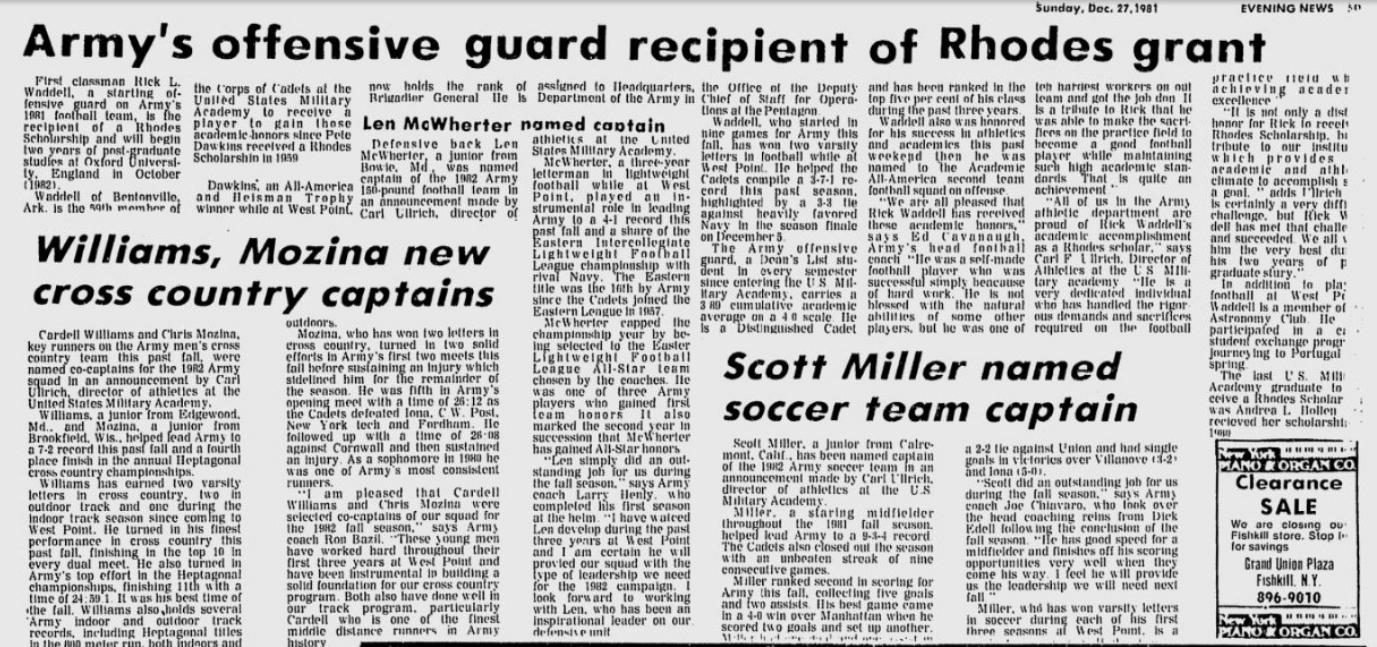
Rick Waddell

ArmyFB_1981_RickWaddell-OG-RhodesScholar_EveningNews_Dec271981

ArmyFB_1981_RickWaddell-OG-RhodesScholar_EveningNews_Dec271981

1980 Team

1980 Army 3-7-1
1980/11/29 Army 6 – Navy 33 L

Coach – Ed Cavanaugh (born August 24, 1928) Army 1980-1982
1980 Army 3-7-1
1981 Army 3-7-1
1982 Army 4-7 Army: 10-21-2

source: http://en.wikipedia.org/wiki/Ed_Cavanaugh

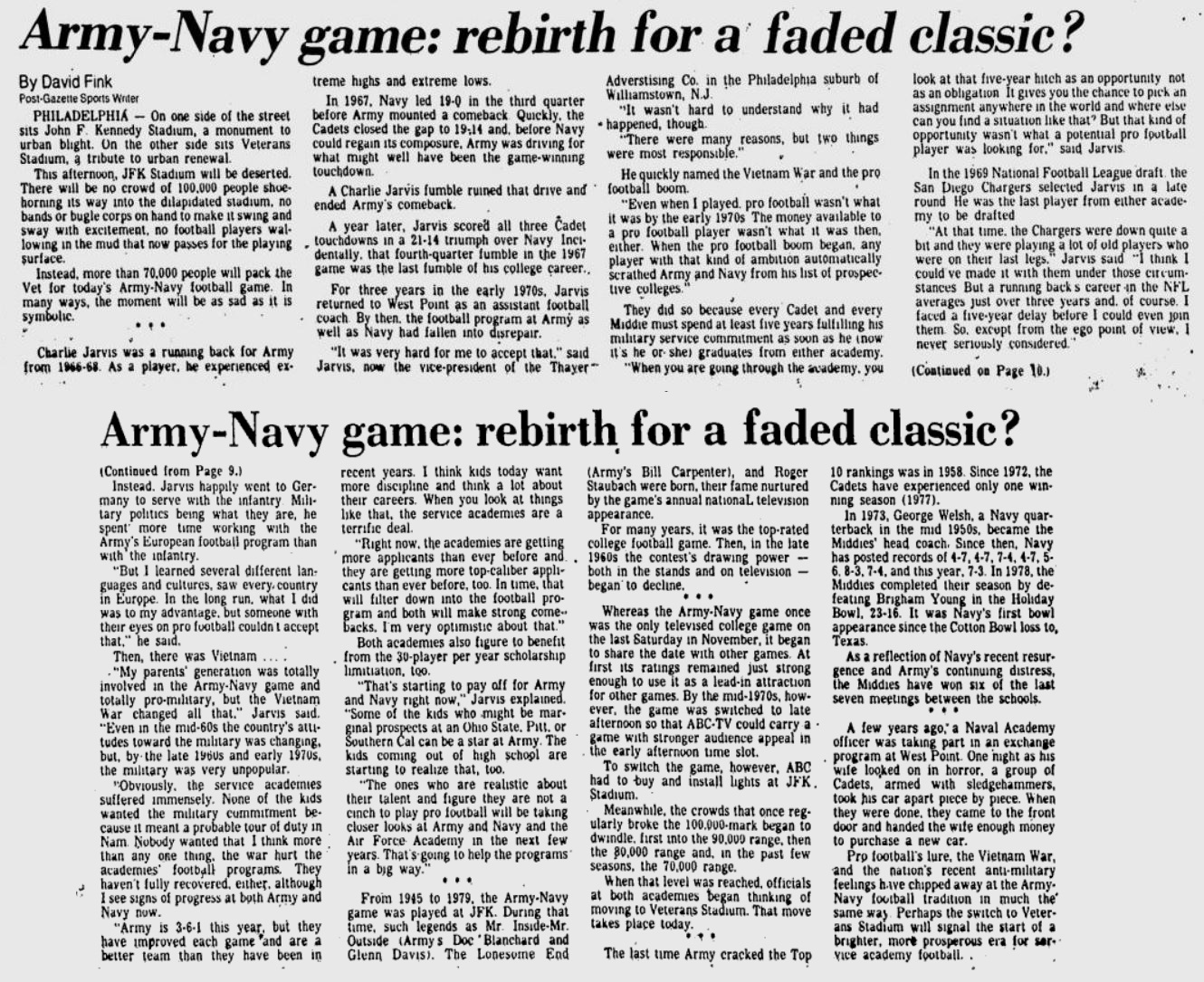
ArmyFB_1980_Army-Navy_Jarvis_PittsburghPostGazette_Nov291980

ArmyFB_1980_Army-Navy_Jarvis_PittsburghPostGazette_Nov291980

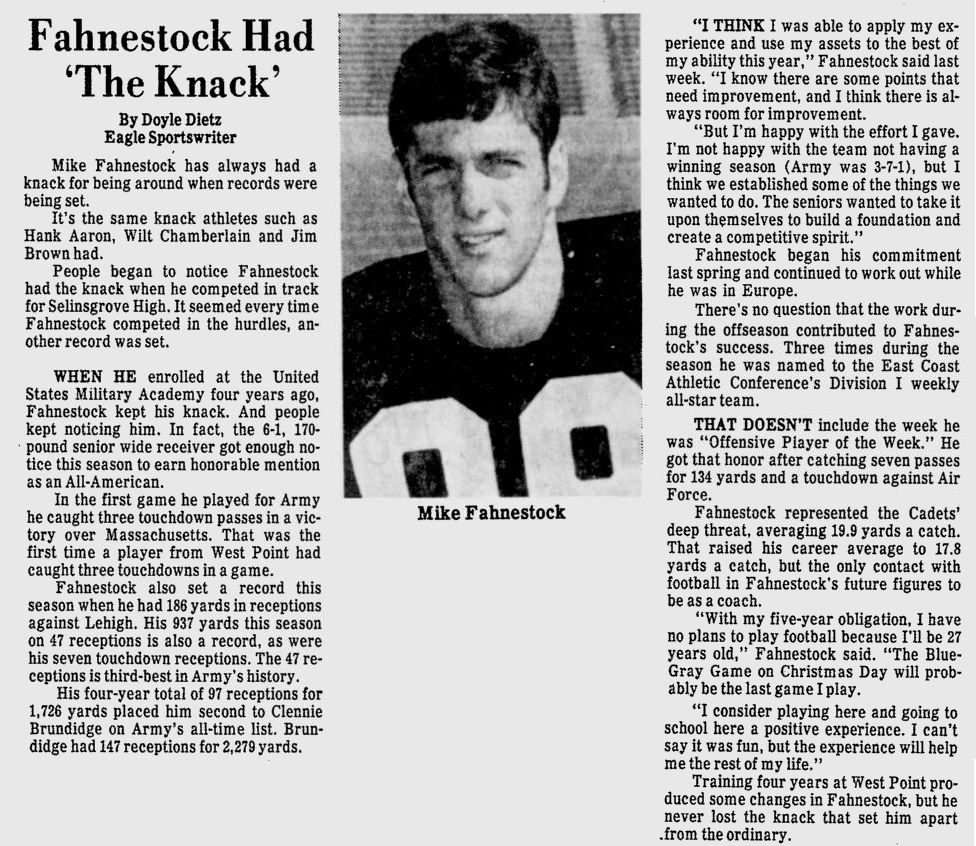
ArmyFB_1980_MikeFahnestock_ReadingEagle_Dec141980

—-

8 July work area


ArmyFB_1952_BlaikandFreddyMeyers_byAlanMaver_TheDispatch_Sep231952-1


1951-fredmeyers-qb-hbArmyFB_1951_FredMeyers_byPap_Robesonian_Dec121951


ArmyFB_1958_Stars_vsRice-program_8Nov1958


ArmyFB_1961_DaleHall-MikeCasp_DetroitvsArmy-program_11Nov1961


ArmyFB_1961_PlayerPhotos-3-4_DetroitvsArmyprogram_11Nov1961


ArmyFB_1949_vsMichigan_gameprogram_11Nov1961


ArmyFB_1961_LookingBack-ArmyGames_11Nov1961


ArmyFB_1966_vsTenn_program2


ArmyFB_1958_vsRice-program_p30-31_8Nov1958


ArmyFB_1961_PlayerPhotos-1-2_DetroitvsArmyprogram_11Nov1961-1


ArmyFB_1961_Army-roster_DetroitvsArmyprogram_11Nov1961


ArmyFB_1966_vsTenn_program1


ArmyFB_1951_FredMeyers_byPap_Robesonian_Dec121951-1


ArmyFB_1928_linemen_SanJoseNews_Nov201928


ArmyFB_1922_vsNavy_MilwaukeeJournal_Nov261922


ArmyFB_1922_vsNavy-post-game_Nov271922


ArmyFB_1922_vsNavy_ReadingEagle_Nov261922


ArmyFB_1973_Cahill_EN-Nov51973-3


ArmyFB_1977_vsNavy_SarasotaHeraldTribune_Nov271977


ArmyFB_1975_editfromPittsburgh-guide


ArmyFB_1977_editfromPittsburgh-guide


ArmyFB_1979_editfromPittsburgh-guide


ArmyFB_1982_editfromPittsburgh-guide


ArmyFB_1977_vsNavy_EveningNews_Nov271977


ArmyFB_1977_vsNavy-Smith-Hall_EveningNews_Nov271977-1


ArmyFB_1976_editfromvsPittsburgh-guide


ArmyFB_1978_editfromPittsburgh-guide


ArmyFB_1981_editfromPittsburgh-guide


ArmyFB_1983_editfromPittsburgh-guide

Army -Navy

1986 Army 27-7 Veterans Stadium Philadelphia, PA Navy 41-39-7

1987 Army 17-3 Veterans Stadium Philadelphia, PA Navy 41-40-7

1988 Army 20-15 Veterans Stadium Philadelphia, PA Tied 41-41-7


1979 Team

1979 Army 2-8-1 1979/12/01 Army 7 – Navy 31 L Coach – Louis Henry Saban (October 13, 1921 – March 29, 2009) source: http://en.wikipedia.org/wiki/Lou_Saban

–

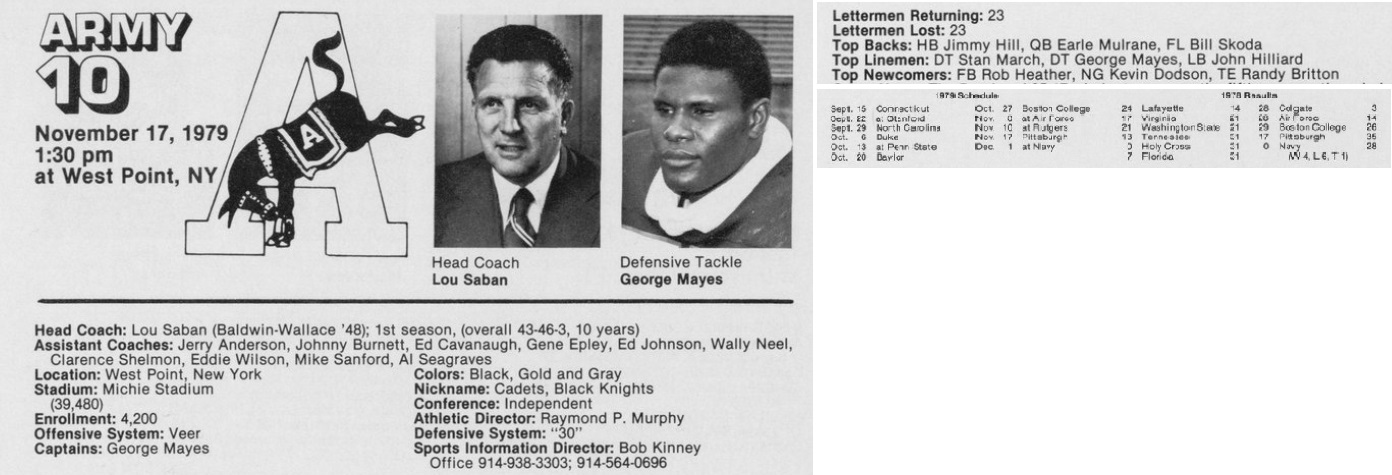
armyfb_1979_editfrompittsburgh-guide

ArmyFB_1979_editfromPittsburgh-guide

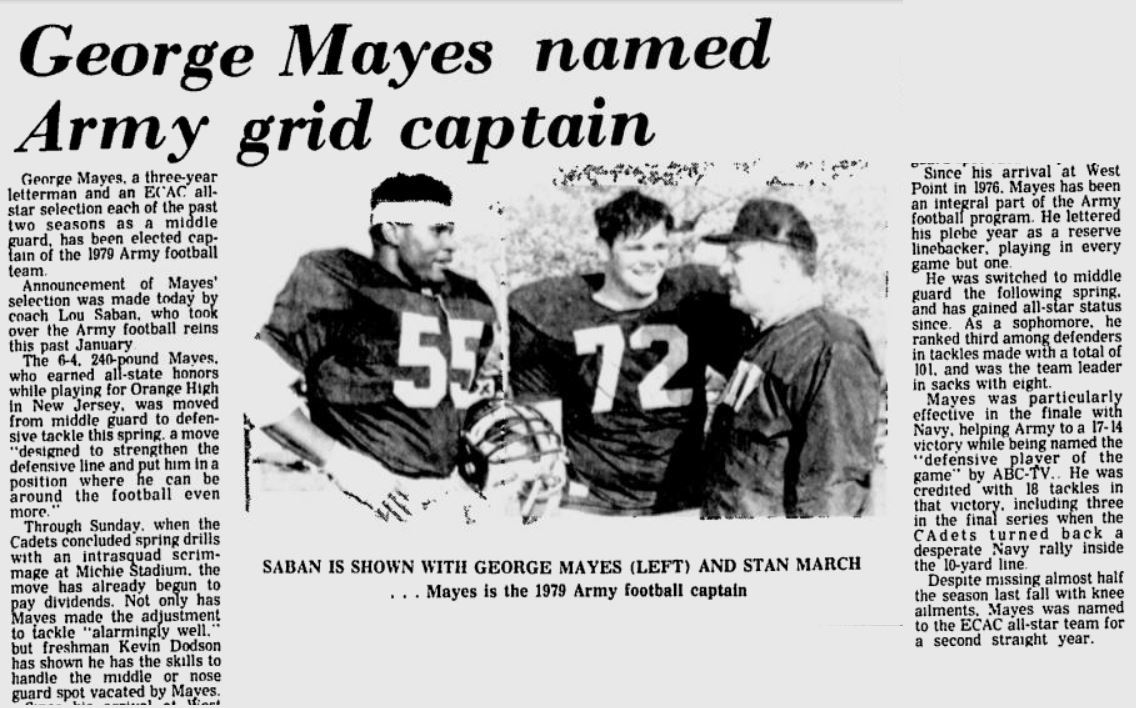
ArmyFB_1979_GeorgeMayes_Eveningnews_May81979
–

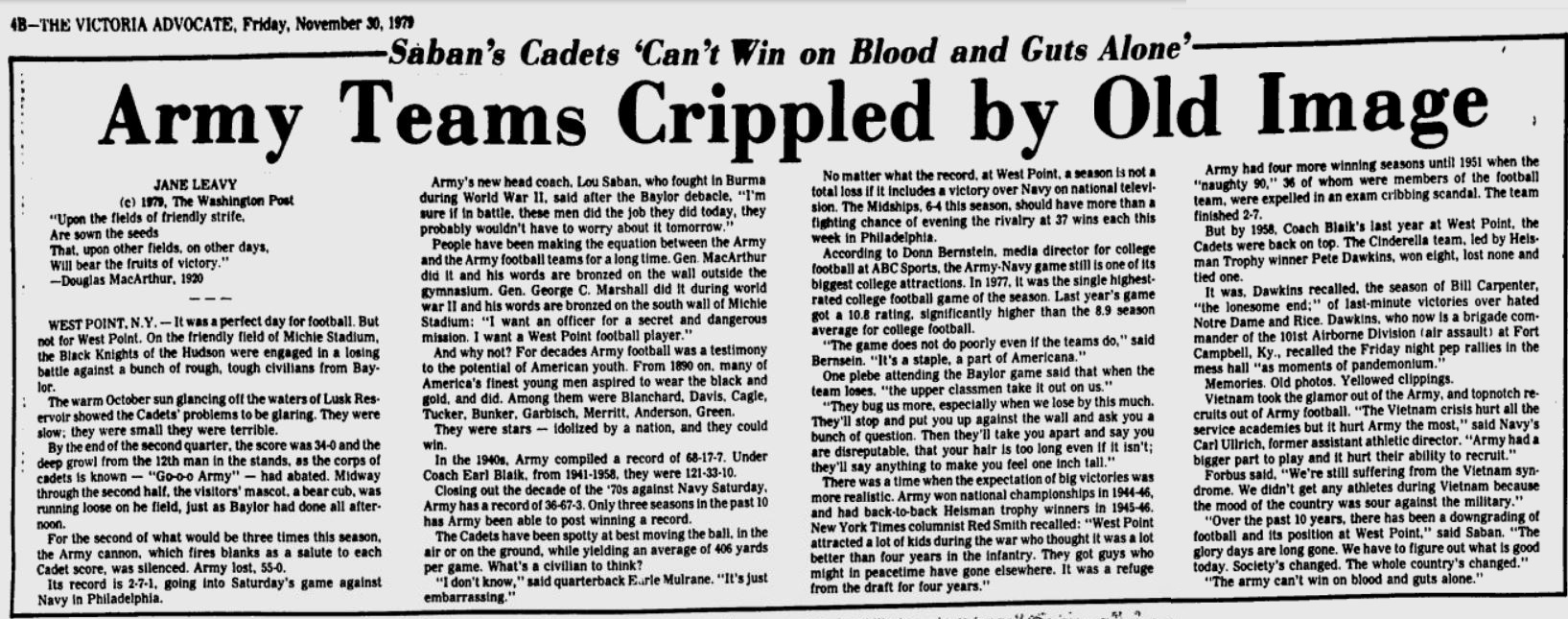
ArmyFB_1979_Saban_VictoriaAdvovate_Nov301979 –

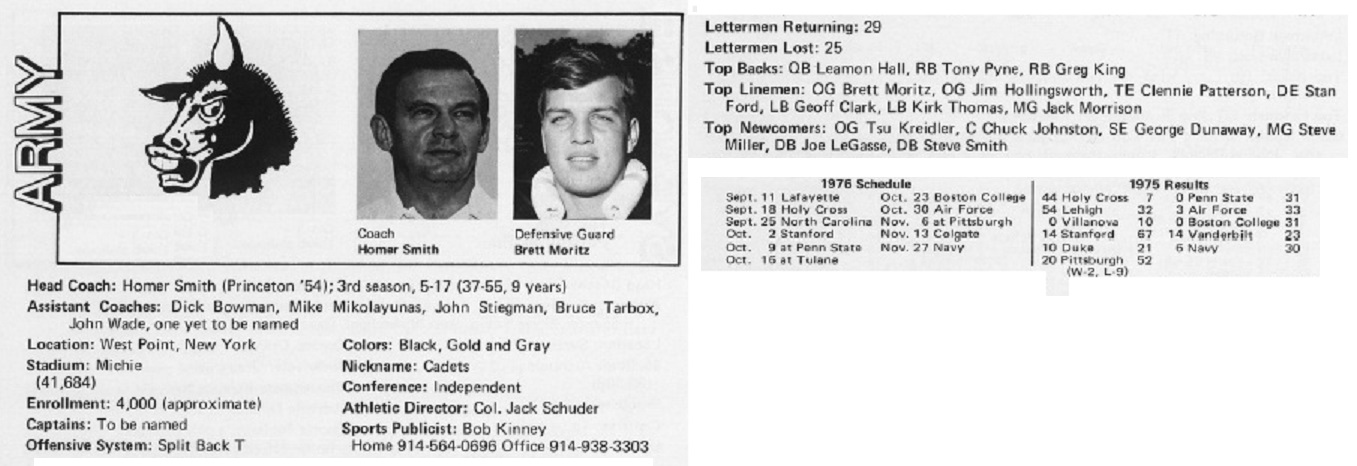
1978 Team

1978 Army 4-6-1

1978/11/04 Army 28 – Air Force 14 W

1978/12/02 Army 0 – Navy 28 L

Coach – Homer Austin Smith (October 9, 1931 – April 10, 2011)

source: http://en.wikipedia.org/wiki/Homer_Smith_%28American_football%29


ArmyFB_1978_editfromPittsburgh-guide

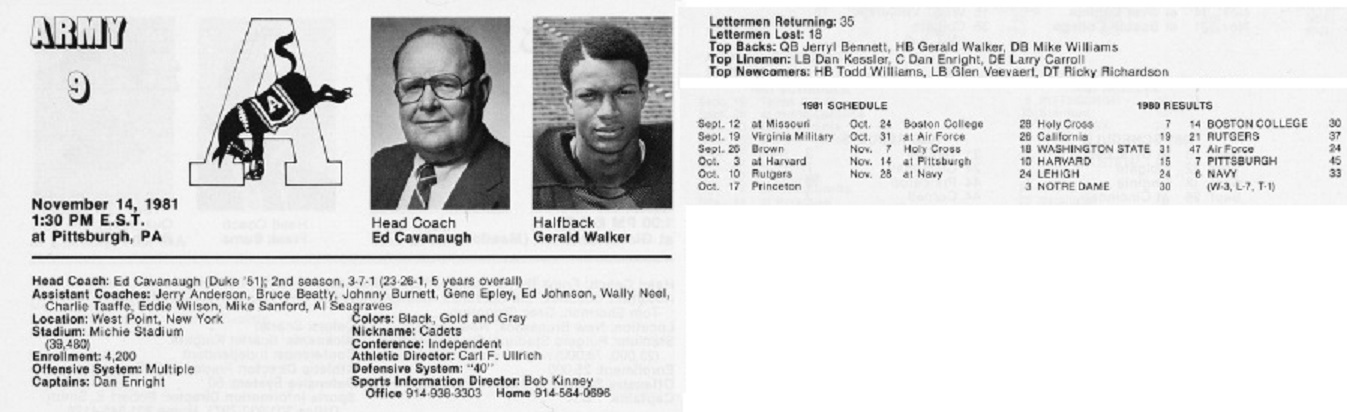
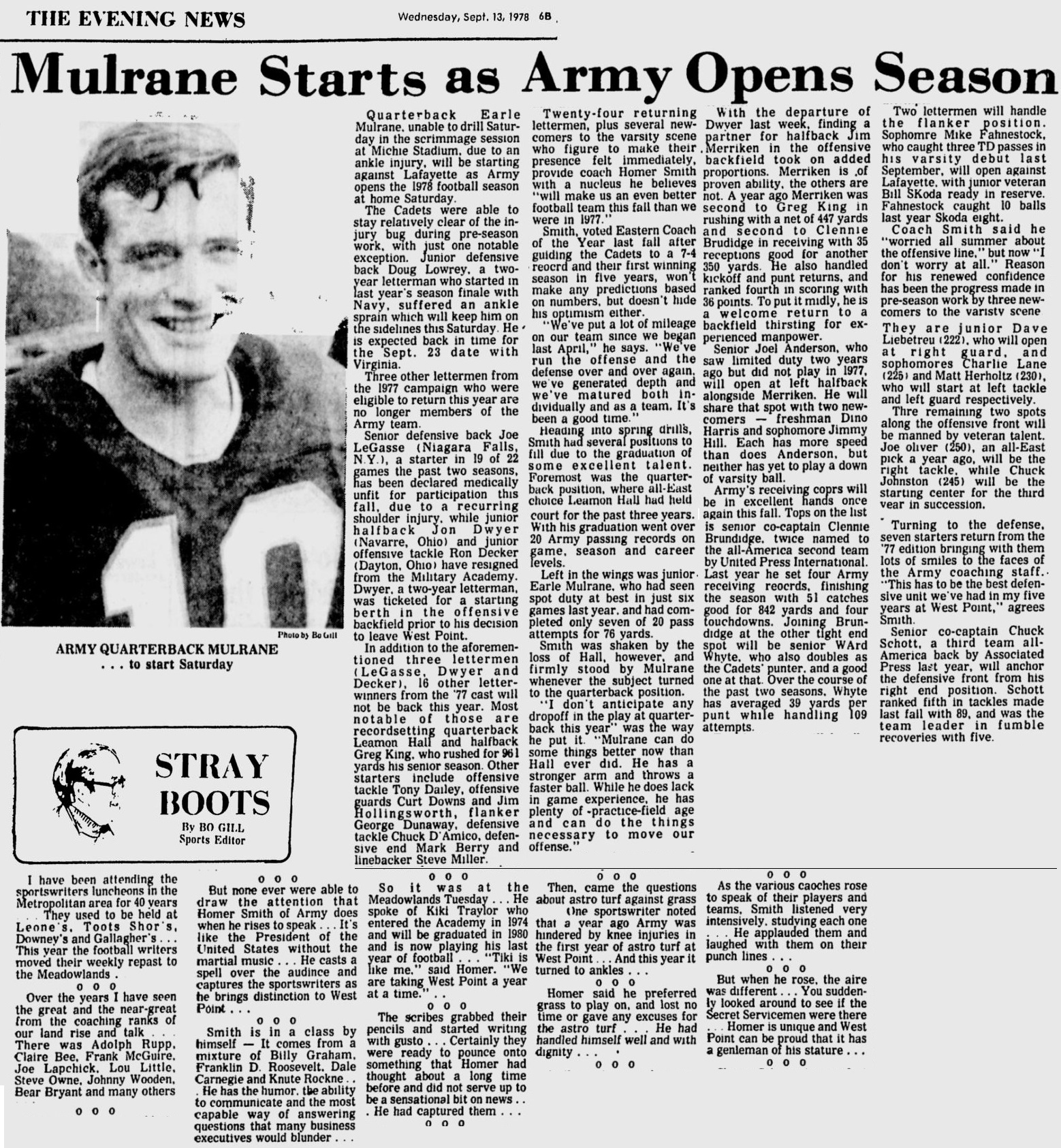
ArmyFB_1978_preview_EveningNews_Sep131978

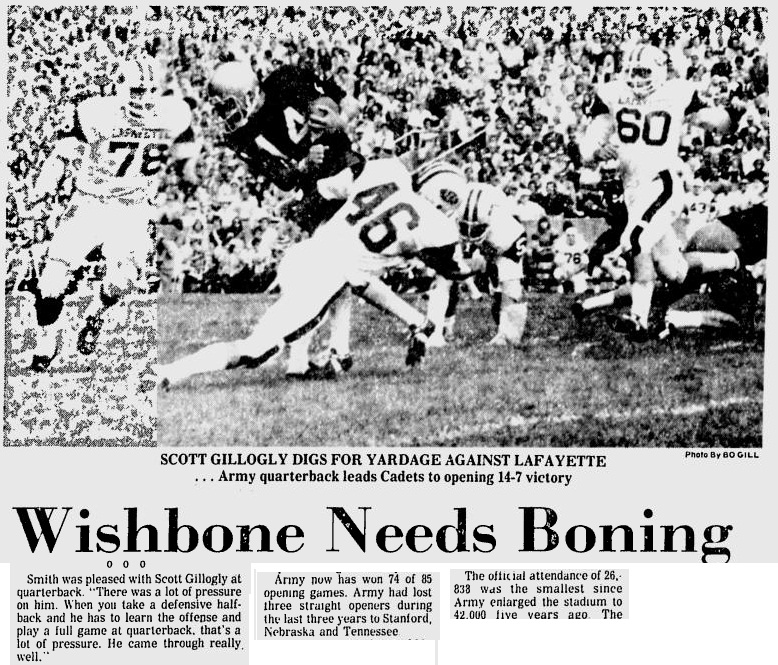
ArmyFB_1978_vsLafayette_EveningNews_Sep171978

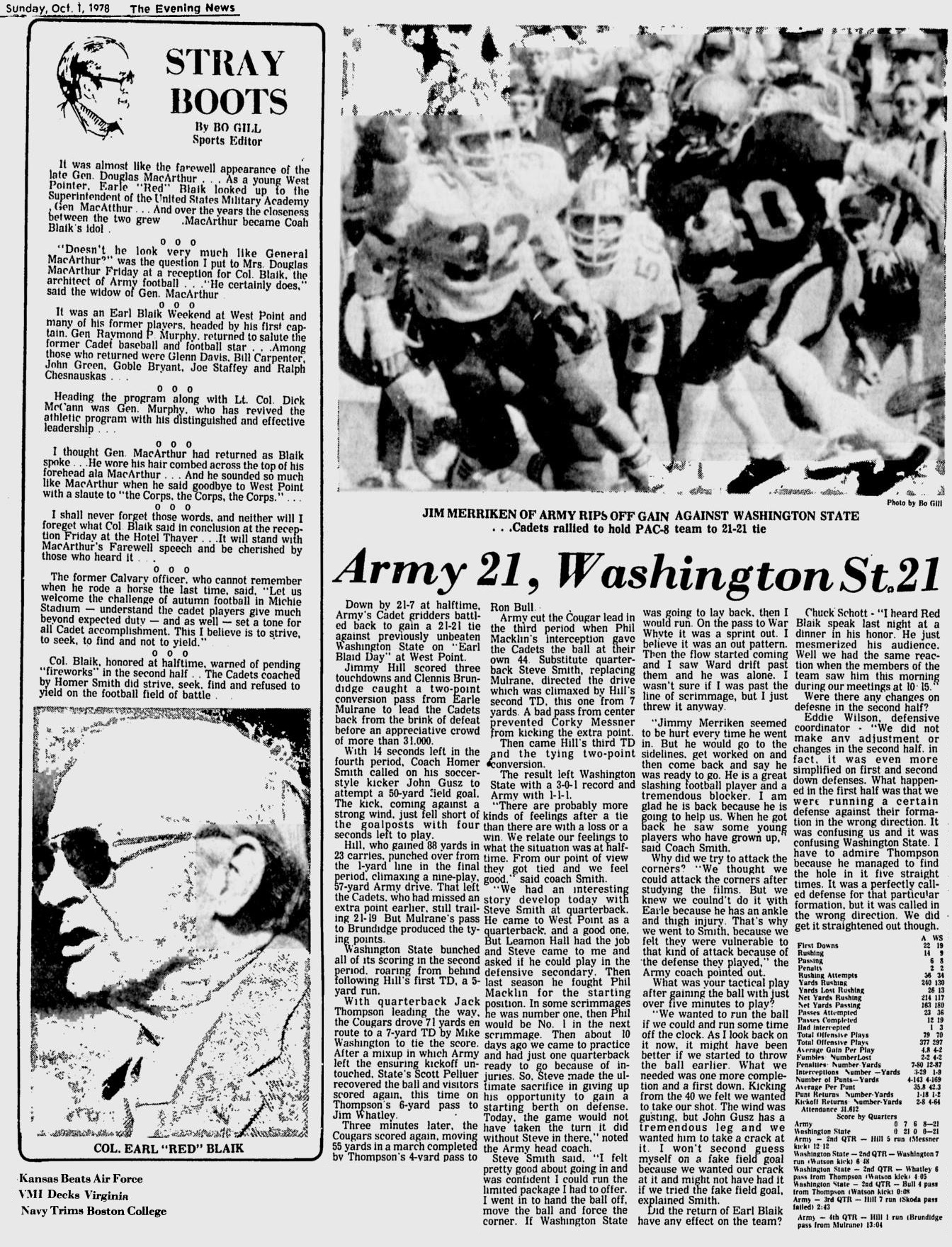
ArmyFB_1978_vsWashingtonState_EveningNews_Oct11978

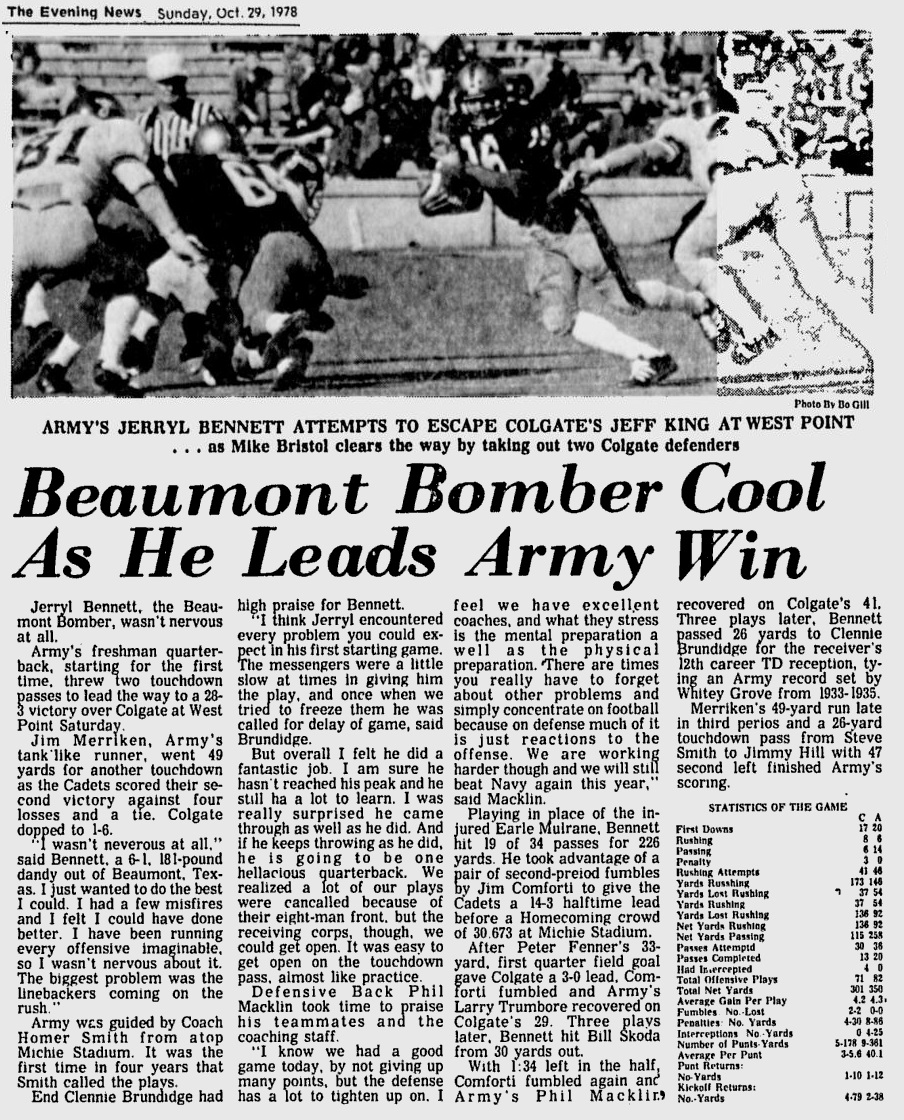
ArmyFB_1978_vsColgate_EveningNews_Oct291978

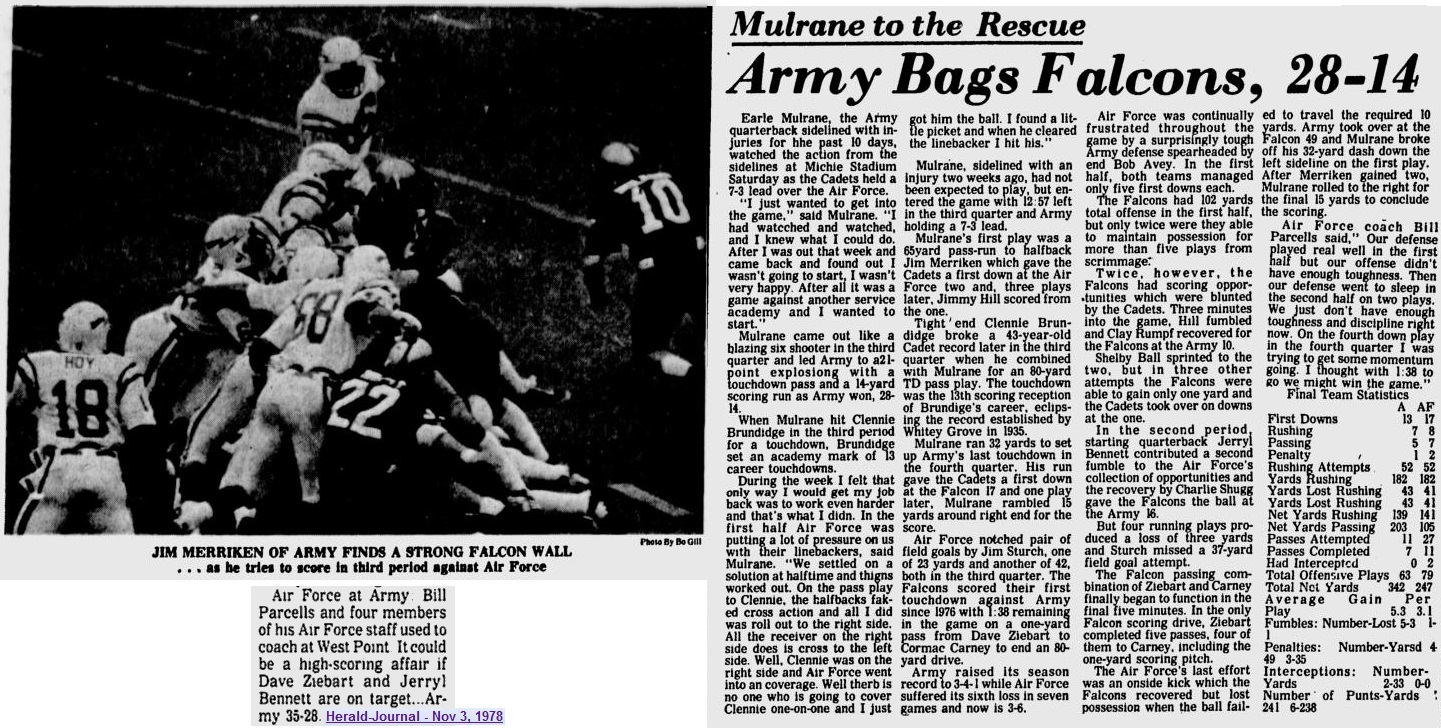
armyfb_1978_vsairforce_eveningnews_nov51978
ArmyFB_1978_vsAirForce_EveningNews_Nov51978

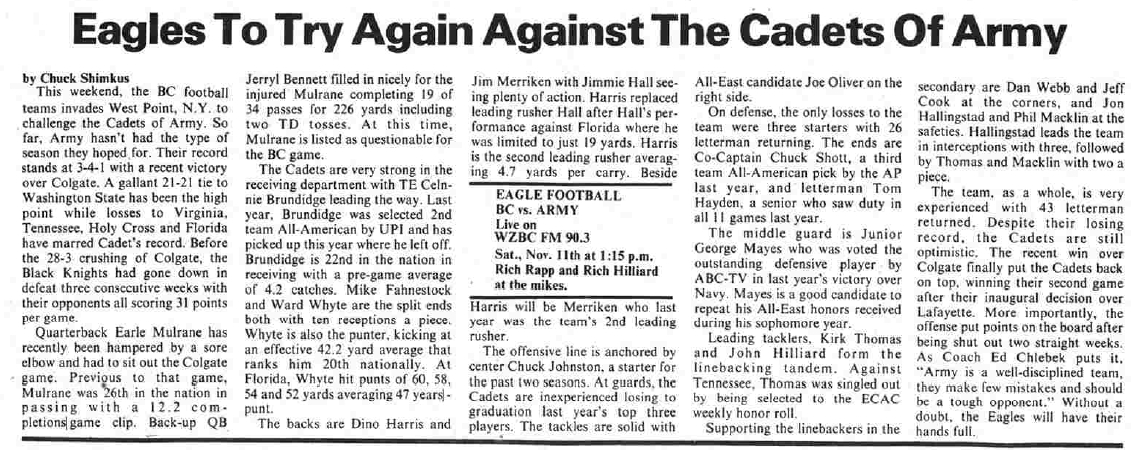
armyfb_1978_vsbc-pre_theheights_nov61978
ArmyFB_1978_vsBC-pre_TheHeights_Nov61978

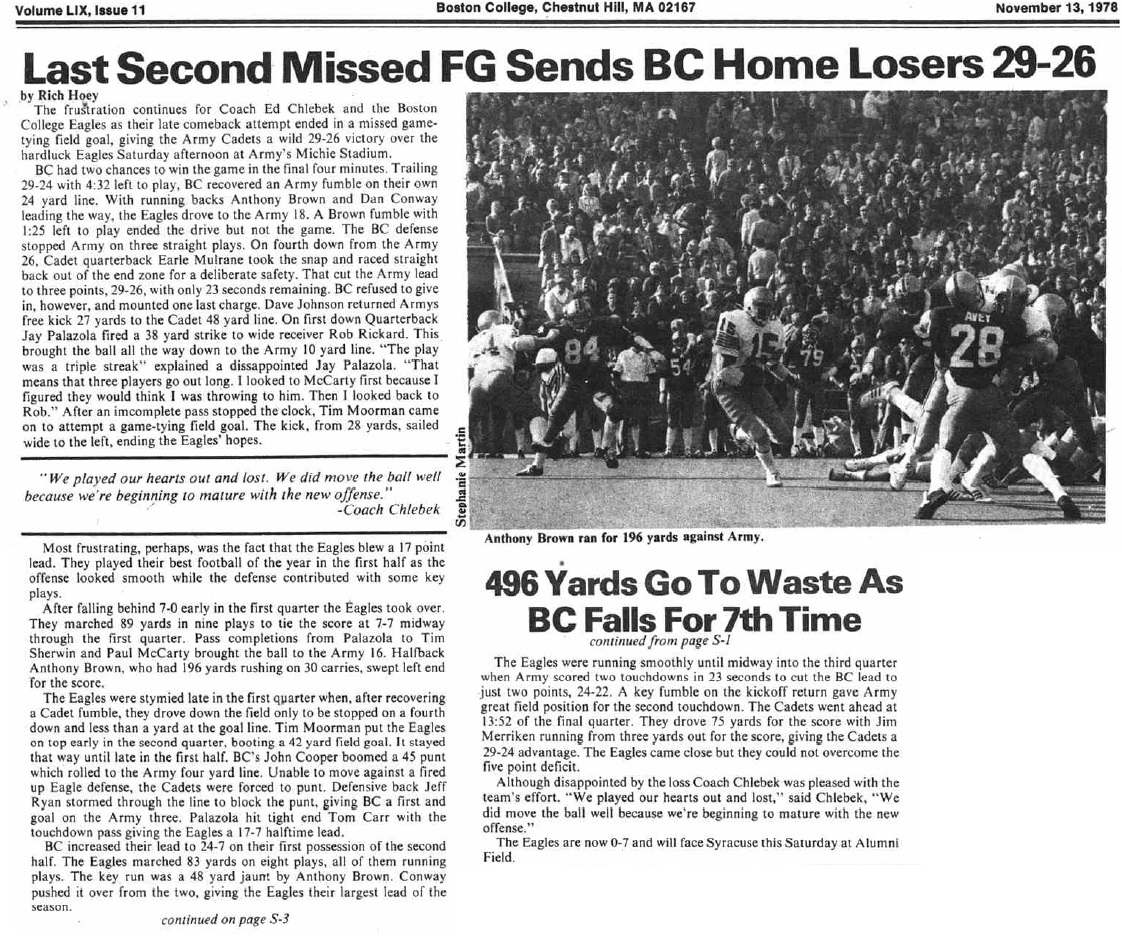
armyfb_1978_vsbc_theheights_nov131978
ArmyFB_1978_vsBC_TheHeights_Nov131978

Sports articles provided by Russ “Skip” Grimm – Class of ’76

1977 Team

1977 Army 7-4

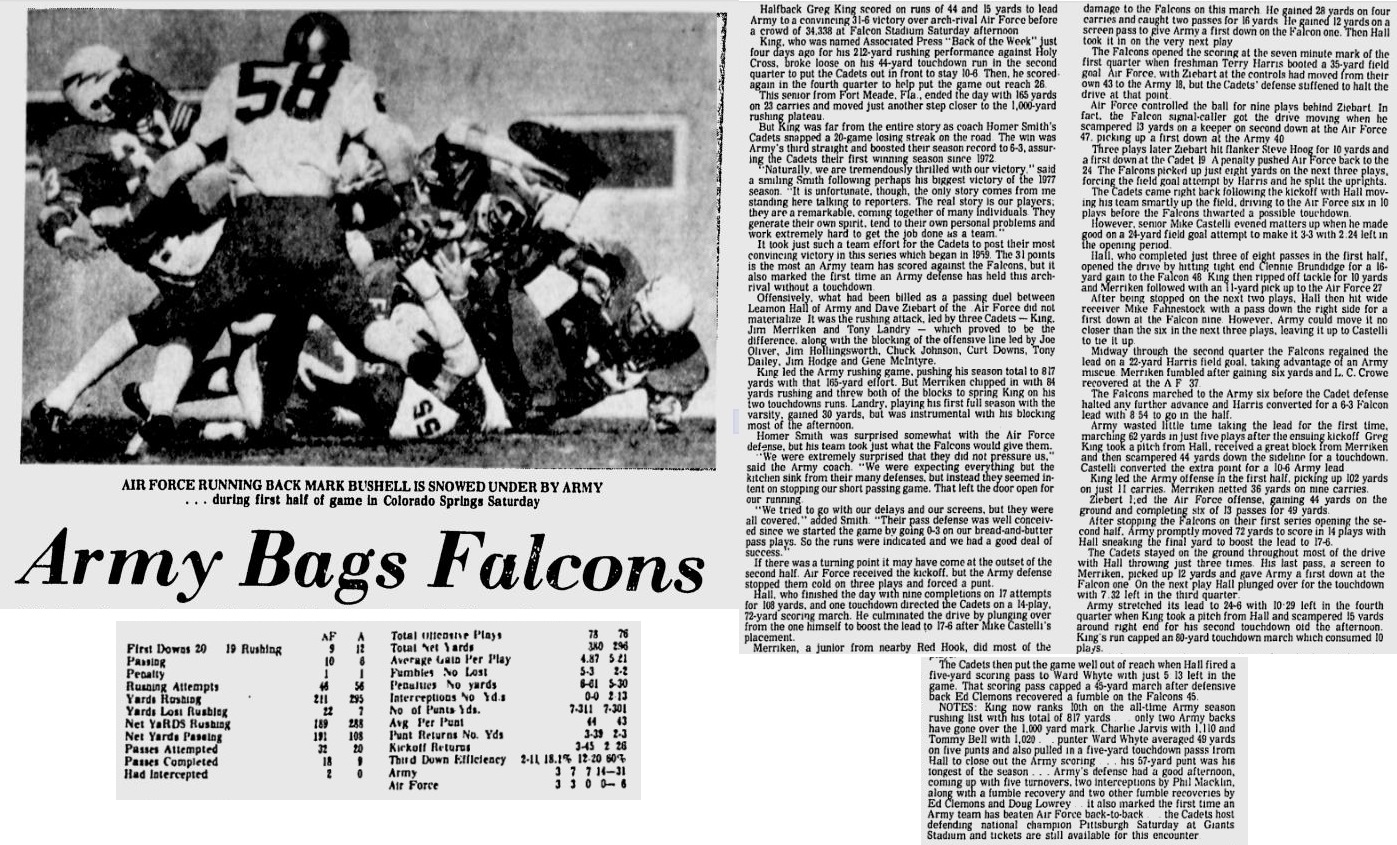
1977/11/05 Army 31 – Air Force 6 W

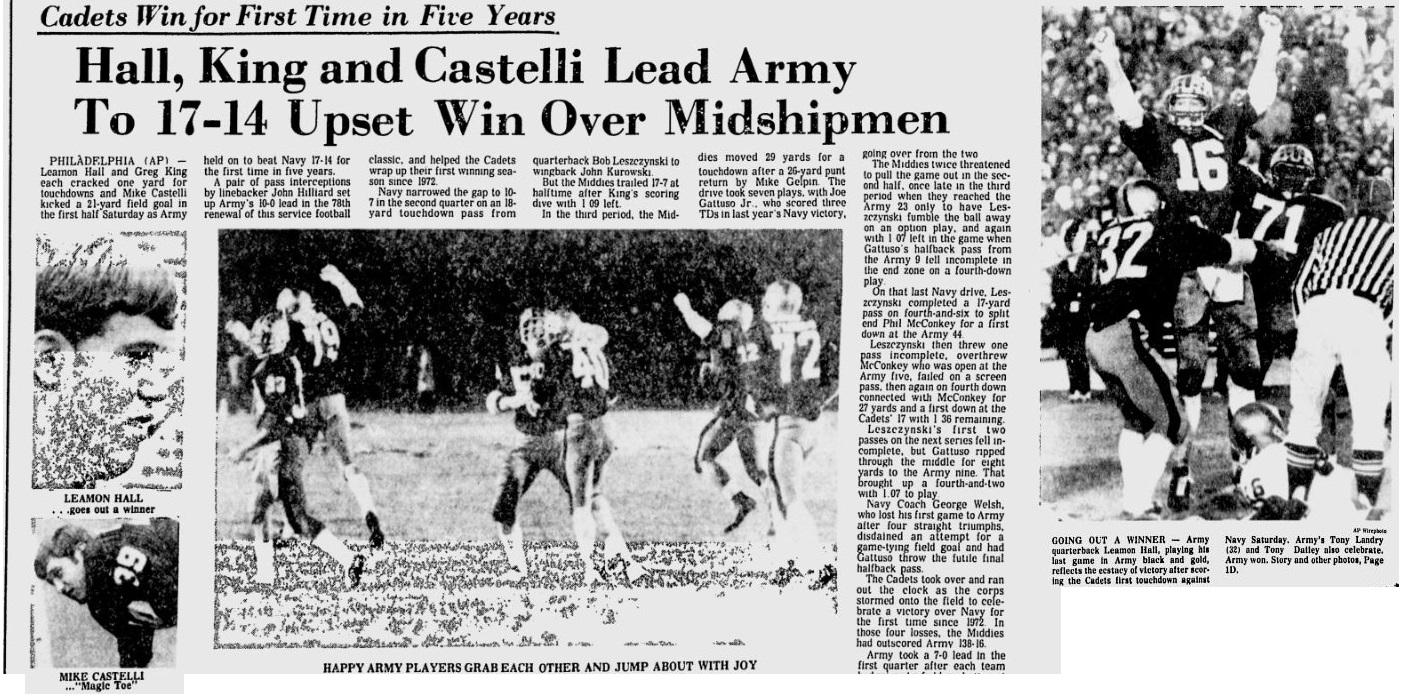
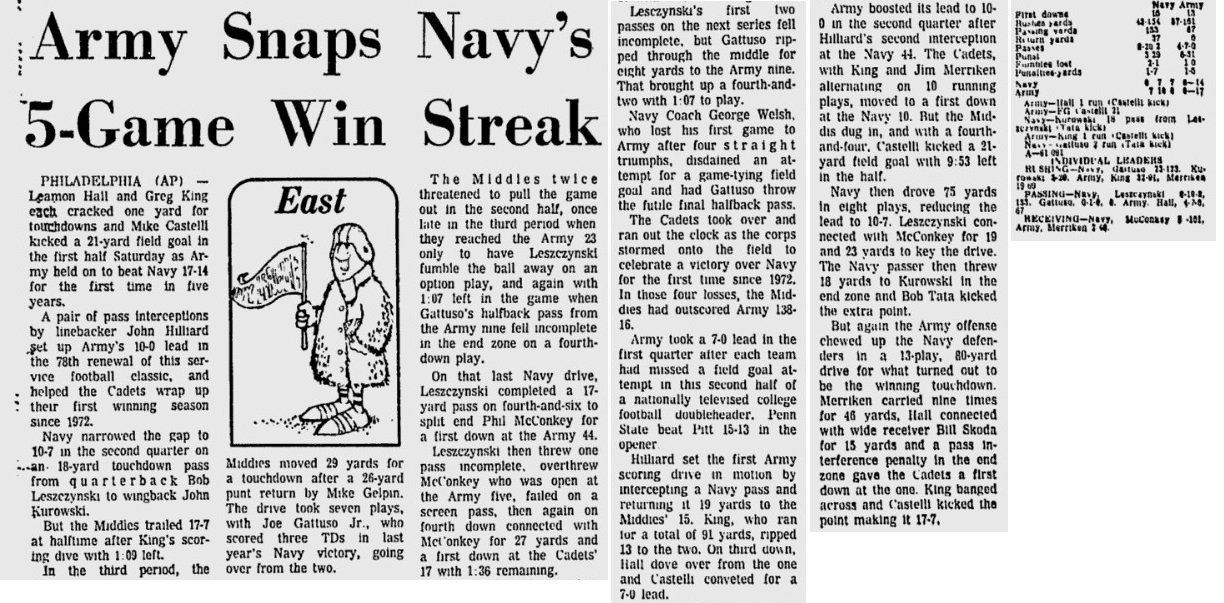
1977/11/26 Army 17 – Navy 14 W

Coach – Homer Austin Smith (October 9, 1931 – April 10, 2011)

source: http://en.wikipedia.org/wiki/Homer_Smith_%28American_football%29


armyfb_1977_vsairforce_eveningnews_nov61977
ArmyFB_1977_vsAirForce_EveningNews_Nov61977


armyfb_1977_vsnavy_eveningnews_nov271977
ArmyFB_1977_vsNavy_EveningNews_Nov271977


armyfb_1977_vsnavy_sarasotaheraldtribune_nov271977
ArmyFB_1977_vsNavy_SarasotaHeraldTribune_Nov271977


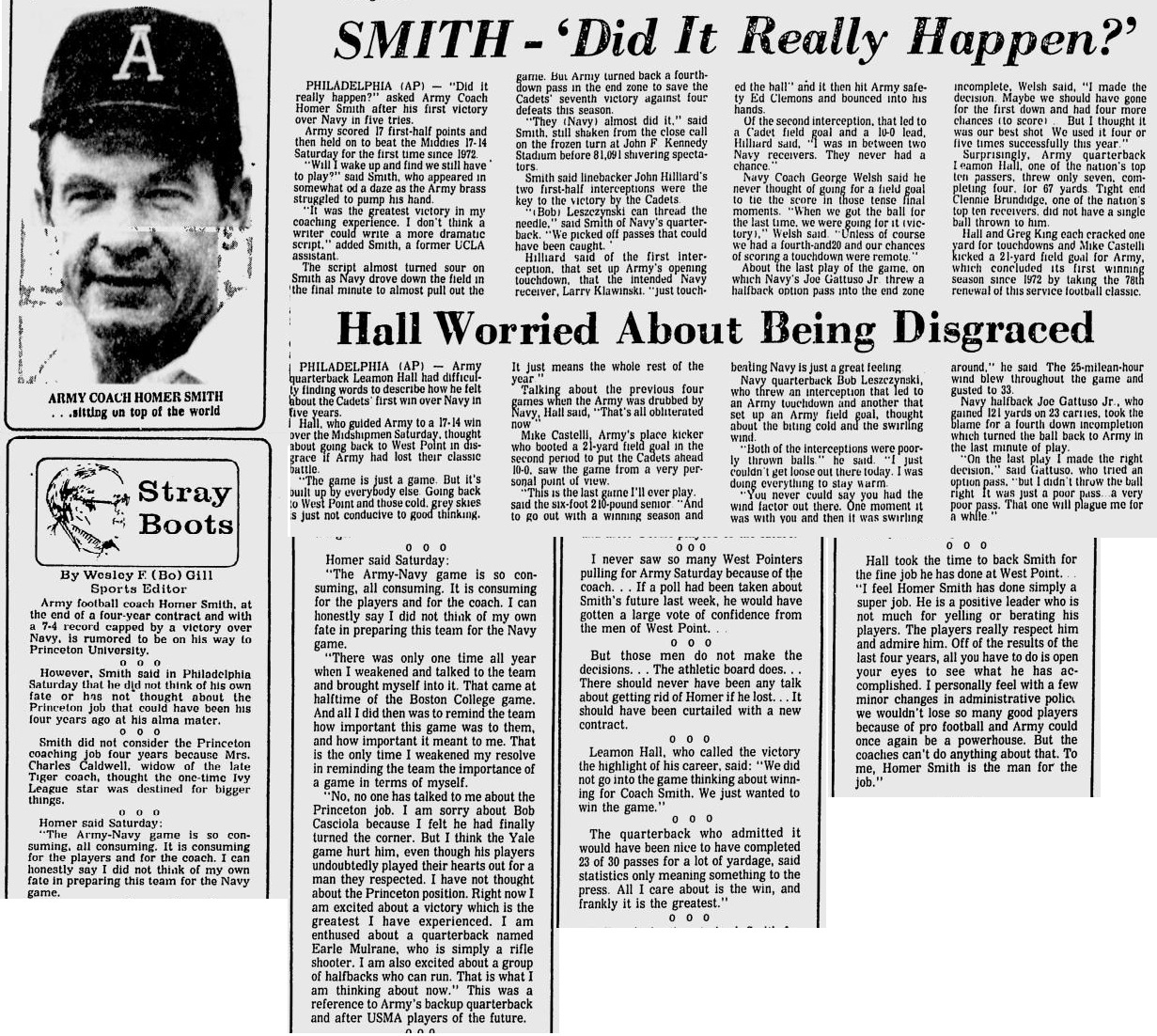
armyfb_1977_vsnavy-smith-hall_eveningnews_nov271977
ArmyFB_1977_vsNavy-Smith-Hall_EveningNews_Nov271977-1


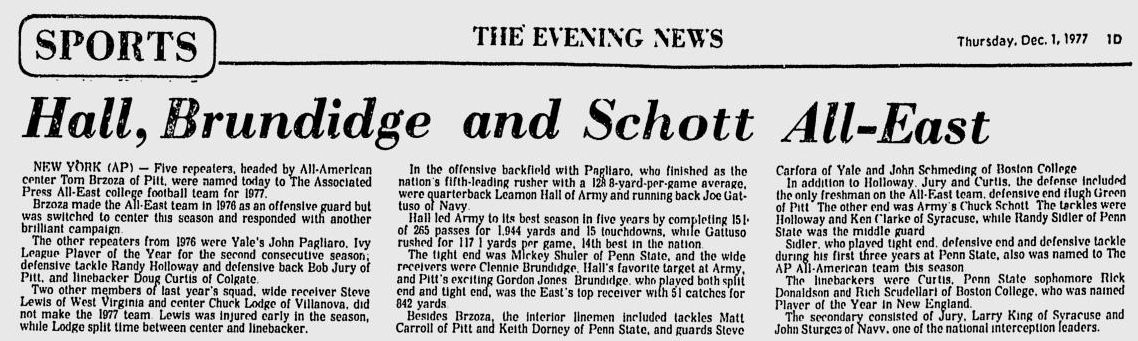
armyfb_1977_hall-brundiidge-schott-alleast_en-dec11977
ArmyFB_1977_Hall-Brundiidge-Schott-AllEast_EN-Dec11977


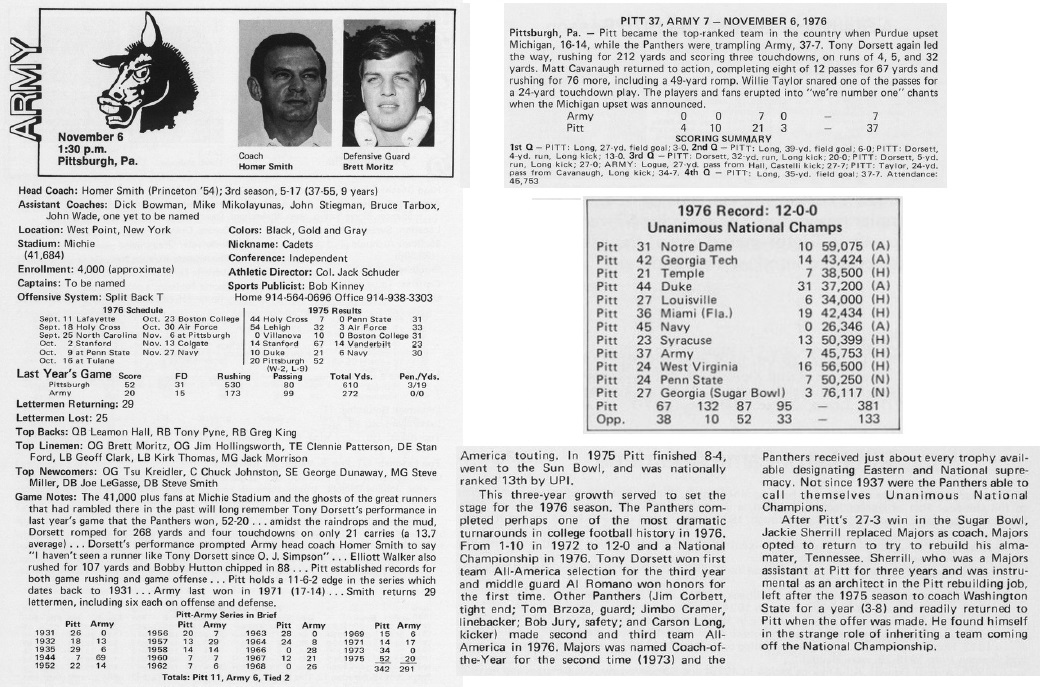
1976 Team

1976 Army 5-6

1976/10/30 Army 24 – Air Force 7 W

1976/11/27 Army 10 – Navy 38 L

Coach – Homer Austin Smith (October 9, 1931 – April 10, 2011)

source: http://en.wikipedia.org/wiki/Homer_Smith_%28American_football%29


armyfb_1976_editfromvspittsburgh-guide


ArmyFB_1976_editfromvsPittsburgh-guide

armyfb_1976_vspittsburgh-guide

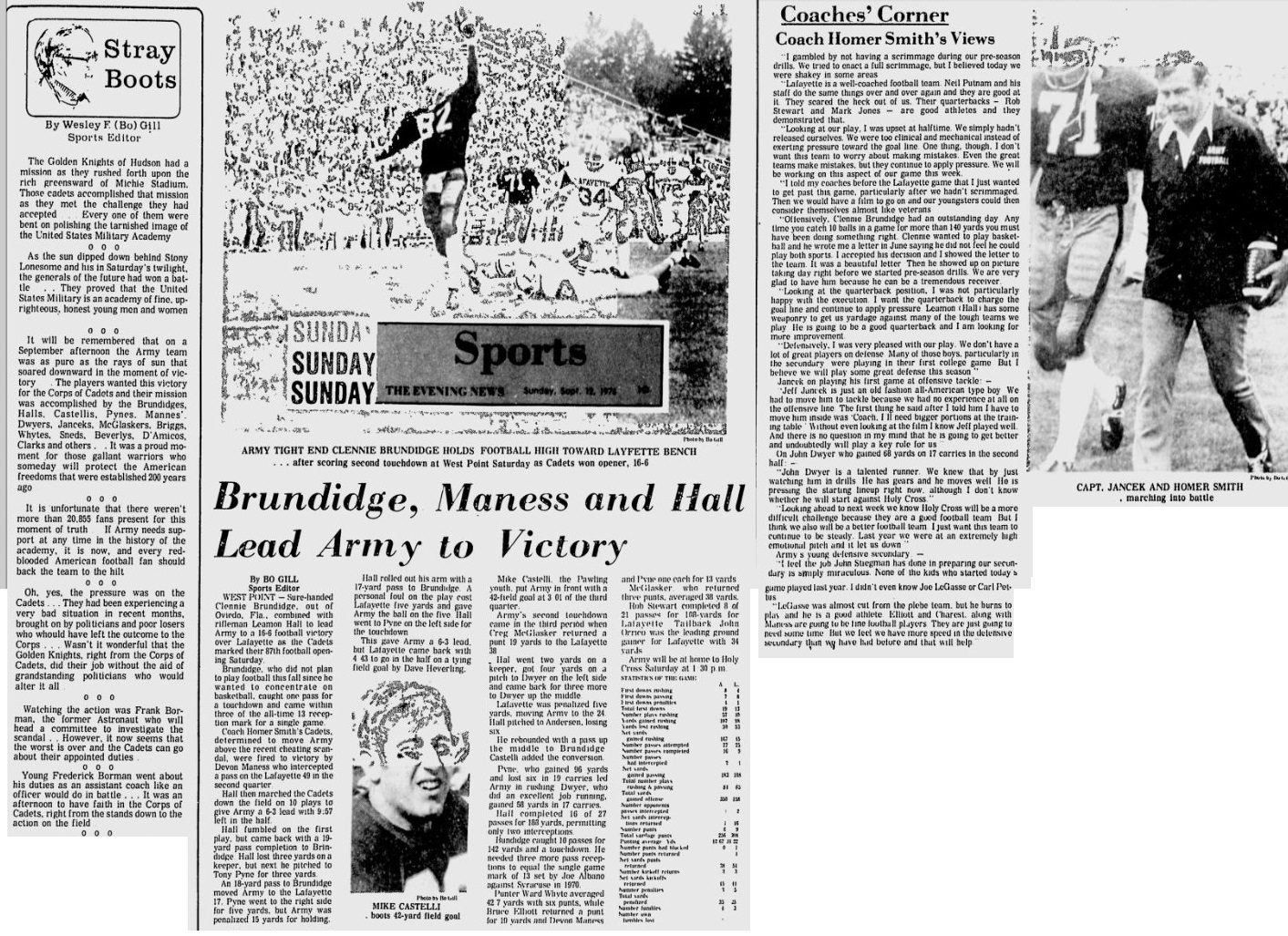
armyfb_1976_seasonopener_en-sep121976
ArmyFB_1976_SeasonOpener_EN-Sep121976

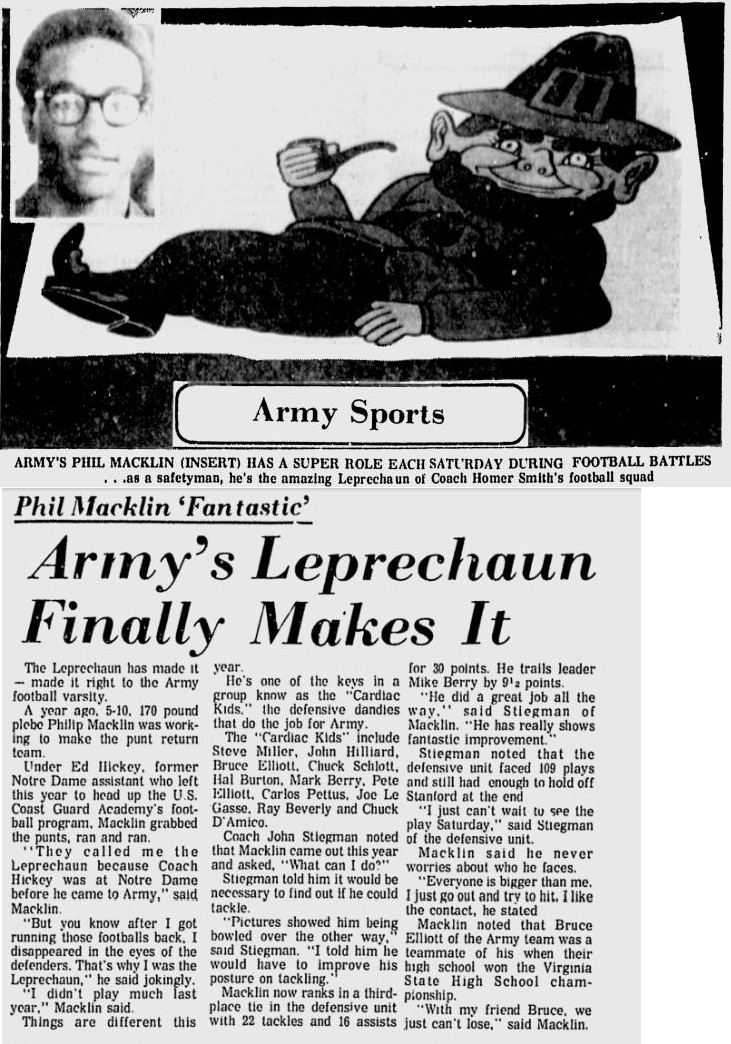
armyfb_1976_philmacklin79_oct51976

ArmyFB_1976_PhilMacklin79_Oct51976


armyfb_1976_vsairforce_eveningnews_oct301976
ArmyFB_1976_vsAirForce_EveningNews_Oct301976

armyfb_1976_leamonhall_clenniebrundidge_si_nov11976

ArmyFB_1976_LeamonHall_ClennieBrundidge_SI_Nov11976

–


1975 Team

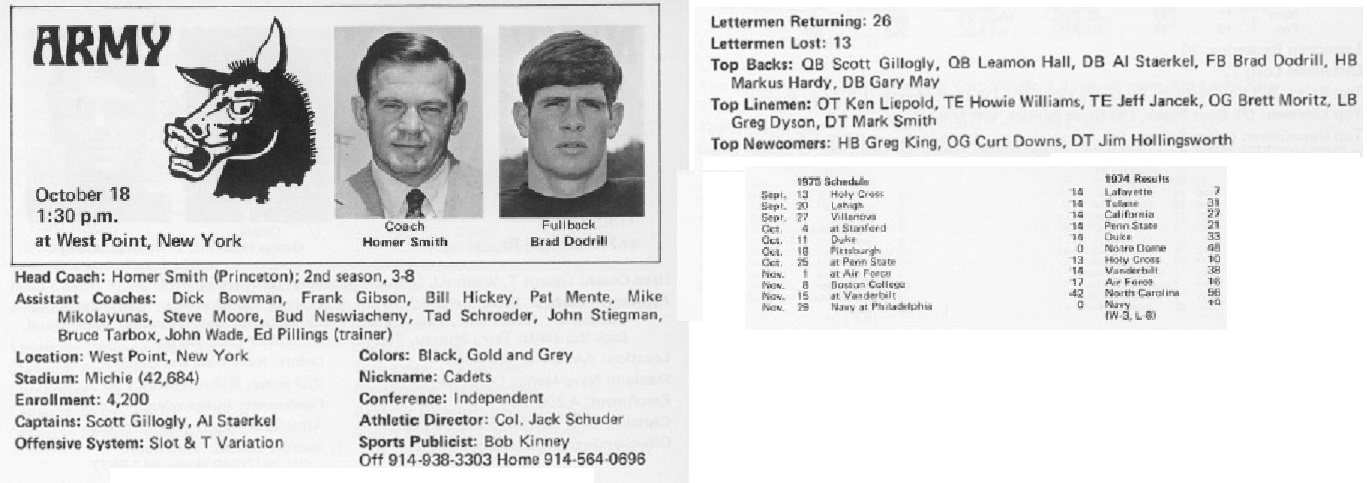
1975 Army 2-9
1975/11/29 Army 6 – Navy 30 L

Coach – Homer Austin Smith (October 9, 1931 – April 10, 2011)
source: http://en.wikipedia.org/wiki/Homer_Smith_%28American_football%29

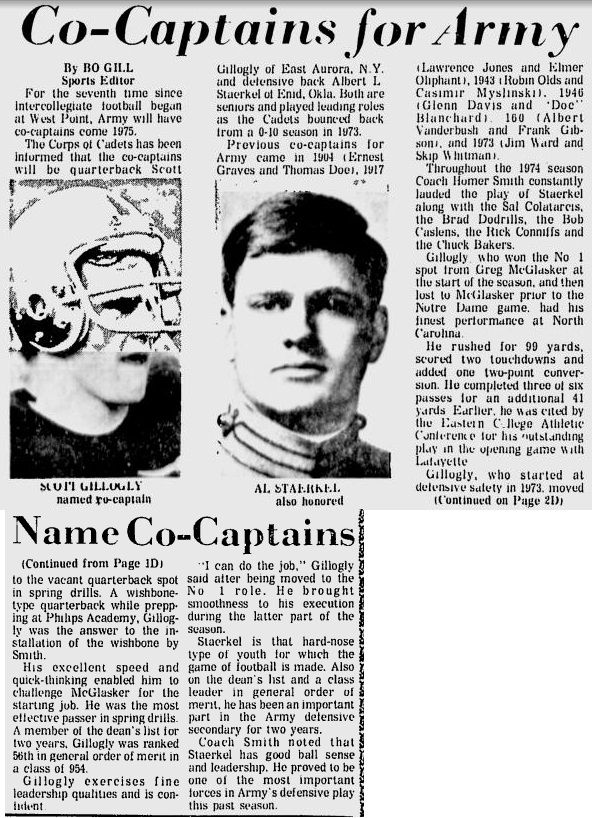
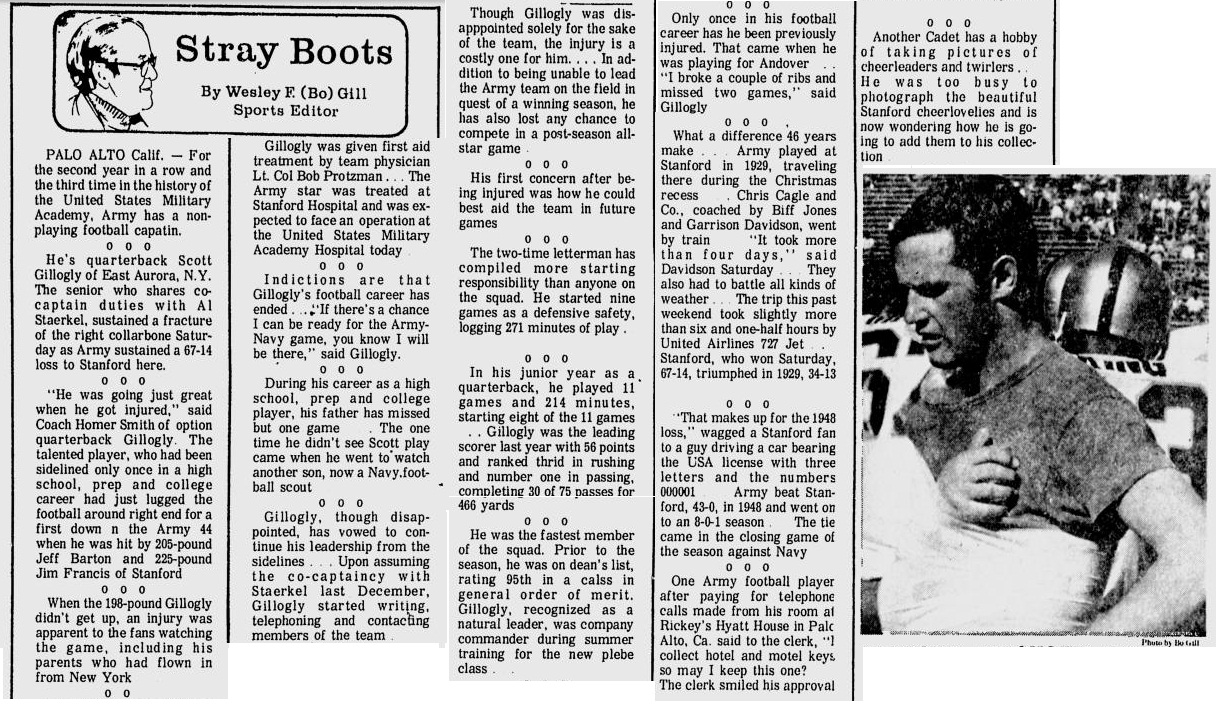
armyfb_1975_gilloglystaerkel_en-dec191974
ArmyFB_1975_GilloglyStaerkel_EN-Dec191974

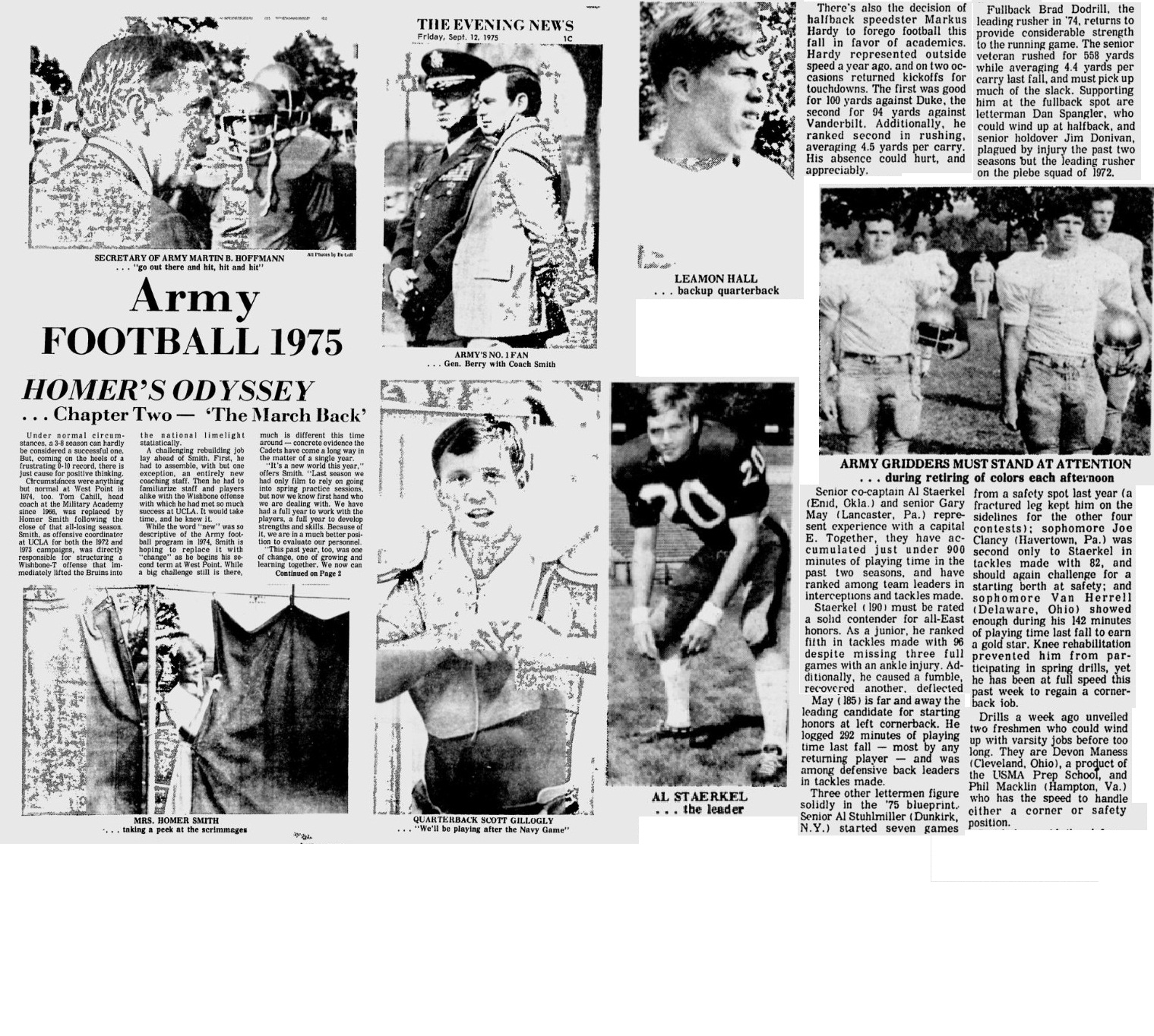
armyfb_1975_1themarchback_sep121975
ArmyFB_1975_1TheMarchBack_Sep121975

armyfb_1975_editfrompittsburgh-guide
ArmyFB_1975_editfromPittsburgh-guide

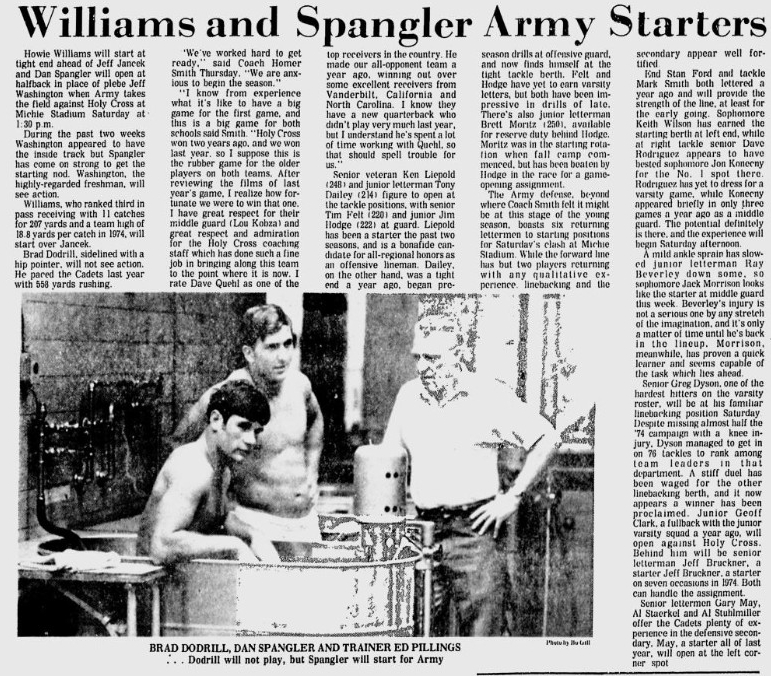
armyfb_1975_starters-dodrill-spangler-williams_en-sep121975
ArmyFB_1975_starters-Dodrill-Spangler-Williams_EN-Sep121975

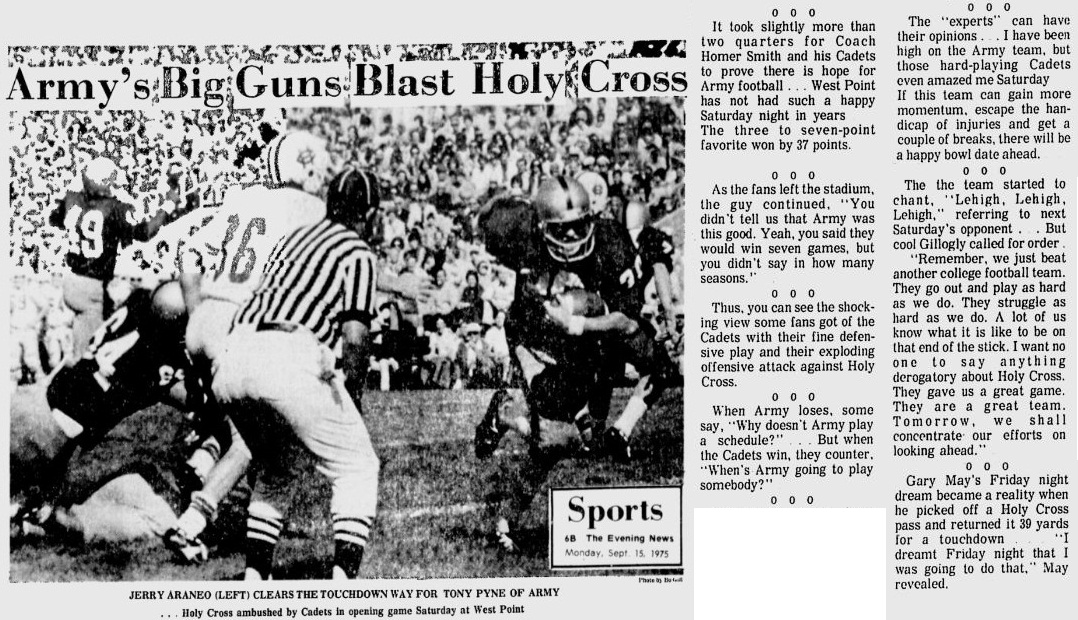
armyfb_1975_vsholycross-jerryaraneo_en-sep151975
ArmyFB_1975_vsHolyCross-JerryAraneo_EN-Sep151975

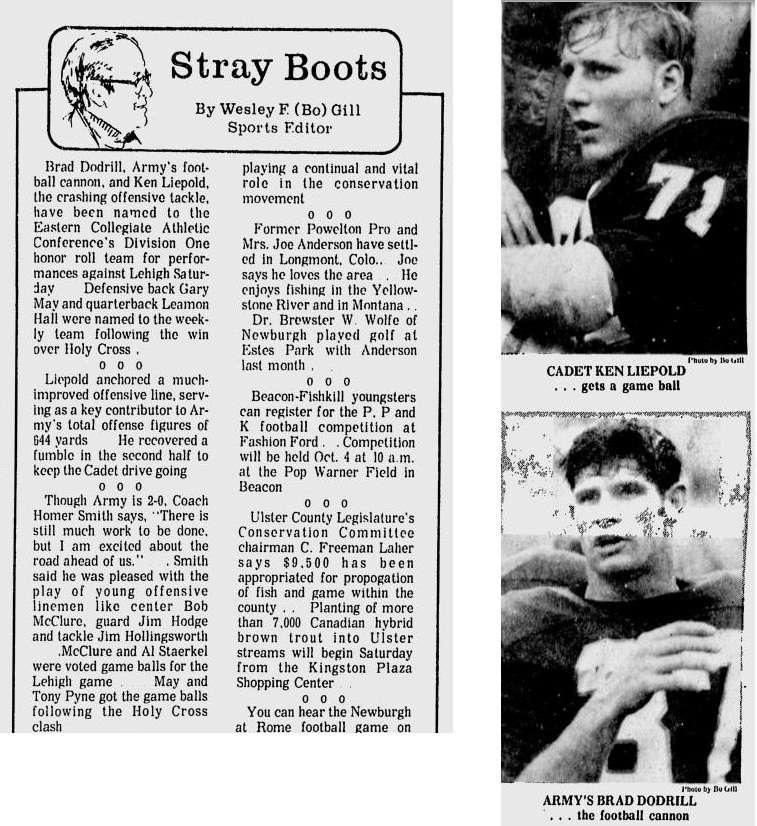
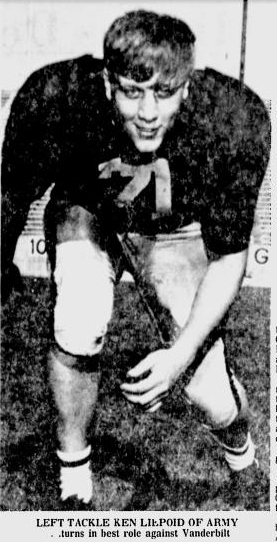
armyfb_1975_kenliepold-braddodrill_en-sep231975
ArmyFB_1975_KenLiepold-BradDodrill_EN-Sep231975

armyfb_1975_gillogly_en-oct61975
ArmyFB_1975_Gillogly_EN-Oct61975

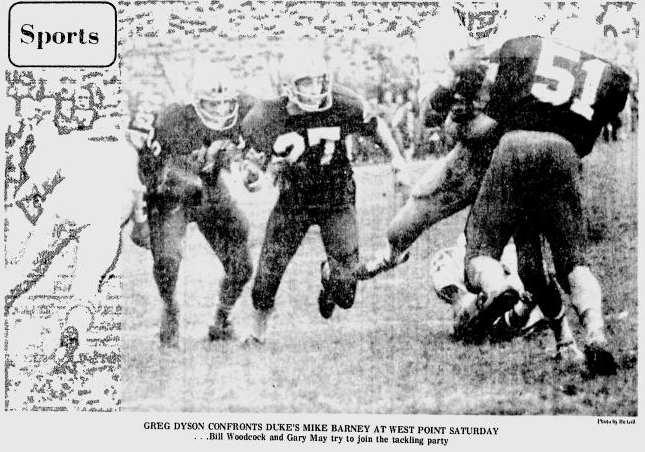
armyfb_1975_vsduke-dyson_may-woodcock_en-oct131975
ArmyFB_1975_vsDuke-Dyson_May-Woodcock_EN-Oct131975

armyfb_1975_kenliepoldarmyfb__en-nov61975
ArmyFB_1975_KenLiepoldArmyFB__EN-Nov61975

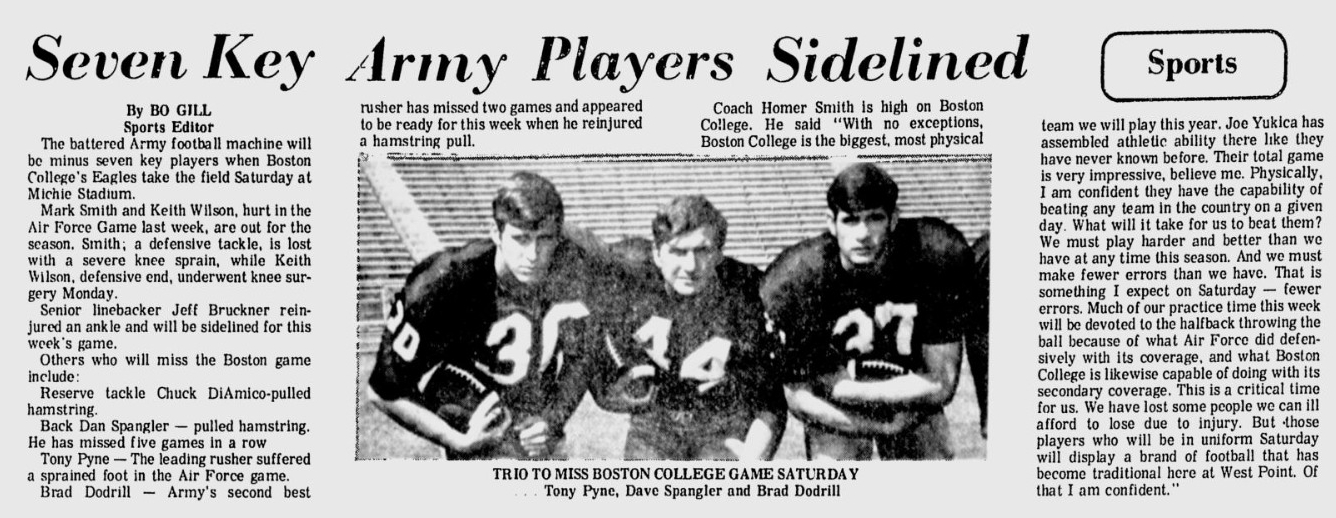
armyfb_1975_dodrill-spangler-pyne_en-nov61975
ArmyFB_1975_Dodrill-Spangler-Pyne_EN-Nov61975

–

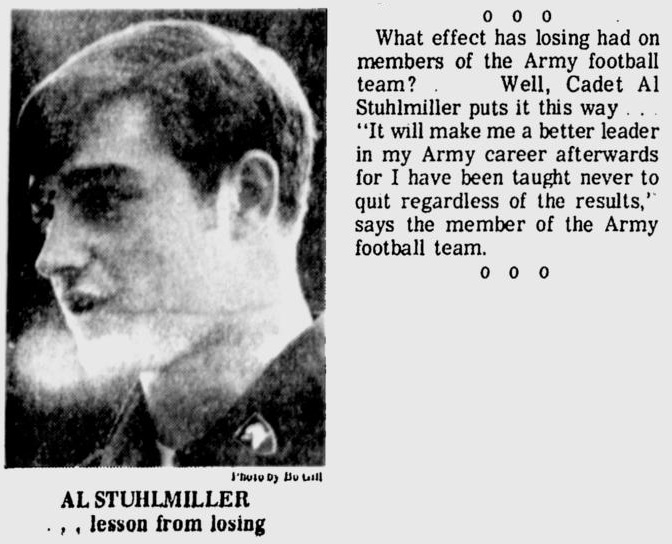
ArmyFB_1975_AlStuhlmiller_EveningNews_Nov201975

ArmyFB_1975_AlStuhlmiller_EveningNews_Nov201975

–

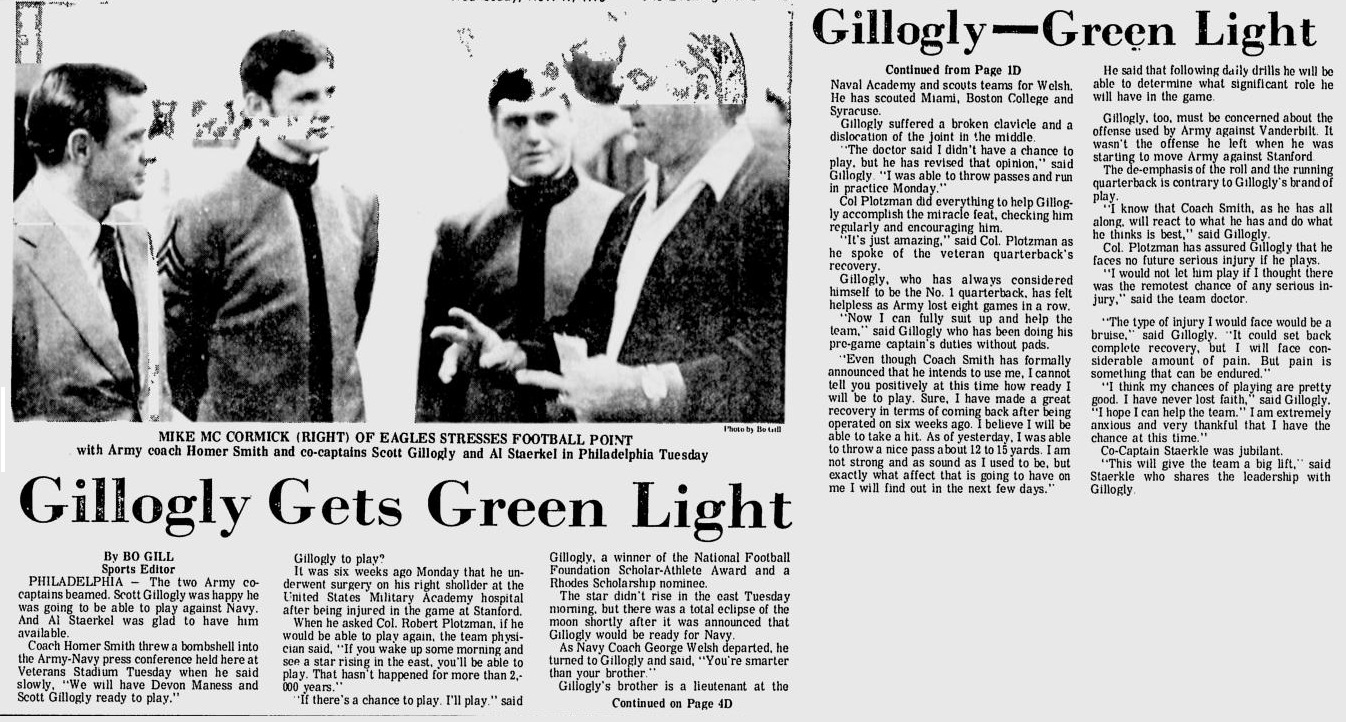
ArmyFB_1975_ScottGillogly_EveningNews_Nov191975

ArmyFB_1975_ScottGillogly_EveningNews_Nov191975

–

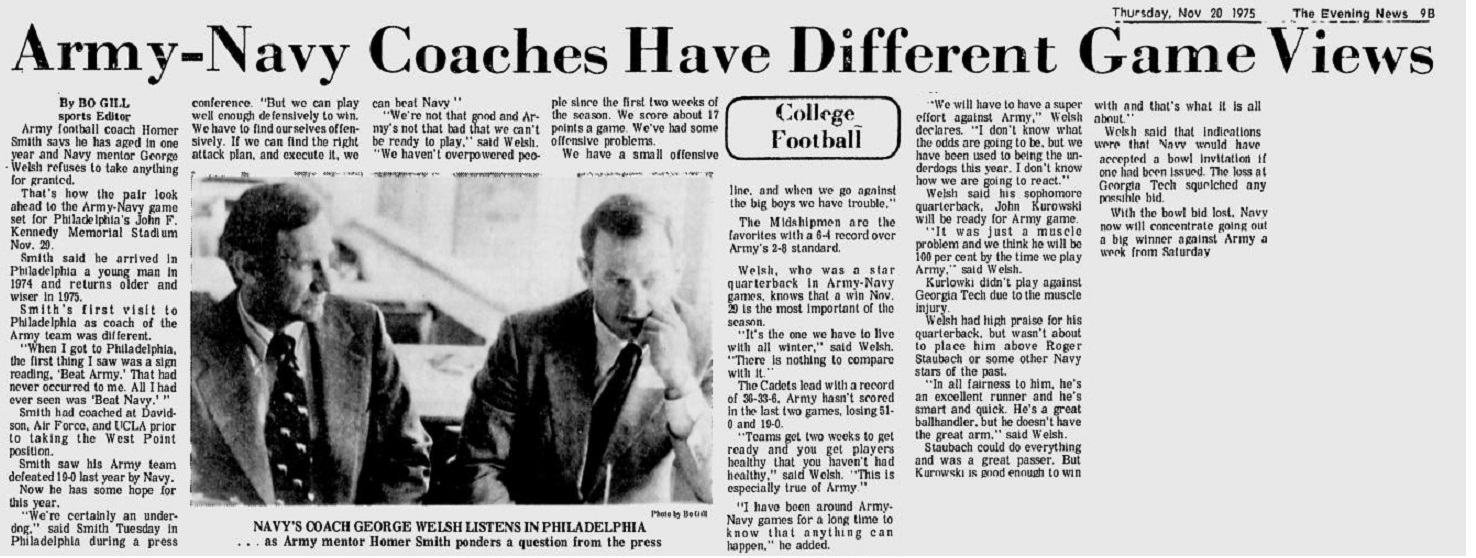
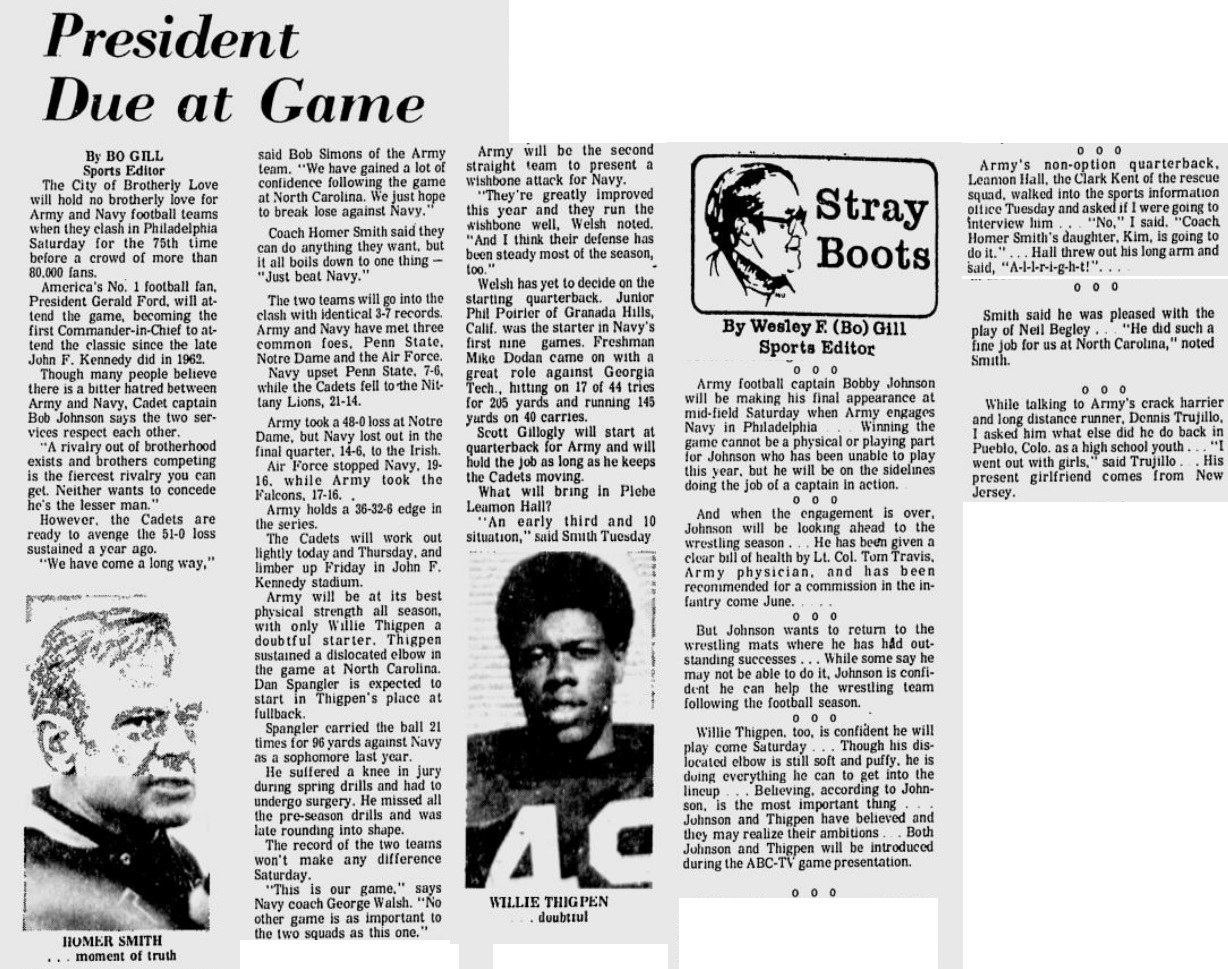
ArmyFB_1975_vsNavy-Welsh-Smith_EveningNews_Nov201975

ArmyFB_1975_vsNavy-Welsh-Smith_EveningNews_Nov201975

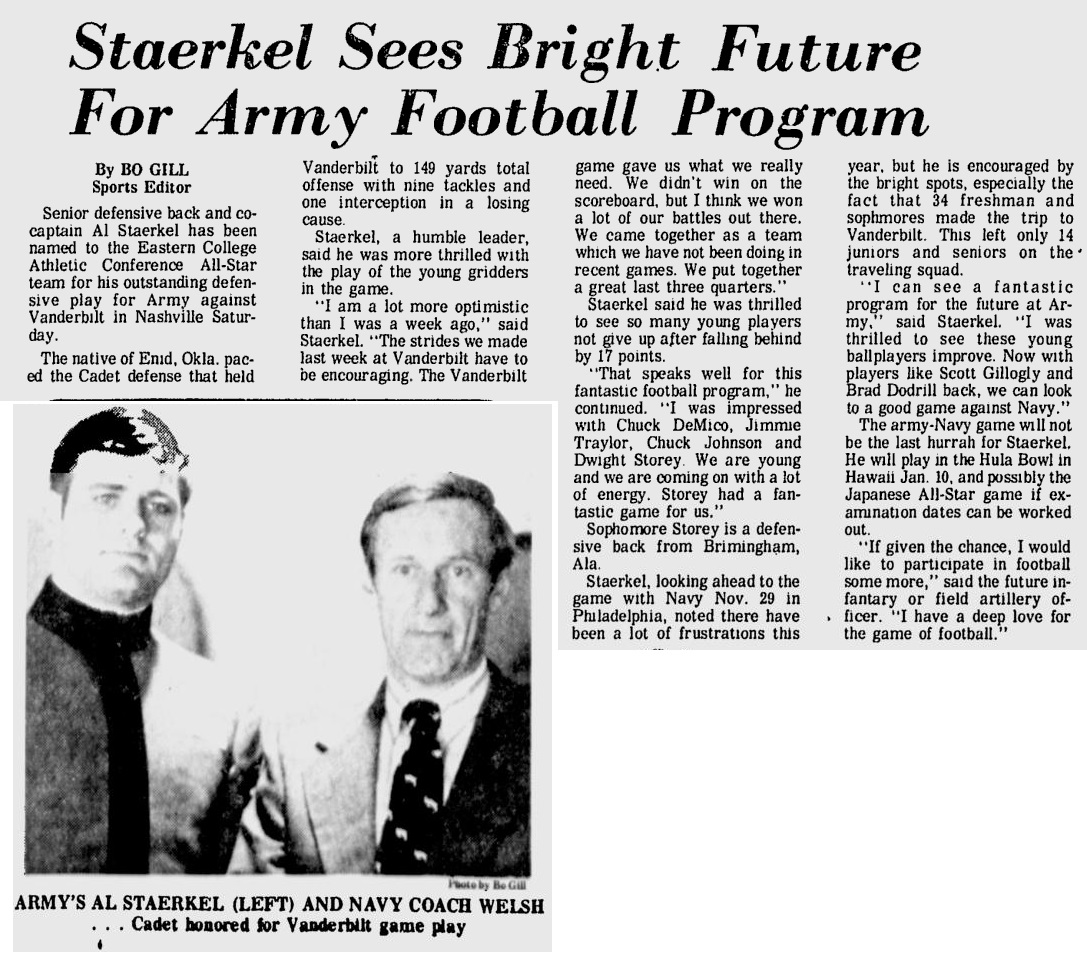
ArmyFB_1975_AlStaerkel_EveningNews_Nov211975

ArmyFB_1975_AlStaerkel_EveningNews_Nov211975

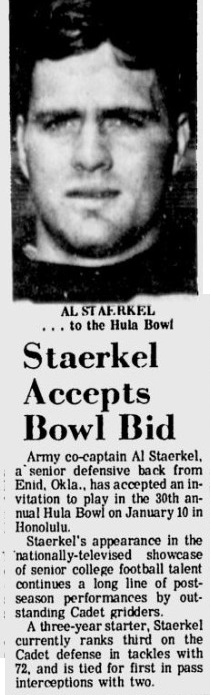
ArmyFB_1975_AlStaerkel-HulaBowl_EveningNews_Nov271975

ArmyFB_1975_AlStaerkel-HulaBowl_EveningNews_Nov271975

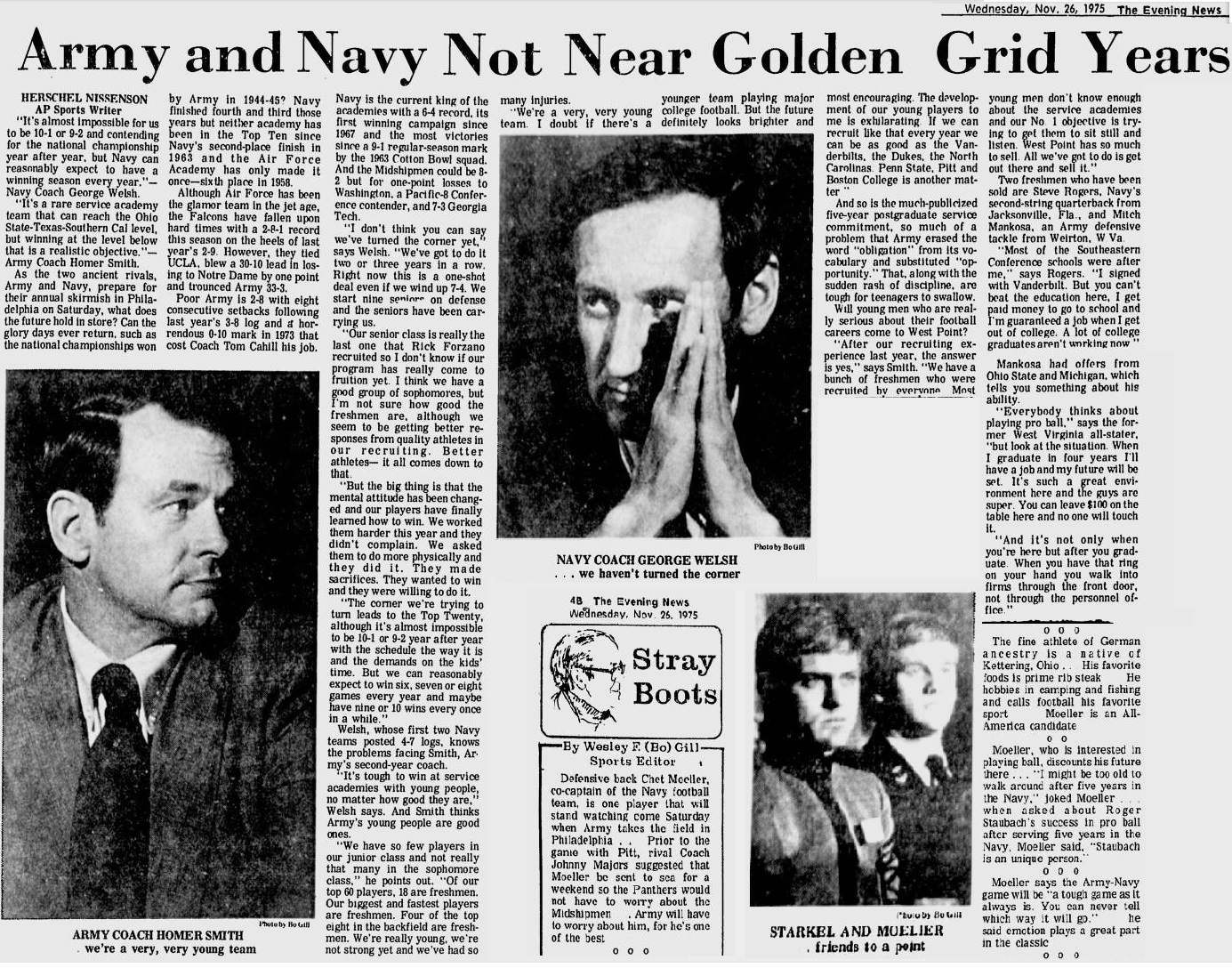
ArmyFB_1975_vsNavy-pre_EveningNews_Nov261975

ArmyFB_1975_vsNavy-pre_EveningNews_Nov261975

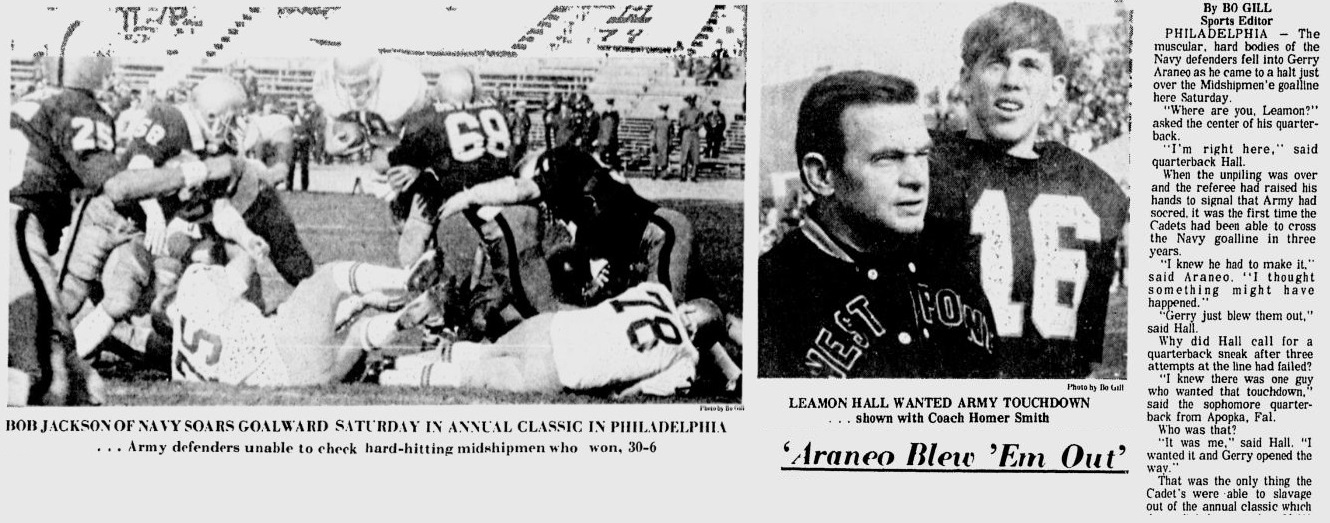
ArmyFB_1975_vsNavy_EveningNews_Dec11975

–

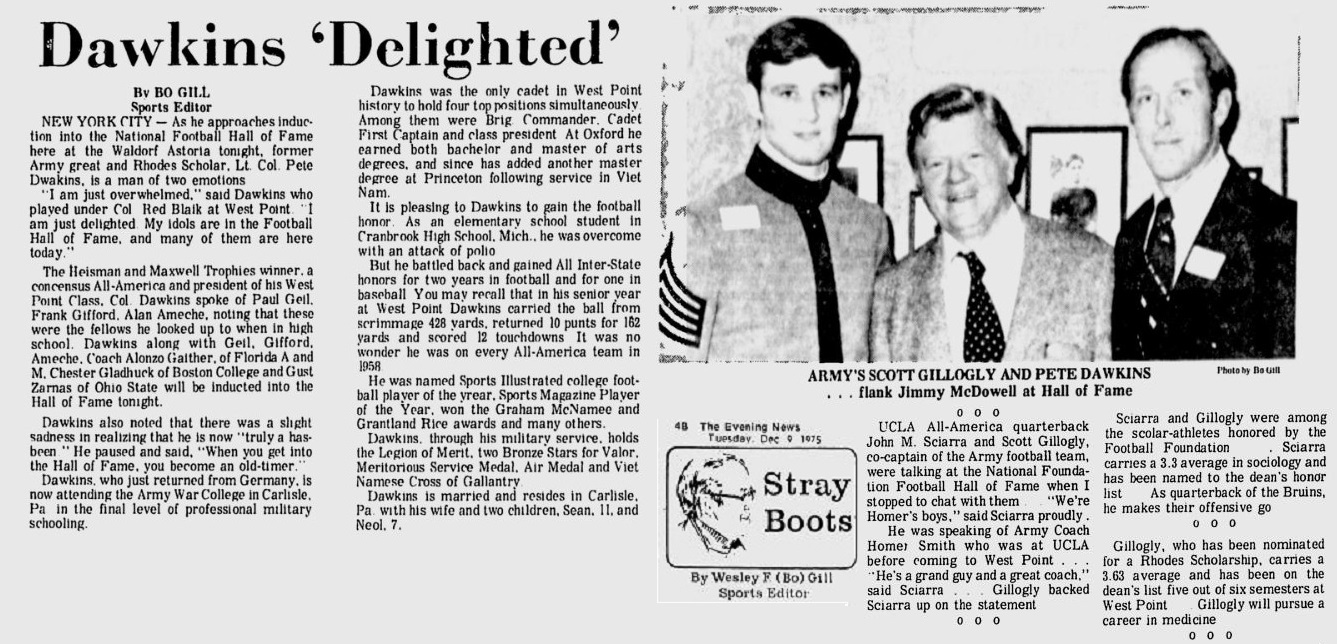
ArmyFB_1975_DawkinsGillogly__EN-Dec91975

ArmyFB_1975_DawkinsGillogly__EN-Dec91975

–

1974 Team

1974 Army 3-8
1974/11/30 Army 0 – Navy 19 L
1974/11/09 Army 17 – Air Force 16 W

Coach – Homer Austin Smith (October 9, 1931 – April 10, 2011)
Army 1974-1978:
1974 Army 3-8
1975 Army 2-9
1976 Army 5-6
1977 Army 7-4
1978 Army 4-6-1
Army: 21-33-1

Homer Smith [74-78] “…went an academy-best 4-1 against Air Force in his five-year career at West Point.”
1974/11/09 Army 17 – Air Force 16 W
1975/11/01 Army 3 – Air Force 33 L
1976/10/30 Army 24 – Air Force 7 W
1977/11/05 Army 31 – Air Force 6 W
1978/11/04 Army 28 – Air Force 14 W

source: http://en.wikipedia.org/wiki/Homer_Smith_%28American_football%29

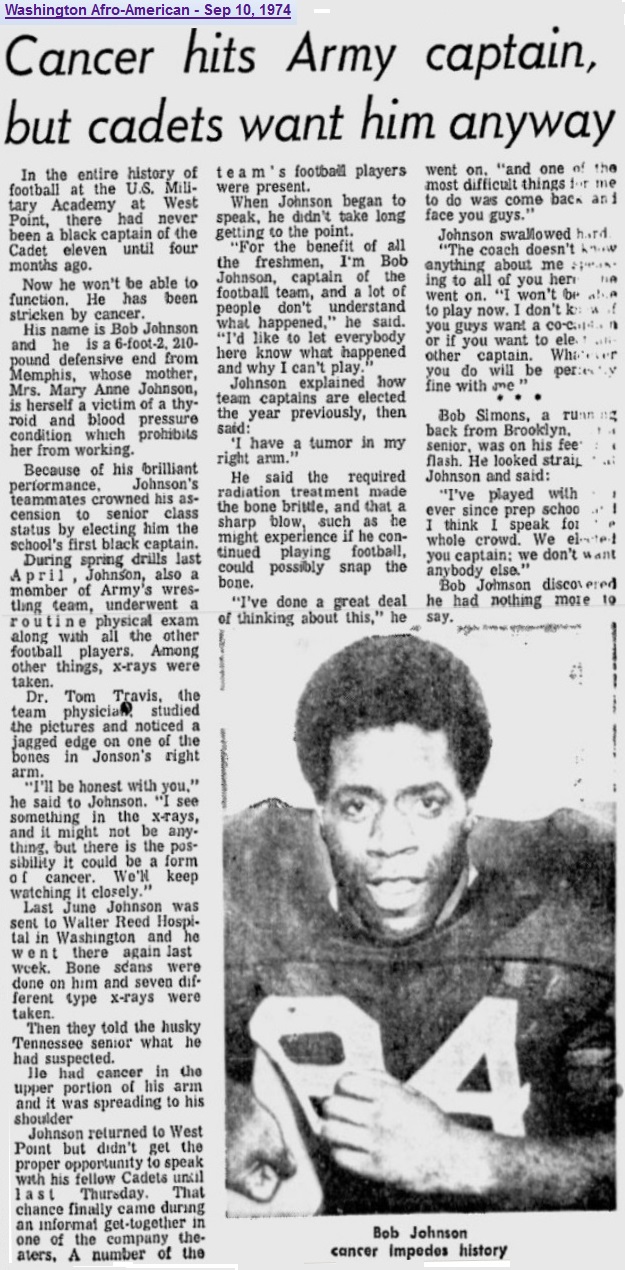
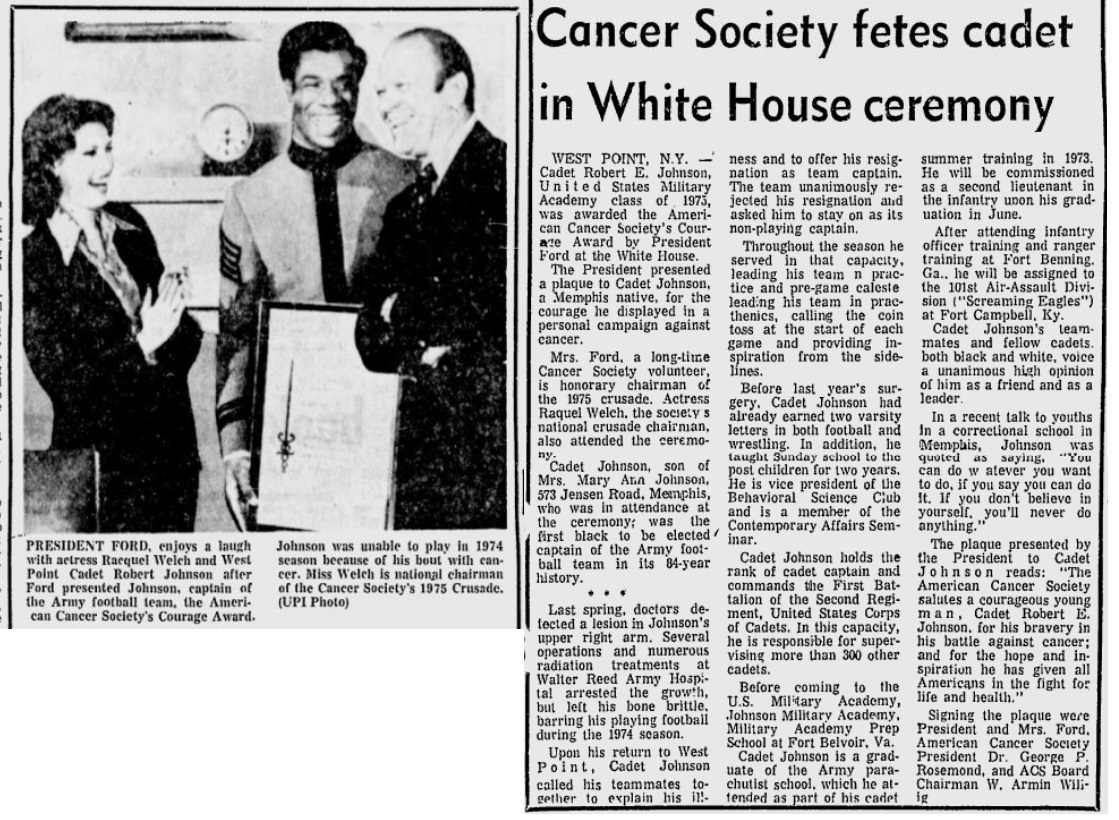
–ArmyFB_1974_RobertJohnson-Captain_AfroAmerican_Sep101974

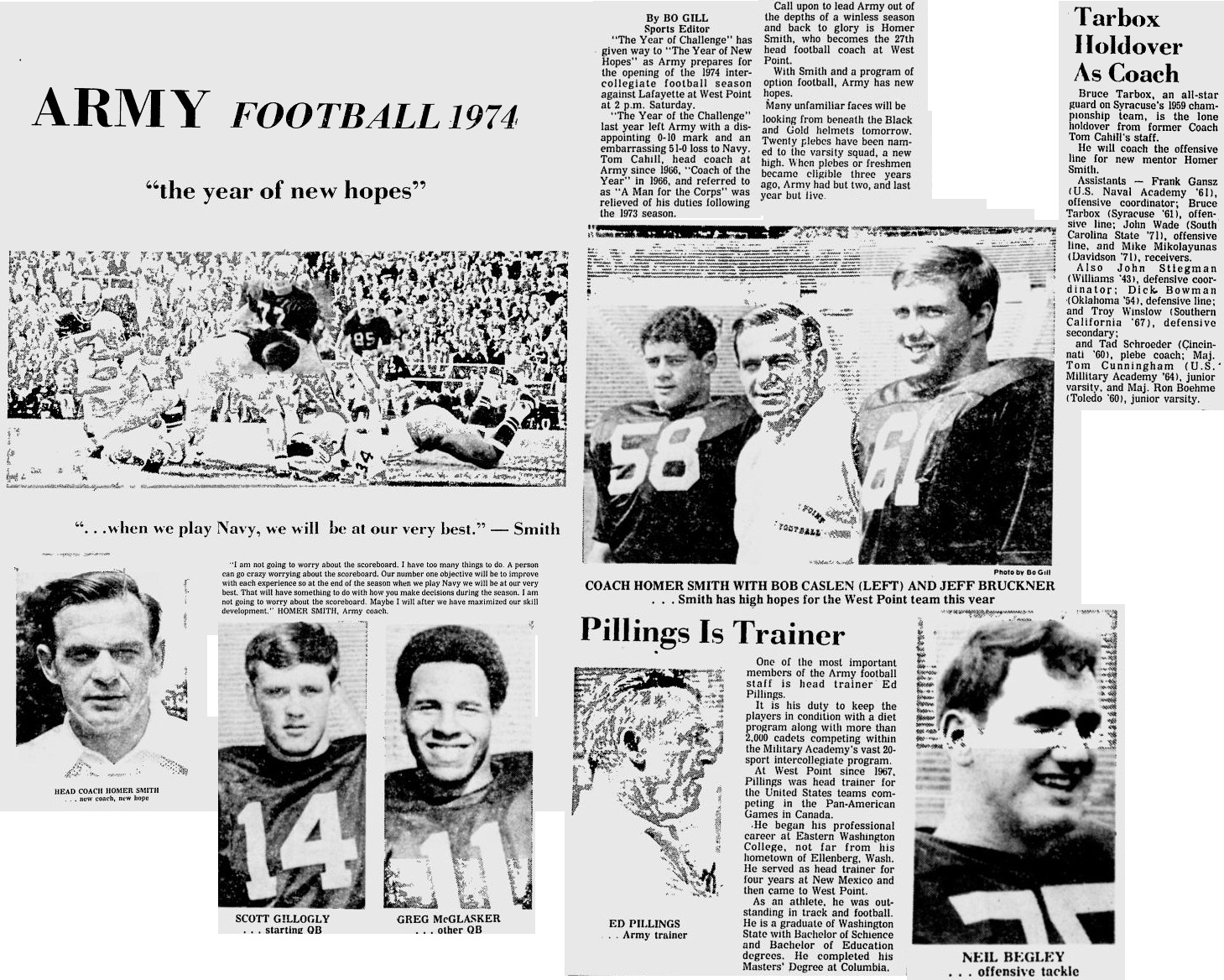
armyfb_1974_ayearofhope_en-sep131974
ArmyFB_1974_AYearofHope_EN-Sep131974

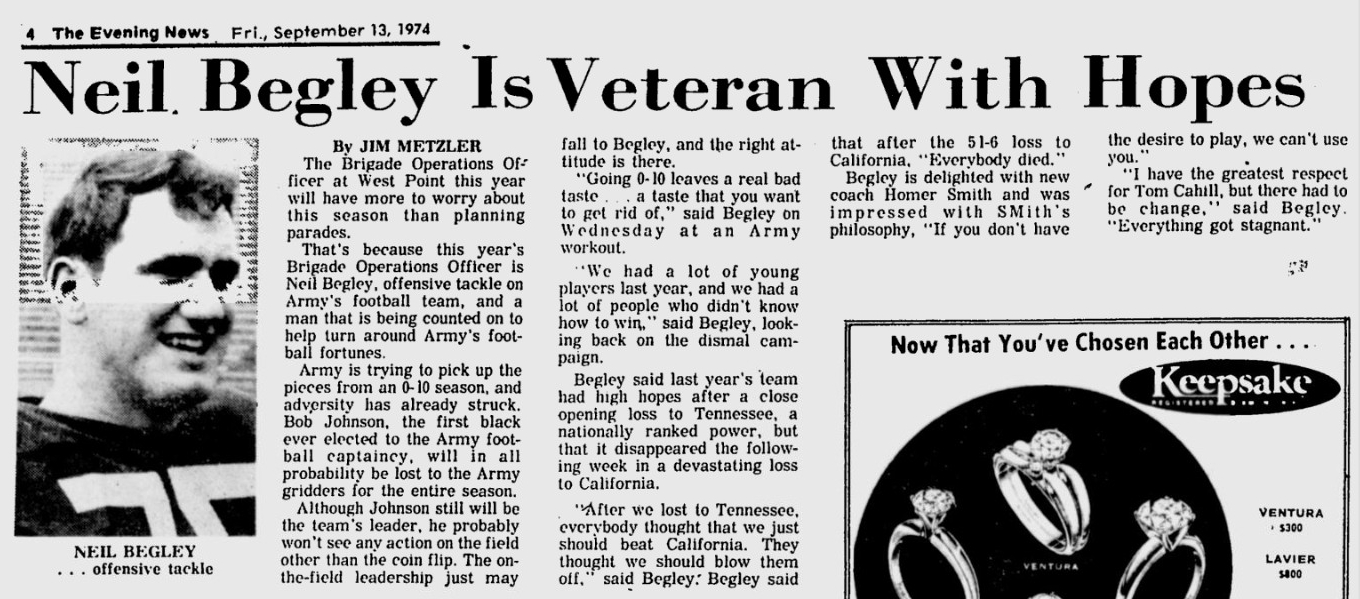
armyfb_1974_neilbegley_en-sep131974
ArmyFB_1974_NeilBegley_EN-Sep131974


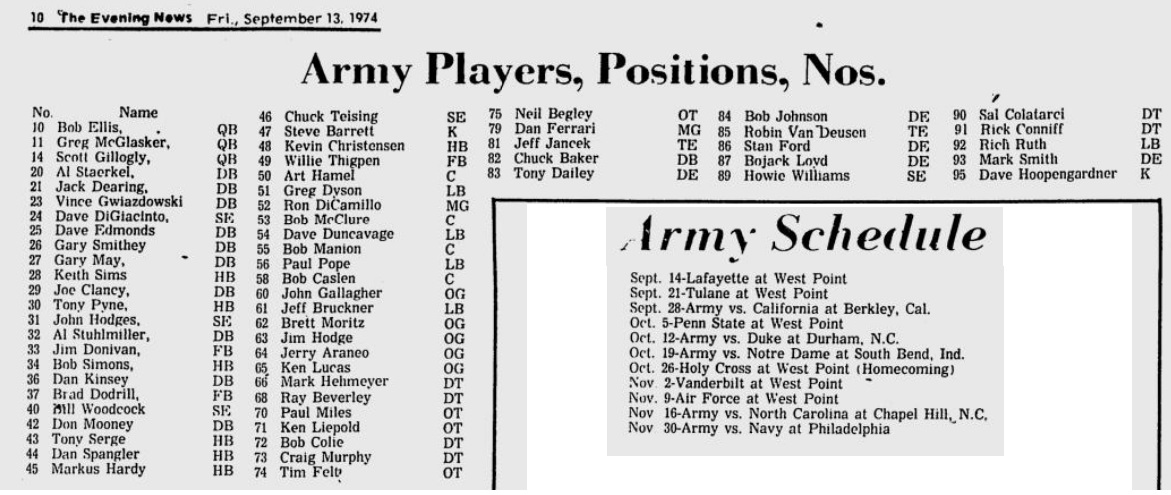
ArmyFB_1974_roster_EveningNews_Sep131974


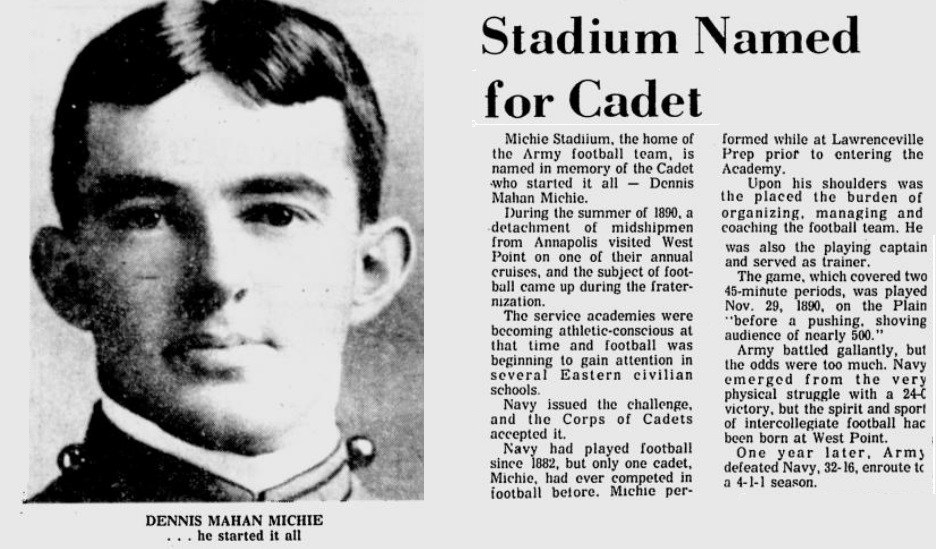
ArmyFB_DennisMichie_EveningNews_Sep131974

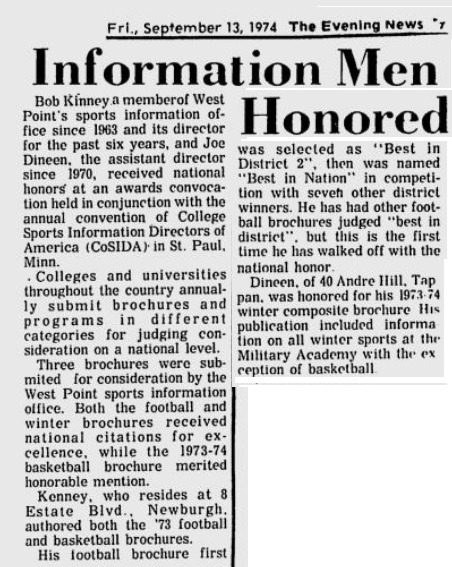
ArmyFB_BobKinney-JoeDineen_SIs_EveningNews_Sep131974

–

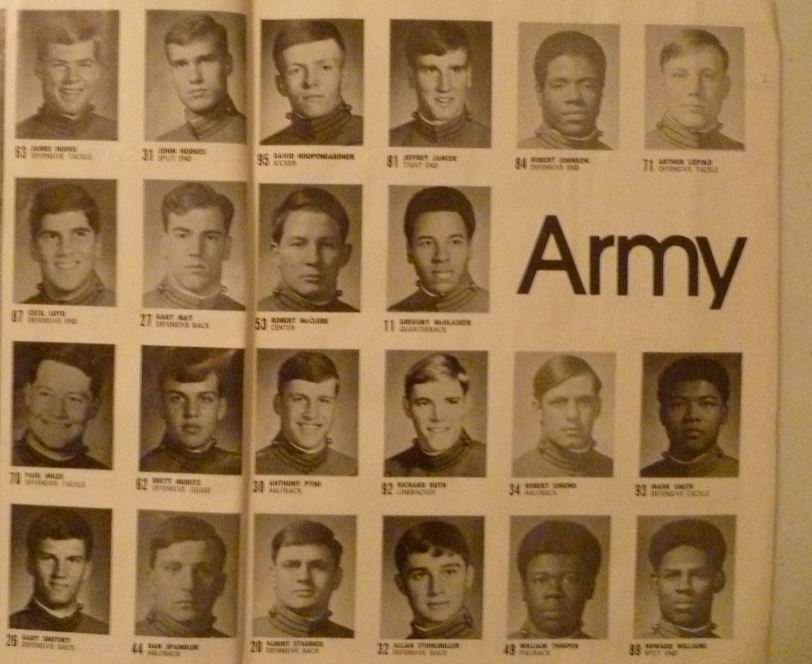
armyfb_1974_players2_tulanefootballprogram

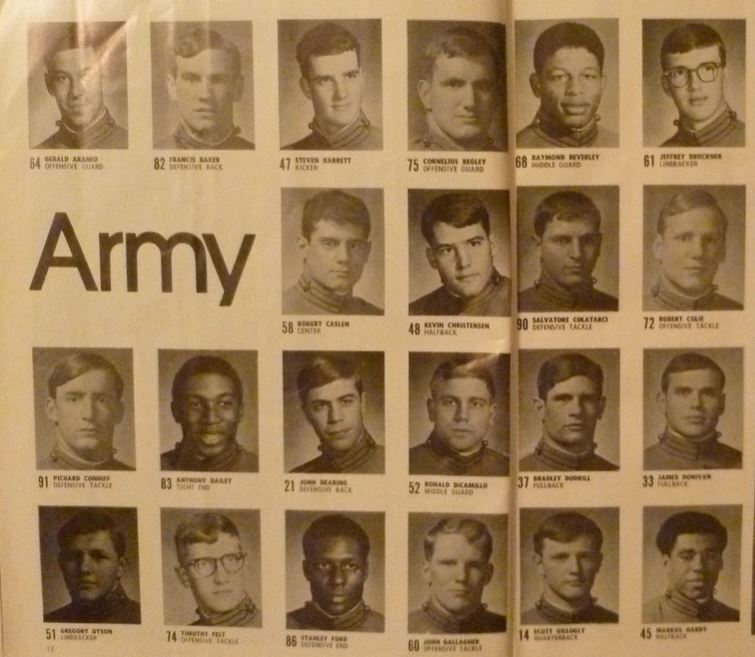
armyfb_1974_players1_tulanefootballprogram

armyfb_1974_wishbone_en-sep161974
ArmyFB_1974_Wishbone_EN-Sep161974
–

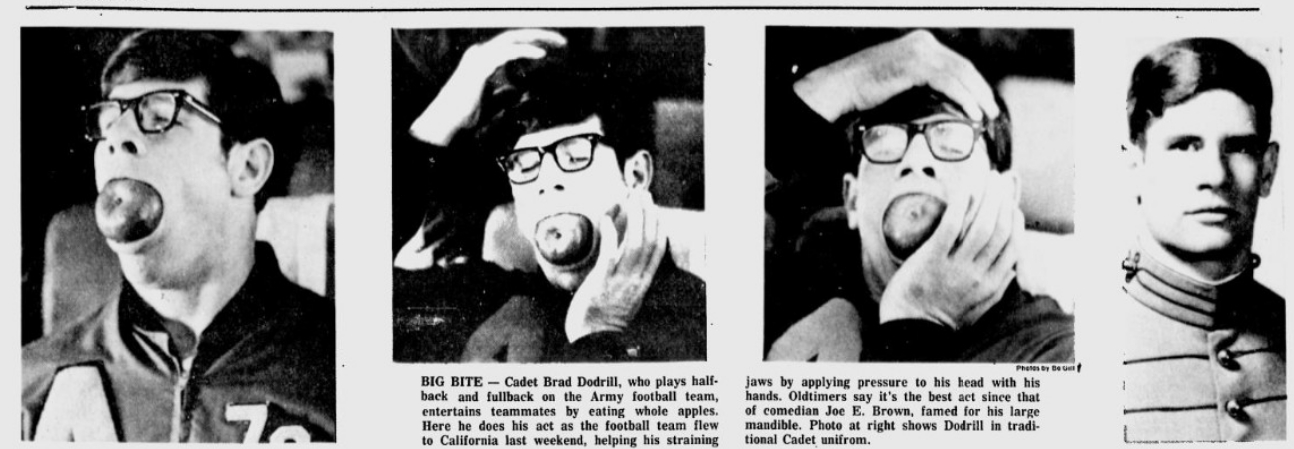
ArmyFB_1974_BradDodrill_Apple-Eater_EveningNews_Oct21974

ArmyFB_1974_BradDodrill_EN-Oct21974
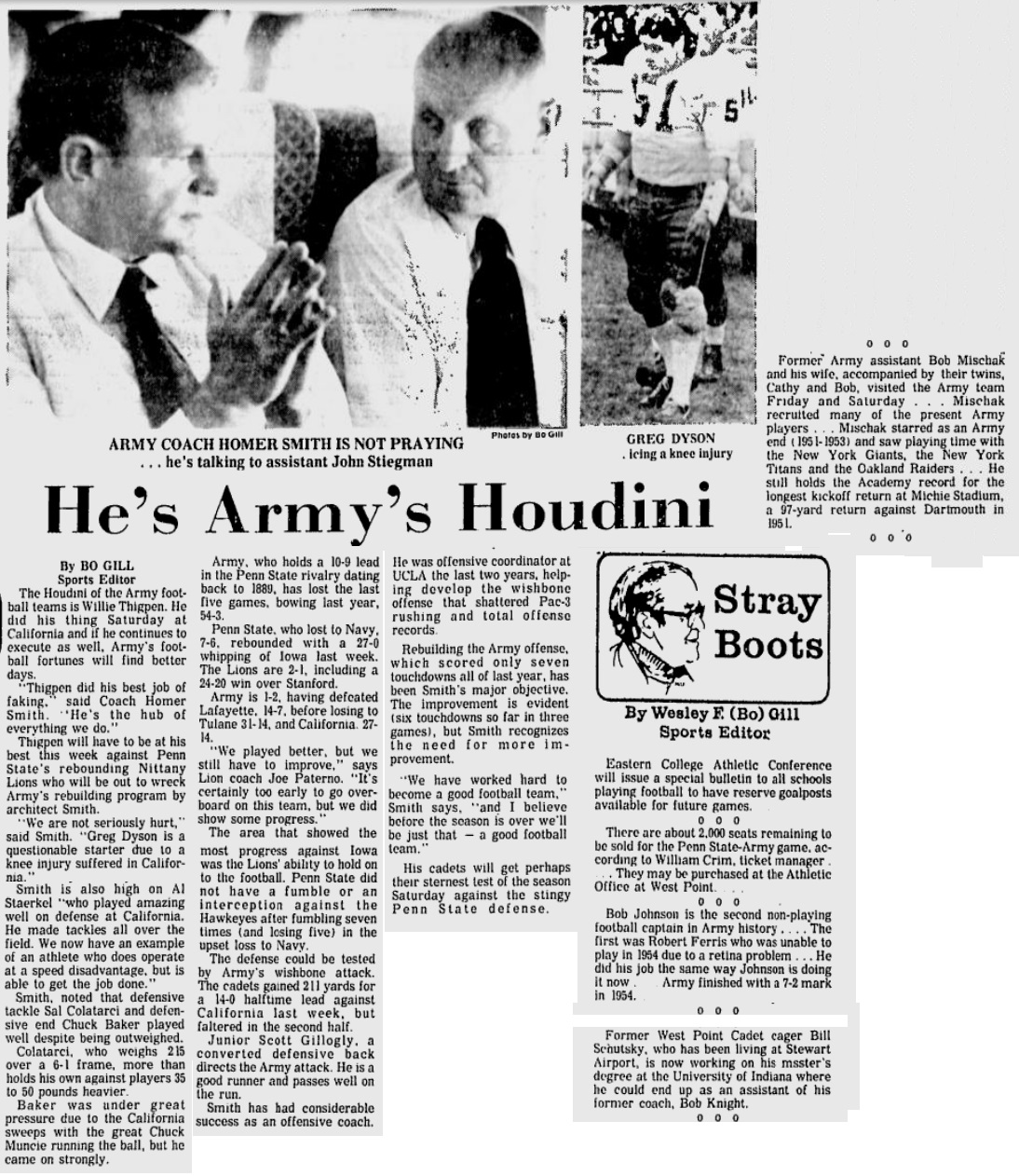
ArmyFB_1974_vsCal-pre_EveningNews_Oct21974

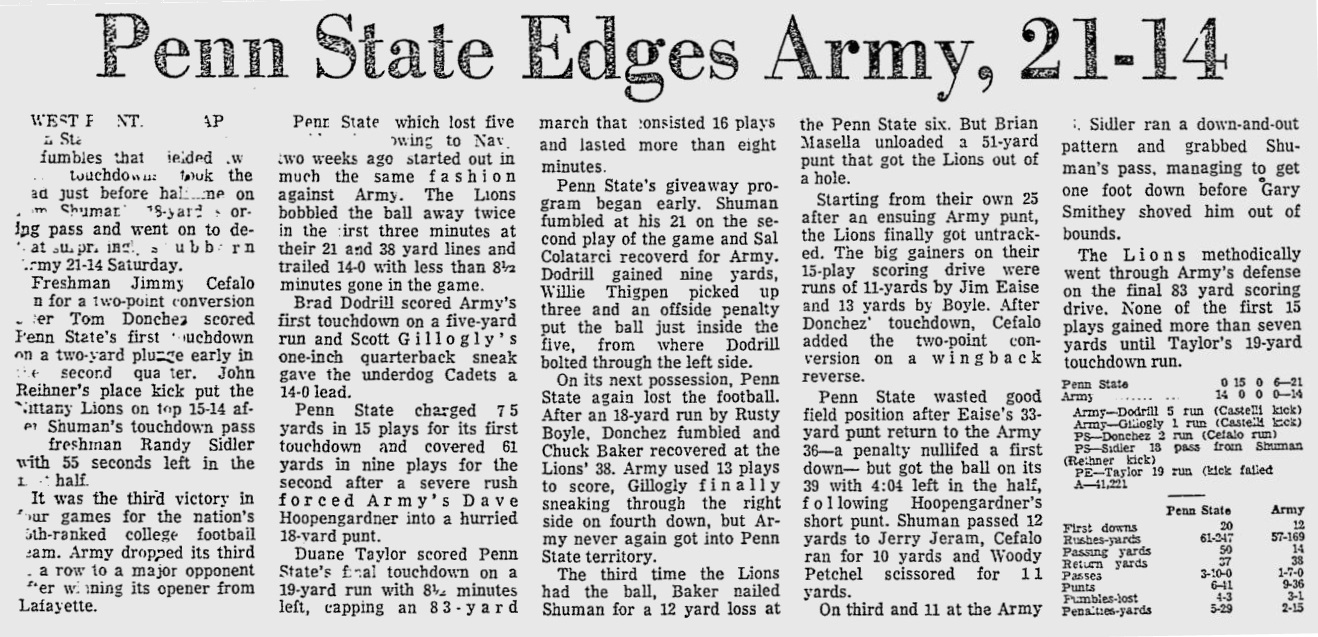
ArmyFB_1974_vsPSU_ReadingEagle_Oct61974

ArmyFB_1974_vsPSU_ReadingEagle_Nov61974

=
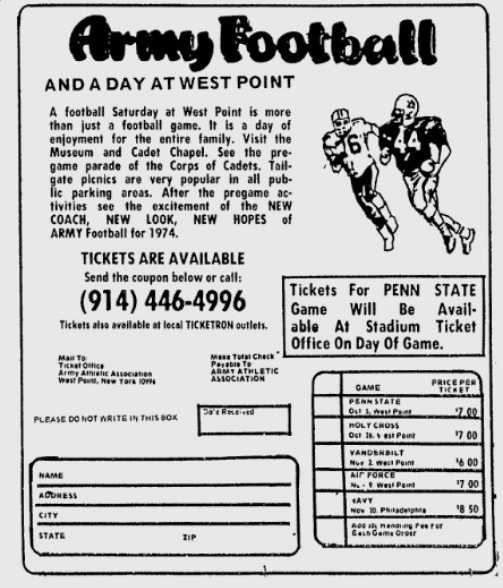
ArmyFB_1974_advert_EveningNews_Oct21974
–

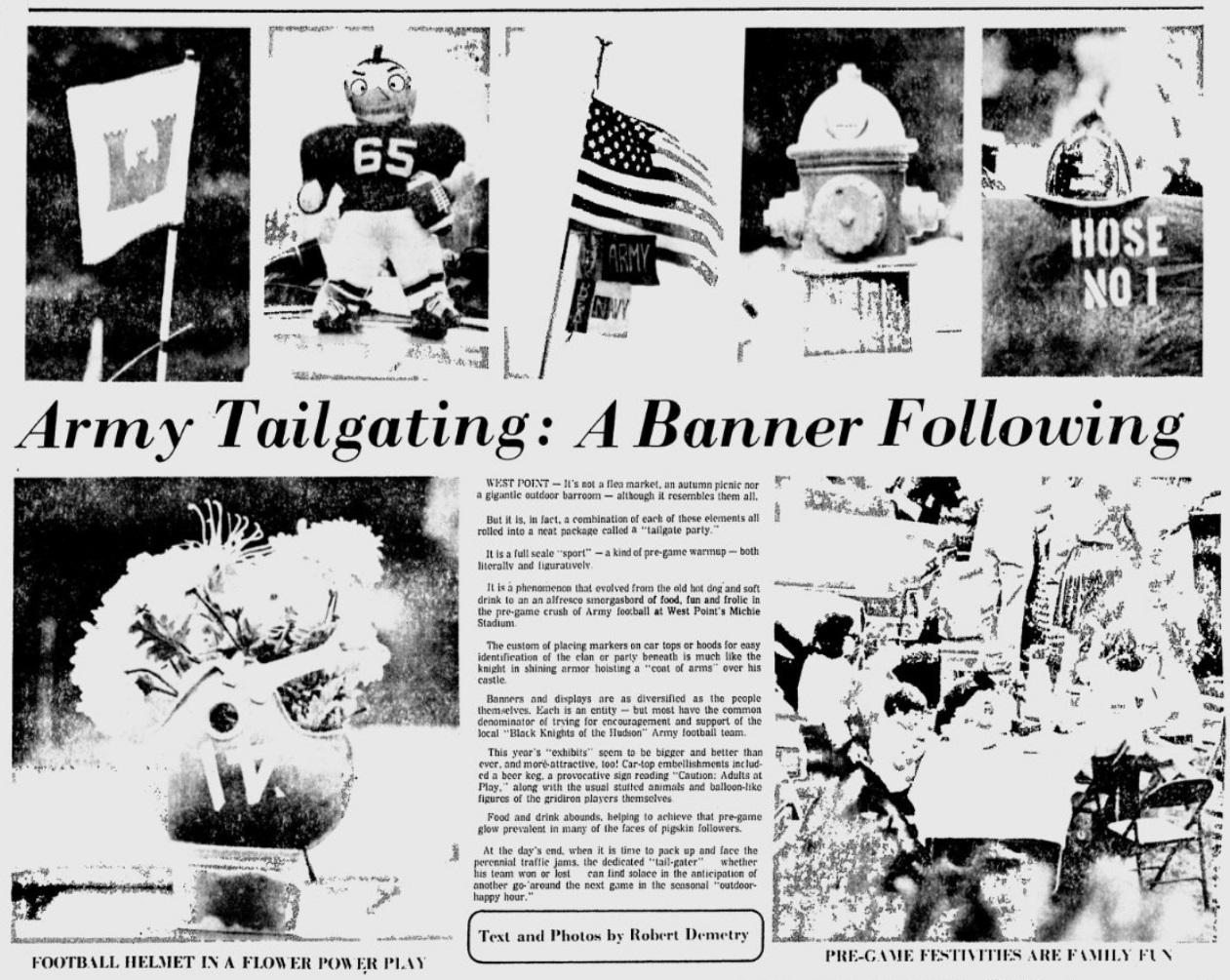
ArmyFB_1974_Tailgating_EveningNews_Nov81974

ArmyFB_1974_Tailgating_EveningNews_Nov81974

ArmyFB_1974_Tailgating_EN-Nov181974

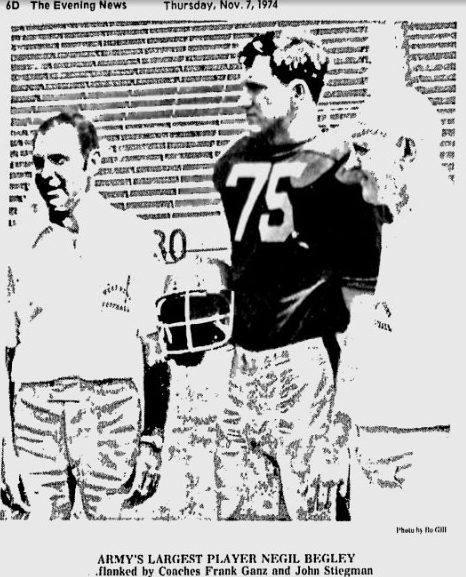
armyfb_1974_nielbegley_en-nov71974

ArmyFB_1974_NeilBegley_EN_Nov71974

ArmyFB_1974_vsAF-pre_EveningNews_Nov81974

ArmyFB_1974_vsAirForce-pre_EveningNews_Nov111974

armyfb_1974_vsairforce_eveningnews_nov111974
ArmyFB_1974_vsAirForce_EveningNews_Nov111974

–

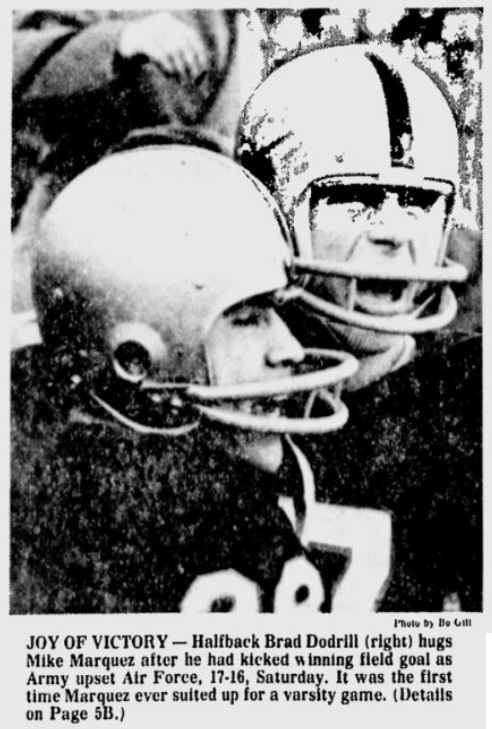
ArmyFB_1974_Marquez-Dodrill_EveningNews_Nov111974

ArmyFB_1974_Marquez-Dodrill_EveningNews_Nov111974

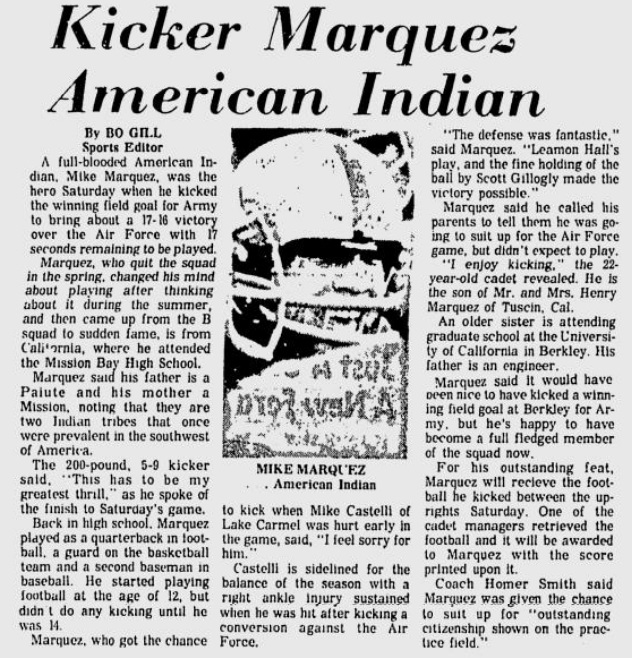
ArmyFB_1974_MikeMarquez_EveningNews_Nov121974

ArmyFB_1974_MikeMarquez_EveningNews_Nov111974

ArmyFB_1974_AF-postgame_EveningNews_Nov121974

ArmyFB_1974_AF-postgame_EveningNews_Nov121974

armyfb_1974_chuckbaker_en-nov131974
ArmyFB_1974_ChuckBaker_EN-Nov131974

ArmyFB_1974_ScottGillogly_EN-Nov191974

ArmyFB_1974_ScottGillogly_EN-Nov 191974

–

armyfb_1974_anrally_en-Nov221074

ArmyFB_1974_ANRally_EveningNews_Nov 221974

ArmyFB_1974_vsNavy_EveningNews_Nov271974

ArmyFB_1974_vsNavy_EveningNews_Nov 271974

ArmyFB_1974_BobJohnson-Winner_LeaderPost_Nov281974

ArmyFB_1974_BobJohnson-winner_LeaderPost_Nov 281974

RobertJohnson_ArmyFB-Capt_USMA1975_AfroAmerican_Apr51975

ArmyFB_1974_BobJohnson-captain_AfroAmerican_Apr51975

3 July


ArmyFB_1984_ArmyWinning_PittsburghPostGazette_Nov101984


ArmyFB_1984_vsNavy_ToldeoBlade_Dec21984


ArmyFB_1985_Black__NewburghEveningNews_Sep121985


ArmyFB_1985_PeachBowlvsIll_NewsandCourier_Jan11986


ArmyFB_1985_PeachBowlvsIll_TheDispatch_Jan11986


ArmyFB_1984_vsNavy_TheBulletin_Dec21984


ArmyFB_1984_CherryBowlvsMSU_DeseretNews_Dec221984


ArmyFB_1984_CherryBowlvsMSU_EugeneRegisterGuard_Dec231984


ArmyFB_1985_PeachBowlvsIll_StePetersburgTimes_Dec311985


ArmyFB_1985_WinningunderYoung_Robesonian_Nov81985

July 3 Additional


ArmyFB_1984_CherryBowlvsMSU_MidCitiesDailyNews_Dec231984-2


ArmyFB_1984_CherryBowlvsMSU_RecordJournal_Dec241984-1


ArmyFB_1984_CherryBowlvsMSU_RomeNewsTribune_Dec231984


ArmyFB_1984_CherryBowlvsMSU_ToledoBlade_Dec231984


ArmyFB_1984_CherryBowlvsMSU_WindsorStar_Dec241984


ArmyFB_1984_CherryBowlvsMSU_WindsorStar_Dec241984pic


ArmyFB_1984_CourageousSassaman_ModestoBee_Dec231984


ArmyFB_1984_GreatestTeams_Sassaman_PittsburghPostgazette_Dec241984


ArmyFB_1984_MirageBowlvsMontana_NewburghEveningNews_Nov15-161984


ArmyFB_1984_MirageBowlvsMontana_NewburghEveningNews_Nov171984


ArmyFB_1984_MirageBowlvsMontana_NewburghEveningNews_Nov181984


ArmyFB_1984_Resurgence_NewburghEveningNews_Nov281984


ArmyFB_1984_vsNavy_GadsdenTimes_Dec21984


ArmyFB_1984_vsNavy_NewburghEveningNews_Nov301984

Russ did you do these?


“Pete King” with ball & “Bill Whitehead”


ArmyFB_1924_vsNavy-pre_LewistonDailySun_Nov28-291924


ArmyFB_1924_vsNavy_ReadingEagle_Nov301924


ArmyFB_1924_vsNavy_PittsburghPress_Nov301924


ArmyFB_1957_vsNotreDame_MiamiNews_Oct61957-1


ArmyFB_1925_vsNavy_PittsburghPress_Nov291925


ArmyFB_1925_vsNavy_TelegraphHerald_Nov291925


ArmyFB_1925_vsNavy_SundayMorningStar_Nov291925

Russ- 7 July


ArmyFB_1943_EddieMurphy_byPap_PrescottEveningCourier_Oct181943


ArmyFB_1946_vsNavy_MilwaukeeJournal_Dec11946


ArmyFB_1946_vsNavy_YoungstownVindicator_Dec11946


ArmyFB_1946_All-Americans_OxnardPressCourier_Dec51946


ArmyFB_1946_vsPenn_MiamiNews_17Nov1946


ArmyFB_1944_vsNavy_OttawaCitizen_Dec219441


ArmyFB_1944_vsNavy_PrescottEveningCourier_Dec71944


ArmyFB_1944_vsNavy_PalmBeachPost_Dec31944/b>


ArmyFB_1944_vsNavy_EveningIndependent_Dec41944


ArmyFB_1988_SunBowlvsAlabama-MikeMayweather_GadsdenTimes_Dec261988


ArmyFB_1988_SunBowlvsAlabama_MilwaukeeJournal_Dec251988


ArmyFB_1988_SunBowlvsAlabama-BryanMcWilliams_TimesDaily_Dec251988


ArmyFB_1996_IndependenceBowlvsAuburn_TimesDaily_Dec311996


ArmyFB_1996_IndependenceBowlvsAuburn_FreeLanceStar_Jan11997


ArmyFB_1996_IndependenceBowlvsAuburn_TheVindicator_Jan11997


ArmyFB_1996_IndependenceBowlvsAuburn_CalhounTimes_Jan41997


ArmyFB_1996_vsNavy_CalhounTimes_Dec81996


ArmyFB_1996_vsNavy_VictoriaAdvocate_Dec71996-1

19-1970s


ArmyFB_1973_Cahill-Fired_EN-Dec141973


ArmyFB_1974_AYearofHope_EN-Sep131974


ArmyFB_1974_Wishbone_EN-Sep161974


ArmyFB_1975_GillogolyStaerkel_EN-Dec191974


ArmyFB_1975_vsHolyCross-JerryAraneo_EN-Sep151975


ArmyFB_1975_KenLiepoldArmyFB__EN-Nov61974


ArmyFB_1975_Gillogoly_EN-Oct61975


ArmyFB_1976_LeamonHall_ClennieBrundidge_SI_Nov11976


ArmyFB_1977_Hall-Brundiidge-Schott-AllEast_EN-Dec11977


ArmyFB_1975_Cahill-HonoraryRoast_EN-Apr71975


ArmyFB_1974_NeilBeglley_EN-Sep131974


ArmyFB_1974_ChuckBaker_EN-Nov131974


ArmyFB_1975_1TheMarchBack_Sep121975


ArmyFB_1975_starters-Dodrill-Spangler-Williams_EN-Sep121975


ArmyFB_1975_KenLiepold-BradDodrill_EN-Sep231975


ArmyFB_1975_vsDuke-Dyson_May-Woodcock_EN-Oct131975


ArmyFB_1976_SeasonOpener_EN-Sep121976

2 July-work


ArmyFB_1956_vsPitt_PittsburghPostgazette_Nov171956-3


ArmyFB_1956_vsNavy_ReadingEagle_Dec21956


ArmyFB_1956_AllEast_BobKyasky-StanleySlater_ReadingEagle_Dec31956


ArmyFB_1956_BobKyasky_various_1956-1


ArmyFB_1956_vsNavy_SundayHerald_Dec21956


ArmyFB_1956_vsNavy_SarasotaHeraldTribune_Dec21956


ArmyFB_1956_forecast-BobKyasky_NYT_Sep141956-1


ArmyTrack_1955_BobKyasky_SundayHerald_Jul101955-1


ArmyFB_1927_vsND_EveningTribune_Nov131927


ArmyFB_1931_vsND_SundayMorningStar_Nov291931


ArmyFB_1961_vsOU-JohnEllerson_MiamiNews_Nov191961


ArmyFB_1970_vsPennState_PittsburghPress_Oct231970


ArmyFB_1970_vsSyracuse_NewburghEveningNews_Nov91970


ArmyFB_1970_vsNavy_NewburghEveningNews_Nov281970


ArmyFB_1927_Wilson_EveningTribune_Nov131927


ArmyFB_1931_vsND_ReadingEagle_Nov291931


ArmyFB_1969_vsNavy_PressCourier_Nov301969


1970_Steele-Wotell_NewburghEveningNews_Nov91970


ArmyFB_1970_vsOregon_NewburghEveningNews_Nov161970

July 2


ArmyFB_1972_various_Oct-Nov1972


ArmyFB_1972_vsAF_StPetersburgTimes_Nov81972


ArmyFB_1972_vsRutgers_EveningNews_Oct231972


ArmyFB_1972_vsTAM-Wottel_EveningNews_Oct21972


ArmyFB_1972_vsTAM-Bogosian_EveningNews_Oct21972


ArmyFB_1972_vsTAM-Hines_EveningNews_Oct21972


ArmyFB_1972_vsNU_Hines_MichiganDaily_Sep241972


ArmyFB_1972_vsHolyCross_EveningNews_Nov201972


ArmyFB_1972_vsAF_various_Nov1972


ArmyFB_1972_vsTAM-Fink_EveningNews_Oct21972


ArmyFB_1972_vsTAM-team_EveningNews_Oct21972


ArmyFB_1972_vsTAM_EveningNews_Oct21972


ArmyFB_1972_vsNU_EveningNews_Sep251972


ArmyFB_1972_vsAF_Cahill-CoachoftheWeek_SundayTimesSentinel_Nov81972

West Point, a Century Ago

West Point, a Century Ago, 1911-1920: An Amazing Decade

By Robert C. Carroll (1962) 1
Bob Carroll
Colonel, US Army Retired

Published in
“Military Collector & Historian,
Journal of the Company of Military Historians”
Summer 2013; Vol. 65, No. 2


LOOKING back at West Point one hundred years ago, we see a dripping wet New Cadet Dwight Eisenhower (1915) on 14 June 1911 wondering what in the world he had gotten himself into. By the end of that decade, Brig. Gen. Douglas MacArthur (1903) would be West Point’s new superintendent. In the interim, the academy would endure some amazing events and challenges. It would also graduate a pantheon of leaders who would serve our nation with remarkable distinction. What follows is a glimpse of what it was like to be at the Military Academy a century ago and a snapshot of the alumni it produced during the decade 1911-1920.

For those familiar with the post, a 360-degree panorama of West Point from Battle Monument circa 1911 is revealing: 2

To the north was the ever-awesome view of Storm King Mountain, the Hudson River, and Constitution Island, once called “Martelear’s Rock”. To the west, the flag pole sported a flag with forty-six stars until 1912 when Arizona and New Mexico joined the union, thus allowing sergeants of the Cadet Color Guard, including Eisenhower, to carry the forty-eight-star version. Looking farther to the west, one could see the two oldest buildings on the grounds, the Quarters of the commandant and superintendent, and high above them on the hillside the beautiful and lofty one-year-old Cadet Chapel . 3


FIG 1. View up the Hudson from Trophy Point. Courtesy West Point Library.

Across The Plain to the south sat the gymnasium, which would be demolished in 1924 to accommodate Washington Hall . Next came the gothic Cadet Barracks (Old Central) -quite adequate to house the 650 men in the six companies of the battalion of cadets. Next to the barracks stood the “West Academic Building” (later named after Gen. John J. Pershing), soon to be joined (in 1913) by its East counterpart, named Bartlett Hall. Behind Pershing was Grant Hall, the cadet mess. Following The Plain to the east was the old library (later demolished and replaced on site) and, under construction, a new large riding hall which years later would morph into an academic building named Thayer Hall.


FIG 2. The Riding Hall pre-Thayer Hall. Courtesy West Point Library.

To the east sat three relatively new structures: the Officers’ Mess, eight years old; the solemn-looking Cullum Hall, eleven years old; and what would later be named Lincoln Hall (once the Bachelor Officers Quarters), only one year old. At the base of Clinton Parapet (originally Fort Arnold but renamed when Benedict became a traitor), was the almost universally mispronounced Kosciuszko Monument, which would have to wait two more years to receive its figure statue of Thaddeus. Completing the circle, where now lie Revolutionary War cannons and huge links of the Great Chain, stood the West Point Hotel, which had been home to MacArthur’s mother throughout his cadet years, a decade earlier.4

Most of the young men who came to this place in 1911 grew up in small towns or on farms and in big families. The American population of ninety-four million was largely im migrant, with more than a third either coming from another country or with a parent who did. The economy was just starting to move toward major industrialization, with the auto industry in its infancy. In 1914, America suffered a depression (to be followed by an even worse one fifteen years later). Cadets were thankful for their room and board and very well aware of their “free” education, for which they would later pay in service and in blood.

The cadets took a tough entrance exam that would cause any old timer to wince. These questions are from the 1920 version of the exam: 5

Mathematics: Given a square whose side is 2. The middle points of its adjacent sides are joined by straight lines forming a second square inscribed in the first. In the same manner a third square is inscribed in the second, a fourth in the third, and so on indefinitely. Find the sum of the perimeters of all the squares.

English: In a few paragraphs (about 250 words) discuss the Victorian period in English literature, paying attention to the following points: (a) the characteristics of the literature; (b) the chief writers, both in prose and poetry.

History: Write a short account of the War of the Roses. [Author’s note: I don’t think they meant the movie, which then would have been silent.]

And these young men would face a science-heavy West Point curriculum with math, physical sciences, engineering, and ordnance, along with English, history, law, languages, tactics, and gymnastics/physical culture.6 Demanding? Yes! As it is today!


FIG. 3. Engineering class.
Courtesy West Point Library.


FIG. 4. French class.
Courtesy West Point Library.


Turning to sports, baseball was the great national pastime and Army played it well. This was long before Doubleday Field, named in 1937 for Civil War hero Maj. Gen. Abner Doubleday (Class of 1842), who was questionably credited with inventing the sport. 7 Omar Bradley (1915) was a decent footballer and an outstanding baseball player, known as both a power hitter and an outfielder with one of the best arms in his day. Every player on his 1914 team would later earn at least one star in World War II. Later, in 1920, Superintendent MacArthur, who had played an unheralded right field as a cadet, took the opportunity to coach Cadet Earl Blaik (1920) on hitting curve balls. An outstanding athlete competing in both football and baseball, Blaik would become a legendary football coach at Army, producing three Heisman Trophy winners and an Outland Trophy winner. Colonel Blaik later recalled that, after the superintendent’s coaching, he not only couldn’t hit curve balls, he couldn’t hit anything.8 On the fields of friendly strife …” Oh never mind, Mac!


FIG 5. Cadet Earl Blaik (1920). The Howitzer, 1920.


FIG 6. Superintendent Douglas MacArthur. Courtesy West Point Library.

Jim Thorpe was arguably the best all-around athlete of his time. After winning gold medals in the pentathlon and decathlon at the summer Olympics at Stockholm, Sweden, he led the Carlisle Indians in a football victory over Army and then on to the 1912 national championship. Playing a solid game as a 175-pound halfback and linebacker, sophomore Eisenhower said he tackled Thorpe only with the help of others. A few games later, Ike severely hurt his knee against Tufts, ending his football career and nearly denying him a commission in the Army.9


FIG 7. Army football played on The Plain -old hotel in background. Courtesy West Point Library.


FIG 8. Ike with his “A”; won as a yearling. The Howitzer, 1915.

The next season (1913), a Notre Dame team led by captain/end Knute Rockne beat Army in a game later immortalized by Ronald Reagan playing “the Gipper”. The movie took some license by portraying Notre Dame’s forward pass as a surprise innovation, which the cadets thought to be illegal. In actuality both teams threw the ball, but Notre Dame won the day. The next year (1914), when Ike and Bradley were seniors, West Point was undefeated.10

A plebe on that team went on to become possibly the greatest athlete in West Point history. After earning a degree and all American status at Purdue, the amazing Elmer Oliphant (June ’18) became the first cadet to letter in four sports. This 5 ‘7″ 180-pounder starred as a half- back and drop-kicker, became a two-time Army All-American and College Football Hall of Famer, who set an Army record by scoring forty-five points in one game.”Ollie” captained both the football and baseball teams, played hockey, won the brigade light heavyweight boxing title, threw the discus, and set a world record in the 220 yard low hurdles on grass.11


Not surprisingly, these cadets of yore were interested in les femmes.


While this decade preceded the “Roaring Twenties”, there was still some evidence of a shift in social mores, exemplified by raised hemlines, revealing, for the first time, very sexy ankles. One can only imagine what happened to these hemlines on Flirtation Walk where cadets could display affection toward the supposedly weaker sex without the overwatch of the dreaded Tactical Department. It is highly unlikely, however, that cadets were allowed to dance the racy 1912 hit by Arthur Prior, The Grizzly-Turkey Trot.12 But for twirling a young lady at Cullum (Dance) Hall in such a manner as to reveal her petticoat, Cadet Eisenhower endured demerits and confinement punishment from the Commandant of Cadets.13

“No horse, no wife, no mustache!” is a traditional West Point edict. During this era, no cars either. But by the end of the decade, Henry Ford’s manufacturing genius would allow graduating cadets to buy Model Ts for several hundred dollars, then to buy gas at about twenty-five cents per gallon at the newly created drive-up gas stations, with the newly ordained gas tax.


FIG 11. Plebes in 1913 swearing oath, uncovered, right hands raised. Courtesy West Point Library.

The new plebes (freshmen) and the newly commissioned second lieutenants (then as now) swore an oath to support and defend the Constitution of the United States, which was amended during this period to prohibit alcohol. With this prohibition, Bartender Benny Havens (a pre-Civil War local bartender well known to generations of cadets and immortalized in a West Point song bearing his name) must have been rolling in his grave. Another constitutional amendment during this period gave women the right to vote. It would take another fifty-five years for women to join the Long Gray Line, surely with the approval of Molly Corbin, a Revolutionary War heroine who “manned” her husband’s weapon after he was killed and who is buried in the “West Point Cemetery” .14 In the past thirty-five years, women have served with distinction as cadets and subsequently as officers in the Army, in peace and in war.

Although African-American men received the right to vote some fifty years before women, there were no African-American Cadets at West Point during this period. The country’s racial history during this decade is particularly nasty; the KKK ran rampant, and lynchings were not uncommon. Just a month after the West Point class of 1915 put on their gold bars, ten thousand African-Americans marched in New York City to protest lynchings. In 1917, race riots occurred in East St. Louis, Illinois; and in Houston, Texas; the latter resulting in thirteen soldiers being hanged for alleged participation; 1920 saw a host of race riots from Pennsylvania, to the District of Columbia, to South Carolina, to Texas.15 It was not until well into the 1960s that African-American cadets arrived in significant numbers at the academy. Today, happily, African-Americans thrive at West Point, and West Point thrives because of them.

Cadets of this era observed world events that included the opening of the Panama Canal, thanks to Maj. Gen. George W. Goethals (’80) and Maj. Walter Reed, MD; the return of Mecca and Medina to Arab hands, thanks to T. E. Lawrence (of Arabia); the end of two thousand years of Chinese dynasties, thanks to the Empress Dowager Cixi; development of the Theory of General Relativity, thanks to Albert Einstein; the introduction of the Automatic Pistol, Caliber .45, M1911 (so designated because it was in 1911), thanks to John M. Browning; and the sinking of the RMS Titanic, thanks to an iceberg. Cadets were largely spared when a horrific influenza pandemic, comparable to the Black Plague of 1349 swept the globe. The records of the academy indicate sporadic deaths by flu, but nothing like the waves that hit Fort Devens, Massachusetts; Camp Funston, Kansas; and other places.16

But the headline story for this decade was “The Great War” the devastating war to end all wars. The tinderbox was sparked in Sarajevo on 28 June 1914, and two months later the battle was joined. It embroiled all of Europe. At one point, there was a small cessation in fighting for an eerie and holy Christmas truce to sing “Silent Night” in German, French, and English.17At that very time, “firsties” from the class of ’15 were enjoying a short Christmas leave, wondering if and when America would get involved. On 6 April 1917 (Good Friday) the United States declared war. A month later Maj. Gen. John J. Pershing (’86) departed the United States for France, with American doughboys following soon after.

The fighting stopped on 11 November 1918.18 The United States was a pivotal nation in the winning alliance, and West Pointers were prominent in this victory. Three-fourths of the World War I American generals graduated from USMA, and West Pointers earned an amazing sixty-plus Distinguished Service Crosses and one Medal of Honor, Emory Jenison Pike (’01), in not much more than six months of combat.19

FIG 13. The Class of 1917, graduating early. Courtesy West Point Library.

The impact of the war on West Point was huge! Imagine how this staid old institution had to perform cartwheels to accomplish the following: Two weeks after the declaration of war, the class of 1917 graduated early, in April. Four months later, in August, the second class of 1917 graduated after only three years at the Academy. The next summer, the class of 1918 graduated in June after three years. With the battle raging and demand for leaders acute, the Department of the Army directed USMA to graduate two more classes on 1 November 1918. These men were sophomores and juniors.20

On 2 November 1918 only the plebes or freshmen were left. Imagine that! Consequently a call went out, and on 4 November 1918 a fresh cohort of plebes entered with the intention of graduating the following June. These men arrived with little screening and preparation, and attrition was high – almost sixty percent. Hard-pressed for uniforms, the Academy put them in enlisted olive drab uniforms and campaign hats with a distinctive orange band, from which came the nickname “orioles”.21

When the 11 November 1918 Armistice was signed, the two classes that had graduated on 1 November 1918 had been in “the real Army” less than a fortnight. The newly minted second lieutenants who had left in sophomore year were ordered back to West Point on 1 December 1918 as “student officers”. At a West Point formation one could see a battalion of these “student officers” in olive drab, another battalion of plebes in gray, and yet another battalion of “new cadets” in”oriole” hats. A sight to behold! 22 These “student officers” graduated a second time the next summer and are listed as the class of 1919. The wartime class acceleration did not calm down until 1923. The class of 1920 graduated after two years; the class of 1921 (only seventeen graduates) after two and one-half years; and the class of 1922, some after three years, others after three and one-half. 23

The graduates of this remarkable time were destined for greatness, due in part to the timing of the next war, some twenty-three years later (1918-1941). Most Army officers typically achieve significant leadership positions only after twenty years of service. So the experience, maturity, and especially age of these graduates would make them ideal candidates for leadership positions during the next war. As many had predicted, the war came. And West Pointers from this era stood tall.

The class of 1915 gets a lot of attention as “the class the stars fell on” (one out of three). Leading that class, of course, is Eisenhower, elected to two terms as president of the United States. Both he and Bradley earned the five stars of General of the Army. Some readers may not know that Bradley, as the first Chairman of the Joint Chiefs of Staff, was awarded his fifth star in 1951 mainly to handle five-star MacArthur in Korea.24

FIG 14. Cadet Dwight Eisenhower ’15. The Howitzer, 1915.

FIG 15. Cadet Omar Bradley ’15. The Howitzer, 1915.

One other anecdote from this class bears telling: James Van Fleet (’15) had been the star fullback on the 1914 Army team. Years later Colonel Van Fleet (with twenty-nine years of service) stormed Utah Beach as commander of the 8th Infantry Regiment, 4th Division. Ike complained to Chief of Staff of the Army Gen. George C. Marshall (Virginia Military Institute ’02) that Van Fleet should be a general. Marshall had mistaken Van Fleet for another who had problems with alcohol.25 The mistake was corrected, and Van Fleet soon commanded the 90th Infantry Division and then III Corps in the sweep across France as part of the Third Army led by Lt. Gen. George S. Patton 1909). Van Fleet went on to earn four stars, winning accolades for his service in the Greek Civil War and in Korea. His lifetime awards for valor are, to say the least, impressive: three each of the Distinguished Service Cross, the Silver Star, the Bronze Star, and the Purple Heart. 26

FIG 16. Cadet James Van Fleet The Howitzer, 1915.

Six graduates of this era became Chief of Staff of the Army: Eisenhower, Bradley, Matthew B. Ridgway (1917), J. Lawton Collins (1917), Lyman L. Lemnitzer (1920), and Maxwell D. Taylor (1922). Three became Chief of Staff of the Air Force: Carl A. Spaatz (1914), Nathan F. Twining (1919), and Thomas D. White (1920). Four became Chairman of the Joint Chiefs of Staff: Bradley, Twining, Lemnitzer, and Taylor. Henry H. “Hap” Arnold 1907) was promoted to General of the Army on 21 December 1944 before the advent of the USAF and in 1949 after retirement became the only General of the Air Force in our nation’s history.)27

Other recognizable names include Alexander M. Patch, Jr., (1913), who led the XIV Corps at Guadalcanal and later commanded the Seventh Army; Mark W. Clark (1917), an Army training genius and father of the noncommissioned officer academies; Albert C. Wedemeyer (1919), who replaced Joe Stilwell (1904) in the China-Burma-India Theater; Alfred M. Gruenther (1919), Ike’s protege at NATO and later president of the American Red Cross; and Anthony C. McAuliffe (1919), best known for his “Nuts!” response to the Germans at the Battle of the Bulge, who went on to command U.S. Army Europe. In addition, Lucius D. Clay (1918) is famed for orchestrating the Berlin Airlift, Leslie R Groves (1918) for building the Pentagon and the atom bomb and, of course, Earl Blaik (1920) for his legendary football coaching career.28

A less familiar name is Col. “William H. Wilbur” (1912), who landed with his unit at Fedala in North Africa on 8 November 1942, proceeded alone through sixteen miles of hostile territory with a commandeered vehicle and accomplished his mission of delivering letters to appropriate French officials in Casablanca. On his way back Wilbur personally led a platoon of American tanks in an attack. His Medal of Honor citation understates this heroism as “exemplary in its coolness and daring”.29

All told, twenty-four graduates of this era made the full four-star general rank. An interesting note: Remember the ill-fated class that was forced to come back for a second year as student officers? The class of 1919 had a total of six full generals, believed to be an academy record.30

It was stellar leadership that was forged at West Point in the amazing decade of 1911-1920! Today, a century later, we can look back and see the steady hand of this historic and national institution sculpting leaders of character for unique and unknown demands to follow.

Let West Point continue to do so for the ages.

“The long gray line of us stretches
Through the years of a century told,
And the last one feels to the marrow
The grip of your far-off hold”.

(From The Corps, West Point song; words by USMA Chaplain H. S. Shipman; music by W. Franke Harling;31 introduced on 12 June 1910 at the last service in the old Cadet Chapel, before it was relocated from the cadet area to the “West Point Cemetery”, block by granite block, befittingly.32)

Footnotes:
Notes: 1. The author graduated from West Point in1962. Numbers in parentheses after names throughout this article indicate West Point class.

2. Rod Miller, The Campus Guides: West Point U.S. Military Academy (New York: Princeton Architectural Press, 2002), 30

3. Robert Cowley and Thomas Guinzburg, eds., West Point, Two Centuries of Honor and Tradition (The Bicentennial Book of the United States Military Academy) (New York: Warner Books, 2002), 142-144.

4. WilliamManchester,AmericanCaesar:DouglasMacArthur1880-1964 (Boston: Little, Brown, 1978), 54-61.

5. Official Register of the Officers and Cadets United States Military Academy for 1919 (West Point, NY: United States Military Academy Printing Office, 1919), 117-120.

6. Official Register of the Officers and Cadets United States Military Academy for 1919, 21, 45.

7. E. Miklich, Website: Nineteenth Century Baseball: http://www.19cbaseball. com/The Abner Doubleday Myth.

8. Manchester, American Caesar, 123.

9. Michael Korda, Ike: An American Hero (New York: HarperCollins, 2007), 93.

10. Wikipedia Encyclopedia, en.wikipedia.org/wiki/Vernon Prichard

11. WikipediaEncyclopedia, en.wikipedia.org/wiki/Elmer_Oliphant:College Honors

12. http://www.locgov/Jukebox/search/results?q=turkey%20trot

13. “Dwight D.Eisenhower”,At Ease:Stories I Tell to Friends(GardenCity,N.Y.: Doubleday, 1967), 9-10. <

14. Cowley, West Point, Two Centuries of Honor and Tradition, 22.

15. Wikipedia Encyclopedia, en.wikipedia.org/wiki/Nadir_of_American_race_relations#Reconstruction

16. Annual Report of the Superintendent, United States Military Academy (West Point NY: United States Military Academy Press, 1919), 43.

17. Wikipedia Encyclopedia. en.wikipedia.org/wiki/Christmas_truce

18. RuthT.Feldman,World War I,Chronicle of America’s Wars(Minneapolis, MN: Lerner Publications, 2004), 28-29.

19. Cowley, West Point, Two Centuries of Honor and Tradition, 148.

20. Annual Report of the Superintendent, 1919, 3-4.

21. Ibid.

22. Cowley, West Point, Two Centuries of Honor and Tradition, 170.

23. Annual Report of the Superintendent, (1919), 3-4.

24. http://www.history.army.mil/html/faq/5star.html

25. Wikipedia Encyclopedia. en.wikipedia.org/wiki/James_Van_Fleet

26. Ibid.

27. http://www.history.army.mil/faq/FAQ-CSA.htm

28. The Register of Graduates and Former Cadets of the United States Military Academy (West Point, NY: The Association of Graduates, 2010), Biography Pages 4-97 to 4-129.

29. http://www.history.army.mil/html/moh/wwII-t-z.html

30. http://www.answers.com/topic/list-of-united-states-army-four-star-gener- als#1941.E2.80.93present

31. http://www.west-point.org/greimanj/west_point/songs/thecorps.htm

32. Miller, The Campus Guides: West Point U.S. Military Academy, 10

FIG 17. Cadet William H. Wilbur ’12. The Howitzer, 1912.


Work Area

FIG 10. Sketch from The Howitzer, 1916.


FIG 9. Army halfback Oliphant (Jun ’18).


FIG 12. U.S. doughboys charging over the top at St. Mihiel. Courtesy West Point Library.


FIG 17. Cadet William H. Wilbur ’12. The Howitzer, 1912.


FIG. 3. Engineering class.
Courtesy West Point Library.


FIG. 4. French class.
Courtesy West Point Library.


This for the photos


FIG. 3. Engineering class.
Courtesy West Point Library.

FIG. 4. French class.
Courtesy West Point Library.


FIG 3. Engineering class. Courtesy West Point Library.


FIG 4. French class. Courtesy West Point Library.
30 June

Skip – can you resend the correct article. I realized it had not taken – went back but could only find the one below which seemed to fit

not correct image


ArmyFB_1957_vsNotreDame_MiamiNews_Oct61957not correct image

——————-


ArmyTrack_1955_BobKyasky_SundayHerald_Jul101955


ArmyFB_1956_BobKyasky_various_1956


ArmyFB_1956_forecast-BobKyasky_NYT_Sep141956


ArmyFB_1925_TinyHewitt_DavisCountyClipper_Nov271925


ArmyFB_1938_forecast_EveningIndependent_Sep281938


ArmyFB_1939_vsNotreDame_StPetersburgTimes_Oct311939


ArmyFB_1940_vsNavy_LewistonEveningJournal_Nov271940-1


ArmyFB_1941_forecast_MeridenRecord_Sep231941


ArmyFB_1937_CoachBillWood_DavisCountyClipper_Dec311937


ArmyFB_1938_vsNavy_EveningIndependent_Nov241938-1


ArmyFB_1940_forecast_EveningIndependent_Sep91940


ArmyFB_1940_vsNavy_TheDay_Nov291940


ArmyFB_1926_vsNavy_EveningIndependent_Nov271926


ArmyFB_1962_Dietzel-arrives_ReadingEagle_Jan81962


ArmyFB_1962_Dietzel_SarasotaHeraldTribune_Feb181962


ArmyFB_1962_Dietzel-FirstSeasonFizzle_NewsandCourier_Dec231962


ArmyFB_1966_TownsendClark_EveningNews_Sep121966


ArmyFB_1966_EveningNews_Sep141966


ArmyFB_1966_EveningNews_Sep191966


ArmyFB_1966_Cahill-firstgame_EveningNews_Sep201966


ArmyFB_1966_KenJohnson_EveningNews_Sep211966


ArmyFB_1966_SteveLindell_EveningNews_Sep291966


1966johnpeduto_EveningNews_Sep201966


ArmyFB_1966_EveningNews_Sep261966


ArmyFB_1967_Cahill_ReadingEagle_Jan11967


ArmyFB_1944_Backs-Line_PainesvilleTelegraphandGreesburgDailyTribune_Nov7-91944-2


ArmyFB_1944_Backs_PainesvilleTelegraph_Nov91944-2


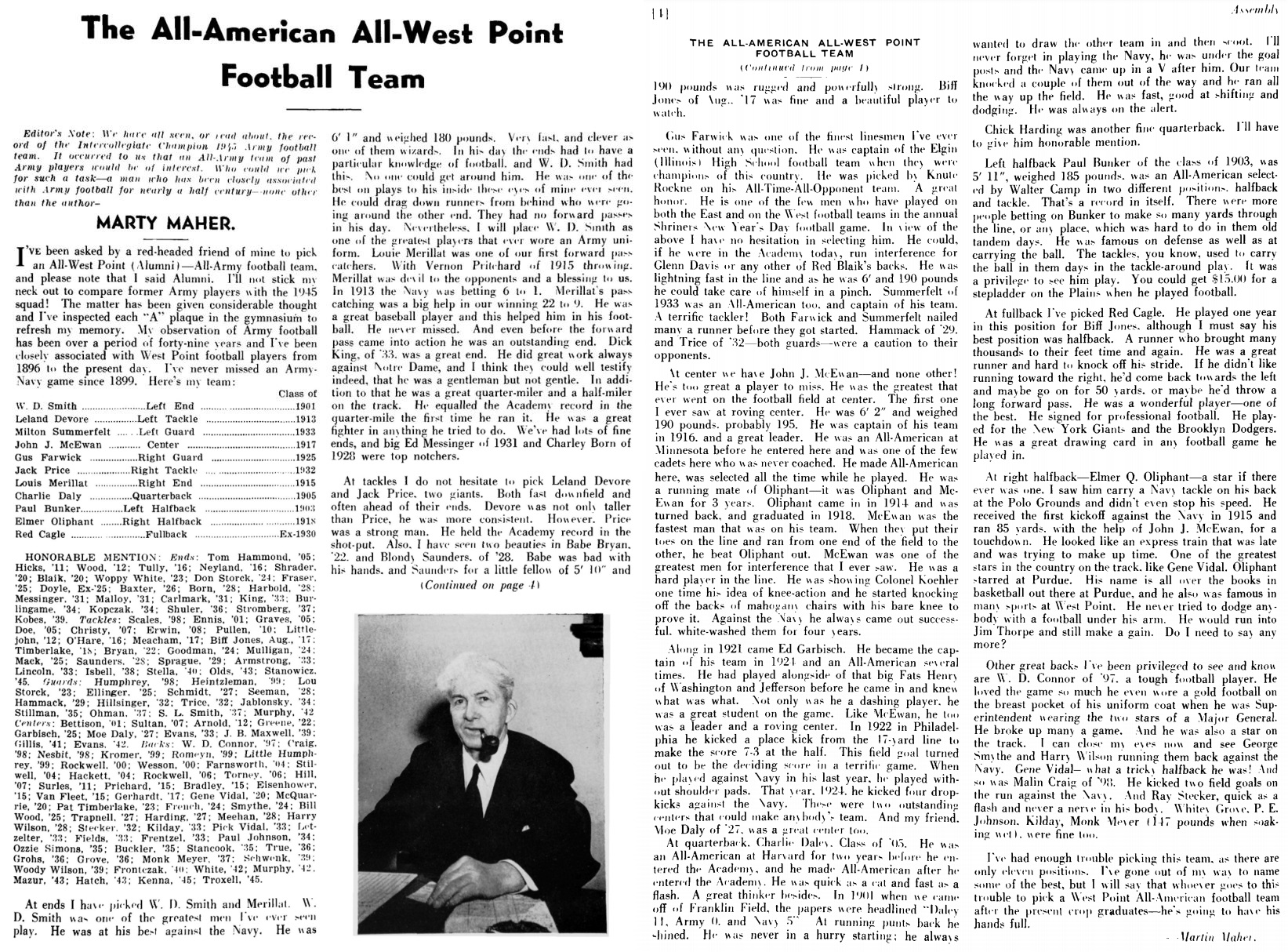
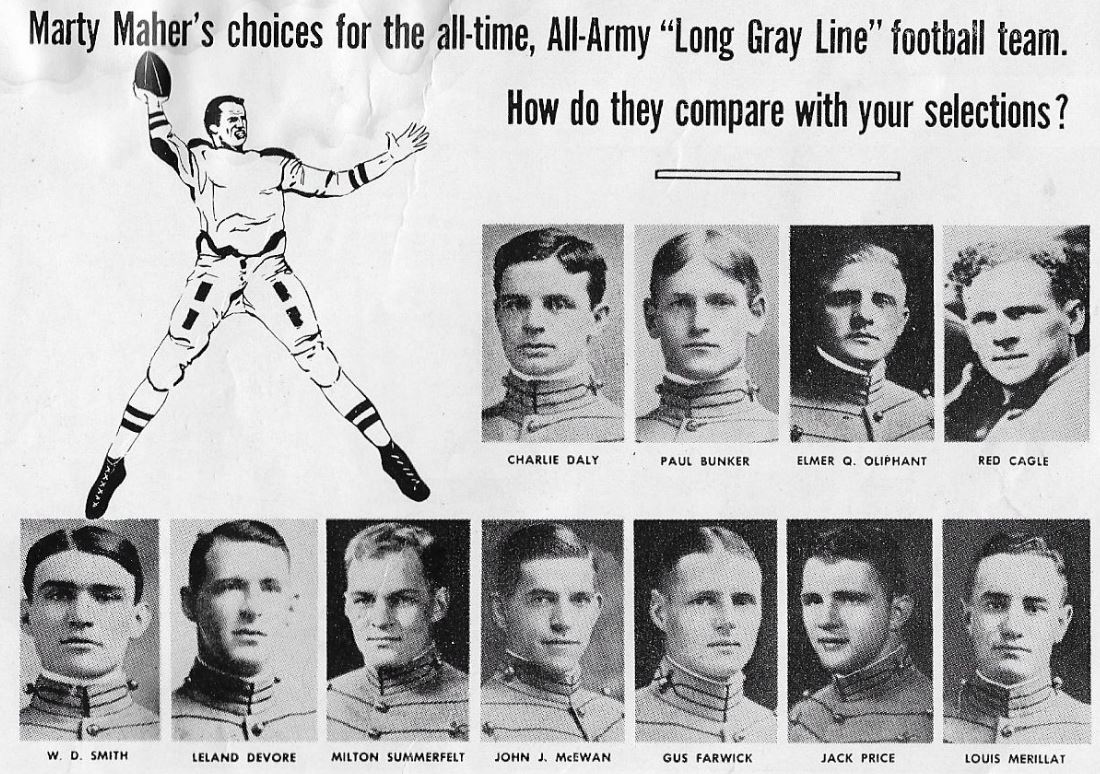
Marty Maher’s All-American West Point Football Team – Assembly Jan 1946


ArmyFB_MartyMahers_All-WestPointFootballTeam_Assembly_Jan1946

ArmyFB_MartyMahers_All-WestPointFootballTeam_


–


1973 Team

1973 Army 0-10

Coach – Thomas B. Cahill (October 11, 1919 – October 29, 1992)

Army 1966-1973:

1966 Army 8-2 Coach of the Year

1967 Army 8-2

1968 Army 7-3

1969 Army 4-5-1

1970 Army 1-9-1

1971 Army 6-4

1972 Army 6-4

1973 Army 0-10

Overall Army: 40-39-2

5-3 versus Navy

Union NY 1976-79

source: http://en.wikipedia.org/wiki/Tom_Cahill_(American_football)


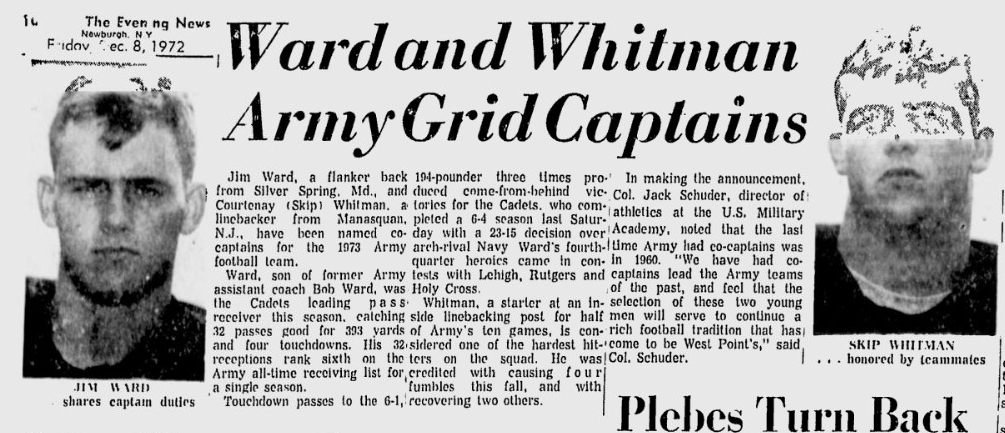
armyfb_1973-74_ward-whitman-captains_en-dec71972
ArmyFB_1973-74_Ward-Whitman-Captains_EN-Dec71972


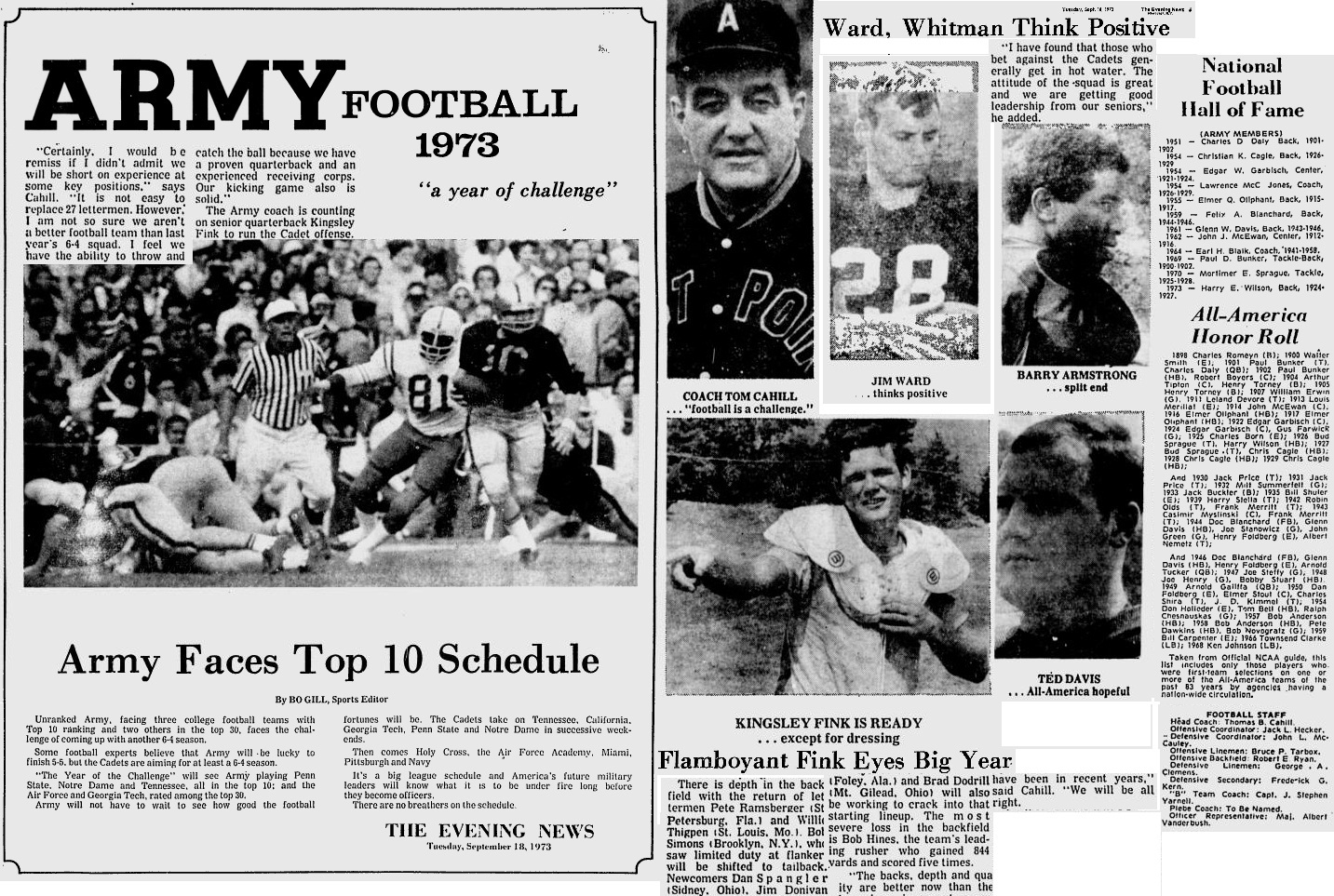
armyfb_1973_ayearofchallenge_en-sep181973
ArmyFB_1973_aYearofChallenge_EN-Sep181973


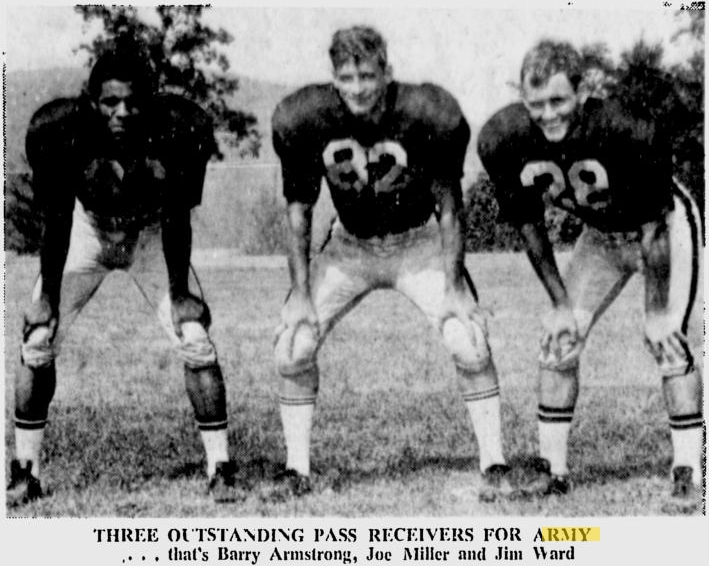
armyfb_1973_armstrongmillerward_sep271973
ArmyFB_1973_ArmstrongMillerWard_Sep271973


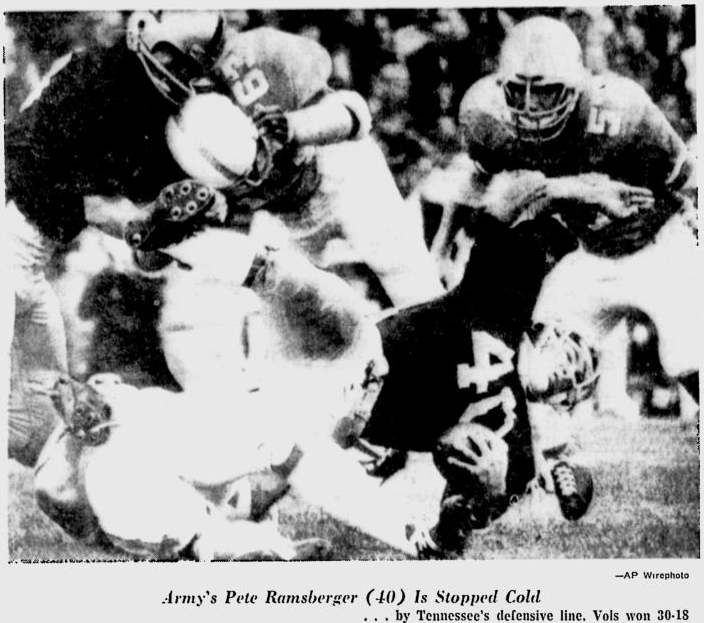
armyfb_1973_vstenn_sarasotaheraldtribune_sep231973
ArmyFB_1973_vsTenn_SarasotaHeraldTribune_Sep231973


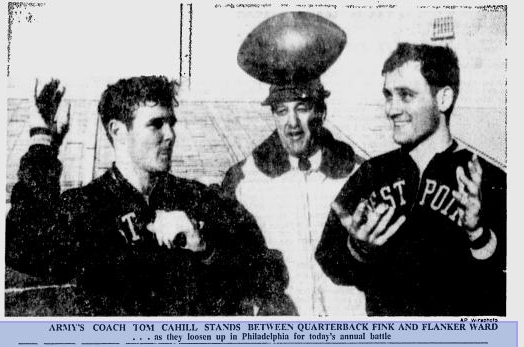
armyfb_1973_fink-ward-cahill_an_en-nov1973
ArmyFB_1973_Fink-Ward-Cahill_AN_EN-Nov1973


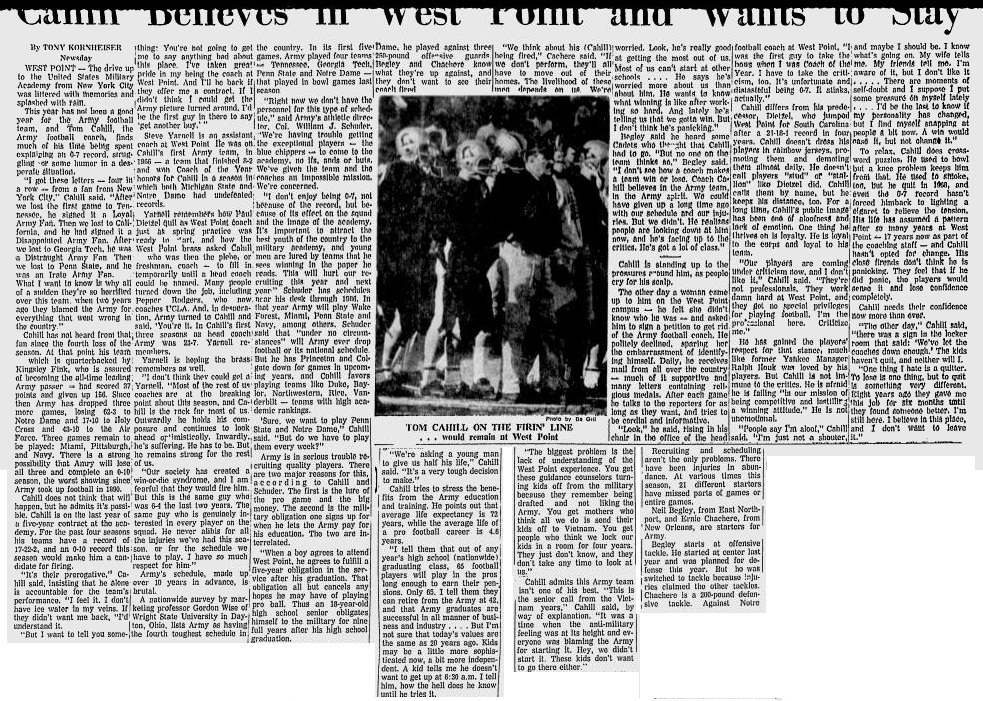
ArmyFB_1973_Cahill_EN-Nov51973


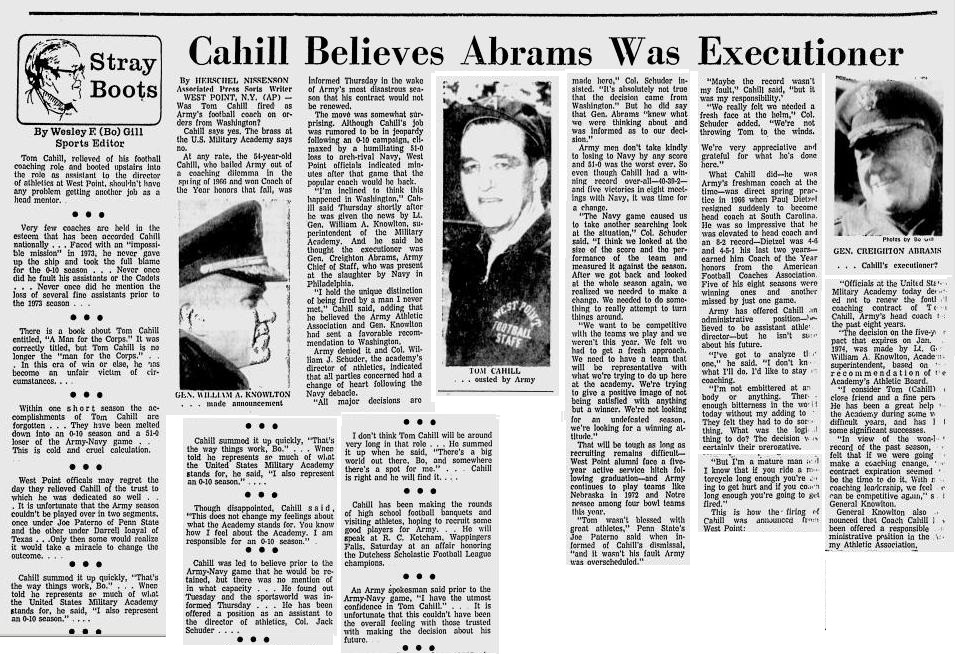
ArmyFB_1973_Cahill-Fired_EN-Dec141973


armyfb_1975_cahill-honoraryroast_en-apr71975
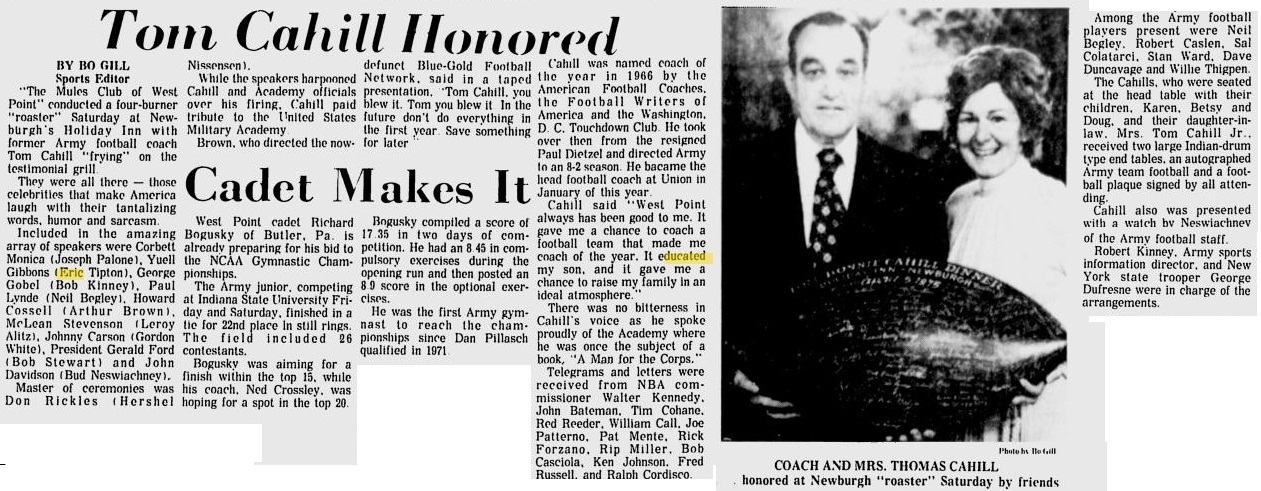
ArmyFB_1975_Cahill-HonoraryRoast_EN-Apr71975


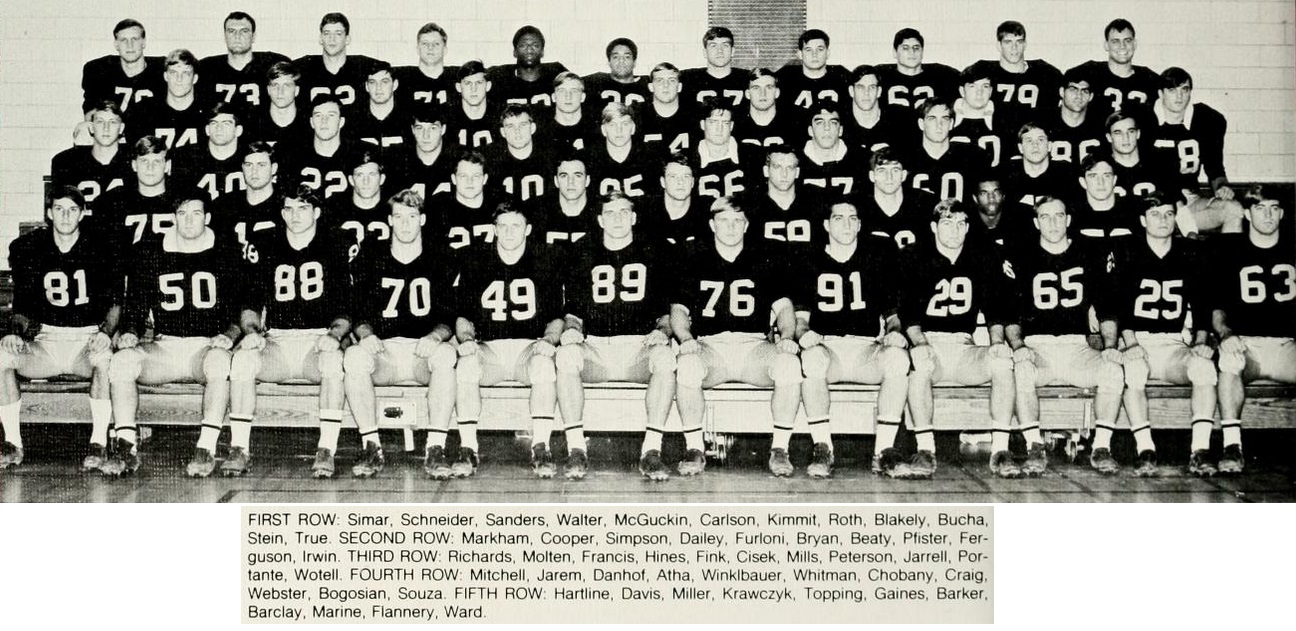
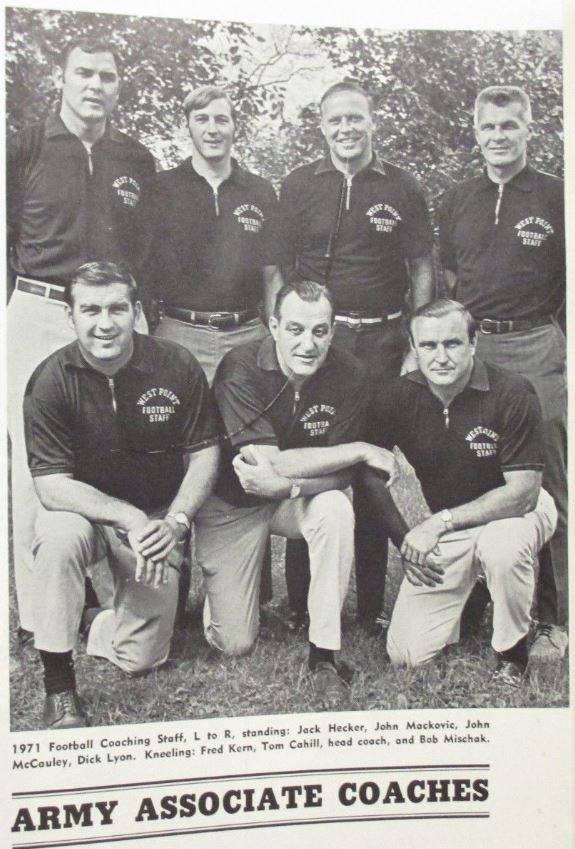
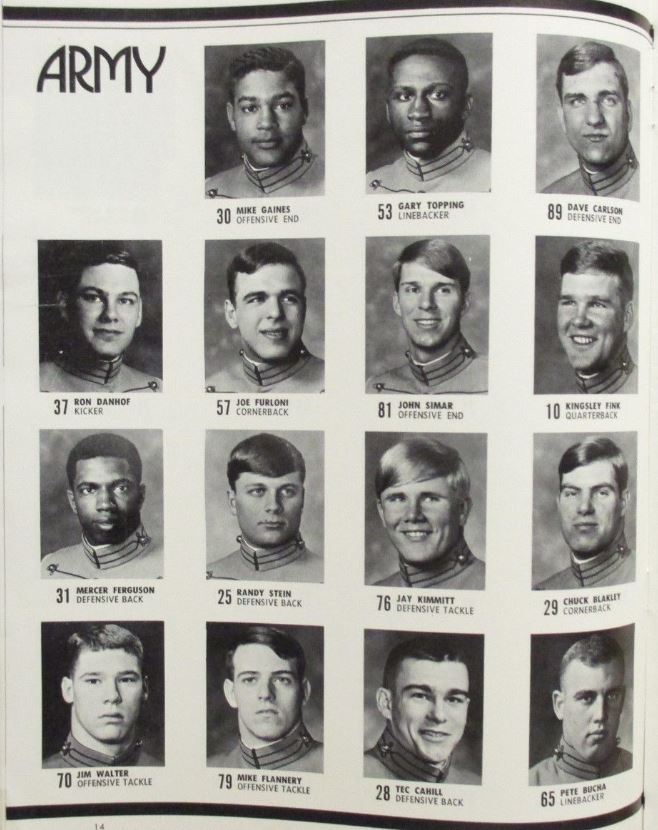
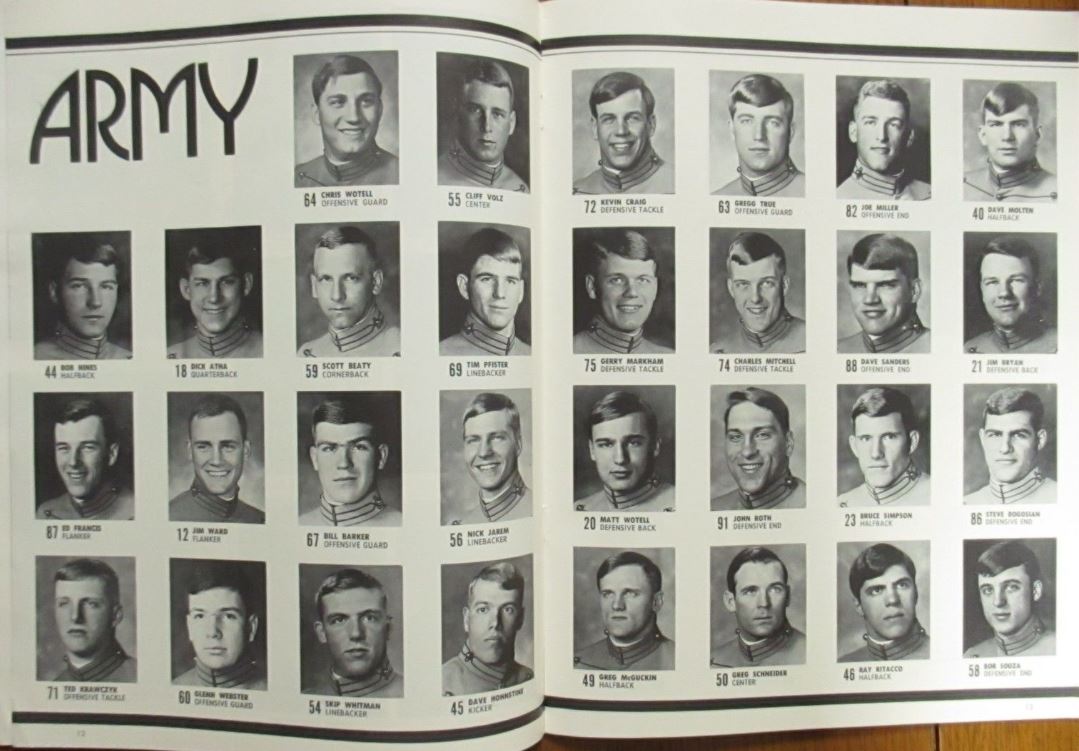
1971 Team

1971 Army 6-4

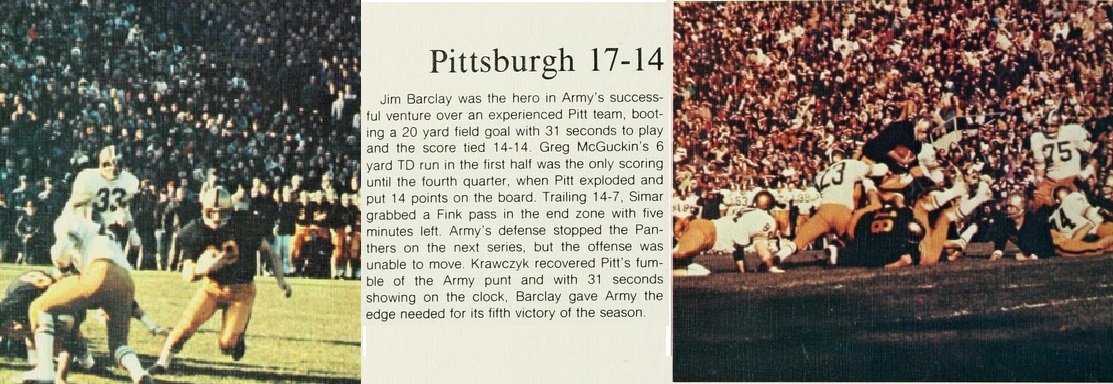
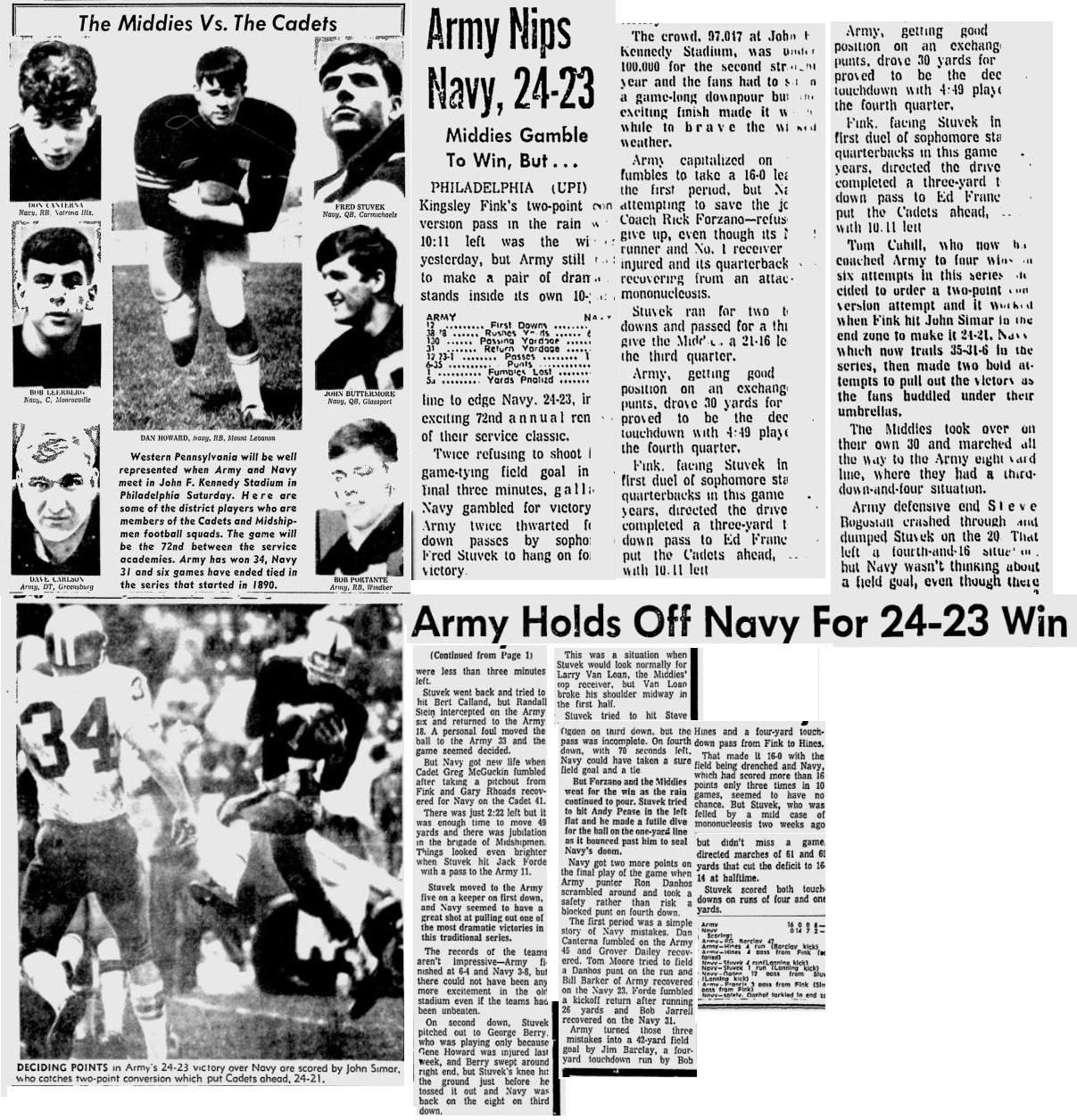
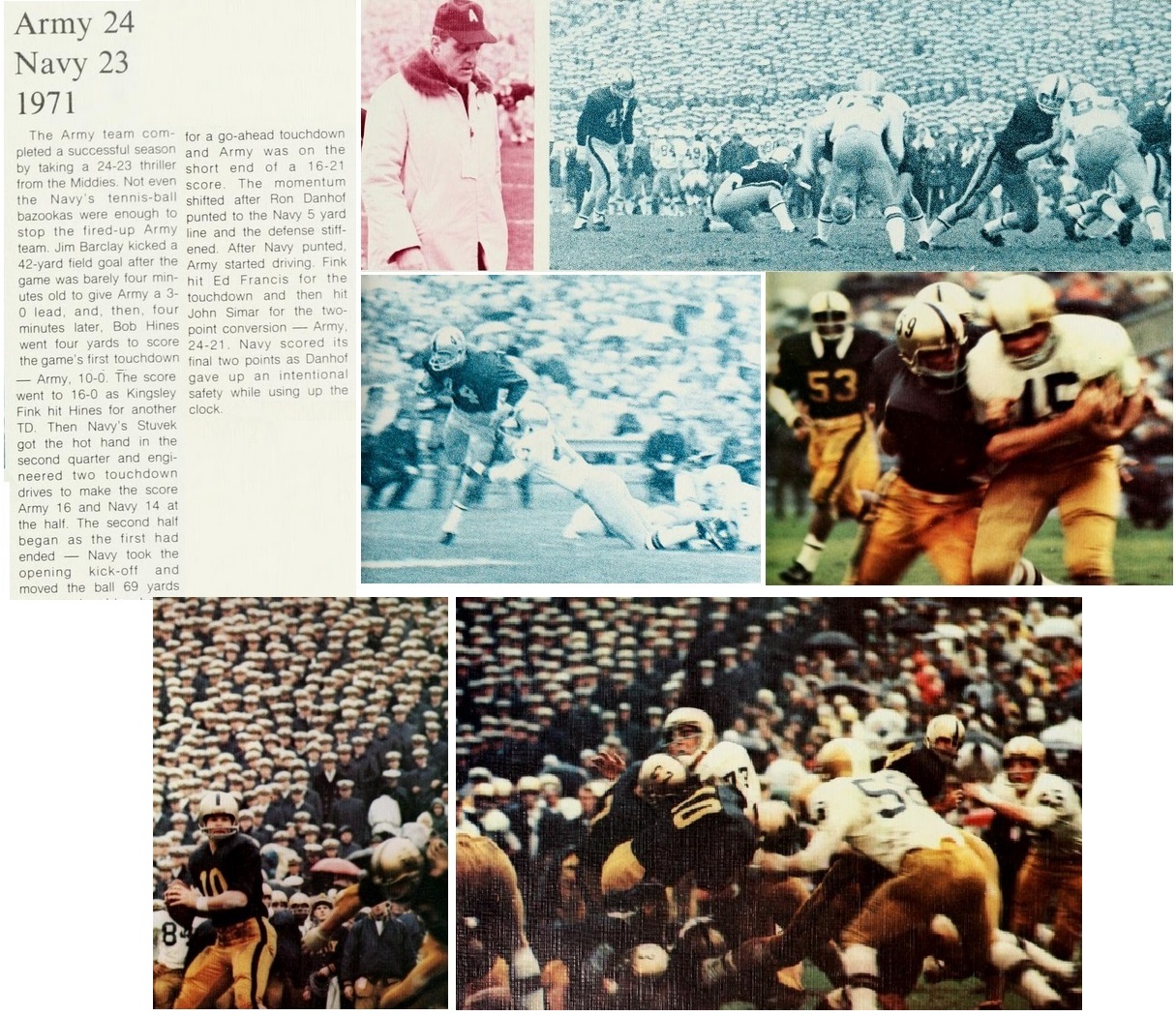
1971/11/27 Army 24 – Navy 23 W

Coach – Thomas B. Cahill (October 11, 1919 – October 29, 1992)

Army 1966-1973:

1966 Army 8-2 Coach of the Year

1967 Army 8-2

1968 Army 7-3

1969 Army 4-5-1

1970 Army 1-9-1

1971 Army 6-4 1972

Army 6-4 1973 Army 0-10

Overall Army: 40-39-2 Union NY 1976-79

source: http://en.wikipedia.org/wiki/Tom_Cahill_(American_football)

–

armyfb_1971_team

–

ArmyFB_1971_coaches_ArmyFootballProgram

–

ArmyFB_1971_players2_ArmyFootballProgram

–

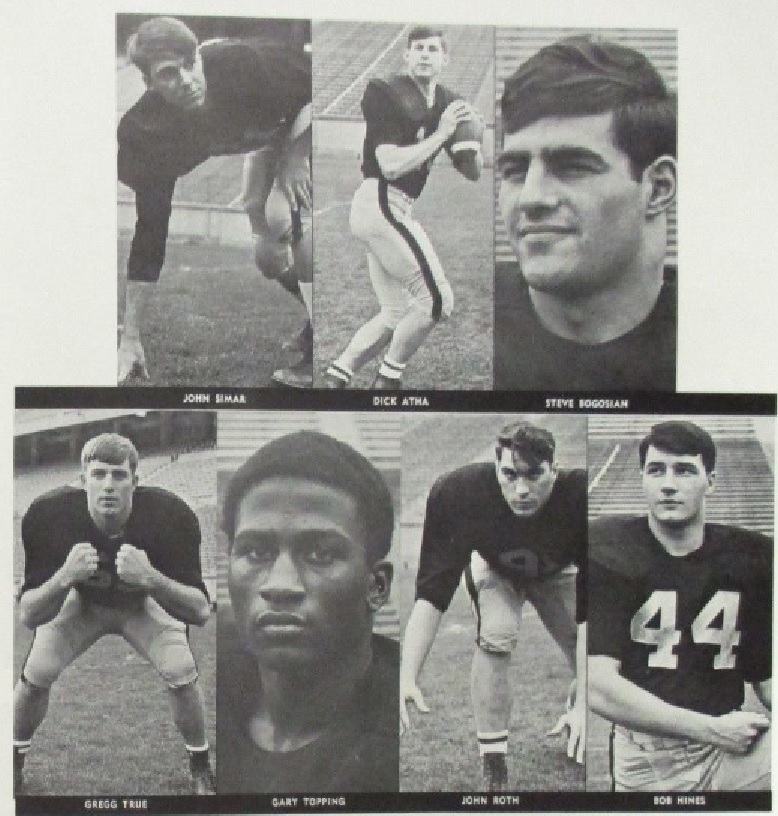
ArmyFB_1971_players1_ArmyFootballProgram

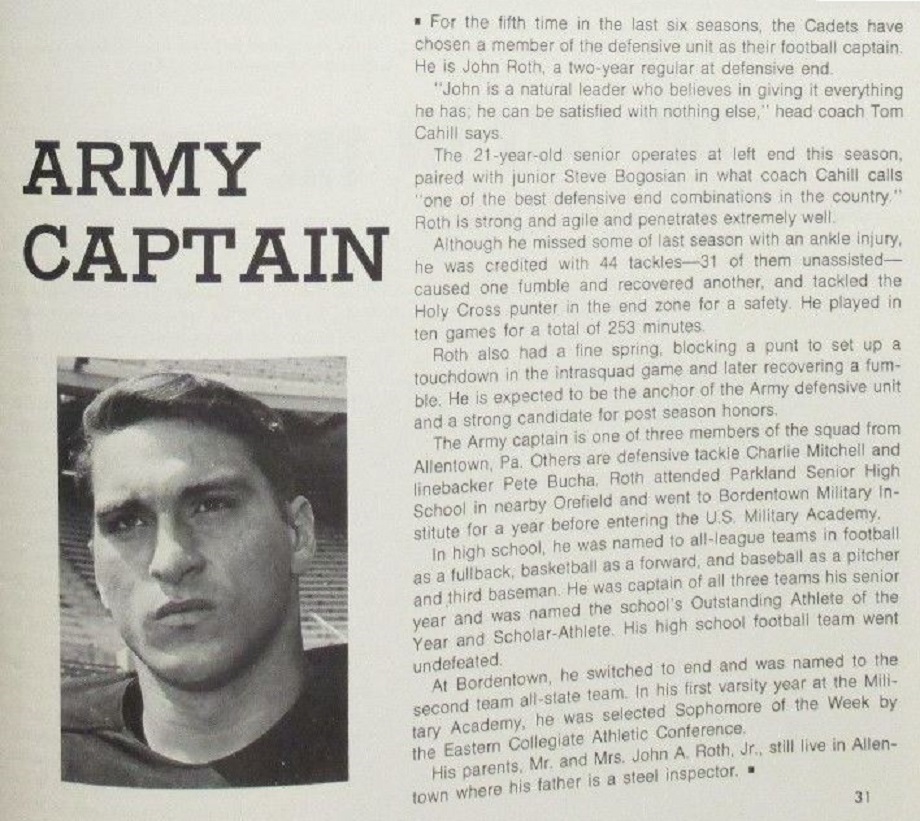
ArmyFB_1971_JohnRoth-Captain_ArmyFootballProgram

–

ArmyFB_1971_stars_ArmyFootballProgram

–

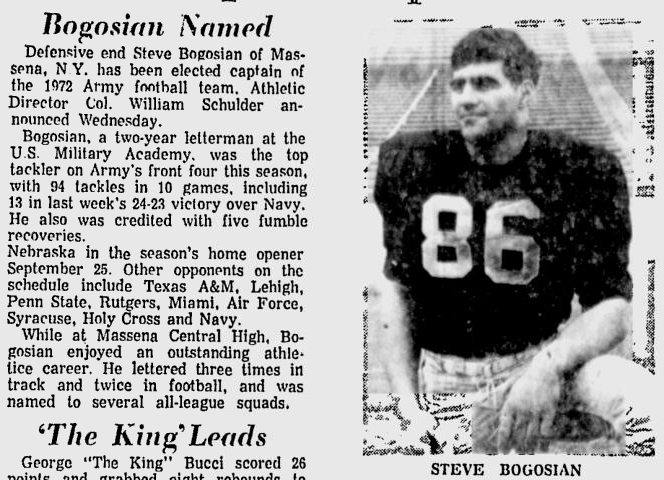
armyfb_1971_bogosian_en_aug271971

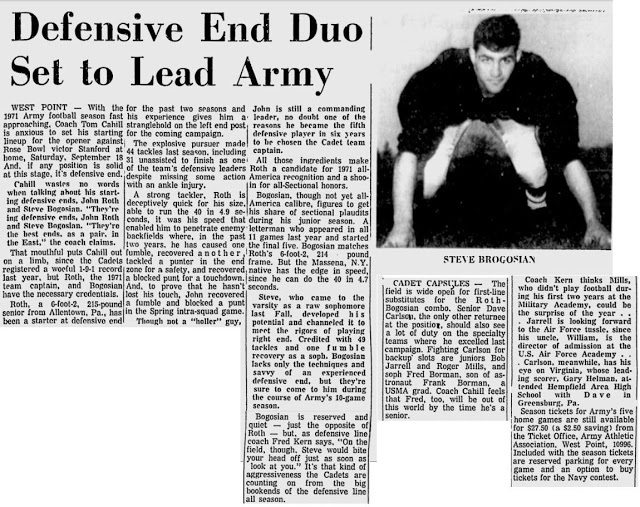
ArmyFB_1971_Bogosian_EN_Aug271971

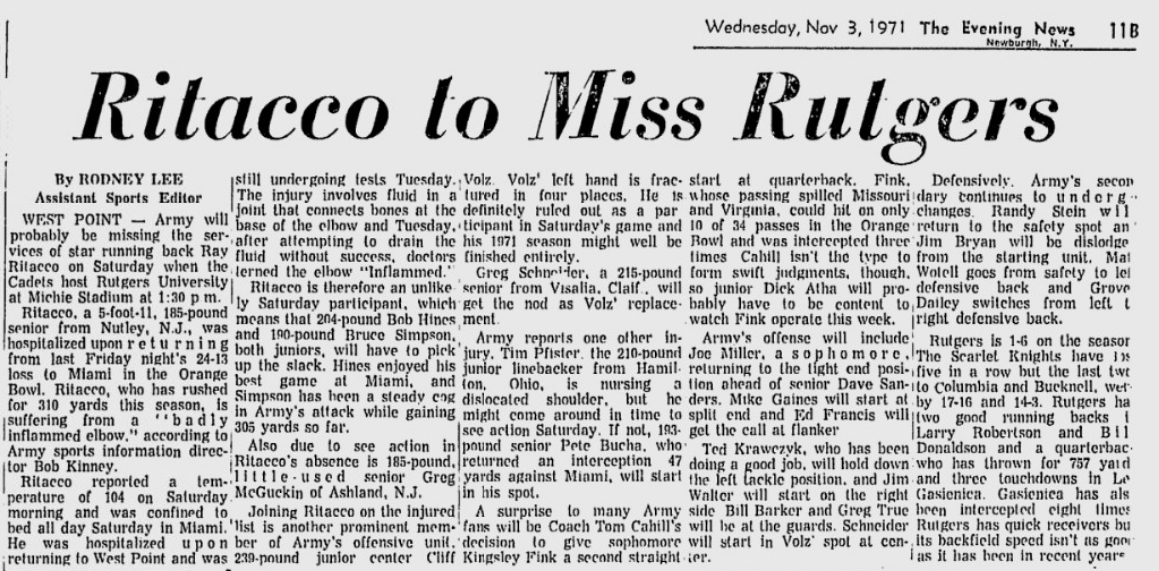
ArmyFB_1971_Ritacco_EveningNews_Nov31971 ArmyFB_1971_Ritacco_EN_Nov31971

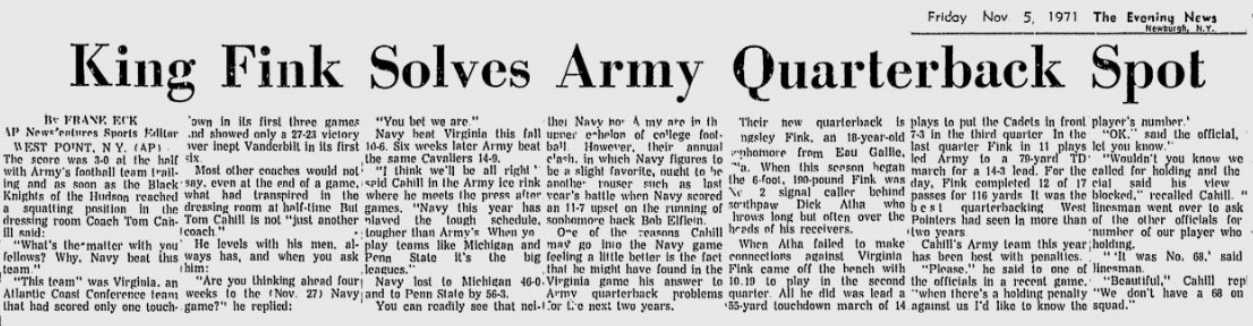
ArmyFB_1971_Fink_EveningNews_Nov41971

ArmyFB_1971_Fink_EN_Nov51971

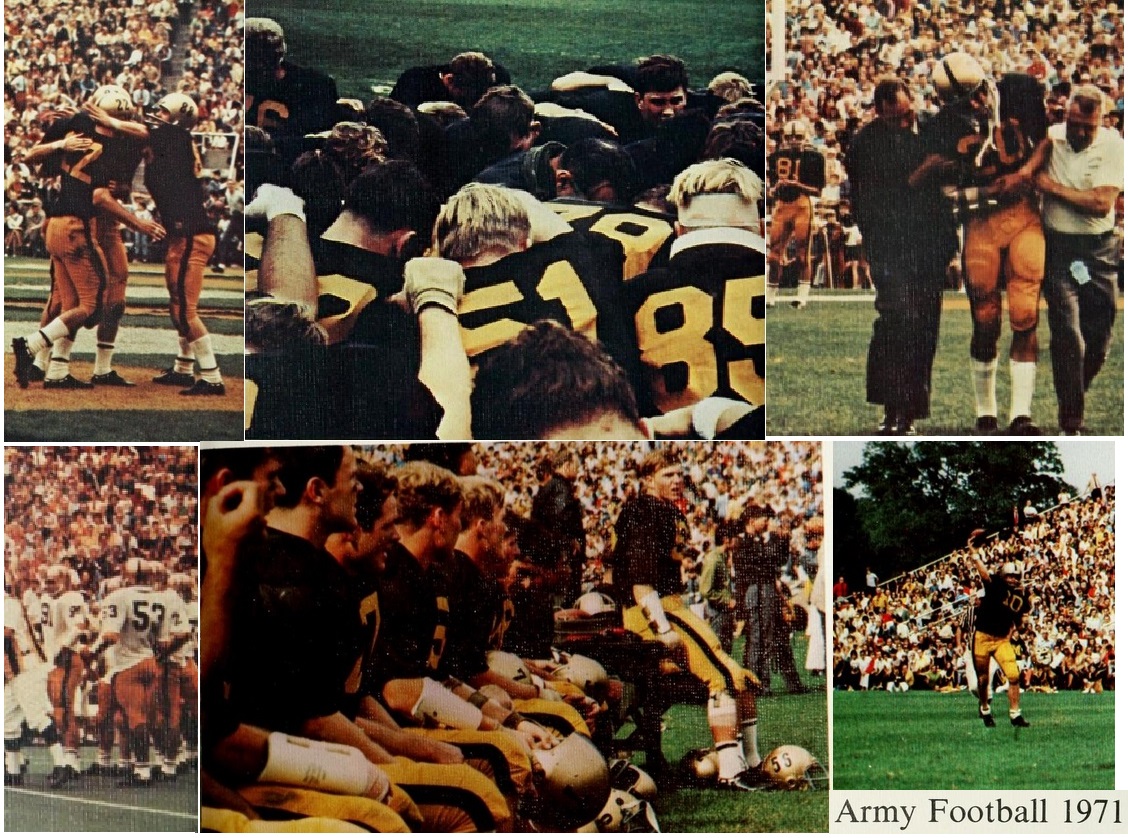
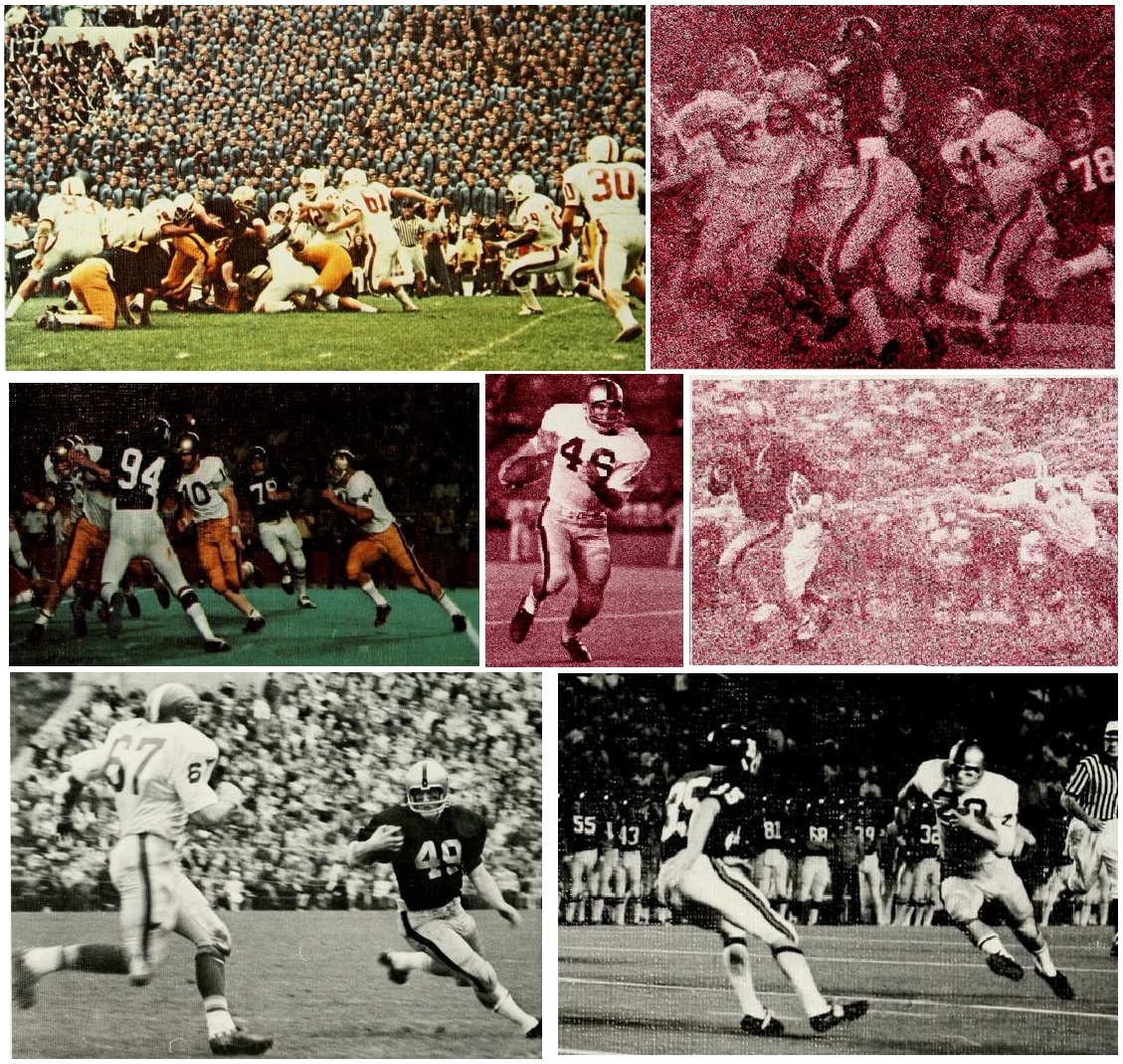
armyfb_1971_howitzer-1

ArmyFB_1971_Howitzer-1

armyfb_1971_howitzer-2

ArmyFB_1971_Howitzer-2

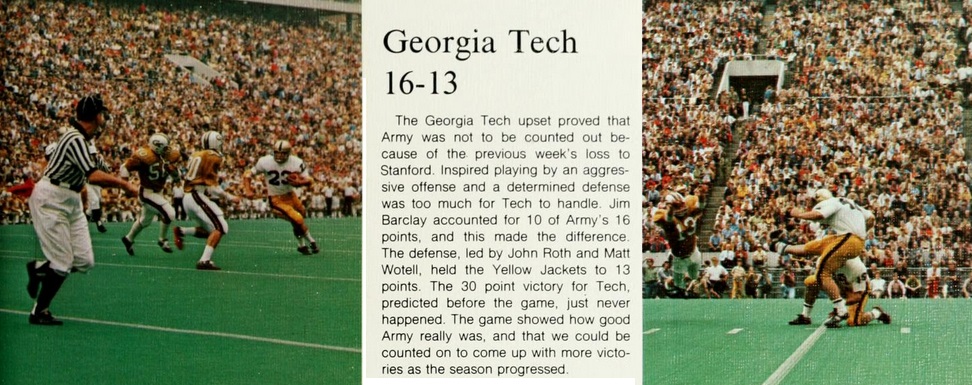
armyfb_1971_howitzer-gatech

ArmyFB_1971_Howitzer-GATech

–


armyfb_1971_howitzer-mizzou

ArmyFB_1971_Howitzer-Mizzou


armyfb_1971_mattwotell_spokesmanreview_oct51971

ArmyFB_1971_MattWotell_SpokesmanReview_Oct51971

armyfb_1971_howitzer-Uva

ArmyFB_1971_Howitzer-UVA

armyfb_1971_howitzer-rutgers

ArmyFB_1971_Howitzer-Rutgers

armyfb_1971_howitzer-pitt

ArmyFB_1971_Howitzer-PITT

–

–

armyfb_1971_vsnavy_pittsburghpress_nov21-281971

ArmyFB_1971_vsNavy_PittsburghPress_Nov21-281971

armyfb_1971_vsnavy_howitzer-v6

ArmyFB_1971_vsNavy_Howitzer-v6

armyfb_1971_bogosian_alleast_dec11971

ArmyFB_1971_Bogosian_AllEast_Dec119

–

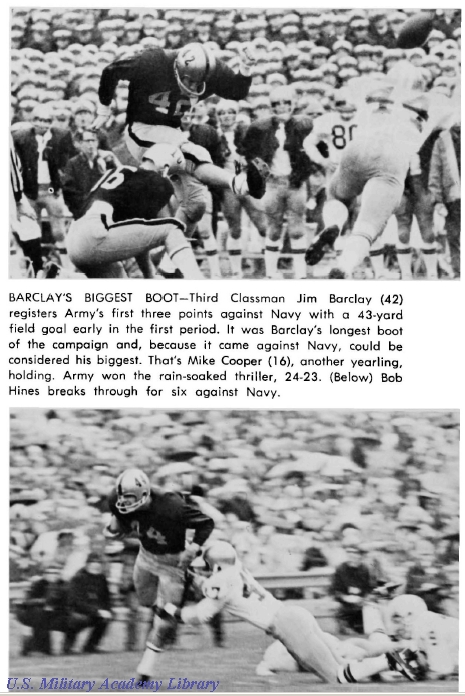
armyfb_1971_barclay-hines_assembly_jan72

ArmyFB_1971_Barclay-Hines_Assembly_Jan72

—

1970 Team

1970 1-9-1

1970/11/28 Army 7 – Navy 11 L
Coach – Thomas B. Cahill (October 11, 1919 – October 29, 1992)

Army 1966-1973:

1966 Army 8-2 Coach of the Year

1967 Army 8-2

1968 Army 7-3

1969 Army 4-5-1

1970 Army 1-9-1

1971 Army 6-4

1972 Army 6-4

1973 Army 0-10

Overall Army: 40-39-2

Union NY 1976-79


armyfb_1970_wottel_nebraska_newburgheveningnews_oct21970
ArmyFB_1970_Wottel_Nebraska_NewburghEveningNews_Oct21970


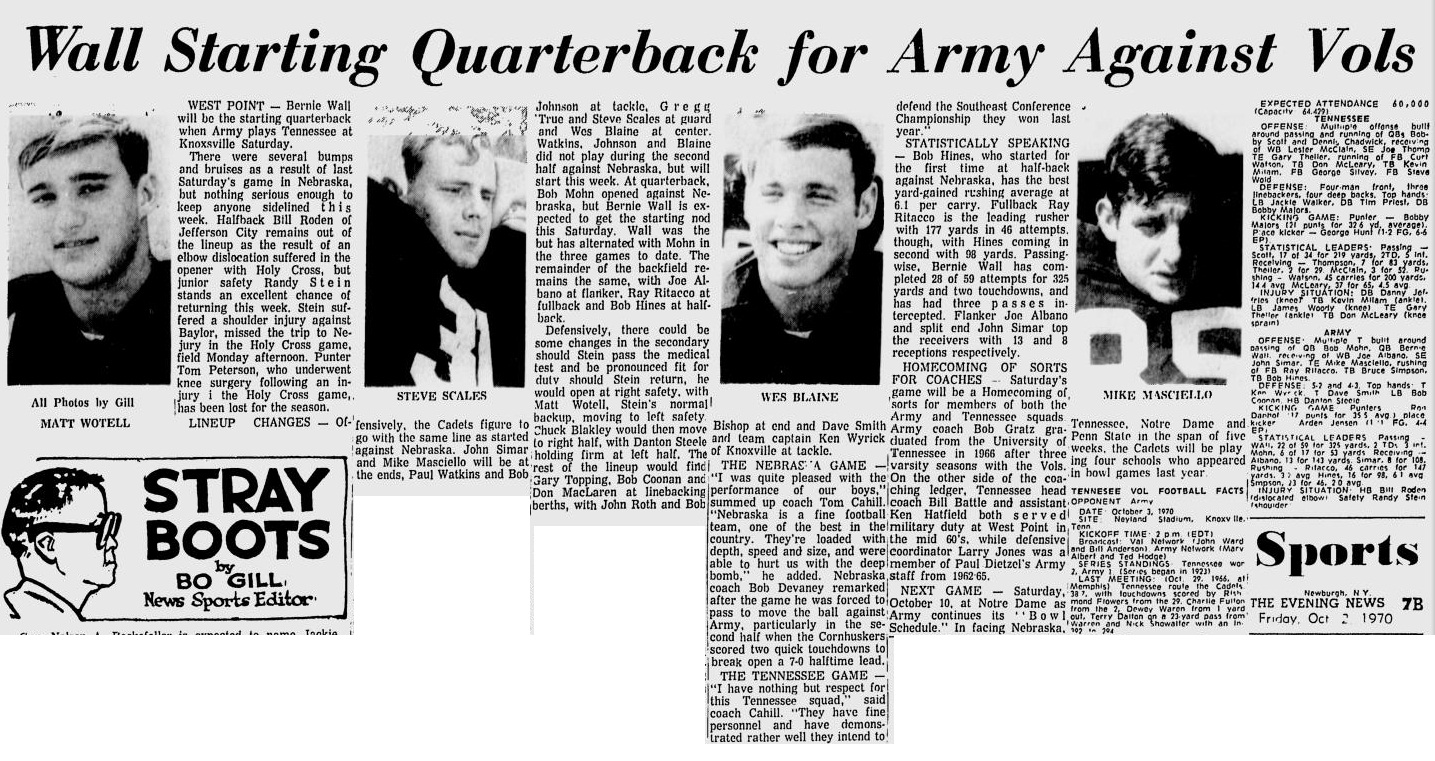
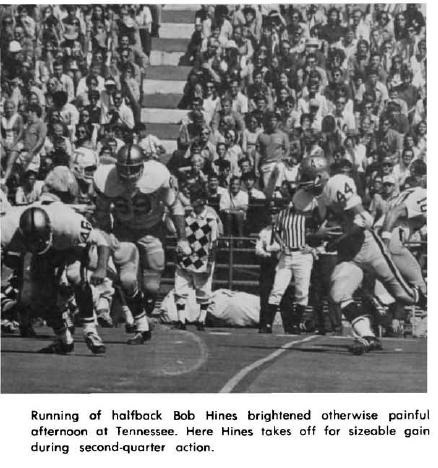
armyfb_1970_vstenn-bobhines_assembly1970
ArmyFB_1970_vsTenn-BobHines_Assembly1970


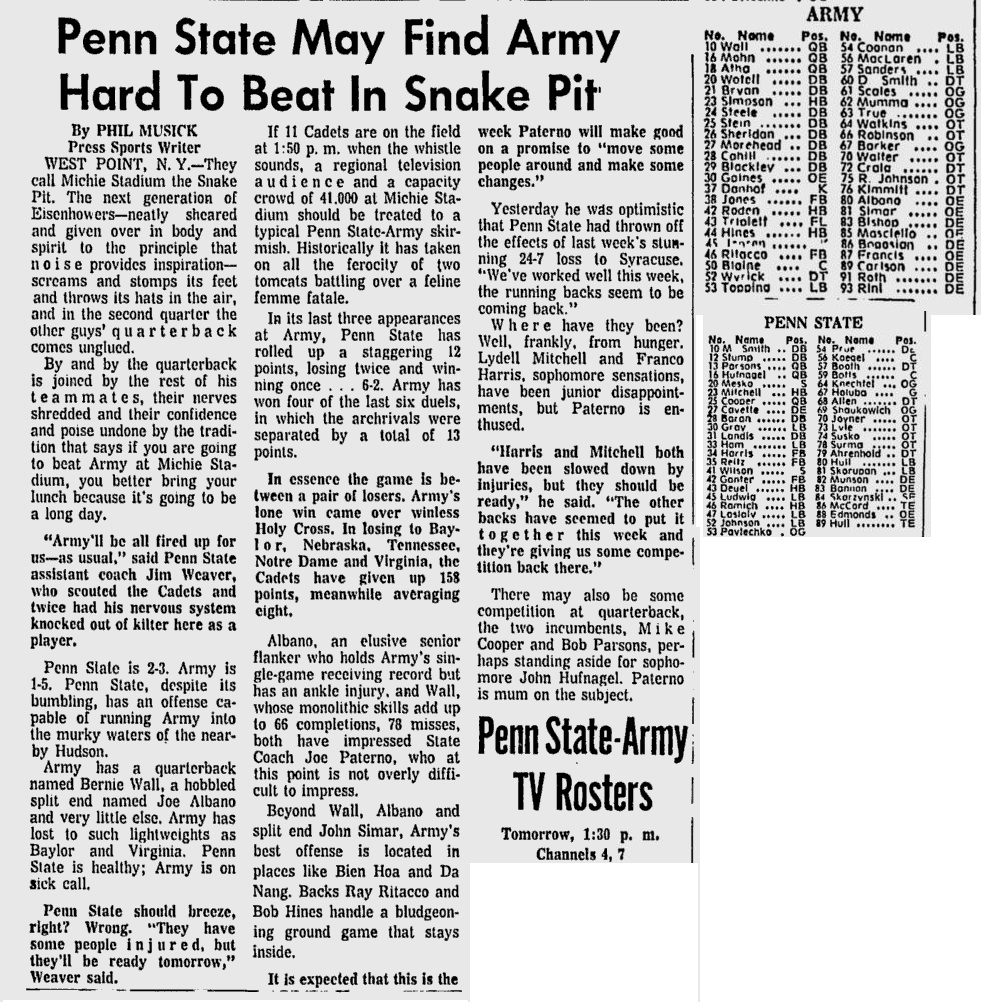
armyfb_1970_vspennstate_pittsburghpress_oct231970
ArmyFB_1970_vsPennState_PittsburghPress_Oct231970


armyfb_1970_vssyracuse_newburgheveningnews_nov91970
ArmyFB_1970_vsSyracuse_NewburghEveningNews_Nov91970


armyfb_1970_vsoregon_newburgheveningnews_nov161970
ArmyFB_1970_vsOregon_NewburghEveningNews_Nov161970


armyfb_1970_vsnavy_newburgheveningnews_nov281970
ArmyFB_1970_vsNavy_NewburghEveningNews_Nov281970

–

–

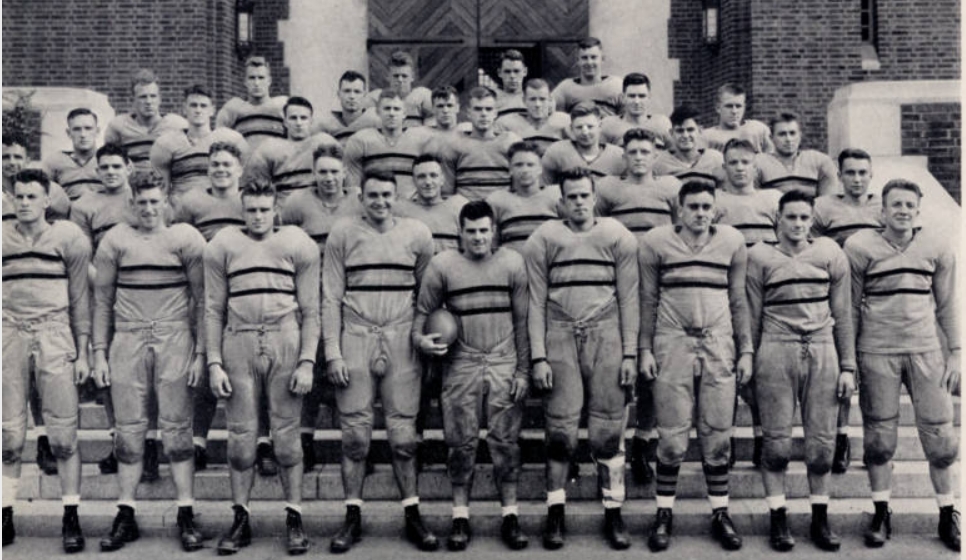
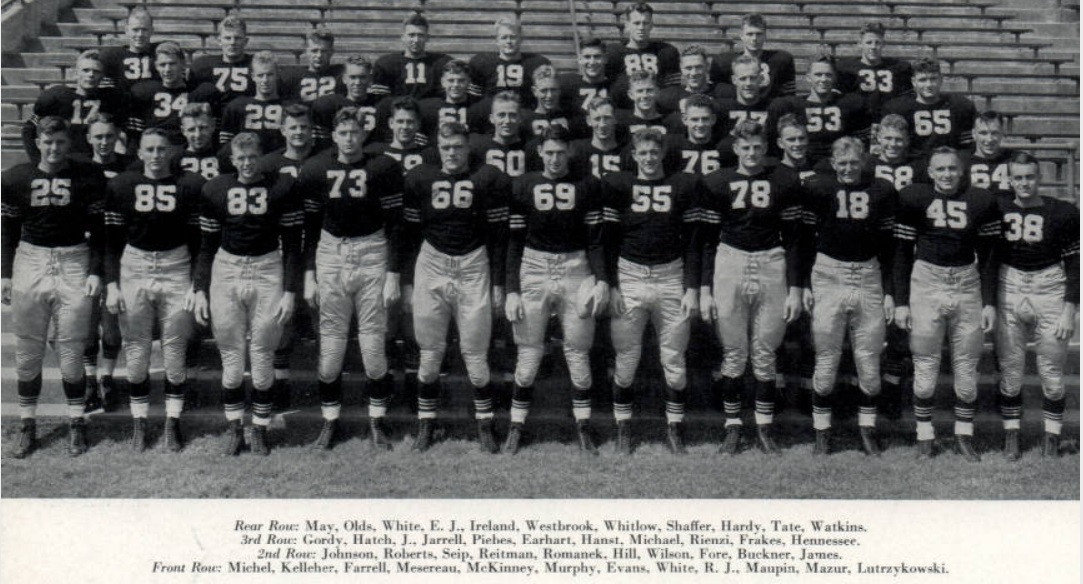
1940 Team

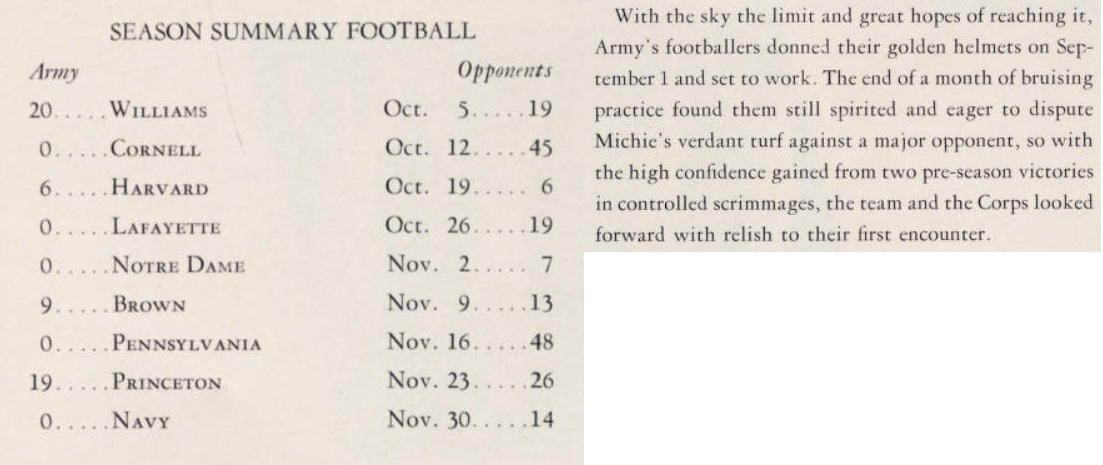
1940 Army 1-7-1
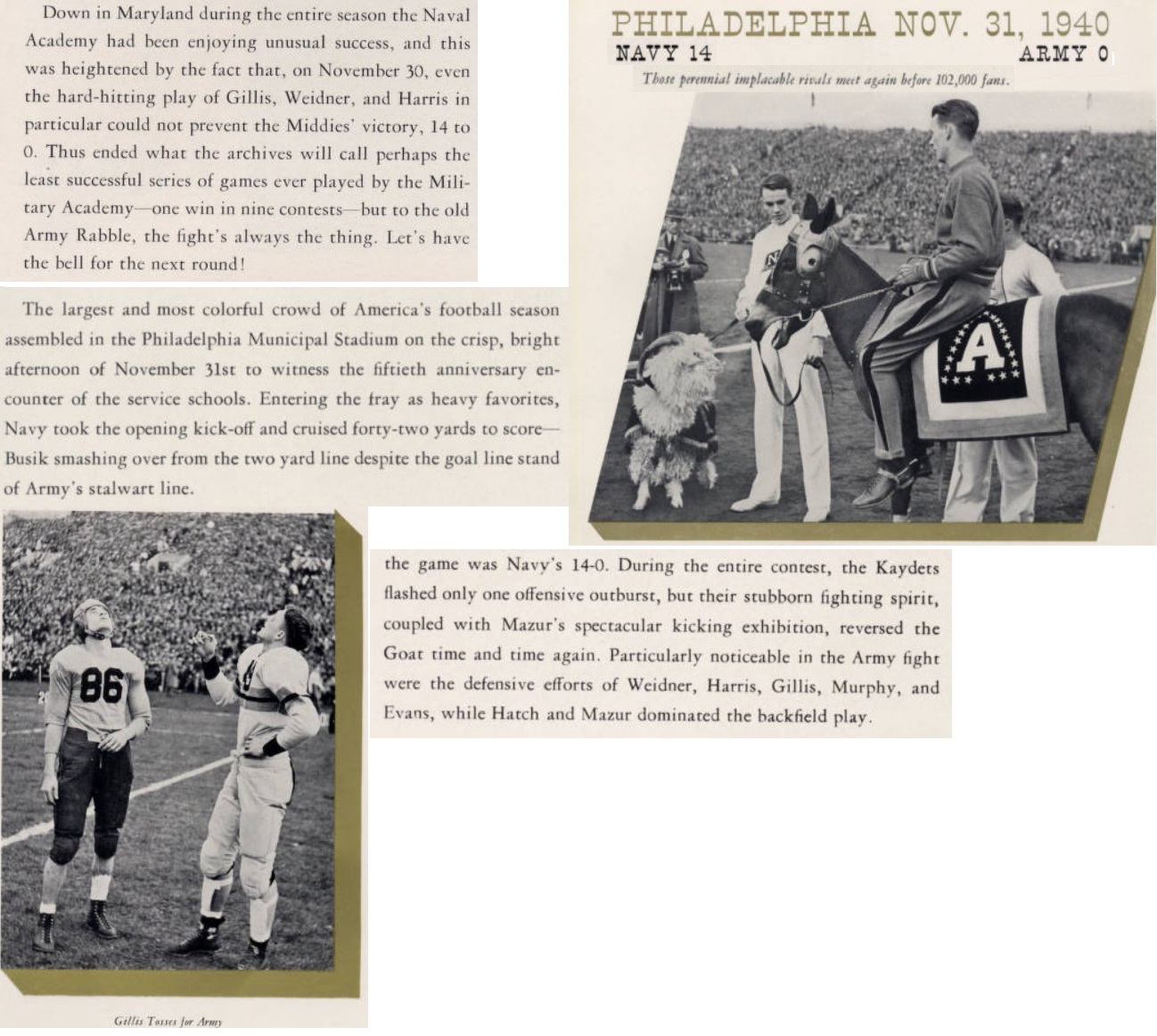
1940/11/30 Army 0 – Navy 14 L

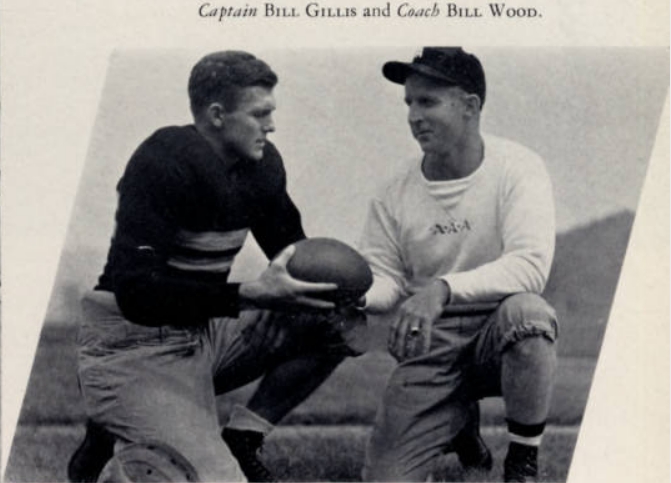
Coach: William H. “Bill” Wood (c. 1900 – June 7, 1988)
1938-1940
1938 Army 8-2
1939 Army 3-4-2
1940 Army 1-7-1
Overall: 12-13

Howitzer 1941
http://digital-library.usma.edu/cdm/compoundobject/collection/howitzers/id/5167/

–

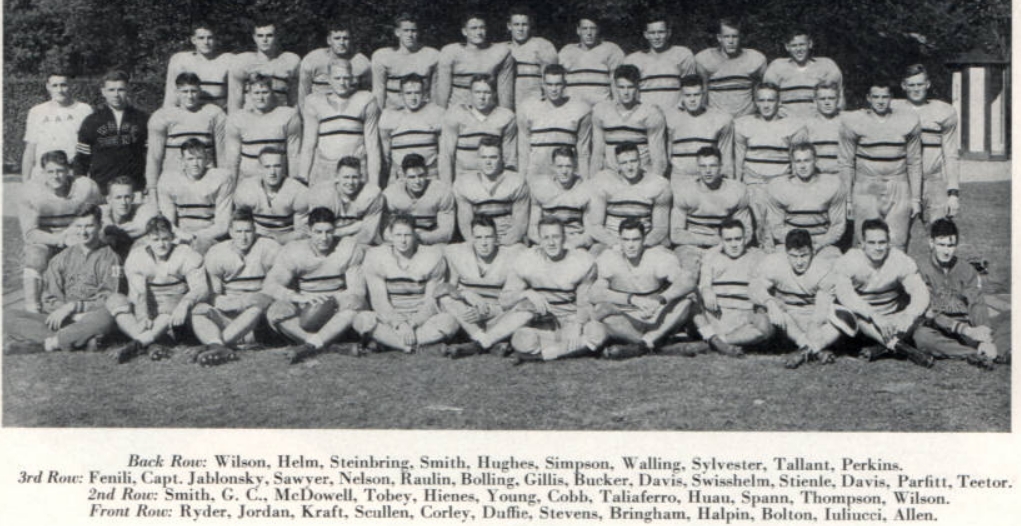
ArmyFB_1940_team

–

ArmyFB_1940_record

–

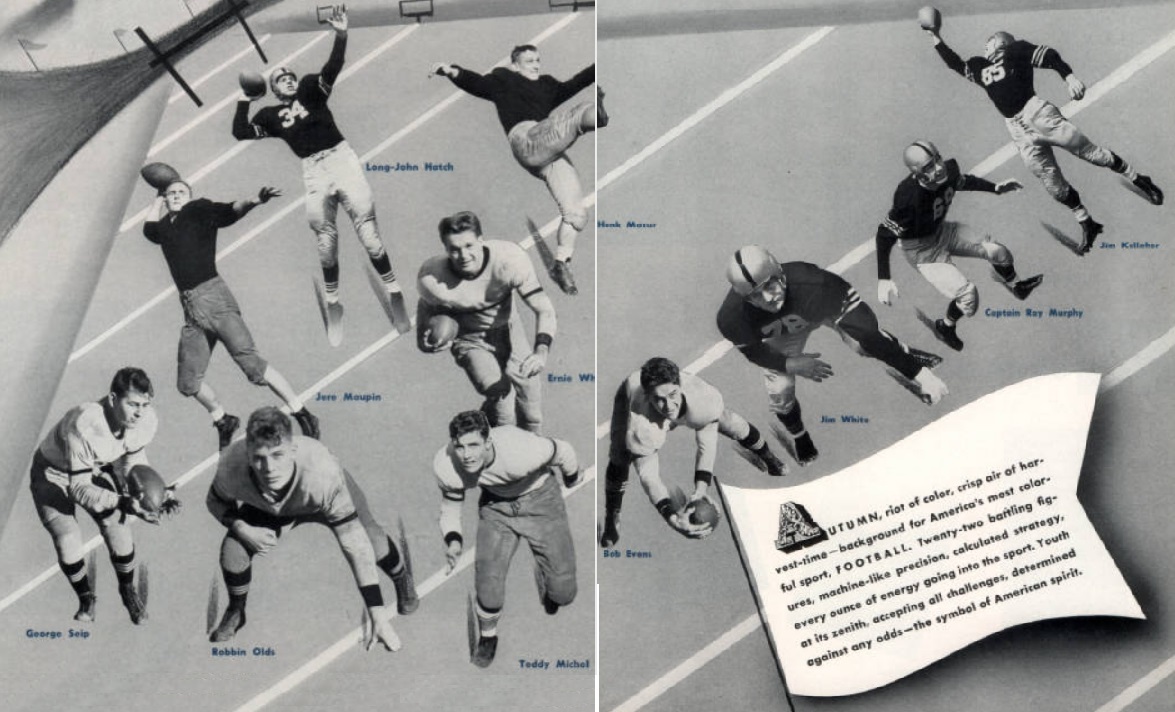
ArmyFB_1940_CoachWood_Gillis-Captain

–

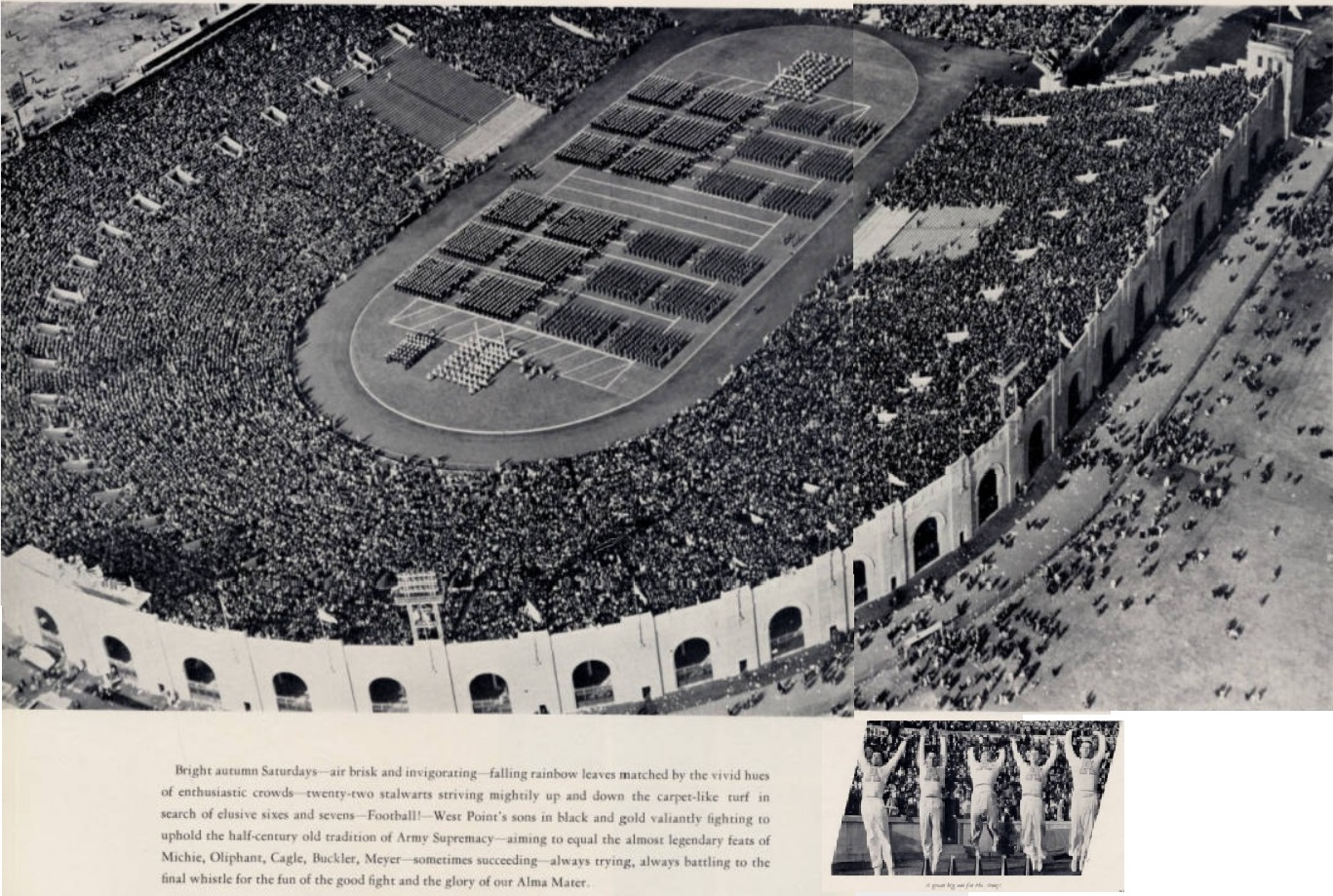
ArmyFB_1940_Corps-stadium

–

ArmyFB_1940_action-1

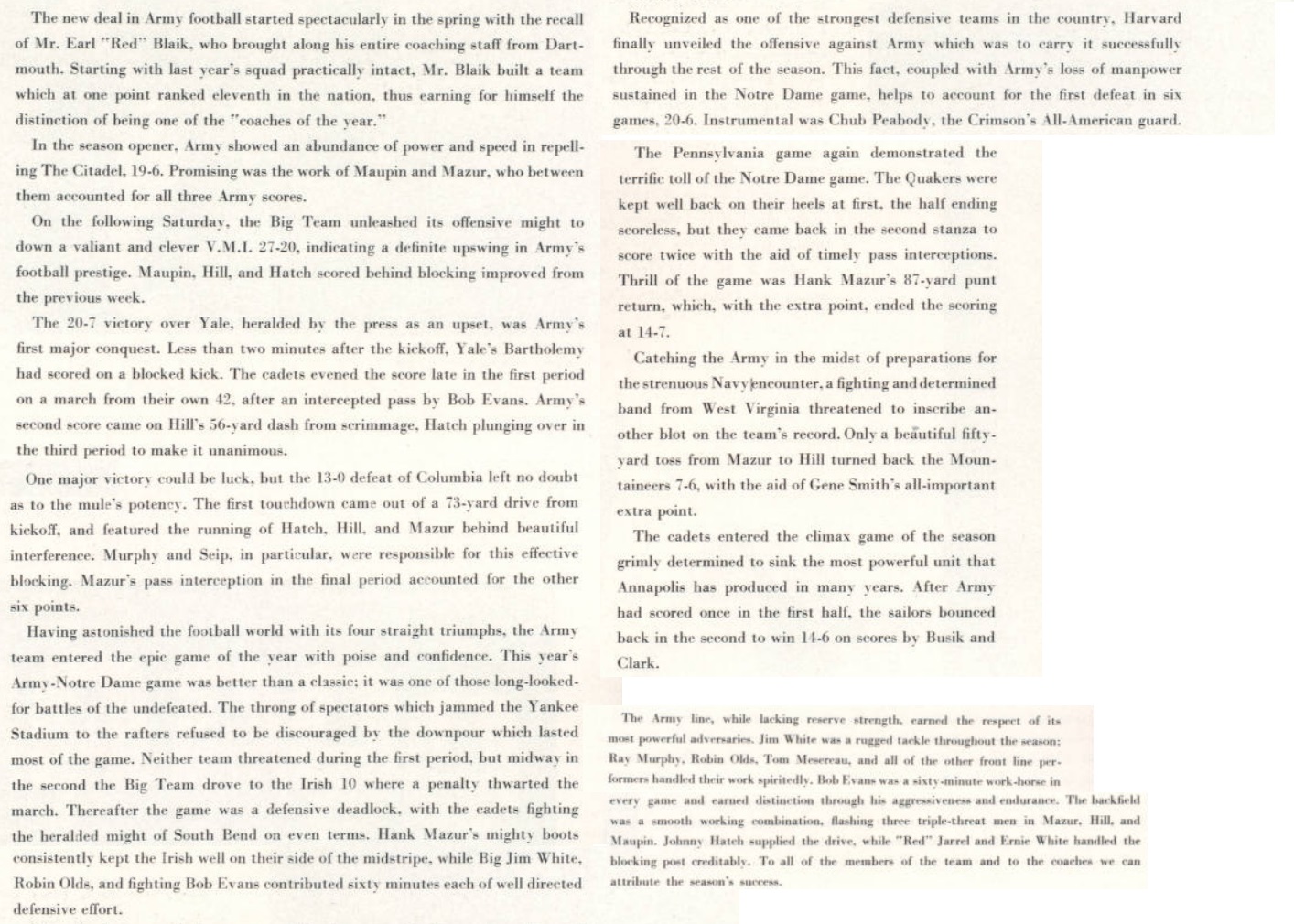
–

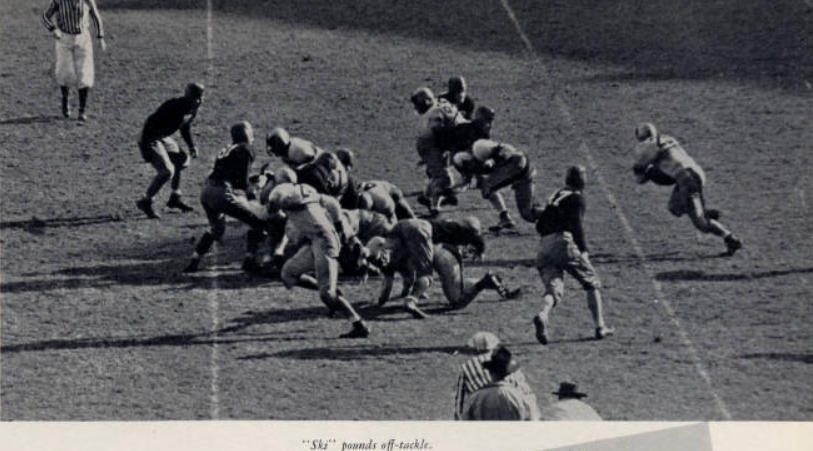
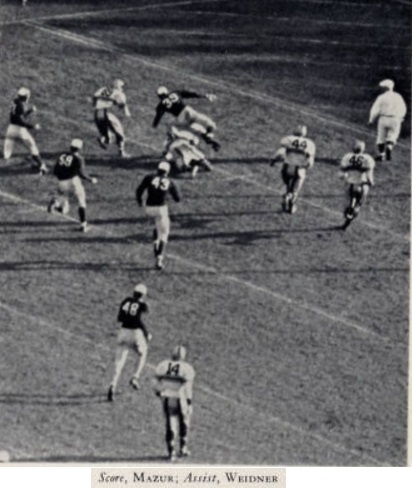
ArmyFB_1940_action-2_Mazur-run

–

ArmyFB_1940_action-3

–

ArmyFB_1940_action-4

–

ArmyFB_1940_vsNotreDame

–

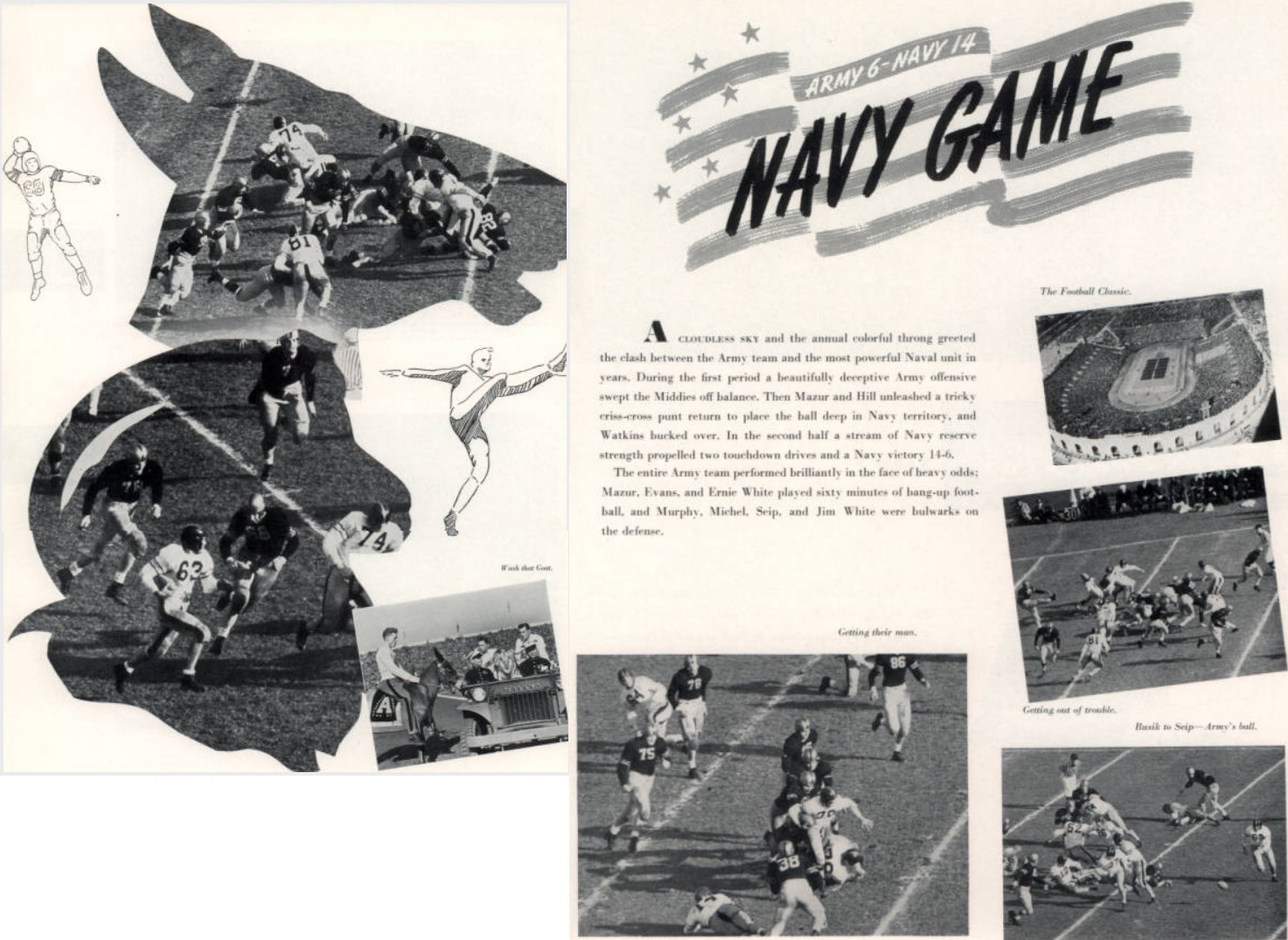
ArmyFB_1940_vsNavy_write-up

–

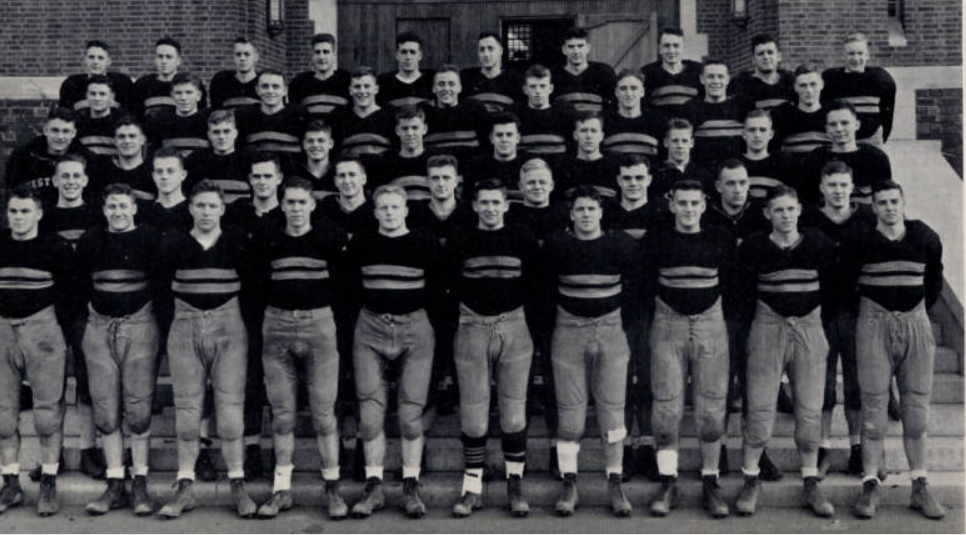
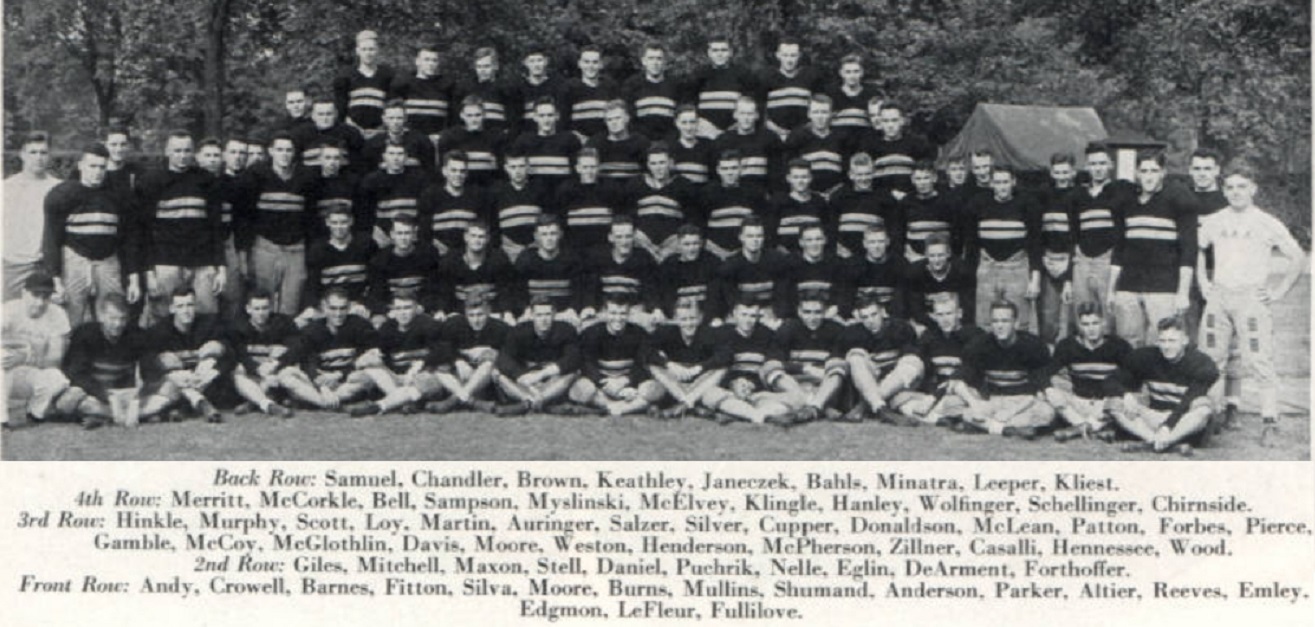
ArmyFB_1940_BSquad

–

ArmyFB_1940_CSquad

–

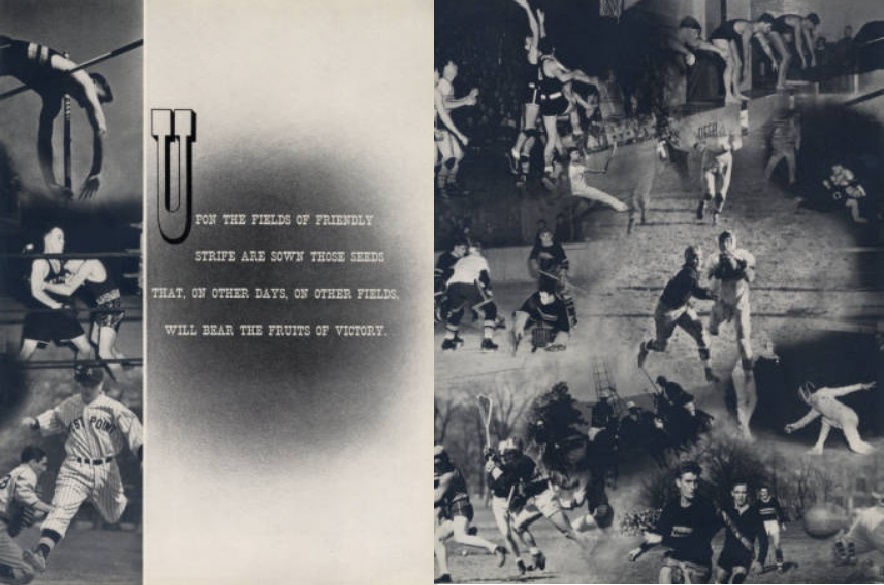
First appearance of that famous quote?

ArmyFB_1940_MacArthur-slogan-UpontheFields

–

News Articles

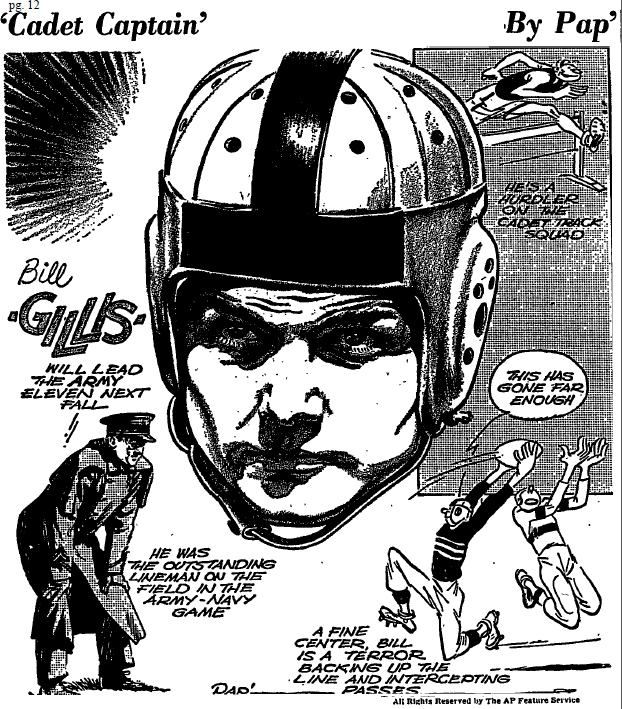
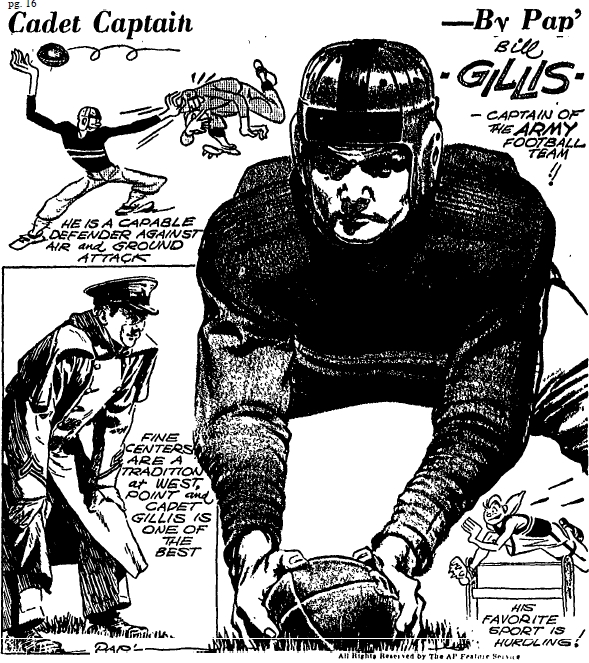
ArmyFB_1940_BillGillis_byPap_CSM_Dec141939
–

ArmyFB_1940_forecast_EveningIndependent_Sep91940

–

ArmyFB_1940_BillGillis_byPap_CSM_Oct311940

–

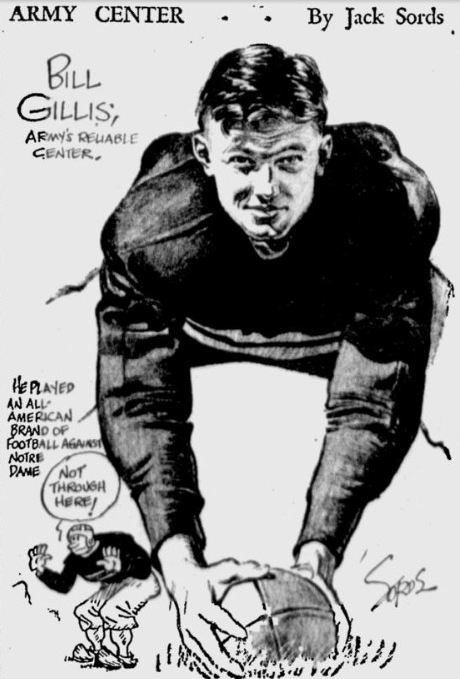
ArmyFB_1940_BillGillis_byJackSords_PrescottEveningCourier_Nov121940

ArmyFB_1940_BillGillis_byJackSords_PrescottEveningCourier_Nov121940

ArmyFB_1940_vsNavy_LewistonEveningJournal_Nov271940-1
–

ArmyFB_1940_vsNavy_TheDay_Nov291940
–

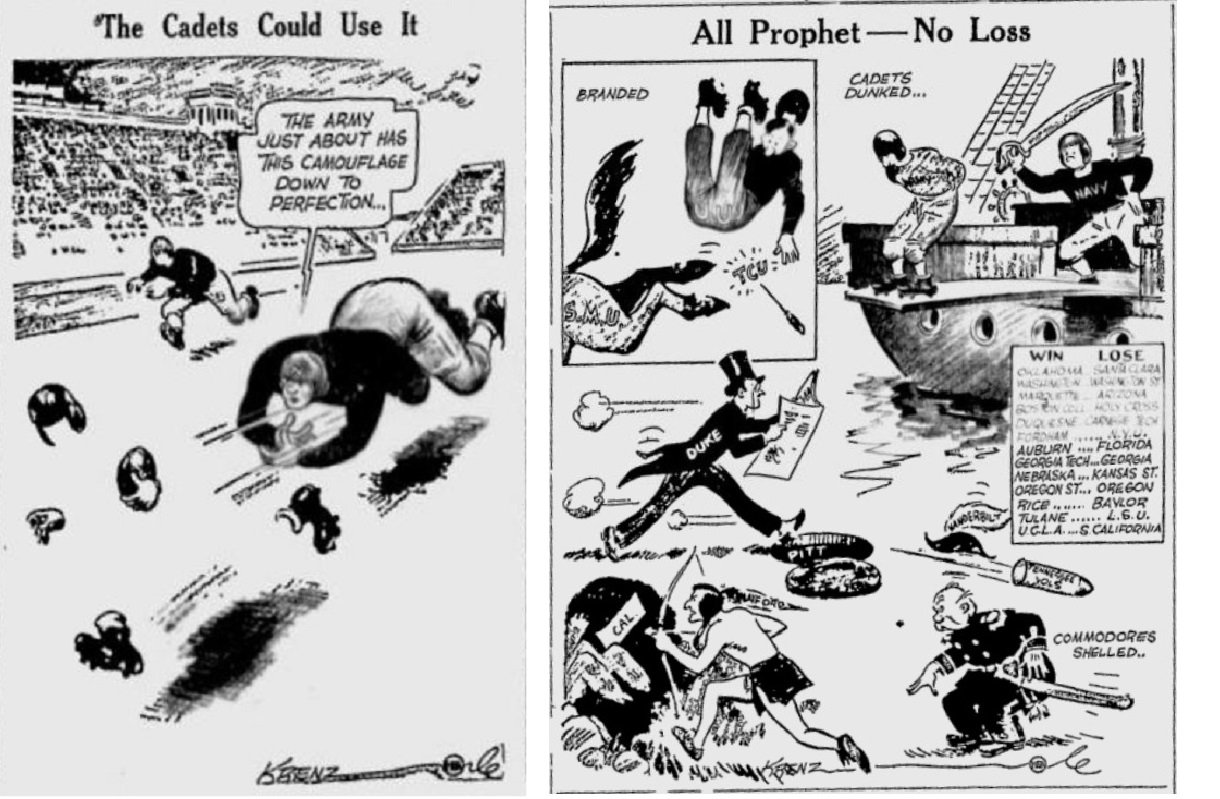
ArmyFB_1940_vsNavy_byKrenz _PalmBeachPost_Nov301940

–

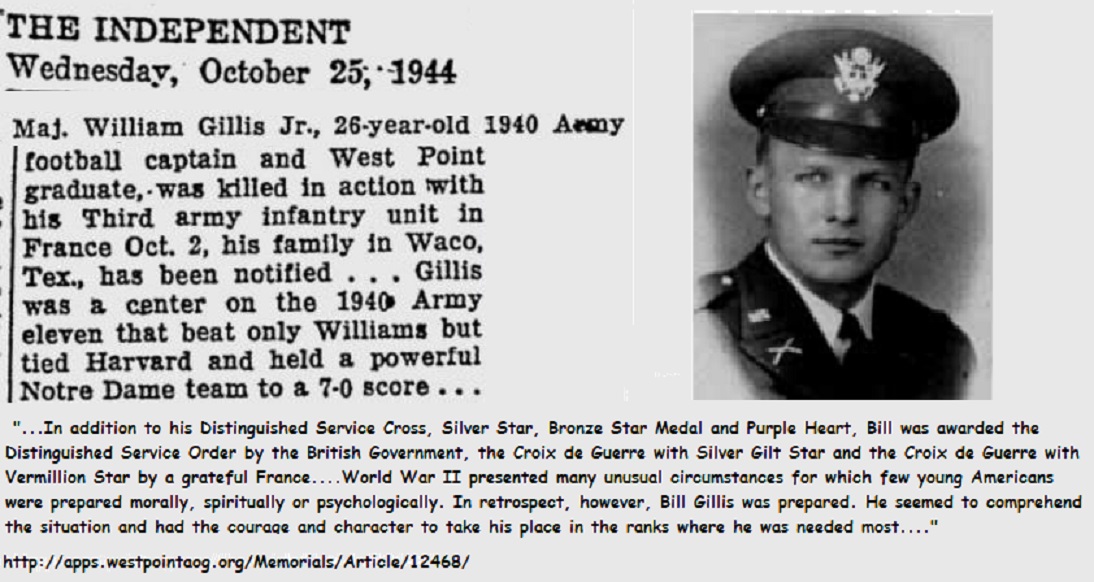
ArmyFB_1941_MAJWilliamGillis_KIA_EveningIndependent_Oct251944

ArmyFB_1941_MAJWilliamGillis_KIA_EveningIndependent_Oct251944

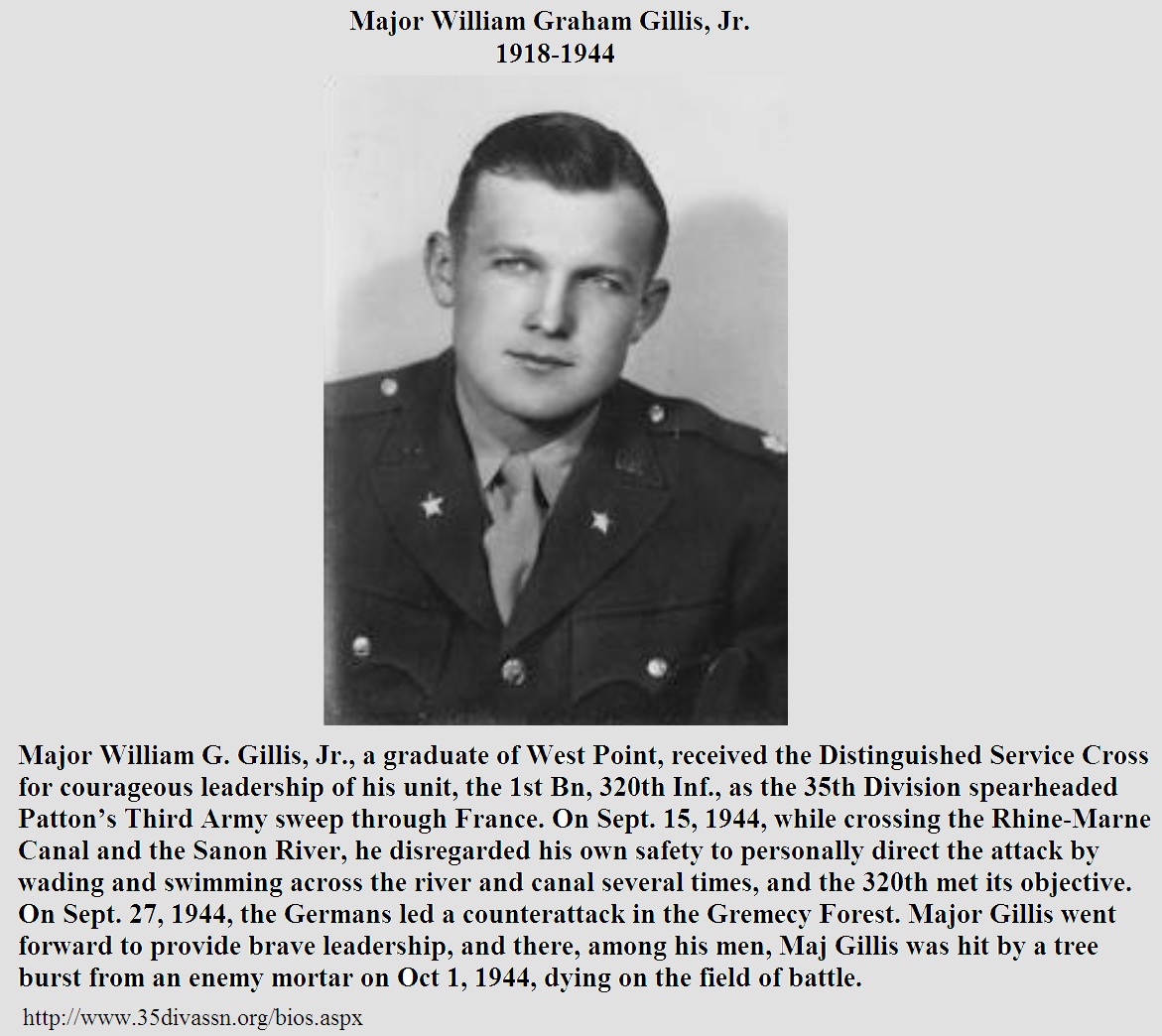
ArmyFB_1941_WilliamGGillis_35thDiv

ArmyFB_1941_WilliamGGillis_35thDiv

See also…Honor on the Line: The Fifth Down and the Spectacular 1940 College Football … By Robert J. Scott, Myles A. Pocta, p.226

1941 Team

1941 Army 5-3-1
1941/11/29 Army 6 – Navy 14 L

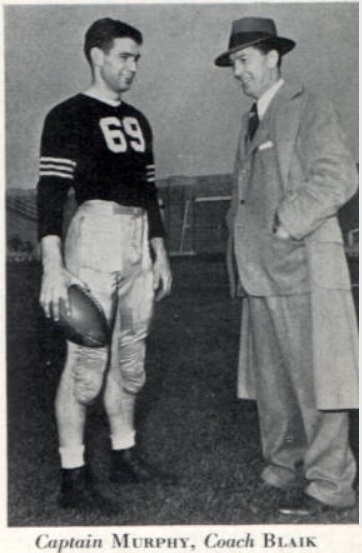
Coach: Earl Henry “Red” Blaik (February 15, 1897 – May 6, 1989)
Dartmouth 1934-1940 – 45-15-4
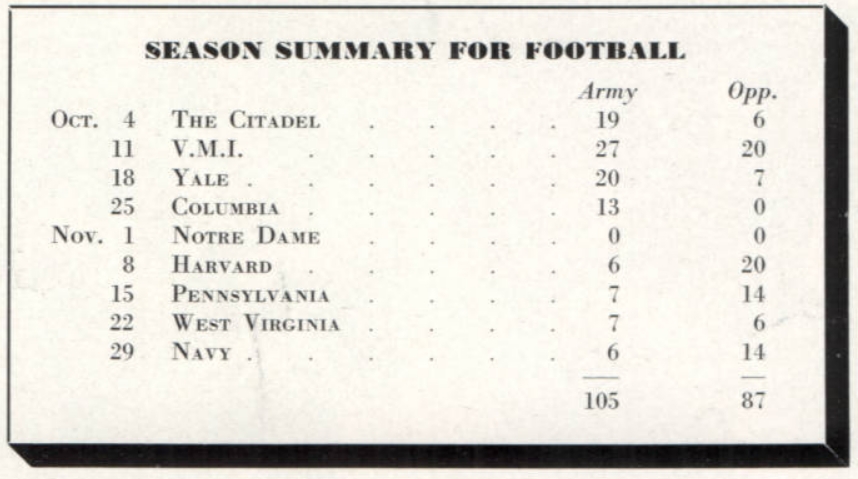
Army: 1941-1958 – 121-33-10
Overall: 166-48-14
Awards:
All-American, 1919
AFCA Coach of the Year (1946)
College Football Hall of Fame, Inducted in 1964

Howitzer 1942
http://digital-library.usma.edu/cdm/compoundobject/collection/howitzers/id/18345/

–

ArmyFB_1941_team

–

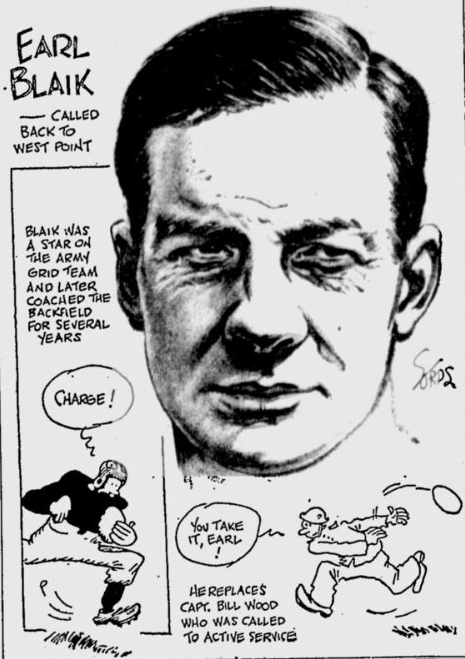
ArmyFB_1941_EarlBlaik_byJackSords_PrescottEveningCourier_Oct71941
ArmyFB_1941_ Earl Blaik _byJackSords_PrescottEveningCourier_Oct71941

–

ArmyFB_1941_EarlBlaik_byPhilBerube_SundayMorningStar_Oct121941

ArmyFB_1941_EarlBlaik_byPhilBerube_SundayMorningStar_Oct121941

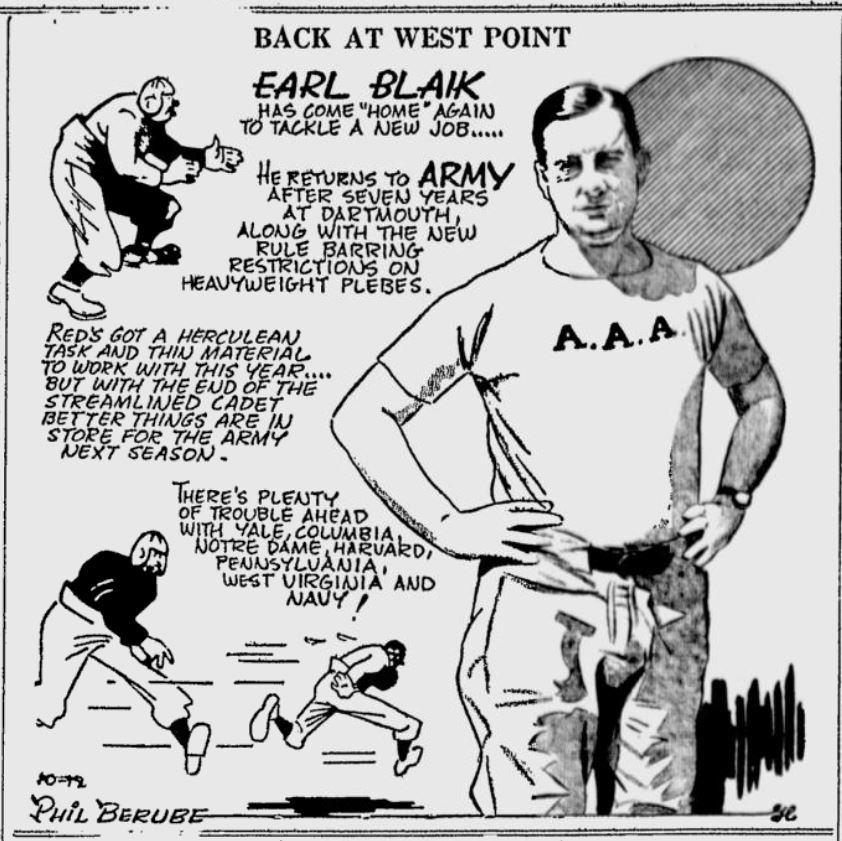
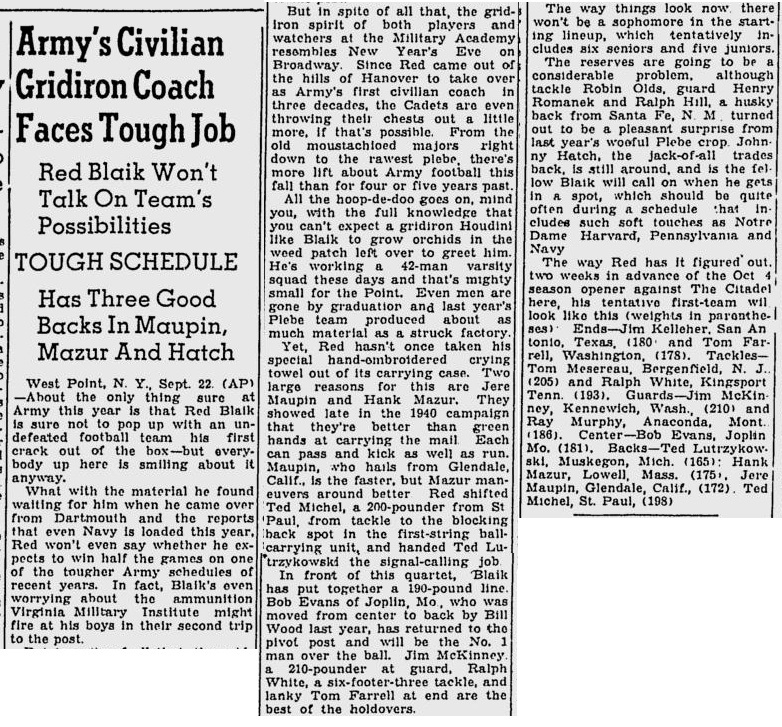
“In 1941, Blaik was tapped to be head football coach for the United States Military Academy. Army had suffered two consecutive losing seasons in 1939 and 1940, a first since 1906, and dropped its requirements for its coach to be a serving graduate and that all players meet restrictive height-to-weight limitations. The latter was a condition Blaik made as a requirement for him to accept the position, believing Army to be severely handicapped in the size of its linemen. The United States Naval Academy did not have the same restrictions and the Army surgeon general was persuaded to drop the requirement for football players.

At West Point, Blaik coached for 18 seasons compiling a 121-33-10 record. Blaik’s Army teams had a 32-game unbeaten streak from 1944 to 1947, won consecutive national titles in 1944 and 1945, and finished second in the nation in 1946 with their record blemished only by a scoreless tie with rival Notre Dame at Yankee Stadium. In 1946, Blaik was selected as the AFCA Coach of the Year. In 1948, he became one of the first college coaches to implement a two-platoon system, using players strictly for offense or defense. Blaik was also one of the first coaches to analyze the game play-by-play, charting a team’s tendencies on every down with the use of game film.

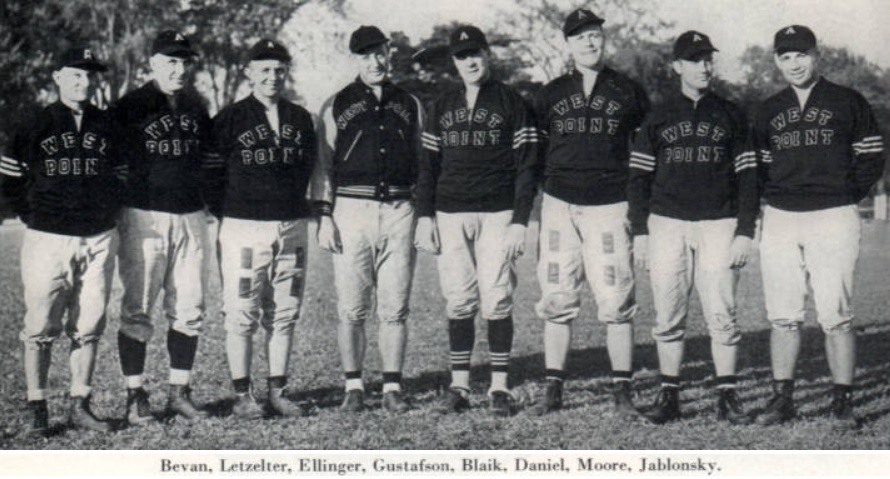
During his tenure at West Point, Blaik coached three Heisman trophy winners, Doc Blanchard in 1945, Glenn Davis in 1946 and Pete Dawkins in 1958, as well as a total of 11 Hall of Fame players. Twenty of his former assistant coaches became head coaches in their own right: Paul Amen, George Blackburn, Clarence Boston, Eddie Crowder, Paul Dietzel, Bobby Dobbs, Sid Gillman, Jack Green, Andy Gustafson, Dale Hall, Tom Harp, Herman Hickman, Stu Holcomb, Frank Lauterbur, Vince Lombardi, John Sauer, Richard Voris, Murray Warmath, Bob Woodruff, and Bill Yeoman. Legendary fighter pilot Colonel Robin Olds also served as an assistant coach to Blaik. Dietzel, while at LSU, and Murray Warmath, while at Minnesota, won national championships as head coaches. Gillman, while head coach of the San Diego Chargers won an AFL championship. Lombardi, as head coach of the Green Bay Packers, won five NFL titles and the first two Super Bowls.

During Blaik’s tenure, the Army team adopted the nicknames “Black Knights” and “Black Knights of the Hudson”, which has now come to refer to all intercollegiate athletic teams at West Point.
sources: http://en.wikipedia.org/wiki/Earl_Blaik
http://en.wikipedia.org/wiki/Army_Black_Knights_football

–

ArmyFB_1941_team

–

ArmyFB_1941_record

–

ArmyFB_1941_CoachBlaik-Murphy-Captain

–

ArmyFB_1941_coaches

–

ArmyFB_1941_write-up

–

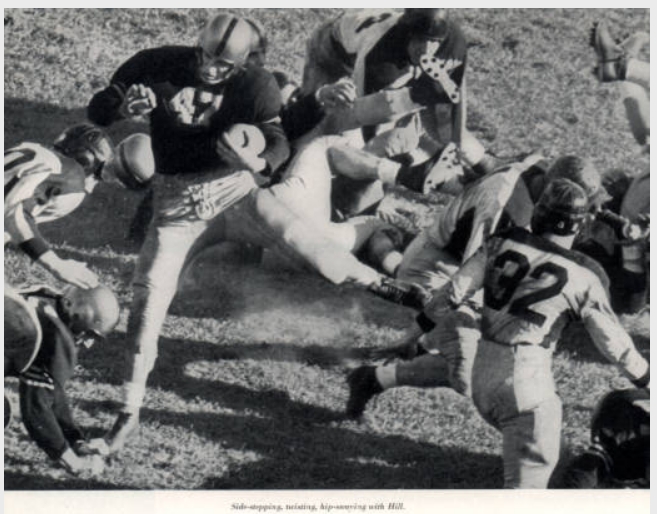
ArmyFB_1941_Hill_action-1

–

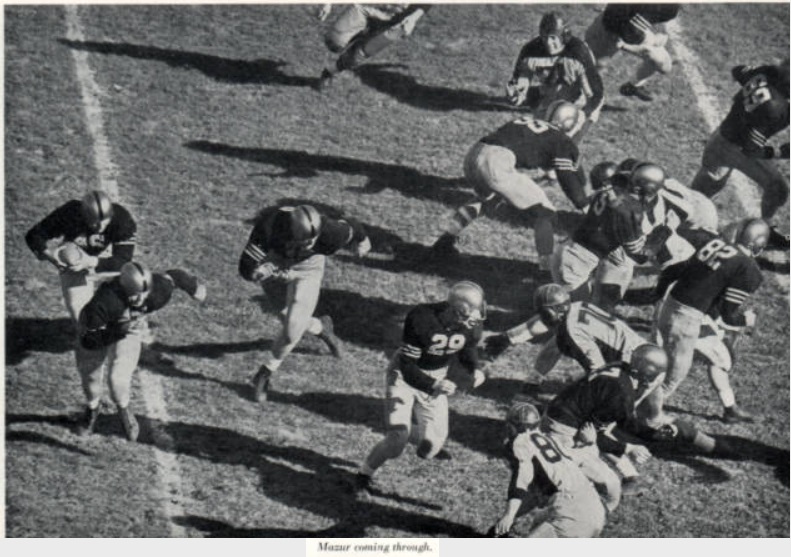
ArmyFB_1941_Mazur_action-2

–

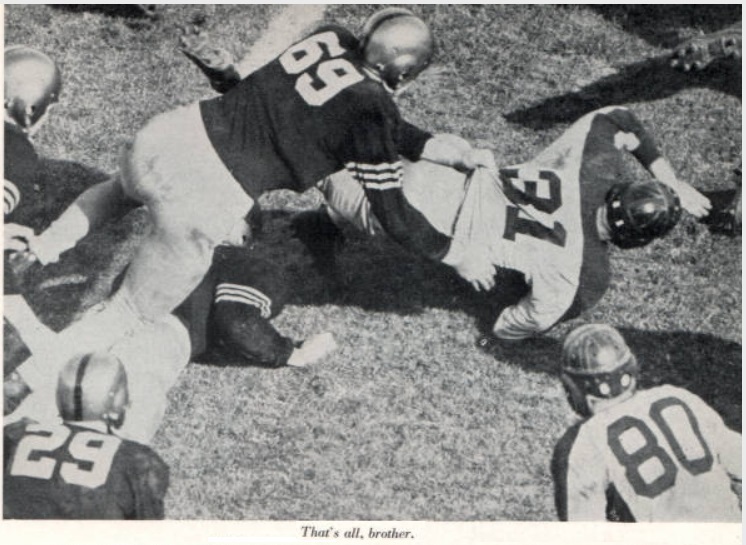
ArmyFB_1941_defense_action-3

–

ArmyFB_1941_vsNavy-1

–

ArmyFB_1941_starters

–

ArmyFB_1941_BSquad

–

ArmyFB_1941_CSquad

News Articles
–

armyfb_1941_forecast_meridenrecord_sep231941
ArmyFB_1941_forecast_MeridenRecord_Sep231941
–
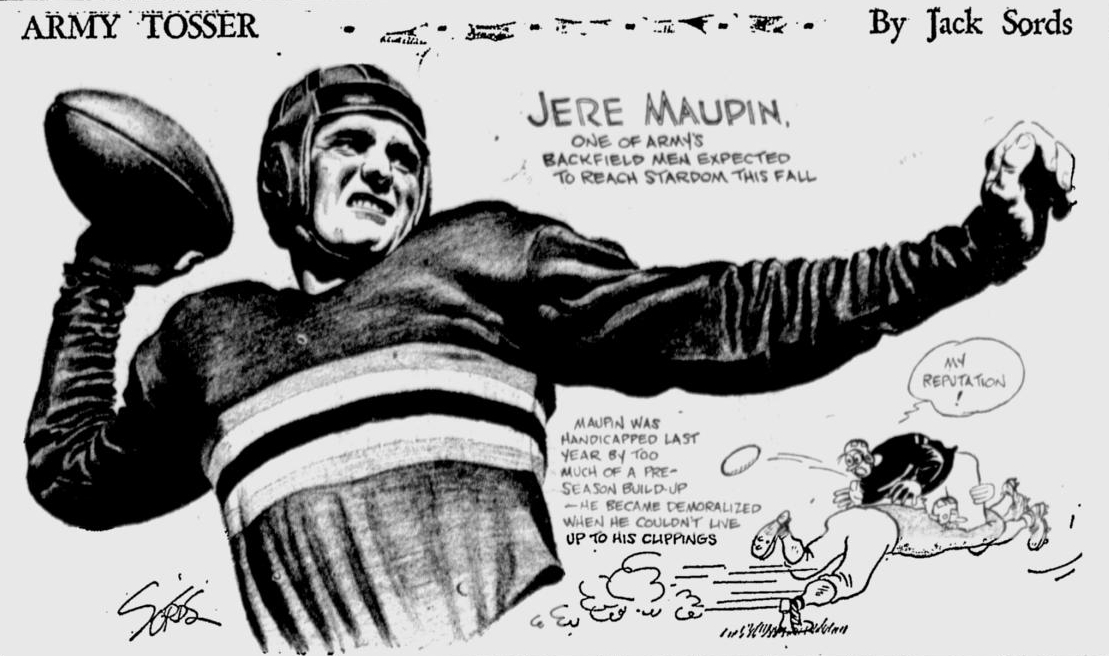
ArmyFB_1941_JerryMaupin_byJackSords_PrescottEveningCourier_Oct291941
ArmyFB_1941_ “Jerry Maupin” _byJackSords_PrescottEveningCourier_Oct291941
–

armyfb_1941_vsnotredame_newsdispatch_oct311941

ArmyFB_1941_vsNotreDame_NewsDispatch_Oct311941

–
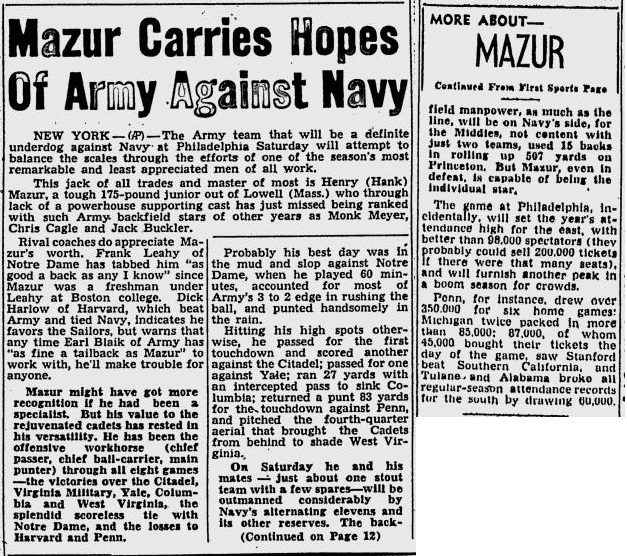
armyfb_1941_hankmazur_stpetersburgtimes_nov251941
ArmyFB_1941_HankMazur_StPetersburgTimes_Nov251941
–
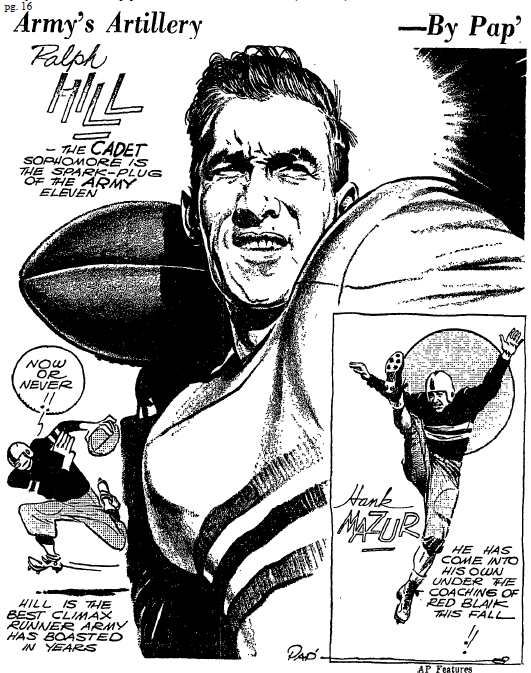
ArmyFB_1941_RalphHill_byPap_CSM_Nov281941
ArmyFB_1941_ “Ralph Hill” _byPap_CSM_Nov281941r-h


–

armyfb_1941_vsnavy_prescotteveningcourier_nov291941

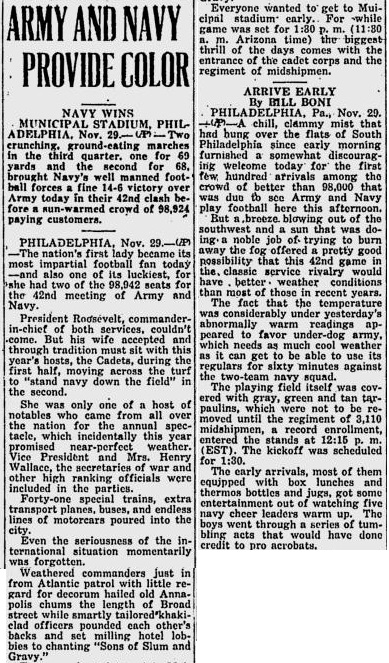
ArmyFB_1941_vsNavy_PrescottEveningCourier_Nov291941

–

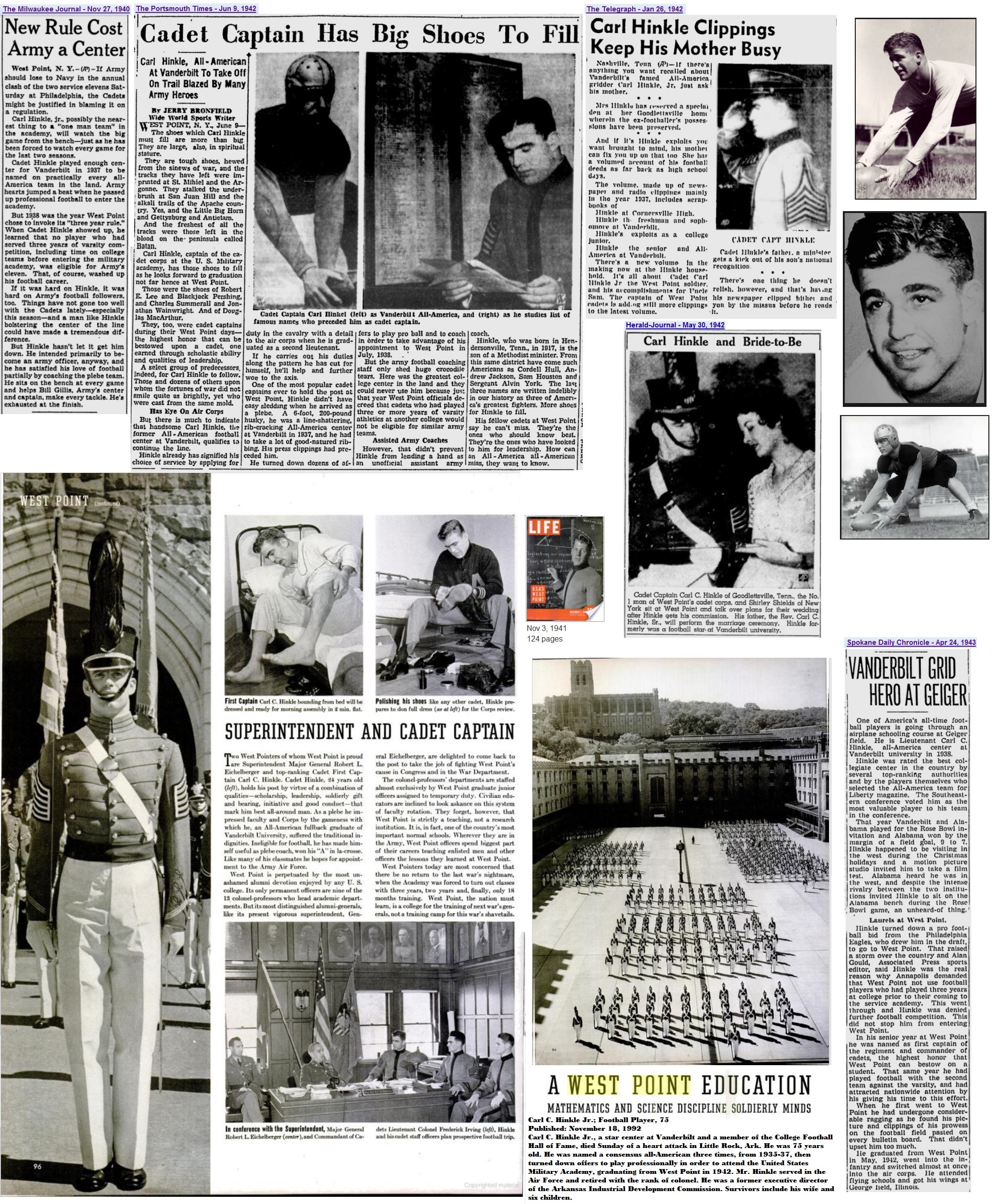
Carl Hinkle – Cadet First Captain – the Football All-American Cadet who never played a down for Army

–
carlhinkle_usma_1942
carl-hinkle_USMA_1942
–

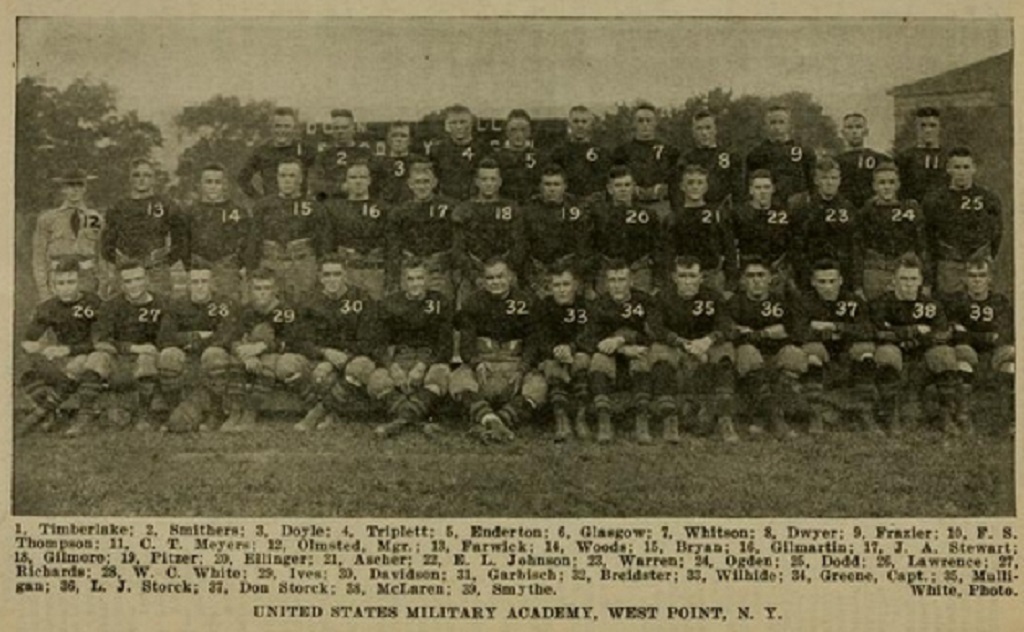
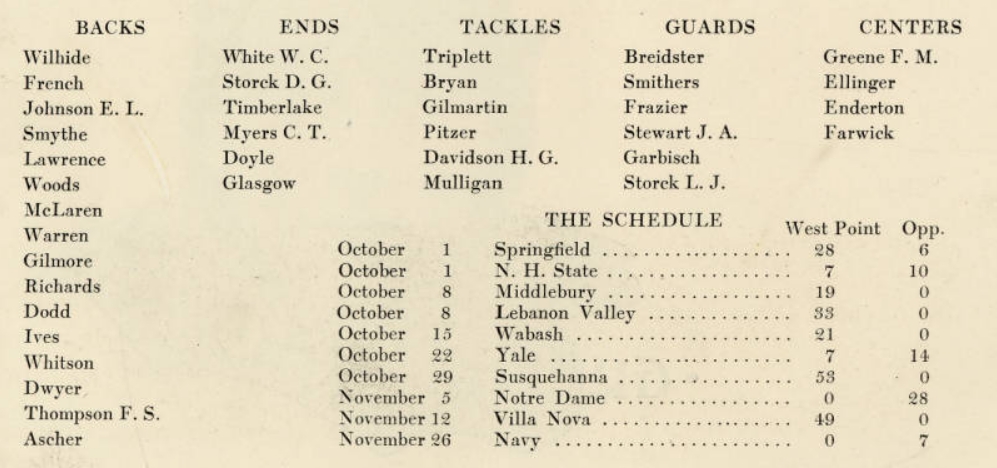
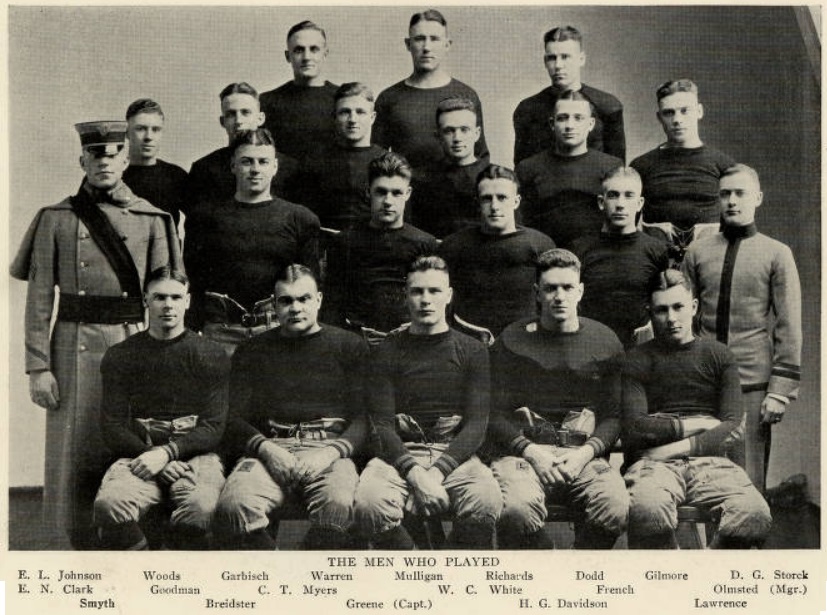
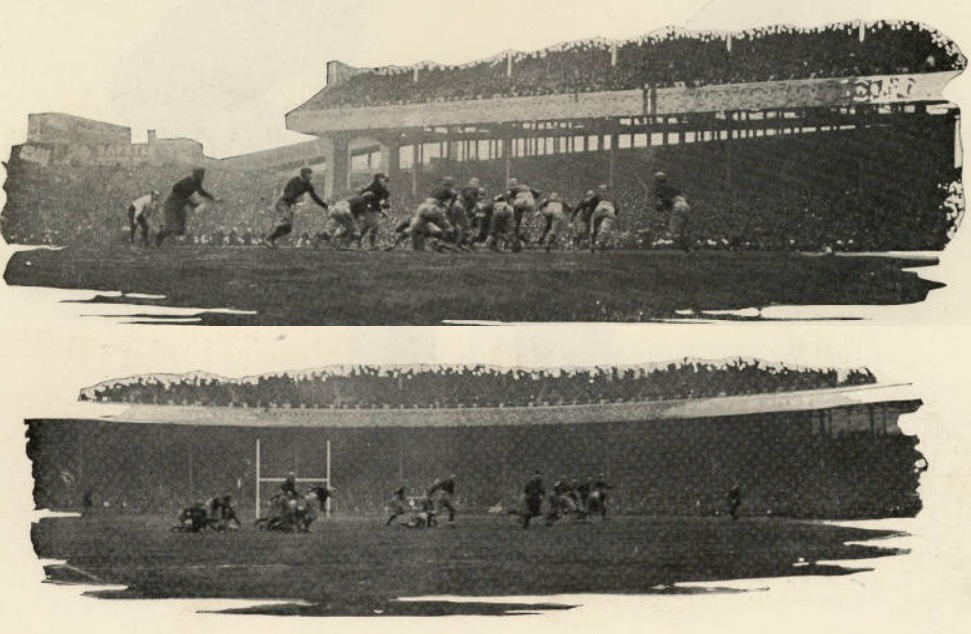
1921 Team

1921 Army 6-4
1921/11/26 Army 0 – Navy 7 L

Coach Charles Dudley “Charlie” Daly (October 31, 1880 – February 12, 1959)
Army 1913-1916
Army 1919-1922

Overall: 58-13-3

Appeared in the film Daly, of West Point. 1902.

source http://en.wikipedia.org/wiki/Charles_Dudley_Daly
–

Howitzer 1922
http://digital-library.usma.edu/cdm/compoundobject/collection/howitzers/id/15221/

–

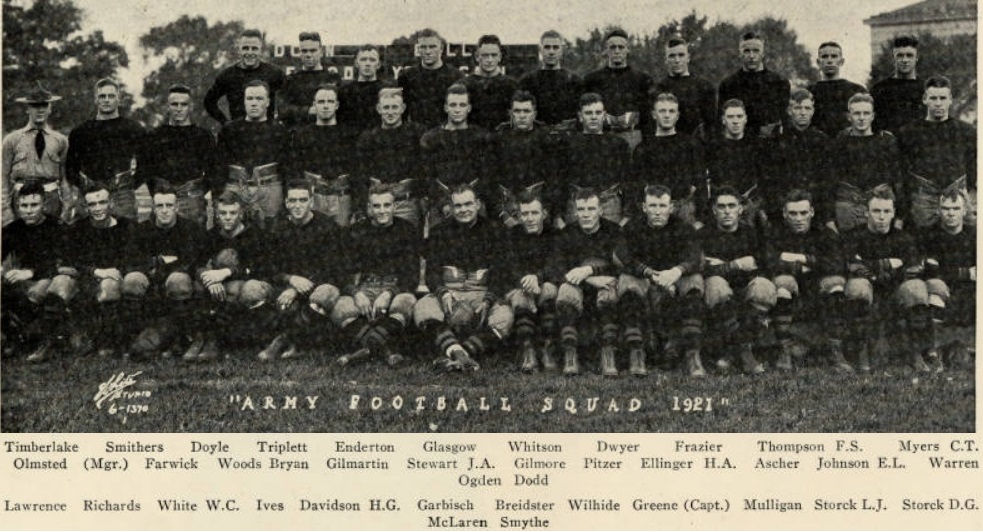
ArmyFB_1921_team

–

ArmyFB_1921_team_

–

ArmyFB_1921_team-roster-record

–

ArmyFB_1921_vsNavy_starters

–

ArmyFB_1921_vsNavy_action

–

–