http://lzcenter.com/Myths%20and%20Facts.html
LZ Center
Vietnam War Myths and Facts
Common Myths | Facts about the end of the war | Vietnam: Looking back at the facts by K.G. Sears, Ph.D. | MIT Study of the Vietnam Death Rates by Dr. Arnold Barnett
9,087,000 military personnel served on active duty during the official Vietnam era from August 5, 1964 to May 7, 1975
2,709,918 Americans served in uniform in Vietnam
Vietnam Veterans represented 9.7% of their generation
240 men were awarded the Medal of Honor during the Vietnam War
The first man to die in Vietnam was James Davis, in 1958. He was with the 509th Radio Research Station. Davis Station in Saigon was named for him
58,148 were killed in Vietnam, 75,000 were severely disabled, 23,214 were 100% disabled, 5,283 lost limbs, 1,081 sustained multiple amputations
Of those killed, 61% were younger than 21, 11,465 of those killed were younger than 20 years old, of those killed, 17,539 were married, average age of men killed was 23.1 years, five men killed in Vietnam were only 16 years old, and the oldest man killed was 62 years old
As of January 15, 2004, there are 1,875 Americans still unaccounted for from the Vietnam War
97% of Vietnam Veterans were honorably discharged, 91% of Vietnam Veterans say they are glad they served, 74% say they would serve again, even knowing the outcome
Vietnam veterans have a lower unemployment rate than the same non-vet age groups, Vietnam veterans’ personal income exceeds that of our non-veteran age group by more than 18 percent
87% of Americans hold Vietnam Veterans in high esteem
There is no difference in drug usage between Vietnam Veterans and non-Vietnam Veterans of the same age group (Source: Veterans Administration Study), Vietnam Veterans are less likely to be in prison – only one-half of one percent of Vietnam Veterans have been jailed for crimes
85% of Vietnam Veterans made successful transitions to civilian life
Credit: Capt. Marshal Hanson, USNR (Ret.) and Capt. Scott Beaton, Statistical Source
Statistics from the Combat Area Casualty File (CACF) as of November 1993 (the CACF is the basis for the Vietnam Veterans Memorial). Average age of 58,148 killed in Vietnam was 23.11 years (Although 58,169 names are in the Nov. 93 database, only 58,148 have both event date and birth date. Event date is used instead of declared dead date for some of those who were listed as missing in action).
Deaths Average Age
Total: 58,148, 23.11 years
Enlisted: 50,274, 22.37 years
Officers: 6,598, 28.43 years
Warrants: 1,276, 24.73 years
E1 525, 20.34 years
11B MOS: 18,465, 22.55 years
Interesting Census Stats and “Been There” Wanabees: 1,713,823 of those who served in Vietnam were still alive as of August 1995 (census figures).
During that same Census count, the number of Americans falsely claiming to have served in country was: 9,492,958.
As of the current Census taken during August 2000, the surviving U.S. Vietnam Veteran population estimate is: 1,002,511. This is hard to believe, losing nearly 711,000 between ’95 and ’00. That’s 390 per day. During this Census count, the number of Americans falsely claiming to have served in country is: 13,853,027. By this census, FOUR OUT OF FIVE WHO CLAIM TO BE VIETNAM VETS ARE NOT.
The Department of Defense Vietnam War Service Index officially provided by The War Library originally reported with errors that 2,709,918 U.S. military personnel as having served in-country. Corrections and confirmations to this error index resulted in the addition of 358 U.S. military personnel confirmed to have served in Vietnam but not originally listed by the Department of Defense (All names are currently on file and accessible).
Common Myths
Common belief is that most Vietnam veterans were drafted. Fact: 2/3 of the men who served in Vietnam were volunteers. 2/3 of the men who served in World War II were drafted. Approximately 70% of those killed in Vietnam were volunteers.
Common belief that the media reported suicides among Vietnam veterans range from 50,000 to 100,000 – 6 to 11 times the non-Vietnam veteran population. Fact: Mortality studies show that 9,000 is a better estimate. “The CDC Vietnam Experience Study Mortality Assessment showed that during the first 5 years after discharge, deaths from suicide were 1.7 times more likely among Vietnam veterans than non-Vietnam veterans. After that initial post-service period, Vietnam veterans were no more likely to die from suicide than non-Vietnam veterans. In fact, after the 5-year post-service period, the rate of suicides is less in the Vietnam veterans’ group.
Common belief is that a disproportionate number of blacks were killed in the Vietnam War. Fact: 86% of the men who died in Vietnam were Caucasians, 12.5% were black, and 1.2% were other races. Sociologists Charles C. Moskos and John Sibley Butler, in their recently published book “All That We Can Be,” said they analyzed the claim that blacks were used like cannon fodder during Vietnam “and can report definitely that this charge is untrue. Black fatalities amounted to 12 percent of all Americans killed in Southeast Asia, a figure proportional to the number of blacks in the U.S. population at the time and slightly lower than the proportion of blacks in the Army at the close of the war.”
Common belief is that the war was fought largely by the poor and uneducated. Fact: Servicemen who went to Vietnam from well-to-do areas had a slightly elevated risk of dying because they were more likely to be pilots or infantry officers. Vietnam Veterans were the best-educated forces our nation had ever sent into combat. 79% had a high school education or better.
The common belief is the average age of an infantryman fighting in Vietnam was 19. Fact: Assuming KIAs accurately represented age groups serving in Vietnam, the average age of an infantryman (MOS 11B) serving in Vietnam to be 19 years old is a myth, it is actually 22. None of the enlisted grades have an average age of less than 20. The average man who fought in World War II was 26 years of age.
The common belief is that the domino theory was proved false. Fact: The domino theory was accurate. The ASEAN (Association of Southeast Asian Nations) countries, Philippines, Indonesia, Malaysia, Singapore and Thailand stayed free of Communism because of the U.S. commitment to Vietnam. The Indonesians threw the Soviets out in 1966 because of America’s commitment in Vietnam. Without that commitment, Communism would have swept all the way to the Malacca Straits that is south of Singapore and of great strategic importance to the free world. If you ask people who live in these countries that won the war in Vietnam, they have a different opinion from the American news media. The Vietnam War was the turning point for Communism.
The common belief is that the fighting in Vietnam was not as intense as in World War II. Fact: The average infantryman in the South Pacific during World War II saw about 40 days of combat in four years. The average infantryman in Vietnam saw about 240 days of combat in one year thanks to the mobility of the helicopter.One out of every 10 Americans who served in Vietnam was a casualty. 58,148 were killed and 304,000 wounded out of 2.7 million who served. Although the percent that died is similar to other wars, amputations or crippling wounds were 300 percent higher than in World War II. 75,000 Vietnam veterans are severely disabled. MEDEVAC helicopters flew nearly 500,000 missions. Over 900,000 patients were airlifted (nearly half were American). The average time lapse between wounding to hospitalization was less than one hour. As a result, less than one percent of all Americans wounded, who survived the first 24 hours, died. The helicopter provided unprecedented mobility. Without the helicopter it would have taken three times as many troops to secure the 800-mile border with Cambodia and Laos (the politicians thought the Geneva Conventions of 1954 and the Geneva Accords or 1962 would secure the border).
The common belief that Kim Phuc, the little nine-year-old Vietnamese girl running naked from the napalm strike near Trang Bang on 8 June 1972 (shown a million times on American television), was burned by Americans bombing Trang Bang. Fact: No American had involvement in this incident near Trang Bang that burned Phan Thi Kim Phuc. The planes doing the bombing near the village were VNAF (Vietnam Air Force) and were being flown by Vietnamese pilots in support of South Vietnamese troops on the ground. The Vietnamese pilot who dropped the napalm in error is currently living in the United States. Even the AP photographer, Nick Ut, who took the picture, was Vietnamese. The incident in the photo took place on the second day of a three-day battle between the North Vietnamese Army (NVA) who occupied the village of Trang Bang and the ARVN (Army of the Republic of Vietnam) who were trying to force the NVA out of the village. Recent reports in the news media that an American commander ordered the air strike that burned Kim Phuc are incorrect. There were no Americans involved in any capacity. “We (Americans) had nothing to do with controlling VNAF,” according to Lieutenant General (Ret) James F. Hollingsworth, the Commanding General of TRAC at that time. Also, it has been incorrectly reported that two of Kim Phuc’s brothers were killed in this incident. They were Kim’s cousins not her brothers.
The common belief that the United States lost the war in Vietnam. Fact: The American military was not defeated in Vietnam. The American military did not lose a battle of any consequence. From a military standpoint, it was almost an unprecedented performance. General Westmoreland quoting Douglas Pike (a professor at the University of California, Berkeley), a major military defeat for the VC and NVA. The United States Did Not Lose The War In Vietnam; The South Vietnamese did after the U.S. Congress cut off funding. The South Vietnamese ran out of fuel, ammunition and other supplies because of a lack of support from Congress, while the North Vietnamese were very well supplied by China and the Soviet Union. The fall of Saigon happened 30 April 1975, two years AFTER the American military left Vietnam. The last American troops departed in their entirety 29 March 1973. How could we lose a war we had already stopped fighting? We fought to an agreed stalemate. The peace settlement was signed in Paris on 27 January 1973. It called for release of all U.S. prisoners, withdrawal of U.S. forces, limitation of both sides’ forces inside South Vietnam and a commitment to peaceful reunification. The 140,000 evacuees in April 1975 during the fall of Saigon consisted almost entirely of civilians and Vietnamese military, NOT American military running for their lives. There were almost twice as many casualties in Southeast Asia (primarily Cambodia) the first two years after the fall of Saigon in 1975 than there were during the ten years the U.S. was involved in Vietnam. Thanks for the perceived loss and the countless assassinations and torture visited upon Vietnamese, Laotians, and Cambodians goes mainly to the American media and their undying support-by-misrepresentation of the anti-War movement in the United States. As with much of the Vietnam War, the news media misreported and misinterpreted the 1968 Tet Offensive. It was reported as an overwhelming success for the Communist forces and a decided defeat for the U.S. forces. Nothing could be further from the truth. Despite initial victories by the Communists forces, the Tet Offensive resulted in a major defeat of those forces. General Vo Nguyen Giap, the designer of the Tet Offensive, is considered by some as ranking with Wellington, Grant, Lee and MacArthur as a great commander. Still, militarily, the Tet Offensive was a total defeat of the Communist forces on all fronts. It resulted in the death of some 45,000 NVA troops and the complete, if not total destruction of the Viet Cong elements in South Vietnam. The Organization of the Viet Cong Units in the South never recovered. The Tet Offensive succeeded on only one front and that was the News front and the political arena. This was another example in the Vietnam War of an inaccuracy becoming the perceived truth. However, inaccurately reported, the News Media made the Tet Offensive famous.
Facts about the end of the war
The fall of Saigon happened 30 April 1975, two years AFTER the American military left Vietnam. The last American troops departed in their entirety 29 March 1973. How could we lose a war we had already stopped fighting? We fought to an agreed stalemate. The peace settlement was signed in Paris on 27 January 1973. It called for release of all U.S. prisoners, withdrawal of U.S. forces, limitation of both sides’ forces inside South Vietnam and a commitment to peaceful reunification. [1996 Information Please Almanac]
The 140,000 evacuees in April 1975 during the fall of Saigon consisted almost entirely of civilians and Vietnamese military, NOT American military running for their lives.
There were almost twice as many casualties in Southeast Asia (primarily Cambodia) the first two years after the fall of Saigon in 1975 then there were during the ten years the U.S. was involved in Vietnam.
More realities about the Vietnam War
Post Traumatic Stress Disorder (PTSD) – it was not invented or unique to Vietnam Veterans. It was called “shell shock” and other names in previous wars. An automobile accident or other traumatic event can also cause it. It does not have to be war related. The Vietnam War helped medical progress in this area.
Vietnam: Looking Back – At The Facts
1 Jun 01 © By: K. G. Sears, Ph.D., with permission – Ron Leonard (http://www.25thAviation.org<http://www.25thaviation.org/> )
One reason America’s agonizing perception of “Vietnam” will not go away, is because that perception is wrong. It’s out of place in the American psyche, and it continues to fester in much the same way battle wounds fester when shrapnel or other foreign matter is left in the body. It is not normal behavior for Americans to idolize mass murdering despots, to champion the cause of slavery, to abandon friends and allies, or to cut and run in the face of adversity. Why then did so many Americans engage in these types of activities during the country’s “Vietnam” experience?
That the American experience in Vietnam was painful and ended in long lasting (albeit self-inflicted) grief and misery cannot be disputed. However, the reasons behind that grief and misery are not even remotely understood, by either the American people or their government. Contradictory to popular belief, and a whole lot of wishful thinking by a solid corps of some 16,000,000+ American draft dodgers and their families and supporters, it was not a military defeat that brought misfortune to the American effort in Vietnam.
The United States military in Vietnam was the best educated, best trained, best disciplined and most successful force ever fielded in the history of American arms. Why then, did it get such bad press, and, why is the public’s opinion of them so twisted? The answer is simple. But first, a few relevant comparisons.
During the Civil War, at the Battle of Bull Run, the entire Union Army panicked and fled the battlefield. Nothing even remotely resembling that debacle ever occurred in Vietnam.
In WWII at the Kasserine Pass in Tunisia, elements of the US Army were overrun by the Germans. In the course of that battle, Hitler’s General Rommel (The Desert Fox) inflicted 3,100 US casualties, took 3,700 US prisoners and captured or destroyed 198 American tanks. In Vietnam no US Military units were overrun and no US Military infantry units or tank outfits were captured.
WW II again. In the Philippines, US Army Generals Jonathan Wainwright and Edward King surrendered themselves and their troops to the Japanese. In Vietnam no US generals, or US military units ever surrendered.
Before the Normandy invasion (“D” Day, 1944) the US Army (In WW II the US Army included the Army Air Corps which today has become the US Airforce) in England filled its own jails with American soldiers who refused to fight and then had to rent jail space from the British to handle the overflow. The US Army in Vietnam never had to rent jail space from the Vietnamese to incarcerate American soldiers who refused to fight.
Desertion. Only about 5,000 men assigned to Vietnam deserted and just 249 of those deserted while in Vietnam. During WW II, in the European Theater alone, over 20,000 US Military men were convicted of disertion and, on a comparable percentage basis, the overall WW II desertion rate was 55 percent higher than in Vietnam.
During the WW II Battle of the Bulge in Europe two regiments of the US Army’s 106th Division surrendered to the Germans. Again: In Vietnam no US Army unit ever surrendered.
The highest ranking American soldier killed in WW II was Lt. (three star) General Leslie J. McNair. He was killed when American warplanes accidentally bombed his position during the invasion of Europe. In Vietnam there were no American generals killed by American bombers.
As for brutality: During WW II the US Army executed nearly 300 of its own men. In the European Theater alone, the US Army sentenced 443 American soldiers to death. Most of these sentences were for the rape and or murder of civilians.
In the Korean War, Major General William F. Dean, commander of the 24th Infantry Division, was taken prisoner of war (POW). In Vietnam no US generals, much less division commanders, were ever taken prisoner.
During the Korean War the US Army was forced into the longest retreat in its history. A catastrophic 275 mile withdrawal from the Yalu River all the way to Pyontaek, 45 miles south of Seoul. In the process they lost the capital city of Seoul. The US Military in Vietnam was never compelled into a major retreat nor did it ever abandon Saigon to the enemy.
The 1st US Marine Division was driven from the Chosin Reservoir and forced into an emergency evacuation from the Korean port of Hungnam. There they were joined by other US Army and South Korean soldiers and the US Navy eventually evacuated 105,000 Allied troops from that port. In Vietnam there was never any mass evacuation of US Marine, South Vietnamese or Allied troop units.
Other items: Only 25 percent of the US Military who served in Vietnam were draftees. During WW II, 66 percent of the troops were draftees. The Vietnam force contained three times as many college graduates as did the WW II force. The average education level of the enlisted man in Vietnam was 13 years, equivalent to one year of college. Of those who enlisted, 79 percent had high school diplomas. This at a time when only 65% of the military age males in the general American population were high school graduates.
The average age of the military men who died in Vietnam was 22.8 years old. Of the one hundred and one (101) 18 year old draftees who died in Vietnam; seven of them were black. Blacks accounted for 11.2 percent the combat deaths in Vietnam. At that time black males of military age constituted 13.5 percent of the American population. It should also be clearly noted that volunteers suffered 77% of the casualties, and accounted for 73% of the Vietnam deaths.
The charge that the “poor” died in disproportionate numbers is also a myth. An MIT (Massachusetts Institute of Technology) study of Vietnam death rates, conducted by Professor Arnold Barnett, revealed that servicemen from the richest 10 percent of the nations communities had the same distribution of deaths as the rest of the nation. In fact his study showed that the death rate in the upper income communities of Beverly Hills, Belmont, Chevy Chase, and Great Neck exceeded the national average in three of the four, and, when the four were added together and averaged, that number also exceeded the national average.
On the issue of psychological health: Mental problems attributed to service in Vietnam are referred to as PTSD. Civil War veterans suffered “Soldiers heart” in WW I the term was “Shell shock” during WW II and in Korea it was “Battle fatigue.” Military records indicate that Civil War psychological casualties averaged twenty six per thousand men. In WW II some units experienced over 100 psychiatric casualties per 1,000 troops; in Korea nearly one quarter of all battlefield medical evacuations were due to mental stress. That works out to about 50 per 1,000 troops. In Vietnam the comparable average was 5 per 1,000 troops.
To put Vietnam in its proper perspective it is necessary to understand that the US Military was not defeated in Vietnam and that the South Vietnamese government did not collapse due to mismanagement or corruption, nor was it overthrown by revolutionary guerrillas running around in rubber tire sandals, wearing black pajamas and carrying home made weapons. There was no “general uprising” or “revolt” by the southern population. Saigon was overrun by a conventional army made up of seventeen conventional divisions, organized into four army corps. This totally conventional force (armed, equipped, trained and supplied by the Soviet Union) launched a cross border, frontal attack on South Vietnam and conquered it, in the same manner as Hitler conquered most of Europe in WW II. A quick synopsis of America’s “Vietnam experience” will help summarize and clarify the Vietnam scenario:
Prior to 1965 – US Advisors and AID only
1965 to 1967 – Buildup of US Forces and logistical supply bases, plus heavy fighting to counter Communist North Vietnamese invasion.
1968 to 1970 – Communist “insurgency” destroyed to the point where over 90% of the towns and villages in South Vietnam were free from Communist domination. As an example: By 1971 throughout the entire populous Mekong Delta, the monthly rate of Communist insurgency action dropped to an average of 3 incidents per 100,000 population (Many a US city would envy a crime rate that low). In 1969 Nixon started troop withdrawals that were essentially complete by late 1971.
Dec 1972 – Paris Peace Agreements negotiated and agreed by North Vietnam, South Vietnam, the Southern Vietnamese Communists (VC, NLF / PRG) and the United States.
Jan 1973 – All four parties formally sign Paris Peace Agreements.
Mar 1973 – Last US POW released from Hanoi Hilton, and in accordance with Paris Agreements, last American GI leaves Vietnam.
Aug 1973 – US Congress passes the Case – Church law which forbids, US naval forces from sailing on the seas surrounding, US ground forces from operating on the land of, and US air forces from flying in the air over South Vietnam, North Vietnam, Cambodia and Laos. This at a time when America had drawn its Cold War battle lines and as a result had the US Navy protecting Taiwan, 50,000 troops in South Korea and over 300,000 troops in Western Europe (Which has a land area, economy and population comparable to that of the United States), along with ironclad guarantees that if Communist forces should cross any of those Cold War lines or Soviet Armor should role across either the DMZ in Korea or the Iron Curtain in Europe, then there would be an unlimited response by the armed forces of the United States, to include if necessary, the use of nuclear weapons. In addition, these defense commitments required the annual expenditure of hundreds of billions of US dollars. Conversely, in 1975 when Soviet armor rolled across the international borders of South Vietnam, the US military response was nothing. In addition, Congress cut off all AID to the South Vietnamese and would not provide them with as much as a single bullet. In spite of the Case – Church Congressional guarantee, the North Vietnamese were very leery of US President Nixon. They viewed him as one unpredictable, incredibly tough nut. He had, in 1972, for the first time in the War, mined Hai Phong Harbor and sent the B-52 bombers against the North to force them into signing the Paris Peace Agreements. Previously the B-52s had been used only against Communist troop concentrations in remote regions of South Vietnam and occasionally against carefully selected sanctuaries in Cambodia, plus against both sanctuaries and supply lines in Laos.
Aug 1974 – Nixon resigns.
Sept 1974 – North Vietnamese hold special meeting to evaluate Nixon’s resignation and decide to test implications.
Dec 1974 – North Vietnamese invade South Vietnamese Province of Phouc Long located north of Saigon on Cambodian border.
Jan 1975 – North Vietnamese capture Phuoc Long provincial capitol of Phuoc Binh. Sit and wait for US reaction. No reaction.
Mar 1975 – North Vietnam mounts full-scale invasion. Seventeen North Vietnamese conventional divisions (more divisions than the US Army has had on duty at any time since WW II) were formed into four conventional army corps (This was the entire North Vietnamese army. Because the US Congress had unconditionally guaranteed no military action against North Vietnam, there was no need for them to keep forces in reserve to protect their home bases, flanks or supply lines), and launched a wholly conventional cross-border, frontal-attack. Then, using the age-old tactics of mass and maneuver, they defeated the South Vietnamese Army in detail.
The complete description of this North Vietnamese Army (NVA) classical military victory is best expressed in the words of the NVA general who commanded it. Recommended reading: Great Spring Victory by General Tien Van Dung, NVA Foreign Broadcast Information Service, Volume I, 7 Jun 76 and Volume II, 7 Jul 76. General Dung’s account of the final battle for South Vietnam reads like it was taken right out of a US Army manual on offensive military operations. His description of the mass and maneuver were exquisite. His selection of South Vietnam’s army as the “Center of gravity” could have been written by General Carl von Clausewitz himself. General Dung’s account goes into graphic detail on his battle moves aimed at destroying South Vietnam’s armed forces and their war materials. He never once, not even once, ever mentions a single word about revolutionary warfare or guerilla tactics contributing in any way to his Great Spring Victory.
Another Aspect – US Military battle deaths by year:
Prior to 1966 – 3,078 (Total up through 31 Dec 65)
1966 – 5,008
1967 – 9,378
1968 – 14, 589 (Total while JFK & LBJ were on watch – 32,053)
1969 – 9,414
1970 – 4,221
1971 – 1,381
1972 – 300 (Total while Nixon was on watch – 15,316)
Source of these numbers is the Southeast Asia Statistical Summary, Office of the Assistant Secretary or Defense and were provided to the author by the US Army War College Library, Carlisle Barracks, PA 17023. Numbers are battle deaths only and do not include ordinary accidents, heart attacks, murder victims, those who died in knife fights in barroom brawls, suicides, etc. Those who think these numbers represent “heavy fighting” and some of the “bloodiest battles” in US history should consider the fact that the Allied Forces lost 9,758 men killed just storming the Normandy Beaches; 6,603 were Americans. The US Marines, in the 25 days between 19 Feb 45 and 16 Mar 45, lost nearly 7,000 men killed in their battle for the tiny island of Iwo Jima.
By comparison the single bloodiest day in the Vietnam War for the Americans was on 17 Nov 65 when elements of the 7th Cav (Custer’s old outfit) lost 155 men killed in a battle with elements of two North Vietnamese Regular Army regiments (33rd & 66th) near the Cambodian border southwest of Pleiku.
Parallel Point
During its Normandy battles in 1944 the US 90th Infantry Division, (roughly 15,000+ men) over a six week period, had to replace 150% of its officers and more than 100% of its men. The 173rd Airborne Brigade (normally there are 3 brigades to a division) served in Vietnam for a total of 2,301 days, and holds the record for the longest continuous service under fire of any American unit, ever. During that (6 year, 3+ month) period the 173rd lost 1,601 (roughly 31%) of its men killed in action.
Further Food For thought
Casualties tell the tale. Again, the US Army War College Library provides numbers. The former South Vietnam was made up of 44 provinces. The province that claimed the most Americans killed was Quang Tri, which bordered on both North Vietnam and Laos. Fifty four percent of the Americans killed in Vietnam were killed in the four northernmost provinces, which in addition to Quang Tri were Thua Thien, Quang Nam and Quan Tin. All of them shared borders with Laos. An additional six provinces accounted for another 25 % of the Americans killed in action (KIA). Those six all shared borders with either Laos or Cambodia or had contiguous borders with provinces that did. The remaining 34 provinces accounted for just 21% of US KIA. These numbers should dispel the notion that South Vietnam was some kind of flaming inferno of violent revolutionary dissent. The overwhelming majority of Americans killed, died in border battles against regular NVA units. The policies established by Johnson and McNamara prevented the American soldiers from crossing those borders and destroying their enemies. Expressed in WW II terms; this is the functional equivalent of having sent the American soldiers to fight in Europe during WW II, but restricting them to Italy, France, Belgium, Holland, etc., and not letting them cross the borders into Germany, the source of the problem. General Curtis LeMAY aptly defined Johnson’s war policy in South Vietnam by saying that “We are swatting flies in the South when we should be going after the manure pile in Hanoi.”
Looking back it is now clear that the American military role in “Vietnam” was, in essence, one of defending international borders. Contrary to popular belief, they turned in an outstanding performance and accomplished their mission. The US Military was not “Driven” from Vietnam. They were voted out by the US Congress. This same Congress then turned around and abandoned America’s former ally, South Vietnam. Should America feel shame? Yes! Why? For kowtowing to the wishes of those craven hoards of dodgers and for bugging out and abandoning an ally they had promised to protect.
The idea that “There were no front lines.” and “The enemy was everywhere.” makes good press and feeds the craven needs of those 16,000,000+ American draft dodgers. Add either a mommy or a poppa, and throw in another sympathizer in the form of a girl (or boy?) friend and your looking at well in excess of 50,000,000 Americans with a need to rationalize away their draft-dodging cowardice and to, in some way, vilify “Vietnam” the very source of their shame and guilt. During the entire period of the American involvement in “Vietnam” only 2,594,000 US Military actual served inside the country. Contrast that number with the 50-million plus draft dodging anti-war crowd and you have the answer to why the American view of its Vietnam experience is so skewed.
Johnson made two monumental Vietnam blunders. First he failed to get a declaration of war, which he could have easily had. The Gulf of Tonkin Resolution, which LBJ regarded as the “Functional equivalent of a formal declaration of war.” was passed unanimously by the House and there were only two dissenting votes cast in the Senate. This would have altered the judicial state of the nation, exactly as the Founding Fathers had intended. The Founding Fathers were all veterans of the American Revolutionary War and knew just how hard it had been to maintain public support during their war (At one point, 80% of the “American” people were against that War. If the Founding Fathers had bowed to public opinion, today we would still be British subjects not American citizens). A formal declaration of war would have allowed for control of the press. If Vietnam had been fought under WW II conditions (during WW II Congress formally declared war) folks who gave aid and comfort to the enemy, people in the ilk of Jane Fonda and Walter Cronkite, would have been charged with treason, tried, found guilty (their “treasonous acts” were on film / video tape), and then hanged by the neck until dead. Second, LBJ exempted college kids from the draft. Presto! The nation’s campuses immediately filled with dastardly little dodgers and became boiling cauldrons of violent rampaging dissent. The dodgers knew they were acting cowardly and could appease their conscience only if they could convince themselves that the war was somehow immoral. Once the “immoral” escape concept emerged and became creditable, it spread across the college campuses and out into the main streets of America like wild fire. Miraculously, acts of cowardice were transformed into respectable acts of defiance. Anti-war protests and violent demonstrations became the accepted norm. However, when one goes back and scrutinizes those anti-war demonstrations, one quickly finds they were not really against the war. They were only against the side fighting the Communists! This of course turns out to be the side which had the army, from which the dodgers were dodging. Hmmmmm!
Once the draft dodging gang’s numbers reached critical mass, the media and politicians started pandering to those numbers (with media it is either circulation numbers or Nielsen ratings. With politicians it is votes). Multi-million dollar salaries are not paid to people for reporting the news, in any form, be it written, audio or video. Multi-million dollar salaries (e.g., Cronkite) are paid to entertainers, stars and superstars. One does not get to be, much less continue to be, a superstar unless one gives one’s audience what it wants. Once the dodging anti-war numbers started climbing through the stratosphere it was not in the media’s interest to say something good about Vietnam to an audience that was guilt ridden with shame and with a deep psychological need to rationalize away the very source of their burden of guilt.
A good example of this number pandering can be found in a 1969 Life magazine feature article in which Life’s editors published the portraits of 250 men that were killed in Vietnam in one “routine week.” This was supposedly done to illustrate Life’s concern for the sanctity of human life; American human life (During WW II the U.S. Media were not allowed to publish the picture of a single dead G.I until after the invasion of Normandy, D-Day 1944, was successful). And furthermore, to starkly illustrate the Vietnam tragedy with a dramatic reminder (i.e., the faces staring out of those pages), that those anonymous casualty numbers were in fact the sons, brothers and husbands of neighbors. In 1969 the weekly average death toll from highway accidents in the United States was 1,082. If indeed Life’s concern was for the sanctity of American lives, why not publish the 1,082 portraits of the folks who were killed in one “routine week” on the nation’s highways? Then they could have shown photos of not only the sons, brothers and husbands of neighbors, but could have depicted dead daughters, mothers, grandmothers, aunts, babies, cripples, fools and draft dodgers as well. No way. Life knew where its “numbers” were.
The most glaring example of the existence of the dodging guilt syndrome can be found in a statement made by the ranking head dodger himself. When asked for his reaction to McNamara’s book In Retrospect, Clinton’s spontaneous response was “I feel vindicated.” (of his cowardly act of dodging the draft). Clinton is a lawyer and understands the use of the English language very well. For one to “feel” vindicated, as opposed to being vindicated, one must first have been, by definition, feeling guilty.
The Battle of Xuan Loc; Mar 17 – Apr 17, 1975 & The End
Xuan Loc was the last major battle for South Vietnam. It sits astride Q. L. (National Road) #1, some 40 odd miles to the northeast of Saigon (on the road to Phan Thiet), and was the capitol of South Vietnam’s Long Khanh province. The NVA (North Vietnamese Army) attack fell on the ARVN (Army Republic of Vietnam) 18th Division.
On 17 Mar 75 the NVA Sixth and Seventh Divisions attacked Xuan Loc but were repulsed by the ARVN 18th. On 9 Apr 75 the NVA 341st Division joined the attack. After a four thousand round artillery bombardment, these three divisions massed, and, spearheaded by Soviet tanks, assaulted Xuan Loc; but again the ARVN 18th held its ground. The NVA reinforced with their 325th Division and began moving their 10th and 304th Divisions into position. Eventually, in a classic example of the military art of “Mass and Maneuver” the NVA massed 40,000 men and overran Xuan Loc.
During this fight, the ARVN 18th had 5,000 soldiers at Xuan Loc. These men managed to virtually destroy 3 NVA Divisions, but on 17 Apr 75 they were overwhelmed by sheer numbers and the weight of the “Mass.” Before overrunning Xuan Loc the NVA had committed six full divisions, plus a host various support troops.
In the Sorrow of War, author and NVA veteran Bao Ninh writes of this battle: “Remember when we chased Division 18 southern soldiers all over Xuan Loc? My tank tracks were choked up with skin and hair and blood. And the bloody maggots. And the fucking flies. Had to drive through a river to get the stuff out of my tracks.” He also writes “After a while I could tell the difference between mud and bodies, logs and bodies. They were like sacks of water. They’d pop open when I ran over them. Pop! Pop!
The Irony
It’s ironic that in spite of all the hype and hullabaloo about the “Viet Cong” and the “American Soldiers” both were absent from the final battles for South Vietnam. The Viet Cong had been bludgeoned to death (During Tet 1968) on the streets of the cities, towns, and hamlets of South Vietnam. The Americans had left under the terms of the Paris Peace Agreements, and then were barred by the US Congress, from ever returning. The end came in the form of a cross border invasion. Two conventional armies fought it out using strategies and tactics as old as warfare itself.
A quick word about the South Vietnamese government lacking support from the people, and of the so called “Popular support” for the Communists. During the 1968 Tet Offensive the Communists attacked 155 cities, towns and hamlets in South Vietnam. In not one instance did the people rise up to support the Communists. The general uprising was a complete illusion. The people did rise, but in revulsion and resistance to the invaders. At the end of thirty days, not one single communist flag was flying over any of those 155 cities, towns or hamlets. The citizens of South Vietnam, no matter how apathetic they may have appeared toward their own government, turned out to be overwhelmingly anti-Communist. In the end they had to be conquered by conventional divisions, supported by conventional tanks and artillery that was being maneuvered in accordance with the ancient principles of warfare. But then, as with mathematics, certain rules apply in war, and, military victories are not won by violating military principles.
Note
General Dung’s Great Spring Victory was supported by a total of 700 (maneuverable) Soviet tanks, i.e. Soviet armor, burning Soviet gas and firing Soviet ammunition. By comparison, the South Vietnamese had only 352 US supplied tanks and they were committed to guarding the entire country, and because of US Congressional action, were critically short of fuel, ammo and spare parts with which to support those tanks.
Recommended Reading
Works by Bao Ninh, the author of The Sorrow of War. He tells of being drafted into the North Vietnamese Army in 1968 and fighting for nearly seven years. His unit lost over 80% of its men to battle deaths, desertion and sickness. In all those years, he never once fought against the Americans. His war was strictly a Vietnamese affair.
Related Comments
For those who think that Vietnam was strictly a civil war, the following should be of interest. With the collapse of Communism and the Soviet Union along with the opening up of China, records are now becoming available on the type and amount of support North Vietnam received from China and the Soviet Block. For example:
China has opened its records on the number of uniformed Chinese troops sent to aid their Communist friends in Hanoi. In all, China sent 327,000 uniformed troops to North Vietnam. Historian Chen Jian wrote “Although Beijing’s support may have fallen short of Hanoi’s expectations, without the support, the history, even the outcome, of the Vietnam War might have been different.”
In addition, at the height of the War, the Soviet Union had some 55,000 “Advisors” in North Vietnam. They were installing air defense systems, building, operating and maintaining SAM (Surface to Air Missiles) sites, plus they provided training and logistical support for the North Vietnamese military.
When I asked a well known American reporter, who had covered the war extensively, why they never reported on this outside Communist support, his answer was essentially that the North Vietnamese would not let the reporters up there and that because “We had no access to the North during the war…meant there were huge gaps in accurately conveying what was happening North of the DMZ.”
By comparison, at the peak of the War there were 545,000 US Military personnel in Vietnam. However, most of them were logistical / support types. On the best day ever, there were 43,500 ground troops actually engaged in offensive combat operations, i.e., out in the boondocks, “Tiptoeing through the tulips” looking for, or actually in contact with, the enemy. This ratio of support to line troops is also comparable with other wars, and helps dispel the notion that every troop in Vietnam was engaged in mortal combat on a daily basis.
The Reason it all, Hangs Like a Pall
There always has, and always will be, American opposition to war. The Revolutionary War had the highest, 80 percent, and that was because it was fought on home soil. Opposition to WW I was 64 percent, in WW II the peak was 32 percent, and in Korea it was 62 percent. What makes Vietnam different is the dodger disaster. Of the 2,594,000 million US Military personnel that served in Vietnam only about 25 percent, or 648,000+ were drafted. Compare that to the 16,000,000+ who dodged, and it works out to 25 dodgers for every draftee who went. Today, America’s crocks are crammed chock-a-block full of dodgers, and the crocks of academia are more fully crammed than most. America’s schools colleges and universities are overloaded with dodgers, who, to this day have a need to rationalize away their acts of cowardice and have a compulsion to vilify the very source of their guilt, Vietnam.
The antiwar movement was akin to a national temper tantrum that eventually engulfed and then afflicted the entire nation with its warped rational. This group, fueled and led by dodgers, were responsible for poisoning the American mind on the subject of Vietnam and eventually those dodging hordes influenced the American body politic to elect a Congress that stripped the soldiers who fought in Vietnam of their victories, and voted to cut and run in the face of adversity. To this day, academia, the media, the politicians, talking heads, and the draft dodging multitudes continuously feed off one another with their preposterous, addictive hallucinations about “Vietnam” and, this is done at small expense, only a handful of veterans bear the brunt of their vicious absurdities.
The reason “Vietnam” will not go away is because the story the dodging masses and their cohorts are perpetuating is not true, and it simply sticks in the craw of the none dodging population. Especially the young. If a teacher wrote 1 + 1 = 2 on the black board, kids going by would take one look and forget it. However, if 1 + 1 = 6, a certain portion of the kids would stop and question it. Same with Vietnam. The supposed “facts” being taught or presented just don’t add up.
Recently I had a young man ask me “How come North Vietnam, which has a land area smaller than the state of Missouri, and had a population of less than one tenth the size of America’s, could defeat the modern armed forces of the United States?” I answered “Son, they didn’t.” He came back with “Then why did my teachers tell me that? My answer was “Son, they are mostly either draft dodgers or wannabes (as in wannabe a draft dodger but was too young, the wrong sex, or ?), or their descendents, or kin of, or other wise trick with, the dodgers. Take this article, go show it to them, and then ask for a detailed explanation of the American military defeat.”
MIT Study of the Vietnam Death Rates by Dr. Arnold Barnett, professor of operations research at MIT’s Sloan School of Management
Vietnam Deaths Spread Over Economic Spectrum, Charles H. Ball, News Office, September 30, 1992
The widely held belief that many more poor and working class youths died in the Vietnam War than their middle and upperclass counterparts is “a great exaggeration,” say MIT researchers who studied the family incomes of the 58,000 American war dead in Vietnam.
In a report based on the study, the researchers said that their data analysis “offers substantial evidence that, in terms of the bereavement it brought to America, Vietnam was not a class war.”
The study, funded by the US Army and MIT, found that affluent communities had only marginally lower casualty rates than the nation as a whole, while poor communities had only marginally higher rates.
Furthermore, the report said, “Data about the residential addresses of war casualties suggest that, within both large heterogeneous cities and wealthy suburbs, there was little relationship between neighborhood incomes and per capita Vietnam death rates.”
The authors of the report-which appears in the September-October issue of the journal Operations Research-are Dr. Arnold Barnett, professor of operations research at MIT’s Sloan School of Management, and two former graduate students, Captain Timothy Stanley, who now teaches at the US Military Academy, and Michael Shore. Professor Barnett specializes in applied probabilistic and statistical analyses related to health and safety. His earlier studies on such topics as air safety and homicide have been widely reported.
The researchers believe that their study was “the first comprehensive scientific analysis relating Vietnam war casualty patterns to economic status.” They undertook it, they said, because of a “strong public interest in the historical accuracy of judgments about the bitterly controversial Vietnam War” and because the belief about class war “continues to influence contemporary policy debates” and even the current presidential election campaign.
The existing perceptions “contribute to a sense of pervasive unfairness in which the benefits of being rich go well beyond material possessions,” the authors said. They took note of present Vietnam War-related controversies about Democratic presidential candidate Bill Clinton’s draft status and Republican vice presidential candidate Dan Quayle’s National Guard duty.
The perception that Vietnam was a class war, they said, “seems to arise more from anecdotes and personal impressions than from any systematic study” relating casualty patterns to economic status.
Citing several examples, the authors declared that “prestigious newspapers and magazines and Academy Award-winning movies have depicted the conflict as a `class war,'” and “distinguished defense analyst James Fallows explicitly described it as one.”
They added: “If untrue, the belief that affluent citizens were conspicuously missing from the Vietnam war dead is harmful to all Americans. It demeans the sacrifices of the wealthy by implying that such sacrifices were nonexistent. It demeans the sacrifices of the nonwealthy by suggesting that, manipulated and misled, they shed their blood in a conflict in which the privileged and influential were unwilling to shed theirs.”
The study concentrated on US servicemen killed in the war, reasoning that they and their families were presumably the Americans who suffered the most in the conflict, the researchers said. It considered how the families of the 58,000 war dead compared with a random sample of 58,000 contemporary American youths.
In their analysis, they said, they used information about the deceased that appears in the Vietnam Veterans Memorial Directory of Names, supplemented by more precise data from the National Military Archives in St. Louis, MO, about key subsets of casualties. Through scrutinizing the data in conjunction with diverse statistics from the 1970 census, they were able to make inferences about the economic backgrounds of the war dead.
The authors performed numerous analyses of local, regional and national data, some based on a random sample of essentially every 40th name in the alphabetical list of US casualties. While the data analyses were individually imperfect, their weaknesses did not overlap, the researchers stated. Hence, “the credibility of their collective outcome may far transcend that of any isolated result.”
In analogy with a widely used economic indicator, the authors devised a “disparity score” under which “zero” means no net link between economic status and casualty rates, and “one” means an extreme concentration of war deaths among the poor. They estimated the national disparity score for Vietnam to be about 0.06, which suggests only weak association between income and per capita casualty rates.
The researchers said they also undertook several specialized calculations, one of which examined the contention by Fallows that, with gold stars going to families in rural and working-class areas, “the mothers of Beverly Hills [CA] and Chevy Chase [MD] and Great Neck [NY] and Belmont [MA] were not on the telephones to their Congressmen screaming “you killed my boy.”
“We found,” they said, “that per capita death rates exceeded the national average in three of the four `upscale’ communities, as did the overall rate for the four.”
Another calculation involved the fact that public discontent with the war grew steadily over time. “A concentration of casualties among wealthy citizens towards the start of the war, therefore, might imply that such citizens rapidly withdrew from participating in the conflict once they ceased supporting it,” they said. “Date-of-casualty data indicate, however, that deaths of servicemen from the richest 10 percent of the nation’s communities had essentially the same distribution over time as the deaths of other servicemen.”
Other specialized calculations estimated that, among the dead, those from prosperous communities were about twice as likely as the others to have been officers (24 percent vs. 13 percent) and that men from such communities who went to Vietnam were about 10 percent likelier to die there than were other servicemen.
They explained: “That excess reflects the disproportionate presence of the affluent in such hazardous roles as pilots or infantry captains and lieutenants. Even if few affluent youths were among the `grunts’ in the Vietnam front lines, it could be fallacious to infer from that circumstance that well-off Americans were out of harm’s way.”
Because few conscripts become officers, the relatively high ranks of affluent servicemen also raised the issue of voluntary vs. compulsory Vietnam service, the researchers said, and whether “the real difference between rich and poor was that Vietnam service was optional for the former and and mandatory for the latter.”
“One should be cautious in advancing that viewpoint,” they said, “given strong evidence that many `volunteers’ only enlisted as an alternative to imminent induction. But suppose that middle- and upper-class youths were in fact far better equipped than other Americans to avoid the military draft. To reconcile that premise with the findings in our paper, one would have to infer that the affluent did not proceed en masse to exploit their special advantages. Less vulnerable than other youths to unrelenting pressure to serve in Vietnam, they nonetheless appear to have gone there in sizeable numbers.”
A version of this article appeared in the September 30, 1992 issue of MIT Tech Talk (Volume 37, Number 8).
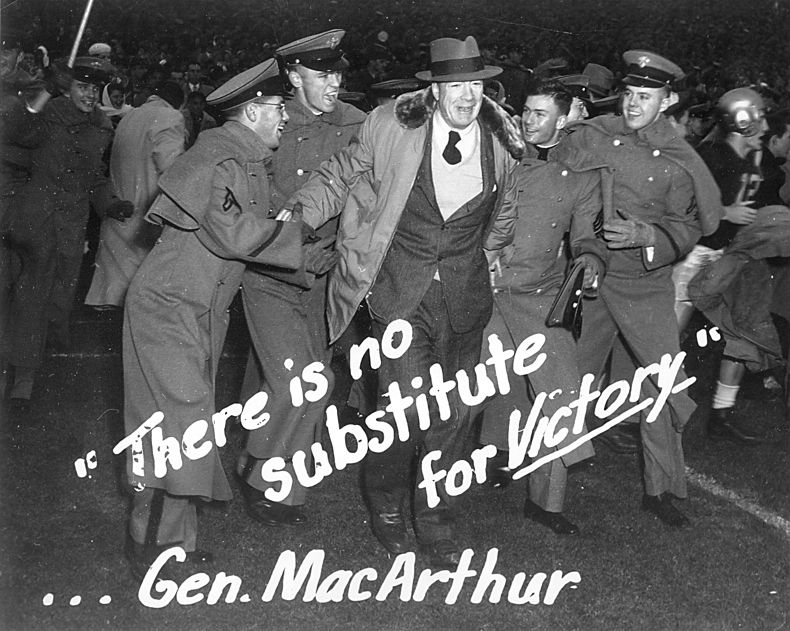

 (Fairly certain this is Erin Mauldin)