Category Archives: Army Greats

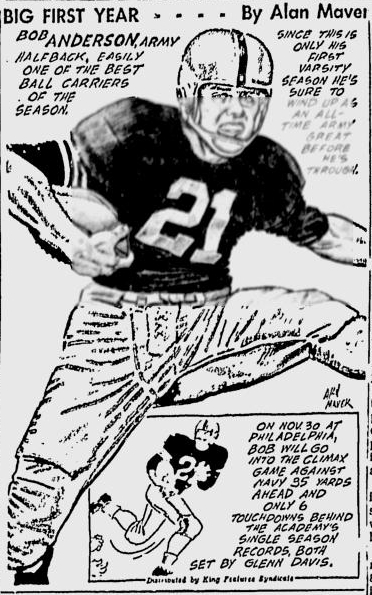
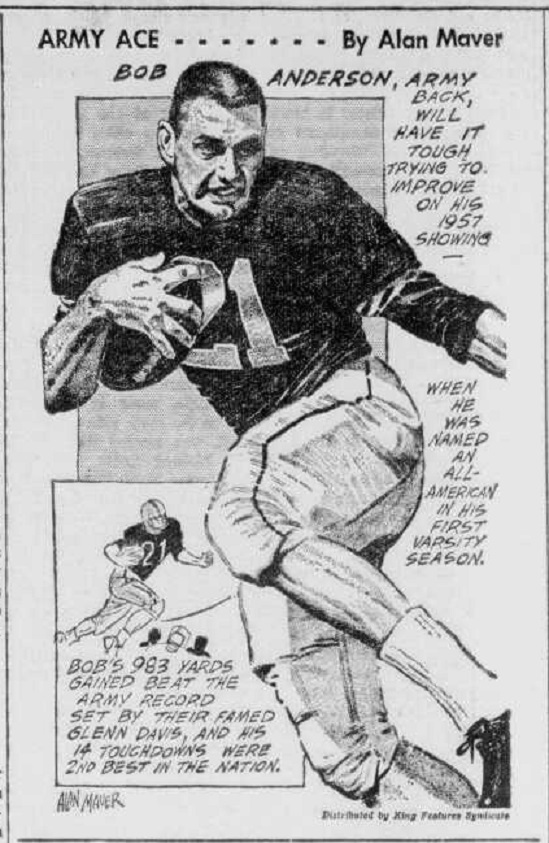
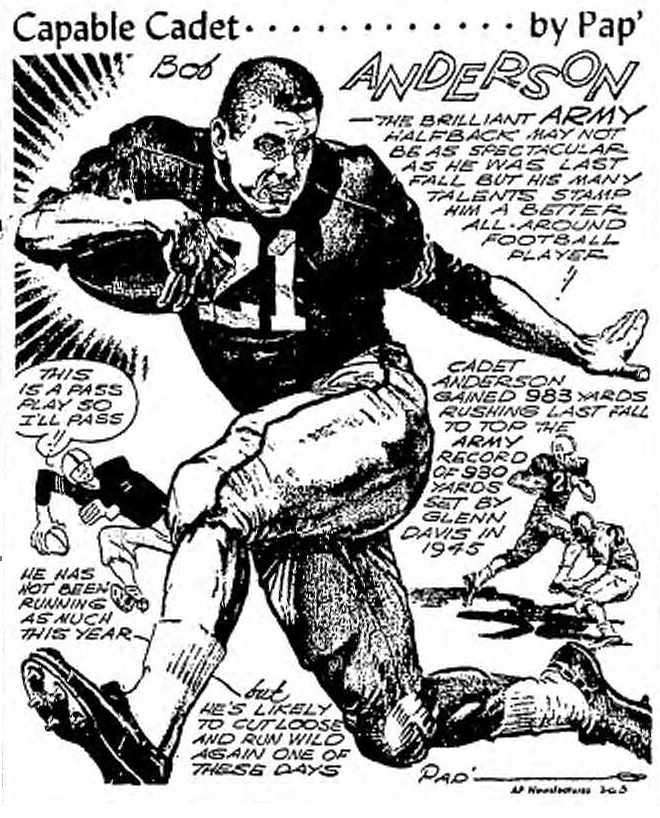
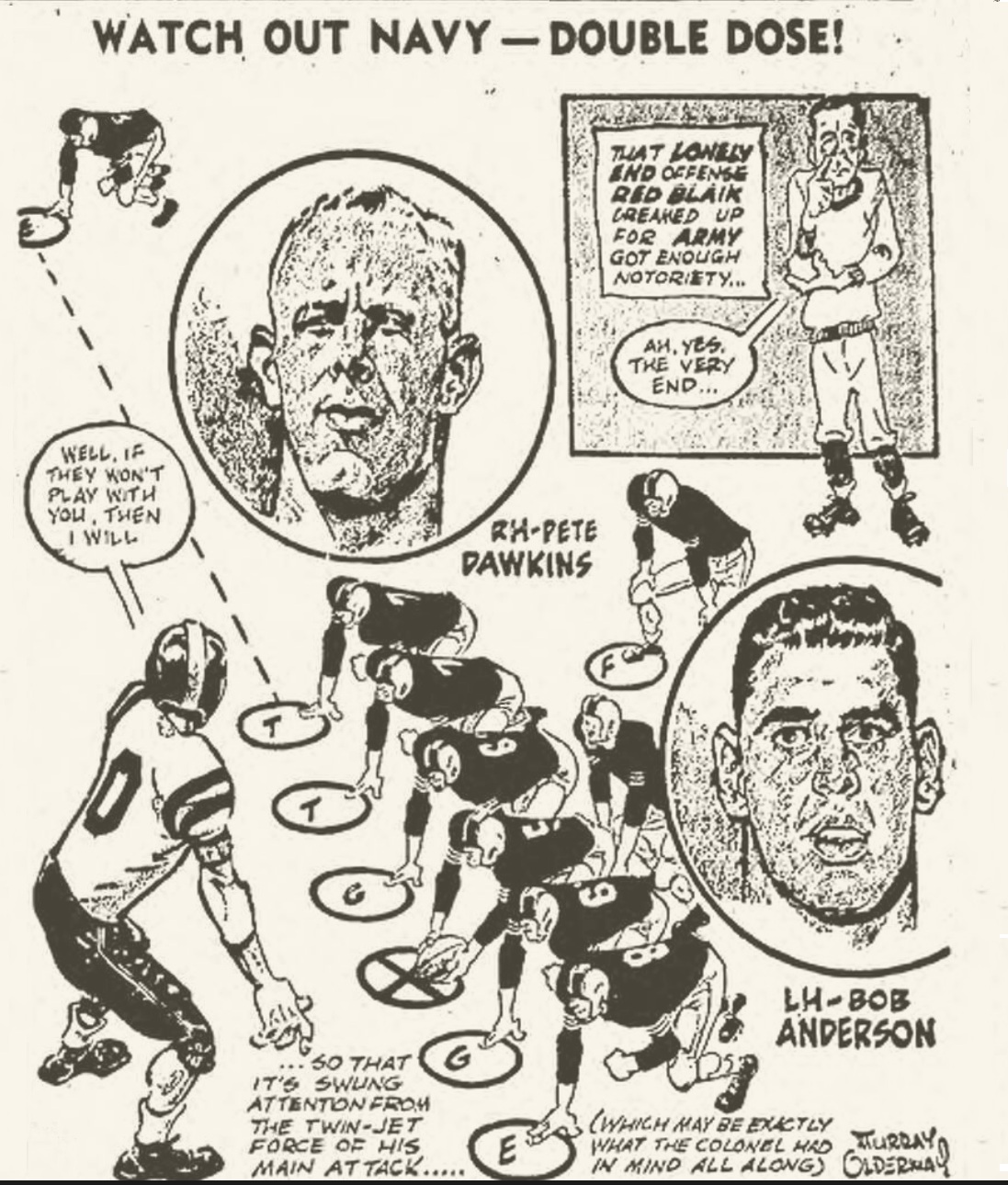
Bob Anderson

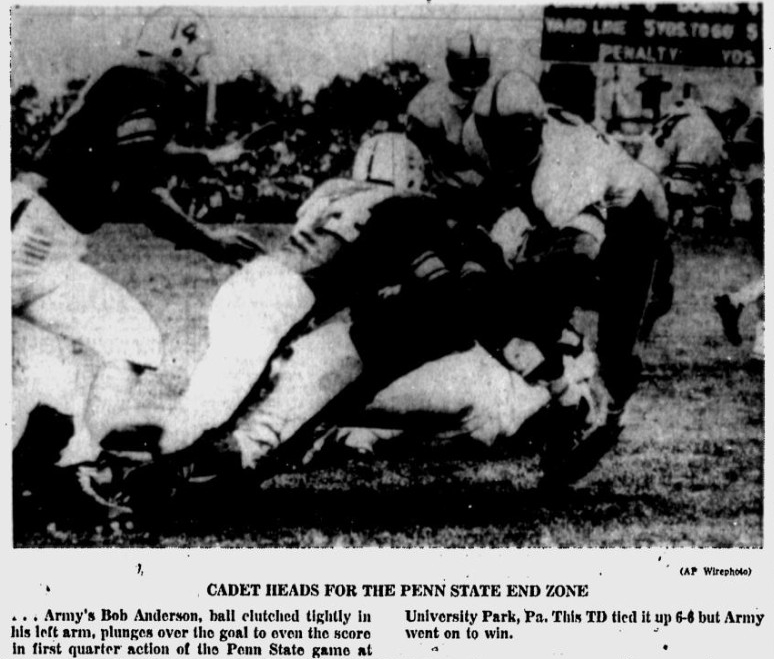
Col Blaik called Bob out of the barracks two nights before the Navy game and took him for a walk. Col Blaik told young Anderson he would be the key player against Navy. ”I was ready to run through a wall,” said Bob, who turned out to be the hero in a victory.

http://www.collegefootball.org/famersearch.php?page=1&submitted=1&school=Army&sortby=school

http://www.helmethut.com/College/Army/Anderson.html

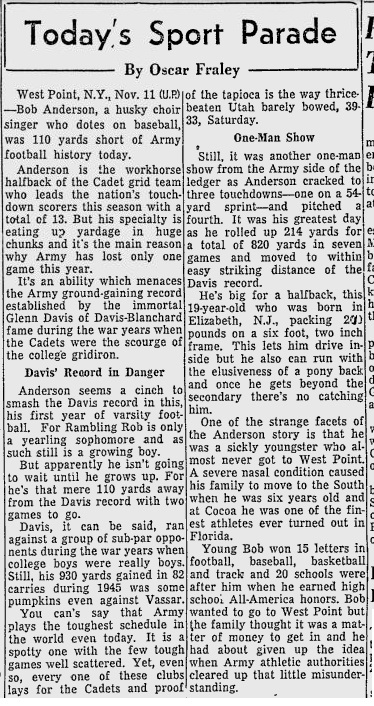
As a yearling, Bob eclipsed the old Army rushing record by rushing for 983 yards in a nine-game season. The following year, the media guide revealed that Tommy Bell, ’55 had gained more yards in a season, but it had been heretofore unreported. That diminished Bob’s status not in the least, as he is one of the greatest players in Army football history.

Comparing rushers today with Bob’s accomplishments is unfair for several reasons. One, Army only played nine games in a year. Two, there were not as many plays run in a game as there are today, because the clock was not stopped for first downs, and most college teams ran the ball more than they passed, thereby eating up the clock. Also, this was in the days before John McKay at USC decided to have his best back (O.J. Simpson) carry the ball on every play. Bob had to share running duties with other halfbacks, fullbacks, and even quarterbacks on option plays. Of course, players then were only permitted to play three years instead of four. And, there was one more thing. The Army offense then was designed to move only between the tackles. Carrying the ball a limited number of times in nine games and running in heavy traffic puts some perspective on Bob’s achievements.

Bob had some offers for baseball college scholarships. As a pitcher for Cocoa High School, Cocoa, FL he was an All-State baseball selection. His baseball accomplishments pale by comparison to his football feats. His older brother John attended Georgia Tech, and made sure the coaches knew about Bob. But they already knew about him. As a high school All-State, All-Southeastern, and All-American football player, every coach in America knew about Bob. On his official visit to Georgia Tech, Bob didn’t have to sleep in a dorm. No, he was the guest of the dean, and stayed at the dean’s home. Bob gave a verbal commitment to Georgia Tech. Then, the call came from Army, through a friend of the brother of Army’s head recruiter -“Gordon ‘Slim’ Chalmers”. Bob’s family wasn’t poor, but they weren’t rich either, and Bob considered the benefit to them if he went to Army and they didn’t have to pay for any of his education. He called Coach Bobby Dodd at Georgia Tech.

Coach Dodd was already a legend, and known for his class. He told Bob that if it was any other school than a service academy, he would hold him to his agreement, but since it was Army, he wished Bob the best of luck, and told him if he didn’t make it at Army, he was always welcome at Tech.

Bob played in the outfield for the Army baseball team, and even pitched a few games. He was a good baseball player, but it was in football that he would become a legend.

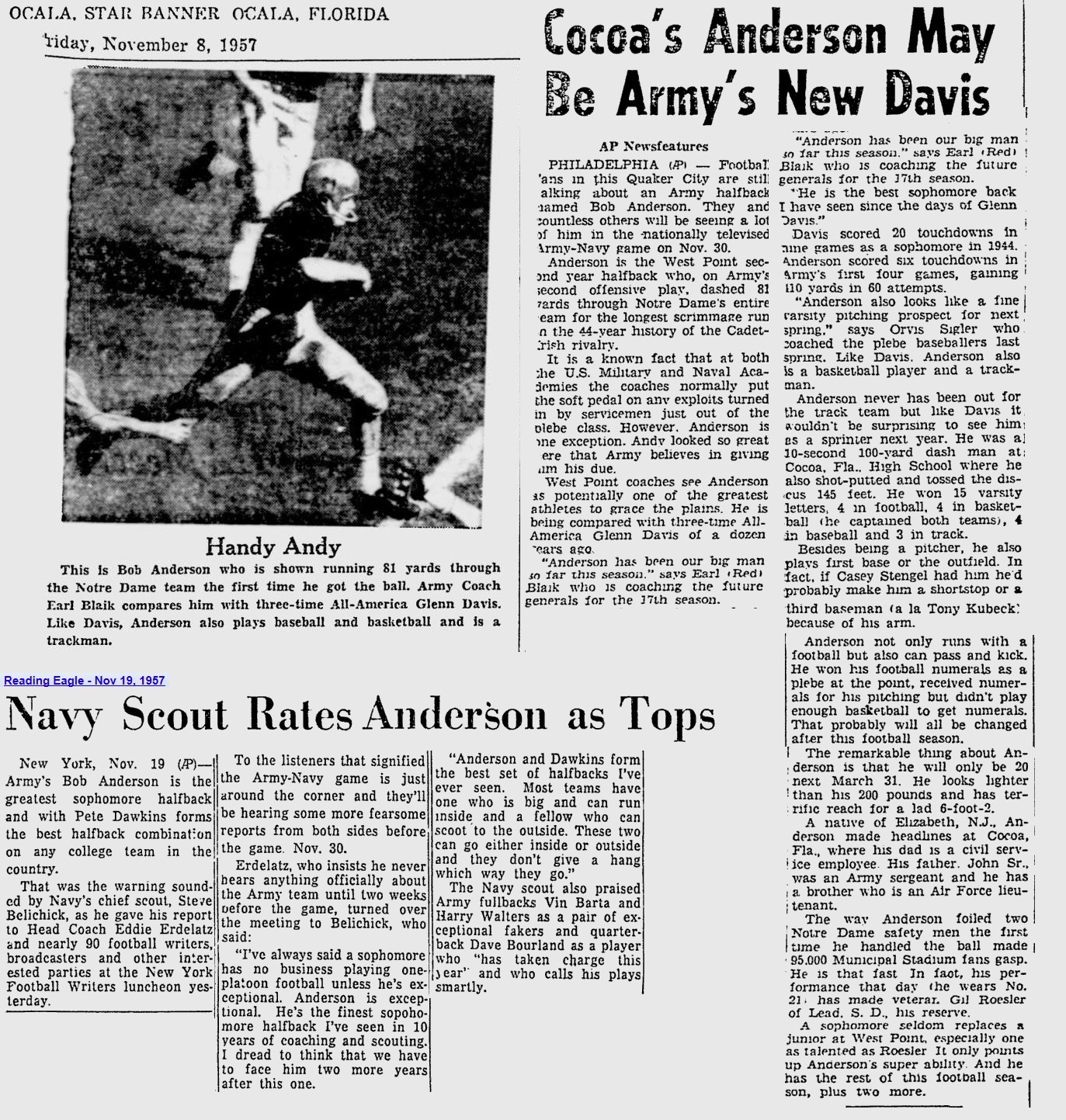
Bob was fast-very fast. And, he was cute, i.e. he could dodge and juke and swerve and cut with the best of them. He had that football player’s instinct that makes one react to the position and balance of defenders and use that information to instinctively chart his own course. But in the offense of Coach Earl Blaik, Bob’s role as a power runner running between the tackles was enormous. Bob just ran over people, and if he ran over a few and burst into the open, nobody could catch him. In the 1957 Army-Notre Dame game, Army returned the kickoff to the Army 16. Pete Dawkins gained three yards to the 19. Bob Anderson then took a pitch from Joe Caldwell running right on a sweep. The defensive end charged straight upfield to contain the sweep, and fullback “Vince Barta” took him outside. Bob cut inside the end, juked the safety, and roared 81 yards for a touchdown. As a yearling Bob was a consensus All-American.

In Bob’s 2nd Class or Cow Year, Army was undefeated. COL Blaik’s new pro-style offense opened things up and Army dominated most opponents. One of the big reasons for Army’s success was the play of Bob Anderson who lined up behind Army’s All American Bob Novogratz. Bob did it all. He shared the punting duties, exhibited efficient and sometimes vicious defensive play, blocked for the other halfback and fullback by piling the end, tackle, and linebacker up in the middle, caught passes, threw passes, returned kicks, and carried the ball with the power and skill for which he was known. He was the leading rusher on this undefeated team, and the other halfback Pete Dawkins won the Heisman Trophy. Pete would be the first person to tell you that Bob was a big reason for his success. Bob was a consensus All-American for the second straight year.

After the spring practice and before the players departed for summer training and leave, the coaches sent out letters to each player telling them what they needed to work on during the summer, like stance, blocking, receiving, etc. In spite of Bob’s success and undeniable ability, the coaches knew he had one glaring weakness. They told him he passed the ball poorly with his left-hand. (Bob is right-handed). The coaches knew you can’t improve on perfection, and they had a sense of humor about it. On summer leave, Bob hung a tire from a clothesline, and practiced running to his left and passing left-handed. He didn’t develop his skill to any great extent, but got so he could deliver the ball with accuracy at ten yards or so. On the first day of practice, Bob asked Joe Caldwell to pitch him the ball running left, and he told end “Don Usry” to run a ten yard out pattern. Having completed the only left-handed pass of his career, Bob returned to the huddle, and asked “Tom Harp”, offensive backfield coach, “How’s my left-handed passing now?”

Following Army’s successful 1958 campaign, a preseason ranking of number two was widely publicized. Illinois, in our second game, scored early with an offense previously unseen. But Army came back after being down 14-0. Bob fielded a punt, and started up the field. Illinois’ great linebacker, Bill Burrell, zeroed in on Bob, and Bob set him up. With the balance of Burrell to his left, Bob could easily cut back to his left and beat the tackle. When Bob set his foot, something bad happened in his right knee and he was unable to cut. He took a hard hit, but the damage had been done before the hit. Bob played the rest of the game, but it was his injury that cost Army the game. Late in the contest, trying to receive a punt, Bob suddenly collapsed when his knee locked, and the ball inadvertently hit him. Illinois recovered and won the game, 20-14.

The diagnosis on Bob’s knee was a torn cartilage (medial meniscus), and the treatment at that time was an open surgery that was season-ending. The alternative was just running on it and grinding it up. Bob elected the latter. He missed just one game, Penn State, but was back again for Duke, where he was instrumental in the win with his solid all-round play.

Bob finished the year playing with incredible pain and injuries that would sideline most players. But he was more than effective even though he was hurt. Deprived of a third All-American berth, Bob nonetheless played in the North-South Shrine game in Miami with his teammates Joe Caldwell and Bill Carpenter – Army’s Lonely End. He returned to West Point for a knee operation, and then a second before graduation.

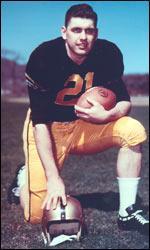
If you were going to build a great running back from scratch, you might want to start with Bob Anderson. He was 6’2″, 220 lbs., with a bull neck, big shoulders, slim hips, and powerful legs. Those slightly bowed legs meant the boy could run.

In the autumn of 1960, Bob was preparing to start Ranger school at Ft. Benning, when he met a sergeant who was a member of the cadre, and they made a bet on the World Series. When Bill Mazerowski hit a home run for the Pirates, Bob was out ten bucks. The following day, during testing to see who would be admitted to Ranger school, the same sergeant demonstrated the dodge, run and jump, and did it within the qualifying time. He then asked Bob if he wanted to get his money back. Answering in the affirmative, the sergeant said, “Then, beat my time”. Bob dodged the first obstacles and leaped over the six foot ditch to the obstacles on the other side. When his right foot hit the ground at the end of his leap, his right knee collapsed, and he was through for the day. Told by the Ranger School Commandant that he would have to join the next class, Bob said if he couldn’t go through the class with his classmates, he would forget about Ranger School. The Commandant offered a deal. Just successfully complete the mile run the next day, and he could proceed to ranger training with his class. Running at the back of the formation, Bob completed the run in spite of the pain, then passed the rigorous training and got his Ranger tab.

In the summer of 1962, Bob was with his Rifle Company from Ft. Campbell, helping to train cadets at Camp Buckner. The Commandant of Cadets, BG Richard Stilwell approached Bob and asked him how his knee was doing. Bob told him it wasn’t doing very well, although he had been to the docs at Ft. Campbell six times and they could find no problem. That afternoon, Bob got a call from General Stilwell’s aide who said that Bob had an appointment at the West Point hospital as soon as he could get there. Diagnosed with a torn anterior cruciate ligament (ACL), Gen. Stilwell had Bob reassigned to West Point. Bob had been jumping out of airplanes, training in the field and functioning well as a junior officer for two years with a torn ACL Following the surgery, Bob was assigned to the football team under Coach Paul Dietzel, helping to coach, and doing his rehab along the way.

On one occasion, Dietzel sent Bob to a high school in Haverstraw to speak. Also speaking was Frank Gifford. Gifford asked Bob if he was interested in playing for the New York Giants. Bob had not heard from the Giants since graduation three years before. Receiving a call from the Giant’s owner, Wellington Mara, they planned to meet at the Giant’s office after Bob’s duty on Saturday. Bob and Mara were the only ones there, and Bob expressed his doubts about playing, because he had been out of the game for almost four years, and had had three knee operations since he last played. Also, Bob didn’t know if he could get out of the Army, and he was expecting orders for an airborne brigade in Germany any day. After a crude and comical negotiation, Bob signed a one year, no-cut contract for more than six times his Army pay. Mara assured Bob that the contract would be torn up if Bob’s resignation was not accepted, but it was accepted and Bob was a New York Giant.

Training camp went well for Bob, and he scored a touchdown in an exhibition game against the Rams. Still, he wasn’t getting as much playing time as he had hoped. Then, he read in the newspaper that the Giants had traded for Hugh McElhenie, an aging former great running back. That night after practice, Coach Allie Sherman met with Bob and assured him that he was still “their guy”. Relieved by Sherman’s assurance, Bob practiced hard all week and was released at the end of it. He was no longer a Giant. His years away from football and his knee problems had been too much to overcome.

Some players show flash and savagery that makes them stand out in the crowd. But that was not Bob. Bob simply did everything well. He carried the ball better than anyone else, he blocked everyone he was supposed to block (and some others, too), he punted well, passed well, caught passes well, and excelled at returning kicks. When Army decided to add a quick kick to their arsenal, there was no doubt who would do it. Bob practiced taking the direct snap, but the plan was never called for. On defense, he tackled with certainty at every opportunity, and no one caught any passes in his territory. He just did his job better than anyone else. Every time.

Above all else, Bob was (and is) a nice guy. He was helpful to all the young players, never criticized a teammate, and was friendly, modest, and self-effacing. And boy, could he play football.

In 2004, Bob was elected to the NCAA Hall of Fame, joining teammates Pete Dawkins and Bill Carpenter. It was a long time coming, but no one ever deserved it more.

By Tom Culver ’62 a Team mate

–
armyfb_1957_anderson_stpetersburgtimes_oct61957

ArmyFB_1957_Anderson_StPetersburgTimes_Oct61957
ArmyFB_1957_BobAnderson_ReadingEagle_Nov111957
ArmyFB_1957_BobAnderson_ReadingEagle_Nov111957

ArmyFB_1957_Anderson_OcalaStarBanner_Nov81957

ArmyFB_1957_Anderson-NewDavis_OcalaStarBanner_Nov81957
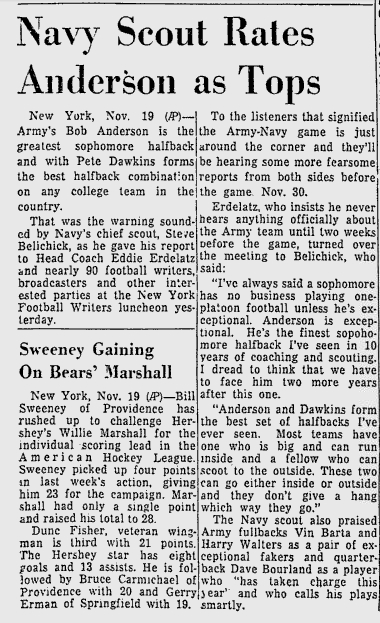
ArmyFB_1957_Anderson-Belichick_MiamiNews_Nov191957
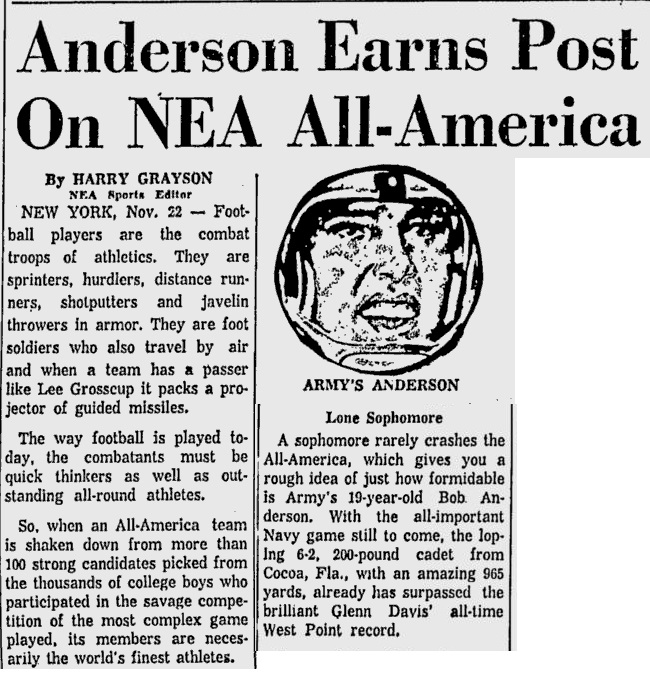
ArmyFB_1957_Anderson-Belichick_MiamiNews_Nov191957

ArmyFB_1957_BobAnderson_MiamiNews_Nov221957
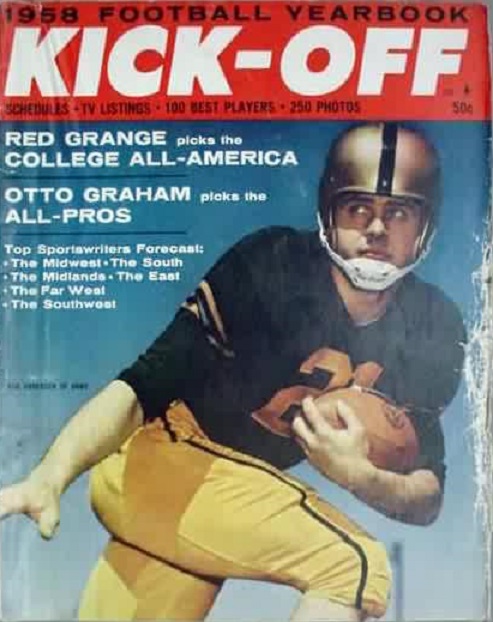

ArmyFB_1958_Anderson_Kick-Offmagazine

–

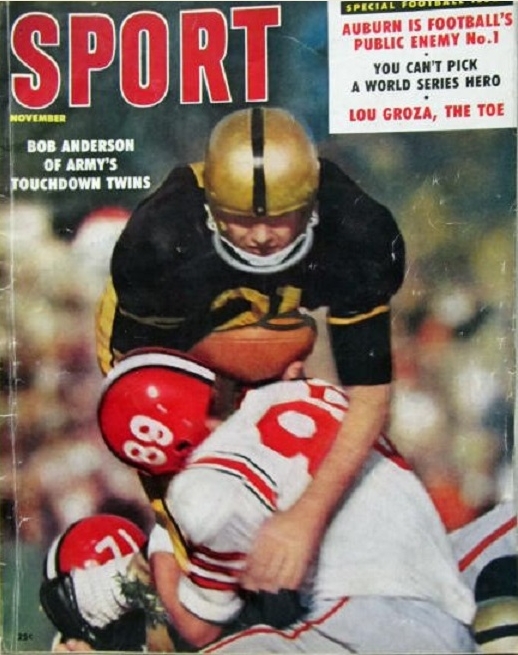
ArmyFB_1958_Anderson_SportMagazineNov1958

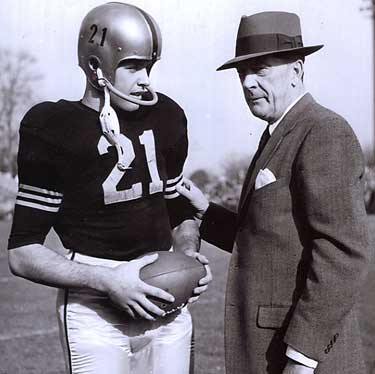
armyfb_1957_anderson-blaik_photo

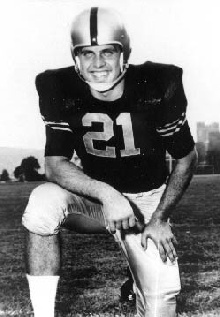
armyfb_1957_anderson_photo

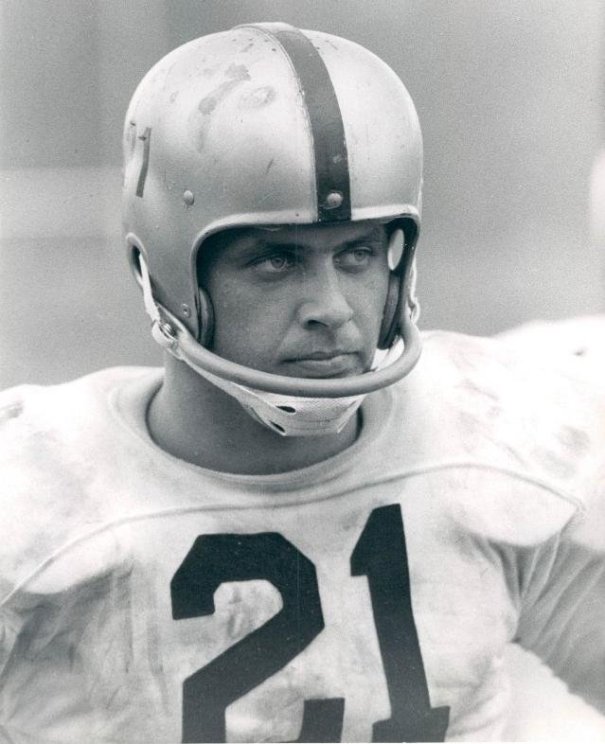
armyfb_1957_anderson_photo2

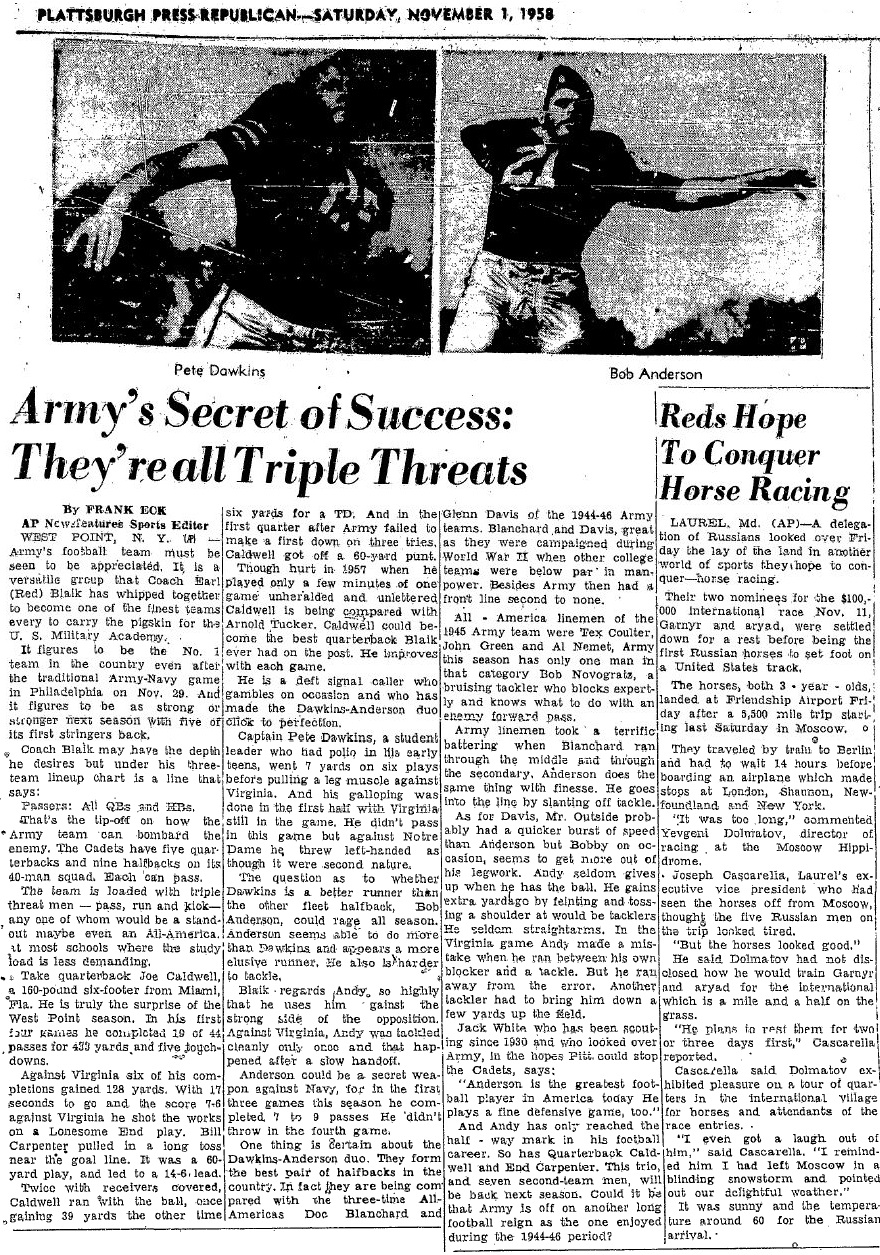
ArmyFB_1958_AndersonDawkins_TripleThreats_PlattsburghPressRepb_1Nov1958
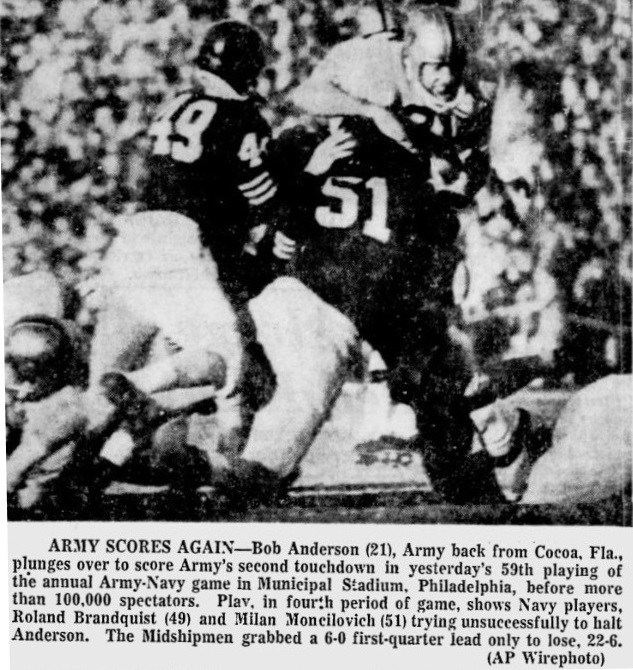
ArmyFB_1958_AndersonDawkins_TripleThreats_PlattsburghPressRepb_1Nov1958

ArmyFB_1958_Anderson_vsNavy_ReadingEagle_Nov301958
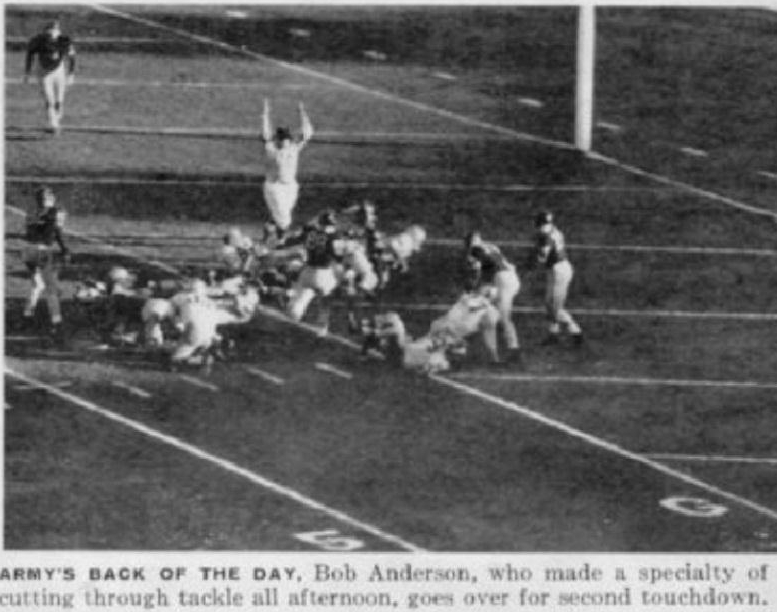
ArmyFB_1958_Anderson_vsNavy_ReadingEagle_Nov301958

ArmyFB_1958_vsNavy_BobAnderson-scores_SI_Dec81958

ArmyFB_1958_vsNavyBobAnderson-scores_SI_Dec81958
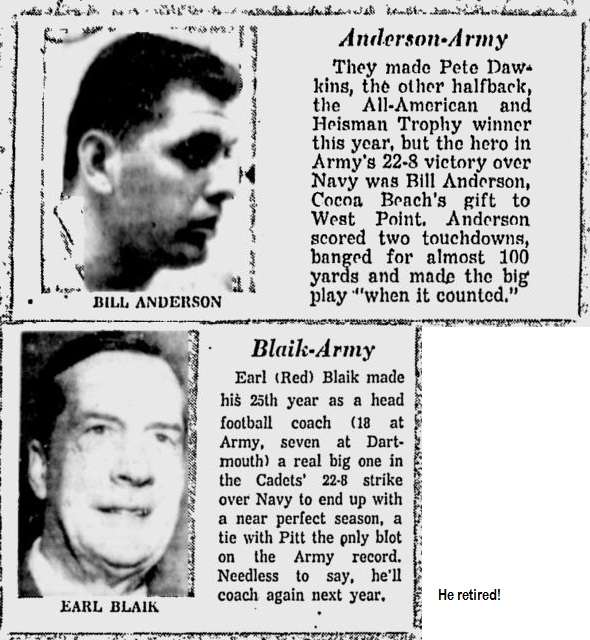
armyfb_1958_vsnavy_anderson-blaik_miaminews_nov301958

ArmyFB_1958_vsNavy_Anderson-Blaik_MiamiNews_Nov301958

–
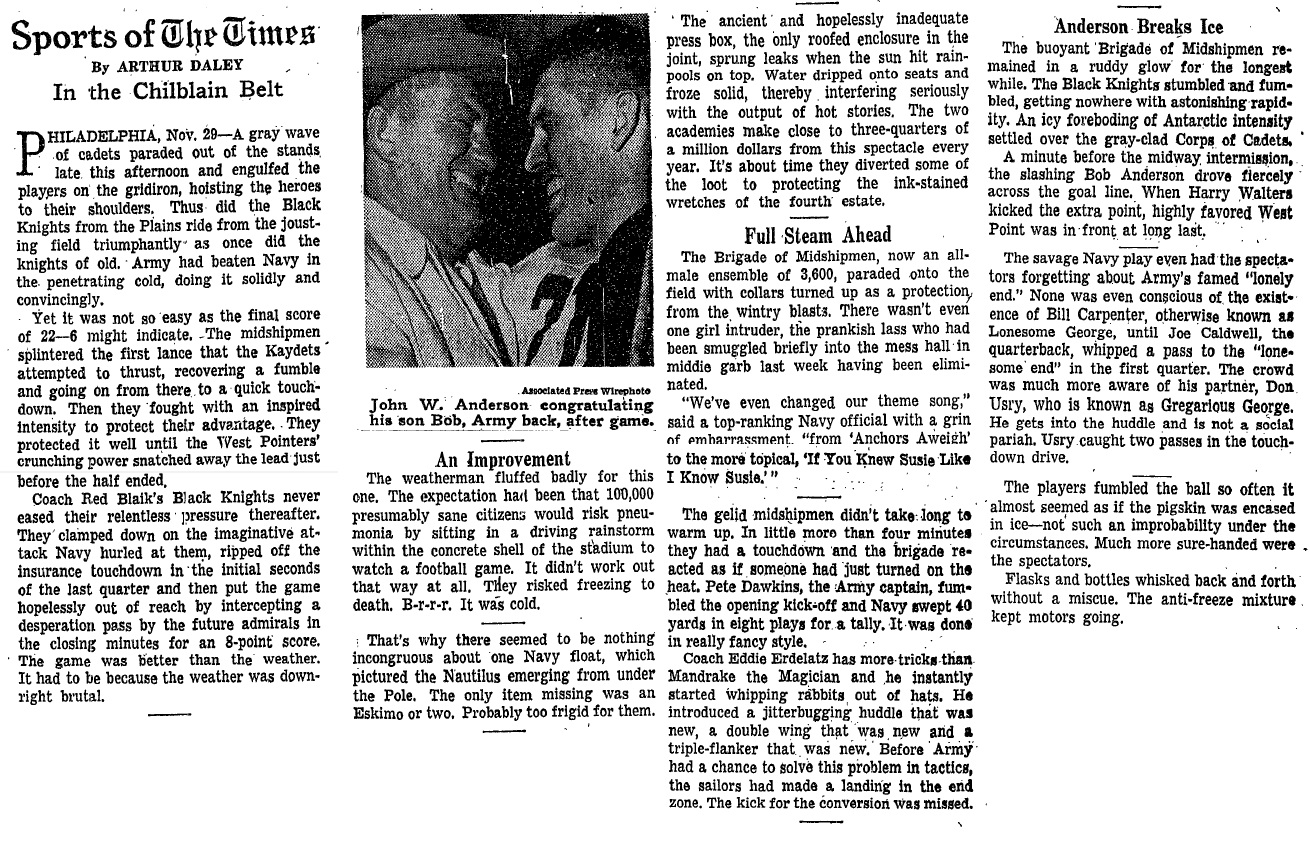
ArmyFB_1958_vsNavy_ArthurDaley_NYT_Nov301958
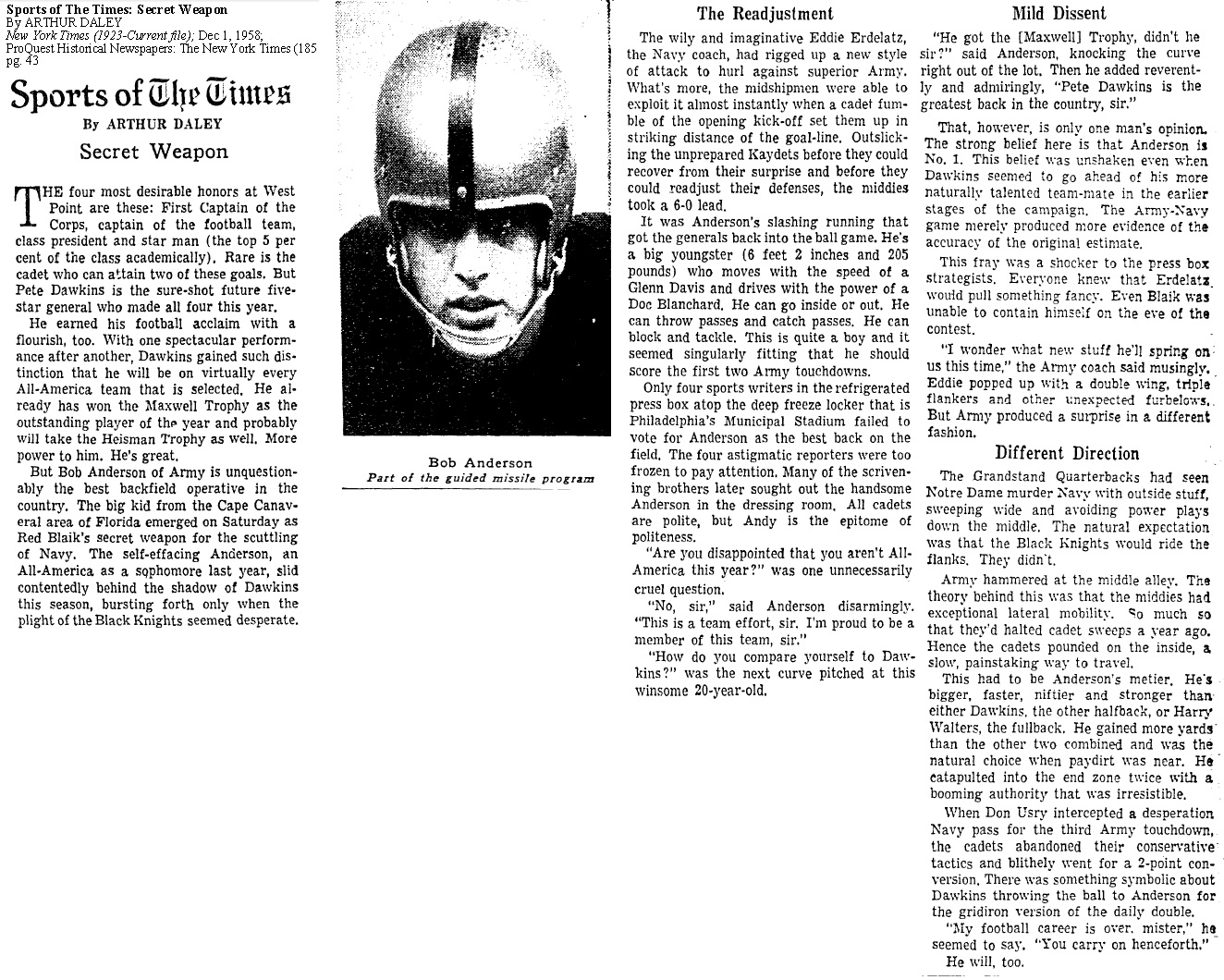
ArmyFB_1958_vsNavy_ArthurDaley_NYT_Nov301958

ArmyFB_1958_Anderson_ArthurDaley_NYT_Dec11958
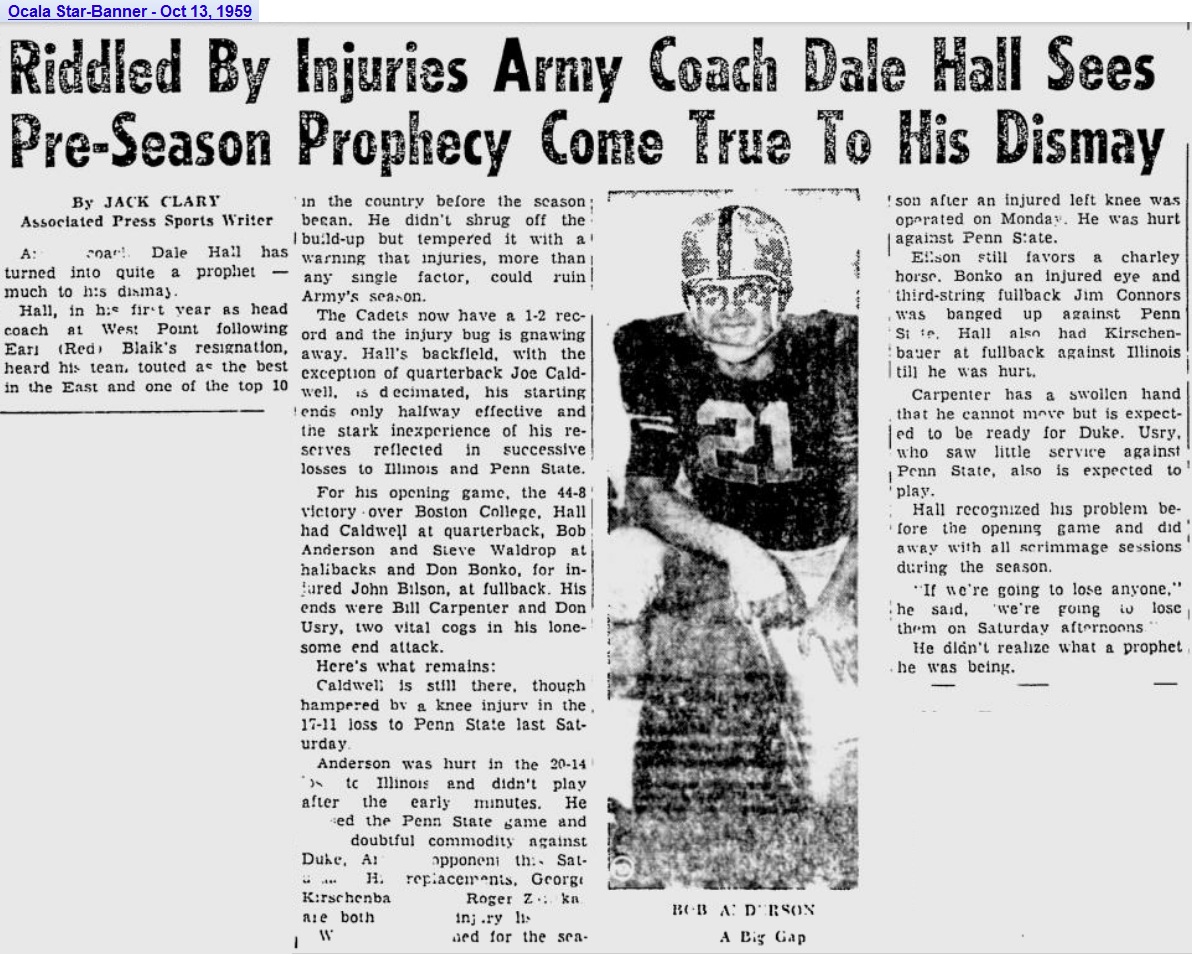
ArmyFB_1958_Anderson_ArthurDaley_NYT_Dec11958

armyfb_1959_injuries-anderson_ocalastarbanner_oct131959

ArmyFB_1959_Injuries-Anderson_OcalaStarBanner_Oct131959
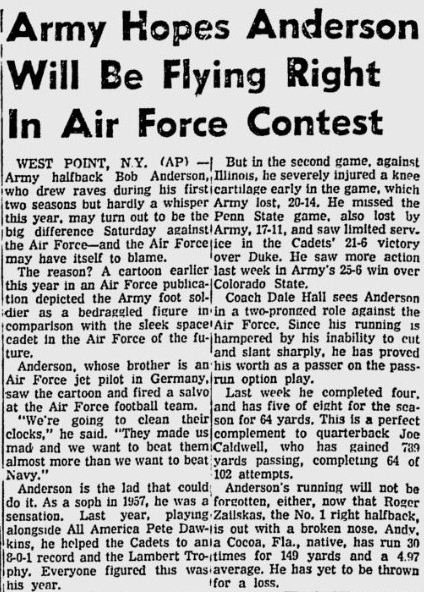
armyfb_1959_vsaf-anderson_lakelandledger_oct291959

ArmyFB_1959_vsAF-anderson_LakelandLedger_Oct291959
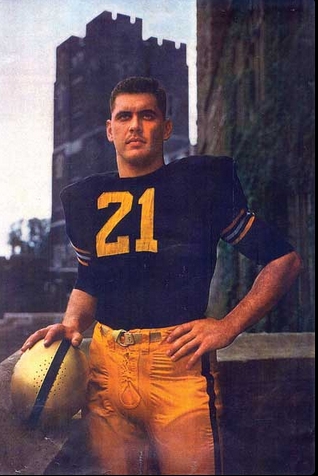
ArmyFB_1958_Anderson_color2

–

ArmyFB_1958_Anderson_color

–

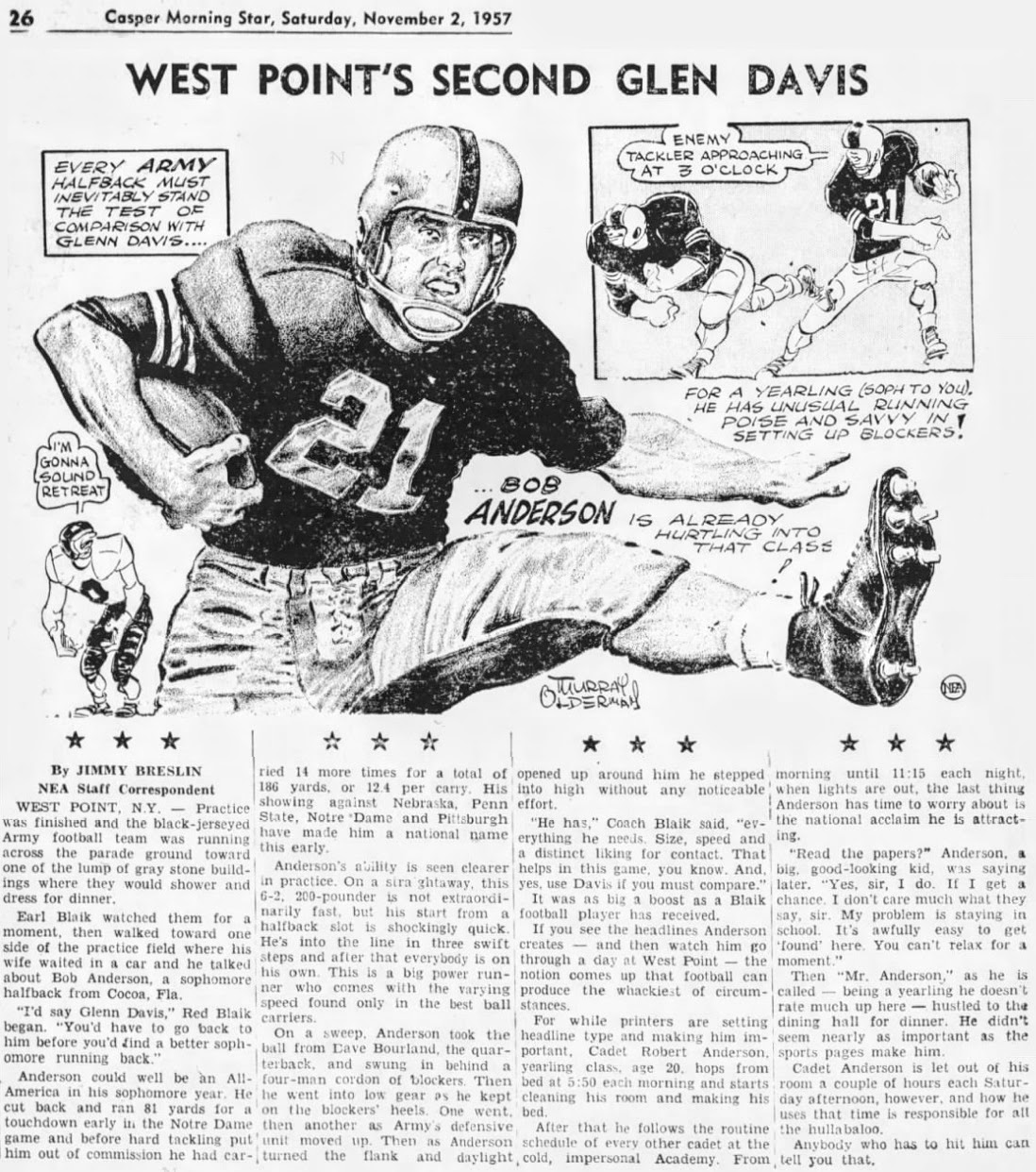
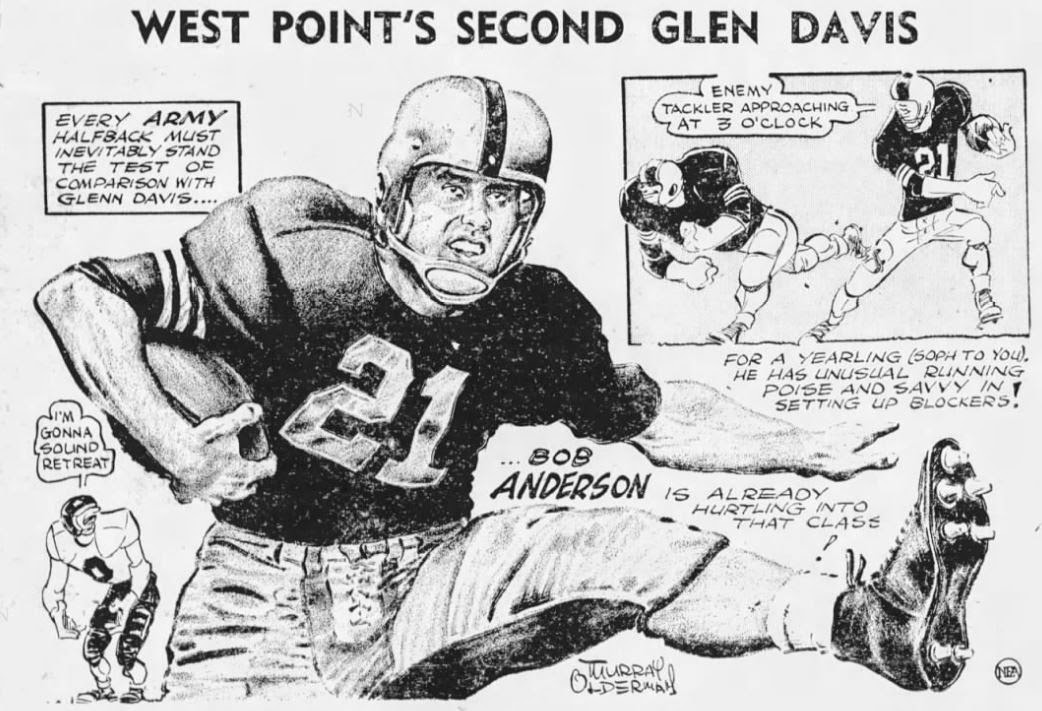
as depicted by sports cartoonists

This image has an empty alt attribute; its file name is armyfb_1957_bob-anderson_by-murray-olderman_jimmy-breslin-article_casper-morning-star_wy_nov21957p26-1.jpg

This image has an empty alt attribute; its file name is armyfb_1957_bob-anderson_by-murray-olderman_casper-morning-star_wy_nov21957p26-2.jpg

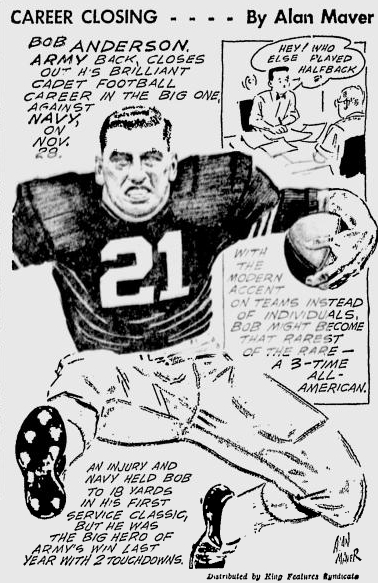
–ArmyFB_1957_BobAnderson_byAlanMaver_WashingtonObserver_Nov301957

ArmyFB_1958_BobAnderson_AlanMaver_BrazilDailyTimesIn_15Oct1958

ArmyFB_1958_BobAnderson_byPap_CorsicanaDailySun_Nov151958 armyfb_1958_anderson-dawkins_bymurrayolderman_portsmouthtimes_oct181958

armyfb_1959_bobanderson_byalanmaver_newssentinel-rochesterin_nov201959

News articles posted by Russ “Skip” Grimm – Class of ’76

——————————————————————————————————————–

Carl Morin

BG.pngCarl Morin by Evelyn    150px-212_FA_Bde_DUI copyCarl led his High School Team in stopping Bob Anderson ’61 in his tracks.  A loving, caring Father and Husband and a Solider who was a credit to West Point.  Co 212th F Arty, OSD. 

Colonel Robert G. Morris, III, USA Ph. D

Dear Mrs. Morin I have just learned of General Morin’s passing and I had to sit for awhile and reflect on all of the things that both of you did for me both professionally and personally. He was responsible for my becoming a Field Artillery Officer and throughout my time in the Army I would run into him and he always had an effective piece of advice for me delivered with that quiet wit that he was so famous for. He was a superb soldier and great leader. I will miss him but I am calmed by the fact that he now rests with the Angels. Sincerly Bobby Morris Penna Military College Class of 1970

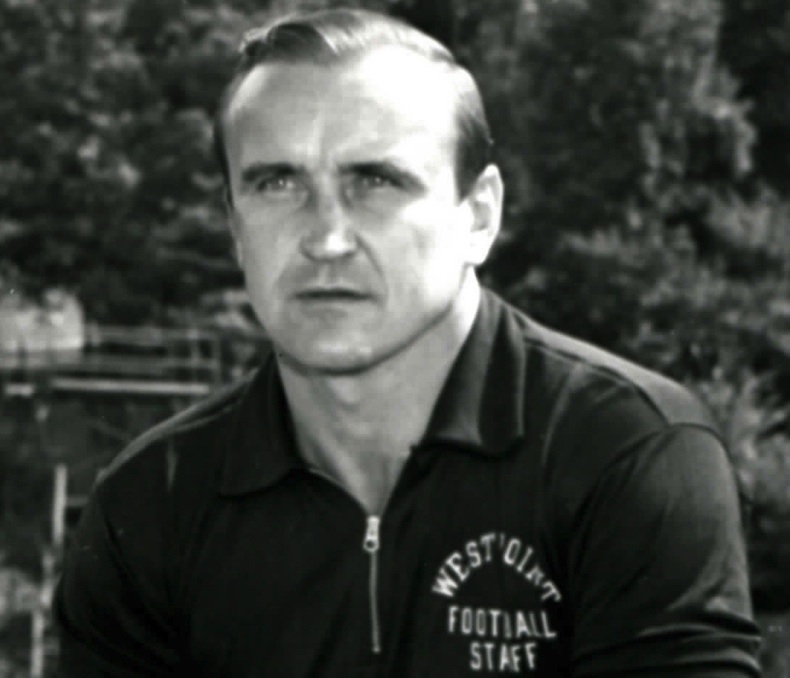
Bob Mischak

ARMY SPORTS HALL OF FAME NOMINATION

2015 Nomination of Bob Mischak

January 28, 2015
Bob Beretta
Executive Athletic Director U.S. Military Academy 639 Howard Road
West Point, NY 10996
Attn: HOF Nomination
Dear Bob:

BOB MISCHAK, JR.
909 Marina Village Parkway #288 Alameda, CA 94501 510-522-6627

I had the good fortune to live at West Point while my father was coaching there from 1966-1973. As a youngster I would often hurry after school to ride my bicycle down to The Plain to attend football practice and help on the sidelines as a water boy during home games at Michie Stadium when it still had that marvelous, natural green turf.

I,as a youth, was most captivated by the history and tradition that West Point represents. When I reflect back on those moments, I can vividly see my father in his prime and how he perfectly fit into those storied surroundings. He truly was a leader and the embodiment of the values that are the United States Military Academy.

He represented the Black Knights with honor and distinction at the professional level as an All Pro player and a 3 time Super Bowl champion coach… a pro career that remains unsurpassed in the history of Army football.
I would like to close by offering some quotes from correspondence sent to me by Army (some of them Hall of Fame members) and pro football players. I believe these remarks are a testament to what kind of man Bob Mischak was and why he deserves to be an enshrinee in the 2015 class of the Army Sports Hall of Fame.

“represented everything that football should stand for” / “class act” / “quality individual” / “pillar of our coaching staff and loved by his players for his motivation, leadership and compassion” / “role model for others to emulate” / “man of outstanding character and grace” / “offensive coach whom we gave the greatest respect and we didn’t want to disappoint him” / “one of the great ones of Army football as player and coach” / “scholar, gentleman, and football star” / “true role model for all of us – as an athlete, coach, and leader” / “we all had the greatest respect for him and his accomplishments. he was a super coach” / “he was a big man with a bigger heart. made the young guys work a lot harder than they would have if he weren’t there. another vital cog in the wheels of success” / “such a high regard for him that a compliment he once gave me in practice has stayed in my mind 40 years later” / “he not only coached football, he coached life and had an incredible influence over all of us” / “offered quiet leadership and engendered a sense of confidence in his charges” / “he was one of the great ones” / “he touched my life in so many positive ways” / “was an inspiration to my life as a football player and a role model for me and all of his players” / “I will never forget
the quiet strength that Bob always gave us to feed off of” / “had no equal as a football coach and if you saw the game through his eyes you could not help but love football.”

Sincerely,
Bob Mischak, Jr.

Original Nomination by the Class of 1962

“But from well back an Army figure set out in pursuit.”

Continuing with the October 18th New York Times –

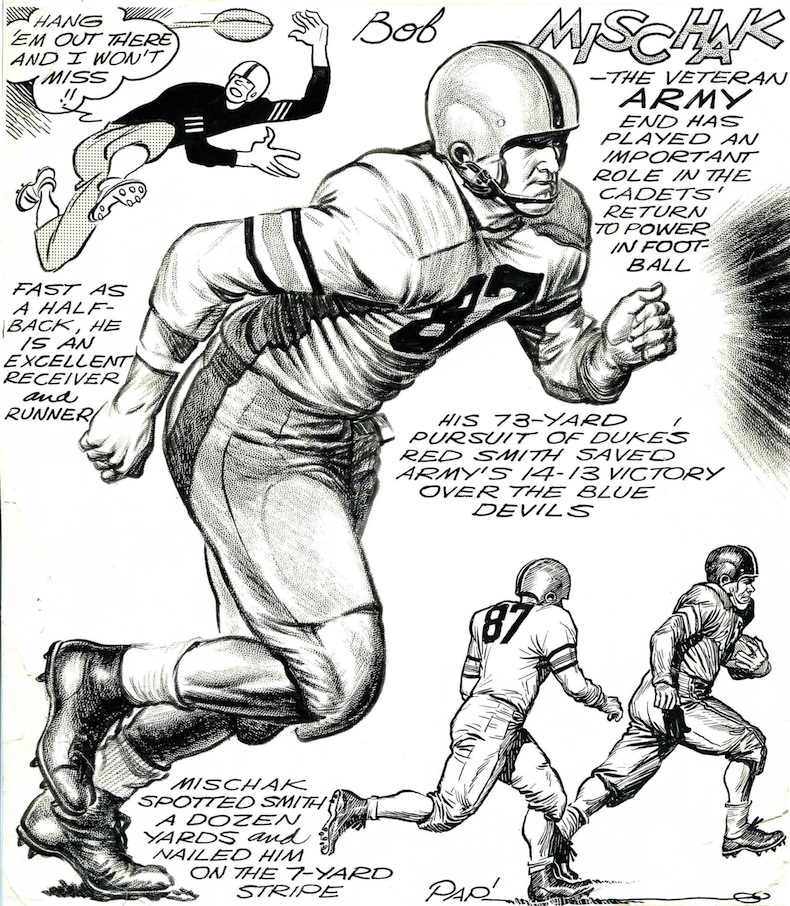
“With the place in an uproar, Bob Mischak cut down the gap between them and finally leaped upon Smith (Duke’s All-American Half Back) and dragged him down on the 7-yard line 73 yards from the line of scrimmage.”

Years later Col Blaik described reactions on the Army sidelines.

“We on the bench and the Corps of gray in the lower stands behind us shot to our feet in sudden silent, stunned consternation. Smith looked home free. I felt our heads were being pushed down once more – – – ”

Col Blaik was later to write “In somehow catching and collaring (Smith), Mischak displayed heart and a pursuit that for one single play I have never seen matched.

Voted The College Football Game of the Year, “the game never to be forgotten” as Earl Blaik called it – a heart-stopping 14-13 upset of No. 7 ranked Duke at New York City’s Polo Grounds.

Once more on 28 November Mischak made a game-changing play, sprinting 59 yards to push Navy’s Jack Perkins out of bounds at the Army 9. With a first and goal at the 9 Navy was now threatening to tie the game, but Mischak’s play, as in the game-saving tackle the final minutes of the Duke game, inspired Army’s defense. With a 3rd and 13 Tommy Bell stopped the Midshipmen’s threat with an interception of a George Welch pass.

For over 10 years afterward the story Army’s win against Duke and Bob Mischak’s tackle was part of West Point’s Military Psychology and Leadership Course.

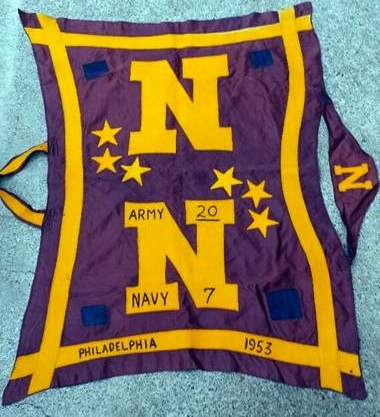
General MacArthur had felt it would take 10 years. Coach Earl Blaik later labeled the 1953 season “a football miracle”

The 2 stats provided are the only game stats we have and doubt The Athletic Association can add much more to Bob Mischak years of eligibility as those 3 years were during a difficult period.

One day, at the end of the 1953 season, Bob Mischak was told to report to the office of the Athletic Director. Quietly, without ceremony, he was handed a certificate saying he had been named to the National Broadcasting Company’s All-American Team. Bob was the only member of the team to be so recognized in 1953.

Upon completion of his required 3 years of service, Bob resigned his commission and turned Pro.

We can get an indication to what Bob’s stats might have been during a different time as he was a starting guard in the famed, Greatest Game Ever Played the 26th Annual NFL Championship December 28, 1958.

1960 to 1962 he was the Titans of New York (NY Jets) team captain and offensive guard and Jets first All Pro. Bob ended his playing years with the Oakland Raiders in 1966 to return to West Point as the Assistant Line Coach under Tom Cahill. Returning to Raiders as as an Assistant Coach and Director of Player Personnel, Bob was a member of 3 Super Bowl winning teams, involved in 8 AFC Championship games and numerous playoff games.

Regardless of his individual stats at the Academy, we graduates are fortunate Bob Mischak was there when West Point needed him.

Col Blaik was to say “For two years these boys had seen the roughest action. They had lived with the coaching lash, dirt, blood, and defeat.” He was to frequently mention that coaching the 1951, 1952 and 1953 Teams brought him the greatest professional satisfaction of his career.

Col Blaik’s tearing eyes as he spoke the words

“I NEVER COACHED A TEAM THAT GAVE ME MORE THAN YOU DID”

in the locker room after the ’53 Navy Game gives an indication of the price the players on those 3 teams paid playing for Army. We believe Bob Mischak represents what those 3 teams stood for.

Jim Lee Howell, the New York Giants’ head coach who hired Lombardi after the 1953 season at Army, said, “If Lombardi can do that kind of job in three years at West Point – he could do a helluva job in the pros where he would have an experienced base to work with.” From the Giants Lombardi would move on to Green Bay.

With that we, members of the Class of 1962 thank the 1951-1952, 1952-1953 & 1953-1954 Corps of Cadets, their Teams and Nominate Bob Mischak for the Army Sports Hall of Fame.

This what a member of the Class of 1976 said about the rejection of Bob Mischak’s Nomination by the Hall of Fame Committee –

“Unbelievable that Coach Mischak could be overlooked…must be about officer career..no doubt he was one of the very best…and proved it in the Pros to boot – All AFL three times…who else can claim that…don’t get it”

Bob returns to our Alma Mater


ArmyFB_1972_ArmyCoaches-team-roster_EN-Sep151972

A-N-banner


ArmyFB_1951_forecast_TimesNews_Aug301951


ArmyFB_1952_vsNavy_StarNews_Nov291952


ArmyFB_1952_vsNavy_StPetersburgTimes_Nov291952-1


ArmyFB_1952_vsPenn_ReadingEagle_Nov161952


ArmyFB_1951_vsCitadel_TimesNews_Nov111951

24 photographs of Bob’ tackle and Army’s Goal Line Stand taken from old Army / Duke Game Film are at — http://forwhattheygaveonsaturdayafternoon.com/armylore/50

His nickname in his Cadet Company was Shad. (Short for Shadrak – derived from the song, “Shadrak, Mischak, Abednigo …. “

Bob as a Firstie with Plebes summer of 53

Cartoon- bob-m bob-mischak

honor-bob-m

Bob’s letter to West Point’s Sports Hall of Fame Selection Committee and Pro Football Resume is at

http://forwhattheygaveonsaturdayafternoon.com/wp-1954/mischak-letter

http://www.aogusma.org/Pubs/ASSEMBLY/971112/lombardi2.htm

Page 148 When Pride Still Mattered — http://books.google.com/books?id=9jc9XpPICdUC&pg=PA148&lpg=PA148&dq=bob+mischak&source=web&ots=4gVag4IbcY&sig=VZXeSJ2ddb0Ofm-PHyh0X6yu-wQ

http://select.nytimes.com/gst/abstract.html?res=F00611FC3A5E177B93CBAB178AD95F468585F9

Bob’s Pro Years

Drafted in the 23d round of the 1954 Draft by the Cleveland Browns – Traded to the NY Gaints.

All Pro 1960, 1961, 1962, 1964

Played in Pro bowl games of 1961 & 1962

http://p.nyjets.com/team/player/541-bob-mischak

http://www.allraiders.com/history/players.php

http://theunknownlineman.com/Html/P62.html

Bob as Tight Ends Coach and Stregth & Conditioning Coach — http://books.google.com/books?id=4BGaoXg41DQC&pg=PA36&lpg=PA36&dq=bob+mischak&source=web&ots=Ir8sJncHNq&sig=venGXzrIFnQzZIlbUx4L-vzhDUk#PPA36,M1

Played Right & Left Guard and Tight End

Playing Stats

Season Team(s) Games Other Stats Total Points

1958 NYG 12 Rec: 1/27yds 0

1960 NYT 4 0

1961 NYT 14 0

1962 NYT 14 0

1963 OAK 14 Rec: 2/25yds 0

1964 OAK 13 0

1965 OAK 8 0

Career 79 0

http://en.wikipedia.org/wiki/Bob_Mischak

http://www.newyorkjets.com/news/articles/show/1712-out-with-the-old-in-with-the-new

http://www.nearmintcards.com/card/1964+Topps/147/PSA+7/

http://footballcardgallery.com/player/Bob+Mischak/

http://www.nytimes.com/2007/10/14/sports/football/14anderson.html

http://www.armchairgm.com/Bob_Mischak

http://pqasb.pqarchiver.com/courant/access/909426472.html?dids=909426472:909426472&FMT=CITE&FMTS=CITE:AI&date=May+19%2C+1960&author=&pub=The+Hartford+Courant&desc=New+York+Titans+Get+Bob+Mischak&pqatl=google

http://www.allraiders.com/history/allpro.php

http://www.clevelandbrowns.com/team/history/history.php

http://www.spock.com/Bob-Mischak/tags

http://www.profootballhof.com/history/team.jsp?franchise_id=22

http://www.remembertheafl.com/1960AFLUnheraldedAllStars.htm

http://books.google.com/books?id=Y41NlKNgRtMC&pg=PA89&lpg=PA89&dq=bob+mischak&source=web&ots=1p-SefBtdr&sig=1HDIBCqDoe2NEjp7eYUSRKd8was

http://books.google.com/books?id=4zZGwUS928wC&pg=PA101&lpg=PA101&dq=bob+mischak&source=web&ots=cGQvKgdbch&sig=c4Zw0SweT7EwujbN6tW7D_eFYxU

http://www.jt-sw.com/football/pro/rosters.nsf/Annual/1960-nyt

http://www.giants.com/photos/03_alltime_marshall_nettles.pdf

http://www.theganggreen.de/content/view/61/87/

http://origin.newyorkjets.com/news/articles/show/1716-mischak-was-titans-most-decorated-player/printer_friendly

Peter Vann

Peter Graduated as West Point’s all-time passing leader, playing 4 years of Varsity Football. He compilied Academy records for completions (174), attempts (372) and touchdowns (24)

Inducted into the Army Sports Hall of Fame September 17, 2010

I have spoken with Peter and exchanged correspondance over the last several years and was looking forward to meeting him at his induction into the Army Sports Hall of Fame on the 17th & 18th of September. Many of us were saddened to learn of his death on 30 May 2010. Several days earlier the Superintendant had informed Peter of his selection into West Point’s Sports Hall of Fame.

Below is a link to a ’56 Class tribute to Peter

http://www.fpat1956.com

Editors note – Remember quarterbacks did not necessarily come out on defense. It was Peter defending in the end zone, who knocked away the pass from Gerry Berger (Duke’s Quarterback) to Worth Lutz, (Duke’s All American – starting Quarterback)in the final play of the 53 Duke Game.

Peter was asked to comment on Vince Lombardi‘s demands relating to ball handling. The 53 Howitzer and Pointer Articles from the fall of 53 repeatly mention Peter’s ability to deceive, to excuite the fake as Vince Lombardi demanded.

Lombardi spent hours on the field and in private sessions talking about faking. feeding and fleeing. These were the royal three “F’s” of Lombardi. The fleeing part is very important to protect your hide. If anything was unique about Lombardi was his attention to details almost to a point of being paranoia. These sentiments were commented on by most of his players at Green Bay. They used the term fanatic when describing Lombardi’s attention to detail. My..My… Col Blaik had a certain interest in details didn’t he. There is a letter from Lombardi to Blaik when he was at Green Bay saying. “my football is your football and I pray to God I am doing it right”. That is a great compliment to Col Blaik.

Interestingly when you did not follow Lombardi’s detailed instructions you found out what the wrath of Lombardi was all about.

The three “F’s” expanded cover taking the ball from center or direct snap and faking to one or two backs to cause distraction to the defense. Once your faking has been accomplished the ball would be fed to a back or passed and then the most important issue is get the hell out of the way of some line backer or defensive guy wanting to separate your vertebra.

The Coaches

During Peter’s last 3 years under center resulted in an 18-7-2 record.

His 24 career passing touchdowns (currently 3d in total) stood as an Academy record for 23 years; broken by Leamon Hall in 1977.

Peter still ranks among Army’s career leaders in completions (7th), attempts (8th) and yards (4th).

He is recognized as one of the individuals most responsible for leading the Army Football program back to National prominence after the cheating scandal of 1951.

Col Blaik in his book “You Have to Pay the Price” referred to Peter as one of the 2 best passers he coached at Army.

Army went 14-3-1 during the 1953 & 1954 seasons earing the Lambert Trophy in 1953.

Led Nation in completion percentage much of 1953 season.

Led Nation with 166.5 passing efficiency rating during 1954 season.

Established NCAA single season record (since surpased) for most yards per completion (23.2)

Established 9 Army passing records.

Played a major role in successful transition of Don Holleder from All American End to Quarterback for the 1955 season. (Peter’s eligibility was completed at the end of 1954)

Currently ranks fourth on Army’s single season touchdown passes record behind Leamon Hall 2003 & 2005 seasons and Arnold Galiffa 1949.

Peter ranks 9th in single season completion percentage – 55.7% in 1953.

Note — The following article has an error — On the kickoff, “Norm Stephen” charging down the field was the one who knocked the ball lose and it was Lowell Sisson who cought the fumble.

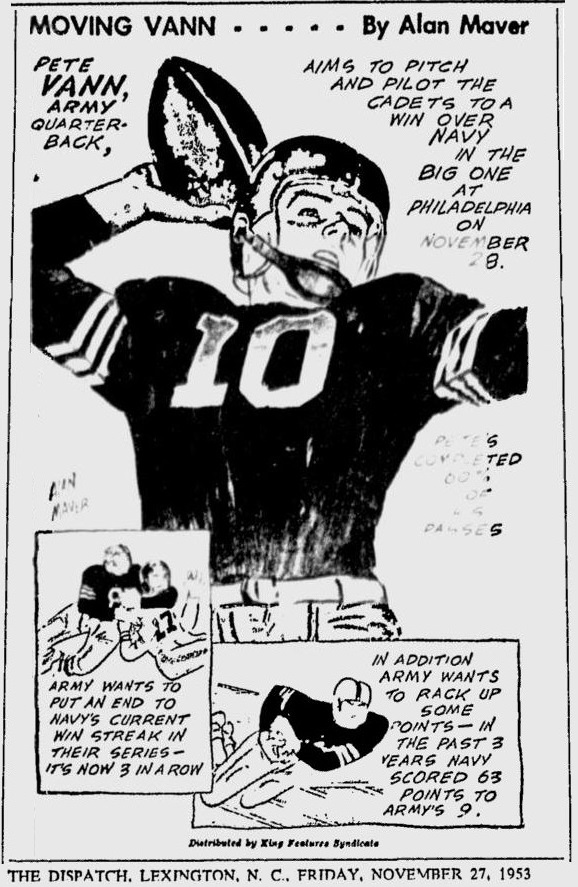
ArmyFB_1953_PeteVann_byAlanMaver_TheDispatchNC_Nov281953

1954 Season

The 1954 Army Backfield

Backfield — Tommy Bell, Pat Uebel, Peter Vann, “Bob Kyasky”

Army Starters 1954

Backfield L to R — Bob Farris, Tommy Bell, Peter Vann, Pat Uebel, “Bob Kyasky”

Line — Don Holleder, “Godwin Ordway”, Ralph Chesnauskas, “Billy Chance”, “Flay Goodwin”, Dick Stephenson, “Arthur Johnson”

Editor’s Note – In the second last game in 1953 Bob Farris got hit very hard and the net result was a detached retina. Bob was the non playing captain of the 1954 team.

In addition to all that Bob was Peter Vann’s roommate in the 1953-1954 class year. The next year Bob was the First Captain of the Corps of Cadets.


Peter Vann ‘s Teammate – Ambassador Hoffman

Vince Lombardi‘s Son Comments on Peter Vann’s contribution to his Father’s success

Peter Vann ‘s contribution to our Nation continues

Army Greats

Some of Army’s Greatest Athletes were depicted in the news media as sketches or cartoons. The initial listing of Football Athletes so depicted can be found at –

http://forwhattheygaveonsaturdayafternoon.com/wp-greats/cartoon

Track can be found at

http://forwhattheygaveonsaturdayafternoon.com/wp-great/cartoon-track

Get That Stick Down

To understand the scope of the material being sought for Army’s Greatest Athletes, the listing below will provide some idea. It will not be a laundry list as depicted below. There will be graphics and photos, and you will select the area you are interested in and click on it. Should you want more information on an athlete, by clicking on his name it will carry you his data base. Some of the links below work.

National Champions

  • Individual
    • Boxing
    • Cross Country
      Richard Shea – Class of 1952 – 3 IC4A Titles – Medal of Honor


  • “Townsend Clark” – Class of 1967
  • “Ken Johnson” – Class of 1969
  • “Don Smith” – Class of 1986
  • Mike Mayweather – Class of 1991
  • Additional Football All American Selections (not included in the Academy listing)
  •  
    • “Ed Rafalko”
    • “Herschel UG Fuson”
    • Max Minor – Class of 1944
    • Dale Hall – Class of 1944
    • Bob St Onge – Class of 1945
    • Bob Mischak – Class of 1954 National Broadcasting Company 1953, All East.
    • Peter Vann – Class of 1956 1st Team Colliers; International News Service, 2d team AP, UP 1954
    • Rip Rowan – Class of 1949


  • Golf


  • Gymnastics (25 All Americans)


  • Hockey


  • Dave Rost – Class of 1977 holds NCAA records for most career points & goals


  • Lacrosse (67 1st Team All Americans)


  • Rifle (27 All Americans)


  • Soccer (7 All Americans)


  • Swimming & Diving


  • Track & Field (19 Men All Americans)


  • Women’s Basketball


  • Women’s Track & Field (15 All Americans)


  • Women’s Soccer


  • Women’s Swimming & Diving


  • Ann Wycoff – Class of 1989 – All American 19 events

All East Basketball

Colliers All East Football

Colliers All East Honorable Mention

  • John Trent – Class of 1950
  • “Bruce Ackerson” – Class of 1950
  • Jim Irons – Class of 1950
  • “Lynn Galloway” – Class of 1950
  • Jim Cain – Class of 1950

AP All East Football


  • – too numerous to be comprehensiveConference / League Champions


  • Gymnastics
  •  
      • 1962 Eastern Intercollegiate Championship


  • Women’s Basketball


  • 2005/2006 – Patriot League Championship


  • 150 / Lightweight / Sprint Football (Won or tied for Championship 30 times since 1957) Undefeated teams:


  • 1957
  • 1958
  • 1962
  • 1964
  • 1966
  • 1968
  • 1970
  • 1971
  • 1972
  • 1973
  • 1974
  • 1976
  • 1980
  • 1983
  • 1989 – 1 tie
  • 1990
  • 1991 – 1 tie
  • 1994
  • 2012

All ELFL/CSFL


  • – too numerous to be comprehensive 
  • Baseball
  •  
    • 1965 Eastern Intercollegiate Baseball League EIBL
    • 1966 Eastern Intercollegiate Baseball League EIBL


All Conference / League Champion Individual

  • Jim McInerney 1952 ECAC Boxing Champion
  • Al DeJardin – 1962– Shortstop Second Team – EIBL
  • Tom Eccleston – 1962 Pitcher First Team – EIBL
  • Phil Costain – 1962 – Eastern Intercollegiate Champion, Horizontal Bars
  • “Doug Morgan” – 1962 – Regional All American Soccer
  • Dave Rost – 1977 – All East Hockey
  • “Deann Machlan” – 1996 – 2 Time 1st Team Patriot League; & Volleyball League Player of Yr
  • “Steven Marshall” – 1996 – EIGL Parallel Bars & All Around Crown

Playoff/ Bowl Appearances

  • Women’s Basketball
  • 1984 NCAA appearance
  • 2006 NCAA appearance
  • Football
  • 1984 Cherry Bowl — Army 10 Michigan State 6
  • 1985 Peach Bowl — Army 31 Illinois 29
  • 1988 Sun Bowl — Army 28 Alabama 29
  • 1996 Independence Bowl — Army 29 Auburn 32

National & International Competition

  • Al DeJardin – Class of 1962 -Starting Shortstop 1963 Pan American Games Sao Paulo, Brazil April 1963 Cuba won the game score of 2-1, USA Team Silver Medal
  • Ron Zinn – Class of 1962 – Olympics
  • Barry DeBolt – Class of 1966 – Pan Am Games Gold Medalist
  • “Mike Silliman” – Class of 1966 – Captain of Olympic Basket ball Team
  • Doug Blubaugh – Asst. Wrestling Coach – Olympic Gold Medalist
  • “Daniel Browne” – Class of 1997 – 2004 Olympics
  • “Steven Marshall” – Class of 1996 – 95 US Senior National Gymnastics Team
  • David Sears – Class of 1939 – National AAU
  • John Vansant – Class of 1987 – World University Games
  • Elexa Willis – Class of 1990 – 95 World Championships & 96 Olympics

Professional Accomplishment

Academy Team Recognition

  • Corps Squad with the highest combined ranking for academics, athletics and military development.
    • 150s
    • Golf

Army Record Holders
(Information from Army Hall of Fame & media guide)

  • “Robert Neyland” – 1916 — 35 – 5 pitching record, Army’s first no hitter, Beat Navy 4 times
  • Richard Shea – 1952 — 7 Records Track & Field, and Cross Country
  • Joe Austin – 1952 – 10 Goals against Cornell, 80 goals 3 years
  • “Mark Binstein” – 1956 — Record 1222 points Basketball
  • Peter Vann – 1956 — 9 Academy passing records; led Nation in pass eff; NCAA season record
  • Joe Caldwell – 1960 — 21 completions for 297 yds, Nov 14 1959 Oklahoma
  • Tom Culver – 1962 — 10 catches against Michigan (Game Films- Tom Cahill)
  • Stu Sherard – 1962 — Record 1299 in 3 yrs, averaged 22.1/ Basketball game as Firstie, 5 Academy records at Graduation, led Nation with 92% Free Thrown 1962. See Basketball page 13
  • “Mike Silliman” – 1966 — Considered Greatest Army Basketball player
  • “Joseph Casey” – 1967 — 139 points, 3 semifinal NCAA Soccer Tournaments
  • “Bill Schutsky” – 1968 — Basketball – Vitale says best Army player pound for pound
  • Dave Rost – 1977 — 330 points Hockey NCAA Record
  • “George Clark” – 2d in Hockey with 153 Goals
  • Gary Winton – 1978 — Held record in scoring, retains record in rebounding Basketball
  • Pamela Pearson – 1986 — Triple Jump record, All American 2 Sports
  • John Vansant – 1987 — 100 & 200 Breaststroke & 200 Individual Medley Swimming
  • “Kevin Houston” – 1987 — Basketball leading scorer, led Nation (32.9 ppg)
  • Ann Wycoff – 1989 — 4 records Swimming & Diving
  • Elexa Willis – 1990 — 3 records (Long & Triple Jump) Track & field
  • “Michael Mayweather” – 1991 — 4299 rushing yds, 5594 all purpose yds, 21- 100 yd games
  • “Deann Machlan” – 1996 — 8 records on career, season, match & game Volleyball
  • “Steven Marshall” – 1996 — Academy records in all around, parallel bars & high bar Gym
  • “Daniel Browne” – 1997 — 6 Academy & 7 League distance records in Track
  • Julie Schellhase – 1997 — Single season and all time 3 point shot leader Basketball
  • Holly Pedley – 1998 — Record 52 points Soccer
  • Lindsey Gerheim – 2007 http://forwhattheygaveonsaturdayafternoon.com/wp-2007/gerheim-accomplishments

Of Distinction

Criteria — Although the team was not National Champion, 1958 Football was a great team. As for individuals, the Criteria must be that they earned a Varsity letter 6 times in two appreciably different Corps Squads if eligibility was 3 years and 8 times if they had 4 years of eligibility


  • Teams


      • Football
        • 1914 9-0 (No recognition of National Champion until 1937)
        • 1916 9-0 (No recognition of National Champion until 1937)
        • 1922 8-0-2 (No recognition of National Champion until 1937)
        • 1948 Undefeated – tie Navy, Ranked 4th in Nation
        • 1949 9-0
        • 1950 Only one loss to Navy
        • 1953 The Team that gave the most http://www.coachwyatt.com/blaik6.html
        • 1958 Undefeated – tie Pittsburgh http://www.coachwyatt.com/blaik9.html
        • The Team that was not allowed to go to the Sugar Bowl
        • 1988
      • 150 Football First 3 teams had one loss
      • Pistol
      • Rifle


  • Individuals


      • Elmer Oliphant – 1918 — 11 Army A’s Football, Basketball, Track & Field, Baseball
      • “John Roosma” – 1926 — 10 Army A’s 5 yrs, Basketball (1126 pts), Soccer, Baseball
      • “Harry Wilson” – 1928 — 12 Army A’s Basketball, Lacrosse, Football
      • Charles R Monk Meyer – 1937 — 150 lb halfback # 2 in Heisman voting in 1936 (Army record 6-3)
      • “Edgar Kenna” – 1945 — 8 Army A’s Football, Basketball, Tennis
      • Glenn Davis – 1947 — 10 Army A’s Football, Basketball, Track & Field, Baseball
      • Arnold Galiffa – 1950 — 11 Army A’s Football, Basketball, Baseball
      • Al DeJardin – 1962 — 6 Army A’s Baseball & Basketball
      • Jim Kays – 1962 — Gave 26 years to the 150s
      • Dale Kuhns – 1962 — 6 Army A’s Football & Wrestling
      • Al Rushatz – 1962 — 6 Army A’s 2d leading rushing fullback, All American 2 Sports http://www.wrestlinghalloffame.org/ncaa/pdf/brackets/NCAA%201960.pdf


  • Coaches


Dick Irwin

Dick & Sharon Irwin

200px-18th_Engineer_Brigade_SSI.svg copy.png

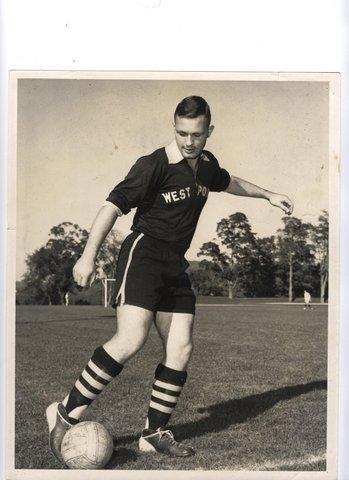
An Army A in Soccer: A lover of all sports, participating in 8 Clubs.  18th Engr Bde.  Project Manager NASA

RWI Army Soccer photo.jpg

Class : 1962 Company : L-1 Home Town: Lutherville, Maryland High School : Milford Mill Prior College Attendance : Georgia Tech, 1957-58 Date of Entry to Academy : July 1, 1958 Date of Graduation : June 6, 1962 Age at Graduation : 22 Cullum Number : 23912 Cadet Rank