 Dale & Barbara Kuhns
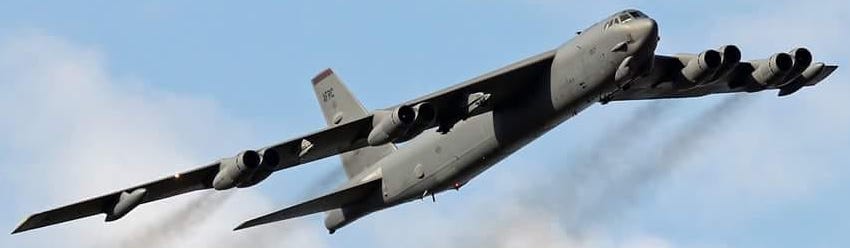
Ox – appropriate earning 6 Army As- 3 year starter as Football Tackle and Heavy Weight Wrestler. Drove B52s

Barry & Nancy Butzer
Barry & Nancy Butzer 

To get through the line I depended especially on three teammates and Classmates, Mike Casp (our team captain) – at Right Guard, Bill Whitehead – at Center, and Barry Butzer – at Left Guard. They were great Army football players. We lost Mike and Bill in Vietnam. Barry was Killed in a auto accident several years ago – – by Al Rushatz

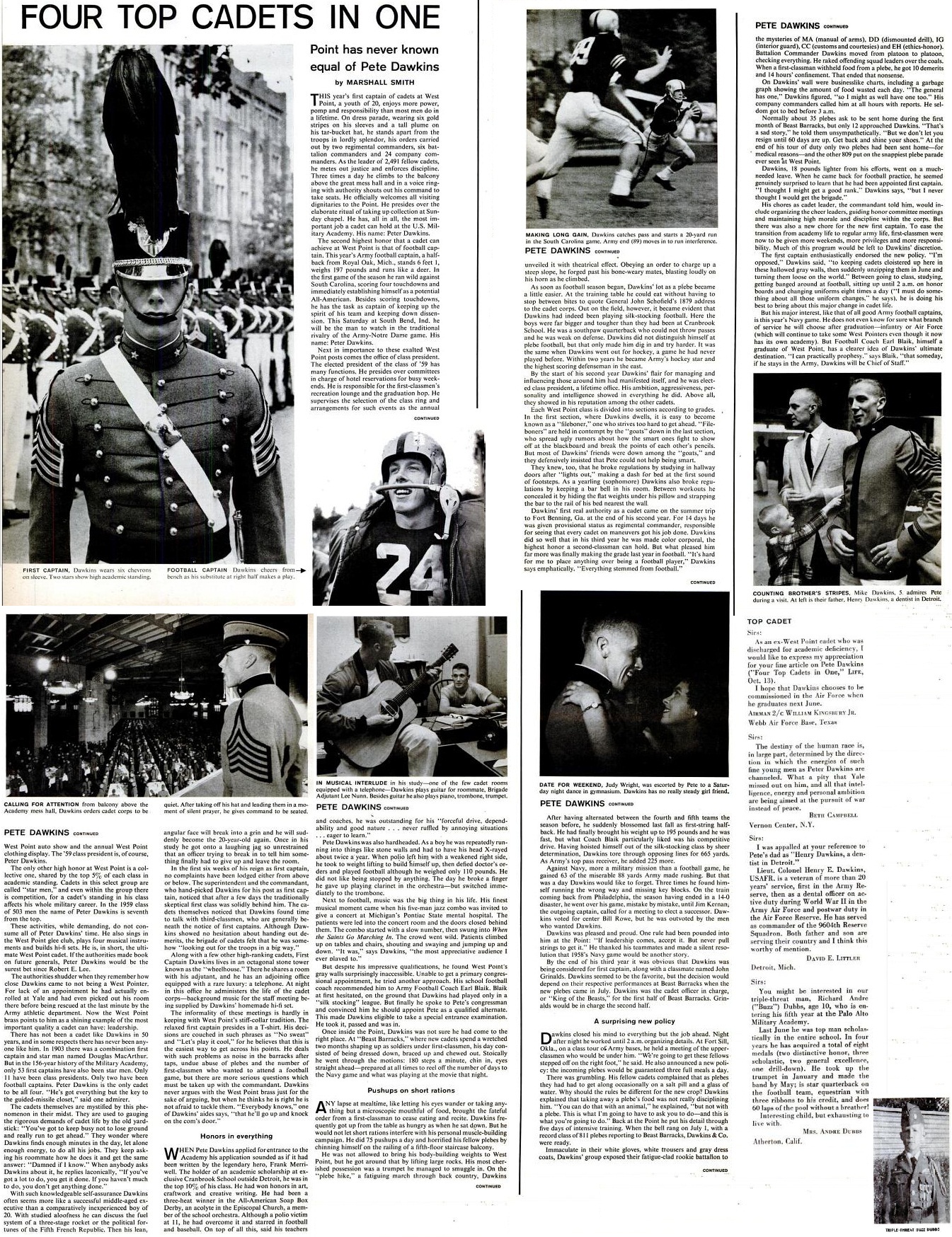
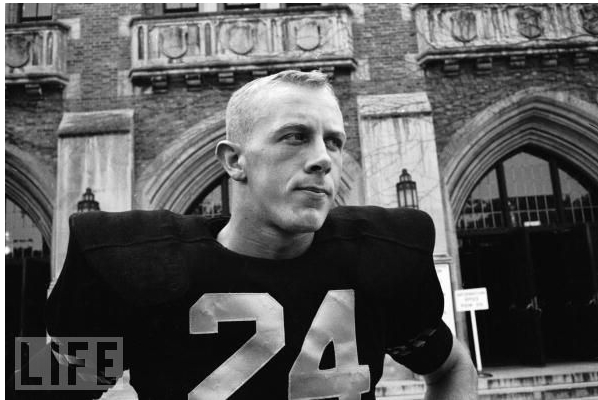
Pete Dawkins: A Call to Duty
By Greg Kelly November 9, 2012
The All-American Guy –
What can you say about Peter Dawkins?
Well, he’s a U.S. Army General, Rhodes Scholar, Husband and Father, Princeton PhD, Heisman Trophy winner, Monmouth County resident, West Point graduate, Michigan native, Wall Street financier. And one more thing – he’s a real gentleman.
I’ll admit up front to being impressed with the man. I was ever since hearing of him while I was a young journalist in Long Branch in the mid-1980s. I finally got to meet him during an interview in Rumson (and I even got to hold the Heisman Trophy). Here are some of his thoughts:
In the Beginning
When asked to account for his wonderful life, he says, “I’ve had more than my share of good fortune – and I do believe that early beginnings cast much of what you will become.” Peter Miller Dawkins, born March 8, 1938 in the suburbs of Detroit, successfully battled polio as a youngster.
West Point Football
He is the son of a dentist. “Dad always wanted to be a dentist even as a little boy,” Dawkins told me. Part-scientist, part-artist, Dr. Henry Dawkins lived to age 100 and -he was in full command of his capacities right up to the end. “I talked to my dad every day,” his son said. “Just an amazing guy.”
For early guidance, he credits his Depression era parents and a “wonderful” cigar-smoking grandma, Clara. Working on her rustic farm in Northwestern Michigan during many youth summers, Dawkins slopped pigs, milked cows, and planted fields. Ultimately his grandmother gave him 5 acres “for my own.” There he learned of self reliance and hard work. “As I look back, that time was of enormous importance to me,” he said. “Those values became the bedrock of my life.”
Dawkins said he “wasn’t keen on going to West Point.” It was his Cranbrook School football coach Fred Campbell, an ex-Marine, who believed in him. “He cared enough and thought the game was right for me and, without an appointment, he took me on a two-day drive to see the legendary Army Coach Red Blaik.” After a 5-hour wait for, and a 5-minute talk with Coach Blaik, Dawkins explained, “we went back to Michigan.”
“I have a secret and dangerous mission. Send me an Army football player.”
– General George Marshall
Somehow the “dumb-like-a-fox” visit worked and at age 17 he earned admission to West Point. Calling the US Military Academy both “intimating and inspiring,” Dawkins said he “threw himself into everything.” while there. “I was in total harmony,” he explained. “I loved the pressure. At West Point you learn to solve more and more complicated problems and by your senior year you’re pretty good at it. That’s the nature of the place. It’s a leadership laboratory.” For a role reversal, Dawkins went to Oxford on a Rhodes scholarship, where you learn to “ask the right questions.” A lifetime student, in 1979 he earned an Ivy League doctorate in public affairs.
Officer & Gentleman
Gridiron Greatness
After half a century, he’s still very involved with Army football, which he says has gone through a “fallow period recently – but it’s coming back” under Coach Rich Ellerson. “It’s very hard for the service academies to compete in the football factories of today,” Dawkins explained. “For West Point to play football on a national level, and as a national institution I think we must, things have to be done just right and smartly. We’re getting there.”
Dawkins calls himself a “football voyeur – I follow it all. It’s been a great part of my life.” Today, he serves as one of the selectors for the Harris Poll’s weekly ranking of college football teams. Those weekends are spent at home “awash” in college and NFL games.
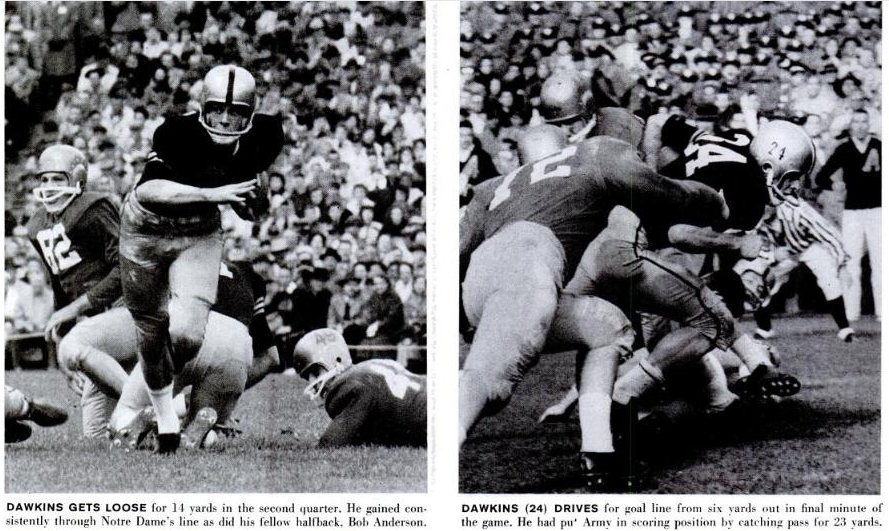
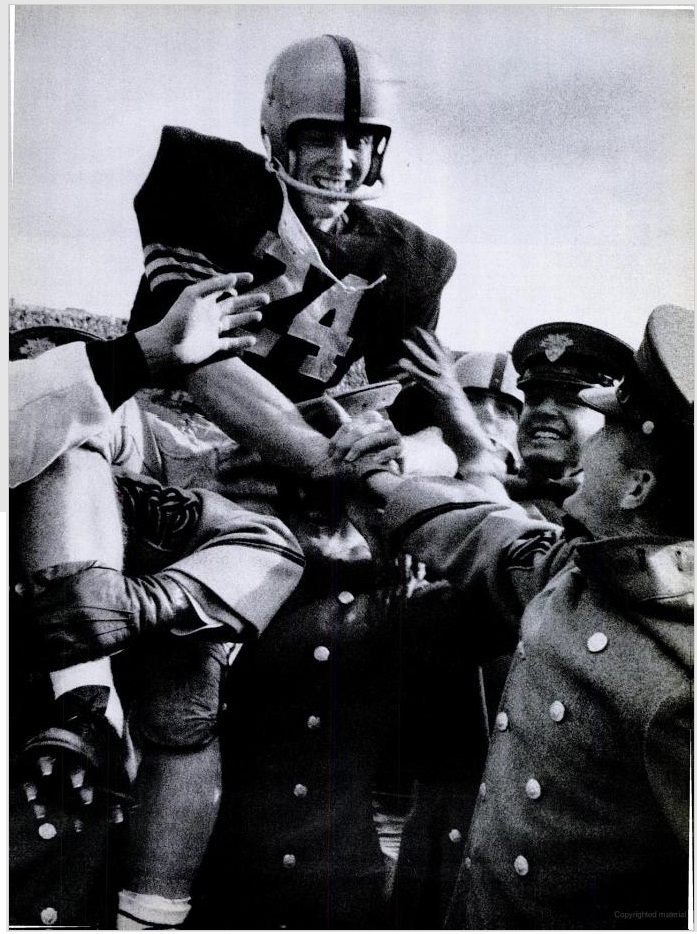
The year Dawkins won his Heisman Trophy (1958), the West Point football squad “was not highly touted,” he said. “And players on unranked teams don’t win the Heisman.” But thanks to some innovation by Coach Blaik, Army was ready to march. “He developed the Lonesome End formation, really the precursor to the modern wide receiver formation which dominates football today.” When West Point knocked off the nationally-ranked South Carolina 48-0 in the opener (with Dawkins scoring four TDs), there was no looking back. “It was just a magical season – we went undefeated. The last Army team to do so.”
Pete Dawkins and President Reagan in 1988.
Things where different then, he said. During college football season on weekends the New York Times would print several full pages on Army games. The team became the “darlings of the press,” he said. “And as captain I was propelled along with the team.” Even though West Point training and practice doesn’t allow for any egotism, Dawkins said he was both “surprised and proud” of his achievements. He explained that in his travels, people all over the world ask him about the Heisman Trophy.
Almost a Senator
Most Monmouth County residents will recall the Dawkins name from his unsuccessful run for the United States Senate in 1988. About a race that brought national headlines, Dawkins said: “I look back at that time as a very positive experience for me and my family. My son (Sean) and daughter (Noel) took time off from college and they and my wife traveled with me all over the state. They became rabid campaigners. The whole family came together.”
“Although I didn’t do all the preliminary things that one does to run statewide, it was the right time for me,” he said. “Less than a week from election day, the polls had us dead even, then we ran out of money.” Facing millionaire incumbent Senator Frank Lautenberg (and the vaunted political team of Carville and Begala), Dawkins captured more than 1.2 million NJ votes or about 45%.
War & Lessons
As a solider, Vietnam was “my war,” the general said. Commanding (editors note Advisor to Vietnamese Airborne – not commanded) mostly elite airborne units there, he adds that the “wonderful” result of that long conflict in Southeast Asia is the nation learned a lesson.
Life magazine, April 1966
“The vehement disagreement so many people had with the policy in Vietnam corroded their attitude toward people in uniform,” he explained. “Then, if you wore a uniform in the street, you really had people spit at you.” While working on the National Security Council in the 1970s, then Major Dawkins, said he would wear civilian clothes when he left the Pentagon to go to the US Capitol building for meetings”
“But people have learned some things,” he said. “Even if you violently disagree with the policy in Iraq or Afghanistan, you have the utmost regard for the military. You see that everywhere. In their own minds, the American people realized that this treatment of soldiers was misguided. They didn’t establish the policy; they’re just called upon to execute it.”
Although he says the military is always changing, some things seem to endure. “I genuinely believe that the men and women in uniform for today’s American armed forces are the best in history – the best in the history of any county,” Dawkins said. “They’×Ë˙re better trained, better equipped, more deeply committed, a higher Esprit de Corps. It’s extraordinary. These people have been tested. They know that they’re part of something bigger than themselves.”
The general and his wife, Judi, are very involved with helping America’s wounded warriors. The couple, who have a vacation home in Colorado, praises the worthy efforts of the Vail Veterans Program, which involves disabled vets in outdoor activities like skiing. “I sometimes think the volunteers get more out of it,” he said, “just to see the expression on the soldiers’ faces.”
Brigadier General Dawkins
Wall Street’s Lost Glory
Starting in 1983, he called his financial career “fascinating,- varied,” and joked that “it proved I couldn’t keep a job.” He did tours in investment banking, public banking, corporate banking, consulting, insurance, and wealth management. He recently launched a new commodities hedge fund, Flintlock Capital, with two West Point buddies.
Speaking about the financial markets, Dawkins said “it’s impossible to overemphasize the part that greed played in creating this historic catastrophe for the financial markets. Looking back, it’s all so clear. You had elite Wall Street firms doing very risking things – leveraging themselves on crazy, Las Vegas dice-rolling stuff.”
The creation of risky derivative investments where “mathematicians were put in charge of the business,” Dawkins explained, were a development that “no one understood.”
The Republican Dawkins gives credit to the Obama Administration for the – spectacular job it’s done on the financial meltdown. There was a period of 10 days when the world was coming apart and no one knew what to do,” he said. “You had to make tough decisions on deadlines with imperfect information -seeking to avoid total global financial collapse. It was a very profound time and I think that history will reflect well on how President Obama handled it. The administration made some remarkably able decisions.”
Dawkins today
That said, he remains a big backer of “America’s entrepreneurial spirit” and warned that “it’s something we could lose if we’re not careful.” He said that Congress does’t have the ability to control or solve complex market problems. “Only through entrepreneurial endeavors can we correct our economic problems. And I remain very hopeful that we will.”
No “Carpetbagger”
Like so many things in life, becoming a Monmouth County resident in 1987 was partly accidental. “My wife first came here to play tennis at the Seabright Lawn Tennis & Cricket Club (in Rumson) and she fell in love with the area.” Then living in Manhattan, the couple was seeking to branch out and “Rumson just worked for us – it’×Ë˙s been our oasis away from the pressure.”
Traveling a lot on business, Dawkins said the “magic” of the local commuter ferry made the area a “very attractive and practical place to live.” He relishes the fact that Wall Street can be just a 45-minute ferry ride away. “Rumson is just a different world,” he said. “We’re very blessed to be here.”
Dawkins likes to think that the community has embraced him as he has it. He greatly values his participation in several town military memorial events each year and offers a pep talk to the Rumson-Fair Haven High School football team before its annual Thanksgiving Day game. “A great bunch of kids,” he said. “Rumson is small town America – that has a real comfortableness about it,” he says. “We’ve made so many friends here.”
/////////////////////////
–
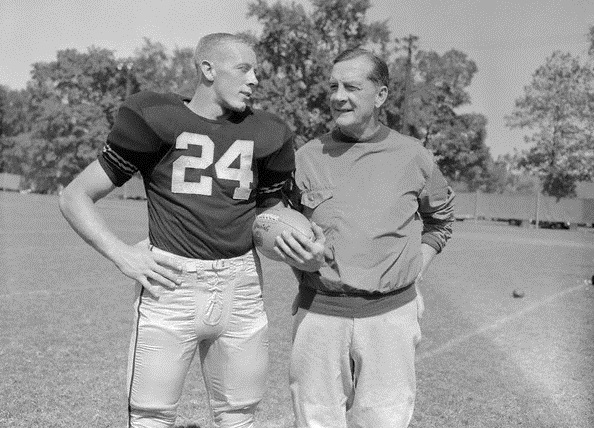
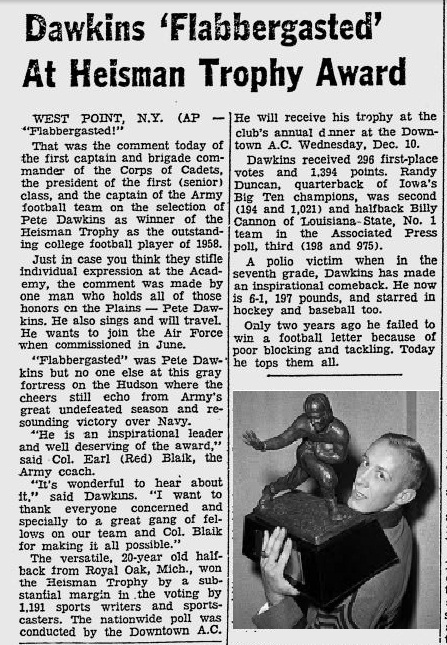
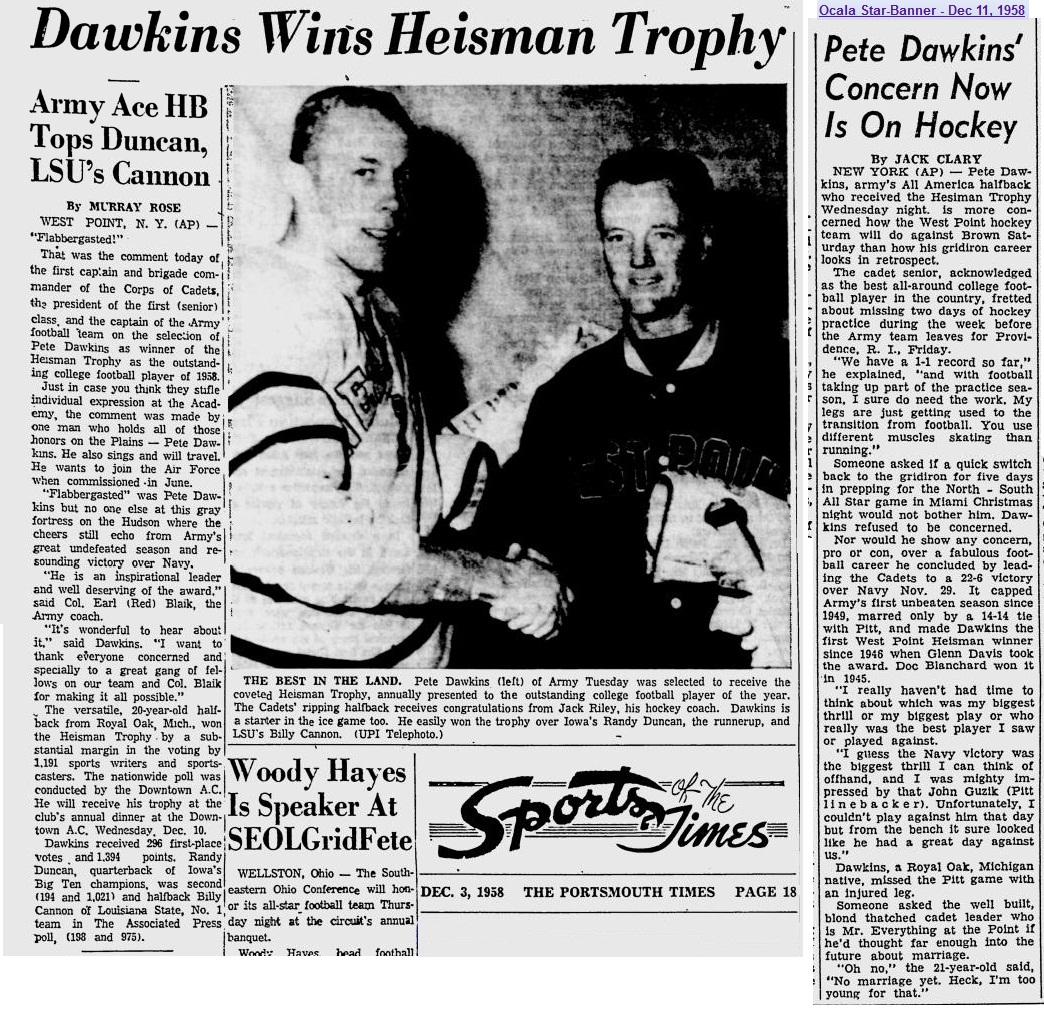
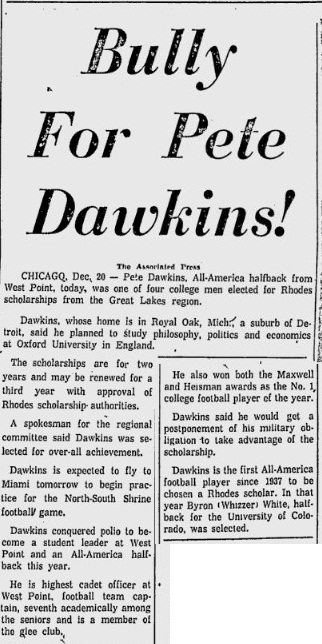
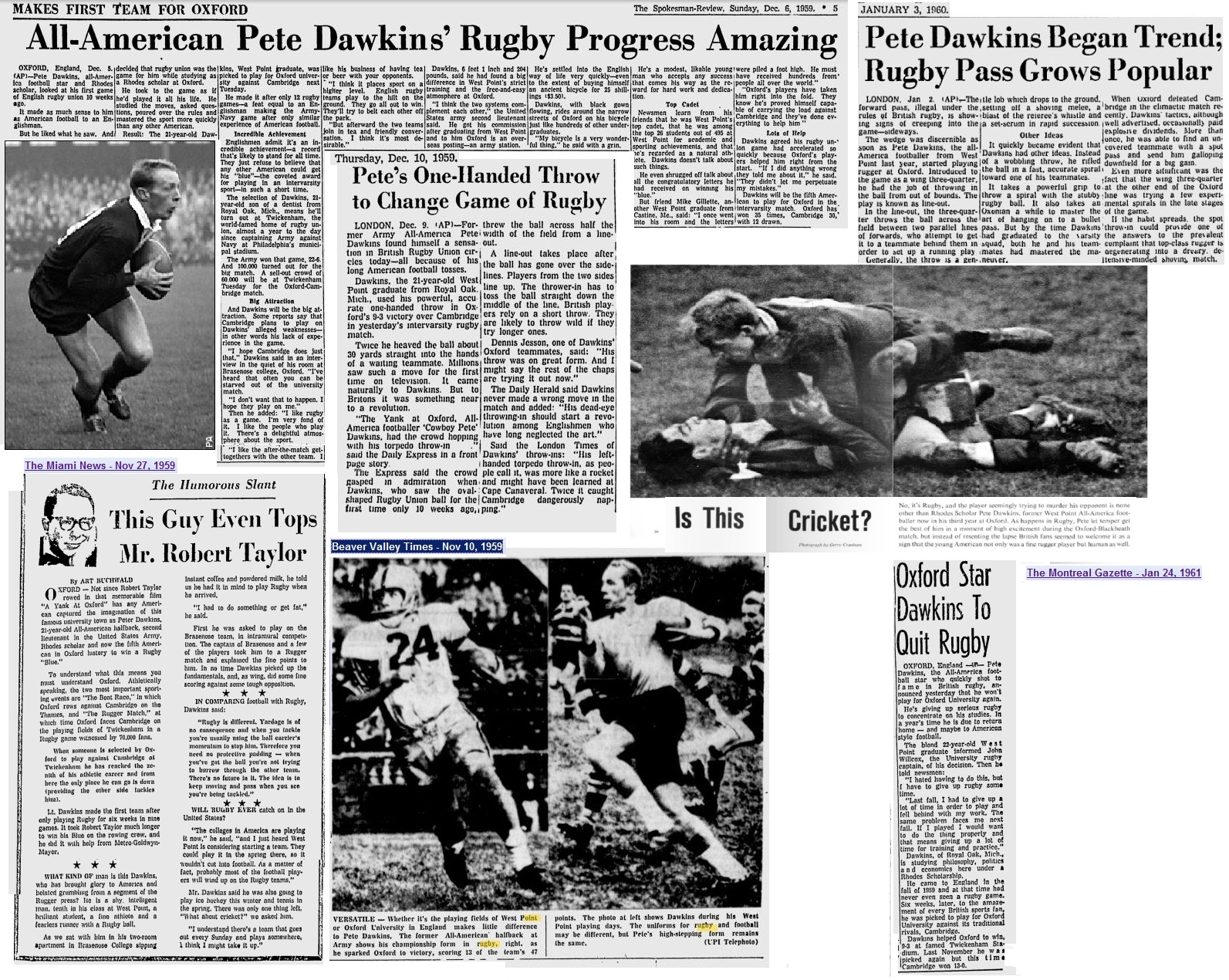
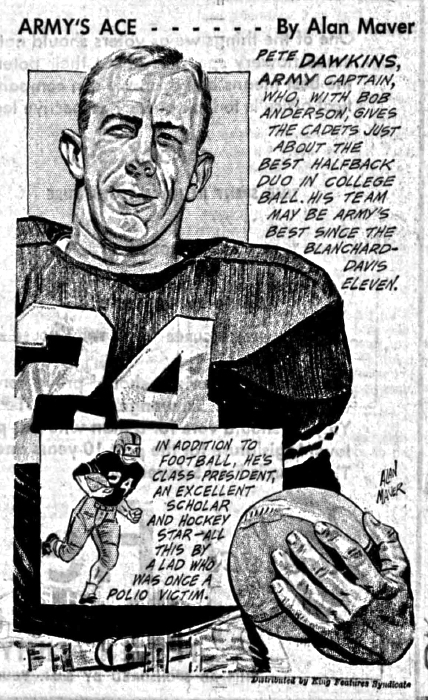
as depicted by sport’s cartoonists
–
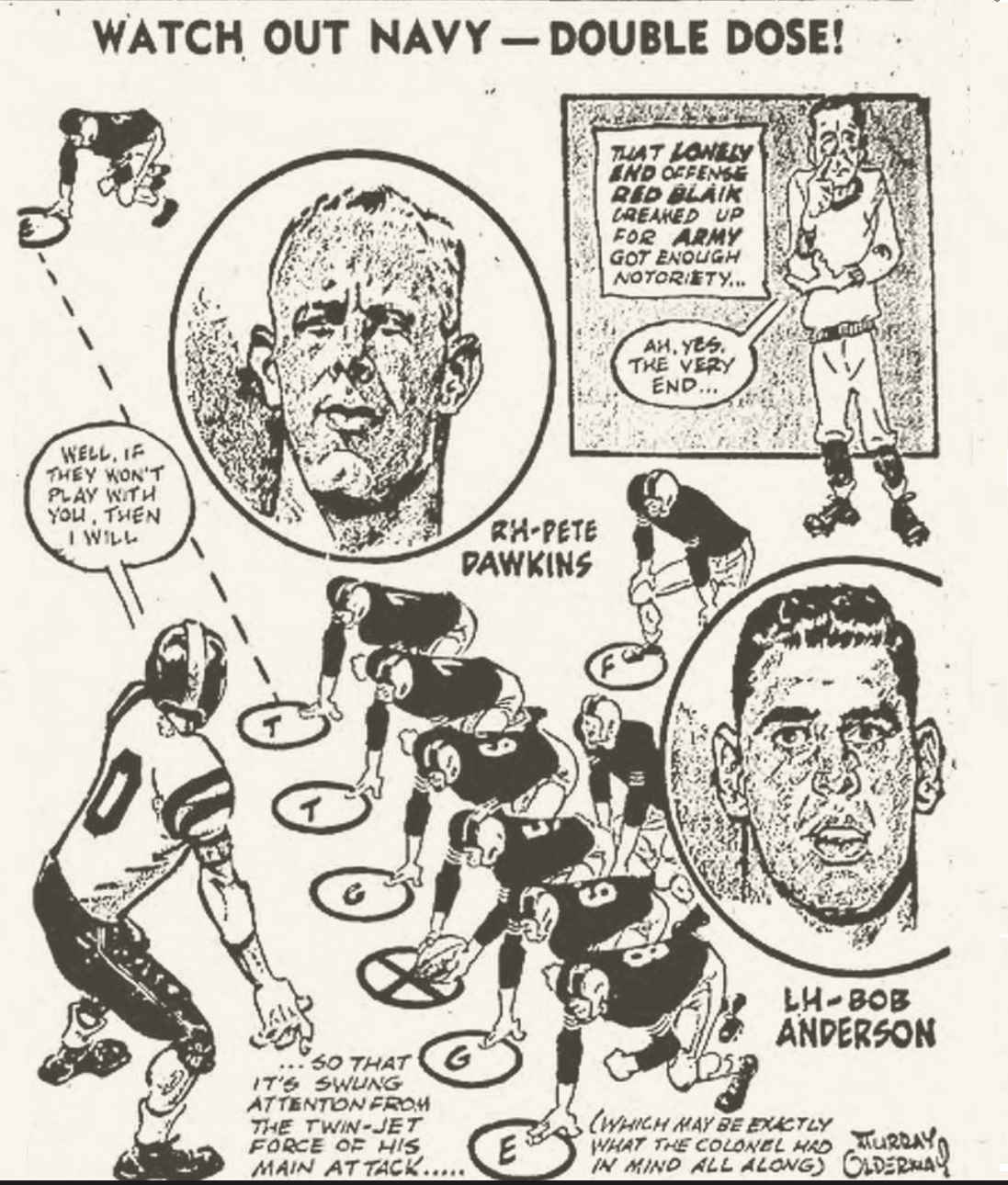
News articles posted by Russ “Skip” Grimm – Class of ’76
–
April 3, 2007
Bob Novogratz – Humble on the Hall of Fame
Rob O’Sullivan
GoBlackKnights.com Publisher
Talk about it in The 12th Knight
Most fans of Army football fit a different mold than your typical college sports fan. Sure, there is the desire for a competitive program, and Army fans can be as spirited as any fans in the country. But beneath the surface, most fans of Army Football are fans of West Point first. The history of the Academy, the representation of our troops overseas and in harms way, and the knowledge that at this place, on these grounds, young men and women make one of the noblest choices one can at a very young age ? the decision to commit to service to country.
It may have been said best by David Labensky, when he titled the book of his four year experience with the cadets of West Point, “Absolutely American”.
So goes the story of former Army football player Bob Novogratz, the 1958 Knute Rockne Award winner as the nation’s top offensive lineman, an All-American, and current candidate for induction into the College Football Hall of Fame.
The son of Austrian immigrants, Novogratz grew up in Northamton, PA, outside of Allentown. “I wasn’t a great athlete in high school,” starts the former Army standout, “I attended Blair Academy after graduation, and that year I grew quite a bit. I got bigger and stronger.”
The physical growth of Novogratz, coupled with his performance as a wrestler, had a lot of schools looking his way, including Penn and Virginia. But Novogratz had another influence that pushed him in the direction of West Point. “My father was an immigrant, and became a mill worker. He also drove people to the poles on election day. Through that, he got to know the Prison Warden ? who knew our local congressman, Francis Walters,” explains Novogratz. “Before you knew it, I was taking the test and got an appointment.”
At the time, the decision to go to West Point was not necessarily foremost on Novogratz’s mind. “I had other opportunities ? Penn, Virginia. But there was a lot of pressure from my father,” he begins. “When you say something like that, it does not relay what is really underneath it all. You have to remember, he was an immigrant, and that is why it was so important to him. He worked in the mill, and this was an important opportunity for me from his perspective. At the same time, he was not a very communicative guy, but I knew it was a very big thing to him. Not until later in life did it really occur to me why that was.”
Novogratz, though not recruited to play football, would now find himself on the banks of the Hudson, where he began his West Point career as a wrestler. For a guy that would go on to be the top lineman in the country, his first two years would not seem to lead down that path. However, legendary Army coach Red Blaik saw something in Novogratz, and by the spring of his yearling (sophomore) year, Bob was on the football field.
“Went I entered West Point, I was not recruited to play football,” explains Novogratz. “I had two knee operations in my first two years at the Academy. It wasn’t until the spring of my second year that I started playing. When I got to practice, I was on the very bottom of the ladder; there were thirteen of us competing for the top two starting spots, I was dead last. But I worked my way up.”
So how does a cadet with bad knees who was not recruited end up on Army’s football team, playing for Coach Blaik?
“I had been a wrestler and COL Blaik saw me and said something to the effect that ‘we oughta get that guy out to play football.’ I was talking to my brothers and their friends about it, and decided to go out that spring,” explains Novogratz. “I worked my way up the ladder and started by the next fall. My junior year, I was named to the all east team. We were 7-2 that year; we lost to Notre Dame and Navy. The Notre Dame game was the toughest loss; we were leading the entire game, and they came back and won with a field goal late in the game.”
During that era, players played on both sides of the ball. Though the accolades surrounding Novogratz’s play center around his offensive guard play, you can hear the pride he took in his defensive play as well.
“I was a guard and a linebacker. On the defensive side of the ball, I was making a lot of tackles. In the Penn State and the Notre Dame games, I had a total of 48 tackles. I don’t have the cards with the stats, but I had a lot of tackles. We had a very strong season, but I hurt my ankle before the Navy game and was not at 100%”
Novogratz’s first season was successful. The team had a strong season, and he distinguished himself as an all-east talent. However, the best was yet to come for Bob and the team of which he was a part. 1958 was a return to prominence for the Black Knights.
“The following year (1958) Blaik came out with the “Lonely End” offense. The “Lonely End” was (College Hall of Famer) Bill Carpenter. (College Football Hall of Famer) Bob Anderson had a great season as well. It was the year of (Heisman Trophy Winner, Pete) Dawkins, Anderson, and Carpenter,” Novogratz reflects. “I was the leading tackler that year as linebacker, and I also played offensive guard. The week against Navy, I was the (Sports Illustrated) National Player of the Week. We were undefeated; our record was 8-0-1, and we finished the season ranked third in the country. We were also third in the country for defense. Our other guys were great as well; we had a very well balanced team. In some games, like Notre Dame, I played 56 minutes. Statistics for that type of thing were not kept, but we all played both ways, and we would be on the field for over 50 minutes per game.”
The experience of being on such a talented team brought with it a great sense of camaraderie between Bob and his fellow teammates. “We were very close, especially the linemen, we always hung out and still get together even now, at least every few years. Though I don’t see them a lot, we are in touch.”
The most recent reunion for the 1958 team was in South Bend this past season, when Army visited Notre Dame. The 1958 team was the last Army team to beat Notre Dame at their home stadium.
“The 1958 team all got together at the Notre Dame game. We had the opportunity to tour the College Football Hall of Fame together, and to see the statue of Colonel Blaik. It really looked perfect, and we all enjoyed seeing it together,” explains Novogatz. “At the game itself, I was amazed by how many Army fans were there from all over the country. Pete Dawkins was at the event, and over the years Pete kept in touch with the Fathers and past Presidents of Notre Dame. Father Hesberg, former President of Notre Dame invited Pete up to his box at the game, and Pete brought along a few of his teammates. Father Monk Malloy was also there. Notre Dame has a ton of respect for Army, and that has carried through the years.”
Though he only played football at West Point for two seasons, Novogratz made his mark and became one of the most valuable members of a very talented team. He played some very good foes in those two years, but his two favorite opponents were Navy and Notre Dame.
“My favorite games were against Notre Dame and Navy. When we went to South Bend, in 1958, Notre Dame was one of the top teams in the nation. We went out and beat them on their home turf. The other big thing for me in this game was the following I had watching me. My hometown is a football town, and they all were big Notre Dame Fans; I had 40 people go out to Notre Dame to see the game. In addition, that game was such a big win, and seeing the cadets and Army Fans run onto the field was very exciting,” reflects Novogratz”. “The Navy game was just such a big game. Back in my day, we had a full week of hype. We had a bonfire, and there was stuff going on every night in the mess hall. When the team got ready to go, the Corps would line up, and we would all get on the bus. As the busses left, the whole corps would run after us all the way down to Thayer Gate. After that experience, you are flying high. Nobody has to say more than that, you are ready. In addition to that, I always knew that I had at least 50 sets of eyeballs from my hometown looking at every play; they would come down to see me in Philadelphia.
The 1958 game, Novogratz’s last playing for Army (he would play one more game, the East-West post-season all star game), was a memorable one for him. “It was an intense game. It didn’t start well; we never put the game out of sight. I recovered 3 fumbles in that one, and the hometown folks were happy.”
The 1958 team was Army’s last undefeated team, and it was also the last season legendary head Coach Earl “Red” Blaik would mentor the Black Knights. “Blaik was a serious guy, he didn’t establish a personal relationship with individual players for the most part,” explains Novogratz. “He had a flare for the dramatic. He had the same routine for every away game. One year, he had a problem with the team getting sick, there must have been some bad water on the trip. So from that point forward, we brought our own water to the games – he was somewhat superstitious. He always wore the same hat; before a game we would always go out for a movie and it would always be a shoot ’em up type of movie. Then we would take a walk as a team, and for the big game, he would pull out a telegram from MacArthur or Eisenhower. Like I said, he had a flare for the dramatic. I did not have a close personal relationship with him. In fact, I could remember every word he ever said to me, but we liked him. What made him great was that he brought out the best in us. He was a guy of high moral fiber. He was not a bag of laughs, but it worked. We loved the guy.”
The game in 1958 was different than it is now. In Novogratz’s mind, yesterday’s game seems like it would be more enjoyable than what he sees out there today. “I think the game was a lot more fun to play when I did. You are on the field all the time. Offense, defense, kickoffs, kick returns – you played the whole game. The idea of playing a limited role doesn’t seem as interesting. But the game has changed, things are more specialized now. People are bigger and much more physically capable.”
In terms of the overall experience for Bob at West Point, Football was only a part of it, though an important part. “In those days, you would go from football, to wrestling season, to graduation, then go on leave, then into the military. It all went by so fast. It was a fantastic experience, far beyond anything I had ever imagined. There were so many different parts to it ? the relationships with your fellow cadets, family coming to the games, and then afterwards – getting the honors, the Knute Rockne award.”
For Novogratz, the accolades at the end of the season seemed to have a greater impact on him by what it gave his father, rather than the notoriety it provided him. “My father was working in the mill, and he came down to Washington for the day when the (Knute Rockne) award was presented. At the event reception, I looked over and saw that my father was in a full conversation with (Speaker of the House) Sam Rayburn and (Vice President) Richard Nixon. They spoke for twenty minutes. It was just so exciting. We went to the East-West game in California and met a host of celebrities – Mel Allen, Casey Stengal, Babe Ruth’s wife. It was big stuff for a kid out of a small town in PA.”
Today, Novogratz still has the arms of his teammates around him as they have kicked off a campaign for his induction into the College Football Hall of Fame. He shard the process his supporters have gone through.
“Getting here has really been a combination of things. My teammates started it. After Bob Anderson was inducted, then the team said they would get behind my nomination. At the same time, Dick Stephenson (Class of ’57) talked to the president of the NFFCHOF (National Football Foundation College Hall of Fame), and asked if he could start a Hall of Fame Chapter in the Northern Virginia region. It is not something that was my idea, but it is very flattering. That is where the emphasis came from.”
The support Novogratz has received from a whole host of supporters is something that quite obviously has impacted him, and something he is very appreciative of. “The first year around, we had not done this and we did not know the process. Jack Morrison (Army ’59) pulled together letters from players and coaches from our team and players from other teams and compiled my story. Dick Stephenson sent it out to all of the presidents of the local Hall of Fame chapters. They review the potential candidates and bring in a total of about 75 candidates that are put on the ballot. I made the ballot in 2006. Then there is a vote by all of the members of the Hall of Fame. After the ballot, there is an additional review, and they make a selection of 11-12 guys. The ballot closes this year on April 4th, and they announce the inductees on May 9th.”
Novogratz is humbled by the support and notoriety in the process, and is most appreciative of the support of his peers. “My oldest daughter said it best ? you know, you don’t know how this comes out, but to get all of your friends, teammates, coaches, guys from other schools, other coaches, to come out for you in such a way, that makes it as special. She is absolutely right.”
Though it has been almost 50 years since Novogratz last suited up in an Army uniform, he still follows the team and takes great interest in Army’s success on the gridiron. “I follow the team closely. Every year, I get together with all of the former players for a golf tournament. I go to a game or two each season, and I go to the Football Awards banquet each January,” explains Novogratz. “You have to be disappointed in the progress of the team, even Coach Ross was disappointed. I think he was looking at this past year as the big win. I had the opportunity to meet and talk to Coach Brock at a local sports banquet recently. I think he is the type of guy people that people respond to. There are folks that don’t think we can compete with a pro style offense, but these are professional guys and if it doesn’t work they’ll adjust and do something else. I think Tim Walsh has a great reputation. I guess I am eternally optimistic, but you have to be as an Army Fan. I am still hopeful for the current team – we brought in a lot of good kids that give us a chance to compete. That is what Coach Ross did, he put the infrastructure in place. He filled the Prep School pipeline; he did a very good job recruiting. I think this could be the year that the offense really takes a step. We are going to be better.”
The story of Bob Novogratz does not end with his playing days at West Point. Though drafted by Baltimore in 1958, he decided to maintain his commitment to service to country. He went on to serve in the Army for 30 years, in between earning a Masters degree from the Wharton school. He and his wife have seven successful children who have taken all life has to give. He is what West Point stands for, ensuring that opportunity is available for any individual who wants to work at it and take it.
“My story is of two things,” starts a pensive Novogratz. “It is of encouragement, at prep school and each step along the way; and it is about this country. My father was an immigrant who worked at a mill. I am then given an opportunity and ended up a Colonel with 30 years of service, and now my kids are doing great things. My father, me and my kids, to me it is a great American Story.”
It absolutely is.
GoBlackKnights.com wishes Bob Novogratz all the best as he is considered for induction into the College Football Hall of Fame.

ArmyFB_1958_BobNovogratz_WashingtonPaObserver_Dec41958
Maggie Dixon contributed much to West Point athletics
By RUSTY WILKERSON — Class of 62 Can Do
Back on March 14, I wrote about my quandary when the Army women were about to meet the Lady Vols in the NCAA tournament and what I predicted would happen. As one of my readers wrote, my forecast was right on target. Army got clobbered, both teams played with heart, and Candice Parker got not one dunk but two – and I watched the whole game from start to finish.
What I didn’t foresee – and no one else did – was the sudden and unexpected death of Maggie Dixon, the Army coach, of a heart problem at 28.
I didn’t know Dixon, but like a lot of other West Point grads I followed the whole, sad saga of her death as best as I could on the West Point Web site, ESPN, etc.
In these days death is a fact of life for the cadets and faculty at West Point. That same week a young captain (and pilot of an Apache gunship) was killed in Iraq.
Somehow though, Maggie Dixon’s death was even more tragic, if that can be. After all, the military academy is in the business of training young men and women to lead our soldiers into harm’s way. But a basketball coach – and one who wasn’t much older than her players and in her first year as a head coach? It shows us how life can be totally unpredictable (and unfair).
The superintendent said she stood out as a leader in “a house of leaders” and that she left behind 20 more “Maggies.” One of her favorite comments to her players was “Adversity, ladies, learn to deal with it.” From their comments at her funeral and memorial services, she has made a lasting impression on all of them that they will carry for the rest of their lives – not a bad thing for someone starting a military career.
I would bet they’ll be the team to beat in the Patriot League next year. Instead of winning one “for the Gipper,” it’ll be “win this one for Maggie.”
But why, other than the obvious sadness of a life cut so short, the major impact on the West Point community and, more to the point, someone like me, who is so far removed? I’m a little slow, but I finally figured it out.
Army, in the last 30 or 40 years has not been much of a “player” in the collegiate sports world as compared to the “days of old” as my kids call it. The days of the lonesome end, and Heisman award winners Dawkins, Davis and Blanchard are long gone. Most of the major stars in the world of college athletics probably couldn’t make the grades to get in one of the service academies. Even if they could, they can’t compete for the “big bucks” as a professional for five years after they graduate.
Then, not from the football field where one would expect – and seemingly out of the blue – comes a young, first-year head coach who brings, of all things, through the Army’s women’s basketball program at a predominantly male institution, excitement back into Army athletics, something no coach has been able to do in decades. (I read in one of the columns eulogizing her that she was “a Pat Summit in training.” Her brother, Jamie Dixon, coach at Pitt, said after she was buried, “They’ll never look at women the same way here.” He may be right.
Maggie Dixon was buried in the West Point Cemetery with some familiar (and not too familiar) names: Gens. Winfield Scott, George Goethals (Panama Canal), Lucius Clay, George Custer, William Westmoreland, “Molly” Corbin (“Molly Pitcher” of Revolutionary War fame), Col. Ed White (astronaut), and a lot of others that most of us have never heard about (including one of my roommates).
Maggie Dixon’s grave is next to Glenn Davis (of Davis and Blanchard fame) and Earl “Red” Blaik. Not bad company for a coach to spend eternity with!
Rusty Wilkerson is a Kingsport resident. E-mail him at wilkersonbr@earthlink.net. Article reprinted with permission from the Kingsport Times News, Kingsport, TN.
Class of 1963

Army’s only two-time national champion in wrestling, Mike Natvig was crowned national champion and All-America at 147 pounds in both 1962 and 1963. One of the most dominant wrestlers in Army history, he posted a career record of 47-7-1, which translates to a remarkable winning percentage of .864.
Natvig was particularly dominant en route to his individual title in 1963, yielding a combined total of three points to five different opponents. A year earlier, he became one of only two wrestlers to defeat Lehigh great Kirk Pendleton, besting his rival in the 1962 NCAA Championship finals.
A consistent force on the national scene throughout his West Point tenure, Natvig qualified for the NCAA Championships during all three years of his varsity career and posted a flashy 10-1 record in NCAA Championship competition.awaiting data
Buzz & Jeannine Kriesel
Against Wisconsin he was head butted. The Ref asked if he was OK, Buzz told Coach to fix him. Coach Alitz stuffed his nose with tissue, waved his ever ready ammonia capsule, and Buzz stepped back on the mat. When Buzz grabbed his opponent, lifted him high in the air, the Ref said let him down gently. Buzz did and pinned him, providing 5 points of the 23 and 8 win. On Christmas leave, on an unheated Air Force transport, Frank Reasoner’s feet were frozen, Buzz unzipped his dress jacket, and had Frank push his feet against Buzzy’s chest. Oh lastly, Jeannine was in the stands at Wisconsin, Buzz might have executed as he did for her benefit. (Write up by a Team Mate)

Bob & Janice Loupe
Bob’s keen sense of humor and loquacious personality always kept the basketball team in high spirits and the airways of KDET lively.
The 1961-62 team was 10-11 but we will long remember how we beat Navy in the Field House. Stew had fouled out and the straw that stirred the drink for the Army offense, Al DeJardin, had also been disqualified. No matter. One of the five players we had on the floor was Bob Loupe — can anyone name the others? — and his famous scoop shot in the last few seconds was all we needed. Absolutely unforgettable. Navy did have one more chance, but I think they threw the ball away. by Dave Phillips
The Howitzer lists Soccer as a Plebe, and Basketball all 4 Years, with Numerals, and a Monogram as a Yearling, Cow and Firstie – We all know there was an Army A for the Navy win.
“Who can forget Bob Loupe and his winning basket against ‘the swabbies’ in the field house that cold Saturday afternoon in 1962 – I still see it crystal clear. Al DeJardin and me sitting on the bench, fouled out. And Loupe, eyes as wide as silver dollars, not even sure where he was, dribbling the length of the court and scoring the winning basket with just a few seconds remaining. Against Navy! Unforgettable. He got a Major A for that. I can’t tell you how many times I’ve told that story to complete strangers. I tell it every time the subject of basketball comes up in any context, and it gets better with each telling. You may know, Bob’s buried in a little country cemetery in Savanah, MO about 20 miles from Leavenworth, KS where my son lives. Carolie and I have visited with Bob in that cemetery and we’ve talked to him about beating Navy and other memories. He’s never forgotten that singular event and neither have I.” By Stu Sherard

 7/12/1965
 Frank Reasoner & Sally Nordstrom

3d Recon Bn, 3d Mar Div
Frank once told me that he wanted 3 things – 30 Years in the Marine Corps, own a bar outside the Main Gate of a Marine Base and Earn the Medal of Honor. Frank was Killed in Action 12 July 1965. He was Awarded the Medal of Honor for his actions – – by a Wrestling Teammate
Just a note about my Team Mate – I had a vicious cross face which I once practiced against Frank. He was meaner than I – Frank bite me.

Class of 1962
B Squad 150
123 Pound Wrestler – My Teammate
Brigade Boxing Champion 4 years running.
Reasoner Hall of Arvin Gym
USS Reasoner a Navy Destroyer
Camp Reasoner
Rank and organization: First Lieutenant, U.S. Marine Corps, Company A, 3d Reconnaissance Battalion, 3d Marine Division.
Place and date: near Da Nang, Republic of Vietnam, 12 July 1965.
Entered service at: Kellogg, Idaho.
Born: 16 September 1937, Spokane, Wash.
Citation: For conspicuous gallantry and intrepidity at the risk of his life above and beyond the call of duty. The reconnaissance patrol led by him had deeply penetrated heavily controlled enemy territory when it came under extremely heavy fire from an estimated 50 to 100 Viet Cong insurgents.
Accompanying the advance party and the point that consisted of 5 men, he immediately deployed his men for an assault after the Viet Cong had opened fire from numerous concealed positions. Boldly shouting encouragement, and virtually isolated from the main body, he organized a base of fire for an assault on the enemy positions. The slashing fury of the Viet Cong machinegun and automatic weapons fire made it impossible for the main body to move forward. Repeatedly exposing himself to the devastating attack he skillfully provided covering fire, killing at least 2 Viet Cong and effectively silencing an automatic weapons position in a valiant attempt to effect evacuation of a wounded man.

As casualties began to mount his radio operator was wounded and he immediately moved to his side and tended his wounds. When the radio operator was hit a second time while attempting to reach a covered position, he was courageously running to his aid through the grazing machinegun fire when he fell mortally wounded.
His indomitable fighting spirit, valiant leadership and unflinching devotion to duty provided the inspiration that was to enable the patrol to complete its mission without further casualties. In the face of almost certain death he gallantly gave his life in the service of his country. His actions upheld the highest traditions of the Marine Corps and the U.S. Naval Service. He was awarded the Medal of Honor.

Army charges to 45-27 Victory in the Army – Navy Prep School Football Game. Reasoner Trophy presented for first time.
Ft. Monmouth, NJ, Saturday, 15Nov08.
The gray skies and intermittent rain did nothing to dampen the spirits of the future cadets of the USMA Class of 2013, who charged to a 45-27 decisive victory over the future midshipmen of the USNA Class of 2013 at the Annual Prep School football game at Ft. Monmouth, NJ on Saturday.
Army scored first, early in the first quarter, and Navy came back, minutes later to tie the score at 7-7. Army scored again, and Navy was never able to catch up. Army took advantage of the speed and agility of its running backs and free safety to rack up the yards and put points on the scoreboard. The Army QB did well in the passing game, also.
Navy’s QB had a good arm, with good distance, but Army pass defense kept the Navy receivers from completing many of the long passes.
The final score reflects the excitement of the game. Army scored six touchdowns and a field goal, and Navy had four touchdowns, and a failed 2-point conversion.
The game also marked the first presentation of the 1LT Frank S. Reasoner Trophy to USMA Prep. 1LT (USMC) Reasoner (USNAPS ’58 / USMA ’62) was posthumously awarded the Medal of Honor for conspicuous gallantry near Da Nang, Vietnam. The trophy will be awarded each year to the winner of the Army – Navy Prep School Game, and is analogous to the Commander-in-Chief’s Trophy for the winner of the Army – Navy – USAFA football series for the Service Academies.
The Trophy was inspired by discussions between the Commanding Officer of USNAPS, Capt. L. Hart Sebring, and the Commandant of USMAPS, COL Tyge Rugenstein. The final impetus came from COL (USMC Ret) John “Rip” Ripley, USNAPS ’58 / USNA ’62, with members of USMA ’62; and was accomplished in the last weeks before Ripley’s unexpected death. Members of the USNAPS ’58 class matched a generous donation from an anonymous USMA ’62 graduate to create the trophy and deliver it to the game.
At the presentation ceremony, USNAPS ’58 / USNA ’62 were represented by LtCdr. Barry Ketner; and USMA ’62 by John Fee and COL (Ret) Bill Dieal.
FRANK S. REASONER 1962
Cullum No. 24302-1962 | July 12, 1965 | Died in Da Nang, Vietnam
Interred in Kellogg, ID
“Encourage us in our endeavor to live above the common level of life.” These words from the Cadet Prayer seemed to be the code by which Frank Reasoner lived—and died. Certainly on 12 July 1965, half a world away, in a nottoopopular conflict, Frank “lived above the common level of life,” as he laid down his own life in order that another might live. His supreme sacrifice was in every way consistent with his steadfast devotion to duty and his concern for his fellow man.
Born in Spokane, Washington, on 16 September 1937, Frank began his military career on 2 June 1955 when he enlisted in the U.S. Marine Corps. Subsequently he won a competitive appointment to the Military Academy and entered with the Class of 1962 in July 1958. His four years at the Academy were not easy ones. Unlike most of his classmates Frank had been separated from the academic environment for a few years, but his drive and determination carried him over hurdles where lesser men would have stumbled. Although the work at West Point was hard and demanding, Frank still found time for extracurricular activities, particularly sports. He was, above all, a superb boxer, winning four different weight classes, a record unmatched by any other cadet. So high were the standards that Frank set for himself in any competition that he managed to excel in any sport he tried. Nothing short of perfection satisfied him, a competitive spirit that carried over into his short, commissioned career. At graduation he chose to be commissioned in the Service he loved the most, the U.S. Marine Corps.
After a six month tour at Quantico, Virginia, during which time he married Sally Jo Dimico, Frank took his bride to Hawaii where they were stationed with the 1st Marine Brigade at Kaneohe Bay, Oahu. A year later, their son, Mickey, was born.
Meanwhile, several thousand miles away, political unrest and conflict in South Vietnam were beckoning Frank to his destiny. In March 1965, the 1st Marine Brigade set sail for Vietnam. During the four months preceding his death, Frank distinguished himself in combat, earning the respect and admiration of his subordinates, his contemporaries, and his superiors. On 12 July, Frank met his death while saving another Marine’s life. It was a tragic loss to his family and to his many friends. His final sacrifice earned for him his country’s highest award for valor, the Congressional Medal of Honor.
On 29 August 1965, Camp Reasoner was dedicated in Danang, South Vietnam, as a lasting tribute to Frank’s selfless devotion to duty. The hand lettered sign at the gate reads:
This camp is dedicated in honor of First Lieutenant Frank S. Reasoner, USMC, whose courage, honor, and devotion were displayed “above and beyond the call of duty” during his valiant action at An My in the Da Nang Sector of Vietnam on 12 July 1965, while serving as commanding officer of Company A. First Lieutenant Reasoner sacrificed his life to save one of his wounded Marines. “Greater love hath no man.”
On 31 January 1967, in the office of the Secretary of the Navy, the Medal of Honor was presented to Frank’s widow and son. The citation accompanying the medal reads:
“For conspicuous gallantry and intrepidity at the risk of his life above and beyond the call of duty while serving as commanding officer, Company A, 3d Reconnaissance Battalion, 3d Marine Division in action against hostile Viet Cong forces near Da Nang, Vietnam, on 12 July 1965. The reconnaissance patrol led by Lieutenant Reasoner had deeply penetrated heavily controlled enemy territory when it came under extremely heavy fire from an estimated 50 to 100 Viet Cong insurgents. Accompanying the advance party and the point that consisted of five men, he immediately deployed his men for an assault after the Viet Cong had opened fire from numerous concealed positions. Boldly shouting encouragement and virtually isolated from the main body, he organized a base of fire for an assault on the enemy positions. The slashing fury of the Viet Cong machinegun and automatic weapons fire made it impossible for the main body to move forward. Repeatedly exposing himself to the devastating attack, he skillfully provided covering fire, killing at least two Viet Cong and effectively silencing an automatic weapons position in a valiant attempt to effect evacuation of a wounded man. As casualties began to mount, his radio operator was wounded, and Lieutenant Reasoner immediately moved to his side and tended his wounds. When the radio operator was hit a second time while attempting to reach a covered position, Lieutenant Reasoner, courageously running to his aid through the grazing machinegun fire, fell mortally wounded. His indomitable fighting spirit, valiant leadership, and unflinching devotion to duty provided the inspiration that was to enable the patrol to complete its mission without further casualties. In the face of almost certain death he gallantly gave his life in the service of his country. His actions upheld the highest traditions of the Marine Corps and the United States Naval Service.”
Here, certainly, was a Marine who “lived above the common level of life.”
—A Marine classmate
Al & Lynda Rushatz 


6 Army A’s An All American in Football & Wrestling. Inspirational Guide in Creating the 62′ Room in Arvin Gym. 145th Avn Bn RVN, Def Rep India, 8th Cav RVN, Co 269 Avn Bn, G3 XVIII Abn Cps. DPE USMA. (Flew Mission after Mission attempting to contact Glen Blumhardt when the Vietnamese Regiment Glen was Advising was over run. Glen led his RTO out, the only survivors)
Doug Blubaugh – 1960 (160.5 Pounds) Olympic – told me “I would never have won the Gold Medal if it were not for Al Rushatz”. Day after day at the far end of our Wrestling Room Doug and Al would go at it.
He came to West Point from the Lehigh Valley of Pennsylvania and, during four years as a cadet, set the standard for athletic prowess and physical development. He was recognized as an All-American in two major Academy sports and earned both the Army Athletic Association Award for most valuable service to athletics during his career as a cadet and the 306th Infantry Award, presented in the name of the late Walter B. Tunick, for excellence in physical education. He put his stamp on cadet physical development during 10 years in the USMA Department of Physical Education, the last six as Deputy Head of the Department. This latter period was marked by unprecedented improvement in cooperation among the Dean, Commandant, and Director of Athletics and such initiatives as the Master Fitness Trainer program and realignment of responsibility for competitive cadet clubs. He conceived of and designed the ’62 Room in the Cadet Gymnasium, lauded by three Superintendents as the finest class gifts of their tenures. During this period, he received a President’s Council on Physical Fitness and Sports Award.

He was a three-year starter in football in an era of shorter careers and seasons, one-platoon football, and competition against the likes of Nebraska, Penn State, and Michigan. Running from the fullback position, he led the team in scoring and rushing two years and graduated seventh in career yards rushing. He was selected by the American Football Coaches Association as an All-American in 1961. He was inducted into the Lehigh Valley Chapter of the National Football Foundation and College Hall of Fame in 2002. He played on offense and defense in the 1962 East-West College All Star game in Buffalo, NY, on June 29, 1962.


Doug Blubaugh Army Assistant Wrestling Coach had this say about Al – – “If it were not for Al Rushatz I would never have won my Olypmic Gold Medal”. When Al was a Plebe & Yearling, Doug practiced against him daily. Doug also stated “Al would have been a National Champion if he had not torn up his knee”

Within days after the Navy football game, he would drop from his 195 pounds football weight to begin the wrestling season at 177 pounds. In three years, he lost but once in dual meets. He was the Eastern Intercollegiate Wrestling Association champion at 177 pounds in 1960. He became Army’s second wrestling All-American with his third place finish in the 1960 NCAA tournament. He was an inspirational team captain First Class Year, drawing fans to matches just to see him compete, while battling crippling injuries.
Unlike most athletic programs, Army’s is effective in supporting the purpose of the institution: the development of leaders of character for careers in the armed forces. This man embodies that concept. He was a hero to his classmates and a role model for all four cadet classes. Nearly every day during his 4 years he either practiced or competed. At graduation he had earned 6 Army A’s and 3 Gold Stars.

The last entry under Credits is the dedication of this site to Al.
http://forwhattheygaveonsaturdayafternoon.com/credits
Al’s contribution to the Football & Wrestling Teams are addressed at
http://forwhattheygaveonsaturdayafternoon.com/wp-1962/class


At his Induction into West Point’s Hall of Fame, he thanked his blockers Bill, Barry and Mike (Center, and 2 Guards – as most of his runs were right up the Gut); mentioning that we had lost all 3 – bill & Mike our Captain – Vietnam and Barry in a car accident.
Army 9 – Syracuse 6
Ernie Davis was to play along side Jim Brown with the Cleveland Browns in 1962. Al was with Ernie for a couple of days at the 1962 East-West College All Star game in Buffalo, NY, on June 29, 1962. Ernie never played in the Game and died shortly thereafter. Al played both offense and defense. He might not played as much if Ernie Davis had not been diagnosed with Leukemia.
Glen & Ann Blumhardt 


Football, 2 Army “A”s, Stars. 1st Regimental Comd, Vice President; 325th Airborne Inf, USMA, MACV, 101st Airborne, CO 1/30th Inf, ODCSO USAREUR, ODCSOPS, G3 XVIII Corps. When he and George closed on Mike Ditka, they stopped him in his tracts. As Mike jogged back to the Pittsburg huddle, George and Al helped him to his feet. Spitting out most of 5 teeth, all he could say was “Well at least we stopped him”. Defensive Back of the Week. Believed using a pencil with eraser to do Crosswords was cheating. Pen only. (Al Rushatz flew Mission after Mission attempting to contact Glen when the Vietnamese Regiment Glen was Advising was over run. Glen led his RTO out.)
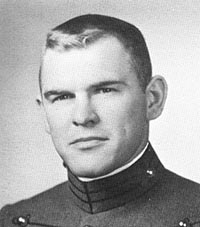


This snapshot of Glen Blumhardt’s life was captured by the 1940 U.S. Census.
When Glen Blumhardt was born about 1937, his father, Emil, was 36 and his mother, Olive, was 38. In 1940, he was 3 years old and lived in Stuntz, Minnesota, with his father, mother, brother, and sister.
GLEN ALGER BLUMHARDT E-1 Glen Mondovi, Wisconsin. As one of the “old men” of the Class of ’62, Glen arrived at USMA after two years of college and a two-year hitch in the Army. Dividing his time between the classroom and the football field there were ups and downs to be shared in both. A “Yankee” with a weakness for North Carolinian southern hospitality, he will be a credit to the Academy and his class. Captain 1; Stars 3; Football 4, 3, 2, Numerals 4, Major A 3, 2; Wrestling 4; Class Committee 3, 2, 1, Vice-President 1; Spanish Club 3; Parachute Club 4; Automobile Committee, Chairman.
BS-V, LM, DSMN CIB
GLEN A. BLUMHARDT 1962
Cullum No. 23889-1962 | February 24, 2019 | Died in Chapel Hill, NC
Interred in Arlington National Cemetery, VA
Glen Alger Blumhardt was born in Hibbing, MN on August 5, 1936, the youngest child of Emil and Olivia Blumhardt. In l943, the family moved to Mondovi, WI where Glen excelled in academics and sports at Mondovi High School, graduating in l954.
Recruited for football and basketball, Glen attended the University of Wisconsin – Eau Claire, where he played football. After two years, and in search of warmer climates, Glen enlisted in the Army as a paratrooper and arrived at Fort Bragg, NC as an infantryman in the 325th Airborne Battle Group in the 82nd Airborne Division. Serving in a rifle company, Glen quickly rose to the rank of corporal and was subsequently selected to attend the West Point Prep School.
Glen arrived at the Prep School at Fort Belvoir, VA in the fall of 1957. It is universally understood that all men, regardless of rank or position, pull charge of quarters (CQ). Without exception, Cadet Company Commander Blumhardt assumed the watch one April night in 1958 with the final task of playing ‘reveille’ at sunrise. According to Jim Ellis (then cadet company first sergeant), Blumhardt deviated from protocol and opted to sound First Call with the Everly Brothers’ recent hit “Wake Up Little Susie,” to the delight of his fellow cadet candidates. The senior TAC NCO, known to be somewhat humorless, was not nearly as entertained and summarily relieved Glen of his weekend liberty.
Glen entered USMA where he played football for three years and then assisted from the sidelines as an assistant/position coach his final year, due to eligibility constraints from having played ball at Wisconsin. He also excelled academically, earning stars during Third Class year.
Respected by his peers and superiors alike, he was elected as class vice president and served as a regimental commander, having the honor of escorting Mrs. Douglas MacArthur during the general’s “Duty, Honor, Country” address to the Corps in May 1962. Glen, along with classmates Jim Ellis, Mike Grebe, and George Kirschenbauer also attended General MacArthur’s birthday celebration at the general’s residence during that same time frame.
Glen developed many close friendships during the course of his cadet years that lasted the rest of his lifetime; he once remarked about a time when he broke both thumbs playing football and could not use either of his hands saying, “It’s predicaments like these when you truly find out who your friends are.”
Glen graduated as the “Old Man” of the class at the age of 24 and was commissioned Infantry.
Upon graduation, Glen married his sweetheart, Ann Elaine Barker of Hillsborough, NC at the West Point Cadet Chapel. They honeymooned with Al and Linda Rushatz and then reported to
Fort Benning, GA for Infantry training with many fellow grads. There, he welcomed the birth of his daughter and graduated as the distinguished honor graduate of Ranger School.
Following Benning, Glen returned to the 82nd Airborne Division. One evening, while watching the Army-Navy Game on television at home, Glen was telephoned by the XVIIIth Corps Commander (Lieutenant General Westmoreland), who was frustrated by the score and wanted Glen to explain what the Army Football Team was doing. Perhaps this call prepared Glen for his next assignment at USMA as the Commandant’s aide de camp. Next, he and Ann traveled across the country to Monterey, CA for language school in preparation for a tour as an advisor in Vietnam.
As a military advisor with the 7th ARVN Regiment, located at the Michelin Rubber Plantation (1965-66), Glen was supported by dear friend and teammate Al Rushatz, piloting aircraft from nearby Phu Loi. Their friendship proved invaluable immediately following the Battle of the Michelin Rubber Plantation, which witnessed the “death of the 7th Regiment” and the loss of many American advisors, as his old friend flew around the clock sorties relaying critical information and support.
While finishing graduate studies in mathematics at RPI in Troy, NY, Glen and Ann welcomed the arrival of their son. Shortly after, Glen returned to Vietnam (1970-71) with the 101st Airborne Division and then transitioned back to USMA where he taught in the Math Department. Glen retired from the Army in 1987 after serving as the XVIII Corps G-3 at Fort Bragg and in various other assignments, including Fort Campbell, KY; Fort Leavenworth, KS; Germany; Carlisle, PA; and Washington, DC.
Glen and Ann retired to Hillsborough, NC, where Ann grew up. Never idle, Glen strived to remain mentally sharp through his continued daily pursuit of mind teasers and crossword puzzles—dedicated until the very end to only writing in ink while jokingly disparaging others for using pencil. He remained physically active as a competitive tennis player and avid snow skier. He developed a successful construction business in the Raleigh area and then retired a second time years later. He continued to foster his friendships, and he and Ann regularly attended annual reunions along with countless mini reunions. They routinely traveled abroad with classmates and, in 2012, Glen explored the Caribbean by way of a small fleet of vessels crewed solely by classmates. Glen’s boat was captained by his old friend and roommate, Bob Krause, and fellow crewmate, Tom Simcox.
Glen remained a loving husband and a devoted father and grandfather. He was gifted with an exceptionally clever wit and a sense of humility; he would not have enjoyed reading this about himself. As he was known to say, “Don’t ever pat yourself on the back—if you are deserving, someone else will do it for you.”
—LTC (R) Glen Blumhardt Jr.
 Denny & Barbara Benchoff

Sunday School Teacher, Coach Alitz taught him how to earn 3 Wrestling Army A’s; 508th PIR, 101st Airborne RVN, USMA Math, ODCSO, CO 707 Mnt Bn, DISCOM, CO Red R Dep Tx, CG 509th Ord Bde, CG DESCOM, CG AMCCOM, DCG Log Ops

Al Rushatz was not the only outstanding wrestler in 61-62.Buzzy Krieselfinished fourth at the Easterns as a Cow at 167 lbs. andDale Kuhns was Eastern runner up at heavyweight as a First Classman. Howitzer lists Denny Benchoff, Phil Burns, and Al McElhoseas additional Army A winners. In 1961-62, Al Rushatz and Dale Kuhnswere both undefeated in dual matches.
This strong corps from the Can Do class led the Army wrestling team to records of 6-5 in 1959-60, 7-4 in 1960-61, and 6-4 in 1961-62, beating Navy all 3 Years. Apparently, Leroy Alitz did not believe is patsy schedules as we find Penn State, Syracuse, Springfield, Lehigh, Pittsburgh, and Illinois on the schedules, along with Navy.
http://www.collegefootball.org/famersearch.php?page=1&submitted=1&school=Army&sortby=school

For the Good of the Team, He took a step back from his All American End Position to Quarterback the Army Team – beating a great Navy Team
As Doc Hinger remembers that day. As the battle progressed I treated wounded soldiers and helped to move them to the edge of the jungle where soldiers from the night defensive position could load them onto Med-Evac ships. During one of these trips a Major who I did not know appeared on the scene with four or five soldiers. He saw that I was a medic and shouted “Come on doc, there are more wounded out there, let’s go get them”. The Major took the point position and led the way up a marshy vee of thigh to waist high grass. He advanced about 75 meters when automatic weapon fire from a tree at the edge of the jungle cut him down. Under covering fire from another soldier I moved to him and began treatment of his multiple chest wounds, but he died in my arms a few seconds later. I learned the next day that the Major was the Operations Officer. I will never forget his valor in his attempt to rescue my wounded comrades. I saw a lot of heroic acts by many soldiers that day, but his disregard for his own safety, to save others lives will live with me forever. That Major was an Army Football All American. As he unselfishly gave to his team, he gave to the Black Lions that day.
http://forwhattheygaveonsaturdayafternoon.com/wp-1956/titans
http://web.mac.com/coachhw/coachhw/BlackLionsMovie.html
The Black Lion Award is given in memory of Major Don Holleder, former West Point All-American who died in combat in Vietnam on October 17, 1967 and the brave men of the Black Lions – the 28th Infantry Regiment – who died with him that day.
Any youth, middle school or high school team is invited to participate and present the award. In Don Holleder’s honor, the Army Football Club presents the Black Lions Award annually to a member of the Army football team.
The Black Lion Award is NOT an individual award in the same sense as a Most Valuable Player award, (although it certainly could go to a team’s MVP).
It is intended to go to the player on his team who best personifies team play –
“who best exemplifies the character of Don Holleder: leadership, courage, devotion to duty, self-sacrifice, and – above all – an unselfish concern for the team ahead of himself.”
Enroll your team now – There is no cost to participate in the Black Lion Award. The Black Lion Award program is privately funded and administered and is not affiliated with any commercial enterprise or connected with any branch of the United States armed forces.

Holleder Stadium
From Wikipedia, the free encyclopedia
Holleder Memorial Stadium was a 20,000 seat football stadium in Rochester, New York.
Located on Ridgeway Avenue, at the south east corner of Mount Read Blvd., it was built in 1949 to serve as the home of Aquinas Institute football.
Originally named Aquinas Stadium, it was renamed in 1974 in memory of former Aquinas and Army quarterback Don Holleder, who was killed in 1967 in an ambush 40 miles outside of Saigon, throwing himself into enemy fire to save fallen comrades.
The first ever football game for the Buffalo Bills of the American Football League was held at the stadium; on August 13, 1960, the Bills won an exhibition game against the Denver Broncos.
Holleder Stadium was the home pitch for professional soccer’s Rochester Lancers, who played at Holleder from 1967-69 as members of the American Soccer League, and 1970-80 while in the NASL. The largest crowd to ever attend a Lancers game at Holleder Stadium was on August 21, 1977, when 20,005 people watched the great Pela lead his Cosmos to a 2-1 victory over the hometown Lancers in the first round of the 1977 NASL playoffs.
Holleder Stadium also hosted the Rochester Flash soccer team, who called Holleder Stadium home in 1981-82 (ASL) and 1984 (USL).
Major Concerts
The Grateful Dead played a concert at Holleder Stadium on September 1, 1979. Journey played a concert at Holleder Stadium on June 5, 1983. The Police played a concert at Holleder Stadium on August 7, 1983.
It was torn down in 1985. An industrial park, named Holleder Technology Park in honor of the historic stadium, now sits on the old site.
The 13 Page Nomination of the 1953 Army Football Team for West Point’s Sports Hall of Fame is at
http://forwhattheygaveonsaturdayafternoon.com/wp-53/nom-team
The Nomination Letters by the Classes of 1954, 1955, 1957 and 1962 along with separate Nomination Letters by 3 Members of the Class of 1956 who were major contributors to the Team’s Success and Bob Mischak’s Nomination Letter are at
http://forwhattheygaveonsaturdayafternoon.com/wp-letters/bob-class

–
–
–

As one of only four, he has attended every Army Home Football game since 1952. He is an Army All American. Page 2 of Army Lore
I remember this story from the Army Lore tought to me as a Plebe in 1958.
As Joe Steffy came up to the line and took his stance, he looked across at his Navy Opponent and said
Joe was called to get the exact quote. Joe said “I know exactly what you are going to ask”. When the quote was read, Joe said “It is not true, — It never happened. It was made up by an after dinner speaker”.
Joe Steffy came to West Point from Tennessee to join the Class of 1949 and never went home. His athletic accomplishments require no embellishing or spin; they speak for themselves. He set the standard for all who do the dirty work of the interior line.
Army’s only Outland Trophy winner for best lineman in the nation, given the second year of the award’s existence. College Football Hall of Fame inductee, 1986. Army Sports Hall of Fame, 2007. First team All-American, 1946 & 1947. Three-year letterman, opening holes for Mr. Inside and blocking downfield for Mr. Outside. Team captain as a Second Classman, necessitating “below the zone” promotion to Cadet Sergeant because Superintendent Maxwell Taylor insisted the football captain wear stripes. Played on College All-Star team vs. Philadelphia Eagles. Kicked extra points and field goals one year. Played hurt. Member of national championship teams, 1945 & 1946. Beat Navy three years. Varsity letter in track and holder of the Plebe shotput record for 33 years.
The rugged 190-pound wildcat went on to serve in Korea, where he earned a Bronze Star and Purple Heart, coach the Army football team, and run a successful business for many years in nearby Newburgh. His frequent presence at Michie Stadium never fails to inspire hope in the Army faithful. Well done, Joe Steffy.
By Dave Phillips 62’s Scribe & Sports Historian
Sixty years later, it still bothers Joe Steffy. He and his former Army football teammates, now in their early-80s, still talk about the 1946 season. But this story starts in ’44.
Army went 9-0 that year, winning the national championship, repeating the feat in ’45. Then came 1946: Army vs. Notre Dame at Yankee Stadium. Army had beaten Notre Dame 48-0 and 59-0 the previous two years. The ’46 game featured four current or eventual Heisman Trophy winners, three current or eventual Outland Trophy winners and 23 current or eventual All-Americans.
It ended in a 0-0 tie.
In ’46, Army finished the year 9-0-1: Unbeaten, but not perfect. Even though Steffy begs to differ.
“They didn’t beat us, nobody did,” Steffy says.
Still, the real disappointment came for Army at the end of the season. The Associated Press voters went with Notre Dame at No. 1. Back in those days, though, there was no official coaches’ poll and a host of national polls. Notre Dame was voted tops in five polls, Army in two and the teams were co-champs in three more.
As you can see, even back then, the polls were far from perfect.
“We were still the national champs,” he says. “It’s like the heavyweight champ of the world, you have to beat him to take away the title. They didn’t beat us, I still can’t believe it””
By Justin Rodriguez
Times Herald-Record
December 23, 2007
Edited

http://www.collegefootball.org/famersearch.php?page=1&submitted=1&school=Army&sortby=school
http://www.tshf.net/inductees/steffy.html
http://www.goarmysports.com/ViewArticle.dbml?DB_OEM_ID=11100&ATCLID=611579
http://en.wikipedia.org/wiki/Outland_Trophy
Joseph Benton Steffy, Jr
Class 1949
Company H-1
Home Town Chattanooga, Tennessee
High School Baylor Prep
Prior College Attendance Univ of Tennessee, 1944-45
Football & Track — Freshman year at Tennessee: Joe was an excellent track man throwing discus, javelin and shot put. He was sent to SEC track championship meet in May, 1945 as Tennessee’s one-man track team competing against other SEC teams most of which had 15 to 35 members. Tennessee (read Joe Steffy) came in third for the whole SEC!

Date of Entry to Academy 2 July 1945
Date of Graduation 7 June 1949
Age at Graduation 23
Cullum Number 17333
Cadet Rank
Fall of Cow Year called to Supe’s office and immediately promoted to Sgt because Supe (Maxwell Taylor) wanted his Football Team Captain to “have stripes.”
Cadet Military Position Asst Sqd Ldr/Squad Leader
Height 5′ 11″
Weight
<p
Teams Football & Track
Football Coach Col Earl Blaik
Football Assistant Coach
Team Mates – Doc Blanchard, Glenn Davis, “Bobby Jack Stewart”, Goble Bryant, “Art Gerimetta”, Dan Folbergh,” Jack Green”
Type of Play
Positions Played
Team Captain
Originally on 3 year War Program – allowed to play Plebe year
Award of 5 Army A’s with 3 Gold Stars for beating Navy
Army’s Football Record during Joe’s 3 Years of eligibility 22-2-3, 29 games, 9 per year
Injuries: Separated shoulder cow year, played with a special device to hold arm down
Track – Held Academy Plebe record for the shot put for 33 years
Team Recognition
National
Regional
Lambert Trophy 1946 & 1947
Individual Recognition
Individual Records
Post Season Play
Class Standing 560 of 574
Turn Out Stars Ordnance Firstie year along with about 100 classmates who thought they could coast through because they were “so proficient!”
Relationship with Tactical Department – Great Plebe Year; so-so Yearling, Cow & Firstie Years
Clubs and Intramurals: Played on company soccer team Firstie year; won regimental championship
Officer Assignment to the Academy
3 Army A’s in Football
Football’s Greatest Decade – – by Bernie Mcarty – http://www.la84foundation.org/SportsLibrary/CFHSN/CFHSNv01/CFHSNv01n1b – – see page 5
This writer believes West Point 1945 is the greatest team of all time. The 1944 Army team may actually deserve that title, but it was never tested. Army was also undefeated in 1946, 1948 and 1949.
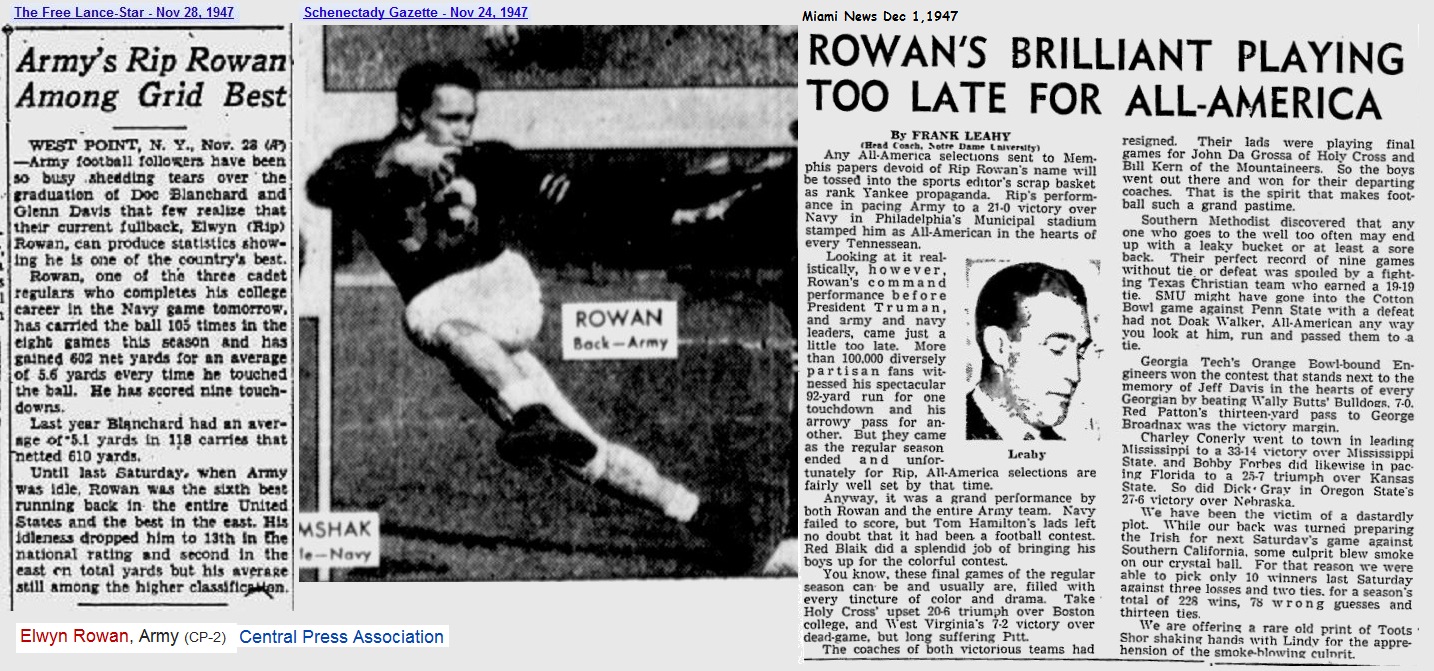
Army’s top stars during 1945-1949 were the effulgent “Touchdown Twins”, Glenn Davis and Doc Blanchard, Arnold Tucker, Arnold Galiffa, Rip Rowan, Bobby Jack Stuart and Gil Stephenson in the back-field, and up front” Joe Steffy”, Art Gerometta, Jack Green, “Bill Yoemans”, Joe Henry “Tex” Coulter,Al Nemetz, and the sterling end duo of Hank Foldberg and Barney Poole.
In 1945 the Newspaper Enterprise Assoc. simply picked the entire Army team as its All-American team, stating no group of All-Americans could beat the Cadets. Only a world war could have brought together such a collection of players to one institution. But it took the coaching genius of Col. Earl Blaik to mold the players into a cohesive unit. In truth, Navy personnel was equal to Army’s on an individual basis. The Middies never jelled as a team, however.
The 1951 Army outfit might have been as good as the 1945 Cadets, but the infamous cribbing scandal wiped out the team.
Prepared to focus 150/Lightweight/Sprint Players to support Jim’s Nomination to the Army Sports Hall of Fame
JAMES L. KAYS
BRIGADIER GENERAL, UNITED STATES ARMY
1941 – 2021
As a Quarterback, Coach and Officer Representative, Jim gave 26 years to 150 / Lightweight / Sprint Football. Jim has always given his time to others and in creating and resolving issues and problems. In the years since 1958, I have never know Jim to ask for anything in response to his help. You, You are the only ones he ever asked. He asked you to give. To give all that you have to the Game he loved.
The 1985 Princeton 150 Game – he gave 26 years to the 150s
When he points that finger, you had better listen
For the two Plebes Teams he coached against the Hive and Goat Teams, Jim created the Tight Butt Formation, bring linemen in tight to prevent the much larger Upper Class men from breaking into the backfield. During the 19 years, even when Jim was Department Head of the Systems Engineering Department he created, there were two constants. Col. Kays on the sideline and winning Football.
Jeane was at the Fort Bragg Officers Club Pool on July 3, 1961, when Jimmy met the love of his life. Jimmy was to depend on Jeane for the next 59 years. He graduated 9th in his Classes as an Artillery Officer on June 6, 1962. Just prior to Graduation, Jim stood before an Officers Board to determine his fitness for Commissioning. His medical record implied the knee injury he sustained in the last game of the 1960 season would prevent active duty. Jim stated he had quarterbacked the 150s in the last game of the 1961 season without difficulty and had guided the Team to the win. He further stated that he would attend and graduate from both Ranger and Airborne Schools. Jeane and Jimmy were married on June 10th.
Jim completed Airborne training without difficulty, but the knee which he blew out required several attempts to complete Ranger School. In 1964 the Ranger Tab was sown on. The first assignment with the 82d was shortened when Jim Volunteered for Military Assistance Command Vietnam, receiving the Bronze Star, Commendation Medal with V and Combat Infantryman Badge.
Upon his return he was assigned to USATC, Fort Campbell; Rensselaer Polytechnic Institute; Math. Dept. USMA; back to the Far East with an Arty Bn in Korea; CGSC; ODCSOPS Army General Staff; Rensselaer Polytechnic Institute; Math. Dept. USMA; Director, Operations Research Center, Office of the Dean, USMA where Jim created The Systems Engineering Department, becoming the Department Head. Jim Retired in 1998.
Jim accepted a position as the Mathematics Department Head, Auburn University, Montgomery.
Jim was to created one more Systems Engineering Department as Dean, Graduate School of Engineering and Applied Sciences, Naval Post Graduate School.
As a Professor in the Academy Math Department, Jim became an Assistant Coach with the 150s. His appointment to Plebe Coach in 1970, resulted in those two teams contributing to a record of 29 & 1, beating Navy each year.
Jim returned to West Point as an Associate Professor in 1978. In 1987 Jim began the process of creating the Systems Engineering Department. He was to become the Head, of the Department and the Director, USMA Operations Research Center.
There are 3 points of interest relating to USMA Systems Engineering Department. Jim would visit the Army Staff searching for projects for his Cadets. One such one was the Cadet proposal presented to the Army Staff of an all terrain wheeled vehicle similiar to the Humvee. The Army’s Armored Divisions had great success with the Half Track used by the Armored Rifle Battalions during World War II. The Systems Engineering Department was compensated by the Army for Cadet Research, until the Dean became aware of compensation and accepted it for all Departments.
Even more significant was the first Accreditation by the Board for Engineering and Technology. The lead evaluator was Dr. Yaco Y. Haime. During the presentation to the Staff and Faculty Dr. Haime indicated that he evaluated programs both in the US and abroad. He went on to say that the Academy’s Systems Engineering Program was the finest he had ever evaluated.
The 5 year requirement for Instructors impacted an Officer’s Career. Jim spoke to the Dean. He received a commitment by Branch to release an officer once his replacement was in. Jim discussed with at least one University Department Head to provide an accelerated program. Jim’s agreement to release officers early, allowed the length to approach 3.5 years. The Cadets got the Officers Jim wanted.
Jim rejoined the 150s becoming the Officer Responsible. For 19 years Jim provided continuity for the program, specifically Head Coaches, Larry Henley, (1980-81), Bob Knapp (1982-84), Tim Mingey (1984-86) and Bob Thompson (1986-1998); Jim recruited the assistant coaches from the Academic and Tactical Departments. Many of these assistant coaches were former Army 150 players who sustained and reinforced the 150 / Sprint / Lightweight Culture – dedication to excellence, a winning tradition, and commitment to team. These assistant coaches were the reasons the Army 150 / Lightweight Football Program was one of the most successful at the Academy. The teams during that period won over 80% of their games, won league championships, beat Navy regularly and won several bowl games. The most significant accomplishment of these teams was that they consistently won the Academy’s award to the athletic team with the best combined performance in all areas of cadet development — academics, military aptitude and athletics.
The Kays Trophy, awarded annually to the outstanding player in the Eastern Lightweight Football League, was established in honor of Colonel James L. Kays in 1990.
As a Department Head, Jim was faced with issues he had little need to address up to that point of his career. At the start of each Academic Year Jim would explain his expectations. Each year he would state Inappropriate Acts would not be tolerated. Each of 2 complaints would be evaluated, but a third would be automatic release. One officer stood in front of Jim twice before he got the message.
Cadets turned to Jim. One night he received a phone call from a concerned Cadet, requiring him to go to the roof of Cullum Hall to curtail a Spirit Mission. The Young Lady Cadet was clad in only 2 pieces of clothing. The first knock at his back door was by a Cadet who had visited a campus as an exchange student, and as she was unpacking her door was opened and 4 or 5 individuals entered threatening to rape her. The verbal abuse she yelled at them and the threats of bodily harm she would inflict drove them from the room. She packed and returned to West Point. Jim handled the situation giving her some satisfaction. The second knock at his back door was by a Cadet with a complaint against her Team Officer Responsible. Jim again met with the Commandant and was told to investigate the complaint. Jim was able to reach a Graduate in Germany who confirmed the officer’s conduct. The Officer immediately was relieved of duty and departed West Point.
In 1980 when Jim received his Ph.D. from Rensselaer Polytechnic Institute, he was awarded the 1980 Joaquin B. Diaz Award, presented by Rensselaer Polytechnic Institute annually to a doctoral student in recognition of outstanding academic achievement and research in mathematics. Jim contributed to over 17 Publications and spoke at over 21 Academic Presentations; he was a 1980-1982 Co-principal investigator conducting classified research in underwater acoustics for the Office of Naval Research; and 1985 Who’s Who in Frontier Science and Technology, Who’s Who in America. In 2020, Jim was inducted into the Army Operations Research Society of America Hall of Fame.
Jim’s Service contribution is represented by his three Army Commendation Medals (one for Valor), Bronze Star Medal, Meritorious Service Medal w/Oak Leaf Cluster, Legion of Merit and Distinguished Service Medal. The Navy, even the Navy appreciated his contribution by naming him Chair of Naval Systems Engineering in 2008.
To look at numbers, Jim was a mentor to Cadets, and the 150 / Sprint / Lightweight Football Players of 29 West Point Classes. Take it a step further he was a mentor for the Women and Men he served with, but especially those of the System Engineering Department.
Six years ago, Jeane realized Jimmy was beginning to fail (Too Many Concussions). Jeane was at his side, caring for him every day. On 6 January, in Jimmy’s last hours, Jeane dressed him in a Beat Navy T-Shirt.
Sam Mills a linebacker and Assistant Coach gave the Carolina Panthers their Motto – “Keep Pounding” I failed the two times I Nominated Jim. I want you to Keep Pounding year after year until my Classmate, my Roommate, my Friend, the man who dragged me through Academics, (6th from the bottom) is inducted into the Army Sports Hall of Fame.
When you succeed, I will not speak. Nor will I attend. It is between you and Jim Kays.
Jim earned 2 Army As – Yearling and Cow Years
FIRST NOMINATION YEARS AGO
I Nominate James L. Kays, USMA Class of 1962 to the Army Sports Hall of Fame. Jim gave 26 years to Army 150 Lightweight t Football. As a Cadet, Officer Coach and later as Officer Representative, Jim devoted himself to the Program.
Jim’s commitment to 150 Football began in 1958 as a Plebe Quarterback. Later, as an instructor in the Department of Mathematics (1969 – 1971), Jim was an Army 150 assistant coach. In 1970, Jim was assigned by Coach Tipton to be Head Coach of the Plebe Team. As upper classmen the Cadets from his two Plebe Teams contributed to the domination of the league for the next 4 years.
Returning to West Point as Permanent Professor in 1980, Jim rejoined the 150s where he served as Officer Representative for 19 years until his retirement from active duty in the fall of 1998. While providing the continuity for the program’s four different Head Coaches, Larry Henley (1980-81), Bob Knapp (1982-84), Tim Mingey (1984-86) and Bob Thompson (1986-1998); Jim recruited the assistant coaches from the Academic and Tactical Departments. Many of these assistant coaches were former Army 150 players who sustained and reinforced the 150 / Lightweight culture — dedication to excellence, a winning tradition, and commitment to team. These assistant coaches were one of the reasons the Army 150 / Lightweight Football Program was one of the most successful at the Academy. The teams during that period won over 80% of their games, won league championships, beat Navy regularly and won several bowl games. The most significant accomplishment of these teams was that they consistently won the Academy’s award to the athletic team with the best combined performance in all areas of cadet development — academics, military aptitude and athletics.
For 19 years there were two constants in the Army 150 / Lightweight Program – winning football and Colonel Kays on the sideline. The measure of any Army athletic program is the development of future Army Officers. I have no specifics, but I know Jim Kays, and I know that the Cadets he touched during his 26 year commitment went on to serve our nation with distinction.
Cadet Quarterback 1958 – 1960
Class Numerals as Plebe
Army A Yearling & Cow Years
Coaching duties as Firstie due to severe knee injury last game 1960
However, in a snow storm, the last game of the 1961 season, with the team
struggling, Coach Tipton sent in Jim to quarterback the 2d half. 150s won.
Instructor Department of Mathematics 1969 -1972
Assistant Coach 1969, Head Coach of the Plebe Team 1970 & 1971
Plebe Teams won 4 of the 4 games against Goats / Engineers
As upperclassmen his Plebes contributed to the 6 and 1 season in
1971 and the undefeated seasons in 1972, 73 and 1974.
Professor 1980 – 1998
1978 – 1984, Permanent Associate Professor, Dept of Math
1985 – 1987, Permanent Professor, Dept of Math
1988 – 1989, Director, USMA Operations Research Center, Office of the Dean
1989 – 1990, Professor USMA and Head, Dept of Systems Engineering and
Director, USMA Operations Research Center
1990 – 1998, Professor USMA and Head, Dept of Systems Engineering
Officer Representative Army 150 / Lightweight Football 1980 – 1998
The Kays Trophy, awarded annually to the outstanding player in the Eastern Lightweight Football League, was established in honor of Colonel James L. Kays in 1990
US Naval Postgraduate School, USA
Monterey, California 93943-5117
1980 Ph.D. (Mathematics), Rensselaer Polytechnic Institute
1969 MS (Mathematics), Rensselaer Polytechnic Institute
1962 BS, U.S. Military Academy
Other courses
1996 Government Program Management
1993 Total Quality Management, Colleges and Universities
1988 Simulation and SLAM II
1988 The Extended Simulation System (TESS)
1987 Modeling, Simulation and Gaming of Warfare
1986 Analytic Techniques of Management
2002- Dean, Graduate School of Engineering and Applied Sciences, NPS
1998-2002 Professor and Head, Department of Mathematics, Auburn University, Montgomery
1990-1998 Professor and Head, Department of Systems Engineering, US Military Academy
 He created the Systems Engineering Department, serving as it first Department Head
Click on Dept Crest |
1989-1990 Acting Head, Department of Systems Engineering, US Military Academy
1987-1989 Director, Operations Research Center, Office of the Dean, US Military Academy
1985-1987 Professor of Mathematics, Department of Mathematics, US Military Academy
1978-1985 Associate Professor, Department of Mathematics, US Military Academy
1974-1976 Staff Officer, Operations Directorate, ODCSOPS, Army General Staff, Washington, D.C.
1973-1974 Executive Officer, 1st Battalion, 15th Field Artillery, 2d Infantry Division, Republic of Korea
1969-1972 Instructor, Assistant Professor, Department Mathematics, US Military Academy
1964-1965 Company Commander, Battalion Executive Officer, Brigade S-1, USATC, Fort Campbell, KY
1963-1964 Battery Fire Direction Officer, Executive Officer; Battalion Assistant S-3, 1st Battalion, 320th Field Artillery, 82d Airborne Division, Fort Bragg, NC
26 years of undergraduate teaching experience in mathematics and systems engineering:
1. Department of Mathematics, USMA (1969-1972, 1978-1987
MA 391 Mathematical Modeling
MA 473 Intermediate Probability and Statistics
MA 208 Introductory Probability and Statistics
MA 492 Applied Combinatorics
MA 152 Multi-variable Calculus
MA 387 Mathematical Analysis
MA 487 Advanced Calculus
MA 151 Single Variable Calculus
MA 162 Multi-variable Calculus
MA 384 Ordinary Differential Equations
MA 484 Partial Differential Equations
MA 485 Complex Analysis
MA 371 Linear Algebra
MA 482 Abstract Algebra
2. Department of Systems Engineering, USMA (1989-1998)
SE 387 Deterministic Models
SE 401 Introduction to Systems Design
SE 489 Advanced Individual Study
SE 381 Engineering Economy
SE 388 Probabilistic Models
SE 453 Advanced Engineering Decision Methods
SE 487 Operations Research I
3. Department of Mathematics, Auburn University Montgomery (1999)
MATH 1100 Finite Mathematics
MATH 1610 Calculus I
MATH 1620 Calculus II
MATH 2670 Elementary Statistics
“Analysis of Acoustical Effects of Receiver and Source Motions at Short Ranges in a Deep Ocean,” The Journal of the Acoustical Society of America, 66, pp 1120-1130 (1979), senior author.
“Analysis of Acoustical Effects of Relative Receiver-Source Motion at Intermediate Ranges in a Deep Ocean,” The Journal of the Acoustical Society of America, 68, pp 613-627 (1980), senior author.
Ph.D. Dissertation, “Mathematical Analysis of Deep-Ocean Acoustical Effects of Receiver and Source Motions at Short and Intermediate Ranges,” Rensselaer Polytechnic Institute, 1980.
“Short-Range Acoustical Effects of Depth-Varying Source Motion at Short Ranges,” The Journal of the Acoustical Society of America, 69, pp 95-107 (1981), senior author.
“Acoustic Descriptors of Underwater Sound-Source Motion(U),” Proceedings of the 34th Navy Symposium for Underwater Acoustics, Vol. III, pp 460-489 (1982), senior author.
“Preliminary Feasibility Study-RPI TMA Algorithm(U),” RPI Technical Report for the Naval Sea Systems Command, 1982, senior author.
“Three Dimensional Tracking of an Ocean Sound Source by Acoustic Descriptors and a Linear Array(U),” The Journal of Underwater Acoustics, Vol. 33, No. 1, pp 1-14 (1983),
senior author.
“Modeling for the Revised OPMS,” technical report completed for the U.S. Army Personnel Center, 1986.
“SADARM Aim-Point Sensing,” technical report completed for the Deputy Under Secretary of the Army (Operations Research), February 1988.
“On Constructing Interval Scales Using Data Resulting from Categorical Judgments,” technical review and report completed for the Deputy Under Secretary of the Army
(Operations Research), July 1988.
“Impact of 1986 Goldwater-Nichols Act on Army Officer Professional Development,” with M.L. McGinnis, Koopman Prize Finalist, Military Applications Section (MAS), Operations Research Society of America, 1988.
“Computer Simulation Modeling of the United States Army Professional Development Process,” Proceedings, 54th Military Operations Research Society Symposium, Monterey, CA, 1988.
“The Impact of Title IV on Officer Professional Development,” with M. McGinnis, Operations Research Center Technical Report, USMA, 1989.
“Computer Simulation of U.S. Army Officer Professional Development,” with M. McGinnis, Proceedings of the 1994 Winter Simulation Conference.
“A Historical Perspective of Undergraduate Systems Engineering at the United States Military Academy,” with M. McGinnis, Proceedings of the 1995 IEEE International Conference on Systems, Man, and Cybernetics.
“The Installation Status Report,” with T. O’Hara and J. Farr, accepted for publication in the Journal of Infrastructure Systems, American Society of Civil Engineers, 1996.
“Resource Allocation for Army Installation Management,” with E. Lind and J. Farr, Journal of Infrastructure Systems, American Society for Civil Engineers, Vol. 3, No. 4. pp177-182(1997).
“Short-Range Sound Transmission between Moving Receivers and Sources in the Deep Ocean,” at the meeting of The Acoustical Society of America, Cambridge, MA, June 1979.
“Deep-Ocean Acoustical Effects of Relative Receiver-Source Motion at Intermediate Ranges,” at the meeting of The Acoustical Society of America, Atlanta, GA, April 1980.
“Deep-Ocean Acoustical Effects of Depth-Varying Source Motion at Short Ranges,” at the meeting of The Acoustical Society of Ameri
ca, Los Angeles, CA, November 1980.
“Acoustic Descriptors of Underwater Soun
d-Source Motion(U),” technical presentation at the Naval Underwater Systems Center, June 1981.
“Acoustic Descriptors of Underwater S
ound-Source Motion(U),” at the 34th Navy Symposium for Underwater Acoustics, San Diego, CA, December 1981.
“Alternatives for Modeling the Revised OPMS,” technical presentation at MILPERCEN, Alexandria, VA, January 1986.
“Operations Research–How Scientific Is It or Should It Be?”, 11th OR/SA Advisory Committee Meeting, College of William and Mary, 17 Marc
h 1988.
“A Study of the Operations Research Curriculum at USMA,” 11th OR/SA Advisory Committee Meeting, College of William and Mary, 17 March 1988.
“The Scientific Method in Operations Research,” Education Colloquium of the Military Operations Research Society, 6 April 1988.
“Operations Research Education at the U.S. Military Academy,” Education Colloquium of the Military Operations Research Society, 6 April 1988.
“Forecasting Personnel Requirements for the U.S. Army,” accepted for presentation at the Eighth International Symposium on Forecasting, Amsterdam, June 1988. (shortage
of government funds prevented attendance)
“An FMS Model for Assessing Personnel Management Policy in the Army,” with CPT Michael L. McGinnis and CPT Scott T. Forster, the national meeting of the Operations Research Society of America, October 1988.
“Forecasting Personnel Requirements for the U.S. Army,” with Dr. Ruth A. Maurer, the national meeting of the Operations Research Society of America, October 1988.
“Operations Research Education at the Undergraduate Level: An Assessment at the U.S. Military Academy,” the national meeting of the Operations Research Society of America, October 1988.
“Impact of 1986 Goldwater-Nichols Act on Army Officer Professional Development,” with M.L. McGinnis, Koopman Prize Finalist, Military Applications Section (MAS), Operations Research Society of America, National Conference, 1988.
“Computer Simulation Modeling of the United States Army Professional Development Process,” with M.L. McGinnis and S. Forster, 54th Military Operations Research Society Symposium, Monterey, CA; Operations Research Society of America, Joint National Conference, 1988.
“An FMS Model for Assessing Personnel Management Policy in the Army,” with M. McGinnis, Operations Research Society of America, National Conference, 1988.
“The Analytical Hierarchy Process Applied to Force Design, Operations Research Society of America, National Conference, 1989.
“Systems Engineering at the United States Military Academy,” National Council on Systems Engineering, National Conference, 1992.
“Professional Development of Operations Research Analysts,” Colloquium, Education Committee, Military Operations Research Society, 1993.
“Lessons Learned from ABET Accreditation Process,” with D. Thomas and J. Farr, Seventeenth Annual American Society of Engineering Management Conference, 1996.
Other conferences
Symposium on Waves on Fluid Interfaces, Mathematics Research Center, University of Wisconsin, October 1982.
1st Army Conference on Applied Mathematics and Computing, George Washington University, Washington, D.C., May 1983.
63d Summer Meeting of the Mathematical Association of America, Albany, NY, August 1983.
Meeting of the Logistics and Operations Research Subcommittee of the Army Mathematics Steering Committee, Concepts Analysis Agency, Bethesda, MD, February 1985.
Army Research Office Workshop on System Reliability, George Washington University, Washington, D.C., March 1985.
Meeting of the Logistics and Operations Research Subcommittee of the Army Mathematics Steering Committee, Lexington, KY, December 1986.
National meeting of the Institute of Management Sciences and The Operations Research Society of America, New Orleans, LA, May 1987.
Meeting of the Military Operations Research Society, Maxwell AFB, AL, May 1987.
National meeting of the Institute of Management Sciences and The Operations Research Society of America, St. Louis, MO, October 1987.
Winter Simulation Conference, Atlanta, GA, December 1987.
National meeting of the Institute of Management Sciences and The Operations Research Society of America, Washington, D.C., April 1988.
Meeting of the Military Operations Research Society, Naval Postgraduate School, June 1988.
Workshop on Soviet Troop Control, ODCSOPS, DA, Washington, D.C., June 1988.
Co-Chairman, Working Group, “ADP Technology for Military OR,” Meeting of the Military Operations Research Society, to be held at Ft Leavenworth, KS, June 1989.
Chair, Technical Session, Military Applications Section, National meeting of the Institute of Management Sciences and The Operations Research Society of America, New York City, NY, October 1989.
2000 Consultant, Center for Business and Economic Development, AUM
1999 Consultant, US Army TRADOC Analysis Center-Monterey
1988 to 1990 Referee for Interfaces
1994-present Associate Editor, Military Operations Research
June 1987 Chairman of Technical Session, Fifth Army Conference on Applied Mathematics and Computing, USMA
1983-1986 Member of doctoral committees for candidates for the Ph.D. in applied mathematics, Rensselaer Polytechnic Institute, Troy, NY
May 1983 Chairman of Technical Session, First Army Conference on Applied Mathematics and Computing, George Washington University
1983-1985 Member and reviewer of manuscripts for the Consortium for Mathematics and its Applications
1980-1982 Co-principal investigator conducting classified research in underwater acoustics for the Office of Naval Research, Contract No. N00014-81-K-0054
Institutional Governance Activities
Curriculum Committee, 1980-1984
Officer Representative, Army Lightweight Football, 1981-1998

Click on the above photo
Treasurer, USMA Class of 1962 Educational Fund, 1971-1972, 1979-1985
Vice President, Class of 1962 Educational Fund, 1986-1989
Class Trustee, Association of Graduates, 1982-1983
Chair, Self-Study Committee for Leader Development Coordination, Middle States Accreditation, 1988-1989
Member, Committee to Review Recommendations for Promotion to Professor of Designated Subject, 1986-1988
Chair, Faculty Credentials and Promotion Committee, 1989-1998
Member, Policy Board, US Military Academy, 1994-1996
Member, Admissions Committee, 1994-1998
Chair or member, USMA faculty search committees, 1986-1998
Member, Faculty Senate, 2000-present
President-Elect, Faculty Senate and Council, 2001-2002
Member, Information Technology Advisory Council, 2000-present
Chair, Information Technology Planning Committee, 2000
Past and Present Professional Societies:
Operations Research Society of America
Chair, Education Committee, Military Operations Research Society, 1991-1992
Military Operations Research Society (member of the Board of Directors, 1989-1993, 1997-1999)
Military Operations Research Society, Vice President for Professional Affairs, 1992-1993
National Council on Systems Engineering
American Society for Engineering Education
Honorary Societies:
The Honorary Society of Phi Kappa Phi
The Scientific Research Society of Sigma Xi
1985 Who’s Who in Frontier Science and Technology, Who’s Who in America
1980 Joaquin B. Diaz Award, Rensselaer Polytechnic Institute, presented annually to a doctoral student in recognition of outstanding academic achievement and
research in mathematics
1962 Distinguished Graduate (top 5%), USMA
1986 U.S. Army War College
1974 Command and General Staff College
1966 Field Artillery Officer Advanced Course
1964 Ranger School
1962 Airborne School
1962 Field Artillery Officer Basic Course
Distinguished Service Medal
Legion of Merit
Bronze Star Medal
Meritorious Service Medal w/Oak Leaf Cluster
Army Commendation Medal w/V device and two Oak Leaf Clusters
Combat Infantryman’s Badge
Parachutist Badge
Ranger Tab
General Staff Identification Badge
Below the zone promotions to Major and Lieutenant Colonel
Selected for battalion command, 1976
Distinguished Graduate (top 5%) of:
Field Artillery Basic Course
Field Artillery Advanced Course
Command and General Staff College
https://www.westpoint.edu/academics/academic-departments/systems-engineering/staff-and-faculty
Bill Carpenter’s Nomination for West Point’s Sports Hall of Fame is at the bottom of this page.


Combining leadership, athletic ability, and charisma perhaps better than any Army player before or since, Bill Carpenter could easily be the poster boy for Army football. To be sure, I was not present at the creation, so I never witnessed in person the feats of other Army Greats of Carpenter’s stature (except the All Americans Pete Dawkins, Bob Anderson and Bob Novogratz) but I have seen much more than my share of Army games over the years, beginning in 1948, and have followed the careers of many of our greatest athletes. I am firm in my opinion of The Lonely End.
Why not start at the Army football record book where Bill’s name appears frequently?
First, the Teams he played on: 1958 and 1959. They went 12-4-2 against the likes of Boston College, Illinois, Penn State, Duke, Colorado State, Oklahoma, South Carolina, Notre Dame, Virginia, Pitt, Rice, Nebraska, and, of course, Air Force and Navy. Look elsewhere on this website for an explanation of Coach Blaik’s Lonely End offense but the record speaks for itself: two-season (18 games) total yards passing of over 3,000. This mark stood for 17 seasons. Number three nationally and Lambert Trophy winners in 1958.
Then his individual record. First Team Football All-American in 1959 and as a Lacrosse All American in 1960, he earned the Schmeissor Trophy as the outstanding defensive player of the year. It should be noted that he never played lacrosse prior to 1959. He played in North-South Shrine Football Game. Bill led Army in points scored, receptions, and kickoff return yards in 1959. Upon graduation, he held or was tied for the all-time Army records for most 100-yard receiving games, career yards receiving, and single season catches and yards receiving. I may have overlooked other records.
He was a Cadet Battalion Commander.
Naturally, he played both ways.
Bill Carpenter was elected to the College Football Hall of Fame in 1982.
His military career surprised nobody in its success. It can be summarized easily — A Great Commander.
But the forgoing does not begin to explain what he meant to Army Football and the Corps of Cadets. I don’t think today’s Cadets are cognizant of dusty record books and ancient accomplishments even as they watch new records being set in front of their eyes. I know I wasn’t. Only later could what I saw be put in an historical context.
If the tipping point for me to apply to USMA was seeing the Cadet Glee Club on the Ed Sullivan Show, I can only imagine how many athletes considering the Academy were inspired by the sight of this handsome, well-spoken, humble, physically intimidating receiver standing casually 20 yards from the offensive huddle, hands on hips, exuding confidence, getting the play from the quarterback in some mystical manner, catching balls thrown to him, applying crushing downfield blocks; in short, leading his team.
It was thrilling and each of us always felt we would win when the Lonely End Offense was set in motion. He was someone who could rally us.
Did he catch passes against Navy with a separated shoulder? I don’t know. Legend says yes. Did Bud Wilkinson say that Bill Carpenter was the greatest player he ever saw? I don’t know. Did he toss a baked potato from one end of the Corps Squad Section of the Cadet Mess to the Poop Deck? Don’t know. Doesn’t matter.
(editor’s note – 1. It was against Oklahoma, that Bill had his upper arm taped against his side locking it in place, 2. Bill indicated he did not toss a Bake Potato — Greatness just promotes legend.)
His place as an all-time Army Great is secure as his accomplishments become even more impressive with the passage of the seasons.
by Dave Phillips – 62 Scribe & Class Sports Historian

And another Catch
http://www.collegefootball.org/famersearch.php?page=1&submitted=1&school=Army&sortby=school
Class 1960
Company M-2
Home Town – Springfield, Pa.
Springfield High School
Date of Entry to Academy
3 July 1956
Date of Graduation
8 June 1960
Age at Graduation – 22
Cullum Number
Cadet Rank
– Corporal Cow Year
– Captain Firstie Year
Cadet Military Position
– Cadet Battalion Commander
Height – 6’2″
Weight – 210
Teams
– Football 4,3,2,1
– Track 4, 3
– Lacrosse 2,1
Coaches / Assistant Coaches
– Football Earl Blaik, Dale Hall
– Lacrosse Ace Adams
Football Team Captain
– Cow Year Pete Dawkins
– Firstie Year Bill Carpenter
Positions Played
– Football End
– Lacrosse Defense
Lettered
– Plebe Numerials Football & Track
– Yearling Monogram Football & Track
– Cow Army A Football & Monogram Lacrosse
– Firstie Army A Football & Lacrosse
Team Recognition
– 1958 Football Lambert Trophy Ranked 3d in the Nation
– 1960 Lacrosse 3 way tie for 1st in the Nation
Individual Recognition
– Football All American 1959
– Lacrosse All American 1960
– 1960 Schmeisser Trophy as Outstanding Lacrosse Defense Player (editors note Bill never played Lacrosse till Spring of 1959)
– NCAA Football Hall of Fame
– At Graduation
Held or was tied for the all-time Army records for most 100-yard receiving games, career yards receiving, and single season catches and yards receiving
Post Season Play
– North-South Shrine Game
Injuries — Jeep accident, missed 1/2 of Yearling Football Season
Recreation
– Pistol 4,3,2; Skeet; Ski; Handball; Sunday School Teacher 4,3;
Portuguese 4
Class Standing 195 + or minis 4
Officer Assignment to the Academy
1970 -73 Senior Infantry Instructor Office Military Instruction
– Receiver Coach under Tom Cahill
Bill coached “Joe Albano” Class of 1971 who ended up broking most of Bill’s receiving records

“His Boots Were Always Muddy”
http://www.time.com/time/magazine/article/0,9171,899200-1,00.html
In 1952, Cadet Joe Austin of the U.S. Military Academy Lacrosse Team used a six foot stick while playing crease attack. Joe made an all-time West Point record of ten goals in one game and had a career total of eighty goals for three years of play which (when the story was told) was still a school record. He was selected 1st team All-American at attack.
In 1962, the then Captain Joe Austin of the United States Air Force, was an assistant coach of the Army Lacrosse Team. Bob Fuellhart ’62, the second Lonely End, (following Bill Carpenter) on the Football Team, was playing on the Army Lacrosse Team as a defense man. Bob became very distressed when his favorite stick was broken in scrimmage. Assistant Coach Joe Austin, who had treasured his six foot high scoring attack stick for ten years generously loaned it to Fuellhart.
The head of the stick was much narrower than we liked for defensive use in those days but Bob felt that it helped his throwing and catching. (Today almost every defense stick has a head of this size which put Bobby much ahead of his time.) Appropriately, Fuellhart became first team All-American at close defense and won the Schmeisser Award as the outstanding defense man of 1962. Bill Carpenter was recipient of the Schmeisser Award in 1960.
This would seem to be quite a rarity for two players Joe and Bob, in two opposite positions, ten years apart, utilizing the same stick to become outstanding players of their times. Both Joe Austin and Bob Fuellhart were killed in the Vietnam War in the mid 1960’s.
Joe Austin, awarded 2 Silver Stars, Distinguished Flying Cross, and Purple Heart was first declared missing 19 March 1969, and confirmed Killed In Action 25 May 79.
Bill Carpenter was nominated for the Medal of Honor received the Distinguished Service Cross.
Bob Fuellhart, awarded a Silver Star, 2 Bronze Stars (V), and Purple Heart, was Killed in Action 12 Aug 65, the day his daughter was born.
A Half Century of Lacrosse by William H. (Dinty) Moore III, the long-time Lacrosse Coach at Navy. It was told to Moore by Army Coach Jim (Ace) Adams. Edited by Butch Darrell Captain 1962 Lacrosse Team
The purpose of the West Point Sports Hall of Fame is to recognize and honor the Academy’s greatest athletes.
More than any other college sports hall of fame, the Academy’s should support West Point’s Mission for no other institution in America trains each of its graduates to walk in another’s land.
The Mission of the United States Military Academy is to provide a cadre of officers dedicated to a career of service to this Nation.
Attainment of Flag Rank meets that expectation.
The Corps of Cadets is surrounded by and lives in the shadow of the Academy’s greatest military heroes.
A Medal of Honor nomination is in that tradition.
As Cadets we gave —
As a member of the NCAA Football Hall of Fame; an All American in Football and Lacrosse, earning the Schmeissor Trophy as the outstanding defensive player of the year in Lacrosse; he stands with a very select group of West Point Athletes. Although the records he contributed to have long since been broken, as Football Team Captain against Oklahoma with one arm locked to his side from the elbow up — catching passes, returning kickoffs, and playing defense, exemplifies commitment.
As soldiers we served —
A career of dedicated service not only to this nation, but to the soldiers one leads demonstrates to the Corps of Cadets the expectation of each graduate. Attending only the absolutely required military schools, he spent nearly his entire military service leading America’s soldiers. His last 13 years of service included 33 months as a Brigade Commander, 2 Years as an Assistant Division Commander, 3 years as a Division Commander, 3 years as a Field Army Commander, and 15 months as a Theater J-3. His Boots Were Always Muddy.
Our Nations highest honor for valor —
Isolated on a hilltop, in command of a rifle company, facing insurmountable odds he led, resulting in his nomination for the Medal of Honor.
If the Army Sports Hall of Fame does support the Academy — Bill Carpenter, Class of 1960, Army’s Lonely End belongs. He is an example of a great Cadet Athlete and Soldier.
DSC, 2 SS, BSM, 4 AM, 2 PH, LM, JSCM, 4 CM, DSM, 2 MSM
Carpenter, a 1960 graduate, played three seasons of varsity football and earned national acclaim as the Black Knights'”Lonely End” when legendary coach Earl “Red” Blaik unveiled his innovative offensive alignment in 1958.
A first team All-America choice in 1959, Carpenter graduated with an Academy-record 65 career receptions, 20 more than previous standard-bearer and fellow Hall of Famer Glenn Davis (45). Carpenter became the first Army receiver to surpass 1,000 yards receiving with 1,044 yards during his tenure.
A captain of the 1959 squad, Carpenter set a single-season yardage mark in his final season with 591 yards. He was inducted into the National Football Foundation and College Hall of Fame in 1982, was awarded the Distinguished American of the Year honor by the Walter Camp Football Foundation in 1984 and was presented with the NCAA Silver Anniversary Award a year later.
Carpenter achieved the rank of Lieutenant General and in 1966 was recommended for the nation’s highest military honors for gallantry and service in Vietnam. He was awarded the Distinguished Service Cross.

Cadet will not Lie, Cheat, Steal, or Tolerate Those Who Do

USMA at West Point

We have changed the wording of our Alma Mater to reflect the fact that our Women Graduates have also given their lives serving this Nation.
Our Flag in 1812

----- Class of 2012 Motto ------
"For More Than Ourselves"
Thank you Class of 2012 for the Honor of Marching with you The Class of 62 - Can Do

Remember - The Soldiers you will lead Always Come First

Motto -- Duty Honor Country

The Cadets of West Point

They played perhaps Army's Greatest Game. They were the Team that Gave The Most

Washington's Letter recommending the establishment of the Academy and the History of West Point

The Oaths We Take

West Point's Medal of Honor Recipients

Jefferson Hall - the Academy's new Library.

Douglas MacArthur

Vinegar Joe Stilwell cleaning his Thompson -The Walkout -Burma 1942

George Patton

The Monuments of West Point

Kosciuszko Monument - Guarding the Hudson ensuring there is no passage of British Man of War

Forts of the Hudson

So we'll sing our reminiscences of Benny Havens, Oh!

Academic Excellence

Colonel Thayer

West Point

Trophy Point

"L'Ecole Polytechnique Monument", or The French Monument by Cadets

Superintendent's Quarters viewed from Thayer Road

Superintendant was not Happy Black '57

Home of the Dean

Quarters 104

Cadet Chapel

Michie Stadium

Arvin Gym

Kimsey Athletic Center

Holleder Center

Washington Monument

United States Military Academy Band

Cadet Barracks

Rugby Complex

Great Chain

Plain looking toward Washington Hall

Battle Monument

Washington Hall with Cadet Chapel on rocks above

Hudson River

Captured Trophies

Battle Monument

West Point Cemetery

Plain

Cost to this Nation of Differing Views

Trophy Point -- Our Flag

Corps of Cadets Formed in Companies early 1960s

Sending the Army Team off to Beat Navy

Army Mule

Color Guard

Band Box Review Early 1950's in Central Area

Battalion Mass Early 50's

Flirtation Walk

Class of 2008 Class Crest & Motto "No Mission Too Great" Their Commencement "Here am I; Send me."
Thank you Class of 2008 and Please Thank the Men & Women --- the Soldiers you will lead --- The Class of 62.
Duty Honor Country
The '54 Crest

28th Infantry Regiment Black Lion Award is intended to go to the person on his team "who best exemplifies the character of Don Holleder: leadership, courage, devotion to duty, self-sacrifice, and - above all -
an unselfish concern for the team ahead of himself."
"The Army moves as a team, eats as a team, and fights as a team."

The '55 Crest

Don Holleder Remember - The Soldiers you will lead Always Come First

Vann and Holleder

9 Army A's

The '56 Crest

The '57 Crest

Can Do

Gen Van Fleet addressing the Corps prior to the Navy Game

Constructed under supervision of Jay Gould "54 and the Ord Dept from a German Rocket Gun captured at Kasserine Pass. First used in the Duke Game.

COL "Red" Reeder granted the Cheerleaders Corps Squad status to obtain financial support for their spirit-inducing initiatives.

Bob Mischak - - It should be pointed out that Bob was an All American selection, but is not recognized by the Academy as such because of the organization which selected him.

Ubel scores 3 Times against Navy - Vann's facking results in Peter getting tackled - #10 on the ground behind Ubel

Vann to Sisson

Army's B Squad

Vann to Mischak.

Uebel Intercepts

Cody to Don Holleder

Lasley

Frank Hicks

Burd

Bill Purdue

Cody

Meador Mgr

Ron Melnick

Ralph Chesnauskas

Pat Uebel

Tommy Bell

Sisson headed for another score

Peter Vann stuffs the ball in Jerry's gut

Leroy Lunn & Jerry Lodge

Uebel after taking the handoff from Hagan

Attaya - Army's Fullback

Sisson - one of 3 Great Ends
Bob Mischak

Ralph Chesnauskas

Bob Farris

Vann moving out of the pocket

Peter Vann 10, Billy Chance 38, Herdman 68

Ken Kramer

Joe Lapchick

Kirk Cockrell

Lodge going down tosses to Paul Schweikert for score.

Dick Zeigler

Bob FarrisPlayed the 2d half of the Navy Game blind in one eye.
Pat Uebel
Tommy Bell

Peter Vann

Freddie Attaya

Mike Zeigler

Jerry Lodge wearing #67, playing fullback.

Johnny Wing

Lowell Sisson

Norm Stephen

Jack Krause

Dick Ziegler

Jerry Lodge

Leroy Lunn

Norm Stephen

Jerry Lodge

Corps of Cadets for Navy Game
Can Do
"The Army moves as a team, eats as a team, and fights as a team."
The '54 Crest
The '55 Crest
28th Infantry Regiment Black Lion Award is intended to go to the person on his team "who best exemplifies the character of Don Holleder: leadership, courage, devotion to duty, self-sacrifice, and - above all - an unselfish concern for the team ahead of himself."