Category Archives: Army Greats

Mark West

Class of 1991

Captain of 150/ Sprint Team that went 6-0 Beating Navy and the 4th Championship in 5 years.

Mark is #17 – 4th from left

http://forwhattheygaveonsaturdayafternoon.com/wp-1991/150

2008 — 150/Lightweight Football Coach

West Leads Lightweights Past Navy 32-10; Evening News Athlete of the Week, Nov 16, 1989
http://news.google.com/newspapers?id=tiJHAAAAIBAJ&sjid=oDMNAAAAIBAJ&pg=2836%2C2252997

Jim Ellis

Jim & Carol Ellis 

Cadet Brigade Commander, Star Man, Lacrosse, Responsible for the recording of General of the Army Douglas MacArthur‘s Duty Honor Country Farewell Address to the Cadet Corps – on 12 May 1962.  Commanded 3d Army, “Patton’s Own”  The team is more important than any individual. While individuals may perform outstandingly (we have awards); it is the success of the team that determines the outcome of the battle and the war. As General Patton said, “The Army moves as a team, eats as a team, and fights as a team.”

  1.  Farrell UtterbackPosted November 1, 2017 at 10:06 am I served under, then capt. Ellis in 67. He was my Co.
    in a inf. co. with the first inf.
    I had the pleasure of taking him and his wife Carol
    to dinner in 2006.
    I had the upmost respect for him as a officer and a
    gentelmen.Utterback (Bud)


1962

1st Captain

Star Man

Lacrosse

Jim – – Just as Cadets we gave, We have served our Nation as Graduates.

Jim Ellis took it upon himself (taking it from meeting to meeting, from post to post) to have the Pictorial of General of The Army Douglas MacArthur speaking to us just prior to our graduation, signed by the members of the Class of 1962. Jim asked Harry Hagerty to sign for Turk Griffith who we lost in Vietnam. The Pictorial hangs on the South wall of the 62 Room

There were 4 Cadets specifically included in the Pictorial – Jim Kays (who was not there – he was on weekend with Jeane now his wife), Jim Ellis, — —

The recording of General of the Army Douglas MacArthur‘s Duty Honor Country – on 12 May 1962, was accomplished only because Jim Ellis Class of 1962, Cadet Brigade Commander did not feel it was satisfactory to have only a written record.

http://forwhattheygaveonsaturdayafternoon.com/wp-1962/macarthur-dhc

The Worth of a Class by Dave Phillips is at – –

http://usma1962.westpointaog.com/WorthofaWPClass.htm

Lieutenant General James R. Ellis

General Ellis was born in Birmingham, Alabama, on 29 January 1937. He enlisted in the Army in 1955, entered the United States Military Academy in July 1958, graduated from USMA in June 1962, and was commissioned in the Infantry.

Education

General Ellis has a Bachelor of Science Degree from West Point and a Masters Degree in Public and International Affairs from Princeton University. He is a graduate of the Infantry Officer Basic Course, the Army Officer Advanced Course, the Armed Forces Staff College, and the National War College.

Assignments
General Ellis’ past assignments include Company Commander in the 82d Airborne Division at Fort Bragg and in the Dominican Republic; Company Commander and Assistant G3 in the 1st Infantry Division in Vietnam; Advisor in the Delta Region of Vietnam; Assistant Professor of Economics and International Relations at West Point; Infantry Battalion Executive Officer and Deputy Chief of Staff of the 7th Infantry Division at Fort Ord; Commander of a Basic combat Training Battalion at Fort Leonard Wood; Staff Officer in the Office of the Army Chief of Staff and in the Office of the Assistant Secretary of Defense for International Security Affairs; Commander of the 29th Infantry Regiment at Fort Benning; Chief of Staff and Garrison Commander of Fort Benning; Assistant Division Commander of the 10th Mountain Division; Chief, Office of the Defense Representative to Pakistan; Commanding General, 10th Mountain Division and Fort Drum; Deputy Commander in Chief and Chief of Staff, United States Central Command. His last assignment was Commanding General, Third Army, July 18, 1992 to July 15, 1994

Overseas Tours

He served two tours in Vietnam, one in the Dominican Republic with the 82d, and one in Pakistan. General Ellis has had five joint assignments.

Awards & Decorations

General Ellis’ awards and decorations include the Defense Distinguished Service Medal, Distinguished Service Medal, Silver Star, Defense Superior Service Medal with Oak Leaf Cluster, Legion of Merit with Oak Leaf Cluster, Bronze Star with 2 Oak Leaf Clusters, Purple Heart, Meritorious Service Medal with 2 Oak Leaf Clusters, Combat Infantryman Badge, Ranger Tab, Master Parachutist’s Badge, Department of the Army General Staff Identification Badge, and the Office of the Secretary of Defense Identification Badge.

Association of Graduates, U.S.M.A. Register of Graduates and Former Cadets. Cullum no. 23829.

 Commanded 3d Army, “Patton’s Own”  The team is more important than any individual. While individuals may perform outstandingly (we have awards); it is the success of the team that determines the outcome of the battle and the war. As General Patton said, “The Army moves as a team, eats as a team, and fights as a team.”

Publications

Ellis, James R., Captain. “Hot Pursuit.” Cavalry Journal. 77:Sept.-Oct., 1968, 9-11.

Our Army is a team. As General Patton said, “The Army moves as a team, eats as a team, and fights as a team.” The team is more important than any individual. While individuals may perform outstandingly (and we have an awards and promotion system to recognize outstanding performance); it is the success of the team that determines the outcome of the battle and the war. We train cadets at West Point to be outstanding individuals and to work together to accomplish team goals. But mostly we train them to be leaders of teams – Platoon through Theater Army. Patton understood the importance of teams and their accomplishments. I think General Patton would support the efforts on behalf of the ’53 Football Team.

Jim went on to say —

In my last three years on active duty, I was twice President of the
promotion board selecting LTC to COL. This was a very tough selection
because it was the first time that less than half of those eligible
would be selected. The selection rate from Captain to Major was about
75 to 80 % and the rate from Major to LTC was close to 65 %. But the
rate from LTC to Colonel was 40 % or less.

It was made even tougher by the fact that all the candidates were dedicated officers who had put 18 to 21 years into their careers with the attendant disruptions, relocations and dangers associated with our chosen profession.

The Army treated this selection process with extreme care. The promotion board was made up of 20 General Officers from all over the Army, and it met for six weeks. The board make-up was carefully chosen – every major command and line branch was represented (Chaplain, Medical and JAG had their own boards). Also, there were female and minority members.

Fairness and impartiality had to be practiced and outwardly perceived. The guidance was very clear and in two distinct but supporting parts:

Select the best qualified who meet the needs of the Army. Read that carefully. We couldn’t select just combat arms officers; there were needs in all branches. And, an Army with large numbers of minority and female troops had a need for upward mobility of minority and female officers.

The Army Athletic Hall of Fame selection committee is facing a similar task. They must select the best qualified who meet the needs of the graduates and current (and future) cadets – all of them. Each sport must be considered – team and individual, male and female. And, they must look at “old timers” as well as more recent candidates. I’m sure the selection committee members are all working under tough pressures.

PURPOSE

The purpose of the Army Sports Hall of Fame, located within the Kenna Hall of Army Sports, is to honor the athletes, coaches, teams, administrators and others who have brought distinction to Army athletics over its many years of existence. Those team and individual achievements deemed worthy of admittance, based on the established criteria, will be formally recognized with displays in a designated Hall of Fame area of the Kenna Hall of Army Sports, located within the Kimsey Athletic Center.


Jim Cain

Jim Cain

Bob Doering

Bob Doering

John King

John King & Maria

John Trent

1950

Led one of Army’s greatest teams. Killed in Korea and posthumously named Footballs Man of the Year by the Football Writers Association of America. – Joseph December 11, 2005

http://www.west-point.org/users/usma1950/17938/

Captain Football Team

Killed in Action Korea

USMA 1950

John Charles Trent
NO. 17938 11 October 1926 15 November 1950

Killed in Korea, November 15, 1950, near Wonsan. Aged 24 years.

“We are landing at the Port of Wonsan tomorrow; it has not yet been secured. Please don’t worry about me.” These were the last words heard from big, wide-smiling, gentle John Trent who met his death near Wonsan, November 15, 1950.

John, or Jack, as he was known to his family and friends in Memphis, was born on October 11, 1926 to Walter and Eleanor Trent. His parents still live in the house on Walker Avenue where he was born – a house filled with memories of his happy boyhood. The youngest of five children, John was born into a family, close-knit in love for one another, and one in which traditions, especially as to holidays and birthdays, are carried on from year to year – family gatherings at Thanksgiving and Christmas, trips to the country at Easter and on the Fourth of July, picnics in the summertime and circuses in the fall.

In his junior high school years, John became interested in sports, entering every one that was offered in the school. His capacity for leadership was shown by his being elected president of the senior class, captain of the football team, and most popular boy in his class. The newspapers selected him as one of the most promising football players entering high school that year.

His interest and skill in athletics continued to develop during his high school days. As a senior, he was a member of the Student Council, and received many honors in athletics. Immediately after graduation, John attended Louisiana State University, finishing one year’s work before he was called to the Air Force. After fifteen months In the Air Force, he entered West Point.

Whenever John was at home, there was a gathering of the boys from high school days, for a spaghetti supper. These friendships did not lessen with the years, and each time John returned, it became a standing joke to say, as the phone rang and rang, “Jack is home again!”

John’s years at West Point and the few months after graduation, are beautifully described in the following tribute written by “HIS ROOMMATES”:

“On that warm Summer day In 1946, a strapping young man came to us from a loving Tennessee family who had moulded him in the family traditions of love and honor. With those inbred ties of closeness and courage, he lived and died a true All-American. These words are most fitting to John C. Trent, our dearest friend, who left us on the Korean field of battle on 15 November 1950.

“Our initial acquaintance with John took place on a field similar to that from which he left us . . . a Beast Barracks tactics problem on the mock battle grounds that circumscribe our Alma Mater. Here for the first time we met the broad-shouldered, rugged individual who was to be our roommate for three years. John arrived at West Point and we immediately accepted the modest and unassuming typical “Rebel” for the friend that he was. Despite the many laurels and kudos that he earned for his prowess and accomplishments, he departed from us unchanged as the quiet fellow he had been from the start. We remember him for that cool steadiness and amiable personality that depicted a man who lived for the enjoyment of life itself.

“John never lost sight of his eternal goal to return home to his cherished family in Memphis and spend his days with Mom, Dad, his sisters, brother Bud, relatives and friends. The love and ties that are often absent within the American family of today were ever so present with the wonderful Trents. John’s return from every leave aIways found him bubbling over with the joys of having been HOME. Naturally, too, there was always “THE” girl in John’s life which meant that Memphis was the garden spot of the world for him.

“If John’s family and home were his first love, then we must call football his second. In the ALL-American game, John fulfilled his every ambition as he led our Black Knights of the Hudson through the difficult 1949 campaign . . . undefeated and untied. In each of his three years on the gridiron he held one moment to be more cherished than the others . . . 1947 . . . A pass interception against Navy that resulted in a touchdown and a 21-0 victory FOR THE TEAM . . . 1948 . . . His last-second grab of a Galiffa pass that proved the margin of victory FOR THE TEAM against Pennsylvania In a bitterly fought 26-20 battle . . . 1949 . . . Leading THE TEAM in the huge bowl at Philadelphia In defeating our great rivals, the Midshipmen of Annapolis, 38-0, the soundest trouncing in the history of that long series. The shy, reserved pride of this ALL-American John Trent was ever at its highest in receiving from friend and foe alike the simple accolade of recognition, ‘Hi, Big John.’ For this kind of man, it was more than enough. It was this kind of man they called ‘ALL-American,’ the best our beloved country had to offer.

“It was during his graduation leave that the desperate cry came to us from Korea. John came to us again to join the new Team which again was the best we had to offer. Big John was there with his brief words, with a pat on the back from those big fists to bolster spirits that sagged momentarily, just as he had done in every football game he’d fought . . . keeping an eye on the score and the yardage. He was there, his platoon sergeant tells us, on that black Korean night as he started to check his position and see his Team, to give the pat on the back and the brief words to those who were fighting fatigue and sleep In their foxholes as they waited for the enemy. The sergeant had wanted to make the rounds, but as was the way of this ALL-American, Big John insisted on personally visiting his weary Team himself. It was during this necessary check of the perimeter that John received those fatal wounds. He was reverently laid to rest among others from the Team at the Marine Cemetery in Wonsan, Korea.

“That Big John had not changed to the very end is related by his platoon sergeant. His conversation throughout those last days was filled with his true loves . . . his family, his home and friends, ‘the’ girl, and . . . Football.

“Thus it was that we came to know and love and lose our ALL-American friend . . . Big John Trent.”

In him seemed to dwell the promise of greatness the sort of personality that made people love, admire and respect him; he had within him a love of people, kindliness and a deep, abiding faith in God. He has left a heritage of which he, his family and his friends may be justly proud.

Why he was chosen to die is not understandable, but perhaps he and thousands of others have died so that the generations to come shall be able to walk without fear, to live and worship as they please, and to hold their heads high, as free men should.

His Junior High graduation Speech is a strangely prophetic one, entitled “I Am An American,” and ends fittingly:

“I become a link in an unending, unbroken chain, welded together by the Spirit of Freedom, and shining with an undying purpose that will keep forever the principles of Democracy supreme in a turmoiled world.”

– Louise Trent Ferguson

http://www.arkansasties.com/OtherStates/Tennessee/Korean.htm

John Vansant

John Vansant

Paul Buch

Paul Buch
Medal of Honor

Dave Rost

Dave Rost

Dave Goodling

Dave Goodling

Don Johnson

Don Johnson

Andy Nusbaum

Andy Nusbaum

Steve Pembrook

Steve Pembrook

Art Gerometta


1949

3 Army A’s in Football

Football’s Greatest Decade – – by Bernie Mcarty – http://www.la84foundation.org/SportsLibrary/CFHSN/CFHSNv01/CFHSNv01n1b – – see page 5

This writer believes West Point 1945 is the greatest team of all time. The 1944 Army team may actually deserve that title, but it was never tested. Army was also undefeated in 1946, 1948 and 1949.

Army’s top stars during 1945-1949 were the effulgent “Touchdown Twins”, Glenn Davis and Doc Blanchard, Arnold Tucker, Arnold Galiffa, Rip Rowan, Bobby Jack Stuart and Gil Stephenson in the back-field, and up front” Joe Steffy”, Art Gerometta, Jack Green, “Bill Yoemans”, Joe Henry “Tex” Coulter,Al Nemetz, and the sterling end duo of Hank Foldberg and Barney Poole.

In 1945 the Newspaper Enterprise Assoc. simply picked the entire Army team as its All-American team, stating no group of All-Americans could beat the Cadets. Only a world war could have brought together such a collection of players to one institution. But it took the coaching genius of Col. Earl Blaik to mold the players into a cohesive unit. In truth, Navy personnel was equal to Army’s on an individual basis. The Middies never jelled as a team, however.

The 1951 Army outfit might have been as good as the 1945 Cadets, but the infamous cribbing scandal wiped out the team.

Bob St Onge

Bob St Onge

Arnold Galiffa


Class of 1950

Army’s Quarterback

3 Army A’s in Football

Football’s Greatest Decade – – by Bernie Mcarty – http://www.la84foundation.org/SportsLibrary/CFHSN/CFHSNv01/CFHSNv01n1b – – see page 5

This writer believes West Point 1945 is the greatest team of all time. The 1944 Army team may actually deserve that title, but it was never tested. Army was also undefeated in 1946, 1948 and 1949.

Army’s top stars during 1945-1949 were the effulgent “Touchdown Twins”, Glenn Davis and Doc Blanchard, Arnold Tucker, Arnold Galiffa, Rip Rowan, Bobby Jack Stuart and Gil Stephenson in the back-field, and up front ” Joe Steffy”, Art Gerometta, Jack Green, “Bill Yoemans”, Joe Henry “Tex” Coulter,Al Nemetz, and the sterling end duo of Hank Foldberg and Barney Poole.

In 1945 the Newspaper Enterprise Assoc. simply picked the entire Army team as its All-American team, stating no group of All-Americans could beat the Cadets. Only a world war could have brought together such a collection of players to one institution. But it took the coaching genius of Col. Earl Blaik to mold the players into a cohesive unit. In truth, Navy personnel was equal to Army’s on an individual basis. The Middies never jelled as a team, however.

The 1951 Army outfit might have been as good as the 1945 Cadets, but the infamous cribbing scandal wiped out the team.

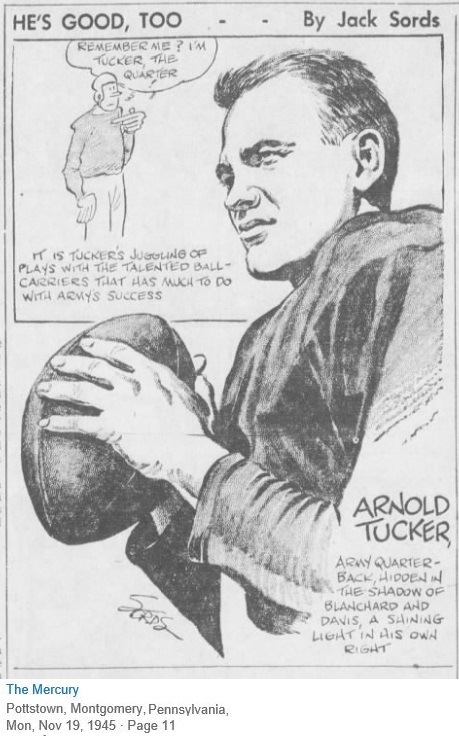
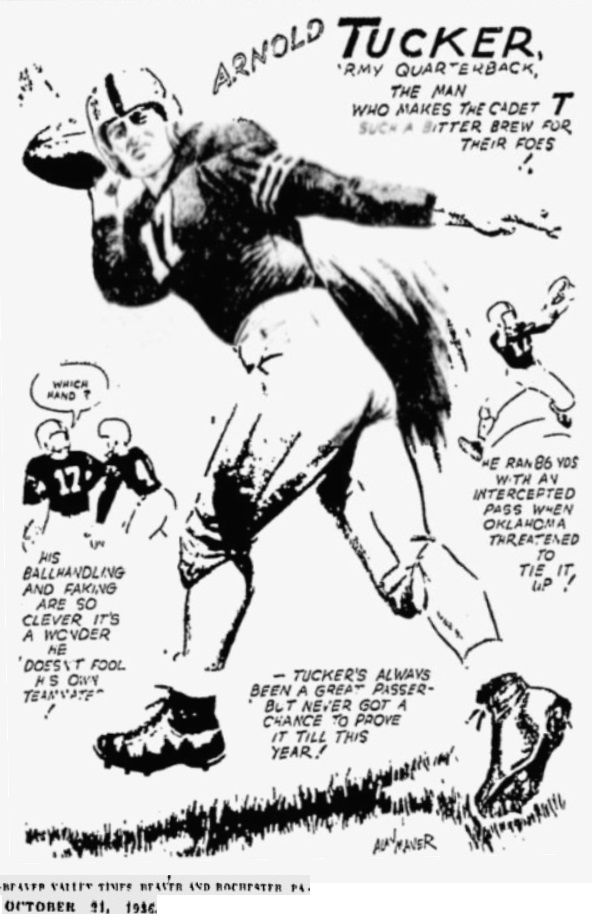
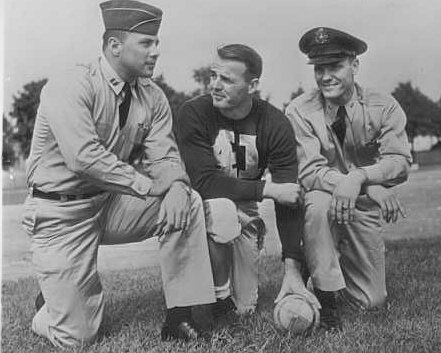
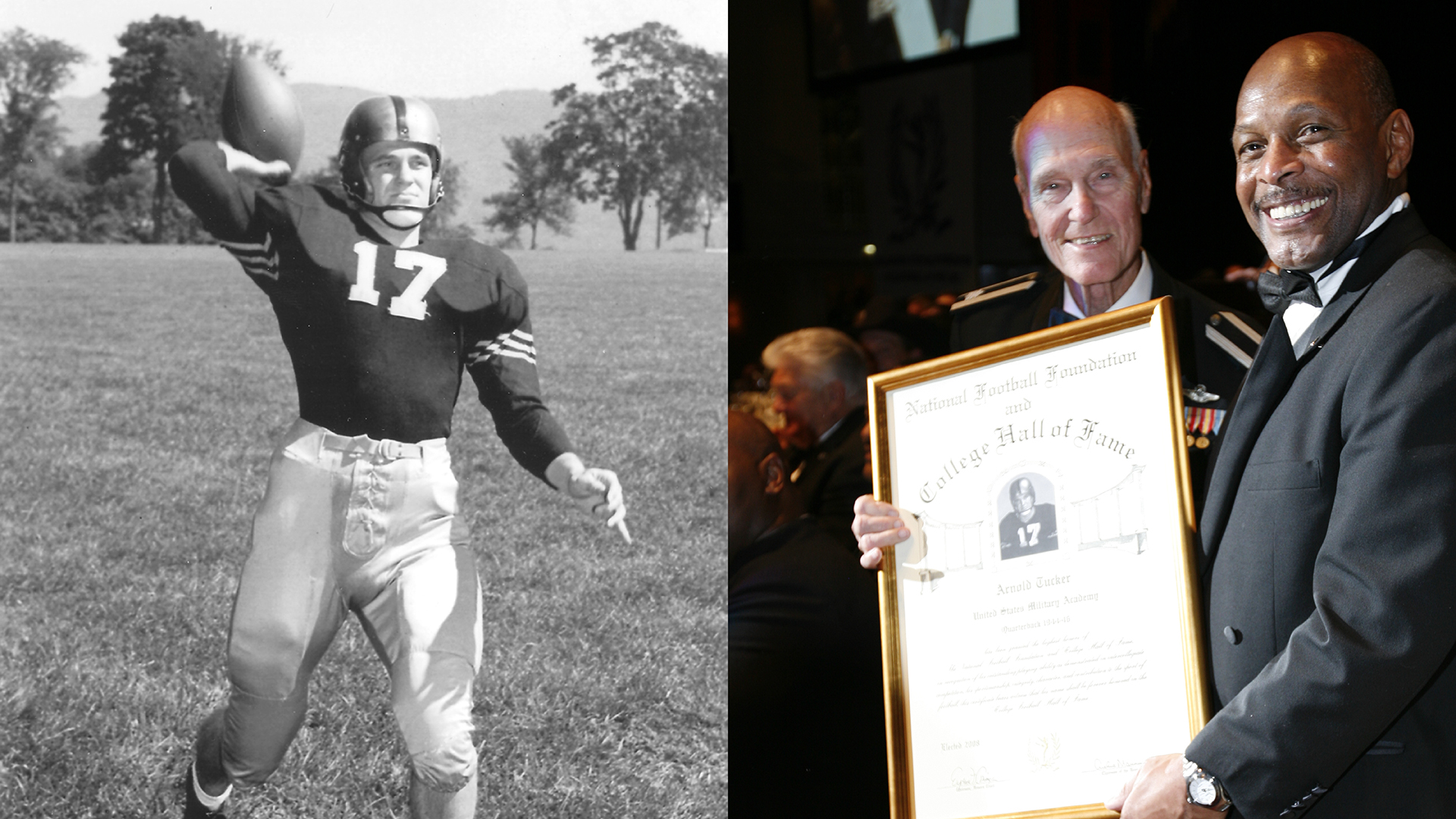
Arnold Tucker

From: Chuck Profilet <profilet@mediaone.net>
Date: Tuesday, June 15, 1999
Subject: Memorial Day – 1999
MEMORIAL DAY FT. LAUDERDALE, FLORIDA MAY 31, 1999 By Charles W. Profilet, E-1, 58

Of particular interest to 58 is the guest speaker at the luncheon. Lt. Col. Arnold Tucker, USAF Retired, USMA 47, was the speaker. Dedicated fans of Army football recognize the name of “Young Arnold Tucker” as the All-American quarterback of the 44, 45, and 46 undefeated Army football teams with Blanchard and Davis as running backs. Some of the class in 1st Regiment remembers him as Company Tactical Officer for Co. F-1 during our plebe and yearling years. Col. Tucker spoke from the heart with stories from his cadet days, his Air Force career, and duty at West Point. Four short stories among many are worthy of sharing with you.

Col. Tucker’s high school classmate went on to attend the Naval Academy and ended up as Captain of the Navy Team for the 1946 Army-Navy game. At some point in the game he and his friend, Bruce Smith, collided. Tucker helped his friend up, spoke to him and proceeded back to the huddle. During film review, Col. Blaik made note of Tucker assisting the Navy. They remain today life long friends.

Arnold Tucker

After graduation and flying training Tucker was assigned to a transport squadron in Japan. Soon selected as aide-de-camp for the commanding general, MG Edward H. White, USMA 24, he was notified that the Air Force had agreed with an Army request, unknown to Tucker, to return him to West Point for the football season as an assistant backfield coach. He objected and asked to stay in Japan with his wife and mother-in-law. Finally the Army Athletic Association informed him that the Association would pay all expenses for his family, if he would return to help the Army team. He finally accepted the assignment with the agreement of General White to return to Japan after the season. With a smile he noted that the assignment as assistant backfield coach was a “piece of cake”. Why? The backfield coach was Vince Lombardi.

Following two years as a Company Tactical Officer, he was assigned to the Commandant’s staff and given an assignment to oversee updating the Blue Book. One of many changes he made was to place Flirtation Walk on limits at night. He asked the cadets present if Flirty was still on limits. A weak “yes sir” suggested that today’s cadets might not see Flirtation Walk in the same light as those classes who were restricted to West Point most of the four years.

Col. Tucker ended on a sad but proud note. In 1967 he was stationed at Cape Kennedy, when a fire aboard the Apollo capsule killed three NASA Astronauts. LTC Edward H. White, II, USMA 52, son of COL Tucker’s commander in Japan, and the first man to walk in space perished in the fire. At the request of the family, Col. Tucker accompanied Ed White’s remains to West Point for burial.

2 Army A’s in Football

Football’s Greatest Decade – – by Bernie Mcarty – http://www.la84foundation.org/SportsLibrary/CFHSN/CFHSNv01/CFHSNv01n1b – – see page 5

This writer believes West Point 1945 is the greatest team of all time. The 1944 Army team may actually deserve that title, but it was never tested. Army was also undefeated in 1946, 1948 and 1949.

Army’s top stars during 1945-1949 were the effulgent “Touchdown Twins”, Glenn Davis and Doc Blanchard, Arnold Tucker, Arnold Galiffa, Rip Rowan, Bobby Jack Stuart and Gil Stephenson in the back-field, and up front” Joe Steffy”, Art Gerometta, Jack Green, “Bill Yoemans”, Joe Henry “Tex” Coulter,Al Nemetz, and the sterling end duo of Hank Foldberg and Barney Poole.

In 1945 the Newspaper Enterprise Assoc. simply picked the entire Army team as its All-American team, stating no group of All-Americans could beat the Cadets. Only a world war could have brought together such a collection of players to one institution. But it took the coaching genius of Col. Earl Blaik to mold the players into a cohesive unit. In truth, Navy personnel was equal to Army’s on an individual basis. The Middies never jelled as a team, however.

The 1951 Army outfit might have been as good as the 1945 Cadets, but the infamous cribbing scandal wiped out the team.

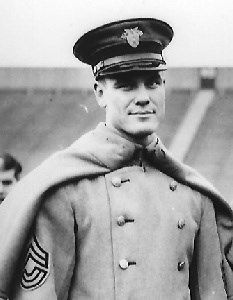
tucker as cadet

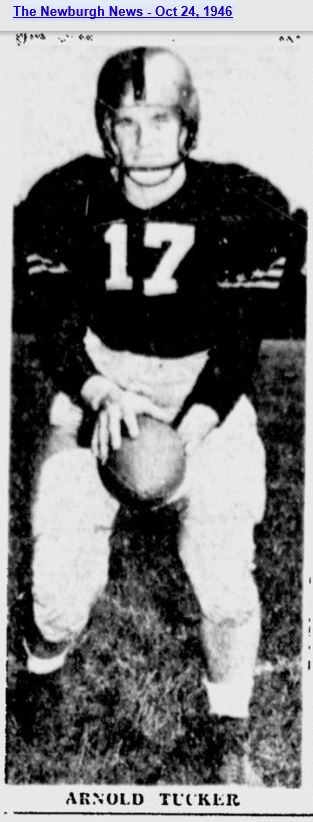
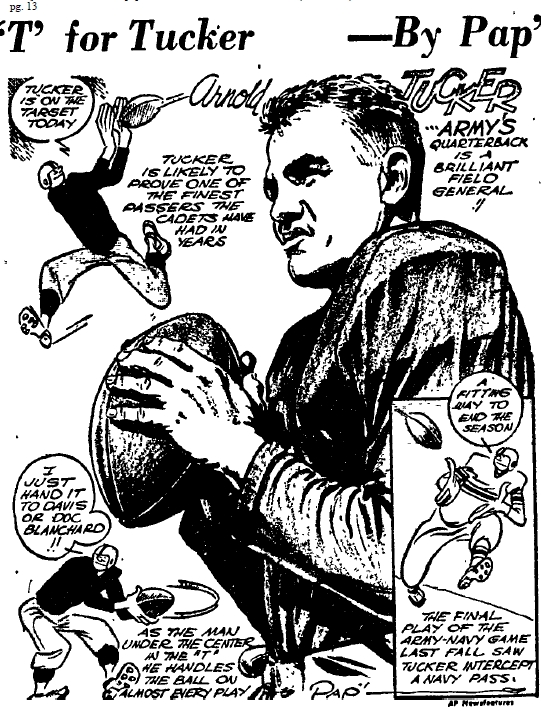
armyfb_1946_tucker_newburghnews_oct241946armyfb_1946_blanchard-davis-tucker_photoarmyfb_1945_arnoldtucker_bypap_csm_oct131945ArmyFB_1945_Tucker_byJackSords_PottstownMercury_19Nov1945armyfb_1946_tucker_byalanmaver_thedailytimes_oct161946

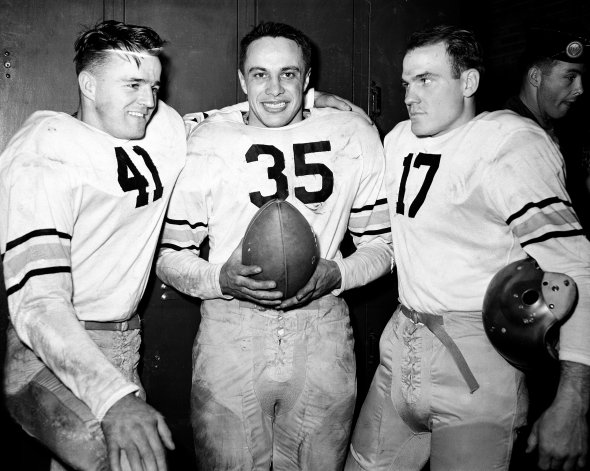
Blanchard-Davis-Tucker_circa1950s

—

Lt Colonel Retired Young Arnold Tucker of Palmetto Bay, Florida, passed away on January 10, 2019 in Miami, Florida. Born January 05, 1924 in Calhoun Falls, South Carolina, Arnold or “Tuck” as he was known, was a loving and dedicated husband to his wife of 51 years, Patricia (Small) Tucker, and father to his two children, Tom and Patty. He was well known in Miami in the 1940’s for his academic and athletic excellence. He attended Citrus Grove Junior High School where he was an Honour student and a recipient of the American Legion Award for athletic leadership and good citizenship.

At Miami Senior High School, he was a member of the National Honour Society and the Key Club, Captain of the basketball team, and selected “All State” basketball player for two years. In football he was the “Running Tailback” on the team which won the Southern High School Championship, was selected as a member of the “All State” and “All Southern” football teams and received the Miami High Sigma Nu Trophy as outstanding athlete for the years 42-43. He was later inducted into the Miami High School Hall of Fame.

Tuck enlisted in the US Navy V-12 Program in June of 1943. As a Naval Assignee he attended the University of Florida and transferred to the University of Miami. As a freshman, he was a member of the varsity basketball and football teams and was awarded the “Iron Man Trophy” for exceptional football participation.

He was discharged from the Navy in July of 1944 in order to attend The United States Military Academy at West Point, New York. He graduated from the USMA and was commissioned a second lieutenant in June of 1947. While a Cadet at West Point, he was Captain of the basketball team and Quarterback on the undefeated National Championship football team for three years. He was designated an “All-American” football player in 1946. He was awarded the James E. Sullivan trophy by the National Amateur Athletic Union as the United States Amateur Athlete for 1946. He was known as “Mr. Topside” in the same backfield with “Mr. Inside” and “Mr. Outside,” Doc Blanchard and Glen Davis.

After graduating from Army Air Corps pilot training, he served as a Bomber Pilot of the B29 with the 307th Bomb Wing at Mac Dill AFB Tampa, Florida as well as a Line Pilot with Military Airlift Command Tokyo, Japan. He also had assignments as Aide De Camp to the Commanding General and was Commanding Officer of the Headquarters Squadron and served as an Operations Officer.

Tuck was assigned as an assistant football coach to Coach Vince Lombardi at West Point while also serving a 4-year tour from 1953-1957 as a tactical officer in the Commandant of Cadets Office.

He graduated from the Air Force Command and Staff College and served a four-year tour of duty at Headquarters US Air Forces, Pentagon Building, Washington D.C. He received an MBA degree from George Washington University in 1963 and then served a four-year tour of duty as Chief of the Telemetry Division of the Airforce Eastern Test Range, Cocoa Beach, Florida from 1963 to 1967. In 1967 he was stationed at Cape Kennedy, when a fire aboard the Apollo capsule killed three NASA Astronauts. LTC Edward H. White, II, USMA 52, son of COL Tucker’s commander in Japan, and the first man to walk in space perished in the fire. At the request of the family, Col. Tucker accompanied Ed White’s remains to West Point for burial.

Tuck served four years in direct support of the Vietnamese War as Director of Airlift, 5th Air Force Headquarters, Tokyo, Japan, as Commander of the C130 Gunship Squadron, Ubon, Thailand and as Chief Special Operations Division, 7th Air Force, Saigon Vietnam.

His last active duty military assignment was from 1971-1974 as the Professor of Aerospace Studies (AFROTC), University of Miami, Coral Gables, Florida. He retired after 31 years of continuous active duty at Homestead AFB, Florida in June 1974.

After Military Retirement he was employed by the University of Miami for two years as the Assistant Director of Athletics for Sales and Promotions.

He received many medals and accommodations, just to name a few: The Distinguished Flying Cross, The Bronze Star Medal, The Meritorious Service Medal, NCAAF College Football Hall of Fame, United States Military Academy Athletic Hall of Fame, and North Carolina Athletic Hall of Fame.

Tuck was predeceased by his wife Patricia (Small) Tucker, one brother Dick Allen Tucker (1920-1943) who was shot down in Europe while serving as a fighter pilot in WW2. 1st Lt. Dick Allen Tucker is buried at Cambridge American Cemetery and Memorial Coton, South Cambridgeshire District, Cambridgeshire, England.

Also preceded by his mother, Sara Victoria (Callahan) Tucker, his father, Floyd Allen Tucker (1893-1970), one sister, Sylvia Victoria Tucker, and his son, Thomas Tucker. He is survived by one daughter, Patricia Nugent, son-in-law, Patrick Nugent, two grandsons, Zachary Cooke and Patrick Nugent II, all of Miami, Florida, and one daughter-in-law, Tina Tucker of Holiday, Florida.

Arnold_Tucker_QB_CollegeFootballHallofFame

https://footballfoundation.org/news/2019/1/16/college-football-hall-of-famer-and-army-legend-arnold-tucker-passes-away.aspx


—-

Mr Sorge

PE Department

Dale Hall

Football Coach 1959 – 1961

Dale S. Hall 1945 – by E. Douglas Kenna
http://apps.westpointaog.org/Memorials/Article/14644/

Dale Stanley Hall (June 21, 1924 – August 23, 1996) was an American football and basketball player and coach. He played football and basketball at the United States Military Academy, where he was a two-time All-American in basketball and was named the Sporting News Men’s College Basketball Player of the Year in 1945. Hall served as the head football coach at West Point from 1959 to 1961, compiling a record of 16-11-2. He was also the head basketball coach at the University of New Hampshire during the 1951-52 season, tallying a mark of 11-9. source: wiki

Kansas Sports Hall of Fame: Hall, Dale, Inducted 2004
http://www.kshof.org/inductees/2-kansas-sports-hall-of-fame/inductees/142-hall-dale.html
Overview
There have been many great all-around athletes in Kansas high school history, and Dale Hall was certainly one of them. He was first-team all-state in both football and basketball at Parsons High School – as a junior and a senior – and is the only person in Kansas to receive that honor.
Career Highlights
Hall led the Southeast Kansas League in scoring in both football and basketball for three seasons and held the Parsons High School records for career points in basketball (1,158) and career touchdowns in football (35) more than 60 years after leaving the school.
Hall at West Point
At the U.S. Military Academy at West Point, N.Y., Hall was a Helms Foundation All-American basketball first-team selection in 1944 and 1945 and led Army to a 29-1 record, averaging 23 points a game. He scored 23 touchdowns for the 1944 national champion football team and shared the backfield with a pair of Heisman Trophy winners, Doc Blanchard and Glenn Davis, who won the trophy the following two seasons. Hall graduated first in a West Point class of over 800 in athletic skills and had a vertical leap of 39 inches. He earned seven letters in three sports at Army and was a 4.0 student. Hall succeeded the legendary Earl “Red” Blaik as Army’s football coach in 1959 and led his team to a 17-11-2 record in three seasons.
Honors
He is the only Parsons H.S. football player to have his number retired.

Dale Hall: Forgotten Athlete: Parsons Product Sparkled At Army
Lawrence Journal World, Oct 13 1996
http://news.google.com/newspapers?id=XKlAAAAAIBAJ&sjid=bOcFAAAAIBAJ&pg=2976%2C7481352

Good summary of Dale Hall and his Army teams
http://www.helmethut.com/College/Army/NYUSMA5971.html


ArmyFB_1959_DaleHall-newcoach_ChicagoTribune_Feb11959_copy


ArmyFB_1961_DaleHall-MikeCasp_DetroitvsArmy-program_11Nov1961

Sport articles provided by Russ “Skip” Grimm – Class of ’76

Dale S. Hall 1945 – by E. Douglas Kenna

DALE HALL arrived at West Point in July 1942 with a big smile; a high school sweetheart in Parsons, KS; and a pocket of scoring records in football and basketball that still stand today. Entering the Academy straight from Parsons High School, he graduated three years later with the same big smile, ranked in the top 25% of his class, captained the basketball team, won the Army Athletic Association saber as the best athlete in his class, and married his sweetheart on 17 Jun 1945.

Dale’s varied and eminently successful career after graduation was shaped by his integrity, intelligence, good humor, loyalty, and extreme competitiveness. Those qualities carried him swiftiy to leadership positions in the Army, athletics, business, and religious life.

Dale was born in Pittsburg, KS. He later moved to Parsons where he attended high school. Considered the greatest all-around athlete ever in the state, he was elected to the Kansas State High School Hall of Fame in 1993. He received an appointment to West Point, entering in July 1942.

At West Point, Dale Hall excelled in three sports: football, basketball, and tennis. He was a first team halfback on the 1944 National Championship football team, was captain and a first team All-American basketball player in 1945, and played singles and doubles on the undefeated 1945 Army tennis team. He later was inducted into the College Basketball Hall of Fame. He also devoted sufficient time convincing his coaches and fellow cadets that it was possible to enjoy life at West Point.

After graduation and marriage to Laura Faye Stevenson in June 1945, he went to the Armor School at Ft. Knox, KY. V-J Day occurred while Dale was at Ft. Knox, and he was assigned to the 42d Cavalry Squadron, 4th Armored Division in Germany in September 1945. Combining military and athletic activity, he later coached the Second Constabulary Regiment to the European Football Championship in 1947. Dale and Faye spent four years in the beautiful Alpine region of Southern Bavaria. Fast friends made during those years earned friends of the Halls all of their lives.

Dale resigned his commission in 1949 and began his football coaching career at Purdue University. While an assistant there, he received a master’s degree in physical education in 1951.

He spent five years at New Hampshire and Florida as an assistant football coach and also was the head basketball coach at New Hampshire. He returned to West Point in 1956 as backfield coach for his mentor, Earl Blaik, whom he idolized.

Upon Blaik’s retirement following the 1958 season, Dale was selected as head coach. Earl Blaik remarked at the time that “Dale Hall and Vince Lombardi had the two best football minds” that he had encountered during his illustrious career.

While coaching at West Point, Dale developed a warm friendship with GEN Douglas MacArthur and spent many happy hours with him. Leaving an outstanding coaching record of 16-11-2 at West Point, Dale entered the business world with the Corning Glass Company. Within a year, he was promoted to general manager of one of Comingâ•˙s largest plants located in Rhode Island.

He later served as administrative director of The Butler Service Group; president of the Thunderbird Boat Company in Miami; president of Pool Boys, Inc., Sun Products Company; president of his own educational training company; president of James Ffyfe Export/Import Company; and as an associate of the Van Houten Real Estate Company. In business, he was an inspirational leader and specialized in reviving troubled companies.

Strong family ties were the hallmark of Dale’s life. After retirement to Sea Colony in Palm Coast, FL, the Halls devoted most of their time to their three daughters and eight grandchildren, visiting frequently and being totally involved in their lives.

One of Dale’s greatest joys was that his grandson, Daniel Grieve, was admitted to West Point in 1996.

After 49 years of marriage, Faye Hall died on 24 Aug 1994. They had been very active in the Trinity Presbyterian Church for several years, with Dale serving as an elder and Bethel Bible teacher. The church became an increasingly important part of their lives in retirement.

At church and at Sea Colony, they both had been close friends of Marcia Kelly, who later became Dale’s second wife. She is a gracious, warm, and loving person and they were beginning to enjoy a life of leisure, travel, and church work when Dale was stricken on 23 Aug 1996. She continues to live in their home in Sea Colony.

Dale is survived by his wife Marcia; sisters Helen and Lucille; daughters Laura Jean Grieve, Susan Wells, and Janet Uhal; and eight grandchildren.

Dale was blessed by many things in his life. We were all blessed to have been his friend, companion, admirer, and classmate.

E. Douglas Kenna

http://apps.westpointaog.org/Memorials/Article/14644/

Winter Track & Field Men


ZinnRon_ArmyTrack_1962

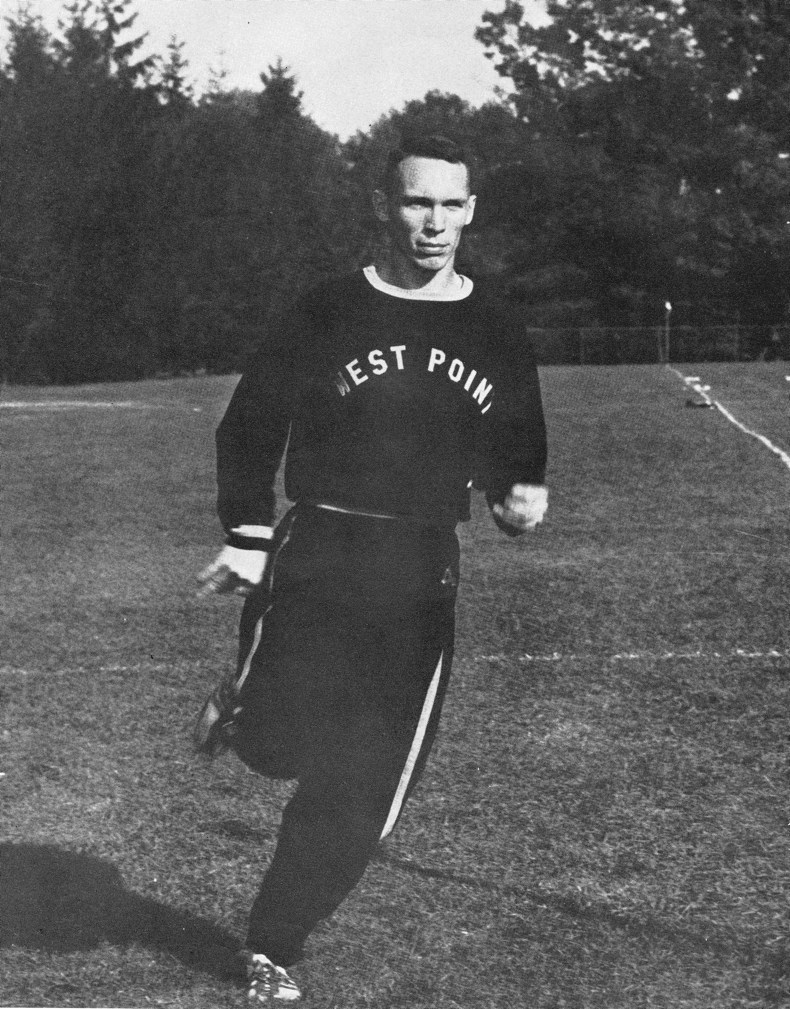
Ron Zinn Class of 62 — Member of two US Olympic Teams

How could the remarkable Ron Zinn not be included in the Army track and field media guide? He was a member of two US Olympic teams and I remember well watching the beginning of one of his Olympic races on television (black and white). He was in the lead as the walkers left the stadium.