Tag Archives: Football

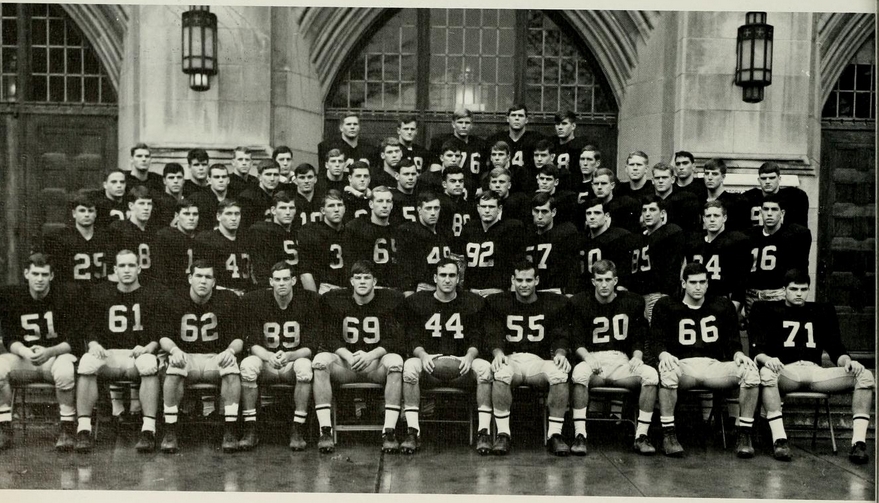
1970 Team

1970 1-9-1

1970/11/28 Army 7 – Navy 11 L
Coach – Thomas B. Cahill (October 11, 1919 – October 29, 1992)

Army 1966-1973:

1966 Army 8-2 Coach of the Year

1967 Army 8-2

1968 Army 7-3

1969 Army 4-5-1

1970 Army 1-9-1

1971 Army 6-4

1972 Army 6-4

1973 Army 0-10

Overall Army: 40-39-2

Union NY 1976-79


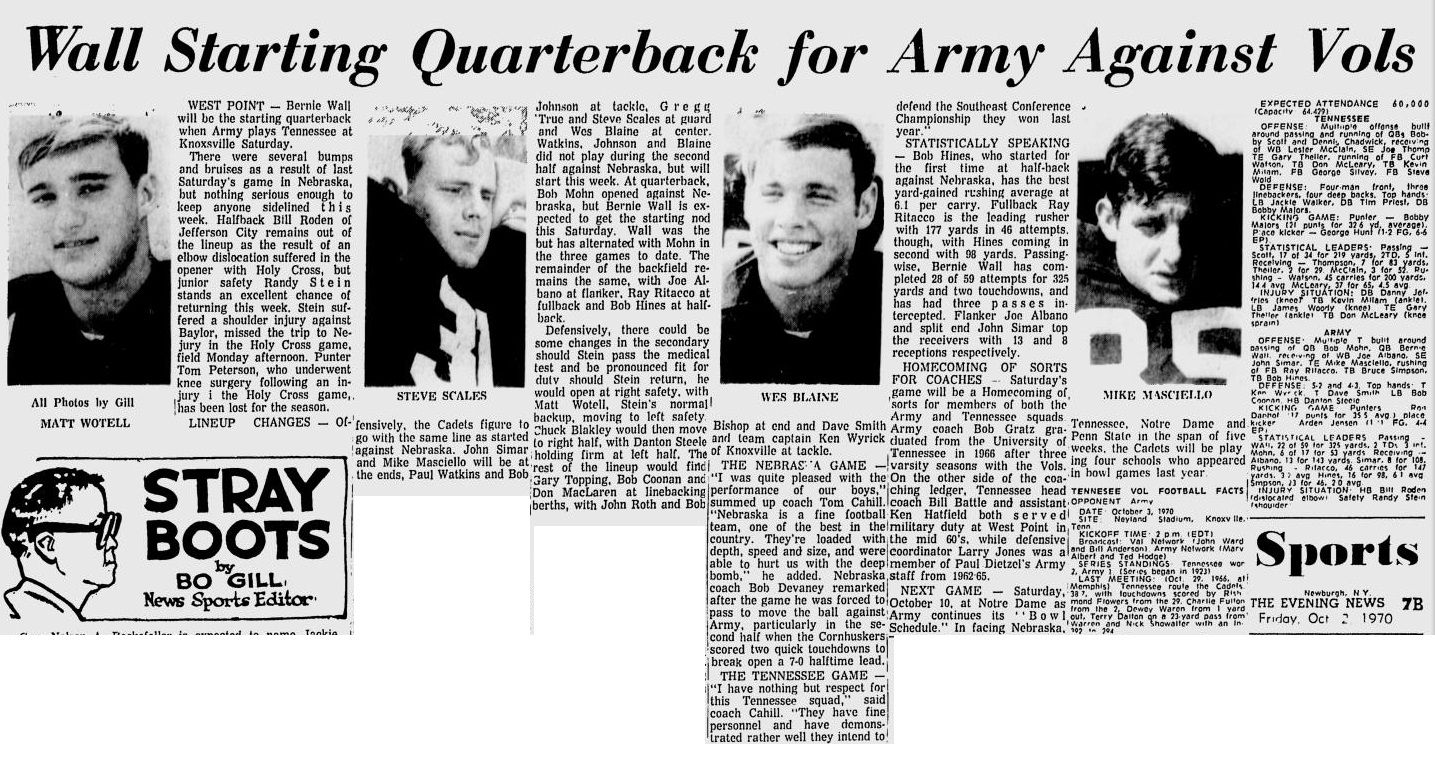
armyfb_1970_wottel_nebraska_newburgheveningnews_oct21970
ArmyFB_1970_Wottel_Nebraska_NewburghEveningNews_Oct21970


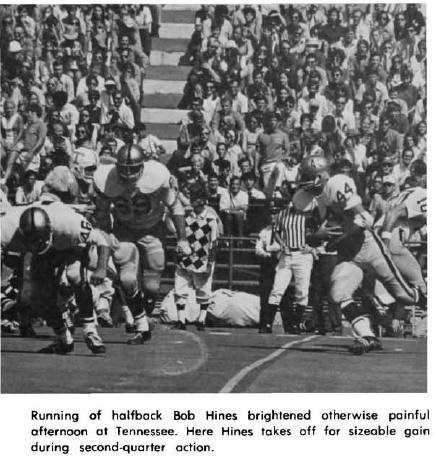
armyfb_1970_vstenn-bobhines_assembly1970
ArmyFB_1970_vsTenn-BobHines_Assembly1970


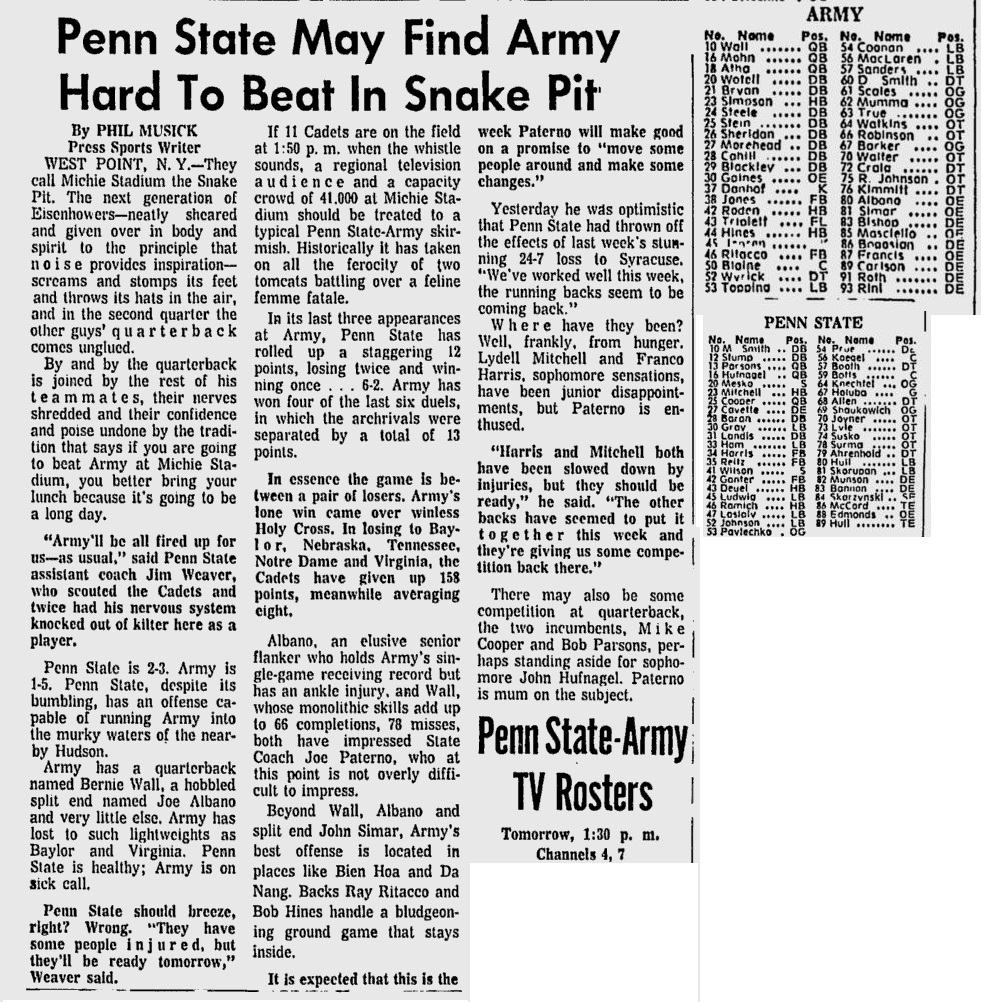
armyfb_1970_vspennstate_pittsburghpress_oct231970
ArmyFB_1970_vsPennState_PittsburghPress_Oct231970


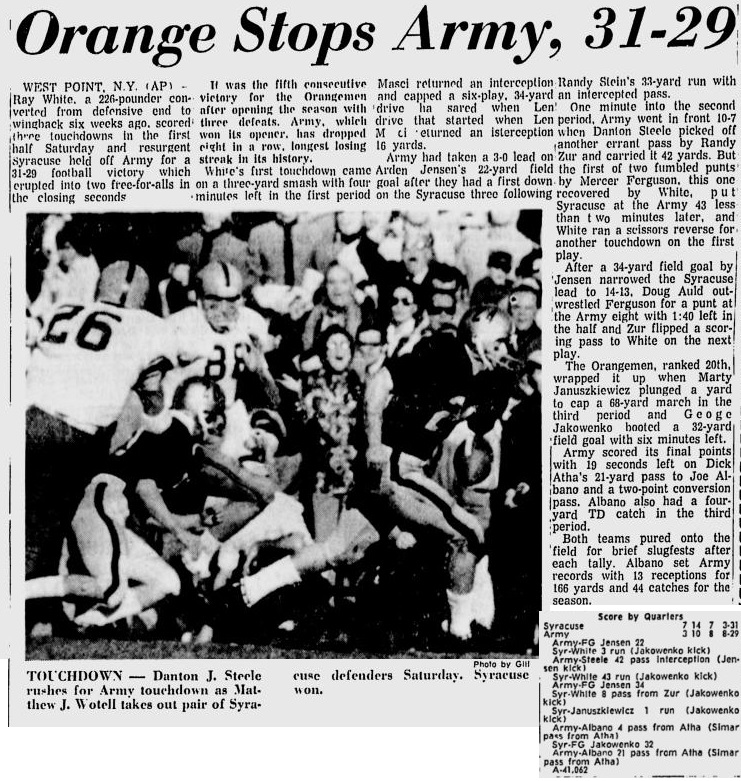
armyfb_1970_vssyracuse_newburgheveningnews_nov91970
ArmyFB_1970_vsSyracuse_NewburghEveningNews_Nov91970


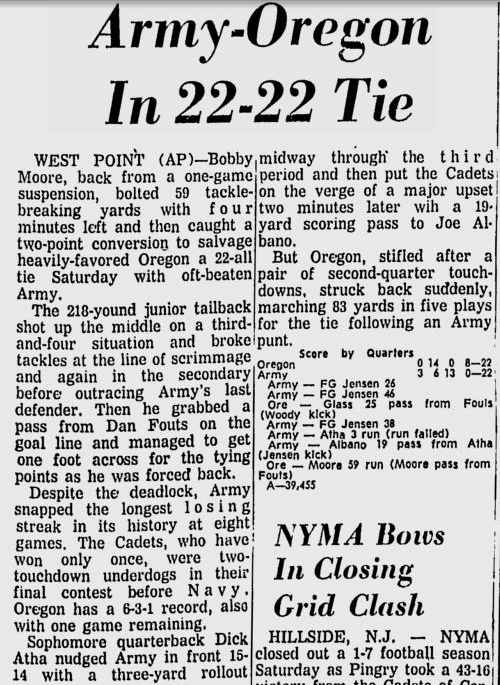
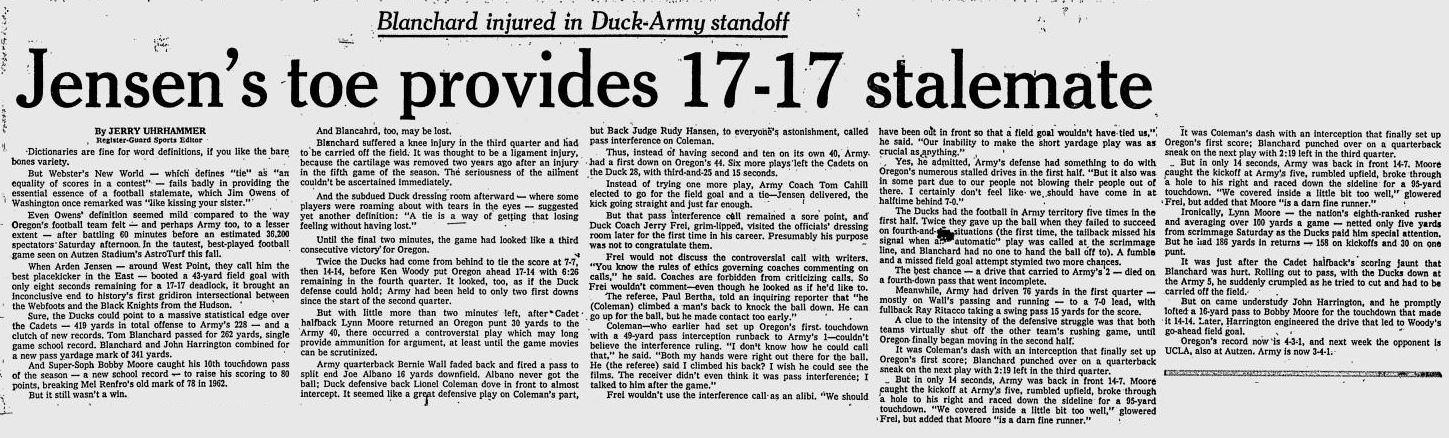
armyfb_1970_vsoregon_newburgheveningnews_nov161970
ArmyFB_1970_vsOregon_NewburghEveningNews_Nov161970


armyfb_1970_vsnavy_newburgheveningnews_nov281970
ArmyFB_1970_vsNavy_NewburghEveningNews_Nov281970

–

–

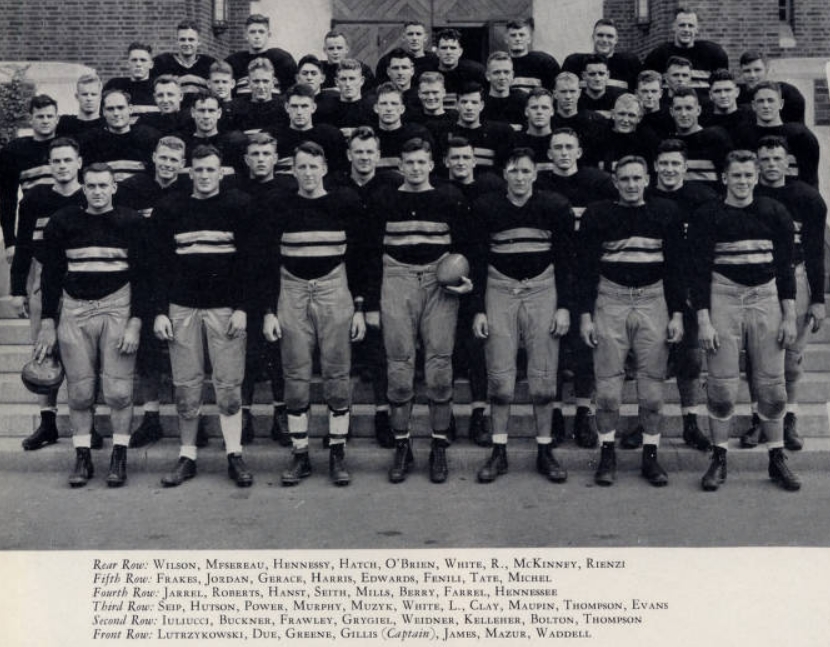
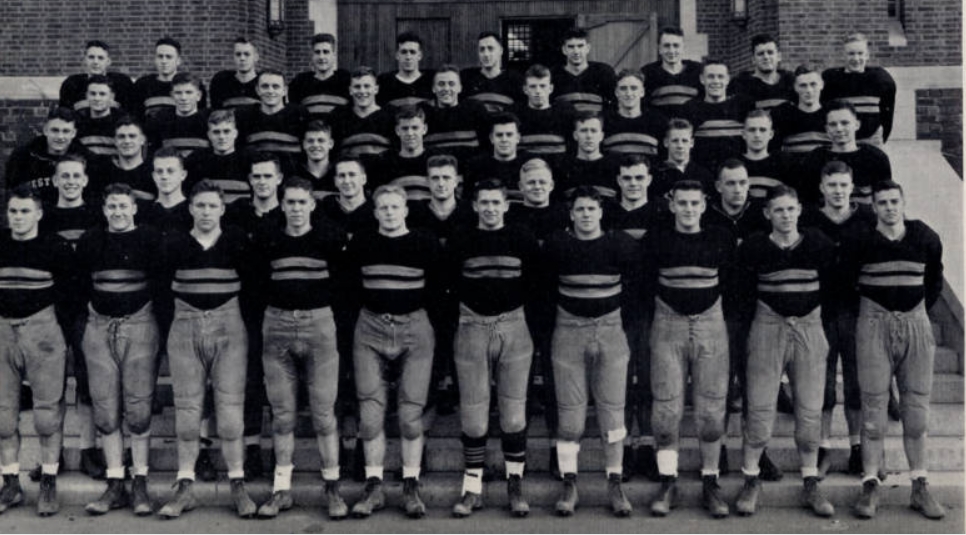
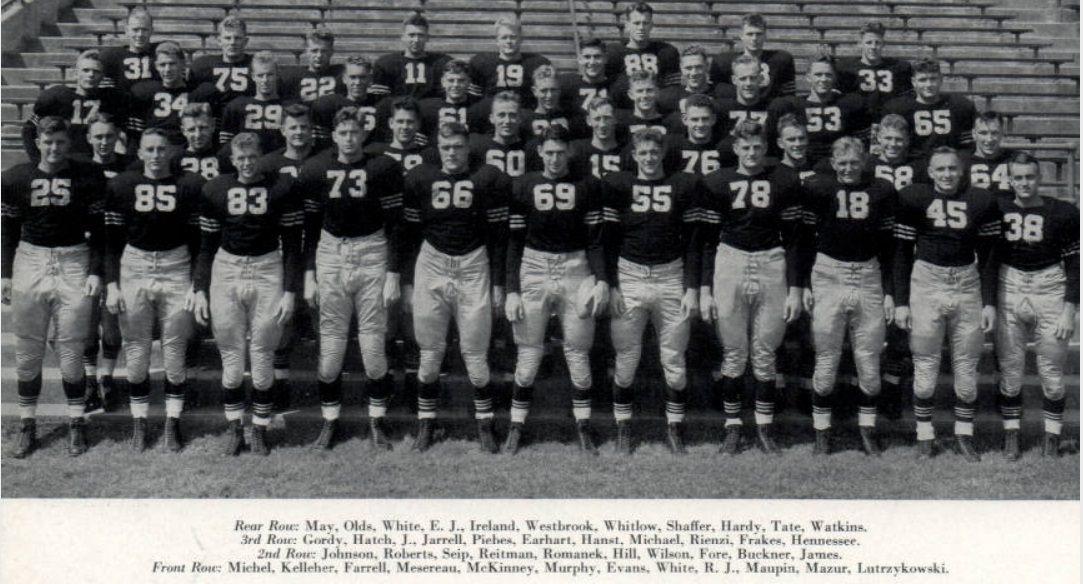
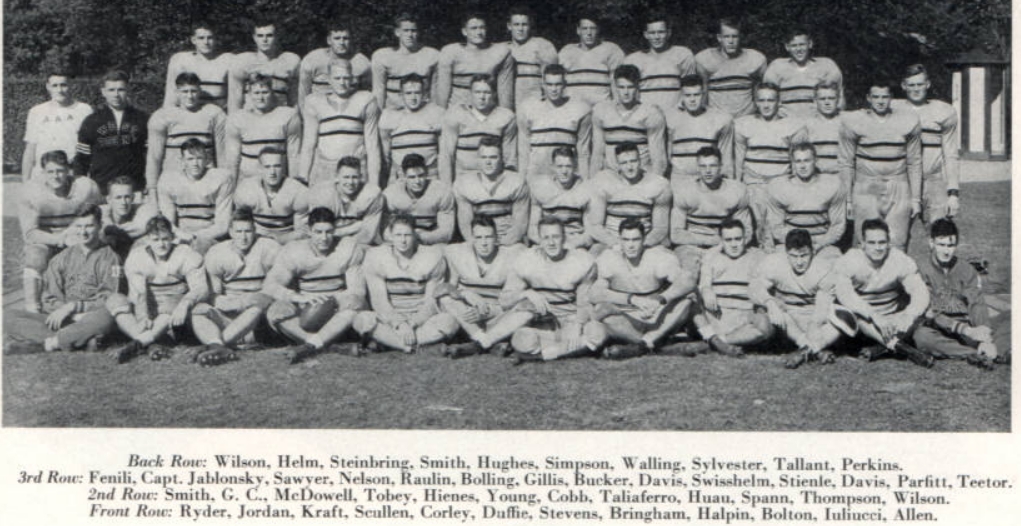
1940 Team

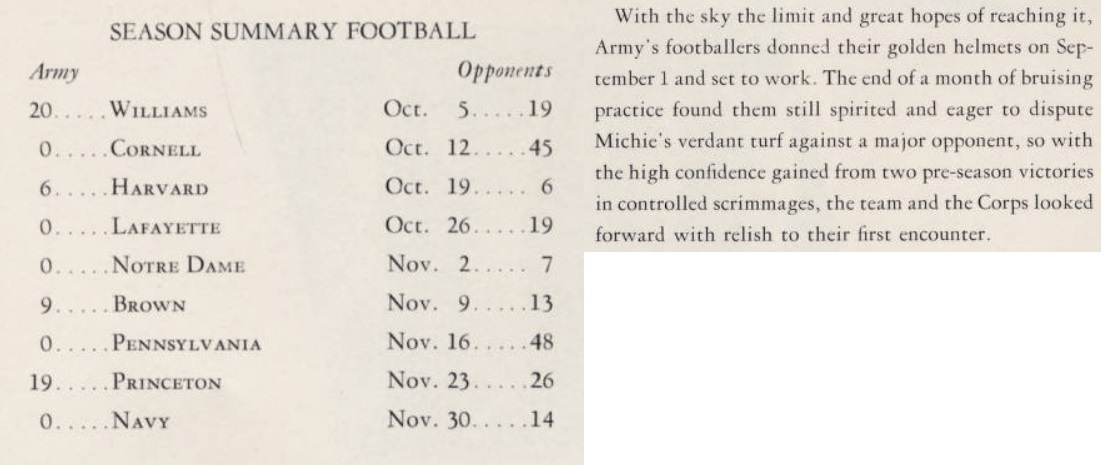
1940 Army 1-7-1
1940/11/30 Army 0 – Navy 14 L

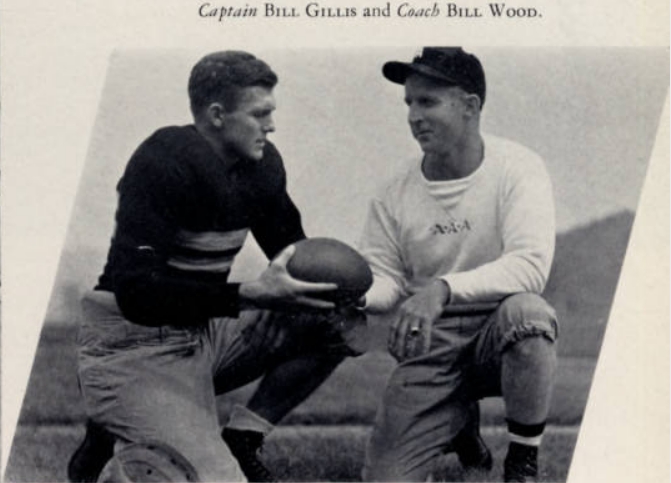
Coach: William H. “Bill” Wood (c. 1900 – June 7, 1988)
1938-1940
1938 Army 8-2
1939 Army 3-4-2
1940 Army 1-7-1
Overall: 12-13

Howitzer 1941
http://digital-library.usma.edu/cdm/compoundobject/collection/howitzers/id/5167/

–

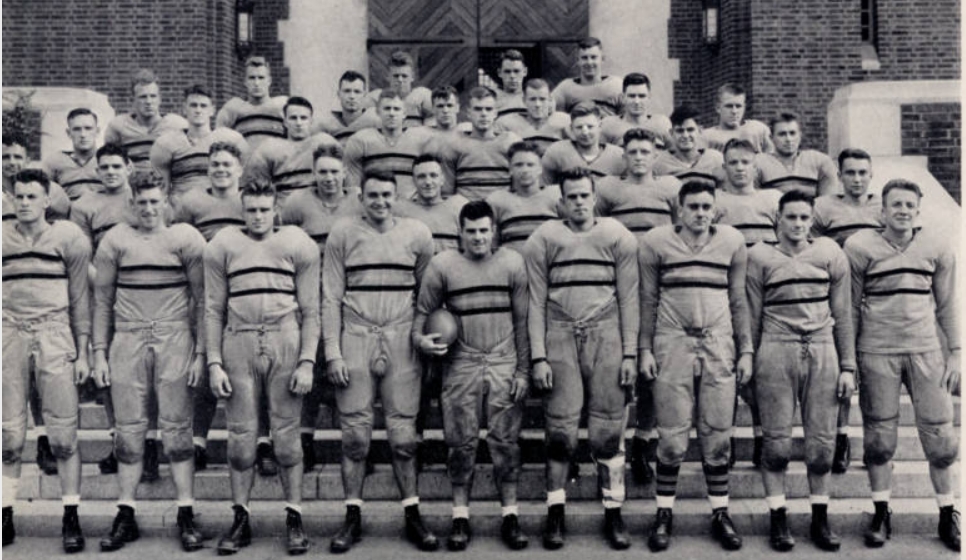
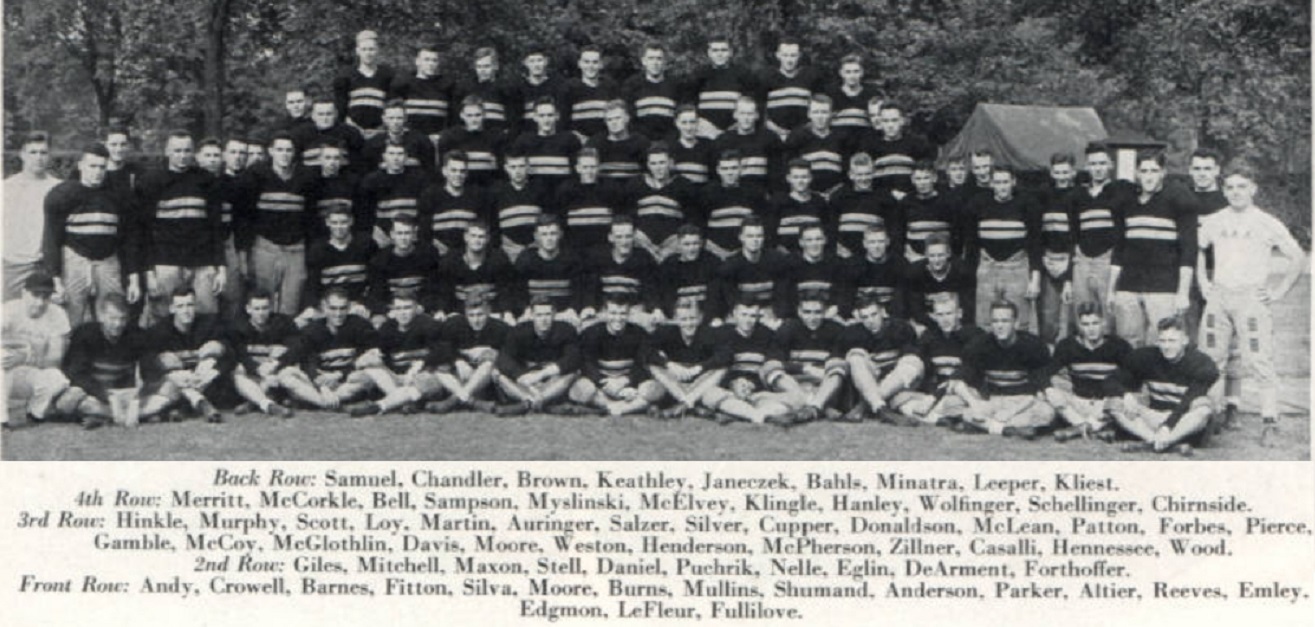
ArmyFB_1940_team

–

ArmyFB_1940_record

–

ArmyFB_1940_CoachWood_Gillis-Captain

–

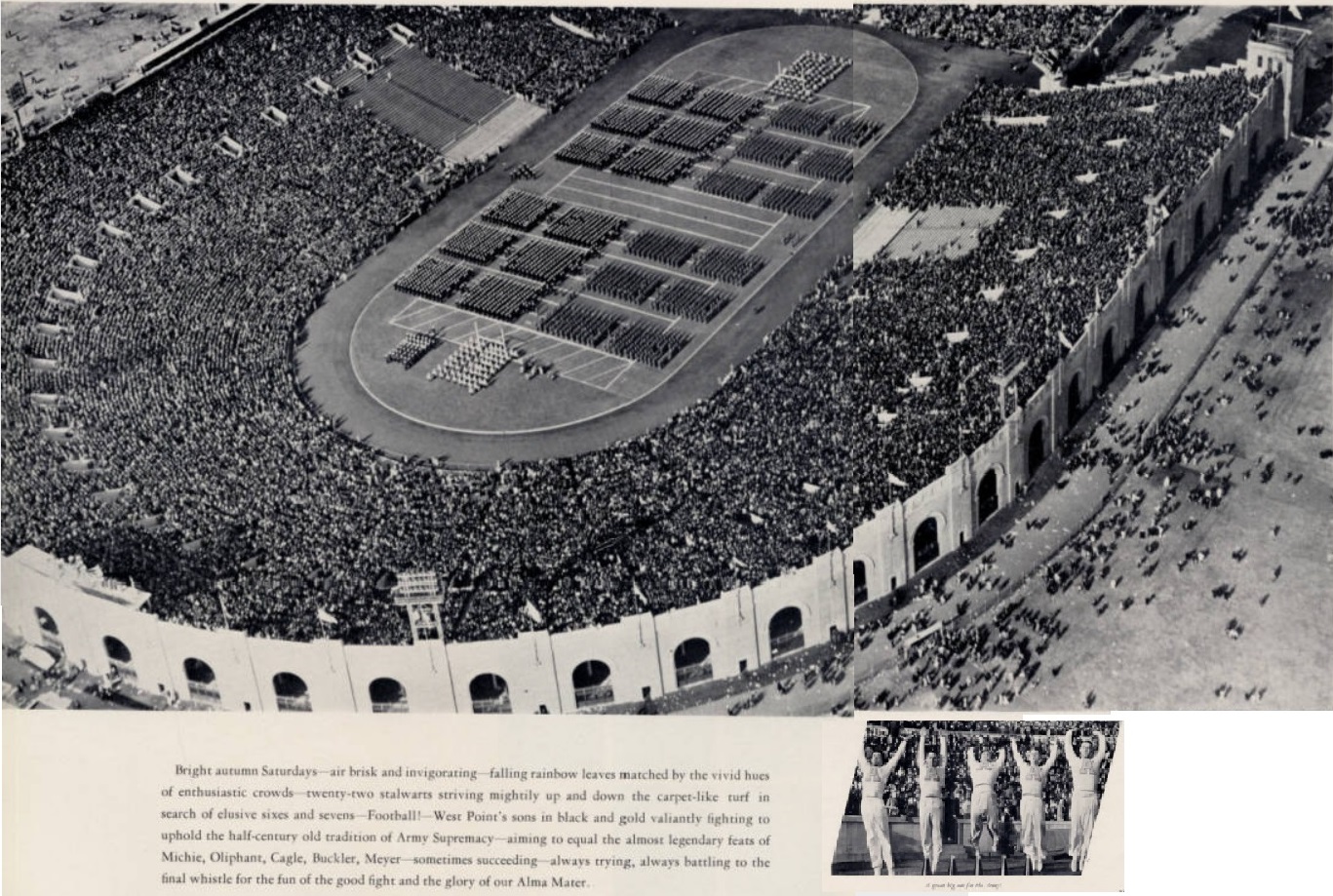
ArmyFB_1940_Corps-stadium

–

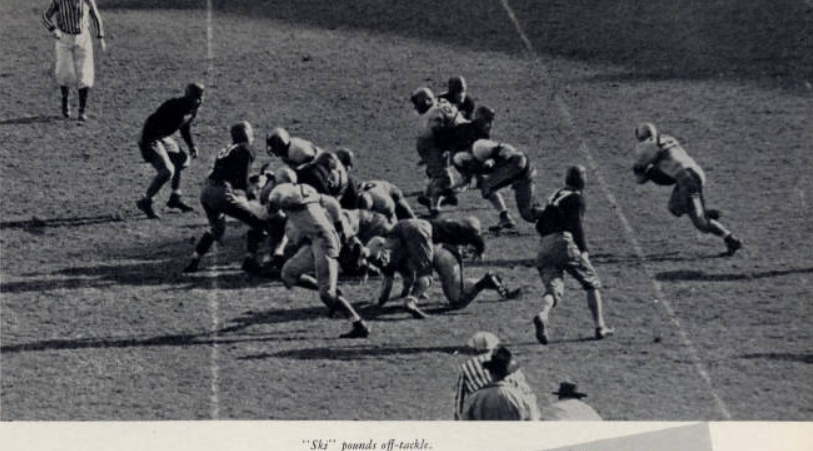
ArmyFB_1940_action-1

–

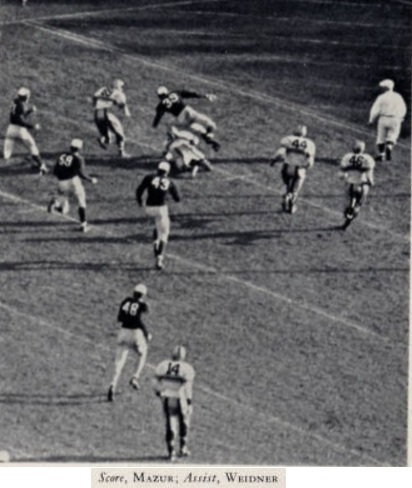
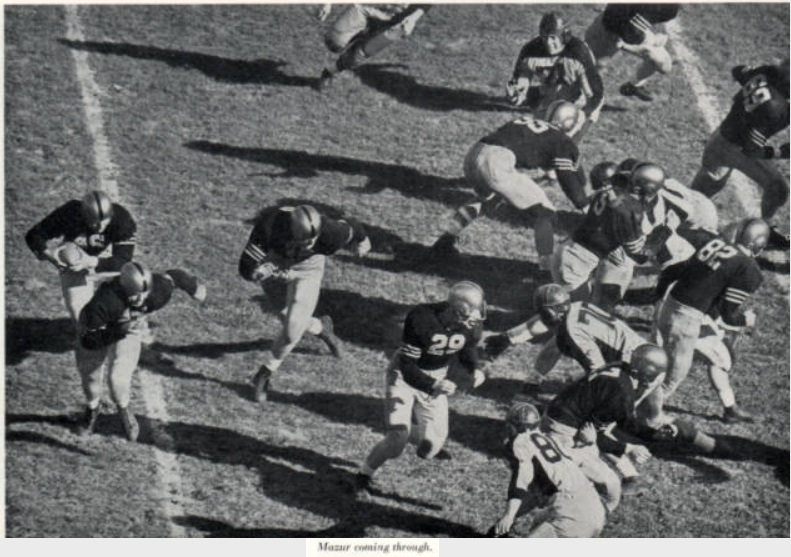
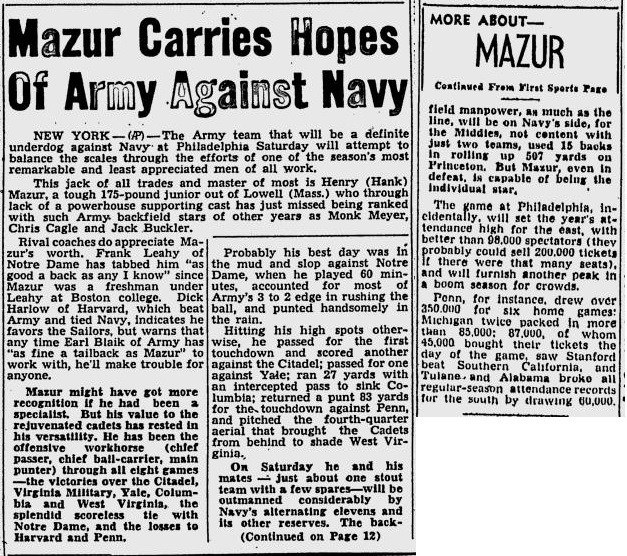
ArmyFB_1940_action-2_Mazur-run

–

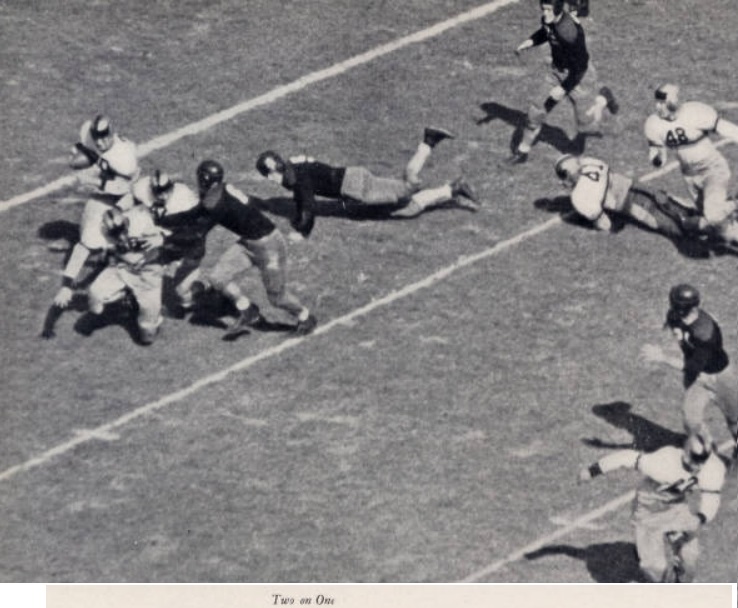
ArmyFB_1940_action-3

–

ArmyFB_1940_action-4

–

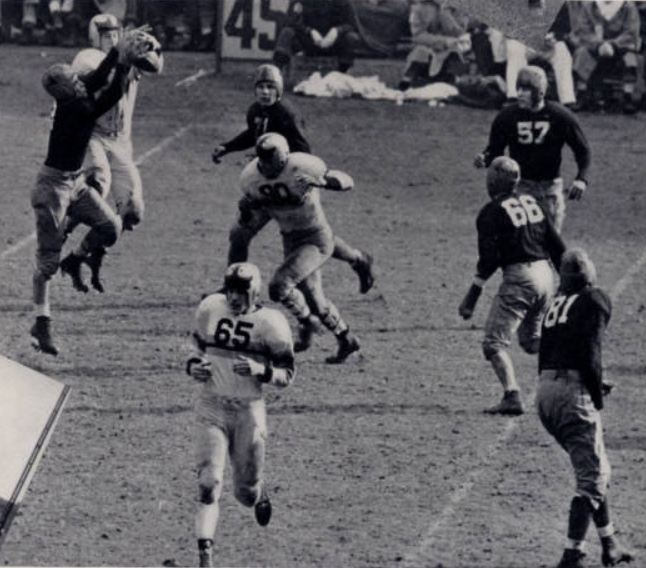
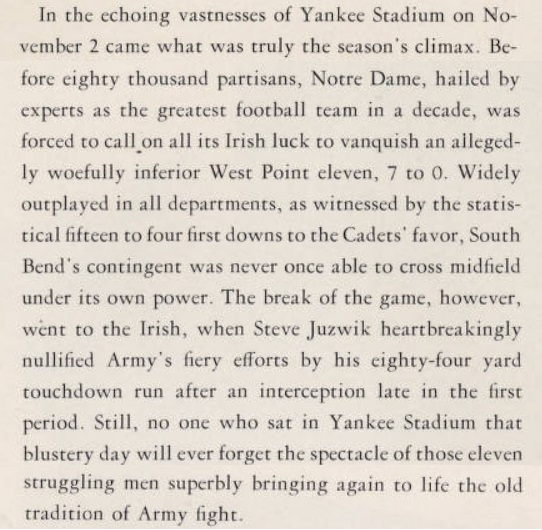
ArmyFB_1940_vsNotreDame

–

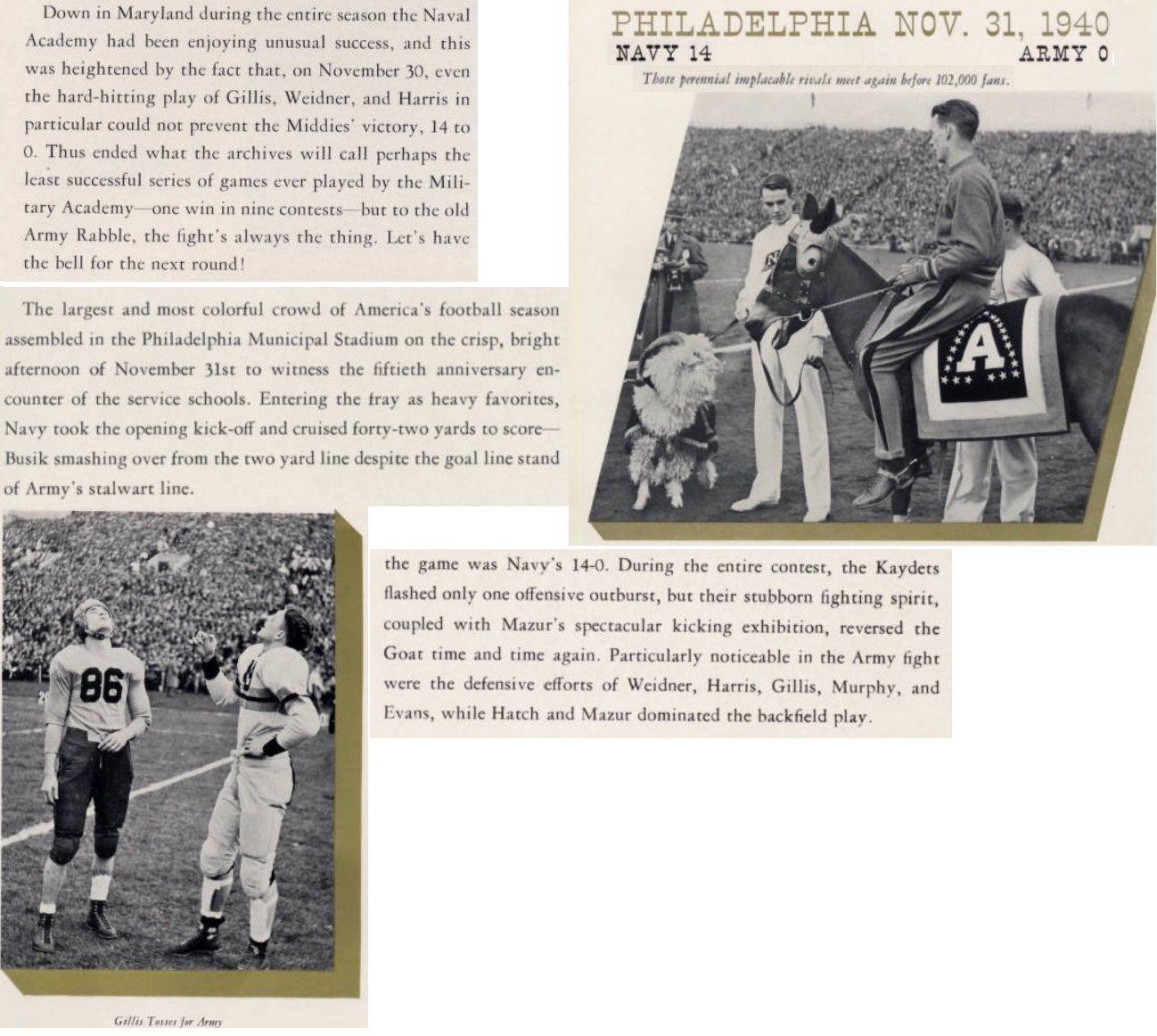
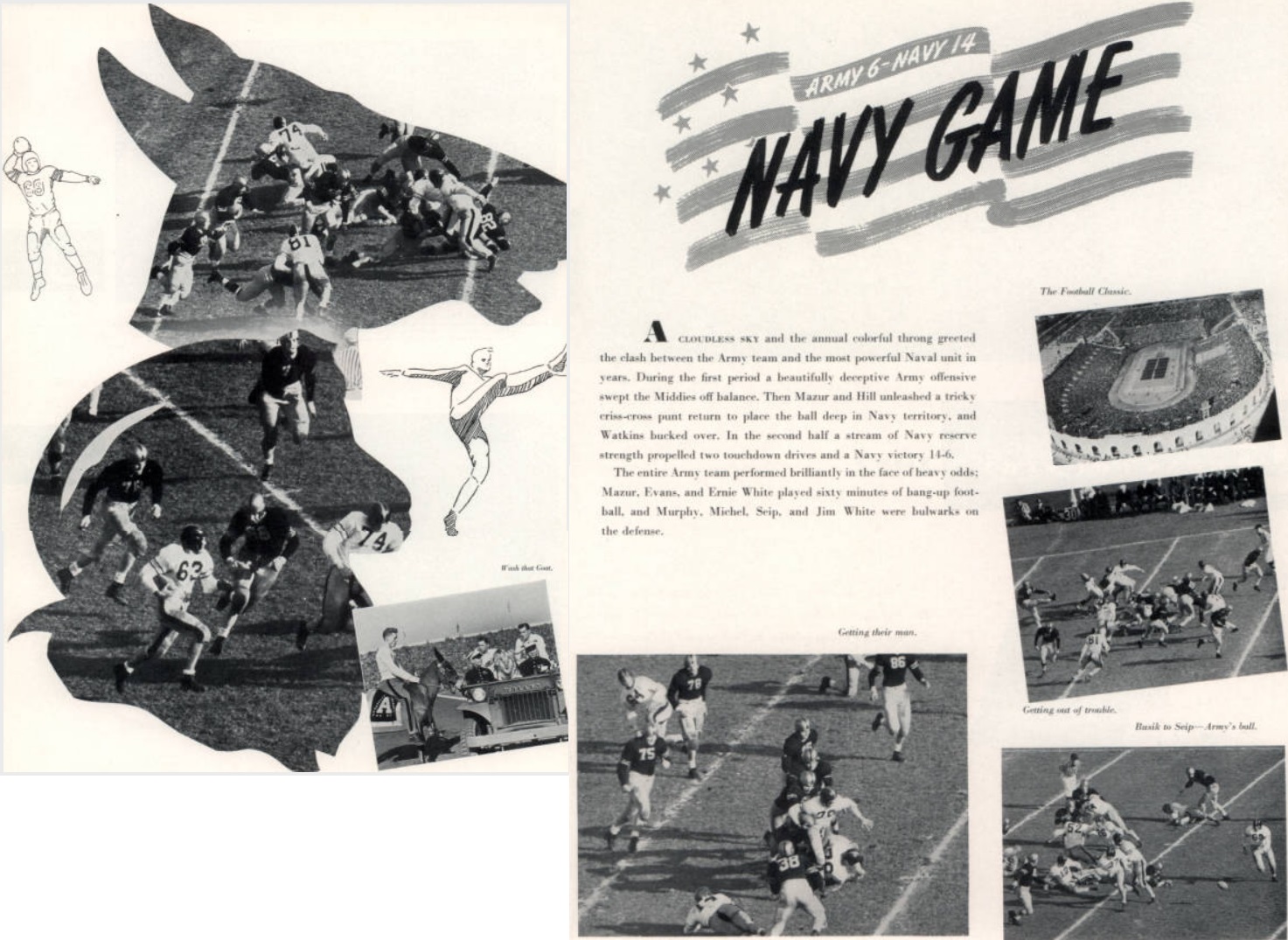
ArmyFB_1940_vsNavy_write-up

–

ArmyFB_1940_BSquad

–

ArmyFB_1940_CSquad

–

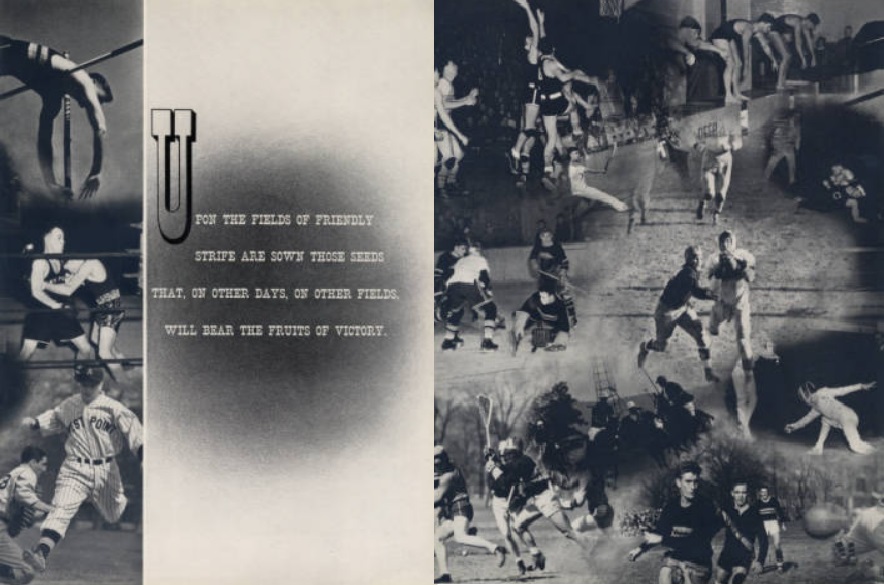
First appearance of that famous quote?

ArmyFB_1940_MacArthur-slogan-UpontheFields

–

News Articles

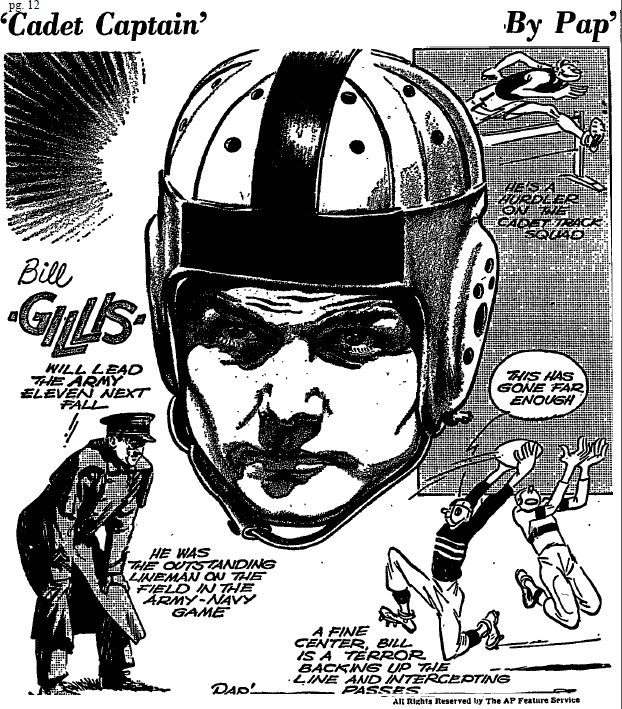
ArmyFB_1940_BillGillis_byPap_CSM_Dec141939
–

ArmyFB_1940_forecast_EveningIndependent_Sep91940

–

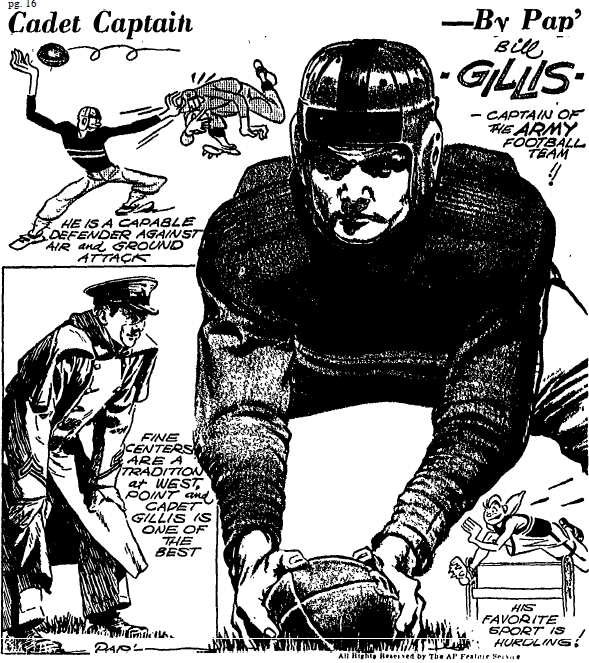
ArmyFB_1940_BillGillis_byPap_CSM_Oct311940

–

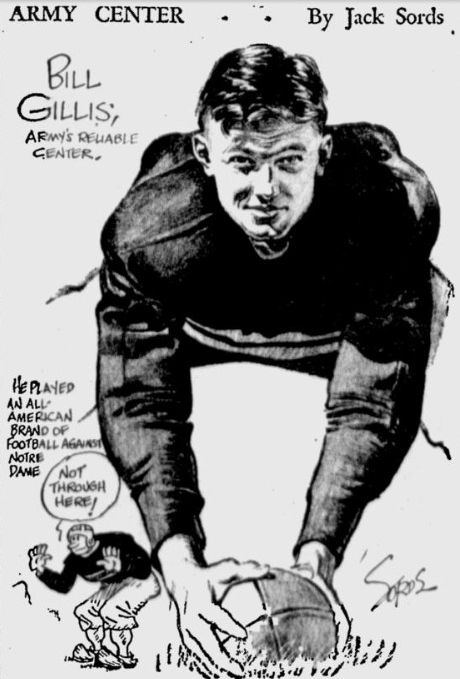
ArmyFB_1940_BillGillis_byJackSords_PrescottEveningCourier_Nov121940

ArmyFB_1940_BillGillis_byJackSords_PrescottEveningCourier_Nov121940

ArmyFB_1940_vsNavy_LewistonEveningJournal_Nov271940-1
–

ArmyFB_1940_vsNavy_TheDay_Nov291940
–

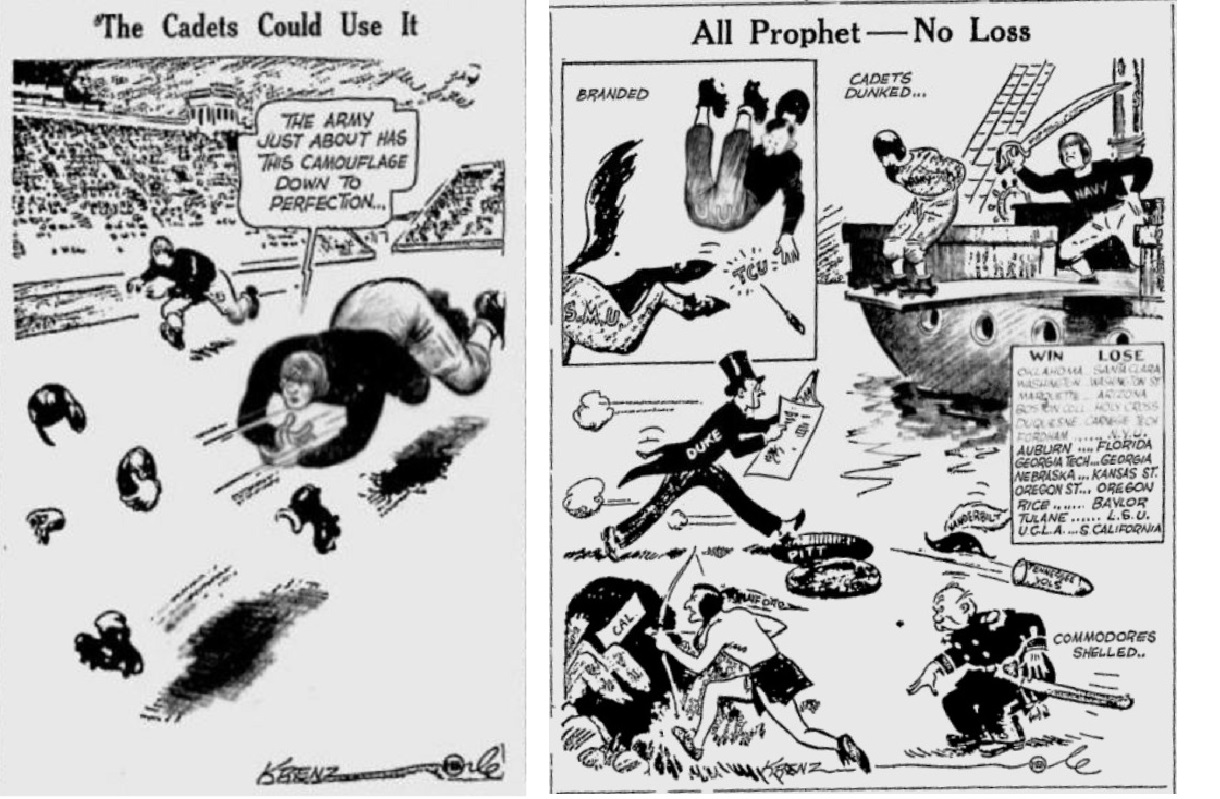
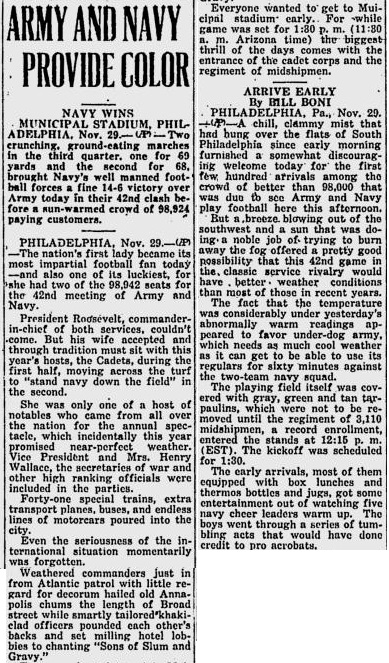
ArmyFB_1940_vsNavy_byKrenz _PalmBeachPost_Nov301940

–

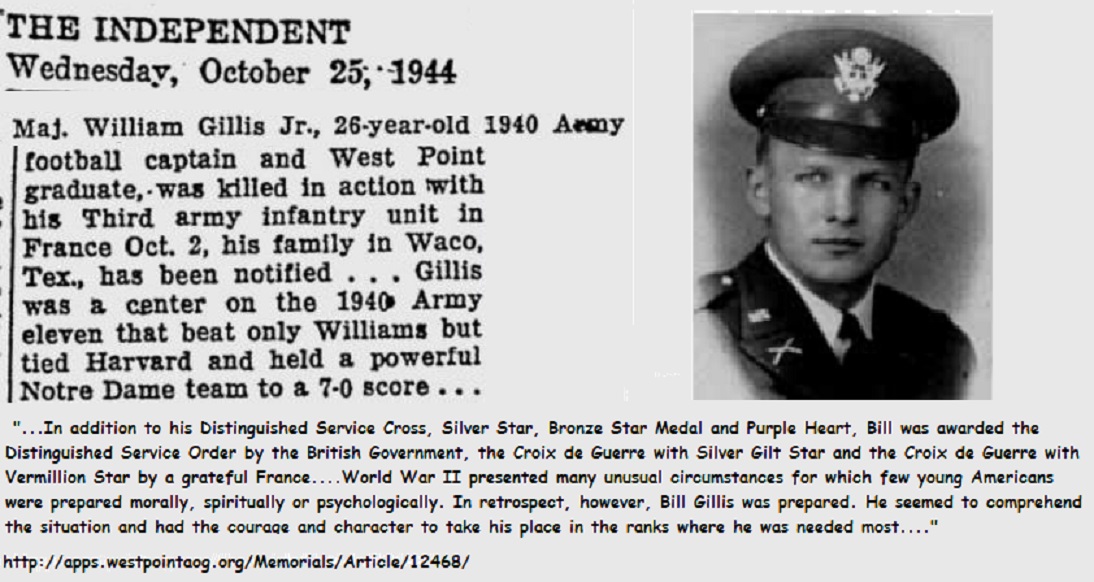
ArmyFB_1941_MAJWilliamGillis_KIA_EveningIndependent_Oct251944

ArmyFB_1941_MAJWilliamGillis_KIA_EveningIndependent_Oct251944

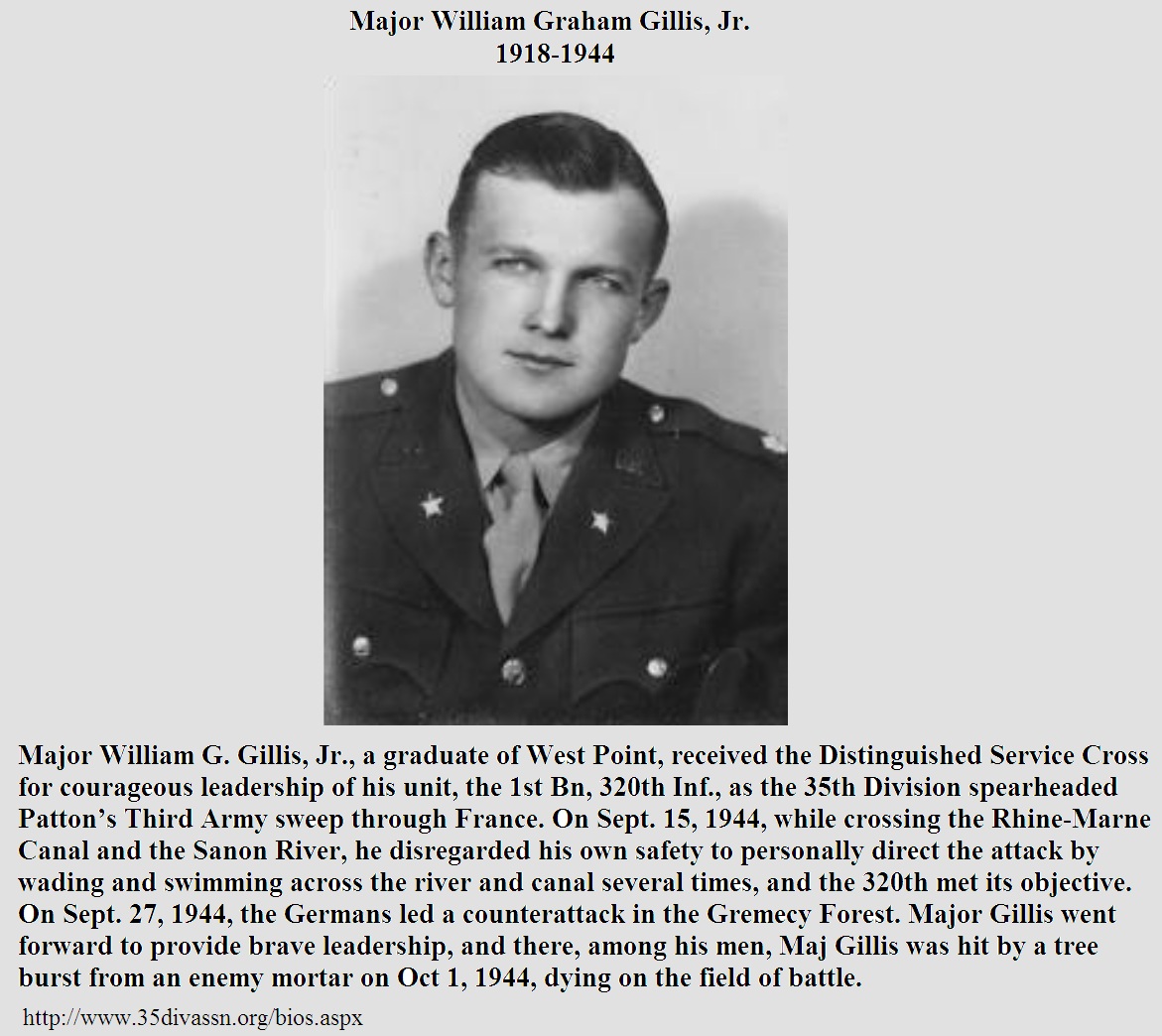
ArmyFB_1941_WilliamGGillis_35thDiv

ArmyFB_1941_WilliamGGillis_35thDiv

See also…Honor on the Line: The Fifth Down and the Spectacular 1940 College Football … By Robert J. Scott, Myles A. Pocta, p.226

1941 Team

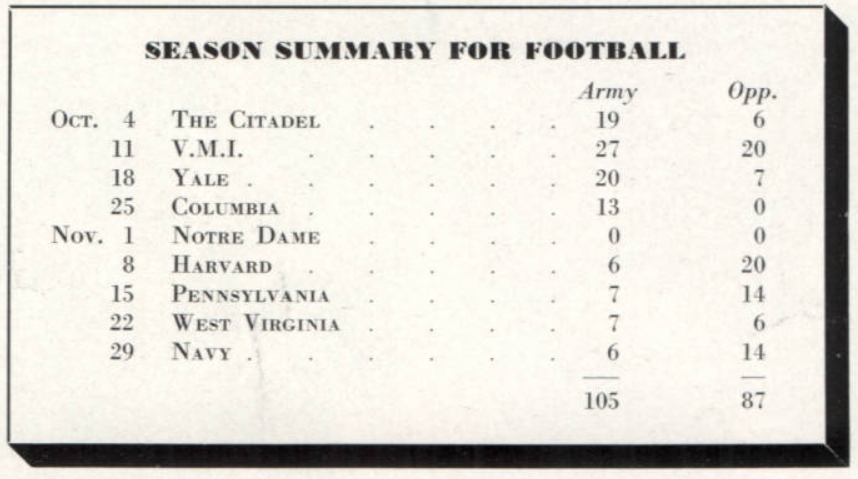
1941 Army 5-3-1
1941/11/29 Army 6 – Navy 14 L

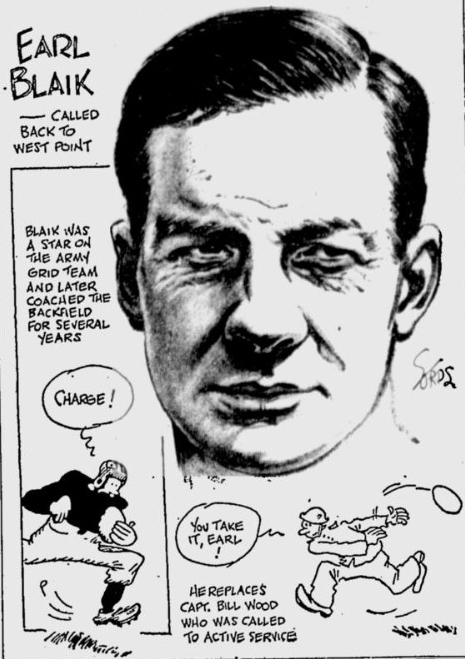
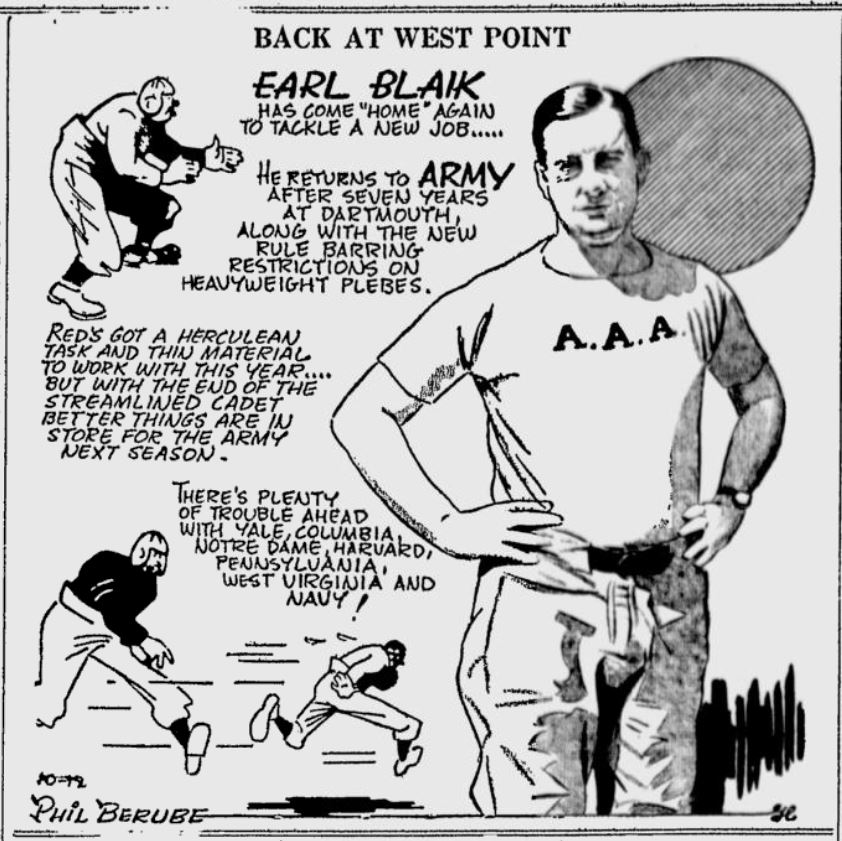
Coach: Earl Henry “Red” Blaik (February 15, 1897 – May 6, 1989)
Dartmouth 1934-1940 – 45-15-4
Army: 1941-1958 – 121-33-10
Overall: 166-48-14
Awards:
All-American, 1919
AFCA Coach of the Year (1946)
College Football Hall of Fame, Inducted in 1964

Howitzer 1942
http://digital-library.usma.edu/cdm/compoundobject/collection/howitzers/id/18345/

–

ArmyFB_1941_team

–

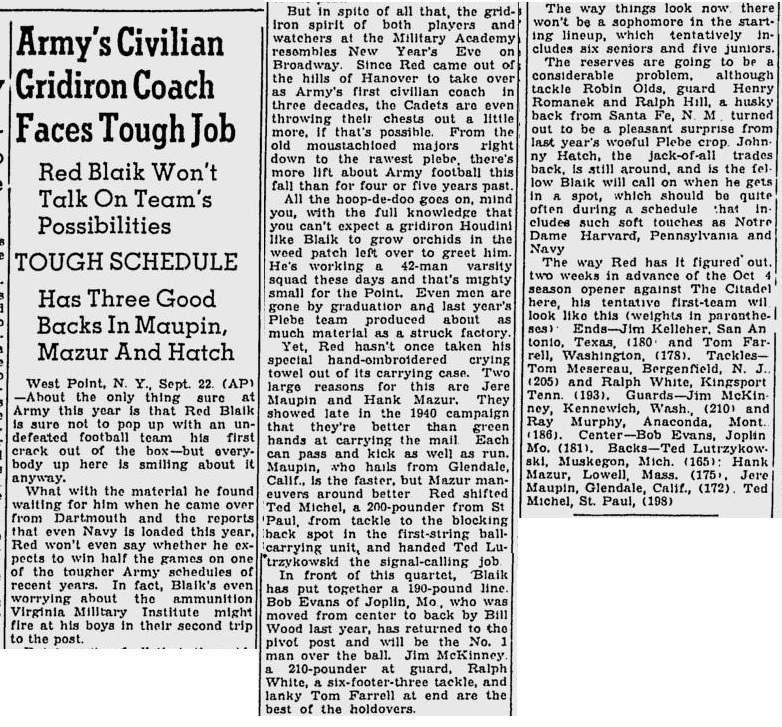
ArmyFB_1941_EarlBlaik_byJackSords_PrescottEveningCourier_Oct71941
ArmyFB_1941_ Earl Blaik _byJackSords_PrescottEveningCourier_Oct71941

–

ArmyFB_1941_EarlBlaik_byPhilBerube_SundayMorningStar_Oct121941

ArmyFB_1941_EarlBlaik_byPhilBerube_SundayMorningStar_Oct121941

“In 1941, Blaik was tapped to be head football coach for the United States Military Academy. Army had suffered two consecutive losing seasons in 1939 and 1940, a first since 1906, and dropped its requirements for its coach to be a serving graduate and that all players meet restrictive height-to-weight limitations. The latter was a condition Blaik made as a requirement for him to accept the position, believing Army to be severely handicapped in the size of its linemen. The United States Naval Academy did not have the same restrictions and the Army surgeon general was persuaded to drop the requirement for football players.

At West Point, Blaik coached for 18 seasons compiling a 121-33-10 record. Blaik’s Army teams had a 32-game unbeaten streak from 1944 to 1947, won consecutive national titles in 1944 and 1945, and finished second in the nation in 1946 with their record blemished only by a scoreless tie with rival Notre Dame at Yankee Stadium. In 1946, Blaik was selected as the AFCA Coach of the Year. In 1948, he became one of the first college coaches to implement a two-platoon system, using players strictly for offense or defense. Blaik was also one of the first coaches to analyze the game play-by-play, charting a team’s tendencies on every down with the use of game film.

During his tenure at West Point, Blaik coached three Heisman trophy winners, Doc Blanchard in 1945, Glenn Davis in 1946 and Pete Dawkins in 1958, as well as a total of 11 Hall of Fame players. Twenty of his former assistant coaches became head coaches in their own right: Paul Amen, George Blackburn, Clarence Boston, Eddie Crowder, Paul Dietzel, Bobby Dobbs, Sid Gillman, Jack Green, Andy Gustafson, Dale Hall, Tom Harp, Herman Hickman, Stu Holcomb, Frank Lauterbur, Vince Lombardi, John Sauer, Richard Voris, Murray Warmath, Bob Woodruff, and Bill Yeoman. Legendary fighter pilot Colonel Robin Olds also served as an assistant coach to Blaik. Dietzel, while at LSU, and Murray Warmath, while at Minnesota, won national championships as head coaches. Gillman, while head coach of the San Diego Chargers won an AFL championship. Lombardi, as head coach of the Green Bay Packers, won five NFL titles and the first two Super Bowls.

During Blaik’s tenure, the Army team adopted the nicknames “Black Knights” and “Black Knights of the Hudson”, which has now come to refer to all intercollegiate athletic teams at West Point.
sources: http://en.wikipedia.org/wiki/Earl_Blaik
http://en.wikipedia.org/wiki/Army_Black_Knights_football

–

ArmyFB_1941_team

–

ArmyFB_1941_record

–

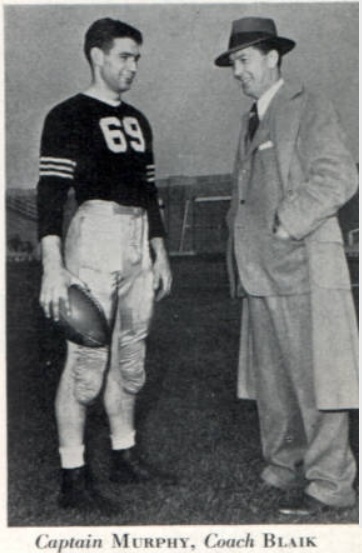
ArmyFB_1941_CoachBlaik-Murphy-Captain

–

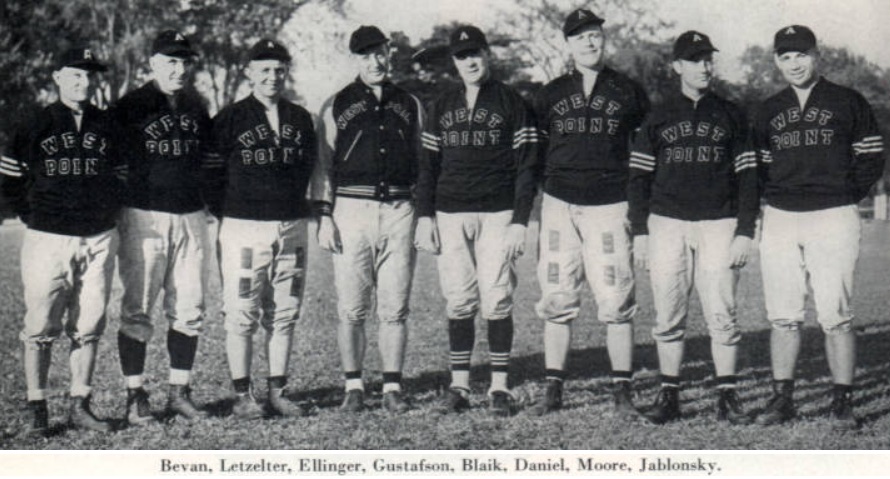
ArmyFB_1941_coaches

–

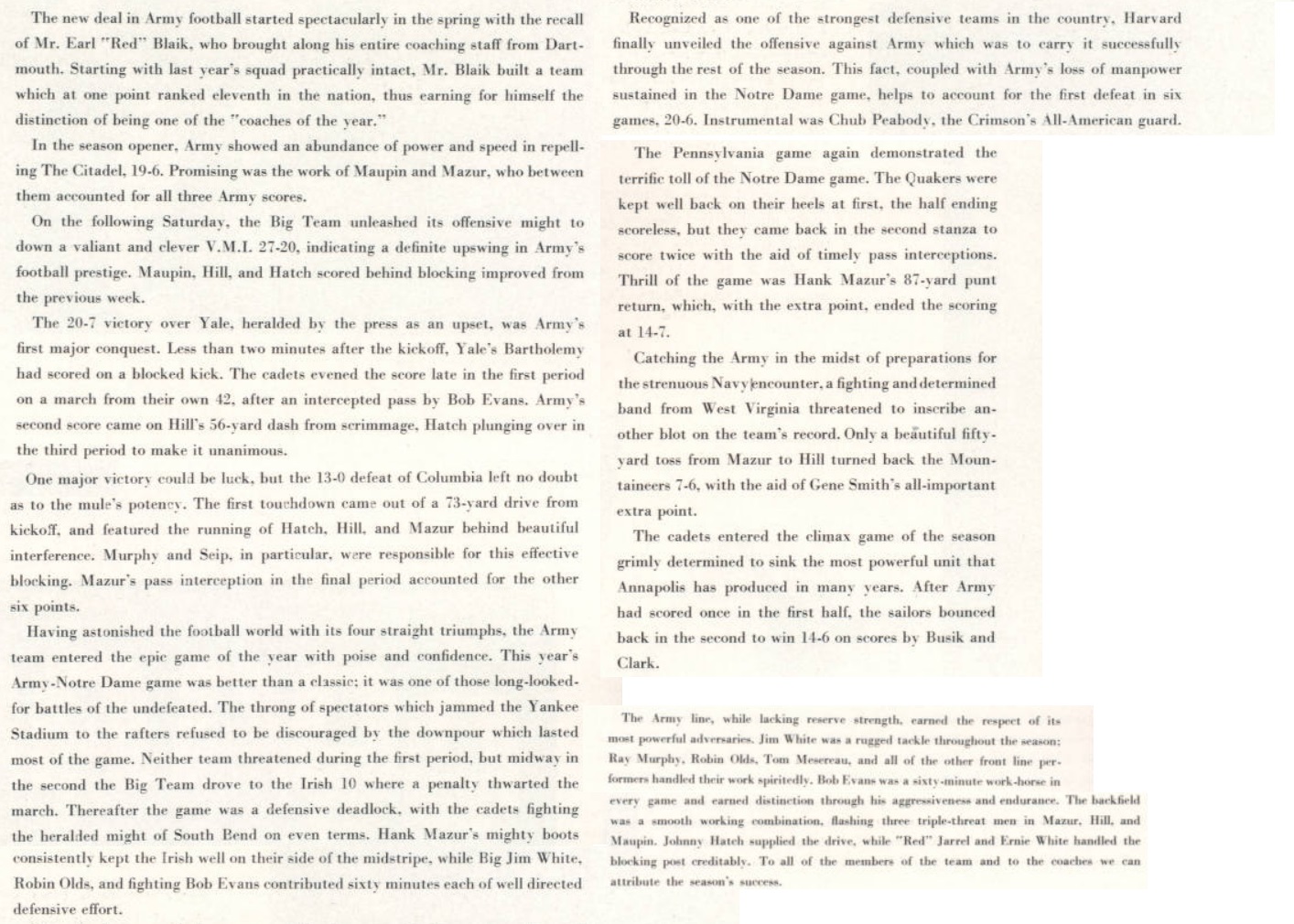
ArmyFB_1941_write-up

–

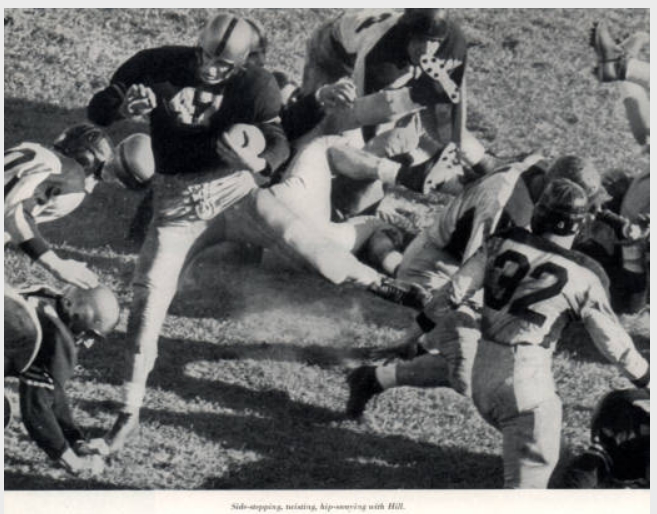
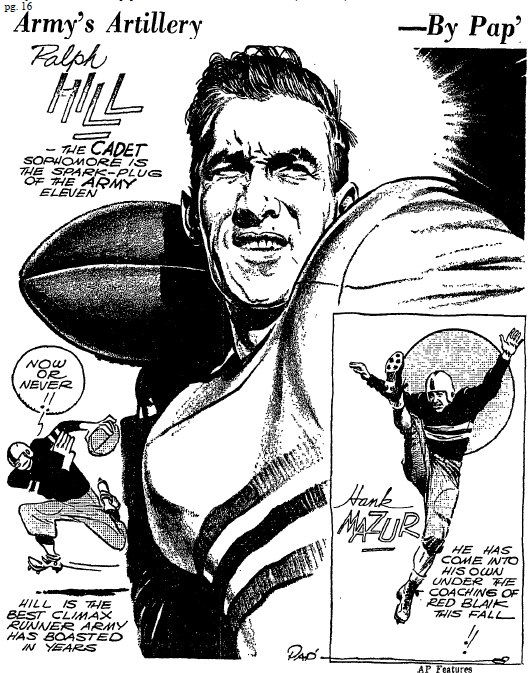
ArmyFB_1941_Hill_action-1

–

ArmyFB_1941_Mazur_action-2

–

ArmyFB_1941_defense_action-3

–

ArmyFB_1941_vsNavy-1

–

ArmyFB_1941_starters

–

ArmyFB_1941_BSquad

–

ArmyFB_1941_CSquad

News Articles
–

armyfb_1941_forecast_meridenrecord_sep231941
ArmyFB_1941_forecast_MeridenRecord_Sep231941
–
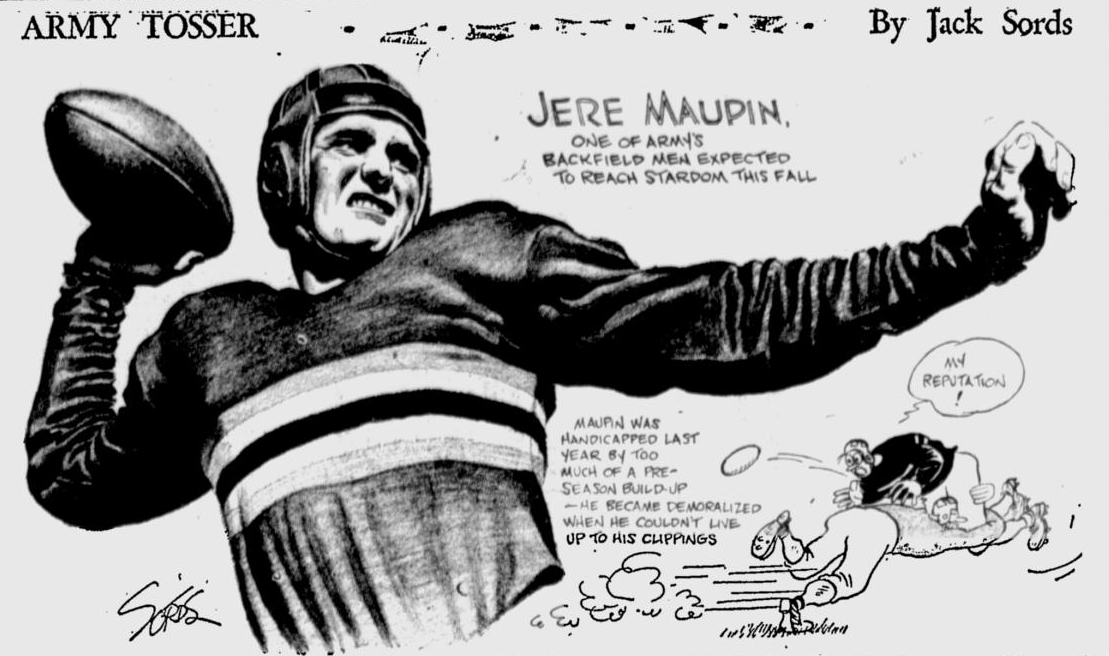
ArmyFB_1941_JerryMaupin_byJackSords_PrescottEveningCourier_Oct291941
ArmyFB_1941_ “Jerry Maupin” _byJackSords_PrescottEveningCourier_Oct291941
–

armyfb_1941_vsnotredame_newsdispatch_oct311941

ArmyFB_1941_vsNotreDame_NewsDispatch_Oct311941

–
armyfb_1941_hankmazur_stpetersburgtimes_nov251941
ArmyFB_1941_HankMazur_StPetersburgTimes_Nov251941
–
ArmyFB_1941_RalphHill_byPap_CSM_Nov281941
ArmyFB_1941_ “Ralph Hill” _byPap_CSM_Nov281941r-h


–

armyfb_1941_vsnavy_prescotteveningcourier_nov291941

ArmyFB_1941_vsNavy_PrescottEveningCourier_Nov291941

–

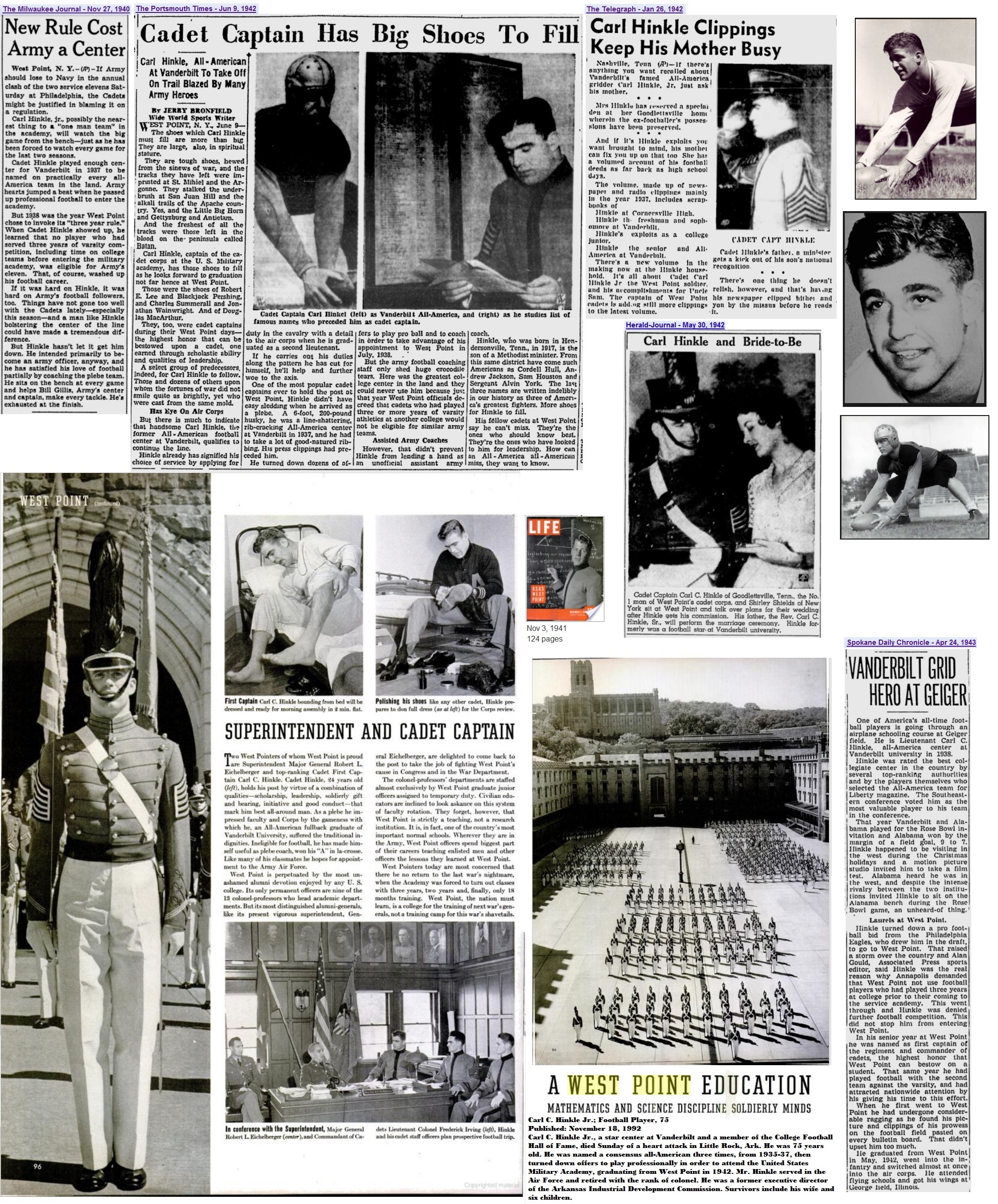
Carl Hinkle – Cadet First Captain – the Football All-American Cadet who never played a down for Army

–
carlhinkle_usma_1942
carl-hinkle_USMA_1942
–

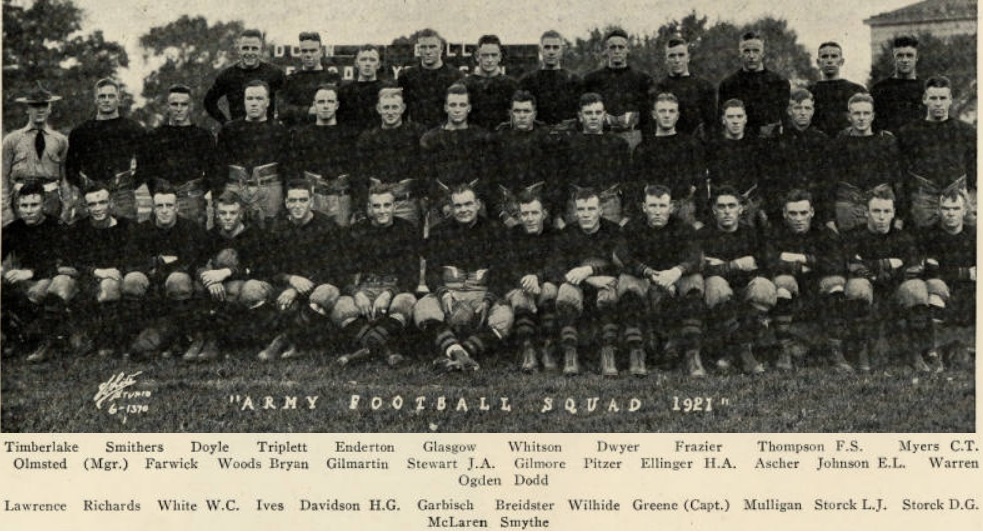
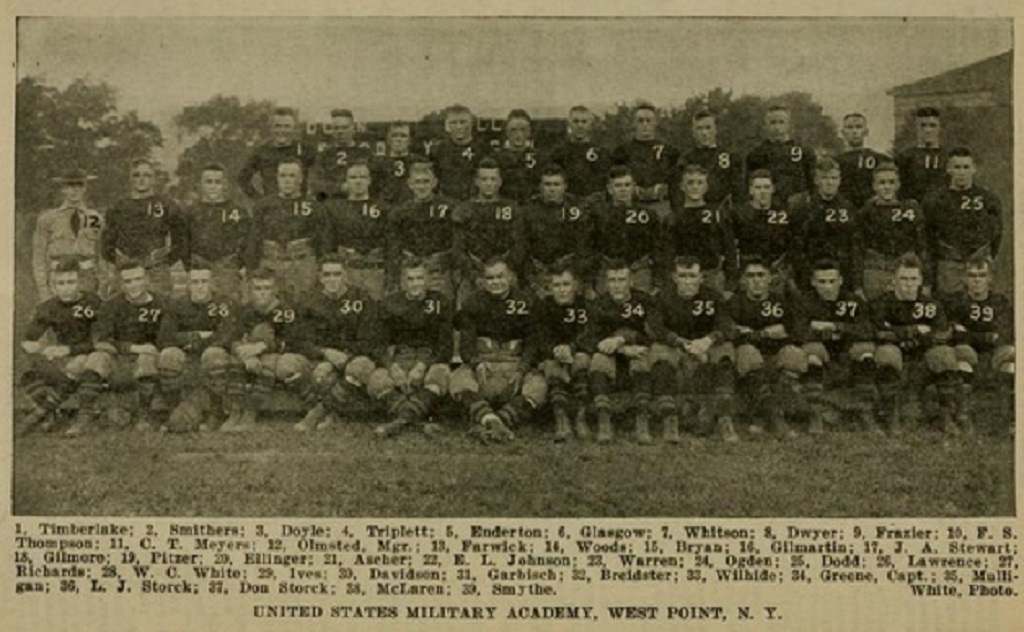
1921 Team

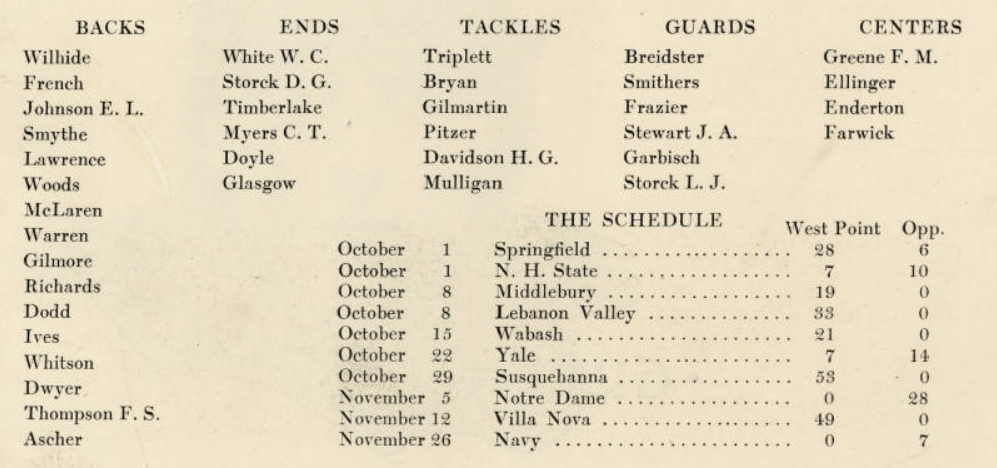
1921 Army 6-4
1921/11/26 Army 0 – Navy 7 L

Coach Charles Dudley “Charlie” Daly (October 31, 1880 – February 12, 1959)
Army 1913-1916
Army 1919-1922

Overall: 58-13-3

Appeared in the film Daly, of West Point. 1902.

source http://en.wikipedia.org/wiki/Charles_Dudley_Daly
–

Howitzer 1922
http://digital-library.usma.edu/cdm/compoundobject/collection/howitzers/id/15221/

–

ArmyFB_1921_team

–

ArmyFB_1921_team_

–

ArmyFB_1921_team-roster-record

–

ArmyFB_1921_vsNavy_starters

–

ArmyFB_1921_vsNavy_action

–

–

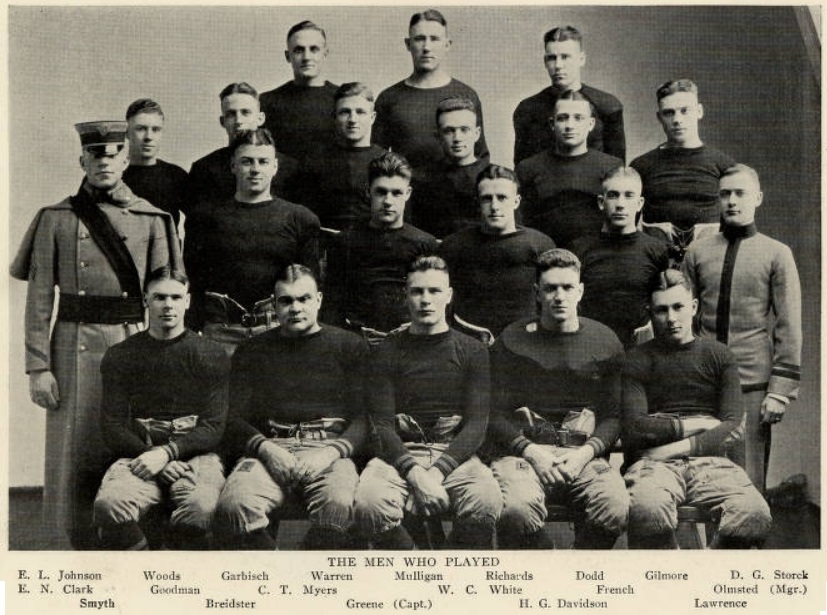
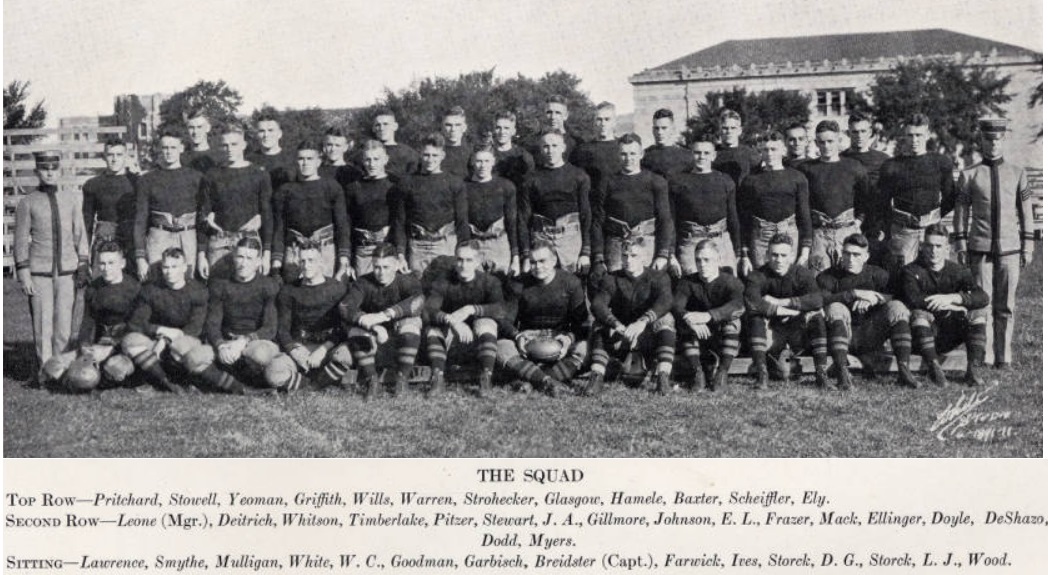
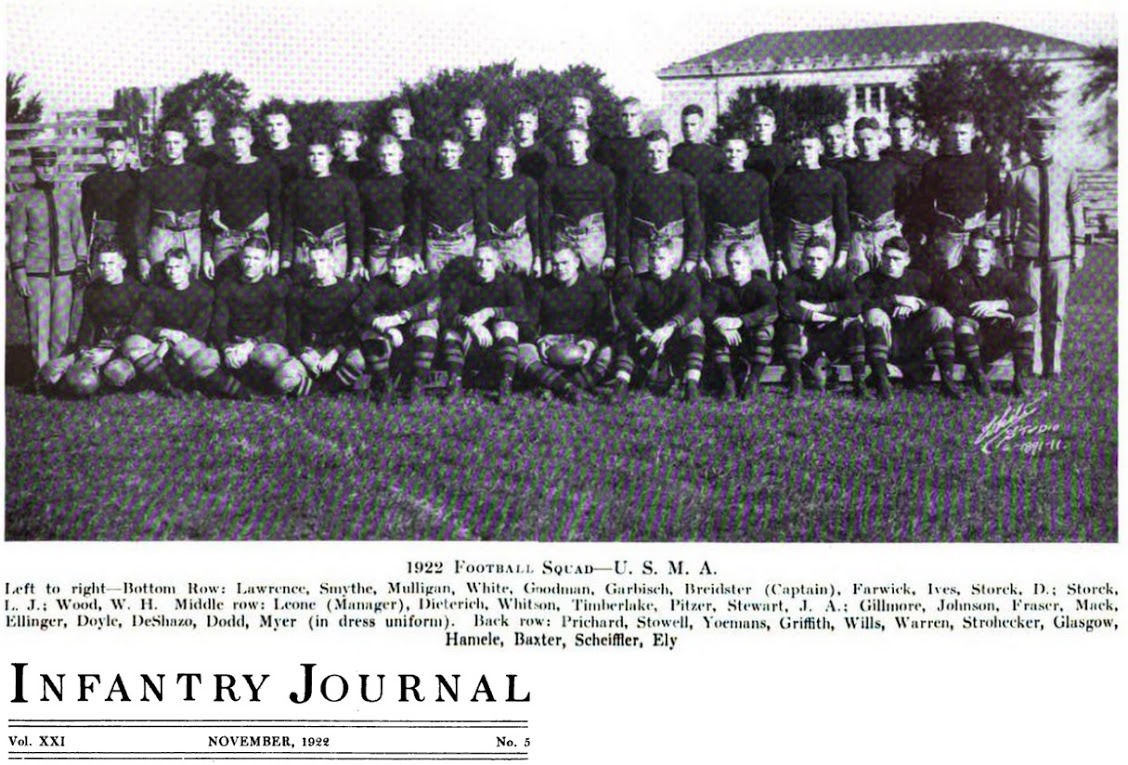
1922 Team

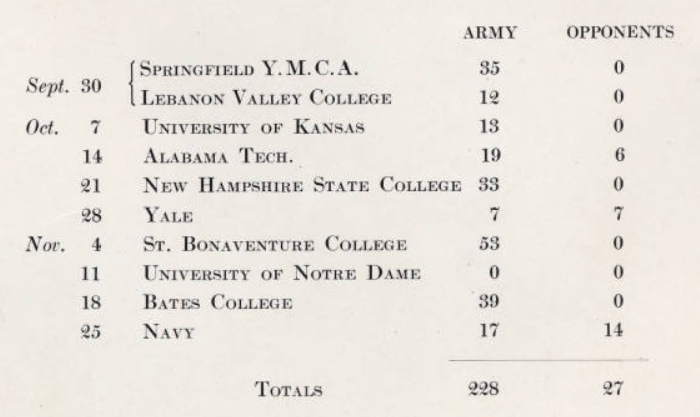
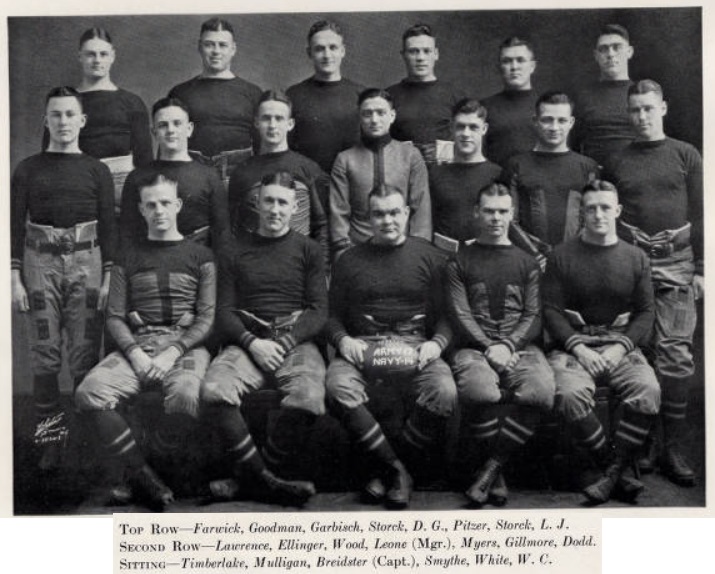
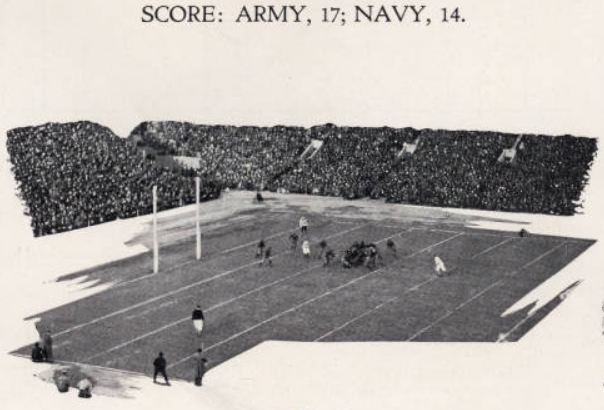
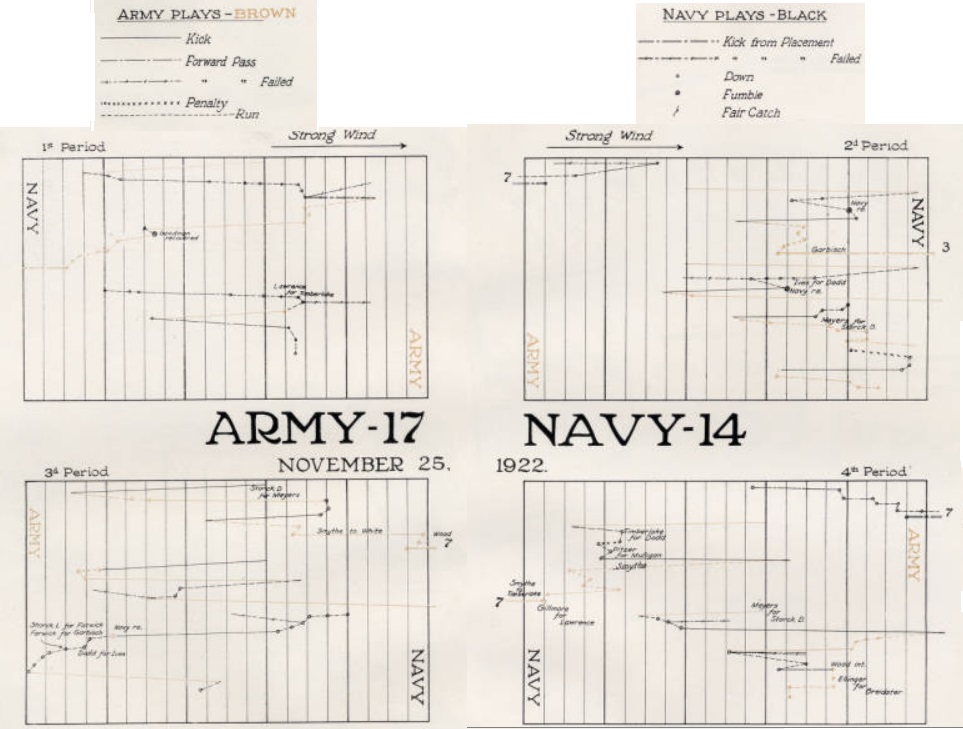
The Team went 8-0-2 beating Navy 17 – 14

Coach Charles Daly Class of 1905

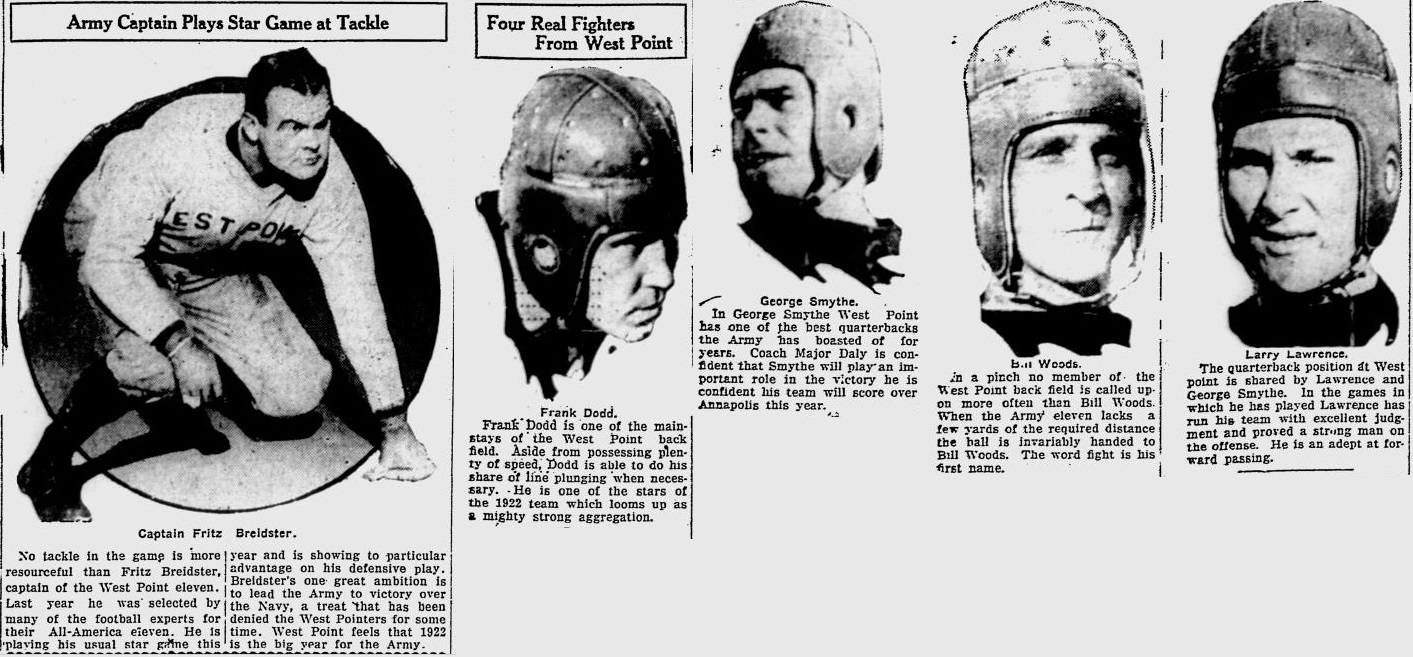
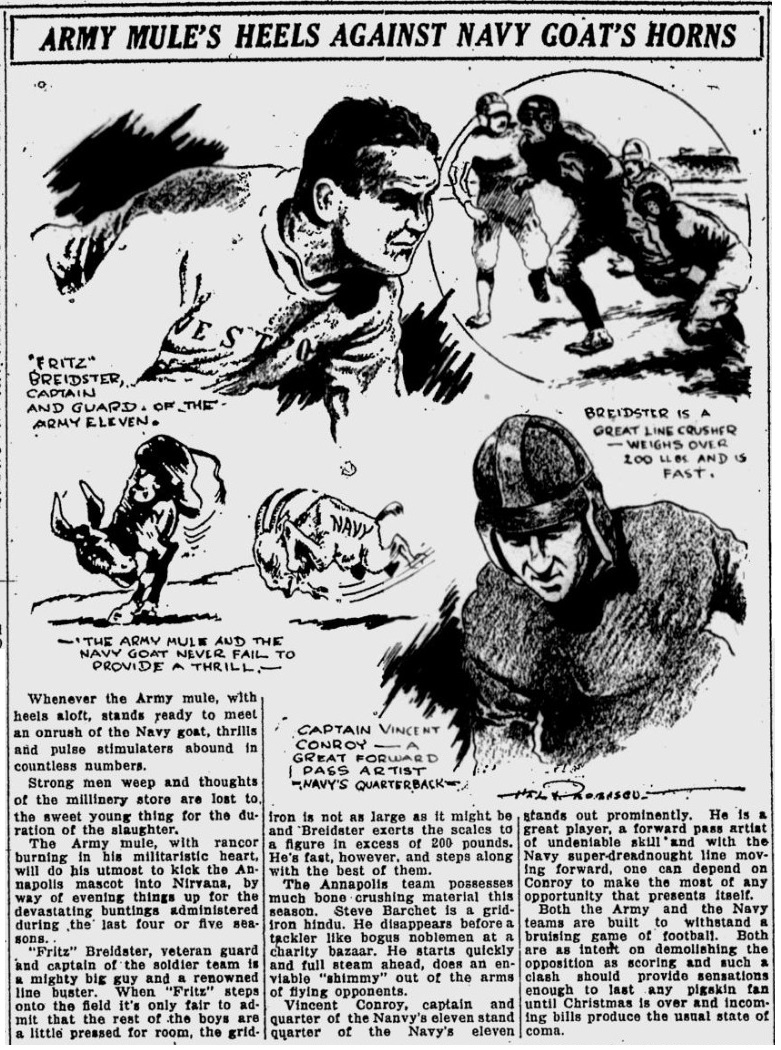
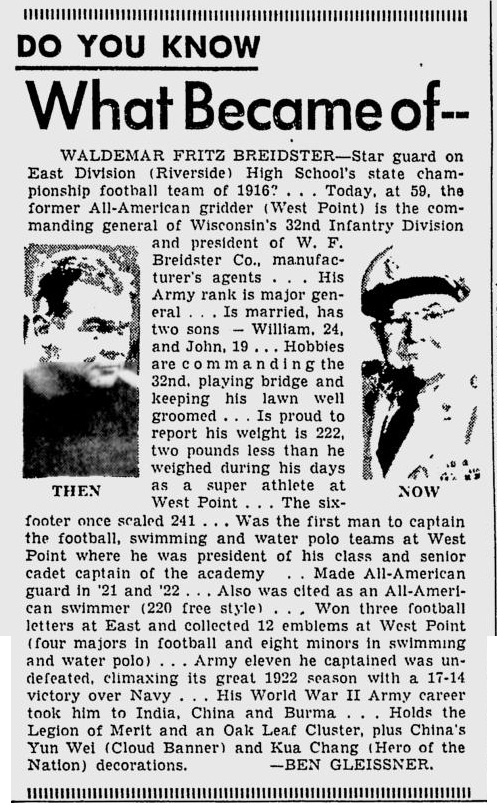
Captain – Waldemar Breidster

Coach Charles Dudley “Charlie” Daly (October 31, 1880 – February 12, 1959)
Army 1913-1916
Army 1919-1922

Overall 58-13-3

Appeared in the film Daly, of West Point. 1902.

source http://en.wikipedia.org/wiki/Charles_Dudley_Daly

Howitzer 1923
http://digital-library.usma.edu/cdm/compoundobject/collection/howitzers/id/16151/rec/

–

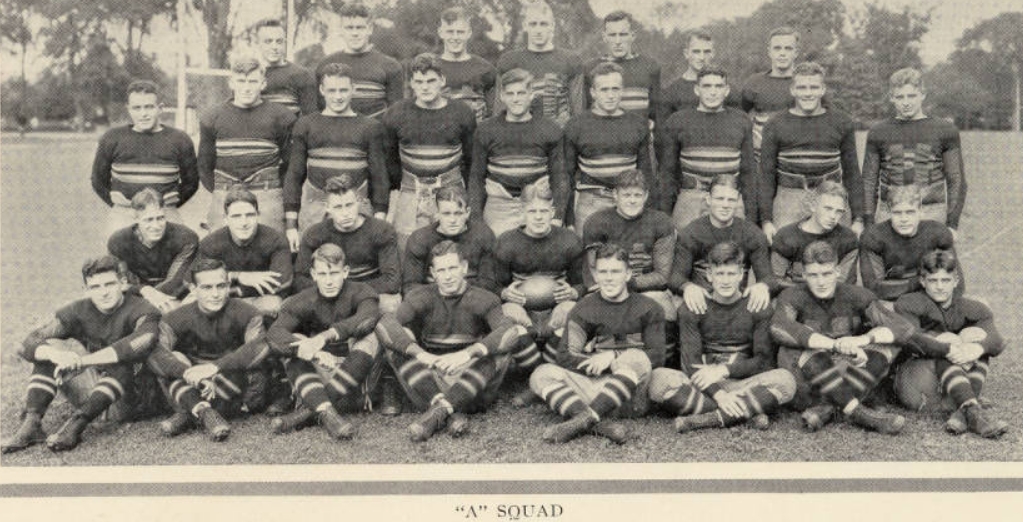
ArmyFB_1922_team

–

ArmyFB_1922_team_InfantryJournal_Vol21_1922

–

ArmyFB_1922_record

–

ArmyFB_1922_vsNavy_starters

–

ArmyFB_1922_vsKU_LawrenceJournalWorld_Oct61922

–

ArmyFB_1922_vsKU_LawrenceJournalWorld_Oct71922

–

ArmyFB_1922_EveningIndependent_Oct311922

–

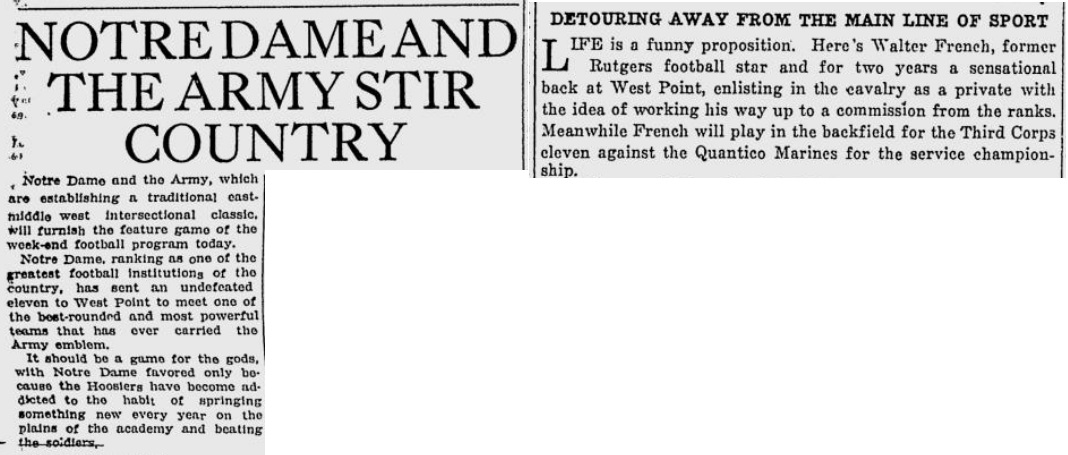
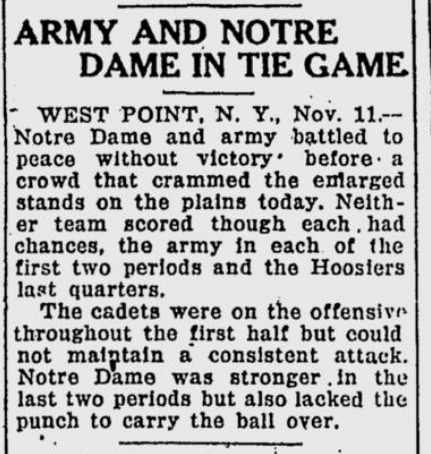
ArmyFB_1922_vsNotreDame-pre_ToledoNewsBee_Nov111922

ArmyFB_1922_vsNotreDame_StPetersburgTimes_Nov121922

–

West Point’s Eleven Reaches Philadelphia. – Schenectady Gazette – Nov 21, 1922
http://news.google.com/newspapers?id=YU0hAAAAIBAJ&sjid=GYIFAAAAIBAJ&dq=football%20philadelphia&pg=4570%2C2517353

Coolidge, Weeks and Denby to Be on Hand for Army-Navy Clash…- Boston Daily Globe – Nov 22, 1922

CHEERING THRONGS GREET ARMY TEAM; West Point Delegation Gets a Great Welcome Upon Arrival in Philadelphia. – New York Times – – Nov 24, 1922
PHILADELPHIA, Nov. 23.–From the time the West Point football squad, thirty-six strong, arrived at the Reading Terminal at 1:25 o’clock this afternoon until it arrived at Green Hill Farms. Overbrook, the players were greeted lavishly.

http://query.nytimes.com/mem/archive-free/pdf?res=F40910F6355A1B7A93C6AB178AD95F468285F9

ARMY PLAYERS OUT ON FRANKLIN FIELD -Boston Daily Globe – Nov 24, 1922
PHILADELPHIA, Nov 23–Behind bolted and guarded gates, the Army football team went through a snappy practice on Franklin Field this afternoon in preparation for the annual struggle with the Navy Saturday.

Walter Camp Looks for Much Passing When Army and Navy Elevens Clash – Middies Will Rely on Long Heaves, While Army Will Shoot Over Many Shorter Ones -Atlanta Constitution – Nov 24, 1922
The Army and Navy game at Philadelphia will hold the center of interest in the football world Saturday. This will be due to the fact that the Army has not been defeated and that this is the Year…

ARMY-NAVY TEAMS READY FOR CLASH; Arrive in Philadelphia and Put on Finishing Touches for Today’s Football Struggle.55,000 EXPECTED AT GAME Hotels in Quaker City, Are Full,Streets, Are Crowded and Service Uniforms Everywhere. – New York Times – Nov 25, 1922
PHILADELPHIA, Nov. 24.–This city was invaded without a struggle today, the civil population giving way gracefully to the advance guard of the Army and the Navy. …The usual phrase that Philadelphia Is football mad on the eve of tomorrow’s, the twenty-fifth , Army and Navy game would not be true. …
http://query.nytimes.com/mem/archive-free/pdf?res=F50715F7355A1B7A93C7AB178AD95F468285F9

–

ArmyFB_1922_FritzBreidster_StPetersburgTimes_Nov241922

ArmyFB_1922_FritzBreidster_StPetersburgTimes_Nov241922

WEST POINT MOVING TO FRANKLIN FIELD; Military Post Will Be Deserted Today While Everybody Goes to Football Game…- New York Times – Nov 25, 1922
http://query.nytimes.com/mem/archive-free/pdf?res=FA0715F7355A1B7A93C7AB178AD95F468285F9

Service Squads Ready – Lewiston Daily Sun – Nov 25, 1922
http://news.google.com/newspapers?id=hqcgAAAAIBAJ&sjid=TmkFAAAAIBAJ&dq=football%20philadelphia&pg=3187%2C3682463

Army-Navy Game Will Sure Be Full Of Fireworks – Rochester Evening Journal – Nov 25, 1922
http://news.google.com/newspapers?id=axhgAAAAIBAJ&sjid=x20NAAAAIBAJ&dq=football%20philadelphia&pg=1719%2C7613362

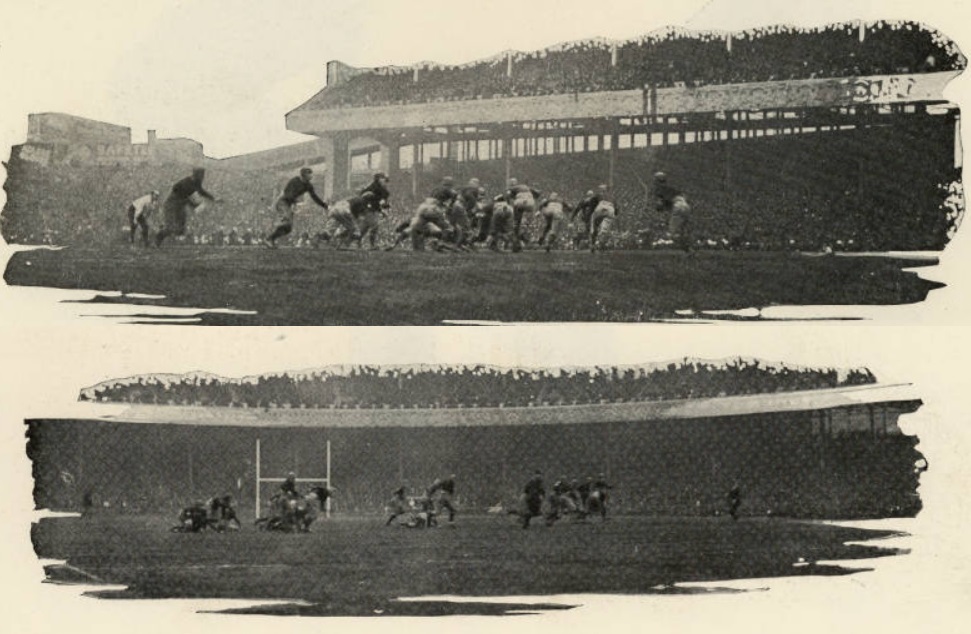
Franklin Field – Philadelphia, Pa.

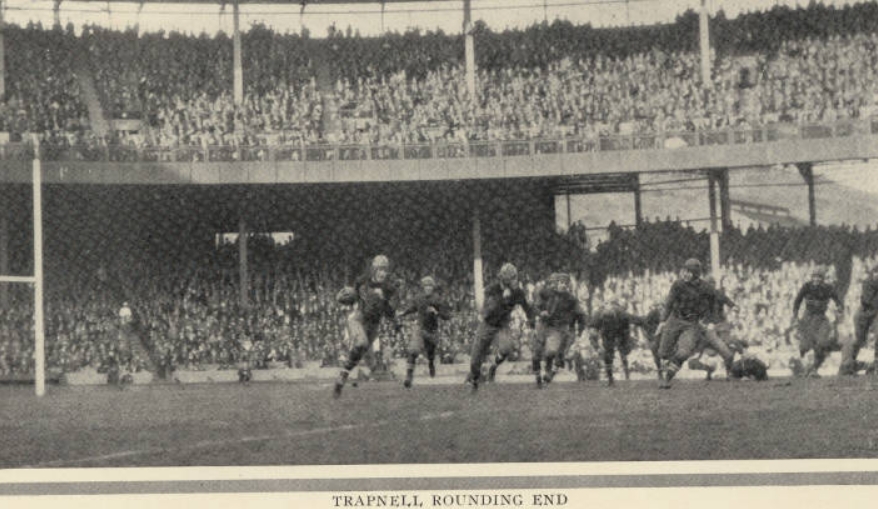
ArmyFB_1922_vsNavy_action

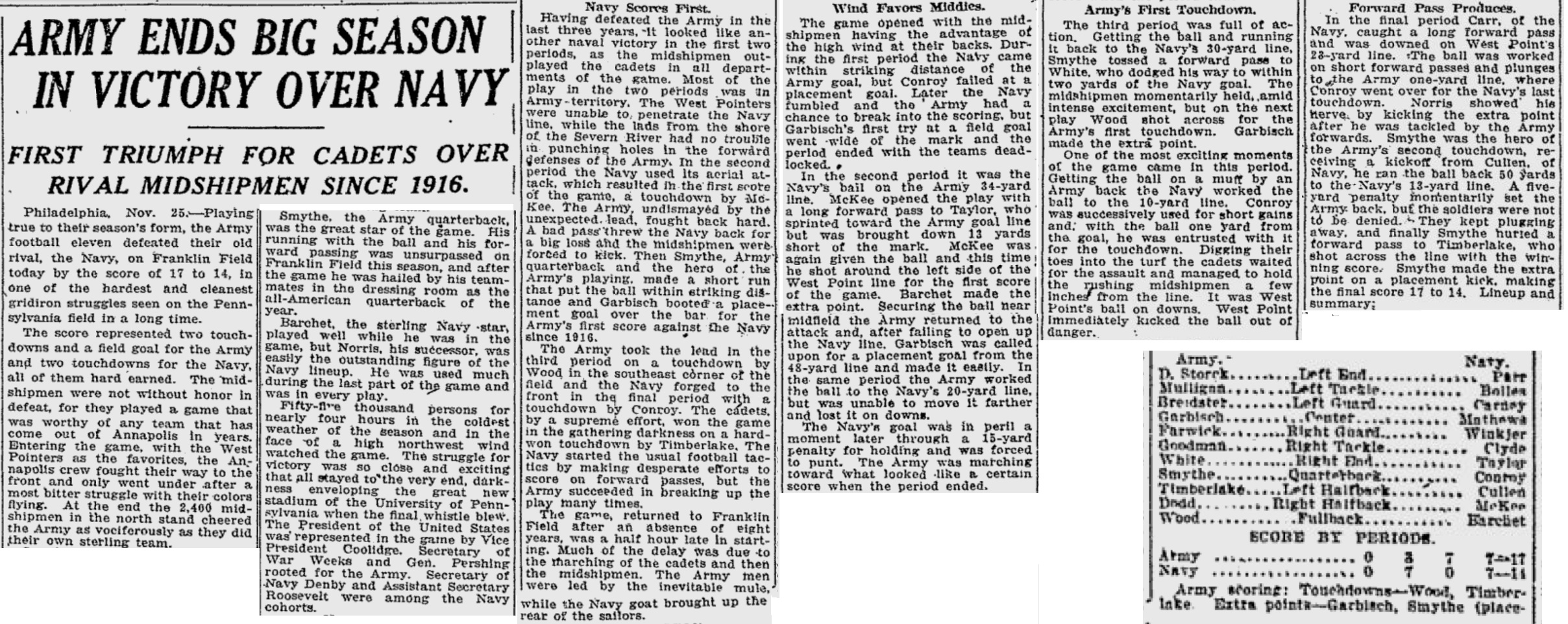
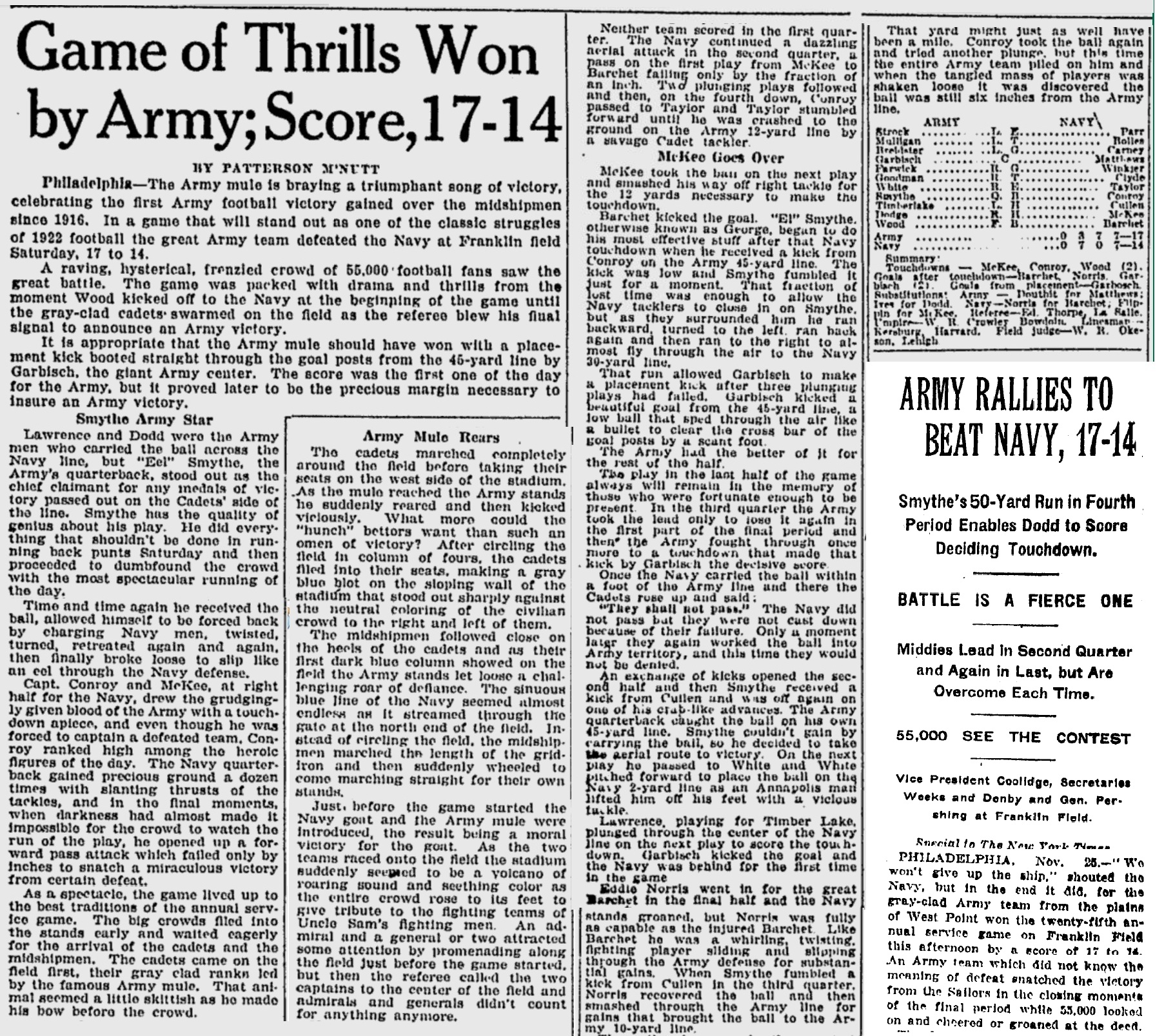
ARMY TRIUMPHS BY MIGHTY EFFORT, 17-14 – First Score Against Navy Since 1916–Colorful Scenes For 55,000–Smythe Stars- Boston Daily Globe – Nov 26, 1922
PHILADELPHIA, Nov 25–Playing true to form, the Army football eleven defeated the Navy on Franklin Field today, 17 to 14, in one of the hardest and cleanest gridiron struggles seen on the Pennsylvania field in a long time..

Army Team Stages Rally In Final Period…-Atlanta Constitution – Nov 26, 1922
Playing true to the season’s form the Army football elevens defeated their old rivals, the Navy, on Franklin field today by the score of 17 to 14, in a hard, clean gridiron struggle.

DALY OVERJOYED AT ARMY’S SHOWING; West Point Coach Proud of His Team–Refuses Credit for Victory Over Navy – New York Times – Nov 26, 1922
PHILADELPHIA, Nov. 25–There was a riotous scene within the dressing quarters of the Army players shortly after their victory over the Navy eleven at Franklin Field this afternoon.
http://query.nytimes.com/mem/archive-free/pdf?res=F50C1FFD355D14738DDDAF0A94D9415B828EF1D3

ArmyFB_1922_vsNavy_ReadingEagle_Nov261922

ArmyFB_1922_vsNavy_MilwaukeeJournal_Nov261922

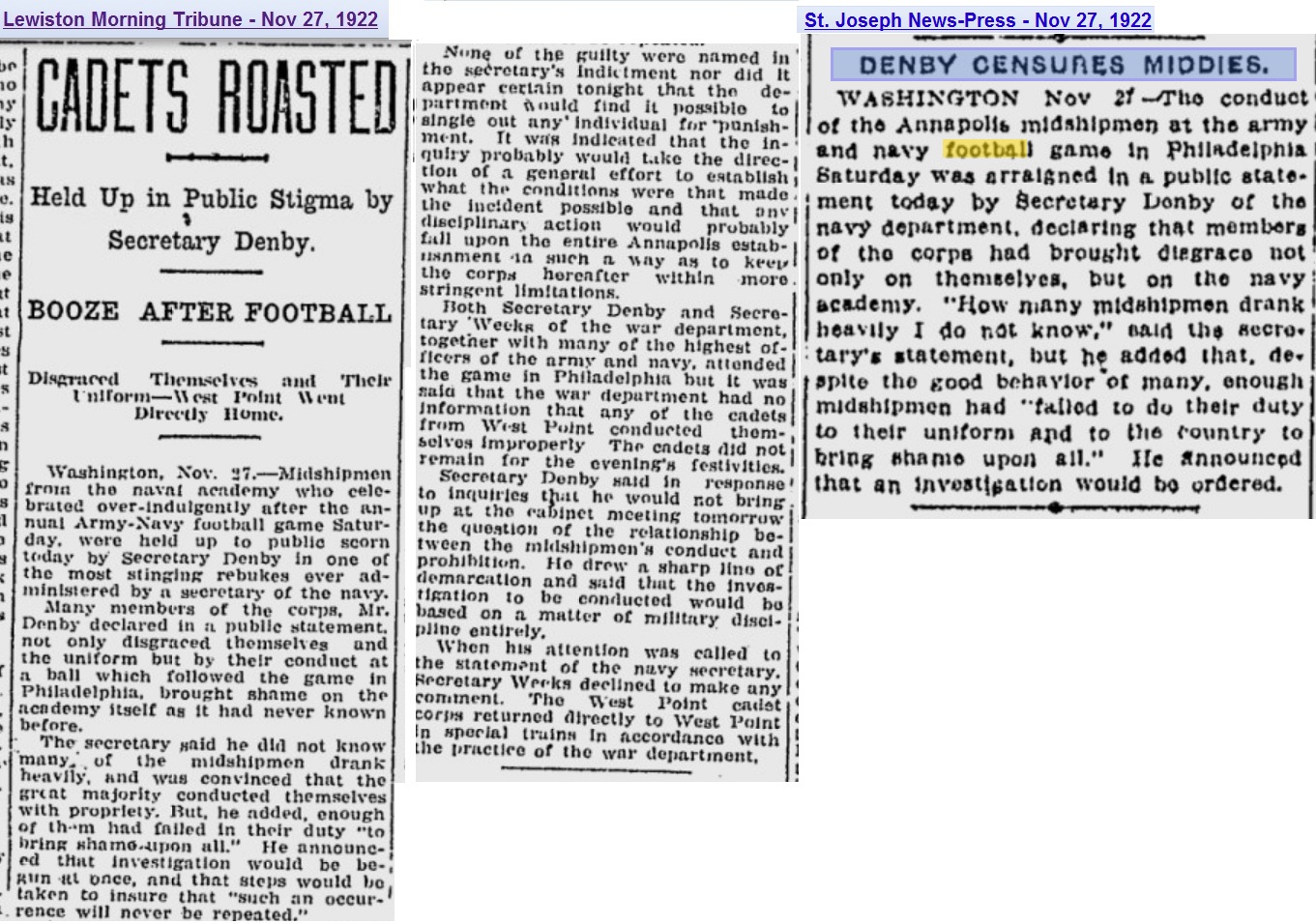
ArmyFB_1922_vsNavy-post-game_Nov271922

–

ArmyFB_1922_vsNavy_graph

–

ArmyFB_1922_FritzBreidster_MilwaukeeSentinel_Sep131959

–

1925 Team

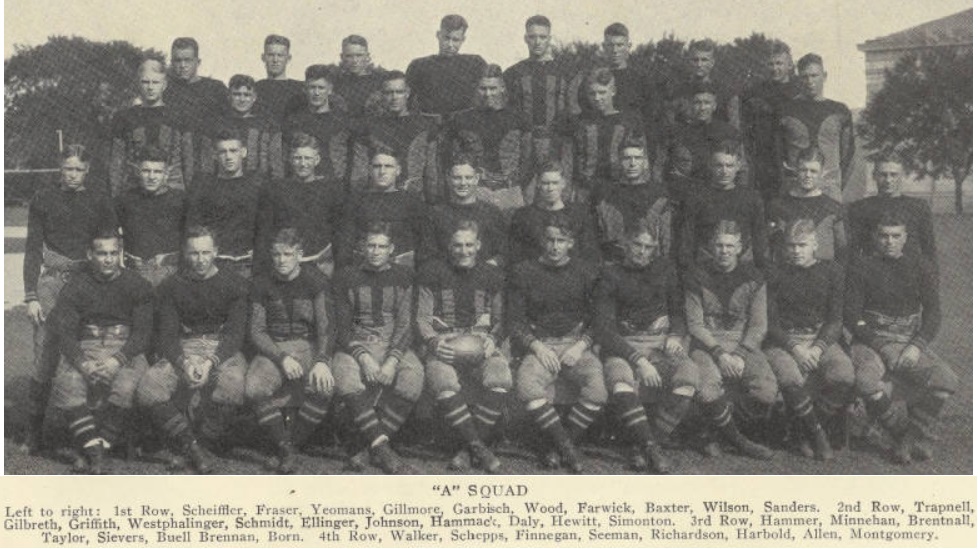
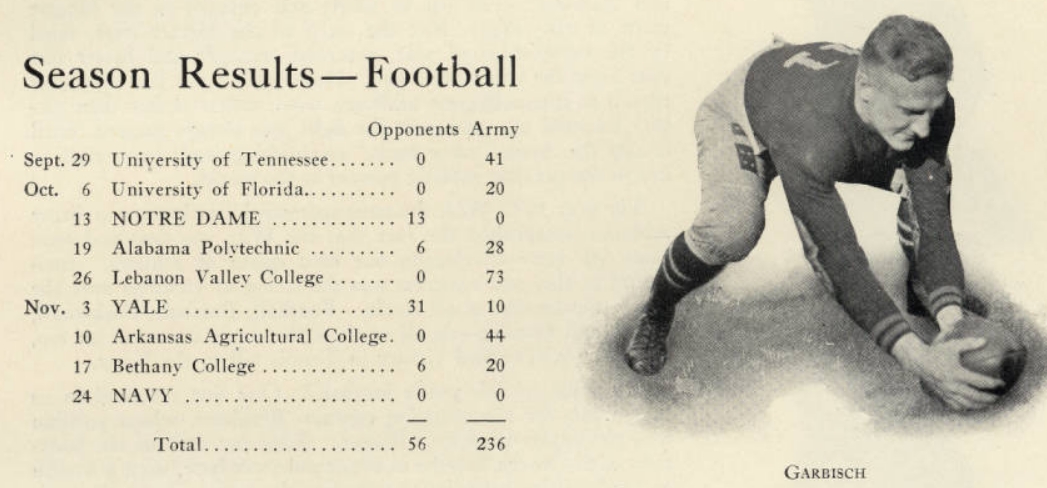
1925 Army 7-2

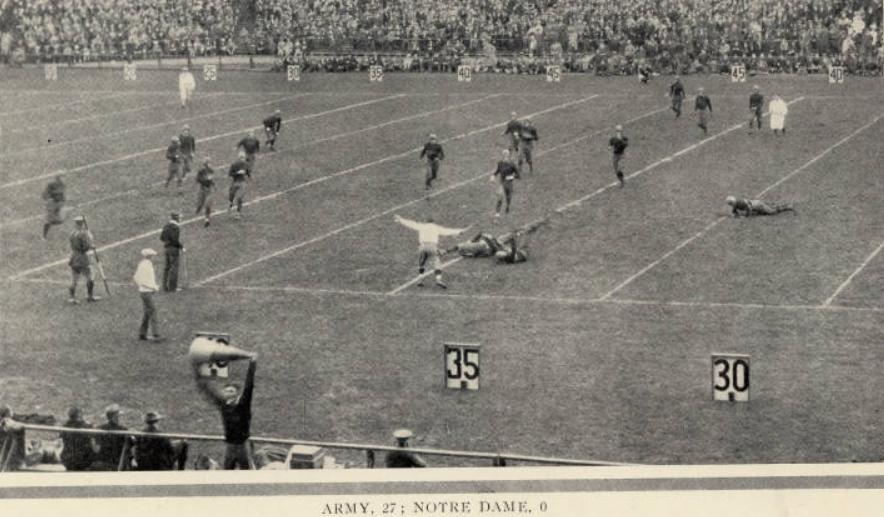
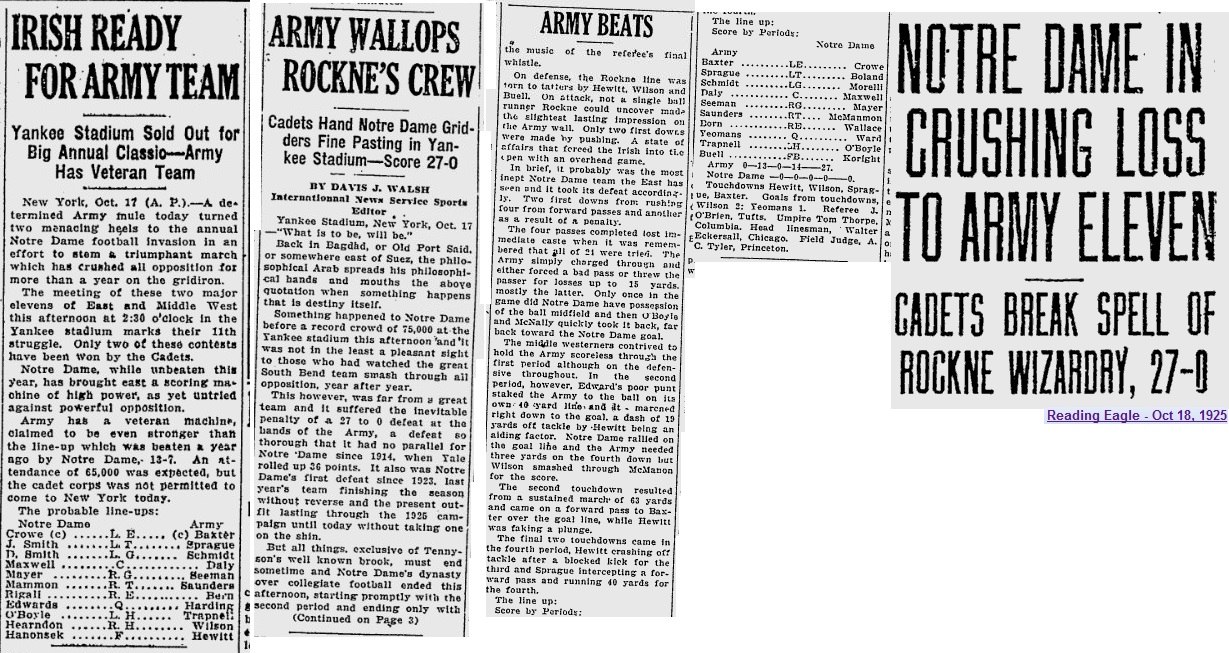
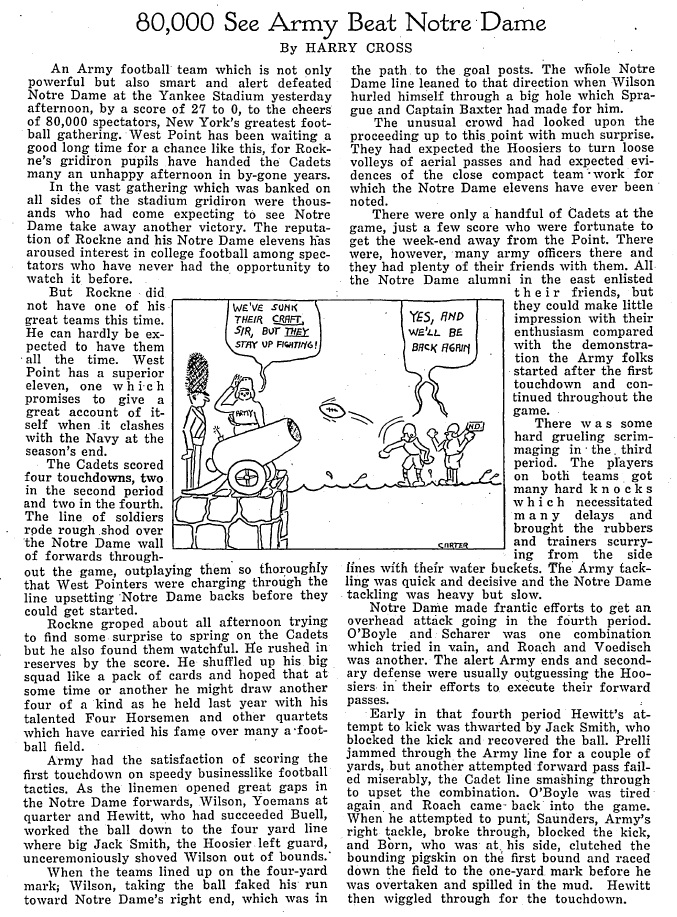
1925/10/17 Army 27 – Notre Dame 0 Yankee Stadium, New York, NY
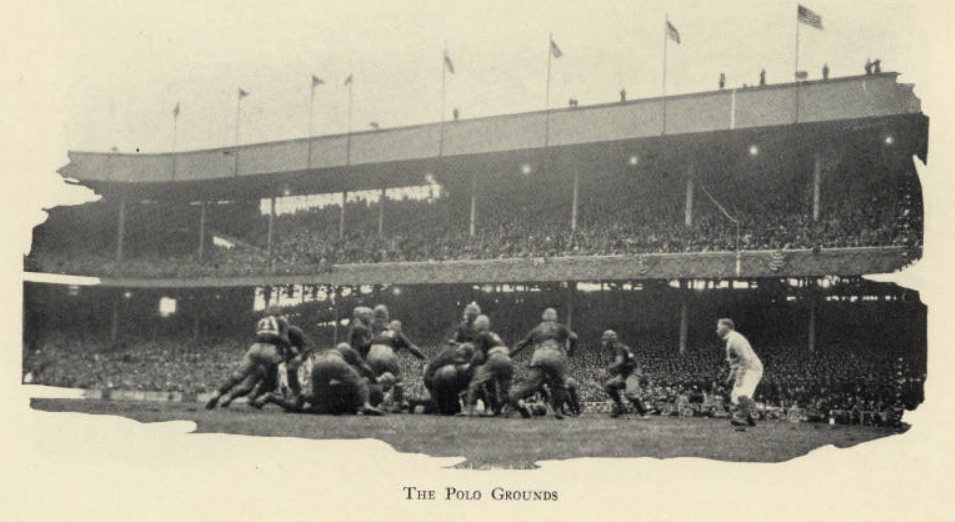
1925/11/28 Army 10 – Navy 3 W, Polo Grounds, New York, NY

Coach: John James “Cap” McEwan (February 18, 1893 – August 9, 1970)

Army – 1923 – 1925
1923 Army 6-2-1
1924 Army 5-1-2
1925 Army 7-2
Army: 18-5-3

Oregon – 1926-1929 – 20-13-2
Holy Cross – 1930-1932 21-5-1
Brooklyn Dodgers – 1933-1934

College Totals – 59-23-6

http://en.wikipedia.org/wiki/John_McEwan
Howitzer 1926
http://digital-library.usma.edu/cdm/compoundobject/collection/howitzers/id/17176/

–

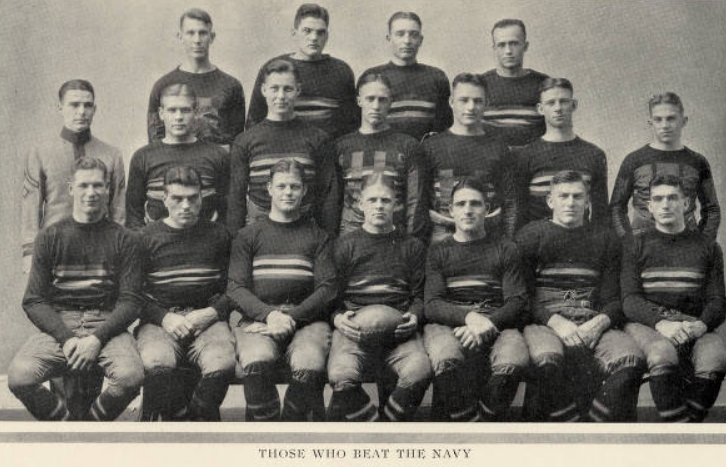
ArmyFB_1925_team

–

ArmyFB_1925_vsNotreDame

–

ArmyFB_1925_vsNotreDame_action

–

ArmyFB_1925_vsNavy-starters

–

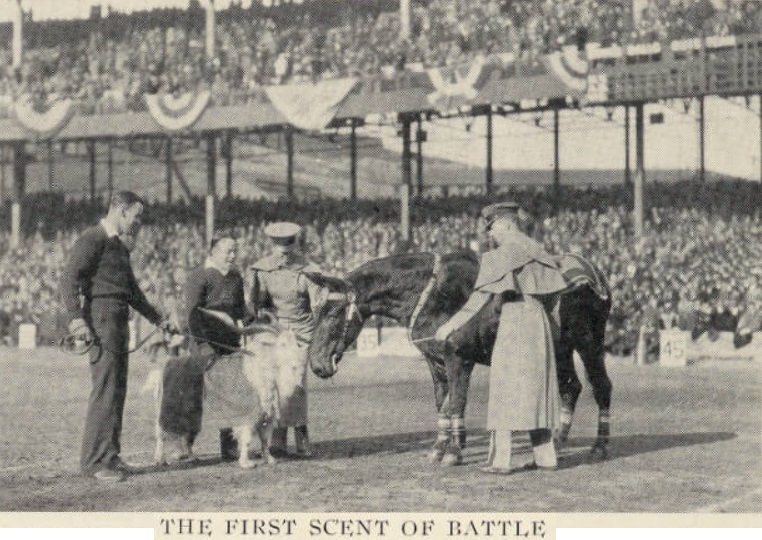
ArmyFB_1925_vsNavy_MulemeetsGoat

–

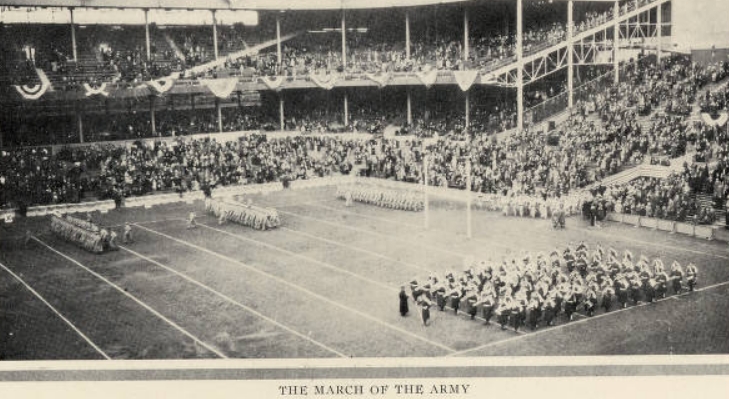
ArmyFB_1925_vsNavy_march-on

–

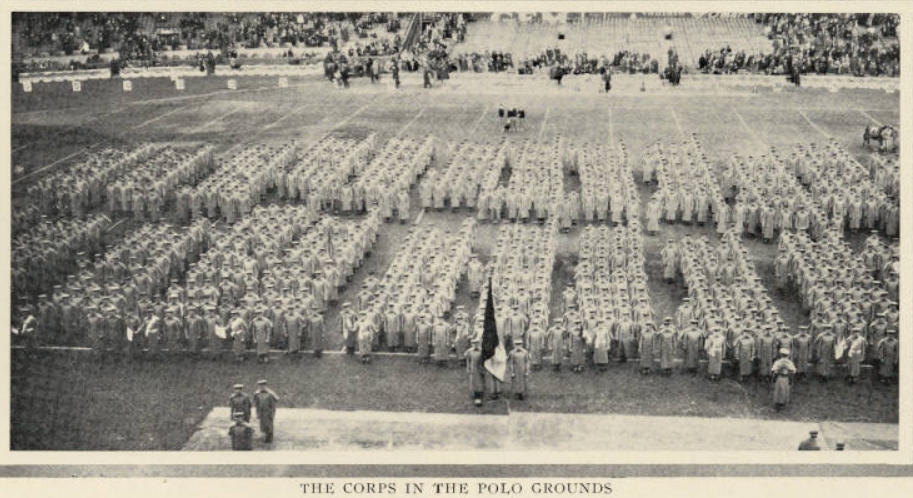
ArmyFB_1925_vsNavy_TheCorps

–

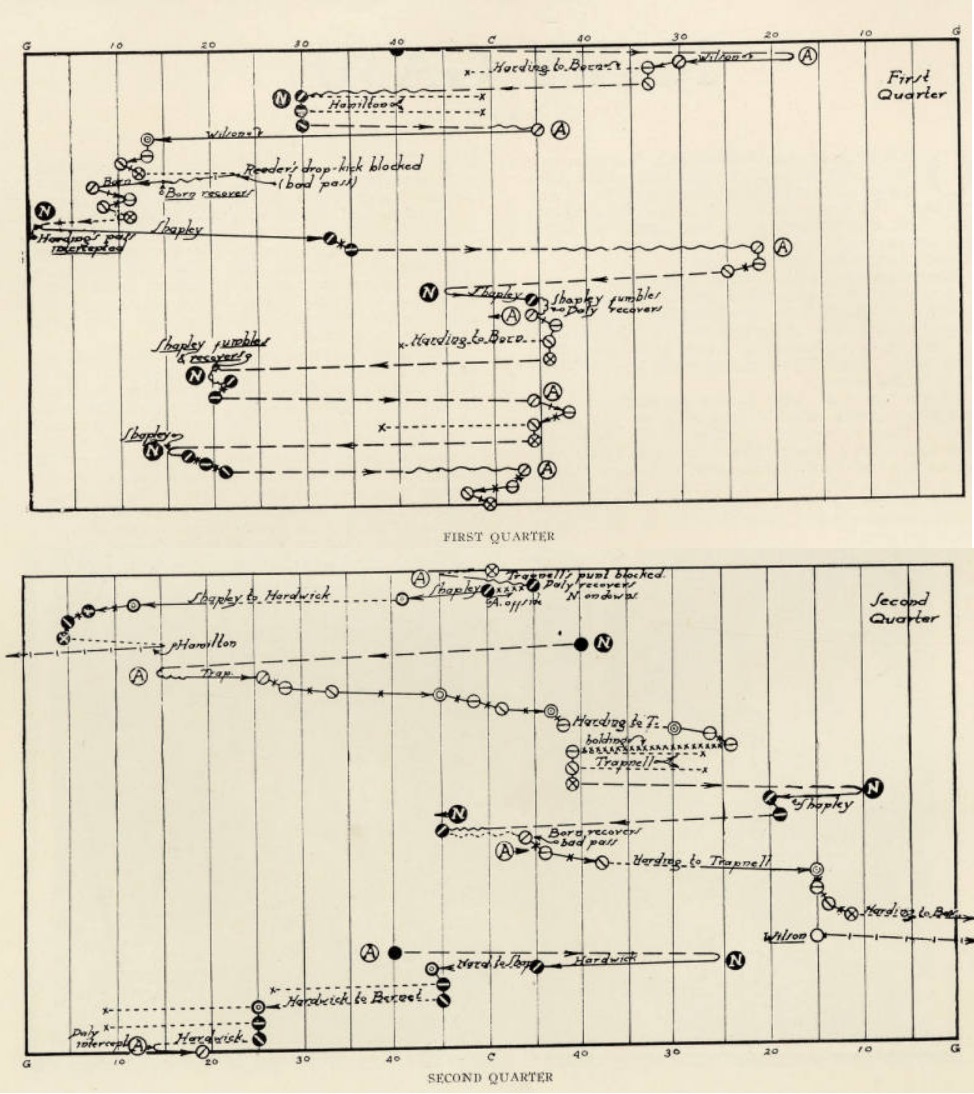
ArmyFB_1925_vsNavy_graph1-2Qtrs

–

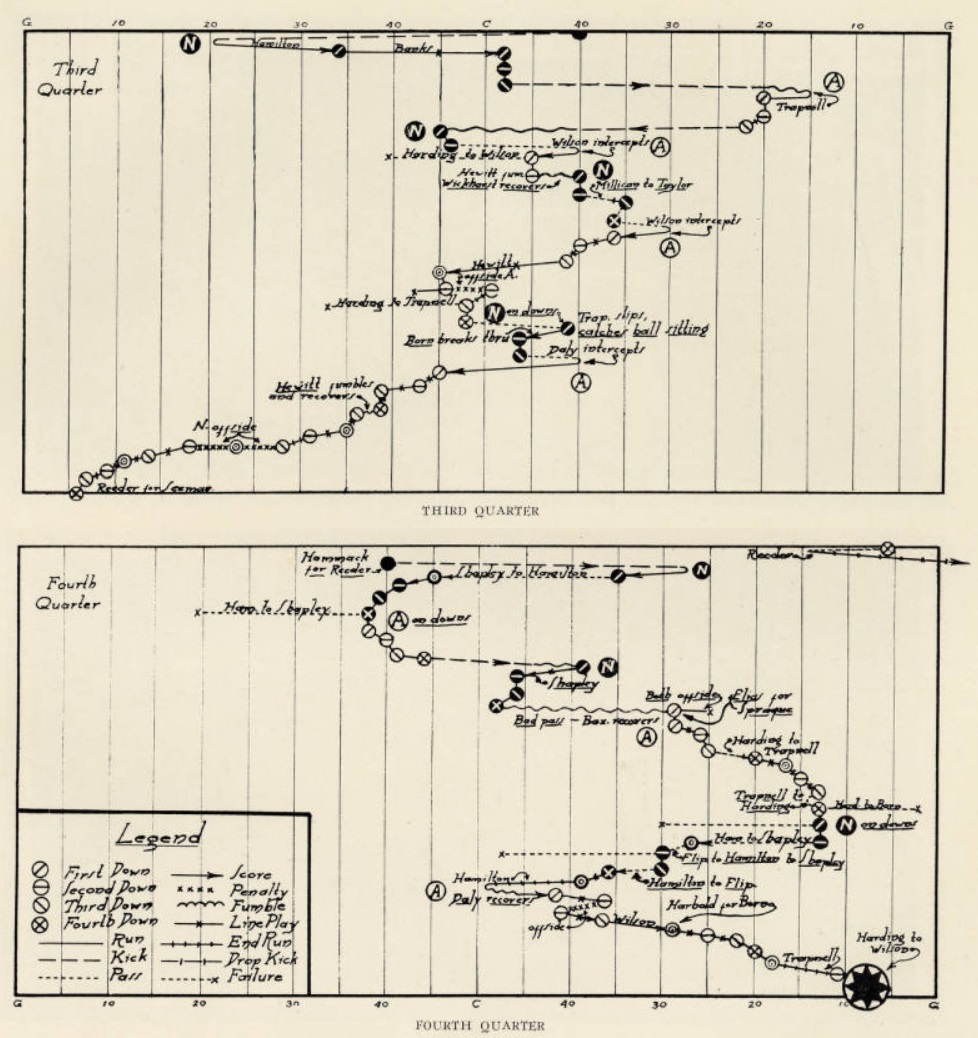
ArmyFB_1925_vsNavy_graph3-4Qtrs

–

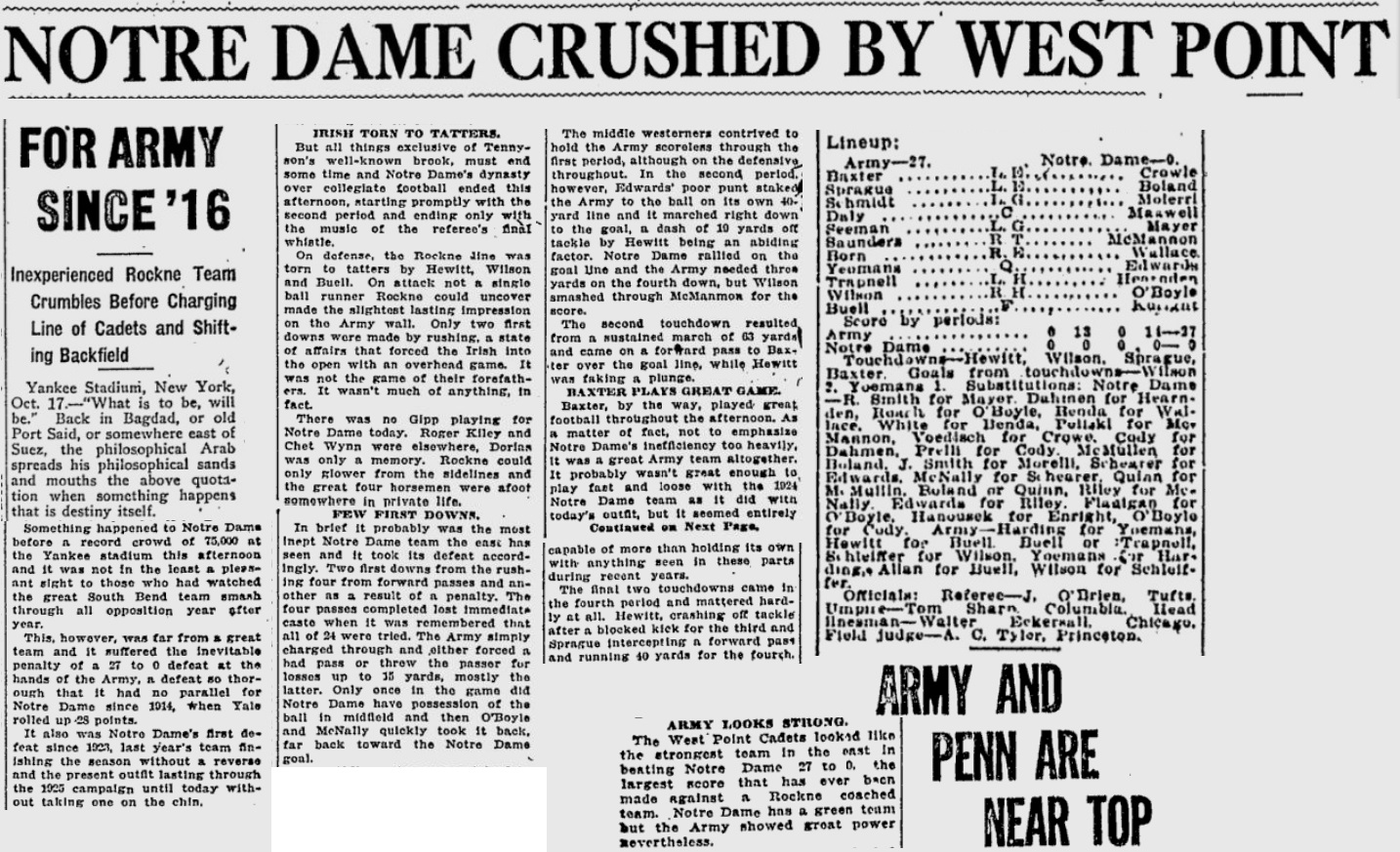
ArmyFB_1925_vsNotreDame_PittsburghPress_Oct181925

ArmyFB_1925_vsNotreDame_PittsburghPress_Oct181925

ArmyFB_1925_vsNotreDame_Oct17-181926

ArmyFB_1925_vsNotreDame_Oct17-181926

–

Army_1925_NotreDame_OfficialReview_news-article

–


ArmyFB_1925_TinyHewitt_DavisCountyClipper_Nov271925


ArmyFB_1925_vsNavy_PittsburghPress_Nov291925


ArmyFB_1925_vsNavy_TelegraphHerald_Nov291925


ArmyFB_1925_vsNavy_SundayMorningStar_Nov291925


ArmyFB_1925_vsNavy-Wilson_SpokaneDailyChronicle_Nov301925

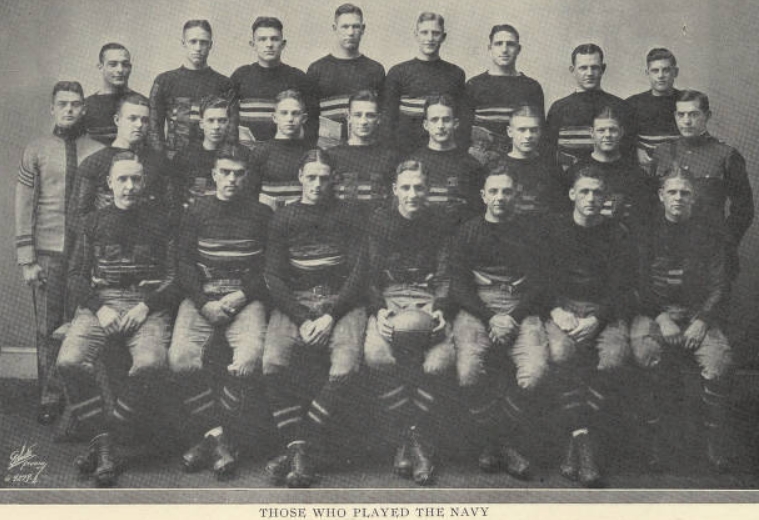
1924 Team

1924 Army 5-1-2

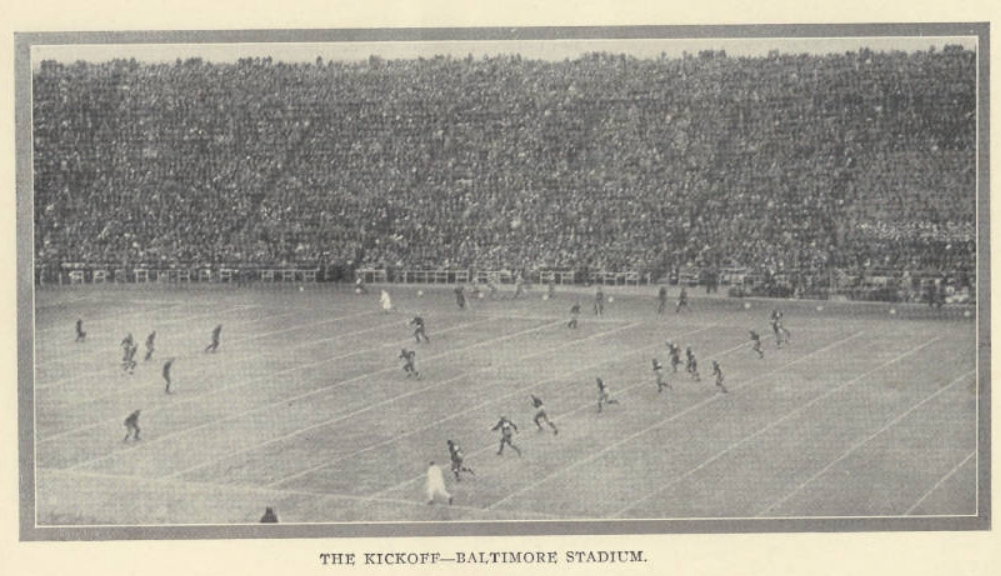
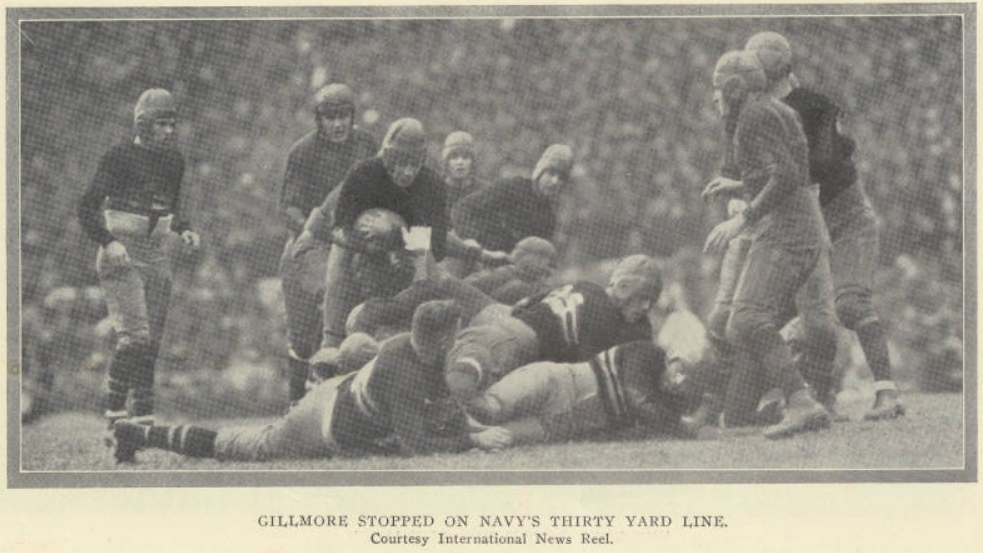
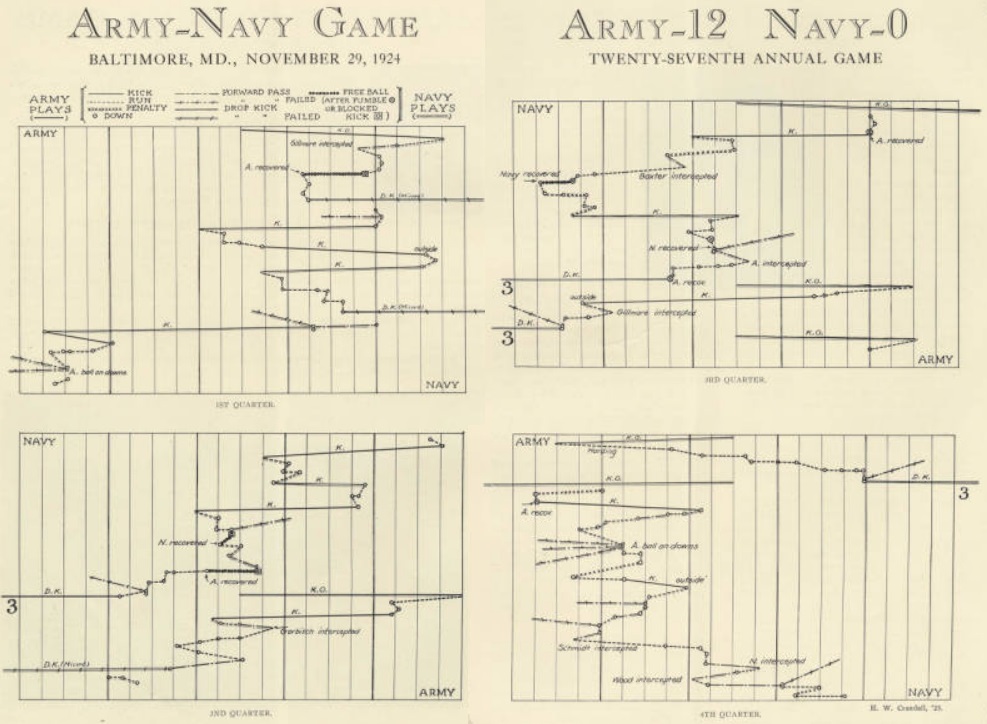
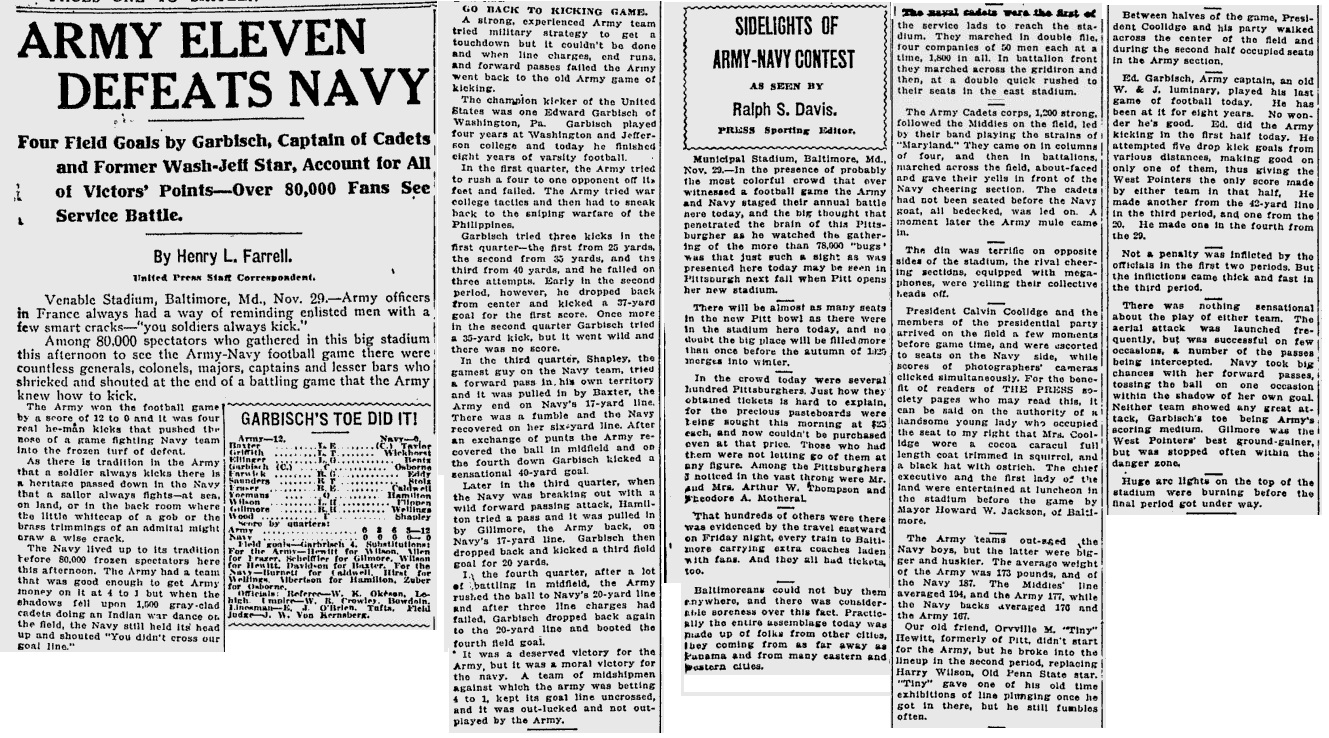
1924/11/29 Army 12 – Navy 0 W

Coach: John James “Cap” McEwan (February 18, 1893 – August 9, 1970)

Army – 1923 – 1925
1923 Army 6-2-1
1924 Army 5-1-2
1925 Army 7-2
Army: 18-5-3

Oregon – 1926-1929 – 20-13-2
Holy Cross – 1930-1932 21-5-1
Brooklyn Dodgers – 1933-1934

College Totals – 59-23-6

http://en.wikipedia.org/wiki/John_McEwan

Howitzer 1925
http://digital-library.usma.edu/cdm/compoundobject/collection/howitzers/id/21024/

–

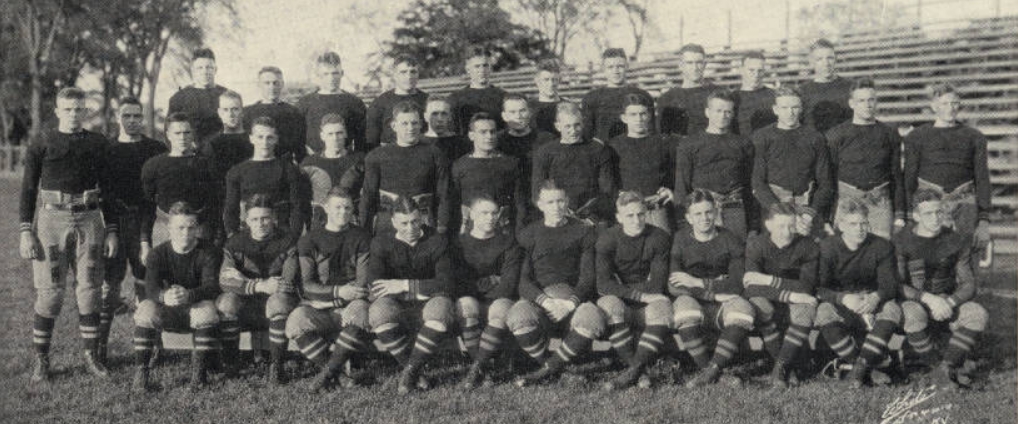
ArmyFB_1924_team

–

ArmyFB_1924_vsYale

–

ArmyFB_1924_vsNavy_starters

–

ArmyFB_1924_vsNavy_kickoff

–

ArmyFB_1924_vsNavy_action

–

ArmyFB_1924_vsNavy_graph

–

–


News Articles


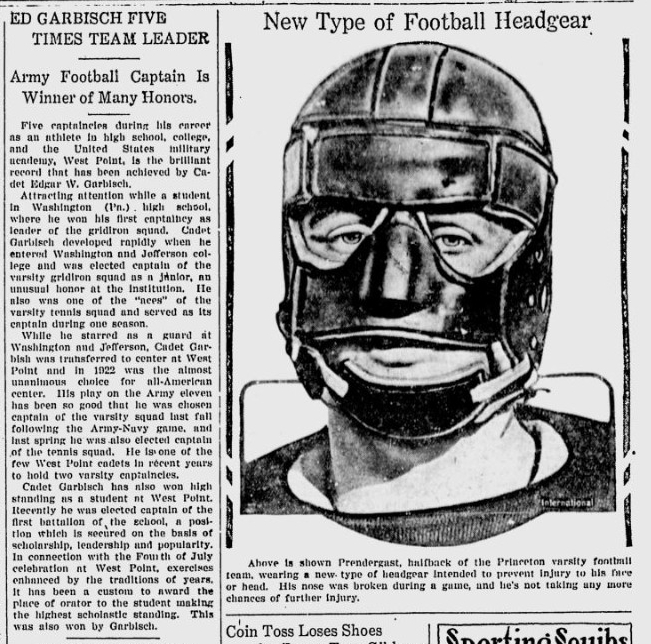
ArmyFB_1924_EdGarbisch_ProvidenceCountyTimes_Oct311924


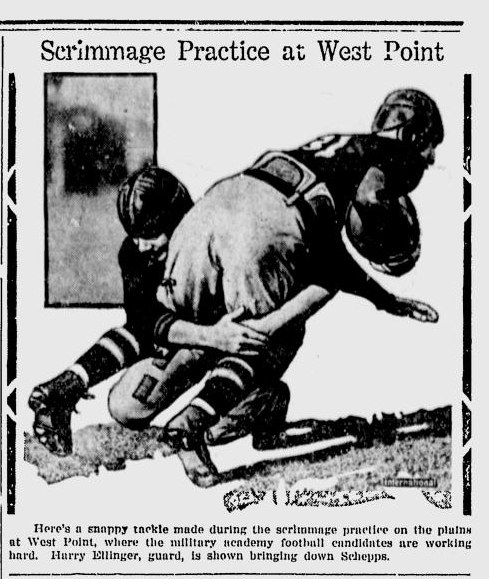
ArmyFB_1924_WestPoint-practice_ProvidenceCountyTimes_Nov111924

ArmyFB_1924_WestPoint-practice_ProvidenceCountyTimes_Nov111924

–

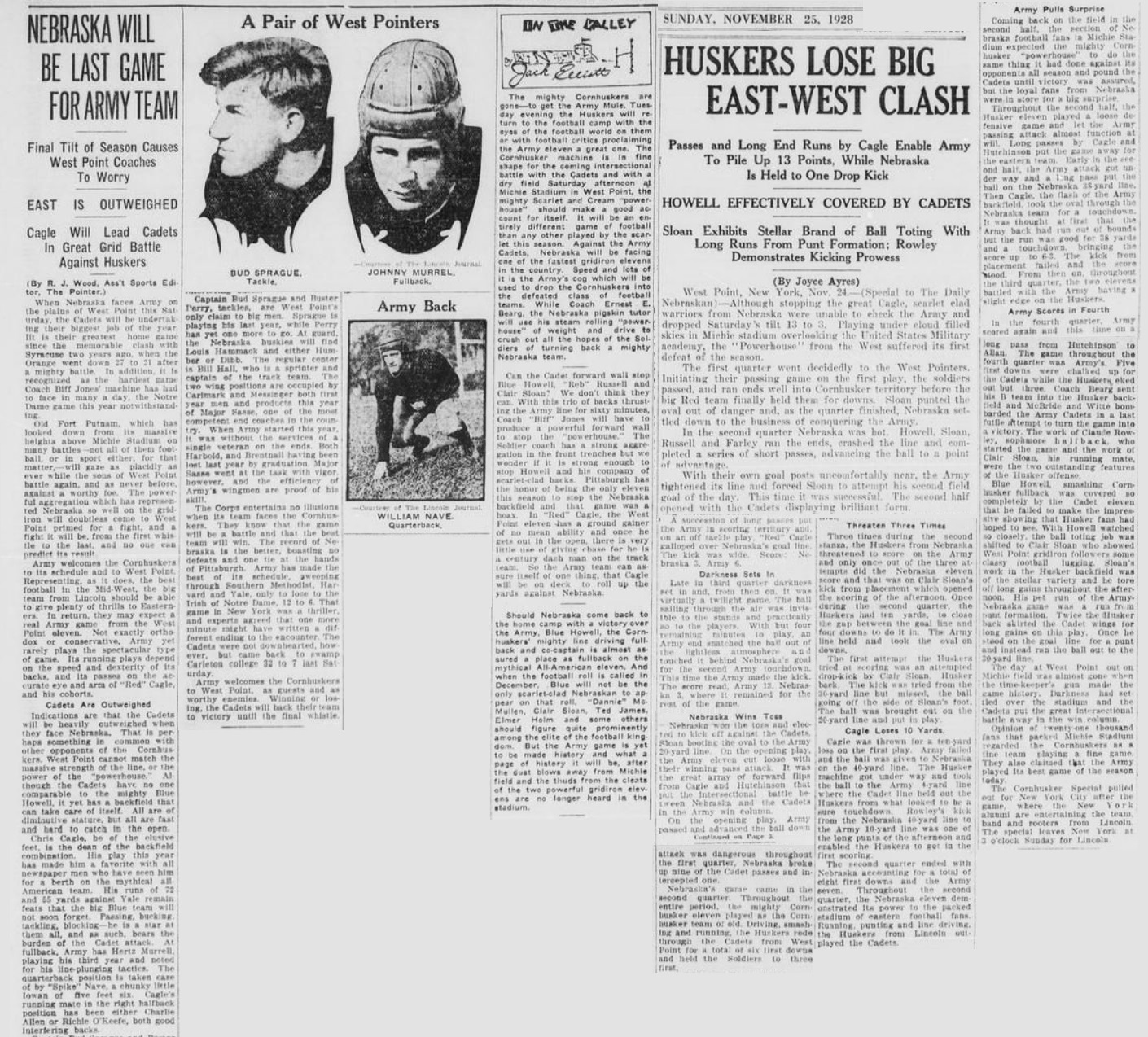
ArmyFB_1924_vsNebraska_DailyNebraskan_Nov22-251924

ArmyFB_1924_vsNebraska_DailyNebraskan_Nov22-251924

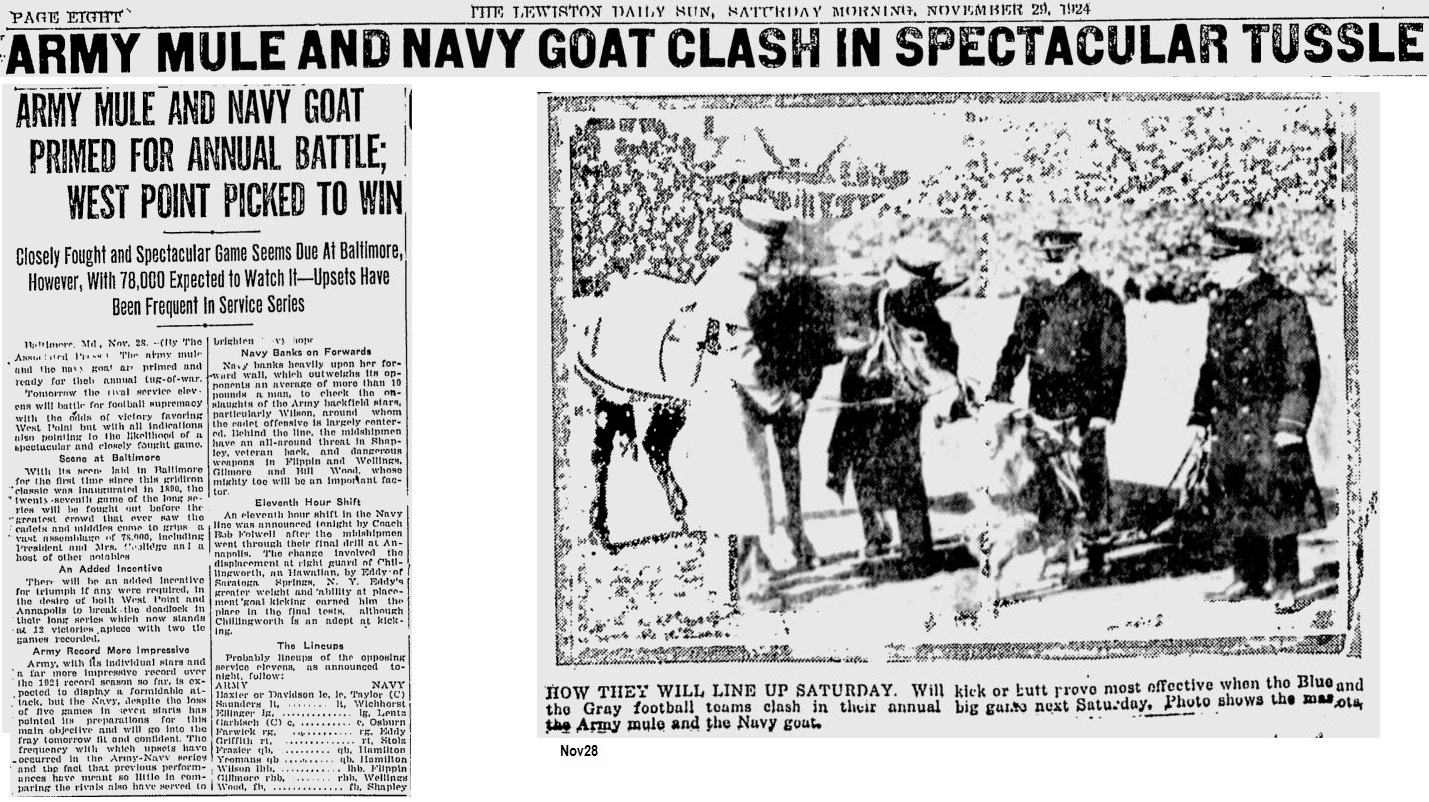
ArmyFB_1924_vsNavy-pre_LewistonDailySun_Nov28-291924


ArmyFB_1924_vsNavy_ReadingEagle_Nov301924

–

ArmyFB_1924_CoachMcEwan-CaptainGarbisch_byFegMurray_BrooklynDailyEagle_Nov291924

ArmyFB_1924_CoachMcEwan-CaptainGarbisch_byFegMurray_BrooklynDailyEagle_1924_Nov291924

ArmyFB_1924_vsNavy_PittsburghPress_Nov301924

–

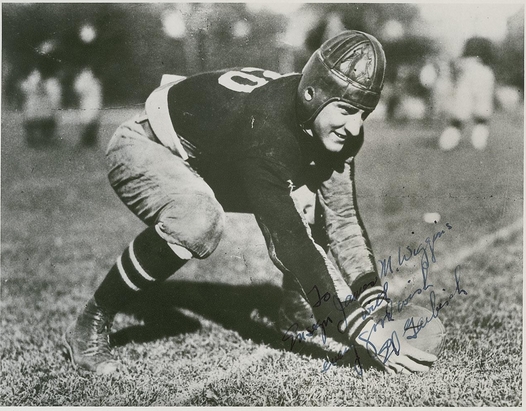
ArmyFB_1924_EdGarbisch_photo

–

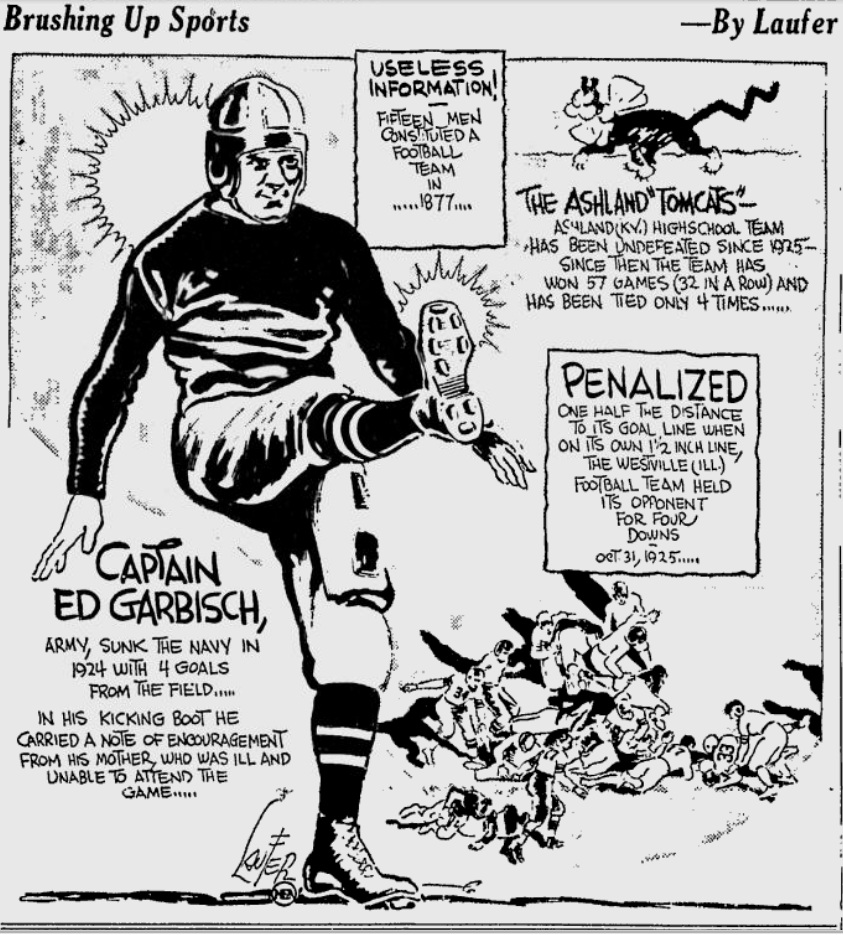
ArmyFB_1924_EdGarbisch_byLaufer_SpokaneDailyChronicle_Sep291932

ArmyFB_1924_EdGarbisch_byLaufer_SpokaneDailyChronicle_Sep291932


–

1923 Team

1923 Army 6-2-1
1923/11/24 Army 0 – Navy 0 T

Coach: John James “Cap” McEwan (February 18, 1893 – August 9, 1970)

Army – 1923-1925
1923 Army 6-2-1
1924 Army 5-1-2
1925 Army 7-2
Army: 18-5-3

Oregon – 1926-1929 – 20-13-2

Holy Cross – 1930-1932 21-5-1
Brooklyn Dodgers – 1933-1934
College Totals – 59-23-6

http://en.wikipedia.org/wiki/John_McEwan

Howitzer 1924
http://digital-library.usma.edu/cdm/compoundobject/collection/howitzers/id/16713/

–

ArmyFB_1923_team

–

ArmyFB_1923_record-Garbisch-Captain

–

ArmyFB_1923_vsNavy_action

–

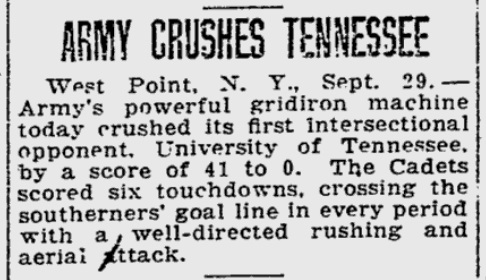
ArmyFB_1923_vsTennessee_ReadingEagle_Sep301923

–

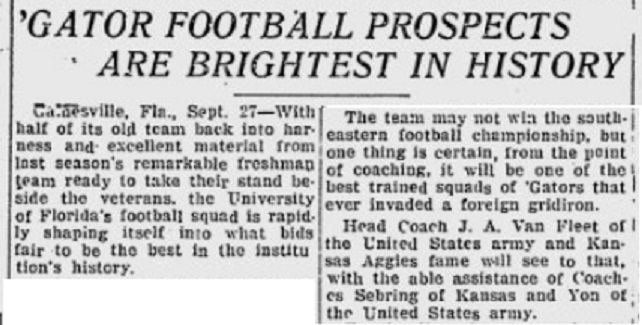
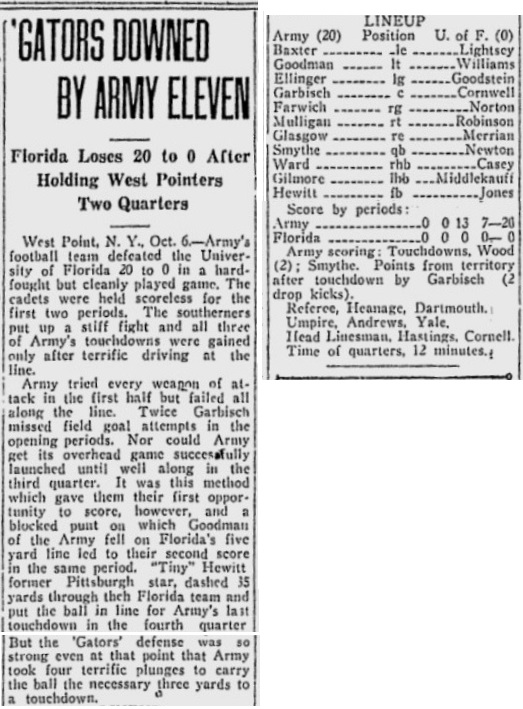
ArmyFB_1923_vsFlorida-pre_EveningIndependent_Sep271923

ArmyFB_1923_vsFlorida_PalmBeachPost_Oct71923

–

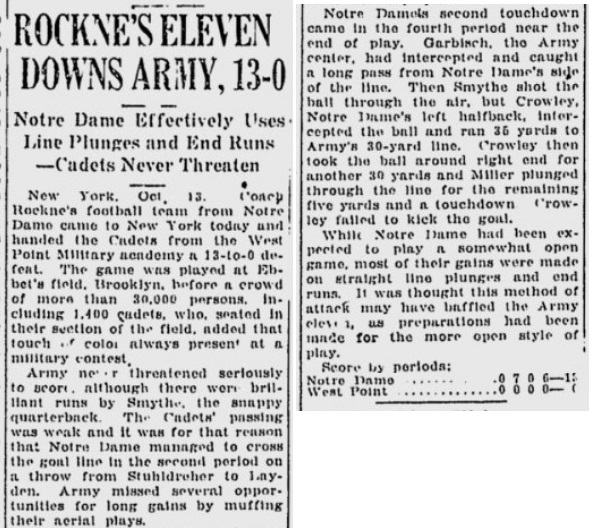
ArmyFB_1923_vsNotreDame_StJosephGazette_Oct141923

–

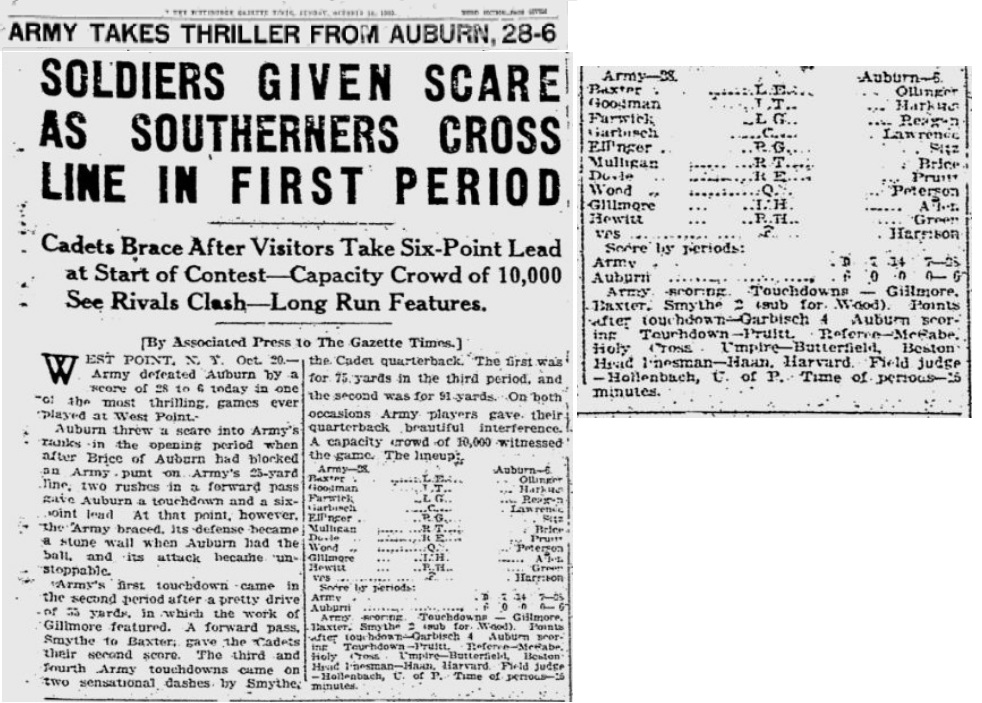
ArmyFB_1923_vsAuburn_GazetteTimes_Oct211923

–

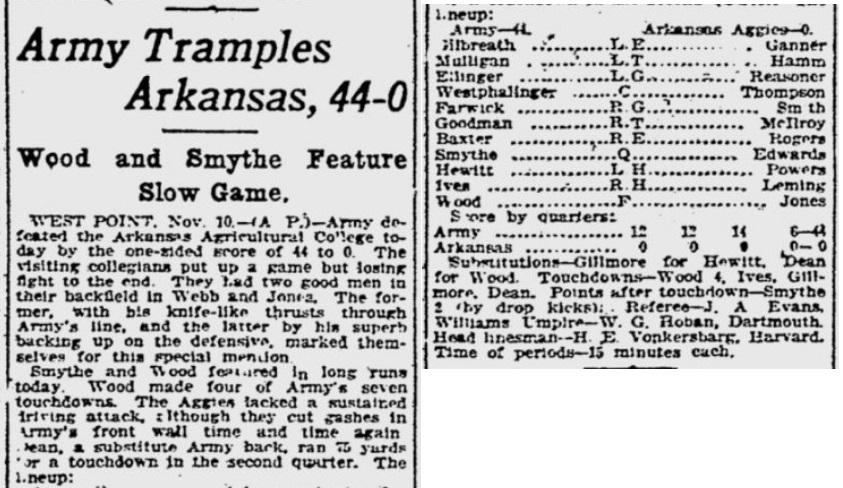
ArmyFB_1923_vsArkansasTech_GazetteTimes_Nov111923

–

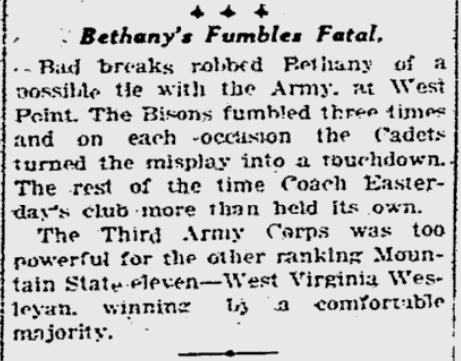
ArmyFB_1923_vsBethany_GazetteTimes_Nov191923

–

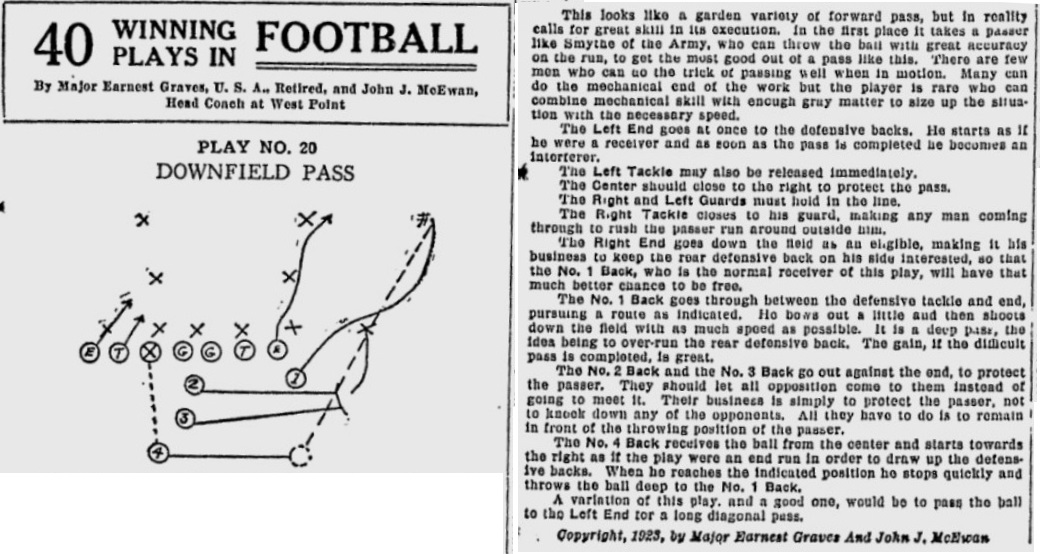
ArmyFB_1923_PassPlay_BerkeleyDailyGazette_Oct221923

–
SMYTHE, ARMY STAR, MAY NOT FACE NAVY; Quarterback Still on Injured List and Wood Directs Varsity Under Flood Lights.

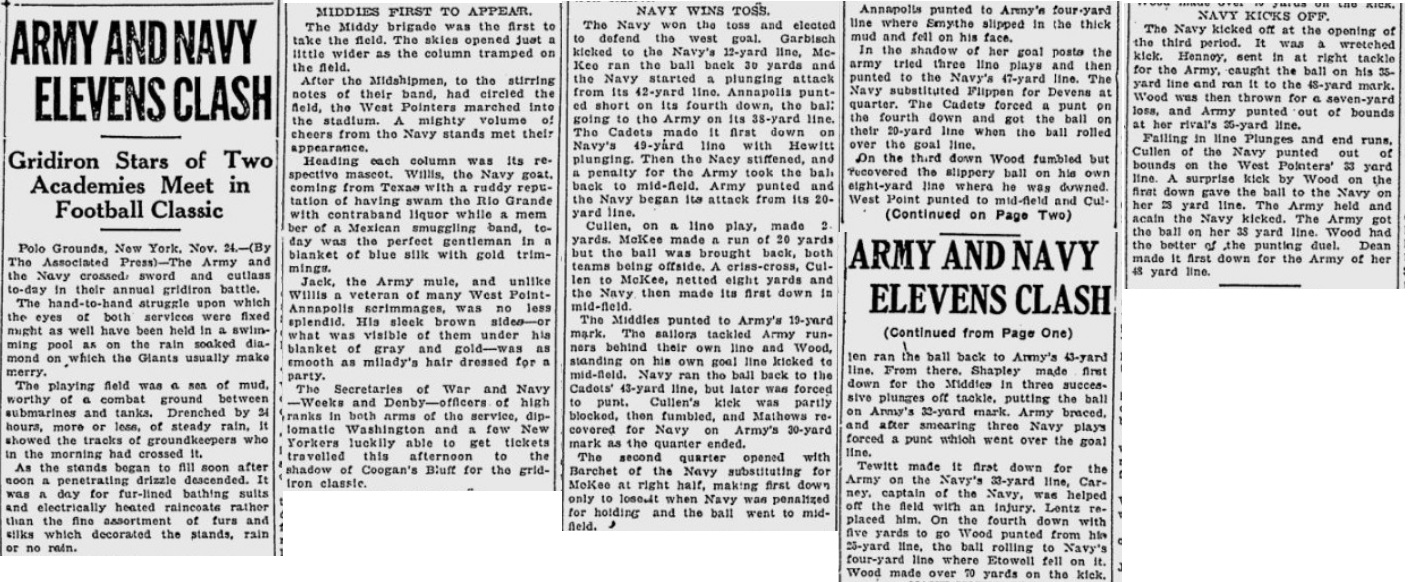
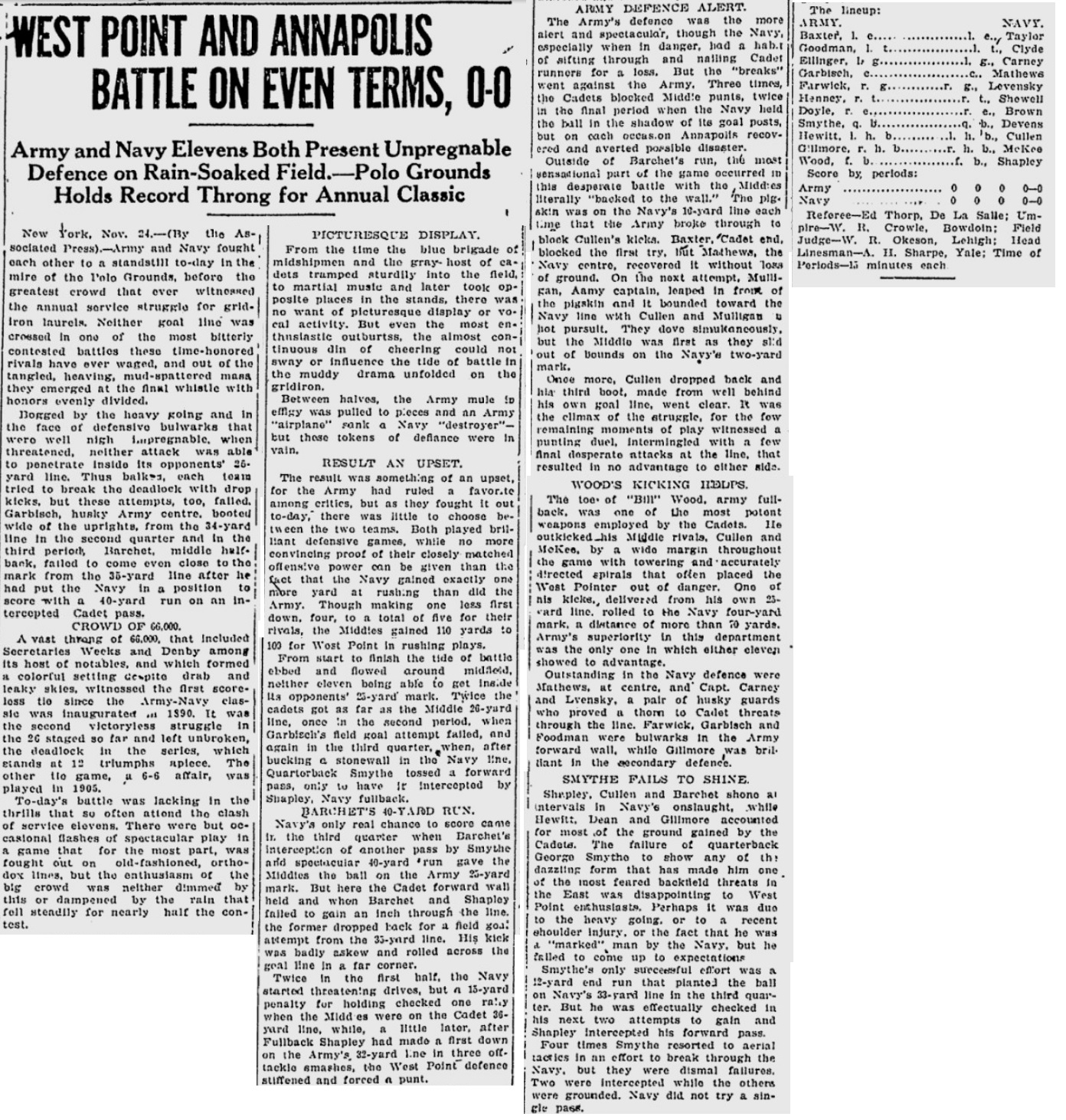
ARMY AND NAVY PLAY FOOTBALL TIE AT 0-0; 63,000 SEE BATTLE; Great Crowd at Polo Grounds Waits Tensely for Break in Game That Never Came.-New York Times – Nov 24, 1923

Navy Battles Army In Sea Of Mud .‎ Sunday Morning Star
Army-Navy Battle Is Scoreless Tie…‎ Lawrence Journal-World
HOW SERVICE TEAMS ADVANCED THE BALL; Play-by-Play Descriptio…
New York Times – Nov 25, 1923

–

ArmyFB_1923_vsNavy_EveningTribune_Nov241923

–

ArmyFB_1923_vsNavy_EveningTribune_Nov251923

–

ArmyFB_1923_Smythe-Garbisch-Farwick_BakersfieldCalifornian_Nov241923

–

ArmyFB_1923_Smythe-runs_RochesterEvJnl_Dec61923

–

ArmyFB_1914_JohnJMcEwan_Coach1923-1925_GreensburgDailyTribune_Oct201930

ArmyFB_1914_JohnJMcEwan_Coach1923-1925_GreensburgDailyTribune_Oct201930

1927 Team

1927 Army 9-1 #6

1927/11/13 Army 18 – Notre Dame 0 (Yankee Stadium, New York, NY)
1927/11/26 Army 14 – Navy 9 W (Polo Grounds,New York, NY)

Coach: Lawrence McCeney “Biff” Jones (October 8, 1895 – February 12, 1980)
Army 1926-1929 – 30-8-2
LSU 1932-1934 – 20-5-6
Oklahoma 1935-1936 – 9-6-3
Nebraska 1937-1941 – 28-14-4 (1940 Rose Bowl vs Stanford AP#7)
Total: 87-33-15

source:http://en.wikipedia.org/wiki/Biff_Jones

Howitzer 1928
http://digital-library.usma.edu/cdm/compoundobject/collection/howitzers/id/12149

–

ArmyFB_1927_team

–

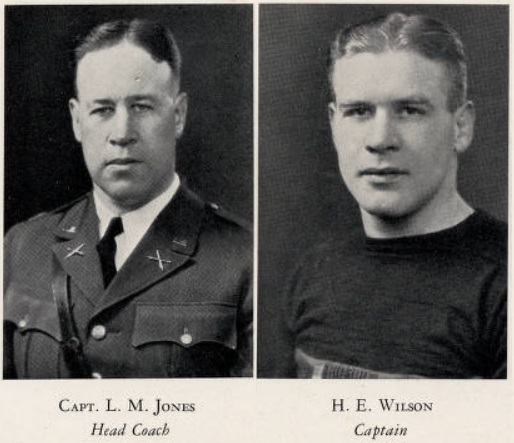
ArmyFB_1927_CoachJones_HarryWilson-Captain

–

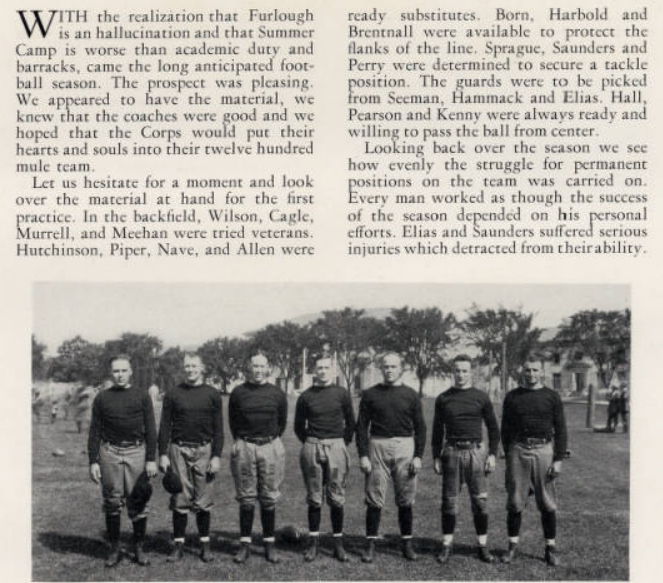
ArmyFB_1927_prospectus-coaches

–

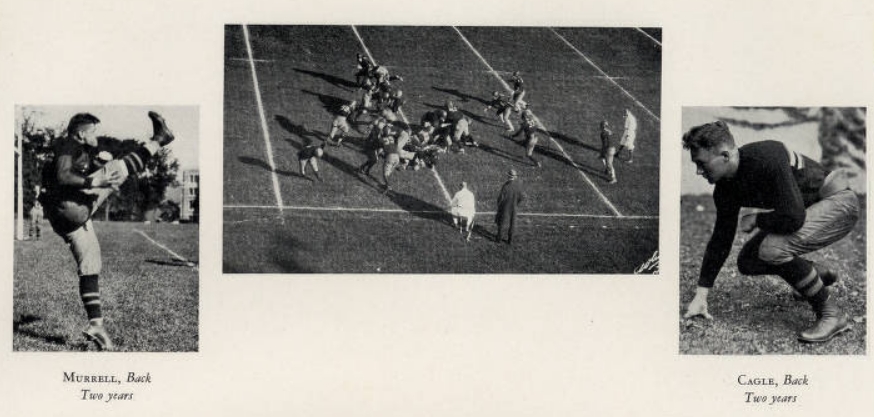
ArmyFB_1927_Cagle-Murrell

–

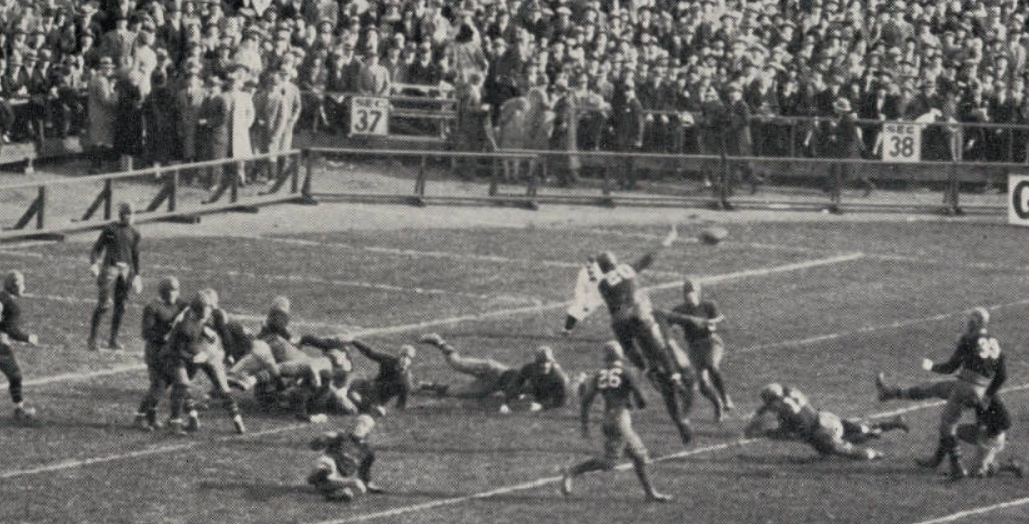
ArmyFB_1927_field-goal

–

ArmyFB_1927_vsNotreDame

–

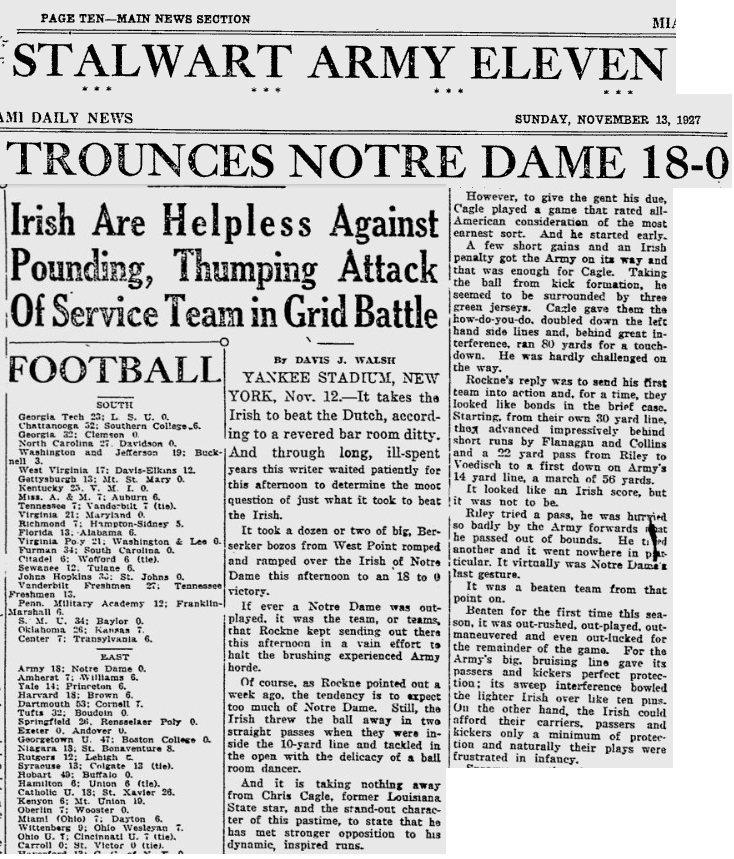
ArmyFB_1927_vsNotreDame_PittsburgPress_Nov131927


ArmyFB_1927_vsND_EveningTribune_Nov131927

–

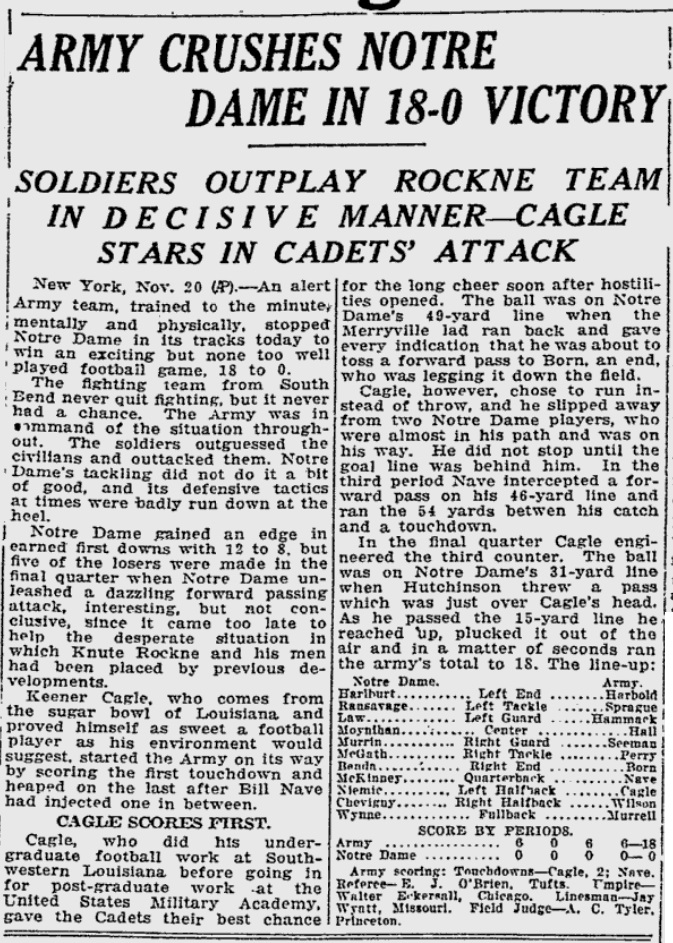
ArmyFB_1927_vsNotreDame_ReadingEagle_Nov131927

ArmyFB_1927_vsNotreDame_ReadingEagle_Nov131927

–

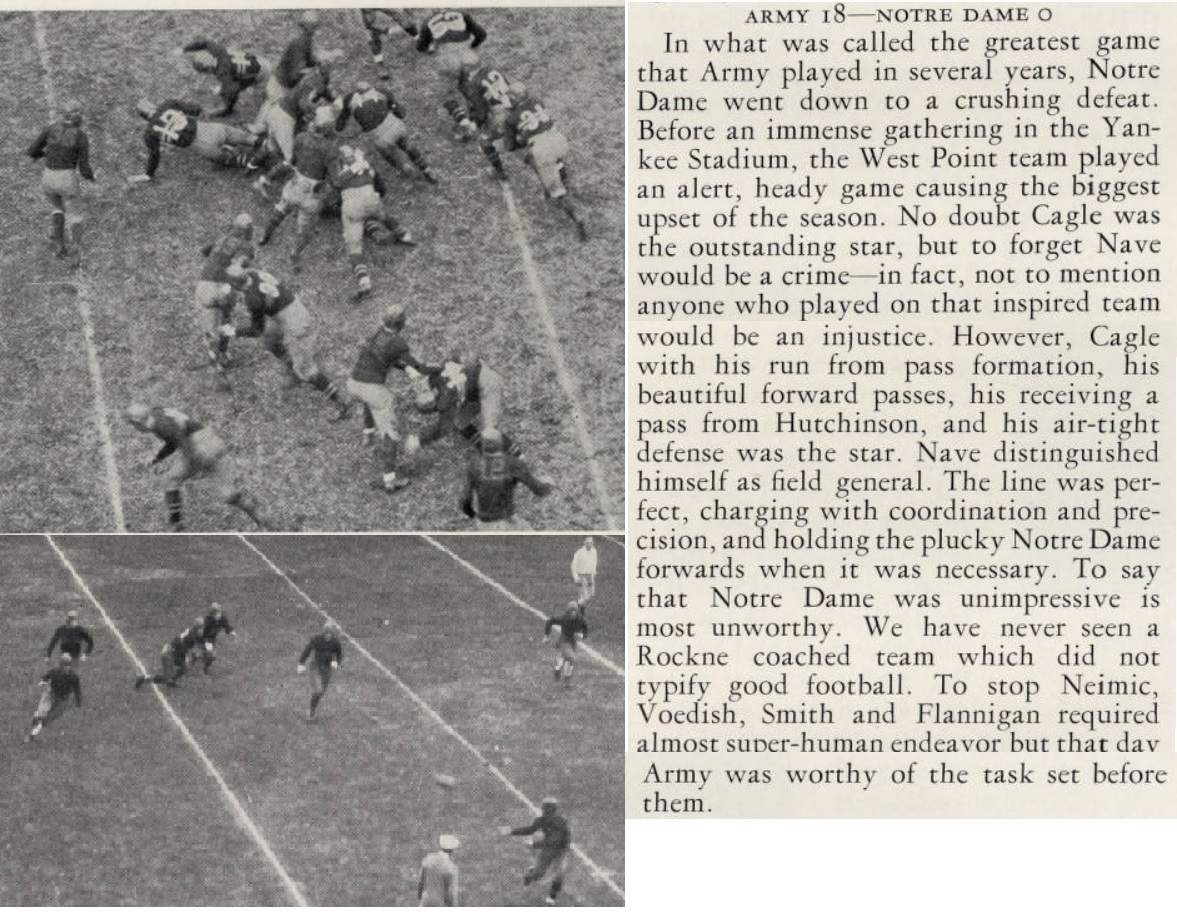
–Army_1927_NotreDame_OfficialReview_news-article

Army defeats Notre Dame 1927

Cadets march onto field. Cadets in formation. Cadets run off. Toss of coin. Army kicks off to Notre Dame. Play from extreme right side line for small gain. Play from near left side line for small gain. Army’s Cagle runs along sideline for TD on 48 yard scamper. Cadets leaving after 18-0 win.


ArmyFB_1927_Wilson_EveningTribune_Nov131927

–

ArmyFB_1927_LighthorseHarryWilson_byJackSords_CortlandStandard_Oct31927

ArmyFB_1927_LighthorseHarryWilson_byJackSords_CortlandStandard_Oct31927

–

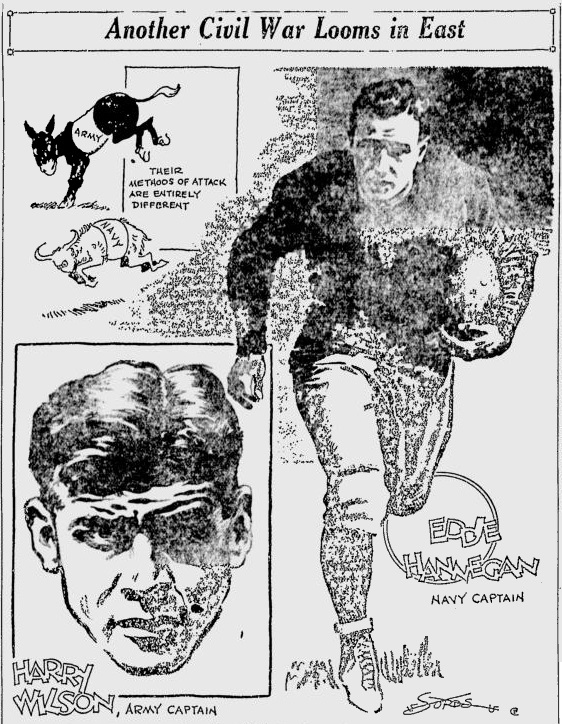
ArmyFB_1927_LighthorseHarryWilson-EddieHannegan-Navy_byJackSords_BerkeleyDailyGazette_Nov221927

ArmyFB_1927_LighthorseHarryWilson-EddieHannegan-Navy_byJackSords_BerkeleyDailyGazette_Nov221927

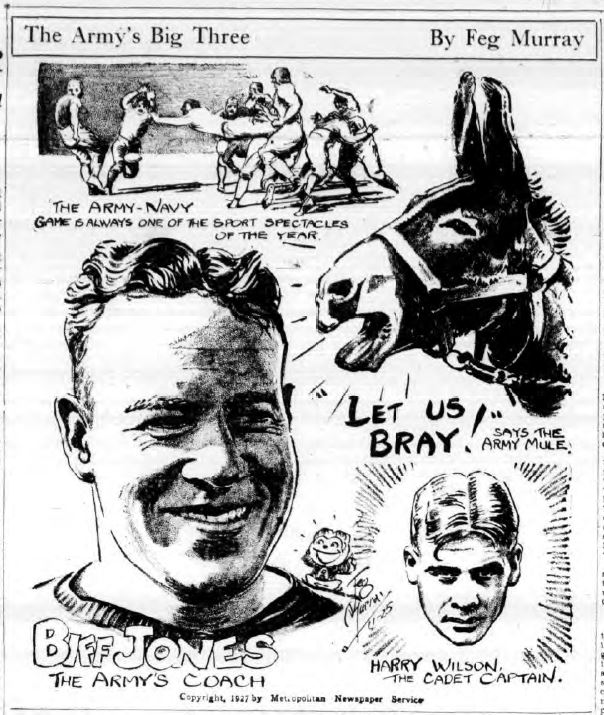
ArmyFB_1927_CoachJones-HarryWilson_byFegMurray_BuffaloEveningNews_Nov251927

ArmyFB_1927_CoachJones-CaptainHarryWilson_byFegMurray_BuffaloEveningNews_Nov251927

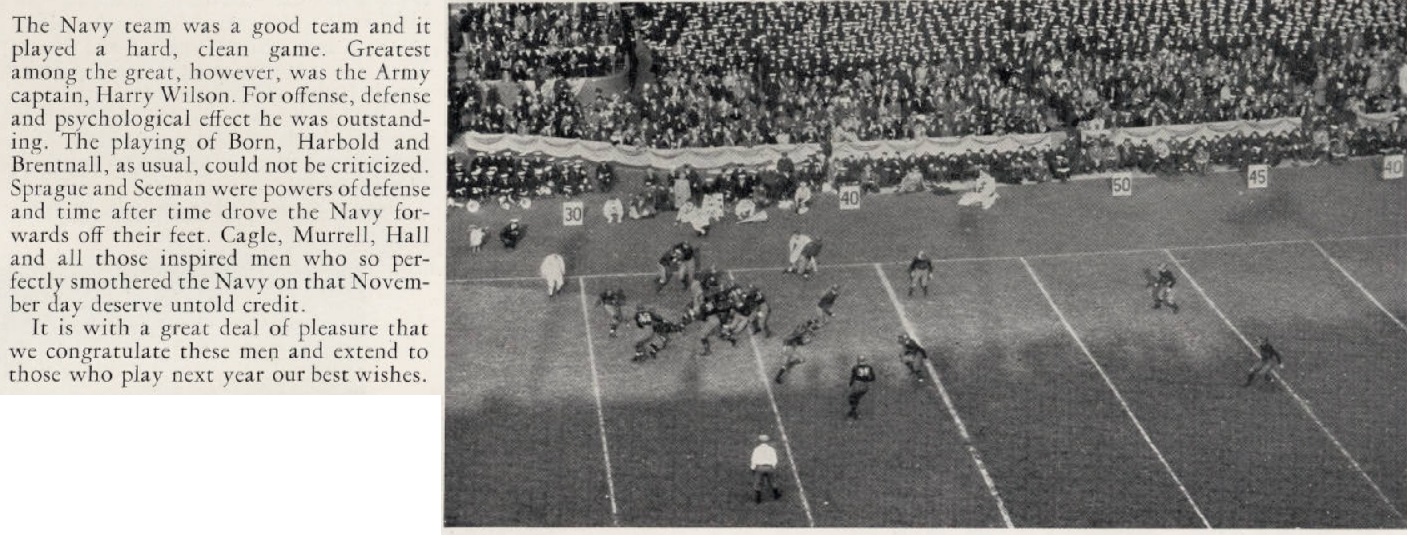
ArmyFB_1927_vsNavy_summary

–

ArmyFB_1927_vsNavy_SarasotaHeraldTribune_Nov271927

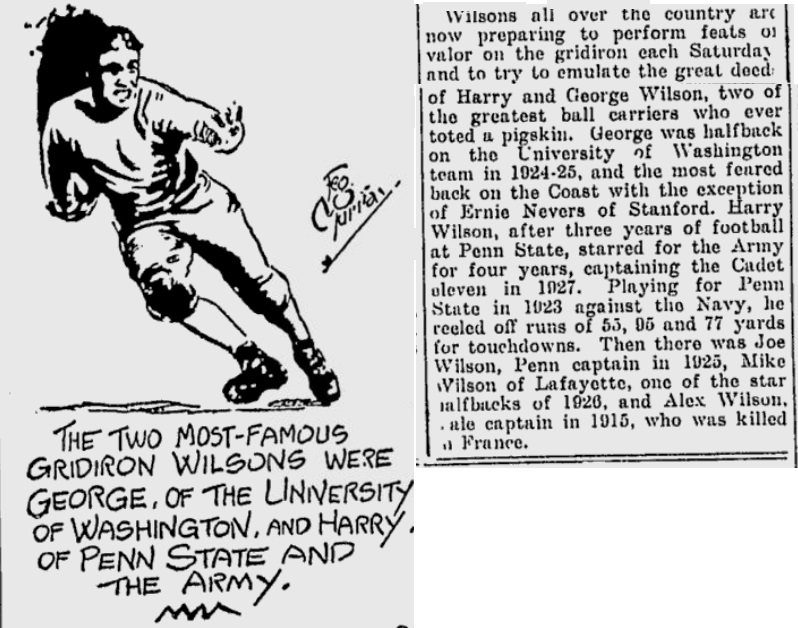
ArmyFB_1927_HarryWilson-Army-PSU_byFegMurray_SundayMorningStar_Sep131931

ArmyFB_1927_HarryWilson-Army-PSU_byFegMurray_SundayMorningStar_Sep131931

–

College Football Historical Society
VOL. IV, NO. I NOVEMBER, 1990
http://www.la84foundation.org/SportsLibrary/CFHSN/CFHSNv04/CFHSNv04n1a.pdf
PAGE 14 The Forgotten Cadets
By Ray Schmidt
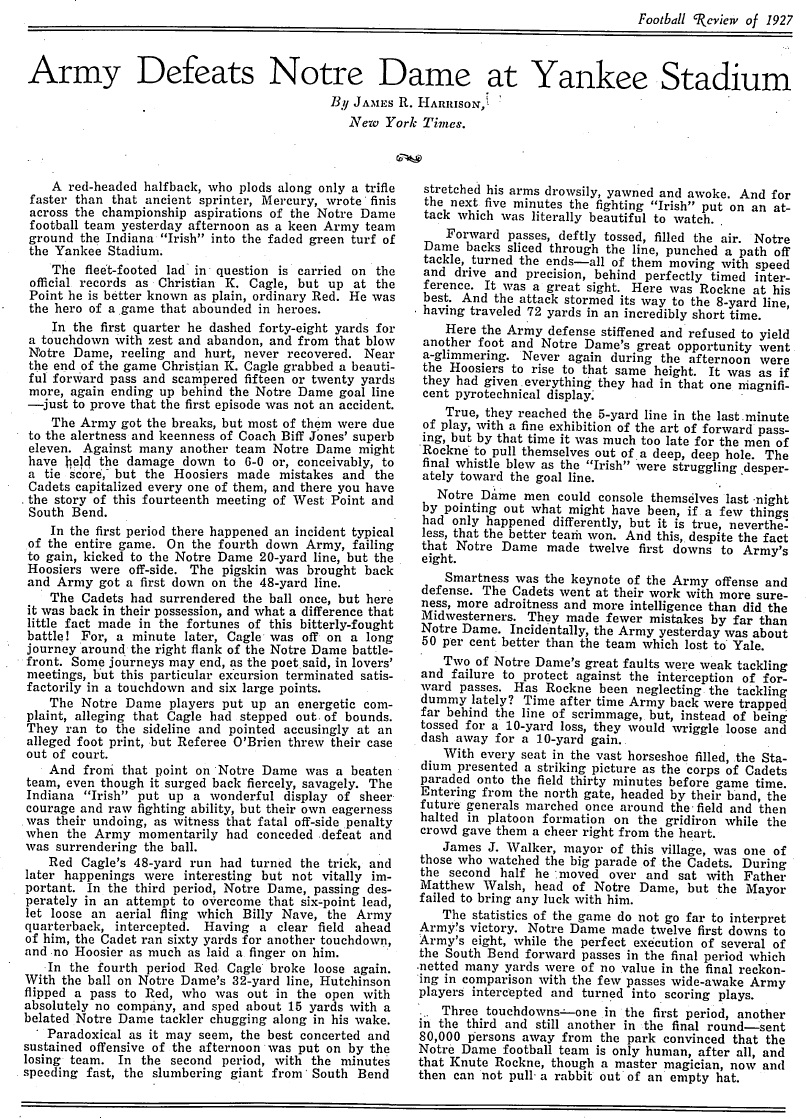
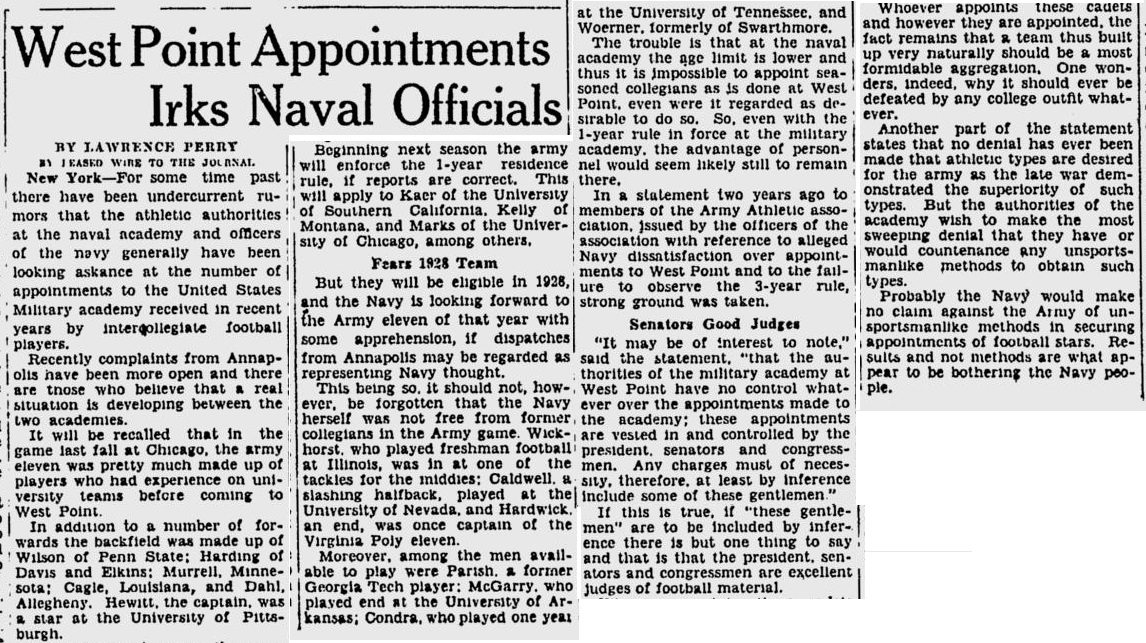
They were considered one of the national powerhouses of their time; they featured a veteran starting lineup loaded with All-American caliber players; they were led by one of the most exciting and colorful halfbacks in the annals of college football history of whom a New York scribe wrote: “A red-headed halfback who plods along only a trifle faster than that ancient sprinter Mercury … the hero of a game that abounded in heroes.” The player was
Christian K. Cagle; the team was 1927 Army.
In the first year under Coach Biff Jones Army had had an outstanding season in 1926 (7-1-1), capped off by the legendary 21-21 tie with Navy. For 1927 the word was that Army would be even stronger, with a veteran team featuring eight returning regulars and thirteen of the first twenty men. But replacing the graduated men with satisfactory players was where Jones had a problem.
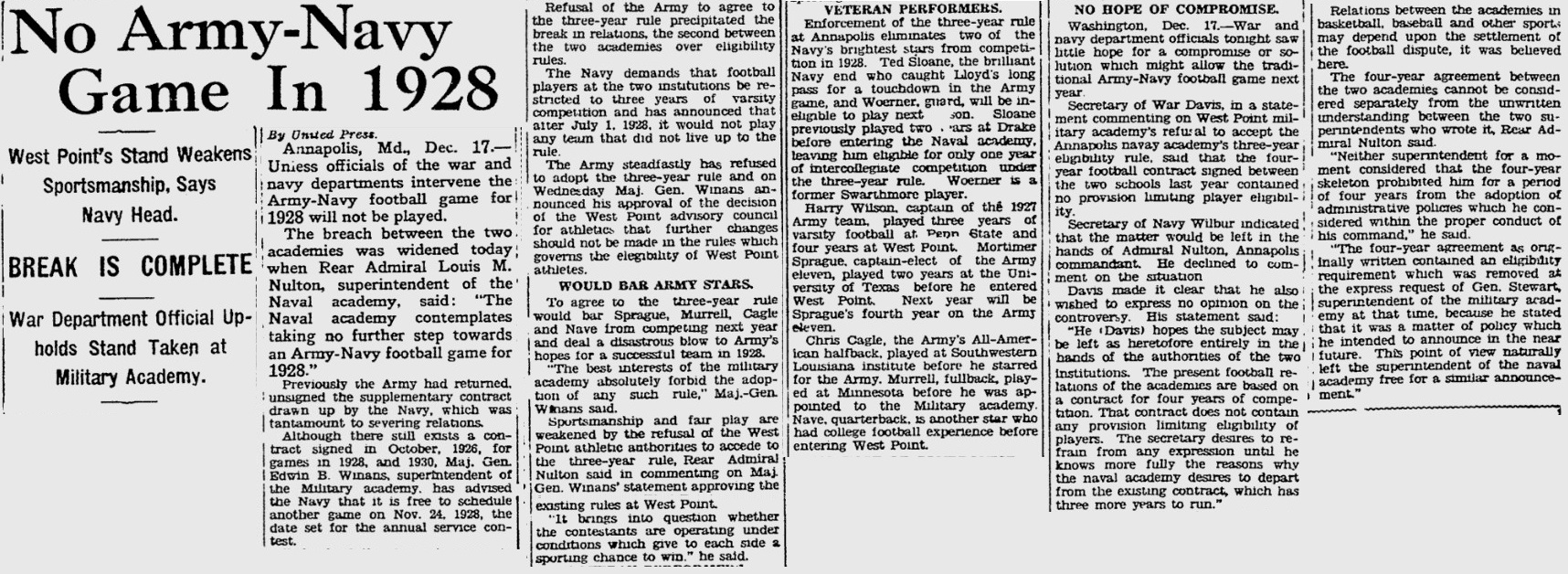
By the late 1920’s the importance of having good depth in your reserves had come to be considered an important part of college football strategy, and the use of the “shock troops” (or second team) even to start a game, was a Common tactic of major teams such as Notre Dame, Army, USC etc. The problem for Coach Jones was that 1927 Army did not have enough quality players to fill Out a second team of sufficient strength to allow him to employ this tactic in major games. The main reason this seems to have come about is that in 1927 Army adopted the “one-year rule”, which said that freshmen were ineligible for varsity play. In 1926 the Cadets had been greatly aided by first year men (plebes) Murrell, Cagle, Dahl and Perry. There would be no such help in 1927, and so an observer as prominent as Allison Danzig opinioned that
Army of 1927 was actually a weaker team than the previous season.
But despite the lack of depth on his bench,Coach Jones had a starting line-up that was “loaded”.
The backfield was expected to be led by Light Horse Harry Wilson at right half, with help from Chris Cagle at left half and John Murrell at fullback. On the flanks Army had Norris “Skippy” Harbold (left end) and Charley Born (right end), who were commonly regarded as two
of the best ends in the country. The line was led by Mortimer (Bud) Sprague at left tackle and George (Buster) Perry at right tackle.
Army opened its 1927 season on Sept 24 by hosting Boston University. The game had just started when Cagle rifled a 40-yard pass completion to Murrell, but a fumble stopped this drive. On Army’s next possession Cagle passed to Meehan for a 27-yard gain to Boston’s 15; Harry Wilson then swept end for 13 yards and Murrell plowed in for the TD and a 7-0 lead. On the following kickoff Murrell made a run-back of 42 yards to launch another drive which he
capped off by plunging in for the TD and a 13-0 lead. There was no further scoring as the Army reserves put on a dreadful performance the rest of the game which caused renewed comment in the media on the lack of depth available to Coach Jones in 1927.
The second week Detroit came to West Point on a stifling hot day, and early in the game Army started a march at their 34 behind the running of Cagle, Wilson and Murrell. At the Detroit 40 Cagle dropped back and lofted a pass to Charley Born, just as he went into the end-zone, for the TD. Later in the game Cagle broke off a pair of spectacular runs but the game ended with
Army still holding just a 6-0 lead.
The following week, with Wilson out of action, Army got an unexpected tough game against a fast and big Marquette team. The Cadets were surprised early in the first quarter as Marquette marched from midfield to a score and a 6-0 lead. But a short time later Cagle broke off tackle and raced 60 yards to a TD to tie it up. After Landon’s field goal gave Army a half-time lead,
Cagle broke the game open in the third quarter with a dazzling punt return of 52 yards for a TD. Still in the third quarter Cagle broke off a 25-yard run to lead a drive that ended with Murrell plunging in for the TD. Army had shown its best form of the season so far in the hard-fought 21-12 win, and Biff Jones was encouraged with the tough foes still to come.
Army now prepared for their first major game of the season against an excellent Yale team. The Bulldogs were led by halfback Bruce Caldwell, who would become involved in a major controversy not long after, and the game was expected to be a battle between Yale’s star and Harry Wilson. For the previous two weeks Army had been emphasizing their passing game in practice, but now the Cadets decided to abandon the use of the backfield shift they usually employed, and instead lineup in the standard single-wing. One paper observed that this would produce “only straight more or less old-fashioned football on attack”.
But Army was brought back to earth the next week as Davis & Elkins came in and stunned the Cadets with a TD in the second quarter for a 6-0 lead. Despite Sprague’s blocking of two punts that gave Army great scoring chances, the Cadets were plagued with several fumbles and
poor passing, which helped D&E hold them off four times in the third quarter alone. But then early in the fourth quarter Army finally broke thru on Wilson’s 5-yard TD run to tie it up. A moment later Army had the ball again, and Cagle knifed thru left tackle and dashed 50 yards
to the score for a 13-6 lead. The Army reserves then added a pair of TD’s to round off the 27-6 win.
It was a gorgeous October afternoon in the Yale Bowl and in the words of one writer it was a “day made to order for football. There was enough tonic in the sunshine to make old grads young again and young grads still younger.” On the field the Army line ran into a superior opponent.
In the first period Yale started their second possession of the game from their own 35 yard line. Caldwell’s running led Yale to a 4th down and 2 at Army’s 35 where the Cadets held, but an offside penalty on the play gave Yale a first down on the 30. On the next play Caldwell dropped back and launched a long pass to the right end Quarier, who made a leaping catch at the 10 over Army’s Meehan, and then staggered the rest of the way in for the TD and a 7-0 lead. But Army came roaring back early in the second quarter when Harry Wilson recovered a fumble at the Yale 18. In two plays the Cadets had a first-and-goal at the Yale 7-yard line. Then Cagle and Wilson were each stopped in their tracks, and after a penalty moved the ball to the 2, and Sprague not playing at all, as Army eased past Ursinus 13-0. Then it was time to prepare for the season finale with Navy. The Cadets were installed as a slight favorite, but Navy was a good team despite having lost to Michigan and Notre Dame. The week of practice at West Point was graced by the presence of the legendary back Elmer Oliphant, who was working with the coaches to try and install more speed in the Army attack. Came the day Of the game and the conditions were ideal for football, as 75,000 fans jammed the Polo Grounds to watch Lighthorse Harry Wilson in his final college game.
The teams had battled thru a scoreless first quarter with an inspired Navy team having once driven to the Army 10. In the second period the teams were exchanging punts when suddenly Giese of Navy broke thru to block Murrell’s kick and the ball bounded out of the end-zone for a safety to give Navy a 2-0 lead. On the following kickoff Navy got a 22-yard return to Army’s 44,
from where they began a march that carried them to a first-and-goal at the Cadet 4 yard line.
But here the Army line held to take the ball back on the 1 yard line, and Murrell boomed out a 53-yard punt to end the threat. In the second half the tide turned, and early in the third quarter Army took a punt to Navy’s 28. From there Wilson carried the ball five times in a row, the last a l-yard plunge for the TD and Army led 7-2. A short time later Cagle intercepted a Navy pass and raced it back 41 yards to the Navy 4 yard line. On the second play Wilson swept around left end for a 3-yard TD run. Navy scored in the final quarter, but Army held on for a 14-9 win
that capped off an excellent 9-1-0 season.
For the 1927 season fifteen different players chipped in to the scoring for Army. The scoring leaders were Cagle (6 TD’s, 3 PAT’s and threw 2 TD passes); Murrell (6 TD’s); and Wilson (5 TD’s, 2 PAT’s). Cagle’s personal statistics included 681 yards rushing and 16 of 50 passing for 353 yards.
Army finished #6 in the national Dickinson Ratings behind top-rated Illinois, and once again the short comings of this system are seen as Notre Dame was rated #4. There were plenty of individual post-season honors as the following players received All-American mention: George Perry (tackle)- NY Sun First Team, NEA Second Team; Bud Sprague (tackle)- Associated Press First Team; Central Press, Hearst and INS First Team; Chuck Born (end)- NY World First Team, UP Second Team; Hearst, NEA and A-A Board Second Team; and Chris Cagle- First Team for Grantland Rice, A-A Board and Walter Eckersall, Third Team for AP, UP and NY World.
Years later Earl Blaik, the Army backfield coach in 1927, would call Cagle “one of the four great backs of Army history”. Certainly, even today, he remains one of the most colorful figures in college football history.

–

ArmyFB_1927_Eligibility_MilwaukeeJournal_Jan211927

–

ArmyFB_1927_No-Army-Navy-in28_PittsburghPress_Dec181927

–

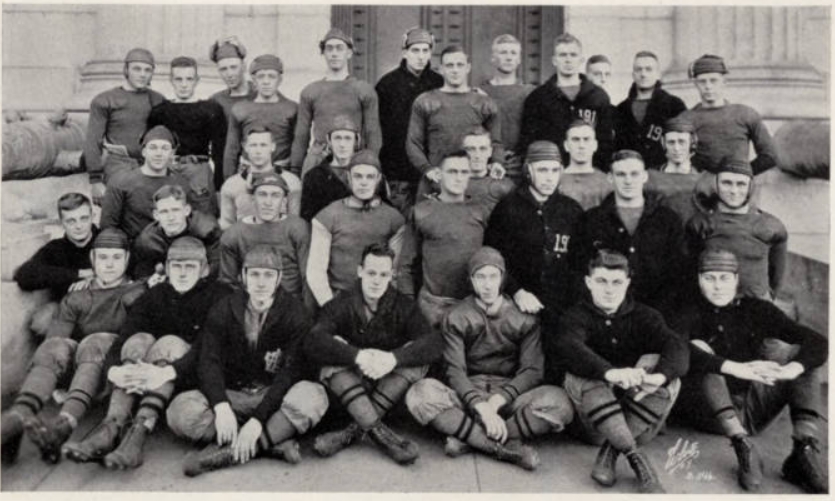
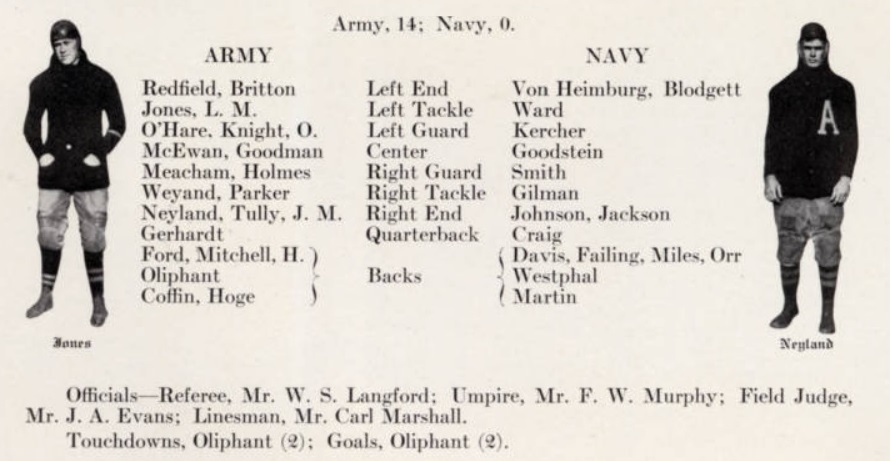
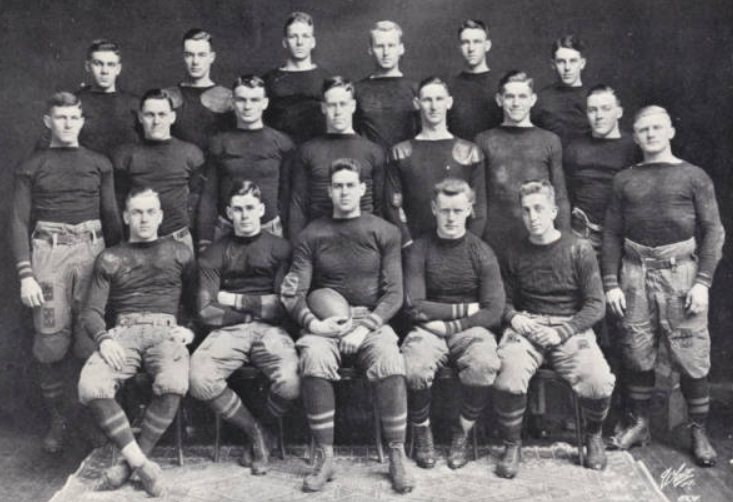
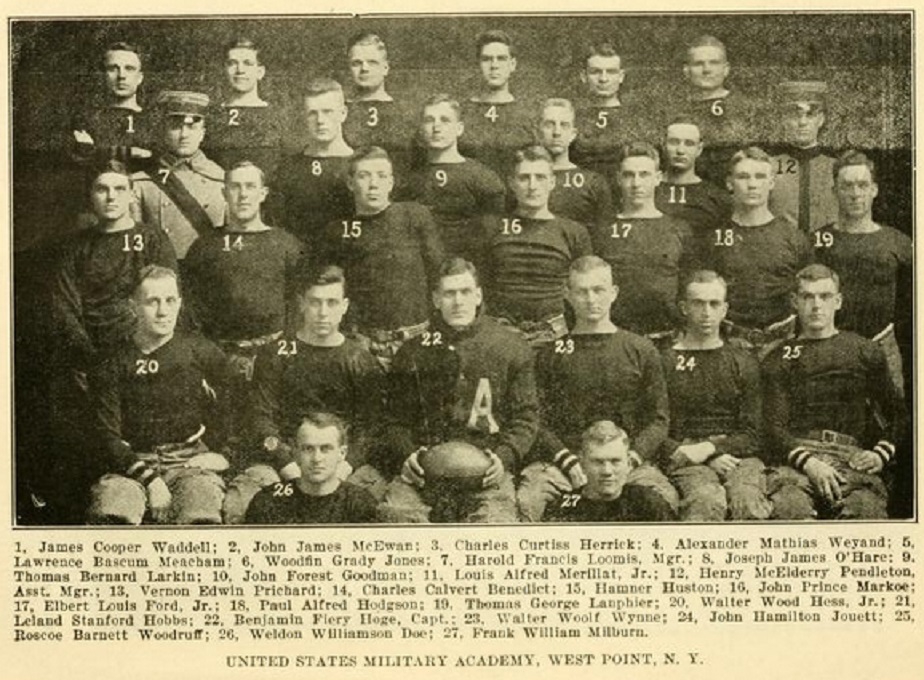
1915 Team

1915 Army 5-3-1
1915/11/27 Army 14 – Navy 0 W

http://forwhattheygaveonsaturdayafternoon.com/wp-1915/

Coach Charles Dudley “Charlie” Daly (October 31, 1880 – February 12, 1959)
Appeared in the film Daly, of West Point. 1902.

http://en.wikipedia.org/wiki/Charles_Dudley_Daly
Army VS. Navy On Saturday – Reading Eagle – Nov 26, 1915
http://news.google.com/newspapers?id=7lorAAAAIBAJ&sjid=a50FAAAAIBAJ&dq=football%20philadelphia&pg=6364%2C3771085

–

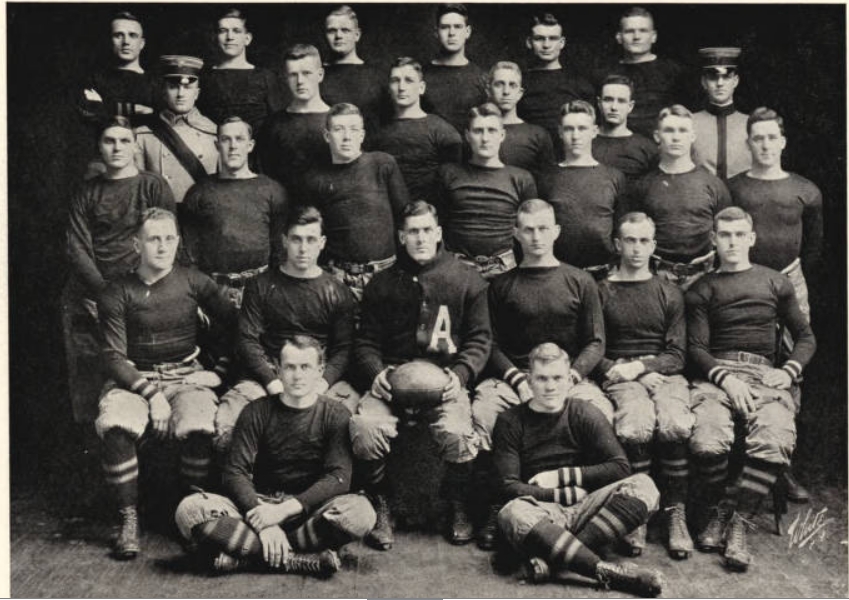
ArmyFB_1915_team_

–

ArmyFB_1915_team

–

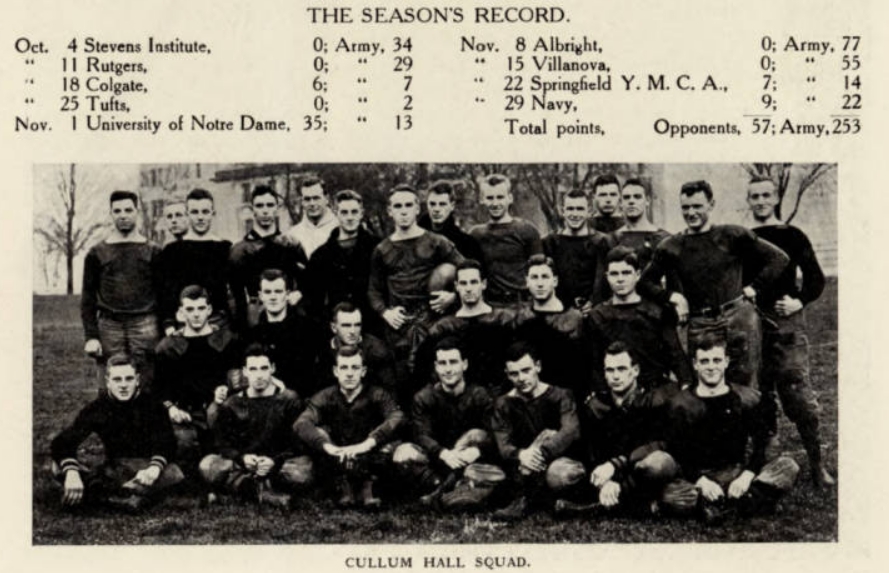
ArmyFB_1915_CullumHall-team

–

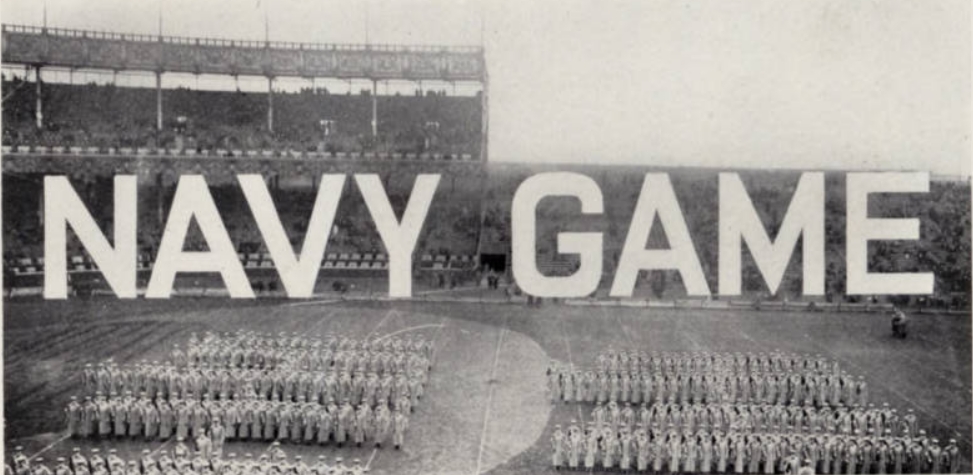
ArmyFB_1915_vsNavy_lineups

Two future Coaching Greats! and the Asst Manager became the Army Chief of Staff!

ArmyFB_1915_vsNavy-starters

–

ArmyFB_1915_vsNavy_squad-arrives

–

ArmyFB_1915_vsNavy_march-on

–

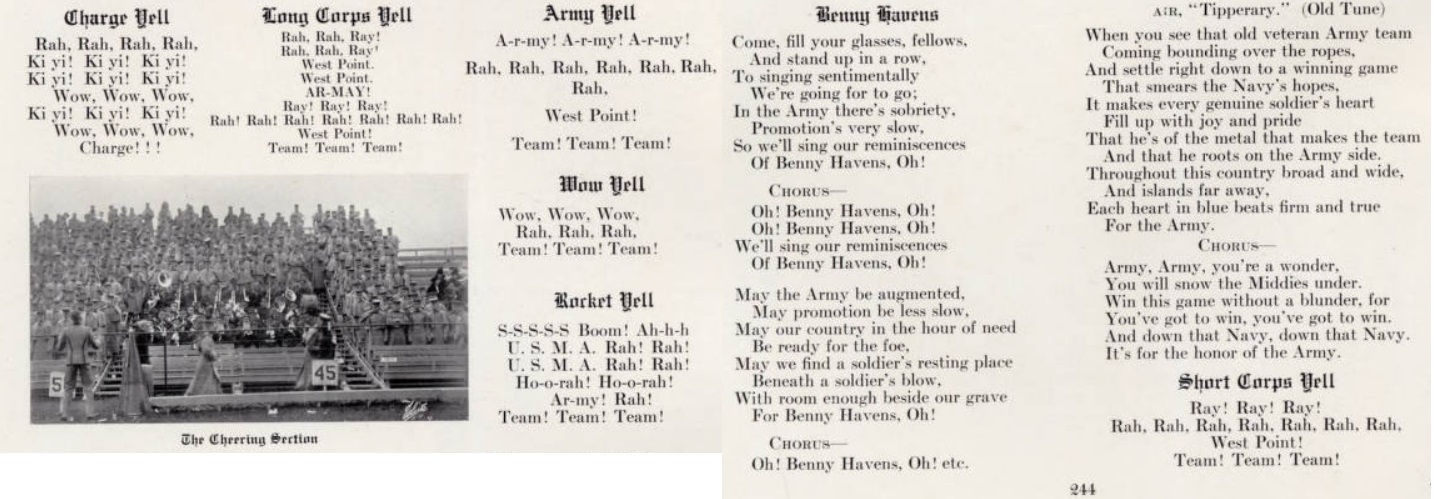
ArmyFB_1915_vsNavy_cheers-songs

–

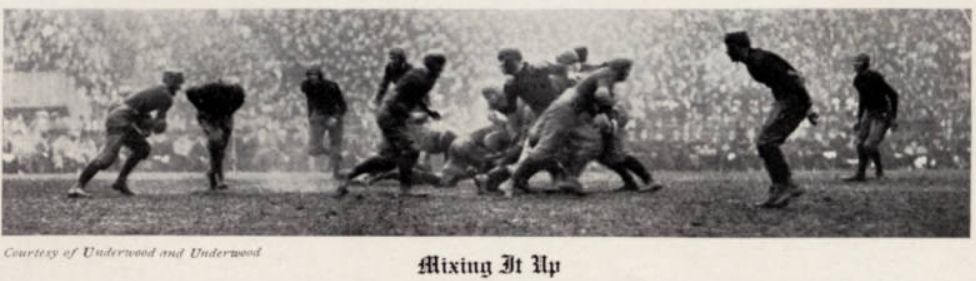
ArmyFB_1915_vsNavy_offense

–

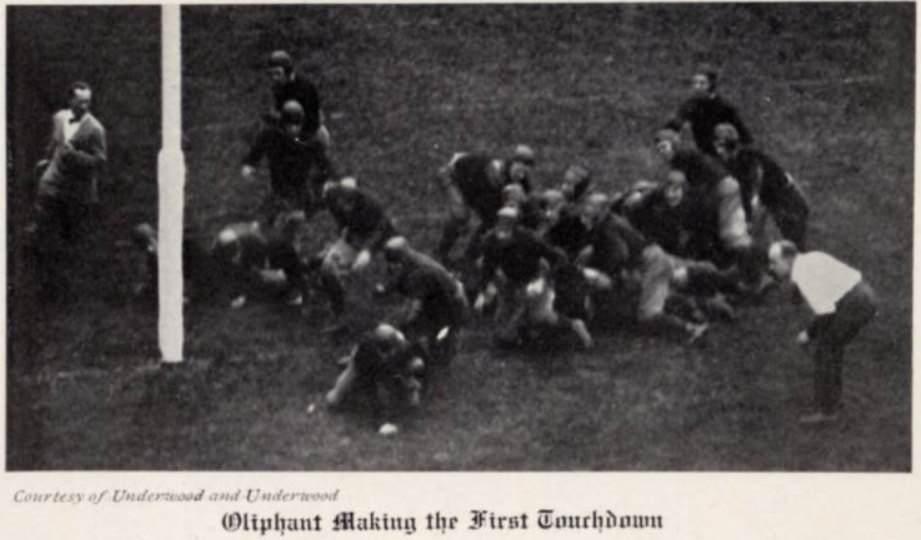
ArmyFB_1915_vsNavy_Oliphant-TD

–

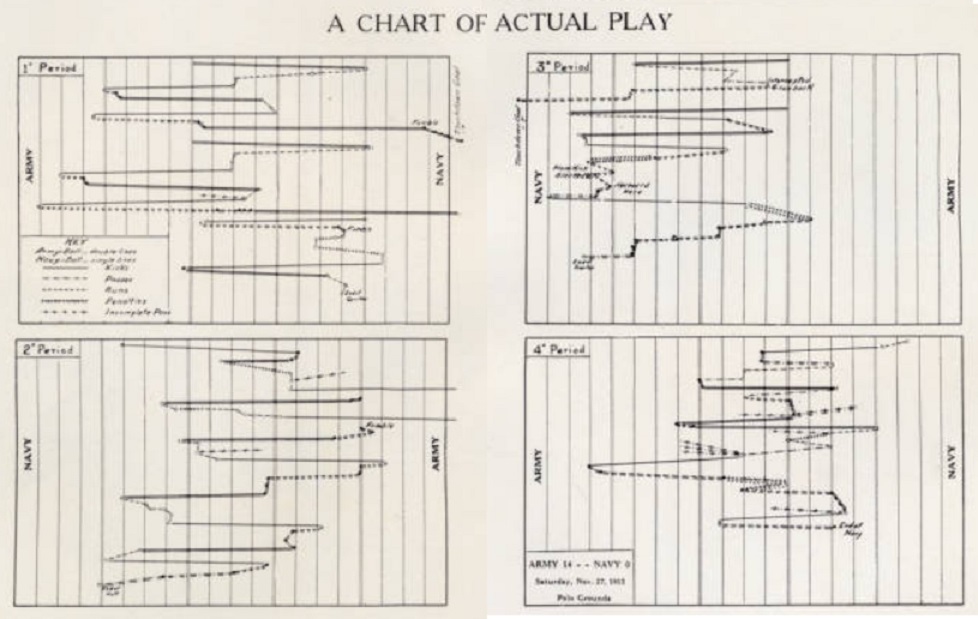
ArmyFB_1915_vsNavy_graph

Howitzer 1916
http://digital-library.usma.edu/cdm/compoundobject/collection/howitzers/id/15636/rec/22

–

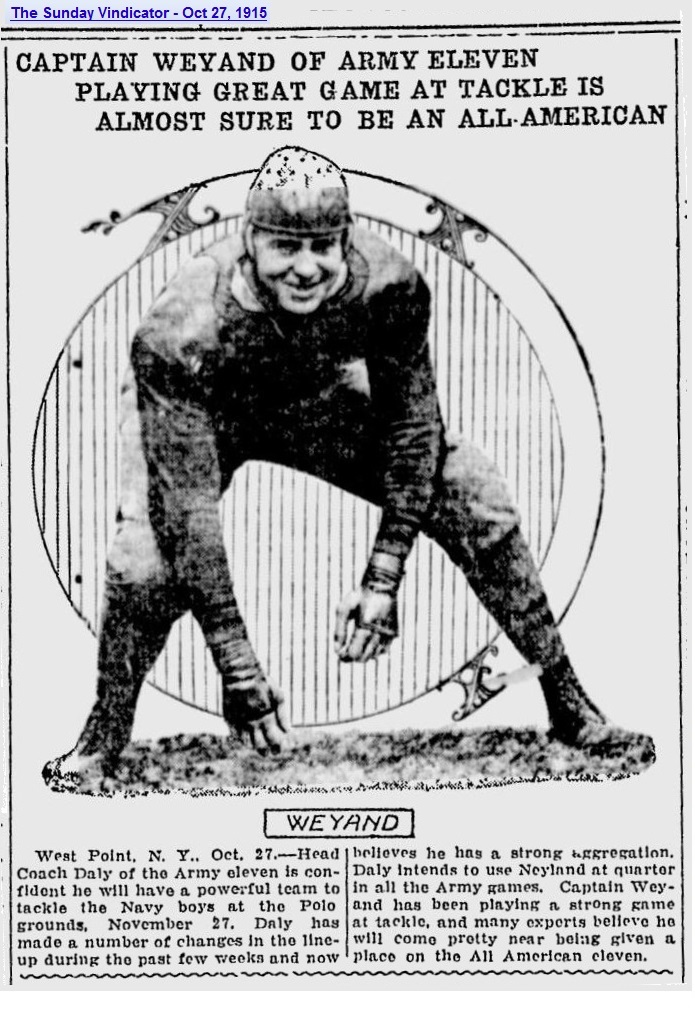
ArmyFB_1915_Weyand_SundayVindicator_YoungstownOH_Oct271915

–

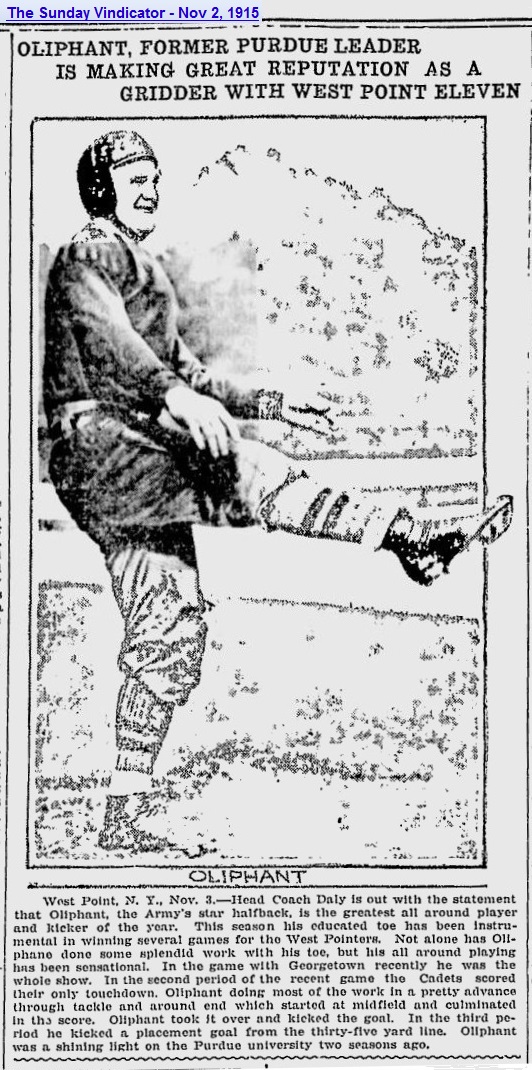
ArmyFB_1915_Oliphant_SundayVindicator_YoungstownOH_Nov21915

–

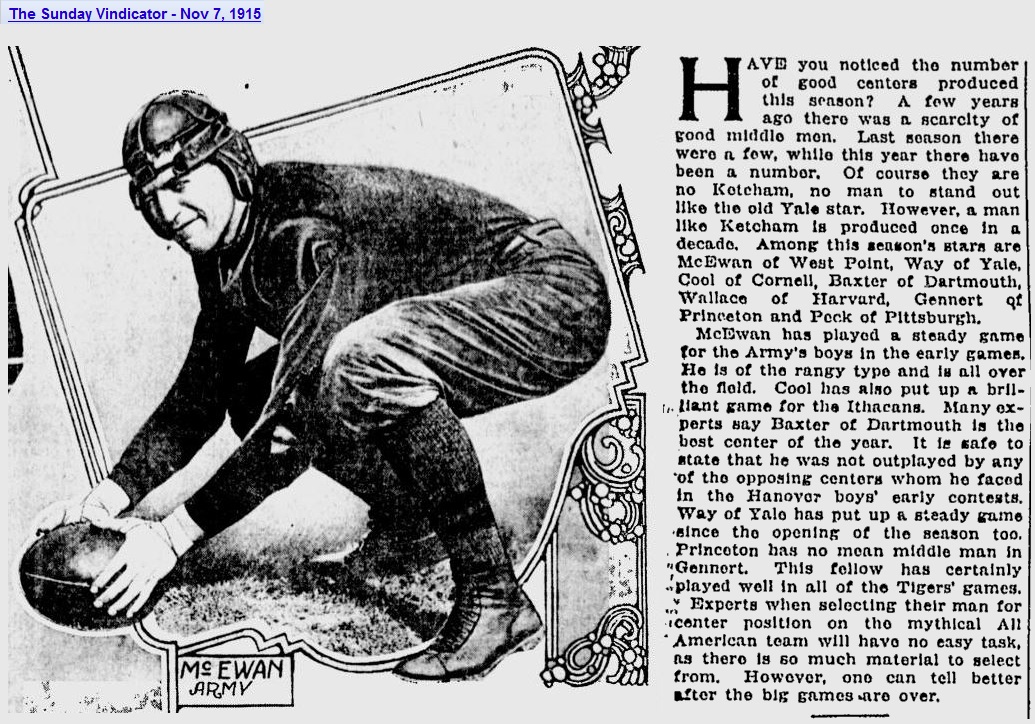
ArmyFB_1915_McEwan_SundayVindicator_YoungstownOH_Nov71915

–

ArmyFB_1915_Coffin_vsNavy_SundayVindicator_YoungstownOH_Nov271915ArmyFB_1915_vsNavy_SundayVindicator_YoungstownOH_Nov281915

–

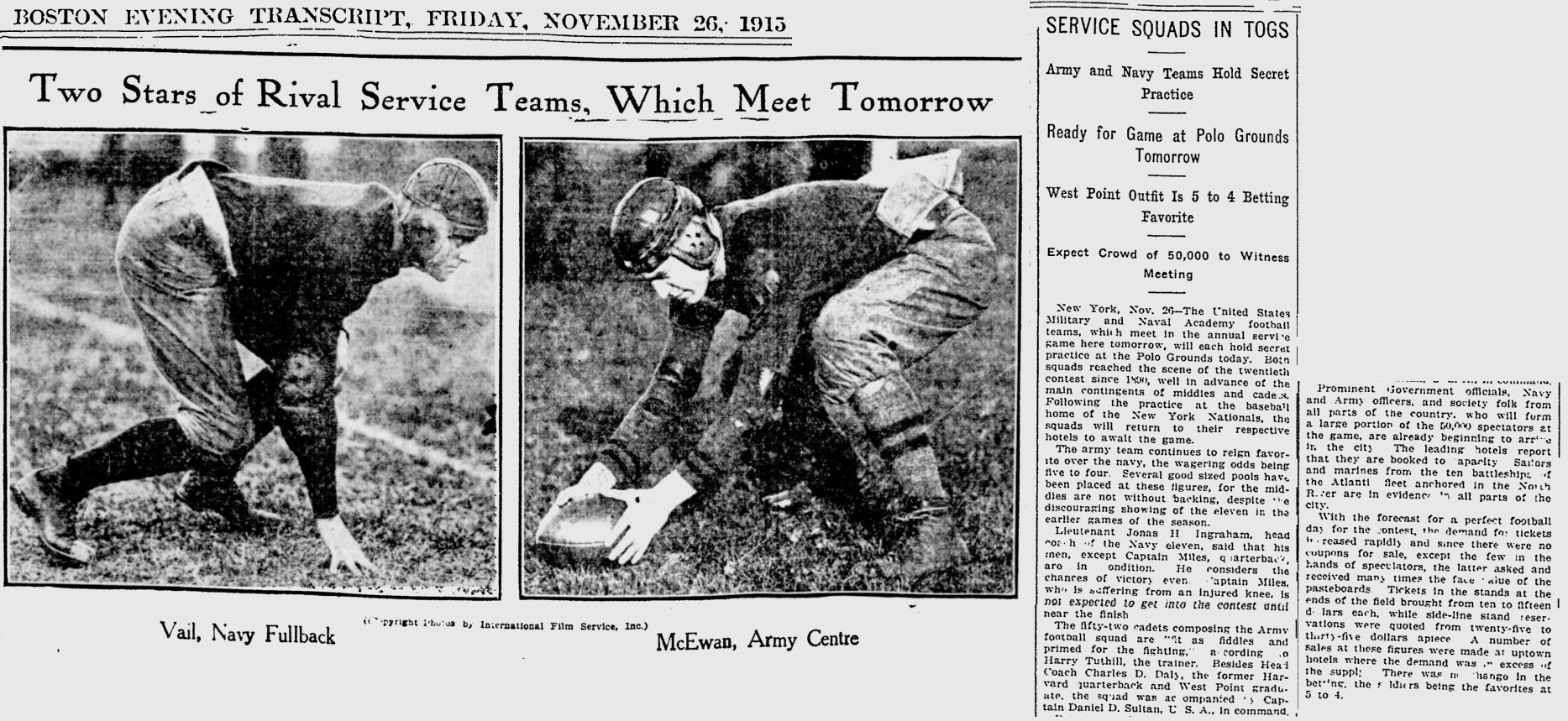
ArmyFB_1915_vsNavy-pre_CptMcEwan_BostonEveningTranscript_Nov261915

ArmyFB_1915_vsNavy-pre_CptMcEwan_BostonEveningTranscript_Nov261915

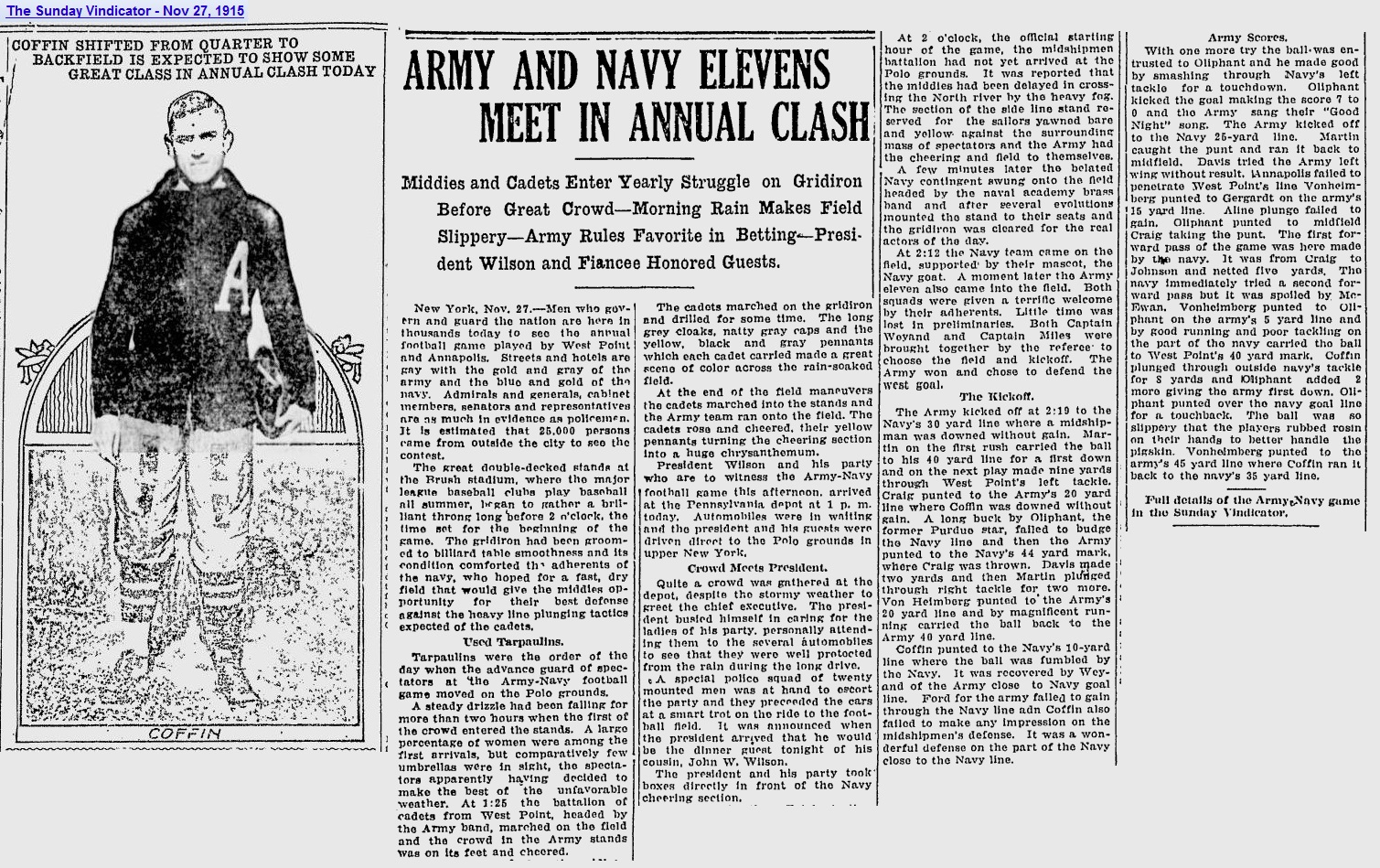
Army Mule and Navy Goat In Annual Game at Gotham – Atlanta Constitution – Nov 27, 1915
The football elevens of the United States Naval and Military academies will close the eastern gridiron season with their annual contest here tomorrow afternoon. Indications point to a hard-fought game.

Service Game Today May Break Existing Series Tie. Army and Navy Have Each Won Nine Games .. – Lewiston Daily Sun – Nov 27, 1915
http://news.google.com/newspapers?id=nbogAAAAIBAJ&sjid=i2kFAAAAIBAJ&dq=football%20philadelphia&pg=2346%2C3427013

Army VS. Navy On Gridiron. Cadets Score First In Annual Contest….- Reading Eagle – Nov 27, 1915
http://news.google.com/newspapers?id=7lorAAAAIBAJ&sjid=a50FAAAAIBAJ&dq=football%20philadelphia&pg=6364%2C3771085

Soldier and Sailor Elevens Will Try to Break Tie – The Day – Nov 27, 1915
http://news.google.com/newspapers?id=3vsgAAAAIBAJ&sjid=lXUFAAAAIBAJ&dq=football%20philadelphia&pg=6312%2C3072067

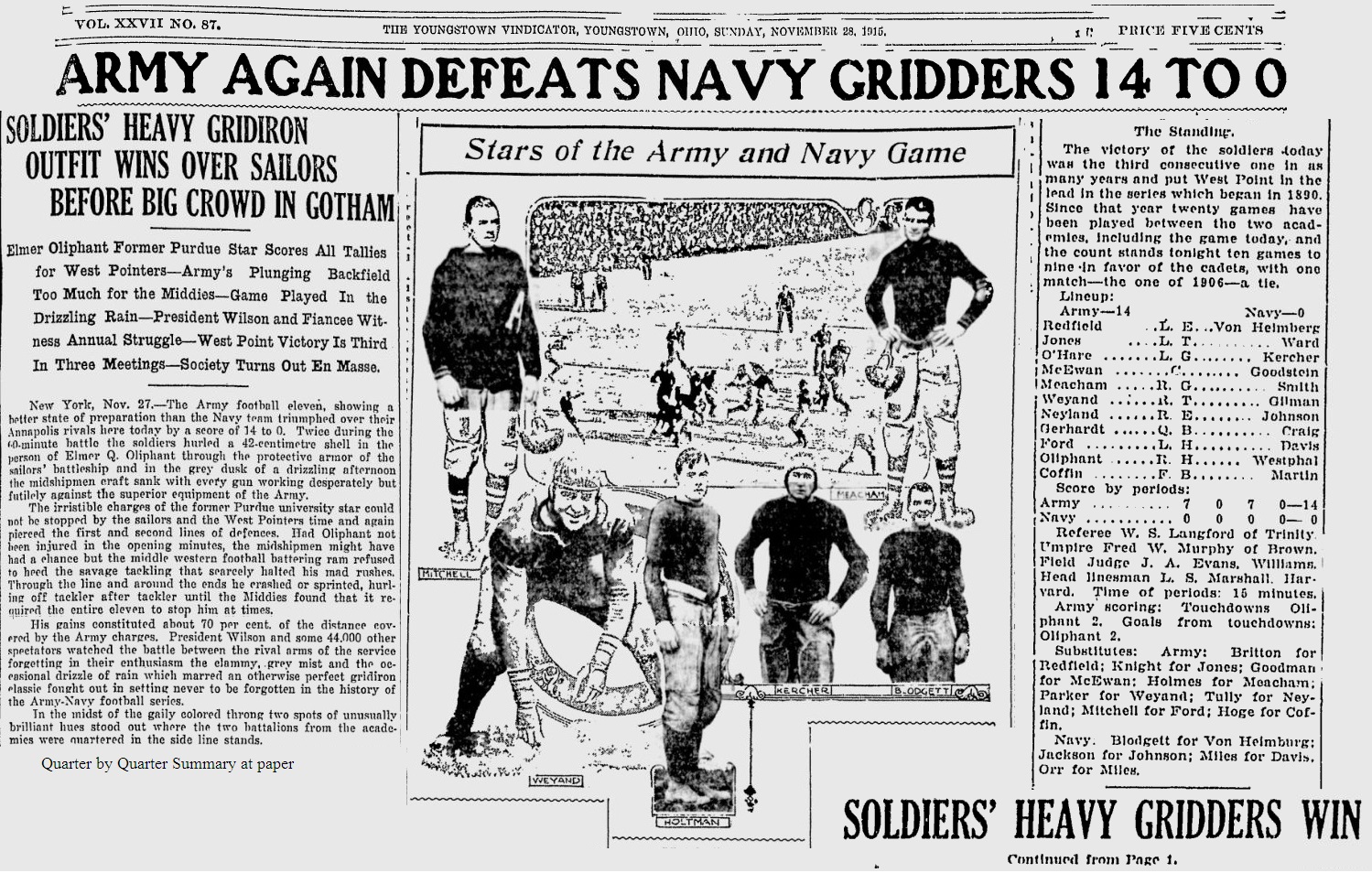
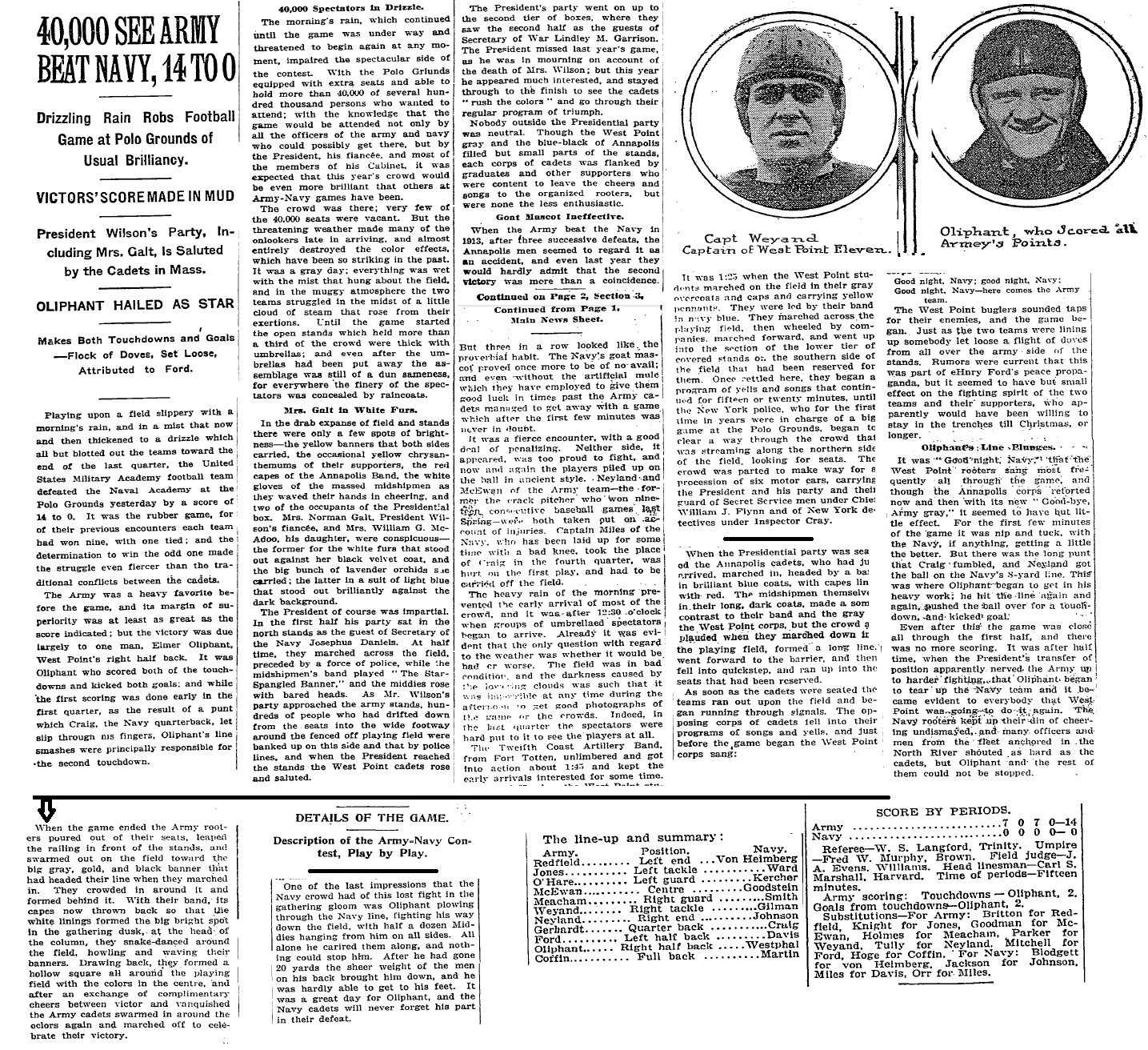
40,000 SEE ARMY BEAT NAVY, 14 TO 0; Drizzling Rain Robs Football Game at Polo Grounds of Usual Brilliancy. VICTORS’SCORE MADE IN MUD President Wilson’s Party, Including Mrs. Galt, Is Saluted by the Cadets in Mass. OLIPHANT HAILED AS STAR Makes Both Touchdowns and Goals ;- Flock of Doves, Set Loose, Attributed to Ford. 40,000 SEE ARMY BEAT NAVY IN MUD; WILSON ATTENDS In Fog and Drizzle West Point Piles Up 14-0 Score, with Oliphant as Star. MRS. GALT WITH PRESIDENT Cheers and Music Resound at Polo Grounds, but Weather Mars the Spectacle. FLOCK OF DOVES SET LOOSE Rumored They Are Furnished by the Ford Peace Promoters, but the Teams Fight On.
SPECIAL TO THE NEW YORK TIMES
Playing upon a field slippery with a morning’s rain, and in a mist that now and then thickened to a drizzle which all but blotted out the teams toward the end of the last quarter, the United States Military Academy football team defeated the Naval Academy at the Polo Grounds yesterday by a score of 14 to 0.
November 28, 1915 Front Page

ArmyFB_1915_vsNavy_NYT_Nov281915

http://query.nytimes.com/mem/archive-free/pdf?res=980CE4DB153BE233A2575BC2A9679D946496D6CF

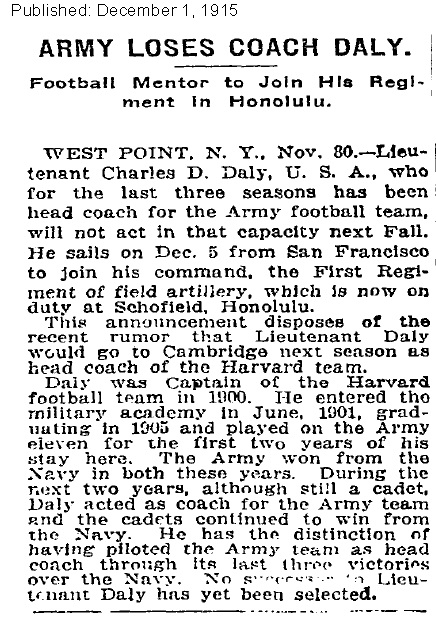
ARMY LOSES COACH DALY.; Football Mentor to Join His Regiment In Honolulu. Dec 1 1915

ArmyFB_1915_CoachDaly_NYT_Dec11915

http://select.nytimes.com/gst/abstract.html?res=FA0C14F6385B17738DDDA80894DA415B858DF1D3

–

1913 Team

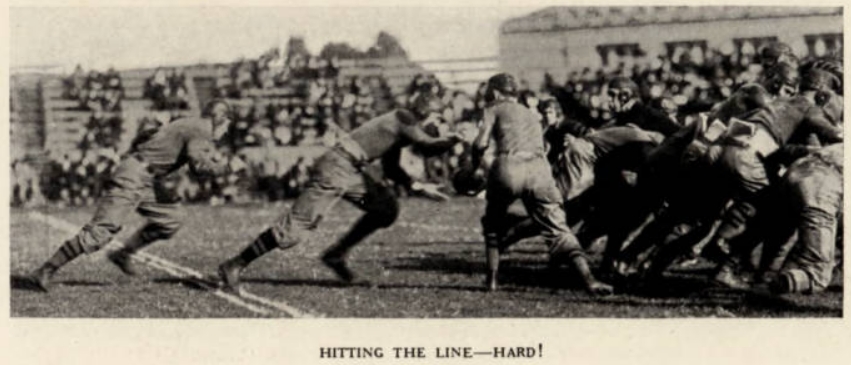
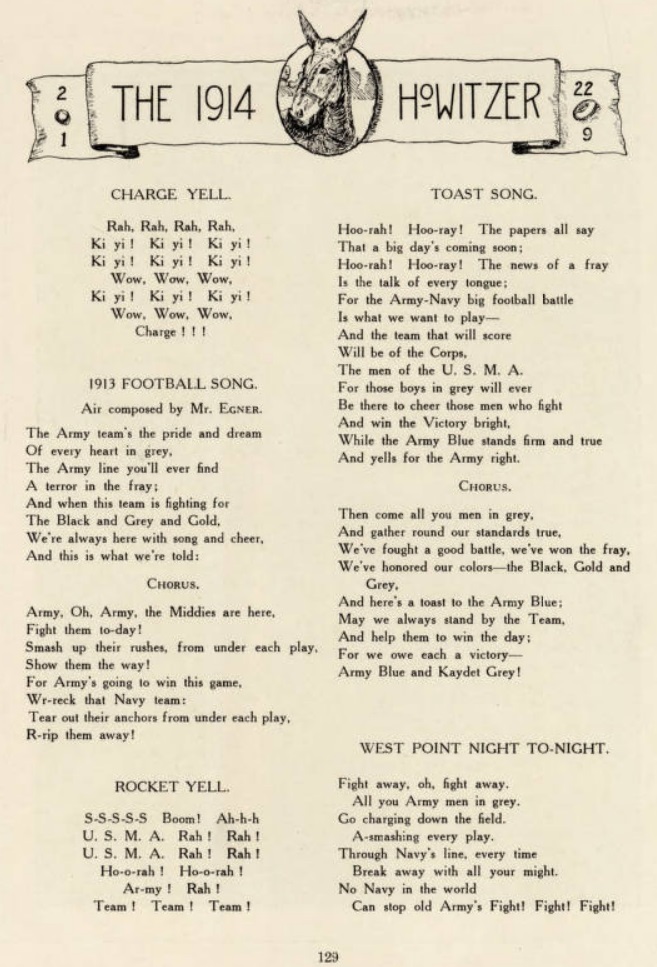
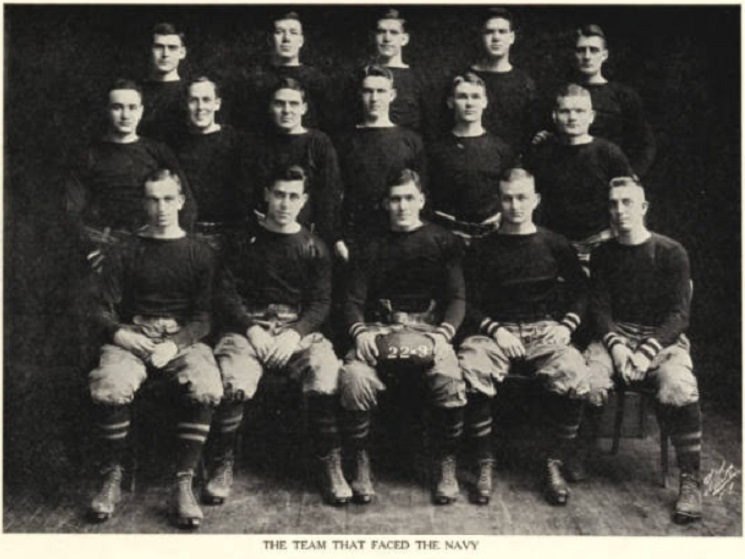
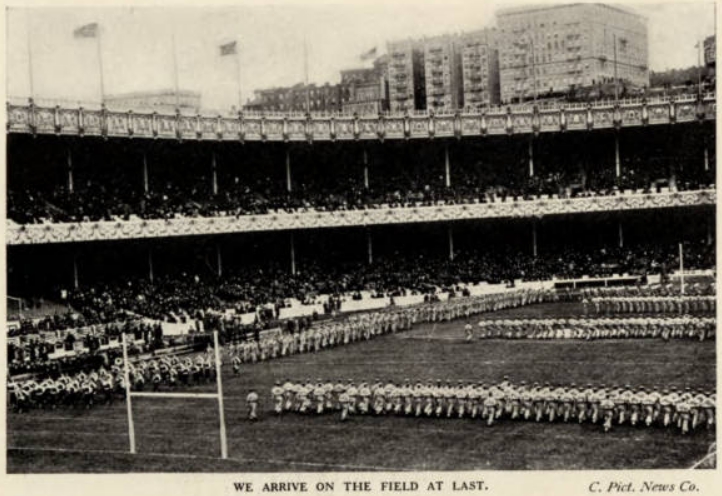
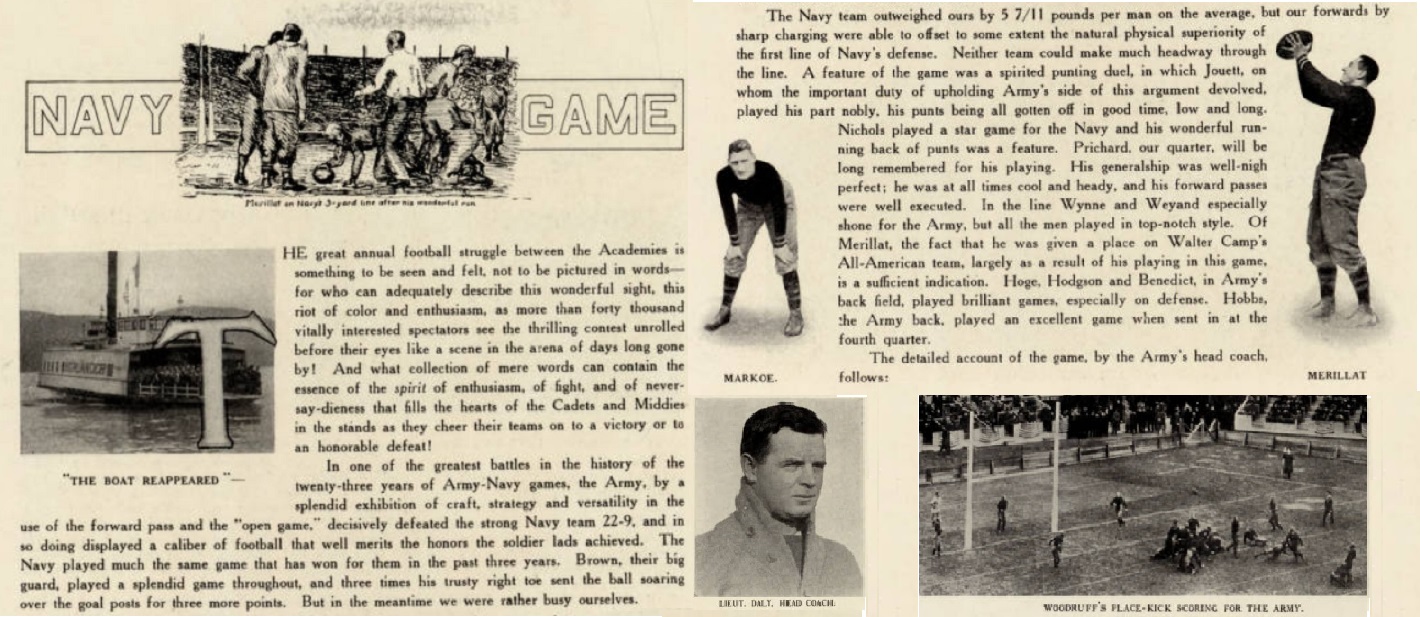
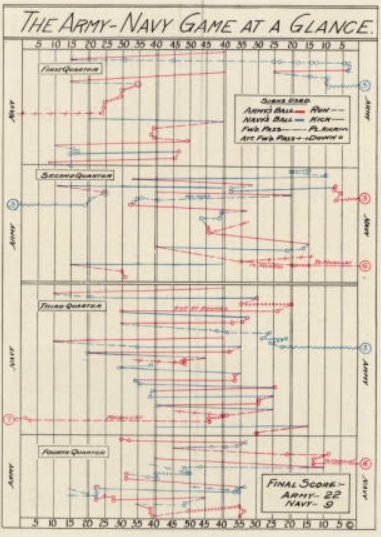
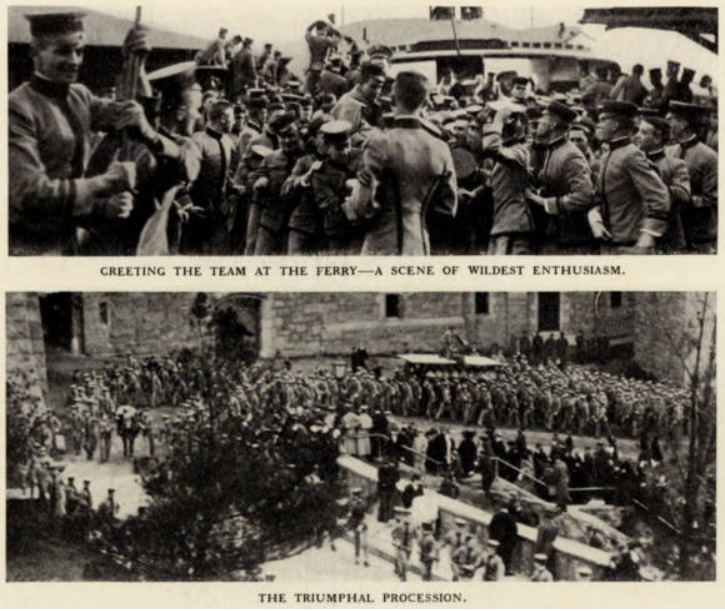
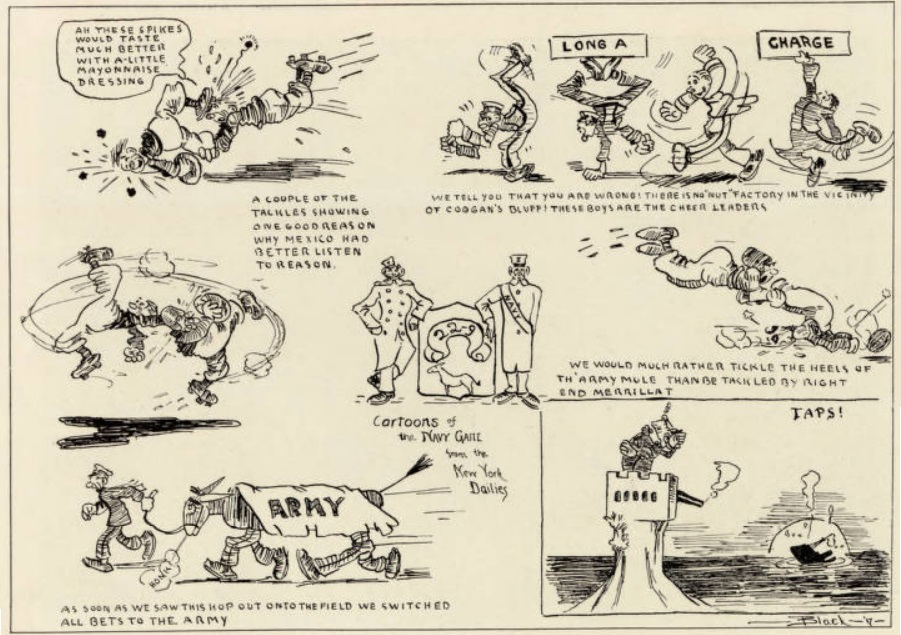
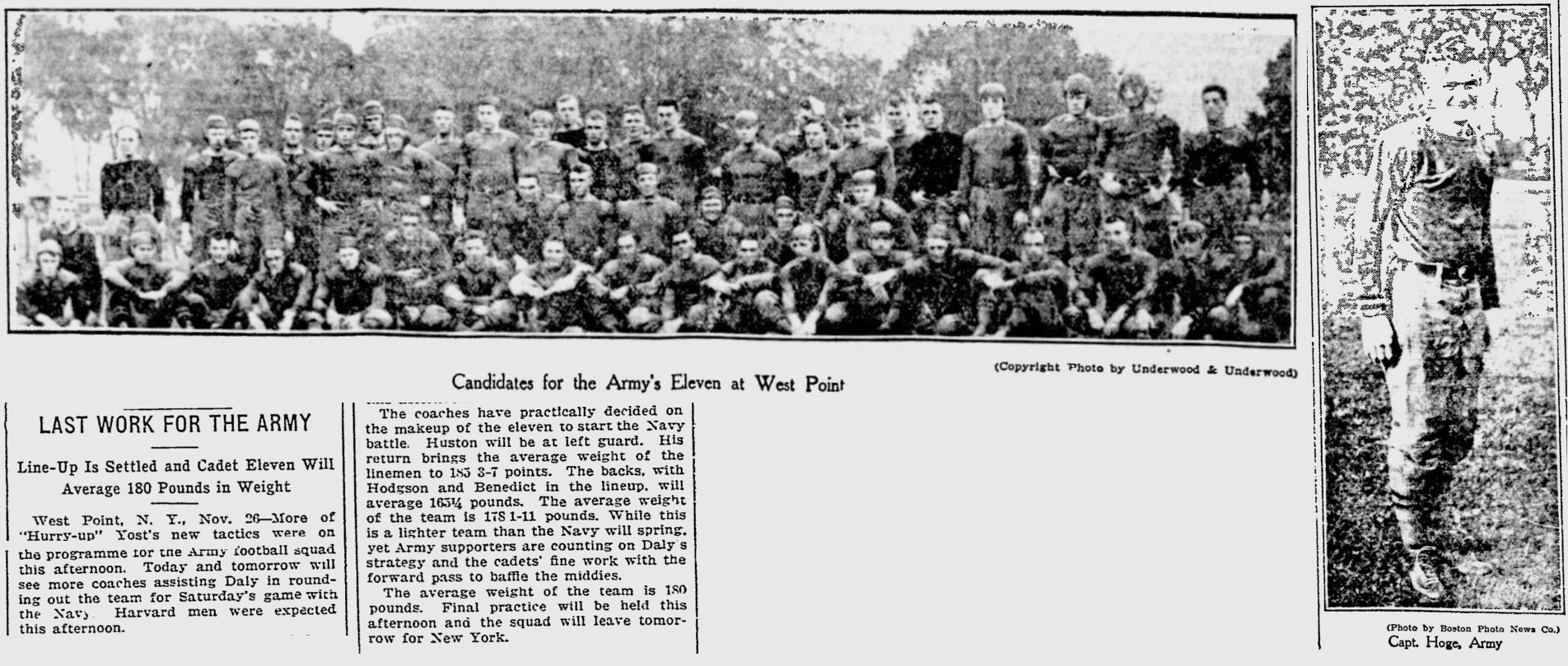
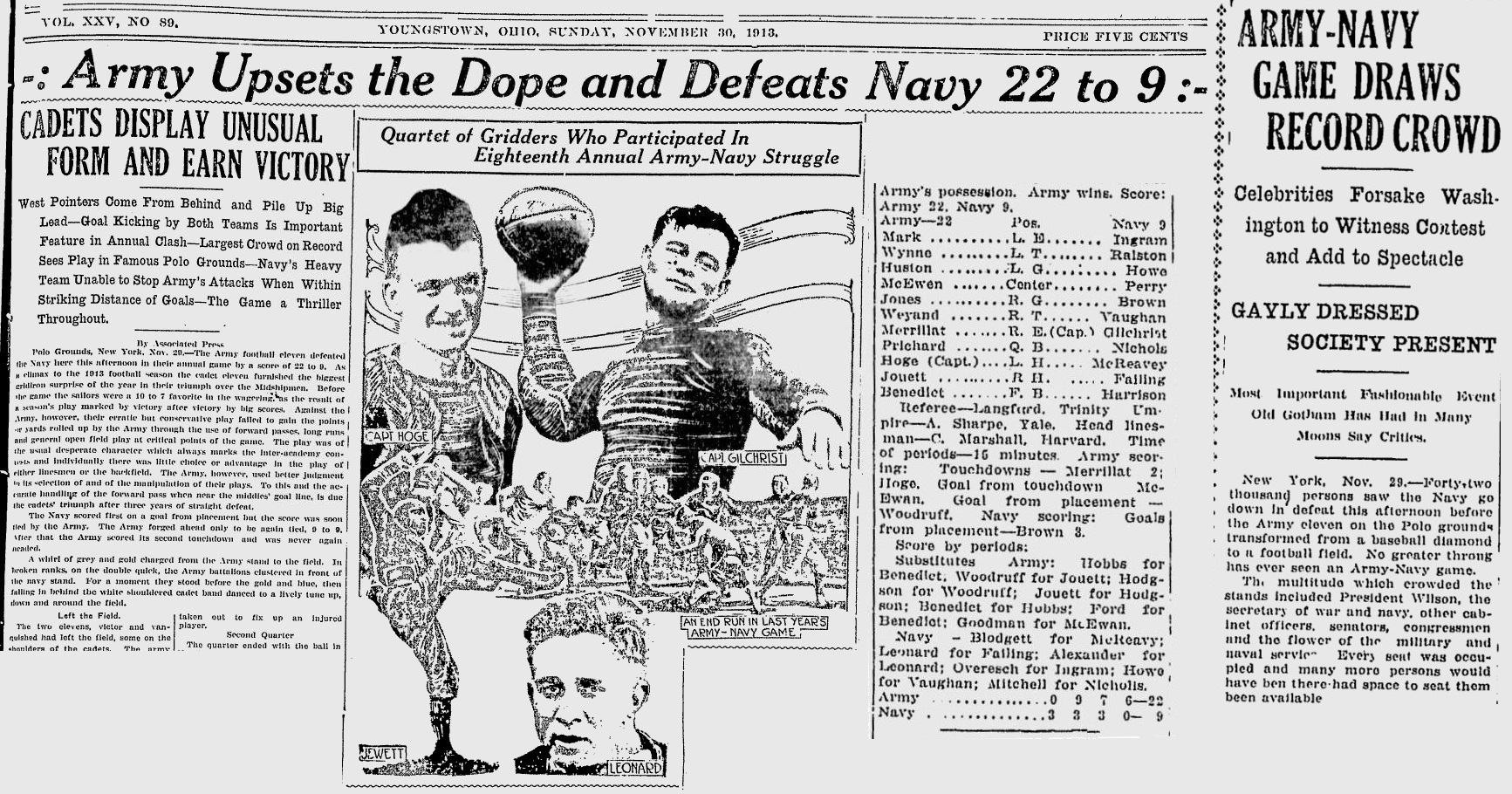
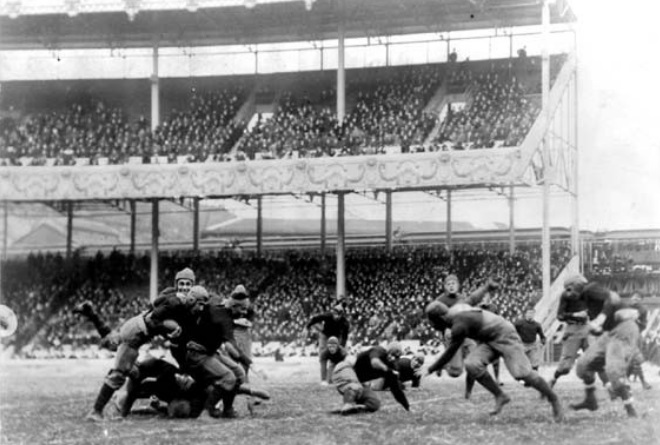
1913 Army 8-1 1913/11/29 Army 22 – Navy 9 W Coach Charles Dudley “Charlie” Daly (October 31, 1880 – February 12, 1959) Army 1913-1916 Army 1919-1922 Overall 58-13-3 Appeared in the film Daly, of West Point. 1902. source http://en.wikipedia.org/wiki/Charles_Dudley_Daly Howitzer 1914 http://digital-library.usma.edu/cdm/compoundobject/collection/howitzers/id/14708/rec/20 – ArmyFB_1913_team_ – ArmyFB_1913_team – ArmyFB_1913_record-CullumHallSquad-B-team – ArmyFB_1913_offense – ArmyFB_1913_FightSongs_Howitzer1914 – ArmyFB_1913_vsNavy-team – ArmyFB_1913_vsNavy_march-on – ArmyFB_1913_vsNavy-writeup – ArmyFB_1913_vsNavy_graph – ArmyFB_1913_vsNavy_Victorious-return – ArmyFB_1913_vsNavy_cartoon –

ArmyFB_1913_vsNavy-pre_Team-CptHoge_BostonEveningTranscript_Nov261913

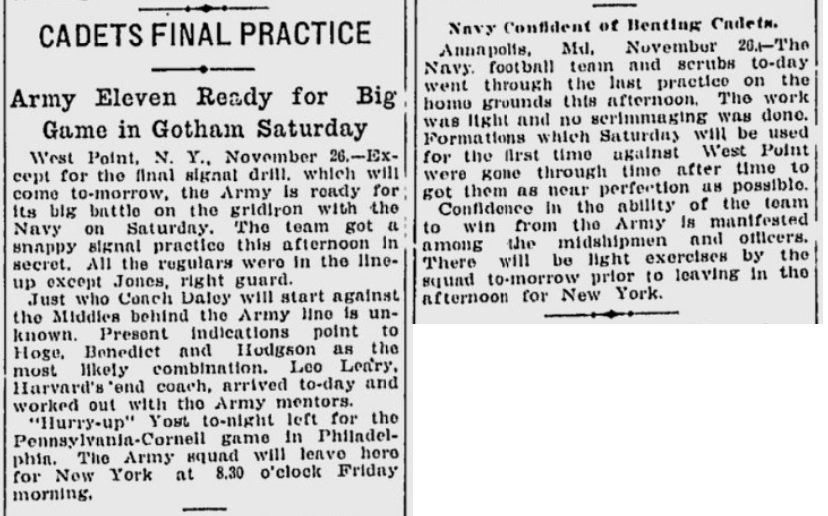
– Cadets Final Practice – Army Eleven Ready for Big Game in Gotham Saturday – The News and Courier – Nov 27, 1913 ArmyFB_1913_vsNavy-pre_NewsandCourier_Nov271913 http://news.google.com/newspapers?id=MAFgAAAAIBAJ&sjid=AwsNAAAAIBAJ&dq=football%20philadelphia&pg=4578%2C2443191

ArmyFB_1913_vsNavy_SundayVindicator_YoungstownOH_Nov301913

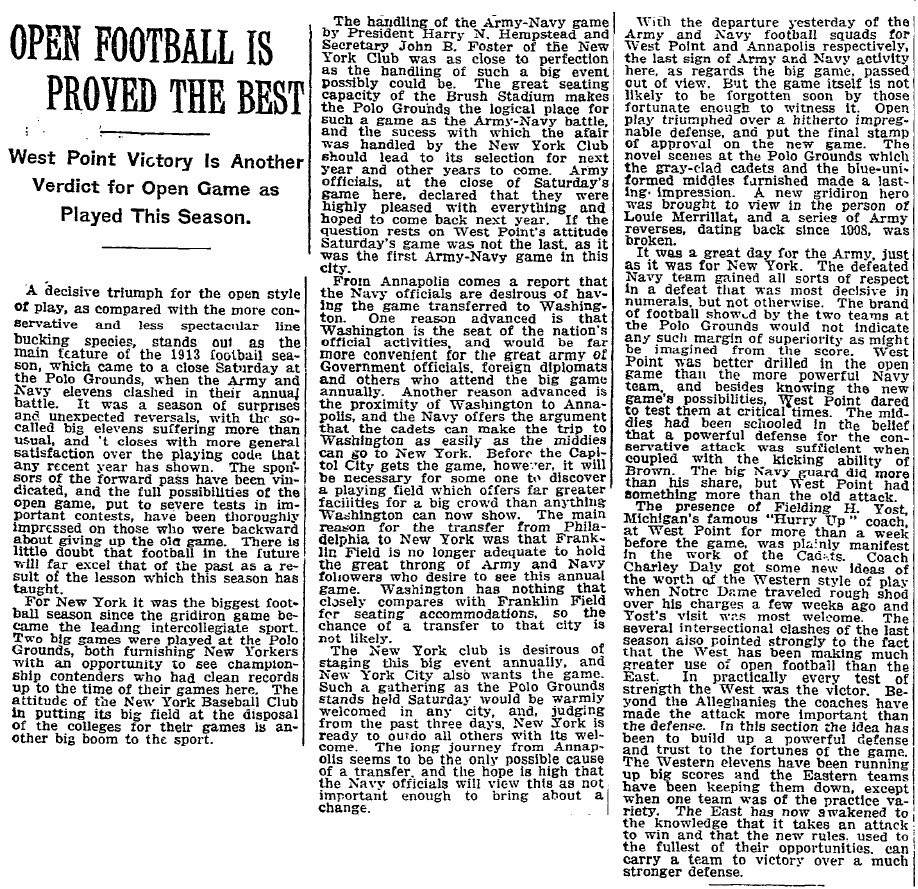
OPEN FOOTBALL IS PROVED THE BEST; West Point Victory Is Another Verdict for Open Game as Played This Season – New York Times – Dec 1, 1913 A decisive triumph for the open style of play, as compared with the more conservative and less spectacular line bucking species, stands out as the main feature of the 1913 football season, which came to a close Saturday at the Polo Grounds, when the Army and Navy elevens clashed in their annual battle. There is little doubt that football in the future will far excel that of the past … The main reason for the transfer from Philadelphia to New York was that… – ArmyFB_1913_vsNavy_NYT_Dec11913 –

http://query.nytimes.com/mem/archive-free/pdf?res=FA0B1EFF3C5913738DDDA80894DA415B838DF1D3 –

1918 Team


Continue reading →

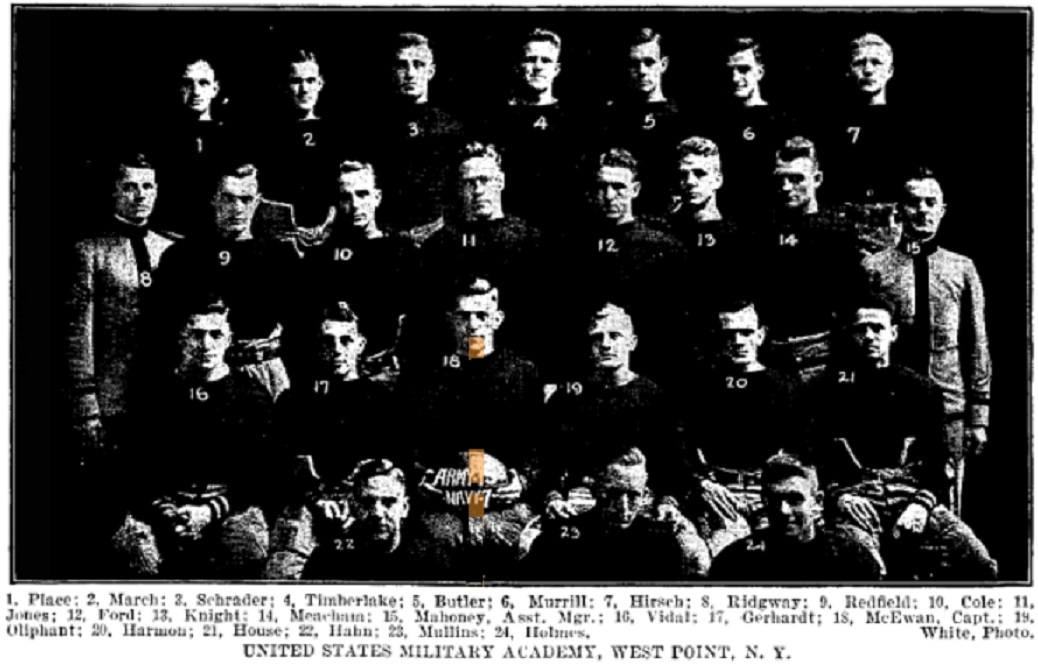
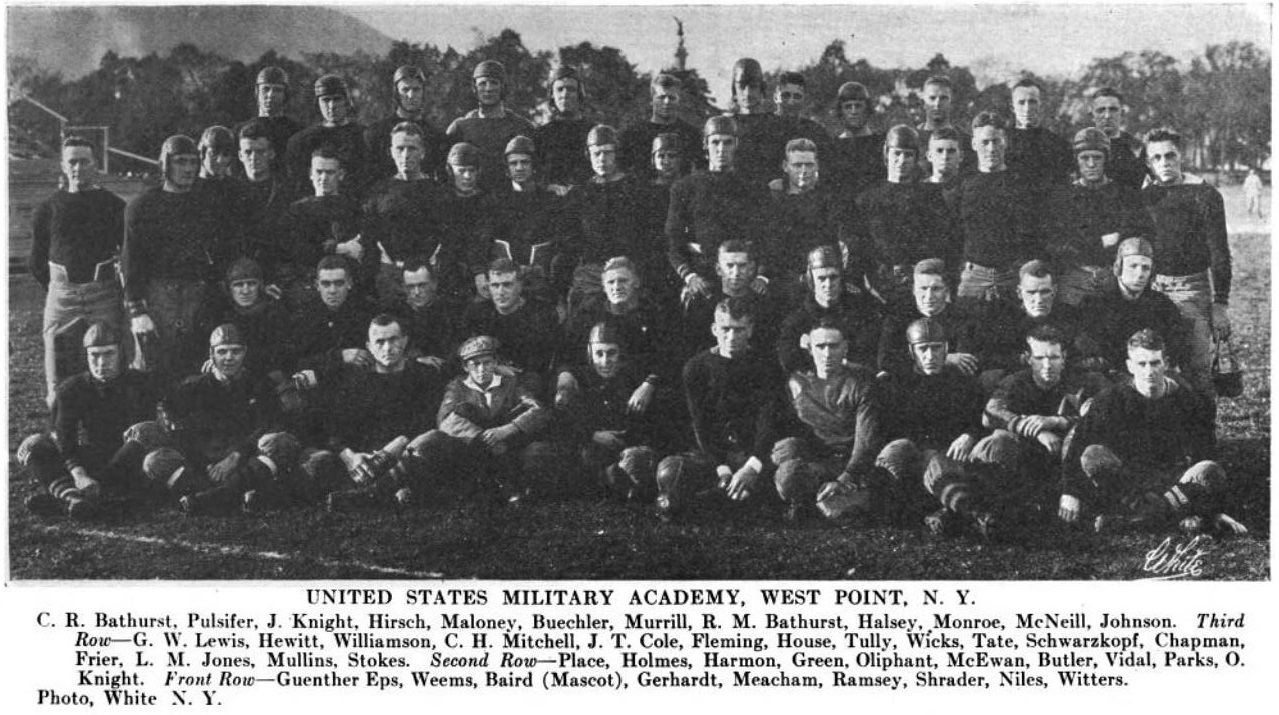
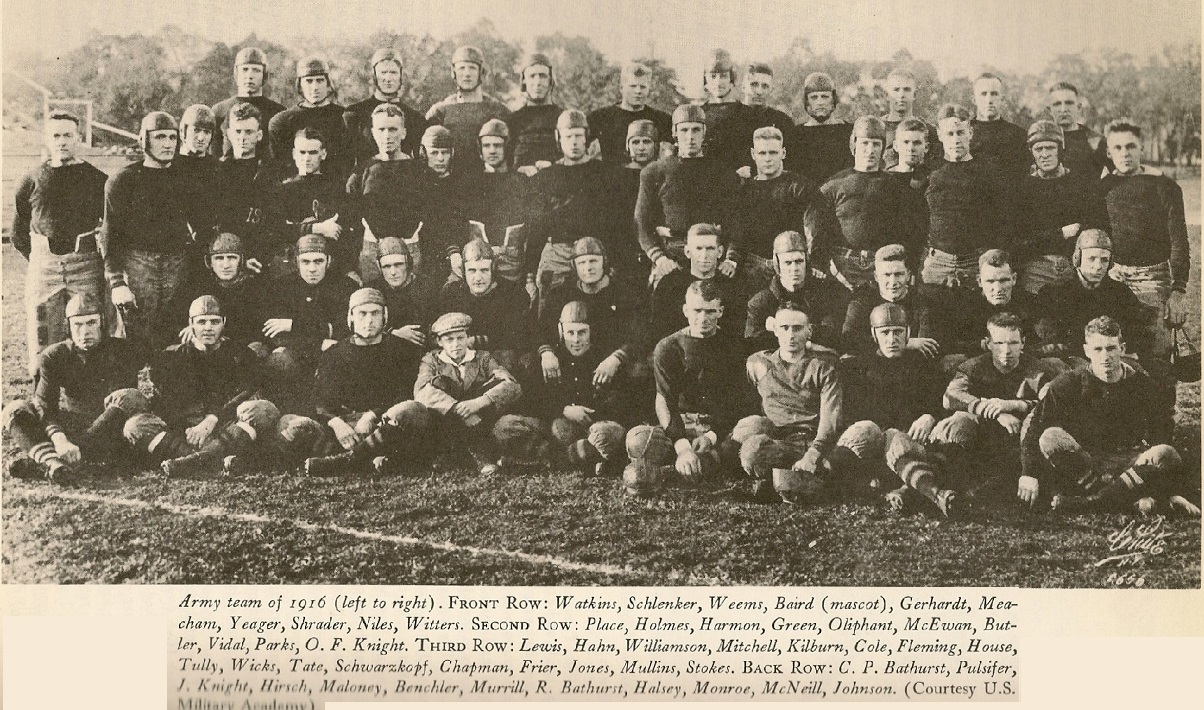
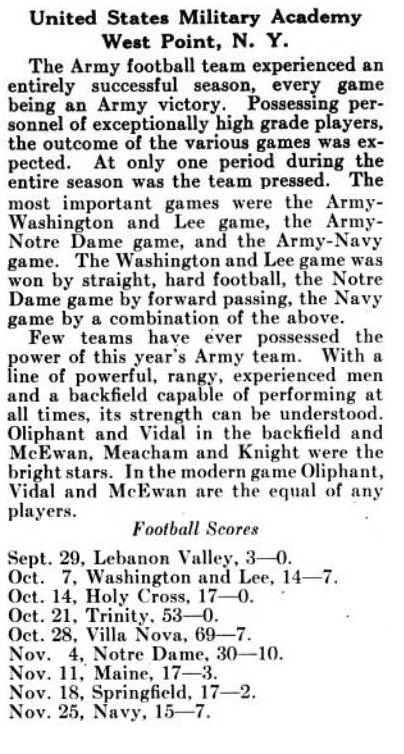
1916 Team

Year Team Coach W L T PF PA Delta Avg.Delta

1916 Army Daly 9 0 0 235 36 199 22.1

source: http://en.wikipedia.org/wiki/List_of_undefeated_NCAA_Division_I_football_teams

no 1917 Howitzer found online

–

ArmyFB_1916_team_

–

ArmyFB_1916_team_IntercollegiateAthleticCalendar_Volume1

–

ArmyFB_1916_team2
–

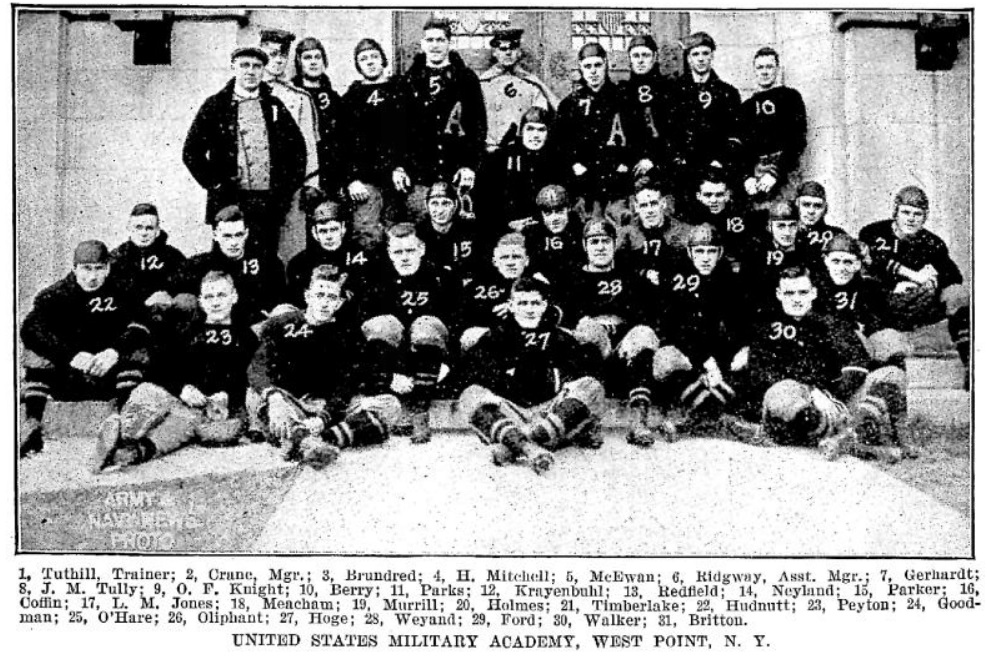
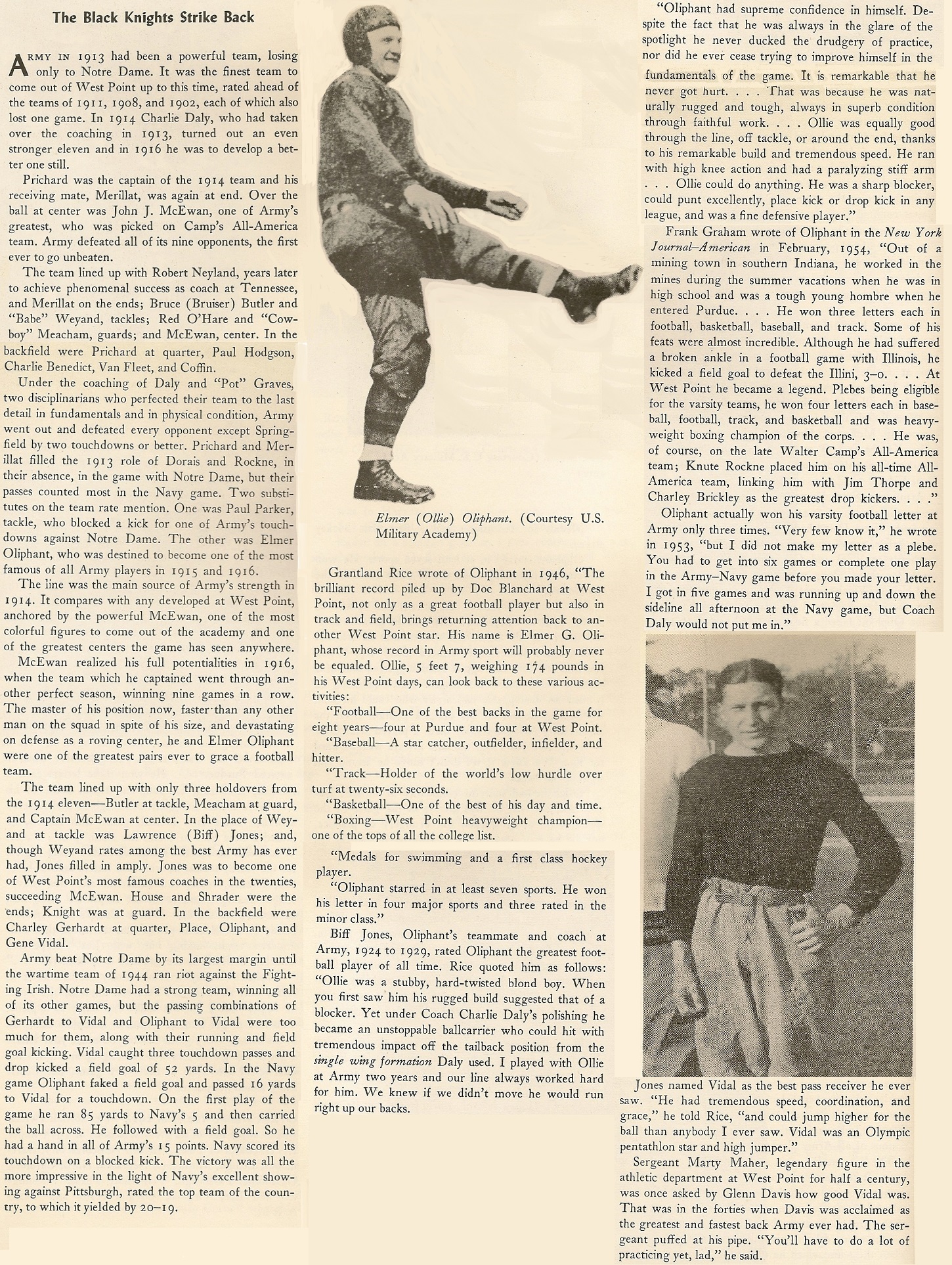
Army Team 1916: Watkins, Schlenker, Weems, Baird, Gerhardt, Meacham, Yeager, Shrader, Niles, Witters, Place, Holmes, Harmon, Green, Oliphant, McEwan, Butler, Vidal, Parks, O. F. Knight, Lewis, Hahn, Williamson, Mitchell, Kilburn, Cole, Fleming, House, Tully, Wicks, Tate, Schwarzkopf, Chapman, Frier, Jones, Mullins, Stokes, C. P. Bathurst, Pulsifer, J. Knight, Hirsch, Maloney, Benchler, Murrill, R. Bathurst, Halsey, Monroe, McNeill, Johnson

–

ArmyFB_1916_team-summary_IntercollegiateAthleticCalendar_Volume1

–

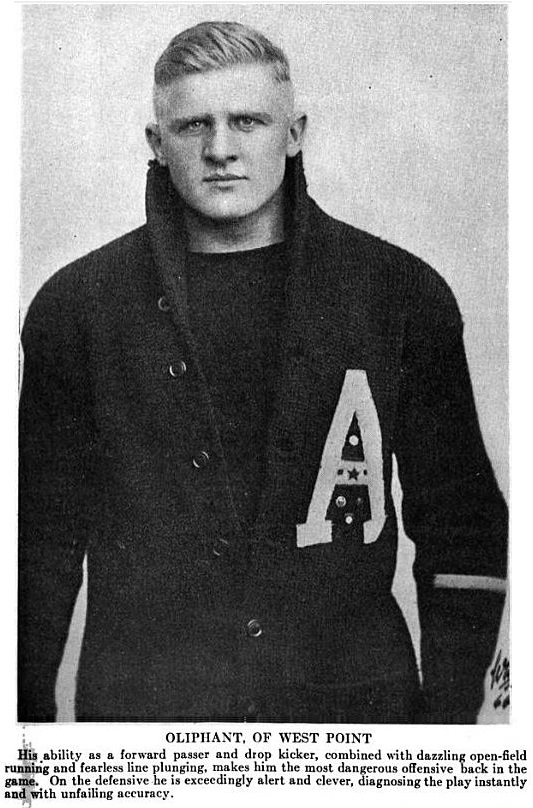
ArmyFB_1916_Oliphant_IntercollegiateAthleticCalendar_Volume1

–

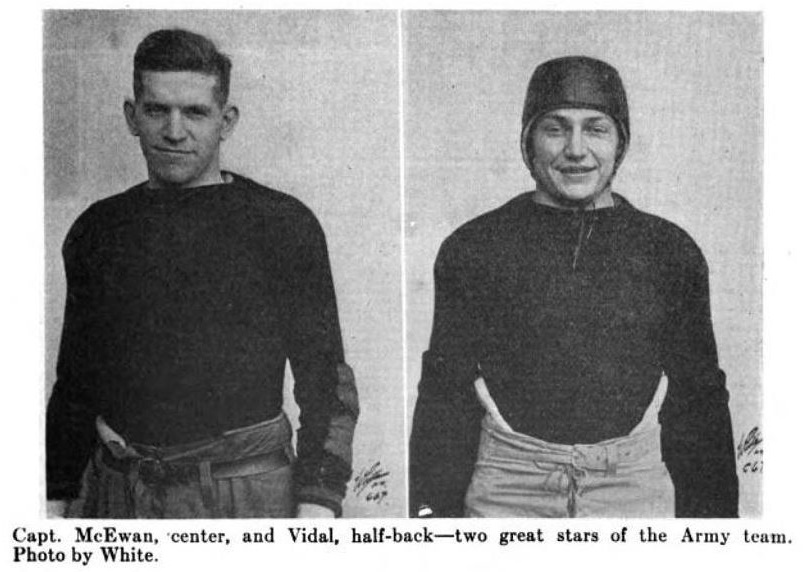
ArmyFB_1916_McEwan-Vidal_IntercollegiateAthleticCalendar_Volume1

–

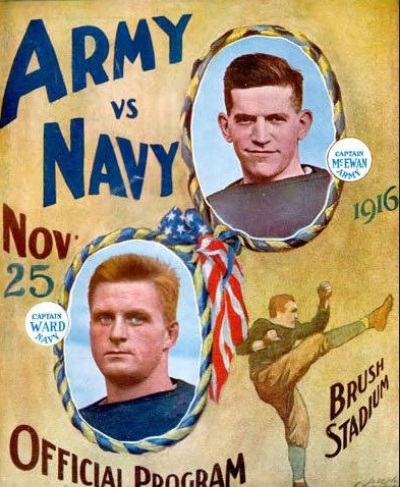
ArmyFB_1916_vsNavy_program

–

ArmyFB_1916_vsNavy_march-on

–

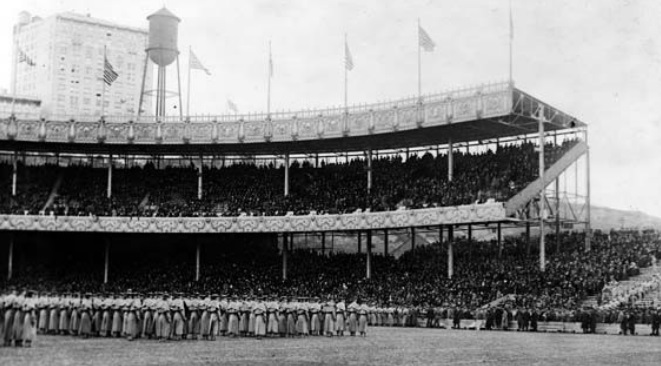
ArmyFB_1916_vsNavy_PoloGrounds

–

ARMY CONQUERS NAVY, 15-7, AMID CHEERS OF 45,000; Oliphant the Chief Figure in West Point’s Victory at the Polo Grounds. MAKES A RUN OF 83 YARDS Goodstein Scores for Losers by Turning Blocked Kick Into a Touchdown. NOTABLES IN GAY THRONG President Wilson Absent, but Crowd Includes Men Prominent in All Walks of Life.
– New York Times – Nov 26, 1916
More than 45,000 cheering spectators saw the Army football team defeat the Navy by a score of 15 to 7 at the Polo Grounds yesterday. Famous for its gala crowds, the annual contest never attracted a more brilliant assemblage, while spectacular playing, especially by Oliphant and Vidal, the Army stars, transformed the banks of the huge eclipse of the Brush stadium into a mass of shouting, flag-waving humanity.
http://query.nytimes.com/mem/archive-free/pdf?res=F20E10FB345B17738DDDAF0A94D9415B868DF1D3


ArmyFB_1916_Undefeated_NYT_Nov281916

Army Deserving Of High Average – The Day – Nov 30, 1916
http://news.google.com/newspapers?id=VP0gAAAAIBAJ&sjid=onUFAAAAIBAJ&dq=football%20philadelphia&pg=4823%2C3166922

–

ArmyFB_1916_1914-1916recap_AllisonDanzig_HistoryofAmericanFootball

–

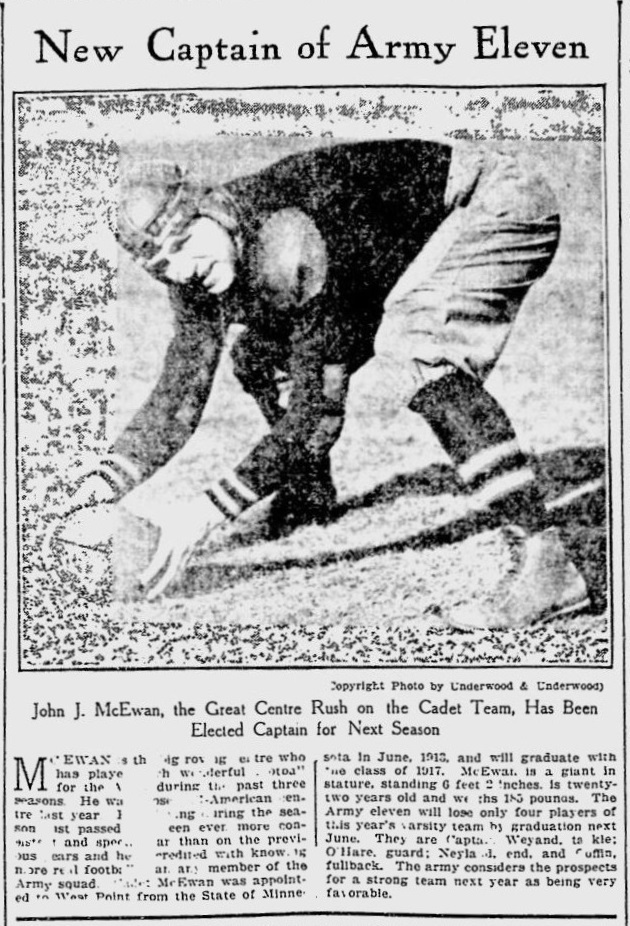
ArmyFB_1916_McEwan-newCaptain_BostonEveningTranscript_Nov281915

ArmyFB_1916_McEwan-newCaptain_BostonEveningTranscript_Nov281915

–

1969 Team

1969 Army 4-5-1

1969/11/29 Army 27 – Navy 0 W

Coach – Thomas B. Cahill (October 11, 1919 – October 29, 1992)
Army 1966-1973:
1966 Army 8-2 Coach of the Year
1967 Army 8-2
1968 Army 7-3
1969 Army 4-5-1
1970 Army 1-9-1
1971 Army 6-4
1972 Army 6-4
1973 Army 0-10
Overall Army: 40-39-2
Union NY 1976-79
armyfb_1969_team
1969 Army Team

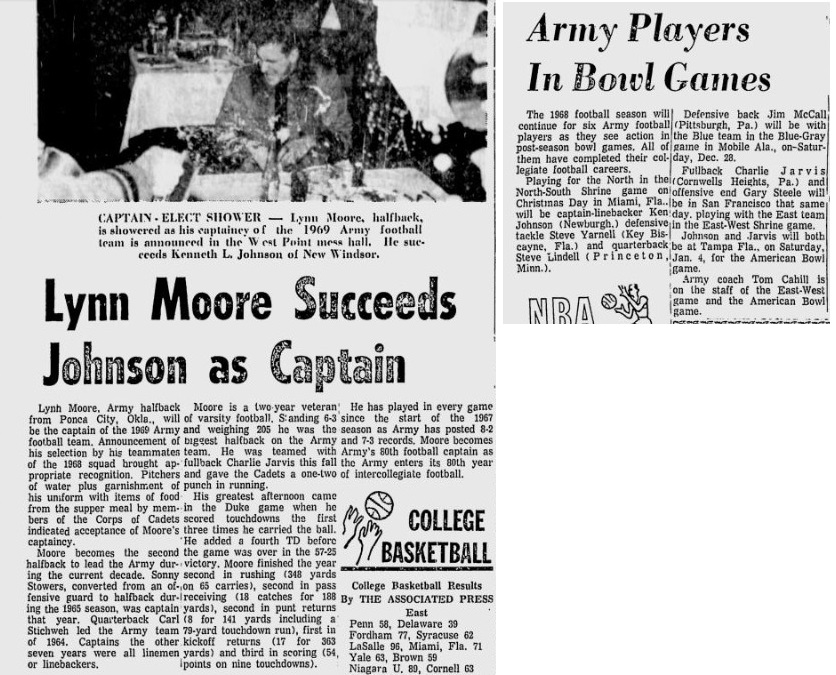
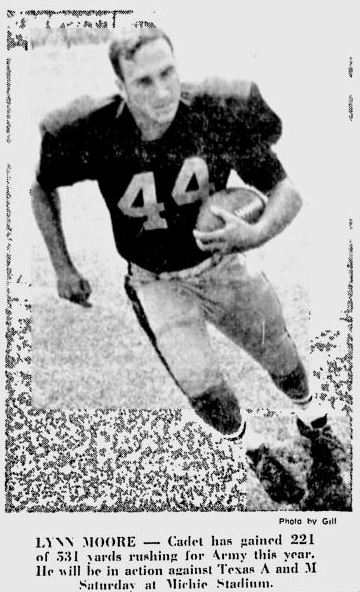
armyfb_1969_lynnmoore-captain_eveningnews_dec121968
ArmyFB_1969_LynnMoore-Captain_EveningNews_Dec121968

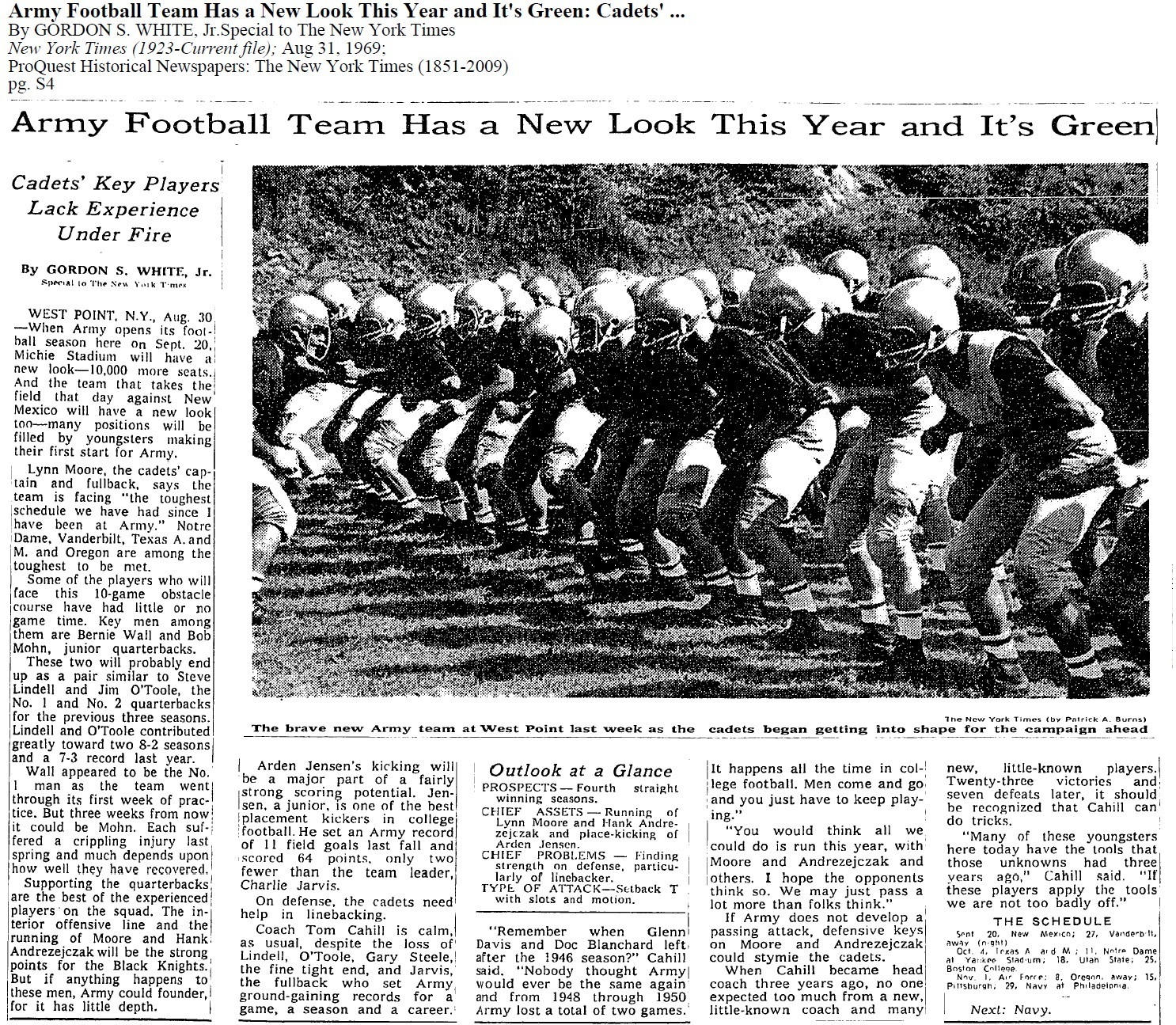
armyfb_1969_forecast_nyt_aug311969
ArmyFB_1969_forecast_NYT_Aug311969

–

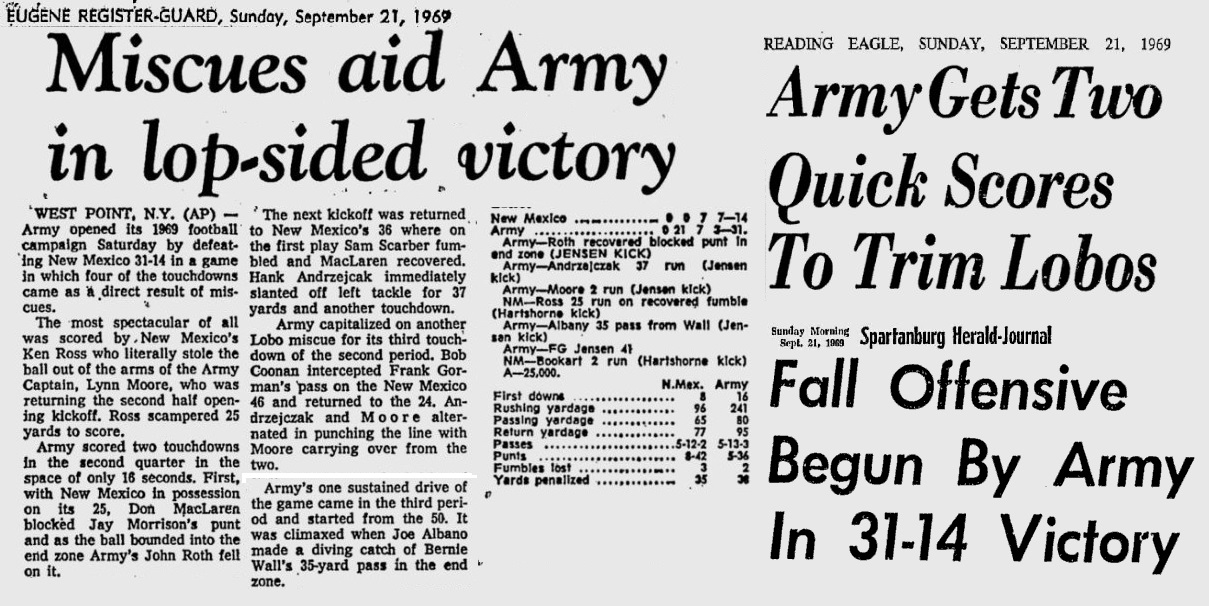
ArmyFB_1969_vsNM_EugeneRegisterGuard_Sep211969

ArmyFB_1969_vsNM_EugeneRegisterGuard_Sep211969

–

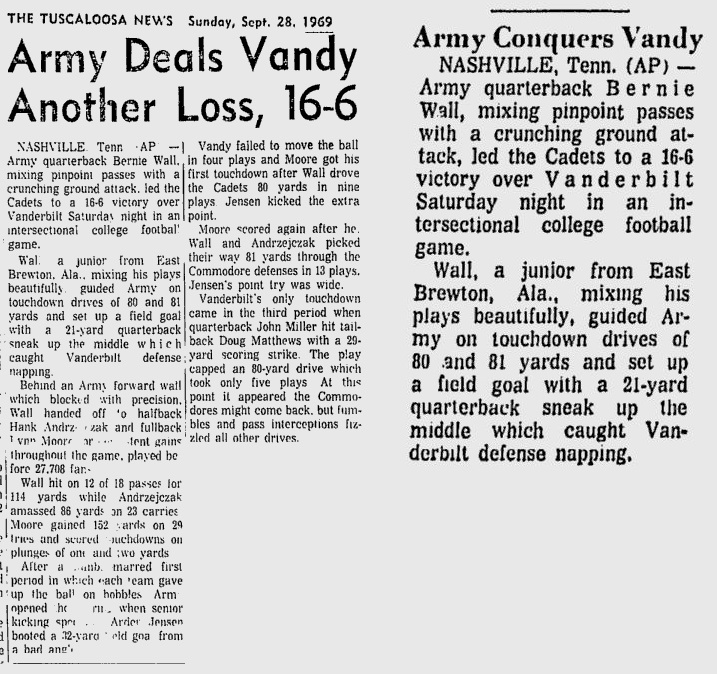
ArmyFB_1969_vsVanderbilt_Sep281969

ArmyFB_1969_vsVanderbilt_Sep281969


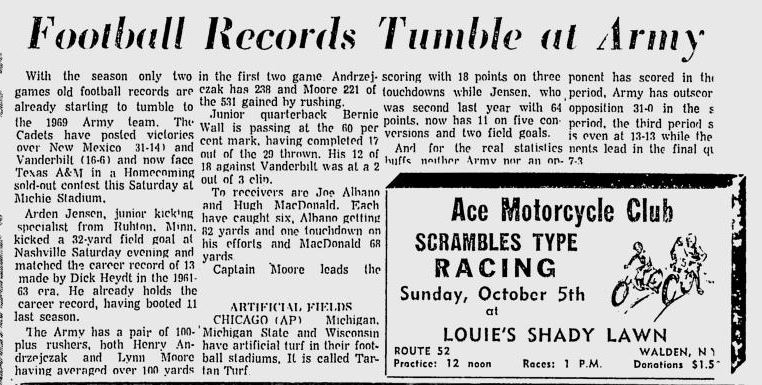
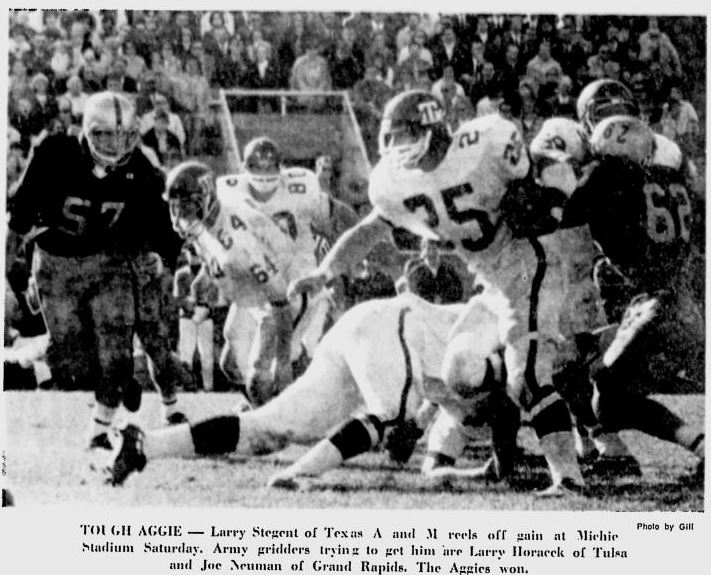
ArmyFB_1969_vsTAM-pre_EveningNews_Oct61969ArmyFB_1969_LynnMoore_EveningNews_Oct21969


ArmyFB_1969_vsTAM_EveningNews_Oct61969

ArmyFB_1969_vsTAM_EveningNews_Oct61969


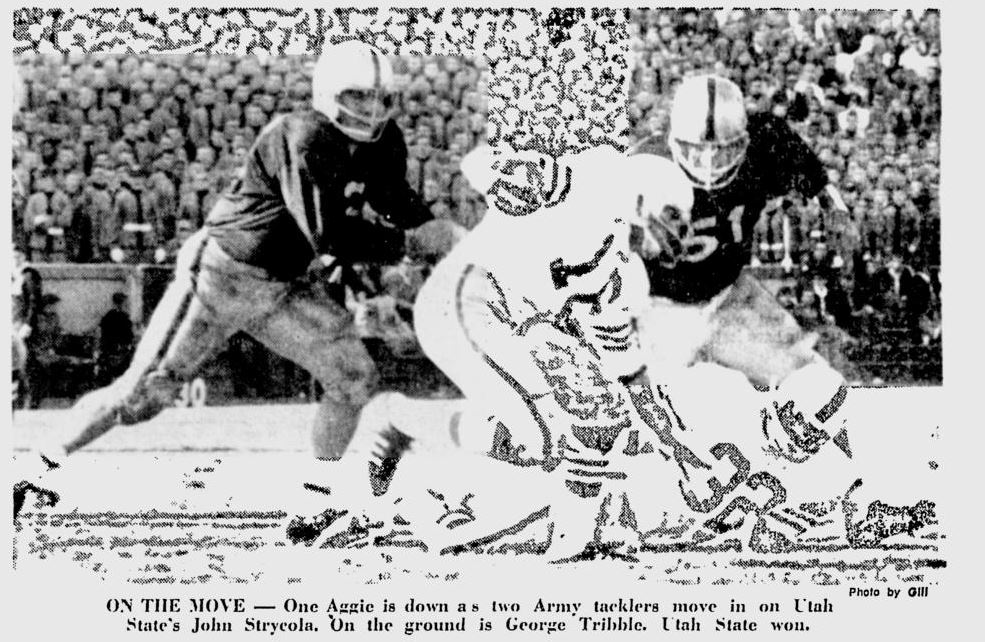
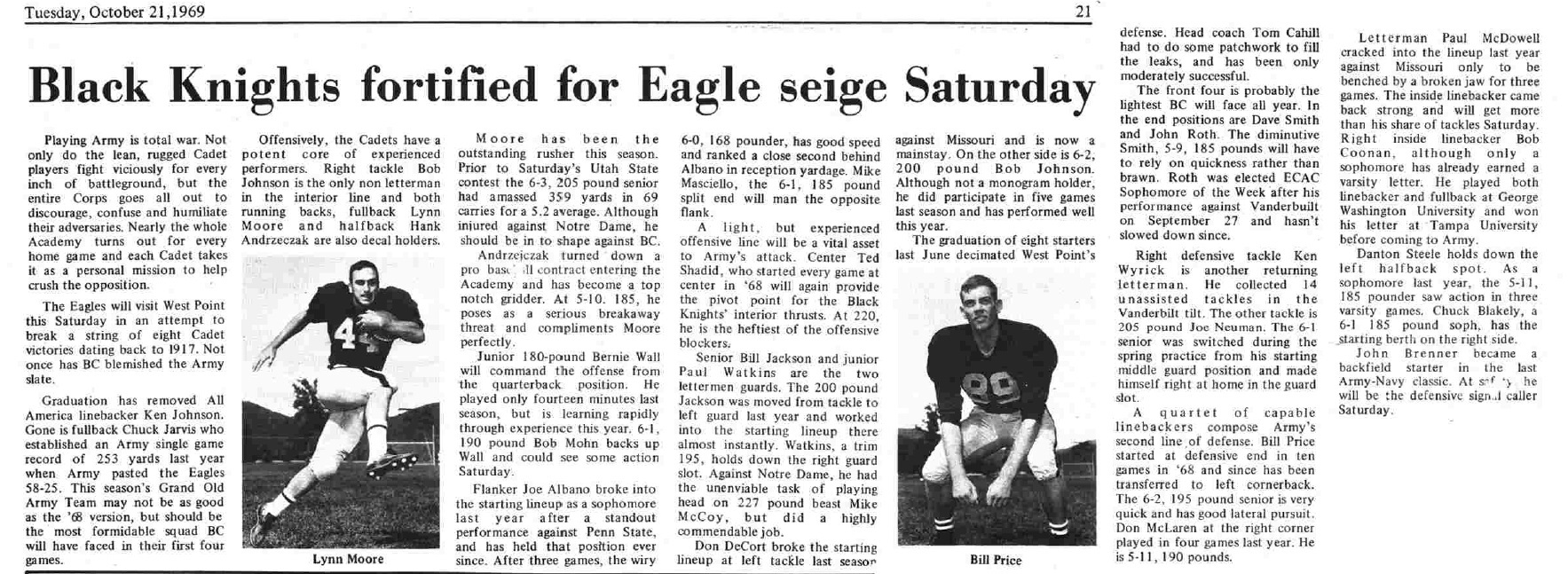
ArmyFB_1969_vsUtahState_EveningNews_Oct211969

ArmyFB_1969_vsUtahState_EveningNews_Oct211969

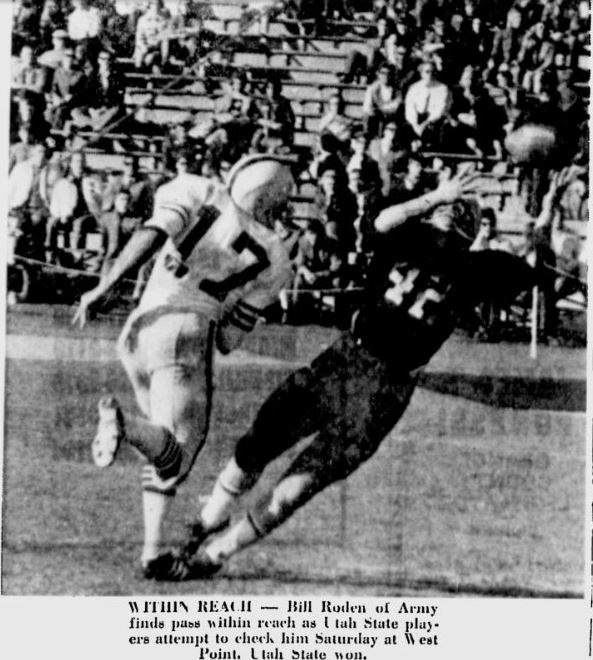
ArmyFB_1969_vsUtahState-BillRoden_EveningNews_Oct211969

ArmyFB_1969_vsUtahState-BillRoden_EveningNews_Oct211969
armyfb_1969_vsbc-pre_theheights_oct211969


armyfb_1969_vsbc_theheights_oct281969
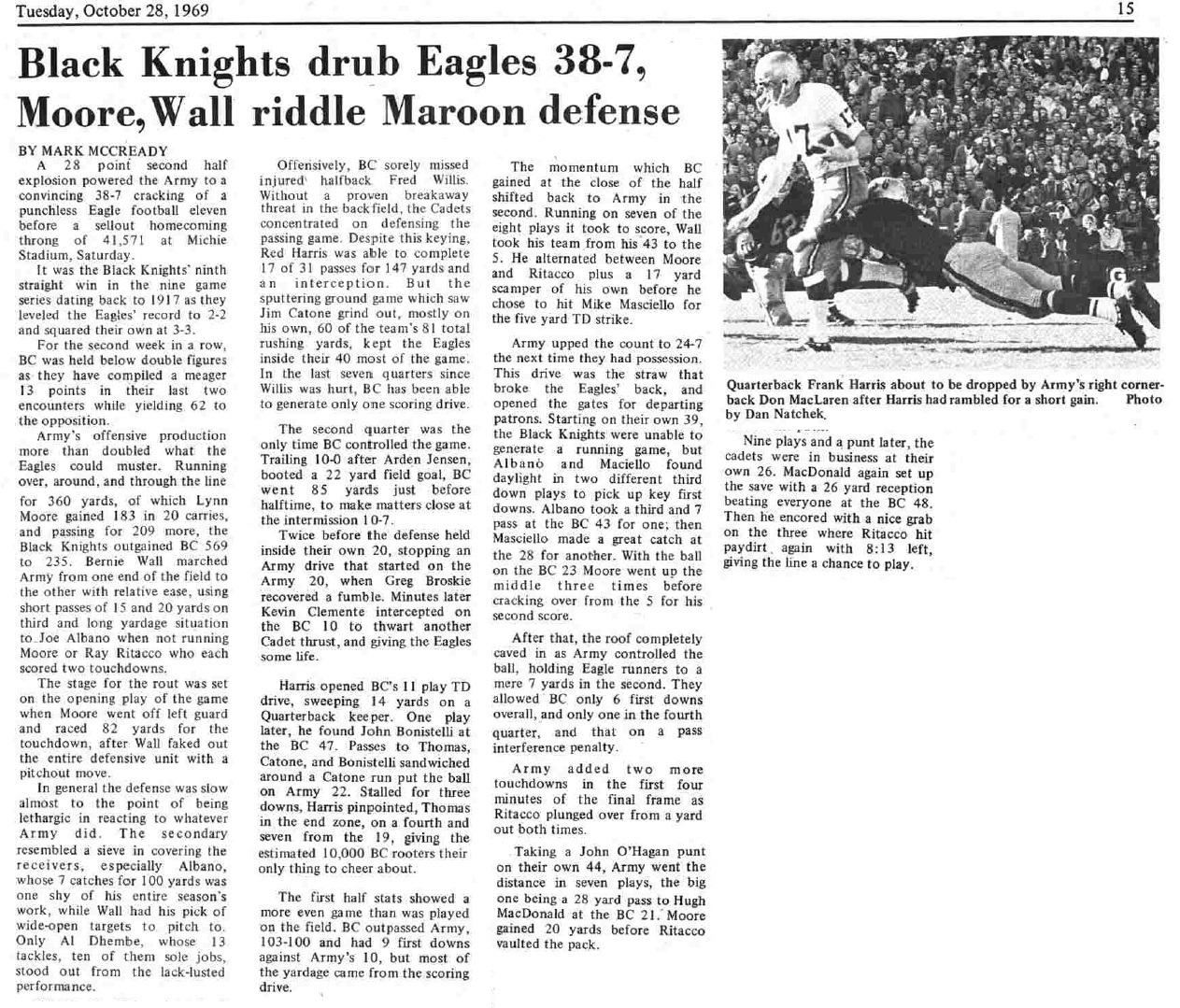
ArmyFB_1969_vsBC_TheHeights_Oct281969

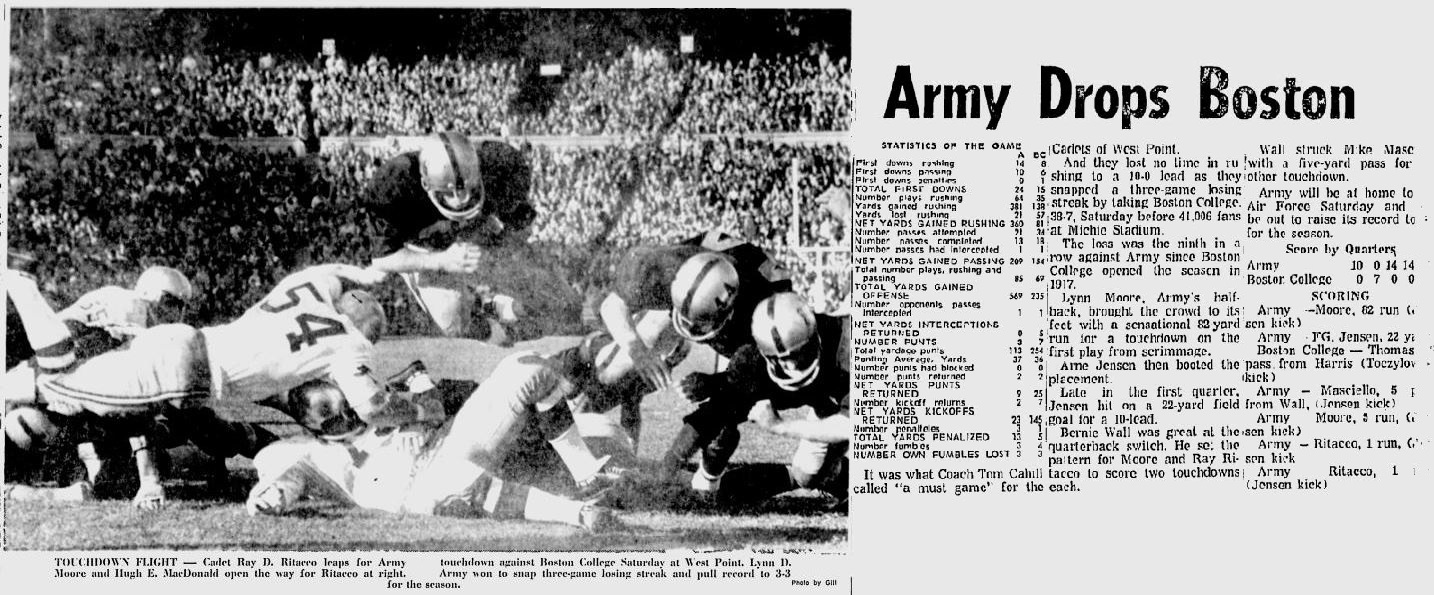
ArmyFB_1969_vsBC-RayRitacco_EveningNews_Oct281969

ArmyFB_1969_vsBC-RayRitacco_EveningNews_Oct281969

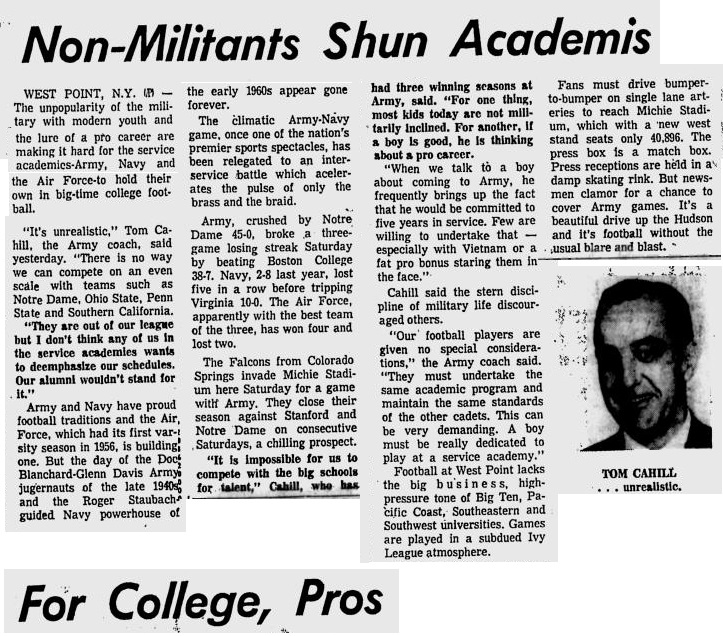
armyfb_1969_non-militants_stpetersburgtimes_oct281969
ArmyFB_1969_Non-Militants_StPetersburgTimes_Oct281969

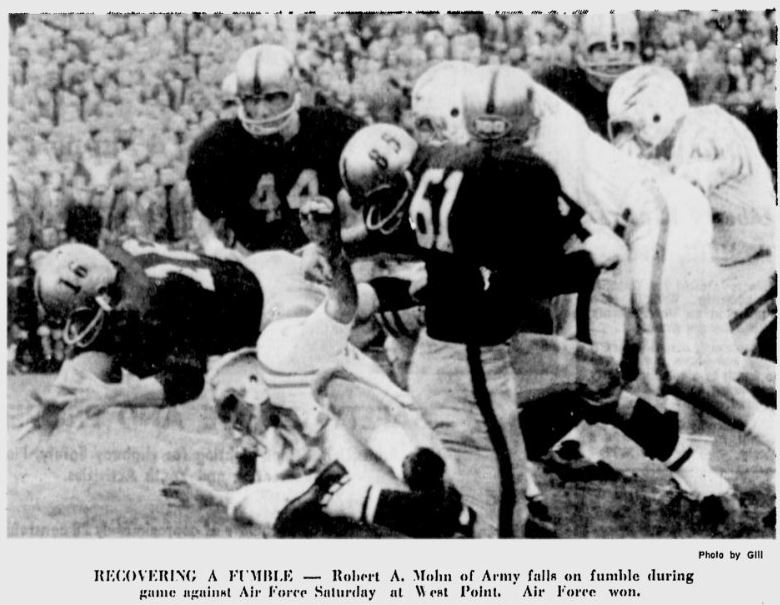
ArmyFB_1969_RobertMohn_vsAF_EveningNews_Nov31969ArmyFB_1969_RobertMohn_vsAF_EveningNews_Nov31969

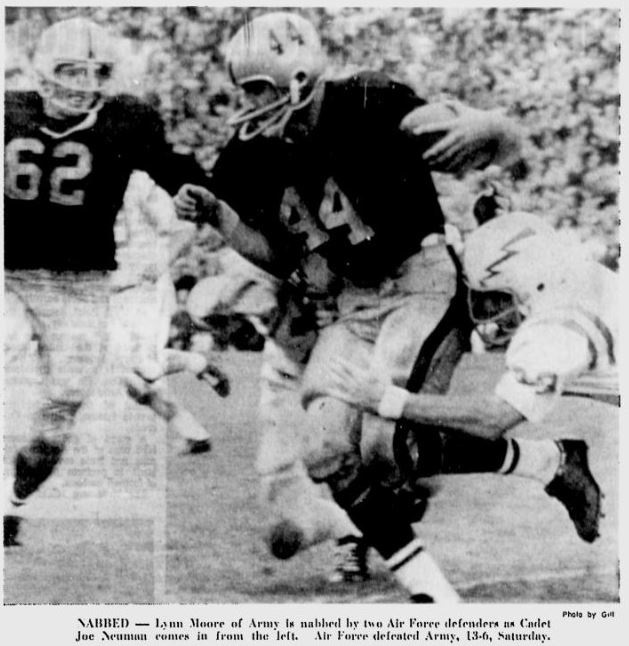
ArmyFB_1969_LynnMoore_vsAF_EveningNews_Nov41969

ArmyFB_1969_LynnMoore_vsAF_EveningNews_Nov41969

–

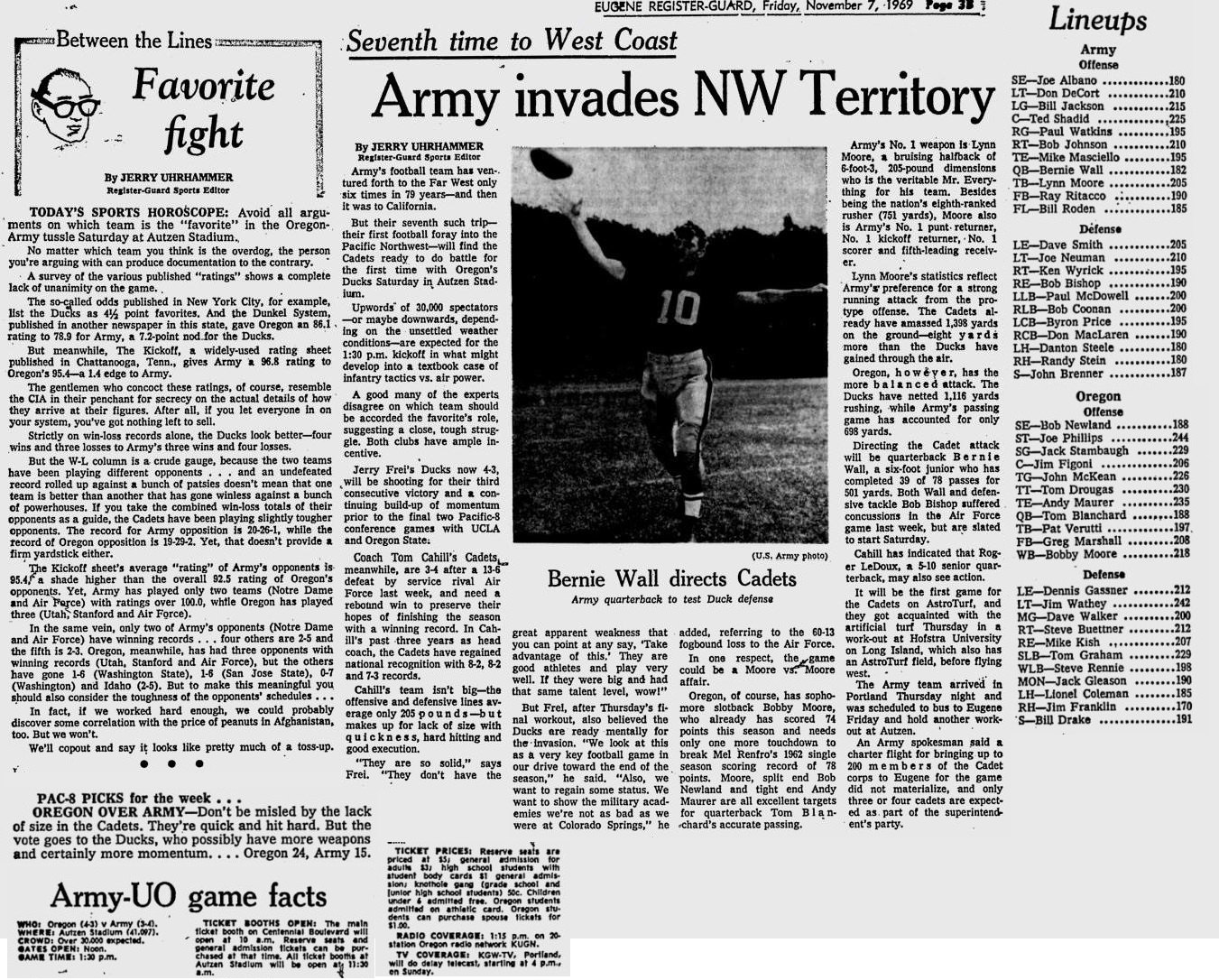
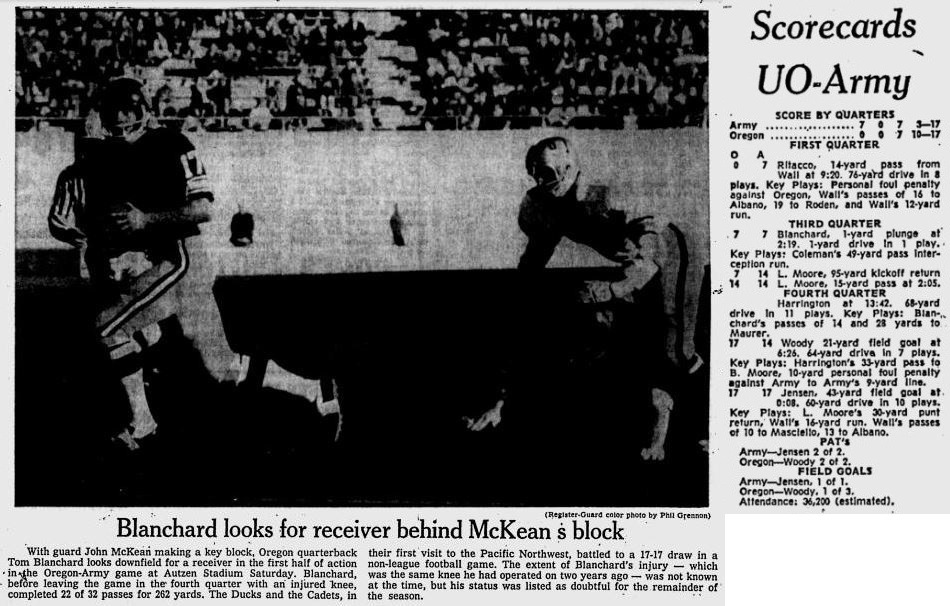
ArmyFB_1969_vsOregon_EugeneRegisterGuard_Nov71969

ArmyFB_1969_vsOregon_EugeneRegisterGuard_Nov71969

–

ArmyFB_1969_vsOregon_EugeneRegisterGuard_Nov91969

ArmyFB_1969_vsOregon_EugeneRegisterGuard_Nov91969

–

ArmyFB_1969_vsOregon-pic_EugeneRegisterGuard_Nov91969

ArmyFB_1969_vsOregon-pic_EugeneRegisterGuard_Nov91969

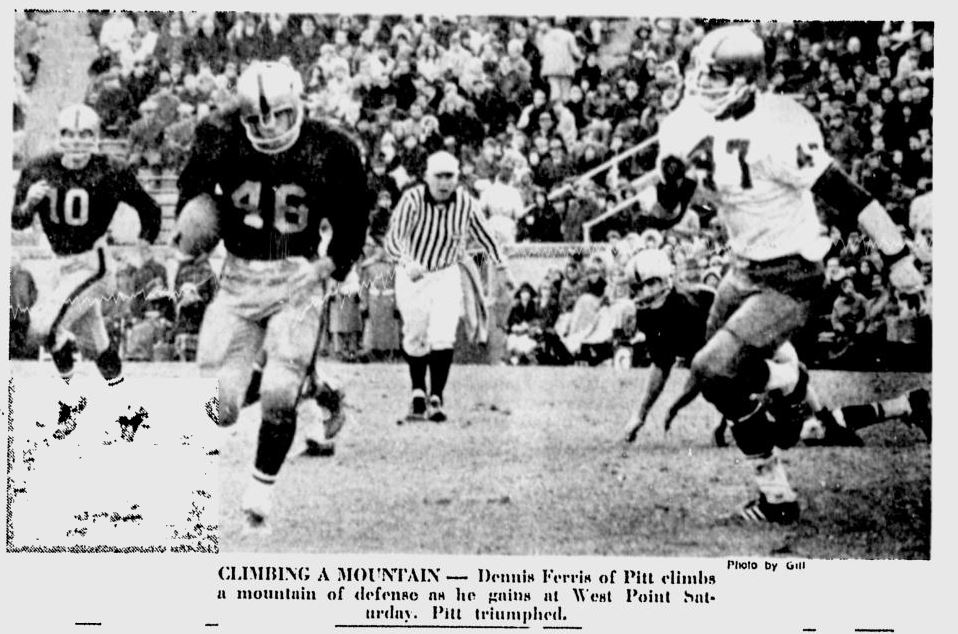
ArmyFB_1969_vsPitt_EveningNews_Nov171969

ArmyFB_1969_vsPitt_EveningNews_Nov171969

–

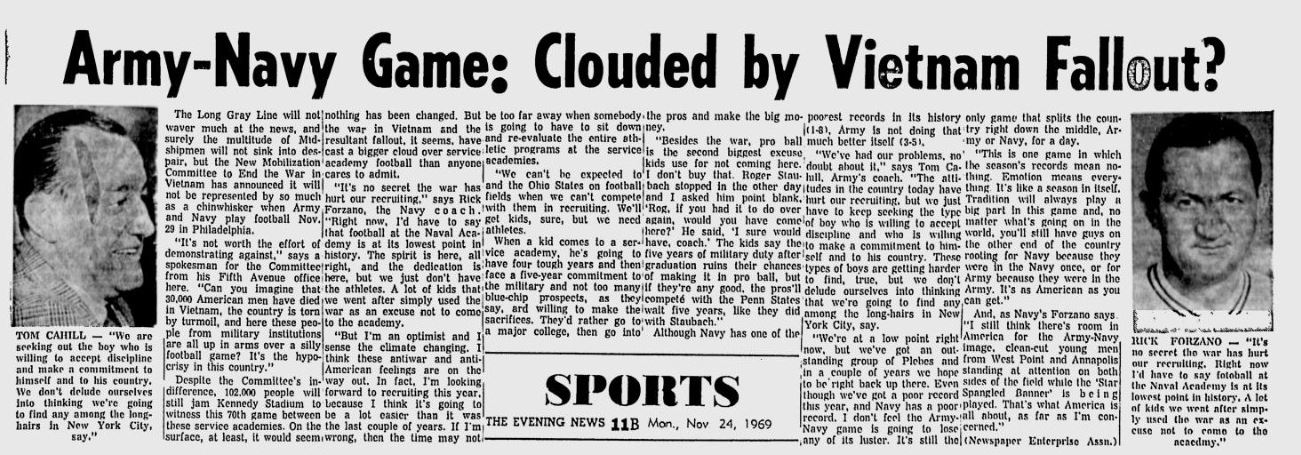
ArmyFB_1969_vsNavy-pre_EveningNews_Nov241969

ArmyFB_1969_vsNavy-pre_EveningNews_Nov241969

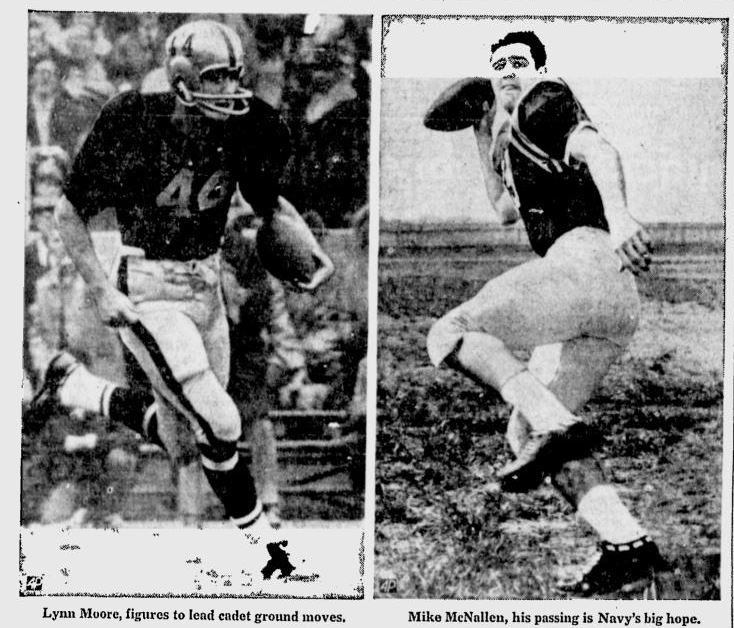
ArmyFB_1969_vsNavy-Moore-McNallen-Navy_SoutheastMissourian_Nov291969


1969 The Twelfth Man
1969 As the Goats Go

armyfb_1969_vsnavy_readingeagle_nov301969
ArmyFB_1969_vsNavy_ReadingEagle_Nov301969

armyfb_1969_vsnavy_presscourier_nov301969
ArmyFB_1969_vsNavy_PressCourier_Nov301969

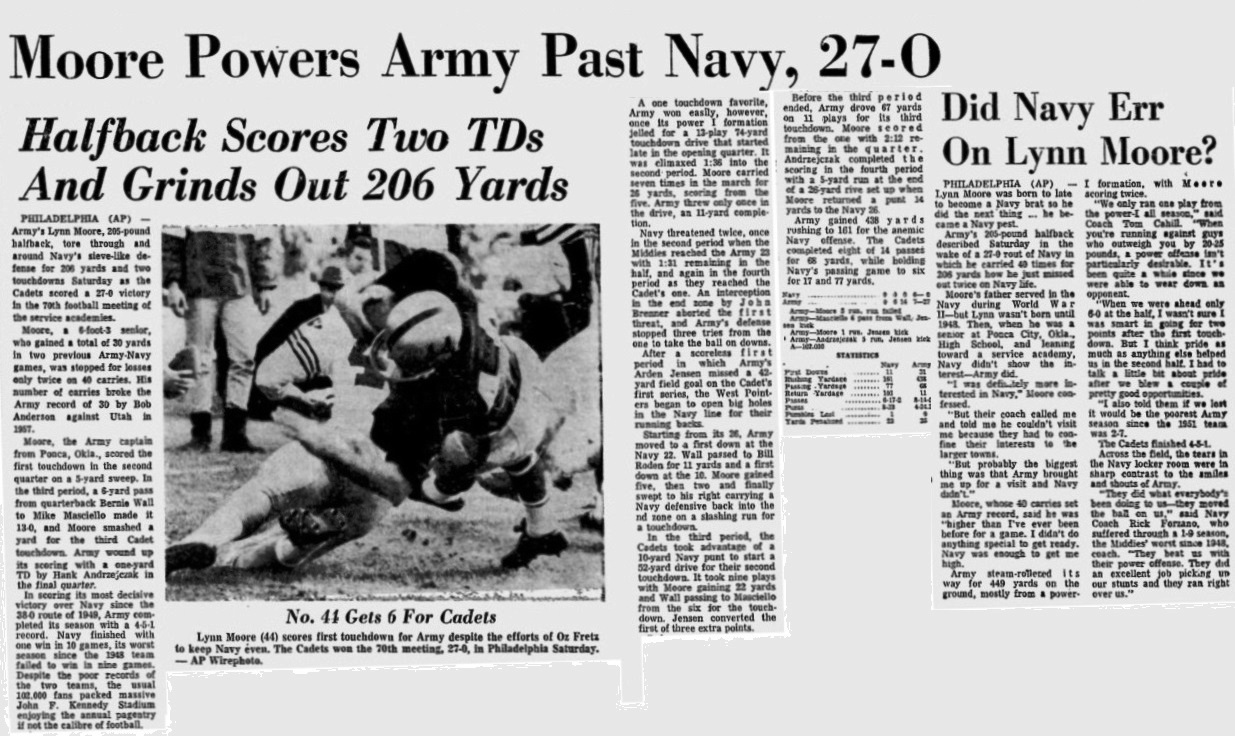
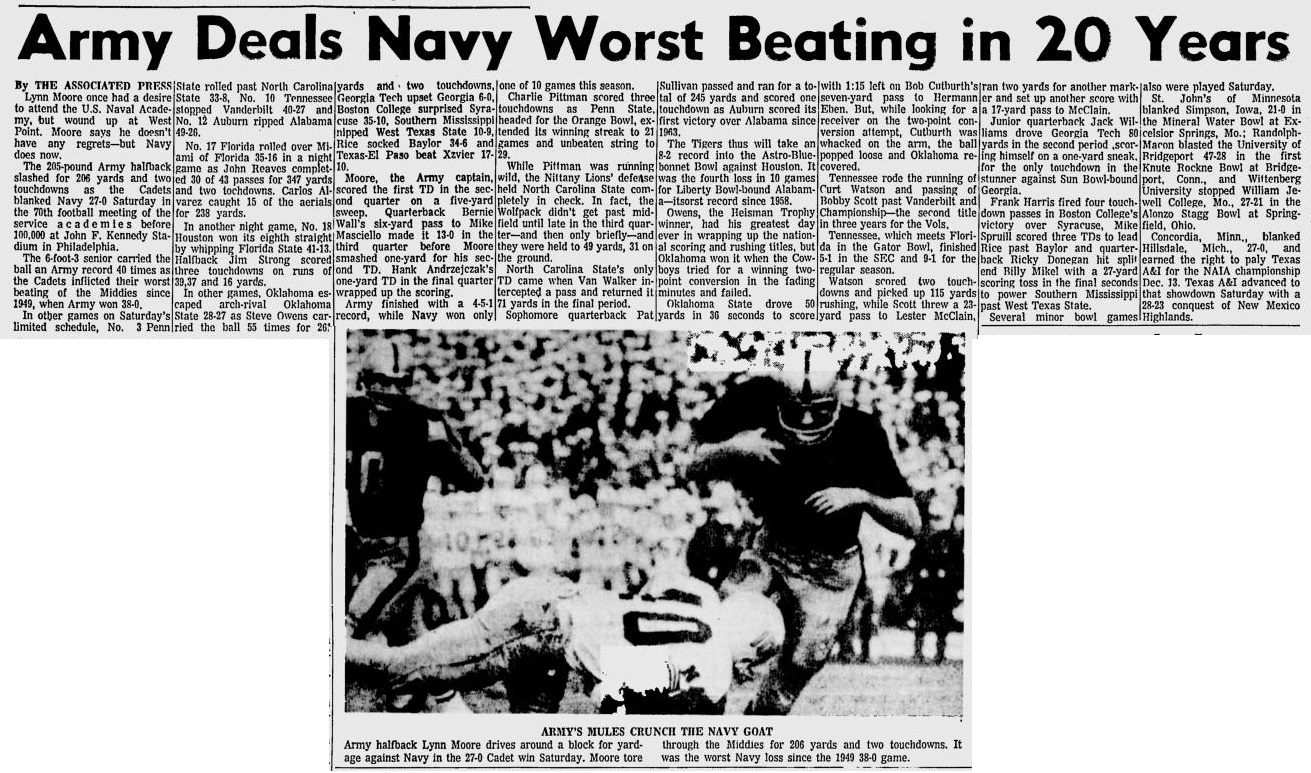
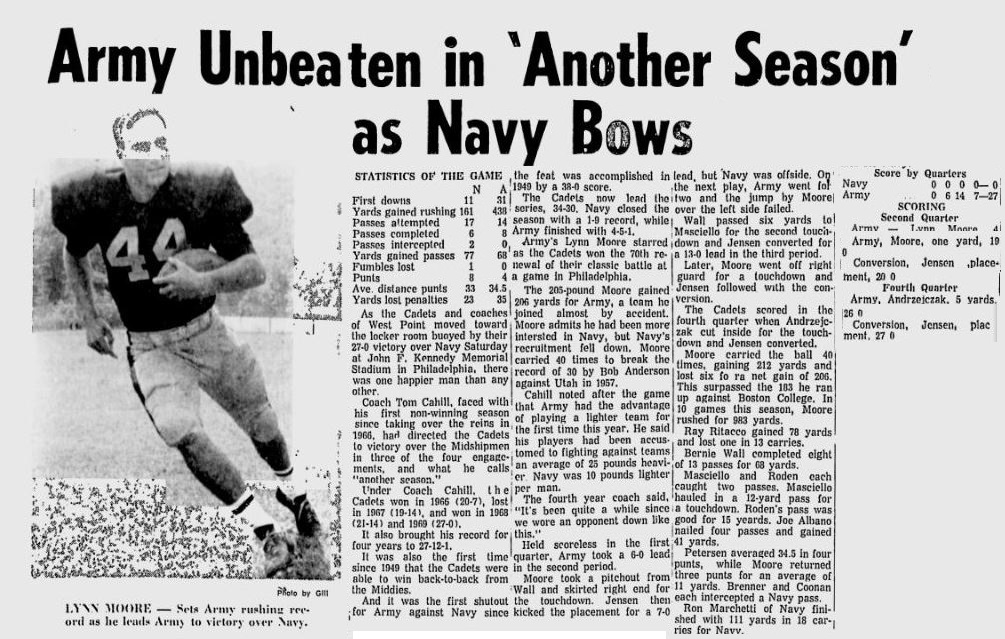
ArmyFB_1969_vsNavy_EveningNews_Dec11969

ArmyFB_1969_vsNavy_EveningNews_Dec11969


1969 Army – Navy


1969 Army Navy Game

Sports articles provided by Russ “Skip” Grimm – Class of ’76

—

1968 Team


1968 Army 7-3
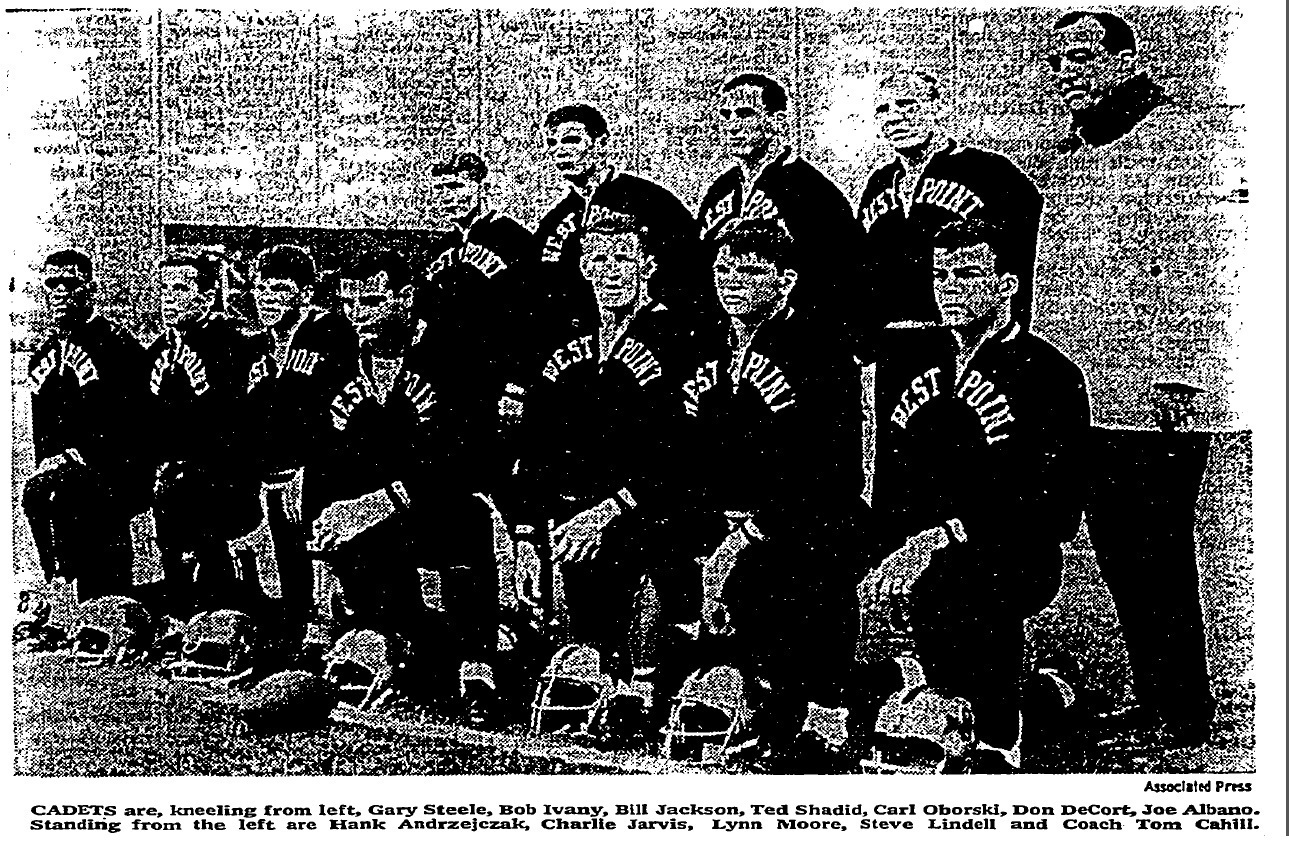
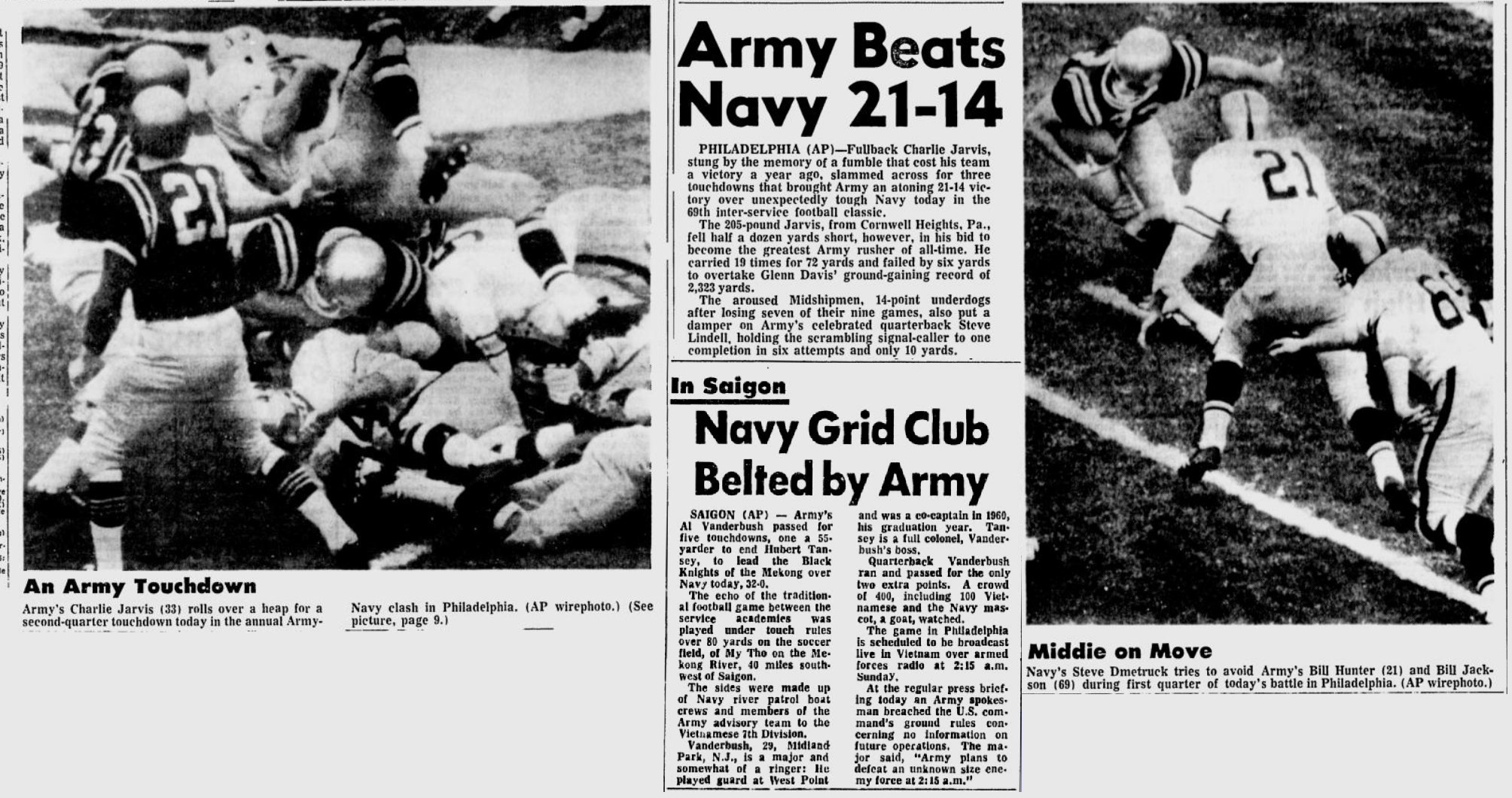
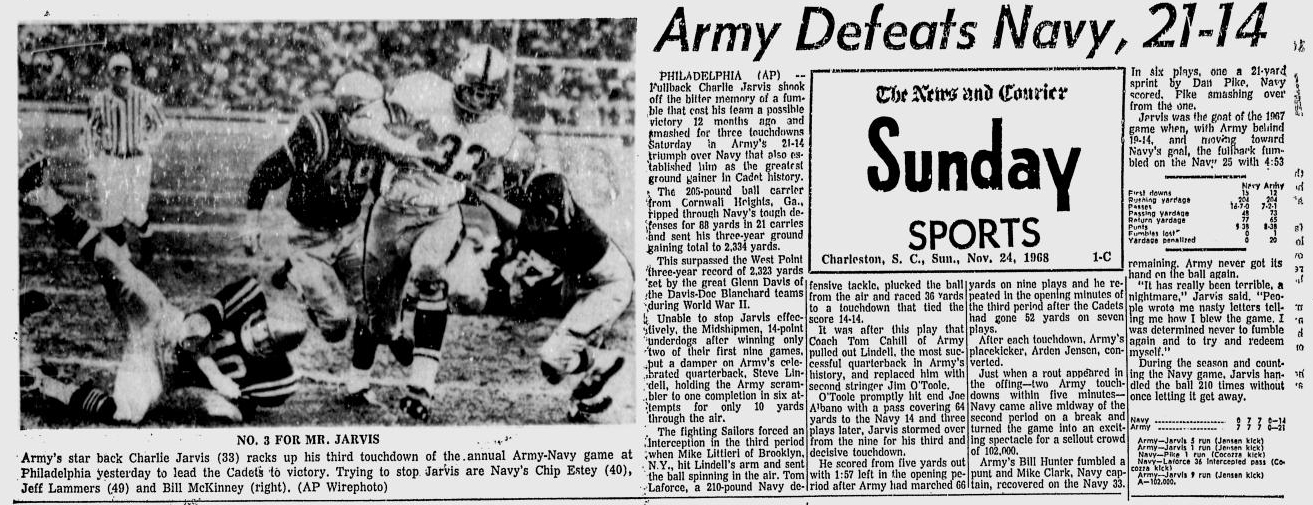
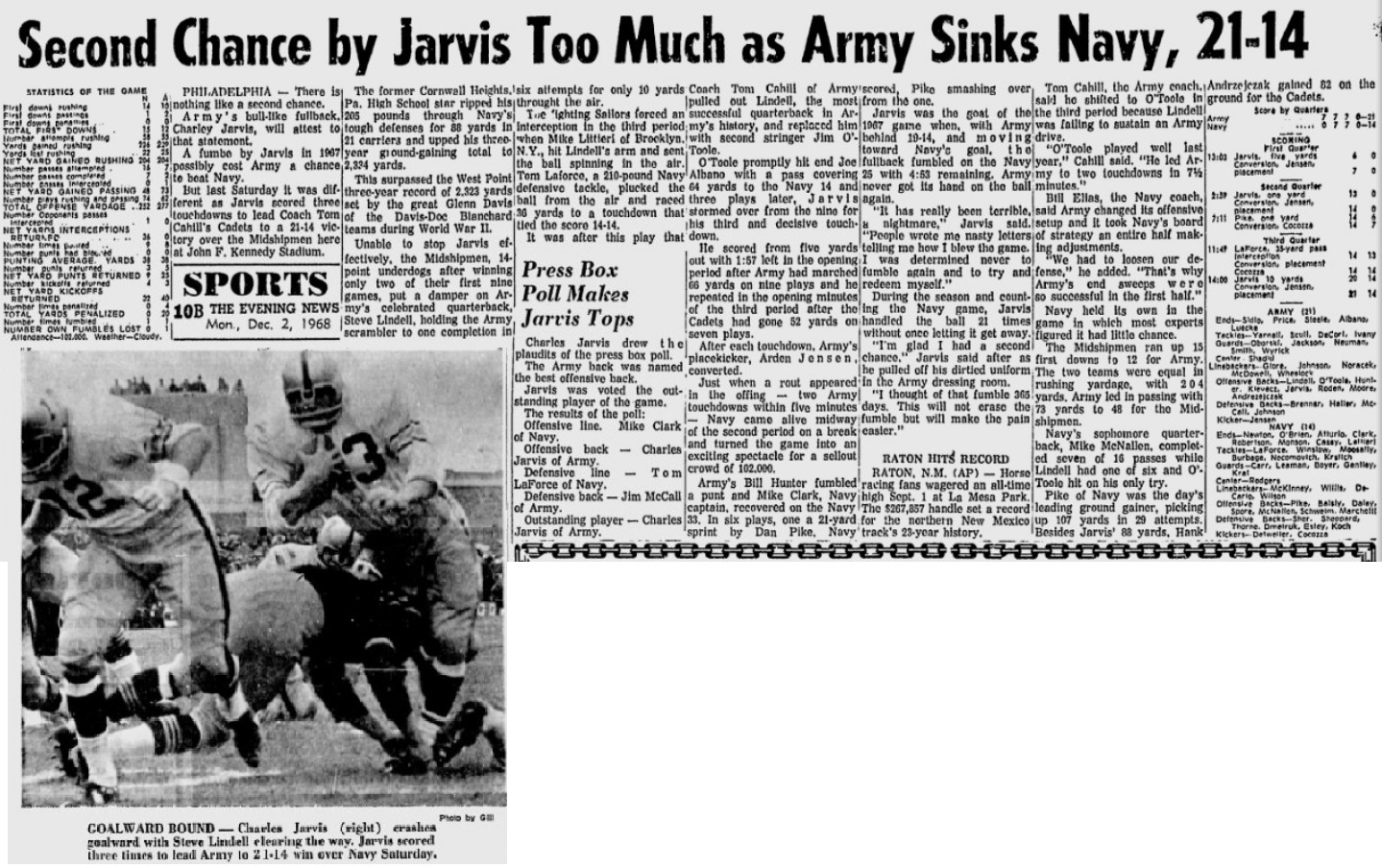
1968/11/30 Army 21 – Navy 14 W

Coach – Thomas B. Cahill (October 11, 1919 – October 29, 1992)
Army 1966-1973:
1966 Army 8-2 Coach of the Year

1967 Army 8-2

1968 Army 7-3

1969 Army 4-5-1

1970 Army 1-9-1

1971 Army 6-4

1972 Army 6-4

1973 Army 0-10
Overall Army: 40-39-2
Union NY 1976-79

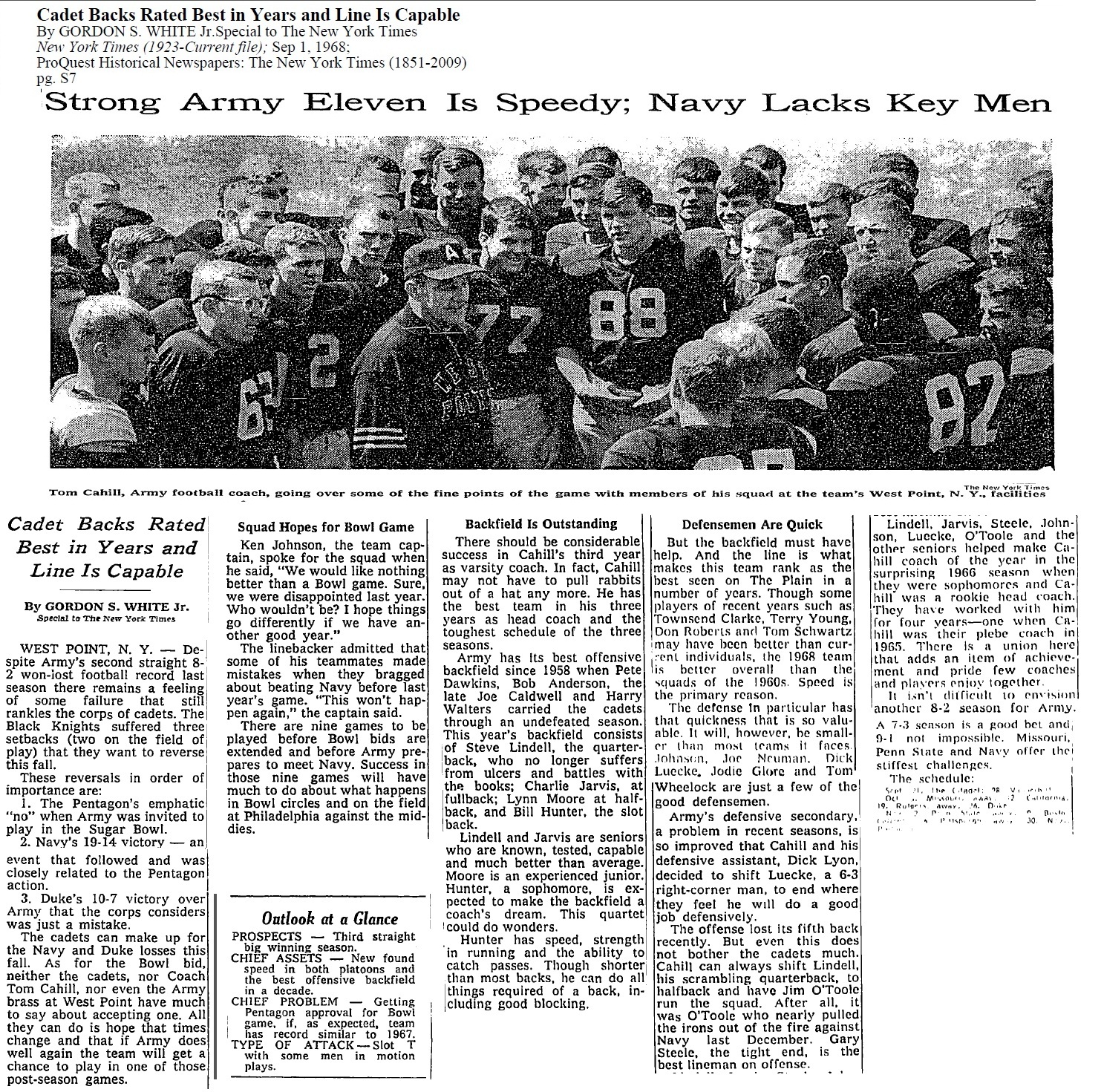
armyfb_1968_forecast_nyt_sep11968
ArmyFB_1968_forecast_NYT_Sep11968

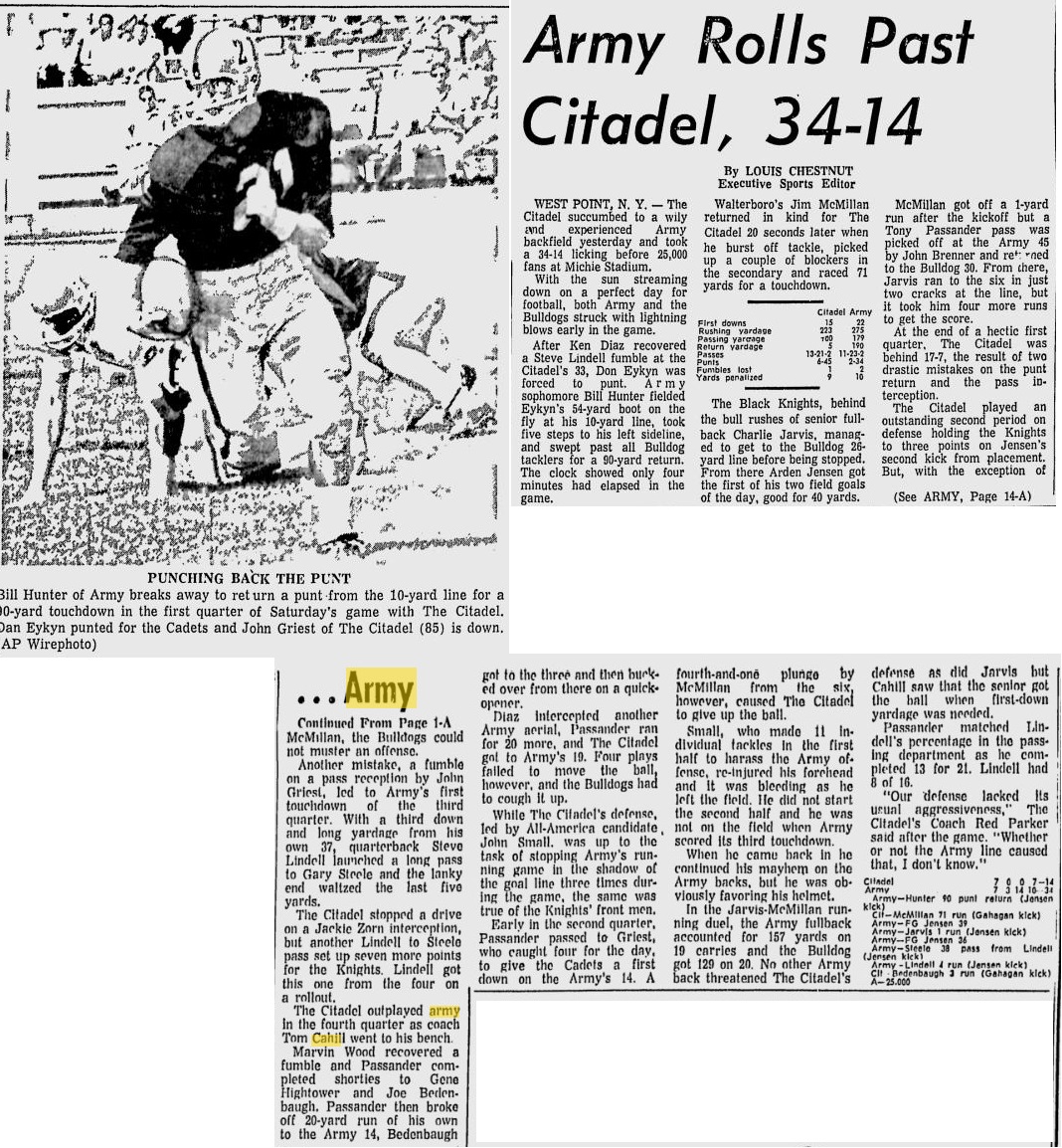
armyfb_1968_vscitadel_billhunter_newsandcourier_sep221968
ArmyFB_1968_vsCitadel-BillHunter_NewsandCourier_Sep221968

–

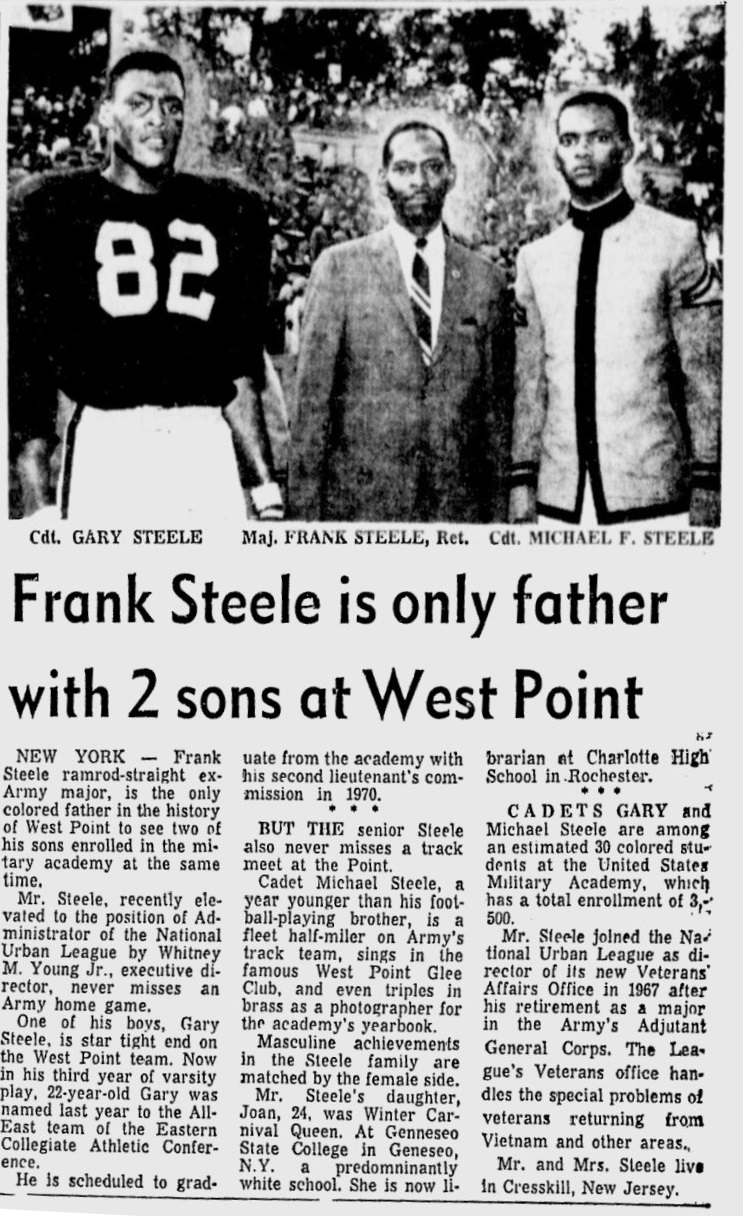
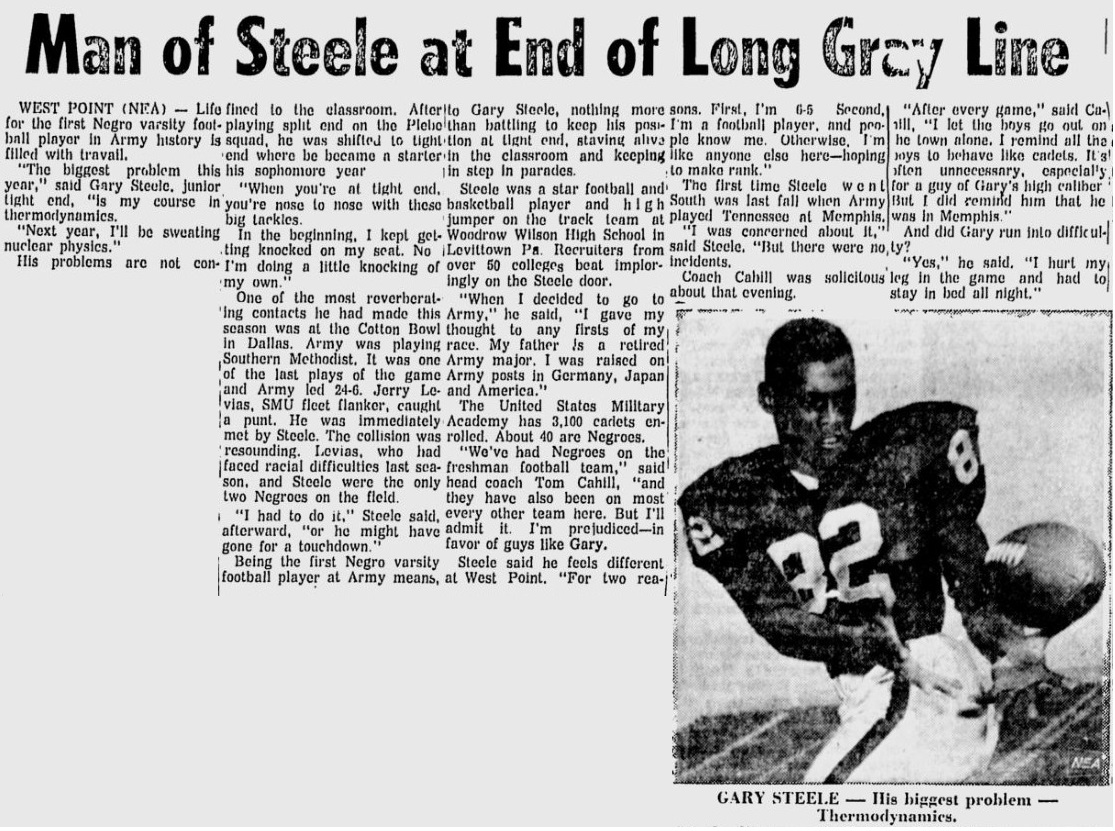
ArmyFB_1968_Steele-Father-Sons_Afro-American_Oct191968.jpg

ArmyFB_1968_Steele-Father-Sons_Afro-American_Oct191968

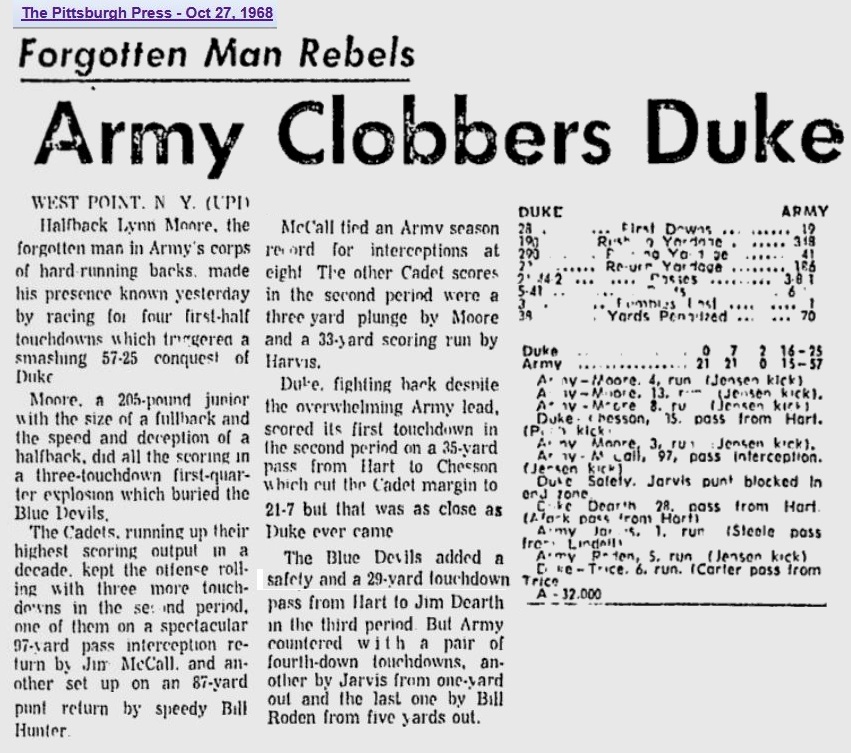
ArmyFB_1968_vsDuke_PittsburghPress_Oct271968.JPG

ArmyFB_1968_vsDuke_PittsburghPress_Oct271968

October 26 Duke at Michie Stadium Won 57–25!

–

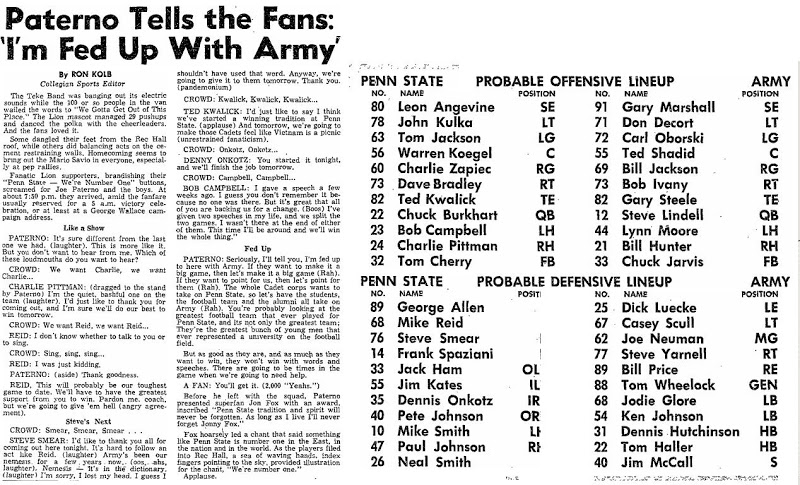
ArmyFB_1968_vsPSU.jpg

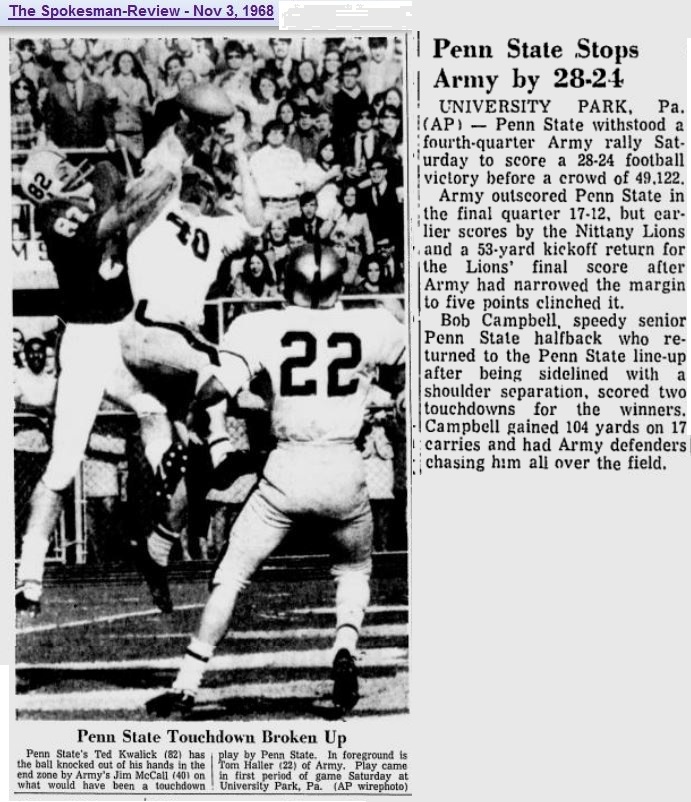
–

ArmyFB_1968_vsPSU-HallerandMcCoy_SpokesmanReview_Nov331968.JPG

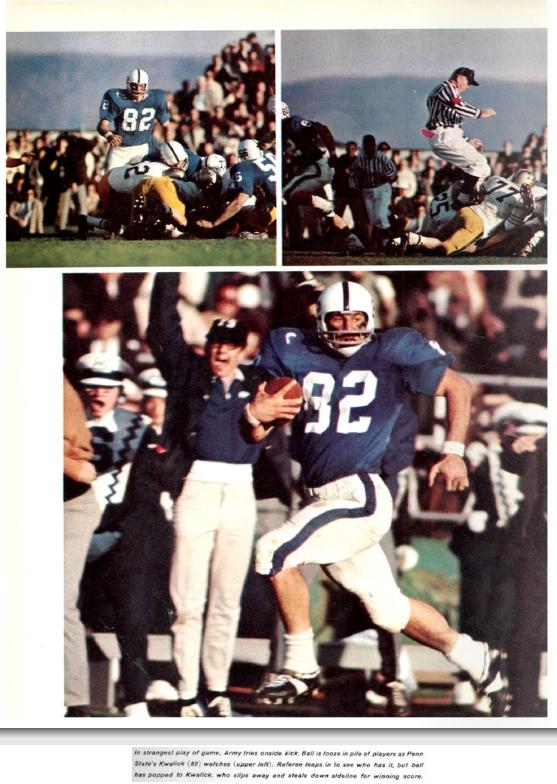
TedKwalik-PSU_SI11-68.jpg

–

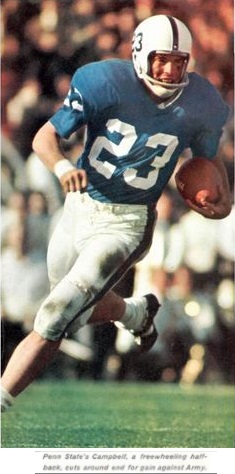
BobbyCampbell_PSU_vsArmy_SI_Nov111968.JPG


https://www.si.com/vault/issue/40903/21

–

–
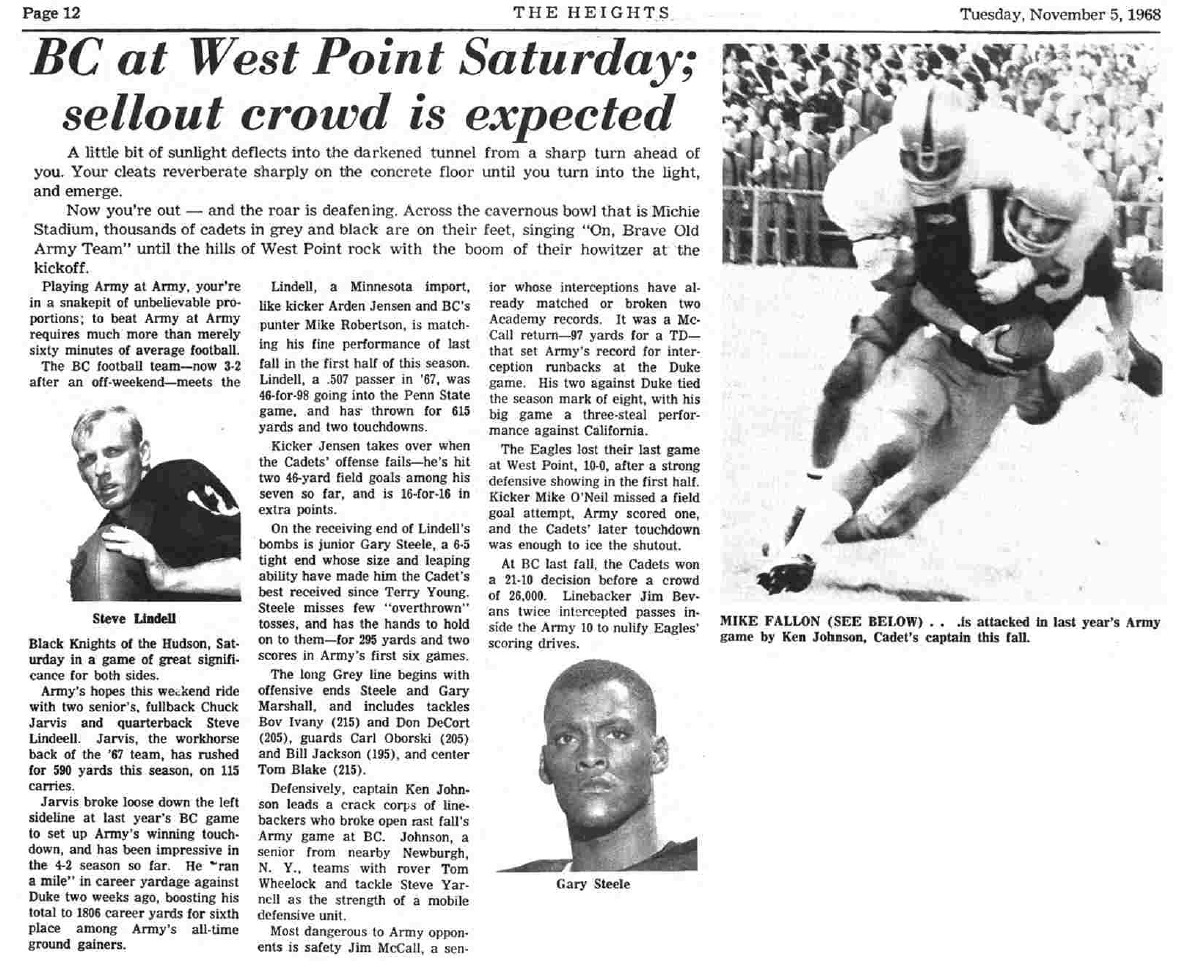
armyfb_1968_vsbc-pre_theheights_nov51968
ArmyFB_1968_vsBC-pre_TheHeights_Nov51968

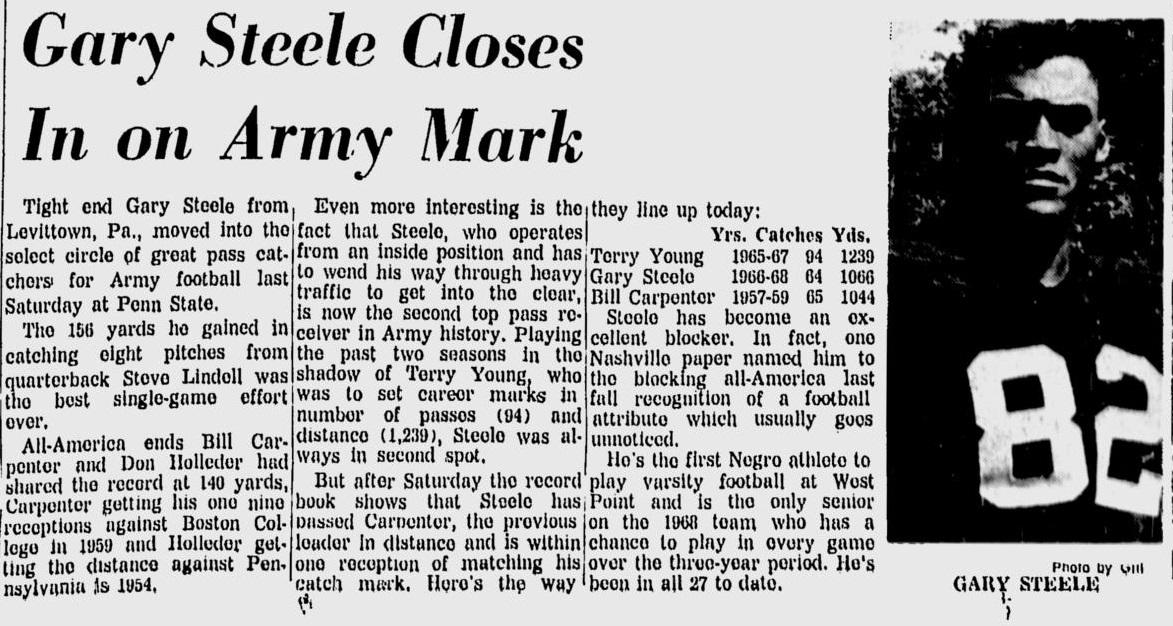
ArmyFB_1968_GarySteele_EveningNews_Nov51968.jpg

ArmyFB_1968_GarySteele_EveningNews_Nov51968

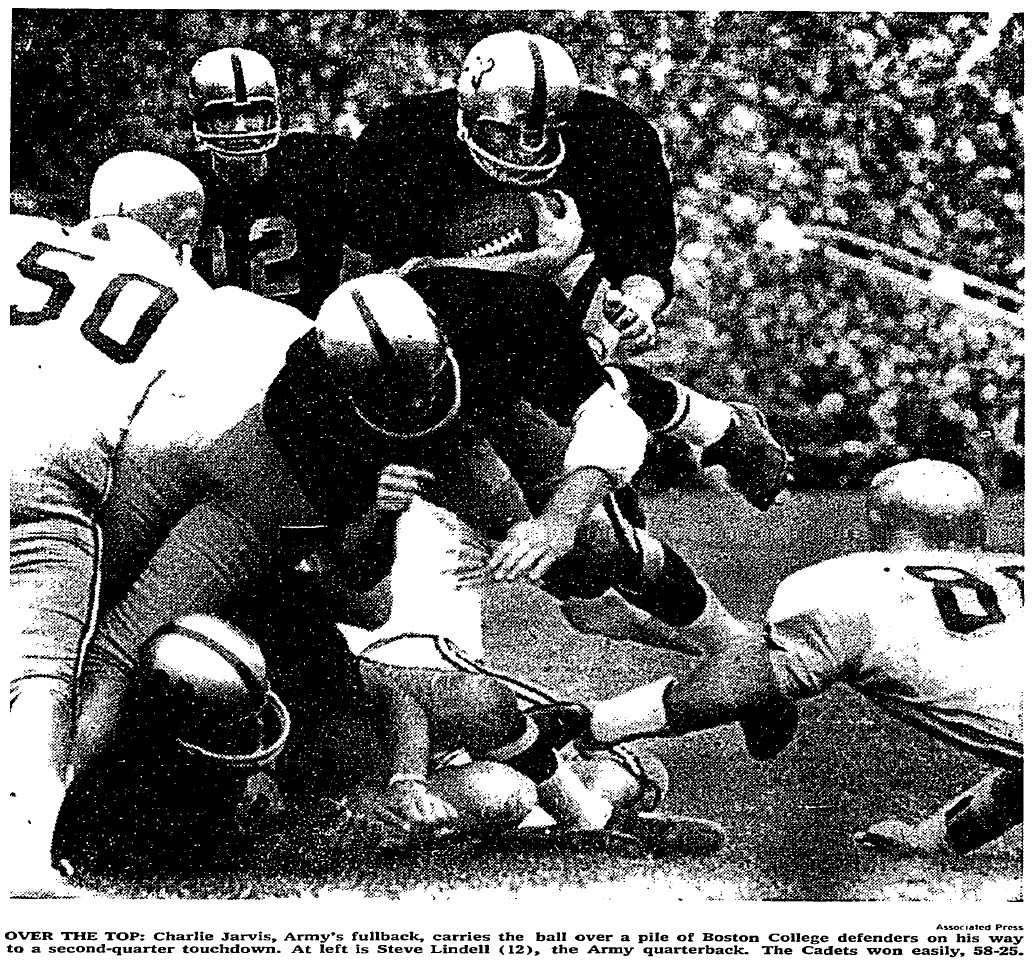
armyfb_1968_vsbc-jarvis_nyt_nov101968
ArmyFB_1968_vsBC-Jarvis_NYT_Nov101968

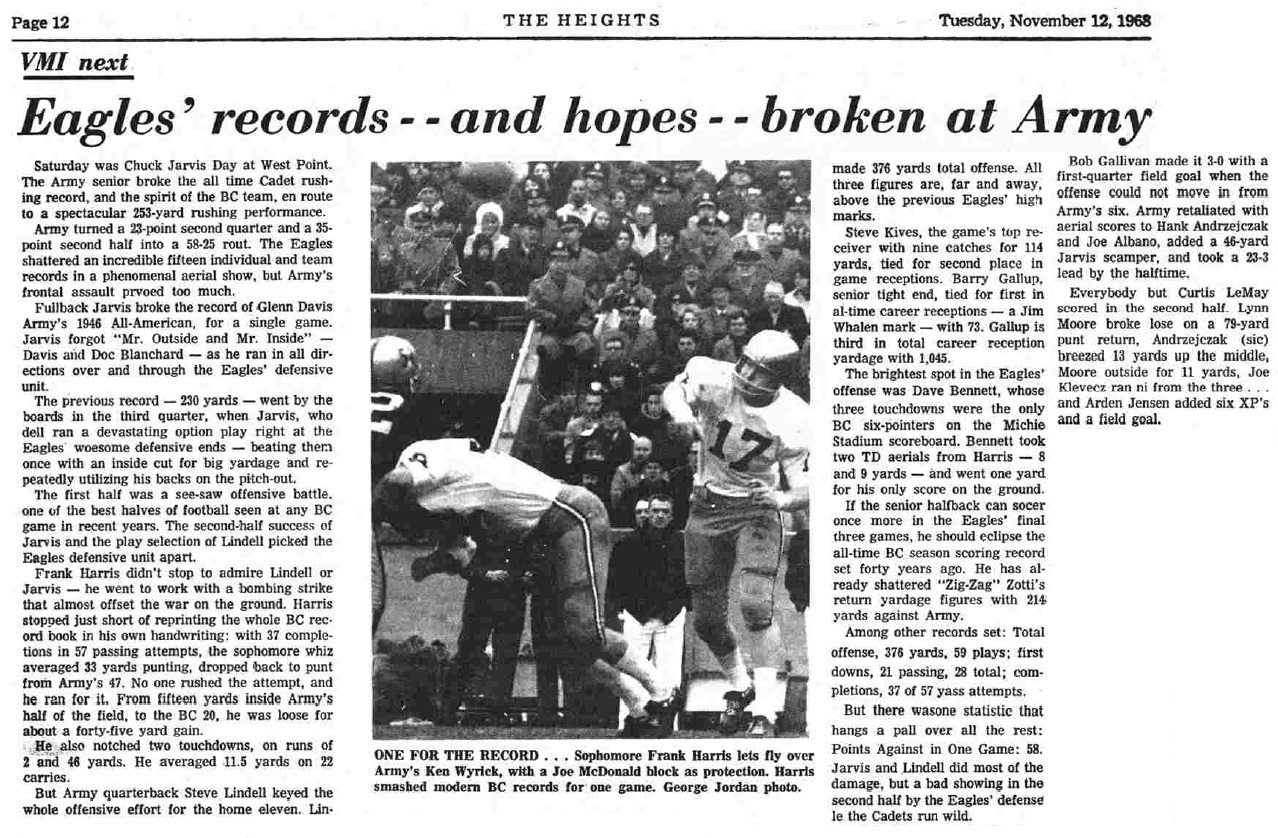
armyfb_1968_vsbc_theheights_nov121968
ArmyFB_1968_vsBC_TheHeights_Nov121968

–

–

ArmyFB_1968_vsPitt_EveningNews_Nov151968

–
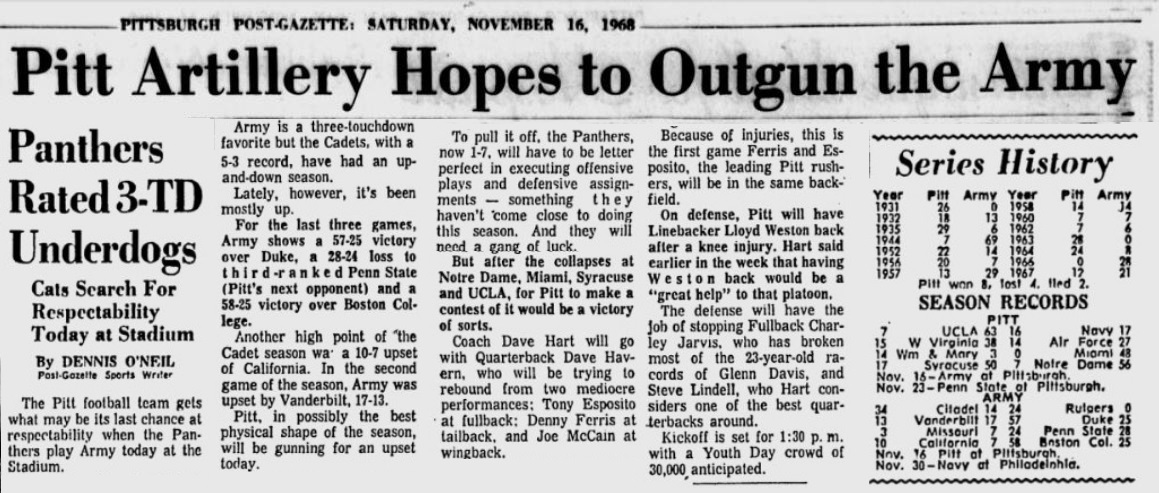
ArmyFB_1968_vsPitt_Pittsburgh-PostGazette_Nov161968.JPG

ArmyFB_1968_vsPitt_Pittsburgh-PostGazette_Nov16196

–
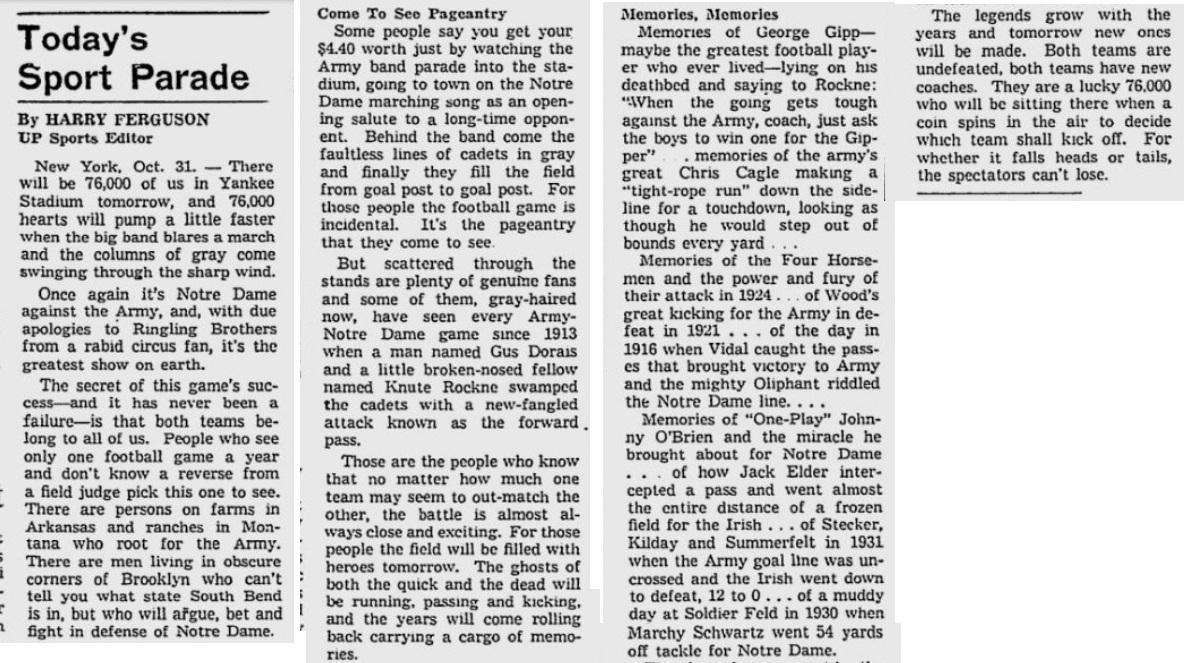
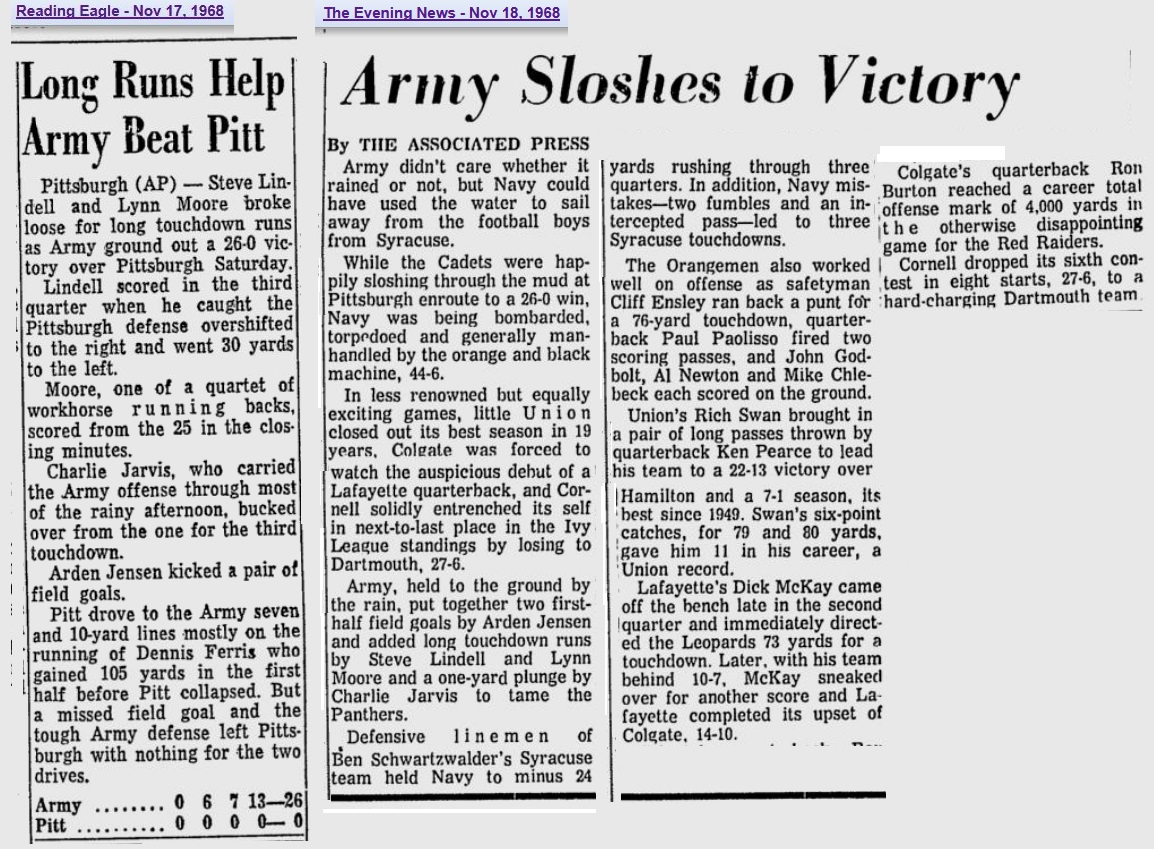
ArmyFB_1968_vsPitt_ReadingEagle_EN_Nov17-181968.JPG

ArmyFB_1968_vsPitt_ReadingEagle_EN_Nov17-181968

–

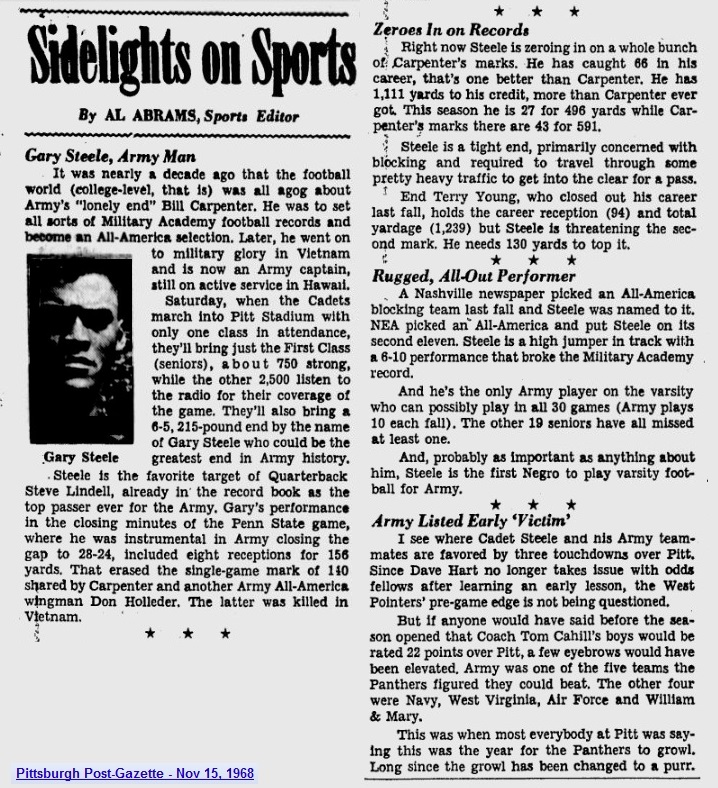
ArmyFB_1968_GarySteele_PittsburghPostGazette_Nov181968.jpg

ArmyFB_1968_GarySteele_PittsburghPostGazette_Nov181968

armyfb_1968_vsnavy_owossoarguspress_nov271968
ArmyFB_1968_vsNavy_OwossoArgusPress_Nov271968

armyfb_1968_vsnavy_offense_nyt_nov301968
ArmyFB_1968_vsNavy_offense_NYT_Nov301968

ArmyFB_1968_vsNavy_SpokaneDailyChronicle_Nov301968

ArmyFB_1968_vsNavy_SpokaneDailyChronicle_Nov301968

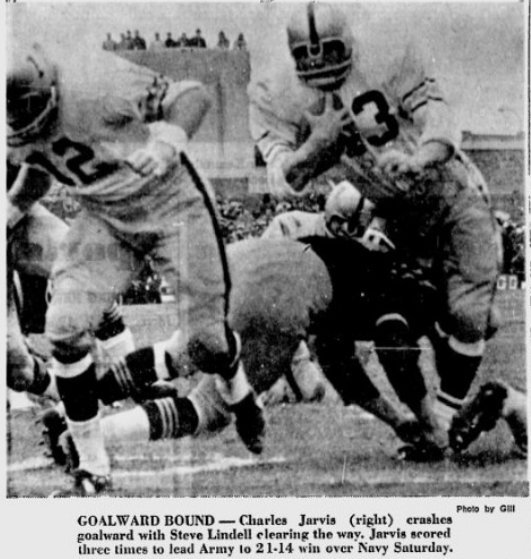
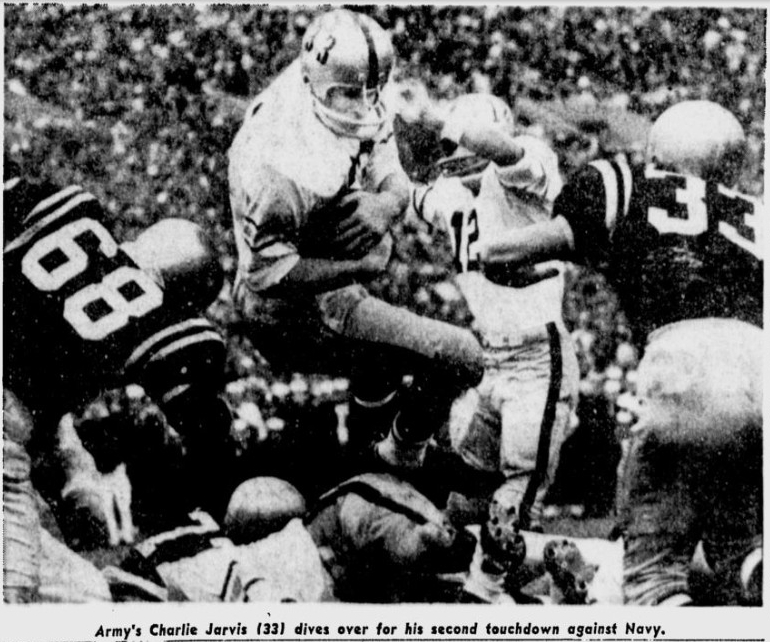
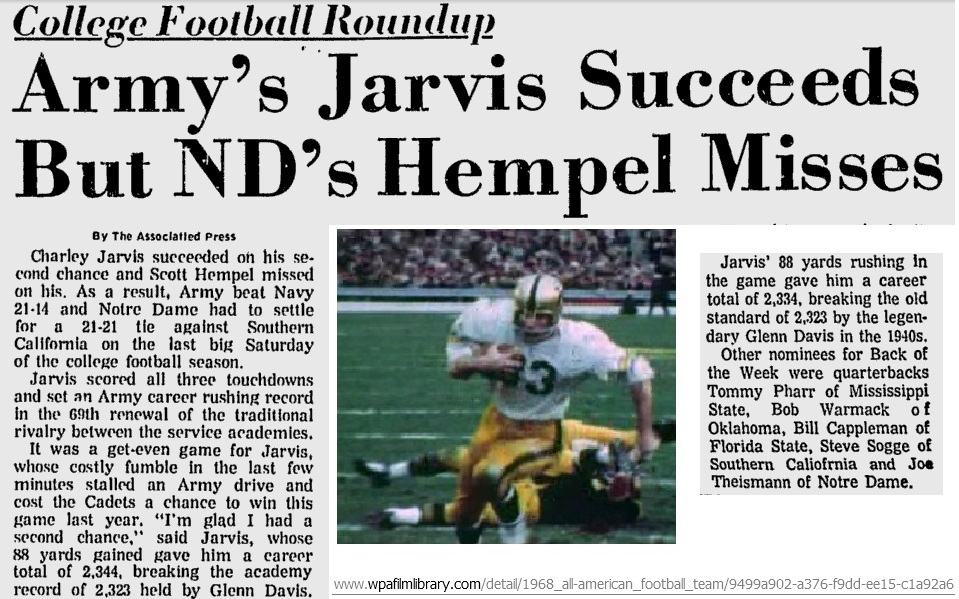
armyfb_1968_vsnavy_chaliejarvis_newsandcourier_dec11968
ArmyFB_1968_vsNavy_ChalieJarvis_NewsandCourier_Dec11968

armyfb_1968_vsnavy-charleyjarvis_eveningnews_dec21968
ArmyFB_1968_vsNavy-CharleyJarvis_EveningNews_Dec21968

armyfb_1968_vsnavy_charleyjarvis-pic_eveningnews_dec21968
ArmyFB_1968_vsNavy_CharleyJarvis-pic_EveningNews_Dec21968

armyfb_1968_vsnavy_charliejarvis_pittsburghpress_dec11968
ArmyFB_1968_vsNavy_CharlieJarvis_PittsburghPress_Dec11968

armyfb_1968_vsnavy-jarvis_delawarecountypa_dec21968
ArmyFB_1968_vsNavy-Jarvis_DelawareCountyPA_Dec21968

armyfb_1968_vsnavy_charliejarvis_daytonabeach_dec21968
ArmyFB_1968_vsNavy_CharlieJarvis_DaytonaBeach_Dec21968

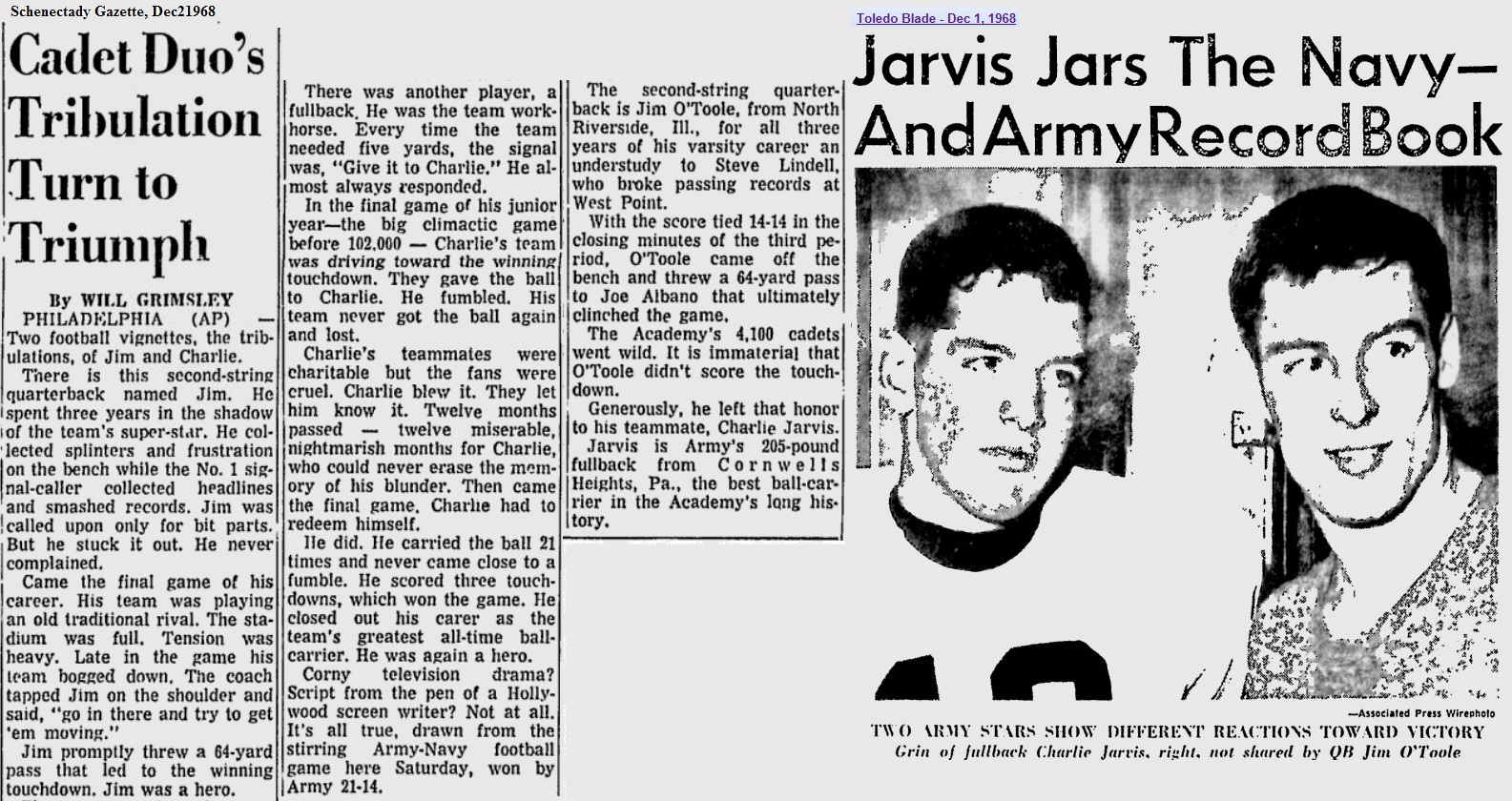
armyfb_1968_vsnavy-otoole-jarvis_schenectadygazette_dec21968 (2)
ArmyFB_1968_vsNavy-OToole-Jarvis_SchenectadyGazette_Dec21968

–

armyfb_1968_jarvis_various_dec1968v
ArmyFB_1968_Jarvis_various_Dec1968v

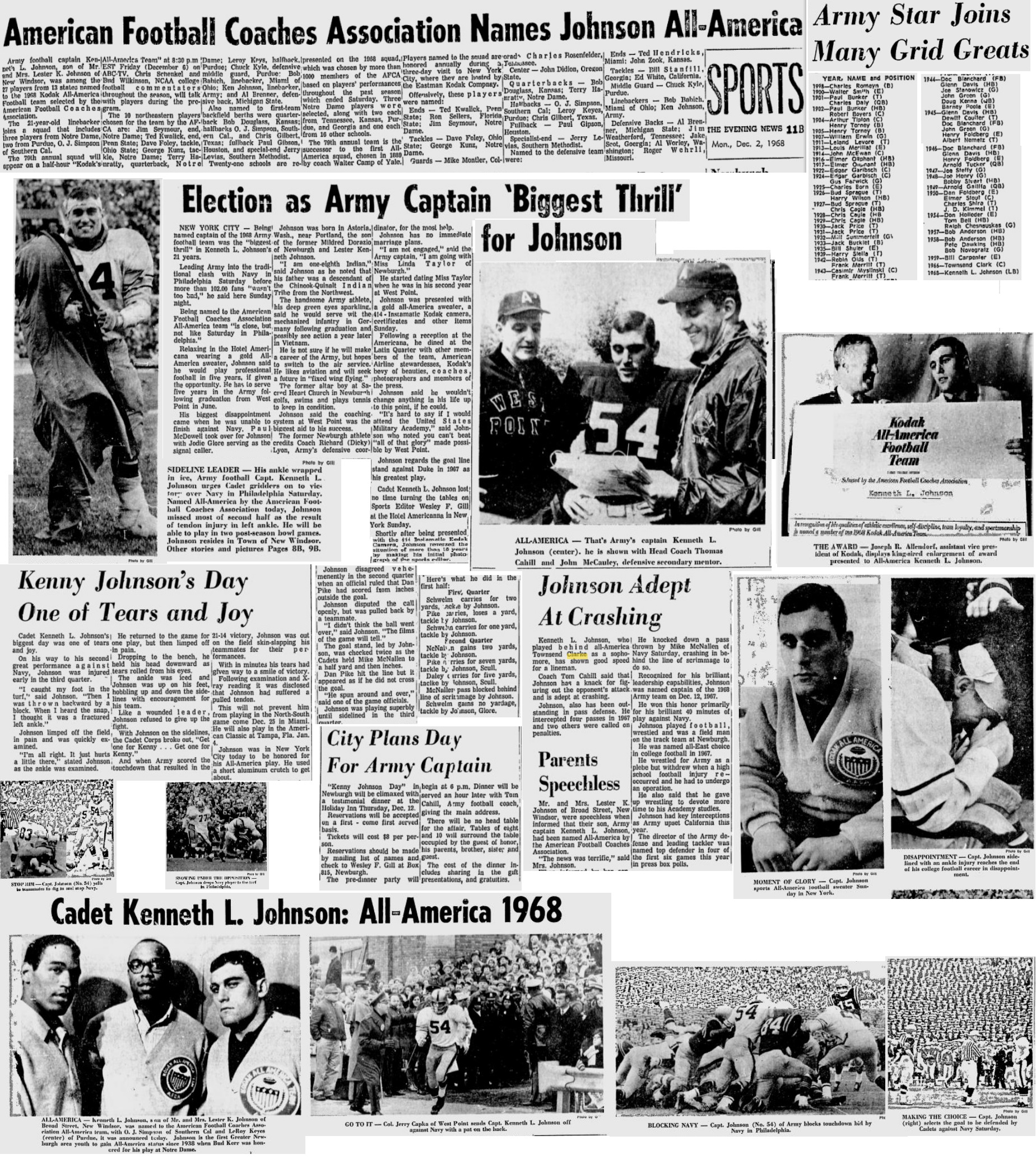
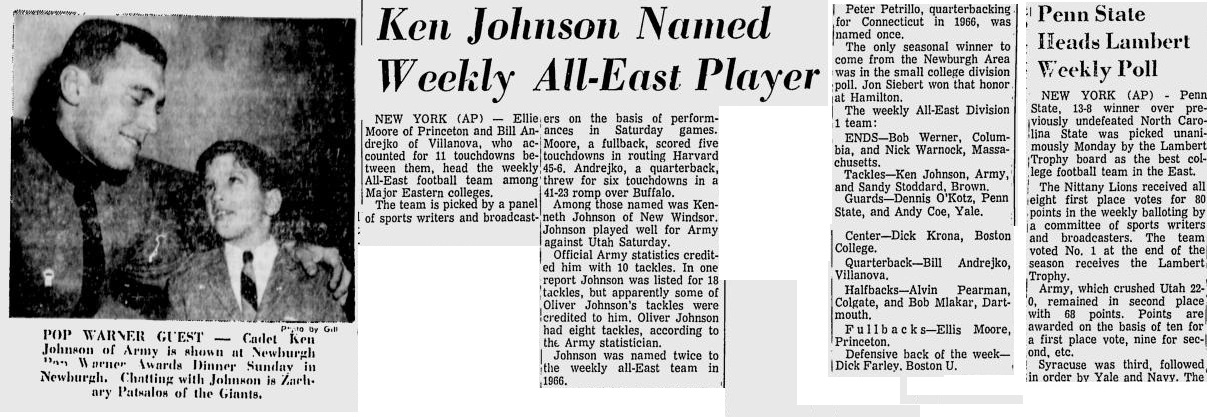
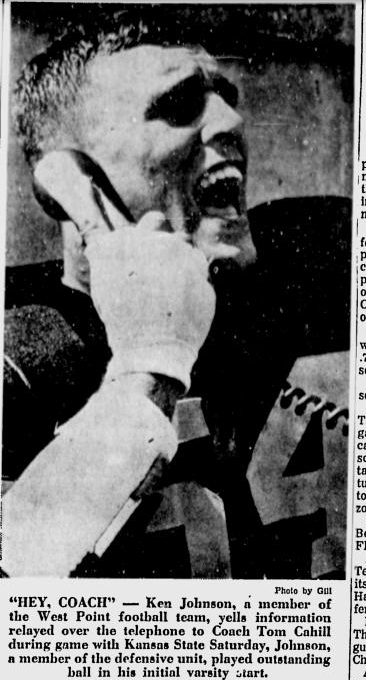
armyfb_1968_kenjohnson_eveningnews_dec21968
ArmyFB_1968_KenJohnson_EveningNews_Dec21968

Ken Johnson full page spread
http://news.google.com/newspapers?id=iFpGAAAAIBAJ&sjid=vCcNAAAAIBAJ&dq=townsend-clarke&pg=843%2C185366

Date Time Opponent Site TV Result Attendance
September 21 2:00 pm The Citadel W 34–14 23,000
September 28 2:00 pm Vanderbilt L 13–17 23,000
October 5 2:30 pm at Missouri L 3–7 58,576
October 12 2:00 pm California W 10–7 32,000
October 19 2:00 pm at Rutgers W 24–0 28,000
October 26 2:00 pm Duke W 57–25 32,000
November 2 1:00 pm at Penn State L 24–28 49,122
November 9 1:00 pm Boston College W 58–25 32,000
November 16 1:30 pm at Pittsburgh W 26–0 28,072
November 30 1:30 pm vs. Navy ABC W 21–14 102,000

Sports articles provided by Russ “Skip” Grimm – Class of ’76

1967 Team

1967 Army 8-2
1967/12/02 Army 14 – Navy 19 L

Coach – Thomas B. Cahill (October 11, 1919 – October 29, 1992)
Army 1966-1973:

1966 Army 8-2 Coach of the Year
1967 Army 8-2
1968 Army 7-3
1969 Army 4-5-1
1970 Army 1-9-1
1971 Army 6-4
1972 Army 6-4
1973 Army 0-10
Overall Army: 40-39-2
Union NY 1976-79

–

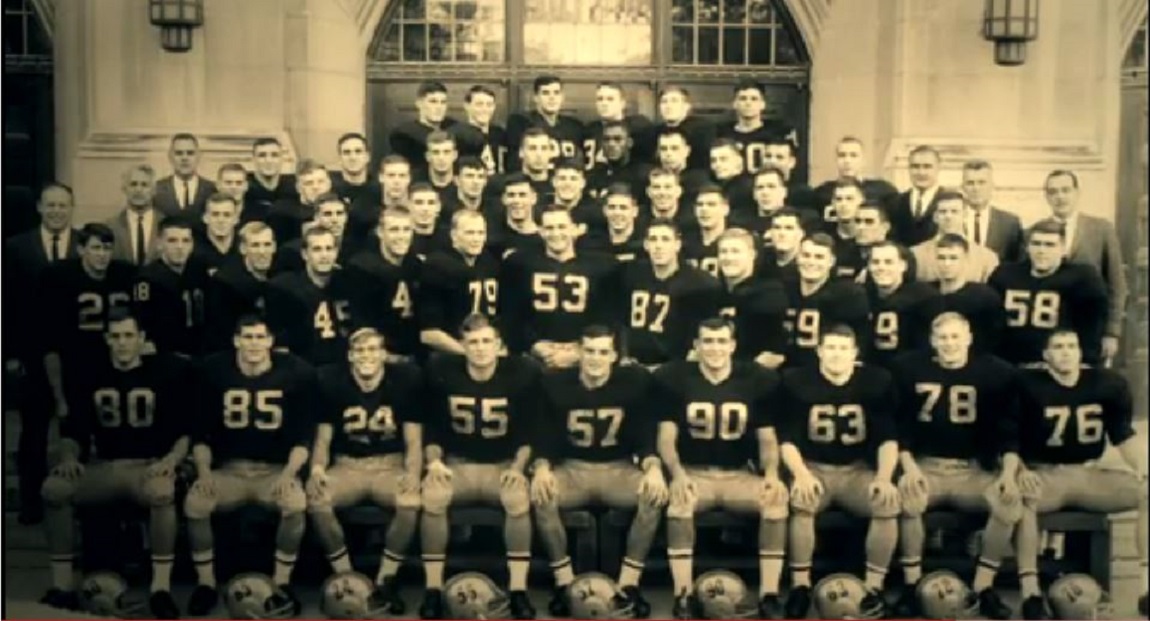
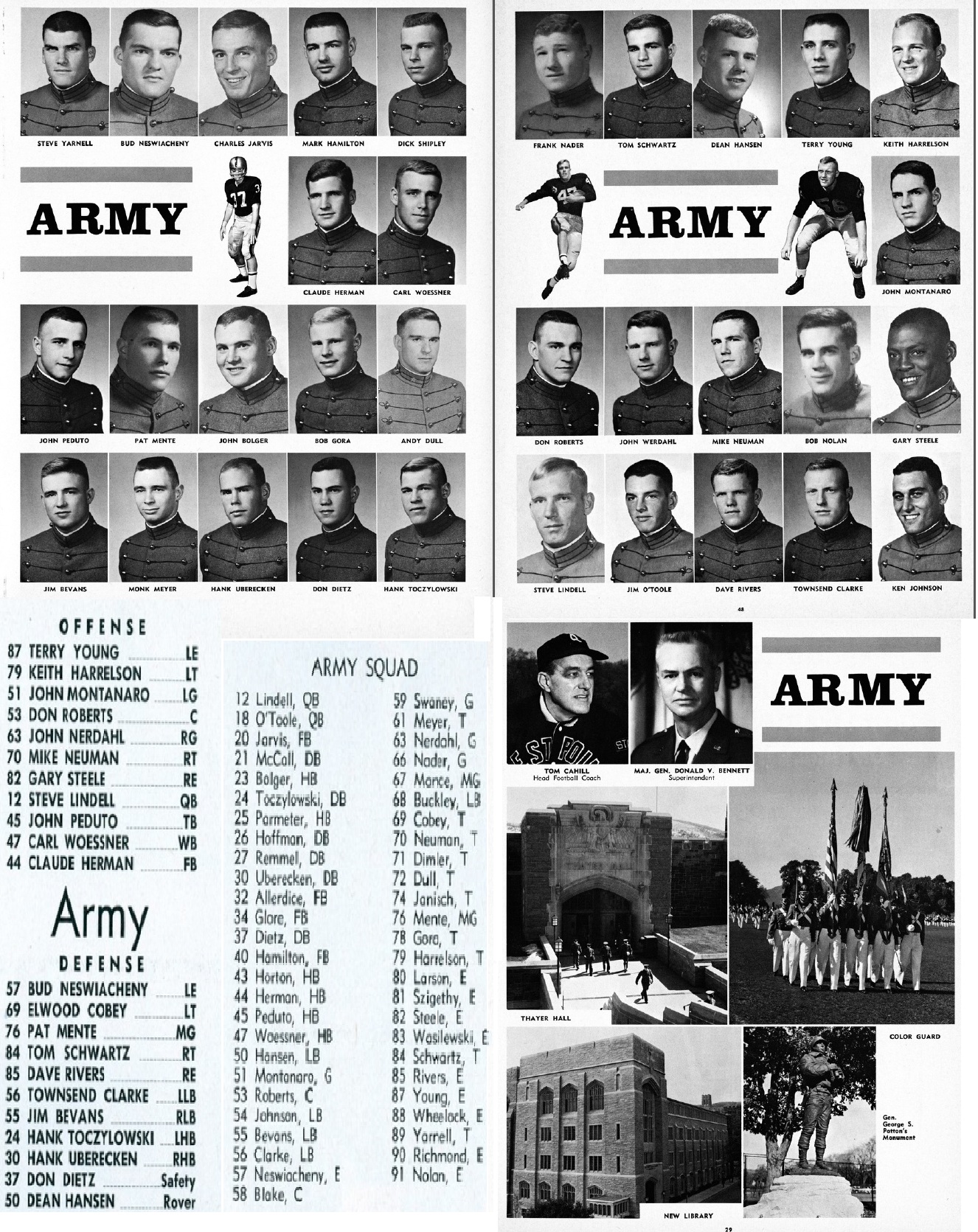
ArmyFB_1967_team

–

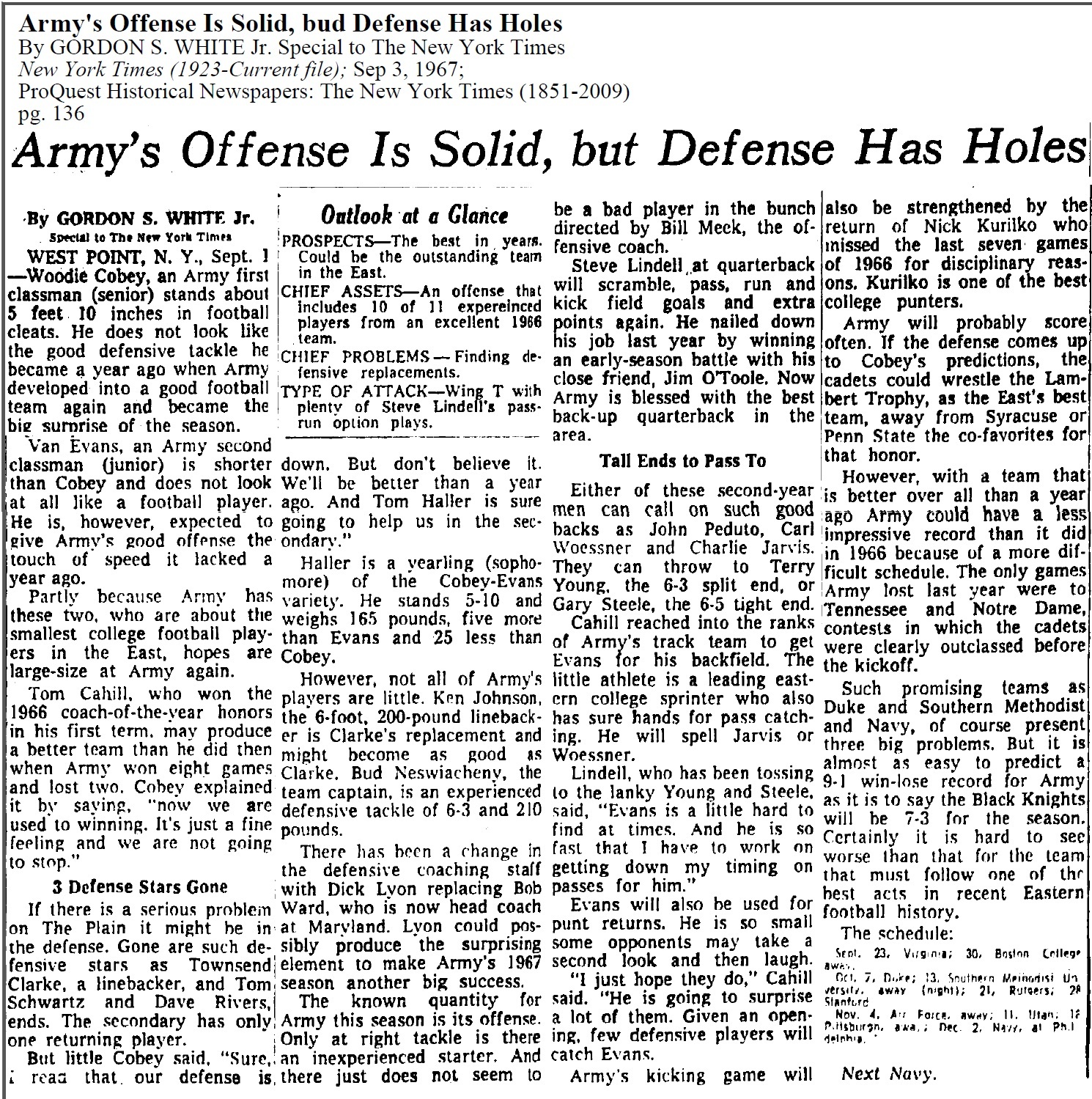
armyfb_1967_forecast_nyt_sep31967
ArmyFB_1967_forecast_NYT_Sep31967
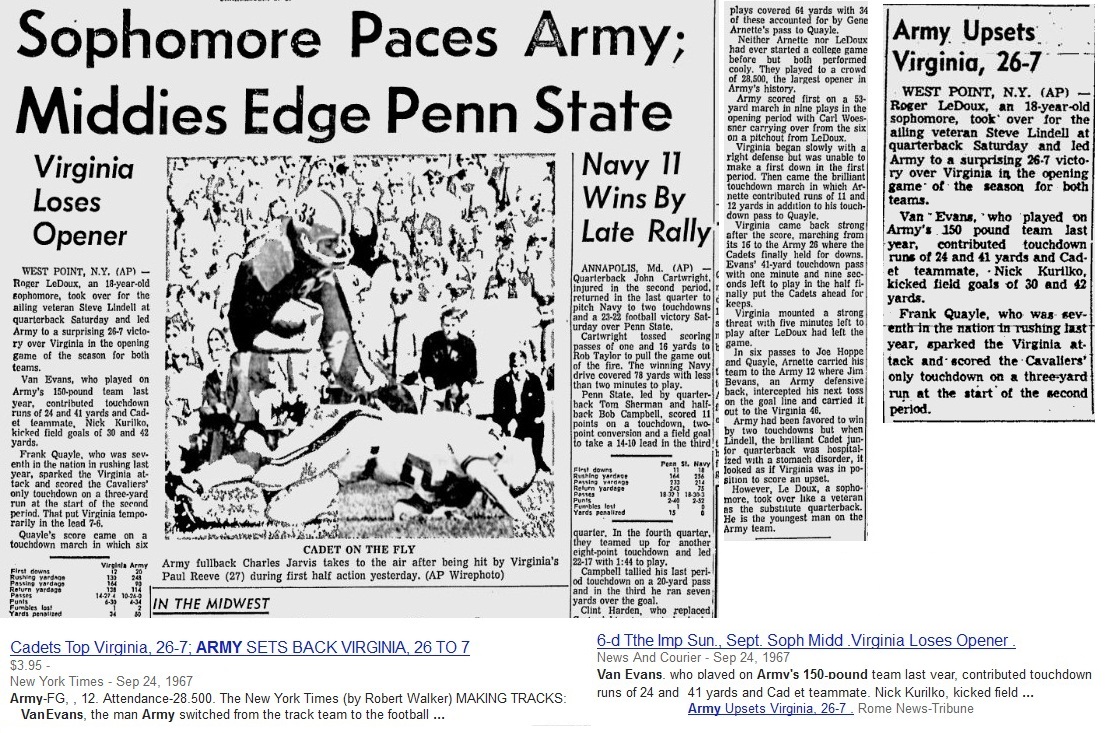
armyfb_1967_vsvirginia_newsandcourier_sep241967

–

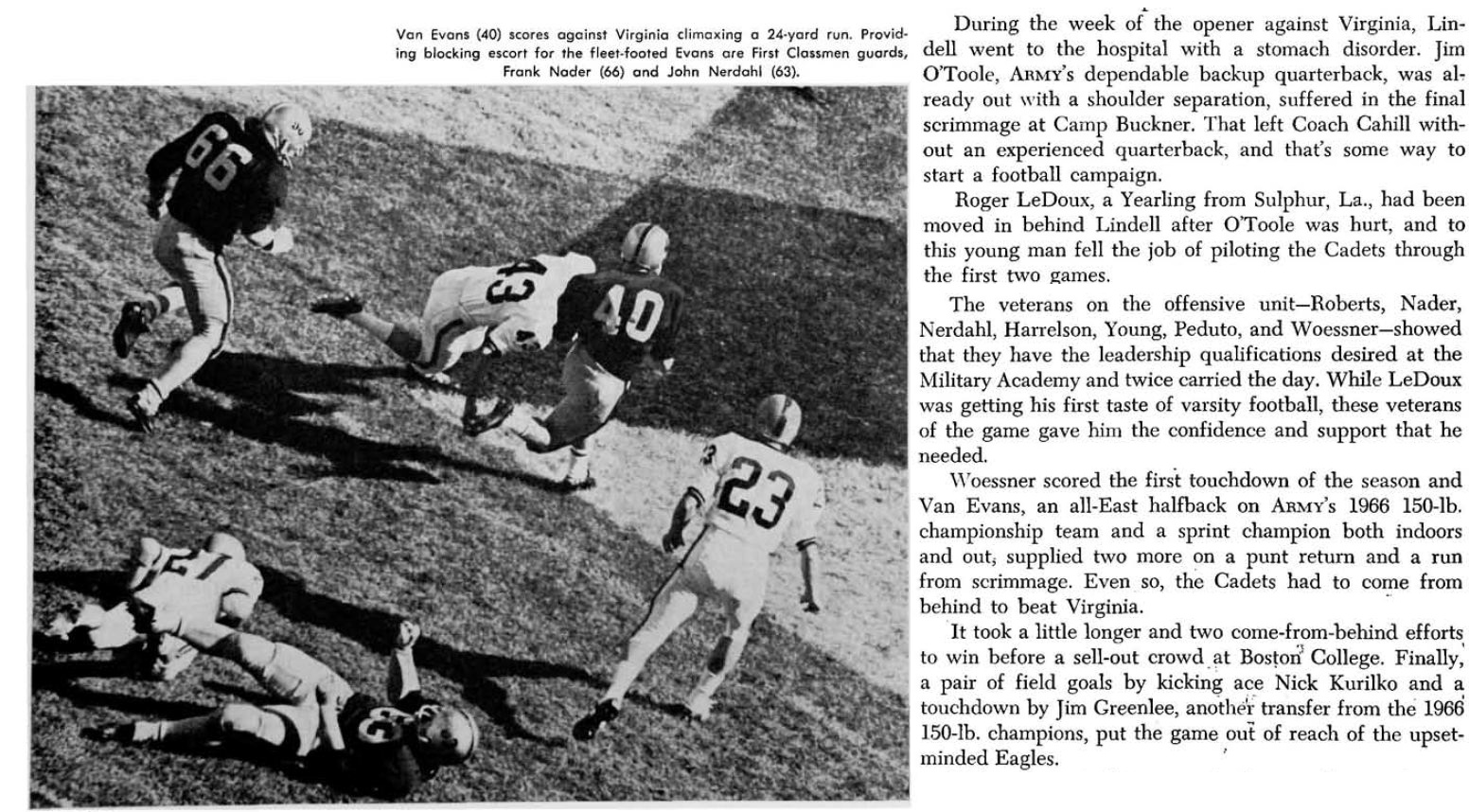
ArmyFB_1967_VanEvans_AssemblyOct67

ArmyFB_1967_VanEvans_AssemblyOct67

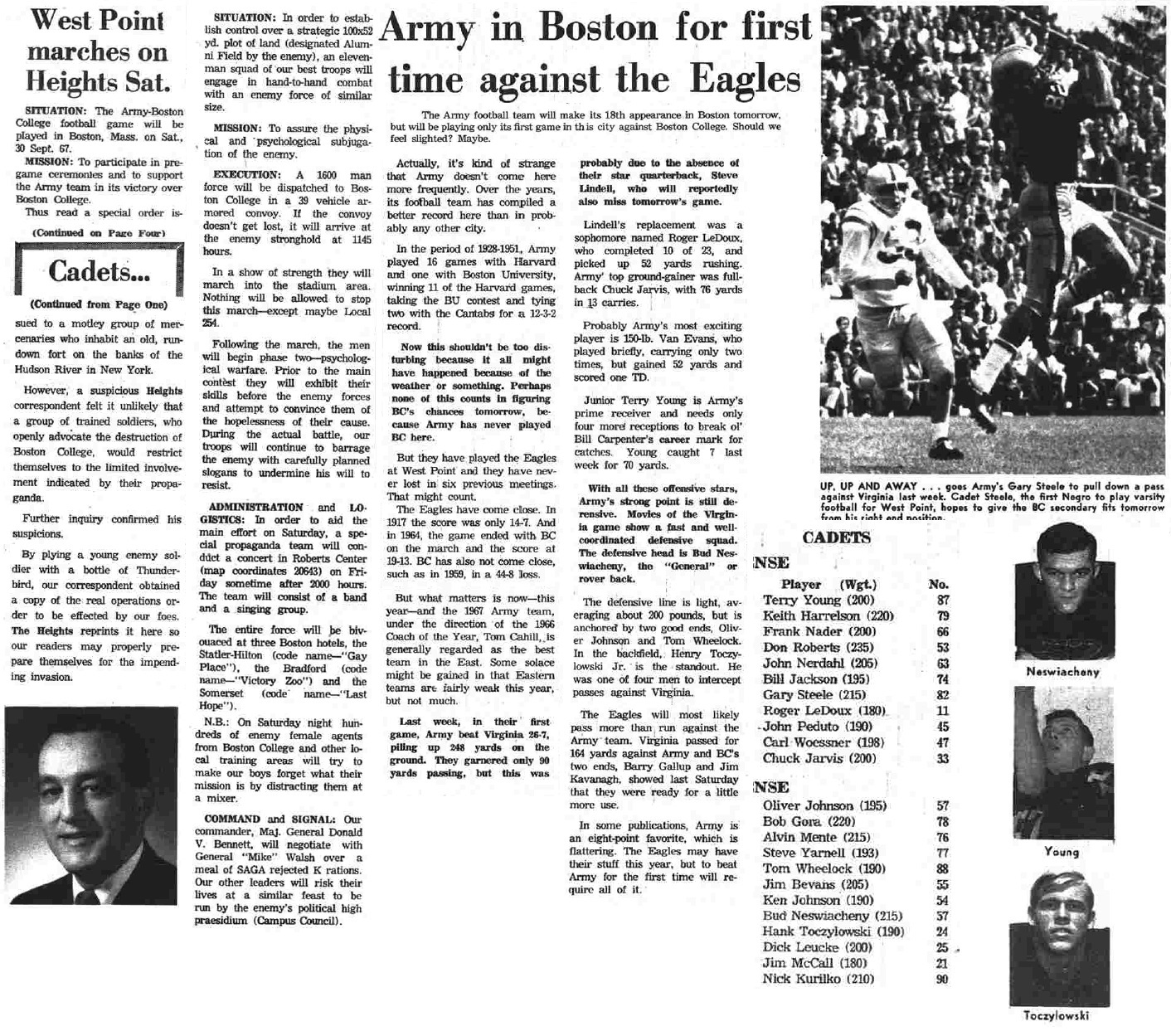
armyfb_1967_vsbc-pre_theheights_sep291967
ArmyFB_1967_vsBC-pre_TheHeights_Sep291967

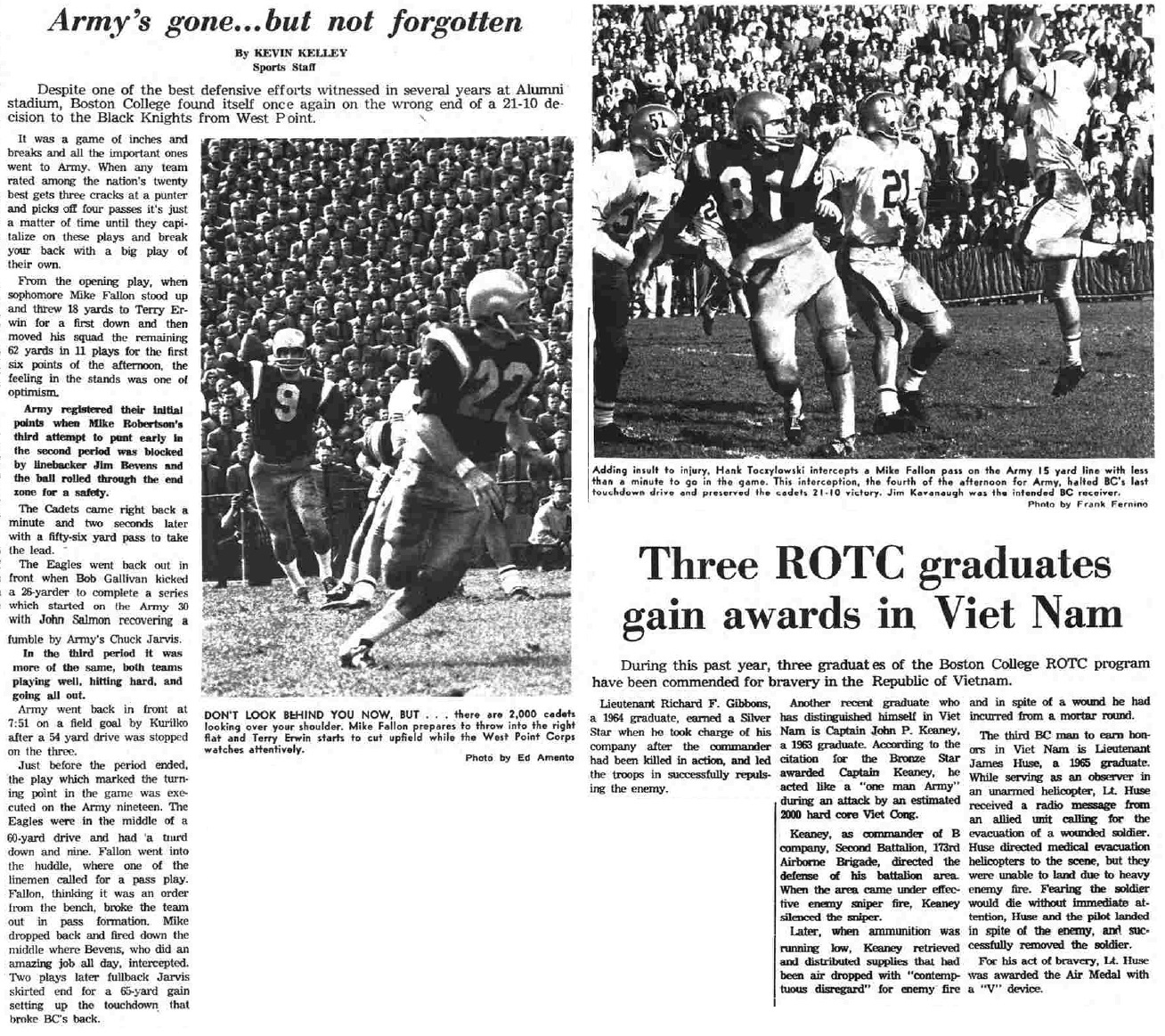
armyfb_1967_vsbc_theheights_oct31967
ArmyFB_1967_vsBC_TheHeights_Oct61967

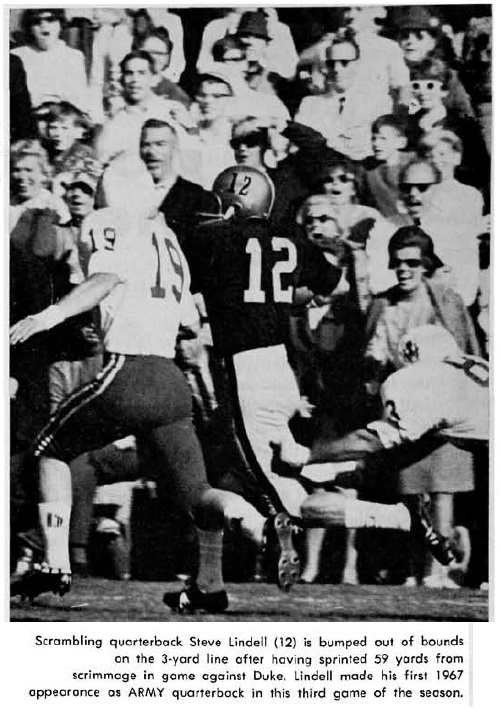
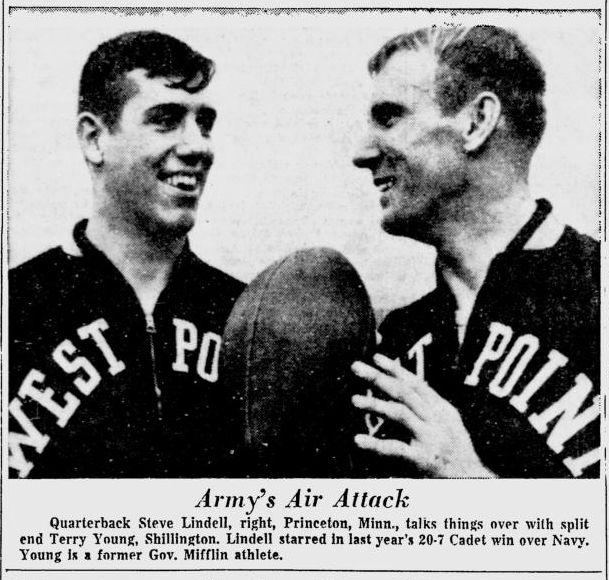
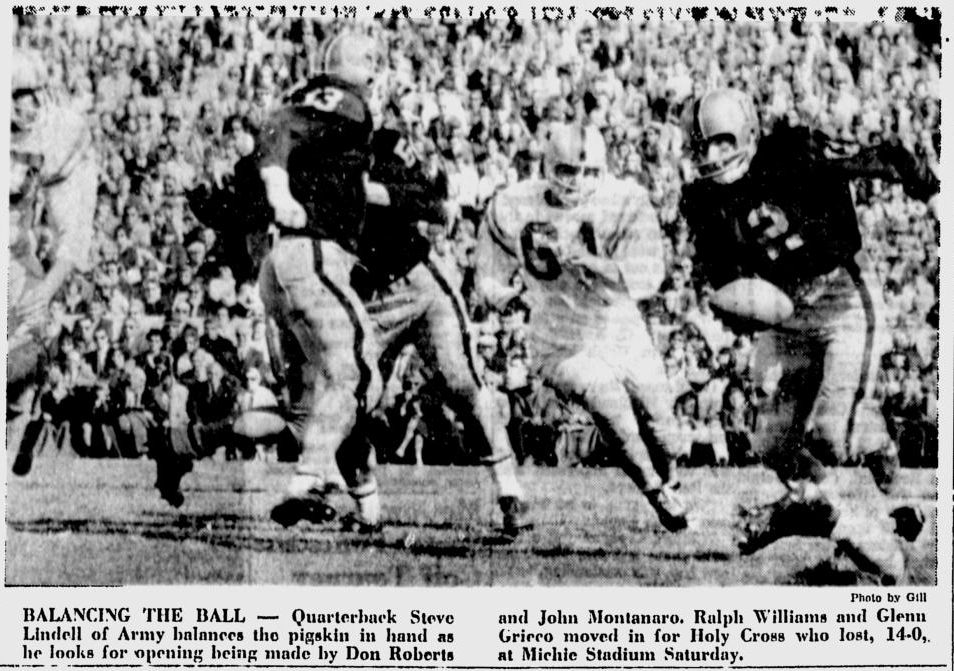
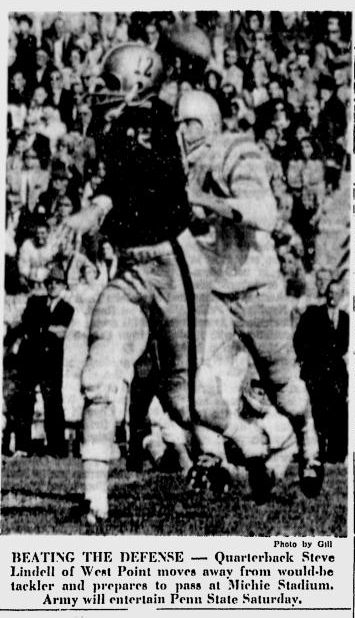
ArmyFB_1967_SteveLindell_AssemblyOct1967

ArmyFB_1967_SteveLindell_AssemblyOct1967


ArmyFB_1967_vsSMU_LynnMoore_NewburghEveningNews_Oct141967

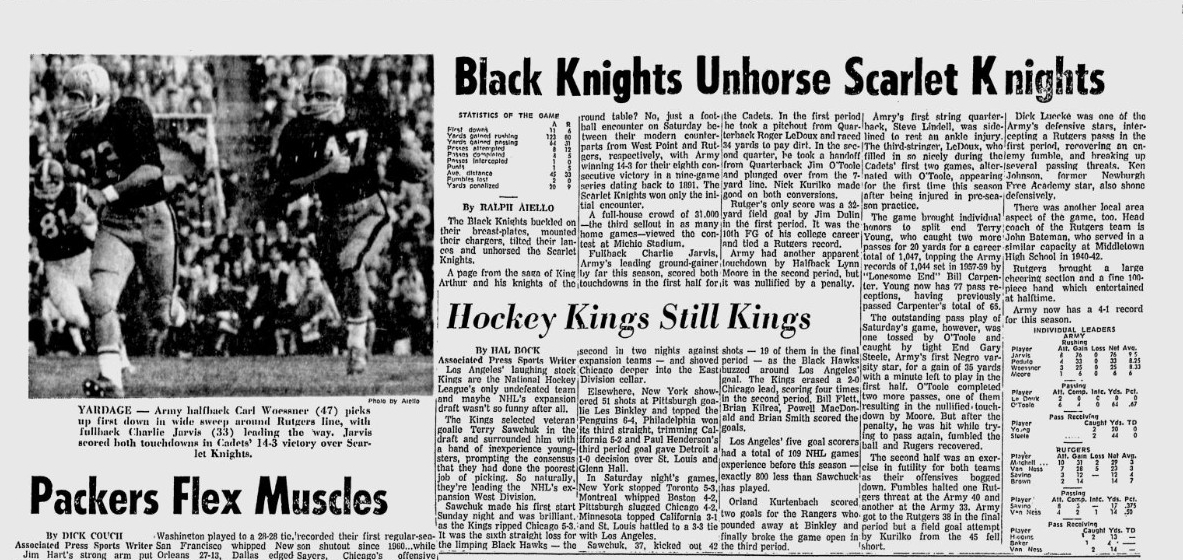
armyfb_1967_vsrutgers_charliejarvis-carlwoessner_newburgheveningnews_oct231967
ArmyFB_1967_vsRutgers_CharlieJarvis-CarlWoessner_NewburghEveningNews_Oct231967

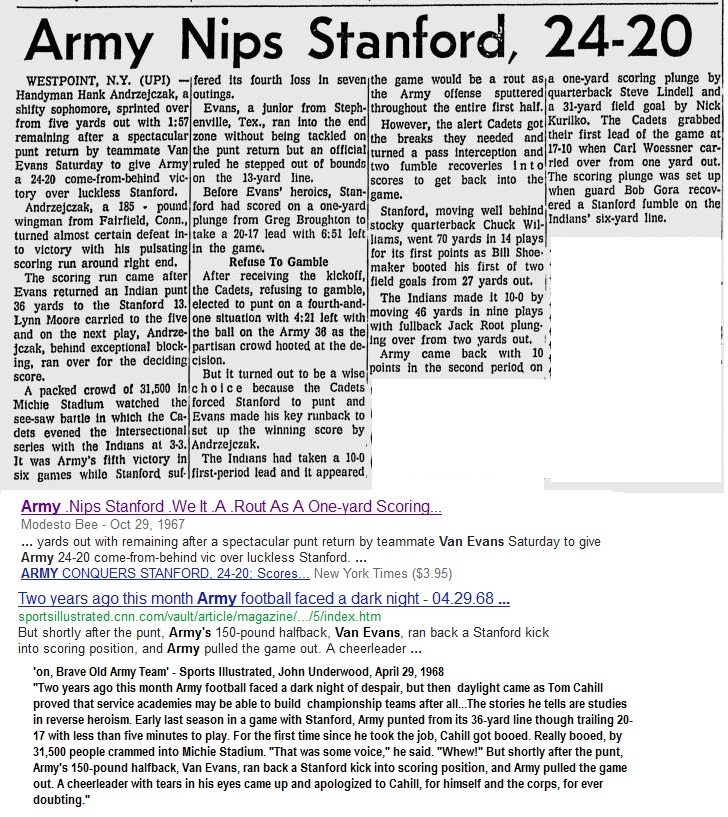
armyfb_1967_vsstanford_themodestobee_oct291967

ArmyFB_1967_vsStanford_TheModestoBee_Oct291967 copy

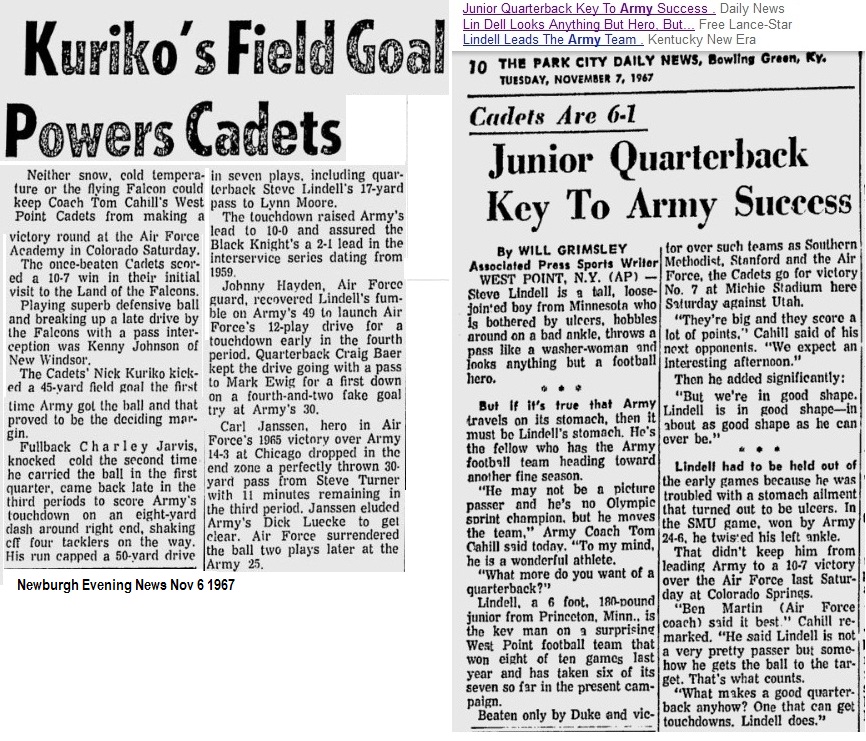
armyfb_1967_vsairforce_various_nov5-61967

–

–
ArmyFB_1967_vsAirForce_various_Nov5-61967

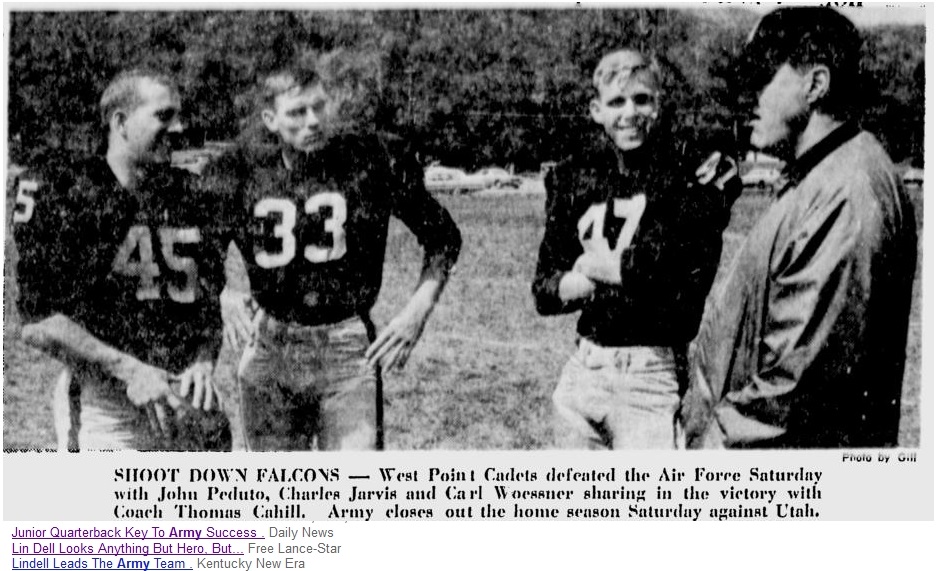
armyfb_1967_vsairforce_backs-jarvis_newburgheveningnews_nov71967
ArmyFB_1967_vsAirForce_Backs-Jarvis_NewburghEveningNews_Nov71967

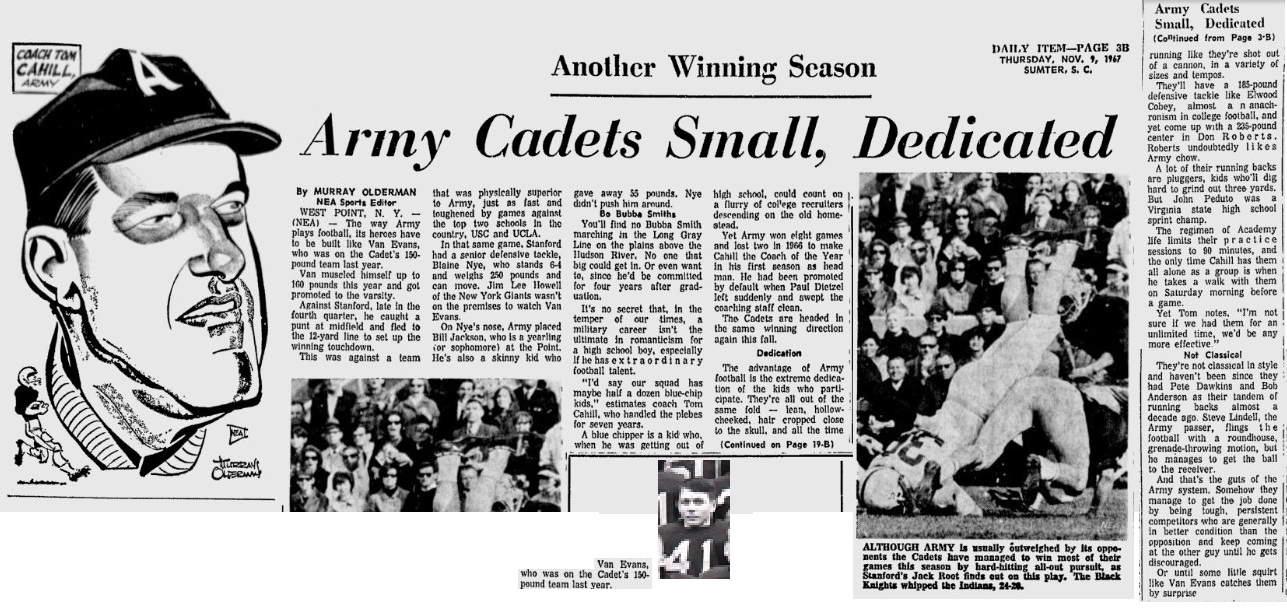
armyfb_1967_vanevans-exlfb_thesumterdaily_nov91967
ArmyFB_1967_VanEvans-exLFB_TheSumterDaily_Nov91967


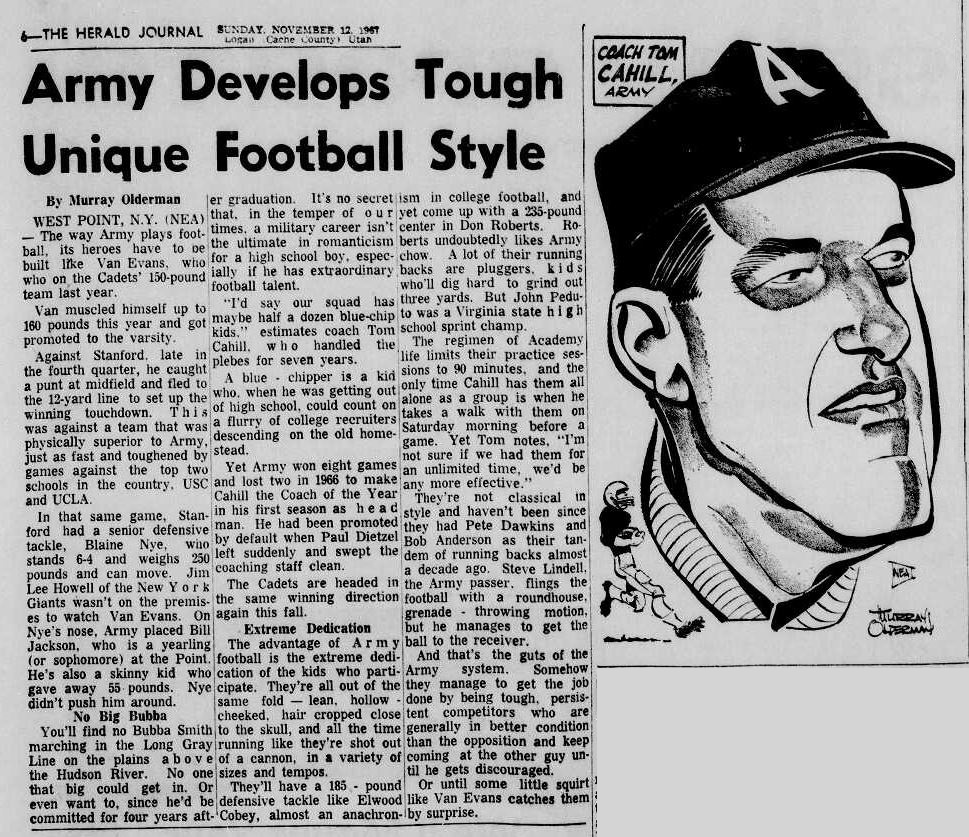
ArmyFB_1967_UniqueStyle_Cahill_byMurrayOlderman_12Nov1967

ArmyFB_1967_UniqueStyle_Cahill_byMurrayOlderman_12Nov1967

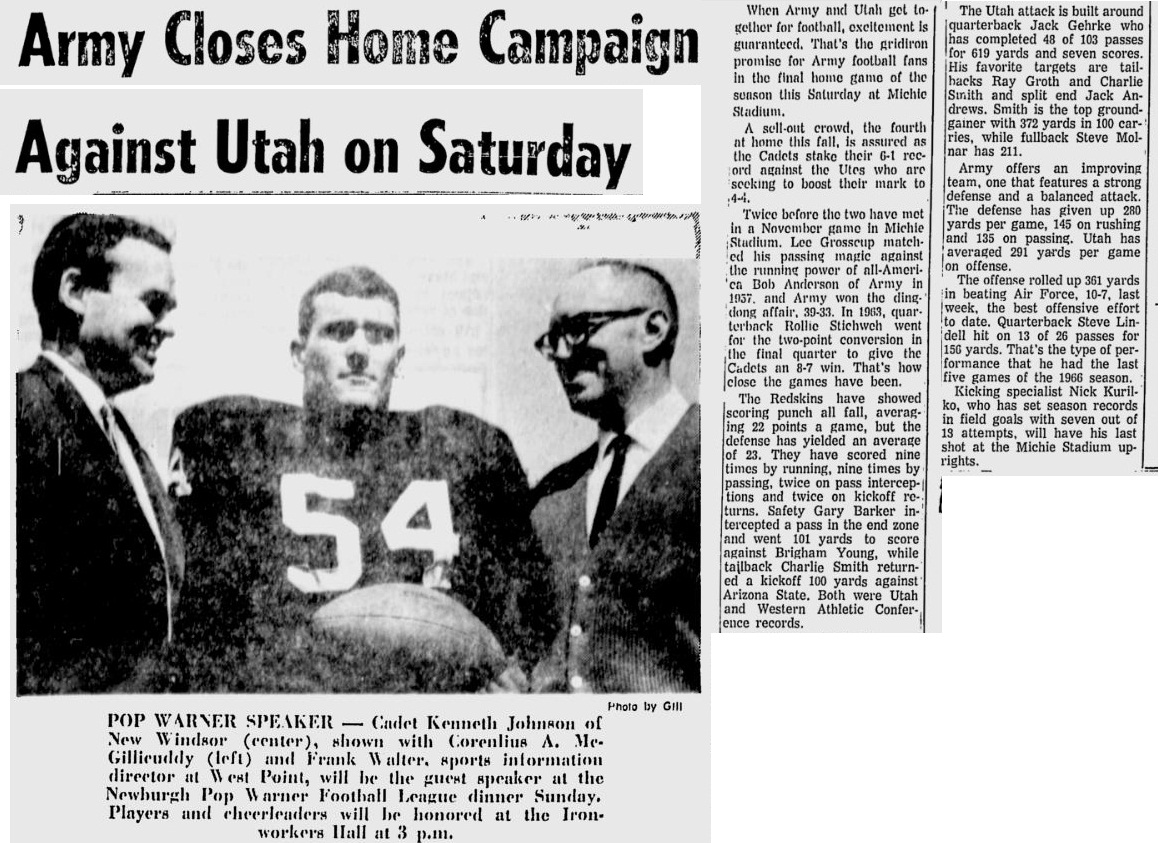
armyfb_1967_vsutah_kenjohnson_newburgheveningnews_nov91967

ArmyFB_1967_vsUtah_KenJohnson_NewburghEveningNews_Nov91967
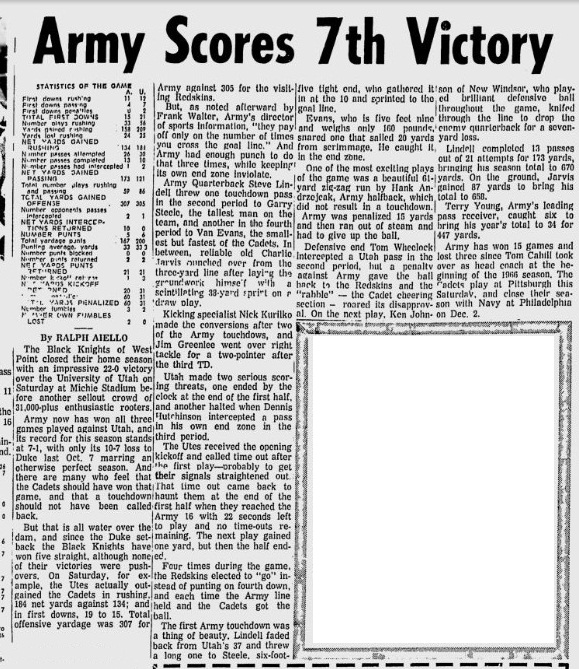
armyfb_1967_vsutah_newburgheveningnews_nov131967

armyfb_1967_vsutah_kenjohnson_newburgheveningnews_nov13-141967
ArmyFB_1967_vsUtah_KenJohnson_NewburghEveningNews_Nov13-141967

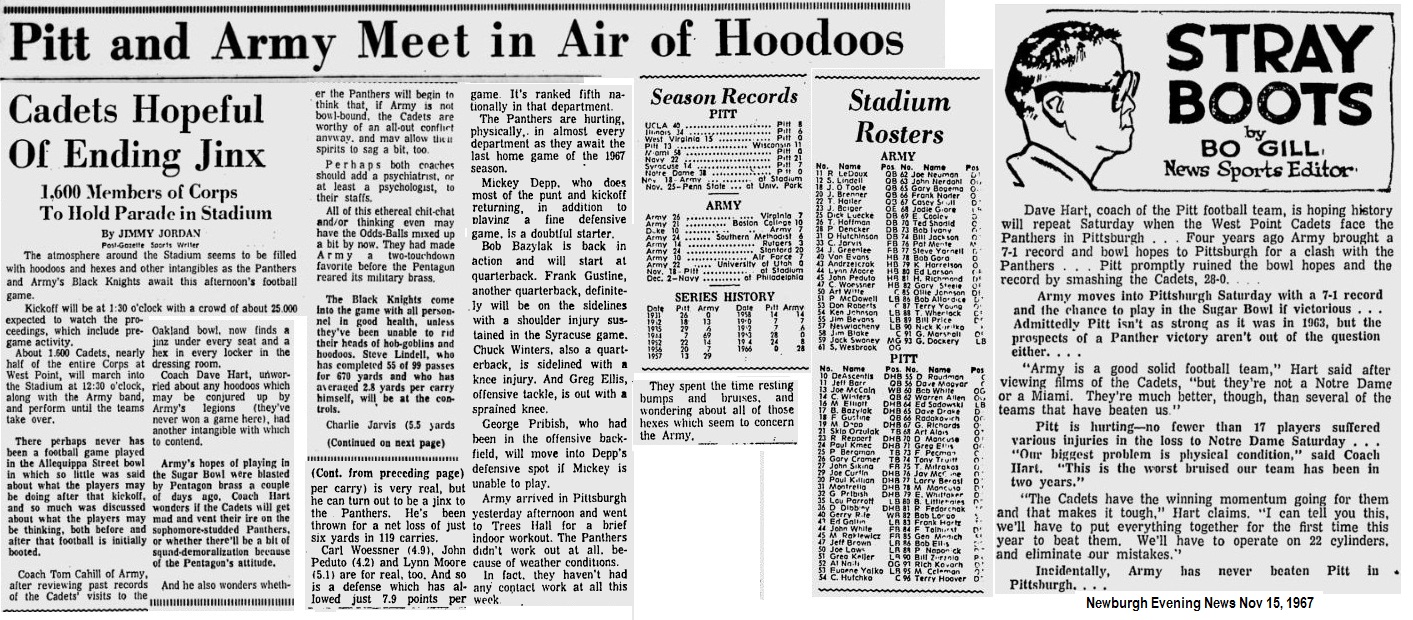
armyfb_1967_vspitt_pittsburghpostgazette_nov15-181967
ArmyFB_1967_vsPitt_PittsburghPostGazette_Nov15-181967

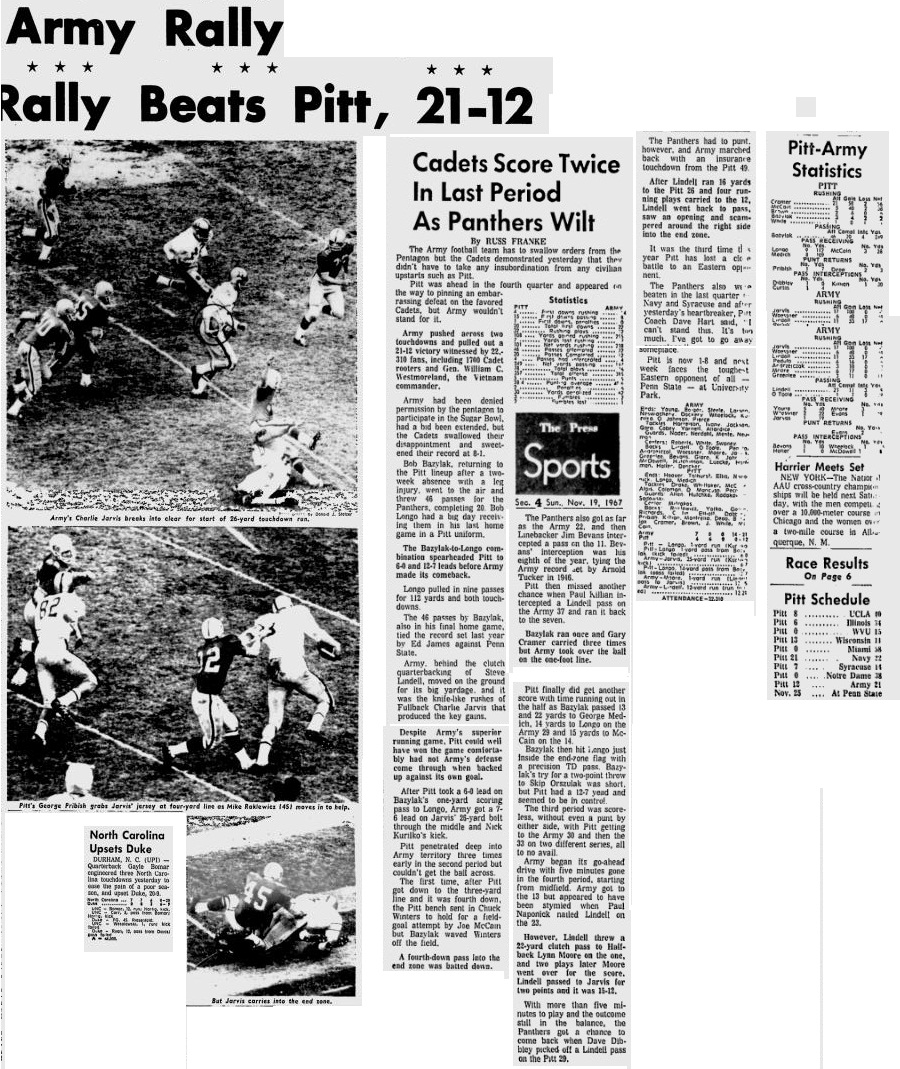
armyfb_1967_vspitt_pittsburghpress_nov191967
ArmyFB_1967_vsPitt_PittsburghPress_Nov191967

–

–
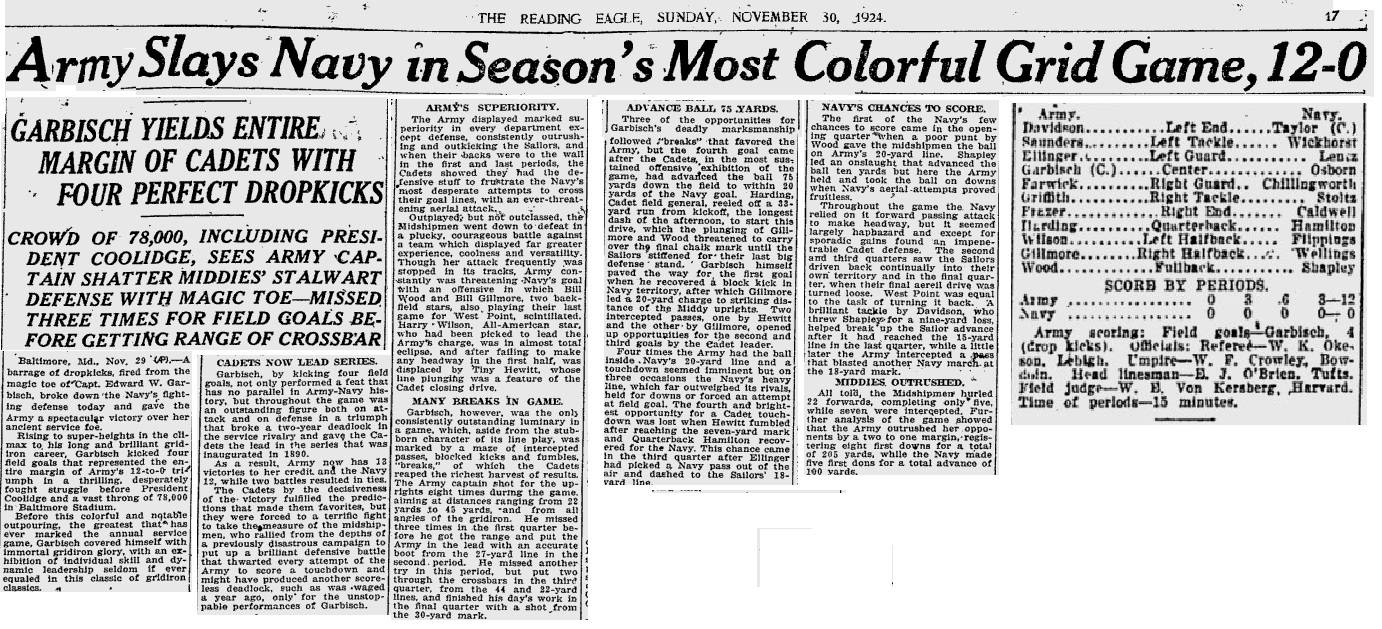
ArmyFB_1967_BillHunter_EveningNews_Nov251967

ArmyFB_1967_BillHunter_EveningNews_Nov251967

–
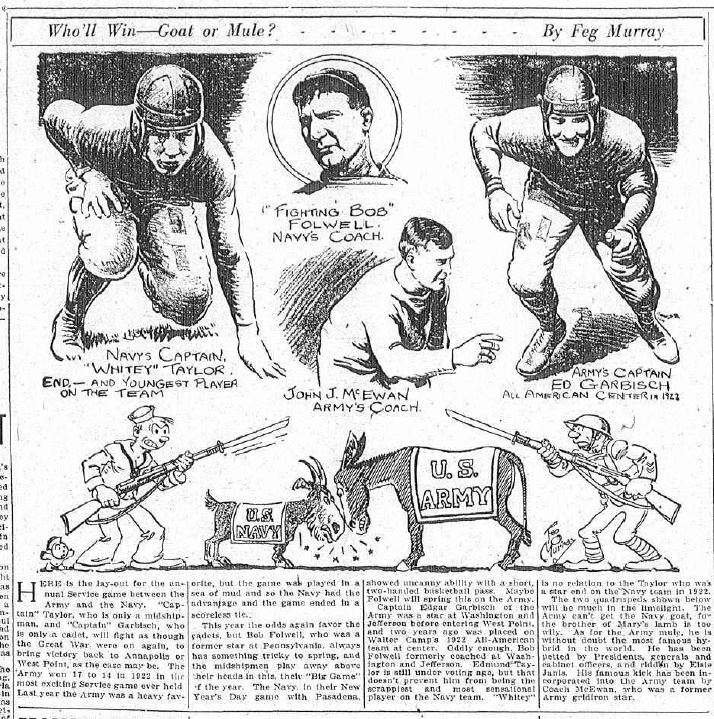
ArmyFB_1967_GarySteele_EveningNews_Nov251967

ArmyFB_1967_GarySteele_EveningNews_Nov251967

–

ArmyFB_1967_SteveLindell-TerryYoung_ReadingEagle_Nov261967

ArmyFB_1967_SteveLindell-TerryYoung_ReadingEagle_Nov261967

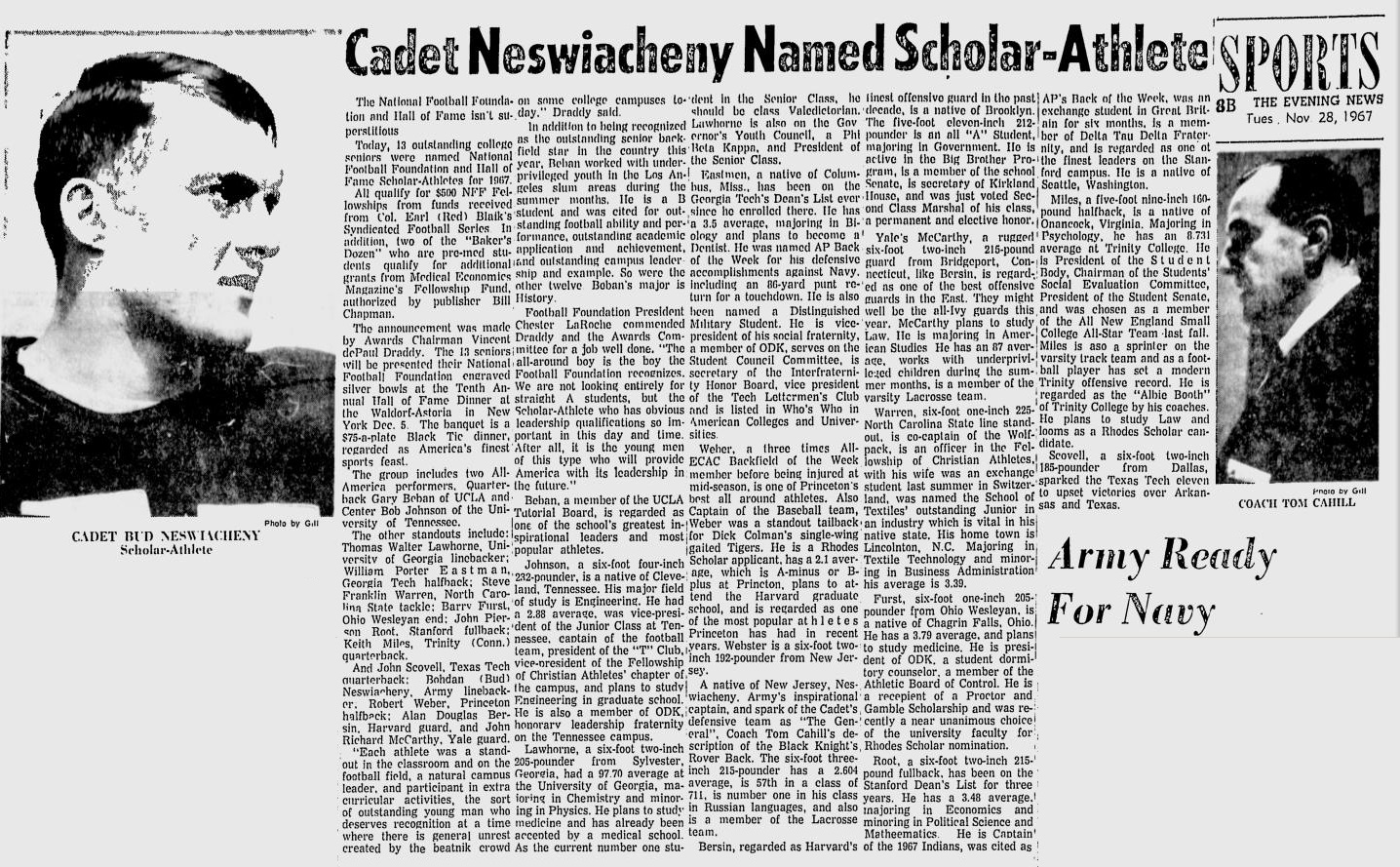
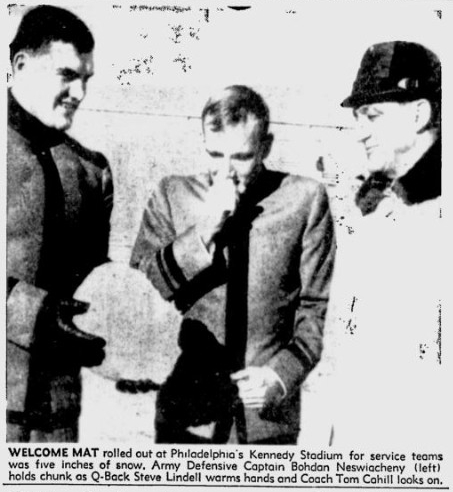
ArmyFB_1967_BudNeswiacheny_EveningNews_Nov271967

ArmyFB_1967_BudNeswiacheny_EveningNews_Nov271967

–


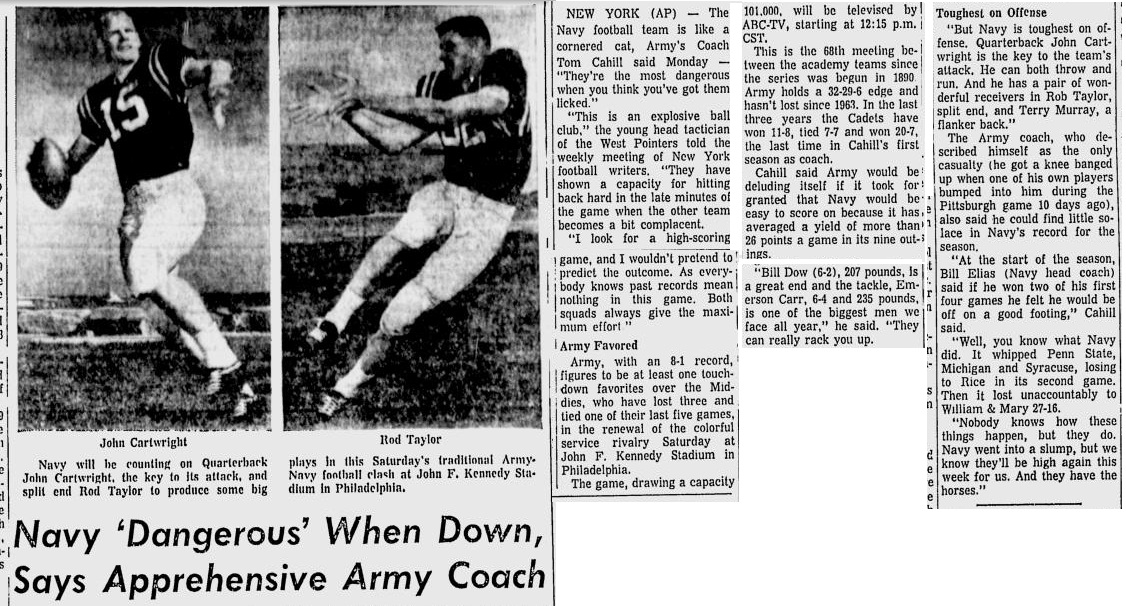
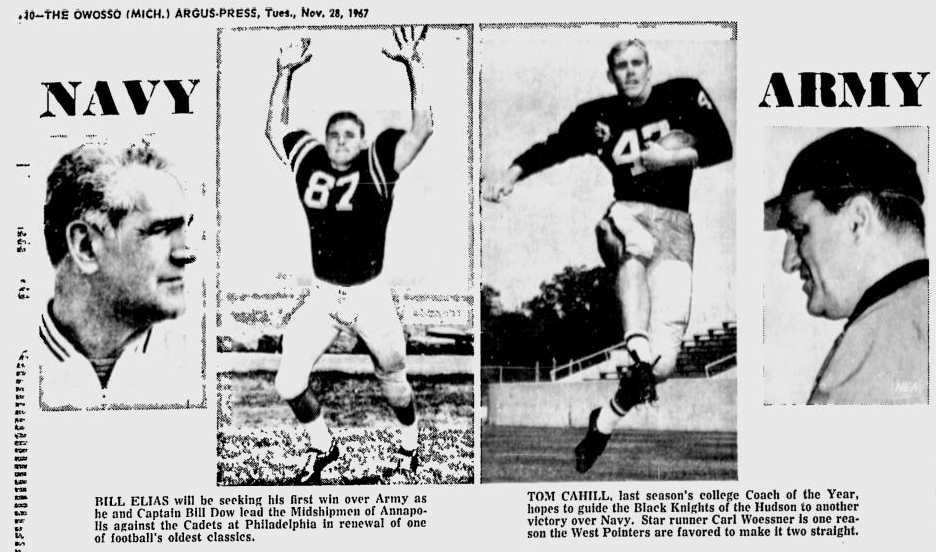
ArmyFB_1967_vsNavy_OwossoArgusPress_Nov281967

armyfb_1967_vsnavy_stjosephgazette_nov281967
ArmyFB_1967_vsNavy_StJosephgazette_Nov281967

armyfb_1967_vsnavy_carlwoessner_owossoarguspress_nov281967
ArmyFB_1967_vsNavy_CarlWoessner_OwossoArgusPress_Nov281967

–

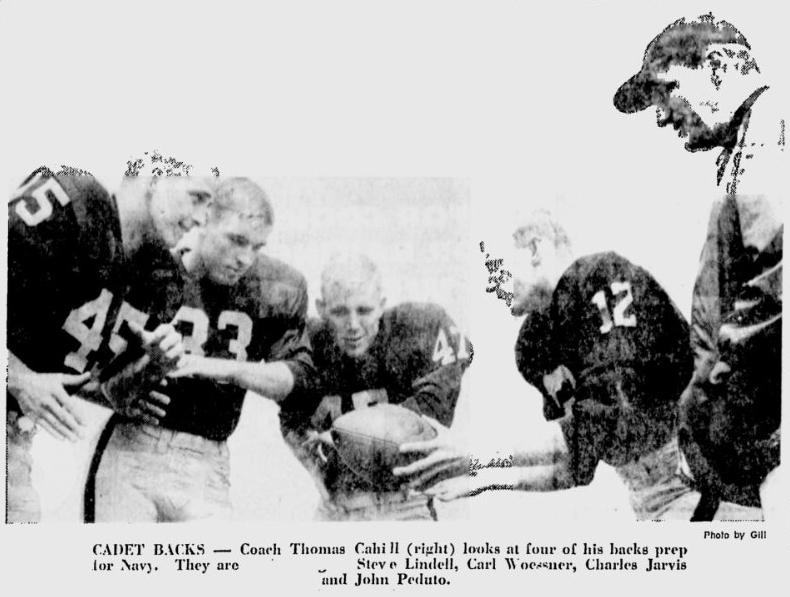
ArmyFB_1967_backs_EveningNews_Nov291967

ArmyFB_1967_backs_EveningNews_Nov291967

–

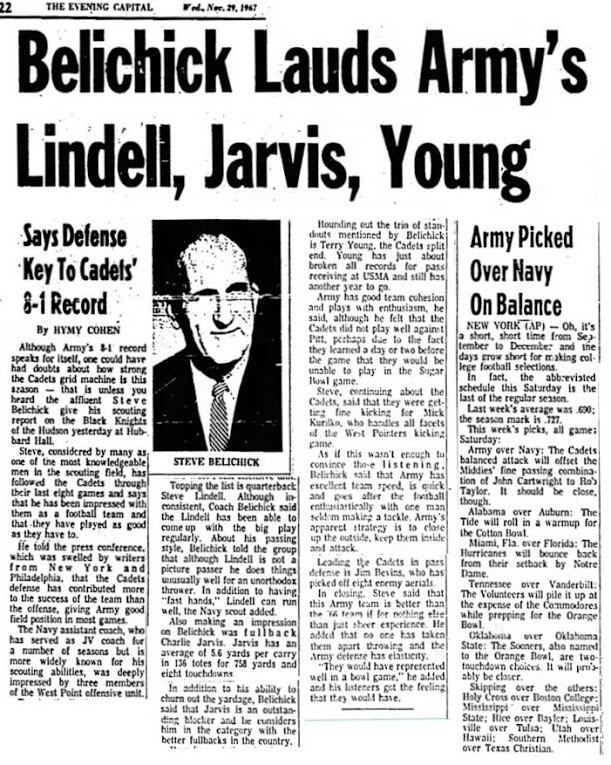
SteveBelichick-Praise-for-67ArmyFB_EveningCapital_Nov291967

SteveBelichick-Praise-for-67ArmyFB_EveningCapital_Nov291967

–

armyfb_1967_vsnavy_pittsburghpress_dec2-31967
ArmyFB_1967_vsNavy_PittsburghPress_Dec2-31967

armyfb_1967_vsnavy_pittsburghpress_dec31967
ArmyFB_1967_vsNavy_PittsburghPress_Dec31967

Sports articles provided by Russ “Skip” Grimm – Class of ’76

1966 Team

1966 Army 8-2
1966/11/26 Army 20 – Navy 7 W

Coach – Thomas B. Cahill (October 11, 1919 – October 29, 1992)
Army 1966-1973:
1966 Army 8-2 Coach of the Year
1967 Army 8-2
1968 Army 7-3
1969 Army 4-5-1
1970 Army 1-9-1
1971 Army 6-4
1972 Army 6-4
1973 Army 0-10
Overall Army: 40-39-2
Union NY 1976-79
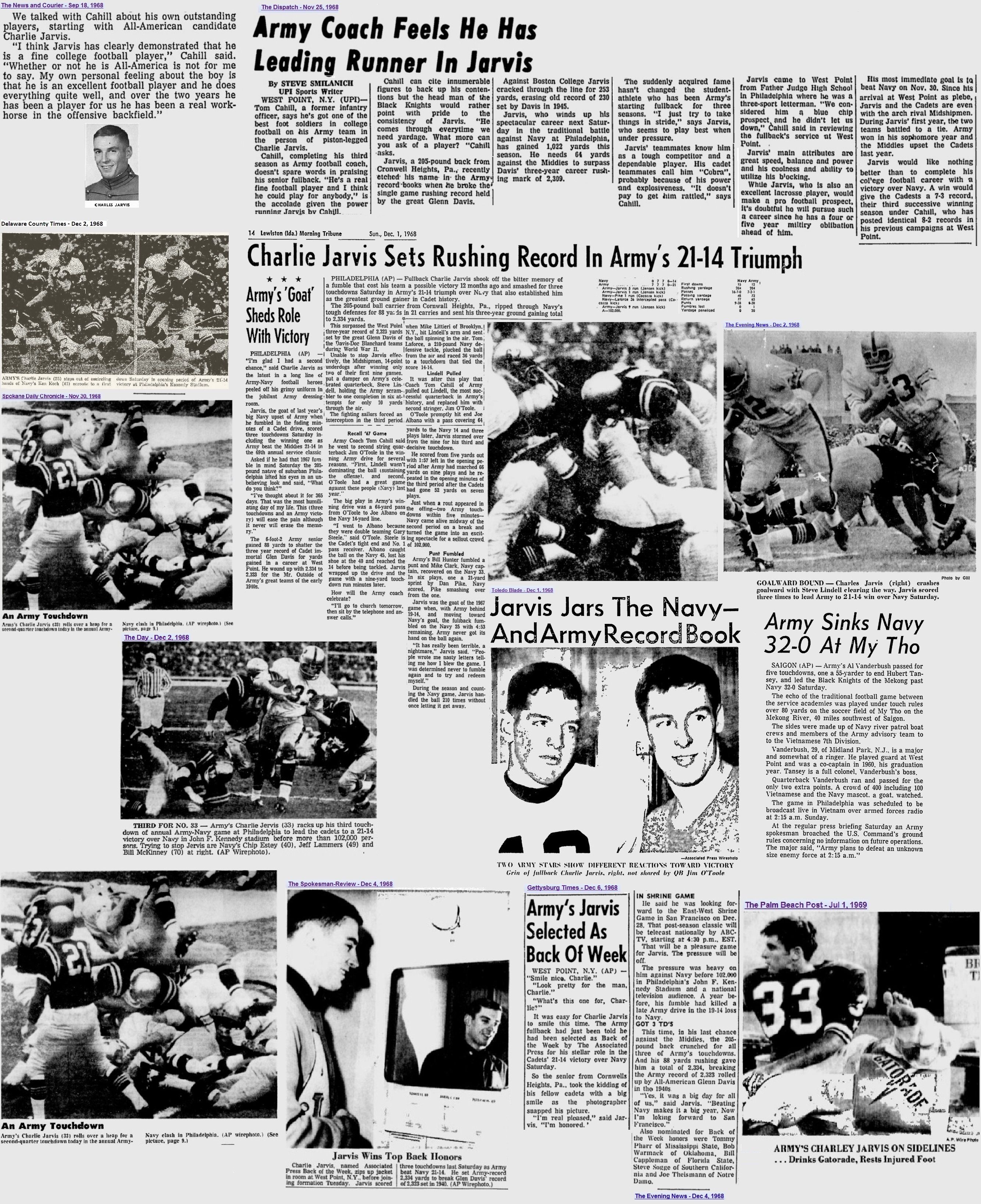
source: http://en.wikipedia.org/wiki/Tom_Cahill_(American_football)

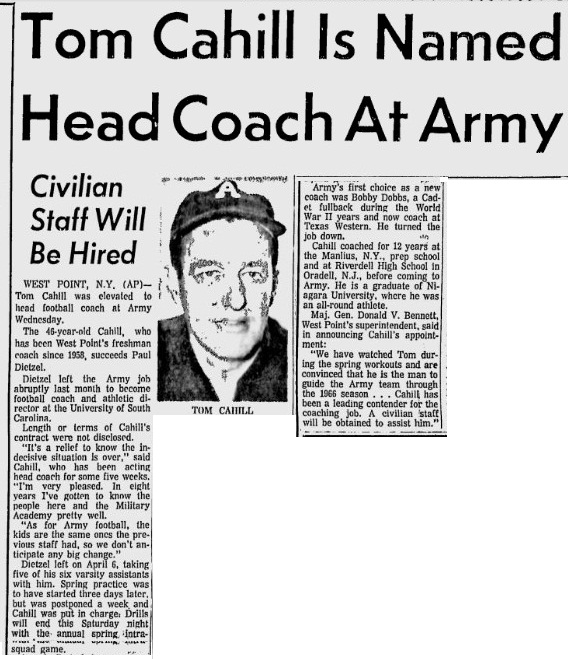
ArmyFB_1966_Cahill-hired_NewsandCourier_May121966
ArmyFB_1966_Cahill-hired_NewsandCourier_May121966 copy

–

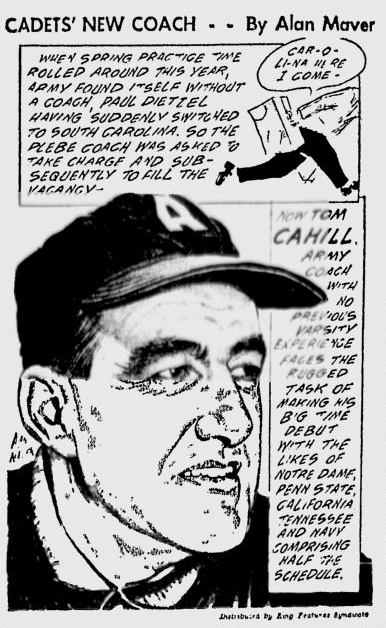
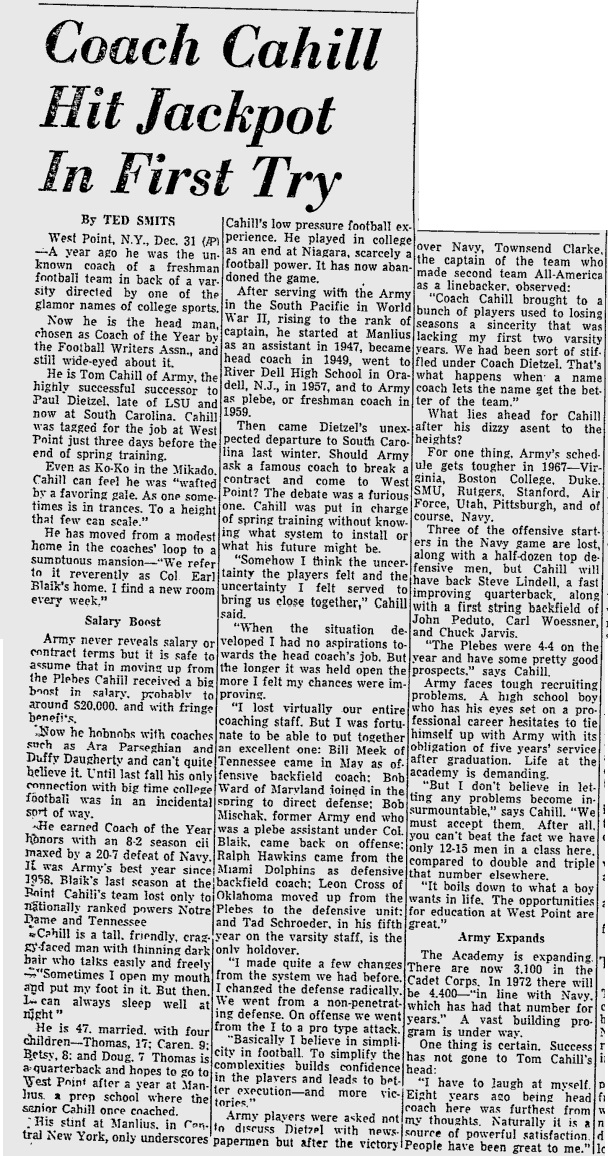
ArmyFB_1966_Cahill_byAlanMaver_NewsDispatch_Sep81966

ArmyFB_1966_Cahill_byAlanMaver_NewsDispatch_Sep81966


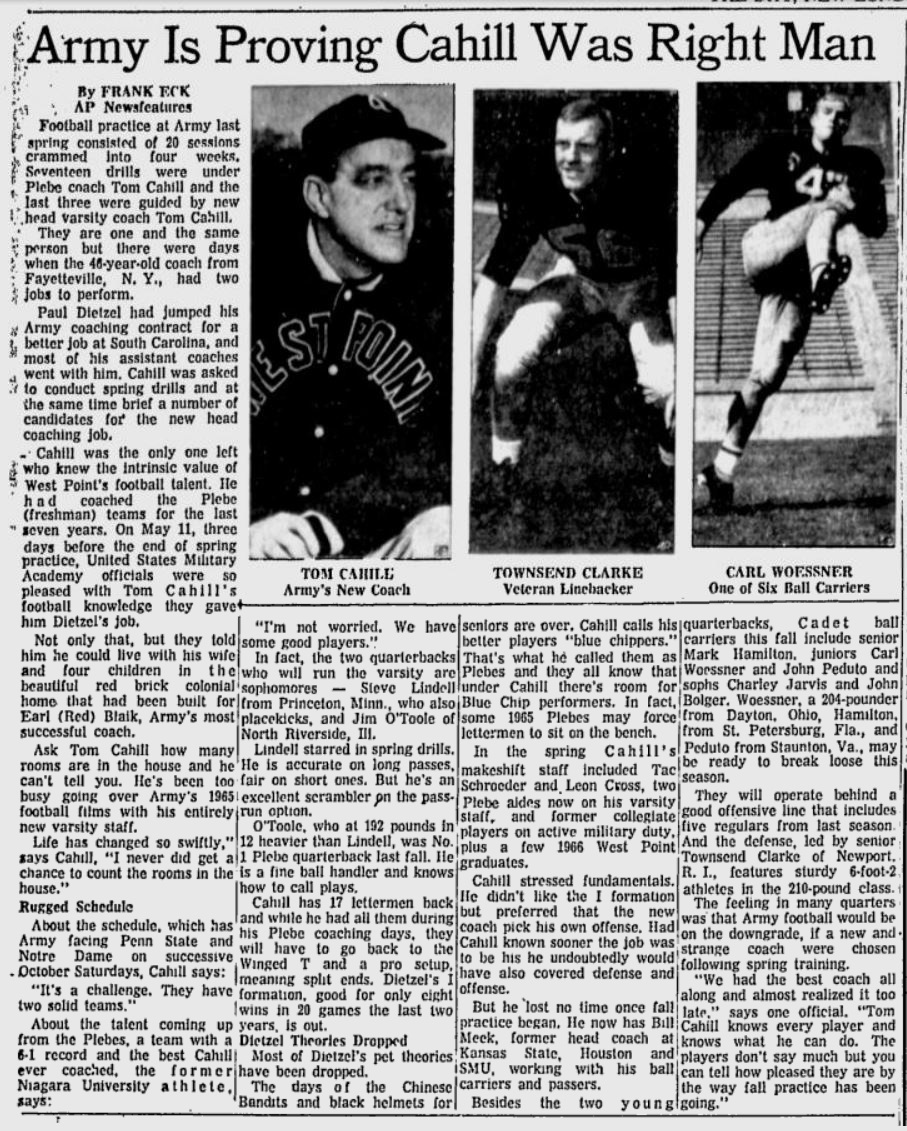
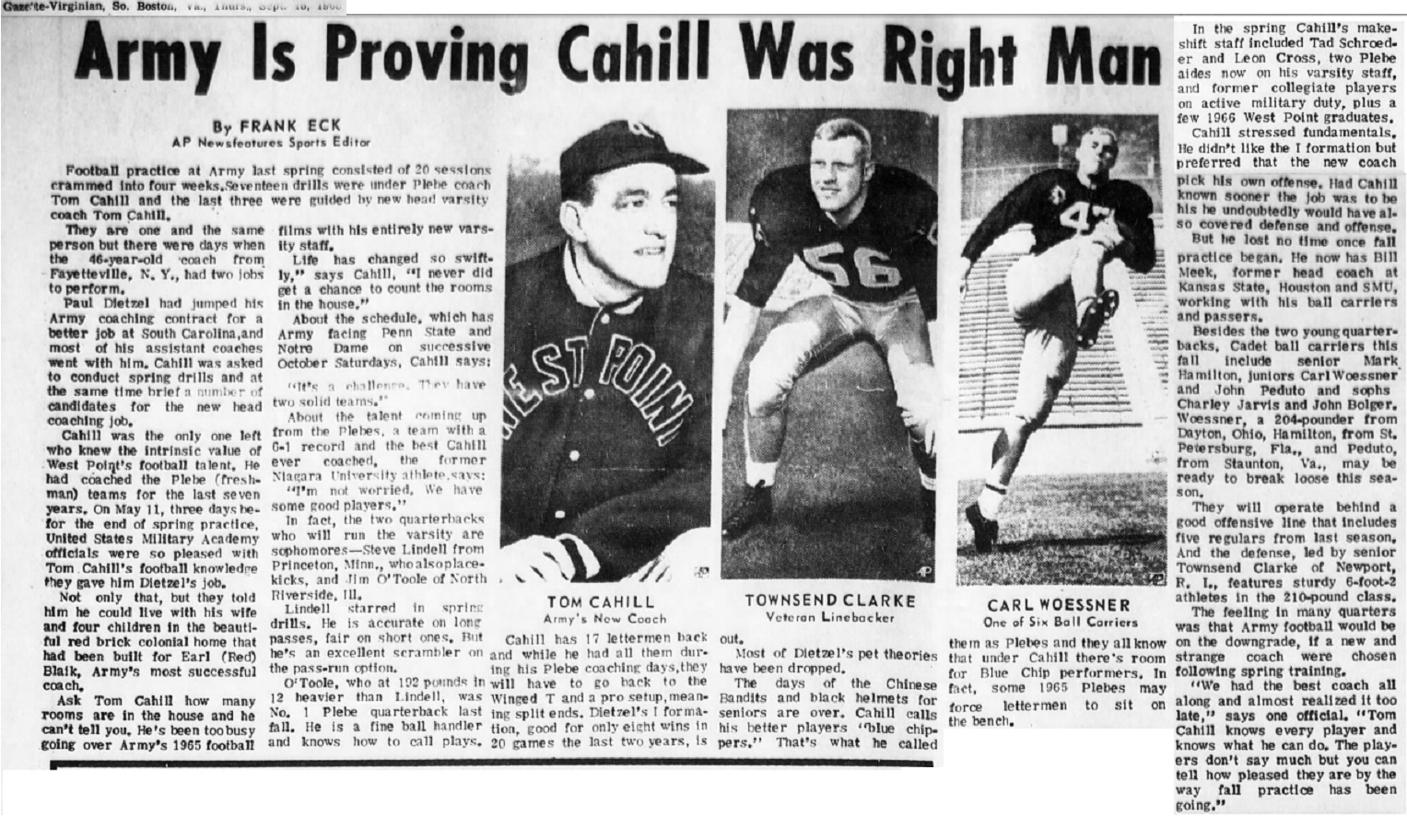
ArmyFB_1966_Cahill-RightMan_TheDay_Sep81966

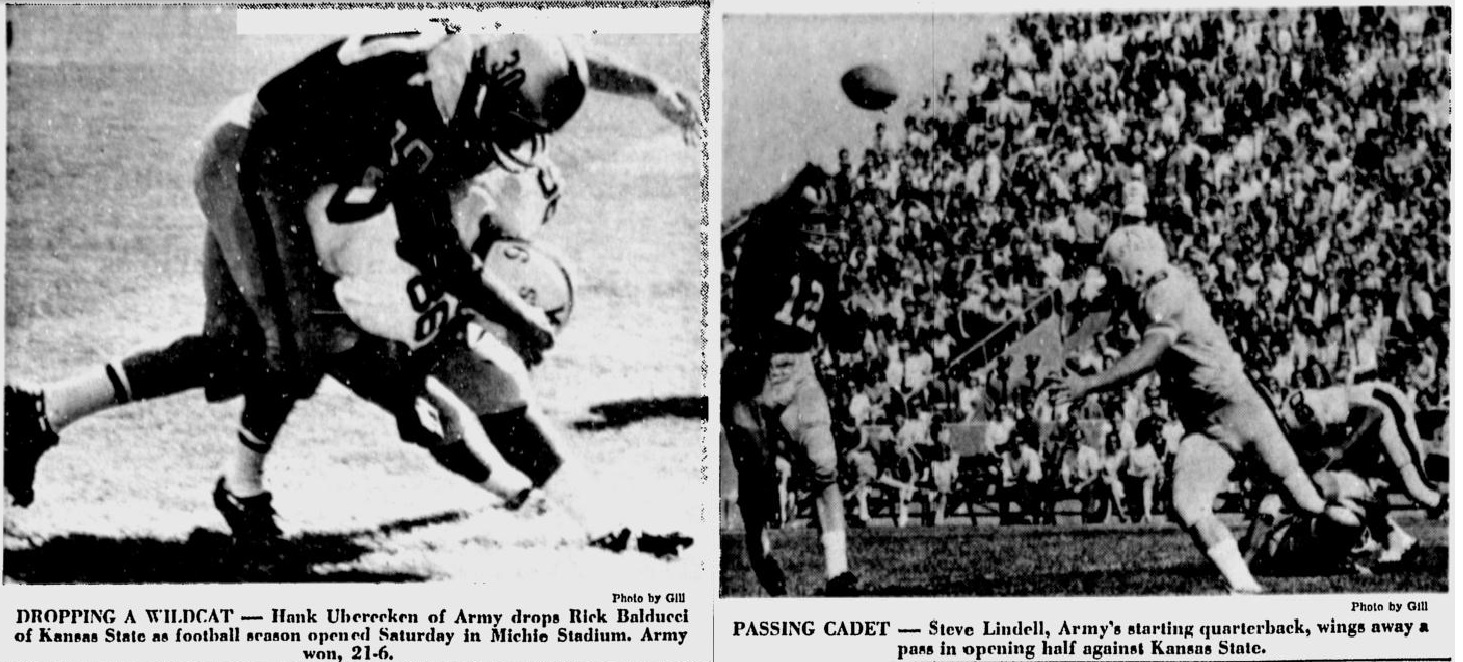
ArmyFB_1966_Cahill-firstgame_EveningNews_Sep201966

–

armyfb_1966_townsendclarke-captainarmyfb_1966_townsendclark_eveningnews_sep121966

ArmyFB_1966_TownsendClark_EveningNews_Sep121966


armyfb_1966_eveningnews_sep141966
ArmyFB_1966_EveningNews_Sep141966


armyfb_1966_forecast_gazette-virginia_sep191966
ArmyFB_1966_forecast_Gazette-Virginia_Sep191966

armyfb_1966_eveningnews_sep191966
ArmyFB_1966_EveningNews_Sep191966

ArmyFB_1966_Cahill-firstgame_EveningNews_Sep201966

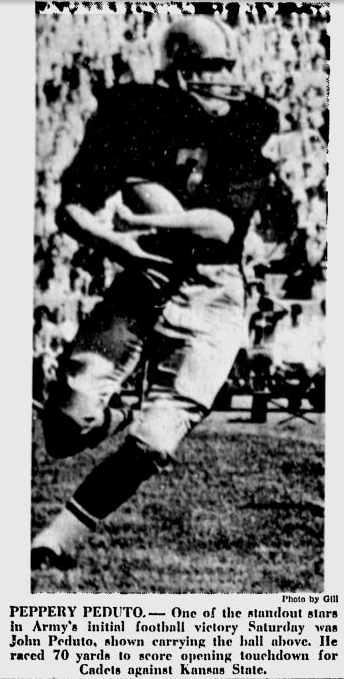
armyfb_1966_johnpeduto_eveningnews_sep201966
ArmyFB_1966_JohnPeduto_EveningNews_Sep201966

–

–

armyfb_1966_eveningnews_sep201966
ArmyFB_1966_EveningNews_Sep201966

armyfb_1966_kenjohnson_eveningnews_sep211966
ArmyFB_1966_KenJohnson_EveningNews_Sep211966

armyfb_1966_eveningnews_sep261966
ArmyFB_1966_EveningNews_Sep261966

armyfb_1966_stevelindell_eveningnews_sep291966
ArmyFB_1966_SteveLindell_EveningNews_Sep291966

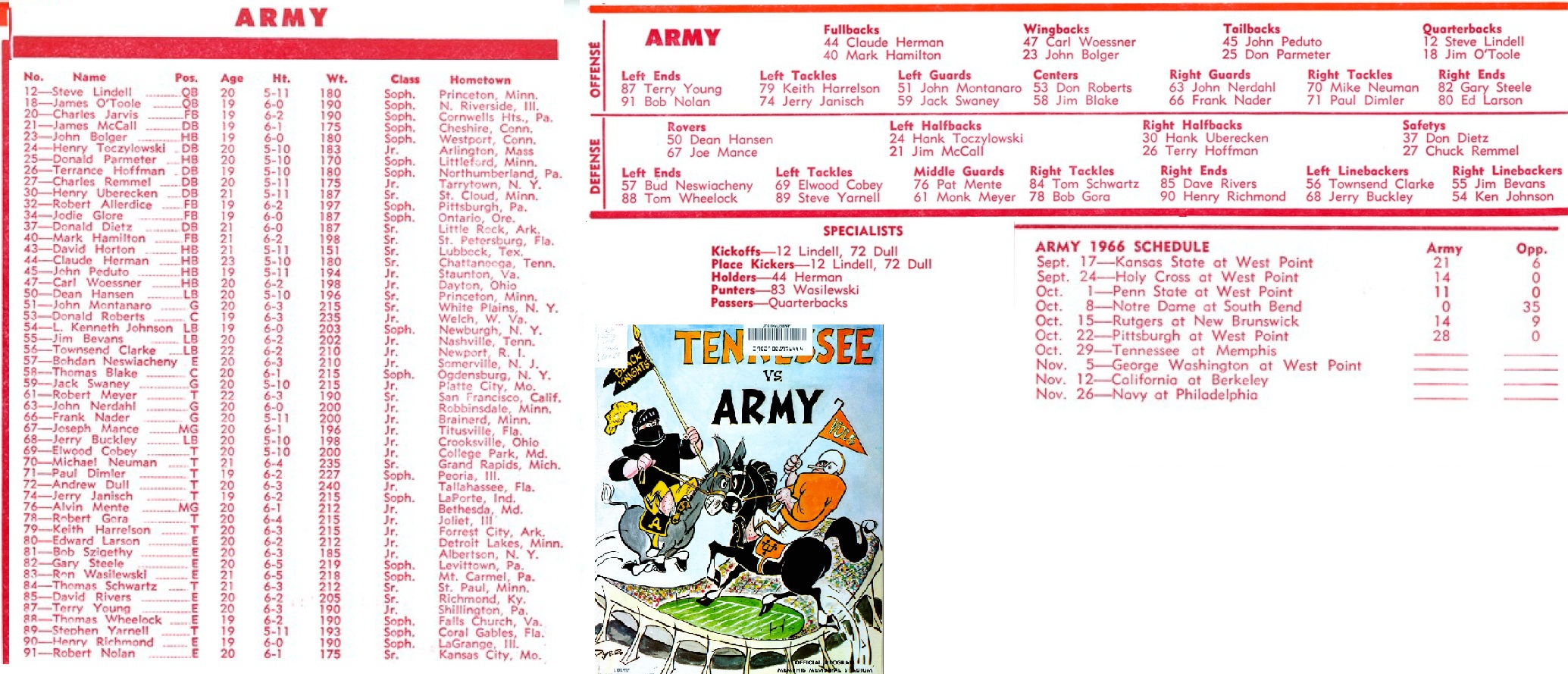
armyfb_1966_vstenn_program1
ArmyFB_1966_vsTenn_program1

armyfb_1966_vstenn_program2
ArmyFB_1966_vsTenn_program2

November 12 at California Memorial Stadium Berkeley, CaliforniaWon 6–3

–

–

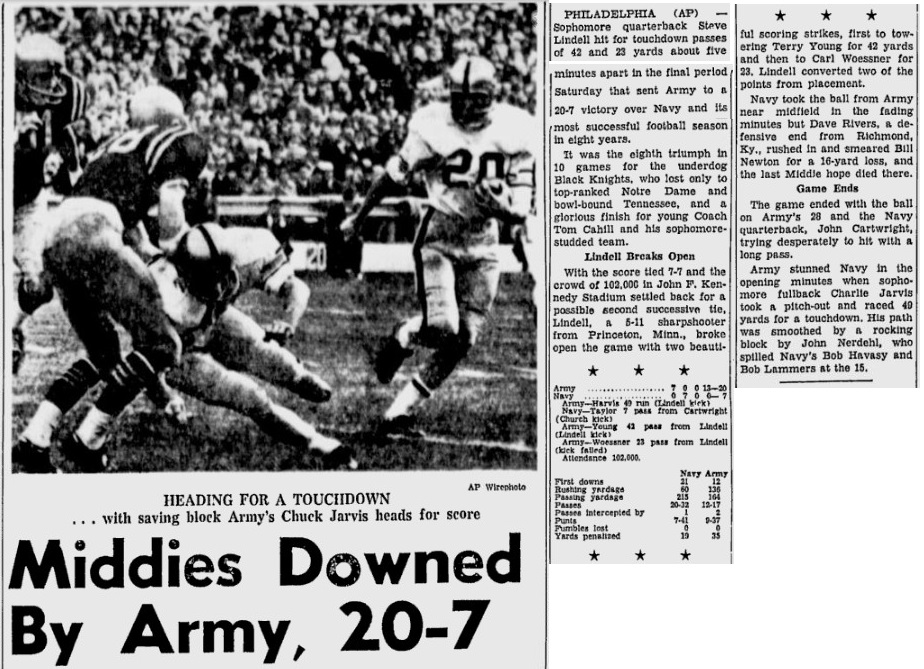
armyfb_1966_vsnavy_charliejarvis_daytonabeach_nov271966
ArmyFB_1966_vsNavy_CharlieJarvis_DaytonaBeach_Nov271966

–

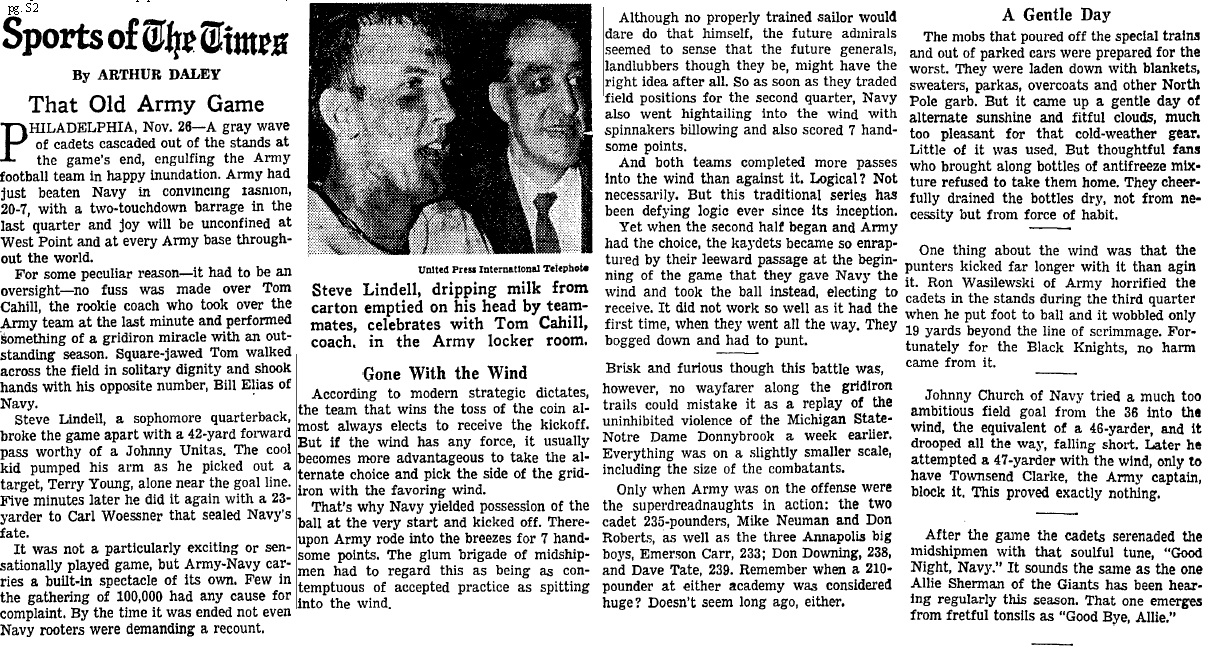
ArmyFB_1966_vsNavy_Cahill-Lindell_byArthurDaley_NYT_Nov271966

–

Date Opponent Site Result
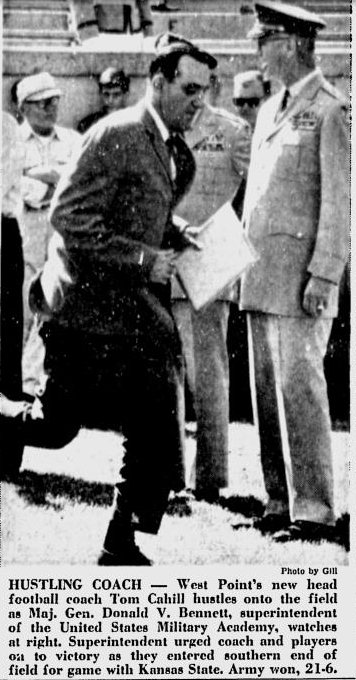
September 17 Kansas State W 21–6
September 24 Holy Cross
  • Michie Stadium
  • West Point, New York
W 14–0
October 1 Penn State
  • Michie Stadium
  • West Point, New York
W 11–0
October 8 at Notre Dame L 0–35
October 22 Pittsburgh
  • Michie Stadium
  • West Point, New York
W 28–0
October 29 vs. Tennessee L 7–38
November 5 George Washington
  • Michie Stadium
  • West Point, New York
W 20–7
November 12 at California W 6–3
November 26 vs. Navy W 20–7

–

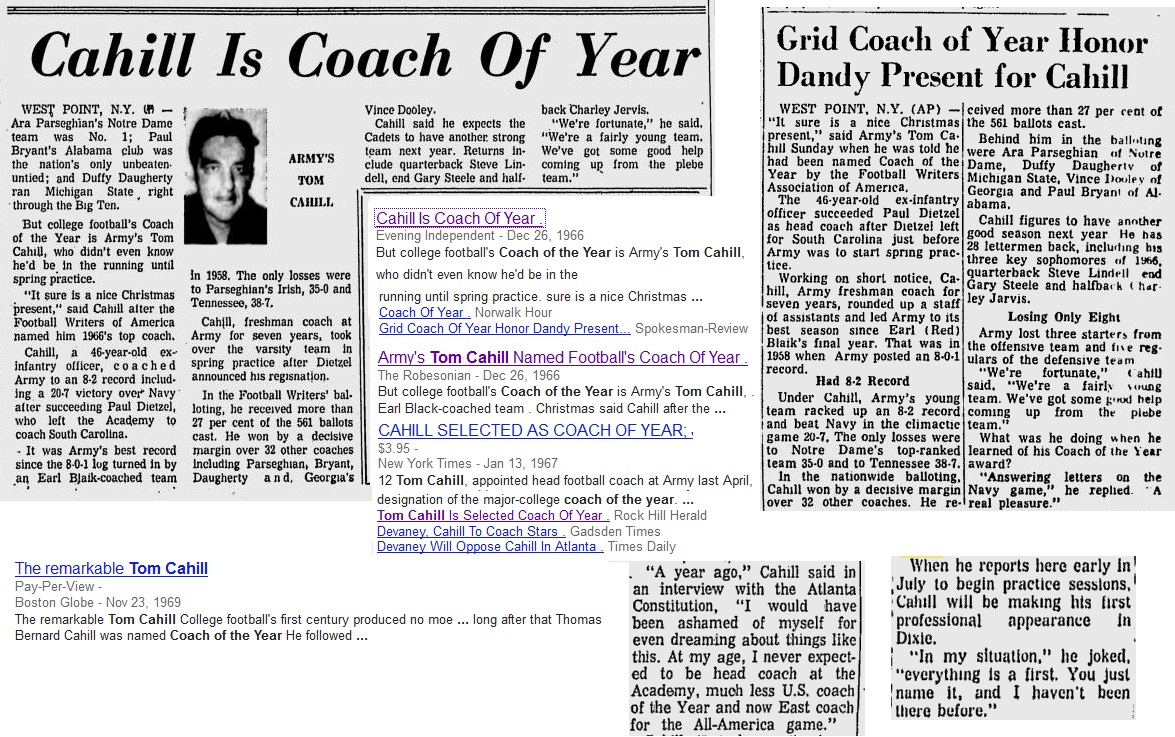
ArmyFB_1966_Cahill-CoachoftheYear_EveningIndependent_Dec261966
ArmyFB_1966_Cahill-CoachoftheYear_EveningIndependent_Dec261966 copy

armyfb_1966_cahill_readingeagle_jan11967
ArmyFB_1966_Cahill_ReadingEagle_Jan119

Sports articles provided by Russ “Skip” Grimm – Class of ’76

–

1965 Team

1965 Army 4-5-1
1965/11/27 Army 7 – Navy 7 T

Coach Paul Dietzel 1962-1965
LSU 46-24-3 National Champs 1958
Army 21-18-1
South Carolina 42-53-1
Total: 109-95-5

Army:
1962 Army 6-4

1963 Army 7-3

1964 Army 4-6

1965 Army 4-5-1

Army Totals: 21-18-1

http://en.wikipedia.org/wiki/Paul_Dietzel

–

ArmyFB_1965_team_EveningNews_Nov261965

–

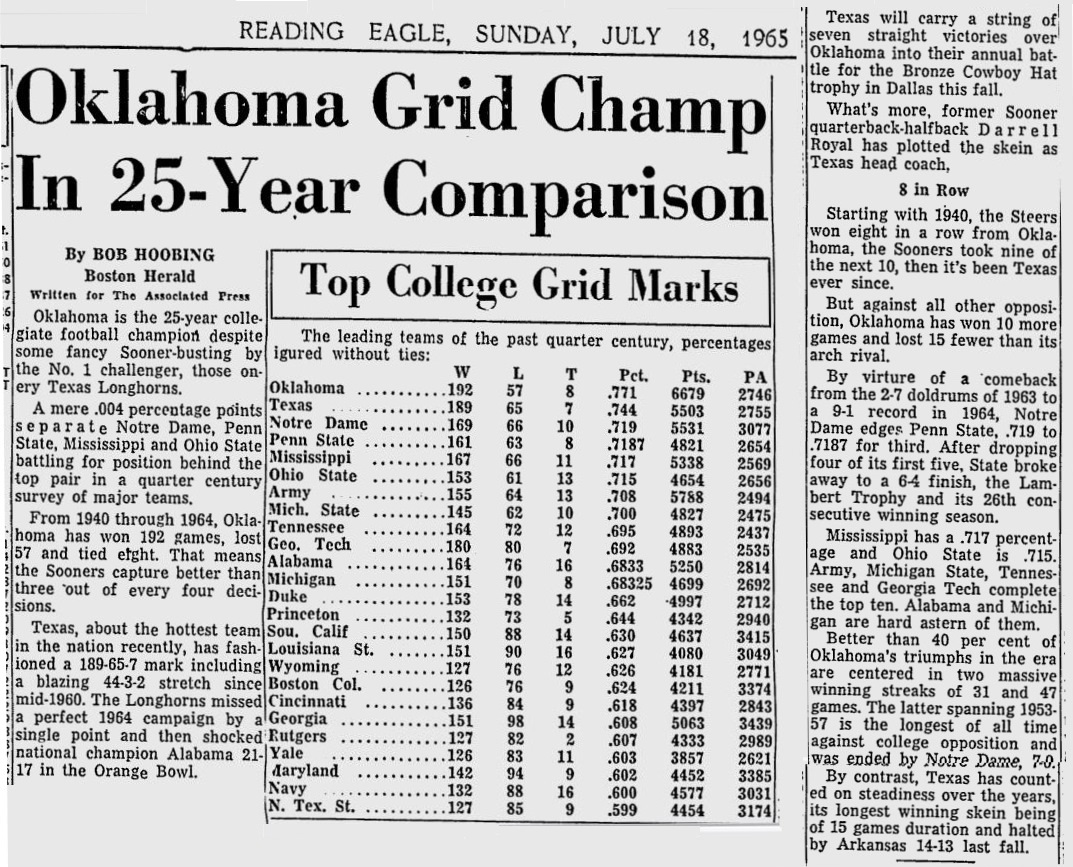
ArmyFB_1965_7th-Place_25YearComparison_ReadingEagle_Jul181965

ArmyFB_1965_7th-Place_25YearComparison_ReadingEagle_Jul181965

–

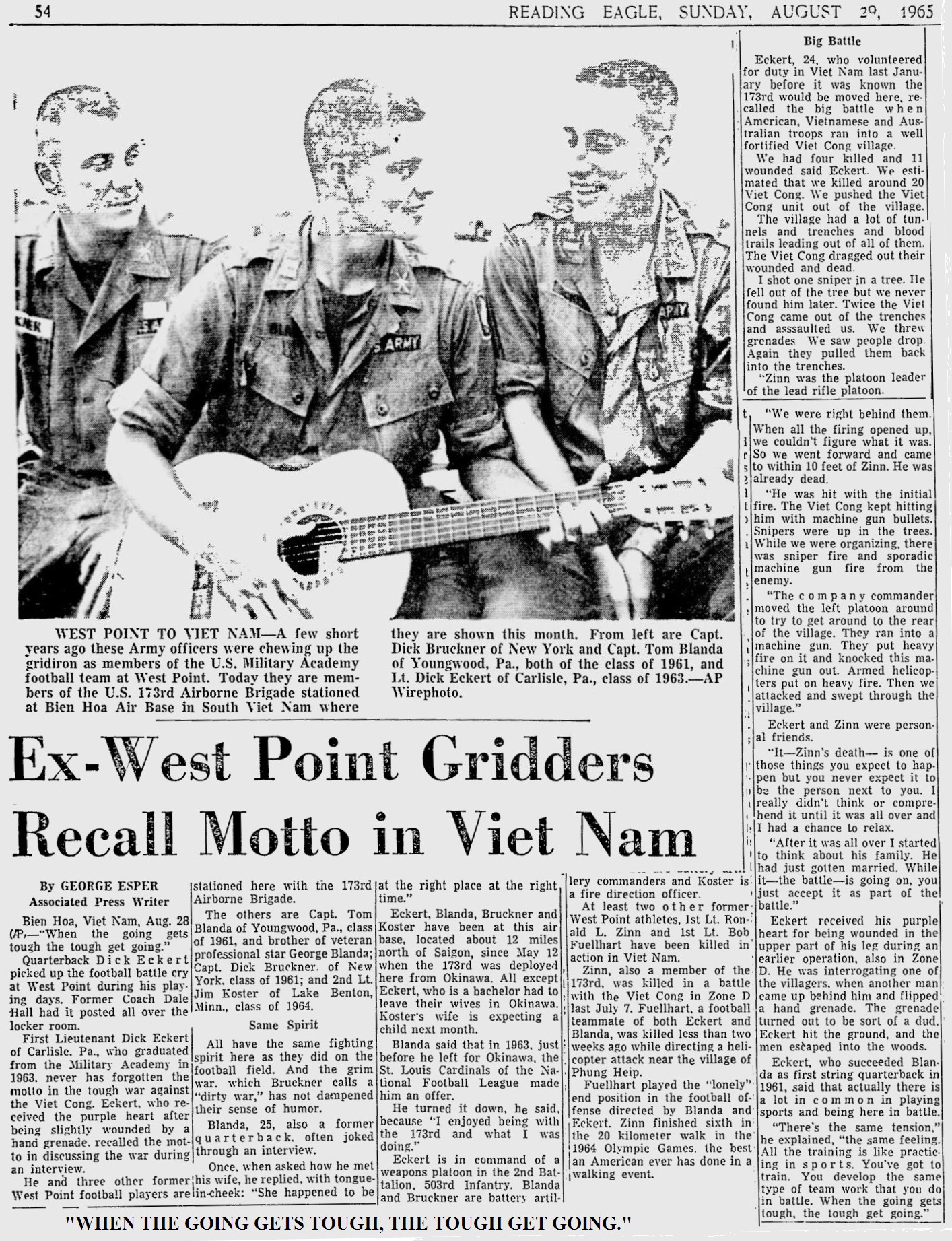
ArmyFB_1961-64_Vietnam_ReadingEagle_Aug291965

ArmyFB_1961-64_Vietnam_ReadingEagle_Aug291965

–

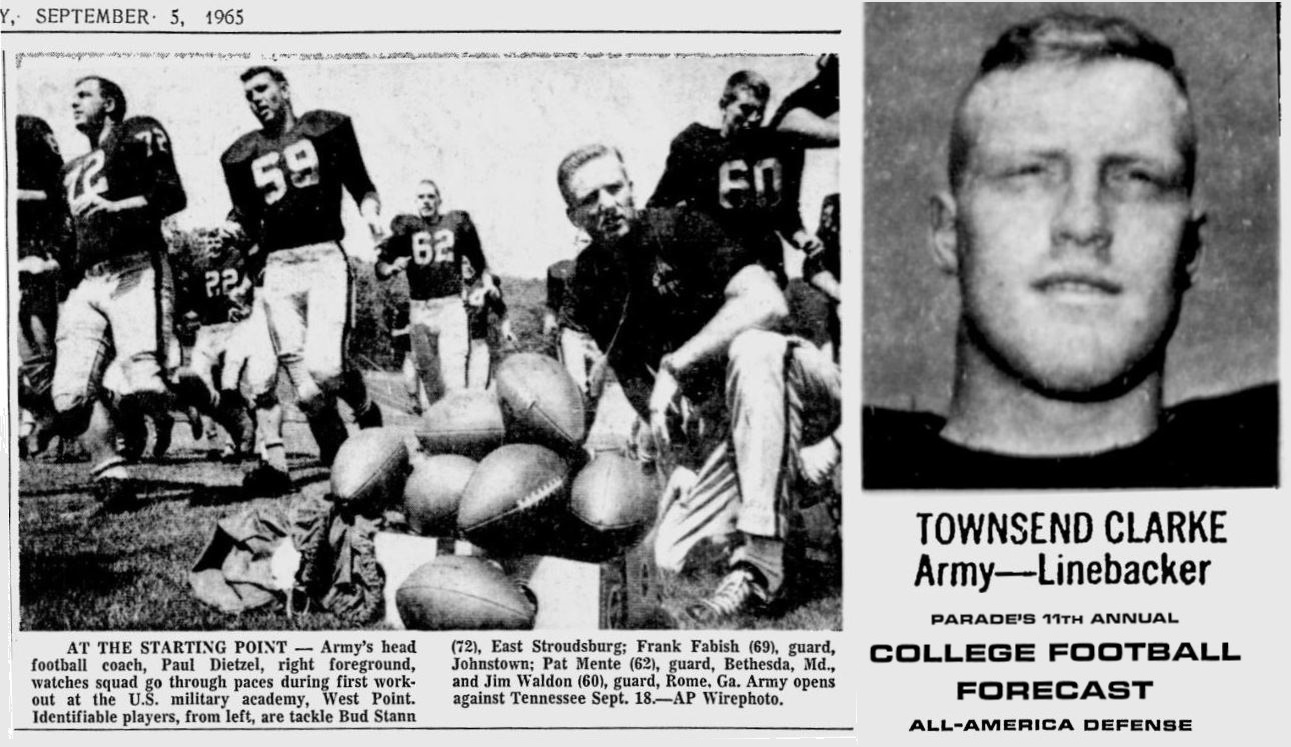
ArmyFB_1965_ReadingEagle_Sep51965

ArmyFB_1965_ReadingEagle_Sep51965

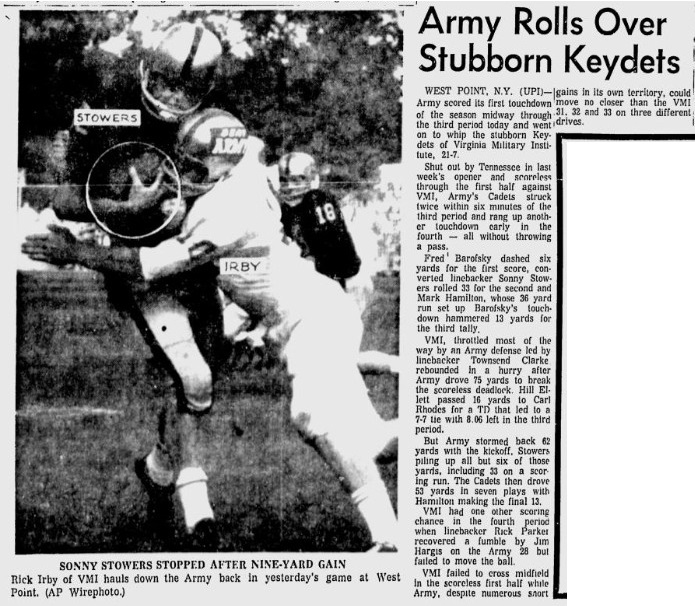
armyfb_1965_vsvmi_newsandcourier_sep261965
ArmyFB_1965_vsVMI_NewsandCourier_Sep261965

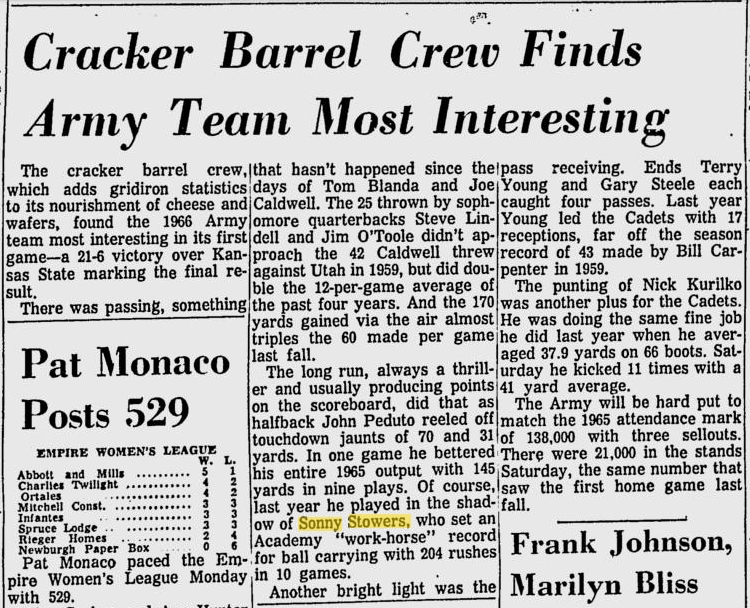
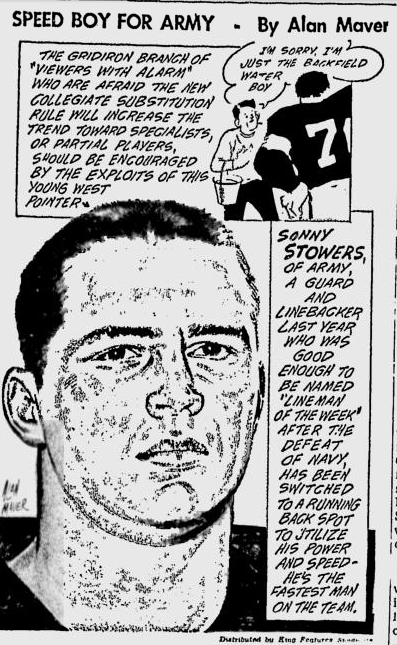
ArmyFB_1965_SonnyStowers_byAlanMaver_NewsDispatch_Sep301965

ArmyFB_1965_SonnyStowers_byAlanMaver_NewsDispatch_Sep301965

–

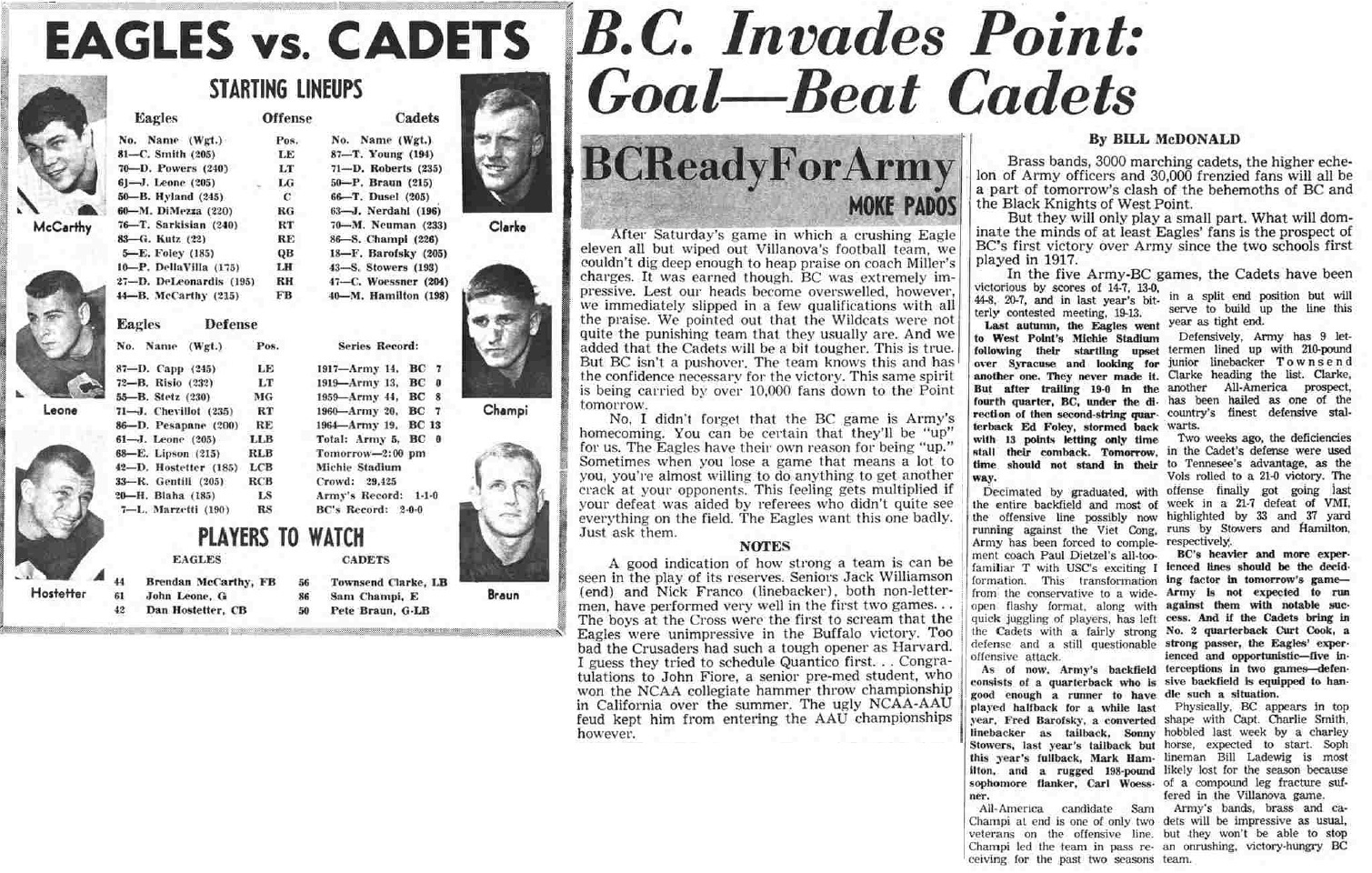
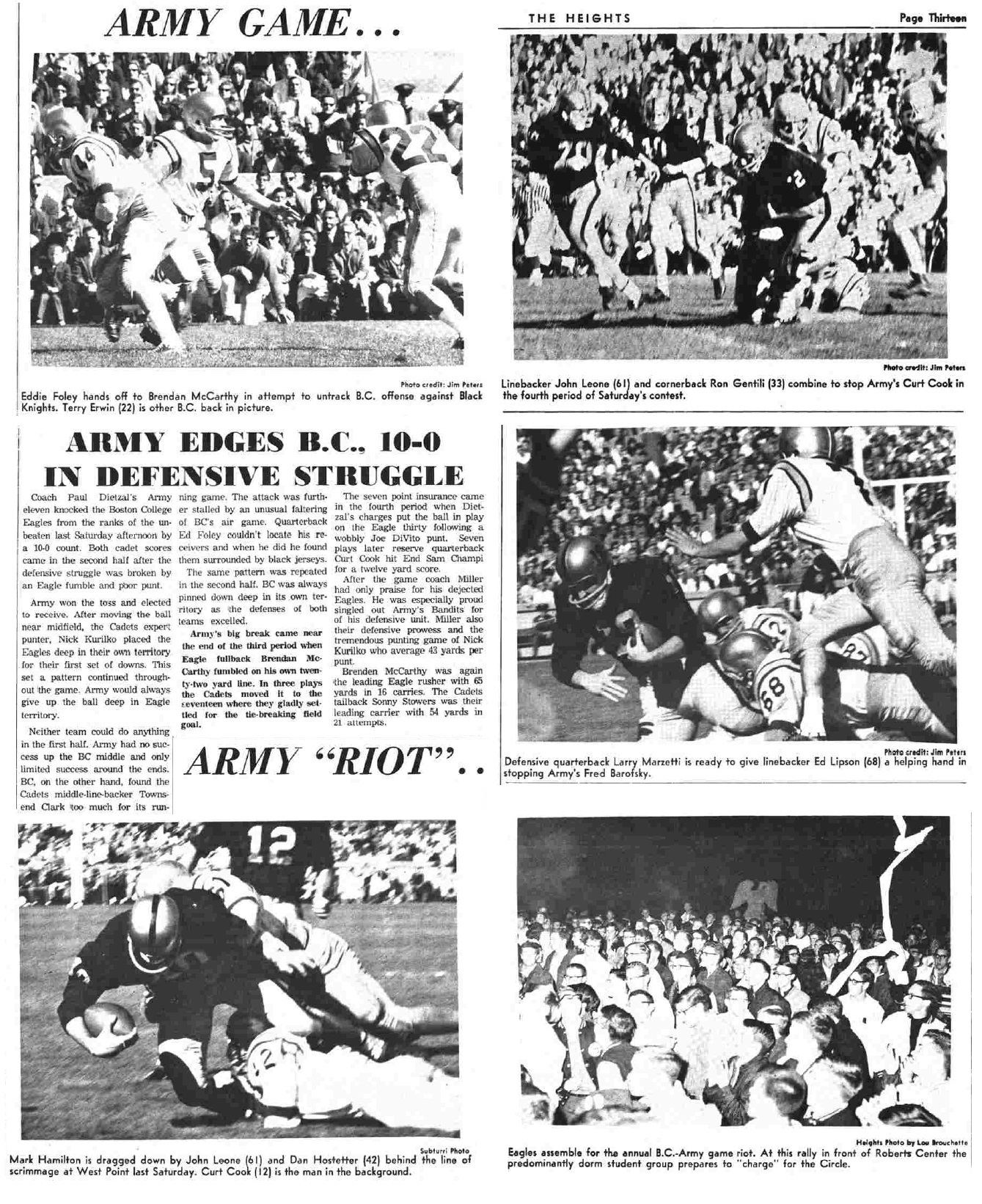
armyfb_1965_vsbc-pre_theheights_oct11965
ArmyFB_1965_vsBC-pre_TheHeights_Oct11965

armyfb_1965_vsbc__oct31965
ArmyFB_1965_vsBC__Oct31965

armyfb_1965_vsbc_theheights_oct81965
ArmyFB_1965_vsBC_TheHeights_Oct81965

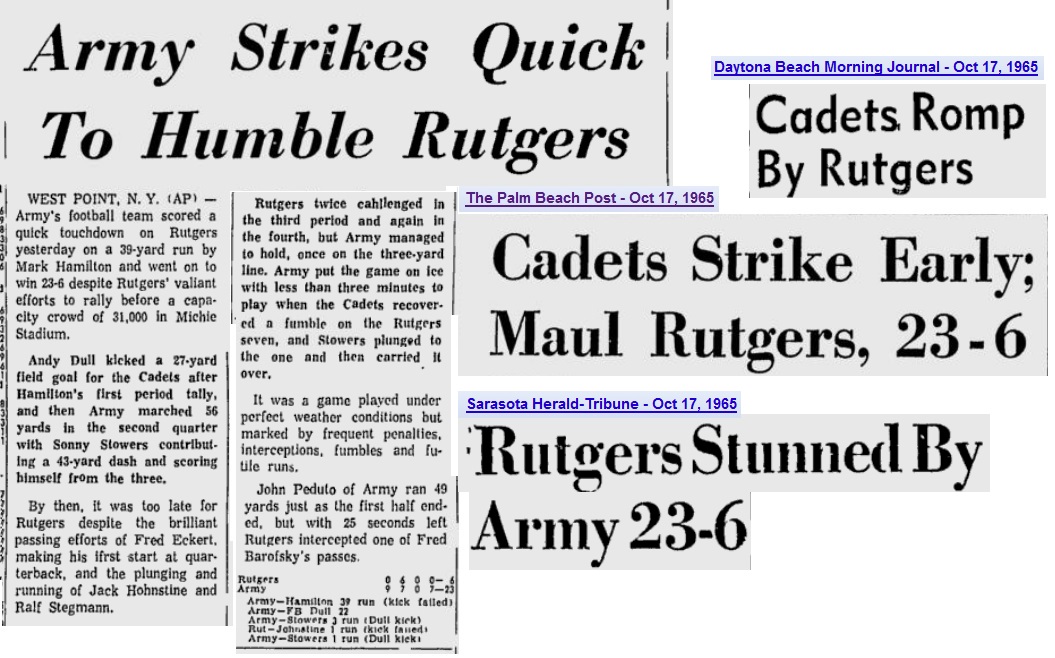
armyfb_1965_vsrutgers_miaminews_oct171965
ArmyFB_1965_vsRutgers_MiamiNews_Oct171965

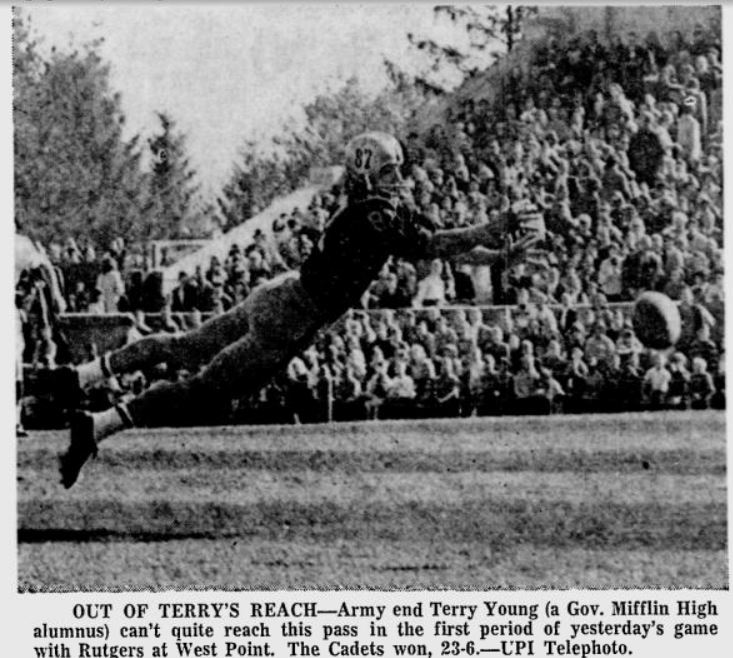
ArmyFB_1965_TerryYoung_ReadingEagle_Oct171965

ArmyFB_1965_TerryYoung_ReadingEagle_Oct171965

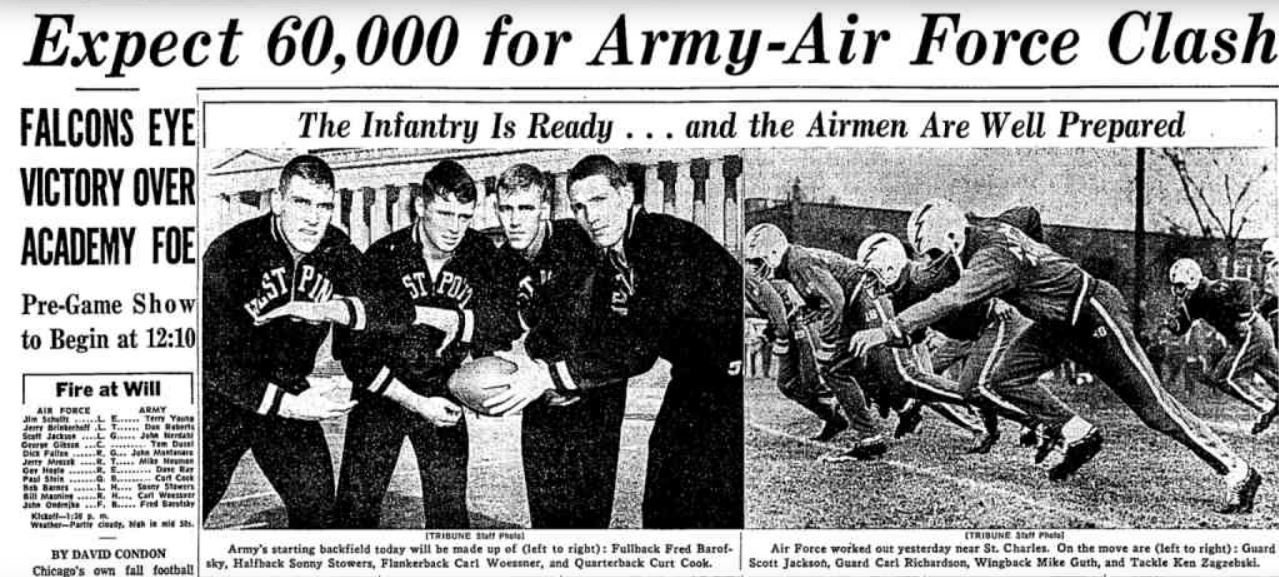
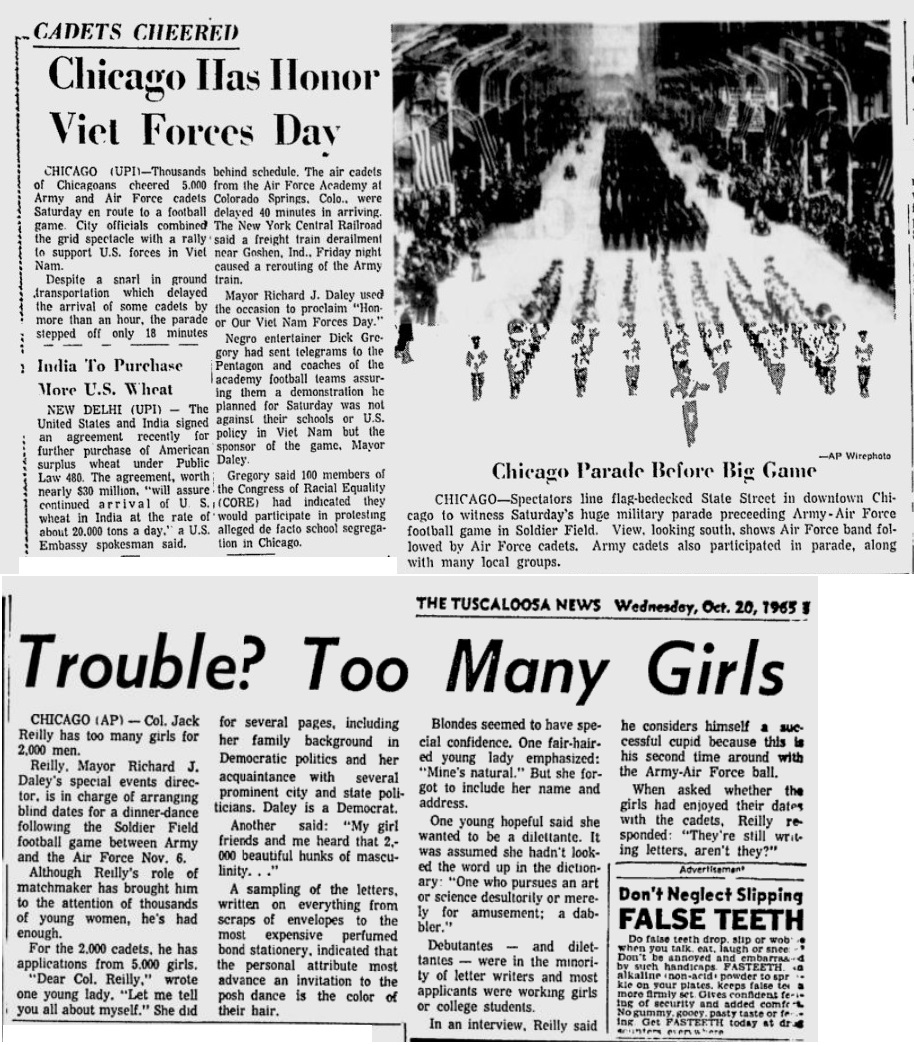
ArmyFB_1965_vsAF-pre_ChicagoTribune_Nov61965

ArmyFB_1965_vsAF-pre_ChicagoTribune_Nov61965

armyfb_1965_vsairforce_sarasotaheraldtribune_nov71965
ArmyFB_1965_vsAirForce_SarasotaHeraldTribune_Nov71965

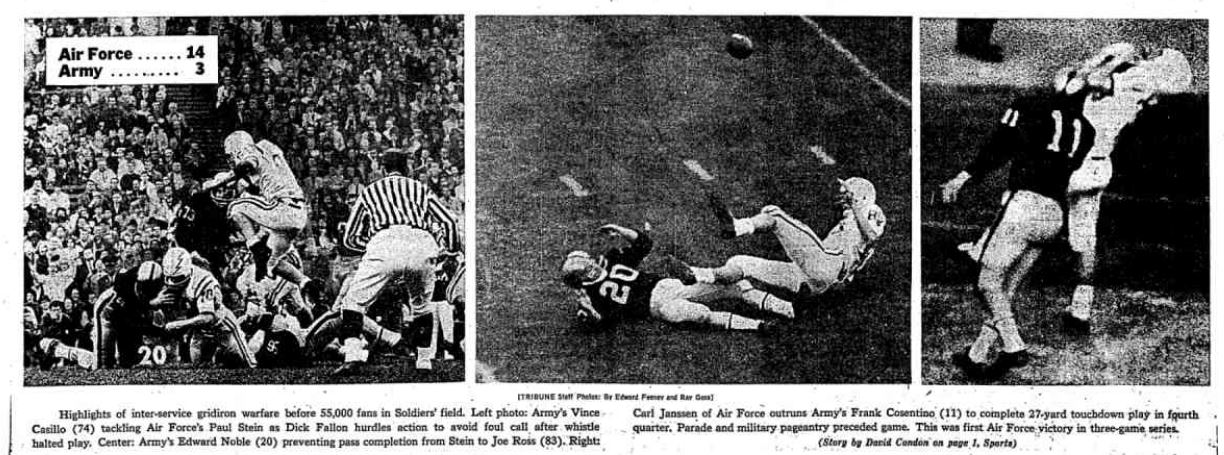
ArmyFB_1965_vsAF_ChicagoTribune_Nov71965

ArmyFB_1965_vsAF_ChicagoTribune_Nov71965

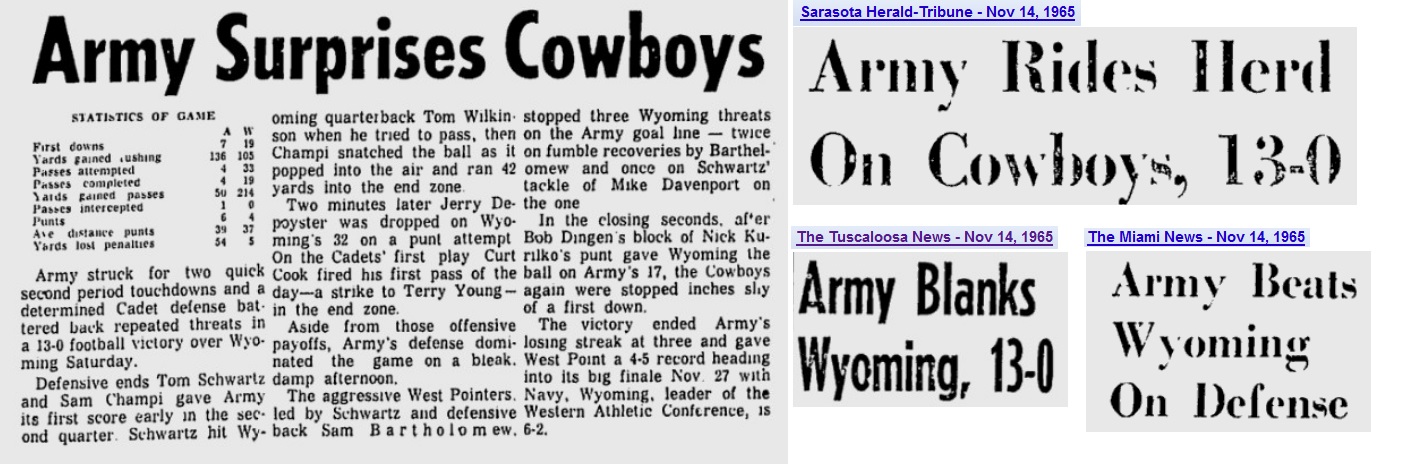
armyfb_1965_vswyoming_eveningnews_nov151965
ArmyFB_1965_vsWyoming_EveningNews_Nov151965

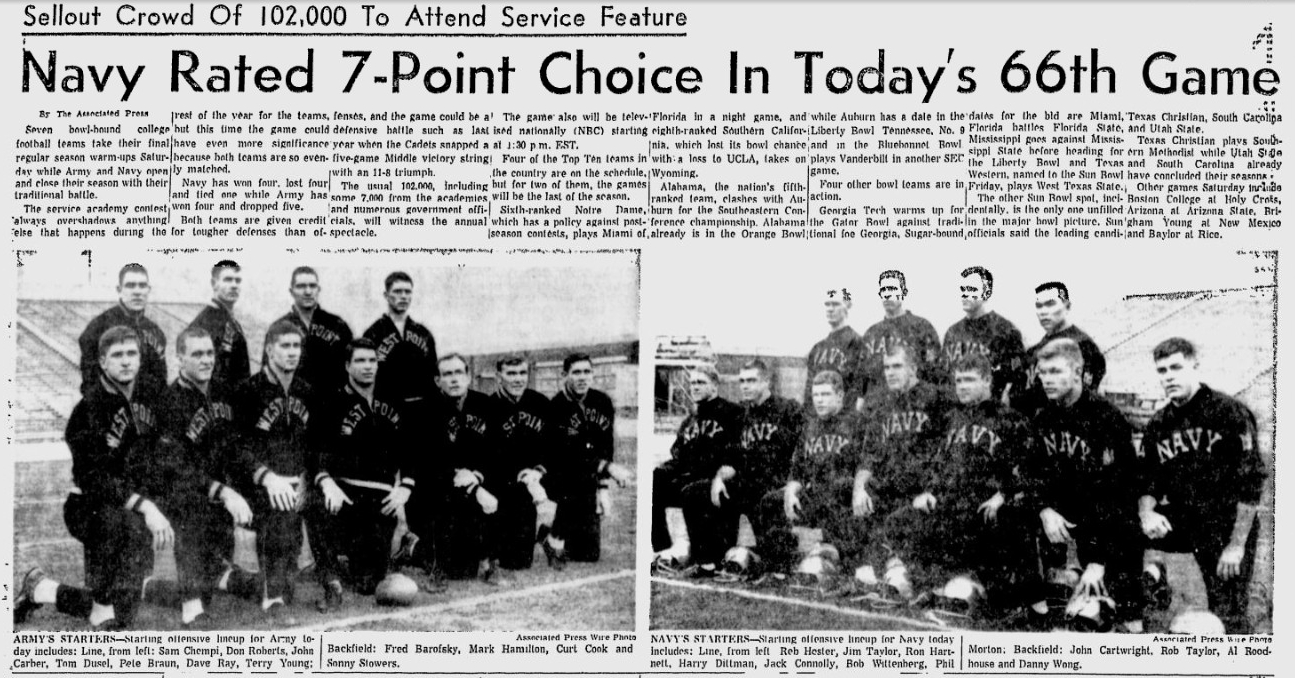
armyfb_1965_vsnavy_stpetersburg_nov261965

ArmyFB_1965_vsNavy_StPetersburg_Nov261965

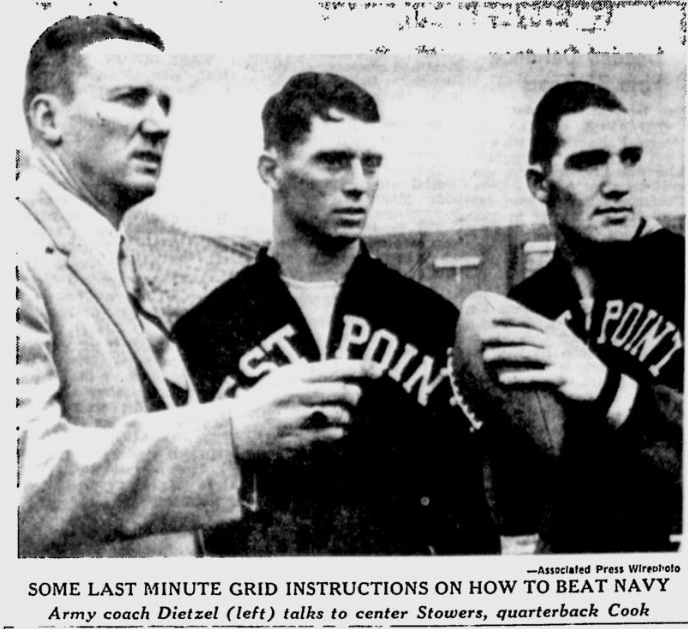
armyfb_1965_dietzel-stowers_cook_toledoblade_nov291965
ArmyFB_1965_Dietzel-Stowers_Cook_ToledoBlade_Nov291965-1

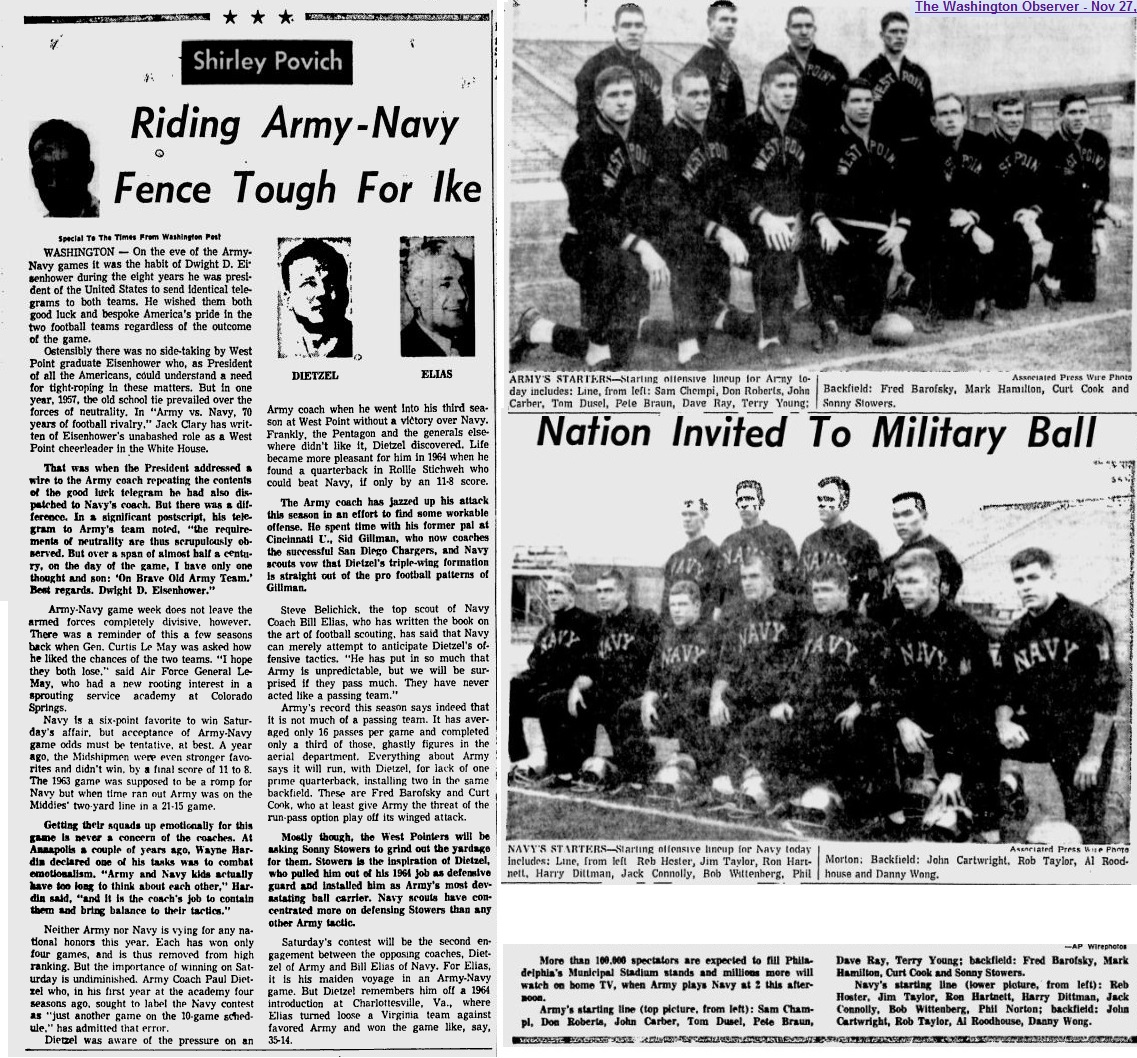
armyfb_1965_vsnavy_washingtonobserver_nov271965
ArmyFB_1965_vsNavy_WashingtonObserver_Nov271965

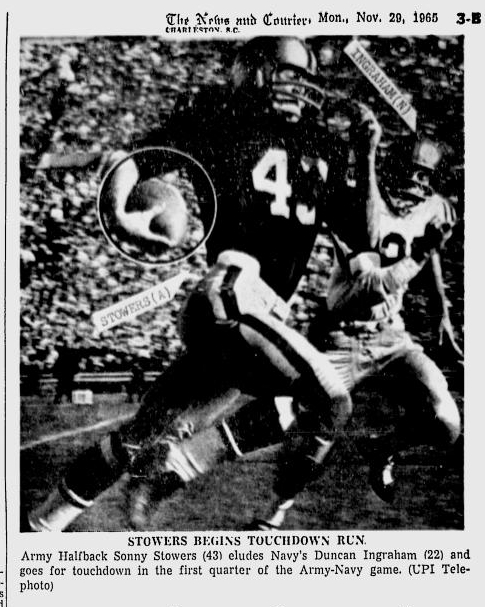
armyfb_1965_sonnystowers_newsandcourier_nov291965
ArmyFB_1965_SonnyStowers_NewsandCourier_Nov291965

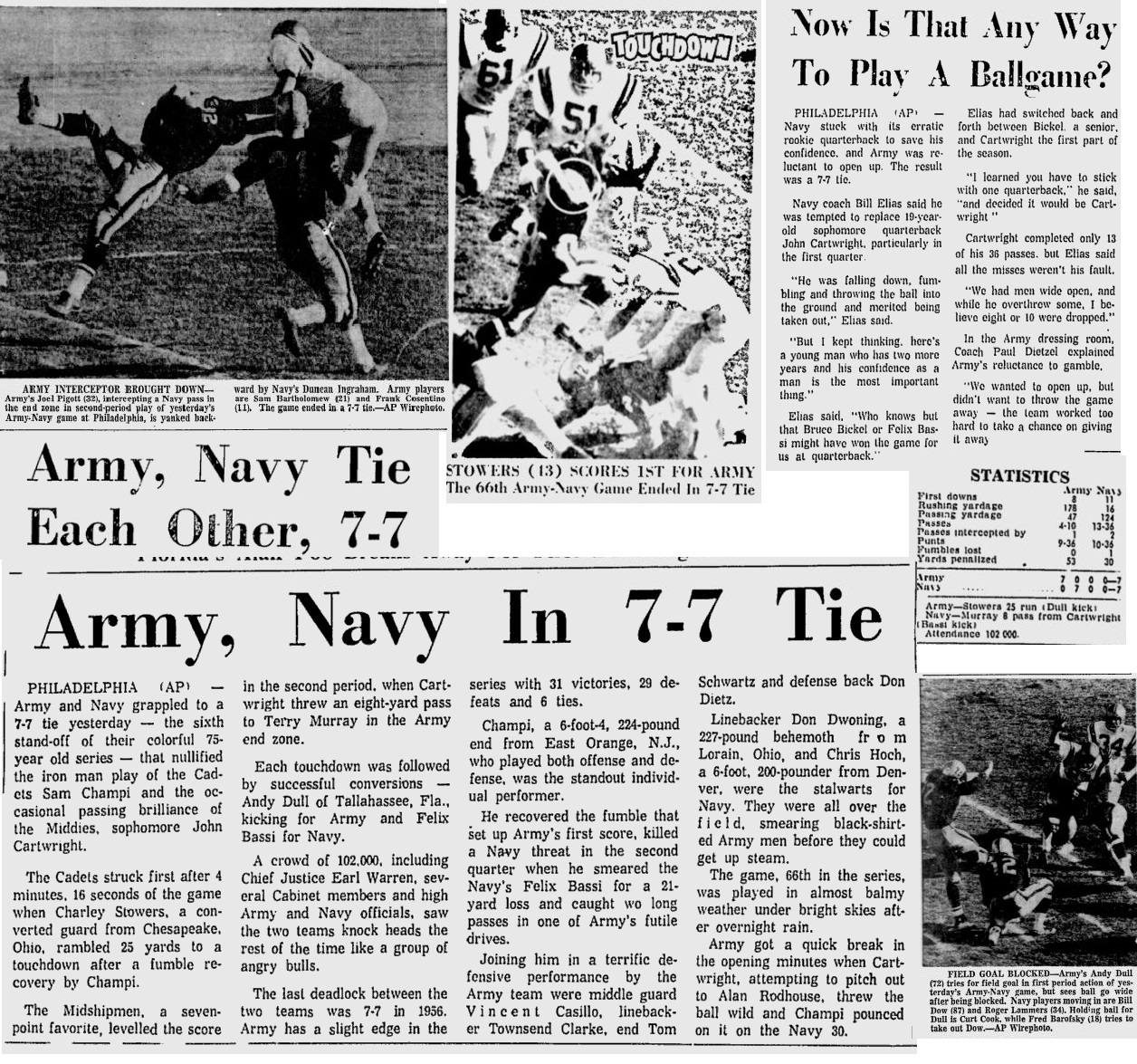
armyfb_1965_vsnavy_themiaminews_nov281965
ArmyFB_1965_vsNavy_TheMiamiNews_Nov281965

–

no sound

–

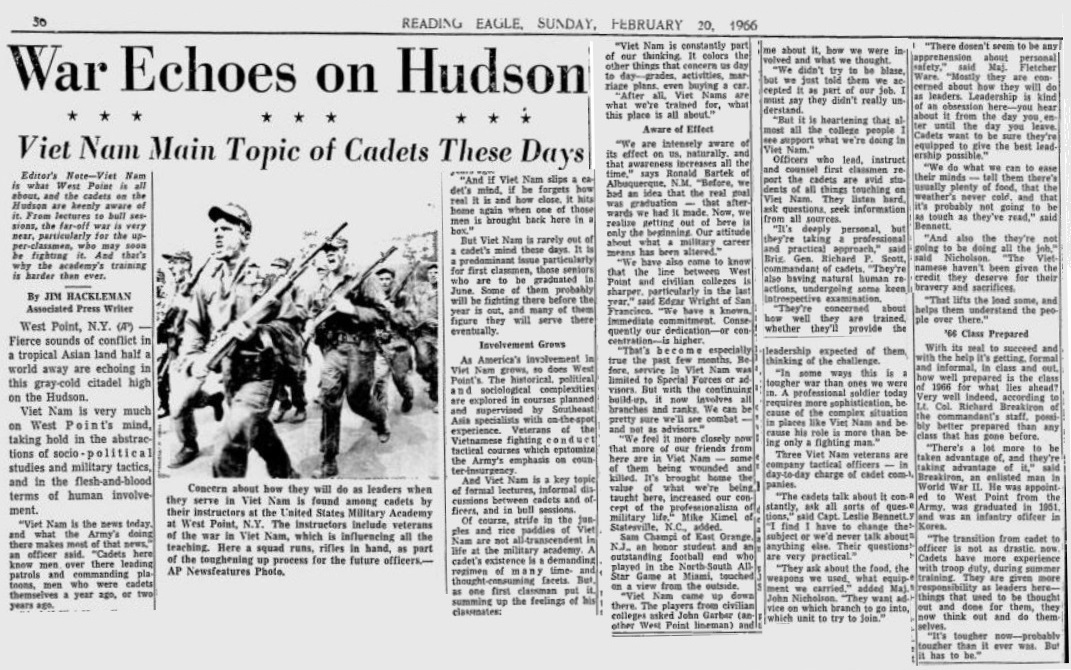
USMA-66_Vietnam_ReadingEagle_Feb201966

USMA-66_Vietnam_ReadingEagle_Feb201966

—

1964 Team

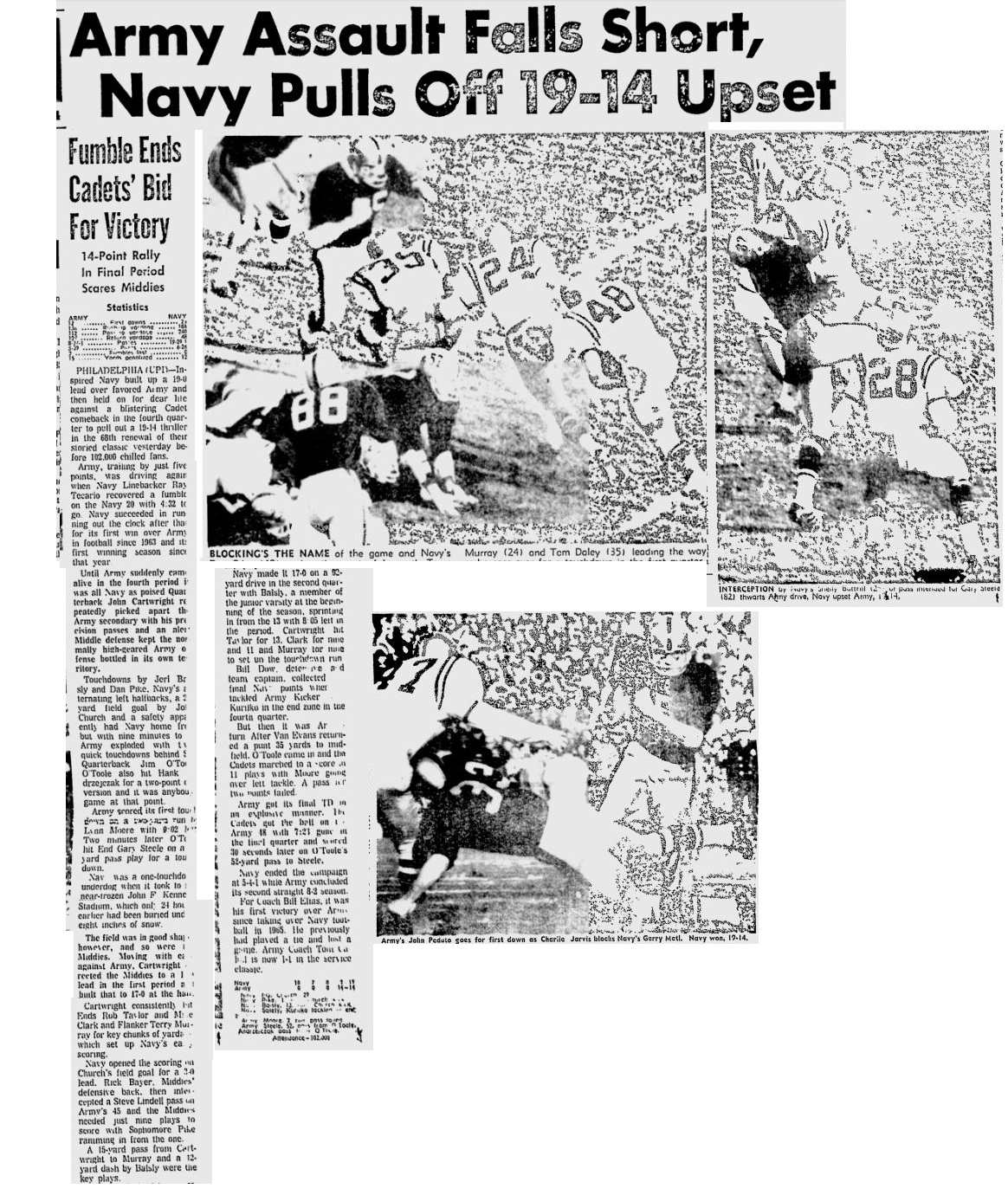
1964 Army 4-6

1964/11/28 Army 11 – Navy 8 W

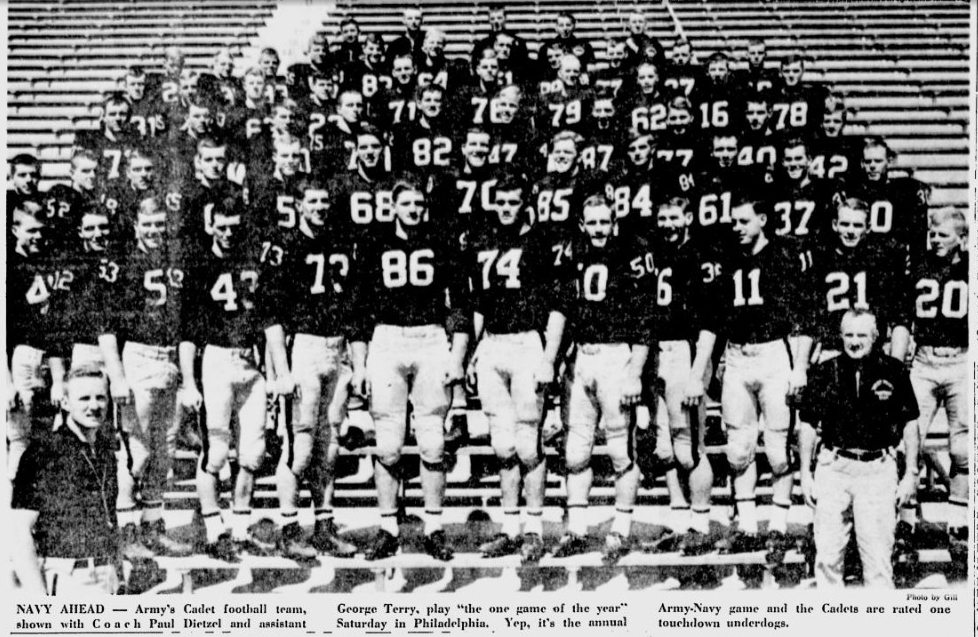
Coach Paul Dietzel 1962-1965
LSU 46-24-3 National Champs 1958
Army 21-18-1
South Carolina 42-53-1
Total: 109-95-5

Army:
1962 Army 6-4
1963 Army 7-3
1964 Army 4-6
1965 Army 4-5-1
Army Totals: 21-18-1

http://en.wikipedia.org/wiki/Paul_Dietzel

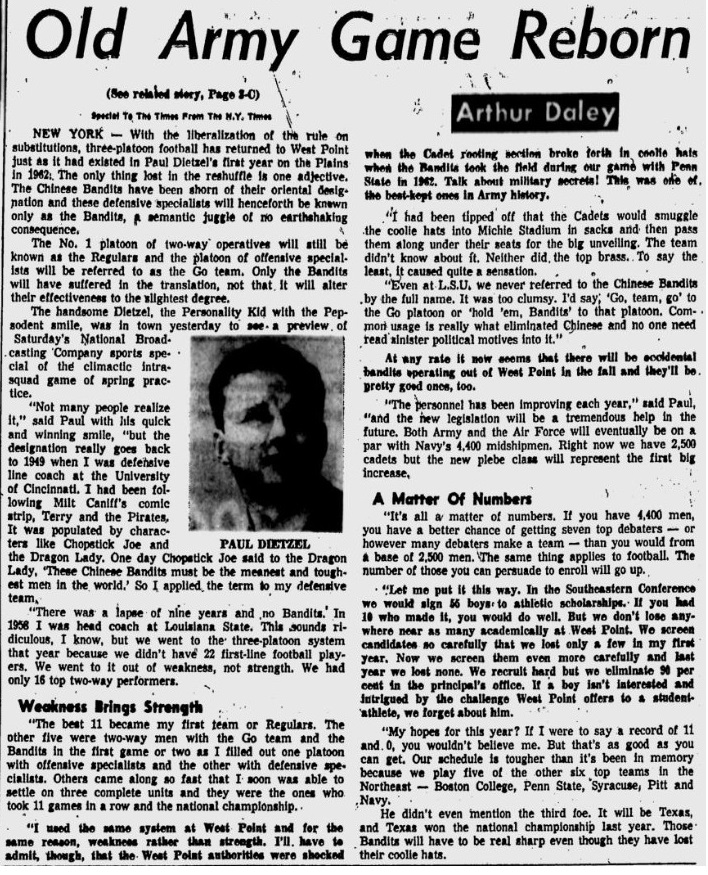
armyfb_1964_oldarmygame-dietzel_stpetersburgtimes_jun121964
ArmyFB_1964_OldArmyGame-Dietzel_StPetersburgTimes_Jun121964

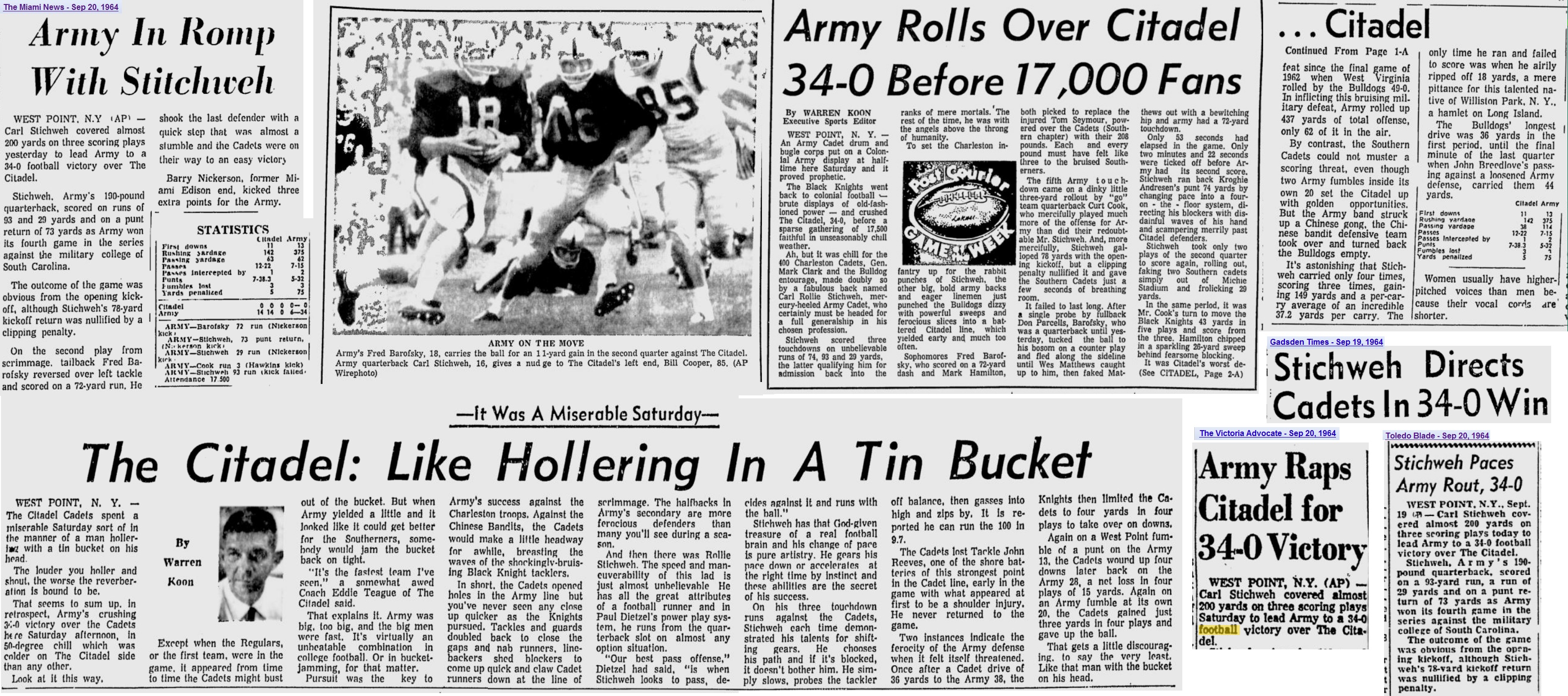
armyfb_1964_vscitadel_sep201964
ArmyFB_1964_vsCitadel_Sep201964

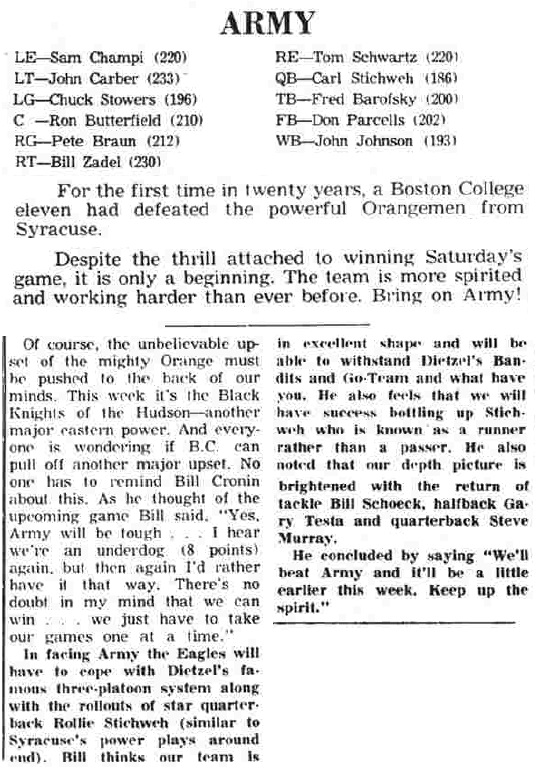
armyfb_1964_vsbc-pre_theheights_sep251964
ArmyFB_1964_vsBC-pre_TheHeights_Sep251964

armyfb_1964_vsbc_bostonglobe_sep271964
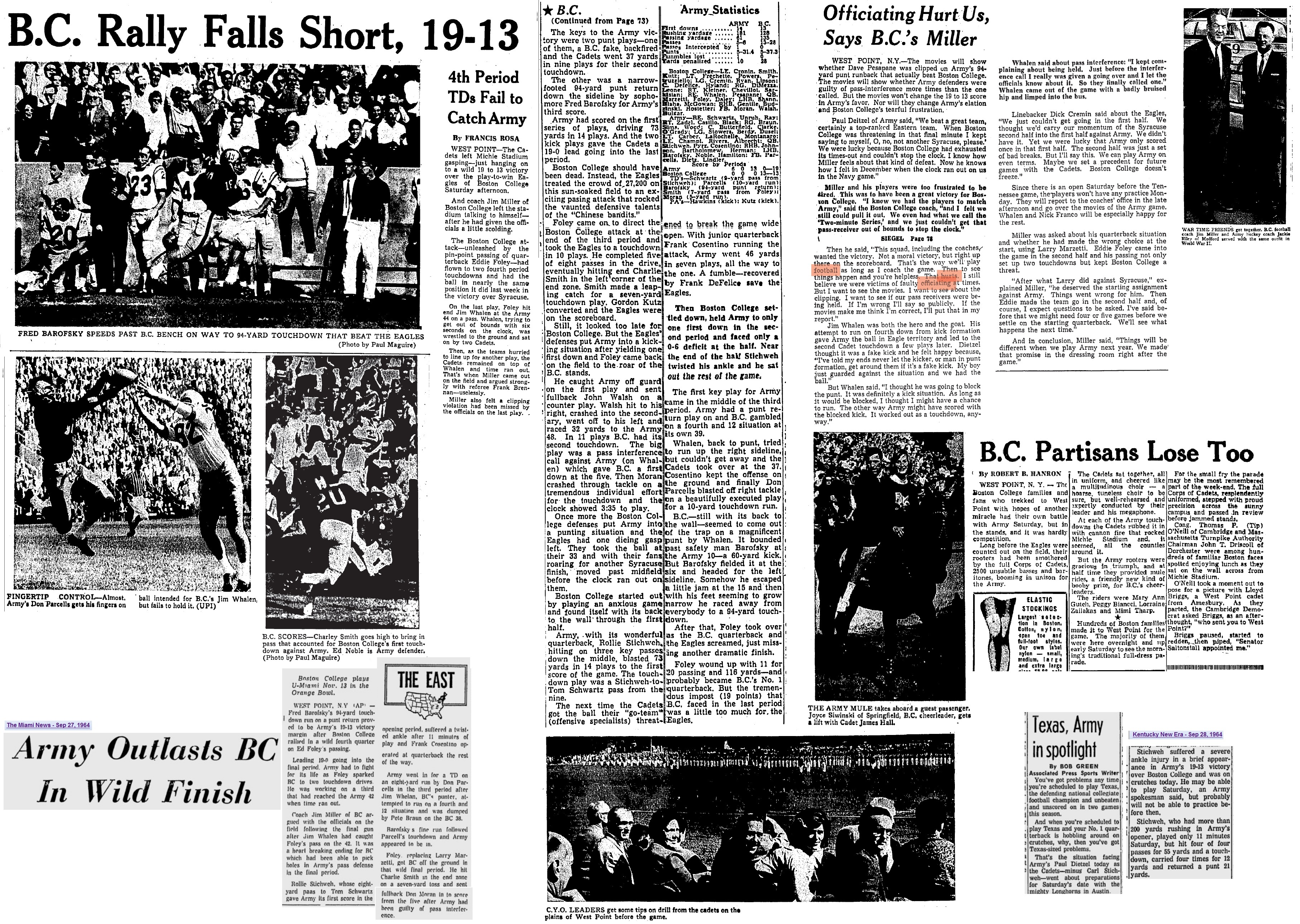
ArmyFB_1964_vsBC_BostonGlobe_Sep271964

armyfb_1964_vsbc_theheights_oct21964

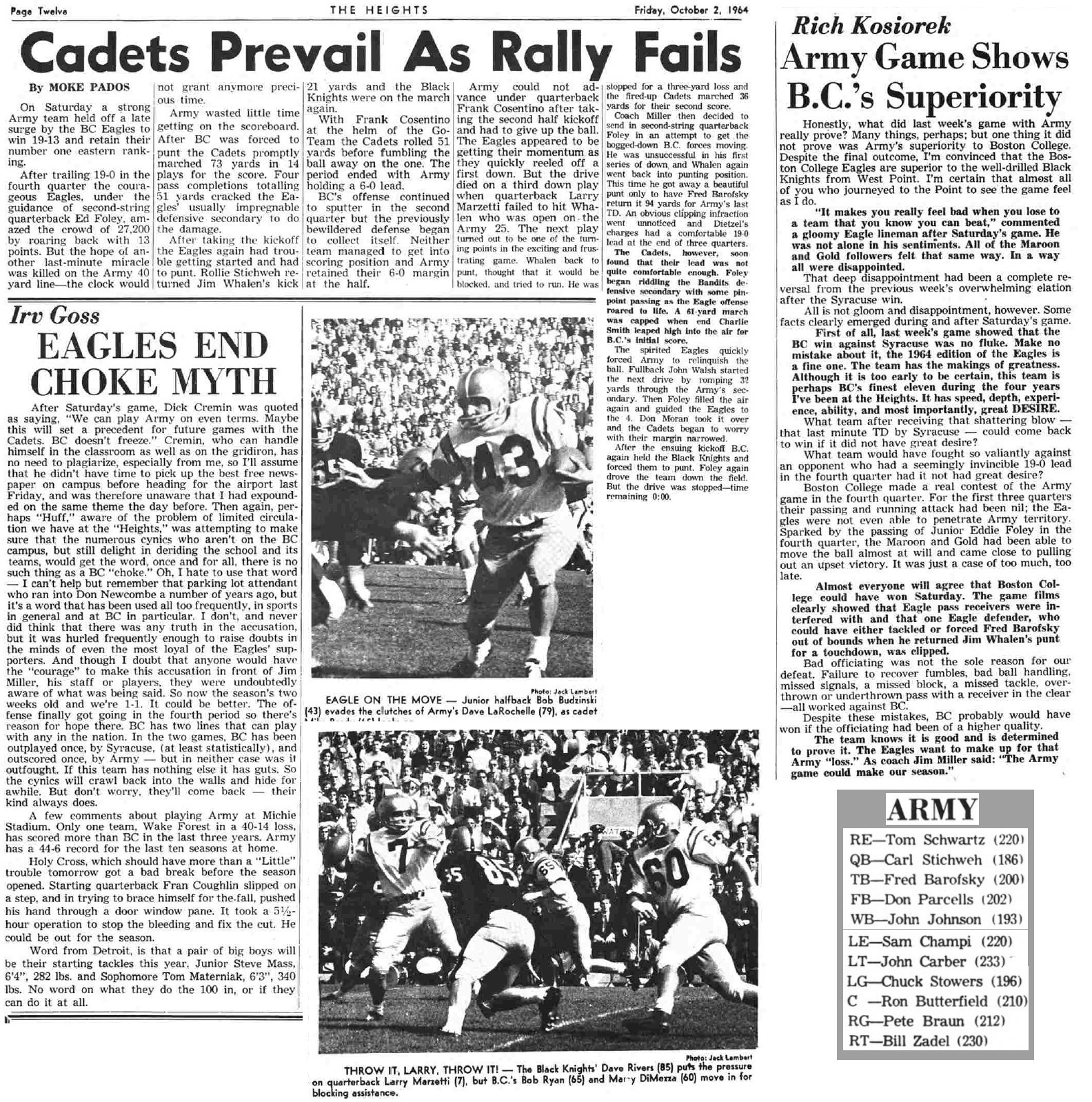
ArmyFB_1964_vsBC_TheHeights_Oct21964

–

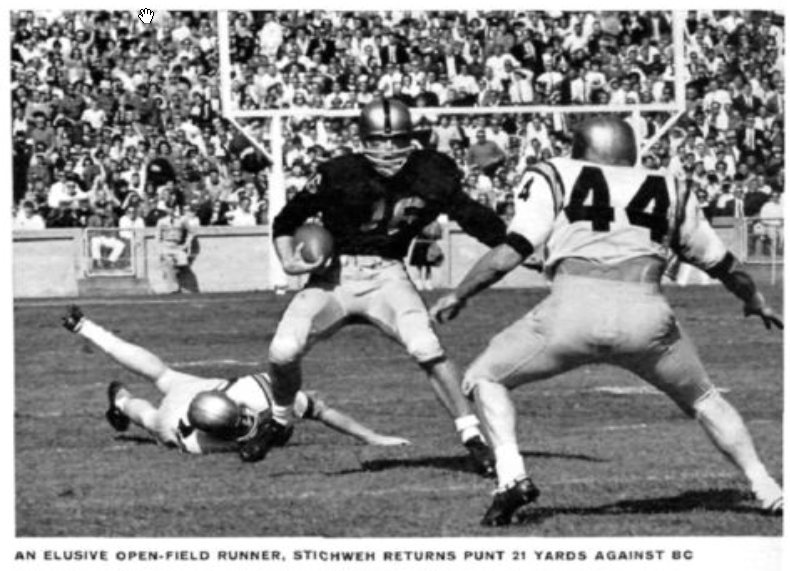
ArmyFB_1964_RollieStichweh

armyfb_1964_vsduke_chanticleeryearbook65
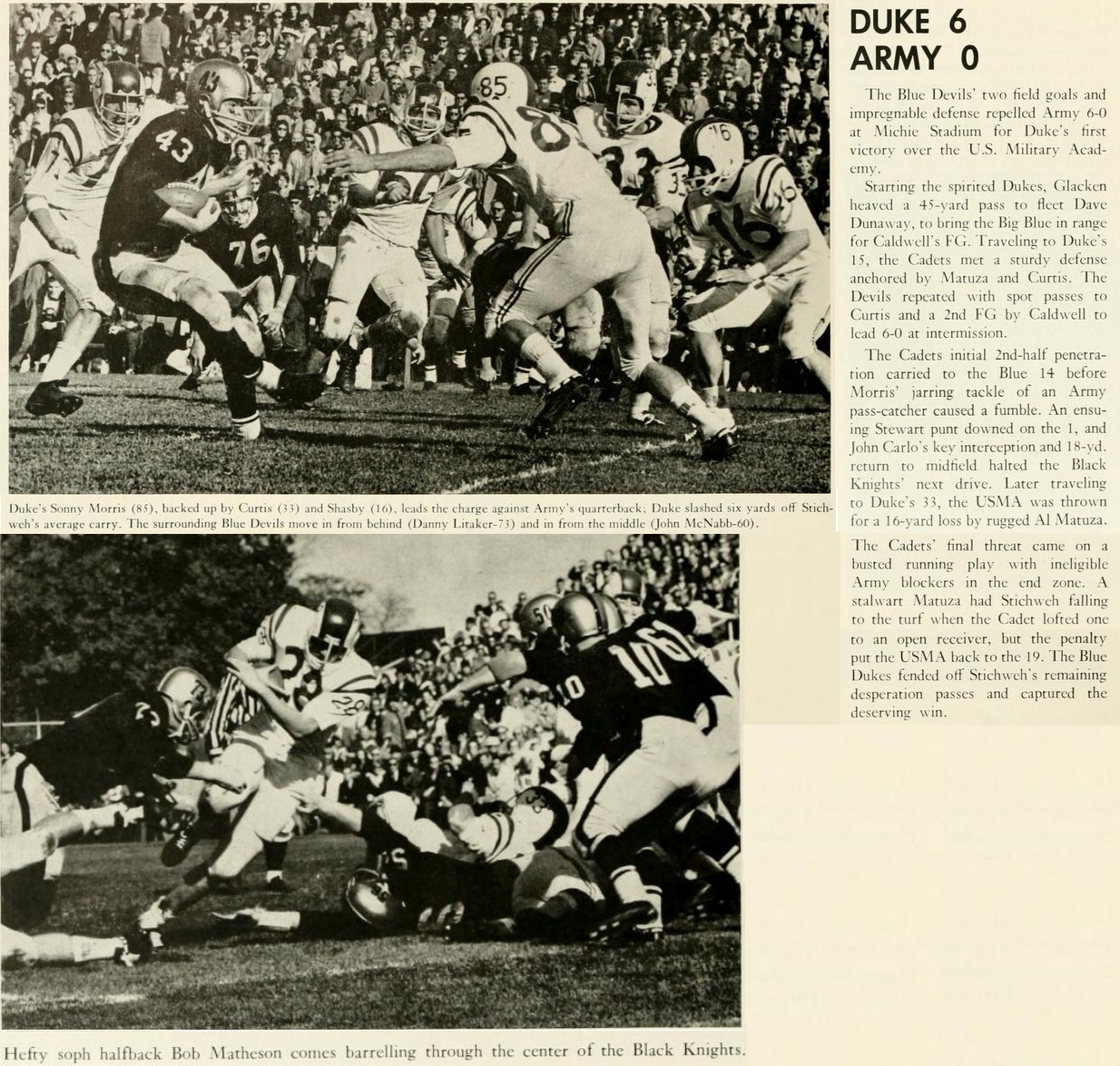
ArmyFB_1964_vsDuke_Oct241964_ChanticleerYearbook65

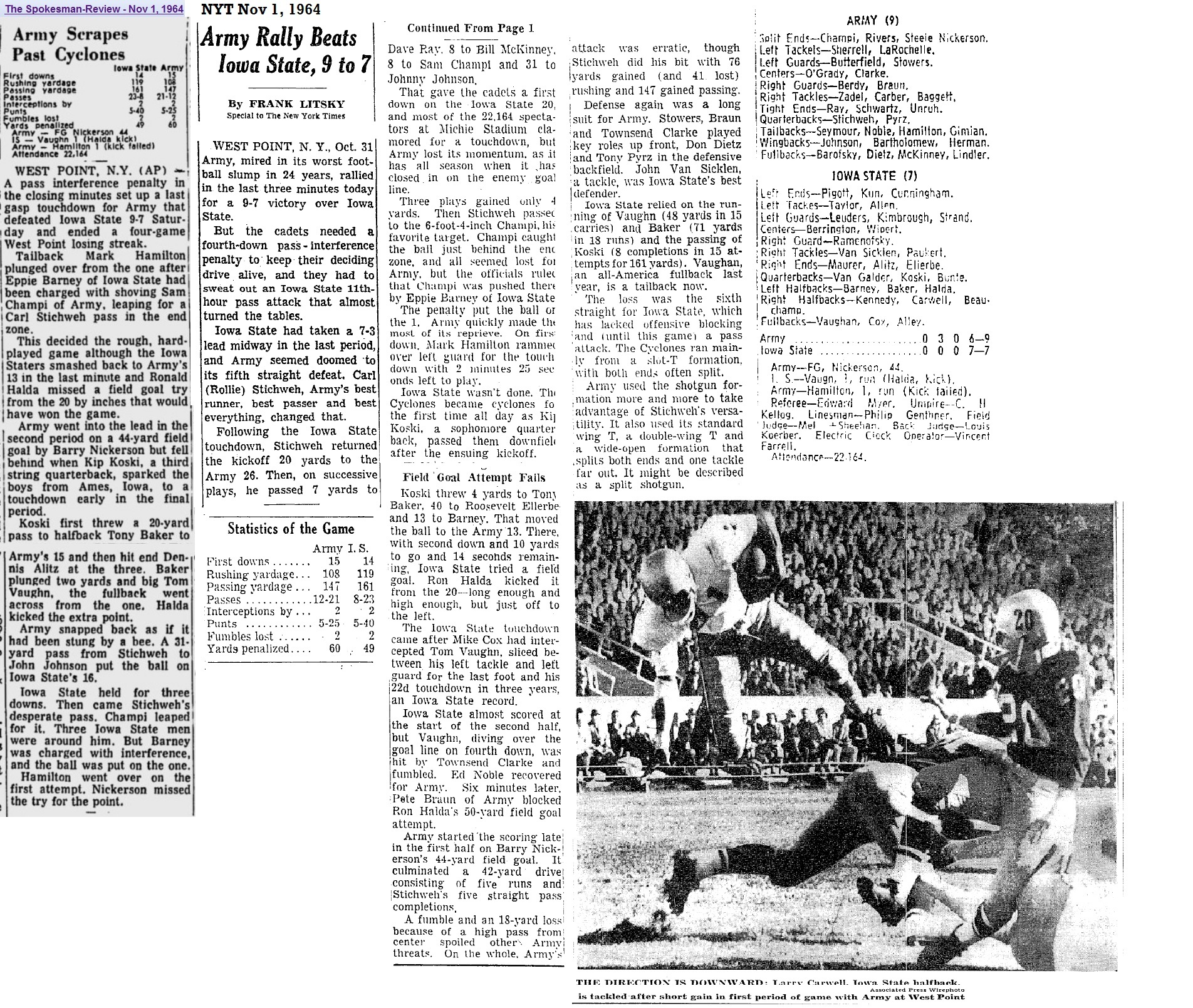
armyfb_1964_vsiowa_nov11964
ArmyFB_1964_vsIowa_Nov11964


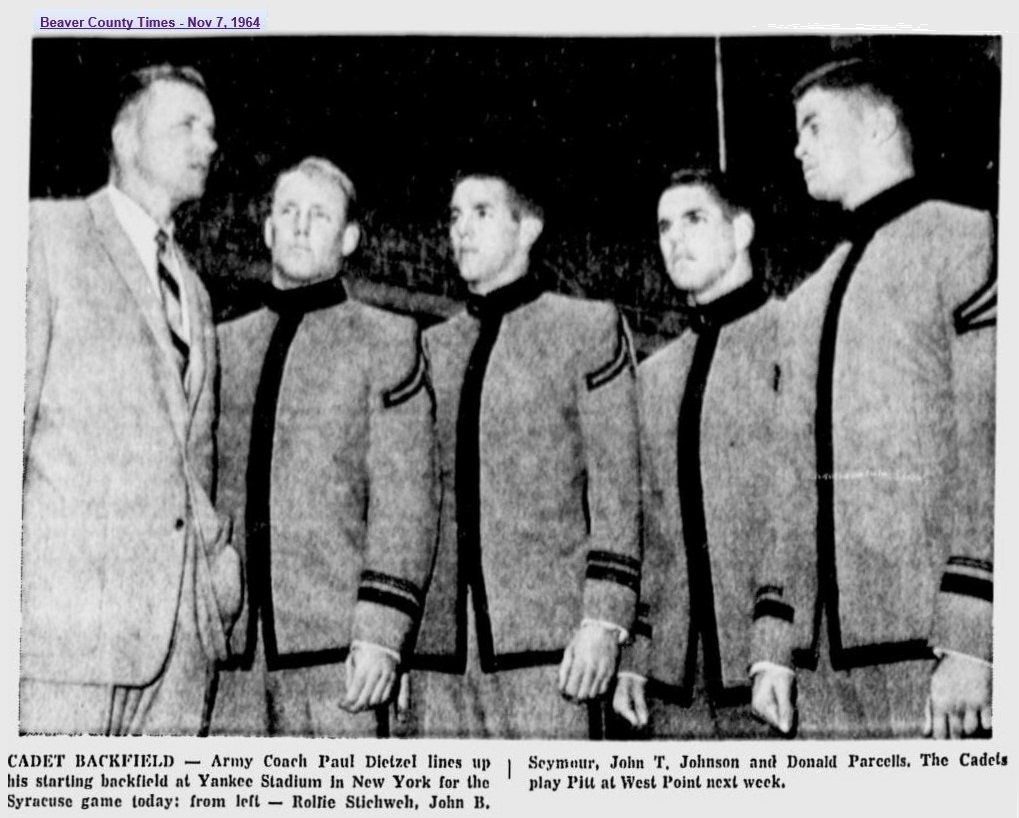
ArmyFB_1964_Dietzel-Stichweh-Seymour-Johnson-Parcells_NewsDispatch_Nov71964
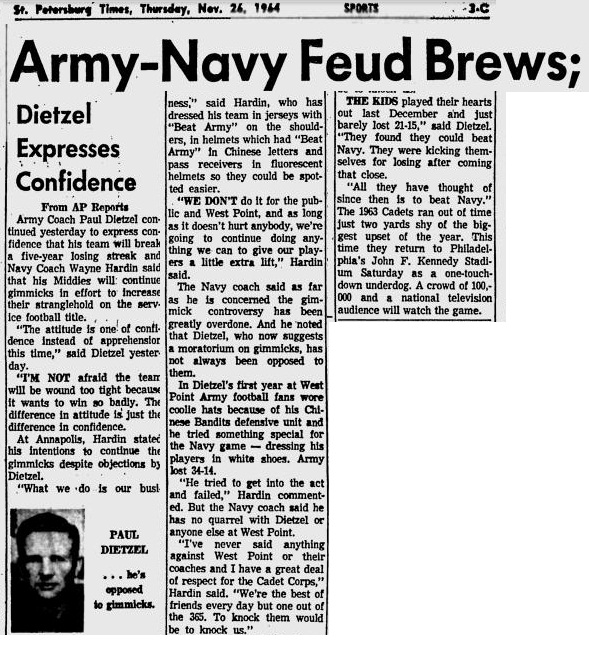
armyfb_1964_vsnavy_stpetersburgtimes_nov261964
ArmyFB_1964_vsNavy-starters_WashingtonObserver_Nov281964

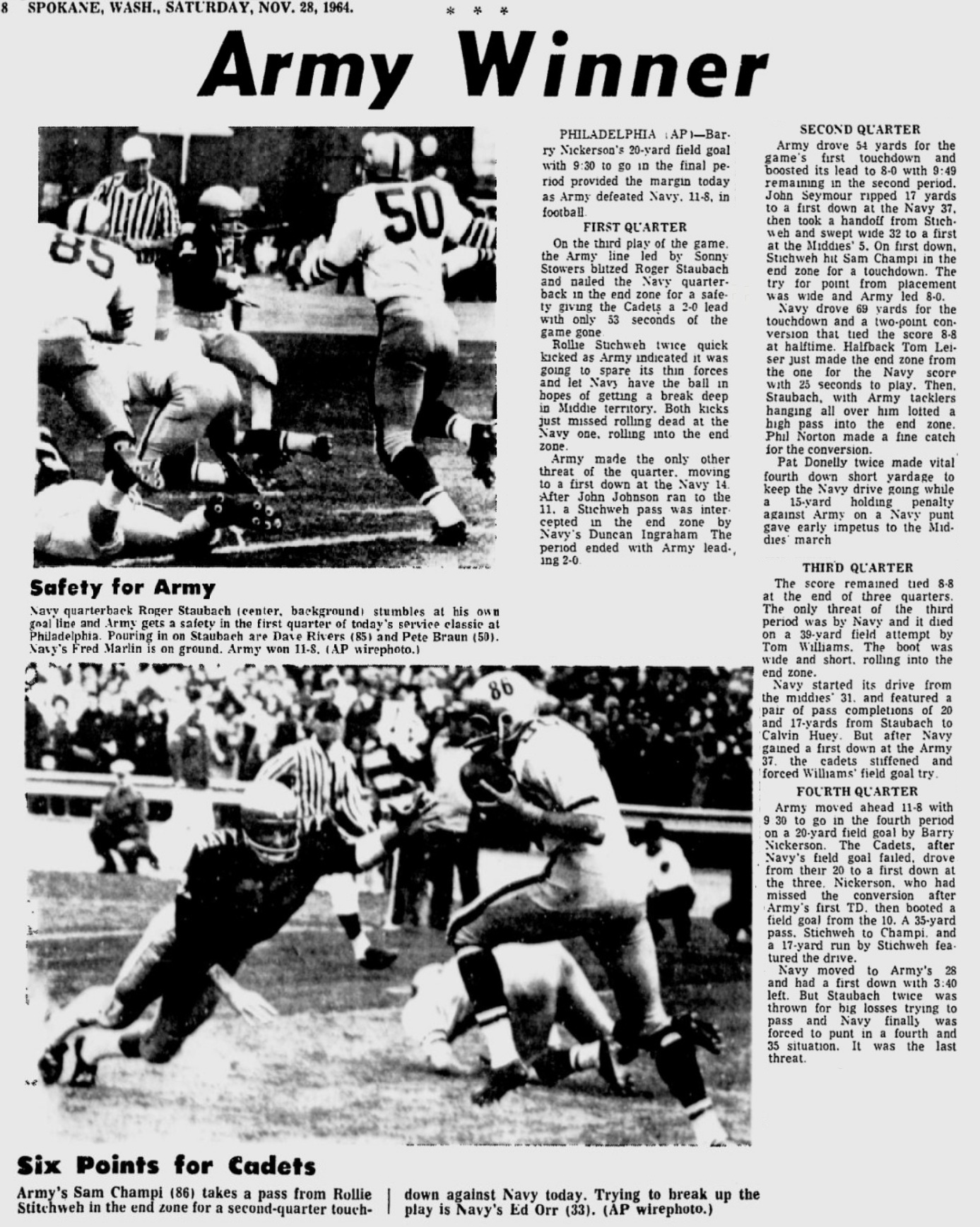
ArmyFB_1964_vsNavy_SpokaneDailyChronicle_Nov281964

–

armyfb_1964_vsnavy_milwaukeejournal_nov291964
ArmyFB_1964_vsNavy_MilwaukeeJournal_Nov291964-1

armyfb_1964_vsnavy_readingeagle_nov291964
ArmyFB_1964_vsNavy_ReadingEagle_Nov291964

–


–

Full Game


–

armyfb_1964_vsnavy-dietzel_newsandcourier_nov301964
ArmyFB_1964_vsNavy-Dietzel_NewsandCourier_Nov301964

–

ArmyFB_1964_vsNavy_ArthurDaley_NYT_Nov301964

ArmyFB_1964_vsNavy_ArthurDaley_NYT_Nov301964

–

ArmyFB_1964_vsNavy_BarryNickerson_GettysburgTimes_Nov301964

ArmyFB_1964_All-East_GettysburgTimes_Nov301964

–

ArmyFB_1964_vsNavy-Stichweh_NewsandCourier_Nov301964

–

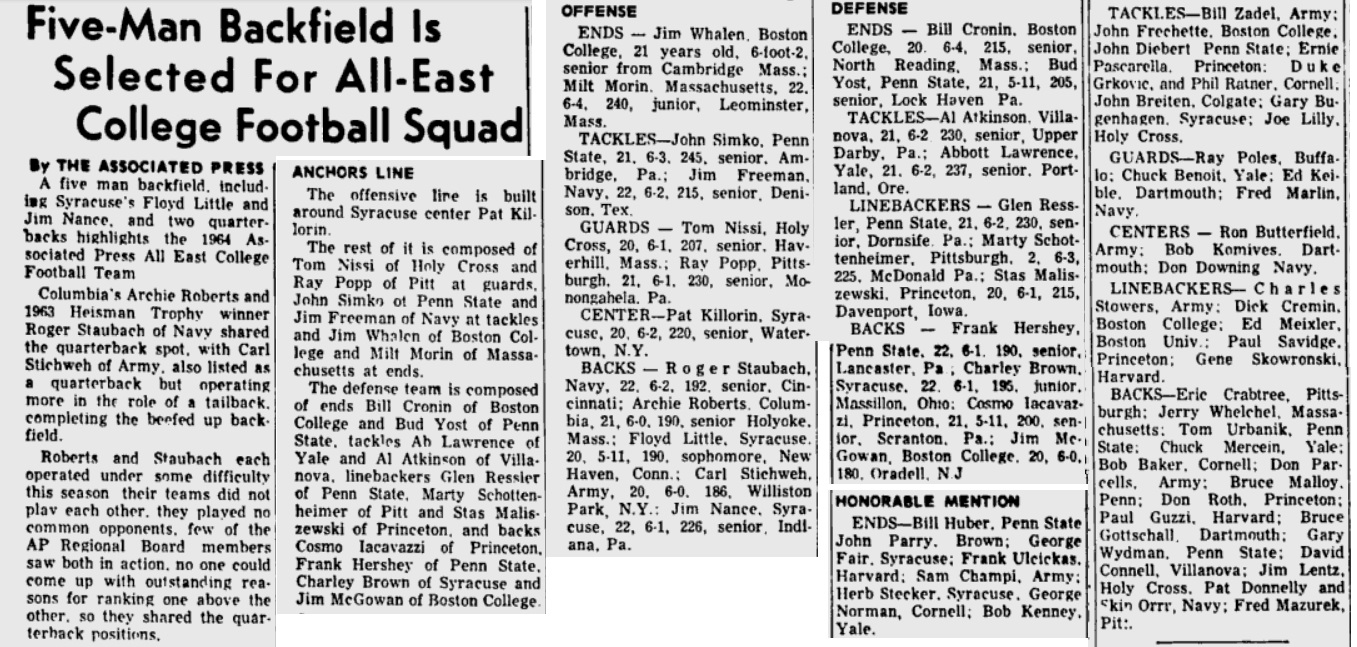
ArmyFB_1964_All-East_GettysburgTimes_Nov301964

ArmyFB_1964_All-East_GettysburgTimes_Nov301964

Sports articles provided by Russ “Skip” Grimm – Class of ’76


By Rabble
Jun 12, 2003

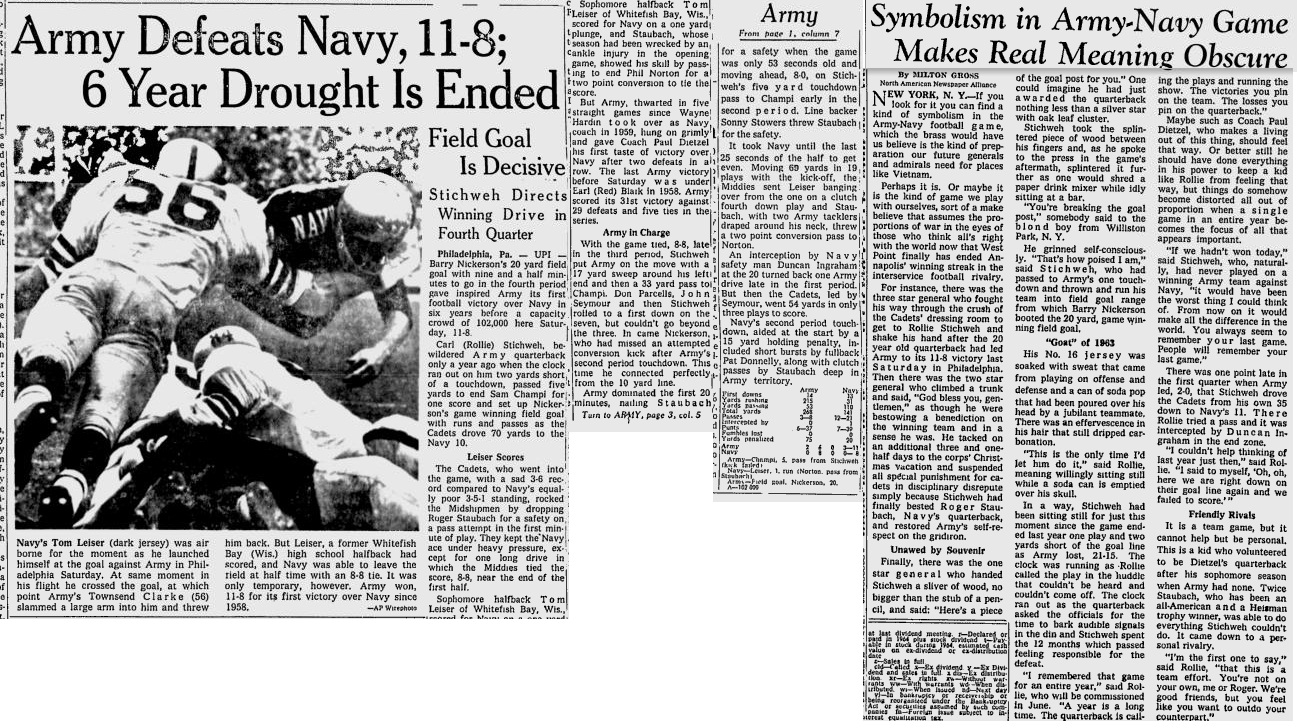
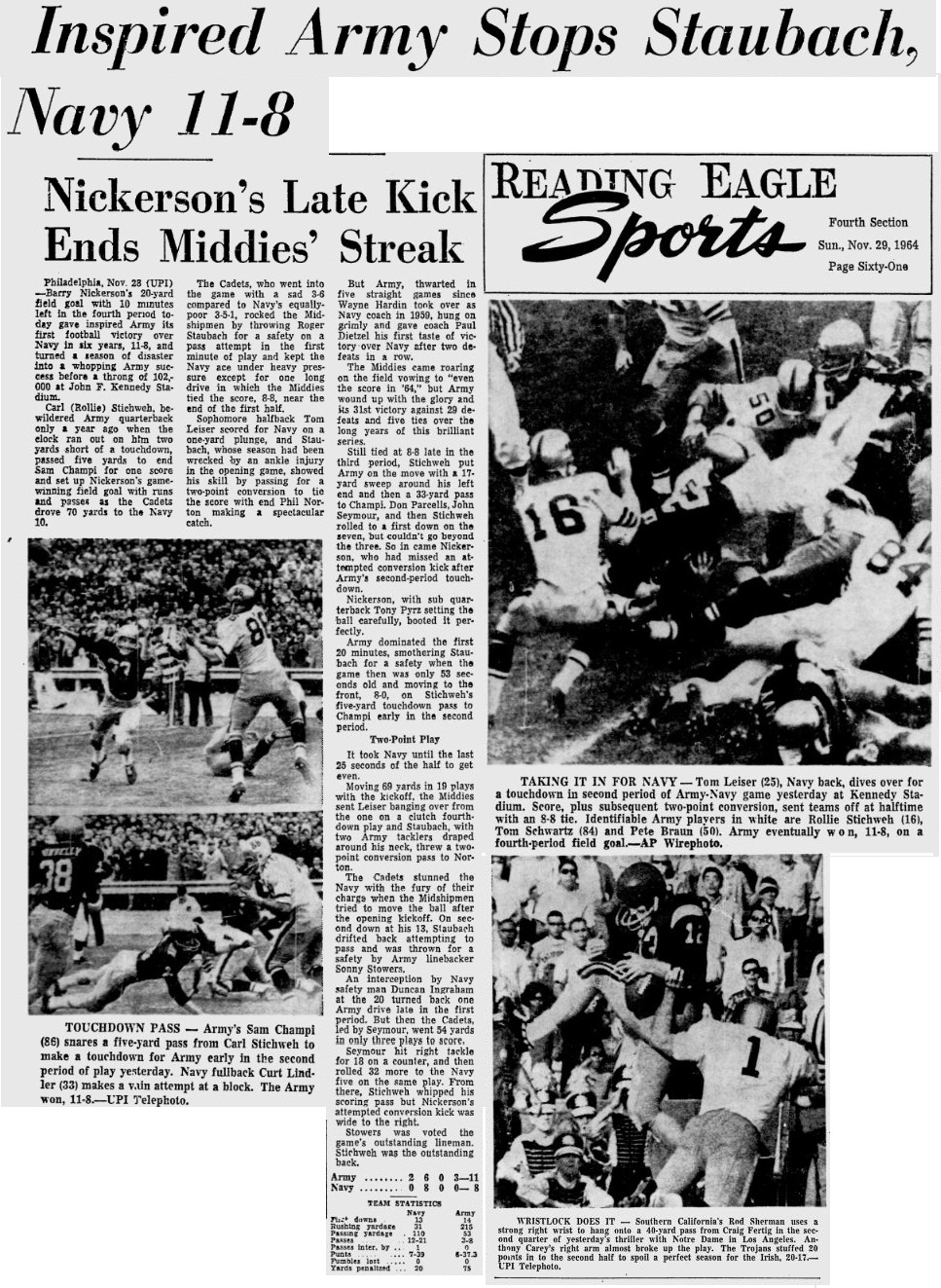
Army vs Navy, 1964 – Army wins a defensive battle, 11-8

It’s 1964. It’s the Army-Navy game. It’s Stichweh vs. Staubach. Both seniors. Both the starting quarterbacks. It’s the game they both want to win for it is their last game for their respective schools and they wanted to go out as winners. The last game. The game they will remember forever


—————————————


ARMY AIMS TO PUT NIX ON SIXTH NAVY VICTORY
1963 ‘Race With Clock’ Provides Incentive
by Jim Ogle
The New York Telegram (now defunct)

PHILADELPHIA- November, 1964—With bitter memories of last year’s controversial “race with the clock” providing extra incentive, a desperate band of Cadets will attempt to put the Nix on Six and end Navy’s five-game winning streak against Army.

The usual crowd of around 100,000 will be at John F. Kennedy Stadium this afternoon for the 65th Service classic, but no championships or bowl bids on the line today. Perhaps most noteworthy feature of the game is the fact that it marks the final appearance of Roger Staubach, the Navy’s all-time greatest in a Middie uniform.

While the Cadets shout “nix on six” the Middies will have a rallying cry of their own, “even the score in ’64,” to spur them on. It the Navy can win an unprecedented sixth straight today, the long series will be all deadlocked at 30-30-5. Neither team has ever won six in a row.

Army can match-Navy in the glamour boy department since Rollie Stichweh, the Cadet quarterback, has just as impressive credentials as Staubach. Elsewhere, however, Army lacks the firepower of Navy although both clubs have been hit hard by injuries this season. Stichweh is Army’s big hope and he Is determined not to leave the Academy without one Navy scalp.

Paul Dietzel hasn’t beaten Navy in two tries, but it is unlikely that a third straight loss will “get his scalp” as it did his predecessor, Dale Hall. Dietzel expects to be at Army for a long time and ultimately expects to take the upper hand.

Not a single one of the 2700 Cadets now at the Point has ever cheered a victory over Navy, but there is a feeling of confidence on the Plain this week. The team is as high for this game as it has ever been, but must guard against too much emotionalism.

One thing in Army’s favor is the fact that Dietzel will be able to start his regular backfield for a change. Don Parcells, of Oradell, will be at fullback with John Seymour end Johnny Johnson at the other backfield posts with Stichweh. It is the first time all season that the quartet will be operating 100% physically and it could make a difference.

Staubach in contrast, will operate with three sophomores in Danny Wong, Cal Huey and Tom Leiser. It is the first Army game for all three and perhaps inexperience will cause a mistake or two. Wayne Hardin, who has never lost to Army, plans to use Pat Donnelly and Ed Orr strictly on defense but Dietzel will not be surprised to see them offensively.

Army also expects to see Staubach operate from the shot- gun formation quite frequently, but the Cadets have been working on a variety of defenses all week. This is more than a game for Army. It is practically a crusade because of the humiliation of five straight losses.

Neither team has had a successful season, but a victory today will erase all memories of the defeats. Navy Is 3-5-I while Army stands at 3-6 going into the game, but against common opponents the Middies show a big edge. Figures mean nothing, however, when these two teams swing into action against each other and upsets are not rare.

Dietzel, WHO has been plagued by injuries in his Army tenure, not only has had a problem preparing his troops to stop Staubach. He has had an even bigger problem in getting his troops on the move, but the return of the regular backfield could help in this department. The Cadet offense has been weak all season.

Whatever ground Army has gained, Stichweh has done most of it either running or passing. Rollie is the greatest ground gainer in Army history and this year, despite the Cadets’ poor record, he has out-gained every opposing back he has faced this year except against Boston College. In that game Rollie played only 10 minutes due to an injury.

The Middies and Cadets will start marching at noon, then the kick-off comes at 1:30 and Army will be off on its crusade.

In this epic battle of two outstanding quarterbacks, Jesse Abramson of the New York Herald Tribune aptly describes the action where Army denied the Navy from winning 6 straight games against Army’s hard-fighting football team


————————————————————


ROLLIE STICHWEH’S CADETS MANHANDLE NAVY AND ROGER STAUBACH, 11-8

By Jesse Abramson
of The New York Herald Tribune Staff
1964

PHILADELPHIA, With the whole-souled cooperation of an old-fashioned Army team that disdained platoons and free substitutions, “Rollie’s Redemption” played a smashing one-stand performance before a full house of 100,000 In John F. Kennedy Stadium yesterday.

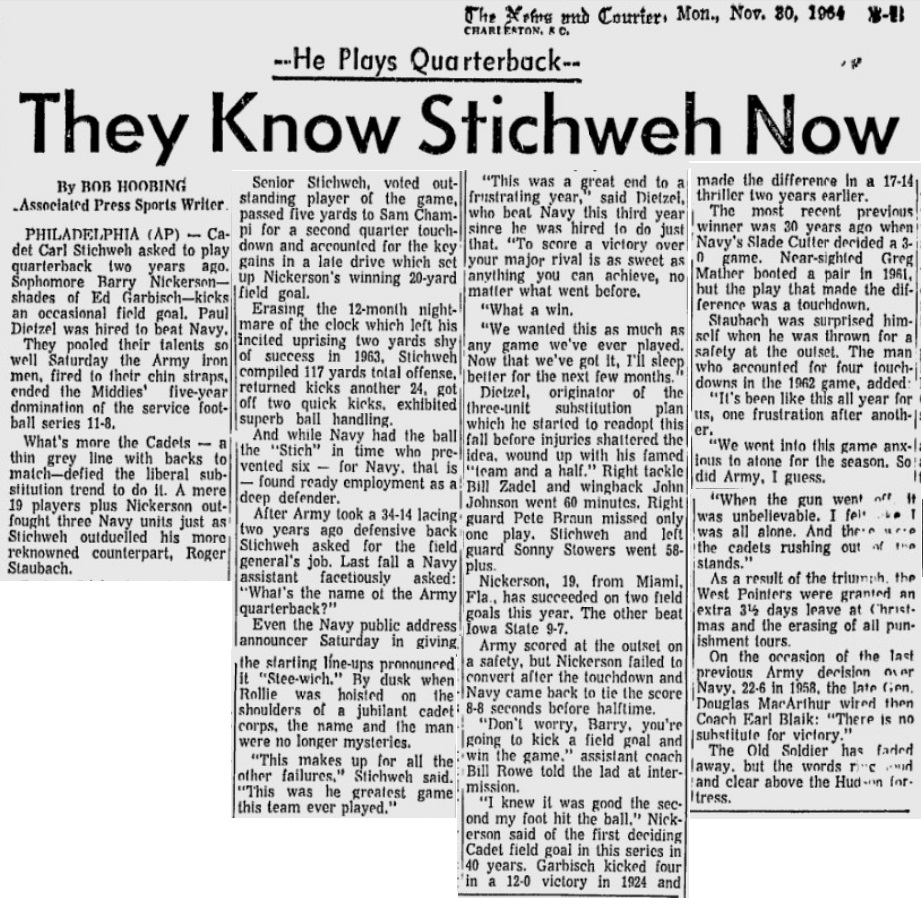
Army and Carl Roland Stichweh, its indefatigable captain, quarterback, top runner, passer and defender, finally caught up with Roger Staubach and Navy and beat them, solidly, convincingly and as decisively as one can in an 11-8 score.

It was the first time in 30 years that the service game was decided by a field goal. In 1934 Slade Cutter’s placekick was the only score as Navy won.

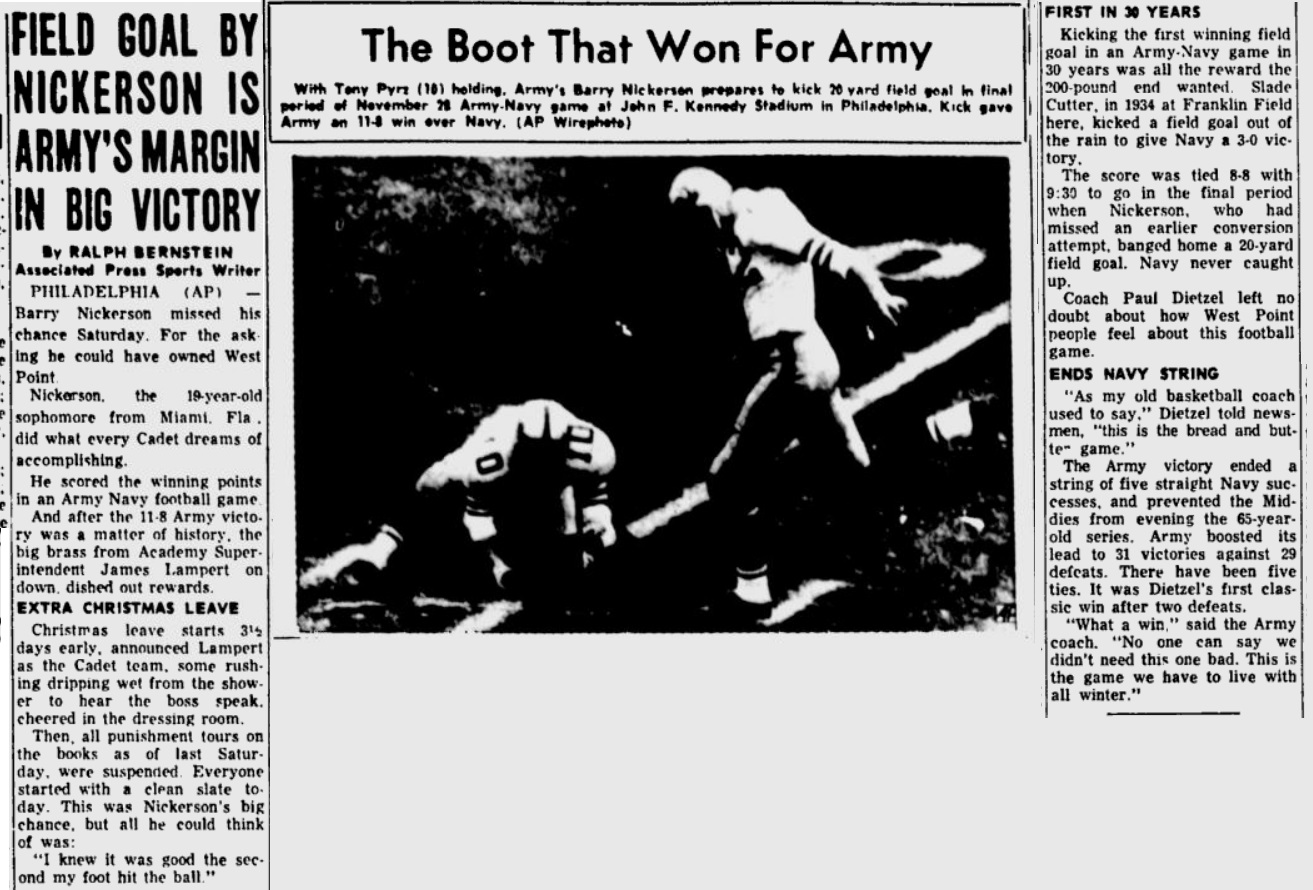
The grim and resolute underdog Cadets, getting even with tormentor Staubach in his varsity farewell, harrassed, harried and hopped on him first to last. They wrenched a safety from him in the first 53 seconds of the ball game by chasing him 13 yards into the end zone and mobbing him. They dominated the action of the first half for 20 minutes, swiftly marched 54 yards to a touchdown on John Seymour’s two bolting runs and Stichweh’s five-yard pass to Sam Champi; opened the door to Navy’s tying points 25 seconds before halftime on an egregious holding penalty on a Middie punt, then marched 77 yards to set up sophomore Barry Nickerson’s deciding 20-yard field goal in 5:30 of the fourth period.

This bare skeleton of the scoring provides the outline of the important story on the scoreboard but fails to flesh out the tension and drama of the 65th service battle.

Fumble-free in its execution, and great on defense, Army gave Navy ail the chances to win by violations that brought drastic penalties in critical spots. It was a holding penalty on a Navy punt that restored possession to the Midshipmen and enabled them to mount their only sustained drive of the day, their only first-half invasion of Army territory and their only touchdown on sophomore Tom Leiser’s fourth down, one-yard tackle slant.

Staubach was penned and cornered and tackled like he never has been by Army and rarely by others in his three varsity years. He wound up with minus 22 yards on the day, but he was always dangerous passing (completing 12 of 20 for 110 yards) and he made the two-point play with Champi draped around his neck and, other Cadets clawing at him by getting the ball to Phil Norton in the end zone, with Norton making a falling catch. That made It 8-8 at halftime.

OLD ARMY WAY

After Army drove so far to regain its lead, the Cadets stopped Staubach again and forced Navy to punt from midfield. But-big John Carber, Army tackle, trying desperately to block the kick, slammed through Tom Williams to give Navy the ball again for another shot at Army’s 38. It did not seem possible for Army to keep inviting d1saster with one hand and hold it off with another. It was like sitting on a time bomb ready to explode.

But this Army team, and particularly 14 seniors, had ruled out platoons and convinced Paul Dietzel they could win it the old fashioned way by playing offense and defense in this Age of Specialization, They recovered from that rouging-the-kicker situation by smearing Staubach twice for losses of 11 and 13 yards. Five or six Cadets mobbed Roger the Dodger, though it was linebacker Don Dietz, then tackle Bill Zadel who pinned him down and knocked out of his reach any chance of either a winning TD for a tying field goal.

Unlike a year ago when the clock ran out on Army on the 2-yard line with a fourth down coming up, leaving a gallant Stichweh as the goat- holding a huddle and holding the ball- the clock now was Navy’s foe. So was Army, which had to give Navy one more series, but creamed Staubach and Co. at midfield.

SLOGANS’ END

The triumph, Army’s first in the series since Red Blaik said farewell with Pete Dawkins’ unbeaten 1958 team, wrote finis to Navy’s slogans. “Six And Even” just didn’t come off. Navy foundered against Army’s rock-ribbed defenses in its drive for a record sixth straight victory in this series, and it did not pull even with Army in the series, which now stands 31-29-5.

It was the bleakest and grayest of days, but the sun phone bright in the hearts of long-suffering military men everywhere-from generals down to buck privates.

As the clock hands came to zero in the semi-darkness under the inadequate stadium lights, more than half the corps of. 2,700 gray-coated cadets made it from the stands to the field in a whoop and a holler.

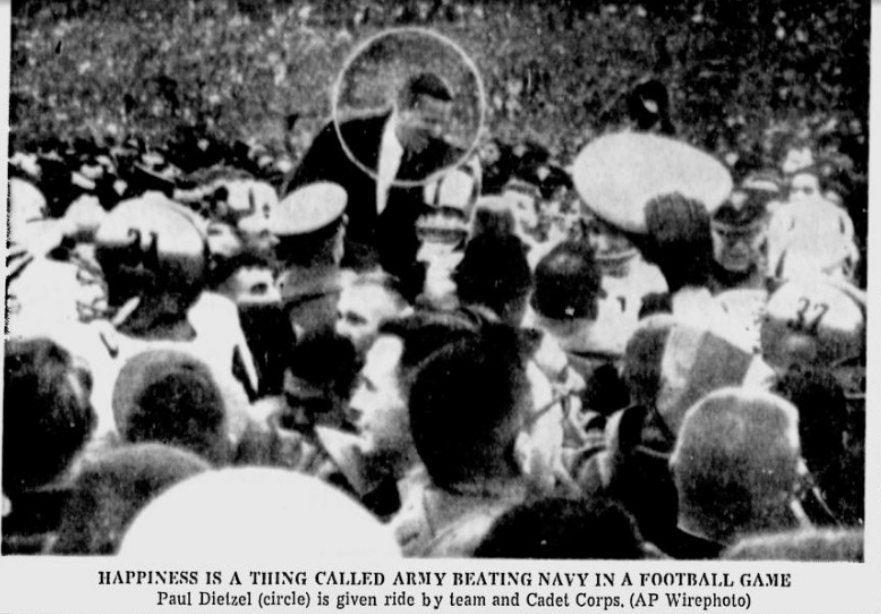
They mobbed the cadet heroes, as the cadet heroes had mobbed Staubach, but with joy in their violence. They rode Dietzel, target of so many Wayne Hardin barbs, off the field on their shoulders, and as many of the cadets as they could swing aloft in the subway crush of swaying moving gray-clad bodies.

The cadet who deserved to ride highest was ten-foot-tall Rollie Stichweh, 20~year-old Long Islander from Williston Park. Rollie had the last word in his quarterback duelling with Staubabh, his pal on exchange visits between the academies.

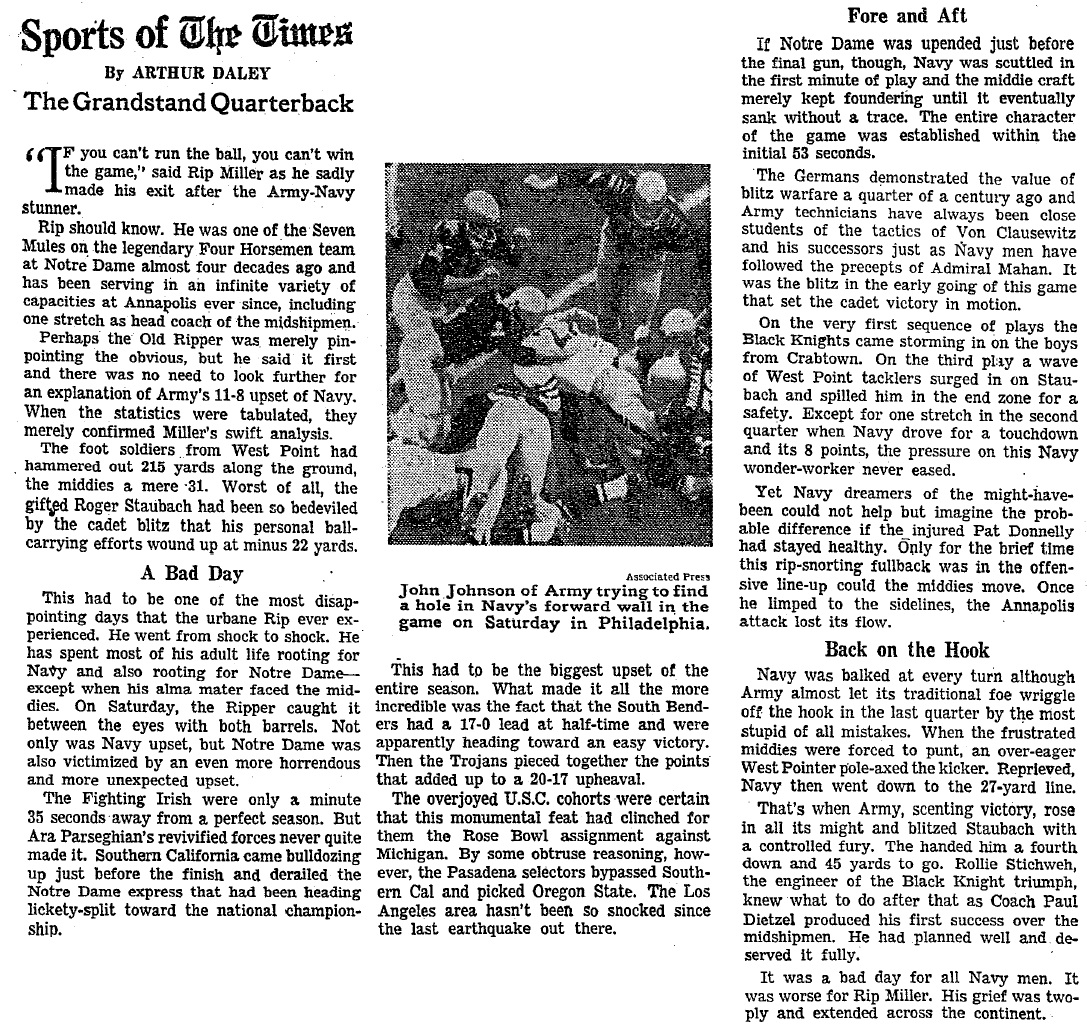
“What,” Navy’s Rip Miller had asked, is the name of the Army quwrterback?”

This was before the Navy game a year ago, and Navy was having a ball. No one had to ask who the Navy quarterback was– a QB who has accounted for 35 Navy touchdowns passing and running, and directed the Middles to eight touchdowns in two successive victories by 34-14 and 21-15.

To carry out the gag, if that’s what It was, the Navy announcer yesterday stumbled over Stichweh’s name, pronouncing it “Stee-witch.”

Stichweh, or Stee-witch, played more than 55 minutes (as did four mates; Zadel and wingback John Johnson -went 60 without relief).

Rollie, who had asked for this job after being a defensive man, as a sophomore, directed all of Army’s attack which, on the ground, crushed Navy, 215 to 31 yards. He ran, 13 times on pass options for 64 yards, second only to John Seymour’s 104, completed three of eight passes for 53 yards and a touchdown and was brilliant in his running and passing in the 77-yard march to the winning field goal. He also punted, a new chore, from shotgun formation, a switch from the quick-kick, and he played safety and ran back kicks and tackled.

PLENTY OF HELP

The sequel was Rollie’s redemption. He had all the help he needed from three senior backs – Seymour, Johnson and Don Parcells- who, through injury never had a chance to play a game together. They had their last chance and didn’t muff it.

Sonny Stowers and Pete Braun, offensive guards and on defense, linebacker and middle guard, respectively, also went more than 55 minutes to star on the valiant Army line with Zadel, Ron Butterfield, Champi, linebacker Townsend Clarke and others.

Army decided to play this game straight all the way, old-fashioned on the field, staid off the field. The Cadets were sedate in the stands- no sight gags, no bedsheets, no banners, no slogans. They merely roared defiance at the Midshipmen, who had all the slogans and jibes until the game started.

ARMY’S PRO BLITZ INTRODUCES ROGER TO STADIUM TURF
By SANDY GRADY
The Philadelphia Bulletin

PHILADELPHIA, If they weren’t so busy, a lot of guys might send tokens of condolence to Roger Staubach today – a get-well card from Y. A. Tittle, a posy of flowers from Ed Brown, a note of sympathy from King Hill.

Roger was initiated yesterday into the I-Spent-The-Day-On-My-Back Quarterback Club.

If he never knows the glories and delights of a professional quarterback, Staubach can always say he has tasted the breed’s miseries and bruises.

Army struck Roger with a raging, pro-style blitz to dominate this dark, glowering day, 11-8. To pro fans among the 102,000 sardines, it looked like Sunday came a day early.

“We had one idea–keep pressure on Roger or he’d kill us,” said Army linebacker Townsend Clarke, who called the defensive tune. “We’d rush once, then cover receivers next, anything to keep him guessing.”

Only a switch by Wayne Hardin foiled Army’s blitz long enough for one 69-yard Navy drive.

Hardin spread three pass catchers on the left side, rattling Army’s poise. “We had to forget the blitz and it shook us up,” said Clarke.

Only Penn State Rushed Harder

Otherwise, Army was hitting Staubach with everything but the Mule and Don Burroughs.

“In my first two Army games, I was dropped twice,” said Staubach ruefully. “I don’t know how many times it happened today. That was the hardest rush I’ve faced except for Penn State.”

When Paul Dietzel came North from the Bayous, he brought a glossy smile, a reputation for defensive genius, and a quiet, middle-aged, man named George Terry.

Maybe all three came in one package- because it was Terry, Paul’s defensive thinker, who laid the ambush for Staubach yesterday.

“Coach Terry set up what we call the 40 defense, something like the pros use,” said Sonny Stowers, the chunky kid who dogged Staubach all day. “We had four men up front, two middle linebackers, two outside men and Clarke would yell, ‘move’ signaling one side to blitz.”

That pro-style stampede put Staubach on his britches for two points before the customers had their flasks out. Clarke, sensing Roger would throw on a first-and 15 situation sent six guys blowing down Roger’s neck. Stowers did everything but rope-and-brand Staubach with an “A” for a 2-0 lead.

Mistaken Signal on Quick-Kick

“I couldn’t miss him,” said Stowers, who played 55 minutes despite leg cramps. “I just hit him at the belt buckle and held tight.” Dietzel was so impressed with his blitzing marvels he seemed to be sitting miserly on his 2-0 cushion-he quick- kicked twice on early downs.

“No, the second one was a mistake- Rollie Stichweh heard me yell a play and thought I meant kick,” said Dietzel. “Staubach is the hardest man to defense I’ve ever seen. I didn’t want to give him the ball.”

For a few, Middie- maddening minutes, Dietzel, seemed right about Staubach.

Army had an 8-0 lead, thanks to two devastating scissors plays by John Seymour and a rollout pass by Stichweh.

Then Roger cranked up a 19-play drive, smashing the middle with the gimpy Pat Donnelly, and throwing a circus two-point pass to Phil Norton. “Everybody had his arms around Staubach on that play but me,” said Dietzel. “How did he get it off?”

Nervous Nickerson Decides It

Now enter the game’s unsung hero, the Nostradamus of JFK Stadium, the best horse handicapper in captivity. He is Dietzel’s young assistant, Bill Rowe, a center on the ’59 team. As Army left its concrete boudoir for the last half, knotted 8-8, he put an arm around Barry Nickerson.

“Keep your head up, Barry,” he said to the Miami kid who had flubbed Army’s extra-point ‘try. “You’re going to kick one to win the game.”

It was a great feat of precognition with the sky turning coal-bin dark and 9 and 1/2 minutes left, Nickerson hit a 20-yard field goal to break Hardin’s five-year hypnosis of Army. “I had told the guys I’d kick one,” said Nickerson, who had beaten Iowa State the same way. “But sir, I have never been so nervous in my life.”

Staubach still had some bullets to fire. But too often he was shooting toward the gray, jagged clouds, with Army rushers doing handstands atop him.

On the last series of his college life, the unhappy dodger lost 10, then 13 yards, and when the Army cannon boomed the final play, Roger was buried like a turnip under soldier flesh.

“We came here,” said Dietzel, who was spouting a platitude a minute, “to finish what we started last year.”

Happy Day for Cadet Ray

But the happiest kid in the Army chambers was an unknown sophomore, David Ray. When the West Point commandant, Brig. Gen. Michael Davison, jumped on a table to congratulate the Cadets, he said all penalties for rules infractions were suspended, The cheering cadets yelled, “Ray, Ray. What about Ray?” “Oh him, too,” sighed the brasshat. “Boy, ol’ Ray was supposed to walk the area with a rifle for weeks,” said a Cadet. “Hey guys, we beat Navy for Ray, huh?”

Whatever the incentive, Army gave Staubach a dreary farewell party. Only guys such as Tittle and Brown and Hill are inured to the special kind of hell Roger knew on his, last, doomed day.

MIDDIES MISSED MANY GOALS

PHILADELPHIA, The motif, set by Navy, was “Even The Score In ’64” and even though the Middles did not their goal in the 65th game with Army yesterday at John F. Kennedy Stadium, they did achieve the edge in the extra-game activities that makes the Army-Navy a colorful extravaganza.

Navy provided all the color, both before the game and between the halves. Army, in fact, seemed, to disdain such activities as immaterial, for the Corps of Cadets one seated not even bothering to form the traditional lane through which Its team runs out on the field.

The Middies, on the other hand, were busy with cute gimmicks, electrically and manually. First, they put up electric signs on two buildings outside the Stadium reading “Go Navy and “Beat Army.” Inside the grounds, they erected another electric display that would have done credit to Times Square. It blinked “Six And Even,” wishful thinking that their team would even the series at 30 victories each (five having been tied) and take their sixth in a row from the Cadets.

Then, among other displays there was group clad in the national costumes if there are such of several foreign countries. Each Middie carried a banner which read, “Beat Army, Neighbors,” Inscribed in the native language of the country including a banner printed in Hebrew.

With President Johnson and Secretary of Defense Robert McNamara engaged with the unpleasantness in Viet Nam and the Congo, the highest- ranking member of the Washington brass present was Cyrus R. Vance, Deputy Secretary of Defense. But Secretary of the Army Stephen Ailes and Secretary of the Navy Paul Nitze, air well as Willard Wirtz, Secretary of Labor, were on hand representing the Cabinet.

It is to be hoped, however, that the brass had a little less trouble getting into mammoth John F. Kennedy Stadium than did the common folk. The traffic crush approaching the arena was worse than the Long Island, “messway” on a sunny Sunday afternoon when the Mets are playing and the World’s Fair operating.

It took 90 of the Jersey pike minutes to traverse the 80 miles from midtown Manhattan to the Walt Whitman Bridge exit and almost the same amount of time to cover the four or five miles from the bridge to the park.

Why, oh why, will people insist in driving to the Army-Navy game when public transportation is so much more convenient? The public address announcer, who is the assistant plebe crew coach at Annapolis, called him “Stiwich,” and this after some hesitation, when he introduced the starting Army line-up. One the game got under way, however, he pronounced Stich–often.

On the first play from scrimmage, the Middles were so anxious to get moving, their tight end, Jim Ryan, was past the Army defensive secondary even before the ball was snapped. His bit of eagerness, however, cost Navy five yards for being offside.

Navy had the ball for only six plays from scrimmage in the second quarter when it was given a life by an Army penalty for holding. So, instead of giving up the ball to Army on the Cadet 40, to which their Tom Williams had punted, the Middies got it back with a 15yard bonus, and from there drove to the touchdown that tied the score.

Between halves Philadelphia’s cavernous Municipal Stadium was officially re-named John F. Kennedy Stadium by Mayor James Tate.

IRVING T. MARISH. Staff Correspondent- N.Y. Herald Tribune.
——————————-

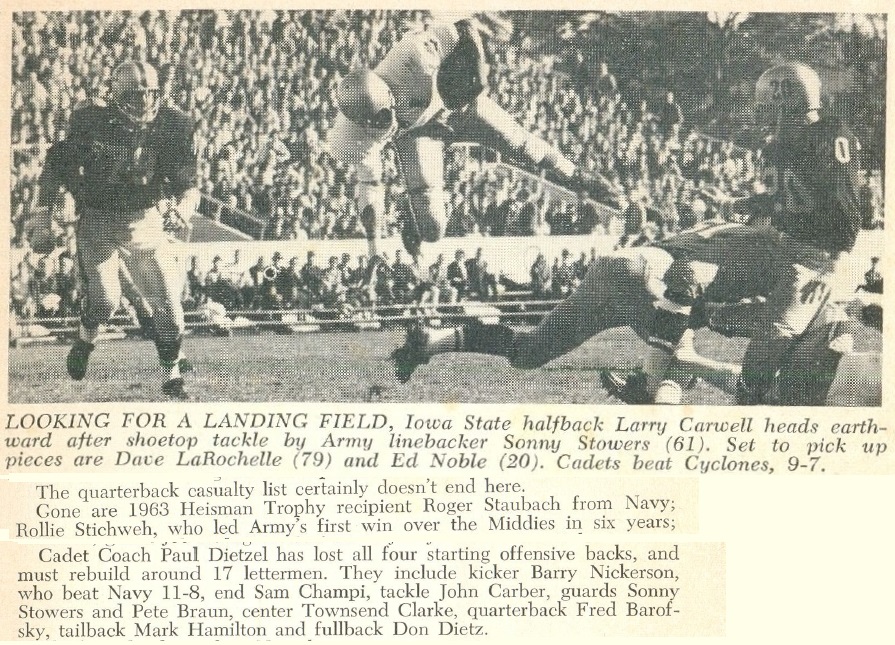
ArmyFB_1964_LaRochelle_Noble_Stowers_NCAAGuide1965


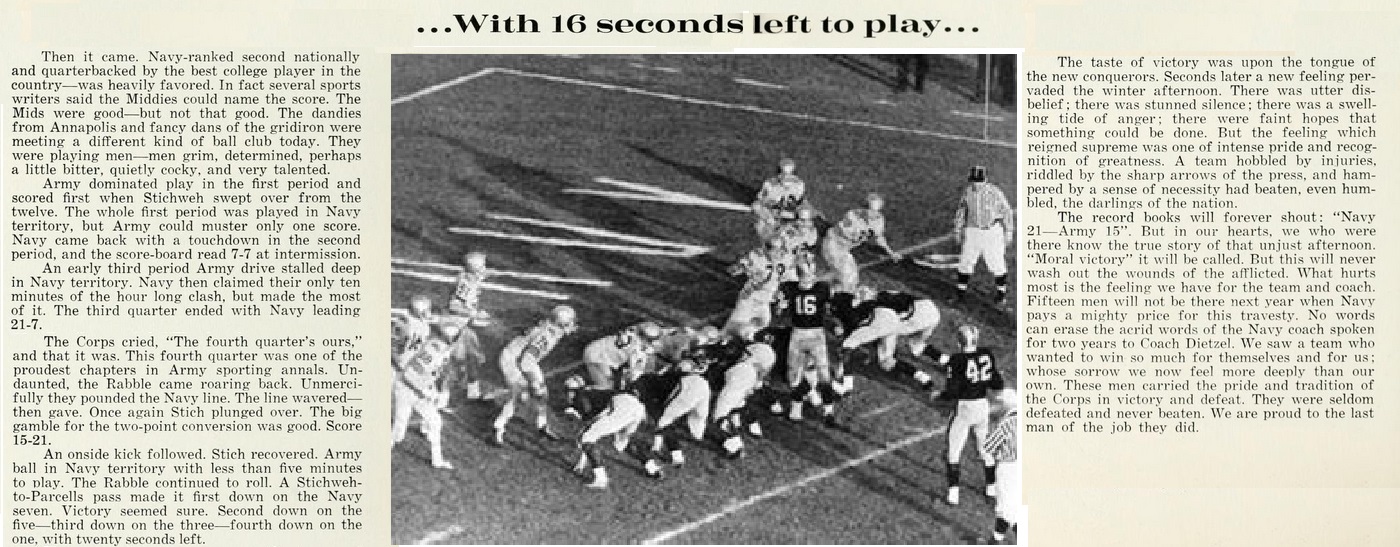
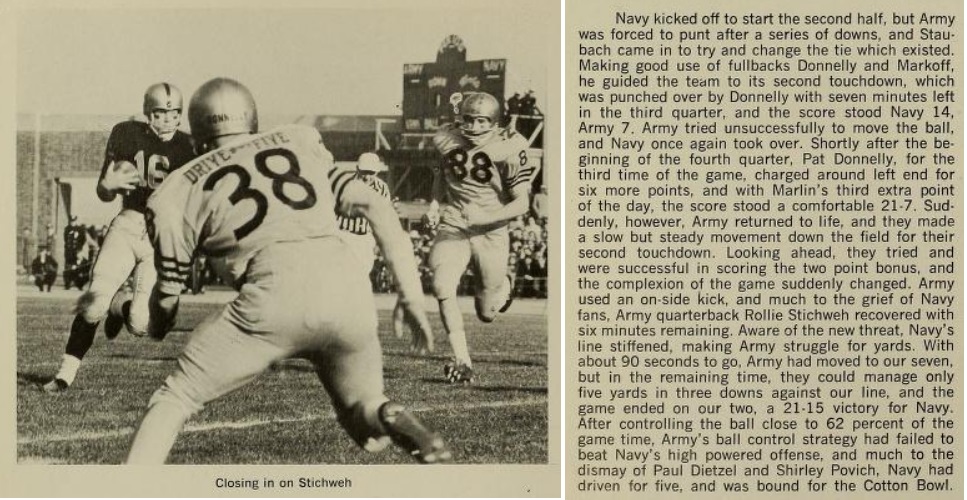
1963 Team

Army 1963 7-3
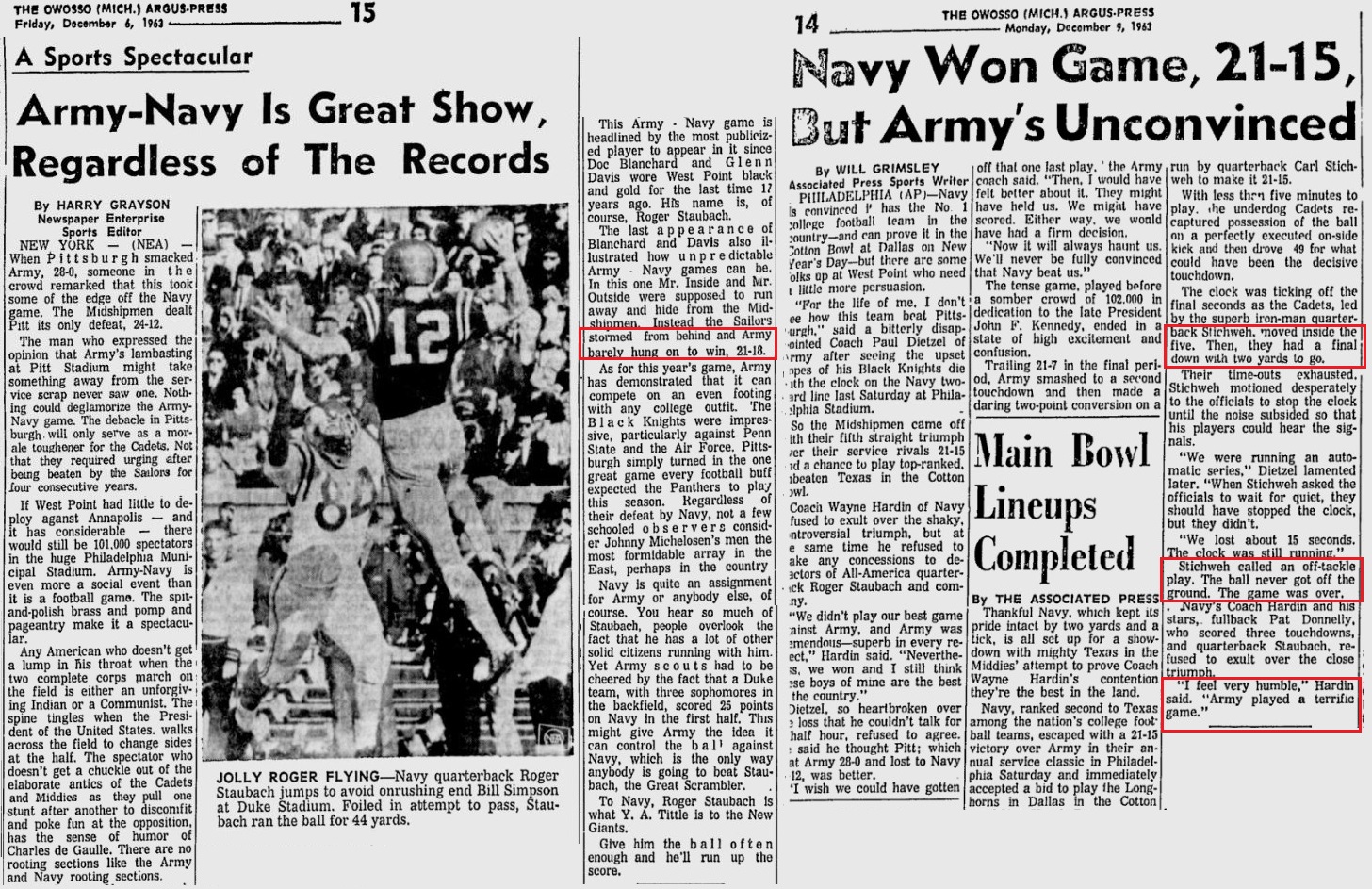
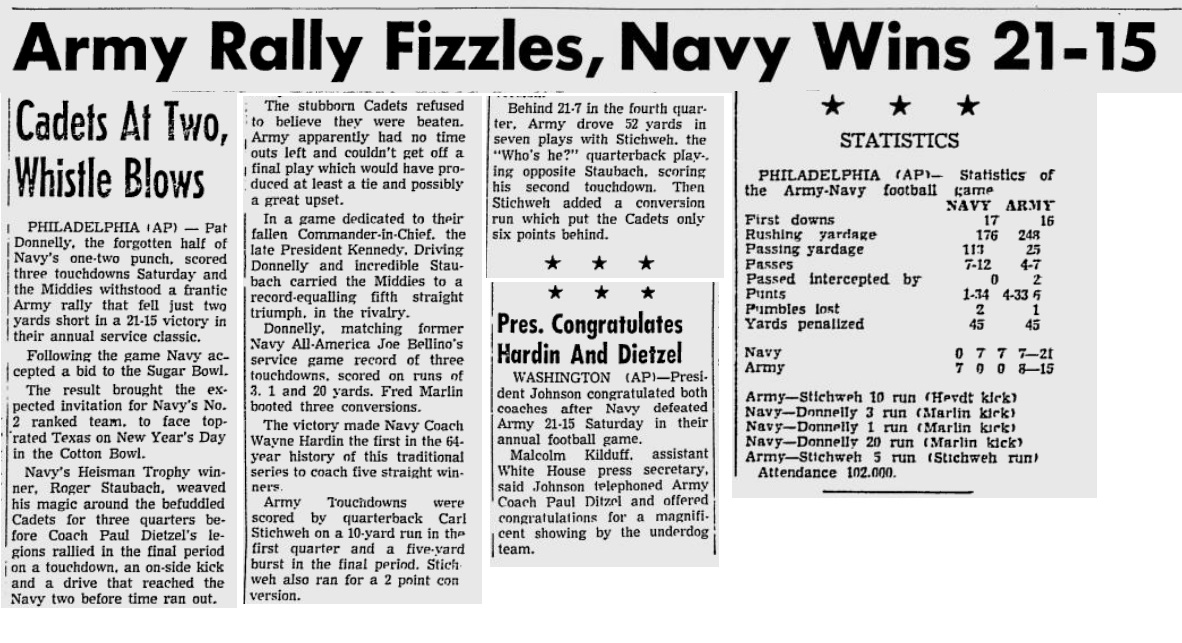
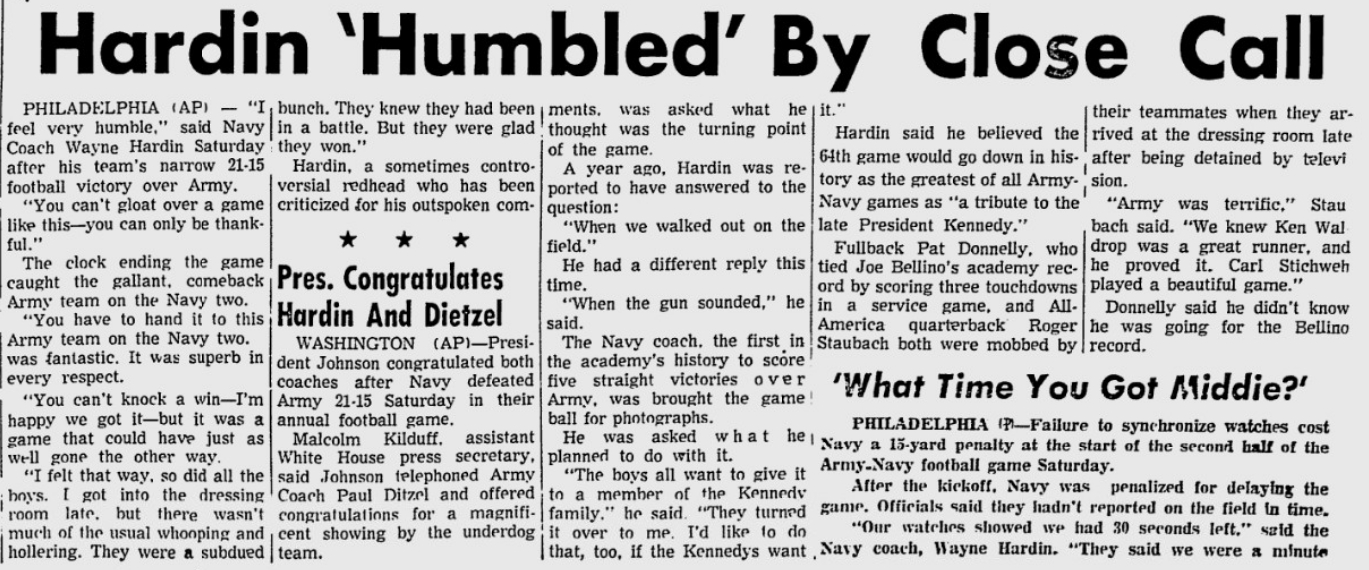
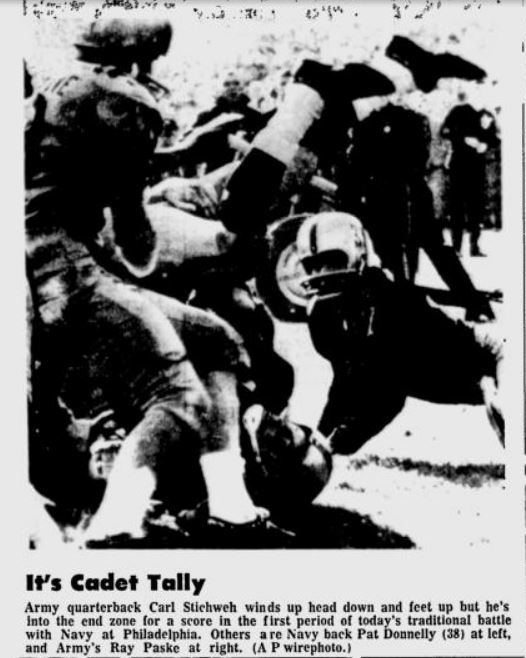
1963/12/07 Army 15 – Navy 21 L

Coach Paul Dietzel 1962-1965
LSU 46-24-3 National Champs 1958
Army 21-18-1
South Carolina 42-53-1
Total: 109-95-5

Army:
1962 Army 6-4
1963 Army 7-3
1964 Army 4-6
1965 Army 4-5-1
Army Totals: 21-18-1

http://en.wikipedia.org/wiki/Paul_Dietzel

————————-
By Rabble
Apr 26, 2003

Football: 1963 football preview – A look back at the 1963 football preview.

1963. Its Coach Paul Dietzel’s second year as Head Coach of West Point Football. In this pre-season report,

Jesse Abramson of the New York Herald Tribune gives a detailed description of the Black Knights and a new quarterback by the name of Stichweh–

The day after Army took that pasting from Navy for the fourth straight year, Paul Dietzel and his troops stopped for lunch on the mournful drive back to West Point. In a Jersey roadside restaurant the business of finding a new quarterback, some kind to answer to Roger Staubach, began.

“It wasn’t a happy lunch,” recalled Dietzel yesterday. “Every detail of that horrible debacle was, still is, firmly engraved on my mind. Rollie came to our table and said, ‘Coach, I think I can do the job at quarterback; can I have a try at it?’ And I said, ‘You’re dad-burned right you can have a try.'” The next day Carl Stichweh of Williston Park, L.I., who is Rollie, began warming up the arm which had been rusty since he quarterbacked Mineola High. On a handball court through the winter he played pitch-catch with Cammy Lewis, one of the three graduating quarterbacks and in the spring Rollie hammered down his claim to the job, proving he was a passer, completing 85 per cent (no one is that good in a game) and taking off as a runner on options.

As a plebe he had been converted to halfback for his speed; as a yearling last year he played defense with the Chinese Bandits while Army’s offense sputtered (averaging only one touchdown in major action) for want of a Grade A passer. Stichweh, pronounced Stitch-way by all except Dietzel who rhymes it with that-a-way, is a blond six-footer of 185 pounds, the Phys Ed champion of the Corps. He may not be the complete answer to

Navy’s Staubach, but the QB problem is the one Army has to lick with new men.

In a Capsule New quarterback and health of ends are keys to improved offense, while Dietzel dotes on middle of interior line. Formation used: Flip-flop-split-end T with wingback. 1963 Schedule: Sept. 21, Boston U.; 28, Cincinnati. Oct. 5, at Minnesota; 12, at Penn State; 19, Wake Forest; 26, Washington State; Nov. 2, Air Force at Chicago; 9, Utah; 16. at Pittsburgh; 30, Navy at Philadelphia.

—–

The Black Knights have, as an alternate who directs the second unit, another good runner with a fine arm. He is sophomore Curt Cook, square first name Shannon, a 6-1; 187-pound Oklahoman. With these quarterback rookies, plus seasoned hands everywhere else on the first team (some in new positions), Dietzel contemplates greater progress in the second year of his mission on The Plain. The first civilian non-graduate in the football chair at West Point knows that winning football games from Penn State, Pitt, Minnesota, the Air Force et al, is desirable but means nothing if the Navy game is lost. Since Red Blaik’s unbeaten 1958 season, Army hasn’t had a losing season, but it hasn’t beaten Navy. The schedule is being improved, too. Army will be tougher, smarter, faster, vows Dietzel.

His chief concern besides quarterback is at end, not because he lacks talent there but because four of his top six ends missed spring drills and the first-string pair was re-injured at Camp Buckner before the squad of 70 returned to the academy this week. Army had trouble mustering sound ends last year. “Our offense, basic and simple last year, will be enlarged by half again as much,” said Dietzel. “We’ll throw more (Army averaged

only 11 passes a game) and more successfully. Instead of a slot T, we have a flip-flop split-end T with wingback, the split-end and wingback always the same, left or right formation, which explains flip-flop.”

Gone are the Regulars, Go Team and the exotic Chinese Bandits with their coolie-hatted rooters, as two-way

football, to Dietzel’s regret, replaces three-team platoon operations now banished by 1963 rules.

Stichweh and Cook figure to get more backfield aid. Ken Waldrop at tailback is a walloping 198-pound ball

carrier now running with authority. Rounding out the heavy-weight foursome are fullback Ray Paske and wingback John Johnson, solid, steady performers, Johnson a crack receiver and all strong on defense, a first requirement under Dietzel.

The breakaway runner Army has needed may have arrived in Tom Smith, tailback behind Waldrop, a 188 pound yearling from Kinnelon, N. J., outstanding athlete in New Jersey In his last year at Butler High. “He’s like the good Army backs of years gone by,” said Dietzel, recalling Bobby Jack Stuart and Gil Sptehenson from his

earlier coaching stint under Blaik.

Dietzel’s pride on a formidable line is the middle trio center Lee Grasfeder, guards Tom Cunningham and Dick

Nowak, the line-backing stalwarts of the Chinese Bandits, now geared for two-way action. Cunningham had been

a fullback. Nowak now deploys in the line of defense. They are tackling terrors.

At 202 to 214 pounds, they are not Goliaths, but, notes Dietzel, “they are as good as we’ve ever had and will match or outmatch any one we play.” Ed Schillo, shifted from guard, and Bill Zadel, head a tackle corps that includes Chet Kempinski, Tom Kerns and sophomore John Carber (6-4, 225), outstanding plebe lineman last year.

Bill Chescavage, coming back from a springtime knee operation, is the split end, Bill Sherrell, ex-tackle, the tight end. Both have to prove they can stay sound of limb. Dietzel has made a number of switches and is happiest over the shift of John Seymour, Army’s top rusher (539 yards) from tail to wing- back, and Sonny Stowers from wingback to guard behind Cunningham.

“Spectacularly successful” Dietzel says after a week’s appraisal. “Stowers will be really great as a guard.”

Another newcomer besides Smith, Cook and Carber who will be useful is Sam Champi, from Seton Hall Prep, at split end.

–

Three-Deep ( Lettermen in Caps)

LE-CHESCAVAGE,Champi, Pfeifer
LT-SCHILLO, Carber, KEMPINSKI
LG-CUNNINGHAM, Stowers, Dusel
C–GRASFEDER, BUTTERFIELd, Braun
RG-NOWAK, VAUGHAN, White
RT-ZADEL, KERNS, Casillo
RE-SHERRELL, HENNEN, Koster
QB-STICHWEH, Cook, BEIERSCHMITT or Cosentino.
LH-WALDROP, Smith, PETERSOn
RH-JOHNSON, SEYMOUR, Hawkins
FB-PASKE, PARCELLS- Abraham
(Kick specialist-HEYDT)

———————————————————-

armyfb_1963_vsbu_various_sep221963
ArmyFB_1963_vsBU_various_Sep221963
armyfb_1963_tommysmith_westpointwingback_

armyfb_1963_vspsu_various_oct131963
ArmyFB_1963_vsPSU_various_Oct131963

–


–

armyfb_1963_ruckus_various_oct191963
ArmyFB_1963_Ruckus_various_Oct191963

armyfb_1963_vswakeforest_various_oct201963
ArmyFB_1963_vsWakeForest_various_Oct201963

armyfb_1963_vswashingtonstate_various_oct271963
ArmyFB_1963_vsWashingtonState_various_Oct271963

——————————–
By Rabble
Apr 30, 2003

Tailgating – A look at Tailgating at West Point long ago.

Tailgating has always been a big part of the fun of a West Point autumn football Saturday as can be seen by this story that appeared in the New York World-Telegram and The Sun 40 years ago. Capacity back in those days at Michie was about 31,500. The new stands on the east side had been completed just the year before but the second deck on the west side was yet to be built.

Those were the days when temporary stands were erected on the playing field. Today however, this is no longer the case as the second deck at Michie more than accommodates the fans on most football Saturdays nowadays-

FOOTBALL TAILGATE SET DISCOVERS WEST POINT
By Irving T. Marsh
The New York World- Telegram And The Sun (now defunct)
October,1963

Football’s tailgate set, armed with moppets of all sizes and ages as well as fancy food and martinis, has a new Saturday afternoon haven, or perhaps it should better be said that more members of the set have discovered it this year than ever before.

That haven is West Point, N. Y., on the days Army’s football team plays at The Plain. For two Saturdays in a row now, picturesque Michie Stadium has been sold out to its capacity of 30,000 plus and last week’s game attracted a record crowd of 31,200.

This despite the fact that the two opponents–Wake Forest and Washington State -didn’t figure to provide much competition and didn’t. But weather, lovely surroundings, the glamour of Army football and the new interest

of the younger young set will make 1963 the best season at the gate Army ever has enjoyed at home.

There’s one more game left at Michie, with Utah two weeks hence. It’s almost two-thirds sold out now. And that one shouldn’t be too much of a test for the Cadets, either.

Yet the boys and girls and their offspring are descending on The Plain in ever increasing numbers.

This new found affinity of the devotees was merely an item dropped casually at the weekly Football Writers

Association Food and Gabfest yesterday at the Hotel Manhattan but it provided the stimulus for a little further investigation.

In four home games last year, Army drew 101,330 to the Point. It should go over that figure by about 25,000 this season.

Curricularly, however, the Cadets are slightly more interested in their game this week, with Air Force Academy at Chicago. The good news for that one, according to Capt. Chuck Lytle, associate plebe coach who was yesterday’s emissary from the Point, was that Tommy Smith, the sophomore left halfback, will be completely ready for action against the Falcons and that can mean considerable to Army’s ground attack.

Smith, from Kinnelon, N. J., has been hailed as the most exciting runner Army has had since Glenn Davis. He was tremendous in his first real effort against Cincinnati in September, but was injured in that one and didn’t play until the Washington State game last weekend. He participated in one play against the Cougars and was hurt again. But not seriously. He could have returned to action but he wasn’t needed. So he sat on the bench the remainder of the game to await the battle with the Air Force.

Altogether, according to Capt. Lytle, Army is in fine physical shape and only Curt Cook, sophomore quarterback who was hurt in pre-season, and Johnny Johnson, halfback are on the wounded list.

———————-


armyfb_1963_vsaf-corps_chicagotribune_nov31963
ArmyFB_1963_vsAF-Corps_ChicagoTribune_Nov31963

armyfb_1963_vsaf_various_nov31963
ArmyFB_1963_vsAF_various_Nov31963

ArmyFB_1963_vsAirForce_DailyPress_Nov31963

armyfb_1963_vsaf_chicagotribune_nov31963
ArmyFB_1963_vsAF_ChicagoTribune_Nov31963

armyfb_1963_vsaf-waldrop-chescavage_chicagotribune_nov31963
ArmyFB_1963_vsAF-Waldrop-Chescavage_ChicagoTribune_Nov31963

——————
By Rabble
Apr 20, 2003

Army vs Air Force, 1963 – A look back at the 1963 Army- Air Force game.

The following is the storyline on the 1963 Army-Air Force Football game played at Soldier Field, Chicago. The entire Corps of cadets attended the contest in which Army prevailed, 14-10, winning in the last minute and a half, a close and hard-fought game between two new rivals—

ARMY WINS

Army Grounds Air Force 14-10 Steve Waldrop Scores 2 TD’S

GAME AT A GLANCE
ARMY (14) AIR FORCE (10)

16 First Downs 10
246 Yard, Rushing 73
45 Yards Passing 96
5 Passes Attempted 6
4 Passes Completed 5
83 Yards Lost Penalties 20

CHICAGO, November I, 1963— Halfback Ken Waldrop’s spectacular broken-field running, capped by a 17yard

touchdown dash with just 81 seconds to play today brought Army back from behind to a 14-10 victory over Air Force.

Waldrop starred in the second service spectacle ever played in Chicago’s vast Soldier Field.

Even though President Kennedy canceled his appearance at the last minute, the classic drew 76,660 fans to watch the 2,500 corpsmen from each school in 45-degree temperature under sunny skies.

Army put on the show, but it took Waldrop’s brilliant running in the final half to give the favored Black Knights their sixth win-against one loss. It was the third defeat against four wins for Air Force, which has yet to beat another service academy.

HEYDT MISSES FG

Waldrop, Army’s leading ground-gainer sparked the Black Knights from behind with a 78-yard punt return to the Air Force one with only five minutes left in the third period. He got the touchdown on a one-yard plunge.

After Air Force retaliated to go ahead again, Waldrop powered a 65-yard drive for the Cadets. He carried four times for 34 yards, including the 17-yard touchdown jaunt.

Dick Heydt, Amy’s placekicking specialist, converted after both touchdowns. But he missed his first field-goal try in six attempts in the-first period in Army’s best scoring effort until Waldrop took charge.

Air Force’s Terry lsaacson completed a 47-yard pass to Fritz Greenlee to set up a one-yard scoring plunge by Isaacson for the Falcons’ only touchdown. Bart Zoladay kicked a 36-yard field goal for the Falcons’ other points.

AF STALLS

Air Force got across the 50 into Army territory only four times, one drive, stopping on the Cadets’ 40, and the other on the 39 when Ray Hawkins intercepted Isaacson’s pass.

Carl Stichweh, Army’s signal-caller, had one pass intercepted, by Joe O’Gorman, before Holaday’s field goal.

But he gained five yards on four completions in eight attempts while Isaacson hit only five of 16 tries for 86 yards.

Army’s rushing line limited the Air Force to only 73 yards on the ground while Waldrop, who carried 76 yards in 15 tries, and his mates crashed through the Falcons for 246 yards.

Army 0 0 7 7-14
Air Force 0 3 0 7-10

SCORING-AF-FG Holaday 36. Army-Waldrop I plunge Heydt kick. AF-Isaacson I plunge Holaday kick. Army-Waldrop

17 run Heydt kick.

Attendance: 76,660.

ArmyFB_1963_vsPitt-pre-injuries_NewsDispatch_Nov141963


ArmyFB_1963_Army-Navy_HarryGrayson_OwossoArgusPress_Dec61963

–

ArmyFB_1963_vsNavy_OcalaStarBanner_Dec81963

ArmyFB_1963_vsNavy_OcalaStarBanner_Dec81963

ArmyFB_1963_vsNavy-Hardin_OcalaStarBanner_DEc81963

ArmyFB_1963_vsNavy-Hardin_OcalaStarBanner_Dec81963
–

armyfb_1963_vsnavy_stichwehtd_spokanedailychronicle_dec71963

ArmyFB_1963_vsNavy_StichwehTD_SpokaneDailyChronicle_Dec71963

–


–


–


–

–

armyfb_1963_vsnavy_dec71963
–

ArmyFB_1963_Stichweh_64USNALuckyBag_yrbk

–

–

articles provided by Russ “Skip” Grimm – Class of ’76

———————

By Rabble
May 27, 2003
Army vs Navy, 1963 – A look back at the 1963 Army-Navy game.

In years gone by, there were many great Army-Navy Football Games. There were some so-so games that were interesting but largely forgettable and a few that were forgettable. One game that stands out in RABBLE’s mind could be characterized in the great category. It remains one of the great ones in my opinion, a game that was nearly never played at all.

Following the assassination of President John F. Kennedy on November 22, the general consensus of opinion was that the game should be cancelled that year due to the death of the commander-in-chief just 8 days earlier. At the request of the Kennedy family, it was decided to play the game but it was rescheduled a week later than originally intended to be played.

In this trilogy of articles, one can relive the excitement and the greatness of the 1963 game as one of the truly finest in this most storied of rivalries.

—————————–

ARMY’S BIG JOB-PLAY OWN GAME

By LEN ELLIOTT
Sports Editor
Newark Evening News (now defunct)

WEST POINT-“Don’t push the panic button.” That is not one of, the signs in Army football headquarters up here on the wintry Hudson. But from the way Coach Paul Dietzel talked yesterday about Navy’s Roger Staubach, it is very much on his mind. You can be sure it has been impressed on the Army players, as a part of the psychological preparation for the service game in Philadelphia Saturday.

Dietzel was being pressed yesterday about Army’s plans to stop the guided missile of the Severn. He would not, of course, be specific but he did say:

“You have to remember that nobody has stopped Staubach. Our Jim Valek has been scouting Navy all year and he has heard some funny conversations among scouts at their games. One scout told another that his team was going to put the heat on Staubach; that was the only way to stop him. Against that team Roger set a new Naval Academy record for offense.

The next week another scout said the first one had the wrong idea entirely. His team, he said, was not going to rush Staubach, but lie back and cover receivers. “We’re going to let him pass but we don*t want him to run.” Against that team Roger set another academy record for passing over 300 yards.

“The point is,” Dietzel ‘ continued, “that you’re probably not going to stop him. The important thing is that you play your game. You’ve got to expect him to complete some passes and make some runs. When he hits his first pass you can’t push the panic button and decide your defense is hopeless.”

Psychological Pressure

This could be important. Staubach has been built up to such ominous proportions-and rightly so-that he exerts at heavy psychological pressure on all opponents. When a team spends a week getting ready for him (three weeks in Army’s case) and he still bombs them in the first quarter, either running or passing, it’s easy to become demoralized and fall into a “what’s the use” attitude.

Obviously Dietzel doesn’t want any such collapse Saturday. The pressure on Army is extremely heavy, though, and so is the sense of frustration. The Cadets have lost four games in a row to Navy, two of them by big scores, and the situation is insufferable up here. No one is sure what the repercussions of another bad beating might be. It could come, too, if Army becomes demoralized Saturday.

Visible signs of determination to throw off the Navy chains are few here. The death of the President and the official 30-day period of mourning have muted the usual pre-game manifestations. Only one sign hangs from any building. It adorns the front of Grant Hall and it reads simply:

“We must. We can. We will.”

On the bulletin board in the equipment room of the gym, where the boys put on their shoes before going out to practice, there are some reminders, such signs as:

“Mothball the Fleet.” “Crumble Crabtown.” “The Time has Come.”

Most significant is a picture in the center of the board. It shows a Navy player with the number 12 on his white Jersey, running through three Army tacklers. Under it is the caption:

1 December 1962
Navy 34, Army 14
Remember Staubach!

On the physical side Dietzel says the team is in its best shape since the Air Force game Nov. 2. All the wounded who can recover have done so. This means the only boys not available are Tom Smith and Johnny Johnson, backs. It also means that Rollie Stichweh will start at quarterback, Ken Waldrop and Don Parcells at the halves and Ray Paske at fullback. If Army kicks off Saturday, Bill Chescavage will start at left end. Sam Champi of South Orange will be in if Army receives. Otherwise the first line will be what it has been practically all season-Bill Sherrell at the tight end, Ed Schillo and Bill Zadel at the tackles, Tom Cunningham and Dick Nowak at the guards and Lee Grasfeder at center.

Cook Will See Action

Curt Cook, a passing quarterback who was operated on before the season started but who was used in the last quarter of the Pitt game, is very likely to see considerable action. There are two reasons for figuring Cook will be in there: (1) he is Army’s only good passer and, (2) Dietzel intimates that Stichweh will play some defense. The talented Stichweh is one of the best defensive backs Army has but he hasn’t been used on defense this year because he has been running both the first and second units as quarterback.

The only time he got any rest was when the other team had the ball, at which time Jim Beierschmitt was wild-carded for him. If Cook does some quarterbacking this week, Stichweh can help the Army defense as a safety man. In the event of casualties to either, Frank Cosentino will get the call.

Despite the snow of the last few days, which has turned the rugged highlands here into a scene of dark, wintry beauty, Army has been working outdoors daily this week. The old plains field is clear, being covered at night and uncovered just before the boys come out the next afternoon.

There will be a rally tomorrow night but it won’t be the lavish production of other years. The squad will leave by bus Friday morning for Philadelphia and loosen up in the stadium in the afternoon.

——————–

FIVE FOR NAVY, 21-15
by RED SMITH
The New York Herald Tribune (now defunct)
PHILADELPHIA– SILENT In the sunshine, 100,000 citizens stood with heads bared as 100 cadets from West Point and 100 midshipmen of Annapolis drew up In 18 alternate ranks at the north end of the green-dyed field. In flawless alignment, the ranks moved to midfield, halting there to face a color guard from the other end zone.

Cadet Rithard A. Chilcoat, first captain of the corps, made the simple announcement: The cadets and midshipmen dedicated this game to the memory of our late commander-in-chief, John Fitzgerald Kennedy.

First captain of the midshipmen, Walter W,. Kesler asked for a minute of silence.

The West Point band played the National Anthem. From that moment on, nothing seemed less important than football, yet seldom in the 73 years since cadets and midshipmen first butted skulls in fun has an Army-Navy game furnished more captivating entertainment than this 64th Installment of the series.

Seldom has there been a keener match than this rouser between the heavy favorites from Annapolis and the victims of four consecutive conquests by the sea arm.

The way Army fought for this one, only the clock could have stopped the rabble’s rush, and only the clock did, 21-15.

Maybe it was the calculated insult embroidered on every fetching Navy playsuit which brought out them beast in Army. In recent years the midshipmen have turned this meeting into a fancy dress ball, decking themselves out in uniforms of unaccustomed splendor just for the Army game.

This time they turned up all regal shimmering gold from helmets to the cunning half-socks above their two-toned booties. Across the withers of each gob read the words, “Drive for Five,” an exhortation in Navyese, a galling reminder to the Cadets that they had lost four in a row.

Whether Army took this as a goad or whether the team was operating under forced draft even before the kickoff, the delegates from up the Hudson simply smashed Navy flat the first time Army had the ball, going 65 yards on a pounding running game for the opening touchdown.

Navy had held the ball for only three plays, and was in the bucket, 7 – 0.

Not many teams contain the wonderful Staubach for 24 minutes and nobody does it for 60. In the 10th minute of the second period he steered Navy to the 2-yard line and sent the 200-pound fullback, Pat Donnelly, in from there for the tying touchdown.

Then In the third quarter with Staubach passing and Donnelly running, Navy went 90 yards to take the lead, and in the fourth two 15-yard penalties for roughing helped Annapolis pad the margin to 21-7.

Before Navy’s third touchdown, Army had been stopped on fourth down with inches to go for a first on the Navy 7. After the touchdown the Cadets went 52 yards and weren’t stopped until Carl Stichweh, the quarterback, got his cleats in the end zone turf. Stichweh ran for a two- point conversion, too, so now Navy’s lead was a mere 6 points at 21-15.

Army did the obvious thing and did it perfectly -a carefully aimed 11-yard kickoff which Stichweh captured for West Point, to begin a drive to the threshold of victory as the ball game ticked away.

1963 New York Herald Tribune Inc.

——————————-

Dietzel’s New Bandit-Stichweh

ROLLIE THE ROBBER BARON ALMOST HEISTED VICTORY

By SANDY GRADY

CLEVER DEVIL, that Paul Dietzel. They outlawed his Chinese Bandits, so the Army inventor hauled a new gadget to Philadelphia Stadium-a lone German bandit named Carl Roland Stichweh, who almost pulled the boldest daylight heist since the Brinks job.

When this shimmering, blue-eyed day began, there was only one quarterback in the Army-Navy game-Roger Staubach, who had gotten hotter notices in the sporting print than Khrushchev draws in Pravda. By dusk, there were certainly two quarterbacks on the scene. Stichweh vs. Staubach had given this cold, concrete barnyard its closest, toe-to-toe war since Marciano vs. Walcott.

Rollie the Robber Baron almost swiped everything but Navy’s mustard-yellow britches- indeed, he came within one play of stealing the Middies’ 21-15 victory. Army may forever remember the 1963 game as Dietzel’s Unfinshed Symphony, the clock catching the Cadets two yards from a walloping upset, but the controversy should not obscure Herr Stichweh’s heroics.

“Stichweh was the best quarterback on the field,” said, Dietzel of his pale, wheat-haired Teutonic marvel. Well, what about it, Wayne Hardin? “Stichweh didn’t surprise me,” said Hardin. “He’s a helluva football player. A lot of guts.”

Herr Rollie Lives Up to Name

IN GERMAN, Stichweh translates as “sharp, pain” and Herr Rollie certainly gave one to Navy right in the neck. If statistics mean anything in such a fluid, see-saw afternoon, Stichweh measured against Staubach like this: He was a better runner (10 yards to 55 yards), but not so sharp a passer (three for 25 yards). It is as impossible as comparing sirloin steak with pie a la mode.

“We’re different types,” Stichweh said,”his cheeks coloring when questioned about Staubach. “Staubach is very capable. I’d better leave it at that.”

Staubach had a victor’s warmth toward the vanquished: “Rollie’s great. He’s just a terrific runner.” It was a year ago that Stichweh busted the No. 1 rule of every buck private: “Never volunteer.” On the bus leaving Philadelphia Stadium, Rollie leaned over to Dietzel and said, “Sir, I know we’re losing all three of the quarterbacks and I’d like to give it a try.” A defensive back, Rollie had been a fair passer at Mineola High, L. I., but he was the swiftest bloke on Dietzel’s squad as Navy discovered repeatedly on Stichweh’s rollouts.

Grabbing the spotlight away from Staubach, of course, is tougher than stealing a scene from Jackie Gleason. Stichweh did it the hard way – “he played 55 minutes, going both ways,” reminded, Dietzel. There were raw, red welts on Rollie’s back as testimony to the ordeal.

“I’m just sorry we couldn’t win it for the 14 seniors on this club,” said Stichweh, draping his sinewy, 6-4 frame in Army gray, “I guess I’ll never forget the end of this one. I was yelling to the guys, calling Waldrop to run a power sweep off tackle, but they couldn’t hear me for the crowd noise. Then the referee picked up the ball and handed it to Navy’s (Tom) Lynch and I knew the game was over.”

Damp-eyed Cadets filed by Stichweh’s locker, all of them shaking his hand with a variation on the same comment: “Rollie, you were the greatest on the field.” Maybe the only trophy they could take away, though, was Hardin’s gracious admission: “It was unfortunate for Army, because one more play would probably have taken them in for the victory.”

Even for Army-Navy, the head- banging was usually fierce. “I’ve never played against a team that hit that hard,’ said Staubach. “Whew, they were racking us up. We couldn’t play our real game because they were knocking us over our feet.” And as Roger noted, two defensive plays were pivotal moments Army stopped Navy early on its goal, and Navy later bashing in Army four-and-one on the eight- “I called a bad play,” Dietzel moaned.

Stichweh and Dietzel came with one thought: ram the ball down Navy’s throat on the first drive, control the ball, never let up the pressure. It was a simple as repeatedly conking a guy on the temple with a ballpeen hammer- Stichweh would roll right or left, and then Waldrop would burst to the right on a weakside reverse. With those two plays, Army jammed 65 yards to score and kept Navy in 60 minutes of trouble.

Cadets Wouldn’t Give Up

If Staubach was less impressive than usual, Hardin knew why. “We didn’t have the ball enough,” said Hardin. And Staubach said to his dad, eyebrows raised in disbelief, “Why, I didn’t get my hands on the ball but one time in the last quarter, those guys wouldn’t give it up.’

A tough ground-slogger named Pat Donnelly, who scored three times, probably saved Navy’s hide. “He’s the next All American at Annapolis,” crowed Rick Forzano, the guy who recruited Staubach.

Indeed, Navy didn’t lead until Donnelly thrashed into the end zone with 37 minutes of action gone. Then they moved ahead, 21-7. Bang, Army fought back to make it 21-15 – “A magnificent effort,” said Dietzel -but incredibly Army could not go 49 yards in six minutes to win it. You would think they were freezing the ball.

“Gee, we went 80 yards against Air Force in less time than that,” mourned Stichweh. “I couldn’t believe we wouldn’t make it. No, I didn’t want to pass out-of-bounds and stop the clock because we needed the downs. The time outs were gone. At the end I sort of hugged Skip Orr of Navy -he and I were high school friends -and he said, ‘Sorry Rollie.'”

So Hardin’s “drive for five” policy paid off, and you couldn’t blame Dietzel for one chagrined needle.

“How did Navy ever beat Pitt?” be wondered out loud. The question for scholars now, though, is: Can Navy beat Texas? “We’re going to put it to them, said Staubach of the Cotton Bowl opponent. “They can’t hit any rougher than Army did. Nobody can.” Maybe it will be Dietzel’s time to drum up the slogans now: “Off the Floor in ’64” maybe. Or “Nix on Six.’ Or “Gun for One.”

Pleasantly for the 102,000 buffs, both Stichweh and Staubach will be on the stage again. With these guys around, you pay $8.50 to see a million-bucks worth of quarterbacking.

1963 Philadelphia Bulletin

————————–

Jun 10, 2003

America’s Game – Jack Clary, long-time New York Telegram columnist, wrote quite a bit

Jack Clary, long-time New York Telegram columnist, wrote quite a bit of print about the great football rivalry that is Army-Navy over his career. The following is one of the many he wrote about the history of the game and what it has meant to the collegiate football world. It appeared in the New York Telegram the week before the 1964 renewal of that great series–

AMERICA’S GAME – ARMY vs. NAVY
The Nation’s Football Rivalry
By JACK CLARY
The New York World-Telegram and The Sun (now defunct)

On a cold, clear early December afternoon in 1899, a workman climbed to the top of Franklin Field’s wooden stands in Philadelphia and hurled a huge batch of tickets to passersby walking below. He yelled to them to pick them up and come in and see Army and Navy play football.

Two years later, 25,000 persons jammed into the same wooden stands. Most were there by receipt of a printed invitation but many paid scalpers from $25 to $50 per invitation to watch the Army-Navy game.

Times have not changed much in the ensuing 63 years. Tickets for the Army-Navy game are just as hard to get as ever, even this year when both teams have a losing record. But never is the apparent tide of battle to be gauged by a team’s season record.

History has proven a stern teacher.

In the series’ second game, Navy had a 6-0 record and Army, in its first full intercollegiate season, was 4-1. Yet the Cadets lacked the experience of the Naval Cadets who had won 24-0 the previous year. Final 1891 score at Annapolis: Army 32,Navy 16.

In the most recent game, Navy, ranked second nationally and with its finest team in history, was a 13-point favorite to beat the Cadets last year in Philadelphia. After 59 minutes and 58 seconds, Army finally succumbed to a roaring cauldron of noise from 102.000 persons, a cruel clock and a tough Navy defense to lose 21-15 in what many consider the most exciting finish in the series’ 64-game history.

Exciting? Absolutely. But this is the heart of the Army-Navy history- -thrills, color, pageantry, military precision and an indominatable desire to do the impossible.

The 1948 Navy team had not won a game when it faced unbeaten, untied Army. But a pair of old hands who had almost beaten the great Doc Blanchard and Glenn Davis juggernaut of 1946-also to be stopped by a clock brought the Middies a 21-21 tie.

Seven years later, an All-American named Don Holleder entered Municipal Stadium as a beleagured, badgered and much- criticized quarterback. He threw only two passes that day missing both-but brought the Cadets an astounding 14-6 victory over a once-beaten Navy team that had won in the Sugar Bowl the previous New Year’s Day.

Upsets, surprises are as commonplace in the series as astounding individual enterprise. Take the field goal kickers. In Navy’s 1910-11-12 victories, Jack Dalton and Babe Brown scored all the Middies points on field goals. Clyde King did the same thing, 6-0, in 1919. Slade Cutter booted what many feel is the most famous field goal in the series’ history for a 3-0 Navy victory in 1934, its first since 1921. Ed Garbisch did an about-face for Army with his four goals in 1921 and a 12-0 victory in Baltimore.

The all-time football performers from each school took particular delight in each renewal, starting with Red Emerich who scored a series’ record 20 points In the 1890 opener, to Roger Staubach and his unbelievable passing and running heroics the past two years.

Army’s Lou Merillat paced two victories in 1913 and 1914 and Elmer Q. Oliphant scored Army’s points a 14-0 victory the following year and nine of 15 in a 1916 victory. During the Roaring Twenties, Army rode to victory behind Light Horse Harry Wilson and Chris Cagle in 1927 after Wilson had he1ped the Cadets to a 1925 victory. Both combined to ho1d Navy’s national champions to a 21-21 tie in Soldiers Field in 1926.

Blanchard, Davis, Arnold Tucker & led the Black Knights from a five-game losing streak in the series from 1943-46 after Middie stars such as Ben Martin, now Air Force Academy coach, Hal Hamberg and Bill Busick, present Navy athletic director, had led the Middies resurgence.

Since the erd of World War II, the game has stayed in Philadelphia where Bob Zastrow led Navy’s amazing 14-2 upset in 1950; where Red Blaik brought his team from the shadow an alleged cribbing scandal; in 1951 to a 20-7 victory in 1953; where the 1954 Team Named Desire put Navy in the Sugar Bowl; where Pete Dawkins and the Lonesome End Bill Carpenter got Army’s last win in 1958; and where Joe Bellino and Staubach have ruled since.

—————————