Tag Archives: Killed in Action

Henry A. Hobart

(p95 56)

(Born Me. Ap’d Me.)

Cadet of the Military Academy, Jan. 20, 1808, to Mar. 1, 1811, when he was graduated and promoted in the Army to Second Lieut., Light Artillery, Mar. 1, 1811. <p[>

Served: in garrison at Atlantic Posts, 1811-12; and in the War of (First Lieut., Light Artillery, Aug. 15, 1811) 1812-15 with Great Britain, being engaged in the Capture of “York” (now Toronto), U. C., Apr. 27, 1813, – and Capture of “Fort George”, U. C., May 27, 1813, where, while gallantly leading his company to the attack, he was
Killed, May 27, 1813: Aged 22.

Alexander J. Williams

Captain, 2d Artillery, killed while being engaged in the Defense of Fort Erie, Upper Canada, where, in a hand-to-hand encounter, while repulsing the enemy’s fourth desperate assault (Forlorn Hope – 2) upon the bastion of the work.
(Born Pa. Ap’d Pa.)

Alexander John Williams: Born Oct. 10, 1790, Philadelphia, PA.

Cadet of the Military Academy, May 15, 1805, to Mar. 1, 1811, when he was graduated First in his Class,and promoted in the Army to Second Lieut., Corps of Engineers, Mar. 1, 1811.

Served: at West Point, N. Y., 1811 – 12; and in the War of 1812 – 15
(First Lieut., Corps of Engineers, July 1, 1812) & (Captain, 2d Artillery, Mar. 17, 1813)

with Great Britain, in command of “Fort Mifflin”, Pa., 1812 – 14, – and in the Campaign of 1814 on the Niagara Frontier (Command of 3 18-pounder guns at Lundy’s Lane), being engaged in the Defense of “Fort Erie”, U. C., where, in a hand-to-hand encounter, while repulsing the enemy’s fourth desperate assault upon the bastion of the work, he was Killed, Aug. 15, 1814: Aged 24.

Buried, Forest Lawn Cemetery, Buffalo, NY.

p94

Captain Alexander John Williams was the oldest son of Colonel Jonathan Williams, the first Chief of Engineers, U. S. Army. He was born Oct. 10, 1790, in Philadelphia, Pa.; entered the Military Academy, as a Cadet, July 9, 1806, and was graduated from that institution, and promoted, Mar. 1, 1811, to be a Second Lieutenant of Engineers. He continued on duty at West Point till 1812, when he was ordered to superintend the construction of “Fort Mifflin”, Pa., and while there was promoted, July 1, 1812, to a First Lieutenancy. Believing that he would see more active service and be more rapidly advanced in the Artillery, during the war now declared against Great Britain, he asked for a transfer to that corps, in which he was commissioned a Captain, Mar. 17, 1813.

His residence of over a year on the lowlands of the Delaware River, at this time, had brought on a dangerous fever, yet, so anxious was he to share the honors and perils of the campaign of 1814, that, before he was convalescent, he applied to be ordered to the Niagara army, which he joined in time to take part in the Defense of “Fort Erie”. Here his abilities were so conspicuous that he was selected for the important command of the old work before the assault was made upon it. Thrice, on the morning of Aug. 15, 1814, had he repulsed the enemy, and, when a fourth desperate assault was being made upon the bastion of the fort, he perceived a lighted port fire in front of the enemy, enabling them to direct their fire with great precision. Instantly he sprang forward, cut it off with his sword, and in the act fell mortally wounded, – thus nobly sacrificing himself to save his men. So perished this gallant and accomplished officer, not twenty-four years old, sincerely lamented by his friends for his private worth, and deeply regretted by the whole army, with which he was a favorite. Though ambitious of distinction, he was perfectly unassuming; with laudable spirit, he was indefatigable in the discharge of every duty; and, by his intelligence, zeal, and exemplary deportment, won the esteem and applause, not only his subordinates, but of every superior in command.

Bill Thayer’s Note:

1 Was the son of Colonel Jonathan Williams, the first Superintendent of the Military Academy, and Chief Engineer of the U. S. Army.

2 Forlorn Hope http://en.wikipedia.org/wiki/Forlorn_hope

During the Niagara campaign in 1814, Hindmanâ•˙s company commanders included Nathan Towson, Thomas Biddle, John Ritchie, and Alexander Williams. During the British attack on Fort Erie in August 1814, Hindman led an assault for which he later received a brevet promotion to lieutenant colonel for ╲gallant conduct in the defense of Fort Erie╡. In 1815, he received an additional brevet for ╲meritorious services╡. He is generally regarded as one of the most successful artillerists of the War of 1812.

Web sites

http://www.math.usma.edu/people/rickey/dms/00053-Williams-AlexanderJ.htm

http://books.google.com/books?id=-7MwvwL5UR0C&pg=PA51&lpg=PA51&dq=Alexander+J.+Williams+at+Fort+Erie&source=bl&ots=5vpX9tUVt4&sig=7l21OGyTKvDCOMklN82w9wt1k_w&hl=en&sa=X&ei=kcHvT5eiHMO90AHwmdX6Ag&ved=0CEcQ6AEwBw#v=onepage&q=Alexander%20J.%20Williams%20at%20Fort%20Erie&f=false

Page 35

http://www.wlu.ca/lcmsds/cmh/back%20issues/CMH/volume%201/issue%201-2/Graves%20-%20William%20Drummond%20and%20the%20Battle%20of%20Fort%20Erie.pdf

http://books.google.com/books?id=q9oUAAAAYAAJ&pg=PT289&lpg=PT289&dq=Alexander+J.+Williams+at+Fort+Erie&source=bl&ots=4_TX-xBmag&sig=yLsoCE9DjJC-yLn_AUcW2u8rce4&hl=en&sa=X&ei=hRHwT9n6MK6L0QGkvYz-Ag&ved=0CDUQ6AEwADgK#v=onepage&q=Alexander%20J.%20Williams%20at%20Fort%20Erie&f=false

Samuel B. Rathbone


(Ap’d N. Y.)

Cadet of the Military Academy, June 29, 1803, to June 13, 1808, when he was graduated and promoted in the Army to Second Lieut., Reg. of Artillerists, June 13, 1808.

Served: in garrison at Atlantic Posts, 1808 – 1812; and in the War of 1812 – 1815 with Great Britain, being engaged in the Attack on “Queenstown Heights”, U. C., Oct. 13, 1812, where he was Mortally Wounded, and Died of Wounds, Dec. 8, 1812, at Fort Niagara, N. Y.

West Point Graduates Killed in Action – Vietnam

Dog Tags of the some 58,220 Americans we lost in Vietnam

get-attachment.aspx

The dog tags of the more than 58,000 service men and women who died in the Vietnam War, were hung from the ceiling of the National Vietnam Veterans Art Museum in Chicago on Veterans Day, November 11, 2010. The 10-by-40-foot sculpture, entitled Above & Beyond, was designed by Ned Broderick and Richard Stein.

Class of 1950

“Charles L. Butler”

17764 Killed in Action June 21, 1972 in An Loc, Viet Nam

“Carl Berg Mitchell”

17450 Killed in Action 14 January 1964

Cully was posthumously awarded the nation’s second highest medal for valor, the Air Force Cross, – the citation read:

“Major Carl B. Mitchell distinguished himself by extraordinary heroism during low-level flight operations against heavily defended enemy positions. Despite heavy machine gun fire, which repeatedly struck his aircraft, Major Mitchell aggressively continued his efforts to locate and destroy the machine gun installations until his badly damaged aircraft crashed and burned.”

“Bobby Gene Vinson”

17575 Missing in Action in Vietnam on 24 Apr 1968

Probably his most notable football feats were a 98-yard intercepted pass return in 1948 and a 92-yard kickoff return for a touchdown in the 1949 Army-Navy game. He was number one in the plebe class in physical aptitude and could take on the best heavyweights in boxing and wrestling.

In Korea flew 100 combat missions in FA-84s the same way he played football – with 100% commitment, 100% fearless.

Class of 1952

Joseph Clair Austin

Class of 1954

“Rox Shain” His fighter went down and Rox was never recovered. In the ’54 Game Rox was yanked off the Cadet Train as it pulled into Philly, was suited up and his resultant odd kick off style resulted in a Navy fumble which was recovered by Army.

Class of 1956

“Donald Walter Holleder”

Don Holleder

Class of 1959

Ralph Robert Wensinger

Class of 1962

Mike Casp

Mike Crabtree

Glen arranged for some 20 of us at the Advance Coarse to fly up to West Point to be with Mike when he was interned.

Bob Dickinson

Bob Fuellhart

Ed Krukowski

Frank Reasoner

Turk Griffith

Bill Whitehead

Class of 1963

“Larry Britten”

Robert R. Mudge

Lieut. Robert Rich Mudgea

(Ap’d Mas.)

From Bill Thayer http://penelope.uchicago.edu/Thayer/E/Gazetteer/Places/America/United_States/Army/USMA/Cullums_Register/1833/home.html

Cadet at the Military Academy, July 1, 1829, to July 1, 1833, when he was graduated and promoted in the Army to Bvt. Second Lieut., 3d Artillery, July 1, 1833.

Served: in garrison at Ft. Sullivan, Me., 1833- 1834; at the Military Academy, as Asst. Instructor of Infantry Tactics, Oct. 23, 1834, to Sep. 2, (Second Lieut., 3d Artillery, Aug. 31, 1835). 1835; and in the Florida War, 1835, being in Dade’s desperate Battle with the Seminole Indians, “where the whole command, save three, fell without an attempt to retreat.”

Killed,1 Dec. 28, 1835: Aged 26.

Buried, St. Augustine National Cemetery, St. Augustine, FL.

The Author’s Note:

General Hitchcock, who passed over the battle-ground Feb. 22, 1836, reports: “Along the north and west faces of the triangular breastwork formed by felled trees, were about thirty bodies, mere skeletons, although much of the clothing was left upon them. They were lying, almost every one of them, in precisely the position they must have occupied during the fight, – their heads next to the logs over which they had delivered their fire, and their bodies stretched with striking regularity parallel to each other. They had evidently been shot dead at their posts, and the Indians had not disturbed them, except by taking the scalps of most of them. . . The advance guard, doubtless, fell during the first attack. It was during a cessation of fire that the little band still remaining – about thirty in number – threw up the triangular breastwork, which, from the haste with which it was constructed, was necessarily defective and could not protect the men on the second attack.”

The action lasted from 8 A.M. to 4 P.M. The United States troops amounted to one hundred and eight, and the savage foe to eight hundred Seminole Indians, and one hundred negroes. Lieut. Mudge fell on the first fire. A beautiful monument of white Italian marble was erected at West Point to “Dade and his Command.”

Thayer’s Note: For full details of the fight in which Lt. Mudge lost his life, still now usually referred to as “Dade Massacre”, and his burial in Florida, see “The Dade Massacre”, Florida Historical Society Quarterly 5:123-138 (1927) and especially Alfred Mudge’s Memorials, pp383-393.

J. H. Bufford’s Lith. Boston

Robert R. Mudge graduated at West Point Military Academy in June, 1833, was attached to the 3d Reg. Artillery, as Second Lieutenant, and stationed at Eastport, Me. In 1834 he was recalled and appointed “Assistant Instructor of Military Tactics” at West Point; and in September, 1835, was ordered to Florida, where he was killed December 28, 1835, under the command of Major Dade, whose company of 117 men were all massacred by the Indians except three, two of whom afterwards died of their wounds. Thus died one of the noblest young men of modern times at the age of twenty-six years six months twenty-four days.

We here insert a few extracts, which will illustrate the manner in which he received his death.

THE LATE LIEUT. MUDGE

Although we have published the bloody details of the destruction of Major Dade’s detachment by the Indians, the following letter from an officer at Tampa Bay to the father of Lieutenant Mudge, who was killed in the action, cannot fail to be read with the most painful emotions: –

Fort Brooke, Tampa Bay, Jan. 1836.

Dear Sir, It is with the profoundest feelings of grief and melancholy that I undertake to inform you of the probability that your son, Lieutenant Robert R. Mudge, of the 3d Artillery, was killed upon the field of battle in an engagement with the Indians on the 28th of December, sixty-five miles from this post on the road to Fort King.

On the morning of the 23d ult., the detachment to which Lieutenant Mudge belonged, being one hundred strong, B company, 3d Artillery, and C company, 2d Artillery, under the command of Brevet Major F. L. Dade, of the 4th Infantry, set out for Fort King, in compliance with the instructions some time previously received from General Clinch. Although there had been a few hostile demonstrations, we were most sanguine the command would go through safe. But how wofully deceived! We heard from the field of battle on the 29th by a wounded soldier, who had escaped, and his account has been confirmed by the statement of two others, who have since come in.

At eight o’clock on the morning of the 28th, when sixty-five miles from Fort Brooke, and north of the forks of the Ouchlacouchy, the detachment was attacked by an immense body of Indians in ambush and completely cut to pieces. Lieutenant Mudge was in the right wing, and fell among the first. He died bravely and nobly, and struggled to exert himself to the last. He was wounded in the right breast, from which blood was seen to flow.

He for a moment leaned against a tree, and was finally seen to fall. No officer appears to have survived.

The above are all the particulars we can glean. The detachment fought with the most desperate but unavailing bravery.

The names of the other officers are as follows: Major Dade, Captains Fraser and “George Gardiner”, Lieutenants Basinger, Keais, Henderson, and Assistant Surgeon Gatlin. They were a noble set, but have met with a disaster rarely equalled in our contests with the Indians.

There were two attacks, separated by about an hour and a half. It was in the first part of the fight that Lieutenant Mudge fell.

Lieutenant Mudge was a classmate of mine, and it is quite needless to mention our estimate of his virtues, of his industry, of his officer-like qualities, and our profound sorrow for his loss to us as a friend and an officer. Would to Heaven it were in my power in any way to convey this information in a manner to diminish the distress it will occasion.

If any further particulars are known, I will certainly communicate them, – but there is no doubt left in our minds.

Very respectfully, your obedient servant,

BENJ. ALVORD,

2d Lieutenant 4th Infantry.

p385B [From the Lynn Mirror.]

Lieutenant Mudge

Among the many valuable young men who fell at the late Seminole battle in Florida, there was probably no one who gave higher promise of future usefulness, or died more deeply and universally lamented, than lieutenant Robert R. Mudge, of this town. His acquaintance all speak of him as a young man of rare accomplishments – of superior talents, of extensive acquirements, interesting in his manners, person and conversation, of unblemished morals and life, and of the most amiable disposition.

He graduated at West Point in June, 1833, at the age of 24, and held a high rank in his class as a scholar, a soldier and gentleman. On leaving West Point he was stationed about one year at Eastport, Me., after which he was recalled to West Point as an instructor, and continued there for one year. During his connection with the institution there, he made an excursion with several other young gentlemen to Montreal and Quebec, visiting the British officers in those places, examining their system of discipline and tactics.

He is reported as having received his death-wound at the first shot he received, in the early part of the battle, but continued to stand and fight, with great bravery, till he was overpowered, with several additional wounds, and fell.

NARRATIVE OF RANSOM CLARK

The Sole Surviving Soldier engaged in Major Dade’s Battle, with the Indians, near the Ouithlacoochee, in East Florida, Dec. 28, 1835.

We yesterday took down from the unfortunate Clark’s lips the following account of the bloody engagement in which he received his wounds:

“Our detachment, consisting of 110 men, under command of Major Dade, started from Fort Brook, Tampa Bay, on the 23d of December, and arrived at the scene of action about eight o’clock on the morning of the 28th. It was on the edge of a pond, three miles from the spot where we had bivouacked on the night previous. The pond was surrounded by tall grass, brush, and small trees. A moment before we were surprised, Mr. Dade said to us, ‘We have now got through all danger – keep up good heart, and when we get to Fort King, I’ll give you three days for Christmas.’

“At this time we were in a path, or trail, on the border of the pond, and the first notice that we received of the presence of the enemy, was the discharge of a rifle by their chief, as a signal to commence their attack. The pond was on our right, and the Indians were scattered round, in a semicircle, on our left, in the rear, and in advance, reaching at the two latter points to the edge of the pond, but leaving an opening for our entrance on the path, and a similar opening at the other extremity, for the egress of our advanced guard, which was permitted to pass through without being fired on, and of course unconscious of the ambuscade through which they had marched. At the time of the attack, this guard was about a quarter of a mile in advance, the main body following in column, two deep. The chief’s rifle was followed by a general discharge from his men, and Major Dade, Capt. Frazier, and Lieut. Mudge, together with several non-commissioned officers and privates, were brought down by the first volley. Our rear guard had a six-pounder, which, as soon as possible, was hauled up, and brought to bear upon the ground occupied by the unseen enemy, secreted among the grass, brush, and trees. The discharge of the cannon checked, and made them fall back, for about half an hour. About twelve of us advanced, and brought in our wounded and the arms, leaving the dead. Among the wounded was Lieut. Mudge, who was speechless. We set him up against a tree, and he was found there two months after, when General Gaines sent a detachment to bury the bodies of our soldiers. All hands then commenced throwing up a small triangular breast-work of logs, but just as we had raised it about two feet, the Indians returned and we renewed the engagement. A part of our troops fought within the breast-work, and a part outside. I remained outside till I received a ball in my right arm, and another near my right temple, which came out at the top of my head. I next received a shot in my thigh, which brought me down on my side, and I then got into the breast-work. We gave them forty-nine discharges from the cannon, and while loading for the fiftieth (the last shot we had), our match went out. The Indians chiefly levelled at the men who worked the cannon. In the meantime, the main body of our troops kept up a general fire with musketry.

p387 “The loss of the enemy must have been very great, because we never fired till we fixed upon our men, but the cannon was necessarily fired at random, as only two or three Indians appeared together. When the firing commenced, the advanced guard wheeled, and in returning to the main body were entirely cut up. The battle lasted till about four in the afternoon, and I was about the last one who handled a gun, while laying on my side. At the close, I received a shot in my right shoulder, which passed into my lungs, – the blood gushed out of my mouth in a stream, and, dropping my musket, I rolled over on my face. The Indians then entered the breast-work, but found not one man standing to defend it. They secured the arms, ammunition, and the cannon, and despatched such of our fallen soldiers as they supposed still to be alive. Their negroes then came in to strip the dead. I had by this time somewhat revived, and a negro who observed that I was not dead, took up a musket and shot me in the top of the shoulder, and the ball came out at my back. After firing, he said, ‘There, damn you, take that.’ He then stripped me of everything but my shirt.

“The enemy then disappeared to the left of the pond, and, through weakness and apprehension, I remained still till about nine o’clock at night. I then commenced crawling on my knees and left hand. As I was crawling over the dead, I put my hand on one man, who felt different from the rest, – he was warm and limber. I roused him up, and found it was De Coursey, an Englishman, and the son of a British officer, resident in Canada. I told him that it was best for us to attempt to travel, as the danger appeared to be over, and we might fall in with some assistance. As he was only wounded in the side and arm, he could walk a little. We got along as well as we could that night – continued on till next noon, when, on a rising ground, we observed an Indian ahead, on horseback, loading his rifle. We agreed that he should go on one side of the road, and I on the other. The Indian took after De Coursey, and I heard the discharge of his rifle. This gave me time to crawl into a hummock, and hide away. The Indian soon returned, with his arms and legs covered with blood, having, no doubt, according to custom, cut De Coursey to pieces, after bringing him down with his rifle. The Indian came riding through the brush in pursuit of me, and approached within ten feet, but gave up the search. I then resumed my route back to Fort Brook, crawled and limped through the nights and forenoons, and slept in the brush during the middle of the day, with no other nourishment than cold water. I got to Fort Brook on the evening of the fifth day, and in five months afterwards was discharged as a pensioner at eight dollars per month. The doctor attributes my not dying of my wounds to the circumstance that I bled a great deal, and did not partake of any solid food during the first five days.

Two other soldiers by the name of Thomas and Sprague, also came in afterwards. Although badly wounded, they ascended a tree, and thus escaped the enemy on the evening of battle. They joined another expedition, two months after, but before their wounds were healed, and soon died of them.”

Western Dep’t, Fort King, Fla., Feb. 22, 1836.

General, Agreeable to your directions, I observed the battle ground, six or seven miles north of the Ouithlacooche River, where Major Dade and his command were destroyed by the Seminole Indians on the 28th of December last, have the honor to submit the following report:-

The force under your command, which arrived at this post today, from Tampa Bay, encamped on the night of the 19th instant on the ground occupied by Major Dade on the night of the 27th of December. He and his party were destroyed on the morning of the 28th of December, about four miles in advance of that position. He was advancing toward this post, and was attacked from the north, so that on the 20th instant we came upon the rear of his battle ground about nine o’clock in the morning. Our advanced guard had passed the ground without halting, when the General and his staff came upon one of the most appalling scenes that can be imagined. We first saw some broken and scattered boxes, then a cart, the two oxen of which were lying dead, as if they had fallen asleep, their yokes still on them. A little to the right, one or two horses were seen. We then came to a small enclosure, made by felling trees in such a manner as to form a triangular breastwork for defence. Within the triangle, along the north and west faces of it, were about thirty bodies, mostly mere skeletons, although much of the clothing was left upon them. These were lying, almost every one of them, in precisely the position they must have occupied during the fight their heads next to the logs over which they had delivered their fire, and their bodies stretched with striking regularity parallel to each other. They had evidently been shot dead at their posts, and the Indians had not disturbed them, p389except by taking the scalps of most of them. Passing this little breastwork, we found other bodies along the road, and by the side of the road, generally behind trees, which had been resorted to for covers from the enemy’s fire. Advancing about two hundred yards further, we found a cluster of bodies in the middle of the road. These were evidently the advanced guard, in the rear of which was the body of Major Dade, and to the right that of Captain Fraser.

These were all doubtless shot down on the first fire of the Indians, except, perhaps, Captain Fraser, who must, however, have fallen very early in the fight. Those in the road and by the trees fell during the first attack. It was during a cessation of the fire that the little band still remaining, about thirty in number, threw up the triangular breastwork, which, from the haste with which it was constructed, was necessarily defective, and could not protect the men in the second attack.

We had with us many of the personal friends of the officers of Major Dade’s command, and it is gratifying to be able to state that every officer was identified by undoubted evidence. They were buried, and the cannon a six-pounder, that the Indians had thrown into a swamp, was recovered and placed vertically at the head of grave, where it is to be hoped it will long remain. The bodies of the non-commissioned officers and privates were buried in two graves, and it was found that every man was accounted for. The command was composed of eight officers and one hundred and two non-commissioned officers and privates. The bodies of eight officers and ninety-eight men were interred, four men having escaped, three of whom reached Tampa Bay; the fourth was killed the day after the battle.

It may be proper to observe that the attack was not made from a hummock, but in a thinly wooded country; the Indians being concealed by palmetto and grass, which has since been burned.

The two companies were Captain Fraser’s of the 3d Artillery, and Captain “George Gardiner”‘s of the 2d Artillery. The officers were Major Dade, of the 4th Infantry, Captains Fraser and Gardiner, Second Lieutenant Basinger, Brevet Second Lieutenants R. Henderson, Mudge and Keais, of the artillery, and Doctor J. S. Gatlin.

I have the honor to be, with the highest respect, your obedient servant,

E. A. HITCHCOCK,

Captain 1st Infantry, Act. Insp’r General.

Major Gen. Edmund P. Gaines, Com. West’n Dpt. Fort King, Fla.

p390 The remains of the force have since been disinterred and deposited in tombs in St. Augustine, Florida. We subjoin an account of the burial.

E [From the St. Augustine News, 20th instant.]b

HONOR TO THE DEAD

The burial of Major F. L. Dade’s martyred dead, and those officers and soldiers who have died in Florida, took place on Monday last. So solemn and interesting an event excited on the part of our citizens the liveliest sympathy and feeling, and afforded them, by joining in with the military, the heartfelt satisfaction of commingling their tears in union with those who had assembled to pay the last sad duties of love to their fallen comrades. At half-past ten, a gun was fired from the battery in front of the green by a detail of 3d Artillery under Lieutenant Churchill, when the Mayor and Council, the Masonic Fraternity and St. Augustine City Guards, Capt. P. R. Lopez, proceeded to the St. Sebastian Bridge to await the arrival of the remains. In a short time the melancholy wail of music was heard in the distance, the bright glitter of arms was seen glancing among the deep green of the woods, and the wagons covered with the stars and stripes, containing all that was of the honored dead, moved slowly onward. It was indeed a brilliant, a melancholy spectacle. On arriving at the public square, the cortage wheeled to the right, and proceeding up George Street, continued down St. Francis Street, when moving up Marine Street they were brought to the spot appropriated for interment, the garden of St. Francis’ Barracks.c The procession under the orders of Major Belknap, 8th Infantry.

Captain Gwynne, 8th Infantry, commanding escort. Lieut. A. T. Lee, Acting Adjutant.

Escort.

Composed of Company K, 8th Infantry â╢╰ Lieut. J. Selden.

Company A, 8th Infantry – Lieut. L. Smith.

Company B, 3d Artillery – Lieut. W. H. Shover.

Company E, 3d Artillery – Lieut. B. Bragg.

Colors and Band of the 8th Infantry.

Field music of the Artillery.

Clergy.

Platoon of the Guard of Honor.

p391 Details from the different regiments now serving in Florida, consisting each of one sergeant, one corporal, and one private.

Remains,

Contained in seven wagons, each covered with the American flag as a pall, and drawn by five elegant mules.

1st and 2d wagons, soldiers and officers of Dade’s command; 3d and 4th wagons, soldiers and officers killed in battle; 5th, 6th and 7th wagons, officers who have died in Florida.

Pall Bearers Lieut. Benham, U. S. Engineers; Dr. Martin, U. S. A.; Major Van Ness, Pay Master; Lieut. Col. Hunt, D. Q. M. Gen.; Lieut. Jordan, 3d Infantry; Capt. Hanham, Antg. Ord. Officer; Capt. Sewall, 7th Infantry; Capt. Graham, 4th Infantry.

Platoon of the Guard of Honor Lieut. Wallen. Colors and Band of the 3d Infantry.
Field Music of the 8th Infantry.

Company F, 4th Infantry Capt. Page.

Company C, 8th Infantry Capt. Kello.

Medical Faculty.

Mayor and Aldermen of St. Augustine.

Members of the Bar and officers of the Court.

Masonic Fraternity.

St. Augustine City Guards Capt. P. R. Lopez.

Citizens generally of St. Augustine.

The remains being removed from the wagons, amid the firing of minute guns, the Rev. Mr. Waters, of the Catholic Church, addressed the assembled multitude with great eloquence and beauty. The service of the Episcopal Church was read by the Rev. Henry Axtell. The remains were then placed in vaults prepared for their reception; and after a salute of musketry, the troops retired, and were marched into quarters. The Masonic Fraternity proceeded from the tombs to the Presbyterian Church, where a monody on the dead was pronounced by D. W. Whitehurst, Esq. Half-hour guns were fired until sun set, closing the solemnities of the day.

And thus closed the honors awarded the victims of Indian treachery, battle and disease. From the Withlacoochee, whose banks have drank the blood of Izard, to the Okachobee, the field of fame as of death, from the plain where untimely fell Mellon, McNeil, and Sanderson, to the rivers of our Atlantic border, has p392the earth given up in part its dead to rest among us. The stream, the lake, the margin of our rivers, had witnessed the daring of these gallant spirits – the open pine barren had resounded with the fire of their musketry, and the grass water heard their rifles in the discharge of duty. Gathered by their companions in danger and glory, from the recesses of the forest and the solitude of the plain, to rest amid the habitations of man and civilized life, we leave them, – sepulchred among the green of the orange tree and the aroma of its flower, with the shadow of our country’s flag, as its folds catch the breeze from the staff of the cupola resting on their tomb, amid the booming morning gun, the clear note of the bugle, the music of the drum, the ring of the musket, and the quarters of the garrison. Fitting home for the martyred and the honored dead! And when we, who have been the witnesses of this melancholy scene shall have passed away, when the wilds of our border shall have again bloomed with culture, and its solitude send forth the busy hum of men, and the song of thanksgiving in grateful voices be heard in the land, that hallowed ground will be the resting spot of the pilgrim, as he bends at the sepulchre of the dead!-from which, if the fires of his patriotism should ever grow cold, they will be kindled anew as he treads the sacred abiding place of their honored remains.

The tombs, three in number, erected by the troops of the Post, in which the remains are deposited, are vaults each about ten feet square, surmounted by a pyramid of five feet high, rising from a grassy mound enclosing the body of the tomb. It is designed to cover these pyramids entirely with marble, on which will be placed the names of all other officers who have died or been killed in Florida, in addition to those deposited beneath.

F? Near the close of the year 1835, the Seminole Indians of Florida commenced hostilities against the settlements of the whites in their vicinity. The immediate cause of the war was the attempt of the government to remove the Indians to lands west of the Mississippi, in accordance with the treaty of Payne’s Landing, executed in 1832, which, however, the Indians denied to be justly binding upon them. Micanopy, the king of the nation, was opposed to the removal; and Osceola, their most noted p393chief, said he “Wished to rest in the land of his fathers, and his children to sleep by his side.”

The proud bearing of Osceola, and his remonstrances against the proceedings of General Thompson, the government agent, displeased the latter, and he put the chieftain in irons. Dissembling his wrath, Osceola obtained his liberty, gave his confirmation to the treaty of removal, and, so perfect was his dissimulation, that he dissipated all the fears of the whites.

At this time, General Clinch was stationed at Fort Drane, in the interior of Florida. Being supposed to be in imminent danger from the Indians, and also in great want of supplies, Major Dade was dispatched from Fort Brooke, at the head of Tampa Bay, with upwards of one hundred men, to his assistance. He had proceeded about half the distance, when he was suddenly attacked by the enemy, and he and all but four of his men were killed; and these four, horribly mangled, afterwards died of their wounds. One of them, supposed to be dead, was thrown into a heap of the slain, about which the Indians danced, in exultation of their victory.

At the very time of Dade’s massacre, Osceola, with a small band of warriors, was prowling in the vicinity of Fort King. While General Thompson and a few friends were dining at a store only two hundred and fifty yards from the fort, they were surprised by a sudden discharge of musketry, and five out of nine were killed. The body of General Thompson was found pierced by fifteen bullets. Osceola and his party rushed in, scalped the dead, and retreated before they could be fired upon by the garrison. The same band probably took part in the closing scene of Dade’s massacre on the same day.

Bill Thayer’s Notes:

The text on this page reproduces pp383-393 of Memorials: being a Genealogical, Biographical and Historical Account of the Name of Mudge in America, from 1638 to 1868, by Alfred Mudge, printed in Boston “by Alfred Mudge & Son, for the family”, 1868. As we see, it consists of a collection of accounts, which I’ve marked by letters in the left margin: they’re not carefully sourced – or maybe, in one case, even not separated: the paragraphs that start with my marker F? may be a continuation of the newspaper report that precedes it with no break, or some other quoted item, or (as I think most likely) a bit of background by the author Alfred Mudge.

b The reburial ceremony was on Monday, August 15, 1842; the newspaper article was published August 20.

c The cemetery has since become St. Augustine National Cemetery. See the official site (Veterans Administration); for interment records, Interment.Net; a photograph of the Dade pyramids can be found on Florida Cracker’s interesting page

John R. Vinton

(Born R. I., Ap’d R. I.)

John Rogers Vinton: Born June 16, 1801, Providence, RI.

Cadet of the Military Academy, May 4, 1814, to July 17, 1817, when he was graduated and promoted in the Army to Third Lieut., Corps of Artillery, July 17, 1817.

Second Lieut., Corps of Artillery, Oct. 31, 1817. Served: on the Survey of the Northern Boundary of the United States, (First Lieut., Corps of Artillery, Sep. 30, 1819) 1818 – 1821; in garrison at Charleston harbor, S. C., 1821 – 1822; on Ordnance (First Lieut., 4th Artillery, in Re-organization of Army, June 1, 1821), (Transferred to 3d Artillery, Dec. 5, 1821) duty, Aug. 20, 1822, to Aug. 1, 1823; in garrison at Ft. Nelson, Va., 1823 – 1824,

Fort Monroe, Va. (Artillery School for Practice), Apr. 5, 1824, to Mar. 1, 1825; as Aide-de╌Camp to Major-General Brown, Mar. 1, 1825, to May 24, 1828; in Adjutant-General’s Office at Washington, D. C., 1828; in garrison at Ft. Wolcott, R. I., 1828 – 1829; on
(Bvt. Captain, Sep. 30, 1829, For Faithful Service Ten Years in one Grade) Special duty at Boston, Mas., 1829 – 1830; in garrison at Ft. Wolcott, R. I., (Captain, 3d Artillery, Dec. 28, 1835) 1830 – 1832, – and Fort Preble, Me., 1832 – 1836; on Recruiting service, 1836; in the Florida War against the Seminole Indians, 1837 – 1838, and 1838 – 1842, being engaged in the Defense of Ft. Mellon, Feb. 8, 1837; in garrison at New Orleans, La., 1842; in garrison at St. Augustine, 1842 – 1843, – Augusta Arsenal, Ga., 1843, – Ft. Macon, N. C., 1843 – 1844, 1844, – and Augusta Arsenal, Ga., 1844 – 1846.

In the War with Mexico, 1846 – 1847, as Major of Artillery Battalion of the “Army of Occupation,” Aug. 21, 1846, to Feb. 14, 1847, being engaged in the Battle of Monterey,
(Bvt. Major, Sep. 23, 1846, for Gallant Conduct at Monterey) Sep. 21╌23, 1846, and Siege of Vera Cruz, Mar. 9 – 22, in the approaches to which, by the wind of a shell, he was
Killed, Mar. 22, 1847.

Buried, Swan Point Cemetery, Providence, RI.

Bill Thayer’s Note:

The article in Cullum’s Register does not do the man justice. John Rogers Vinton was a good painter, primarily of landscapes, whose works are still sought after today; and something of a polymath, or at least he would be considered so today. (He also kept a diary, of which at least three notebooks survive, covering among other things the social and political scene in Washington.)

He was the father of Francis L. Vinton.

West Point Graduates Killed in Action – Mexican War

Note — some of these names may be moved to Plains Indians once the circumstances of their death is determined.

Class of 1817

“William M. Graham”

“John R. Vinton” Thirty years in the Artillery, seeing action in the Second Seminole War and the Mexican War, in which he was breveted for gallantry, Killed in Action. He was also an excellent painter and something of a polymath.

Class of 1818

“Samuel Ringgold”

Class of 1820

“Lewis N Morris”

Class of 1824

“William G. Williams”

Class of 1826

“Moses E. Merrill”

“Ephraim Kirby Smith”

Class of 1829

“William R. Mckee”

Class of 1829

“Simon H. Drum”

“John H. K. Burguin”

Class of 1831

“Henery Clay”

Class of 1833

“Erastus A. Capron”

“James W. Anderson”

Class of 1834

“George P. Field”

“Henry McKavett”

“Philip N. Barbour”

Class of 1835

“Abraham R. Johnston”

Class of 1836

“William H Warner”

“Muscoe L. Shackleford”

“Martin J. Burke”

“Charles B. Daniels”

“Charles Hoskins”

Class of 1837

“William Armstrong”

Not Sorted

William,Graham,1817,,Alumni,164-1817,9/8/1847,DOD: 09/08/1847 Place: Molino del Rey A-49 Notified by: Burial: Cause: KIA Obit:

John,Vinton,1817,,Alumni,168-1817,3/22/1847,DOD: 03/22/1847 Place: Vera Cruz Notified by: Burial: Cause: KIA Obit:

William,Williams,1824,,Alumni,375-1824,9/21/1846,DOD: 09/21/1846 Place: Monterey Notified by: Burial: Cause: DOW Obit: Age: 45

Moses,Merrill,1826,,Alumni,465-1826,9/8/1847,DOD: 09/08/1847 Place: Molino del Rey Notified by: Burial: Cause: KIA Obit: Age: 43

Ephraim,Smith,1826,,Alumni,469-1826,9/11/1847,DOD: 09/11/1847 Place: Molino del Rey Notified by: Burial: Cause: DOW Obit: Age: 40

William,McKee,1829,,Alumni,552-1829,2/23/1847,DOD: 02/23/1847 Place: Buena Vista Notified by: Burial: Cause: KIA Obit: Age: 39

Simon,Drum,1830,,Alumni,597-1830,9/13/1847,DOD: 09/13/1847 Place: Assault on Mexico City Notified by: Burial: Cause: KIA Obit: Age: 40

Henry,Clay,1831,,Alumni,630-1831,2/23/1847,”DOD: 02/23/1847 Place: Buena Vista, Mexico Notified by: Burial: Cause: KIA Obit: Age: 36 ”

Erastus,Capron,1833,,Alumni,716-1833,8/20/1847,DOD: 08/20/1847 Place: Churubusco Notified by: Burial: Cause:KIA Obit: Age: 37

Phillip,Barbour,1834,,Alumni,777-1834,9/21/1846,”DOD: 09/21/1846 Place: Monterey, Mexico Notified by: Burial: Cause: KIA Obit: Age: 33 ”

George,Field,1834,,Alumni,768-1834,9/21/1846,DOD: 09/21/1846 Place: Monterey Notified by: Burial: Cause: KIA Obit: Age: 33

Henry,McKavett,1834,,Alumni,773-1834,9/21/1846,DOD: 09/21/1846 Place: Monterey Notified by: Burial: Cause: KIA Obit: Age: 32

Abraham,Johnston,1835,,Alumni,813-1835,12/6/1846,”DOD: 12/06/1846 Place: San Pasqual, CA Notified by: Burial: Cause: KIA Obit: Age: 31 ”

Martin,Burke,1836,,Alumni,869-1836,8/20/1847,DOD: 08/20/1847 Place: Churubusco Notified by: Burial: Cause: KIA Obit: Age: 30

Charles,Daniels,1836,,Alumni,878-1836,10/27/1847,DOD: 10/27/1847 Place: Molino del Rey Notified by: Burial: Cause: DOW Obit: Age: 30

Charles,Hoskins,1836,,Alumni,881-1836,9/21/1846,DOD: 09/21/1846 Place: Monterey Notified by: Burial: Cause: KIA Obit: Age: 32

Muscoe,Shackleford,1836,,Alumni,867-1836,10/12/1847,DOD: 10/12/1847 Place: Molino del Rey Notified by: Burial: Cause: DOW Obit: Age: 34

Richard,Graham,1838,,Alumni,983-1838,10/12/1846,DOD: 10/12/1846 Place: Monterey Notified by: Burial: Cause: DOW Obit: Age: 29

Zebulon,Inge,1838,,Alumni,985-1838,5/9/1846,DOD: 05/09/1846 Place: Resaca de la Palma Notified by: Burial: Cause: KIA Obit: Age: 31

Douglass,Irwin,1840,,Alumni,1056-1840,9/21/1846,”DOD: 09/21/1846 Place: Monterey, CA Notified by: Burial: Cause: KIA Obit: Age: 26 ”

George,Ayers,1841,,Alumni,1068-1841,9/8/1847,DOD: 09/08/1847 Place: Molino del Rey Notified by: Burial: Cause: KIA Obit: Age: 26

Rudolph,Ernst,1841,,Alumni,1108-1841,9/22/1847,DOD: 09/22/1847 Place: Molino del Rey Notified by: Burial: Cause: DOW Obit: Age: 28

Levi,Gantt,1841,,Alumni,1106-1841,9/13/1847,DOD: 09/13/1847 Place: Chapultepec Notified by: Burial: Cause: KIA Obit: Age: 30

Charles,Morris,1841,,Alumni,1110-1841,9/17/1847,DOD: 09/17/1847 Place: Molino del Rey Notified by: Burial: Cause: DOW Obit: Age: 27

Calvin,Benjamin,1842,,Alumni,1120-1842,9/13/1847,DOD: 09/13/1847 Place: Mexico City Notified by: Burial: Cause: KIA Obit: Age: 29

Thomas,Hammond,1842,,Alumni,1159-1842,12/6/1846,”DOD: 12/06/1846 Place: San Pasqual, CA Notified by: Burial: Cause: KIA Obit: Age: 25″

George,Mason,1842,,Alumni,1153-1842,4/25/1846,”DOD: 04/25/1846 Place: Near Ft. Brown, TX Notified by: Burial: Cause: KIA Obit: Age: 27″

Theodore,Chadbourne,1843,,Alumni,1181-1843,5/9/1846,DOD: 05/09/1846 Place: Resaca de la Palma Notified by: Burial: Cause: KIA Obit: Age: 23

Robert,Hazlitt,1843,,Alumni,1189-1843,9/21/1846,”DOD: 09/21/1846 Place: Monterey, CA Notified by: Burial: Cause: KIA Obit: Age: 25 ”

John,Johnstone,1843,,Alumni,1175-1843,8/19/1847,DOD: 08/19/1847 Place: Contreras Notified by: Burial: Cause: KIA Obit: Age: 24

William,Burwell,1844,,Alumni,1220-1844,9/8/1847,DOD: 09/08/1847 Place: Molino del Rey Notified by: Burial: Cause: KIA Obit: Age: 27

Joseph,Smith,1844,,Alumni,1228-1844,9/13/1847,DOD: 09/13/1847 Place: Chapultepec Notified by: Burial: Cause: KIA Obit: Age: 28

Erastus,Strong,1844,,Alumni,1219-1844,9/8/1847,DOD: 09/08/1847 Place: Molino del Rey Notified by: Burial: Cause: KIA Obit: Age: 24

James,Woods,1844,,Alumni,1222-1844,9/21/1846,”DOD: 09/21/1846 Place: Monterey, CA Notified by: Burial: Cause: KIA Obit: Age: 22″

William,Allen,1845,,Alumni,1253-1845,12/6/1845,DOD: 12/06/1845 Place: Occupation of Texas Notified by: Burial: Cause: KIA Obit: Age: 22

Joseph,Farry,1845,,Alumni,1243-1845,9/8/1847,DOD: 09/08/1847 Place: Molino del Rey Notified by: Burial: Cause: KIA Obit: Age: 23

William,Rhea,1845,,Alumni,1264-1845,1/7/1847,DOD: 01/07/1847 Place: Monterey Notified by: Burial: Cause: KIA Obit: Age: 22

John,Richey,1845,,Alumni,1248-1845,1/13/1847,DOD: 01/13/1847 Place: Mexican War Notified by: Burial: Cause: KIA Obit: Age: 22

Alexander,Rodgers,1846,,Alumni,1301-1846,9/13/1847,DOD: 09/13/1847 Place: Chapultepec Notified by: Burial: Cause: KIA Obit: Age: 22

Thomas,Easley,1846,,Alumni,1319-1846,8/20/1847,DOD: 08/20/1847 Place: Churubusco Notified by: Burial: Cause: KIA Obit: Age: 24

George W. Gardiner

Captain Gardiner, after being severely wounded toward the end of the battle, cried out, “I can give you no more orders my lads, do your best!

(Born D. C. , Ap’d D. C.)

Cadet of the Military Academy, Sep. 2, 1812, to Mar. 11, 1814, when he was graduated and promoted in the Army to Third Lieut., 1st Artillery, Mar. 11, 1814.

http://penelope.uchicago.edu/Thayer/E/Gazetteer/Places/America/United_States/Florida/_Texts/FHSQ/5/3/Dade_Massacre*.html

Indian chief, Halpatter-Tustenuggee gave this account “The men shouted and whooped, the officers shook their swords and swore, especially one officer, a little man, and a very brave man, who shook his sword at the soldiers and said “God-dam!” and whom no rifle ball could hit.”

It is to be regretted that the identity of the officer whose bravery won the admiration of his Indian foe is lost, perhaps forever, to history. Logical deduction leads to the conclusion that it was Captain Gardiner, the ranking officer of those who escaped the first volley unharmed, and upon whom, Major Dade and Captain Fraser having fallen, the command of the shattered detachment devolved, and who directed the hopeless defense until mortally wounded near the end of the second battle – his dead body, found outside the breastworks whose construction he had ordered, and at it most exposed angle, bearing silent but indisputable testimony to a courage that did not falter in the face of death itself.

It was Gardiner’s company which formed the principal unit of the small battalion,
and it was Gardiner upon whom the responsibility fell of conducting the desperate defense through five long hours. Dade’s name has been deservedly preserved in more than one memorial, while the one honor given Gardiner was to name for him a small military post on the banks of the Kissimmee river, (Fort Gardiner) which has long since been obliterated.

Perhaps the future may make some amends for this neglect of the past.

Served: in the War of 1812 – 1815 with Great Britain, in garrison at Ft. Columbus, N. Y., 1814 – 1815; at Portsmouth, N. H., 1815 – 1816; at the Military (Second Lieut., 1st Artillery, May 1, 1814), (Transferred to Corps of Artillery, May 12, 1814), Academy, 1816 – 1820, as Adjutant, Oct. 12, 1816, to Sep. 15, 1817, and from Feb. 10, 1819, to Mar. 9, 1820, – as Commandant of Cadets and Instructor of Infantry Tactics, Sep. 15, 1817, to Apr. 2, 1818, – and (First Lieut., Corps of Artillery, Apr. 20, 1818) as Instructor of Artillery, Sep. 15, 1817, to Feb. 1, 1820; in garrison at New York harbor, 1820; on Commissary duty, 1820 – 1821; in garrison at (First Lieut., 2d Artillery, in Re-organization of Army, June 1, 1821) Fort Mifflin, Pa., 1821 – 1824, – Ft. Delaware, Del., 1824 – 1827, – and Augusta Arsenal, Ga., 1827 – 1830; in Cherokee Nation, 1830 – 1831; in garrison at Fort (Bvt. Captain, Apr. 20, 1828, for Faithful Service Ten Years in one Grade) Marion, Fla., 1831 – 1832, and Augusta Arsenal, Ga., 1832 – 1833; in Cherokee (Captain, 2d Artillery, Nov. 3, 1832), Nation, 1833; in garrison at Ft. Mitchell, Ala., 1833 – 1834, Ã∞â√ıÃ≠¢Ã∞¢â╢¢Ã≠¢Ã∞¢â╢¢Ã≠° Ft. Jackson, La., 1834, – Covington, La., 1834, – Ft. Jackson, La., 1834 – 1835, – and Ft. Pickens, Fla., 1835; and in the Florida War, being engaged in Dade’s desperate Battle with the Seminole Indians, where “the whole command, save three, fell without an attempt to retreat.”
Killed, at “Dade Massacre”, Fla., Dec. 28, 1835.

Buried, St. Augustine National Cemetery, St. Augustine, FL.

The Author Bill Thayer’s Note:

General Hitchcock, who passed over the battle-ground Feb. 22, 1836, reports: “Along the north and west faces of the triangular breastwork, formed by felled trees, were about thirty bodies, mere skeletons, although much of the clothing was left upon them. They were lying, almost every one of them, in precisely the position they must have occupied during the fight, – their heads next to the logs over which they had delivered their fire, and their bodies stretched with striking regularity parallel to each other. They had evidently been shot dead at their posts, and the Indians had not disturbed them, except by taking the scalps of most of them … The advance guard, doubtless, fell during the first attack. It was during a cessation of fire that the little band still remaining, about thirty in number, threw up the triangular breastwork, which, from the haste with which it was constructed, was necessarily defective and could not protect the men on the second attack.”

The action lasted from 8 A.M. to 4 P.M. The U. S. troops amounted to 108, and the savage foe to 800 Seminole Indians, and 100 negroes. While a man could load a musket, the firing was continued. Captain Gardiner, next to the last surviving officer, fell, pierced by five or six shots, his mortal wound being in the breast.

A beautiful monument, of white Italian marble, was erected at West Point, to “Dade and his Command.”

A comment must be made – the monument sits just inside the Cemetery gate – a very ill advised location for an Officer who lost nearly his entire Command.

Thayer’s Note: For full details of the fight in which Capt. Gardiner lost his life, still now usually referred to as “Dade Massacre”, and his burial in Florida, see “Alfred Mudge”‘s Memorials, pp383 – 393, and especially “The Dade Massacre”, Florida Historical Society Quarterly 5:123 – 138 (1927), the author of which conjectures Gardiner to have been exceptionally courageous, and the principal hero in that fight.

http://penelope.uchicago.edu/Thayer/E/Gazetteer/People/Robert_Mudge/Alfred_Mudge_appendix*.html

http://penelope.uchicago.edu/Thayer/E/Gazetteer/Places/America/United_States/Florida/_Texts/FHSQ/5/3/Dade_Massacre*.html

Dade Massacre

A Comment – The Dade Monument has been moved to the entrance – the first monument as you enter the West Point Cemetery – an ill fitting place for an Officer who lost nearly his entire Command.

An Account

http://digitalcollections.fiu.edu/tequesta/files/1986/86_1_01.pdf

http://moultriecreek.us/gazette/?p=395

http://en.wikipedia.org/wiki/Dade_Massacre

http://en.wikipedia.org/wiki/Dade_Monument_(West_Point)

http://www.dadebattlefield.com/

http://digitalcollections.fiu.edu/tequesta/files/1986/86_1_01.pdf

Alexander R. Thompson

Alexander Ramsay Thompson

(Born N. Y. , Ap’d N. Y.)

Born Feb. 10, 1793.

Cadet of the Military Academy, Nov. 21, 1810, to Jan. 3, 1812, when he was graduated and promoted in the Army to First Lieut., 6th Infantry, Jan. 3, 1812.

Served: in the War of 1812 -1815 with Great Britain, on the Northern Frontier, 1812, – in General Wilkinson’s Descent of the St. Lawrence River, 1813, – and in the Campaign of 1813 -1814, on the Lake Champlain line of operations, being engaged in the Battle of Plattsburg, N. Y., (Captain, 6th Infantry, May 1, 1814) Sep. 11, 1814.

In garrison at “Fort Niagara”, N. Y., 1815- 1816; on Recruiting (Captain, 2d Infantry, on Reduction of Army, May 17, 1815) service, 1818 – 1819; in garrison at Sackett’s Harbor, N. Y., 1819 – 1821, -Greenbush, N. Y., 1821, – and Ft. Brady, Mich., 1821 – 1823; on Recruiting (Bvt. Major, May 1, 1824, for Faithful Service Ten Years in one Grade)
service 1824 – 1825.

On frontier duty at Ft. Niagara, N. Y., 1825 – 1826, – Ft. Howard, Wis., 1826, – Ft. Mackinac, Mich., 1826 – 1828, and Ft. Gratiot, Mich., 1828 – 1831, 1831 – 1832,
on “Black Hawk Expedition,” but (Major, 6th Infantry, Apr. 4, 1832) not at the seat of war, 1832.

On frontier duty at Ft. Mackinac, Mich., 1832 – 1833, – Ft. Leavenworth, Kan., 1833, 1834, – and Jefferson Barracks, Mo., 1834; on Recruiting service, 1835 – 1836; on frontier duty at Ft. Jesup, La., 1836, – Camp Sabine, La., 1836, – and Ft. Jesup, La., 1836

In the Florida War, 1837, being engaged against the Seminole Indians, (Lieut.â╢łColonel, 6th Infantry, Sep. 6, 1837) at the Battle of Okee-choâ╢łbee, where, at the head of his regiment, in a desperate charge, he was Killed,2 Dec. 25, 1837: Aged 44.

Buried, West Point Cemetery, West Point, NY.

The Author – Bill Thayer’s Notes:

Was the son of Captain Alexander Thompson, of the regiment of Artillerists and Engineers, in 1794.

“Although,” in the language of the official despatch, “he received two balls from the fire of the enemy early in the action, which wounded him severely, yet he appeared to disregard them, and continued to give his orders with the same coolness that he would have done had his regiment been under review, or any other parade duty. Advancing, he received a third ball, which at once deprived him of life: his last words were, ‘Keep steady, men; charge the hammock â╢╰ remember the regiment to which you belong.’ ”

Thayer’s Note:

The phrase “but not at the seat of war” occurs frequently in the Register in connection with the Black Hawk War; the explanation in most cases is the one given in the biographical sketch of James Monroe – not in the area of the War. (q.v.).

West Point Graduates Killed in Action – Southern Indian Wars

Class of 1812

Alexander R. Thompson: served in the War of 1812 and the Black Hawk War; killed in the Second Seminole War at the Battle of Okeechobee where he led his Regiment in a desperate charge.

Class of 1813

George W. Gardiner: served in the War of 1812; killed in Dade Massacre, which triggered the Second Seminole War.

Class of 1822

“David Moniac” A Creek Indian. Resigned immediately, but fifteen years later, fought when it counted, in the Second Seminole War, and was killed. He was the first Native American to graduate from the Academy.

Class of 1824

“Joseph Van Swearinger” Served on the frontier and in the Black Hawk War; killed Dec 25 1837 at “Okeechobee” Fla age 38

Class of 1826

“Francis J. Brooke” Served on the frontier and in the Black Hawk War; killed in the Second Seminole War at the Battle of Okeechobee.

Class of 1828

“James F. Izard” Served on the frontier and in the Black Hawk War; killed in the Second Seminole War at the Battle of the Withlacoochee River.

Class of 1830

“William E. Basinger” Killed in Dade’s Massacre, that triggered the Second Seminole War.

Class 1833

“Robert R Mudge” killed in Dade’s Massacre, that triggered the Second Seminole War.

“John P. Center” Served on the western frontier, killed in the at the Battle of Okeechobee.

Class of 1835

“Richard Henderson” killed in Dade’s Massacre

“John L. Keais” killed in Dade’s Massacre.

Class of 1837

“Walter Sherwood” killed in the Second Seminole War.

Class of 1838

“William Hulbert” killed in the Second Seminole War.

Please Note – – For now “Alonzo Brewer” killed in 1823 in the wars of Argentine Confederation – S. A. age 28 will be recorded here.

James F. Izard

Henry A. Burchstead

(Born N. Y. , Ap’d N. Y.)

Cadet of the Military Academy, Feb. 16, 1809, to Mar. 1, 1811, when he was graduated and promoted in the Army to Ensign, 2d Infantry, Mar. 1, 1811.

Served: on the Northwestern Frontier, 1811; in General Harrison’s (Second Lieut., 2d Infantry, Mar. 13, 1811) Campaign of 1811 in Indiana Territory, being engaged in the Battle of Tippecanoe, Nov. 7, 1811, where he was wounded; on frontier duty in the Gulf States, 1811- 1812; and in the War of 1812- 1815 with Great Britain, (First Lieut., 2d Infantry, May 5, 1813) being engaged in the Campaign of 1813 against the Creek Indians, in which he was Killed, Nov. 30, 1813, on the Alabama River.

West Point Graduates Killed in Action – War on Terror

Graduates have accounted for a higher proportion of the dead in the War on Terror than in any other recent war. In Iraq about 1.3% of the U.S. dead were former cadets, three times higher than in Vietnam or Korea and six times higher than in World War II.

Class of 1991

Bill Hecker

Class of 1997

Matthew August

Eric Paliwoda

Mike MacKinnon

Class of 2005

Emily Perez

Tom Martin

Need data

“David Bernstein”

Stephen Frank

Ralph J. Harting III

Phillip Neel

Michael Adams

Andy Houghton

Dennis Zilinski

Daniel B. Hyde

Michael Girdano

West Point Graduates Killed in Action – Civil War

http://www.civilwar.org/battlefields/
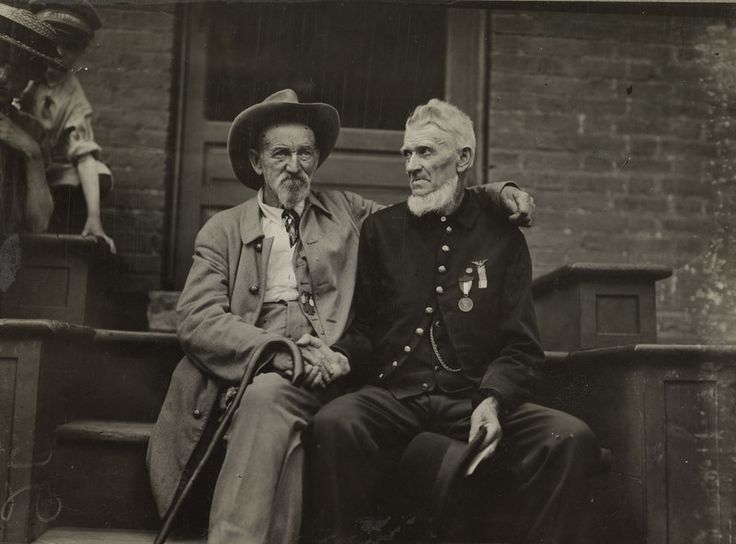
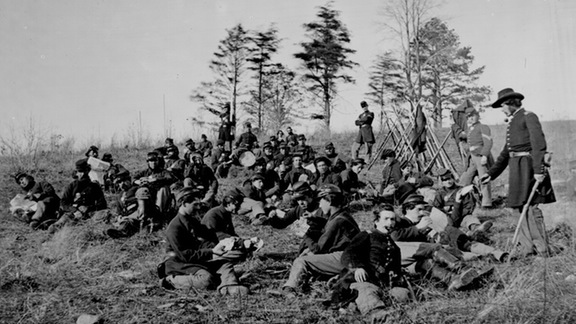
Confederate and Union Solders in early 1900s union

It is all ended – happily ended – ended as never in all the records of the world’s bloody adventures was civic strife ended. If the souls of men thrill at the names of fields and leaders, how vastly more thrilling that we conquered ourselves-that today men of the Grand Army and Confederate Veterans meet on common ground, actuated by the motive of love for our common country. “By the banks of the inland river, Where the fleets of iron have fled; Where the blades of the grave-grass quiver Asleep are the ranks of the dead. From the silence of sorrowful hours The desolate mourners go, Lovingly laden with flowers, Alike for the friend and the foe. No more shall the war-cry sever, Or the winding river run red; They banish our anger forever When they laurel the graves of our dead.” Cadets and serving Officers faced a difficult situation as talk of Secession increased. The 30 page document “Secession – – A Crack in the Long Gray Line” provides an understanding of what they faced. Lee believed that the Union would cease to exist if Virginia was not part of it; therefore, he was not actually fighting against the United States. Similarly, Alabama native John Pelham, Class of 1861, believed he was not planning to fight against the true United States. In late February 1861, Cadet Pelham wrote to his brother’s wife that: You need not be afraid of hurting my Southern feelings by respecting the Stars and Stripes. Although I am a most ultra Secessionist, I am still proud of the American flag and would fight harder and longer to tear the Stars and Stripes from every N~sthern battlement than for any other cause. http://digital-library.usma.edu/libmedia/archives/toep/secession_crack_long_grey_line.pdf
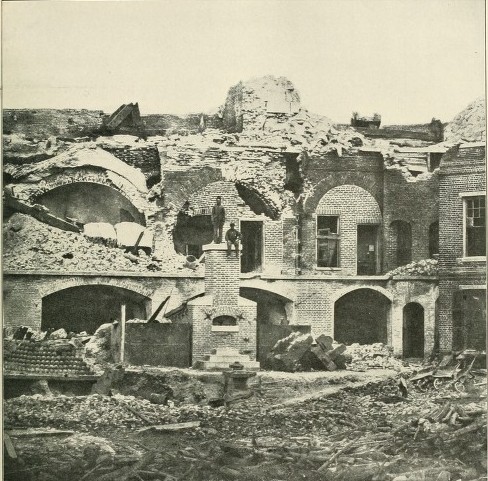
Sumter.jpg

Fort Sumter

Several Civil War Photos are at


https://forwhattheygave.wordpress.com/2015/01/24/civil-war-photos-2/

Union Armies

In the East Army of the Potomac, the principal army in the Eastern Theater, commanded by George B. McClellan, Ambrose E. Burnside, Joseph Hooker, and George G. Meade.

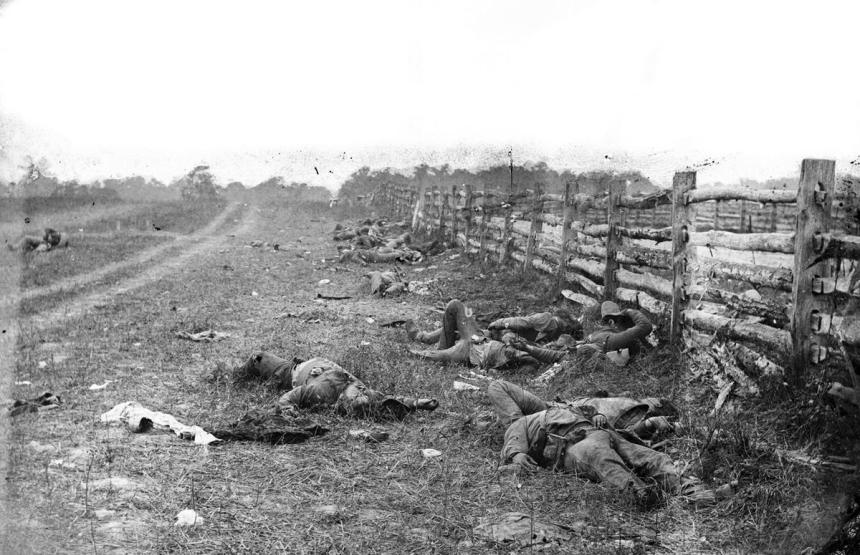
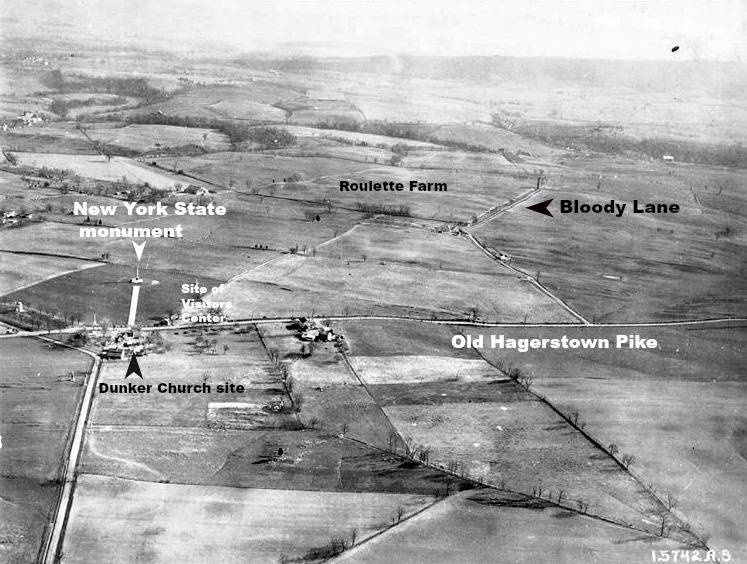
Bloody Lane Antietam
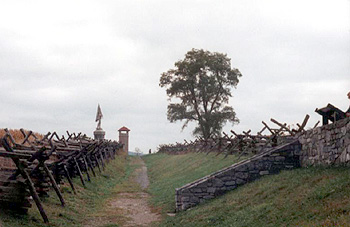
bloody-lane2

bloody-lane-5

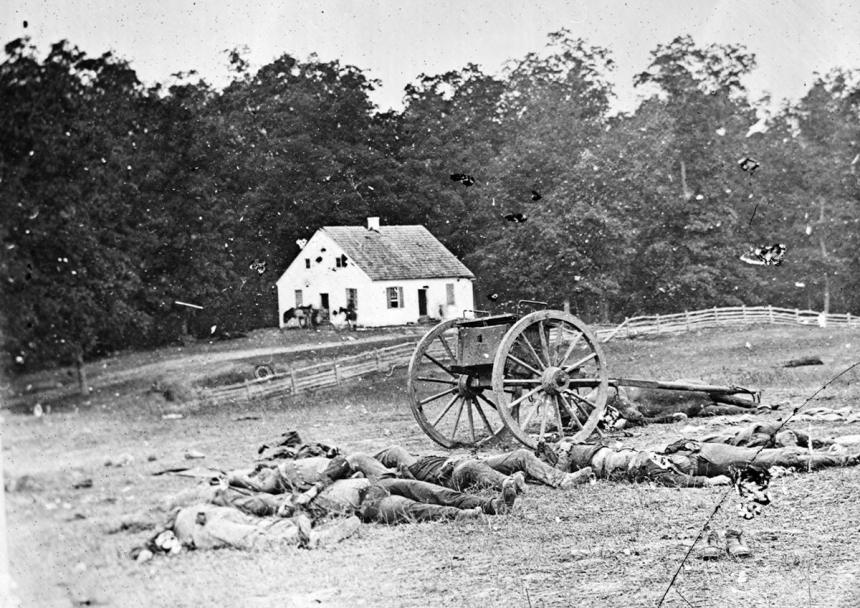
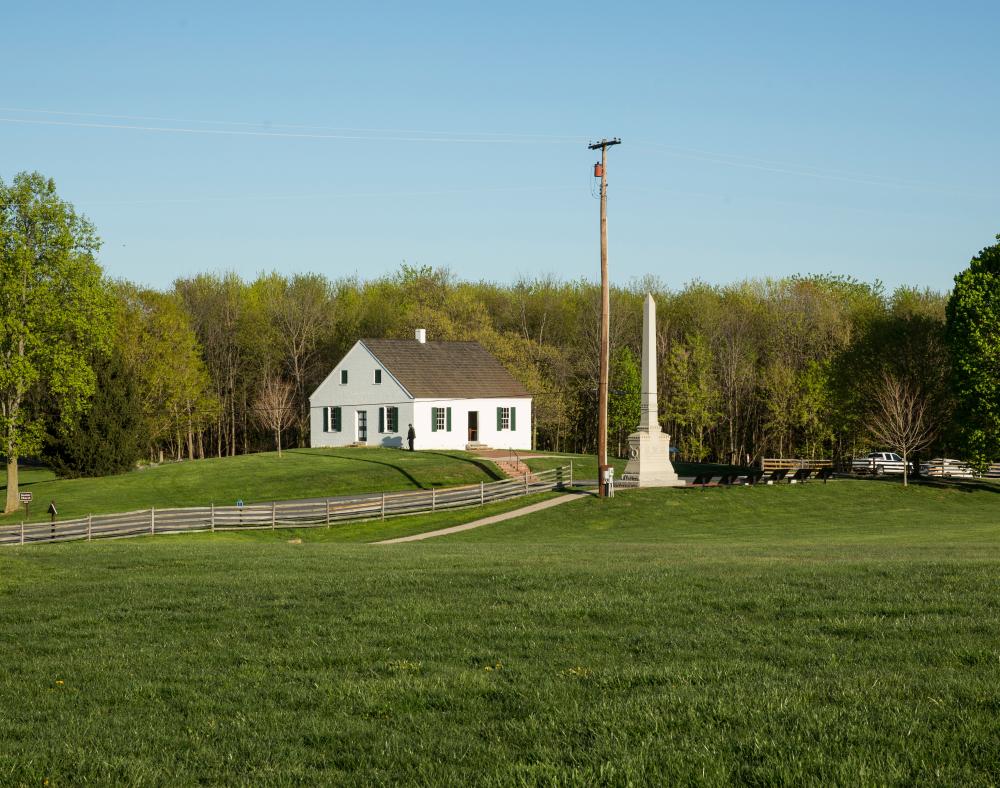
Dunker Church -Antietam.jpg

Dunker Church Antietam

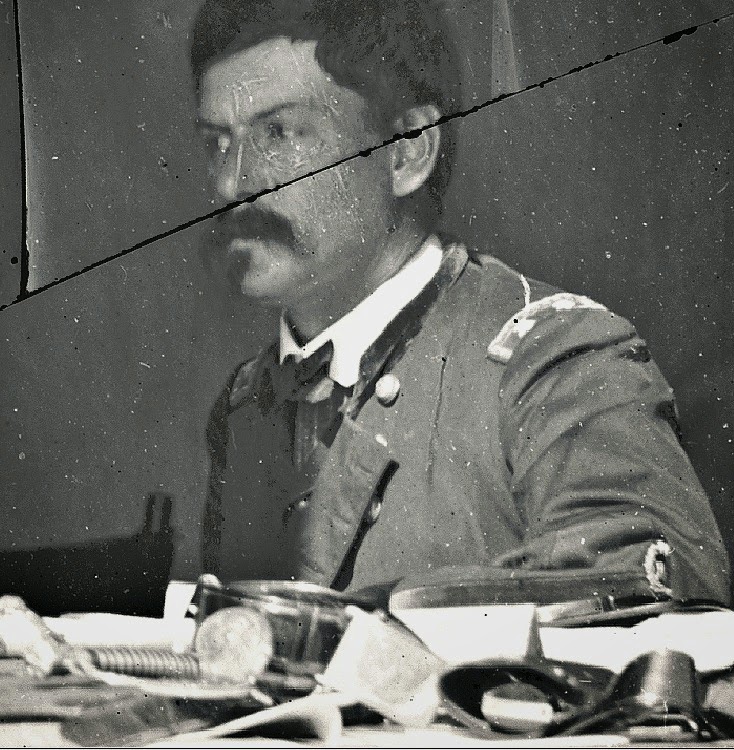
McClellan Antietam.jpg

McClellan at Antietam

Class of 1822   Joseph,Mansfield,1822,,Alumni,287-1822,9/18/1862,DOD: 09/18/1862 Place: Antietam A-59 Notified by: Burial: Cause: KIA http://en.wikipedia.org/wiki/Joseph_K._Mansfield

Class of 1861 “Alonzo Hersford Cushing” “Alonzo Hersford Cushing” – Commanding 110 men with 6 cannons withstood the 2 hour Confederate bombardment which left him with only 2 guns which he pushed forward to meet the 13,000 Confederate Infantry. Helped to stand by his Sergeant, he was killed directing his guns. Cushing to receive the Medal of Honor 2014. http://books.google.com/books?id=zhE4jUAww0IC&pg=PT192&dq=cushing+to+receive+Medal+of+honor&hl=en&sa=X&ei=k2gEVKDSB9OxggSco4LwDQ&ved=0CCoQ6AEwAA#v=onepage&q=cushing to receive Medal of honor&f=false
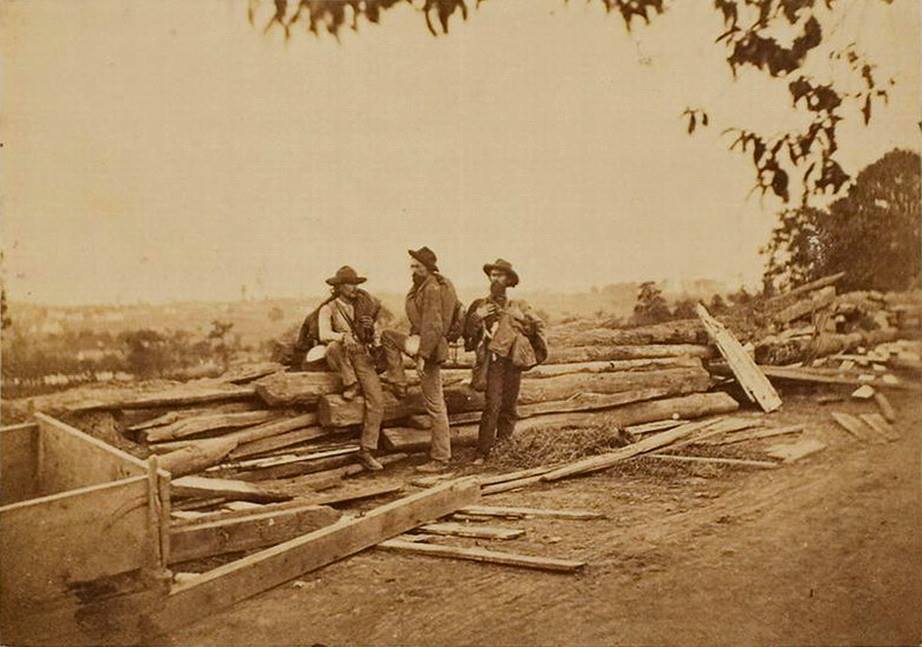
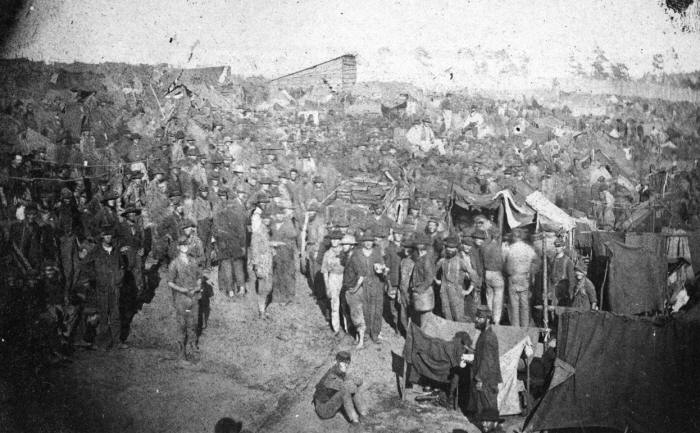
Confederate prisomers at Gettysburg.jpg

Confederate Prisoners at Gettysburg

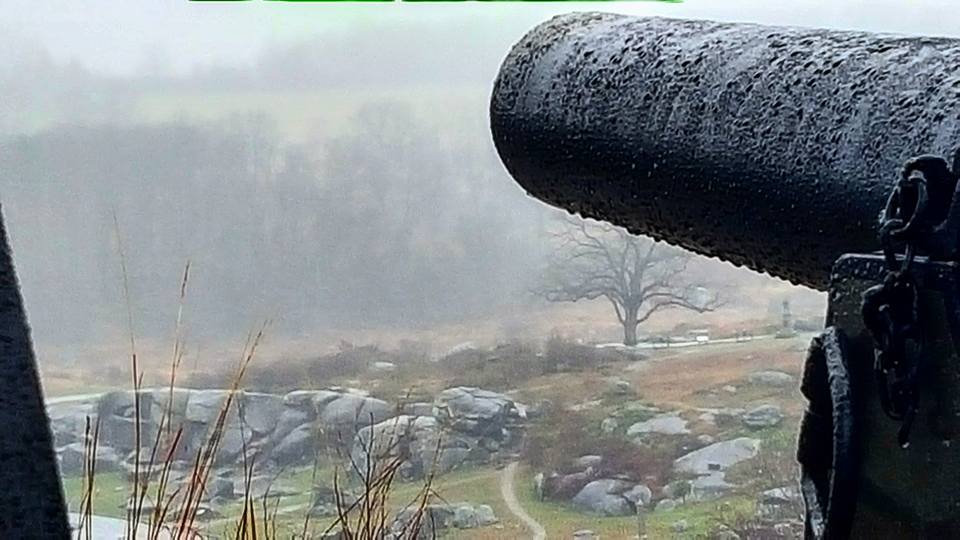
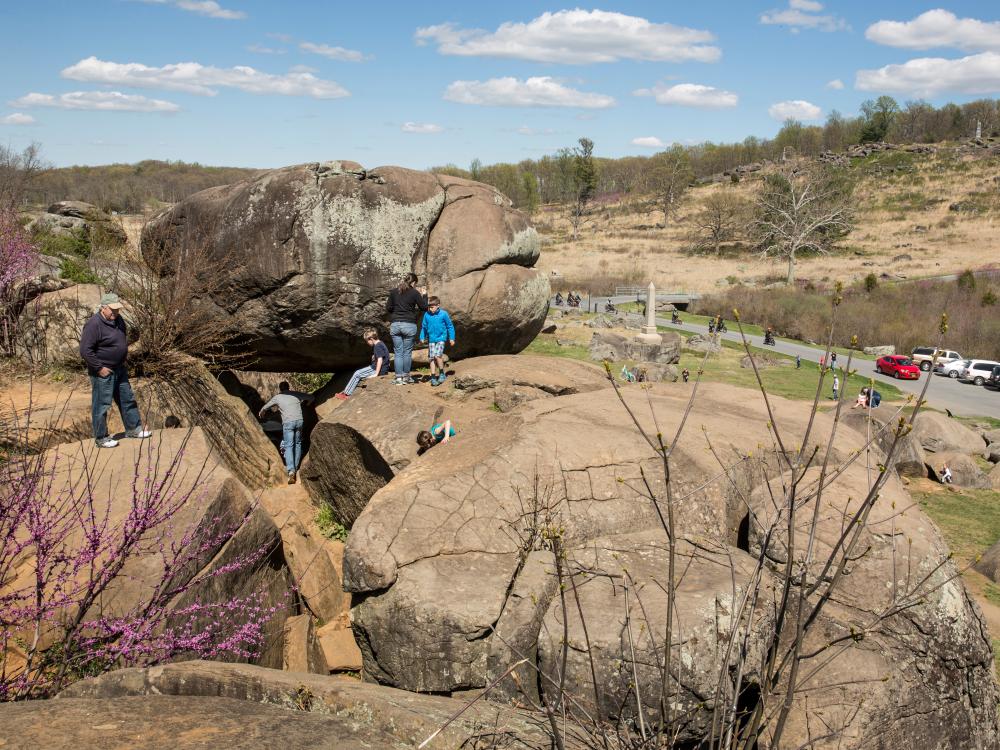
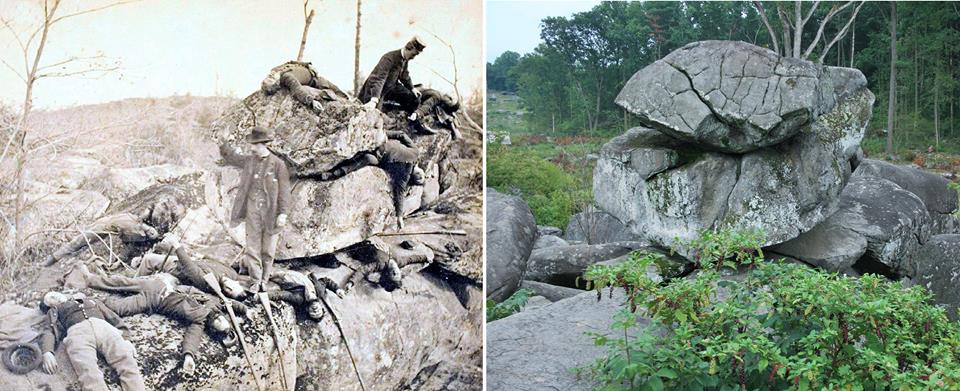
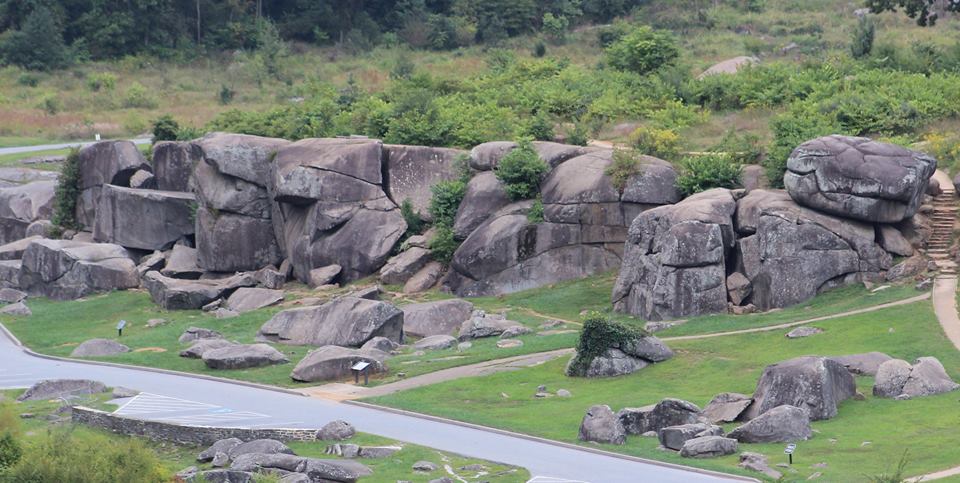
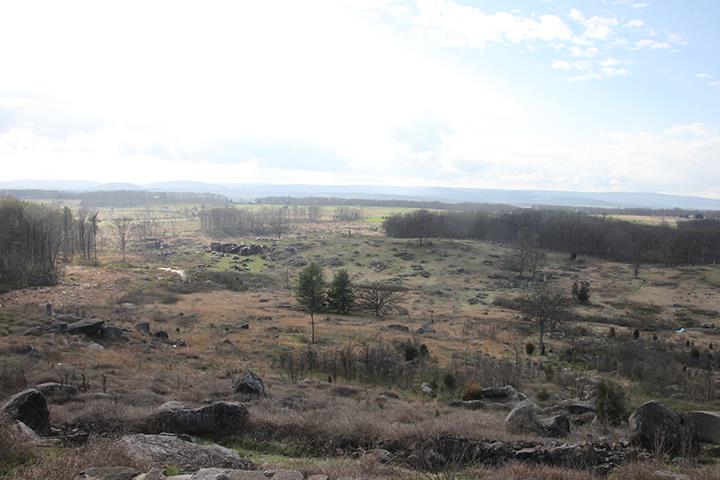
Devil's Den below.jpg

Overlooking Devil’s Den Gettysburg

Devil's Den- gettysburg.jpg

Devil’s Den Gettysburg

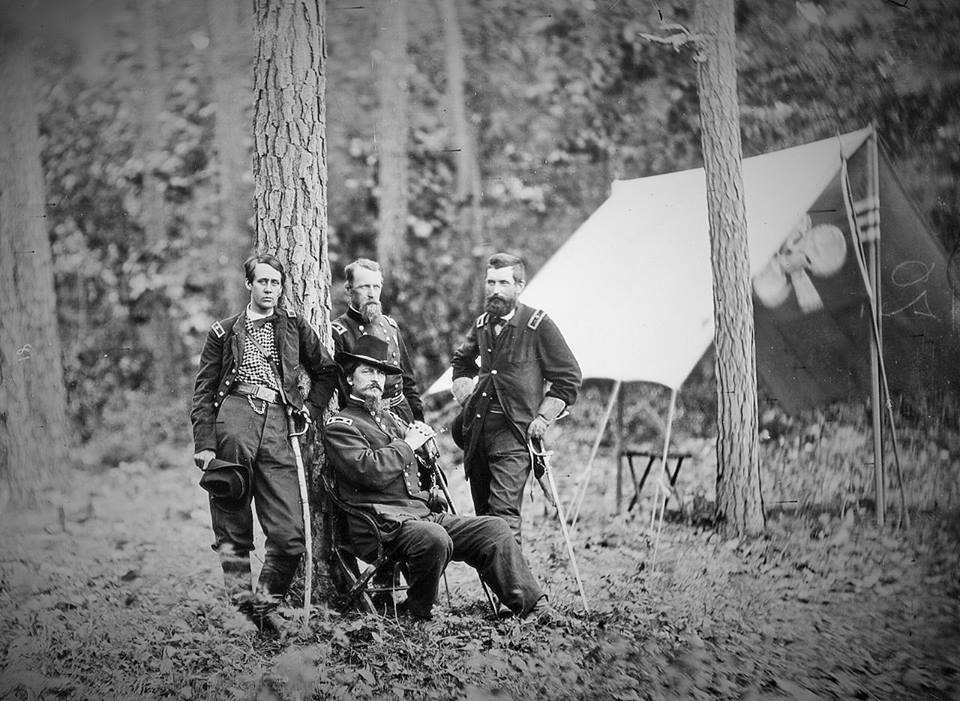
FederalHQGettysburg.jpg

Federal Headquarters Gettysburg

L-R  Barlow, Birney, Gibbon, Hancock seated - all wounded at Gettysburg.jpg


Army of the James, Virginia Peninsula, 1864-65, commanded by Benjamin Butler and Edward Ord.

Army of the Shenandoah, Shenandoah Valley, David Hunter, Philip Sheridan, and Horatio G. Wright.
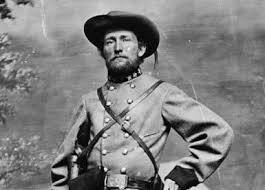
Mosby.jpg

Mosby

Class of 1863 John R Meigs Army of Virginia, John Pope for the Northern Virginia Campaign.

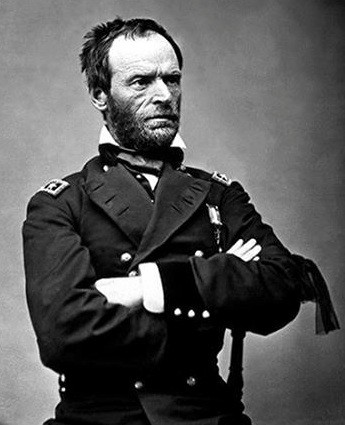
In the West Army of the Tennessee, Kentucky, Tennessee, Mississippi, Georgia, and the Carolinas; commanded by Ulysses S. Grant, William T. Sherman, James B. McPherson, and Oliver O. Howard.GenSherman William T Sherman Army of the Cumberland, Tennessee, and later Georgia, commanded by William S. Rosecrans and George Henry Thomas.

Army of Georgia, March to the Sea and the Carolinas commanded by Henry W. Slocum.

Army of the Gulf, around Gulf of Mexico, commanded by Benjamin Butler, Nathaniel P. Banks, and Edward Canby.

Army of the Mississippi, Mississippi River, under John Pope and William S. Rosecrans in 1862; under John A. McClernand in 1863.

Army of the Ohio, Kentucky and later Tennessee and Georgia, commanded by Don Carlos Buell, Ambrose E. Burnside, John G. Foster, and John M. Schofield.

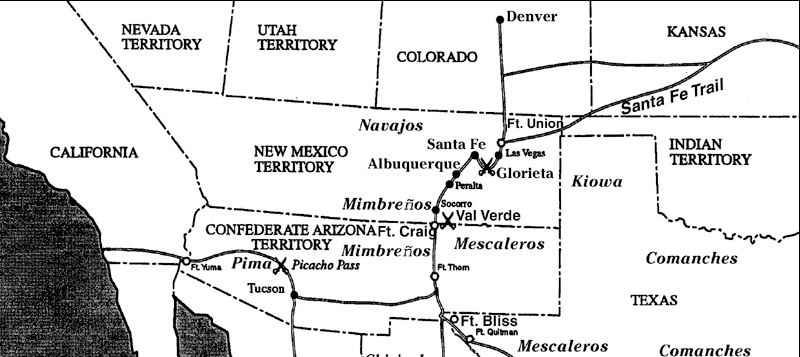
Western Territories Class of 1859 Roderic Stone Infantry, frontier duty in New Mexico; killed in the Battle of Valverde in the War between the States, fighting for the Union. Class of 1860 “Lyman Mishler” Killed Valverde NM fighting for the Union (attached McRae’s Battery) 21 Feb 1962

Confederate Armies

In the East Army of Northern Virginia – Joseph E. Johnston, Gustavus W. Smith, Robert E. Lee Gen-JosephEJohnson copy Joseph E. Johnston Class of 1847

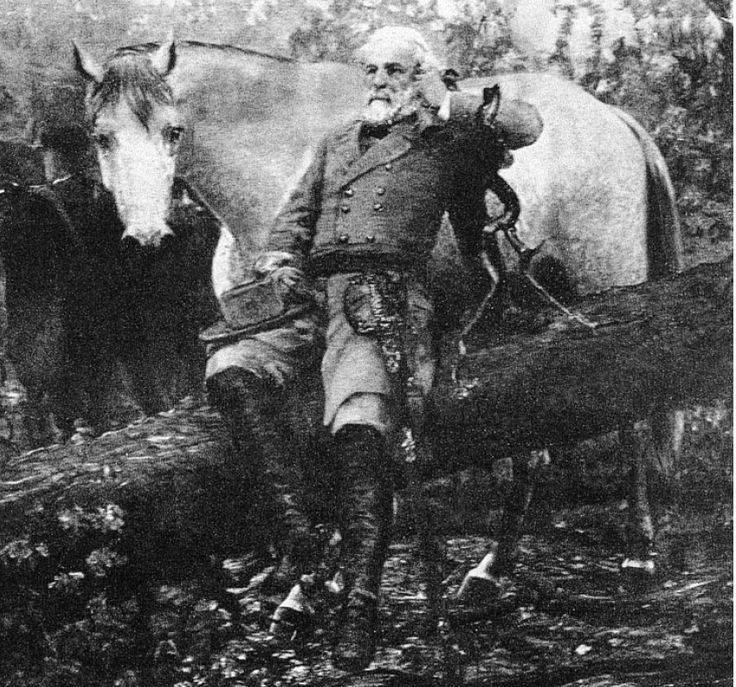
R.E. Lee.jpg

R E Lee

Ambrose Powell Hill 1847, remembered as A P Hill, his Division made extraordinary march and ferocious attack at Antietam, securing Lee’s Right Flank. Killed 3/2/1865 when Grant broke Lee’s defenses at Petersburg as Hill attempted to rally his Corps. Southern Lore has it that both Jackson and Lee called for Hill on their death beds, with Lee saying “Tell Hill he must come up”. Camp A P Hill, Va. Honors him.  https://forwhattheygave.wordpress.com/2012/06/22/a-p-hill/
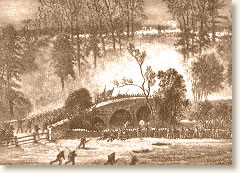
burnside-bridgeConfederate dead Hagerston Rd Antietam.jpg

Confederate Hagerston Rd Antietam

Jackson’s Valley Campaign

Army of the Northwest Robert S. Garnett, Henry R. Jackson, William W. Loring, Edward Johnson

Army of the Peninsula John B. Magruder, Daniel H. Hill Army of the Potomac P. G. T. Beauregard, Joseph E. Johnston

Army of the Valley (also known as Second Corps, Army of Northern Virginia) Jubal Early Army of the Kanawha (Western Virginia – early in the war) Henry A. Wise, John B. Floyd, Robert E. Lee

In The West Army of Mississippi  March 1862 – November 1862: P. G. T. Beauregard, Albert Sidney Johnston, Braxton Bragg, William J. Hardee, Leonidas Polk, (also known as the Army of the Mississippi;

Redesignated Army of Tennessee on November 20, 1862) December 1862 – July 1863: John C. Pemberton, Earl Van Dorn, (1863) William W. Loring (also known as Army of Vicksburg) July 1863 – June 1864: William J. Hardee, Leonidas Polk, William W. Loring (also known as the Army of the Mississippi; redesignated III Corps, Army of Tennessee in May 1864, but continued to use its old name) Army of Tennessee Braxton Bragg, Samuel Gibbs French, William J. Hardee, Daniel H. Hill, John Bell Hood, Joseph E. Johnston, Richard Taylor

Gen-JosephEJohnson copyJoseph E. Johnston Army of Kentucky Edmund Kirby Smith (Eventually commander of all forces West of the Mississippi) Army of Central Kentucky Simon B. Buckner, Albert Sidney Johnston Army of Missouri Sterling Price Army of Middle Tennessee John C. Breckinridge Army of Western Louisiana Richard Taylor, Edmund Kirby Smith Army of Arkansas Sterling Price, Edmund Kirby Smith Army of the Trans-Mississippi Thomas C. Hindman, Theophilus Holmes, Edmund Kirby Smith James Longstreet’s Corps

The Far West confederate-west Army of the West Earl Van Dorn Class of 1849 James,McIntosh,1849,,Alumni,1449-1849,1/7/1862,”DOD: 01/07/1862 Place: Pea Ridge, AR Notified by: Burial: Cause: KIA Obit: Age: 34″ http://en.wikipedia.org/wiki/Battle_of_Pea_Ridge http://en.wikipedia.org/wiki/James_M._McIntosh Army of New Mexico Henry H. Sibley
Photos not sorted
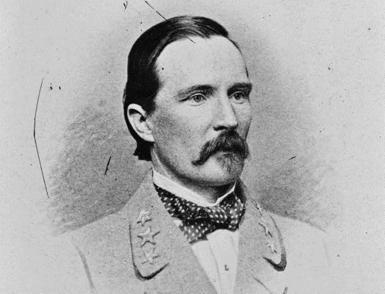
 Major General Henry Heth.jpg

Major General Henry Heath

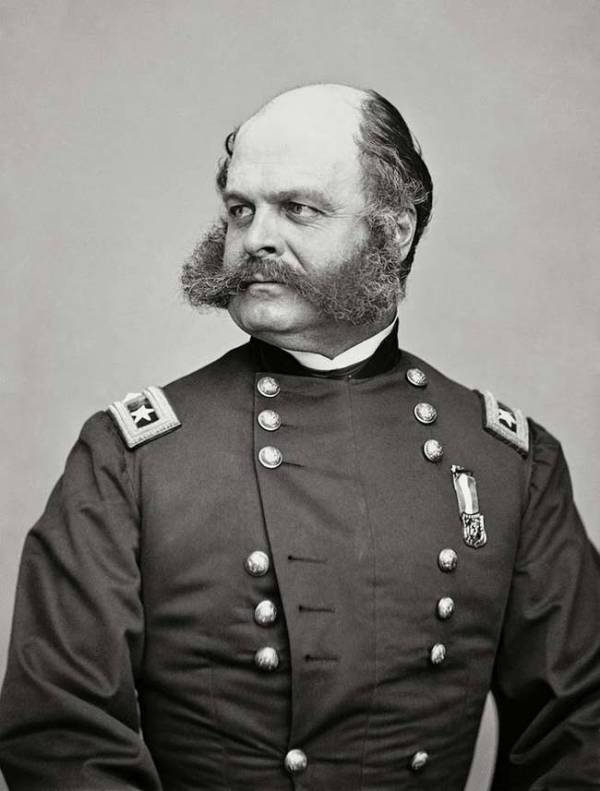
burnside12.jpg

Burnside

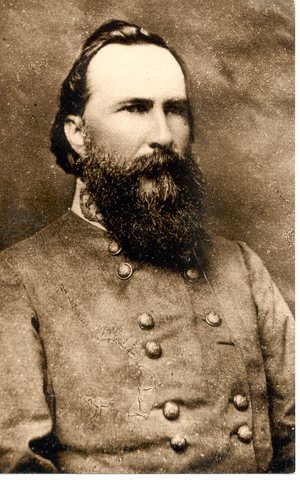
General Longstreet.gif

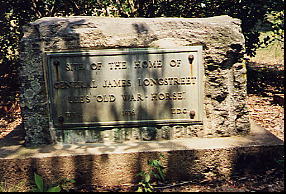
James Longstreet – Lee’s War Horse

Longstreet - shadymarker.jpg

Longstreet’s Home

Lee and Grant.jpg

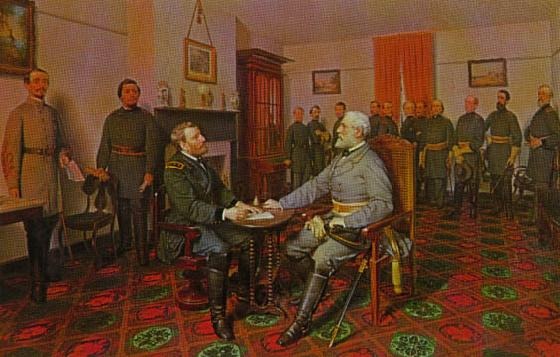
Surrender

Not sorted

Dixon,Miles,1824,,Alumni,387-1824,9/16/1862,DOD: 09/16/1862 Place: Harper’s Ferry Notified by: Burial: Cause: DOW Obit: Age: 58 Albert,Johnston,1826,,Alumni,436-1826,4/6/1862,DOD: 04/06/1862 Place: Shiloh Notified by: Burial: Cause: KIA Obit: Age: 59 Leonidas,Polk,1827,,Alumni,477-1827,6/14/1864,”DOD: 06/14/1864 Place: Pine Mountain, GA Notified by: Burial: Cause: KIA Obit: Age: 58 ” Seneca,Simmons,1834,,Alumni,771-1834,6/30/1862,DOD: 06/30/1862 Place: Glendale Notified by: Burial: Cause: KIA Obit: Age: 53 Lloyd,Tilghman,1836,,Alumni,887-1836,5/16/1863,”DOD: 05/16/1863 Place: Baker’s Creek, MS Notified by: Burial: Cause: KIA Obit: Age: ” Robert,Jones,1837,,Alumni,903-1837,5/31/1862,DOD: 05/31/1862 Place: Fair Oaks Notified by: Burial: Cause: KIA Obit: Age: 46 John,Sedgwick,1837,,Alumni,914-1837,5/9/1864,DOD: 05/09/1864 Place: Spottsylvania Notified by: Burial: Cause: KIA Obit: Age: 50 William,Walker,1837,,Alumni,936-1837,7/22/1864,”DOD: 07/22/1864 Place: Atlanta, GA Notified by: Burial: Cause: KIA Obit: Age: 47 ” Thomas,Williams,1837,,Alumni,902-1837,8/5/1862,”DOD: 08/05/1862 Place: Baton Rouge, LA Notified by: Burial: Cause: KIA Obit: Age: 47″ Isaac,Stevens,1839,,Alumni,986-1839,9/1/1862,DOD: 09/01/1862 Place: Chantilly Notified by: Burial: Cause: KIA Obit: Age: 44 Reuben,Campbell,1840,,Alumni,1043-1840,6/27/1862,DOD: 06/27/1862 Place: Gaines Mill Notified by: Burial: Cause: KIA Obit: Age: 44 Stephen,Captenter,1840,,Alumni,1051-1840,12/31/1862,DOD: 12/31/1862 Place: Stone River Notified by: Burial: Cause: KIA Obit: Age: 44 Julius,Garesche,1841,,Alumni,1074-1841,12/31/1862,DOD: 12/31/1862 Place: Stone River Notified by: Burial: Cause: KIA Obit: Age: 42 Robert,Garnett,1841,,Alumni,1085-1841,7/13/1861,DOD: 07/13/1861 Place: Carrick’s Ford Notified by: Burial: Cause: KIA Obit: Age: 41 Richard,Garnett,1841,,Alumni,1087-1841,7/3/1863,DOD: 07/03/1863 Place: Gettysburg Notified by: Burial: Cause: KIA Obit: Age: 44 Nathaniel,Lyon,1841,,Alumni,1069-1841,8/10/1861,DOD: 08/10/1861 Place: Wilson’s Creek Notified by: Burial: Cause: KIA Obit: Age: 42 Francis,Thomas,1844,,Alumni,1211-1844,7/21/1861,DOD: 07/21/1861 Place: Bull Run Notified by: Burial: Cause: KIA Obit: Age: 37 Alexander,Hays,1844,,Alumni,1225-1844,5/5/1864,DOD: 05/05/1864 Place: At Wilderness Notified by: Burial: Cause: KIA Obit: Age: 44 David,Russell,1845,,Alumni,1268-1845,9/19/1864,”DOD: 09/19/1864 Place: Opequan, VI Notified by: Burial: Cause: KIA Obit: Age: 42 ” William,Whiting,1845,,Alumni,1231-1845,3/10/1865,DOD: 03/10/1865 Place: Governor’s Island Notified by: Burial: Cause: POW-DOW Obit: Age: 40 Jesse,Reno,1846,,Alumni,1279-1846,9/14/1862,DOD: 09/14/1862 Place: South Mountain Notified by: Burial: Cause: KIA Obit: Age: 39 Otis,Tillinghast,1847,,Alumni,1343-1847,7/23/1861,DOD: 07/23/1861 Place: Bull Run Notified by: Burial: Cause: DOW Obit: Age: 38 William,Jones,1848,,Alumni,1378-1848,6/5/1864,”DOD: 06/05/1864 Place: Piedmont, VA Notified by: Burial: Cause: KIA Obit: Age: 40 ”
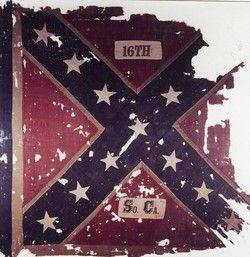


16th SC battle flag


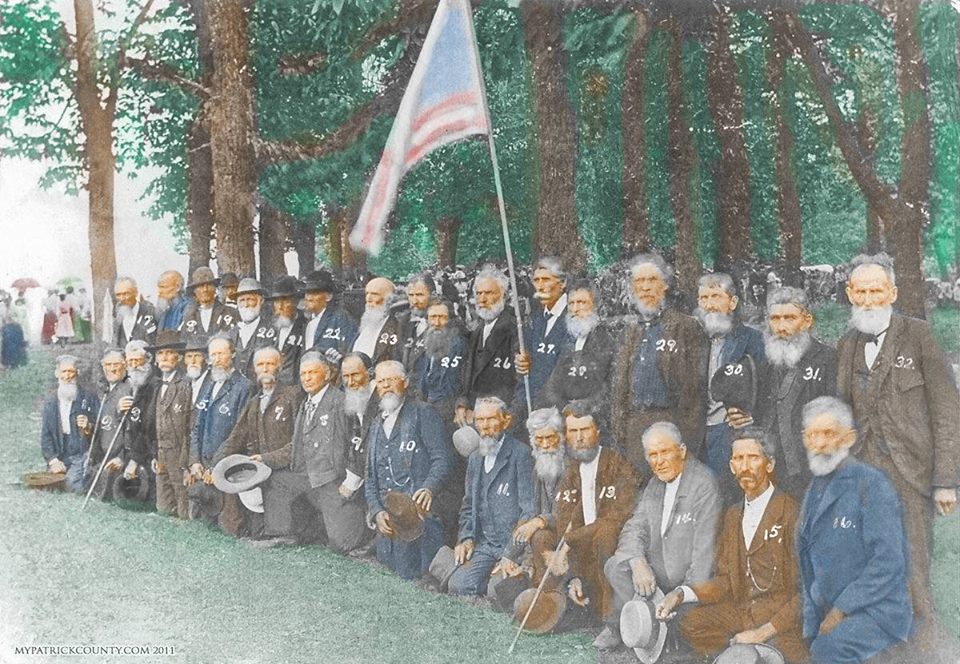
1900 Va Confederates

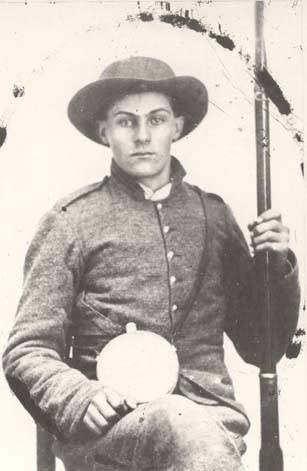
a soldier


antietam1


Antietam5

Archer

Archer

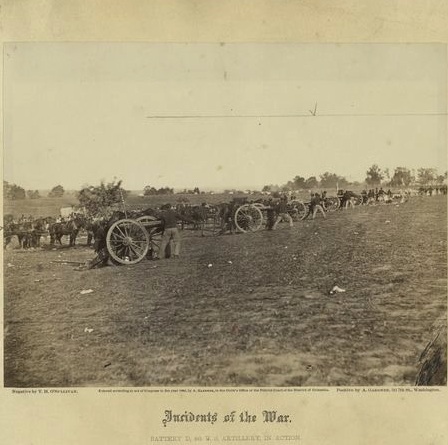
Battery D, 5th U S Artillery in action at Fredericksburg copy
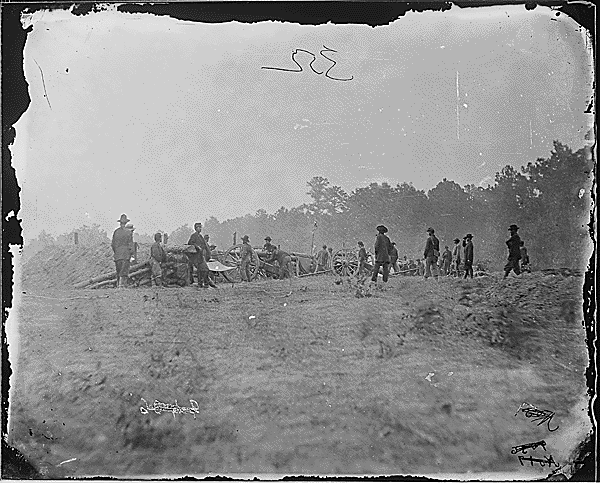
Battery D, 5th U S Artillery in action at Fredericksburg

Benson's battery - Fair Oaks or 7 Pines

Benson’s battery – Fair Oaks or 7 Pines
bloody-lane-csa-dead

Bloody Lane – Confederate dead

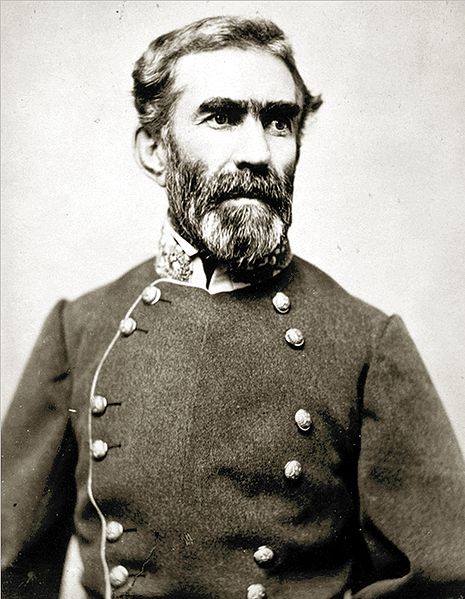
Braxton Bragg
Braxton Bragg

Breckinridge

Breckinridge

Burford :Reynolds Gettysburg

Burford /Reynolds Gettysburg

Burgwyn
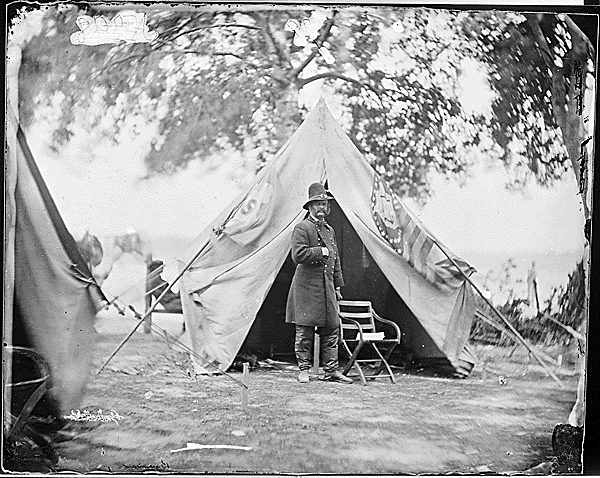
Burgwyn

Burnside

Burnside

Chamberlingettysburg

Chamberlin Gettysburg

Civil War Deserter 2
Civil War Deserter

Civil War Profiles

civilwar troops

US Troops

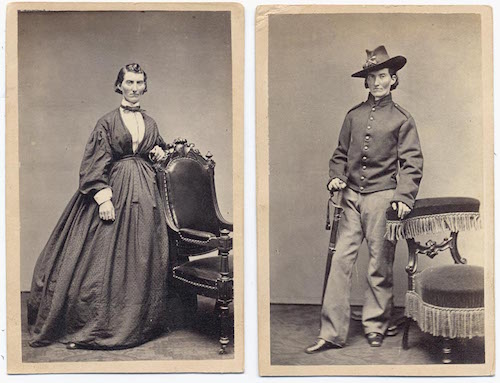
civilwarwomansoldier

Civil War Female Soldier

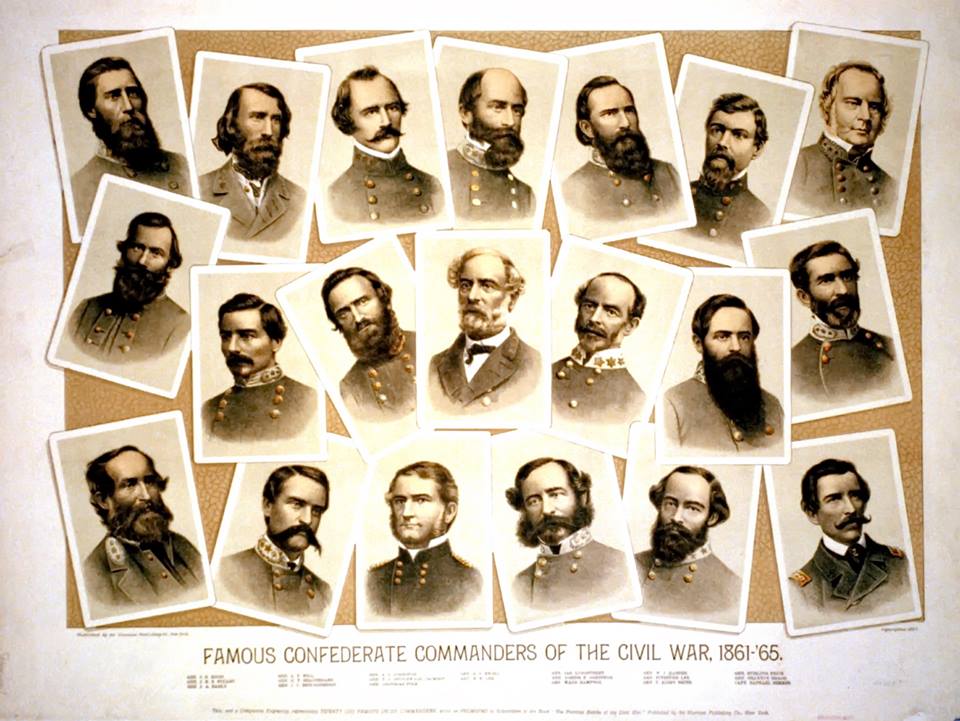
Confed generals

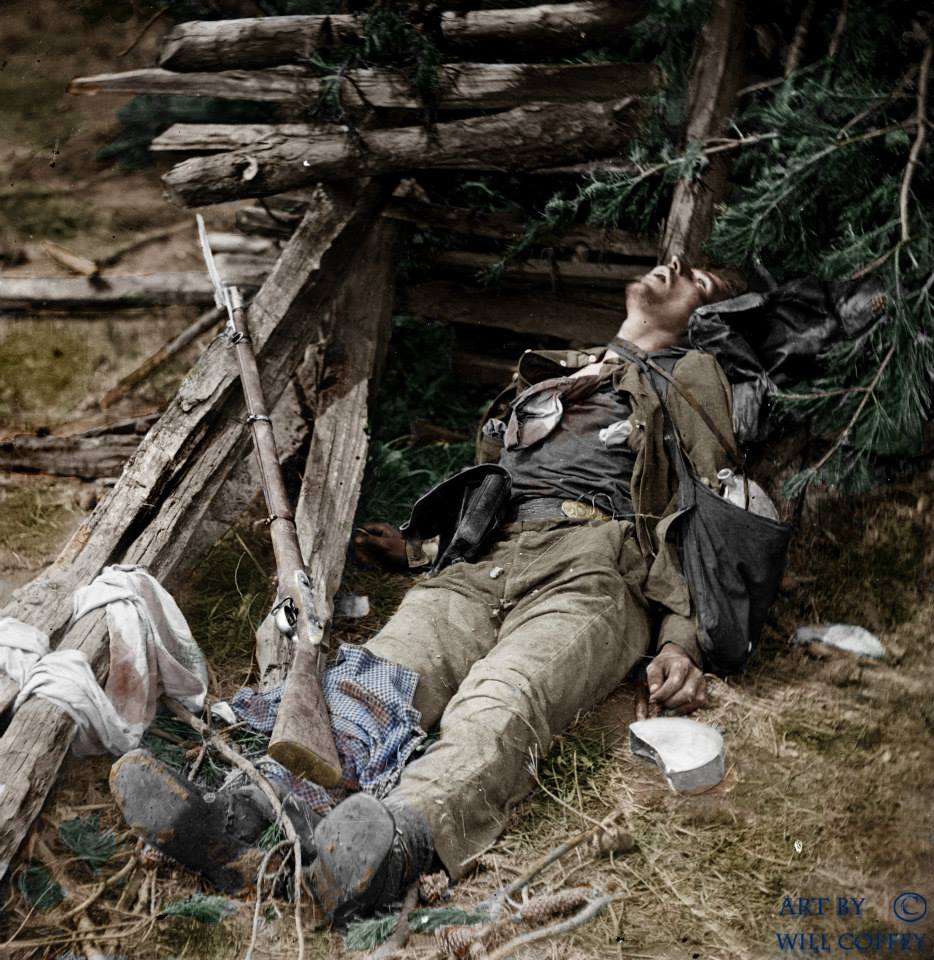
Confederate dead

Confederate Dead

Confederate dead - 6th Maine penetrated Fredericksburg

Confederate dead – 6th Maine penetrated Fredericksburg
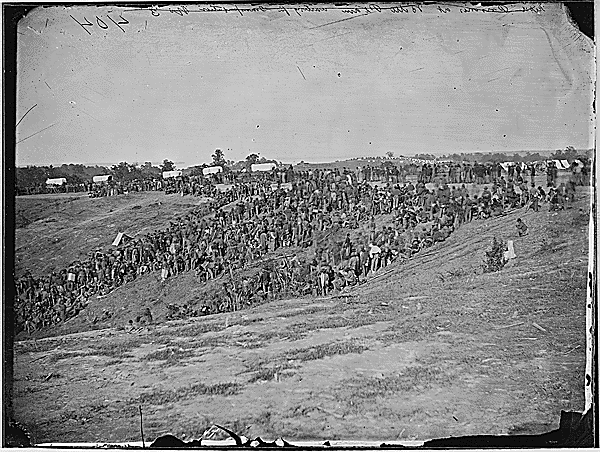
Confederate prisoners Belle Plain. Va
Confederate prisoners Belle Plain. Va

Confederates - Frederick md

Confederates – Frederick Md


cushingcadet

Cushing – Cadet


custer

Custer

Custer5

Custer

Devil's Den 10

Devil’s Den

Donated for scrap WWII

Donated for scrap WWII

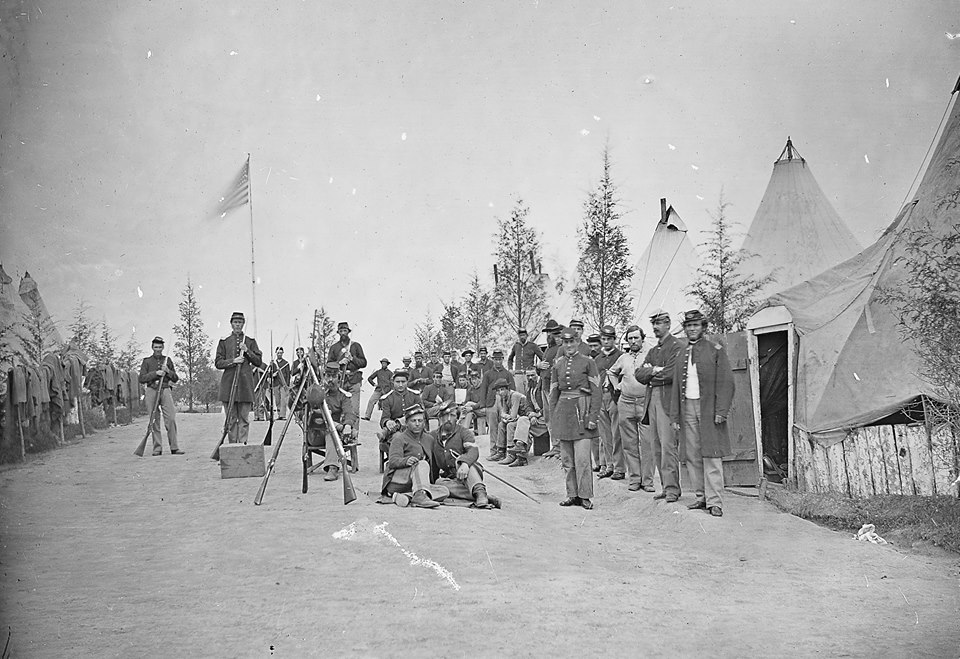
Federal troops

Federal Troops

FederalHQGettysburg-copy

Federal HQ Gettysburg

Fredericksburg7

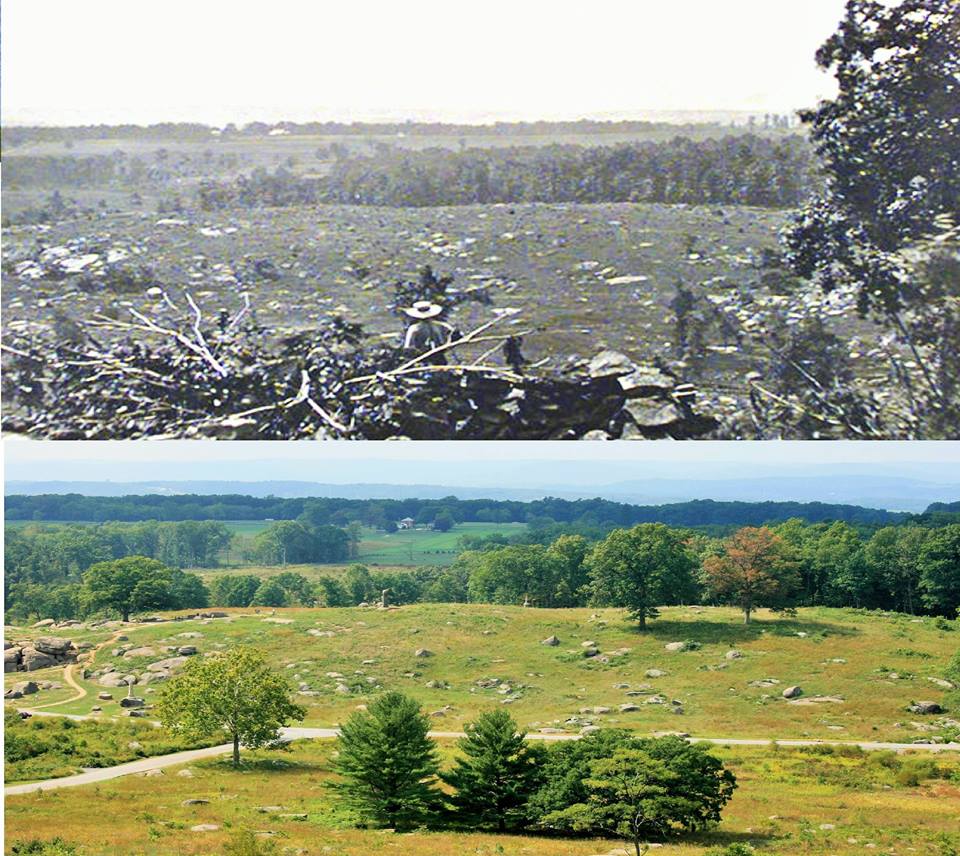
From Little Round Top

From little Round Top

G B Bee

General Bee

Gen Meades Hq several days after Picketts Charge
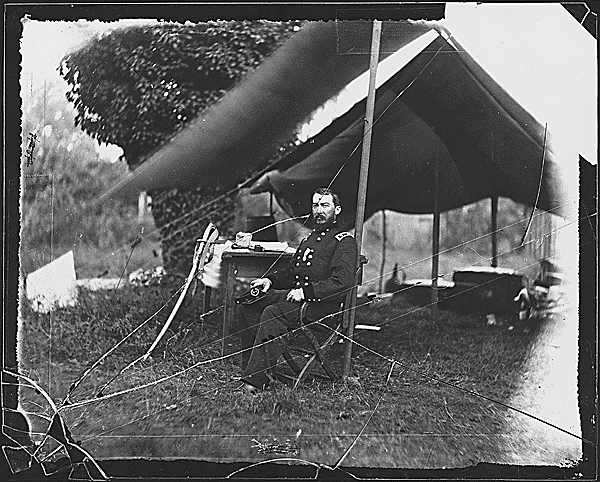
Gen Meade’s Hq several days after Picketts Charge

Gen Philip Sheridan
Gen Philip Sheridan

GeorgeMeade         georgemeade

General Meade

Gettysburg

Gettysburg

Gettysburg-devils den

Devil’s Den

Grant

Grant

http://john-banks.blogspot.com/2014/04/gettysburg-interactive-panoramas.html
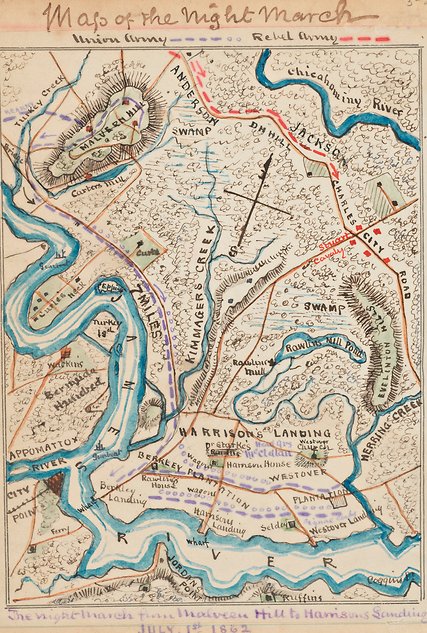
Harrison Landing 1862

Harrison’s Landing

I won a battle once. It was awful.
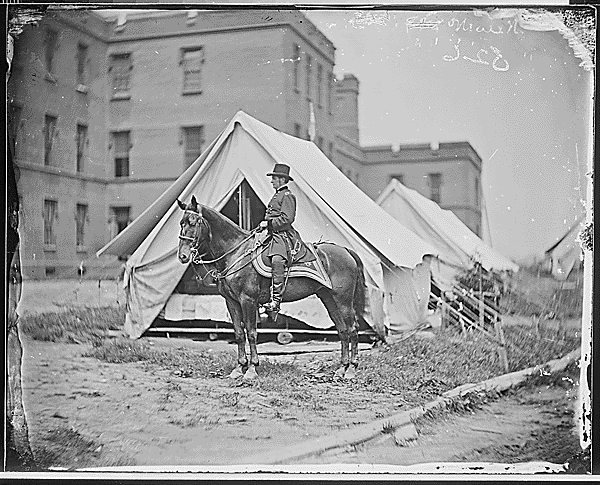
I won a battle once. It was awful.

Joe Hooker
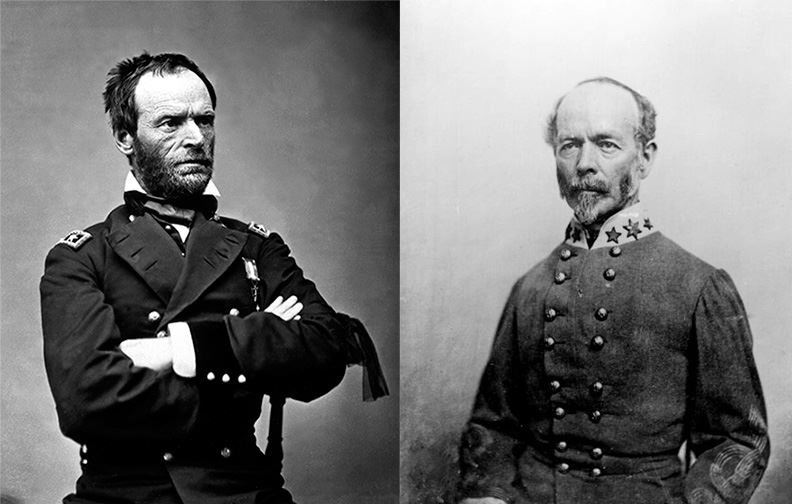
Joe Hooker

joejohnsonCSA


johnpelham

John Pelham – “The Gallant Pelham”


joseph-hooker

Joe Hooker

Lee20

Robert E Lee

LRT and Devil's Den

Little Round Top

Longstreet Memorial Gettysburg

Longstreet Monument Gettysburg


A breakdown of the ten finest commanders of the greatest–and bloodiest–war in American history.

The American Civil War is a source of great fascination to millions of military aficionados. More Americans died in this conflict than any other American has engaged in, before or since. Many of the soldiers who served and the men who led them were amateurs, products of the State Militia system. As is often the case, Americans rose to the challenge, learning on the job the grim lessons of battle.
The Civil War produced many examples of leadership, both wretched and inspiring. It is not surprising that America’s greatest conflict produced some of its best generals. Of these, most worth graduates of the United States Military Academy at West Point (or of some other equivalent) and had served at least some time as officers in the “Regular” Army. One of the finest commanders was a gifted amateur, a born military genius who found his calling in the cauldron of conflict.
Here is a breakdown of the top ten:
10. Jubal Early, CSA 1404951
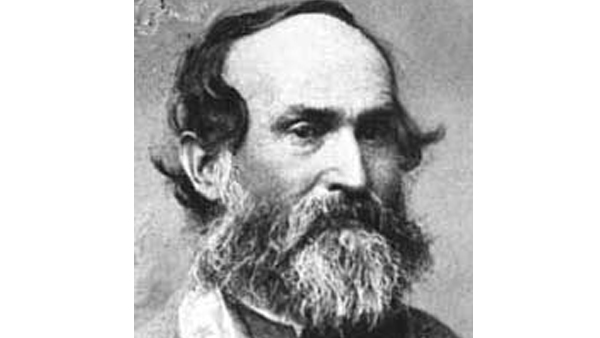
Photo credit: Wikimedia Commons
“Old Jube” to his soldiers, the peppery-tempered Confederate lieutenant general commanded Jackson’s Second Corp late in the war. He learned his trade as one of Jackson’s Brigade and Division commanders, and Early resembled his brilliant commander in dash and his penchant for rapid maneuver. During the three-day Battle of Gettysburg, Early’s division occupied York, Pennsylvania—the largest Northern town to fall to the Rebels during the war. In 1864 he led the last Confederate invasion of the North, reaching the defenses of Washington. Unable to break the defenses, he withdrew to Virginia, commenting, “We haven’t taken Washington, but we scared Abe Lincoln like hell!”


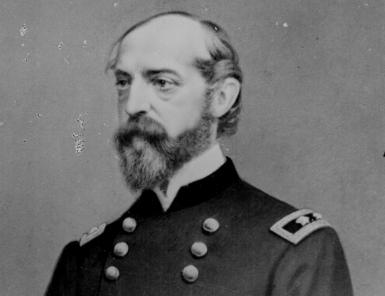
9. George Gordon Meade, Union
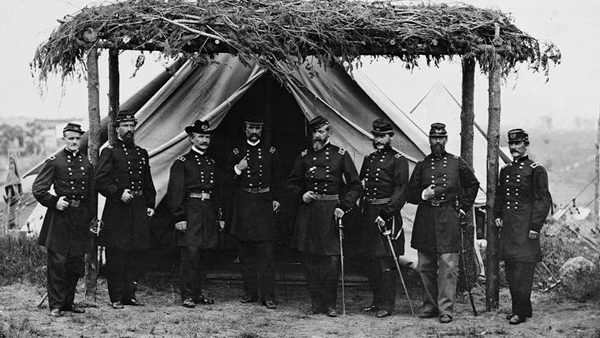
1404953

Photo credit: Wikimedia Commons. George Meade is pictured with his staff, fourth from the right.
Nicknamed “Old Snapping Turtle,” Meade seldom gets much credit as a commander, despite defeating the great Robert E. Lee at Gettysburg, the decisive battle of the war. Though a West Point graduate and veteran of the Mexican War, Meade returned to service during the Civil War as a “captain of volunteers.” The move retarded Meade’s promotion progress, and he had to serve in lesser positions throughout the war while less capable men (George B. McClellan, Ambrose Burnside, Joseph Hooker) took their turns commanding the Army of the Potomac. A successful and aggressive brigade and division commander, Meade distinguished himself at the Second Battle of Bull Run and the Battle of South Mountain. At Antietam, he replaced the wounded Hooker before being wounded himself. At Fredericksburg, his division made the only breakthrough in the Confederate line; but his successful penetration went unsupported and ultimately failed. He was rewarded, however, with a corps command. His V Corps was held in strategic reserve during the Battle of Chancellorsville, a blunder Meade later criticized Hooker for. When Hooker resigned days before Gettysburg, Meade was tapped to command the Army of the Potomac after four senior generals turned President Abraham Lincoln down. With no time to organize his staff or to assert his authority over Hooker’s subordinates (particularly the troublesome Major General Daniel Sickles, commanding III Corps), he found himself in command of the Union forces at the greatest battle of the Civil War. At Gettysburg, Meade showed sound judgment in his choice of terrain. Despite disobedience by Sickles, Meade held his position for three days, allowing Lee’s army to break itself against the Union’s strong positions. Meade was criticized after the battle for not pursing Lee’s retreating army more aggressively, but this can partially be explained by the loss of so many men during the battle (some 23,000 killed, wounded or missing), and the lack of support of his chief of staff, a Hooker appointee. Meade served the rest of the war commanding the Army of the Potomac, but under the direct supervision of Ulysses S. Grant, who came east to take command of all Union forces.

8. James Longstreet
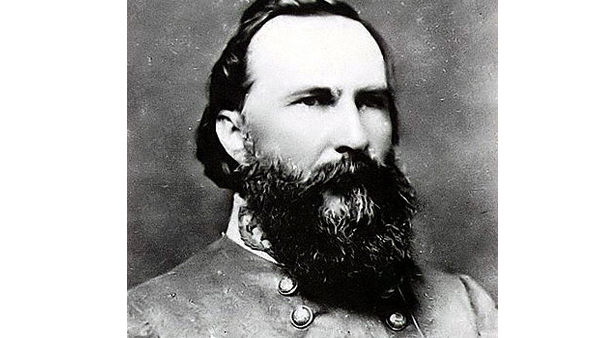
1404960

Photo credit: Wikimedia Commons
Lee’s “Old War Horse,” Longstreet was the anvil upon which the Union forces so often broke (or were hammered). A master of conducting attack or defense in forested terrain, he devised novel approaches at both Chickamauga and the Wilderness. Longstreet was known for his calm temperament in the midst of battle, a rare gift. At Gettysburg he famously disagreed with Lee about the place and conduct of the battle; he was, arguably, correct in his assessments. Longstreet’s flanking attack at the Battle of the Wilderness rolled up Union General Winfield S. Hancock’s Second Corps “like a wet blanket.” Only Longstreet’s accidental wounding, which brought the attack to a halt, saved Grant’s army from severe defeat.

7. George Henry Thomas
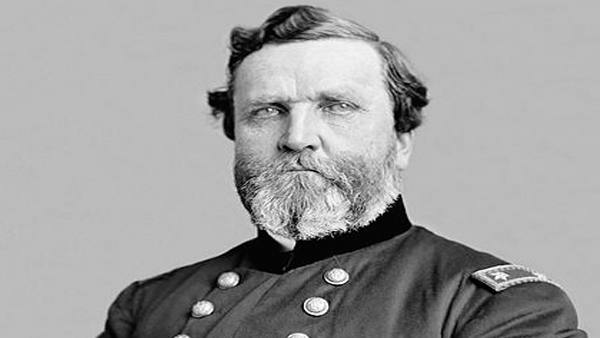
1404962

Photo credit: Wikimedia Commons
Known as “the Rock of Chickamauga” and “Pap Thomas” to his men, Thomas won the Union’s first key victory at the Battle of Mills Spring in January 1862. He “earned his spurs” at the Battle of Chickamauga, where Thomas held on in the center while his army’s commander fled the field; Thomas’ stubborn refusal to retreat saved the Union army that day and earned him his sobriquet, “the Rock of Chickamauga.” After William T. Sherman detached his army to “march to the sea,” Thomas was tasked with defending Tennessee from John Bell Hood’s Confederate Army of Tennessee. He attacked and annihilated Hood’s forces at the Battle of Nashville, securing the Tennessee and Union victory in the Western Theater.

6. Philip Sheridan
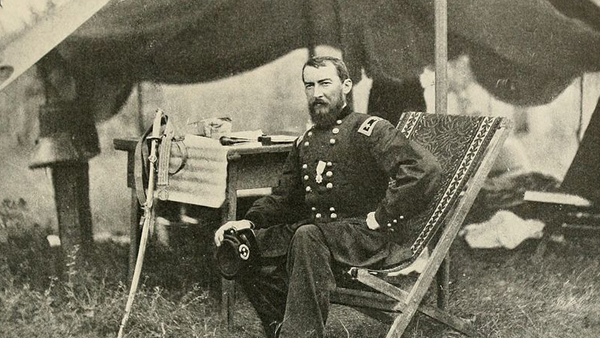
1404965

Photo credit: Wikimedia Commons
Grant’s chief cavalry commander, Sheridan was known for his energy and aggressiveness. He first earned distinction and came to Grant’s attention in the West. Brought to the Eastern Theater to command Grant’s Cavalry Corps, Sheridan proved ideally suited to his new role. In May ’64 he relentlessly pursed Jeb Stuart’s cavalry to destruction at Yellow Tavern, where Stuart was mortally wounded. In response to Early’s raid on Washington, Sheridan defeated Early and scourged the Shenandoah Valley, presaging the scorched earth tactics in Sherman’s famous March to the Sea. In 1865 Sheridan’s unrelenting pursuit of Lee’s Army of Northern Virginia at Appomattox. Grant summed up his service thus: “I believe General Sheridan has no superior as a general, either living or dead, and perhaps not an equal.”

5. Nathan Bedford Forrest1404966
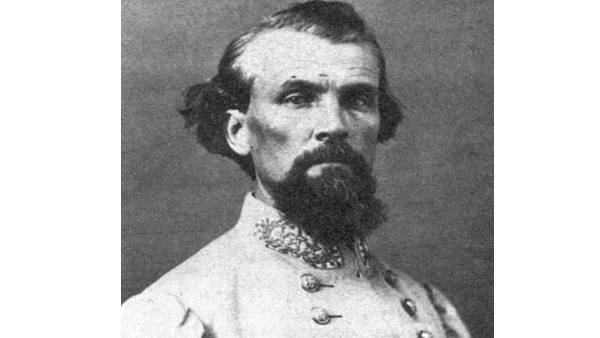
Photo credit: Wikimedia Commons
“The Wizard of the Saddle,” Forrest was not only the finest cavalry commander that America ever produced, he was a first-rate practitioner of mobile warfare and combined arms. His rapidly moving strike forces were composed of cavalry/mounted infantry, supported by batteries of horse artillery. A gifted military genius, Forrest had no formal military education, enlisting as a private at the start of the war. A very wealthy man, he soon raised his own force of cavalry, which under his leadership soon became the most feared force in the Western Theater (and he the most feared commander of the war). Throughout the war, Forrest is credited with killing, personally with his own hands, 30 enemy soldiers, the most ever by an American general. When asked after the war what the secret to his success was, Forrest responded, “By getting there first with the most men.” (Not, as often quoted, “Git thar firstest with the mostest!”) His operations are more reminiscent of a 20th century panzer leader, such as Heinz Guderian or Erwin Rommel, than of any commander of his age.

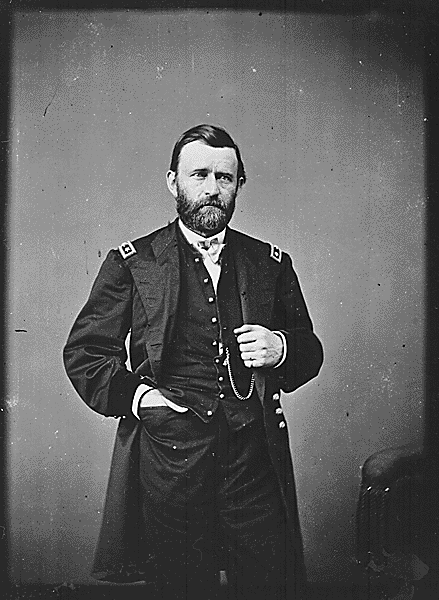
4. Ulysses S. Grant
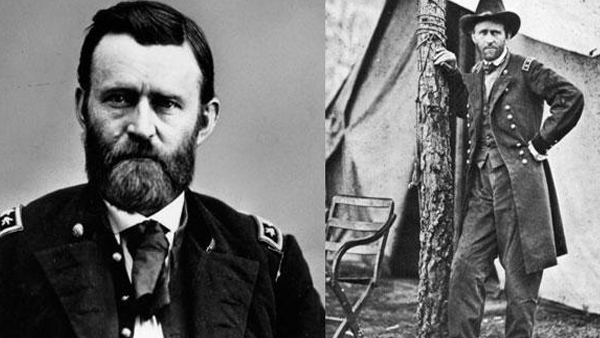
1404968


Photo credit: Getty Images
The man who did more than any to win the war, it may surprise many that U.S. Grant doesn’t either head this list or come in second place. However, Grant’s virtues were not that of a great general so much as a resolute and fearless “manager” of war. Unlike the cautious George McClellan, Grant was a “fighting general” who lost little sleep concerning the enemy’s plans. After taking a terrible beating the first day at Shiloh, Sherman remarked, “Well, Grant, we’ve had the devil’s own day, haven’t we?” Grant looked up. “Yes,” he replied, puffing on his cigar; “Yes. Lick ’em tomorrow, though”. After a string of victories in the West, Lincoln, promoted Grant to lieutenant general—a position in the American Army previously held only be George Washington and Winfield Scott—and brought him east to take command. (When first warned about Grant’s heavy drinking, Lincoln is said to have responded, “Find out what he drinks and send my other commanders a case!”) Over the next year, Grant proved relentless and unflappable, using his superiority in numbers and equipment to hammer Lee in ways his predecessors had failed. Unmoved by casualties, Grant continued to press Lee till the latter was forced to surrender at Appomattox Courthouse.

3. William T. Sherman
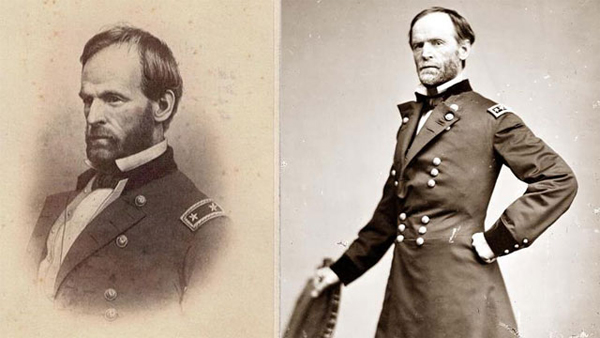
1404973

Photo credit: Library of Congress and Wikimedia Commons
The melancholy and cerebral Sherman emerged during the Civil War as perhaps the most hated (by southerners) and admired general of the war. His March to the Sea and scorched earth policy broke the economic back of the Confederacy, destroying its will to fight on. Sherman was a practitioner of maneuver warfare in contrast different his friend and superior U.S. Grant. Prone to deep bouts of depression, Sherman would later say, “Grant stood by me when I was crazy, and I stood by him when he was drunk, and now we stand by each other.” When Grant was sent east to take over that theater, Sherman took his place as commander in the Western Theater. Cutting himself and his army loose from their dependence on railheads for supply, he invaded Georgia in the spring of 1864. Living off the land, his “foot cavalry” continuously outmaneuvered his opponents and threatened multiple objectives, preventing Confederate forces from concentrating sufficient forces to stop him. Sherman was an early proponent of what in the 20th century came to be called “total war” (which he, himself, termed “hard war”). His strategy of destroying the economic heart of the south, as much as Grant’s pugnacious campaign of relentlessly pummeling Lee, led to the South’s eventual defeat. He is the only man to have twice received the thanks of Congress during the war, and is arguably the best strategist of the Civil War.

2. Robert E. Lee
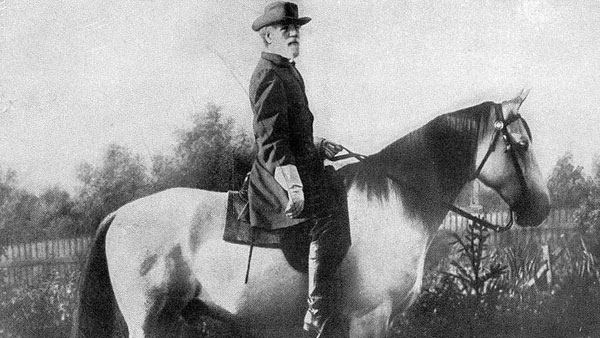
1290852

Perhaps America’s most respected general, “Marse Robert” had already obtained legendary status as America’s greatest living soldier prior the outbreak of the Civil War. He played only a minor role till June 1862, when General Joe Johnston was wounded, resulting in Lee taking command of the Army of Northern Virginia. During the Peninsula Campaign, Lee’s relentless aggressive and audacious tactics drove George B. McClellan’s Army of the Potomac from the gates of Richmond in the Seven Days Battles. Despite heavy casualties in the process, Lee’s counter-offensive turned the tide and won him the devotion of his army. Within 90 days of taking command, Lee had driven McClellan off the peninsula, and the battle lines had moved from 6 miles outside Richmond to 20 miles outside Washington. During these two years, Lee invaded the north twice, keeping the Union forces on the defensive. In the final seasons of the Civil War, Lee employed a tenacious defensive strategy against a superior Union long after the point where a lesser general would have been defeated.

1. Thomas “Stonewall” Jackson
1404976

Photo credit: Wikimedia Commons
The eccentric Jackson was an instructor at Virginia Military Institute when the war broke out. Assembling a force at Harper’s Ferry (which became the famous “Stonewall Brigade”) Jackson joined the Confederate forces at First Bull Run. Here he became the hero of the day, earning his nickname. Jackson’s finest hour came when a Union army invaded the valley in the spring of 1862. In what came to be called the Valley Campaign, Jackson conducted a series of brilliant operations of surprise and maneuver, covering 46 miles in 48 days and winning five significant victories. In the process, his 17,000 men defeated a combined force of 60,000 Union troops. He joined Lee for the Seven Day’s Battle, beginning a partnership that was one of the great ones of the war (second only to Grant and Sherman). In the battles and campaigns that followed, Jackson’s corps was Lee’s hammer, while Longstreet’s was the anvil. The strategy proved especially fruitful at Second Manassas and at Antietam. In May of 1863, Union General Joseph Hooker crossed the Rapidan River to the west of the Confederate army opposite Fredericksburg. Leaving Longstreet to hold that position, Lee marched west. Jackson was tasked with driving rapidly south through the dense forest, below the Union forces around Chancellorsville. As the sun was low in the western sky on May 2, Jackson’s Corps unexpectedly attacked from that direction. The Union forces were caught completely by surprise, and only the fall of darkness prevented the route of Hooker’s entire army. While conducting a reconnaissance that evening beyond his pickets, Jackson was accidentally fired upon and wounded by his own sentries. His wounded left arm was amputated, leading Lee to comment, “General Jackson has lost his left arm; but I have lost my right.” The wound turned gangrenous, and Jackson died in bed on May 10, 1863. His death deprived Lee of his best Corps commander, the best general of the war on either side. Had he lived to fight at Gettysburg a month later, the outcome of that battle may have been very different.
Barry C. Jacobsen is a former Green Beret and the publisher of The Deadliest Blogger.


Civil War Horses

At the start of the war, the North had about 3.4 million horses; the Confederacy had about 1.7 million, and there were distinctions in their suitability for service. The horses in the North were primarily farm animals and were better suited for moving equipment; those in the South were bred for riding and racing, so the Confederacy was better prepared to build a cavalry. More than one million horses and mules died during the course of the war.
Today’s military officers would marvel at the thought of having to provide 26 pounds of fuel per day to their “modes of transportation” but that was the reality of the 1860s. Horses needed 14 pounds of hay and 12 pounds of grain each day.
When instructing his troops. Major General William T. Sherman said: “Every opportunity at a halt during a march should be taken advantage of to cut grass, wheat, or oats and extraordinary care should be taken of the horses upon which everything depends.”
While staying in one location might have provided the soldiers with the time to gather food for the animals, the truth was that the armies frequently picked an area clean, and wagons that should have been traveling back and forth carrying additional provisions were frequently seized to be used for other purposes. By 1864, Union artillery horses in some locations were living on only five pounds of grain per day.
At the start of any skirmish, horses were often targeted first. Both sides understood that picking off horses left the opposing side with no way to move artillery and supplies. At Ream’s Station (Virginia) in August 1864, the Tenth Massachusetts Battery had positioned themselves behind a temporary barricade, but they left their thirty horses exposed. Within moments, only two of these horses were still standing.
Massachusetts soldier Charles Francis Adams wrote to his mother on May 12, 1863. It describes the magnitude of what was happening to the animals:
“The air of Virginia is literally burdened today with the stench of dead horses, federal and confederate. You pass them on every road and find them in every field, while from their carrions you can follow the march of every army that moves.”
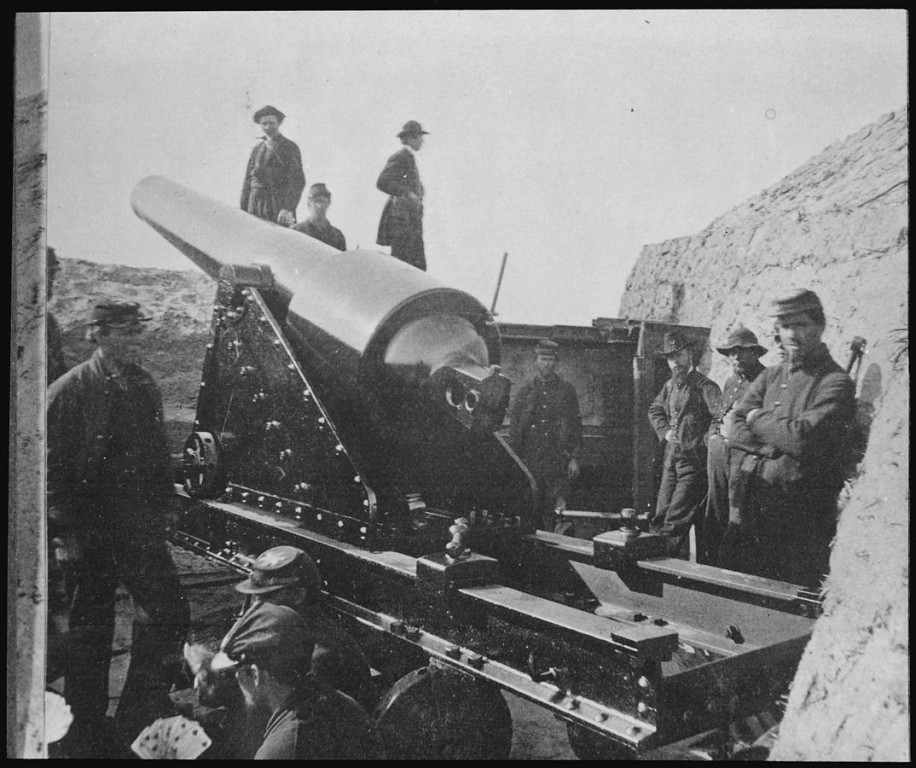
Union gun.jpg

Union Gun

Union Prisoners.jpg

Union Prisoners

This is war. The man in the foreground will never use his right arm again. Never again will the man on the litter jump or run. It is sudden, the transition from marching bravely at morning on two sound legs, grasping your rifle in two sturdy arms, to lying at nightfall under a tree with a member forever gone. But it is war. The usual treatment of an ordinary wound during the Civil War consisted in shaving the part if necessary and washing it with warm water and a sponge. Asepsis was not yet understood. The sponge, used on any and all cases indiscriminately, soon became infected. Gross foreign bodies were removed and the wound probed by instruments which were never sterilized and usually remained continuing sources of infection. The wound was usually protected by dressings of lint, the scrapings of which from cotton cloth by hand rendered its infection certain. Cloth or cotton compresses dipped in cold water were often used as dressings. Some surgeons used ointments spread on muslin. Flaxseed or bread poultices were often employed. In fact nearly every measure taken for the relief of the wounded was, through the irony of Fate and ignorance of infection, largely contributory in increasing the very suffering it was desired to prevent.

John Buford at Gettysburg

Defense In Depth
”John Buford’s First Day Defense at the Battle of Gettysburg”
The following is a brief description of John Buford’s actions on the first day at Gettysburg.  It was presented  in a Civil War chatroom one evening by Eric Whittenburg, author of “Gettysburg’s Forgotten Cavalry Battles” and John Buford’s biographer.  Since chatrooms do not lend themselves to large posts, it was presented in small increments over the course of about a half hour.  For ease of reading it has been reformatted into the form you see here,   However, very little changes were made and what you see is basically as it was presented to the group.
The concept that John Buford employed in the initial defense of Gettysburg is called a “defense in depth”. The theory behind a defense in depth is for the defending force to select a position far from the point that it ultimately wants to defend, so that there is a place to fall back to. A delaying action is fought, with the idea of slowly making a fighting withdrawal. The defending force makes use of the terrain to delay the enemy’s advance.
        Buford recognized the good high ground to the south and east of the town square and elected to fight a defense in depth to hold it until the infantry could come up. Buford had been consulting with John Reynolds in Emmitsburg on the way to Gettysburg on June 30, and knew how close the infantry was. He would defend the town from the west and north. Gamble on the west side, and Devin on the north. 
        Buford set up his videttes on an arc seven miles long. Gamble’s farthest post was four miles from the town square, Devin’s six. The idea of videttes is to serve as an early warning system. They make contact with the enemy, fire warning shots, delay as long a possible, and then fall back to the next chosen defensive position.  Gamble covered an arc from the Fairfield Road to the Mummasburg Road. Devin covered the Carlisle, Harrisburg and York Roads. The next fall back position from the west was Herr’s Ridge (which combines with Belmont School House Ridge), and then finally, the main line of battle was atop McPherson Ridge. 
        The vidette line of Gamble’s brigade was manned by about 275 men. The farthest post was atop Knoxlyn Ridge at the Whisler blacksmith shop. Vidette posts were typically manned by three or four men, and commanded by a non-com. This particular one was commanded by Sgt. Levi Shaffer of the 8th Illinois Cavalry.  Lt. Marcellus Jones of the 8th Illinois commanded the regiment’s vidette line. Early on the morning of July 1, Sgt. Shaffer spotted billowing clouds of dust arising along the Chambersburg Pike, indicating the movement of a large body of men. Shaffer called for Jones. Jones watched for a moment, borrowed Shaffer’s Sharps carbine, rested it on a fence post, and squeezed off the first shot of the Battle of Gettysburg. Fired at a range of about 700 yards, it hit nothing. Instead, it sent up the alarm among Heth’s advancing infantry. Soon, more shots rang out along the vidette line. It was about 6 a.m. Word was sent back to Buford to let him know that the Confederates had begun to advance. While he sent for Calef’s artillery, the surprised Confederates stopped and began to deploy into line of battle, a process that took nearly two full hours. Just by firing a few shots that hit nothing, Buford bought two hours’ time. In the meantime, Buford sent messengers to Reynolds to try to hurry the infantry to Gettysburg.
        In the meantime, the videttes fell back to Herr’s Ridge. There, along with about 500 others of Gamble’s brigade (total strength, about 750), they made a stand for the better part of an hour. Remember, too, that effective strength had to be reduced by 25% due to the fact that one in every four men was given task of holding horses. So, the actual strength was about 450. They stood there for about 45 minutes.  Meanwhile, Calef’s three sections of artillery deployed along McPherson’s Ridge. Two sections (4 guns) deployed on the Chambersburg Pike and the other two about four hundred yards away, near the spot where Reynolds fell. The idea was to disperse the guns to create the illusion that Buford actually had more than 6 pieces of artillery at his disposal.
        The Confederates, after driving Gamble off Herr’s Ridge, then got caught in the valley created by Willoughby Run. They came under heavy fire there, and it took time for them to regroup and begin to advance up the western slope of McPherson’s Ridge. By this time, it was nearly 9:15. Buford had already bought more than three hours’ time by his stand. However, he grew worried, as there was still no sign of the advance of Reynolds’ infantry. He went up the cupola of the Seminary to search for the head of Reynolds’ column, worried–he realized that it was just a matter of time before he had to pull back or he ran out of ammo.  As McPherson’s Ridge was the chosen spot for the defensive stand, Buford deployed all of Gamble’s brigade there, as well as a regiment of Devin’s, positioned to the north of the railroad cut. There, they stood for about an hour before the Confederates began pressing them back, both by flanking the position and because Gamble’s men were running out of ammunition.
        As things looked most desperate, Buford’s signal officer, Lt. Aaron B. Jerome, spotted the advance of Reynolds’ column, and reported it to Buford. Buford ascended the cupola again, saw it himself, and said, “Good, now we can hold the place.” He sent a messenger to Reynolds, who spurred ahead to meet with Buford. Reynolds called out, “What goes, John?” Buford characteristically replied, “The Devil’s to pay!” and pointed out the advancing Confederate infantry. Reynolds then asked whether Buford could hold, to which the cavalryman responded, “I reckon so.” Buford then came down, and he and Reynolds conferred and rode out to the front to see the situation.
        Reynolds then sent his staff officer, Capt. Stephen Minot Weld, to Meade with a sitrep, wherein Reynolds said, “Tell the General that we will hold the heights to the south of the town, and that I will barricade the streets of the town if necessary.” Weld rode off to report. In the meantime, Reynolds gave orders for his infantry, led by Doubleday’s division, to come up at the double-quick, which they did, advancing across the fields on the oblique.   As Gamble’s men were running out of ammunition, the infantry came up, and Gamble’s tired troopers opened ranks to make room for them to come into line. After being relieved, Gamble’s troopers took up a position on the Union left. The men of the 3rd Indiana Cavalry refused to leave the line of battle, holding a position next to the Iron Brigade.  Meanwhile, Joe Davis was pressing Devin back. Since Devin had only a regiment and a half atop the ridge, their position was more desperate. Reynolds responded by calling up John Robinson’s division, which arrived just in the nick of time, just before Devin’s guys ran out of ammunition.
        This was a perfectly planned and perfectly executed defense in depth, executed with perfect dragoon tactics. If one reads the manual for this sort of thing, what Buford did was by the letter of the book.

OPERATIONAL LEADERSHIP OF NATHAN BEDFORD FORREST …
This research paper studies the operational leadership of
Confederate cavalry General Nathan Bedford Forrest at the
tactical level of combat and presents some lessons learned for
the modern warfare commander in the context of doctrinal
publications such as Army Field Manual 100-5. Forrest’s greatest
victory at the Battle of Brice’s Cross Roads is examined as a
case study which exemplifies many of his innovations and tactics
in the art of maneuver warfare and operational leadership.
A paper submitted to the Faculty of the Naval War College in
partial satisfaction of the requirements of the Department of
operations. The contents of this paper reflect my own personal views and
are not necessarily endorsed by the Naval War College or the
Department of the Navy.
by John R. Sanders
Captain, U.S. Navy
READ THE THESIS HERE …
http://www.dtic.mil/dtic/tr/fulltext/u2/a283415.pdfNelly M. Chase …
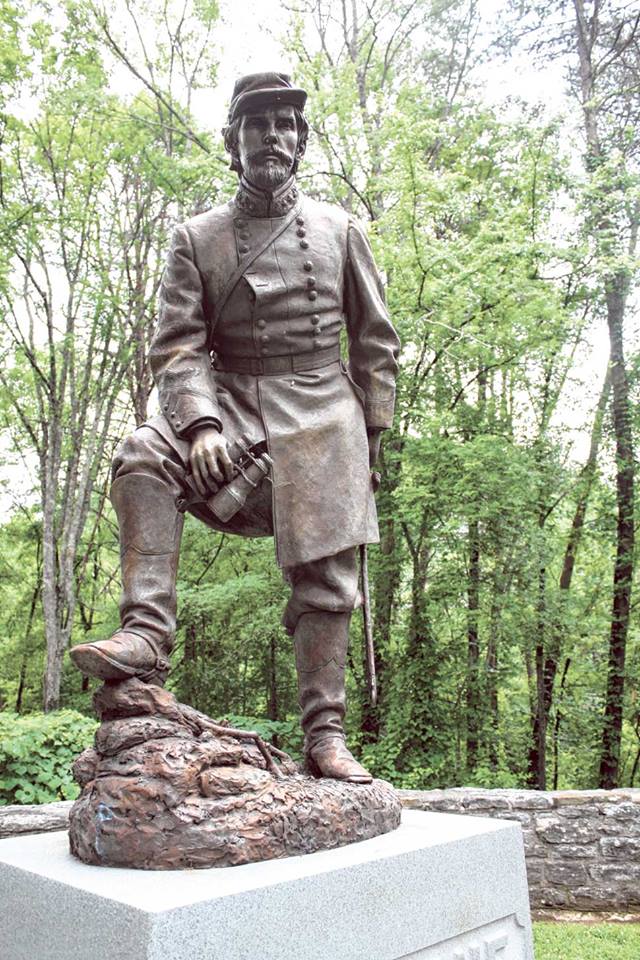
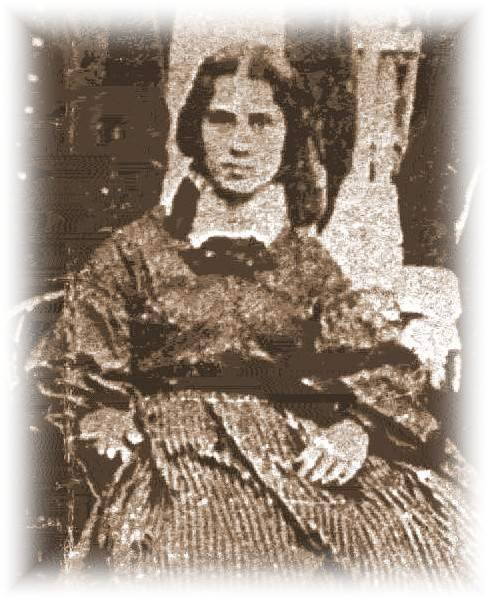
major-general-patrick-cleburne


Nelly M Chase.jpg
A soldier in the general hospital at Fredericksburg, a day or two after the battle in December, 1862, wrote as follows:
Having lost my right arm on last Saturday, on that fatal “Inclined plane” in front of Fredericksburg, I am obliged to employ an amanuensis to relieve my brain, which under the stimulus of some reactionary fever, must find legitimate work, or it will go off into all sorts of phantasies, or, perhaps, fall into a melancholy mood not at all productive of “healing by first intention,” as the doctors call a speedy cure. I don’t know what I can do better than to set down some of my experiences, which, I doubt not, are unfortunately or fortunately, as the case may be, similar to those of hundreds of my fellow-victims. It matters not to what particular regiment I belong, seeing that it is a Philadelphia regiment, and not altogether unknown to fame. Strange as it may seem, my recollections of Saturday, until four o’clock in the afternoon, are confused and indistinct. I remember well enough of being roused before daylight, from a very profound sleep upon the sidewalk in Fredericksburg by the sudden boom of cannon, and that, at short intervals, the firing continued began to betoken close quarters, and the air seemed to groan in unison as in the agony of an elemental dissolution.
Column after column of marching men went past in all the buoyancy of high hope, courage in their hearts, and determination in every lineament of their faces. Following every regiment were the litter-bearers, with their ready stretchers jauntily slung upon their shoulders; and I remember well of calculating in my own mind the chances of each man for an exit from the front upon one of those humane inventions.
By and by the litter-bearers returned, burdened with mangled, bleeding men, and from the great numbers carried off I calculated the stubborness of the resistance to our advance to Richmond. I was not excited; I was not fearful; I was simply apathetic, while awaiting the order to advance. At last it came–clear and distinct, but not loud, the words came:–”Attention, Battalion!” Instantly the line closed with a steady straight front, and every man stood erect with suspended breath for the next command. Nor did we wait long. “Battalion right face, forward, quick, march!” and we were off.
Forward we went until we cleared the streets of the town and arrived opposite the batteries on the hill on our left, when at the command, “By the left flank, march!” we changed our direction to the front, and faced the fire before us, advanced to the lines of the brigade that preceded us from town; but soon the smoke obscured the view of everything, save the flashes of the batteries before us, and the sparkle of the musketry in the dim sulphurous twilight of the battle, until the receding lines, in falling back, produced a mingled mass of retreating and advancing men. “Steady men,–forward!” rang out the voice of our commander; and disentangled from the retreating fugitives, we steadily bore on until we neared the batteries, and with a cheer we sprang forward, but that instant a line of fire leaped out from behind a stone wall close in our front, and–I don’t remember anything more about it. My next recollections were of a confused and mixed character; one moment I would seem perfectly conscious of something, the next of nothing. Then I would imagine I was at home, and half asleep, while all the house was astir with some past or anticipated catastrophe with which I was in some way connected. All was dark, and a great load seemed to press me down and glue me to the ground in spite of all my efforts to rise.
I could hear voices, but none familiar and but one that seemed spoken by human kind, or had a human chord of sympathy in it. Then I felt something force open my jaws, and some fluid trickle into my throat, which I managed to swallow to prevent strangling, and it still trickled down, and I still painfully swallowed, hoping, praying that it would stop; but it did not until I recognized that it was some strong spirit that I was taking and that I was becoming more able to swallow it. All this time I could hear the kind voice encouraging me, also some cold unsympathizing voices; but I could not distinguish what they said. Only by the tone could I tell the sympathetic from the unsympathetic. At last I distinguished the words, in part, of one who said, “It’s no use working with him. He’s dying now.” Quietly, but ho, so earnestly and sympathizingly the kind voice replied, “No, doctor, he is not dying; he is coming to life; he will live if we don’t give him up; this hurt of his head wont amount to anything if we can get him warmed up; don’t you see he has been nearly frozen to death, while faint from loss of blood; but he is coming on finely, and by and by you can take off his arm, and the man may get well. Who knows but he has a mother or a sister to love him, and thank you or me some day for a son or brother saved.”
Yes, I was saved; I understood it all now; I remembered the battle and my state, its doubtless consequence, and, for the sake of that dear mother and sister so strangely invoked, with an effort I succeeded in opening my eyes once more to the light of the sun on earth. At first the light confused me, but soon I could distinguish three surgeons beside me, looking at me with some curiosity, if not interest. On the opposite side, as I lay on the ground, in a large tent, kneeled a woman, who, with her left hand, supported my head, while with her right she held a spoon, with which, at short intervals, she dipped the warm fluid from a cup held by a mere boy-soldier, who seemed her special attendant.
I tried to speak, but could not, and she merely shook her head to discourage my efforts, and, turning to her attendant, said:–”Now, Johnny, the beef soup,” and in a minute the soup was substituted for the toddy, and I gradually felt life and the love of it returning. After further effort to look about me, I saw that there was a basin of water beside me, with a sponge in it, and from the blood on the lady’s hands, I inferred what I afterwards learned to be the truth, that she had been engaged in washing the blood from my head and face, when she discovered that what had seemed on a superficial view to be a most desperate wound of the head, including the skull, was but a mere scalp wound, which bled profusely, and doubtless made a most unpromising case for surgery at first view–a view very natural indeed, taking into consideration the state of my stupor. Gradually I recovered strength, until after sufficient reaction, my shattered arm was amputated, and I am doing as well as could be expected. I was, it seems, struck both in the head and arm by pieces of the same projectile, whatever it may have been, and lay senseless on the field till late in the night, when I was found by some humane litter-bearers, and carried to the city; and then, before being dressed, was put into an ambulance and carried over here, where, among the hundreds similarly brought, I was necessarily obliged to await my turn and thank God when my turn did come I fell into good hands–a woman’s hands at that. In that place even in the roar and din and carnage of battle, was found a woman with a heart to dare danger and sympathize with the battle-strucken, and sense and skill and experience enough to make her a treasure beyond all price. May the choicest blessings of Heaven be hers in all time to come! I have since observed her in her ministrations here, and she does indeed, seem gifted in a most wonderful degree for scenes like this, or else a hard school of suffering has made her the strange woman she is. To the wounded she is all sympathy and kindness, but let any one not a patient attempt familiarity, even in jest, and her black eyes flash such an indignant rebuke as is hardly equalled by her cool cutting rejoinder. More than one shoulder-strapped puppy has had occasion to rue the time he intruded his remarks upon her. I have learned that she has been in the army ever since the war broke out, nursing the sick and wounded, and “ever in front.” Hospitals in the rear are no place for her.
Dr. McDonald, of the Seventy-ninth New York Volunteers, the Surgeon in charge here, has placed her in charge of the supplies and stores, and most efficiently does she deal them out. Many a “poor wounded soldier” would lack his timely stimulant, soup or delicacies, if she did not pass through the tents at all hours of the day and night, for they say she seldom sleeps. Dr. McDonald has known her long as the matron of the One Hundredth Pennsylvania, or as it is better known the Roundhead Regiment which has been in South Carolina with the Seventy-ninth New York Regiment, and is still with it in the same division and he informs me that, on that fatal day of Gen. Benham’s defeat, on James Island, she performed incredible labors just as she does here. And yet she has never been a paid nurse. She is a member of her regiment,” she says, and it is only because it does not require her services that she works for others.
For all the labors, and privations, and sufferings of her campaigning life she receives no pay; she draws her rations as a private soldier, and the private soldiers who know her almost worship her.
I overheard one say to-day, that he would kill, as he would kill a dog, the man who would dare insult her, even in thought; and I believe it. War produces great developments of character, and Miss Nellie M. Chase is a most notable instance of it. She is not yet twenty-four years old, but in experience as a nurse or hospital matron, on the battle-field, I think she has no living equal. She may not thank me for this notice of her great services: I don’t think she will, for she dislikes notoriety, and never mingles in the “society of the army,” nor permits intimacies nor attentions from any but those who have adopted her and protected her. But the world has a right to know its heroines, as well as its heroes, and hers is a name that must at least be known as widely as that of the veteran regiment of which she is a member.
But gratitude for life preserved, has led me from my way, and I return to it to state my further experience of “wounded and in general hospital,” as the next tri-monthly report of my regiment will have me accounted for. We are placed in large “hospital tents,” in a secluded valley near Falmouth Station, and receive all the care and attention that such accommodations admit; but, without doubt a “cold snap” would soon “reduce the number of inmates” to less than a moiety of their present “muster.”

The Last Salute of the Army of Northern Virginia
The following is an article which provides General Joshua Chamberlain’s comments and memories concerning the Army of Northern Virginia’s Surrender at Appomattox.

The Last Salute Of The Army Of Northern Virginia.
From the Boston Journal, May, 1901
Details of the Surrender of General Lee at Appomattox Courthouse, April 9th, 1865.

LENIENT TERMS OF GENERAL GRANT.
By General J. L. Chamberlain.

It is an astounding fact that among the thousands of official documents bearing upon the Civil war in the National Archives at Washington there is absolutely nothing dealing with one of the most dramatic features of the great four years’ internal struggle–the actual ceremonies attendant upon the formal surrender by General Lee’s army of all Confederate property in their possession at Appomattox Courthouse thirty-six years ago.

When General Lee surrendered to General Grant, April 9th, 1865, the war was virtually over, but of the details of the surrender, the pathetic sadness on the one side, the jubilant satisfaction on the other, and, more particularly of the precise arrangements, the mode of procedure and the Northern army officer whose duty it became to take charge of the rebel arms and the rebel battleflags as they were given up–of all this our official war records tell not a word.

Why this is so the chief actor in the closing scene of the bloody drama, General Joshua L. Chamberlain, of Brunswick, Me., set forth in a pithy sentence to a Boston Journal writer the other night: “The war was over when Lee signed the terms of surrender, and with the closing of the war all official record-writing ceased.”

And just as it is true that there are no official records bearing upon this notable surrender scene, so also is it true that there are no official records describing the really remarkable disbandment of the Southern military and its departure in fragments for home. Only recently, in fact, has this matter been treated of, and that by a magazine almost four decades after the event!

Truly, some of the most absorbing history is, in the minting, slow quite beyond belief. Passing strange it seems almost that upon a writer of a generation which has no intimate connection with the Civil war should devolve the not unpleasant, nor in the light of facts, ill-timed, task of setting down in complete detail that story which long ago should have had a full official telling.

In that great national tragedy of the Civil war there has been for years much effort, always in a more or less unostentatious and secretive way, to eliminate the merit which was due to prominent actors. It has been said recurrently that officers other than the actual one who commanded on the impressive occasion, and, to cite one case, a general officer, who, from 1863, was never connected with the Army of the Potomac, was frequently banqueted and toasted as the soldier who received the surrender of General Robert E. Lee. This was, to be sure, an unfair acceptance, but it was accepted in silence, and even at later times assented to in subsequent remarks. But, be it said, such pretense of merit deserves and surely ought to receive the censure of every loyal comrade.

The man who did command the Union soldiery that stood immovable for hours near Appomattox Courthouse on that eventful day while Rebel arms and colors nodded “conquered” has never sounded in public or in private his own acclaim. Major-General Joshua L. Chamberlain, of Maine, he was in the old days, and still he bears that honorable title.

As a conspicuous New Englander whose life has been an integral part of the educational history of his beloved Pine Tree State, which he has represented as Governor as one of the legislators, as President of Bowdoin College, and particularly as a soldier, his long and eventful life has come to be well known to the people of the entire country–his life excepting that part he played in the last act of the war.

This is somewhat in detail the entire story as summarized by General Chamberlain:

“The Battle of Five Forks, which occurred on the 1st of April, 1865, served to prove to General Grant the fact which General ‘Phil’ Sheridan had advanced that the cutting of railroad lines between Petersburg and the South had made exceedingly difficult, if not practically impossible, the provisioning of the Confederate army, and that the departure of that command and its march toward Lynchburg might soon be expected.

“The victory of Fire Forks was so complete in every way as to wholly paralyze General Lee’s plan for further delay, and it is not too much to say that the decision was at once made for the western movement of the Army of Northern Virginia toward a new supply base.

The battle of Sailor’s Creek, with Ewell’s surrender, and that of Farmville, followed quickly after, the Confederates being hard pressed on their left flank, and for them there was little rest owing to the continual hounding by Sheridan’s forces which seemed quite eager for constant combat.

“The Fifth Army Corps had been detailed to work with Sheridan’s cavalry division. The subsequent relief of General Warren is a matter of history, which there is no need of repeating.

“General Griffin succeeded to command, and aided by the 6th, the 2d, and portions of the Army of the James, with other corps as fast as they could get to the scene, the military movements of that time form some of the most absorbing chapters of the Civil War which history has placed on record. Since the approach to Appomattox–for a hundred miles or more along this stream there had been terrible fighting–brought the head of each army very frequently in view, the strange spectacle of one army pressing with all energy in pursuit, while its antagonist was using its best efforts to get away and reach its delayed base of supplies, was presented to both sides.

“On the terrible march to Appomattox Courthouse the Federal troops were ever shrouded in smoke and dust, and the rattle of firearms and the heavy roar of artillery told plainly of the intense scene which threatened to bring on yet one more general engagement.

“Then came a moment which to me, at least, was more thrilling than any that had gone before. As we were hurrying on in response to Sheridan’s hastily scribbled note for aid, an orderly with still another command from ‘Little Phil’ came upon our bedraggled column, that of the 1st Division of the Fifth Army Corps, just as we were passing a road leading into the woods. In the name of Sheridan I was ordered to turn aside from the column of march, without waiting for orders through the regular channels, and to get to his relief.

“The orderly said in a voice of greatest excitement that the Confederate infantry was pressing upon Sheridan with a weight so terrible that his cavalry alone could not long oppose it.

“I turned instantly into the side road by which the messenger had come, and took up the ‘double-quick,’ having spared just time enough to send to General Gregory an order to follow me with his brigade.

“In good season we reached the field where the fight was going on. Our cavalry had even then been driven to the very verge of the field by the old ‘Stonewall’ Corps. Swinging rapidly into action the first line was sent forward in partial skirmish order, followed by the main lines, the 1st and 2d brigades. Once, for some unknown reason, I was ordered back, but in the impetuosity of youth and the heat of conflict, I pushed on, for it seemed to me to be a momentous hour. We fought like demons across that field and up that bristling hill. They told us we would expose ourselves to the full fire of the Confederate artillery once we gained the crest, but push on we did, past the stone wall behind which the ‘Stonewall Corps’ had hidden, driving them back to the crest of the ridge, down over it, and away.

“We were gathering our forces for a last final dash upon the enemy. From the summit of the hill we could see on the opposite ridge a full mile across the valley the dark blotches of the Confederate infantry drawn up in line of battle; the blocks of cavalry further to our right, and lower down more cavalry, detached, running hither and thither as if uncertain just what to do.

“In the valley, where flowed the now narrow Appomattox, along whose banks we had fought for weary miles, was a perfect swarm of moving men, animals, and wagons, wandering apparently aimlessly about, without definite precision. The river sides were trodden to a muck by the nervous mass. It was a picture which words can scarce describe.

“As we looked from our position we saw of a sudden a couple of men ride out from the extreme left of the Confederate line, and even as we looked the glorious white of a flag of truce met our vision. At that time, having routed the Confederate forces on the hill, my brigade was left alone by Sheridan’s cavalry, which had gone to the right to take the enemy in the flank.

“I was on the right of the line as we stood at the crest of the hill. Near by us was the red Maltese cross of the Hospital Corps, and straight toward this the two riders, one with the white flag, came.

“When the men arrived, the one who carried the flag drew up before me, and, saluting with a rather stiff air–it was a strained occasion –informed me that he had been sent to beg a cessation of hostilities until General Lee could be heard from. Lee was even then said to be making a wide detour in the hope of attacking our forces from the rear. The officer who bore the flag was a member of the Confederate General Gordon’s staff, but the message came to me in the name of General Longstreet.

“At that time the command had devolved upon General Ord, and I informed the officer with the flag–which was, by the way, a towel of such cleanliness that I was then, as now, amazed that such a one could be found in the entire Rebel army–that he must needs proceed along to our left, where General Ord was stationed. With another abjectedly stiff salute the officer with his milk-white banner galloped away down our line.

“It was subsequently learned that General Ord was situated some distance away at my left with his troops of the Army of the James, comprising Gibbon’s Second Army Corps and a division of the Twenty-fifth Army Corps. His line quite stretched across the Lynchburg road, or ‘pike,’ as we called it then.

“Well, as I have said, the flag of truce was sent to Ord, and not long afterward came the command to cease firing. The truce lasted until 4 o’clock that afternoon. At that time our troops had just barely resumed the positions they had originally occupied when the flag came in. They were expecting momentarily to be attacked again, and were well prepared, yes, eager, for a continuance of the battle.

“And just then the glad news came that General Lee had surrendered. Shortly after that we saw pass before us that sturdy Rebel leader, accompanied by an orderly. He was dressed in the brilliant trappings of a Confederate army officer, and looked every inch the soldier that he was. A few moments after that our own beloved leader, General Grant, also accompanied by an orderly, came riding by. How different he was in appearance from the conquered hero. The one gay with the trappings of his army, the other wearing an open blouse, a slouch hat, trousers tucked into heavy, mud-stained boots, and with only the four tarnished golden stars to indicate his office! They passed us by and went to the house where were arranged the final terms of surrender. That work done neither leader staid long with his command, the one hurrying one way, the other another.

“That night we slept as we had not slept in four years. There was, of course, a great deal of unrestrained jubilation, but it did not call for much of that to be a sufficiency, and before long the camp over which peace after strife had settled was sleeping with no fear of a night alarm. We awoke next morning to find the Confederates peering down into our faces, and involuntarily reached for our arms, but once the recollections of the previous day’s stirring events came crowding back to mind, all fear fled, and the boys in blue were soon commingling freely with the boys in gray, exchanging compliments, pipes, tobacco, knives and souvenirs.”

In the last days of fighting, which ended in Lee’s surrender, General Chamberlain was wounded twice. That his service was gallant in the extreme may be judged when it is told that both General Sheridan and General Grant commended him personally. This the General cared to dwell on but little. But when it came to describing the final scenes of the war, the gray-haired army leader grew ardent with enthusiasm for his subject:

Appomattox Court House
McLean House (Library of Congress)
“On that night, the l0th of April, in 1865, I was commanding the 5th Army Corps,” he said. “It was just about midnight when a message came to me to report to headquarters.

“I went thither directly and found assembled in the tent two of the three senior officers whom General Grant had selected to superintend the paroles and to look after the transfer of property and to attend to the final details of General Lee’s surrender. These were General Griffin of the 5th Army Corps and General Gibbon of the 24th. The other commissioner, General Merritt of the cavalry, was not there. The articles of capitulation had been signed previously and it had come to the mere matter of formally settling the details of the surrender. The two officers told me that General Lee had started for Richmond, and that our leader, General Grant, was well on his way to his own headquarters at City Point, so called, in Virginia. I was also told that General Grant had decided to have a formal ceremony with a parade at the time of laying down of arms. A representative body of Union troops was to be drawn up in battle array at Appomattox Courthouse, and past this Northern delegation were to march the entire Confederate Army, both officers and men, with their arms and colors, exactly as in actual service, and to lay down these arms and colors, as well as whatever other property belonged to the Rebel army, before our men.

“I was told, furthermore, that General Grant had appointed me to take charge of this parade and to receive the formal surrender of the guns and flags. Pursuant to these orders, I drew up my brigade at the courthouse along the highway leading to Lynchburg. This was very early on the morning of the 12th of April.

“The Confederates were stationed on the hill beyond the valley and my brigade, the 3rd, had a position across that valley on another hill, so that each body of soldiers could see the other. My men were all veterans, the brigade being that which had fired the first shot at Yorktown at the beginning of the war. Their banners were inscribed with all the battles of the army of the Potomac from the first clear through the long list down to the last.

“In the course of those four eventful years the makeup of the brigade had naturally changed considerably, for there had been not alone changes of men, but consolidations of regiments as well. Yet the prestige of that history made a remarkably strong esprit du corps.

“In that Third Brigade line there were regiments representing the States of Maine, Massachusetts, Michigan, and Pennsylvania, regiments which had been through the entire war. The Bay State veterans had the right of line down the village street. This was the 32d Massachusetts Regiment, with some members of the 9th, 18th, and 22d Regiments. Next in order came the First Maine Sharpshooters, the 20th Regiment, and some of the 2d. There were also the First Michigan Sharpshooters, the 1st and 16th Regiments, and some men of the 4th. Pennsylvania was represented by the 83d, the 91st, the 118th, and the 155th. In the other two brigades were: First Brigade, 198th Pennsylvania, and 185th New York; in the Second Brigade, the 187th, 188th, and 189th New York.

“The First and Second Brigades were with me then, because I had previously commanded them and they had been very courteously sent me at my request by my corps and division commanders.

“The arrangement of the soldiery was as follows: The Third Brigade on one side of the street in line of battle; the Second, known as Gregory’s, in the rear, and across the street, facing the Third; the First Brigade also in line of battle.

“Having thus formed, the brigades standing at ‘order arms,’ the head of the Confederate column, General Gordon in command, and the old ‘Stonewall’ Jackson Brigade leading, started down into the valley which lay between us, and approached our lines. With my staff I was on the extreme right of the line, mounted on horseback, and in a position nearest the Rebel solders who were approaching our right.

“Ah, but it was a most impressive sight, a most striking picture, to see that whole army in motion to lay down the symbols of war and strife, that army which had fought for four terrible years after a fashion but infrequently known in war.

“At such a time and under such conditions I thought it eminently fitting to show some token of our feeling, and I therefore instructed my subordinate officers to come to the position of ‘salute’ in the manual of arms as each body of the Confederates passed before us.

“It was not a ‘present arms,’ however, not a ‘present,’ which then as now was the highest possible honor to be paid even to a president. It was the ‘carry arms,’ as it was then known, with musket held by the right hand and perpendicular to the shoulder. I may best describe it as a marching salute in review.

“When General Gordon came opposite me I had the bugle blown and the entire line came to ‘attention,’ preparatory to executing this movement of the manual successively and by regiments as Gordon’s columns should pass before our front, each in turn.

“The General was riding in advance of his troops, his chin drooped to his breast, downhearted and dejected in appearance almost beyond description. At the sound of that machine like snap of arms, however, General Gordon started, caught in a moment its significance, and instantly assumed the finest attitude of a soldier. He wheeled his horse facing me, touching him gently with the spur, so that the animal slightly reared, and as he wheeled, horse and rider made one motion, the horse’s head swung down with a graceful bow, and General Gordon dropped his swordpoint to his toe in salutation.

“By word of mouth General Gordon sent back orders to the rear that his own troops take the same position of the manual in the march past as did our line. That was done, and a truly imposing sight was the mutual salutation and farewell.

“At a distance of possibly twelve feet from our line, the Confederates halted and turned face towards us. Their lines were formed with the greatest care, with every officer in his appointed position, and thereupon began the formality of surrender.

“Bayonets were affixed to muskets, arms stacked, and cartridge boxes unslung and hung upon the stacks. Then, slowly and with a reluctance that was appealingly pathetic, the torn and tattered battleflags were either leaned against the stacks or laid upon the ground. The emotion of the conquered soldiery was really sad to witness. Some of the men who had carried and followed those ragged standards through the four long years of strife, rushed, regardless of all discipline, from the ranks, bent about their old flags, and pressed them to their lips with burning tears.

“And it can well be imagined, too, that there was no lack of emotion on our side, but the Union men were held steady in their lines, without the least show of demonstration by word or by motion. There was, though, a twitching of the muscles of their faces, and, be it said, their battle-bronzed cheeks were not altogether dry. Our men felt the import of the occasion, and realized fully how they would have been affected if defeat and surrender had been their lot after such a fearful struggle.

“Nearly an entire day was necessary for that vast parade to pass. About 27,000 stands of arms were laid down, with something like a hundred battleflags; cartridges were destroyed, and the arms loaded on cars and sent off to Wilmington.

“Every token of armed hostility was laid aside by the defeated men. No officer surrendered his side arms or horse, if private property, only Confederate property being required, according to the terms of surrender, dated April 9, 1865, and stating that all arms, artillery, and public property were to be packed and stacked and turned over to the officer duly appointed to receive them.

“And right here I wish to correct again that statement so often attributed to me, to the effect that I have said I received from the hands of General Lee on that day his sword. Only recently, at a banquet in Newtown, glass., of the Katahdin Club, composed of sons and daughters of my own beloved State, it was said in press dispatches that a letter had been read front me in which I made the claim that I had received Lee’s sword. I never did make that claim even, as I never did receive that sword.

“As I have said, no Confederate officer was required or even asked to surrender his side arms if they were his personal property. As a matter of fact, General Lee never gave up his sword, although, if I am not mistaken, there was some conference between General Grant and some of the members of his staff upon that very subject just before the final surrender. I was not present at that conference, however, and only know of it by hearsay.

“But, as I was saying, every token of armed hostility having been laid aside, and the men having given their words of honor that they would never serve again against the flag, they were free to go whither they would and as best they could. In the meantime our army had been supplying them with rations. On the next morning, however, the morning of the 13th, we could see the men, singly or in squads, making their way slowly into the distance, in whichever direction was nearest home, and by nightfall we were left there at Appomattox Courthouse lonesome and alone.”

Source: Southern Historical Society Papers, Vol. XXXII, Richmond, Va., January -December. 1904.
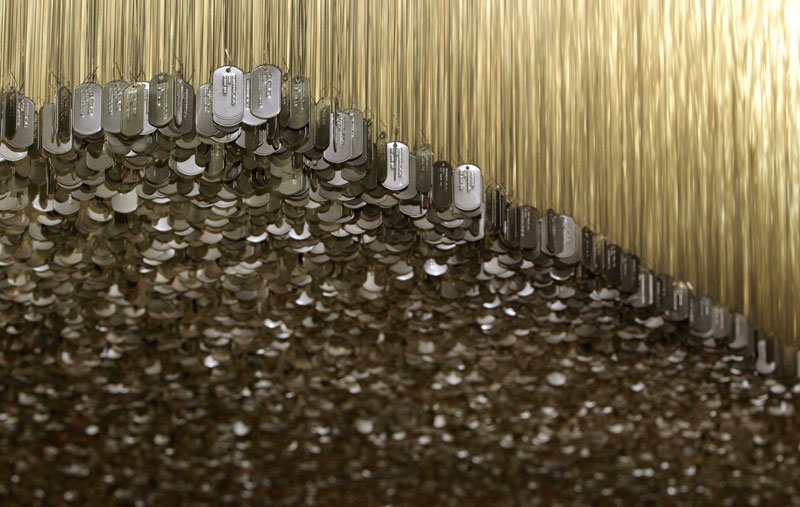
 

West Point Graduates Killed in Action World War I

EXCELLENT  – http://www.bing.com/images/search?q=Battle+of+Cantigny&Form=IQFRDR&id=27C6751CFB040E1DFBCB9C2733F5102DD632CBD8&selectedIndex=0#view=detail&id=B0B7E5340ECD563FCD5696A892F2FC33F41154A1&selectedIndex=125

Found on the body of Pvt. Martin August Trepton, a soldier killed in the Chateau Thierry Campaign 

Based on a story in “America First” by Lawton P Evens, Copyright 1920, Trepton was a “Runner” caring a verbal message from his Company Commander.  Trepton was wounded twice on the run, but kept running till he was finally hit a third time killing him.

His Photo & Grave Site   http://www.findagrave.com/cgi-bin/fg.cgi?page=gr&GRid=43854300

He had enlisted in the Iowa National Guard, which became the 168th Infantry Regiment, 84th Brigade, in the 42d ”Rainbow” Division when it was called to Federal service.

Pvt. Treptow was killed while serving as a courier, for Company M in the battle of the Ourcq River on July 29, 1918.

“America must win this war.  I will work, I will save, I will sacrifice, I will endure; I will fight cheerfully and do my utmost, as if the issue of the whole struggle depended on me alone.” 

Some of what they wrote years ago contain more of love for another, than what we allow ourselves to write in our sophisticated world. Details of the War – participants, dates, battles and important names.

Clicking on a subject provides advertisement so you must copy each and then do a search http://www.spartacus.schoolnet.co.uk/FWW.htm http://www.worldwar1.com/dbc/dbc2.htm

American Battle Monuments Commission – http://www.abmc.gov/search/wwi.php

33 WEST POINTERS KILLED IN THE WAR – NY Times Note – In the listing, the Class of 1917 graduated April 1917, the Class of 1918 graduated August 1917 and the Class of 1919 graduated June of 1918. There is also an error http://query.nytimes.com/gst/abstract.html?res=F20B12FB3E5F1B728DDDAB0A94D9415B898DF1D3

Film – very basic -The St. Mihiel Drive September 1918 United States First Army http://www.youtube.com/watch?v=jvxEtVq0Wng

1919 Association of Graduates Report http://digital-library.usma.edu/cdm/compoundobject/collection/aogreunion/id/15844/rec/2

http://digital-library.usma.edu/libmedia/archives/aogreports/V1919.PDF

Listing of Officers 1900 – 1950 http://www.usofficerdocuments.com/armyair/reg_resb6.html

Authorization for travel to Europe for Families http://www.itwasprinted.com/Images/img12002.jpg http://www.itwasprinted.com/genealogy/WW1_casualties_a.htm

Recipients of the DSC WWI http://www.homeofheroes.com/members/02_DSC/indexes/1_ww1/01_index.html

world_war_1_aef

Sergeant Stubby - Sergeant Stubby (April 4, 1926), was the most decorated war dog of World War I and the only dog to be promoted to sergeant through combat. America’s first war dog, Stubby, served 18 months ‘over there’ and participated in seventeen battles on the Western Front. He saved his regiment from surprise mustard gas attacks, found and comforted the wounded, and even once caught a German spy by the seat of his pants (holding him there til American Soldiers found him).

Unknown-3   images Unknown Unknown-2 Unknown-4 Unknown-5

Class of 1886

3141 Col Betram Tracy Clayton QMC KIA May 30, 1918 DSC The bomb dropped by a German aviator killed at the same time several other officers. Map – http://www.maplandia.com/france/picardie/oise/#map – note Montdidier is Department of Somme

Class of 1892

3505 Col William David Davis Inf KIA Nov 1, 1918 Moregem, Belgium aged 49 years DSC Map – http://www.maplandia.com/belgium/vlaanderen/oost-vlaanderen/moregem/ The following is taken from 600 DAYS’ SERVICE – A HISTORY OF THE 361st INFANTRY Twice wounded – Cited “for gallantry in action against Spanish forces at Santiago, Cuba, July 1, 1898.” 361 Inf 91 Division – in early Sept 1918, fought in the St. Mihiel Offensive, followed up on 26 September as part of the Meuse-Argonne offensive. The 17th – 19th Oct, the Regiment moved to Ypres Belgium attached to the French 7th Corps. Colonel Davis, commanding the 361st Regiment of Infantry of the 91st Division, was killed in action November 1, 1918, while personally supervising the disposition of the companies of his regiment on the front line.

Class of 1893

3559 Col Hamilton Allen Smith Inf KIA July 22, 1918 DSC Commanded the 26th Infantry  Commanded the 26th Infantry Before or near Soissons this brave officer met his death-heroically as he had lived-he died the death of a very fine gentleman and soldier; his last hours were characteristic of his whole life, his thoughts were always for others. Killed while directing an attack on a machine gun emplacement,in France. Aged 47 years. DSC

Class of 1896

Lt Col Robert Jayne Maxey Inf (Died of wounds May 28, 1918) DSC Commanded the 28th Infantry Map – http://www.maplandia.com/france/picardie/somme/montdidier/cantigny/

Class of 1901

Lt Col Emory Jenison Pike Cav KIA Sept 15, 1918 Vandieres, France Medal of Honor Map – http://www.maplandia.com/france/lorraine/meurthe-et-moselle/nancy/vandieres/

Class of 1903

Lt Col James Andrew Shannon Cav (Died of wounds Oct 8, 1918) Chatel-Chehery DSC & French Croix de Guerre http://digital-library.usma.edu/cdm/compoundobject/collection/aogreunion/id/15844/rec/2 Map Chatel-Chehery, France – http://www.maplandia.com/france/champagne-ardenne/ardennes/vouziers/chatel-chehery/

Class of 1905

Lt Col James Hoop Dickey Inf (Died of wounds Sept 27, 1918) Meuse- Argonne, France http://en.wikipedia.org/wiki/Meuse-Argonne_Offensive http://www.worldwar1.com/dbc/bigshow.htm

Class of 1906

Major Fred Alden Cook Inf KIA Oct 7 , 1918 Etienne-a-Arnes, France DSC Battalion Commander 7th Infantry 2d Division Map http://www.map-france.com/Saint-Etienne-a-Arnes-08310/

Class of 1908

4731 Major Arthur Edward Bouton KIA July 15, 1918 near Soissons, France DSC Major Bouton’s battalion attacked the Germans before Vaux and the Bois de la Roche on July 1st, 1918, capturing that town and woods to north and northwest. Several hundred Germans were killed and wounded, over three hundred taken prisoners. An entire German regiment was completely put out of action by the battalion. http://www.maplandia.com/france/bretagne/morbihan/vannes/le-bois-de-la-roche/

Over The Top

Over The Top

Class of 1914

Lt Col Roy Melvin Smyth KIA Oct 15, 1918, Bois de Foret, Meus-Argonne DSC Battalion Commander 1st Bn 4th Infantry 3d Division http://www.worldwar1.com/dbc/bigshow.htm

Class of 1915

5390 Major JO HUNT REANEY Inf KIA July 15, 1915 Gland. France Company Commander 7th Inf 3d Divison Map http://www.conseil-general.com/en/map-town-hall/map-town-hall-gland-89740.htm

Major Harry Aloysius Harvey FA KIA Sept 12, 1918 Saint Mihiel France DSC http://en.wikipedia.org/wiki/Battle_of_Saint-Mihiel http://www.worldwar1.com/dbc/stmihiel.htm http://www.youtube.com/watch?v=jvxEtVq0Wng

Major Edwin Richardson Kimble CE (Died of wounds April 9, 1918) We have an error here – There is no record of Major Kimble being Wounded or being Killed in Action – yet it appears the Academy provided the NY Times with his name – listing him as dying of wounds. Some one wanted to give him credit, he possible died of the flu which took so many

Class of 1916

Major John Howard Wills CE KIA July 29, 1918

Major Alfred King King FA KIA Lanenville, France November 10,1918. DSC

Major John Alexander Street Inf KIA Oct 4, 1918

Class of April 1917

Captain Francis Eugene Dougherty Inf KIA Oct 15, 1918 Meuse-Argonne Battalion Commander 3d Division

Captain Daves Rossell Inf (Died of wounds Oct 13, 1918) Meuse-Argonne Company Commander Machine Gun Battalion 5th Division

Captain Stewart Whiting Hoover KIA March 1, 1918 1st West Pointer to be Killed in WWI, 18th Inf 1st Division

Captain George Wilbur Sackett Inf KIA Oct 15, 1918, Meuse-Argonne, Company Commander 5th Division

Captain Henry Henley Chapman Inf KIA Sept 29, 1918, Infantry Company Commander 30th Division Military Family dating back to the Revolution. “He was a Captain born and bred. In years, Though yet a boy, he was a man in soul, Led older men and held them in control; In danger stood erect and quelled their fears; When death calls such a Captain, he but hears As ’twere a distant bugle and the roll Of far-off drums. We wrong him if we toll The mournful bell. Give him our cheers, not tears! Through deadly scorch of battle flame and gas, Through iron hail and burst of shrapnel shell, Smiling as when we played at mimic wars, He was our leader. Is it, then, not well That he should lead before us to the stars? Stand at attention! Let his brave soul pass!”

Captain Edward William Leonard Inf KIA Oct 14, 1918, Meuse-Argonne Company Commander 6th Infantry 5th Division

Class of August 1917

Entered as the Class of 1918, graduated 10 months early, but retained their Class Crest

Captain Charles Dashiell Harris CE KIA Oct 20, 1918 DSC An Engineer Leads the Attack

Captain Thurston Elmer Wood FA KIA July 21, 1918 In his fall we lost one of our best officers. His superiors regarded him as one of the brightest and most efficient officers in the service and he was known as a man devoid of fear. West Point never had a more loyal son, nor one who more scrupulously “lived its motto”.

Captain Robert Earl Symmonds Cav (Died of wounds Nov 22, 1918) Military Family – great grandfather Brigadier General Earl D. Thomas of the Class of 1869, and father Brigadier General Charles J. Symmonds of the Class of 1890.

1st Lt EDWARD JOSEPH WOLFF, JR. No. 5777. FA Killed August 16, 1918, in France, aged 22 years.

1st LtKenneth Paul Murray Inf Killed in Action July 15, 1918 DSC There is a minor error here as the NY Times listed as Died of wounds, yet his Commanding Officer was next to him when he was killed. 

1st Lt Louis Armistead Freeman FA (Died of wounds Aug 18, 1918)

1st Lt Theodore Desmond Schmidt Inf (Died of wounds Sept 7, 1918)

1st Lt Josephus Benjamin Wilson Inf KIA Oct 15, 1918 DSC

1st Lt  Frank Sidney Long Inf KIA Oct 5, 1918 DSC Upon arriving,found and reorganized about 250, men of “A”, “B”, “C”, “D” and “I” Companies without an officer, all that were left of the First Battalion. Military Family dating back to the Revolution. http://www.maplandia.com/france/champagne-ardenne/ardennes/vouziers/grandpre/

1st Lt Earle Adams Billings Inf KIA July 1918 A French newspaper: “First Lieut. Earle A. Billings, 9th Infantry, led his men through heavy barrage, working continuously during the entire bombardment, locating and directing evacuation of the wounded. By his valor and coolness, in spite of high explosive and gas shelling, he was an incentive to his men. This at Vaux, July 1, 1918.” Map – http://www.map-france.com/Vaux-57130/

Class of June 1918

The Class retained their 1919 Class Crest

2d Lt Albert Francis Ward – Inf KIA June 22, 1919 Siberia (Probably a Platoon Leader) in H Company 31st Infantry attempting to relieve pressure on M Company in the village of Novitskaya near Vladivostok Siberia Map – http://www.getamap.net/maps/russia/primorskiy_kray/_novitskaya/

West Point Graduates Killed in Action – World War II

About six miles from Maastricht, in the Netherlands, lie buried 8,301 American soldiers who died in “Operation Market Garden” in the battles to liberate Holland in the fall winter of 1944-.  Every one of the men buried in the cemetery, as well as those in the Canadian and British military cemeteries, has been adopted by a Dutch family who mind the grave, decorate it, and keep alive the memory of the soldier they have adopted.  It is even the custom to keep a portrait of “their” American soldier in a place of honor in their home.

http://www.flixxy.com/trumpet-solo-melissa-venema.htm

Annually, on “Liberation Day,” memorial services are held for “the men who died to liberate Holland.” The day concludes with a concert.  The final piece is always “Il Silenzio,” a memorial piece commissioned by the Dutch that was first played in 1965 on the 20th anniversary of Holland’s liberation. It has been the concluding piece of the memorial concert ever since.
This year the soloist was a 13-year-old Dutch girl, Melissa Venema, backed by André Rieu and his orchestra (the Royal Orchestra of the Netherlands). This beautiful concert piece is based upon the original version of taps and was composed by Italian composer Nino Rossi

B-17 Raid

B-17 Raid

I Want You

I Want You

cemat-Normandy

Class of 1933

William O Darby

“We will fight an Army on a dare – we’ll follow Darby anywhere” – – 1st Ranger Battalion

DarbyWilliamO

Darby-HalBoyle_Jan191958

Class of 1937

Colin Kelly

Colin Kelly

Class of 1941

William Gillis

ArmyFB_1941_MAJWilliamGillis_KIA_EveningIndependent_Oct251944

ArmyFB_1941_WilliamGGillis_35thDiv

Class of 1942

Henry Benitez
henry-benitez-42

benitez-plaque

b-17-for-holling

West Point Graduates Killed in Action – Korea

Info taken from Bill McWilliams http://intothefire.oldcolo.com/index.html

http://www.kmike.com/POW_Olympics/pow/POW_Olympics_Names.htm

http://travel.nationalgeographic.com/travel/countries/north-korea-map/

korean-war-soldiers koreanwar-comfort

Classes 45 – 48

lost 61 Killed in Action

Class of 1949

27 graduates Killed in Action in Korea

Class of 1950

Well over half of the 670 Grads from ’50 served in Korea. Of their number 34 were Killed in Action. The class of ’50 had a special kinship with the classes of 1836, 1846, 1861, 1917, and 1941.

“Arthur Martens Apmann” Jr. Not sure he should be listed – decision to be made by Class of ’50 – does he belong with others
17505 23 August 1951 in Korea

“Courtenay Leonard Barrett”, Jr.
17856 Killed in Action September 27, 1950

“Thurston Richard Baxter”
17722 Killed in Action 21 December 1951

“Medon Armin Bitzer”
17778 Killed in Action January 8, 1952

“Warner Turner Bonfoey”, Jr.
17677 Killed in Action October 29, 1951

“Warner Turner Bonfoey”, Jr.
17677 Killed in Action October 29, 1951

“Thomas Wesley Boydston”
17480 Killed in Action April 26, 1951

“Howard Gallaway Brown”
17942 Killed in Action September 22, 1950 i

“Thomas Francis Casserly”, III
17376 Killed in Action October 1, 1952

“Frank Peter Christensen”, Jr.
17560 Killed in Action February 13, 1951 i

“Willard Holbrook Coates”
17686 Killed in Action November 28, 1950

“Malcolm R. Cox”, Jr.
17921 Died in a North Korea POW Camp April 21, 1951

“Gene Alton Dennis”
17865 Killed in Action 28 sept 1952 Remains not found.

“George Baylor Eichelberger”, Jr.
17483 Kiolled in Action 15 January 1952

“Charles Kohl Farabaugh”
17944 Killed in Action 17 July 1952 near Haduch’on, North Korea

“George Everett Foster”
17446 Missing in Action since December 2, 1950 at Chonjin (Chosin) Reservoir, Korea.
Officially declared Dead as of December 31, 1953

“John Henry Green”
17652 Killed in Action 15 Oct 1952
In the vicinity of Kumhwa, Korea, Lieutenant Green, as company commander, led his men in an assault on a vital enemy position through a barrage of small-arms, artillery and mortar fire. In the course of the attack, the company was subjected to fire from a camouflaged position, threatening to halt the advance, Lieutenant Green, leaping from cover into a communication trench, without regard for his own safety, hurled hand grenades to neutralize the enemy machine gun. When the company was again subjected to devastating fire from a tunnel under one of the trenches, Lieutenant Green moved forward to destroy the position and, in the process of silencing the guns, received wounds which later became fatal. Resuming the advance despite his painful wounds, Lieutenant Green led his men in an attack against the hostile forces. His courageous and inspirational leadership was greatly responsible for routing the enemy and securing the strategic ground.

“Thomas Patrick Greene”
17724 Killed in Action February 10, 1951
On February 10, 1951 while leading his platoon – a part of the leading elements of the regiment – against the Walled City of Korea, Son-Son-Ni, “Pat” went to the assistance of his lead scouts, who were pinned down by fire, and while covering their withdrawal was instantly killed. He was awarded, posthumously the Silver Star for his part in this action, with a citation which read: “During this bold action, as he fearlessly drew the enemy attention to himself”

“Carter Burdell Hagler”
17798 Killed in Action November 28, 1950

“George Ervine Hannan”
17685 Killed in Action October 2, 1950, near Wonju, Korea
Distingulshed Service Cross citation reads in part “. . . With total disregard for his own safety Lieutenant Hannan maintained his position, although wounded several times, until all the enlisted men had cleared the area. When the enemy stormed into the compound, by sheer weight of numbers, Lieutenant Hannan was overwhelmed. The gallant sacrifice of life and heroic action of this oflicer saved the remainder of the detachment from certain annihilation. . .”

Bill Harold Kellum
17975 Died 15 June 1951 (Presumed date) at Pyoktong, North Korea
“…He was assigned the mission of maintaining a combat outpost approximately 3,000 yards in front of the main line of resistance…. At the break of day, he could observe the enemy almost completely around his position. Realizing the threat to his security, he immediately began placing his men to meet the new threat… He ran from position to position, continually exposing himself to enemy fire, in order to encourage his men and direct the fire fight. When last seen, he was running toward the right flank of his platoon to direct that group of men who were then heavily engaged with the enemy …. ”

Edmund Jones Lilly III

17873 Killed in action September 3, 1950
In early September his platoon was on an isolated peak overlooking the Naktong River in the Yongson Sector. The rest of the regiment had been driven from its position. Why Ted’s platoon did not withdraw, we do not know. Death occurred September 3, 1950, according to the D.A. wire. The posthumous Silver Star citations read in part: “During the intense automatic weapons fire and grenade explosions, Lieutenant Lilly walked among his men, encouraging them to greater efforts in their valiant defense against insurmountable odds.”
Company B, 9th Infantry Regiment, 2d Infantry Division he was the first in ’50 to be killed in action.

“Warren Carr Littlefield”
17502 Died of Wounds Received in Action September 15, 1950

“John Matheson McAlpine”
Killed in Action 24 June 1952
“While participating in aerial flights against forces of the enemy in the Korean Campaign, First Lieutenant John M. McAlpine distinguished himself … by flying at dangerously low altitude in adverse weather over enemy – held territory, rocketed, strafed, and bombed enemy supplies, troops, equipment, and transportation facilities. By his aggressive leadership, and courage, and by his superior judgment and flying skill, First Lieutenant McAlpine has brought great credit upon himself and the United States Air Force.”

“James Drexler Michel”
17954 Died March 26, 1951, of Wounds Received in Action

“Peter Howland Monfore”
17661 Killed in Action 19 September 1951

“Peter was courageous. He was awarded a French medal and citation by General Monclar, Commander of the French U.N. forces, for great courage, in spite of fierce enemy cross fire, in rescuing a French battalion which had been surrounded by the enemy”.
His Action at his death was even more compelling>

“William Frederick Nelson”
18007 Declared dead 28 January 1954; Missing in Action
Bill took “B” Company to occupy Kelly Hill, a key terrain feature, on 18 September 1952. That night the Chinese assaulted the hill with an estimated 600 men. They swarmed over the position and Bill was last seen fighting in the vicinity of his CP. The fighting was severe, and only 19 of the 200 officers and men of “B” Company survived the action to retreat to friendly lines. Efforts to retake the hill failed and the Korean War ended with Kelly Hill still in enemy hands.

“Stanley David Osborne”
17704 Killed in Action 17 July 1953
For his action in ousting a squad of Chinese Communists from the trenches by hand to hand combat, he received the Silver Star.

“William Edwards Otis”, Jr.
17908 Killed in Action September 11, 1950
For his “extreme courage and aggressive action against overwhelming odds” in action near Waegwan, “Tige” was awarded the Silver Star. He had been put in for another for his part in leading a patrol to bring out a fellow officer and friend who had been cut off; but shortly thereafter, on September 11, he was killed while leading his platoon on an attack near Waegwan.

“James Robinson Pierce” Jr.
17937 Killed in Action June 16, 1952

“Robert Webb Robinson”

17804 Died of wounds 21 September 1950

“William Bonner Slade”
17380 Killed in Action May 12, 1952

“Kenneth Arnold Tackus”
17837 Killed in Action, December 1, 1950 ,p>

“John Charles Trent”
17938 Killed in Action November 15, 1950, near Wonsan.
His Junior High graduation Speech is a strangely prophetic one, entitled “I Am An American,” and ends fittingly:

“I become a link in an unending, unbroken chain, welded together by the Spirit of Freedom, and shining with an undying purpose that will keep forever the principles of Democracy supreme in a turmoiled world.”

“John Lonergan Weaver”
17694 Killed in Action 6 September 1952
Interment: West Point Cemetery
Later accounts of the battle described it as being vicious, savage and, at times, hand-to-hand. Casualities were high. A member of the staff later wrote, “The only thing that dulled the brunt of their (Chinese) assault and finally stopped it was men like John who bought time with their lives… his final actions were an inspiration to the men around him …….

“Warren Webster”, III
18012 Killed in Action, February 21, 1953

Class of 1951
9 Graduates Killed in Action in Korea

Class of 1952

5 Graduates Killed in Action in Korea

Dick Inman B-IN Infantry 17th Inf Div Korea Killed 7 July 1953
2 Lt SS-2PH

Richard Shea – – Please Note – this is not right! The Register of Graduates gives him 3 lines, one of which is his name – as Graduates we can do better for a recipient of the Medal of Honor. Shea Stadium is named in his Honor. Virgina, Infantry,17th Inf 7 Div Korea 1953, Died 8 July 1953 1Lt MA PH CI

West Point Graduates Killed in Action

Much of the material for the site is taken from the on line Cullum Register created and maintained by Bill Thayer.

Is there an appropriate way to Honor the Fallen? The New Zealand Military has a unique way. It may be offensive to some yet the link is added. Sometimes it is hard to express what the loss of a Friend, a Classmate, a Soldier you are Responsible For really means –

Haka Farewell

http://www.youtube.com/watch?v=xI6TRTBZUMM&feature=player_embedded http://penelope.uchicago.edu/Thayer/E/Gazetteer/Places/America/United_States/Army/USMA/Cullums_Register/home.html

However Bill’s listings only cover the years 1802 to 1861. The Cullum Register maintained by the Special Collections & Archives Section at the West Point Library lists Graduates from 1802 to 1950.

http://www.library.usma.edu/index.cfm?TabID=6&LinkCategoryID=50

http://books.google.com/books?id=NbpLAAAAYAAJ&pg=PR5-IA48&lpg=PR5-IA48&dq=Alexander+J.+Williams+at+Fort+Erie&source=bl&ots=zcjrmwzozl&sig=19okrnFcnwZ_4gNK5wmbCGZcVLM&hl=en&sa=X&ei=kcHvT5eiHMO90AHwmdX6Ag&ved=0CEIQ6AEwBQ#v=onepage&q=Alexander%20J.%20Williams%20at%20Fort%20Erie&f=false

http://digital-library.usma.edu/libmedia/archives/aogreunion/V1870.PDF

The reason this effort is being made is due to a recent visit to the Naval Academy to attend the Army – Navy Wrestling Match in Alumni Hall. As I sat down I observed a brass plaque on the arm rest. It named a Naval Academy Graduate with the following – Cruiser USS Houston 1942. It was sobering as I knew exactly what it meant – that graduate had gone down with The Galloping Ghost of the Java Coast – sunk by the Japanese in 1942.

http://en.wikipedia.org/wiki/USS_Houston_(CA-30)

Please Note – this Web Site does not advertise, however many of the links which are listed do advertise. The historical material they provided is essential, requiring us to list the sites.

West Point Graduates who died in captivity are included in this listing. As an example of why Captives are listed – After his capture, Bill Kellum organized resistance to Chinese indoctrination at Camp Five. His punishment was confinement to the camp hospital, where he was systematically killed. Big Bill Kellum died in June 1951.

The Oryoku Maru, Shinyo Maru, and perhaps the 8 Americans on the Juny Maru involved killing of prisoners by Japanese guards and Japanese machine gun crews on shore as the Prisoners swam away from the ship.

http://en.wikipedia.org/wiki/Hell_ship

Cadets are surrounded by and live in the shadow of some of West Points greatest Graduates. The Class of 1939 provided 2 volumes listing recipients of the Medal of Honor while Plaques of each are on the walls throughout the Academy. In the War of 1812 of the total 120 Graduates 9 were Killed in Action, with another dying as a prisoner; several went down in the Eastern Indian Wars; 105 in the Civil War; some 500 died in World War II, 157 in Korean, 273 Vietnam and, over 81 have been killed in Iraq and Afghanistan in the global war on terror.

Guidance

The information provided for each Graduate should start with the circumstances surrounding his or her action including awards, Cadet days and last in order personnel information including family.

West Point Graduates Killed in Action – War of 1812

West Point Graduates Killed in Action – Southern Indian Wars

West Point Graduates Killed in Action – Mexican War

West Point Graduates Killed in Action – Civil War

West Point Graduates Killed in Action – Plains Indian Wars

“West Point Graduates Killed in Action – Spanish American War”

West Point Graduates Killed in Action – World War I

West Point Graduates Killed in Action – World War II

West Point Graduates Killed in Action – Korea

West Point Graduates Killed in Action – Vietnam

West Point Graduates Killed in Action – War on Terror

Web Site – Association of Graduates list of Graduates Killed in Action – page 54

http://books.google.com/books?id=NbpLAAAAYAAJ&pg=PR5-IA48&lpg=PR5-IA48&dq=Alexander+J.+Williams+at+Fort+Erie&source=bl&ots=zcjrmwzozl&sig=19okrnFcnwZ_4gNK5wmbCGZcVLM&hl=en&sa=X&ei=kcHvT5eiHMO90AHwmdX6Ag&ved=0CEIQ6AEwBQ#v=onepage&q=Alexander%20J.%20Williams%20at%20Fort%20Erie&f=false

There are 5 more listed at the end of the record

http://digital-library.usma.edu/libmedia/archives/aogreunion/V1870.PDF

http://www.library.usma.edu/index.cfm?TabID=6&LinkCategoryID=49#46

http://www.library.usma.edu/index.cfm?TabID=6&LinkCategoryID=49#46

Current Site Listings

You may either click on the Class or the individual listing.

Coaches are at http://forwhattheygaveonsaturdayafternoon.com/wp-coaches/

A Football listing is at http://forwhattheygaveonsaturdayafternoon.com/wp-teams/football/

Clicking on photos will carry you to expanded information

This Web Site needs material from each Class – please make submissions to ArmyAthletes@AOL.com

He was an Army Athlete – Football, Cross Country, Basketball

The only soldier ever to be awarded the Combat Infantryman Badge as a General Officer.

Commanding General cleaning his Thompson Submachinegun

1900 1899 Football Team

1903 Douglas MacArthur, 1902 Football Team

1904 Joe Stilwell, 1903 Football Team

1905 Ernest Graves, Charles Daly

1909 George S. Patton, Philip Hayes

1913 1912 Football Team

1915 All Teams & All Athletes are at 1915

1917 John McEwan

1918 Elmer Oliphant, Leslie R Groves

1919 Eugene Vidal

Note – Every Football Team from 1920 through 1999 (plus 2001 – last winner over Navy) has recently been added to the Football team page

1920 Earl Blaik, Homer Keifer, 1919 Football Team

1926 Red Reeder

1929 1928 Army Notre Dame

1932 Robert L. Scott

1936 William Shuler, Whitey Grove

1937 Charles Meyer, Colin Kelly

1938 Edward J. York

1939 Robert Sears, Robert Cole, Leon Vance, 1938 Football Team

1941 Alexander Nininger

1945 Bob St Onge, Doug Kenna

1946 Max Minor, Al Nemetz, Jack Green

1947 Doc Blanchard, Dewitt Coulter, Arnold Tucker, Hank Foldberg, Glenn Davis

1949 Joe Steffy, Rip Rowan, Goble Bryant, Art Gerometta, Bobby Jack Stuart

1950 Morris Herbert, Jim Irons, Arnold Galiffa, John Trent, Jim Cain, Joe Green, Gil Stephenson, Bill Kellum, Bill Yeoman

1951 Dan Foldberg, Gil Stephenson

1952 Richard Shea, Joe Austin, Dick Inman, Vince Bailey, Jim McInerney, Ed White, John Claybrook, Jack Kleburg, Bob Wheeler

1954 Bob Mischak, Bill Albright, Jay Gould, Jerry Lodge, Lowell Sisson, 1953 Army Duke, Army Navy 1953

What Col Blaik Faced in the Fall of 1953,
General Van Fleet is Remembered

Bob Mischak – Letter to West Point’s Hall of Fame Selection Committee

If you play for Army always Remember what this Team did!

“I never coached a team that gave me more than you did. I never have coached a team that has given me as much satisfaction. Considering all the conditions since 1951, you have done more for football at West Point than any other team in the history of the Academy.”
The ’53 Team was Nominated for West’s Point’s Hall of Fame

Please Click on the above photo for the 13 page Nomination Document prepared by Class of 1962

The Class Nomination Letters are at

http://forwhattheygaveonsaturdayafternoon.com/wp-letters/bob-class

Bob Mischak, ’54 as a player and a coach, participated in 3 Super Bowls, 8 AFC Championships and numerous playoff games. As the starting Offensive Tackle on the 1958 Giant Team he participated in The Greatest Game Ever Played. Bob had this to say of the 1953 Duke Game (perhaps Army’s Greatest Game)

“As many reports have stated, the 1953 team “Returned to Glory” with the defeat of the nationally ranked Duke Blue Devils at the Polo Grounds in New York City. From a player’s stand point, that was the epitome of any game, team, and student body support that I’ve been associated with – bar none.”

1955 Tommy Bell, Pete Lash, Joe Franklin, Ski Ordway

1956 Peter Vann, Don Holleder, Jack Nicholson, Norman Schwarzkopf,
Pat Uebel, Pete Lash, Bob Farris, Ralph Chesnauskas, Russell Mericle, Vann To Holleder, One of the last to earn 9 Army A’s in 3 Years, ’56 Titans, Plebe Team Fall of 1952

1957 Class of 1957, Dick Stephenson, 57s Graduation Parade, Error in Cadet Lore

Note – Every 150 – Lightweight – Sprint Team from the 1957 Season to the 2006 Team are at:

http://forwhattheygaveonsaturdayafternoon.com/wp-teams/150-lightweight-football

1958 John Brinson, Jude Theibert, Dick Schonberger, Jim Kerner, 1957 150 Football Season, 1957 Football Team

1959 Bob Novogratz, Pete Dawkins, Harry Walters, Jack Morrison, Jerry Weisensell, 1958 Football Season, 1958 150 Football

1960 Bob Anderson, Bill Carpenter, Joe Caldwell, Fred Kaiser, Bill Yost, Ozzie Oswandel, Ross Gagliano, 1959 Football Season, Wrestling 1959 1960 team, 1960 Basketball Team, 1959 150 Football, Bob Anderson as an Army Back, Winter Sports 59′-60, Sports Articles

1961 Bert Yancy, George Joulwan, Tom Blanda, Dick Buckner, Harry Miller, Al Vanderbush, Jerry Clements, Nick Vay, Denny Lenhart, Bob Kewley, Jonathan Aaronsohn, 1961 Baseball Team, 1960-61 Wrestling, 1960 150 Football Team, 1961 Lacrosse Team, Army win in Yankee Stadium

The 1961 Class Gift is at http://forwhattheygaveonsaturdayafternoon.com/wp-photos/large-gettysburg

1962 All Teams & All Athletes are at 1962

1963 Mike Natvig, John Woods, Bob Foley, John Ellerson, Mike Kilroy, 1962 150 Football, Sports Articles

1964 Barry DeBolt, Steve Pembrook, Roy Buckner, Charles Flint, Dick Nowak, 1963 150 Football

1965 1964 150 Football, 1965 Football Team, 64-65 Basketball Team

1966 Paul Buch, 1965 150 Team, 1965 Football Team, 1966 Basketbal, Golf and Track

1967 Andy Nusbaum, 1966 150 football, 1967 Team

1968 Don Johnson, Bud Neswiacheny, 1967 150 Football, 1968 Team

1969 Charles Jarvis, 1969 Team, 1968 150 Football

Note – Every 150 – Lightweight – Sprint Team from the 1957 Season to the 2006 Team are at
http://forwhattheygaveonsaturdayafternoon.com/wp-teams/150-lightweight-football

Note – Every Football Team from 1920 through 1999 (plus 2001 – last winners over Navy) has recently been added to the Football team page

1970 Lynn Moore, 1970 Team, “1969 150 Football”

1971 “1970 150 Football”

1972 “1971 150 Football”

1973 Steve Bogosian, Donnie Donnell, Bob Hines, Bill Moore, Joe Tallman, Matt Wotell, 1972 150 Team, 1972 Team 1973 Team

1974 Gene Richardson, Tom Weber, 1973 150 Team

1975 John Mode, 1974 150 Team

1976 Russ Grimm, 1975 150 team

1977 Dave Rost, 1976 150 team

1978 Gary Winton, 1977 150 team

1979 Clennie Brundidge, 1978 150 Team

1980 Bob Doering, 1979 150 Team

1984 Melody Ann Smith, 1983 150 Team

1985 Dave Goodling, 1984 150 Team

1986 Pamela Pearson, 1985 150 Team

1987 John Vansant, 1986 150 Team

1989 Ann Wycoff, Greg Gadson, Mike Sullivan, Teresa Sobiesk, 1988 150 Football

1990 Elexa Willis, 1989 150 Football

1991 Holly Fishburne, Mike Mayweather Mark West, 1990 150 Team

1993 Michael McElrath, 1992 150 Team

1995 Doug Kim, 1994 Lightweight Team, 1994-1995 Women’s Basketball

1996 1995 150 football, 1995 – 1996 Women’s Basketball

1997 Julie Schellhase, 1996 150 Team, 1996-1997 Women’s Basketball

1998 Holly Pedley, 1997 150 Football

2004 2003 150 Football, 2004 Softball

2005 William Sullivan, 2004 150 Football

2006 Scott Wesley, 2005 150 Football, 2005 – 2006 Women’s Basketball Team

2007 Peter Bier, Mike Castelli, Justin Keonig, Austin Miller, Lindsey Gerheim, 2006 Sprint Football Team,

2008 Mike Viti, Commencement Address, 150, Lightweight, Sprint Football Reunion

2009 Baseball 2009

2012 March Back, Chris Swain

Mike Kilroy

Captaim of the Swimming Team

Killed in Vietnam