Author Archives: forwhattheygave.com

My site was placed on WordPress in 2013. Since then I have added a significant amount of material. Approximately 9 months ago my yearly bill was due. I was suddenly unable to access Forwhattheygave.com. A Wordpress Tech contacted me offering assistance. He simply tried to copy my material and assumed control of Forwhattheygave.com. My site still exists as the Tech recently copied material and created ForWhatTheyGaveOnSaturdayAfternoon.com which was my web site prior to setting umps site on Wordpresss. You can find the site as couple of Months ago a WordPress Tech found the site. Thank You. Phil

Ralph Chesnauskas

9 Army A’s — Football, Baseball and Hockey — earning one in every season of the 3 years he was eligible to play. Ralph was an All American Guard in 1954. He was also the Captain of the 1955 – 1956 Hockey Team.

He played in the 1955 North – South Game.

At Graduation he received the AAA (The Triple A) Award for rendering the most valuable service to athletics during his Cadet Years.

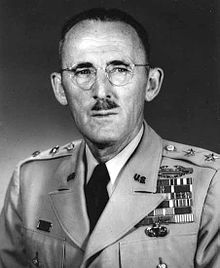
Ralph receiving the Triple A Award on 2 June 1956 from Lt. General Bryan Superintendant USMA

In 2009 Ralph was selected for the Army Sports Hall of Fame

Chesnauskas, a 1956 graduate, won the prestigious AAA Award following a stellar career that included nine letters, three each in football, hockey and baseball.

On the gridiron, Chesnauskas was a guard who earned first-team All-American honors in 1954, was selected to participate in the 1955 North-South Shrine Game and was a part of 18 victories.

Chesnauskas, who served as hockey team captain as a senior, netted seven points off of four goals and three assists and was part of 29 wins as a standout defenseman for Hall of Fame coach Jack Riley.

Ralph and Rockey Marciano, Heavy Weight Champion of the World 1952 – 1956.

<img src=”http://forwhattheygaveonsaturdayafternoon.com/photos/ralph-colblaik.jpg&#8221;

Ralph 63 next to Col Blaik 1954 Army South Carolina Game.

Col Blaik telling Ralph to stay at West Point

3 Army A’s in Baseball.

Ralph is #12

(Front L-R) Oats, Ofgant, McCormank, Harvy, O’Connor, Sturgis — (Standing) Boudreau, Chesnauskas, Hickey, and Coach Riley.

55-56 Team — Ralph Chesnauskas – Brockton, Mass; Edward Hickey – Boston, Mass; John Evans – Baltimore , Md; Pat Mellin – St Paul, Minn; James Dunn – Albany, NY

Coach Riley’s son 4 1/2 year old Jay.

The Duke Game.


January 18, 1981 North Shore News Paper page 25 (Note there is an error – Pete Dawkins did not earn 9 Army A’s)


–
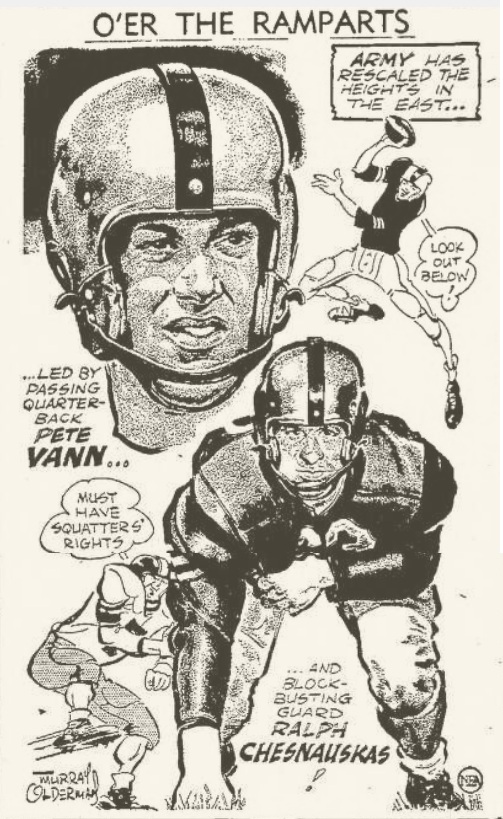
ArmyFB_1954_PeteVann_RalphChesnaukas_ByMurrayOlderman_BlythevilleCourierNews_Sep161954
–

By JOHN GARNER, Jr.
CONTRIBUTING WRITER
September 11, 2009
When former three-sport standout Ralph Chesnauskas proudly walks to the podium tonight for his induction into the U.S. Military Academy Sports Hall of Fame, it will open a vault full of cherished memories.

Chesnauskas, a 1956 West Point graduate, enjoyed a star-studded collegiate experience that included nine letters — three each in football, hockey and baseball. He will put an exclamation point on a playing career that occurred over 50 years ago.

“I was honored to get the call from Army AD Kevin Anderson that I’ve been selected to the Army Hall of Fame,” said Chesnauskas, a full-time resident of Cummaquid. “During my time at West Point, there were many lessons to be learned that came in useful later on in life.”

In the fall, Chesnauskas was a two-way player at guard and defensive tackle, earned first-team All-American honors in 1954, was selected to the 1955 North-South Shrine Game and was an integral part of 18 victories and three national Top 20 rankings.

The rugged 6-0, 207-pound Brockton native played for legendary Col. Earl “Red” Blaik, head coach at Army from 1941-58, who posted a 121-32-10 record and won national championships in 1944-45, led by Heisman Trophy winners Glenn Davis and Doc Blanchard.

Blanchard, nicknamed “Mr. Inside” during his playing days, was one of Army’s assistant coaches in the early and mid-1950’s, along with future LSU coach Paul Dietzel, 1947 Outland Trophy winner Joe Steffy and Vince Lombardi, who captured five NFL titles and the Super Bowls I and II as head coach of the Green Bay Packers.

“Coach Blaik was a great strategist, but was aloof and very low key — he almost never hollered at his players,” Chesnauskas said. “But Coach Lombardi was just the opposite — he was always yelling and screaming and was a gregarious person.”

Army recovered from an honor code scandal in 1951 that saw many frontline players dismissed from the squad and the Academy. But after records of 2-7 and 4-4-1, the Cadets posted winning seasons of 7-1-1, 7-2 and 6-3 against the likes of Michigan, Syracuse, Penn State, Tulane, Yale, Dartmouth, Navy and previously undefeated Duke during Chesnauskas’ tenure.

After playing on the interior his first three seasons, Chesnauskas moved to tackle and end in 1955 after talented southpaw Don Holleder switched from end to quarterback. Holleder was later killed in 1967 during the Vietnam War.

A classmate of General Norman Schwarzkopf, Chesnauskas served as hockey team captain as a senior, scored four goals and three assists and was part of 29 wins as a standout defenseman for Hall of Fame and 1960 Olympic Gold Medal coach Jack Riley, who lives in Marstons Mills.

“When he arrived at West Point, he couldn’t even skate,” said the charismatic Riley, who will be on hand to see his former player inducted. “By his senior year he became captain and a pretty good defenseman who would hit anything that moved on the ice.”

During his three-year baseball career as an outfielder, the Cadets won 30 games, including a victory against Navy.

After a rough start academically, Ralph became a Dean’s List student and Academic All-American his senior year and became friends with Army halfback Pete Dawkins, who would capture the 1958 Heisman Trophy,

Upon graduation from West Point, Chesnauskas went to tank training at Fort Knox and jump school at Fort Benning, before being stationed in West Germany until his honorable discharge from the Army in 1959.

He worked at Gillette for 38 years, where he became vice president of engineering. After living in Peabody for 35 years and summering in Marstons Mills since 1980, he moved to Cummaquid full-time with his wife seven years ago. He works outside in their garden, splits and cuts wood and is just seven pounds over his playing weight a half-century ago at West Point.

In addition to Chesnauskas, the Army Hall of Fame Class of 2009 includes current Duke men’s basketball coach Mike Krzyzewski, Bill Carpenter, Tracy Hanlon, Ray Murphy, Nicki Robbins, Jack Rust and Thomas Truxtun.

They will all be recognized during Army’s football game against Duke tomorrow at Michie Stadium — right on the field not surprisingly named after Coach Blaik.

John Garner Jr. can be contacted at jgarner@capecodonline.com.

PY Browning

Philip Y. Browning Jr.  
BG.pngPhilip & Mary Ann Browning 800px-12_Cav_Rgt_DUI.png   220px-75th_Ranger_Regiment_Distinctive_Unit_Insignia.svg copy.png
Co CO 2d of the 12th Cav, 75th Ranger, ADC 71D,

Philip Yeager Browning
PLACE OF BIRTH:
Hawaii

Philip Browning graduated from the U.S. Military Academy at West Point, Class of 1962. He retired as a U.S. Army Brigadier General.
AWARDS BY DATE OF ACTION: 1 of 5


Army Distinguished Service Medal

AWARDED FOR ACTIONS
DURING Peace Time Awards
Service: Army
Rank: Brigadier General
GENERAL ORDERS:

United States Military Academy Register of Graduates

CITATION:

(Citation Needed) – SYNOPSIS: Brigadier General Philip Yeager Browning, Jr., United States Army, was awarded the Army Distinguished Service Medal for exceptionally meritorious and distinguished service in a position of great responsibility to the Government of the United States as Chief of Staff, U.S. Army Caribbean, from 1991 to 1992.

Silver Star

AWARDED FOR ACTIONS
DURING Vietnam War
Service: Army
Rank: Captain
Battalion: 2d Battalion
GENERAL ORDERS:

United States Military Academy Register of Graduates

CITATION:

(Citation Needed) – SYNOPSIS: Captain (Infantry) Philip Yeager Browning, Jr., United States Army, was awarded the Silver Star for conspicuous gallantry and intrepidity in action against the enemy while commanding an Infantry Company of 2d Battalion, 12th Cavalry Regiment, in the Republic of Vietnam.

Defense Superior Service Medal

AWARDED FOR ACTIONS
DURING Peace Time Awards
Service: Army
Rank: Brigadier General
GENERAL ORDERS:

United States Military Academy Register of Graduates

CITATION:

Under the provisions of Department of Defense 1348.33-M, the Secretary of Defense has awarded the Defense Superior Service Medal to Brigadier General Philip Yeager Browning, Jr., United States Army, for exceptionally superior service to the Department of Defense as Chief of Staff, Combined Field Army, Republic of Korea, from 1989 to 1991


Legion of Merit

AWARDED FOR ACTIONS
DURING Peace Time Awards
Service: Army
Rank: Brigadier General
GENERAL ORDERS:

United States Military Academy Register of Graduates

CITATION:

(Citation Needed) – SYNOPSIS: Brigadier General Philip Yeager Browning, Jr., United States Army, was awarded the Legion of Merit for exceptionally meritorious conduct in the performance of outstanding services to the Government of the United States as G1, 7th Infantry Division, and later as G3, from 1978 to 1980 and 1986 to 1989.

Jim McQuillen

Jim & Jeanne McQuillen

The 1961 – 1962 Squash Team had four members from the 62 Class that lettered. Don Voss for 3 years, “Jim Peterson” for 3 years, Jim McQuillen for two years and “Rich Carlson” an Army A Firstie Year.

Squash Team Captain Firstie Year

It was probably the only sport, with a consistent winning record, where no one on the team had ever played the game before going to West Point. The coach recruited Tennis players along with guys that were good athletes that wanted a chance to play a varsity sport. Naturally as a plebe there was the additional motivation of wanting to sit on a training table.

A match consisted of nine individual singles matches and the winning team had to win five or more of the individual matches. Each individual match was determined by the best three out of five 15 points sets/games. On the individual matches that went more than three games conditioning played a big part and was one of the reasons we were able to beat more skilled and experienced players.

Our record for the 1961 – 1962 season was 8 and 5 with the last win being a 6 to 3 win over Navy for the only Squash Victory over Navy in our four years at the Academy. However we were never able to beat Harvard, Yale or Princeton which were loaded with All Americans and people who had been playing the game since they were little kids. Desire and conditioning only went so far.

Don Voss was our best player. He played number one for two years and made the All American Team in 61 and 62. Jim McQuillen played in the 7th position Cow Year but moved up to the number two position Firstie Year. Jim was edged out at the end of the year by a Yearling named “Ritchie Oehrlein”.

Ritchie was on the All American Team in 1964. In 2007 he was inducted into the West Point Sports Hall of Fame for both Squash and Tennis along with his younger brother “Walter Oehrlein” Class of 1965, who won the NCAA squash singles championship in 1965.

“Jim Peterson” played in the 4th or 5th position for most of our Cow and First Class Year and had several critical victories including a key win over Navy. Jim Captained the tennis team our First Class year.

Rich Carlson alternated between the sixth and seventh slot on the team and was a major contributor to our winning record.

Nickname: Jim

Company: L2

Home Town: Bethesda, Md

High Schools:

1954 to 1957: Gonzaga High School, Washington,DC

1957 to 1958: Severn School, Severna Park, MD

Appointed by Senator Case of South Dakota

Date of Entry to Academy; July 1, 1958

Date of graduation: June 6, 1962

Age at graduation: 22

Cullum number: 24160

Class standing: 344 out of 602

Cadet Rank: Sergeant, Squad leader

Height:

Entry: 5’10”

Graduation: 5′ 11 1/2″

Weight:

Entry: 150

Playing weight: 165 to 170

Graduation: 170

Teams:

Squash 4,3,2,1

Captain Firstie Year

Numerals 4, Army A Cow and Firstie Years

Team record 1960 to 1961: 9 wins 6 losses loss to Navy 8 to 1

Team record 1961 to 1962: 8 wins 5 losses, beat Navy 6 to 3

Individual record 1960 to 1961: 11 or 12 wins, 3 or 4 losses which was the best record on the Team

Individual record 1961 to 1962: 7 or 6 wins, 6 or 7 losses

1962 NCAA Tournament; Eliminated in either the second or third round by the runner up in the tournament.

Coach: Leif Nordle, Asst Sgt Millikin

OIC: 1960 to 1961: Maj Geraci

1961 to 1962: Captains Sullivan and Horn

Tennis: 4,3,2

Numerals 4, Monogram 2

Coach: Leif Nordle, Asst: Ron Holmburg

Relationship with Tactical Department:

Two 8 and 8 slugs, first served 8 hours confinement second half of plebe year, second walked the area for 8 hours at Camp Buckner. Otherwise no major problems

Activities;

Pointer Circulation 4,3

Catholic Acolytes 3,2,1

Debate Council admin work 3,2

Ski Club 1

Comissioned: Infantry

Bob Wheeler

Along with John Claybrook ’52 and Jack Kleburg ’52 they dominated Collegic Gymnastics during their four years. West Point Gymnastics lost only a few meets in the first three years, while the Team went undefeated their Firstie Year earning Army The National Championship in 1952.

Jack Kleburg

Along with John Claybrook ’52 and Bob Wheeler ’52 they dominated Collegic Gymnastics during their four years. West Point Gymnastics lost only a few meets in the first three years, while the Team went undefeated their Firstie Year earning Army The National Championship in 1952.

John Claybrook

John — Still tied for the World Record in the Rope Climb. Along with Jack Kleburg ’52 and Bob Wheeler ’52 they dominated Collegic Gymnastics during their four years. West Point Gymnastics lost only a few meets in the first three years, while the Team went undefeated their Firstie Year earning Army The National Championship in 1952.G

Homer Keifer

Army End – Class of 1920 – He played with Earl Blaik who later became Army’s Ledgendary Football Coach.

Homer won both the Heavy Weight Boxing and Wrestling Academy Championships on the same day.

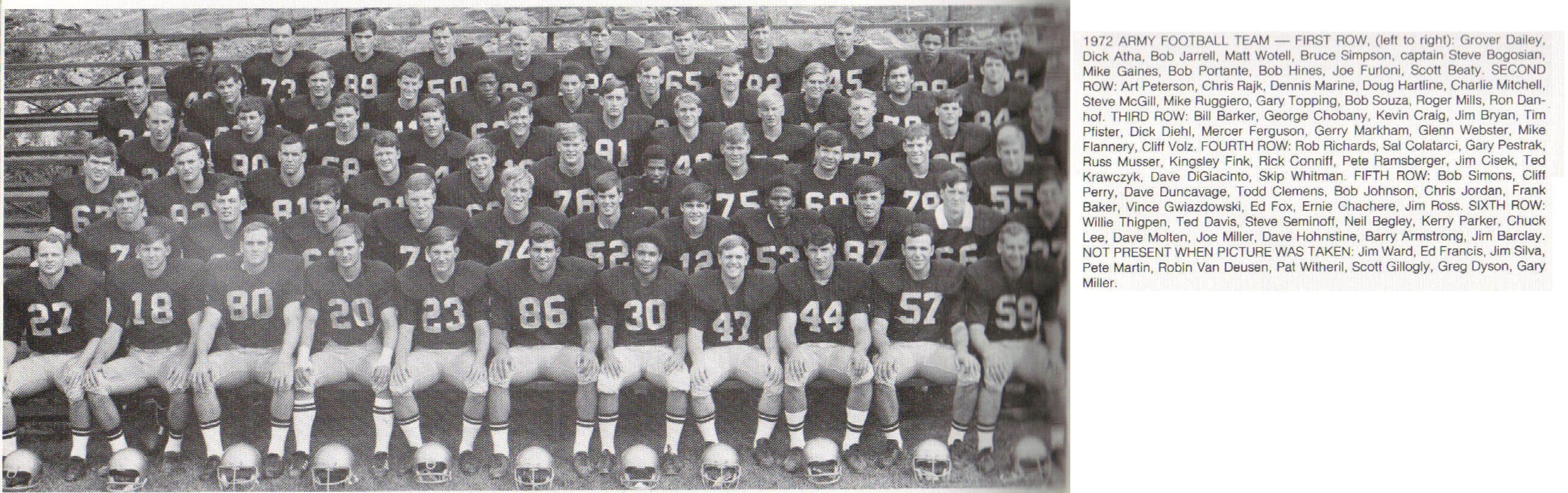
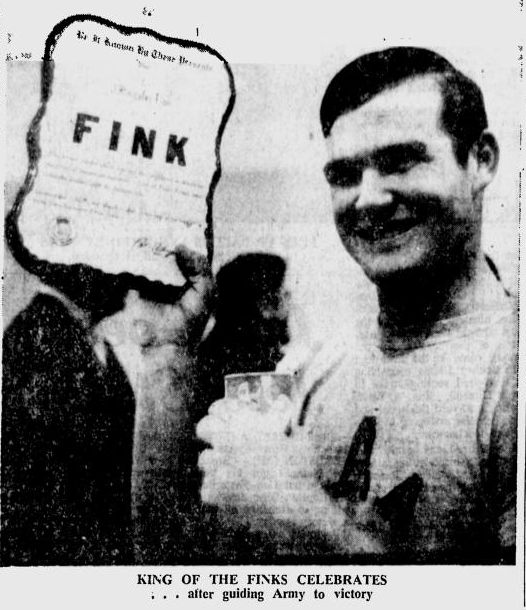
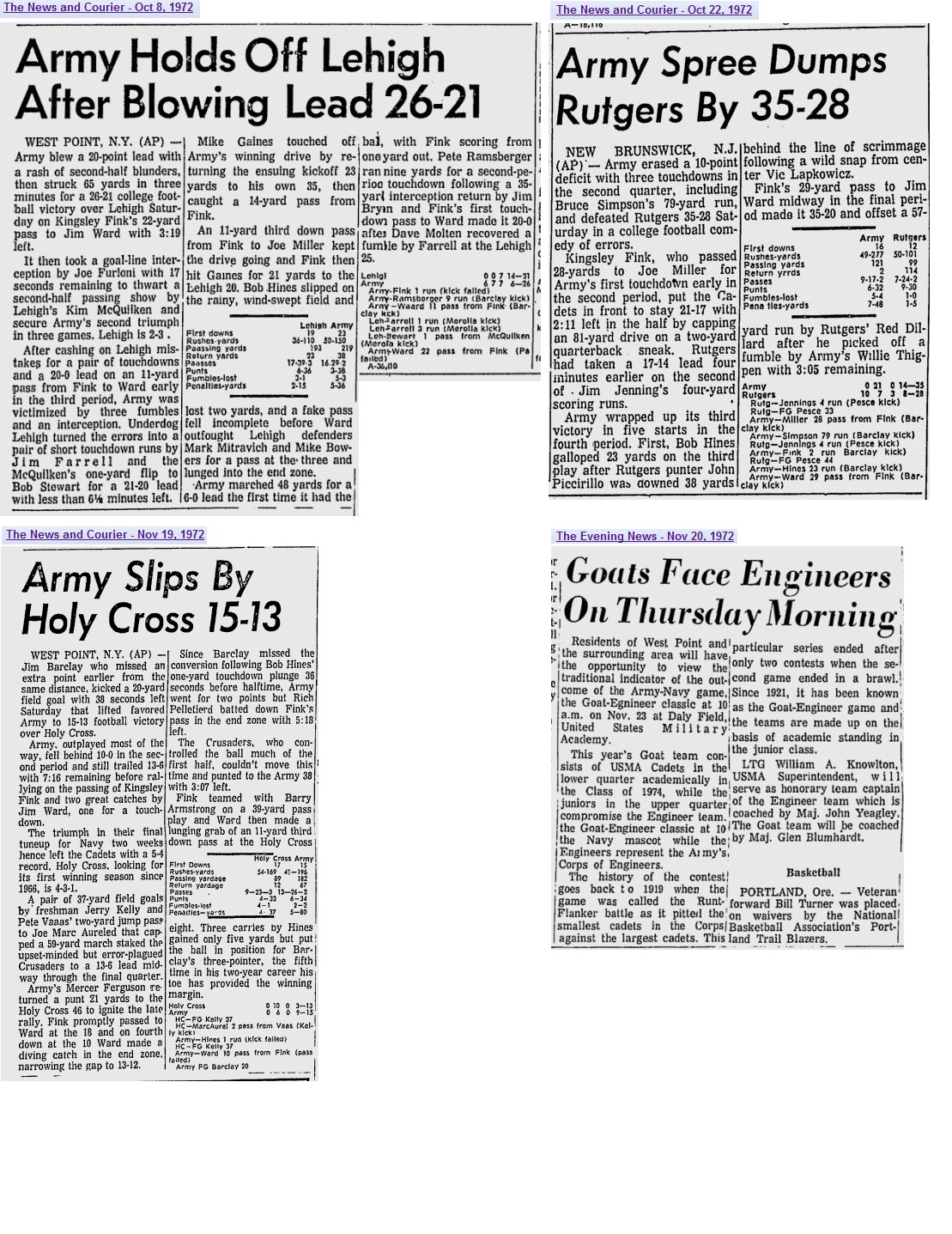
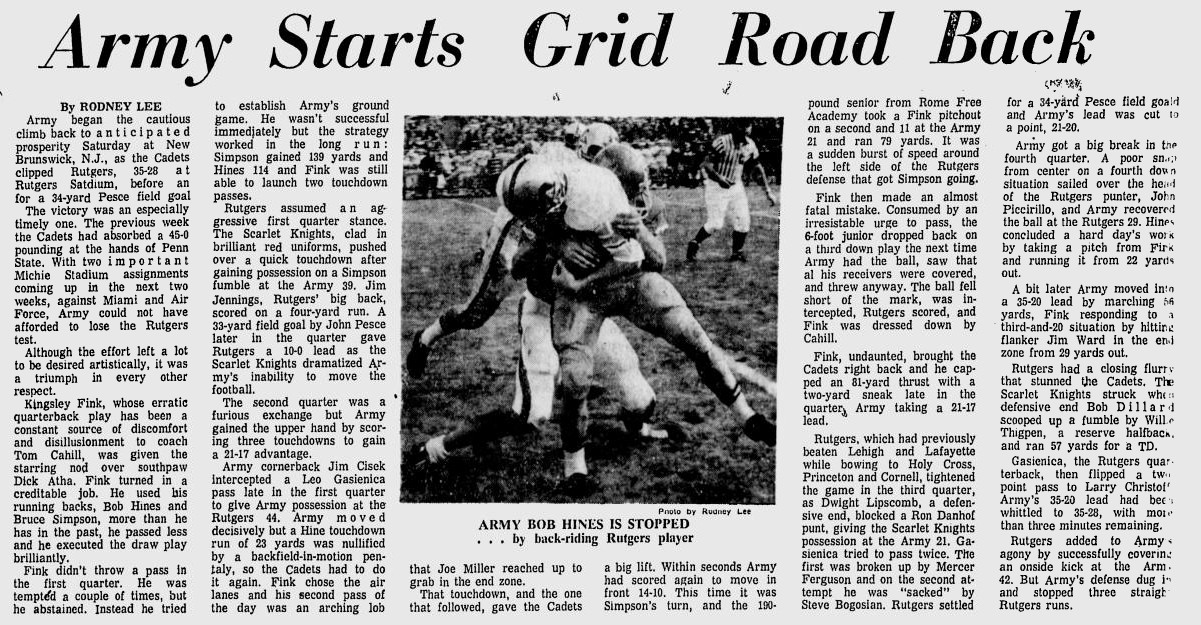
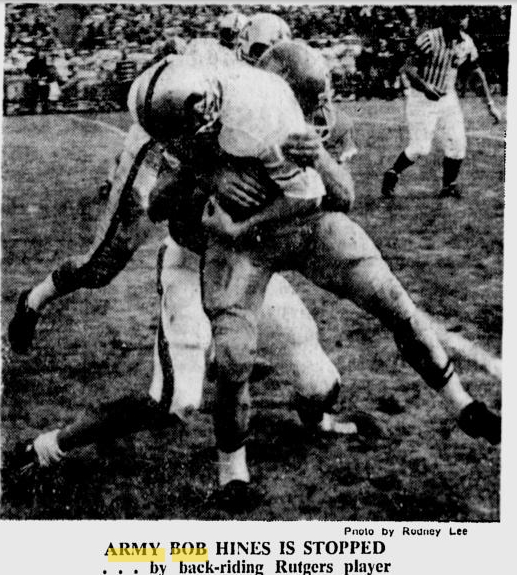
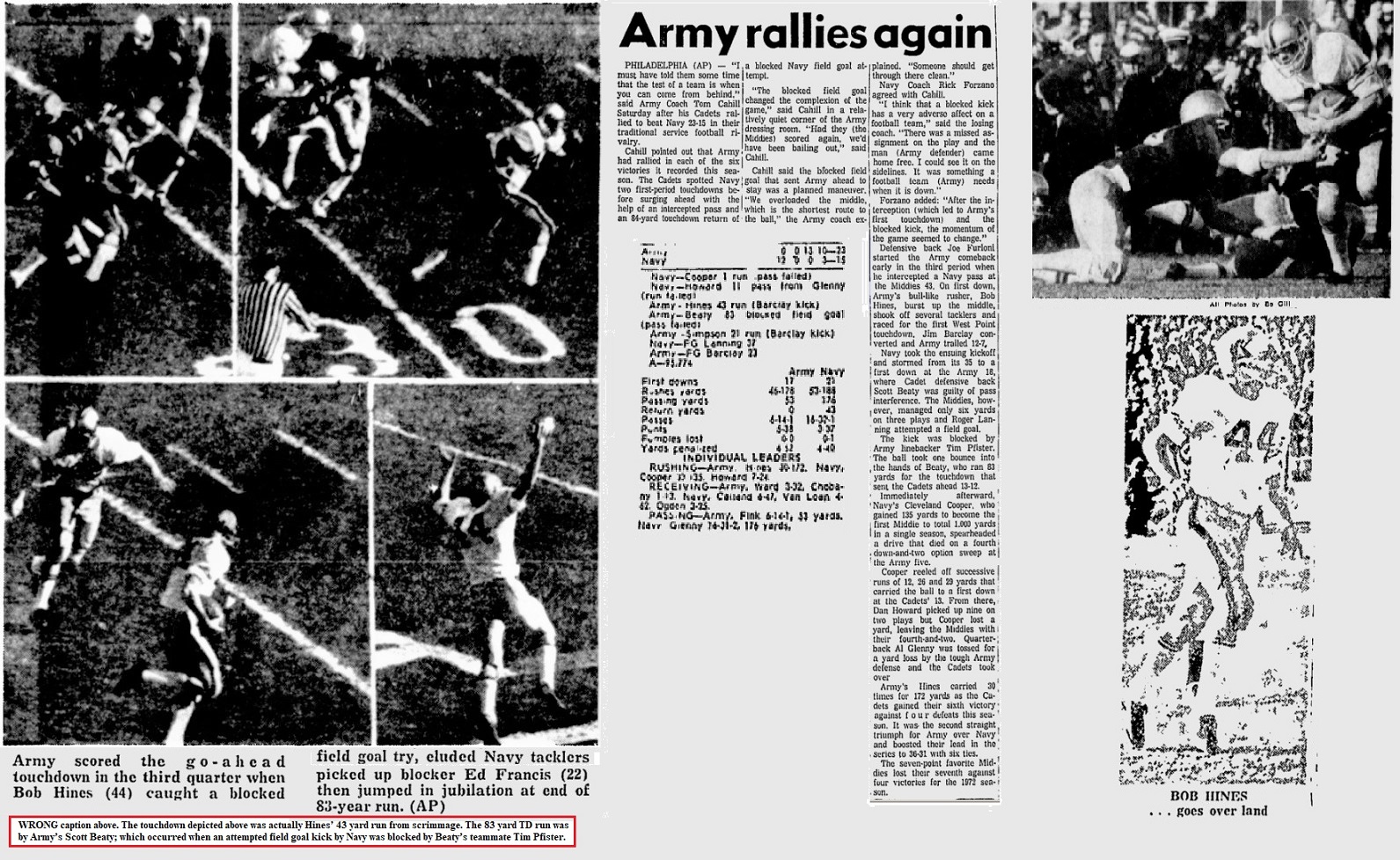
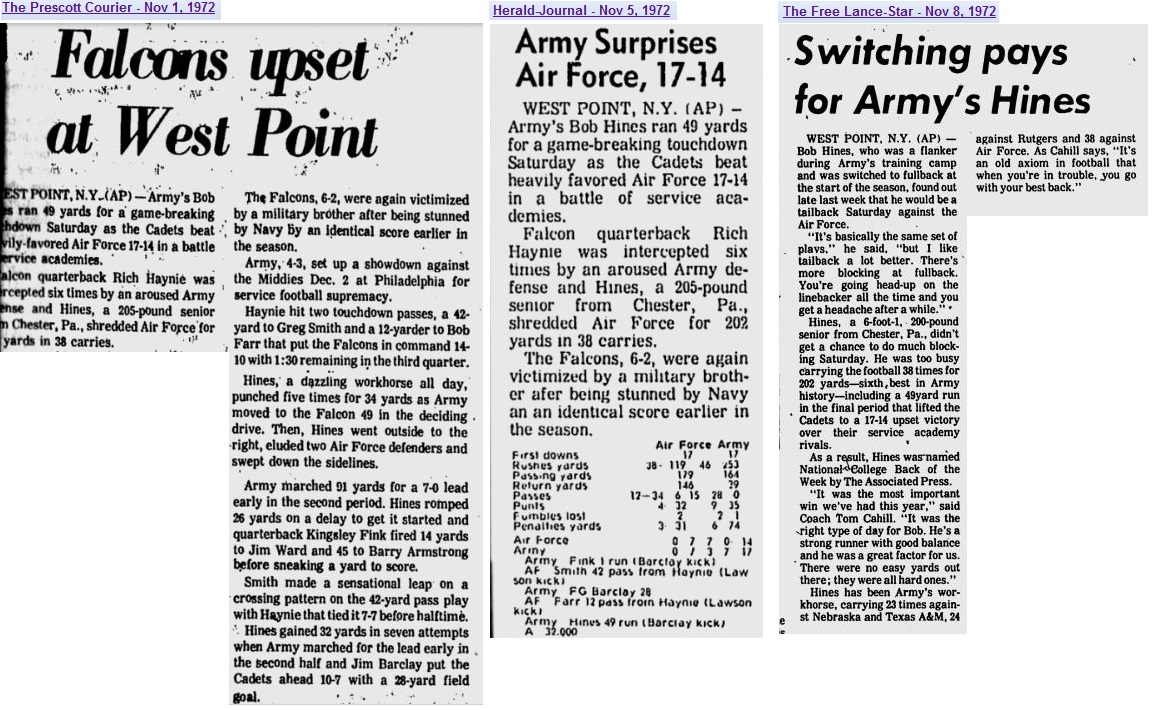
1972 Team

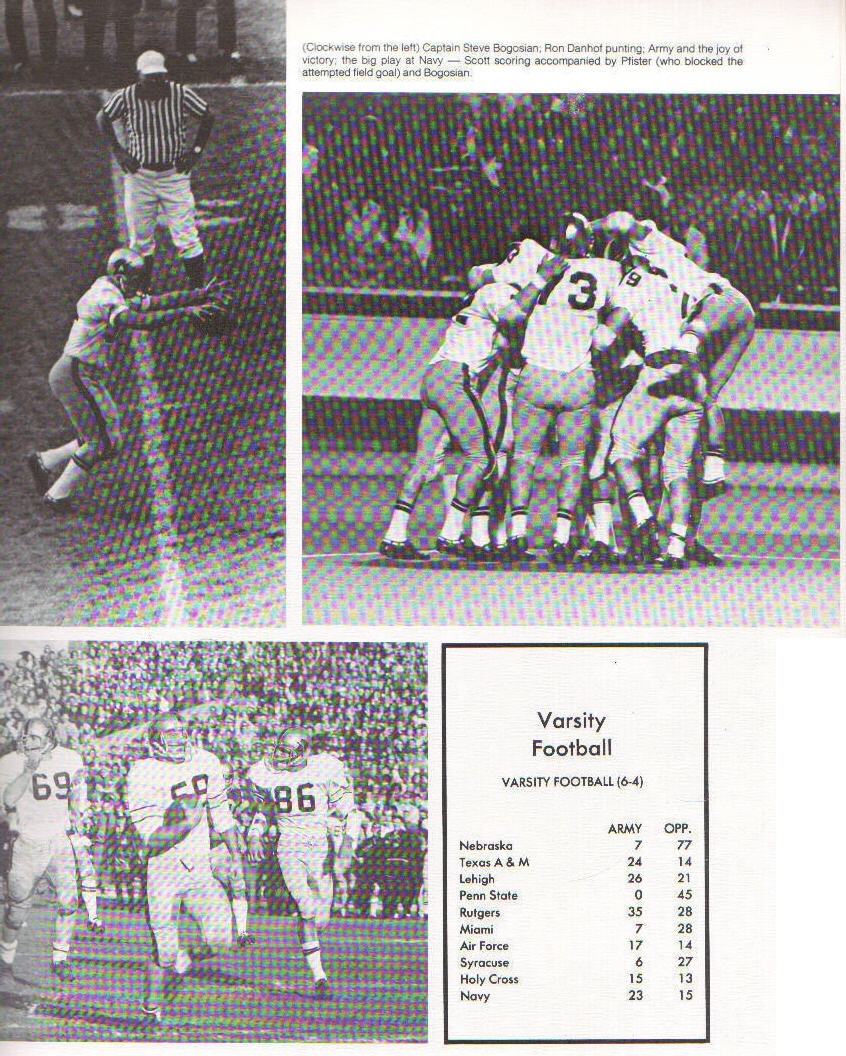
1972 Army 6-4
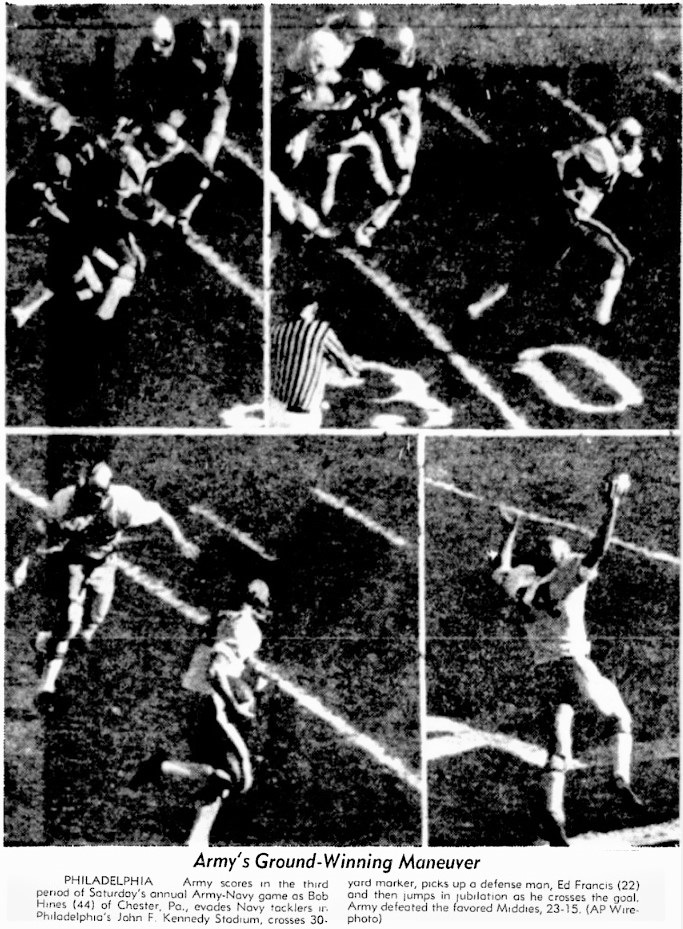
1972/12/02 Army 23 – Navy 15 W

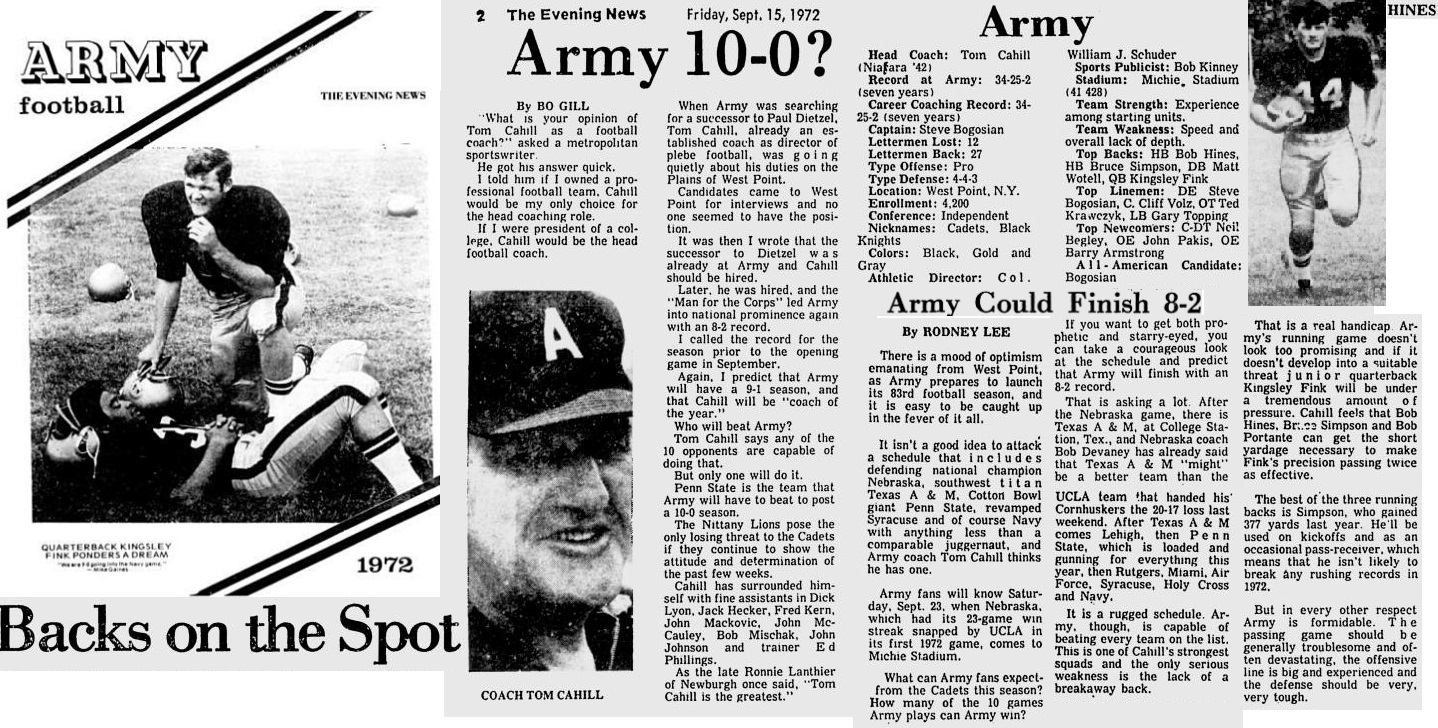
Coach – Thomas B. Cahill (October 11, 1919 – October 29, 1992)
Army 1966-1973:
1966 Army 8-2 Coach of the Year

1967 Army 8-2

1968 Army 7-3

1969 Army 4-5-1

1970 Army 1-9-1

1971 Army 6-4

1972 Army 6-4

1973 Army 0-10
Overall Army: 40-39-2
Union NY 1976-79

source: http://en.wikipedia.org/wiki/Tom_Cahill_(American_football)

armyfb_1972_team
ArmyFB_1972_team
armyfb_1972_a_team-preview_en-sep151972

ArmyFB_1972_ArmyCoaches-team-roster_EN-Sep151972

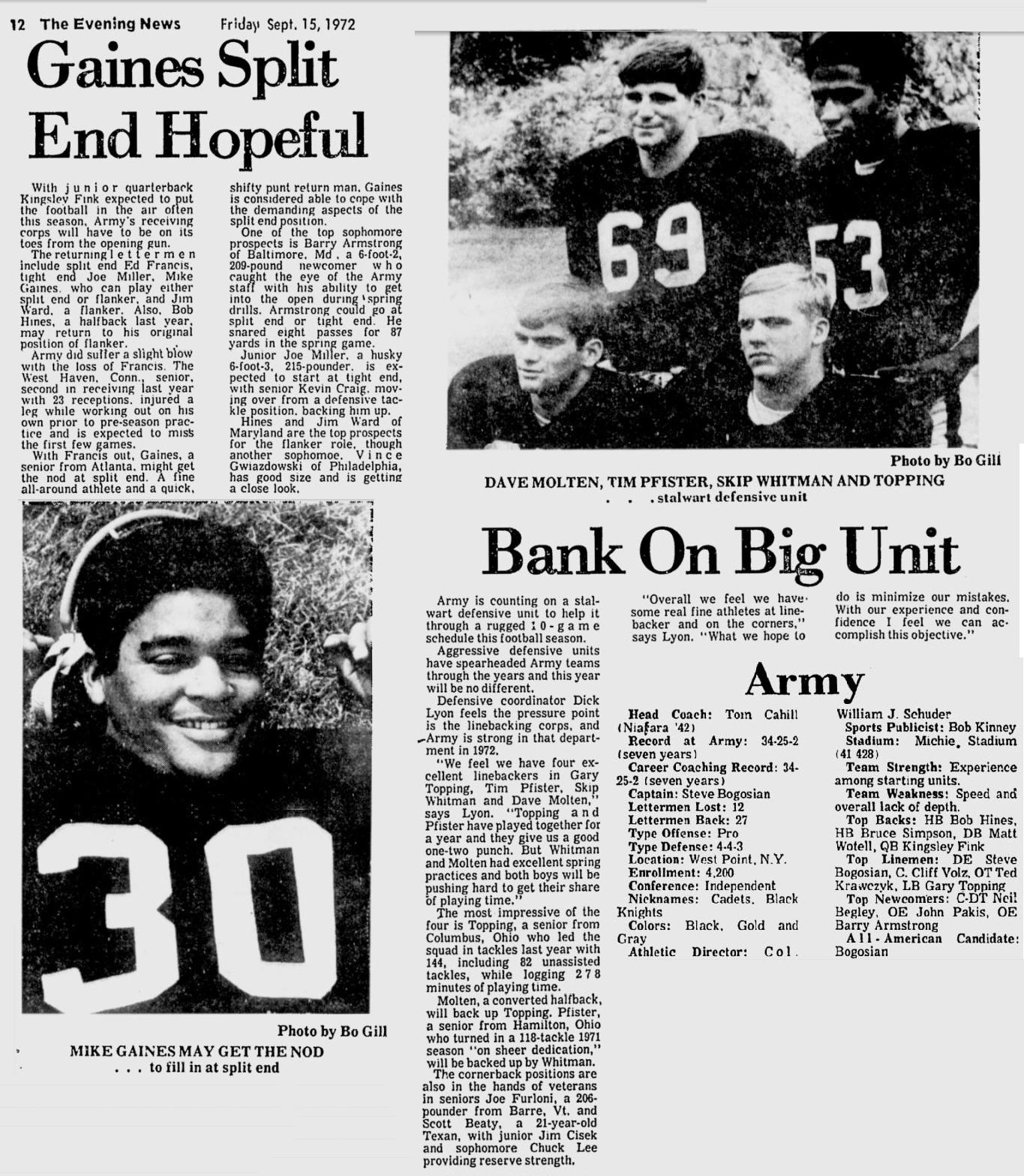
armyfb_1972_armydefense_gaines_en-sep151972
ArmyFB_1972_ArmyDefense_Gaines_EN-Sep151972

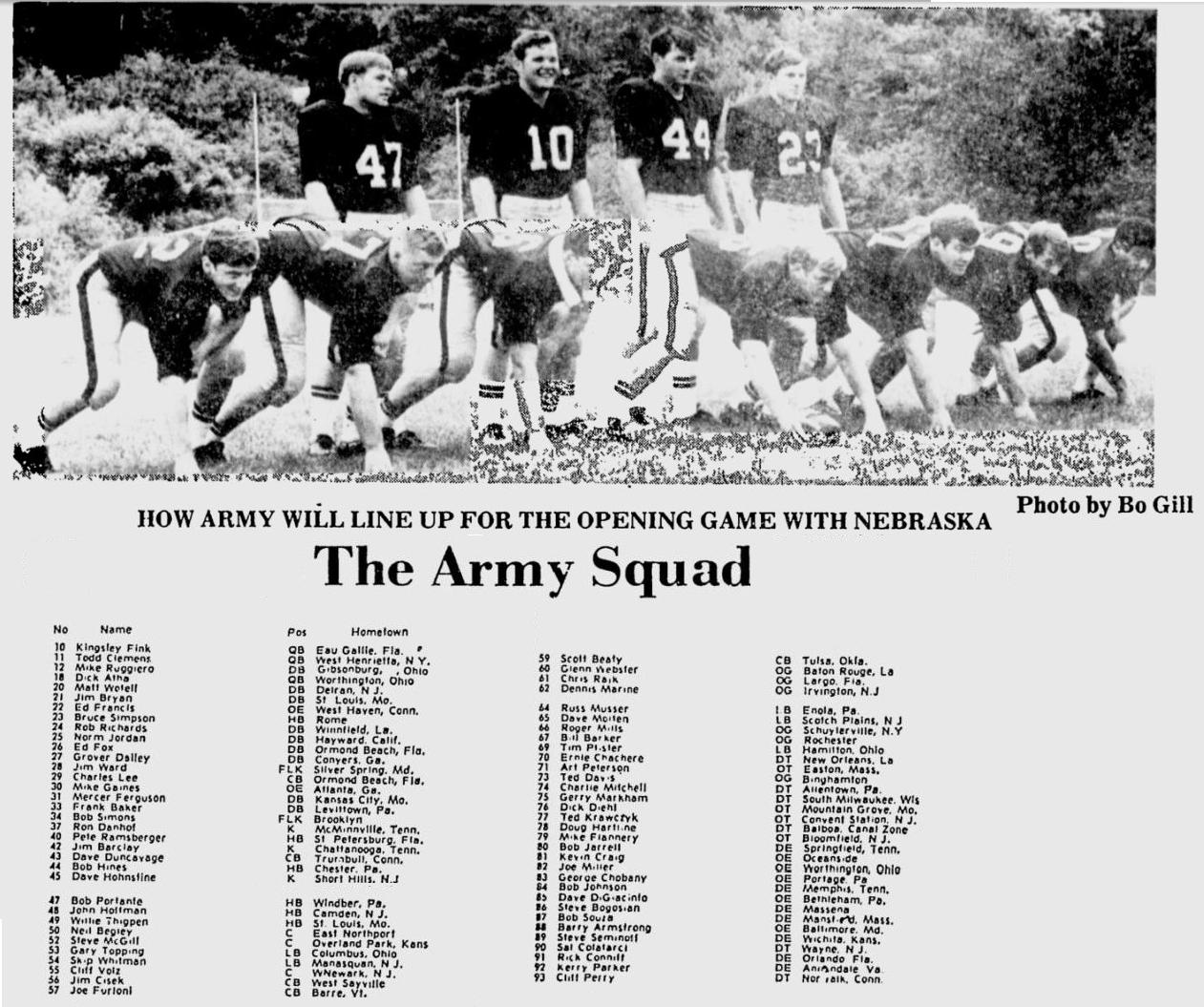
armyfb_1972_armyoffense_teamroster_en-sep151972
ArmyFB_1972_ArmyOffense_TeamRoster_EN-Sep151972
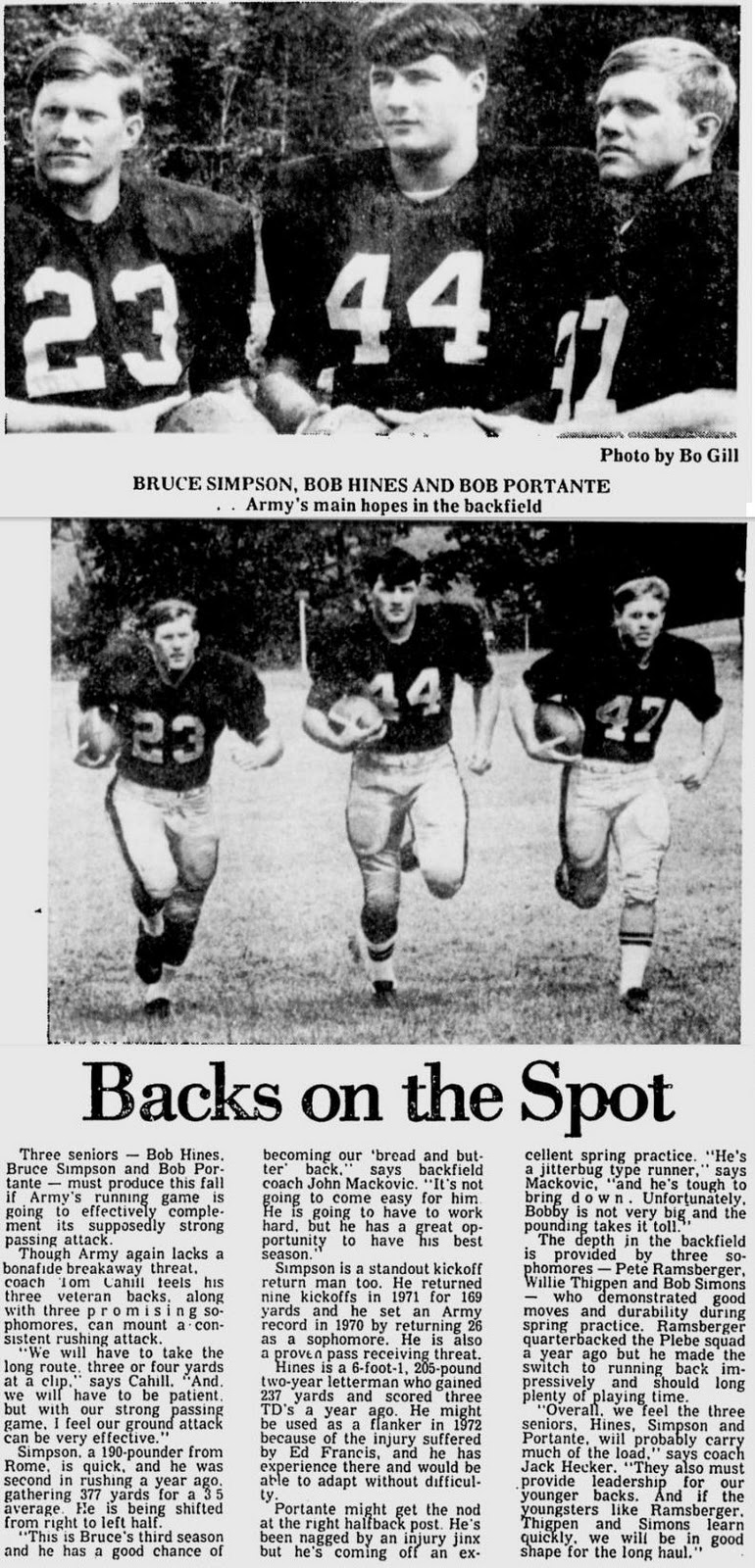
armyfb_1972_hines_portante_simpson_en-sep151972

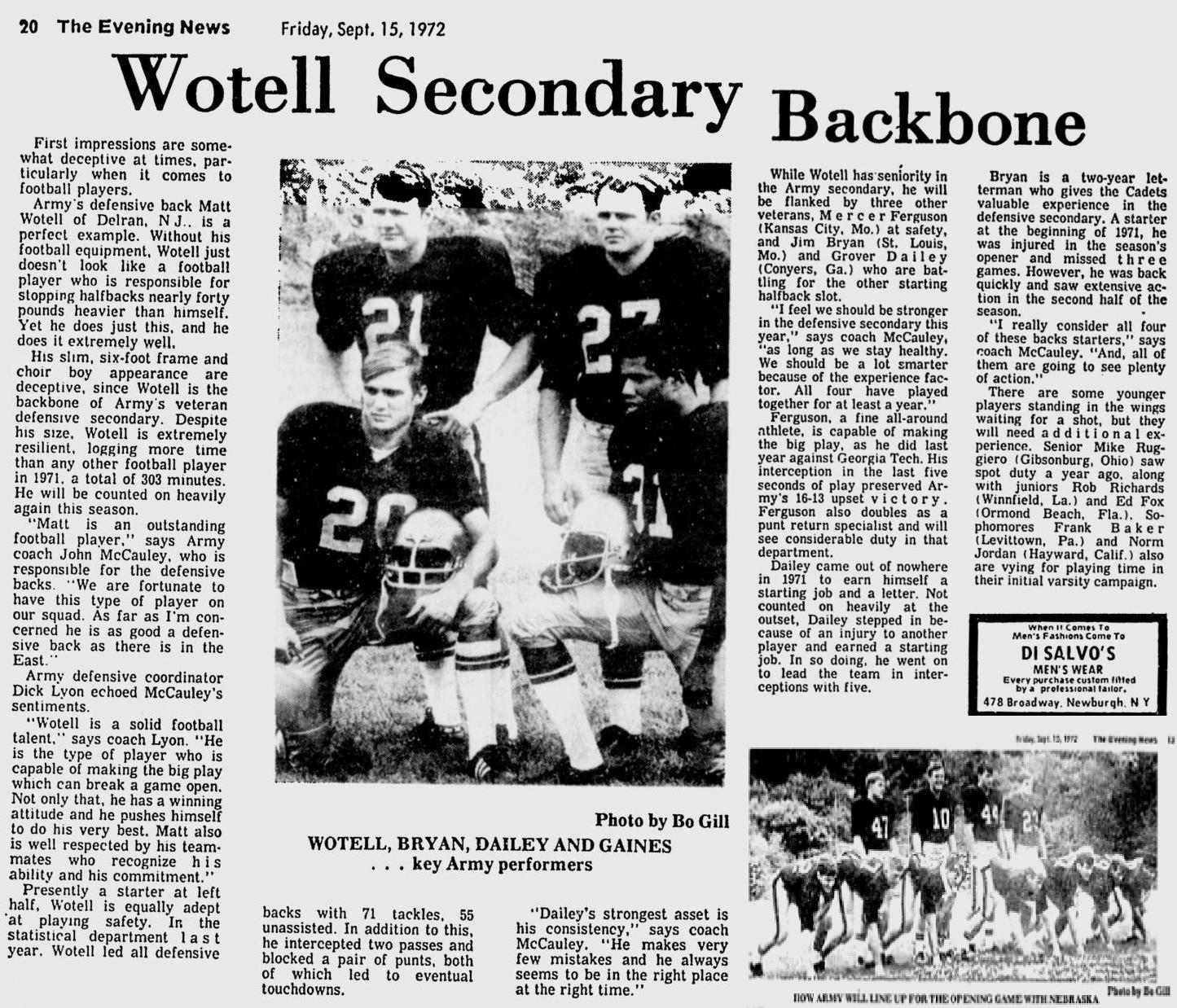
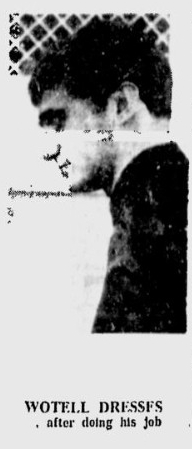
armyfb_1972_wotell
ArmyFB_1972_Wotell-The-Evening-News-15 Sept-1972

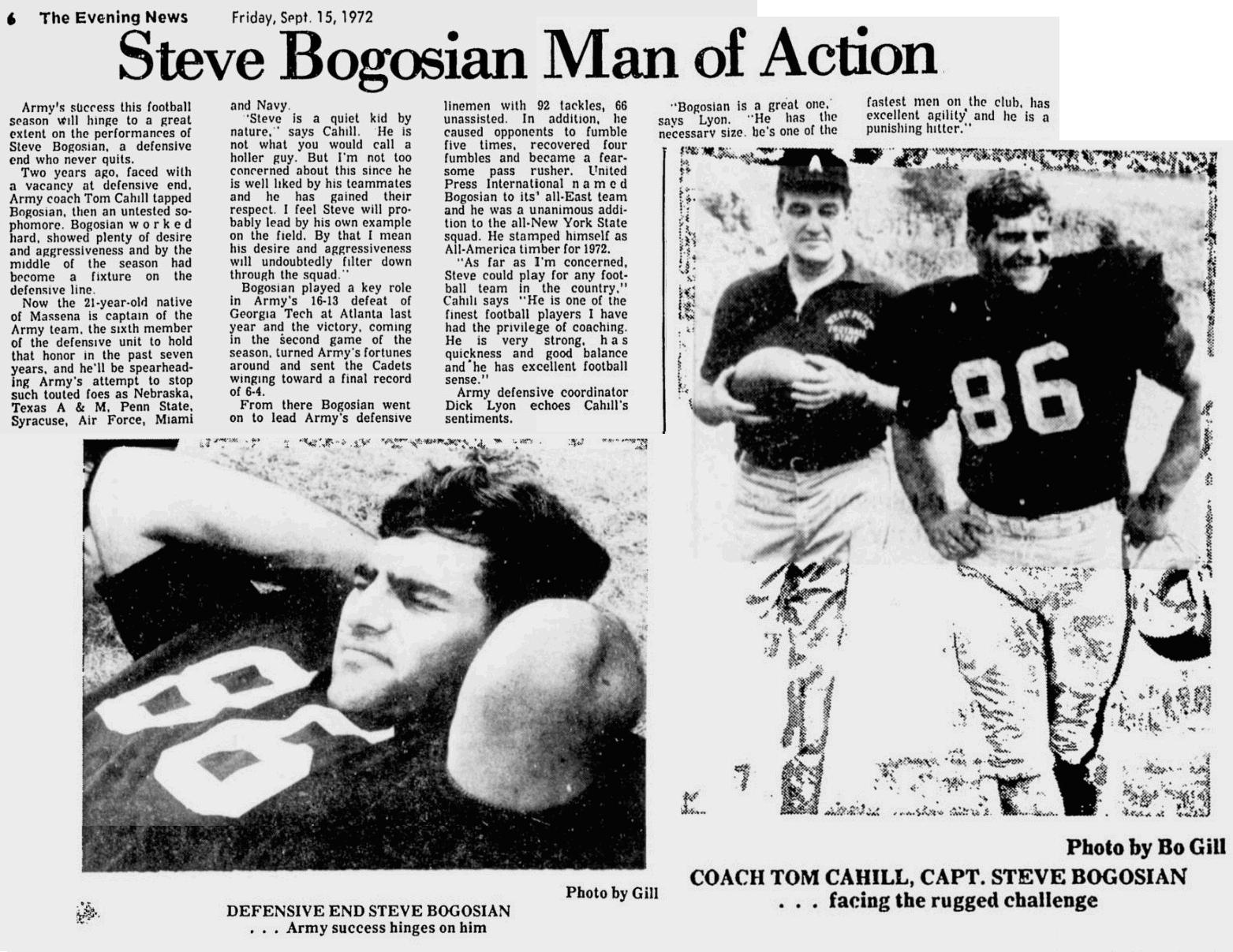
armyfb_1972_cahill-captainbogosian_en-sep151972
ArmyFB_1972_Cahill-CaptainBogosian_EN-Sep151972

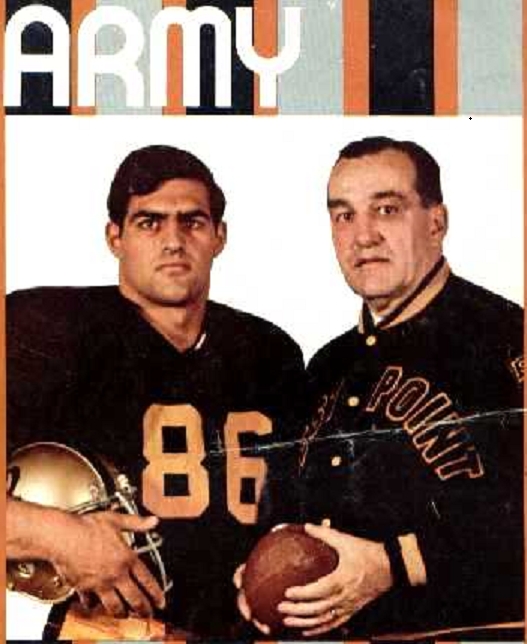
armyfb_1972_bogosian-cahill_program-pic
ArmyFB_1972_Bogosian-Cahill_program-pic

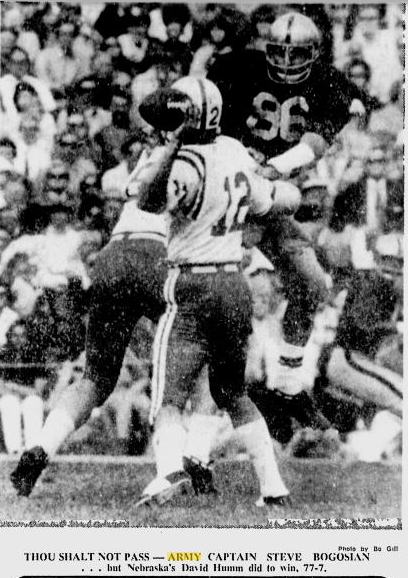
armyfb_1972_bogosian-hummnu
ArmyFB_1972_Bogosian-HummNU

armyfb_1972_vsnebraska-bobhines_michigandaily_sep241972
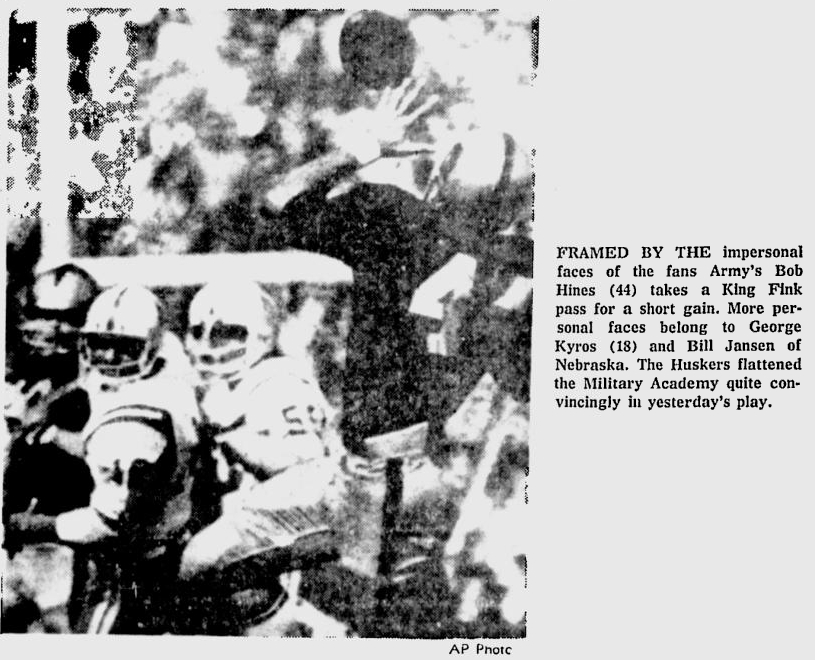
ArmyFB_1972_vsNebraska_BobHines_MichiganDaily_Sep241972

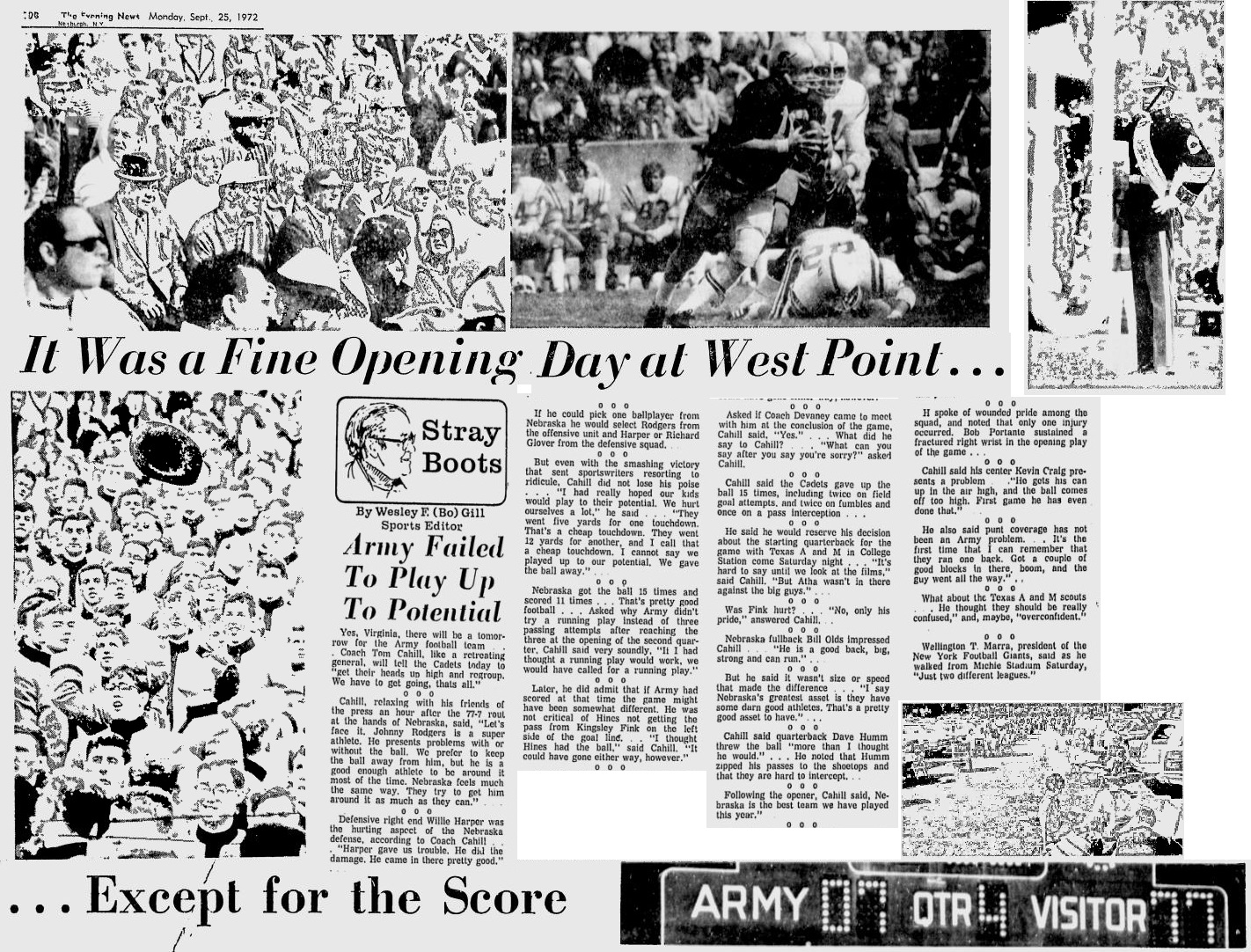
armyfb_1972_vsnebraska_eveningnews_sep251972
ArmyFB_1972_vsNebraska_EveningNews_Sep251972

armyfb_1972_vstam-team_eveningnews_oct21972
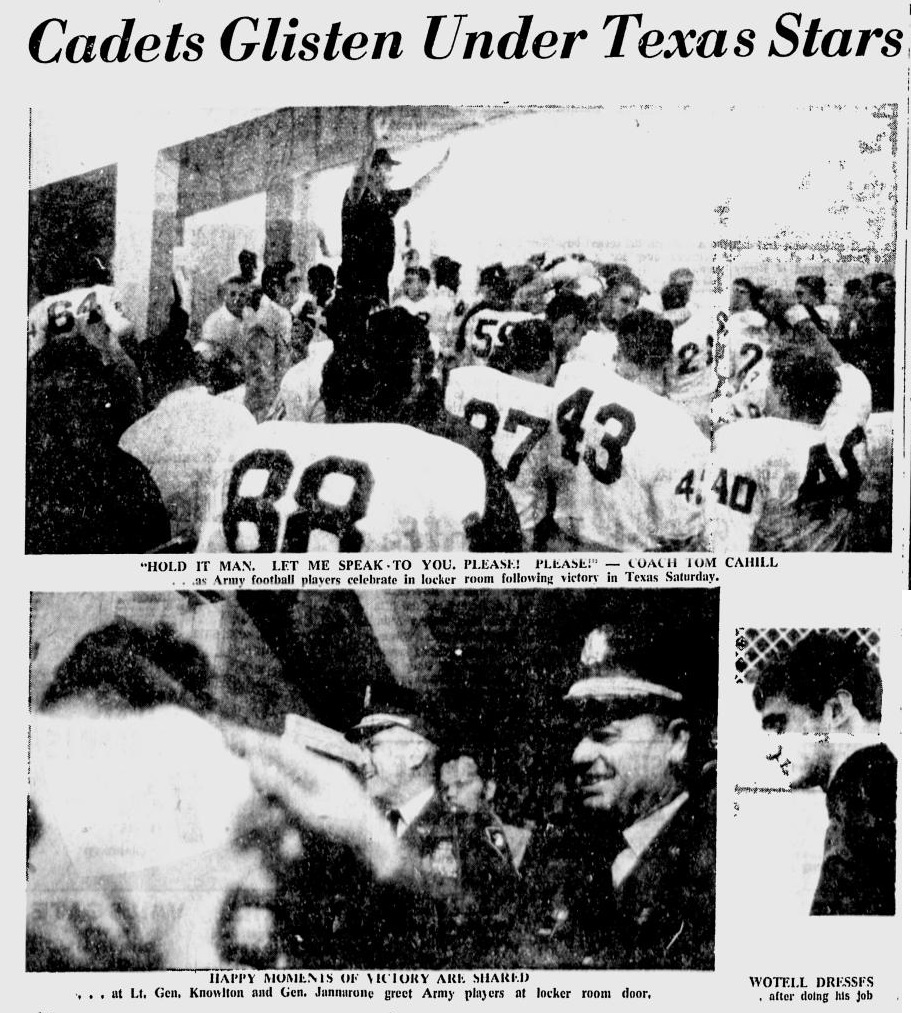
ArmyFB_1972_vsTAM-team_EveningNews_Oct21972

armyfb_1972_vstam_eveningnews_oct21972
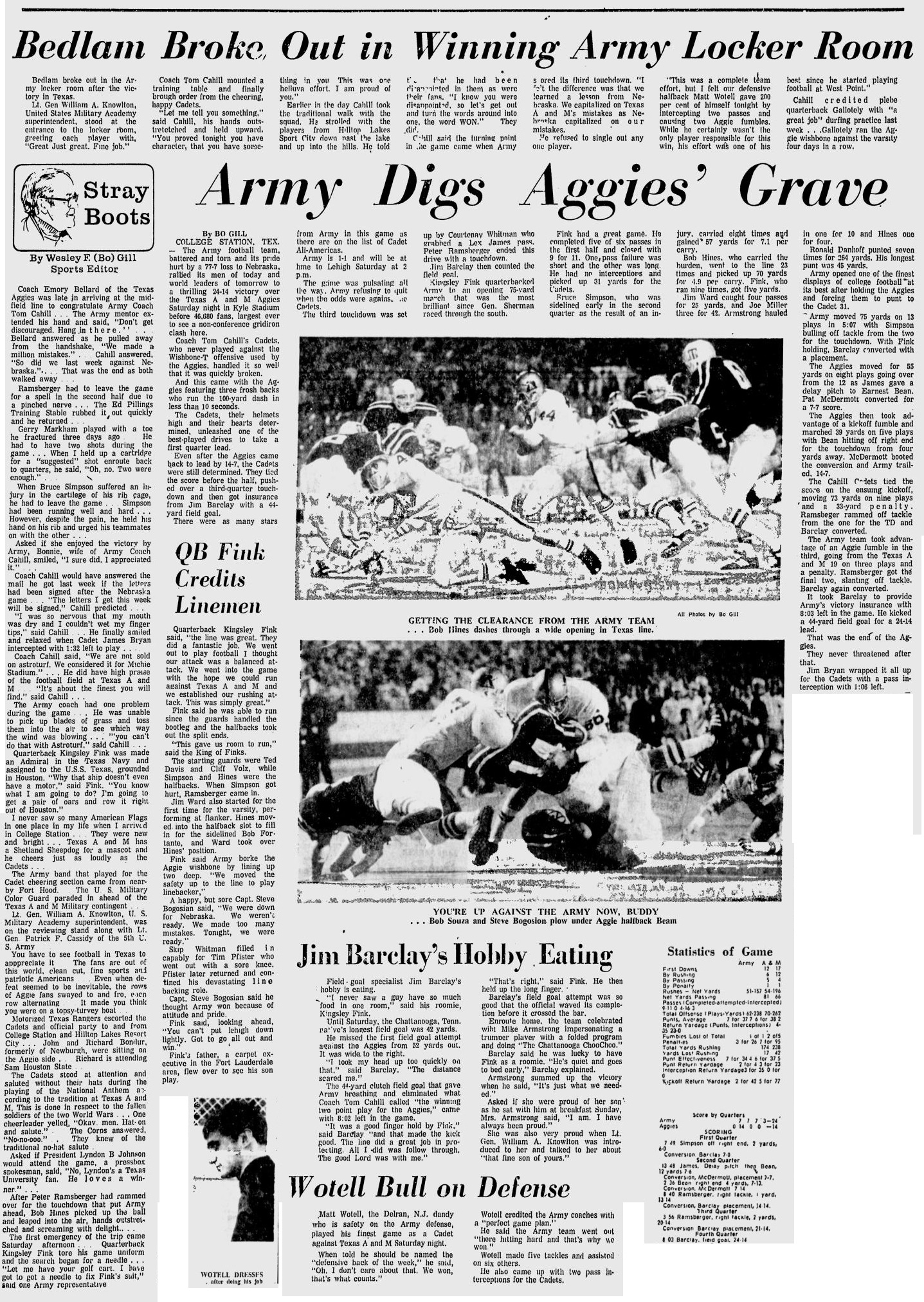
ArmyFB_1972_vsTAM_EveningNews_Oct21972

armyfb_1972_vstam-wottel_eveningnews_oct21972
ArmyFB_1972_vsTAM-Wottel_EveningNews_Oct21972

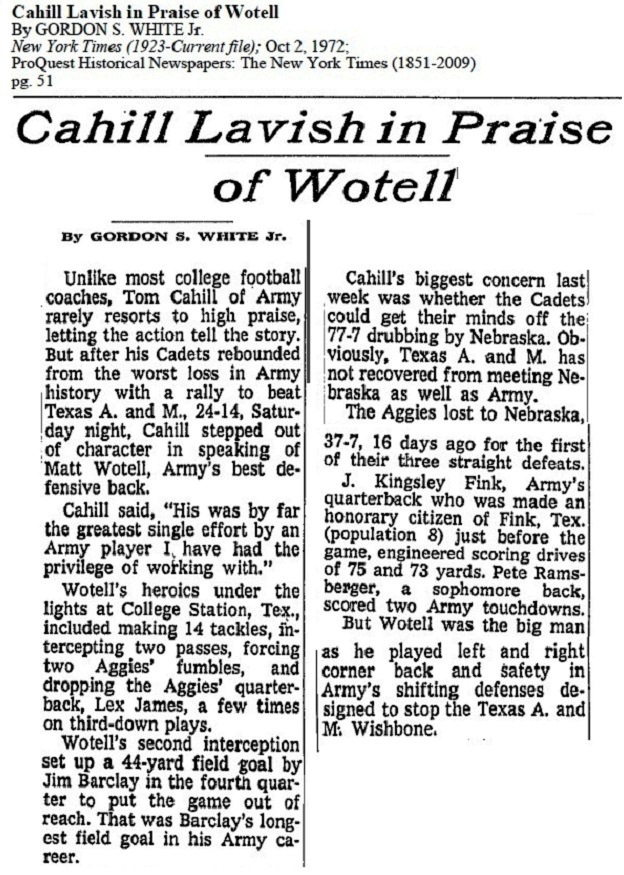
armyfb_1972_wotell_nyt_oct21972
ArmyFB_1972_Wotell_NYT_Oct21972


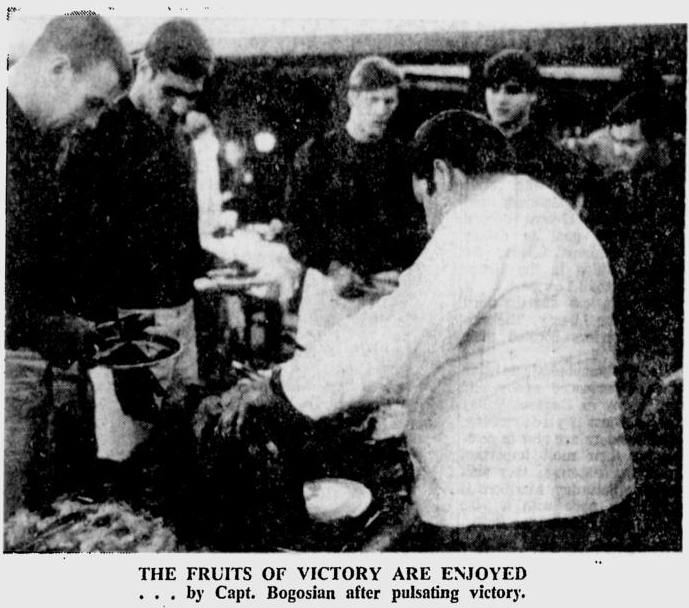
armyfb_1972_vstam-bogosian_eveningnews_oct21972
ArmyFB_1972_vsTAM-Bogosian_EveningNews_Oct21972

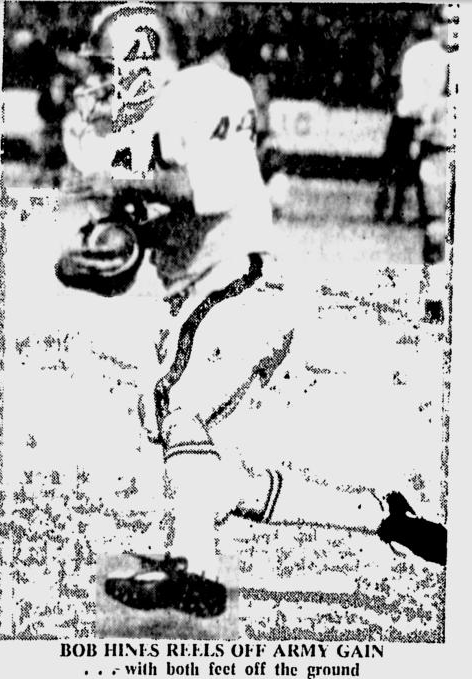
armyfb_1972_vstam-bobhines_eveningnews_oct21972
ArmyFB_1972_vsTAM-BobHines_EveningNews_Oct21972

armyfb_1972_vstam-fink_eveningnews_oct21972
ArmyFB_1972_vsTAM-Fink_EveningNews_Oct21972

–

–armyfb_1972_various_oct-nov1972
ArmyFB_1972_various_Oct-Nov1972

armyfb_1972_vsrutgers_eveningnews_oct231972
ArmyFB_1972_vsRutgers_EveningNews_Oct231972

armyfb_1972_vsrutgers-bobhines

ArmyFB_1972_vsRutgers_EveningNews_Oct231972

–

–

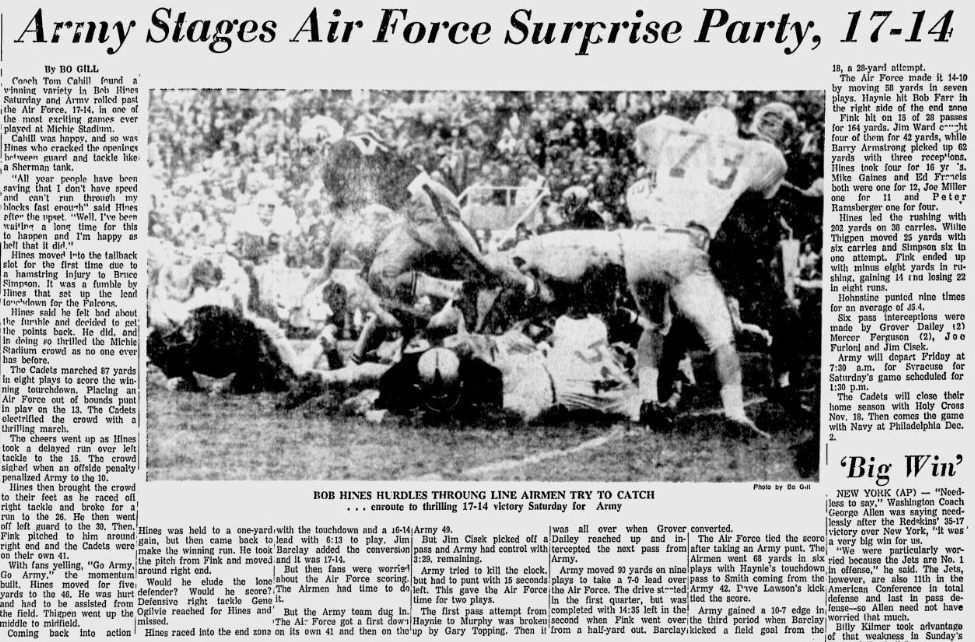
armyfb_1972_vsaf_eveningnews_nov61972
ArmyFB_1972_vsAirForce_EveningNews_Nov61972

armyfb_1972_vsaf_various_nov1972
ArmyFB_1972_vsAF_various_Nov1972

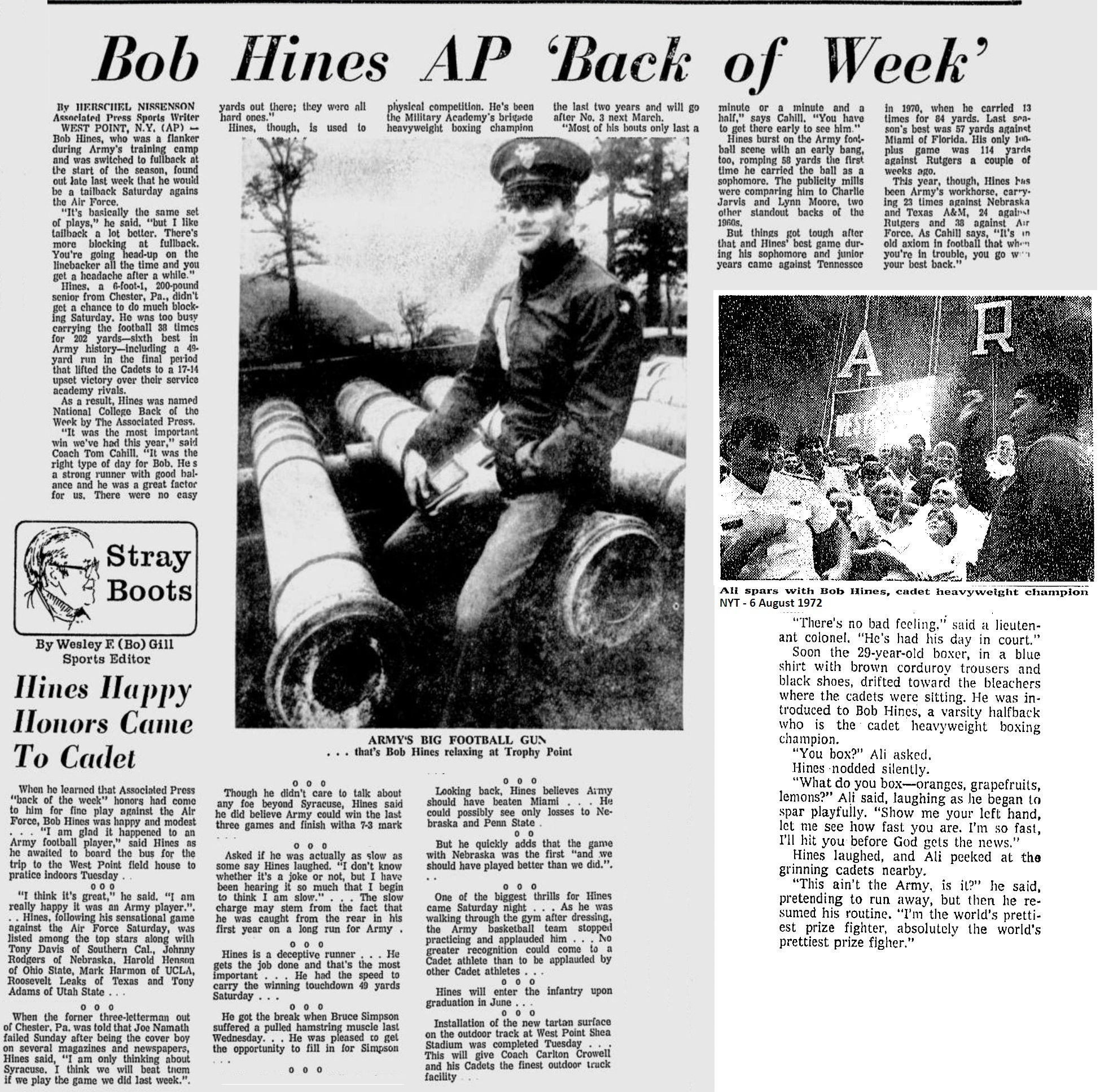
armyfb_1972_vsaf-bobhines-backofweek_eveningnews_nov81972
ArmyFB_1972_vaAF-BobHines-BackofWeek_EveningNews_Nov81972
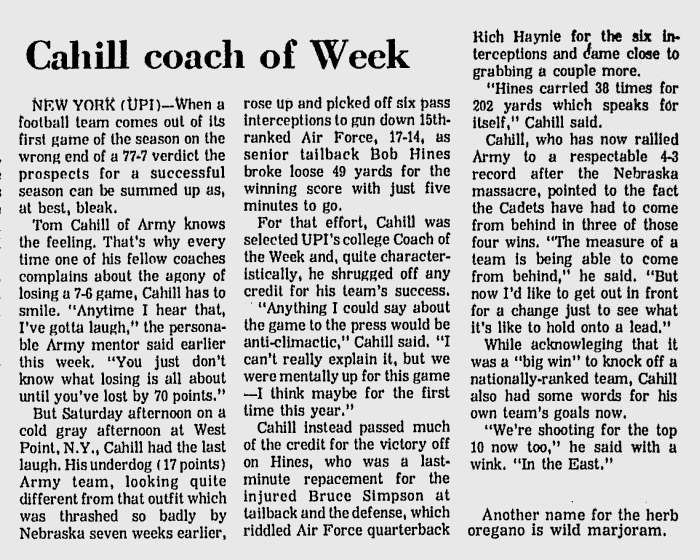
armyfb_1972_vsaf_cahill-coachoftheweek_sundaytimessentinel_nov81972ArmyFB_1972_vsAF_Cahill-CoachoftheWeek_SundayTimesSentinel_Nov81972
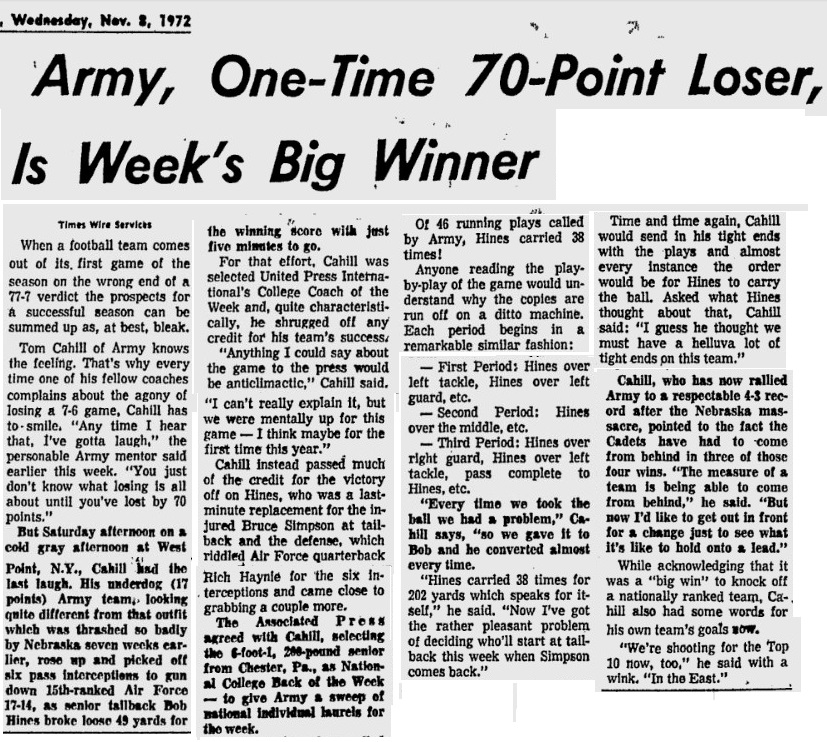
armyfb_1972_vsaf_stpetersburgtimes_nov81972
ArmyFB_1972_vsAF_StPetersburgTimes_Nov81972

–

–

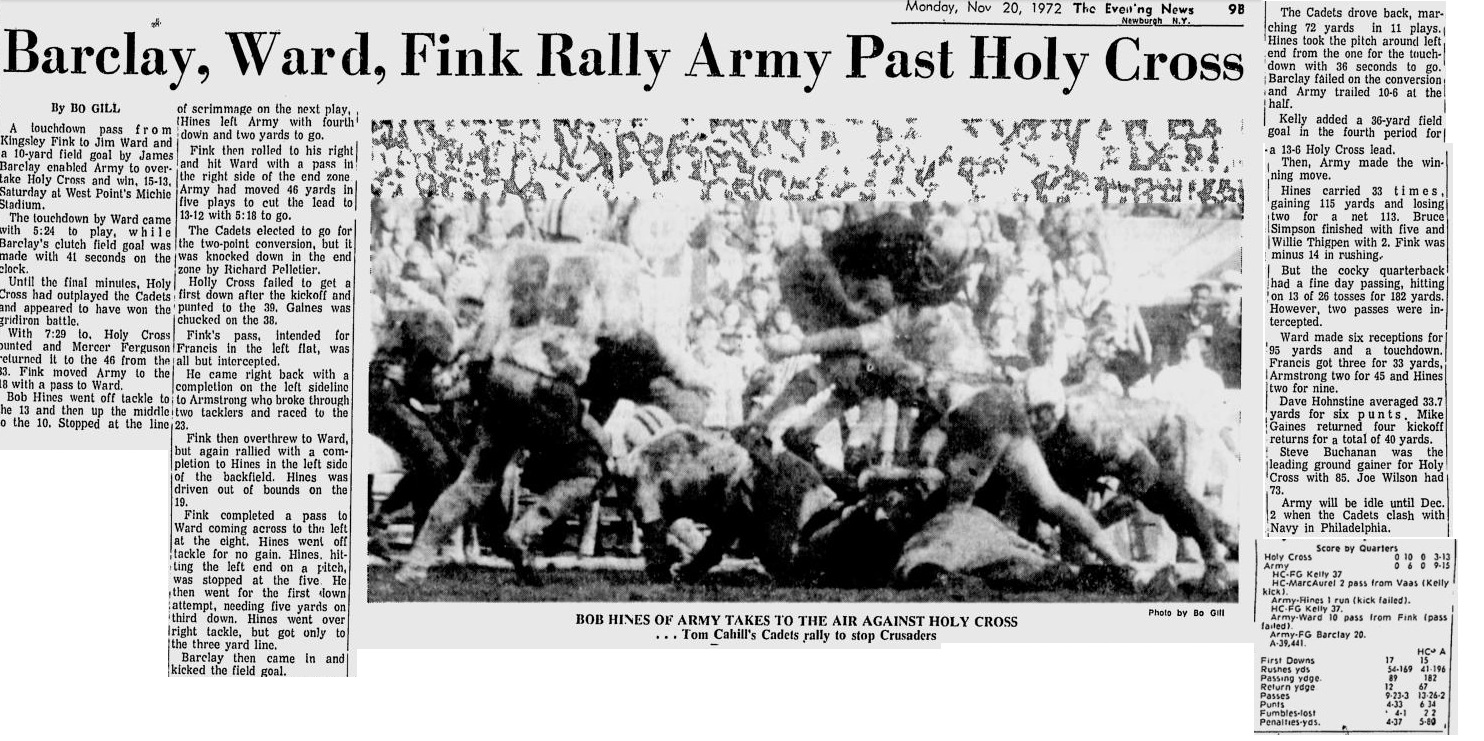
armyfb_1972_vsholycross_eveningnews_nov201972
ArmyFB_1972_vsHolyCross_EveningNews_Nov201972

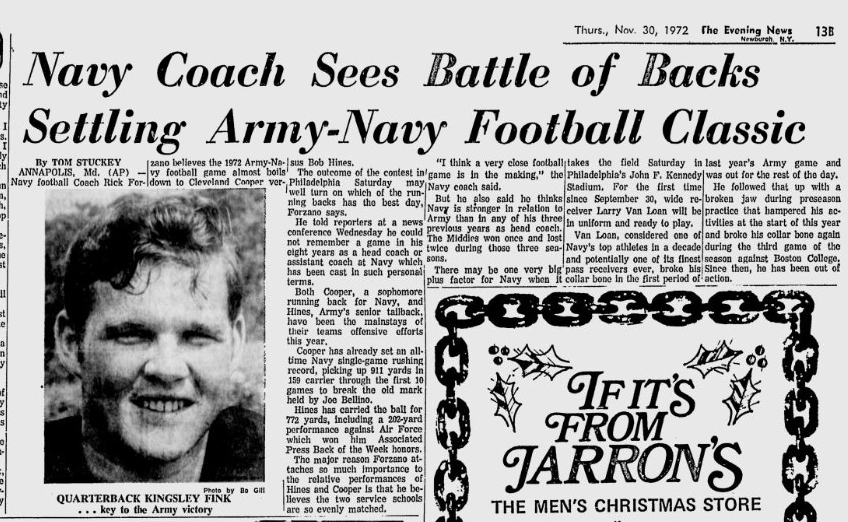
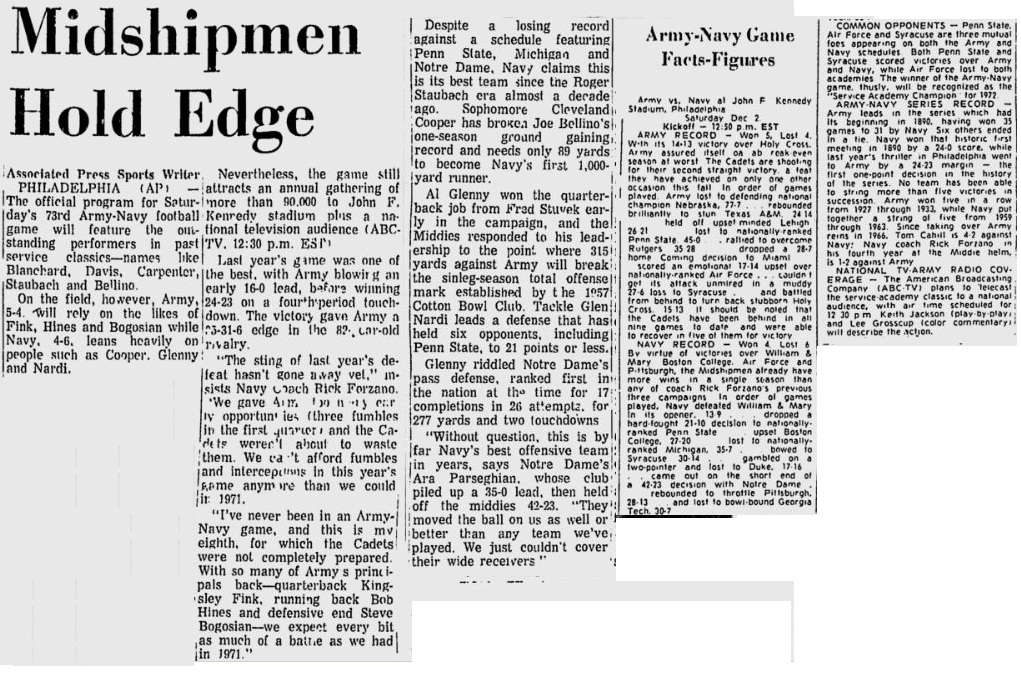
armyfb_1972_armynavy-preview_en-nov301972
ArmyFB_1972_ArmyNavy-preview_EN-Nov301972

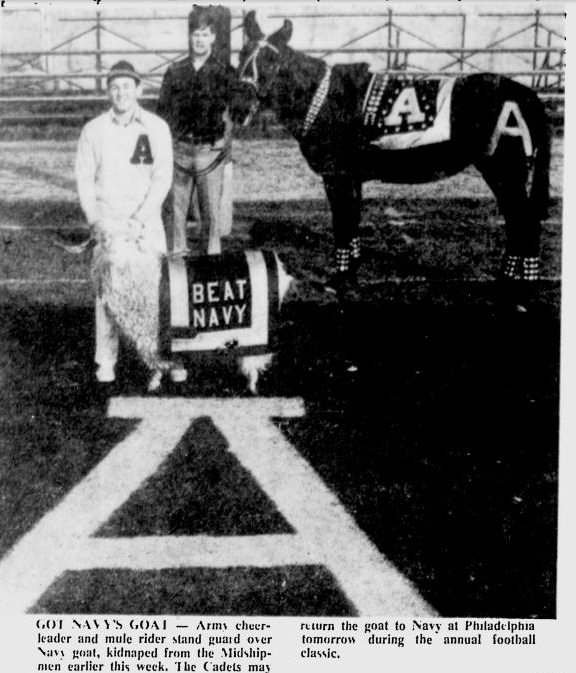
armyfb_1972_wegotnavysgoat_en-dec11972
ArmyFB_1972_WeGotNavysGoat_EN-Dec11972

armyfb_1972_army-navy-preview_en-dec11972
ArmyFB_1972_Army-Navy-preview_EN-Dec11972

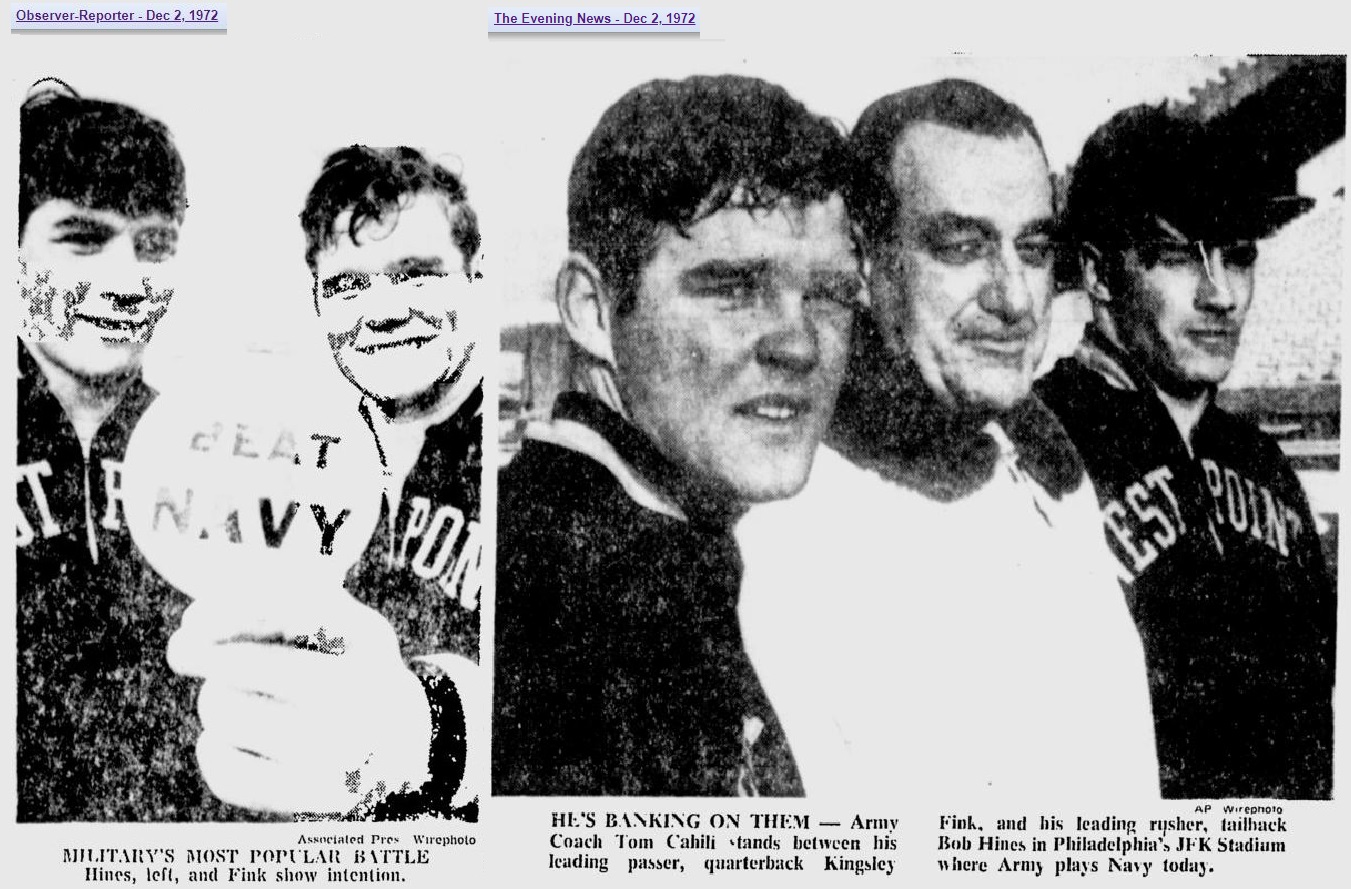
–

ArmyFB_1972_vsNavy-pre_Fink-Hines-CoachCahill_ObserverReporter-EveningIndependent_Dec21972

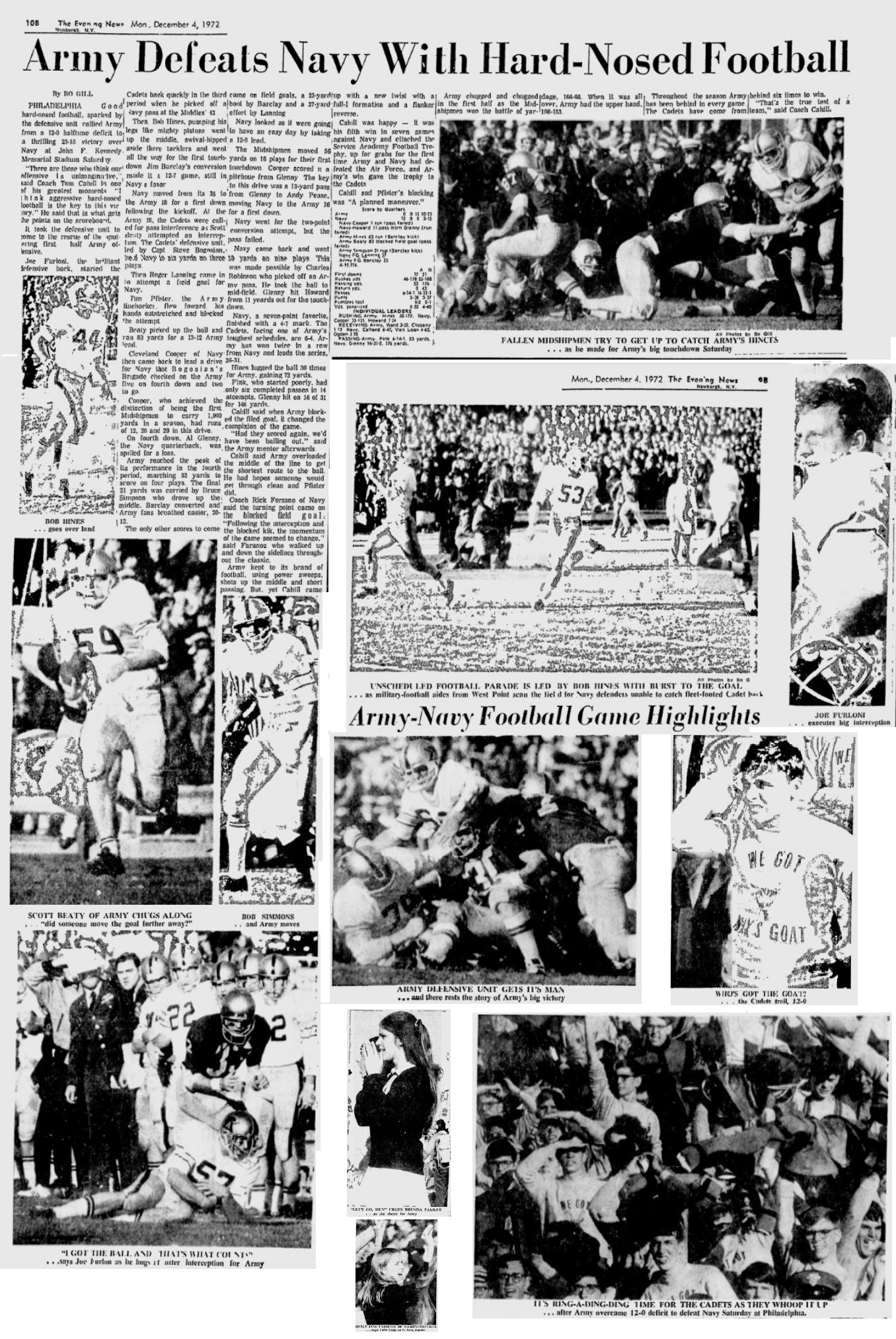
ArmyFB_1972_vsNavy_EN_Dec41972
ArmyFB_1972_vsNavy_Hines_EN-Dec41972

ArmyFB_1972_BobHines_vsNavy

ArmyFB_1972_BobHines_vsNavy
WRONG caption. The touchdown depicted above was actually Hines’ 43 yard run from scrimmage. The 83 yard TD run was by Army’s Scott Beaty; which occurred when an attempted field goal kick by Navy was blocked by Beaty’s teammate Tim Pfister.

–

ArmyFB_1972_BobHines-TD-run_APwirephoto

–

–


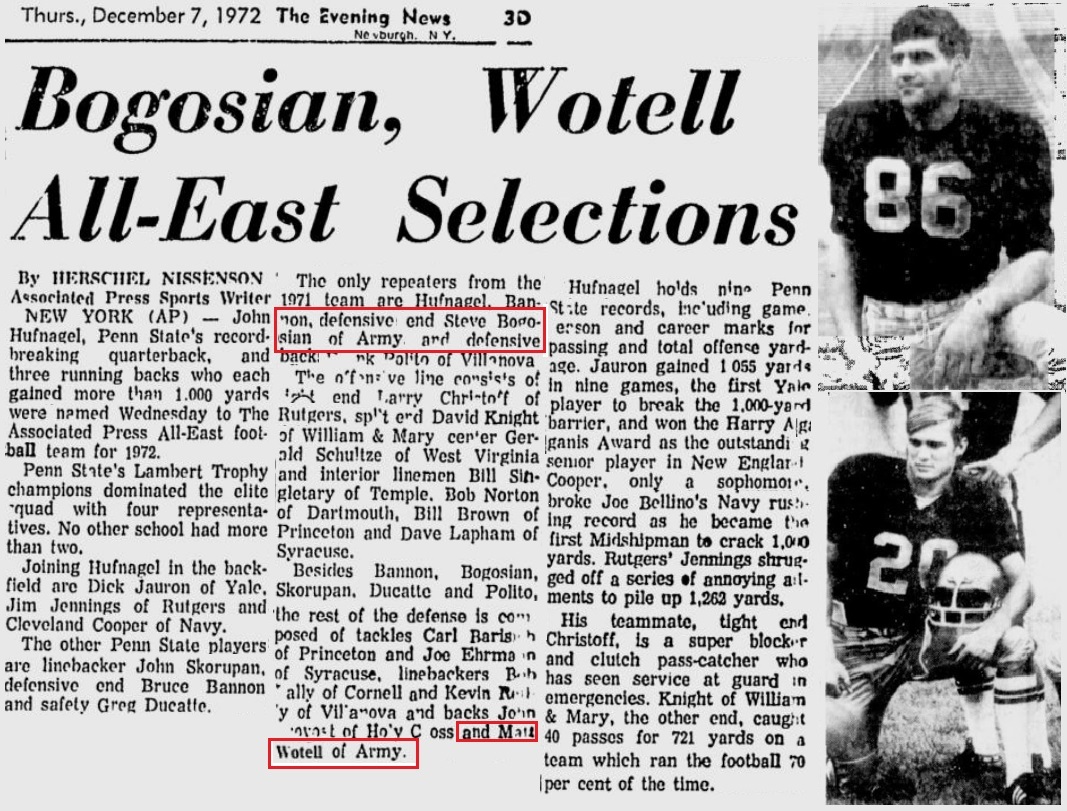
ArmyFB_1972_Bogosian-Wotell_All-East_EN_Dec71972pics

ArmyFB_1972_story1

armyfb_1972_story2
ArmyFB_1972_story2

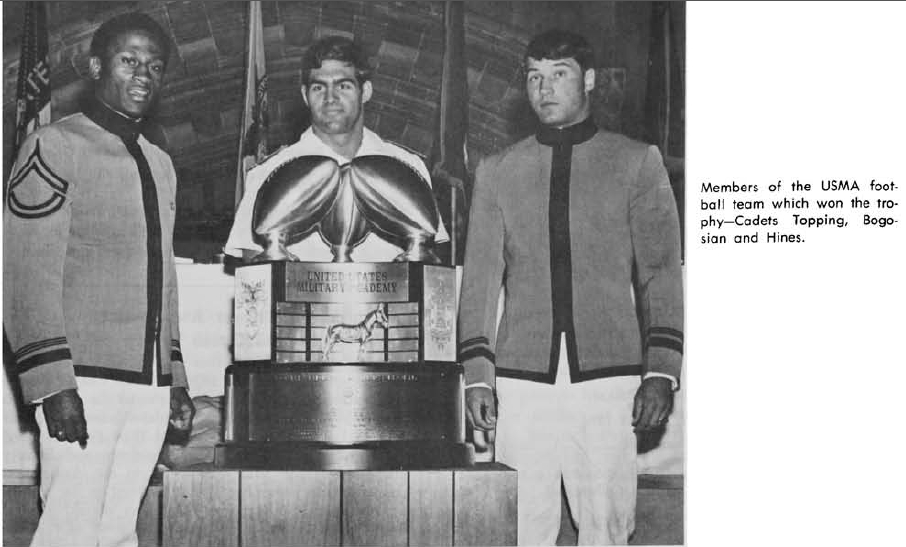
armyfb_1972_topping_bogosian_hines_assembly32n21973
ArmyFB_1972_Topping_Bogosian_Hines_Assembly32n21973

–

–

Jerry Weisensell

1995 – 1996 Women’s Basketball

The 2d floor of Arvin Gym is hot as hell in July and August. It mattered little that the morning had been spent running four miles in formation or rolling around on the grass with the sweat pouring off. Each time, walking out on that old hard wood floor provided an instant rejuvenation; an escape from Beast; a brief return to normalcy. She left everything on the court during the ninety minutes they allowed her to play the game she loved. It is with that passion that she gave over the next four years. As a starter Yearling, Cow and Firstie Year, she made her jump shot known.

1996 – 1997 Women’s Basketball

Julie Schellhase – Team Captain

In The Air – Julie gets above her Competition for another Record breaking Jump Shot

“>

Getting ready for the Game with Coach Pat Harris

Dennis Reimer

Dennis & Mary Jo Reimer Chief of Staff

Two of our Classmates near the end of their Military Careers – One Army Chief of Staff, the other
Commander of The Joint Special Operations Command.

When he was younger and did not know better

From left (standing) are Mike Casp, unknown (ROTC fellow), Denny, Dave Mundt and Mac McRae; kneeling are unknown (ROTC fellow), Don Street, “Tod Bergman” and Jim Heldman.

2011 DISTINGUISHED GRADUATE AWARD

When the 8th Infantry Division Colors were retired, General Reimer would include as part of his signature block

 “Soldiers are our Credentials.”

Throughout his 41 years in the uniform of the United States Army, General Dennis J. Reimer has consistently reflected the values of West Point’s motto: Duty, Honor, Country. He continues that today with his leadership and selfless service for the Academy, the Army and the nation. He is the consummate, quintessential military leader and a dedicated, caring General Officer whose charismatic leadership style, strength of character and powerful vision of how things ought to be has made a compelling difference in shaping the future of the US Army.

General Reimer’s operational experience included command at every level from battery to army. He served two tours in Vietnam, first as an advisor and later with an artillery battalion in the 9th Division. During these tours Denny received the Legion of Merit, a Bronze Star with V, and a Purple Heart among other awards. A student at both Command and General Staff College and the War College, he also taught at Fort Sill and served as the Deputy Assistant Commandant. Promoted to Brigadier General, he became Commanding General, III Corps Artillery. In 1988, Major General Reimer took command of the 4th Infantry Division after serving as the operations officer for the US Combined Forces Command in Korea. His knowledge of Army operations led to his promotion to lieutenant general and assignment as Deputy Chief of Staff for Operations on the Army Staff in 1990. During Operation Desert Shield, he led the planning for the Army’s support of that operation.

Denny’s promotion to full general in 1991 was accomplished by assignment as the Army’s Vice Chief of Staff, where he took on the management of the Army’s internal affairs and the drawdown of its structure and facilities. In 1993, he took command of US Army Forces Command prior to being selected as the 33rd Army Chief of Staff in 1995.

President Clinton, when he nominated General Reimer to be the Chief of Staff, stated that Denny “played a key role in the transformation of the Cold War Army into today’s power projection Army. He brings to the job as Chief of Staff a clear vision of the national security environment that the United States will face through the remainder of the decade and into the next century.”

During his tenure as Chief of Staff of the Army, the Army professionally and effectively deployed and executed desperately needed peacekeeping operations in the Balkans, preventing further bloodshed and genocide. This action by the Army brought a legacy of peace and hope to an entire region and resolved a key lingering source of instability in Europe. Numerous world crises challenged then Chief of Staff Dennis Reimer; however, he always took time to travel back to his beloved West Point to participate in the Plebe’s summer march backs. Then Plebe Major Ducote observed that “General Reimer interacted with countless classmates and set the standard for the type of inspirational leader we should strive to emulate.” He returned numerous times to interact with the Class of 1999 and became affectionately known throughout the class as “our Chief.” Then Commandant of Cadets, General Abizaid commented “Each visit was inspirational and character forming for each cadet. His message of ‘Soldiers are our Credentials’ came from the motto of the 8th Infantry Division, reflected his priorities, and had a lasting impact on the Corps as they viewed service to the Army and nation after graduation.”

After retiring from active service, General Reimer further distinguished himself by returning to his native Oklahoma to become the first Director of the National Memorial Institute for the Prevention of Terrorism in Oklahoma City. In this position, he delivered remarkable insight and programs for communities nationwide and for their emergency responders. Governor Frank Keating remarked “This experience shaped his sensitivity and fundamental understanding of the needs and requirements of our cities and towns across America. His leadership as the Director has left America better prepared to prevent terrorism and to deal with the consequences.”

Denny Reimer’s unique service to the nation in war and peace, combined with his lifelong support of West Point, is in keeping with the highest traditions of the United States Military Academy. He has exemplified the finest values of West Point for more then four decades. Accordingly, the West Point Association of Graduates of the United States Military Academy takes great pride in presenting the 2011 Distinguished Graduate Award to Dennis J. Reimer, Class of 1962.

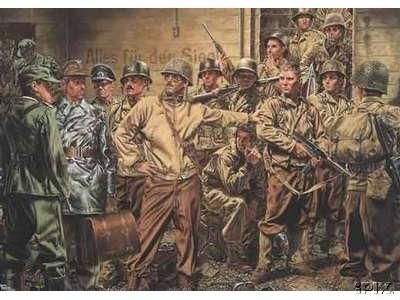
BG Charles D.W. Canham
When before surrendering, the German General demanded to see General Canham’s Credentials –
Pointing to the Riflemen accompanying him, General Canham said

“These are my Credentials”

220px-MG_Charles_D.W._Canham                                   a97093e96db3c557ecfb72b65a7d017c


Click to access cmhPub_70-69-1.pdf


Jim McInerney

ECAC Boxing Champion
awaiting data

Vince Bailey

Baseball — Shortstop
Awaiting data

Dick Inman

Dick Inman ’52 clears his hurdle in the 4X120 shuttle hurdle relay, Penn Relays, Saturday, 26 April 1952. Note the race was run on the infield grass at Franklin Field, due to heavy rain. Army placed second in the event, though they were given championship watches because the Air Force service team placing first was ineligible to
compete in the college division, but was trying for an berth on the 1952 U.S. Olympic team. Other Army shuttle hurdle relay team members were Ed White ’52, Bill Purdue ’54, and Larry Johnson ’52. (Photo courtesy of the Penn Relays’ Director.)

Dick played B Squad Football Yearling and Cow Years but was one of only 4 Football players who was not found in 1951. Dick played A Squad the fall of 1951 his Firstie year.

Richard George Inman ’52, who was killed in action leading his platoon to safety on “Pork Chop Hill”, in Korea, on 7 Jul 1953, three weeks before the armistice was signed. Dick was a letterman on the 1951 Army football team.

Ed Sprague

A Harvard pamphlet published for a duel (Harvard vs. Army) indoor meet, dated 3 Feb ’62 shows Ed holding the Academy record in the 60 yd dash at 6.2 seconds set in 1960. Almaguer, McGinnis, McAniff, and Garwick hold the indoor Mile relay record at 3:16.9 (1961)

Joseph Clair Austin

The ties that bind Army Athletes

In 1952, Cadet Joe Austin of the U.S. Military Academy Lacrosse Team used a six foot stick while playing crease attack. Joe made an all-time West Point record of ten goals in one game and had a career total of eighty goals for three years of play which (when the story was told) was still a school record. He was selected 1st team All-American at attack.

In 1962, the then Captain Joe Austin of the United States Air Force, was an assistant coach of the Army Lacrosse Team. Bob Fuellhart ’62, the second Lonely End, (following Bill Carpenter) on the Football Team, was playing on the Army Lacrosse Team as a defense man. Bob became very distressed when his favorite stick was broken in scrimmage. Assistant Coach Joe Austin, who had treasured his six foot high scoring attack stick for ten years generously loaned it to Fuellhart.

The head of the stick was much narrower than we liked for defensive use in those days but Bob felt that it helped his throwing and catching. (Today almost every defense stick has a head of this size which put Bobby much ahead of his time.) Appropriately, Fuellhart became first team All-American at close defense and won the Schmeisser Award as the outstanding defense man of 1962. Bill Carpenter was recipient of the Schmeisser Award in 1960.

This would seem to be quite a rarity for two players Joe and Bob, in two opposite positions, ten years apart, utilizing the same stick to become outstanding players of their times. Both Joe Austin and Bob Fuellhart were killed in the Vietnam War in the mid 1960’s.

Joe Austin, awarded 2 Silver Stars, Distinguished Flying Cross, and Purple Heart was first declared missing 19 March 1969, and confirmed Killed In Action 25 May 79.

Bill Carpenter was nominated for the Medal of Honor received the Distinguished Service Cross.

Bob Fuellhart, awarded a Silver Star, 2 Bronze Stars (V), and Purple Heart, was Killed in Action 12 Aug 65, the day his daughter was born.

A Half Century of Lacrosse by William H. (Dinty) Moore III, the long-time Lacrosse Coach at Navy. It was told to Moore by Army Coach Jim (Ace) Adams. Edited by Butch Darrell Captain 1962 Lacrosse Team

Cadet Days

Joseph Clair Austin

Nickname ?

Class of 1952

Company B-1

Home: 2003 Center St. Moundsville, W. Va.

Born 30 June 1929

Moundsville High School – Graduated 1947

USAF – 19 June 1947 to 19 June 1948

Prep School @ Stewart Field – 3 months Jan 1948

Appointment: State at Large – Senator Kilgore

Date of Entry to Academy?

Date of Graduation ?

Age at Graduation 23

Cullum Number 18680

Cadet Rank & Military Position

  • Captain – Cadet Adjutant of the 1st Regiment

    Height ?

  • Entry
  • Graduation

    Weight ?

  • Entry
  • Playing weight
  • Graduation

    Teams – Lacrosse

    Coaches / Assistant Coaches ?

    Officer Representative

    Lacrosse Team Captain 1952

    Position Played – Crease Attack

    Award of Army A

  • Plebe Year Class Numerals
  • Army A Yearling, Cow, and Firstie Years

    Team Recognition

  • Co- champions with Princeton 1952

    Academy Recognition ?

    Individual Recognition

  • 10 goals against Cornell in 1952, 80 goals 3 years

    Individual Records

  • National
  • Regional
  • League

    Individual Recognition

  • Plebe
  • Yearling
  • Cow Year – Honorable Mention All American
  • Firstie Year – First Team All American

    Post Season Play – 1952 All Star Game North Team

    Injuries

    Significant events, Information, or Write Up about Athlete ?

  • Pointer, Pointer View, New York Times, (Note Home Town Paper was Wheeling News-Register, Wheeling W. Va.)

    Relationship with

  • Tactical Department ?

    Committees and Staff

  • In Support of Corps

    Recreation

  • General Committee, French Club, Camera Club, Ski Club
  • Intramurals

    Class Standing 186 out of ?

    Turn Out Stars ?

    Officer Assignment to the Academy ?

  • Department
  • Coach or Officer Representative

    Military Career

  • Officer Rank – Colonel
  • Advanced Education
  • 1. MS Industrial Administration- Carnegie Tech 1956-1958
  • 2. MS Operations Research – NYU 1962-1962
  • 3. MS Public Administration – George Washington University 1962-1964
  • Listed as Missing in Action 19 March 1967 changed to Killed in Action 25 May 1979
  • Awards – 2 Silver Stars, Distinguished Flying Cross, and Purple Heart

    Family

  • Wife – Beverly Joan Marino Austin
  • Sons Joseph John and Thomas David Austin

    Command of the 34thTactical Fighter Squadron

  • Bill McWilliams Support of the 1953 Nomination

    January 29, 2009

    Mr. Bob Beretta

    Senior Associate Athletic Director for Athletic Communication

    U.S. Military Academy

    639 Howard Road

    West Point, NY 10996

    Dear Mr. Baretta;

    I am honored to have the privilege of supporting, and in the strongest possible terms urging the selection of the 1953 Army football team for the Academy’s Sports Hall of Fame.

    Enclosed please find the book, A Return to Glory, and two articles, one on Vince Lombardi, the other on the 1953 Army-Duke football game, both published some years ago in Assembly magazine. Together, these three items chronicle the history of Army football’s astonishing turnaround following the devastating 1951 cheating incident, a turnaround crowned by the 1953 team’s glowing achievements. The succeeding paragraphs will highlight a few of the team’s additional, unforgettable accomplishments and effects, some comments resulting from their play and at the same time, through the enclosed writings offer those considering the nomination a far deeper understanding of its remarkable history. With respect to the book, I will identify the most pertinent chapters and pages to ease learning about the players and their season, a season never to be forgotten by the Corps of Cadets of that era – and a season that inspired the Bicentennial book’s title.

    Before proceeding, it is important to put the subject in perspective with Coach Earl Blaik‘s words about the 1953 Army football team. In his 1974 autobiography, The Red Blaik Story, he wrote, “When I come to describe the team of 1953, what they meant to me and, far more important, what they meant to West Point, I cannot praise them enough.” Of them, Grantland Rice wrote with eloquent simplicity, “They came up the hard way and there probably has never been a squad with a finer spirit.” True, we did look for better things than in 1951 and “52”. We did not harbor, however, the faintest dream of even localized empire. Any prognostication that we would win the Lambert Trophy, emblematic of the Eastern Championship, and be rated No. 14 nationally would have been tabbed fantastic. With Coach Blaik’s words as background, the team’s history echoes his witness.

    They were one of the smallest Army football teams in years, at season’s end thirty-eight men, a team of heroes with no stars and with a different hero each Saturday, all playing for honor and love of the game, undeniable facts laid out in chapters 17-19 (pages 787-916) in A Return to Glory. They were led by quiet, solid leaders from the class of 1954; augmented by a small number of players from the smallest Academy class in years, 1955, and a bevy of talented yearlings in the class of 1956 who set the gridiron on fire that fall. All, together, became inspired. Though the phrase wasn’t originated by Coach Earl Blaik, it was the incomparable football teacher, the thoroughly emotionally-controlled Blaik who, with tears in his eyes, handed the Army-Duke game ball to Bob Mischak, Army’s left end who made the incredible game-saving tackle. Blaik’s words to Bob were simple but powerful, and echo down through the years, “Don’t ever give up.”

    The cheating incident had never-publicized, lingering effects on Army football players in the three following seasons, effects witnessed and painfully felt by the young, inexperienced B and C teams – the men who accomplished the “football miracle” of 1953. As Blaik wrote years later in baring his bitterness and frustration over the cheating incident, “For two years these boys had seen the roughest action. They had lived with the coaching lash, dirt, blood, and defeat.” Adding to the effects the players faced was the revelation that the much-admired Army varsity had been deeply involved in what became a national scandal. In a number of cases the players left to pick up the pieces became subjects of totally unwarranted suspicions and stinging criticisms simply because they were Army football players. Army football, indeed, service academy football came under sharp attack in Congress as well as in the media. It seemed to some players that men they had looked up to as champions and team leaders had disgraced not only themselves, the Academy, the Army and Air Force, they had embarrassed and disgraced the game of football. The season of 1953 changed all that — the team and the Corps of Cadets washed the effects away with stunning, inspirational teamwork and marvelous achievements. Yet, there were more hurdles to cross before they could accomplish their football miracle.

    Following the 1952 season, changes in National Collegiate Athletic Association (NCAA) rules greatly restricted substitution and for several years virtually ended the offensive-defensive unit two-platoon system. The result was to lengthen playing time for varsity players, decrease the number of varsity letters awarded, increase injury potential, and cause a return to what in years past had been called “iron man football”.

    To compete under the more complicated substitution rules, Coach Blaik chose to return to the type of two-platoon system he inaugurated at Army during the World War II years, two or three units that went both ways, on offense and defense. While the rule changes impacted all collegiate teams, no team Army was to face in 1953 had suffered the total loss of its varsity lettermen and team leaders two years earlier. The losses had forced virtually complete rebuilding from the ground up. Other colleges and universities would have been able to accelerate efforts to make up such losses with much larger student bodies and massive numbers of alumni on the lookout for talent, aggressive well-funded recruiting, junior college transfers, and the growing lure of expanding professional football immediately after graduation. Not so at Army.

    The NCAA rule changes had other impacts not normally visible to cadets and Army sports fans — but were quite clear to team members vying for varsity status and the coveted Major A. The remaining 1953 team members, who, at the end of the 1952 season believed they had almost secured starting offensive or defensive platoon positions, suddenly found themselves being retested and moved from one position to another to determine who could play both offense and defense and had the conditioning, strength and stamina to play both ways. Their extraordinary individual responses were inspirational, highlighting individual willingness to sacrifice for the team. Again, from Coach Blaik’s 1974 book.

    “A normal amount of injuries as the season advanced cost us solid fullback and punter “Fred Attaya”, hard-nosed right halfback “Mike Zeigler”, spirited end “Ski” “Godwin Ordway”, and a few others. By the time we got down to the Penn and Navy games, the starting eleven and about four substitutes carried the full load” At quarterback, “Peter Vann” shared the job to some extent with “Jerry Hagan” early in the season, but improved gradually to indispensable level. Vann, Pat Uebel, and “Tommy Bell” at halfbacks and “Gerry Lodge” at fullback played 60 minutes against Penn and almost all the way in the Navy game.”

    It’s important to note, that Peter Vann was a sterling offensive team leader his last two years at Army, became a classic drop-back passer and deft ball-handling and faking wizard who repeatedly confused defensive linemen, and was far more than Blaik’s description of him on defense as “dependable in a crisis”. Playing at defensive right halfback on the last play of the season’s crucial, turnaround game, he too made a game-saving play, batting away a pass thrown from Duke’s quarterback to their alternate quarterback — in the Army end zone – then went on to be ninth in Heisman Trophy voting and a second team All-American quarterback in 1954. Right halfback Tommy Bell, scored one of the two touchdowns against Duke, became a first team All-American in 1954 and that same year one of the few four-year lettermen in Army football history. Yearling left halfback Pat Uebel, who scored one of the two touchdowns in the stunning upset of No. 7-ranked Duke and all three of Army’s touchdowns in the win over Navy — one of a small number of Army players to score three touchdowns against Navy, and to that time the only player to score all three touchdowns in a win over Navy – was another hero in the 1953 Army backfield. Of Army’s two lead halfbacks Coach Blaik would write, “In ’53 and ’54 both Uebel and Bell were among the top echelon of all-time West Point halfbacks.” (See pages 202-206 of A Return to Glory, for added information on Thomas J. Bell and Robert M. Mischak.)

    Rounding out the backfield after the loss to injury in the Tulane game of the swift, agile, hard-driving fullback, and punter, “Freddie Attaya”, was guard-converted-to-fullback “Gerry Lodge”, who stepped into Freddie’s shoes and performed magnificently at both fullback on offense and linebacker on defense. It was this backfield, plus three great Army ends, and this team that brought Vince Lombardi to the attention of the New York Giants at the end of the 1953 season, setting Vince on course to become a legendary professional coach. (See pages 208-216 for added information on Lowell Sisson, “Gerald Lodge”, “Leroy Lunn”, “Freddie Attaya”, and Peter Vann.)

    Blaik said of the three ends on the 1953 team, “Our end play was handled by Bob Mischak, Lowell Sisson, and a yearling of unusual potential named Don Holleder. Sisson was another who kept improving and hit the top in the Navy game. After Attaya’s injury, Sisson did the punting. Mischak developed into a fine pass receiver and on defense he delivered the play that was the pivot, in a real sense, of the entire season. Holleder was a naturally talented pass receiver with outstanding speed, hands, and competitive fire. By 1954
    he became just about the most dangerous offensive end in college ranks. Don later became an Army legend in his own right. A first team All-American end in 1954, he voluntarily gave up the chance to become a two-time All-American, by acquiescing to Coach Blaik’s request that he switch to quarterback for the 1955 season, a position he had never played in either high school or college. On 17 October 1967, his courage and heroism in Vietnam while attempting to rescue wounded soldiers in his unit cost him his life. His life and service became the inspiration for the now-well-known Black Lion Award to football players at every level of football played in the nation, from youth leagues to intercollegiate Division IA.

    Army linemen on the thinly-manned 1953 team included three guards, captain “Leroy Lunn”, his classmate “Dick Ziegler”, and yearling “Ralph Chesnauskas”, whose talents included extra-point conversions. Ralph calmly kicked the two extra points against Duke to win the game, and became a first team All-American in 1954. Blaik, writing of “Leroy Lunn”, said, “I think it epitomized the character of this team and Lunn’s inspirational leadership that he was able to handle a difficult situation in a manner that increased his stature. It was not an easy thing to walk out there every Saturday for the toss of the coin and then to have to return to the bench and not be in for the kick-off. Roy
    never let this bother his playing when he did get in. He improved so much that he clearly earned the right to start with his team against Navy. Then he went out and played the best game of his career.”

    Center “Norman Stephen” was a steady, rock-solid team leader on offense, who on the first play from scrimmage in the second half of the second home game of the season, against Dartmouth, — lit a small but growing fire in the team and Corps of Cadets — when he broke from the huddle and ran, almost sprinting to the ball, prompting the team to follow his lead. The roar of approval and support from the Corps each time Norm broke and ran to the ball, from that point forward through the rest of the season, continued to unify a determined Corps of Cadets with their team. He was a standout linebacker who was the on-field captain who called defensive signals. Starting at tackle were two yearlings, “Ron Melnik” and “Howard Glock”, with first classman “Joe Lapchick”, Jr. doing most of the reserve playing.

    Coach Blaik considered the heart of his defense to be yearling Bob Farris, a top man academically who in 1955 became the Corps’ First Captain, played tackle on offense and was a line backer on defense in 1953. “The linebacking of Farris against Navy was as fine as I have ever seen in that game,” he wrote. “Unfortunately, the abandon with which he played cost him a detached retina that ended his football. To have played him would have risked an aggravation that might have impaired his sight. Nevertheless, Bob captained our 54 team and helped out with coaching.”

    None of the foregoing tells of the incredible will-to-win spirit and support of the 1953 team by the entire Corps of Cadets, all of it specifically intended to unify the team and Corps of Cadets in ways never before seen or heard at West Point. It’s marvelous success was marked with the most unusual Lambert Trophy presentation in the award’s history. (Detailed in A Return to Glory, pages 912-916). First offered in 1936, and sponsored by New York City’s brothers, Victor A. and Henry L. Lambert, the trophy was symbolic of Eastern football supremacy, and had been won by Army in 1944, ’45, ’46, ’48 and ’49. For the first time, on a Sunday evening, 20 December 1953, in Washington Hall, the Lambert Trophy was presented outside of New York City to a football team and its student body. (Photograph, page 914)

    Respectfully, for your consideration,

    Bill McWilliams, USMA 1955

    NHF Books, Inc.

    2229 Fiero Drive

    Las Vegas, NV 89134-6042

    702-363-6968; E-mail: brmcw@cox.net

    53′ Football, 52′ and 47′

    Dick Shea breaks the tape in his second successive two-mile
    championship, Penn Relays, 1951.

    Al, Ben, and the driver, right after the Navy Mascot’s unveiling in
    Washington Hall (Photo courtesy Willis C. Tomsen, ’54)

    Gerry Lodge grinds out yardage against North Carolina State, in
    Michie Stadium. In the background is Bob Mishcak (87).

    Al Rupp ’55, the getaway driver and Ben Schemmer ’54 pose with Bill
    XII and Mr. Jackson, the Senior Army Mascot, at the Mule Pen. (Photo
    Courtesy of the U.S. Army Signal Corps.)

    The Army Victory Cannon, first time fired outside Michie Stadium at
    the Duke game, is fired after an extra point against Columbia, at
    Baker Field, 24 October 1953..

    Deliriously happy Army players and cadets celebrate their stunning
    14-13 upset of Duke University Blue Devils at the Polo Grounds in New
    York City’s Polo Grounds, 17 October 1953. Identified players are
    Lowell Sisson (83), right end; Bob Mischak (87), left end; Bill Cody
    (11), quarterback; Ed Zaborowski (58), center; Joe Franklin (facing
    Ed Zaborowski; Frank Burd (33), fullback; Peter Vann (10),
    quarterback. (Photo courtesy of Associated Press.).

    Tommy Bell drives for yards against Penn, at Franklin Field in
    Philadelphia.

    Freddie Attaya moves for yardage against Duke, after taking a hand-
    off from Jerry Hagan. New York Times Photo..

    Retired General James A. Van Fleet ’15 at the Washington Hall rally
    prior to Army-Navy 1953. (Photo courtesy of USMA Archives).

    Pete Vann (10) prepares to throw downfield against Columbia. In the
    right foreground is Tommy Bell (46), with Pat Uebel (34), Melnick (70) is on the ground

    Ben and Al parade Billy XII through the dining hall. (Photo courtesy
    of Willis C. Tomsen, ’54).

    Tommy Bell (46) prepares to lunge for more yardage. Pat Uebel (34),
    in the foreground..

    Navy fumbles attempting to return the opening kickoff. The photo,
    taken by a photographer for the Philadelphia Inquirer, incorrectly
    identified the Army player recovering the ball, as Howard Glock, when
    in fact it was Lowell Sisson (83) who is on his feet facing the
    camera lens as the ball squirts past his thighs. Glock (71), Bell
    (46), Mischak (87), Farris (55) and Uebel (34) are identifiable.
    (Photo courtesy of Urban Archives, Temple University, Philadelphia, PA.).

    The Corps assembled in battalion mass, Philadelphia, prior to Army-
    Navy 1953.

    A chloroformed Navy mascot, Billy XII, sleeps soundly on the back
    floor of a convertible on the way back to West Point, the Sunday
    prior to the 1953 Army-Navy game. “Borrowed” by Ben Schemmer ’54 and
    Al Rupp ’55, with the kind assistance of the car’s owner, a soldier
    (unidentified) in the Academy band.

    Inducted into the Collegiate Football Hall of Fame.

    Arnold Tucker was an assistant coach working with the Army Plebe team in 1951, and was a TAC in company F-1 ’52-’54, thus was there the season of 1953. His classmate, then-captain Herbert O. Brennan, was TAC in K-1. Herbie Brennan, a Korean War fighter-bomber pilot and destined for great things, but was tragically shot down and killed over Vinh, North Vietnam, in about October 1967, when his F-4 took a direct hit from AAA. He and Mary had five children..

    Dick Inman ’52 clears his hurdle in the 4X120 shuttle hurdle relay,
    Penn Relays, Saturday, 26 April 1952. Note the race was run on the
    infield grass at Franklin Field, due to heavy rain. Army placed
    second in the event, though they were given championship watches
    because the Air Force service team placing first was ineligible to
    compete in the college division, but was trying for an berth on the
    1952 U.S. Olympic team. Other Army shuttle hurdle relay team members
    were Ed White ’52, Bill Purdue ’54, and Larry Johnson ’52. (Photo
    courtesy of the Penn Relays’ Director.)
    )

    Dick Shea and runner-up Smith of Penn State, after Dick’s third
    successive championship two-mile run, Friday, 25 April 1952. (Photo
    courtesy of the Penn Relays’ Director.).

    Dick Shea ’52, captain of Army’s track team, breaks the tape in his
    third successive two-mile run championship, in the 1952 Penn Relays,
    Friday, 25 April 1952. Note the muddy track and a victory in
    difficult weather conditions. (Photo courtesy of the Penn Relays
    Director).

    Army team captain Leroy Lunn receives the Lambert Trophy, symbolic of
    eastern football supremacy, in a ceremony in Washington Hall, Sunday
    evening, 20 December 1953 – the first time in the trophy’s history it
    was awarded outside New York City, and the first time to a team AND
    its student body. The two brothers Victor and Henry Lambert first
    awarded the trophy in 1936. (Photo courtesy of the USMA Archives.).

    An ecstatic Earl Blaik leaves the field after Army’s 1953, 20-7 win
    over Navy. Cadet well wishers in the foreground next to Blaik are,
    left to right, Clyde W. La Grone, Roman J. Peisinger, Ira Coron, and
    Leonard Griggs. In the background is Rox Shain, the Army player whose
    game-opening diagonal kickoff preceded Navy’s fumble. (Photo courtesy
    of Willis C. Tomsen, ’54.).

    Pat Uebel races for the end zone, running back a Navy punt for a
    touchdown. There are some errors in identification of the Army
    players. In the upper left, Odom is in fact Norm Stepen (51), Burda
    is in fact Lowell Sisson (83), and the numbers of the player
    identified as Sisson keeps him unidentified. (Photo courtesy of Urban
    Archives, Temple University, Philadelphia, PA.).

    Tommy Bell prepares to take a pass thrown by Pete Vann. From left to
    right, Lowell Sisson (83), Gerry Lodge on the ground (32), Pat Uebel
    (34), Howard Glock (71), Leroy Lunn (60), and Norm Stephen (51). The ball is seen against the man standing with the long coat,just over the 40 yard line, while just left of Tommy Bell, Billy (the Navy Goat) remembers the fine treatment he received as guest of The Corps of Cadets.
    (Photo courtesy of Urban Archives, Temple University, Philadelphia, PA.).

    .

    Corps March On, pre-game at the Polo Grounds, 17 October 1953.

    Pete Vann takes to the air against Dartmouth in Michie Stadium. Gerry
    Lodge in the foreground giving pass protection..

    Army’s Tommy Bell takes a handoff from Peter Vann. Army-Navy 1953.
    (Photo courtesy of Urban Archives, Temple University, Phildelphia, PA.).

    Milton Caniff, Steve Canyon cartoonist, prepares the Corps for No. 7
    Duke at the Thursday rally in Washington Hall..

    The 1953 cheerleaders, standing, for the Army team, with tumblers in
    the first row.
    Cheerleaders, left to right: Ed Moses, ’54; John Clayton ’55, Al
    Worden ’55, Billy McVeigh ’54, Jay Edwards ’54, Bill Robinson ’55;
    Tumblers: Peter Jones ’54, Dan Ludwig ’55, Jack Charles ’54, Charles
    Glenn ’56..

    Winter Sports 59′ – 60