The guide identifies our letter winners: Phil Costain (2 letters), Warren (Steve?) Foote (1 letter in 1962 but he did not graduate with us; does anyone know why?), Ed Hendren (2), Larry Mooring (1), Ken Wallace (2), Merle Williams (2), and Will Worthington (1). Of those I knew, I always considered them the fittest looking of the fittest.
Will in his Iron Cross at Penn State, won by Army 52-44
We were Eastern League gymnastics champions in 1960 and in 1962. The latter team, the last under Coach Maloney, was the last Eastern League championship for Army (although Maloney resigned after the first meet!). Phil Costain, team captain, was Eastern League champion in the horizontal bar in 1962. Howitzer states that Phil was named national champion in that event in 1962 but there is no mention of this accomplishment in the media guide. Furthermore, one would think that the national champion would also be named All-American, but,
according to the guide, no Army gymnast made All-American between 1958 and 1994. Is this an oversight?
The media guide identifies letter winners from our class: Phil Costain (2 letters), Warren (Steve?) Foote (1 letter in 1962 but he did not graduate with us; does anyone know why?), Ed Hendren (2), Larry Mooring (1), Ken Wallace (2), Merle Williams (2), and Will Worthington (1). Of those I knew, I always considered them the fittest looking of the fittest.
Two Army As, 1 each in Track & Cross Country. 7/7/1965 Ronald L. Zinn
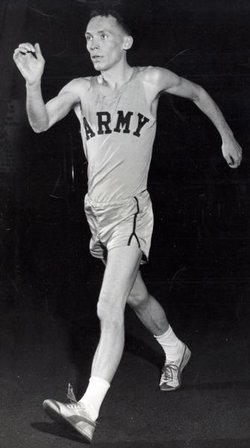
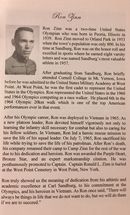
First Cadet to be selected to a USA Olympic team; competed in race-walking at the 1960 Olympics and was top American finisher in the 20K race. Also a key contributor on the Academy cross-country and track teams. Ron was Killed in Action Vietnam 7/7/65 – – John Easterbrook Ron was honored with a Brigade Parade
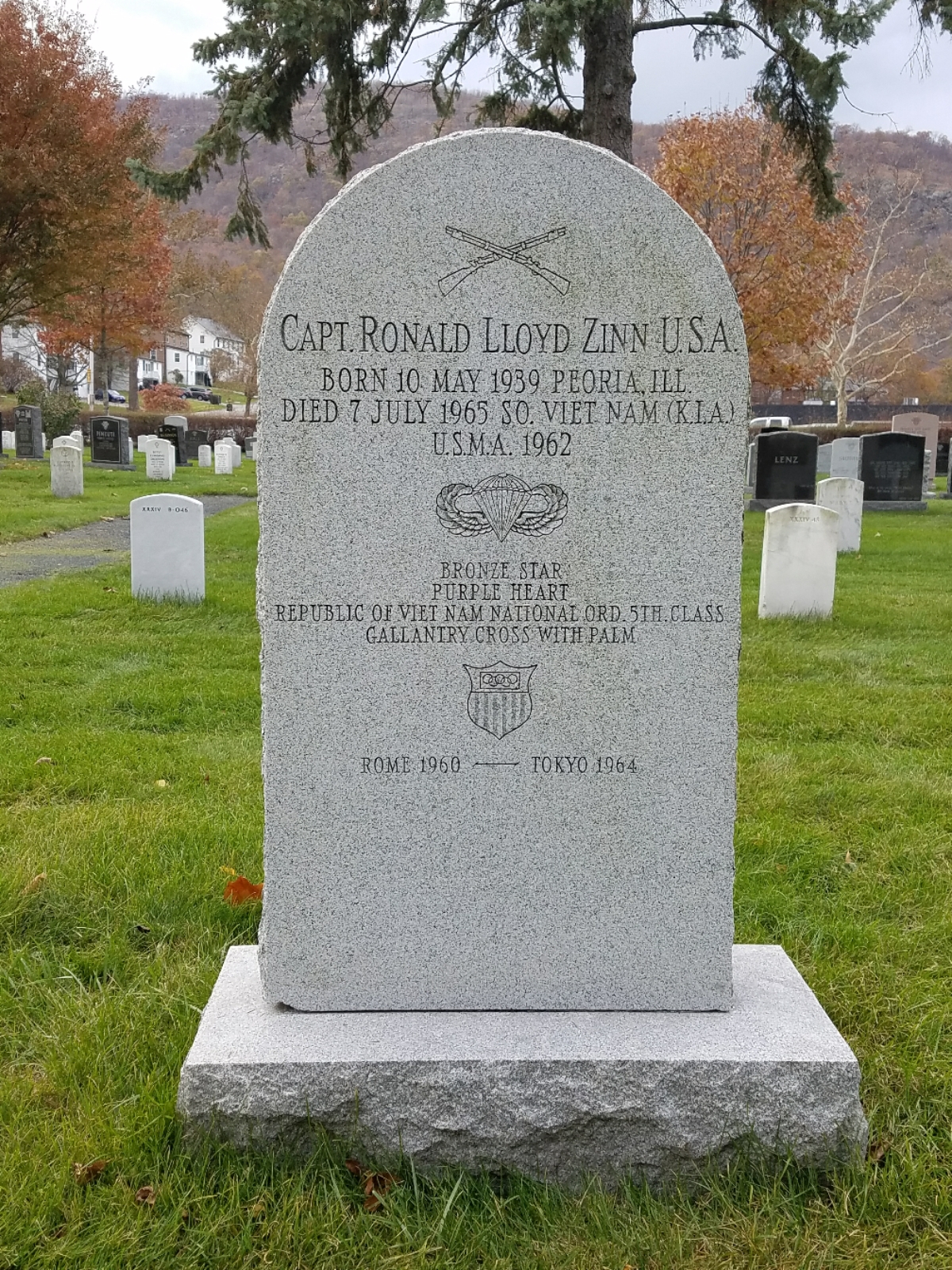
Cullum No. 24143-1962 | July 7, 1965 | Died in Vietnam
Interred in West Point Cemetery, West Point, NY
Ronald Lloyd Zinn was a cadet who possessed several outstanding virtues, but it was his determination to succeed that allowed him to overcome any difficulty. Although marching, and even running, were sometimes difficult for Ron, he went on to become an Olympic class race walker. He represented the U.S.A. in Rome and again in Tokyo.
He was relentless in his efforts to succeed as a cadet and as an Olympian. His loving parents and family saw how his efforts bore fruit time and time again. They were extremely proud of Ron. The Zinns knew he was one of “America’s finest.” COL Richard “Dick” Kent remembers his former roommate: “Even after 41 years, I remember Ron as a truly modest, honest, and straightforward person with a dry sense of humor. He made lots of Corps Squad trips but usually managed to bring something back for his roommates. He spent more than a few weekends at our home in Manhattan Beach and was well liked by everyone there. I guess the thing that sticks with me the most after all this time is my recollection of Ron’s levelheadedness and his fundamental decency.”
That’s the way I remember Ron, too, as we shared the rigors of cadet life in Company C1. Ron and I also ended up in the same company Yearling year at Camp Buckner. This was fortunate for both of us, since our company won the Buckner Stakes training competition. As a result, Ron and I both celebrated Labor Day weekend with a three day pass in NYC. I still have a picture of us standing around the piano at Joe King’s Ratskeller, our glasses raised in unison to the beat of our favorite drinking song. Another fond memory of Ron occurred during our First Class year when I was on holiday leave. Sitting in the basement of my girlfriend’s house, I turned on the television and tuned in to a track meet being held at Madison Square Garden. Ron was clearly visible on the screen as he power walked his way to the front of the pack. My immediate reaction was to proudly exclaim, “That’s my classmate, Ron, and he’s on his way to another victory!”
Dick Kent also recalls memories from First Class year, after Ron had been in the Olympics: “Lots of other cadets, myself included, would challenge Ron to informal walking races. After all, how hard could it be? We all probably harbored secret hopes of beating the champ. At first, Ron would sort of humor us and let us win. If we became too obnoxious or insistent, he would reluctantly, and with a degree of resignation, show us the basic points of Olympic walking and how sorry we really were. It was done without malice and in genuinely good humor, but it left me in total awe of Ron’s capabilities and self discipline. If you pressed him for stories of what the Olympics were like, he would never talk about himself but would make an observation about his fellow athletes and his respect for them, even those from Warsaw Pact countries.”
Ron is not only remembered by family and classmates, but also by the comrades in arms with whom he served. On 21 Apr 2000, Ron’s company commander in Viet Nam, Infantry LTC Roy Lombardo, placed a wreath on Ron’s grave at the West Point cemetery and addressed the assembly of “Bravo Bulls.” He said: “We, veterans of Co. B, 2/503d Parachute Infantry Regiment, assemble today in memory of LT Ron Zinn, not to praise you, but to remember you. There are 64 veterans of Company B, in contact by letters and email, and all who served with you remember you with camaraderie and respect.”
In his eulogy, LTC Lombardo observed: “We remember a young officer, described by his Military Academy classmates as fun loving yet ascetic in his physical training regimen; a tough wrestler with a unique ability to absorb pain while outlasting his opponents; a world class track Olympian, participating in the 1960 Olympics while still a cadet, and in the 1964 Olympics after commissioning; as a lean, muscular lieutenant who joined us on Okinawa and led the company track team to the battalion championship. We remember a newly married officer, anxious to become proficient at his Infantry assignment but equally anxious to have his bride, Barbara, join him on Okinawa.
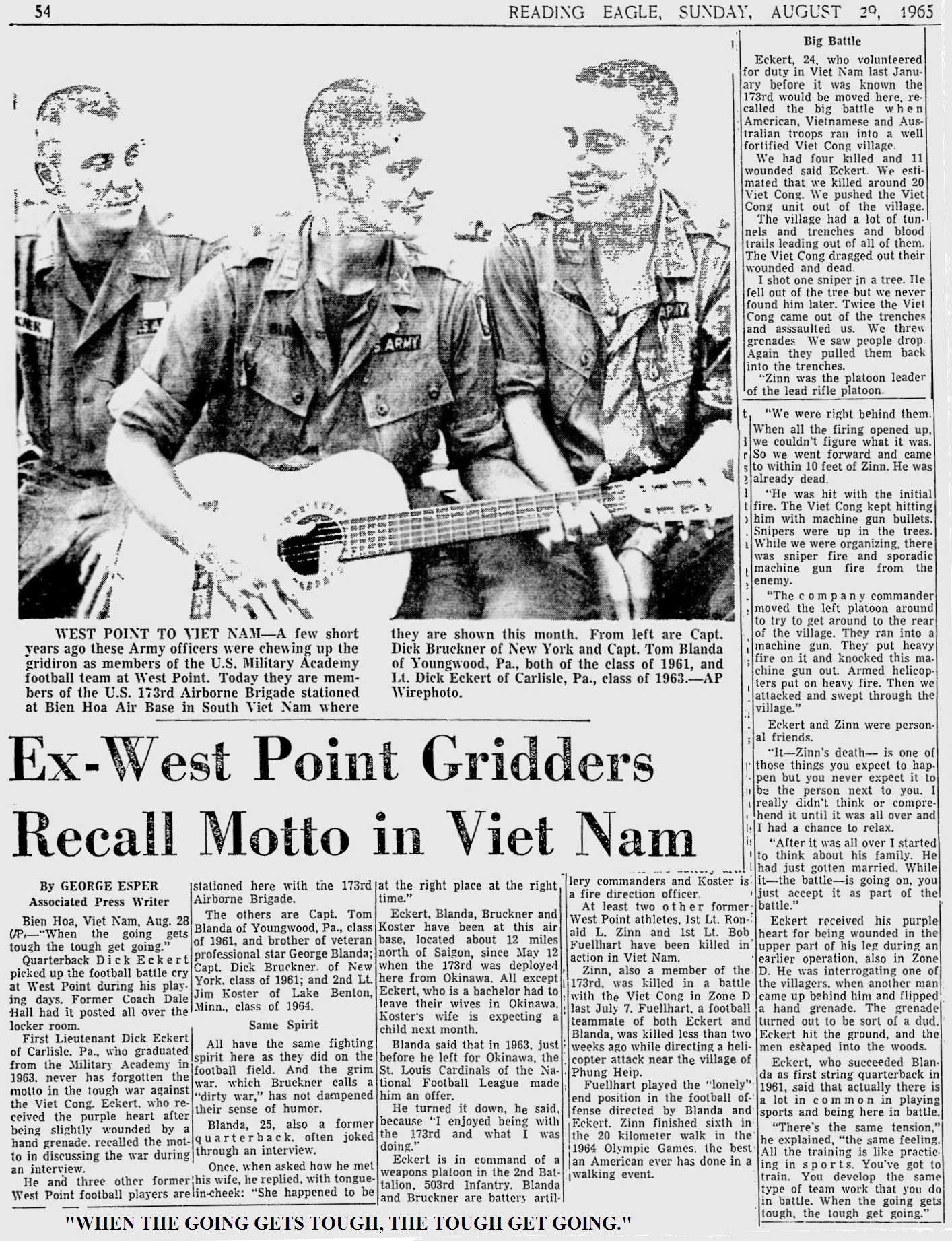
“We remember a dedicated soldier who worked night and day to master his trade in the jungles of War Zone D and to win the trust of his men, for whom he cared deeply. We remember a determined leader, who, on 7 July 1965, rushed to the aid of his wounded squad leader, only to succumb to enemy fire. In so doing, you became the first officer KIA in the 173rd Airborne Brigade and one of the first in Viet Nam.”
Inspired by Ron’s selfless example, Bravo’s battered heroes turned the tide of battle. In the process, they garnered a Medal of Honor, two Distinguished Service Crosses, four Silver Stars, 14 Commendation Medals, and more than 100 Purple Hearts. Ron’s valor was emulated over and over again.
In addition to the military, the athletic community also commemorates Ron. Each year in Asbury Park, NJ, an event is held for all wouldbe champion walkers, and I even participated in the CPT Ronald Zinn Memorial Races one year. I didn’t win any prizes, but I still treasure the Tshirt I received bearing his name.
There are many of us still left on this earth who never will forget Ron as a brave soldier, a worldclass athlete, and a real class guy. His name is not only engraved on the Viet Nam Memorial Wall in Washington, DC, and his tombstone in the West Point Cemetery, it is also etched in the hearts of all of us who were fortunate enough to have known him.
Sleep well, old friend, you are not forgotten. Pax vobiscum.
“At the 1964 Olympic Trials for 50 kilometers, Chris McCarthy was walking in a pack that included Army Lieutenant Ron Zinn (later killed in Vietnam) and Don DeNoon of the Southern California Striders, who holds the national indoor mile record. At one point McCarthy attempted a burst, and an official following on a bicycle shouted, “McCarthy, that’s one warning on you!” Zinn and the others complained to the official that according to the rules he couldn’t judge from a moving vehicle. The judge pedaled ahead, sulking, and descended from his bicycle. When the group passed him, McCarthy was back walking cautiously in the middle of the pack. “DeNoon,” shouted the judge, “that’s one warning on you!” DeNoon eventually received a second caution and had to leave the race. McCarthy went on to win…Many race walkers are former distance runners who started walking either out of curiosity or necessity. Ron Zinn switched from cross-country to walking following an arch injury….At the National AAU championships in St. Louis in 1963 no walking judges appeared. Ron Zinn covered two miles in 14:03.6, erasing Henry Laskau’s championship record by almost 20 seconds. Chris McCarthy, who was then putting out a magazine for race walkers, published a picture of Zinn finishing with both feet off the ground. “Ron Zinn soars to victory,” said the caption.”
September 21, 1964 A Roundup Of The Sports Information Of The Week Chris McCarthy of Chicago, Bruce MacDonald of New York and Mike Brodie of Pleasant Hill, Calif. heeled-and-toed their way on to the U.S. Olympic Walking Team in the 50-kilometer trials in Seattle and joined Ron Zinn of West Point, N.Y.. Lieut. Ron Laird of Pomona. Calif. and Jack Mortland of Columbus. Ohio, who had earlier qualified for the squad in the 20-kilometer walk.
I have just learned of the death in action in Vietnam of a fine friend, Lieut. Ron Zinn. I am sure those who were with the U.S. Olympic team in Tokyo, where Ron finished sixth in the 20-kilo walk, must be saddened by this news. In its way, Ron’s performance in this race was as important to American race walking as was Billy Mills’s brilliant 10,000-meter victory to distance running. I roomed with Ron both in Tokyo and on a trip to Moscow in 1961. He was a fine athlete and sportsman, a gentleman and as fierce a competitor as I have ever met. JACK MORTLAND
Located at Wall Municipal Complex, the 2010 Captain Ronald Zinn 5K Run and 10K Walk was directed by Shore AC’s 1956 Olympic Racewalker Elliott Denman. The event is meant to celebrate the life of the late great Olympian Ronald Zinn, an Olympic racewalker, West Point Alum, and a Captain in Vietnam, Ronald Zinn was killed in war leaving behind a true legacy. Before the race began, Elliott spoke to the runners at the start of the race about the life of Captain Ronald Zinn.
Soldier, Olympian
by Dave Phillips 62 Sports Historian
How could the remarkable race walker Ron Zinn not be included in the Army track and field media guide? He was a member of two US Olympic teams and I remember well watching the beginning of one of his Olympic races on television (black and white). He was in the lead as the walkers left the stadium. I was so proud of him and West Point I practically levitated. Tom Feeley ’62
He earned Class Numerials in Track & Field, Cross Country and Wrestling, while earing Army A’s in Track & Field and Cross Country
He was a fine young officer, revered by his men, and was killed in RVN. Link to site dedicated to Ron —
Given to the outstanding U.S. race walker to commemorate the achievements of Capt. Ron Zinn, who lost his life in combat during the Vietnam War. A race walker, he was a member of the U.S. Olympic Team in the 1964 Summer Games at Tokyo and his sixth place finish in the 20 km event was considered outstanding for American walkers at that time.
BENNING 1962; ONE MILE RUN. “Gun goes off and everyone bolts from the starting line. Wait! Ron is WALKING! As the runners quickly leave him in the dust, the Cadre goes NUTS! SCREAMING, “RUN! RUN!” and a few other choice remarks. But NO; Ron keeps walking, pumping his elbows. At the 3/4 mile mark, Ron starts passing stragglers by the dozens. It’s now obvious Ron will be well under the “TIME TO BEAT” 6 MINUTE MILE and everyone on the sidelines [the next group of runners AND the Cadre] starts clapping and cheering for Ron as he walks across the finish line. Glad I was there – thanks, guys. Way to go, Ron. Tom Feeley ’62
May 2013 VFW Article provided by Steve Sperman
–
BIRTH
Peoria, Peoria County, Illinois, USA
DEATH
7 Jul 1965 (aged 26)
Ho Chi Minh (Saigon), Hồ Chí Minh Municipality, Vietnam
From a West Point comrade and fellow member of the track team who remembers Ron as a competitive walker who represented our country on the 1960 Olympic Team. With deep gratitude we are remembering you and all the others who served and died in times of war so that we may enjoy the Freedom and Liberties that make the United States of America great.
Clark T. Ballard, Jr., M.D. Colonel, U S Army (Ret) 66 Leschi Drive, Steilacoom, WA 98388-1514 n6qg@yahoo.com
10 Apr 2002
Dear Family and Friends of Captain Ronald Lloyd Zinn,
I am very sorry about your loss. It must have been a terrible experience that he went through, and I am sorry. I recently visited the Vietnam Memorial on my class trip to Washington D.C. He must have been a very brave man. It was very honorable of him to step up and be part of the war. He showed great nationalism, and I want to thank him for fighting the war for us. I am deeply sorry for your loss.
It was my honor to serve in the U.S. Army with Lt. Ron Zinn in 1963-1964 in Ft Devens, Mass. As a secretary to the unit commander, I often was able to talk with him about his fantastic ability to walk fast. He often would walk faster than I was able to run during daily workouts. He often walked from Ft Devens to Boston and back just for practice. He was a very professional and dedicated person.
Thank you to the creators of this memorial. Ron Zinn was and forever will be my brother. It is nearing 42 years since his death. His parents are both gone, but his sister and I remember him often with love, affection, and admiration. He was very special, as are all those names on the Wall. In 2006, there was a nice ceremony in Orland Park. It was to recognize her fallen heroes, of which Ron was one.
On 07-08 July 1965 ten US soldiers from the 173rd Abn Bde were killed during a sweep in the area known as War Zone D, north of the Dong Nai River and northwest of Bien Hoa. They were
E Troop, 17th Cavalry
PFC Johnie E. Rice, Freeburn, KY
B Co, 1st Bn, 503rd Infantry
SGT McArthur Johnson, Wilmington, NC
SGT Durward F. Ray, Columbus, GA
PVT Edward J. Almeida, New Bedford, MA
C Co, 1st Bn, 503rd Infantry
PVT John D. Shaw, Summit, MS
B Co, 2nd Bn, 503rd Infantry
CPT Ronald L. Zinn, Orland Park, IL
SSG David L. Howard, Fountain Inn, SC
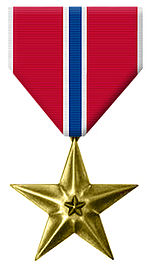
PVT Rudolph V. Hernandez, San Antonio, TX (Bronze Star “V”)
This Photo depicts what it takes to achieve the Impossible. I would have liked him to continue Wrestling. He earned a 62 for his Gray Jacket. A Teammate “Ron was one of the most determined individuals you could ever meet,” Jerry Zinn said of his older brother. “If there was a challenge, he was up to it.”
15045 West Ave Orland Park Il 60462
Eagle Scout Tim Klotz, of Orland Park Boy Scout Troop 383, created the memorial garden to forever remember Captain Ronald L. Zinn.
Biography prepared for the sign at the Ronald L. Zinn Memorial Garden and Captain Zinn’s induction into the Carl Sandburg High School Athletic Hall of Fame.
At Sandburg, Zinn was on the honor roll and excelled in sports. In 1957, he was named the school’s most valuable athlete. He would eventually become the first US Olympian to graduate from Carl Sandburg High School.
Ron married his wife, Barbara, shortly before being deployed to Vietnam in May, 1965.
“As a new platoon leader, Ron devoted himself vigorously to learn the infantry skills necessary for success in combat. He deeply cared for his subordinate which was the basis for his heroic rescue efforts to aid his wounded squad leader and led to his being killed in action.”
Lieutenant Colonel Roy S. Lombardo, Jr.
After his death, the company named their camp after their beloved friend calling it Camp Zinn for the duration of the war. Zinn was posthumously promoted to the rank of captain.
“There will always be things in life that we do not want to do; but we will do them, if we are to succeed.” US Army Captain Ronald L. Zinn
John added more to Stu’s Nomination. The stats were compiled by Dave.
Note: A Classmate was asked if he knew how Stu was nominated for the Hall of Fame. His reply –
“The nominations for the Hall of Fame are active/valid for two years. As a result on August 1 every other year I sent in a new nomination. I don’t know how he was accepted as a member of the 2020 cohort for the HOF, Phil, but like to think that the committee finally realized Stu was a special guy who deserved induction for his great accomplishments on the basketball court plus a sterling career and life after graduation.”
12454 Dover Court
Saratoga, CA 95070
January 28, 2013
Mr. Bob Beretta, Executive Athletic Director
ATTN: HOF Nomination
U.S. Military Academy
639 Howard Road
West Point, NY 10996
Dear Bob,
A classmate has compiled the enclosed information regarding the Hall of Fame nomination for Stewart “Stu” Sherard and I am forwarding it to you in case it will be of use to the Committee.
Sincerely,
John E. Easterbrook
STEWART “STU” SHERARD
When a member of the Class of ’62 asked John Havilecek if he remembered Stu from the 1962 East-West All-Star game, he replied, “Oh, yes!” The media guide does not mention this all-star game but members of the Class of 1962 watched the game on TV in the Weapons Room or First Class Club.
Five Army basketball players who graduated after 1962 have been inducted into the Army Sports Hall of Fame: Kevin Houston, Randy Cozzens, Gary Winton, Mike Silliman, and Bill Schutsky All were members of the “1,000 Career Points Club”. If any other Army player is to be inducted, he will surely also be a member of that club. Although it was a much slower game, John Roosma ’26 established his record over 5 years.
If one eliminates from consideration freshman year statistics, since Stu played in an era when freshmen were not eligible to play varsity sports, and if all three-point goals scored by 1,000-point scorers are counted as two points, since the three-point goal was introduced to college basketball long after Stu graduated, our classmate ranks among 1,000-point scorers not already in the HOF as follows:
Career total points: second
Single season total points: sixth
Number of 30+ points in a game: 13th [The Army media guide does not credit Stu with even one 30-point game but we found two with little effort. Six of those ahead of Stu in this category played during the three-point goal era but we had no way to count their three pointers as only two points.]
Career points per game average: Second
Single season points per game average: Second
Career field goals made: Fourth
Single season field goals made: Sixth
Career free throws made: Second
Single season free throws made: Seventh
Career free throw percentage: Third
Single season free throw percentage: Fifth
When we, members of the Can Do Class, think basketball, we think Stew Sherard. After all these years, his name — the media guide calls him Stu, but Howitzer confirms the correctness of Stew — is found all over the Army record book as follows:
*Named All-American (honorable mention) by the Converse Yearkbook.
*One of 24 members of the 1,000-point club. (His entry contains an error in the calculation of his free-throw percentage.)
*Number 10 all-time career scoring leader and was number one upon graduation. Only one player with just three years of varsity eligibility, Mike Silliman, scored more points. Only three players finished their careers with more average points per game than Stew (19.4). (Another error appears in his career ppg average.)
*Number 7 all-time in points per game and third upon graduation.
*Had seventh best season points per game average, 22.7, second upon graduation.
*One of only three Army basketball players who led their teams in scoring each year of eligibility.
*Number six in career free throws made, number one upon graduation.
*Number five in career free throw percentage, number one upon graduation.
*Had sixth best season free throw percentage, number one upon graduation.
*One of only four Army basketball players who led their teams in free throw percentage each year of eligibility. (Another error appears in this chart.)
*Stew making 15 of 15 free throws against Rider College is surpassed only by 16 for 16 by Kevin Houston.
That comes to five Academy records held at graduation.
The sleepy-eyed, rail-thin, hunched shouldered jump-shooting Missourian thrilled us for three years on Wednesday afternoons (I went to almost every game) and Saturdays.
He was team captain First Class year, never scored 30 points in a game (according to the media guide) but the 1960 Howtizer credits him with a 34-point performance against Massachusetts.
Stu was the Most Valuable Player of the 1962 East-West All-Star game, draining long jumpers over all those future pros.
When asked several years ago by Tom Culver if he remembered Stew from that game, John Havilecek replied, “Oh, yes!” Oddly, the media guide does not mention this all-star game but we who watched the game on TV in the Weapons Room (or maybe it was the First Class Club) will not forget it. My personal recollection includes a brief spell where Stew was having difficulty guarding Nate Archibald, but that in no way tarnishes the luster of this roundball hero.
The 1961-62 basketball team was 10-11 but we will long remember how we beat Navy in the Field House. Stew Sherard had fouled out and the straw that stirred the drink for the Army offense, Al DeJardin, had also been disqualified. No matter. One of the five players we had on the floor was Bob Loupe — can anyone name the others? — and his famous scoop shot in the last few seconds was all we needed. Absolutely unforgettable. Navy did have one more chance, but I think they threw the ball away.
The list of basketball lettermen includes Larry Crane (1960 and 1962 — we would like Larry to tell us about 1961), Al DeJardin (1960 and 1962 — same question), Bob Loupe (1962), and Stew (1960, 1961, and 1962).
Another 2 Sport Man
In scrutinizing the on-line baseball archives, I found no mention of any member of the USMA Class of 1962 or any of the three teams to which that Class contributed other than the list of lettermen: Crane, LT; DeJardin, AR; Eccleston, TF; Fox, RM; Lilley, RJ; McRae, WD; Schmidt, JL
(Photo from Col Red Reeder’s Book – Pointers on Athletes)
Al, if memory serves, played a steady shortstop for Army and earned at least one major A for his service.
Plebe year: received class numerals for corps squad plebe teams in baseball and basketball
Received 6 “Major A” letters during the 3 years of eligibility as shown below:
Yearling year: received a “Major A” in baseball and basketball
Cow year: received a “Major A” in baseball and basketball
Firstie year: received a “Major A” in baseball and basketball (received a gold star on the “A” for beating Navy in basketball)
In April 1963 played in the Pan American Games as a member of the USA Baseball Team. The games were played in Sao Paulo, Brazil. The other teams were Cuba, Mexico, Venezuela and Brazil. Was the starting shortstop and played every inning of all games. We played Cuba in the gold medal game and lost 3-1. We received the “silver medal). The Cuban team had a number of players that had played in our “Major Leagues” but were kept in Cuba once Castro became the leader of Cuba.
Baseball highlights: Playing in Ebbetts Field (Home of the Brooklyn Dodgers) in 1956 and 1957 for the Catholic High School Championship. Won in 1957. Winning the Eastern league title Yearling year, Being selected Captain of the baseball team after the 1961 season, Being selected All Eastern League 2nd team SS Firstie year. Playing in the 1963 Pan American Games for the USA baseball team and receiving the silver medal for a second place finish..
Basketball highlights: Playing against Ohio State @ Ohio State when they were rated #1 in the country, Playing UCLA, West Virginia and U of Washington in a Christmas tournament in Los Angeles, Beating Boston College @ West Point, playing in Madison Square Garden in the NIT and last but certainly not least, the exciting victory over Navy Firstie year with Bob Loupe scoring the winning basket as time was running out.
In the eye of my mind, I can still see Bob Lilley staggering under the longest, highest fly ball ever hit at Doubleday Field, post Babe Ruth. The ball was struck by Roger Maris during the exhibition game against the Yankees. Bob was holding down right field and had moved back towards the Library Tennis Courts fence out of respect for Maris. Now, if this happened in 1962, Maris was coming off the year he hit 61 home runs. If it happened in 1961, it was just after the major league season had begun, the season in which Maris would break the record. In fact, if it was 1961, it would have happened about
the time Maris began his run at the record, because he did not hit his first homer until game 9 of the season. (He hit 61 homers in his last 154 games of the season, just as Ruth had hit 60 in his 154 games.)
The overflow crowd had leeched onto the playing field and more or less surrounded Bob as he followed the arc of the ball, gauging its trajectory with geometric logic and experience gained from hundreds of games of baseball. I heard someone yell, “Go back further!” Bob heeded this advice, camped under the high-flying missile and actually got his glove on it but could not hold it. Maris strolled into third base. The ball struck the ground perhaps 20 feet from the fence, a monstrous shot.
In scrutinizing the on-line baseball archives,I found no mention of any member of the USMA Class of 1962 or any of the three teams to which that Class contributed other than the list of lettermen:
Tom on the Mound – Doubleday Field against Navy 1961. It is probably “Gordon Dopsloff” Class of 1963 on First. (Photo A Triolo Sports ILLustrated)
In scrutinizing the on-line baseball archives,I found no mention of any member of the USMA Class of 1962 or any of the three teams to which that Class contributed other than the list of lettermen:
As for Tom’s legendary status, details are best obtained from him.
In scrutinizing the on-line baseball archives,I found no mention of any member of the USMA Class of 1962 or any of the three teams to which that Class contributed other than the list of lettermen:
Cracked a loud bat on the Diamond. Basketball 4, 3, 2 & 1 (Army A 3, 2 & 1); Baseball 4, 3 & 2 (Army A 3)
The list of basketball lettermen includes Larry Crane (1960 and 1962 — we would like Larry to tell us about 1961), Al DeJardin (1960 and 1962 — same question), Bob Loupe (1962), and Stu Sherard (1960, 1961, and 1962).
The media guide includes a rather odd one of Larry Crane found in”’62 Can Do” in the basketball section on the 1962 Class page.
In scrutinizing the on-line baseball archives, I found no mention of any member of the USMA Class of 1962 or any of the three teams to which that Class contributed other than the list of lettermen:
Crane, LT
DeJardin, AR
Eccleston, TF
Fox, RM
Lilley, RJ
McRae, WD
Schmidt, JL
Larry Crane lives in Newagen, ME, with his wife, Jan. Both are playwrights and have published several works, some of which have won awards. by Dave Phillips – ’62
We have nominated Ron for the Army Sports Hall of Fame.
’62’s Only All-Time Record Holder
In his final year, Ron Chisholm held opponents to 2.18 goals per game, an Academy record that has stood for 46 years. This was the last Academy individual or team record belonging to the Class of 1962.
Ron had a sensational career but this writer is only now realizing it.
His 50 career wins in goal is third all-time and put him first by 13 wins at graduation.
His 1639 career saves is 11th all-time but was first by 41 saves at graduation.
His career goals-against average of 2.53 is 4th all-time but was first by about a full goal at graduation.
His career save percentage of .905 is fifth all-time but was tops at graduation.
His ten career shutouts is second all-time but was first by six shutouts at graduation.
In addition to his all-time record for goals-against per game in First Class year (now 2nd), his Cow year mark is still 9th best and his Yearling year mark is 13th. Ron stood first, second, and third in this category at graduation!
His save percentage in his last year puts him second all-time but he was first at graduation.
His five shutouts First Class year puts him second but first at graduation.
He received the Henry “Hal” Beukema Award as the most valuable player on the hockey team in 1962.
By my count, then, Ron Chisholm held ten all-time Army hockey records when we graduated. That includes most wins in a season -17 (twice – 60-61 and 61-62). Ron also held the most saves in a season at around 605 (exact number not available). Was it just me who did not know this?
The hockey media guide is a good one and mining this Ron Chisholm data from it resulted in the discovery of a very interesting sub-story, one that might support a mini-series.
The goalie for the 1962-63 season was Jack Shephard,Class of 1963. The year after that, the goalie was Neil Mieras, Class of 1964. So each of those guys got to start in goal for one year. Well, Shephard eclipsed Ron in three of the all-time goalie records and Mieras tied him for another! These three goalies put together a five-year run of excellence unequalled in the annals of Army hockey history.
So visualize Shepard and Mieras, top goalies, riding the bench for two full years waiting for the man ahead to graduate. There is a story there and I hope someone will come forward with it.
ARMY HOCKEY AND THE CAN DO CLASS OF 1962 (DRAFT)
Army has fielded a hockey team since 1904. That is 118 years of history, 2,484 games, with a winning percentage of .516 (incorrectly calculated as .514 in the Record Book).
Sixteen men, three of them with surname Riley, have coached these teams. The Rileys account for 71 of these seasons. Jack, who coached the ’62 hockey players, was at the helm for 36 years, won 543 games, and led the US hockey team to an Olympic Gold Medal in 1960.
Army’s season records during our classmates’ three varsity seasons were 16-5-1,17-8, and 17-6-1 with victories over RMC each year. That final season included victories over Boston University and Boston College.
A review of the individual contributions by ’62 starts with our varsity lettermen. In alphabetical order:
Fred Avis did not graduate with ’62 but received a letter from the 1959-60 season: 11 goals and 14 assists. Presumably, Fred continued his college hockey career elsewhere but nothing comes up on the internet.
The six additional athletes earned letters all three of their varsity years.
Marty Bilafer: 24 goals and 28 assists.
Russ Broshous: 20 goals and 43 assists.
Ron Chisholm: more on this champion goalie will follow.
Paul Dobbins: 16 goals and 61 assists.
Dave Harkins: 30 goals and 34 assists, including one Hat Trick.
Albie Symes: 35 goals and 43 assists. His four career Hat Tricks places him 22d all time. He also had a four goal game and a five goal game. [these two performances are likely included in the four Hat Tricks]
Army hockey fans were treated to over a decade of phenomenal goal tending: Larry Palmer ’59 (three years), our Ron Chisholm (three years), Jack Shepard ’63 (one year), Neil Mieras ’64 (one year), Dick Newell ’67 (three years). Palmer, Chisholm, Shepard, and Mieras all were recipients of the Hal Beukema Award presented annually to the most outstanding member of the Army hockey team. Their names appear frequently in the Record Book.
Ron Chisholm held eight Academy goal tending records in three years of eligibility upon his graduation:
His 50 career wins broke the previous record by 13 wins. This mark was eclipsed twice, first in 1977 after 15 years, by men with four varsity years. He remains third all time in this category.
His 1639 career saves broke the previous record by 41 saves. Ron is no longer in the top ten all time in this category but his record stood for perhaps 15 years and the top 10 goalies in this category all played for four years.
Ron broke the record for career goals against average by almost a full goal: 2.53. The record was broken the next year by the aforementioned Shepard and again a year later by Mieras. Ron remains fifth all time in this category.
Ron is ninth all time in career save percentage but was first upon graduation. Shepard ’63 is second all time in this category.
The Record Book is in error when Ron appears twice in the list of career shutouts leaders, once with 10 and again with eight. Eight is the correct number, a number that exceeds the previous record holder by three. This record stood for 36 years and Ron stands fifth all time in this category behind goalies with four years of eligibility.
The list of record holders in the category of single season shutouts, Ron held the record with five by himself for two years until Mieras tied him. Ron’s mark of five was unbroken for 34 years.
In single season goals against average, Ron was first at graduation with 2.18 and remains third all time. His record stood for 46 years.
In single season save percentage, Ron’s mark of .919 was first all time upon his graduation. Shepard eclipsed this mark the next year by .001 and 45 years passed before any goalie surpassed the .919/.920 records.
All information contained in this article was taken from the 2021-22 Army Hockey Record Book.
He wore 4 Stars, Commanded the Joint Special Operations Command, an Elite Organization of Delta Force, Navy Seals, Army Rangers, and Special Forces, that for years the Pentagon refused to acknowledge its existence.
General Downing was born May 10, 1940, in Peoria, Illinois and graduated from Spalding High School.
He received an appointment to the United States Military Academy at West Point. He graduated from West Point in June 1962 with a Bachelor of Science degree. He later earned a Master of Business Administration degree from Tulane University.
He served in Vietnam from 1964-67.
In 1984, he was chosen to form and lead the 75th Ranger Regiment; Downing is considered to be the father of the modern Rangers.
In 1989, he was appointed commanding general of Joint Special Operations.
During Operation Desert Storm in 1991, Downing commanded 1,200 U.S. Special Forces that halted Iraq’s SCUD missile attacks and eased missile threats in the war zone.
In 1993, he was appointed to the rank of four-star general.
In 1996, he retired as the head of the U.S. Special Operations Command, where he was in charge of the special operations forces of each military service. That same year he led a task force to investigate the terrorist attack on part of a housing complex in the city of Khobar, Saudi Arabia, where foreign military, including U.S. Air Force personnel, were housed.
In 1999, he became a member of the National Commission on Terrorism.
In 2001, Downing came out of retirement to coordinate the national campaign “to detect, disrupt and destroy global terrorist organizations and those who support them.” He held the title of National Director and Deputy National Security Advisor for combating terrorism.[3] He reported to then-National Security Advisor Condoleezza Rice and Homeland Security director Tom Ridge.
From 2003 until his death he held the Distinguished Chair at the Combating Terrorism Center at West Point.
Downing was formerly a director of Metal Storm and a senior executive with Science Applications International Corporation (SAIC). He also performed various speaking engagements.
Besides working for the US government in his retiree years, he also worked for NBC News as a military analyst and performed various speaking engagements.
In 2006, he received the United States Military Academy’s 2006 Distinguished Graduate Award.
July 18, 2007 General Downing died at the age of 67 at Proctor Hospital, of meningitis. He is buried in the West Point Cemetery, West Point, New York on September 27, 2007. His grave is just north of the main cemetery building.
On September 24, 2008, the Metropolitan Authority of Peoria voted unanimously to change the name of the Greater Peoria Regional Airport to the “General Wayne A. Downing Peoria International Airport”.
Military Honors Include:
Defense Distinguished Service Medal
Army Distinguished Service Medal
Silver Star Medal
Defense Superior Service Medal
Legion of Merit
Distinguished Flying Cross
Soldier’s Medal
Bronze Star Medal
Purple Heart
Defense Meritorious Service Medal
Meritorious Service Medal
Air Medal
Army Commendation Medal
National Defense Service Medal
Armed Forces Expeditionary Medal
Vietnam Service Medal
Southwest Asia Service Medal
Army Service Ribbon
Army Overseas Service Ribbon
Vietnam Gallantry Cross with 3 Bronze Stars
Vietnam Campaign Medal
Kuwait Liberation Medal (Saudi Arabia)
Army Presidential Unit Citation
Joint Meritorious Unit Award
Army Meritorious Unit Commendation
Vietnam Gallantry Cross Unit Citation
Combat Infantryman Badge
Master Parachutist Badge
Pathfinder Badge
Jumpmaster Military Free Fall Parachute Badge
Ranger Tab
Office of Secretary of Defense Identification Badge
Recipient of the 2006 Distinguished Graduate Award from the U.S. Military Academy
Wayne’s Assignments are at – – -Wayne A. Downing – Wikipedia
PEORIA, ILLINIOIS
International Airport
Mike Grebe and Wayne headed to West Point – July 1958
Cadet Days
Wayne was not always serious
Harry and Wayne against our Citroen on a Paris Street
In July of 1960 Wayne, Harry and Phil spent 30 days with the 187 Airborne Battle Group at Fort Bragg. Can not remember who had the idea, but we went to Mcguire AFB in August to catch a ride to Europe. There were several stops going over, one of which was in Ireland where we had a glass of Irish Coffee at 4 in the morning. Harry and Wayne discussed the failure of the French during World War I – note it was to lay a seed in Harry’s mind which he was to remember.
We finally arrived in Paris and went out that night – somehow we got seperated. The next morning when Wayne and I awoke we found each other we could not find Harry. He arrived at the hotel mid-morning with a bandage and a bump on his head.
Harry had remembered Wayne’s history lesson and finding himself in a Communist Quarter bar had tried to rally the French Cowards to follow him to the Western Front in an effort to save Paris from the Attacking Hun.
Harry had to discuss his actions with the Gendarmerie, but first they administered a crack to the head. Harry was passed on to the Military Police resulting in his having to report to Versailles Hqs each day. Wayne and I waited over looking the Gardens at the Versailles Palace.
We were asked to leave Paris and not come back, we are on the way to climb the Matterhorn.
The weather was bad so we could not climb – we climbed a ridge south of town.
Harry and his Guide
Wayne, Harry and Harry’s Guide, as we rest. The corrective action taken by the Gendarmerie can be seen on the back of Harry’s head.
The walk with the sheer climb in the haze – Harry kept throwing rocks over the side – but we could never hear them hit. Must have been the fog that drowned out the noise.
The next day we look at the Matterhorn as we ready to leave Zermatt
Two of our Classmates near the end of their Military Careers – One Army Chief of Staff, the other Commander of The Joint Special Operations Command.
Surrounded by Classmates and Friends & Family — Wayne is Escorted to his Final Resting Place.
The material below this point is a site a work area.
The '54 Crest
28th Infantry Regiment Black Lion Award is intended to go to the person on his team "who best exemplifies the character of Don Holleder: leadership, courage, devotion to duty, self-sacrifice, and - above all -
an unselfish concern for the team ahead of himself."
"The Army moves as a team, eats as a team, and fights as a team."
The '55 Crest
Don Holleder Remember - The Soldiers you will lead Always Come First
Vann and Holleder
9 Army A's
The '56 Crest
The '57 Crest
Can Do
Gen Van Fleet addressing the Corps prior to the Navy Game
Constructed under supervision of Jay Gould "54 and the Ord Dept from a German Rocket Gun captured at Kasserine Pass. First used in the Duke Game.
COL "Red" Reeder granted the Cheerleaders Corps Squad status to obtain financial support for their spirit-inducing initiatives.
Bob Mischak - - It should be pointed out that Bob was an All American selection, but is not recognized by the Academy as such because of the organization which selected him.
Ubel scores 3 Times against Navy - Vann's facking results in Peter getting tackled - #10 on the ground behind Ubel
Vann to Sisson
Army's B Squad
Vann to Mischak.
Uebel Intercepts
Cody to Don Holleder
Lasley
Frank Hicks
Burd
Bill Purdue
Cody
Meador Mgr
Ron Melnick
Ralph Chesnauskas
Pat Uebel
Tommy Bell
Sisson headed for another score
Peter Vann stuffs the ball in Jerry's gut
Leroy Lunn & Jerry Lodge
Uebel after taking the handoff from Hagan
Attaya - Army's Fullback
Sisson - one of 3 Great Ends
Bob Mischak
Ralph Chesnauskas
Bob Farris
Vann moving out of the pocket
Peter Vann 10, Billy Chance 38, Herdman 68
Ken Kramer
Joe Lapchick
Kirk Cockrell
Lodge going down tosses to Paul Schweikert for score.
Dick Zeigler
Bob FarrisPlayed the 2d half of the Navy Game blind in one eye.
Pat Uebel
Tommy Bell
Peter Vann
Freddie Attaya
Mike Zeigler
Jerry Lodge wearing #67, playing fullback.
Johnny Wing
Lowell Sisson
Norm Stephen
Jack Krause
Dick Ziegler
Jerry Lodge
Leroy Lunn
Norm Stephen
Jerry Lodge
Corps of Cadets for Navy Game
Can Do
"The Army moves as a team, eats as a team, and fights as a team."
The '54 Crest
The '55 Crest
28th Infantry Regiment Black Lion Award is intended to go to the person on his team "who best exemplifies the character of Don Holleder: leadership, courage, devotion to duty, self-sacrifice, and - above all - an unselfish concern for the team ahead of himself."


 7/7/1965 Ronald L. Zinn












 Harry and Wayne against our Citroen on a Paris Street