aka Charley/Charlie
Class of 1969
Southern Lore has it that both Jackson and Lee called on Hill on their death bed with Lee saying
“Tell Hill he must come up”.
Continue reading
“We will fight an Army on a dare – we’ll follow Darby anywhere” – – 1st Ranger Battalion
Continue reading
Cadet of the Military Academy, Oct. 20, 1806, to Dec. 12, 1808, when he was graduated and promoted in the Army to First Lieut., Light Artillery, Dec. 12, 1808
Served: in garrison at Atlantic Posts, and on S. W. Frontier, 1808-1812; (Captain, Light Artillery, May 2, 1810) and in the War of 1812-1815, on the Niagara Frontier, in 1812, participating in the Attack on “Queenstown Heights”, U. C., Oct. 13, 1812, on Inspection
(Major, Staff – Asst. Inspector-General, Apr. 2, 1813) (Colonel, Staff – Inspector-General, July 13, 1813) duty, 1812-1814
In the campaign of 1814 on the Niagara Frontier, being engaged in the Defense of “Fort Erie”, U. C., Aug. 3-Sep. 17, 1814, including its Bombardment, Aug. 13-15, Repulse of the enemy’s (Colonel, 4th Rifles, Feb. 21, 1814) Assault, Aug. 15, and Sortie from it upon the British batteries and siege works, where he was Killed, Sep. 17, 1814: Aged 33.
p90 and where, in the language of the official dispatch, he “fully sustained the high military reputation which he had before so justly acquired.”

Two officers said to be Wood and Col.” James Gibson” are shown in a painting done in 1840 by E. C. Watmough “Repulsion of the British at Fort Erie, 15th August 1814”. At this battle Colonel Wood and Gibson were distinguished.
However, a recent description of the painting describes Lieutenant John Watmough, later brevetted for his “gallant and meritorious” conduct at Fort Erie as being one of the two pictured. [5]
Vol. I p74 18
(Born Vt.) (Ap’d Vt.)
Military History – Cadet of the Military Academy, Dec. 13, 1805, to Oct. 30, 1806, when he was graduated and promoted in the Army to Second Lieut., Corps of Engineers, Oct. 30, 1806.
p75 Served: at West Point, N. Y., 1807; as Asst. Engineer in the construction of the defenses of Charleston harbor, S. C., 1808-1810; (First Lieut., Corps of Engineers, Feb. 23, 1808) at West Point, N. Y., 1810-1811; and in the War of 1812-1815 with Great Britain, as
(Captain, Corps of Engineers, July 1, 1812)
Chief engineer, in the Campaign of 1812 in Michigan Territory, of the Army commanded by Major-General Hull, by whose Surrender of Detroit,1 Aug. 16, 1812, he was made a prisoner of war, being at the time too sick to attend to duty, and before being exchanged,
Died, Sep. 20, 1812, at Detroit, Mich.: Aged 24.
When Hull announced his determination to surrender, Captain Partridge broke his sword across his knee and threw the pieces at Hull’s feet.
http://en.wikipedia.org/wiki/Siege_of_Detroit
http://www.windsorpubliclibrary.com/digi/war1812/surrender.htm
http://archive.org/stream/hullssurrenderof02loss#page/n1/mode/2up
http://www.warof1812.ca/batdetroit.html
http://www.whatwouldthefoundersthink.com/the-surrender-of-detroit
http://history1800s.about.com/od/War-of-1812/ss/surrender-of-fort-detroit.htm
http://bill.ballpaul.net/iaph/main.php?g2_itemId=372
Captain 1957 Team
http://forwhattheygaveonsaturdayafternoon.com/wp-1958/150team
Numerals, and 3 Army A’s in Pistol. Ray was an All-American in each of of his three Corps Squad years, as well as set an Academy record. Ray won a National Individual Championship. He was a member of Sailing, Ski, and Skin Diving Clubs
David & Barbara McLaughlin
As Plebes Dave asked Lee Taylor “Will you teach me” – two years later when they placed winning certificates on General Stillwell’s desk, he said “Do not do that again”. They did it again and General Stilwell approved Judo as an Academy Club.
Swimming 4 Years Numerals & 2 Monograms, Judo Club, Water Polo Club
by “Dave McLaughlin”
When “Lee Taylor” & I first started rooming together I saw his Judo Gi and asked him about it and then asked if he would teach me. We proceeded to workout in our own time and slowly gathered other cadets from our own class and other classes. When I wasn’t swimming or playing water polo we were practicing Judo. We had formed quite a good club but it was not “Official”. After several petitions the Comm. finally authorized us as a full competitive sports club in Sept 1961, with the proviso that we did not enter any competition. The Supt. and the Comm. figures that we were a new club without any experience and did not want us to make the Academy look bad.

Jerry Hagan hands off to Freddie Attaya opening drive against Duke, October 17, 1953.


Joseph W. Stilwell, a member of the Class of 1904, as a cadet captained the cross country team, and ran track. In 1904 he competed in the NCAA National Championships in the 440, 880, and mile races. He was also a quarterback on the football team and was instrumental in a key Army game. Against the great Chicago University football team, with the score tied 6 – 6, Stilwell was back to receive a punt. Seeing the immortal Walter Eckersall, charging down upon him, Stilwell made a split second decision to hold, deliberately taking a crushing hit. The Chicagoan, expecting a run, had interfered resulting in a 25-yard penalty. With only minutes to play Army kicked a field goal resulting in one of the most stunning upsets in gridiron history.
In 1903 he introduced basketball at West Point and coached teams as a cadet and later as an officer. He was inducted into the Army Sports Hall of Fame in 2010 for his accomplishments.
Stilwell’s early career took him to the Philippines with the 12th Infantry and back to West Point as an instructor in French, Spanish, and History. In World War I he was the G-2 of the U.S. IV Corps and helped plan the St. Mihiel offensive. Following the War and desiring a challenging assignment, he became the Army’s first Chinese language student. In 1920 he was assigned to Peking for three years. In 1926 he returned to China to serve in the U.S. 15th Infantry in Tientsin. Following assignments as Chief of the Tactics Section at Fort Benning and with the reserve component in San Diego, he was selected to be the Military Attache’ to China and Siam in 1935.
It was when he was Chief of the Tactics Section that he acquired the nickname of “Vinegar Joe.” One day he was observing a reconnaissance problem in the field and one young officer was trying to bluff his way through his report. Realizing that behavior in combat could result in casualties, Stilwell provided a “significant emotional event” to the class so they would know never to do that in combat. The next morning a drawing of a vinegar jug with a caricature of Stilwell imposed on it appeared on the bulletin board. Stilwell liked it so much he got permission from the artist to reproduce it, and, never one to take himself very seriously, sent it to all his friends. From then on he was “Vinegar Joe”.
Promoted to brigadier general in 1939, he was assigned to the 2nd Infantry Division and participated in the large unit maneuvers in the southeast, earning the reputation as one of the best large unit commanders in the Army. In 1940, he activated and trained the 7th Division at Fort Ord, California. The outbreak of hostilities with Japan found him commanding III Corps and responsible for defending a large section of the California coast.
In late December 1941, he was called to Washington to plan and command the Allied invasion of North Africa. However, when it became obvious that such an invasion could not be mounted quickly, and the need arose to keep China in the war against Japan and tie down the 25 Japanese divisions in China, he was selected by Secretary of War Stimson and General George C. Marshall to go to China. He accepted his new assignment, knowing it would not involved command of U.S. combat forces, with a simple, “I’ll go where I’m sent.”
Arriving in China as the Japanese were invading Burma and threatening to cut off China’s last land or sea supply route, he ostensibly was given command of the Chinese forces sent to defend Burma. However, in reality Chiang Kai-shek was issuing orders directly to his commanders in Burma and that was one factor that led to defenses collapsing. As Chinese forces retreated to China and India, Stilwell, knowing that if he accepted air evacuation he would never have the respect of Chinese troops in the future, led a two-week forced march of 114 heterogeneous personnel to safety in India. His was the only party to reach safety without a loss of life. At a press conference on May 24, 1942, he spoke the famous words, “I claim we got a hell of a beating. We got run out of Burma and it is humiliating as hell. I think we ought to find out what caused it, go back and retake it.” His honesty was a breath of fresh air to the American public then badly in need of honesty and candor.
Commanding at the theater level, Stilwell’s priority for men and materiel was far below that of the European or Pacific Theaters. Nevertheless, he persevered and pursued his mission with assets he had available to open an alternate land supply route to China. He established a training camp at Ramgarh, India, and proceeded to train two divisions of Chinese troops. He ensured they were given good food, supplies, medical care, tactical instruction, and focused on improving the quality of leadership. In 1944, he led those two divisions, along with the 3,000-man U.S. force known as Merrill’s Marauders, on an offensive in northern Burma to capture the strategic town of Myitkyina and eventually reopen the Burma Road. Stilwell was constantly at the front lines, often carrying his own Thompson submachine gun or carbine and with no insignia of rank, encouraging and pushing his Chinese units, gradually giving them confidence they could defeat the Japanese. They soon became the most effective units in the Chinese Army and were the first Chinese units to defeat a first-class enemy in a sustained offensive. His leadership and methods used to achieve success with foreign troops serve as an example for today’s military.
In recognition of his front-line leadership, Stilwell was award the Combat Infantryman Badge. It was the award he held in highest esteem and he was the only general officer during World War II to receive it.
In 1991 the People’s Republic of China established the Stilwell Museum in Chongqing to honor his service to China
He later commanded Army Ground Forces, and X Army on Okinawa in the latter stages of the War. He was in command of Sixth Army at the Presidio of San Francisco when he died on active duty October 12, 1946.
Stilwell was known throughout the Army as the true soldiers’ general for his personal style of leadership that emphasized belief in the worth of the individual and concern for the welfare of the soldier. Through his initiative the first enlisted club in the Army was built at Fort Ord, and in Burma he established a camp for disabled Chinese soldiers to teach them a skill before they returned to civilian life. His leadership style led the soldiers under his command to give him the nickname of “Uncle Joe”.
Stilwell was a modest man of character and integrity whose life was never tainted by scandal. He was a decisive man of action with extraordinary drive, persistence, and energy, yet he was also a modest man who refused the trappings of office and would not put himself in the limelight. He had a keen insight into what was right and stuck by his positions.
He never wavered in his absolute dedication to his country, and wrote, “If a man can say he did not let his country down, and if he can live with himself, there is nothing more he can reasonable ask for.”
 Stilwell cleaning his Thompson during the Walkout

Stilwell at the Presidio of San Francisco, CA when he commanded 6th Army, August, 1946.

1944 General Stilwell back in Burma – If anyone questions if he was a front line General – Note the cloths line and laundry in the back ground.
 Brigadier General Stilwell during his assignment to the 2nd Division, Fort Sam Houston, TX – 1939.

Stilwell at a front line briefing, 1944.

Stilwell addressing wounded Chinese soldiers at the training facility
Stilwell set up to provide the soldiers with civilian skills once
they were discharged from the Army.

Stilwell at Myitkyina Airfield soon after the combined force of
Merrill’s Marauders and Chinese troops had captured it. On the right
is Colonel Hunter of the Marauders.

Cadet will not Lie, Cheat, Steal, or Tolerate Those Who Do

USMA at West Point

We have changed the wording of our Alma Mater to reflect the fact that our Women Graduates have also given their lives serving this Nation.
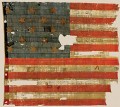
Our Flag in 1812

----- Class of 2012 Motto ------
"For More Than Ourselves"
Thank you Class of 2012 for the Honor of Marching with you The Class of 62 - Can Do

Remember - The Soldiers you will lead Always Come First

Motto -- Duty Honor Country

The Cadets of West Point

They played perhaps Army's Greatest Game. They were the Team that Gave The Most

Washington's Letter recommending the establishment of the Academy and the History of West Point

The Oaths We Take

West Point's Medal of Honor Recipients

Jefferson Hall - the Academy's new Library.

Douglas MacArthur

Vinegar Joe Stilwell cleaning his Thompson -The Walkout -Burma 1942

George Patton

The Monuments of West Point

Kosciuszko Monument - Guarding the Hudson ensuring there is no passage of British Man of War

Forts of the Hudson

So we'll sing our reminiscences of Benny Havens, Oh!

Academic Excellence

Colonel Thayer

West Point

Trophy Point

"L'Ecole Polytechnique Monument", or The French Monument by Cadets

Superintendent's Quarters viewed from Thayer Road

Superintendant was not Happy Black '57

Home of the Dean

Quarters 104

Cadet Chapel

Michie Stadium

Arvin Gym

Kimsey Athletic Center

Holleder Center

Washington Monument

United States Military Academy Band

Cadet Barracks

Rugby Complex

Great Chain

Plain looking toward Washington Hall

Battle Monument

Washington Hall with Cadet Chapel on rocks above

Hudson River

Captured Trophies

Battle Monument

West Point Cemetery

Plain

Cost to this Nation of Differing Views

Trophy Point -- Our Flag

Corps of Cadets Formed in Companies early 1960s

Sending the Army Team off to Beat Navy

Army Mule

Color Guard

Band Box Review Early 1950's in Central Area

Battalion Mass Early 50's

Flirtation Walk

Class of 2008 Class Crest & Motto "No Mission Too Great" Their Commencement "Here am I; Send me."
Thank you Class of 2008 and Please Thank the Men & Women --- the Soldiers you will lead --- The Class of 62.
Duty Honor Country
The '54 Crest

28th Infantry Regiment Black Lion Award is intended to go to the person on his team "who best exemplifies the character of Don Holleder: leadership, courage, devotion to duty, self-sacrifice, and - above all -
an unselfish concern for the team ahead of himself."
"The Army moves as a team, eats as a team, and fights as a team."

The '55 Crest

Don Holleder Remember - The Soldiers you will lead Always Come First

Vann and Holleder

9 Army A's

The '56 Crest

The '57 Crest

Can Do

Gen Van Fleet addressing the Corps prior to the Navy Game

Constructed under supervision of Jay Gould "54 and the Ord Dept from a German Rocket Gun captured at Kasserine Pass. First used in the Duke Game.

COL "Red" Reeder granted the Cheerleaders Corps Squad status to obtain financial support for their spirit-inducing initiatives.

Bob Mischak - - It should be pointed out that Bob was an All American selection, but is not recognized by the Academy as such because of the organization which selected him.

Ubel scores 3 Times against Navy - Vann's facking results in Peter getting tackled - #10 on the ground behind Ubel

Vann to Sisson

Army's B Squad

Vann to Mischak.

Uebel Intercepts

Cody to Don Holleder

Lasley

Frank Hicks

Burd

Bill Purdue

Cody

Meador Mgr

Ron Melnick

Ralph Chesnauskas

Pat Uebel

Tommy Bell

Sisson headed for another score

Peter Vann stuffs the ball in Jerry's gut

Leroy Lunn & Jerry Lodge

Uebel after taking the handoff from Hagan

Attaya - Army's Fullback

Sisson - one of 3 Great Ends
Bob Mischak

Ralph Chesnauskas

Bob Farris

Vann moving out of the pocket

Peter Vann 10, Billy Chance 38, Herdman 68

Ken Kramer

Joe Lapchick

Kirk Cockrell

Lodge going down tosses to Paul Schweikert for score.

Dick Zeigler

Bob FarrisPlayed the 2d half of the Navy Game blind in one eye.
Pat Uebel
Tommy Bell

Peter Vann

Freddie Attaya

Mike Zeigler

Jerry Lodge wearing #67, playing fullback.

Johnny Wing

Lowell Sisson

Norm Stephen

Jack Krause

Dick Ziegler

Jerry Lodge

Leroy Lunn

Norm Stephen

Jerry Lodge

Corps of Cadets for Navy Game
Can Do
"The Army moves as a team, eats as a team, and fights as a team."
The '54 Crest
The '55 Crest
28th Infantry Regiment Black Lion Award is intended to go to the person on his team "who best exemplifies the character of Don Holleder: leadership, courage, devotion to duty, self-sacrifice, and - above all - an unselfish concern for the team ahead of himself."

