Tag Archives: Football

Tom Brewer

Tom & Sharon Brewer 
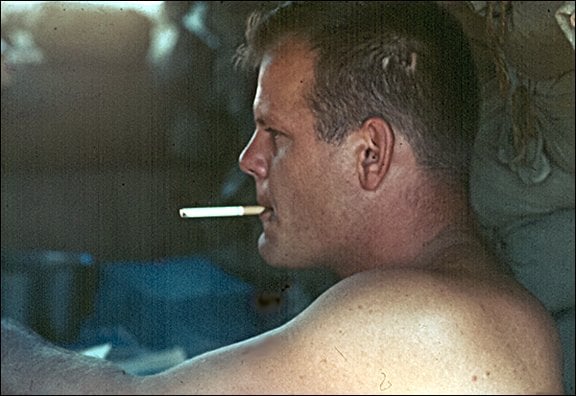
The Bear, Football & Wrestling; XVIII Airborne Corps, Desert Storm

I started with the class of 61 and graduated with 62. In the fall of 1957 we were playing football at the academy and were getting beat. At half time some staff cars stopped at the field, a four star General got out and opened the back door and immediately stood at attention as a gentleman exited the vehicle. We were all called to attention. This gentleman then proceeded to tell us about the fields of friendly strife etc – now get out there and kick their ass!

Yes Sir! We replied and with some extra effort, sweat and blood, we won the game.

The gentleman then asked for all the plebes that played to line up. He then went slowly down the line, stopping in front of each of us, extending his right hand he said in a firm voice: “my name is Doug MacArthur” His look directly in your eyes made the words: Duty, Honor, and Country seem to flow from him directly to your heart.

I extended my right hand and with humble words I said: “My name is Tom Brewer”.

The other Generals there were a little amazed, I believe.

Later in the mess hall as I was performing my plebe duties, the long awaited question was asked:

“Dumb smack, who was here today?”

With all the gusto I could muster: “Sir, Doug MacArthur was here today!”

What did you say? Then with all my strength and a voice that filled the mess hall, I again said:

“Sir, Doug MacArthur was here today!”

Dumb smack, he is a general, get on the floor and do push ups!

There was pandemonium as upper classmen were rushing to my location. I then said: “Sir, may I make a statement?” It had better be a good one!

“Sir, he recognized me today!”

Shock, silence, and time seemed to stand still as the words I uttered started to soak in their minds. During this period Dough was on the poop deck with the first captain, laughing at all the commotion on the floor. He told the first captain to call the corps to attention before they kill that plebe and announce that all the plebes he recognized today could be at ease for a month.

There have been occasions in my military career that I had the honor to tell this true story. I tell them with a hand shake, a hand that was gripped by Dough, to keep passing it on: Duty, Honor, and Country. I have done my duty to God and Country. I am grateful for all my classmates and the memories.
Tom Brewer, LTC(Ret)
Better know as:
Bear ’62
Woo Poo U

Mistaken Identity — Two Plays During the fall of 1958 a left guard on defense was injured and after football trials I was selected by the line coach to play at the next game I believe was Villanova Univ. On the kick off I was extremely hyper and ran down the field, first through one blocker and 15 yards later through a second blocker and end up making a tackle on the ball carrier. I looked back and saw the two blockers being carried off the field. I grinded a little then but today I hope they were not seriously injured. During subsequent defensive plays I found myself quickly through the line and making tackles on the quarterback. Howard Cosell was the radio announcer and numerous times said: “That boy really wants to play football but his number and name is not on the roster” Everything was going great until the third quarter. When I came up to the defensive line my left leg developed a Charlie Horse causing me to fall to the ground. Since we were next to our side line the trainer, Ed Pillings, saw what had happened and immediately said: “Brewer roll off! (Blank) roll on” (There was a picture in the N.Y. paper showing Ed working on my leg. He also the following weekend took a picture with a young lady and me, which became a full page in Sports Illustrated). Shortly I went back close to the side line and at that time I heard Col Blaik talking to the line coach about a problem on defense. I then ran back in and shortly we regained our dominance on the field. After the game I was going to get on the bus when the line coach ran up to me and said: “Brewer, you played a fantastic game except for two plays! Why? My mouth wanted to say: “It wasn’t me!” but my plebe training kicked in: “No excuse Sir!” He responded with words that sounded a little like Dumb Smack etc but ended with: “you are back on B squad!” Shocked I climbed on the bus and sat next to my 2 play substitute, who was also in shock. He had heard what was said. We rode back in silence. I felt in my heart that once they reviewed the football films the truth would come out but this did not happen. My substitute had played his heart out but he did not have the signals when to slant left or right. He was also a victim of circumstances. He later played outstandingly in many Army games. However, next year on the first day of spring practice the line coach had all of us report to the film room to watch the film of this historical game. Numerous players said: “Who is that person who is moving through the line so quickly etc?” I looked at the line coach and with no words but with a smile on our faces we made peace with each other. The future in football looked bright but as luck would have it I separated my right shoulder in tackling practice on Bob Miller, Tackle and later four star general. Spring practice was over for me. I continued on in football later that year. It was a great honor to play that day and be a small part of a team with real heroes: five All-Americans. Since that time of “friendly strife” many of our classmates have performed heroic service to our county. Some have been duly recognized to include recipients of the Medal of Honor. But many acts are not seen nor reported. Most see it as just doing their duty. On a soldier’s tomb stone it says: “I have done my Duty” May we all do the same.
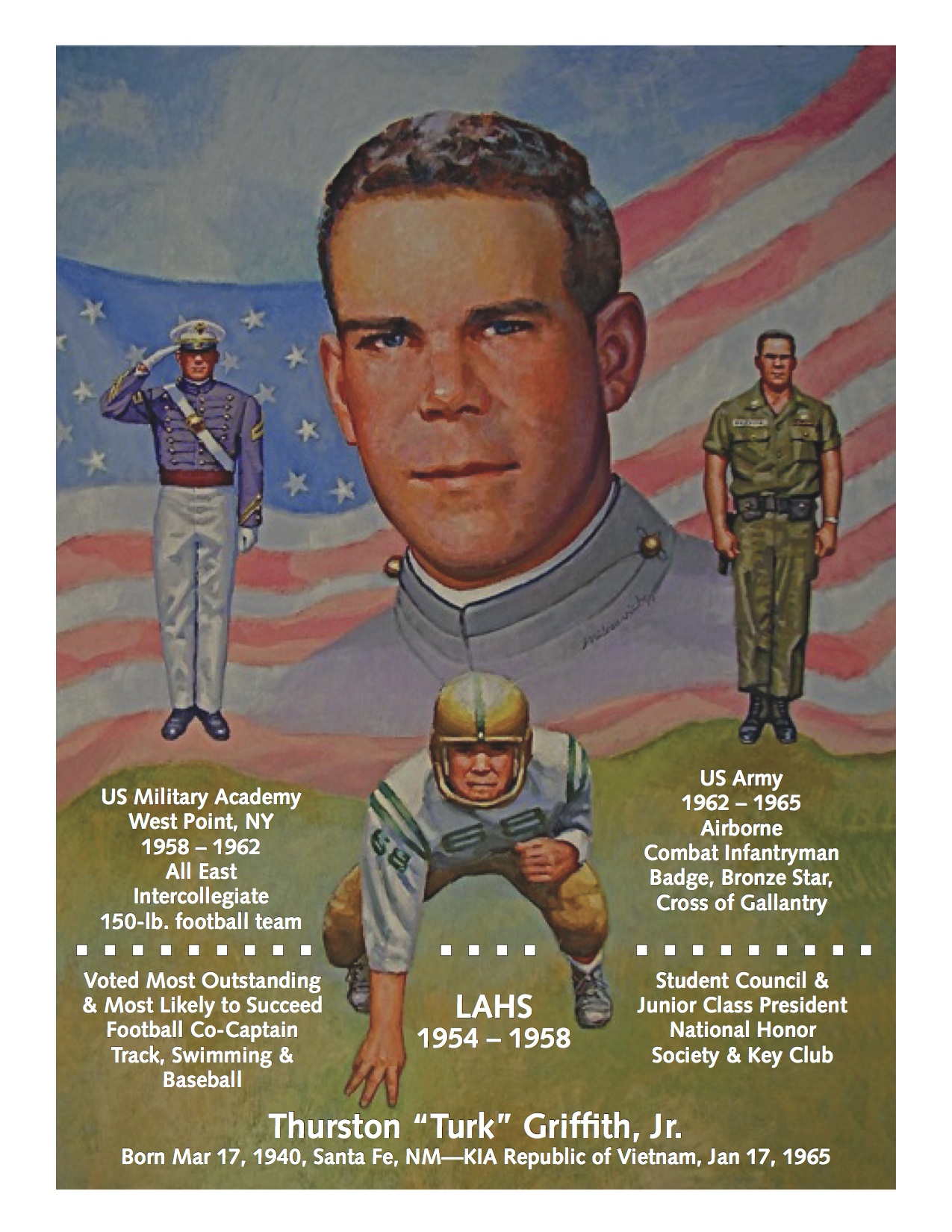
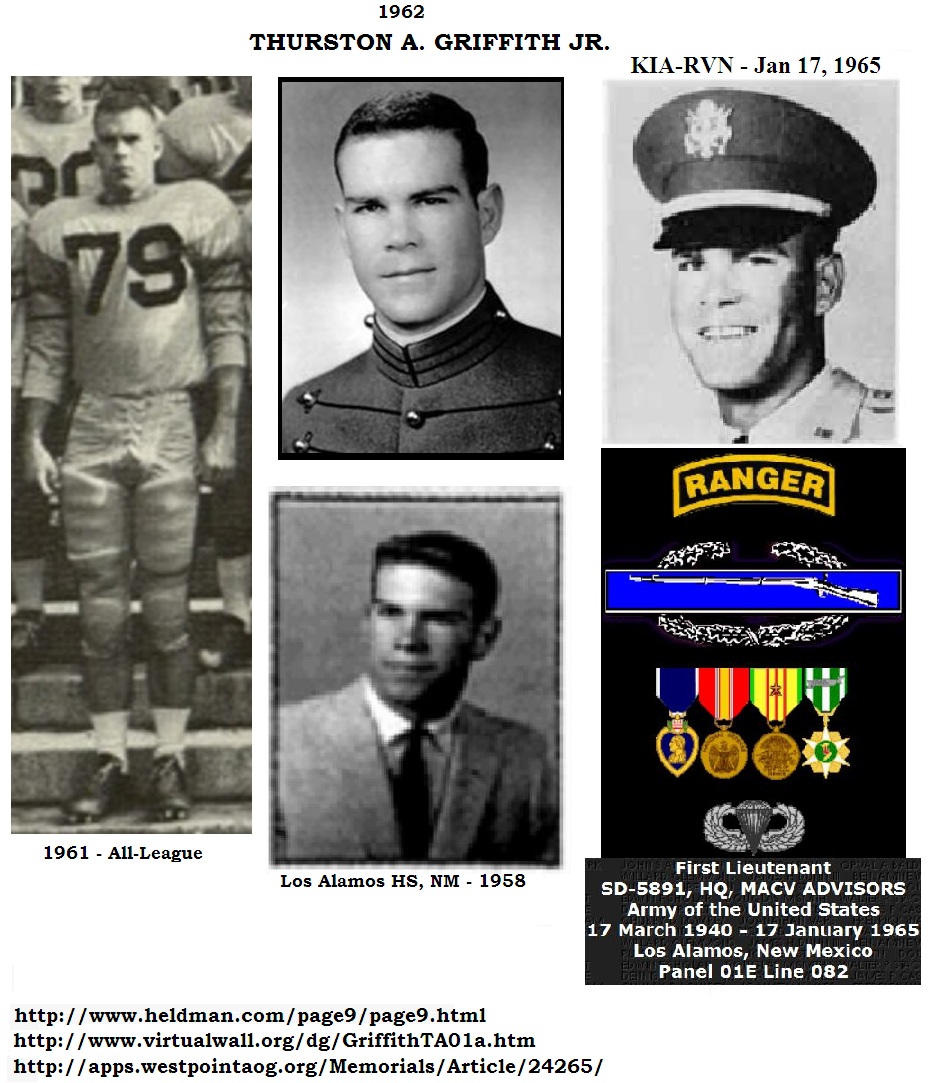
Turk Griffith

turk3_19 copy


ThurstonAGriffith_1962_

–


150 Tackle who wore low cuts. Army A Cow and firstie Year. Killed in Vietnam

Thurston A. Griffith Jr.
http://apps.westpointaog.org/Memorials/Article/24265/

Thurston Algee Griffith Jr.., was born in Sante Fe, New Mexico, on 17 March 1940. He and his family moved first to Raton, and then to Los Alamos, New Mexico, where he attended high school, was active in church and Sunday school work at the Methodist church, and was a member of the Boy Scouts of America.

At Los Alamos High School, “Turk’s” interests were varied. He participated in sports, stood 12th in his class scholastically, and was awarded the Junior Citizenship Award in 1958. He was a member of the National Honor Society; a delegate to Boy’s State; president of the senior class and the Los Alamos Student Council, as well as the North Central District Student Council. He was also a talented amateur photographer.

Athletics were important to Turk from the time he played little league baseball to the time he graduated from West Point. Swimming, ice skating, ice hockey, and fishing were all a major part of his extracurricular activities. He was co-captain of his high school football team and lettered in track, baseball, and football. At West Point he played football on the 150-pound team, and was named on the Eastern Intercollegiate All-League team for 1961 as a tackle.

When Turk was a junior in high school his father, Turk Griffith Sr., was killed in an accidental explosion, and Turk Jr., assumed responsibilities beyond his years. His friends and neighbors said that Turk was “born to be a leader,” and that his perseverance, integrity, and high moral standards would certainly help him in His ambition to go to West Point.

When Thurston A. ‘Turk” Griffith Jr., was elected the “outstanding senior boy” at Los Alamos High School, he was also voted the “most likely to succeed.” He did succeed in his desire to go to West Point, and when he graduated in June 1962, he was commissioned a second lieutenant in the Signal Corps. He then completed a series of training courses fitting him for the Army’s Special Forces arid an assignment to the Military Assistance Command in Vietnam, where he lost his life on 17 January 1965.

In Vietnam, Turk was greatly admired by his associates, both American and Vietnamese. After his death, which occurred while on a combat patrol for which he volunteered, the Republic of Vietnam awarded him the Vietnamese Gallantry Cross with Palm Leaf Cluster and the Vietnamese National Order Medal Fifth Class. Also awarded to Turk posthumously were the Purple Heart, the Combat Infantryman’s Badge, and the Bronze Star Medal with “V” device for valor.

Turk’s many friends in Los Alamos petitioned the Los Alamos School Board to name the new high school gymnasium after him, and they were successful in their appeal. It is a fitting memorial for a fine young man. a New Mexican who gave his life in the war in Vietnam.

At Fort Gordon, Georgia, a multi-storied bachelor officers’ quarters building has been named Griffith Hall in honor of Turk. The building, scheduled for completion in mid-

1966, was dedicated to Lieutenant Griffith in memory of his tours of duty at that post and in recognition of his “outstanding service to the U.S. Army and the ultimate sacrifice of his life to his country in Vietnam. …”

First Lieutenant Thurston A. Griffith Jr., is remembered proudly by his mother, Mrs. W. O. Connor Jr., his brother, Dudley Griffith, and his host of friends.

Requiescat in pace.

A Friend”

Note – Jim Ellis asked Harry Hagerty to sign for Turk on the Class of ’62 listing in the ’62 Room – Arvn Gym.
(The Class listing is just under the pictorial of General MacArthur’s expectation of us – Duty Honor Country – May 1962) the 2d picture of the ’62 Room.

Shadow box and picture from Virtual Wall
http://www.virtualwall.org/dg/GriffithTA01a.htm

HS Gymnasium Dedication and program from Jim Heldman’s ’62 webpage
http://www.heldman.com/page9/page9.html

Starting guard and key contributor on Army’s 150-pound 1961 football team. KIA Vietnam 1/17/65.  Turk and  I were in the basic officer’s course together at Fort Gordon, GA. Turk (and others) played on a touch football team. The team was stacked with former college players and had its way with the other teams in the league.Turk played on the inside of the offensive line and had a much larger varsity college player on his outside. The other teams would frequently complain that Turk was not abiding by the rules and I can vividly remember the referee getting right up on the line to try to catch Turk doing something illegal.Now I am sure Turk would never do anything outside the rules, but since the referee was shielded from seeing everything by the player to Turk’s outside, Turk was never called for an infraction.Griffith Hall at Fort Gordon is, of course, named for Turk. It is a BOQ or VOQ and, I am told, has recently been renovated – – by John Easterbrook

Bob DeVries

Robert & Nancy DeVries
Army Football Player  Inspired by John Taylor, coached by Rick with the nucleus of Tank, Russ, Bob, Bill, Dave, Paul, Dennis, Wayne & Mike, ’62 gave West Point Rugby, a team that has dominated the sport since its inception.

75 Bill Yost, 73 Bob Odd, 11 Pete King, 45 George Kirschenbauer, 58 Dick Buckner, 65 Harry Miller, 64 Al Vanderbush, 56 Ozzie Oswandel, 40 Russ DeVries, 94 Bob DeVries, 61 Jerry Clements

Russ DeVries

Russell & Marcia DeVries

75 Bill Yost, 73 Bob Odd, 11 Pete King, 45 George Kirschenbauer, 58 Dick Buckner, 65 Harry Miller, 64 Al Vanderbush, 56 Ozzie Oswandel, 40 Russ DeVries, 94 Bob DeVries, 61 Jerry Clements

–

Russ DeVries


–

–

Bob Culp

Bob is 34

Mike Casp

11/14/1967 Mike Casp  

1962 – 24202

To get through the line I depended especially on three teammates and Classmates, Mike Casp (our team captain) – at Right Guard, Bill Whitehead – at Center, and Barry Butzer – at Left Guard. They were great Army football players. Bill and Mike were Killed in Vietnam.  Barry was Killed in an auto accident several years ago – – Al Rushatz

MICHAEL A. CASP 1962

Cullum No. 24202-1962 | November 14, 1967 | Died in South Vietnam
Interred in Arlington National Cemetery, Arlington, VA

Today is Memorial Day 2009 . . . a day when all Americans remember all of our comrades in arms that have made the ultimate sacrifice for our Country. More than 41 years ago, Michael Allen Casp, a loving son, brother and uncle; a good friend and classmate; and, most of all, a soldier who loved his fellow troopers, made that ultimate sacrifice for all of us.

Michael Allen Casp was born in Rochester, PA, the only son of Mike and Olga Casp. Mike was raised in Beaver County, where his father worked for J&L Steel and his mother was a dedicated homemaker.

As a baby, he received the nickname “Sluggo” because of his pug nose, a characteristic of a then popular, comic strip character. Growing up, Mike was always interested in playing ball—football and baseball. As a youngster, he collected baseball cards and set up teams and games. Often, he could be heard announcing imaginary games from his bedroom, and his family thought he would grow up to be a sportscaster. He was always playing some kind of ball with the neighborhood kids. He played Little League baseball and Midget Football. Growing up, he spent his summers on his grandparents’ farm near Lake Erie.

At Beaver High School, Mike was a hard hitting halfback and fullback. He helped his team compete for the Western Pennsylvania Interscholastic Athletic League (WPIAL) section championship. In baseball, he was a long ball hitter and played in the outfield. His school team won the WPIAL section championship four years in a row. He also played Junior American Legion baseball in the summer. One local newspaper said that the other teams breathed a sigh of relief when Mike left for West Point.

He was also a member of the National Honor Society and had 59 scholarship offers, including one from Navy. Seventeen years old when he left for West Point, Mike entered on 1 Jul 1958 as a member of the Class of 1962. While at the Academy and a member of Company H1, he managed to be involved in the Debate Council, Handball Club; and Dialectic Society. His Howitzer write up summarized Mike’s cadet experiences best: “Casper was known most for his aggressiveness and grim determination to win on the gridiron…His abundance of selfconfidence, along with his humility, will carry him a long way after graduation.”

Mike played fullback and linebacker before settling in as the team’s left guard. During the 1960 Army/Navy game, Mike made 15 tackles and led all players in that category. Because of these traits, Mike, wearing number 62, was elected by his teammates to become the 71st Captain of an Army football team. When he was elected Captain of the Army team, his hometown held a breakfast and a parade in his honor. Under Mike’s leadership from his position at left guard, the 1961 team completed the season with a 6-4 record that included a major upset of Penn State on the road.

Mike was commissioned in the Field Artillery and, after the prerequisite Army schools, stationed at Ft. Bragg, NC; with a Military Assistance Command—Viet Nam Advisory Team in Da Lat; and with the 1st Armored Division at Ft. Hood, TX. He then returned to South Viet Nam and commanded A Battery, 29th Field Artillery in the Central Highlands. His former battery executive officer, Dennis Dauphin, writes, “Words cannot express the admiration and respect I had for Mike Casp. He was a natural leader and allowed his officers and NCOs to do their jobs and prove their worth. Mike was never a “ring knocker” and never mentioned the honor of serving as the captain of the West Point football team.”

On 14 Nov 1967, within days of completing his second combat tour in South Viet Nam and while serving with the 4th Infantry Division as the Assistant S3 of the 3rd Brigade, Mike was killed in action near Tam Ky when his command and control helicopter was shot down while he was coordinating fire support for an Infantry unit. For his heroic actions, Mike received the Distinguished Flying Cross. He also was awarded two Bronze Star Medals and the Purple Heart. In a letter to Mike’s family, his former battalion commander wrote, “He always performed his duties as an officer in a superb manner . His loss was a severe blow to us, and we will long remember him.”

After his funeral in Beaver County at the Holy Trinity Lutheran Church (which he had attended since he was four years old), many relatives, friends, and former coaches took an overnight train to Washington, DC, for Mike’s burial in Arlington National Cemetery. The soldier sent from Arlington to drive the mourners was amazed at how many people there were. They initially had sent a sedan but had to order a military bus. Mike was buried with full military honors, surrounded by those who loved him.

Mike’s legacy lives on in Beaver. After his father died in 1991 and his sister, Jo Ann, was closing up the old homestead, much of Mike’s sports memorabilia was given to the local children who had looked up to Mike as they were growing up.

He is still greatly missed by all who knew and loved him. Well done, Sluggo. Be thou at peace.

Army Football, 3 Army A’s, Captain of the 1961 Team.

I was the Fire Direction Officer with A/2/9 in the Spring of 1967 when Cpt, Casp became the battery CO. If I remember correctly, Michael had served the 5 years he was obligated to serve because of going to West Point. He had requested to be released from active duty but was involuntarily extended to serve until December of 1967. Captain Casp was a great Battery Commander and person. I was privileged to serve with him. Pictured with Mike in the picture above is, Warrant Officer Franklin, counter mortar radar officer, CPT Casp, Lt. Dennis Munden, Fire Direction Officer (FDO), “Chief of Smoke” SFC Rollings, and Lt. Dennis Dauphin, Executive Officer.

CPT Michael A. Casp In memory of our fallen brother

“We few, we happy few, we band of brothers; for he to-day that sheds his blood with me shall be my brother”

HHC Company
1st Battalion
35th Infantry Regiment
Vietnam War

“Not For Fame or Reward
Not For Place or For Rank
But In Simple Obedience To
Duty as They Understood It”

The 35th Infantry Regiment Association salutes our fallen brother, CPT Michael A. Casp, who died in the service of his country on November 14th, 1967 in Quang Nam Province, Vietnam. The cause of death was listed as Helicopter Crash. At the time of his death Michael was 27 years of age. He was from Beaver, Pennsylvania. Michael is honored on the Vietnam Veterans Memorial at Panel 29E, Line 94.

The decorations earned by CPT Michael A. Casp include: the Combat Infantryman Badge, the Silver Star, the Purple Heart, the National Defense Service Medal, the Vietnam Service Medal, the Vietnam Campaign Medal and the Vietnam Cross of Gallantry with Palm Unit Citation.

——————————————————————————–

Captain Casp was the Commander of A Battery, 2/9th Artillery. He was temporarily filling-in for the regular LNO whom was on R&R.

Mike was the Captain of the 1961 West Point football team

Mike 2d from left was Captain of the 1961 Football Team. Mike was Killed in Action

62 Guard Fall of 59

POSTED ON 11.10.2011

POSTED BY: SGT. CHARLES R THEW

MY FRIEND

Capt. Casp was comander of the artillery battery I was in. Everybody liked him. He left os to go into the Infantry. He wanted more excitement. I sure miss him.

OSTED ON 9.25.2011

POSTED BY: THOMAS A. DUMAS

FOREVER YOUNG

Hey Cousin ‘Sluggo’ It’s hard to believe it’s been over 40yrs since you left us. Whenever I think of you I see that silly grin and realize that you will forever be that young handsome soldier in my mind. You are my hero – Until we meet again – Love, Cousin Tommy

POSTED ON 9.8.2011

POSTED BY: MARY BEERMAN

AN AMERICAN HERO

An American Soldier….. 

You can bet that I stand ready when the wolf growls at the door, 
Hey, I’m solid, I’m steady, I’m true down to the core, 
And I will always do my duty, no matter what the price, 
I’ve counted up the cost, I know the sacrifice, 
And I don’t want to die for you, But if dying’s asked of me, 
I’ll bear that cross with honor, ‘Cause freedom don’t come free. 
I’m an American Soldier, an American, 
Beside my Brothers and my Sisters I will proudly take a stand. 
When liberty’s in jeopardy I’ll always do what’s right. 
I’m out here on the front lines, sleep in peace tonight. 

Rest in Peace, dear Hero. 

(excerpt from Toby Keith’s song) 

POSTED ON 10.28.2007

POSTED BY: CLAY MARSTON

VIETNAM –

VIETNAM – ” ANOTHER TRAGIC DAY ” –

MAJOR GERARD MICHAEL WYNN

According to records uncovered during research for this biography, Major GERARD MICHAEL WYNN was the S-1 for the Third Brigade of the Fourth Infantry Division from 1 August 1967 to 25 October 1967. 

However, that starting date is at odds with Major Wynn’s casualty data from The Vietnam Veterans Mmeorial Wall, which shows he did not come in country until 2 September 1967.

The 3rd Brigade of the 4th Division consisted of three infantry battalions: 

1/35 (Cacti Green), 2/35 (Cacti Blue), and 1/14 (Golden Dragons) 

All three of these battalions had accomplished records in Vietnam, as well as Korea and WWII. 

Initially in the 25th Infantry Division, the three battalions became members of the 4th when those two divisions swapped third brigades on 1 August 1967. 

As brigade S-1, Major WYNN would have acted as the adjutant, being responsible for ensuring that matters involving personnel, finance, record keeping, orders, assignments, etc. were competently carried-out by each battalion’s S-1.

Major WYNN became the S-3 for the 1/35 on 26 October 1967. 

The 1/35 (First Battalion, Thirty-Fifth Infantry) consisted of: 
a HQ Company, four rifle companies (A, B, C, D) and a Company E which consisted of the Recon Platoon and Heavy Weapons group. 

As battalion S-3, Major WYNN was the operational planner, sorting through various intelligence gathered and deciding on missions and daily movement routes of the four rifle companies and the Recon Platoon.

At the time Major WYNN joined the 1/35, the battalion was attached to the First Brigade of the 101st Airborne during Operation WHEELER in Quang Tin province. 

On 4 November 1967 the 1/35 became attached to the Third Brigade, First Air Cavalry Division while participating in Operation WALLOWA in northern Quang Tin and southern Quang Nam provinces. 

At this time, the 1/35 was operating in, or slightly outside, the Que Son valley. 

That valley is 24 miles long and is nestled on the borders of Quang Tin and Quang Nam provinces. 

Surrounded on three sides by double-canopy jungled mountains, the valley was home to 60,000 people and very fertile rice paddies. 

With the twin attractions of a large population to recruit from and an excellent source of foodstuffs, the valley was coveted by the VC / NVA and was hotly contested for the duration of the American involvement.

The four rifle companies though usually operating in the same general area so as to be somewhat mutually supporting. Were usually separated by several kilometers. 

In addition to distance, the difficult terrain made the helicopter indispensable for the Battalion staff. Using the helicopters as a mobile command post, each company could be visited daily, if required, for consultation with individual commanders. 

Also, the ” big picture ” view from above during an actual fight afforded the Battalion staff the advantage of seeing nuances not always as readily noticeable to beleaguered troops on the ground.

The events leading to the death of Major WYNN began unfolding on the morning of 13 November 1967. 

A six-member First Air Cavalry Division Blue team from the 1/9 was operating in western Que Son valley. 

A Blue team was in essence a self-sustained reconnaissance unit. 

They would fly around looking for “hot spots”, had helicopter gunship support and additional infantry support prioritized to them, and also could call in the regular line companies if the action was too big for them. 

On this particular morning, the Blue team spotted an NVA standing in the middle of a rice paddy and making gestures as if he wanted to surrender. 

Coming closer for a better look, their chopper was shot down by an NVA anti-aircraft battalion dug into a nearby village. 

The NVA’s weapon of choice for such encounters was the 12.7-mm machine gun, their equivalent of our .50 caliber. 

The NVA’s ultimate goal that morning was not the Blue team but rather the choppers sent to rescue the team and to attack the village. 

Reliable reports fix the number of helicopters shot down that day at between fifteen and twenty. 

As the day wore on the Blue team’s position became more and more vulnerable. 

They were pinned-down with scant cover in a rice paddy outside the village and running very low on ammunition. 

Their parent unit was spread very thin trying to provide security at every downed chopper. 

Being the closest available line company, we (Company A, 1/35) were ordered to prepare to move by helicopters to their aid. 

Our sister company Bravo was also involved in securing a downed chopper and crew approximately one kilometer from the Blue team. 

They in fact suffered the loss of one lift ship on the way in resulting in four deaths.

At that time, we were located several miles to the west still near the site of a major engagement a few days before on 9 November. 

Supported by a squadron of Armored Personnel Carriers ( APC’s ), we had assaulted a suspected NVA hospital complex. 

The engagement lasted from dawn until dusk with much heroism shown on both sides. 

The Executive Officer for the APC’s, 1st Lieutenant JAMES ALLEN TAYLOR, was awarded the Army Medal of Honor that day and the NVA fought to a standstill a total of three American infantry companies supported by armor. 

Major WYNN and our Battalion Commander Lieutenant Colonel ROBERT GENE KIMMEL, were both overhead that day coordinating air strikes and lifting-in two other companies in an effort to completely cordon-off the complex.

The choppers picked us up at about 1730 hours and flew very low on the way in so as not to tip-off the NVA gunners of our approach. 

We still drew heavy fire as we neared the trapped team, the air being filled with green tracers from the 12.7-mm guns. 

Several of our lift ships took hits but, miraculously, we landed unscathed and were eventually able to reach the Blue team and spent the night with them in the rice paddy. 

During the night the NVA managed to get close enough to hit the Blue team’s downed ship with a recoilless rifle. 

The ship burned all night with ammunition still on board “cooking-off” at frequent intervals. 

In addition, the trip in had flown us completely off the field map Captain CHARLES CHAPLINSKI had; as a consequence we had no communication with our battalion Net and could not even call in artillery. 

All in all, it was a very restless night spent in that muddy, damp paddy.

At around 0730 the next morning, Colonel KIMMEL’s Command and Control chopper ( C&C ) appeared overhead. 

Rain had moved in during the night and the morning remained dark and dreary with low-hanging clouds. 

Aboard with Colonel KIMMEL were Major WYNN, the artillery liaison Captain MICHAEL ALLEN CASP, 1st Lieutenant RANDALL DALE SHAFFER, plus two pilots and two door gunners. 

Their chopper had just left Co B, 1/35’s position.

Colonel KIMMEL was talking to our company commander, Captain CHARLES CHAPLINSKI, by the radio. 

Apparently a large group of NVA had been spotted to the north and the colonel wanted us to move-out in pursuit of them. 

Captain CHAPLINSKI replied that we were first waiting for the Blue team to be extracted. 

The colonel insisted that we move-out immediately but Captain CHAPLINSKI refused, noting that he did not want to leave the Blue team by themselves. 

The exchange grew very heated and finally the Captain agreed to at least start one platoon moving toward the new objective.

All during the radio exchanges we could see green tracers from the southeast rising toward the C&C ship from quite a distance away. 

Though the NVA had deserted their original position in the village, they still had a presence in the area. 

Captain CHAPLINSKI repeatedly warned Colonel KIMMEL that they were taking fire, 

” Sir, you are taking fire, sir, please be advised that you are taking fire from the south east.” 

The Colonel finally acknowledged the danger and replied, ” We will attempt to rise above it.” 

Now the 12.7-mm had a range of about one mile, so that was easier said than done.

Shortly after Colonel KIMMEL’s last transmission, we heard a loud ” ping ” and looked up to see that the rear rotor had come-off the C&C ship; undoubtedly shot-off. 

The rear rotor was held on by a large nut, referred to by helicopter mechanics as the ” Jesus Nut “, it seems likely that a 12.7 round hit that nut. 

Without a rear rotor a helicopter has no lateral stability and is nearly impossible to control. 

However, it appeared for a few seconds that the pilot might succeed in landing it. 

At this point Major WYNN came on the radio and said, ” We are coming in.” 

Captain CHAPLINSKI replied that they were over our perimeter and they should attempt to come down where we were. 

That was the last transmission we heard. 

Shortly afterwards, the tail of the C&C ship swung completely around, the ship went into a spin, and spiraled, nose-first, straight down.

It hit about 75 yards from our perimeter; there was a brief fire on impact, but I seem to recall it being out by the time we reached the helicopter. 

Lieutenant SHAFFER’s body was outside and the others were in the wreckage. 

One of the door gunners had apparently tried to jump clear of the ship, his body was found in a clump of bamboo about 100-150 feet from the crash.

In addition to Colonel KIMMEL’s staff, the following men were also on the downed ship:

Specialist 5 PAUL EDWARD JOHNSON 
– DOOR GUNNER – 
Age 24 – Lookout, Kentucky

PFC RUSSELL FRANK McLAUGHLIN 
– DOOR GUNNER – 
Age 20 – Wheeling, West Virginia 

WO FRANK A. MURRIETTA 
– PILOT –
Age 22 – Phoenix, Arizona 

WO STEPHEN H. THORNTON 
– PILOT – 
Age 20 – Albuquerque, New Mexico

( The Vietnam Veterans Memorial Wall’s casualty data only shows one pilot but that is an error as there were two on the ship. The crash occurred in Quang Nam province, WO Thornton’s location is listed as Quang Tin and I feel that is a mistake and he was the other pilot involved )

Written by –

RICHARD (DICK) ARNOLD
Company A,1/35
3rd Brigade of the 4th Division.

The following also contributed to this article:
CHARLES CHAPLINSKI – Co A 1/35
DON REH – Co B 1/35
BRUCE PHILLIPS – Platoon Leader, Co A, 1/35
MATT BRENNAN – Blue Team Leader

POSTED ON 2.12.2005

POSTED BY: ROBERT SAGE

WE REMEMBER

Michael is buried at Arlington Nat Cem.

POSTED ON 6.12.2003

POSTED BY: BEN YOUMANS

CACTI FOREVER

img

2/9th Artillery assigned as Artillery Liasion Officer to HHC Company, 1/35th Infantry, 3rd Brigade, 4th/25th Inf Division. 
We few, we happy few, we band of brothers; 
For he to-day that sheds his blood with me 
Shall be my brother; be he ne’er so vile, 
This day shall gentle his condition; 
And gentlemen in England now-a-bed 
Shall think themselves accurs’d they were not here, 
And hold their manhoods cheap whiles any speaks 
That fought with us upon Saint Crispin’s day.
http://www.cacti35th.org 
35TH INFANTRY REGIMENT ASSOCIATION

POSTED ON 6.26.2002

POSTED BY: COL JAMES T. PIERSON

2ND OF THE 9TH ARTILLERY

Mike was a battery commander in the Mighty Ninth and was finishing his tour of duty when he was killed. He was performing the duties of Artillery Liason officer to the 1st of the 35th Infantry (Cacti Green) and riding in the command helecopter with the battalion commander (LTC Kimmel), S-3 and S-3 air when it was shot down and all aboard perished. He had taken my place while I was on mid-tour R&R. The incident occurred the day I left for R&R. Mike was an outstanding leader and commander.

POSTED ON 3.1.2022

POSTED BY: JOHN FABRIS

WE WILL REMEMBER

They shall grow not old, as we that are left grow old: 
Age shall not weary them, nor the years condemn. 
At the going down of the sun and in the morning, 
We will remember them. 

POSTED ON 7.6.2020

POSTED BY: RICHARD A MELKERSON

SP5 RICHARD A. MELKERSON, JR.

I grew up in Mike’s hometown of Beaver, Pa., and he was and still is, our hero. He grew up in the projects in Vanport and his nickname was SLUGGO. He will always be remembered! 

POSTED ON 11.4.2019

POSTED BY: RAY DAWSON

MY DAD’S BEST FRIEND

Only meet him once when I was four. He getting ready to go to Vietnam. Him patients where my neighbor. His dad would set on the backpoch puffing on his cigar. Watching us play football. I was never the player his son was.

POSTED ON 11.10.2017

POSTED BY: MARISSA SCHAEFER

UNCLE MIKE ALLEN CASP

I am the grand-daughter of Mrs. James Mathews (sister of Michael Casp). I wish I would have had the honor of meeting you. Thank you for your service

POSTED ON 10.18.2017

POSTED BY: LUCY CONTE MICIK

THANK YOU

Dear Captain Michael Casp, 
Thank you for your service as a Field Artillery Unit Commander. It is important for us all to acknowledge the sacrifices of those like you who answered our nation’s call. Please watch over America, it stills needs your strength, courage and faithfulness. Rest in peace with the angels.

A 57mm gun which was an unusually high caliber for the area, was guarding a headquarters of the 3rd NVA Regiment, 2nd NVA Division. The team shot down the helicopter at Dong Son. 

The commander of the 3rd NVA Regiment was later killed by B Troop, 1/9 Cavalry on 5 December in the Que Son Valley just north of LZ Ross. 

Writing a book on the Que Son Valley 
ltcpike@gmail.com

POSTED ON 1.7.2016

POSTED BY: KR

CPT M.A. CASP – USMA GRADUATE

img

CPT Michael A. Casp was an alumnus of the U.S. Military Academy at West Point, NY. He was one of 334 men from West Point who died or are MIA in Southeast Asia during the period October, 1957 – September, 1972. 

POSTED ON 11.19.2015

POSTED BY: DICK MELKERSON

BEAVER PA. FOOTBALL

Mike “Sluggo” Casp a legend in Beaver football will always be remembered as one of a kind. Moved from guard to fullback, and the rest is history. Should have been Gen. Michael A; Casp.

POSTED ON 5.22.2015

POSTED BY: GINA

CAPTAIN MICHAEL ALLEN CASP (SLUGGO)

Sluggo was my Dad’s (Ray E. Dawson) best friend (knew each other all their lives). They played football together at Beaver Highschool. My Dad always spoke highly of Sluggo. My Dad and your Dad were in the stands cheering you on at the Army / Navy game. I know that you & my Dad are having a fabulous time in heaven. Your parents Mr. & Mrs. Casp were our next door neighbors in Beaver for a very long time. Thank you for your service. You gave it all for your beloved country. GOD Bless America.
POSTED ON 12.13.2014

TOO YOUNG

Learned all about Mike when I was growing up from my mom, grandparents and his parents. God bless him and those others who lost their lives in combat.

POSTED ON 11.4.2014

FOR CAPT. MICHAEL ALLEN CASP, USA…ANOTHER OF BERAVER’S BRAVEST OF HEROES, WHO GAVE HIS ALL FOR US!

He loved us so. 
Every day, in a hundred ways, he told us so. 
In honesty, in affection, he told us so. 
He loved us so. 
Every day, in a hundred ways, he showed us so. 
With loyalty and bravery, he showed us so. 
He was our defender, and he kept us free! 
He took an oath to guard us, and fought for liberty! 
He loved us so, and we should know. 
For we loved him so. 
Captain Casp, you were the very essence of DUTY!…HONOR!…and COUNTRY! You had been there and done that in Vietnam! You were one brave man who did brave deeds for our America! You fought for the right, without question or pause! Your name and fame are the BIRTHRIGHT of EVERY American citizen! In your youth and strength…your love and loyalty…you had given all that mortality can give! You had given all to defend liberty everywhere! Beaver is very proud of you! I say again, Sir, very proud! You had lived up to the code of conduct and chivalry of those who guard this beloved land!…an ideal SO NOBLE that it arouses in all of us a sense of pride, and yet, of humility! I strongly believe and honestly, Captain, that Avonmore’s own Jill Corey, whom I greatly admire and immensely as one of my three top favorite songbirds of all time, the other two being Walton-on-Thames’s own Julie Andrews, England’s musical queen, and London’s own Dusty Springfield, another thrush from England, would be very proud of your service3 to America, and the sacrifices you made to keep us and our country free! Well done, Sir! Be thou at peace. ARMY STRONG

POSTED ON 9.18.2014

POSTED BY: JACALYN E MATHEWS

IT’S THE LITTLE THINGS

I REMEMBER HOW I LOOKED UP TO UNCLE MIKE AND THOUGHT HE WAS SO COOL… AND HE IS! 

POSTED ON 12.14.2013

POSTED BY: BETH FRENZEL EDWARDS

NEVER FORGOTTEN

Dear Michael (Sluggo) , 
I met you when I was 16 years old. I was spending the summer in Albion, Pa with my Aunt Ruth and Uncle Wayne. You came to the house to say goodbye as you were leaving for your final tour in Vietnam. What a fun night we all spent eating pizza, etc. 
I still have the picture you sent me while you were in Vietnam, sorry I don’t have the letter. I have always remembered you and wish we could have gotten to see one another again. I still remember what you called me, so I will sign off with the name. 
Your a true hero in my heart. I will see you again in another time. 
Your little Pixie, 
Beth Frenzel Edwards 

POSTED ON 4.14.2013

POSTED BY: DEBBIE CLINE

YOU ARE NOT FORGOTTEN

Thank you, may God bless and keep you in his loving arms; for you have made the ultimate sacrifice so that others are free.

POSTED ON 1.6.2013

FINAL MISSION OF U.S. ARMY HELICOPTER UH-1D TAIL NUMBER 66-01006

On November 14, 1967 U.S. Army helicopter UH-1D tail number 66-01006 was operating as a Command & Control ship. The crew consisted of aircraft commander WO1 Frank A. Murrietta, pilot WO1 Stephen H. Thornton, crew chief PFC Russell F. McLaughlin, and gunner SP5 Paul E. Johnson. Its four passengers included LTC Robert G. Kimmel, MAJ Gerard M. Wynn, CAPT Michael A. Casp, and 1LT Randall D. Shaffer. The aircraft received enemy 12.7mm fire which resulted in a tail rotor separation at 1,500 feet AGL. An eyewitness claimed that the aircraft subsequently got into severe mast bumping, leading to the loss of the main rotor. The ship went into a spin, and spiraled, nose-first, straight down. There were no survivors. [Taken from vhpa.org]

REMEMBERED

img

Photo Credit: Dennis Munden

Rest in peace with the warriors.

Bill Whitehead

William C. & Mary Ann Whitehead  
Three Years of Football & 3 Army As.
To get through the line I depended especially on three teammates and Classmates, Mike Casp (our team captain) – at Right Guard,Bill Whitehead– at Center, and Barry Butzer – at Left Guard. They were great Army football players. Bill  and Mike were Killed in  Vietnam.  Barry was killed in a car accident.    – – Al Rushatz

 WILLIAM C. WHITEHEAD JR. 1962

Cullum No. 24102-1962 | June 30, 1968 | Died in Vietnam

Interred in West Point Cemetery, West Point, NY

pastedGraphic.png

This obituary was composed by Major Alan M. Biddison, USMA 1962, my husband’s roommate and our best man; and by myself, Mary Anne Whitehead. The words, however, are not entirely our own. All of the statements made concerning my husband’s personality and devotion to duty come from the many letters I received from his fellow officers and from his men. I felt it only fitting that in this final tribute to my husband, the words of these men be included for they, too, knew him well and share my great loss. I shall treasure their kind words forever.

It was a privilege to have known Bill Whitehead, a dedicated, outstanding American. He was one of those rare persons who left an indelible mark on everyone, and his confidence and love of life made a better person of those he met. No matter how difficult things were, he could always find some blessing to count, and he had that special spark that made others electrically aware of their blessings. His belief in God and overall goodness endeared him to all. Bill’s countless friends mourn him honestly, and feel that the world has lost a special man, and the Army one of its finest officers. Bill was going up the ladder to the top rapidly as evidenced by his selection for promotion to major ahead of his contemporaries. No doubt he would have obtained the top rank. His talents and energies were used to help others and improve things about him, doing so unselfishly with supreme dedication and devotion. The words, Duty, Honor, Country were engraved in Bill’s heart, and his life personified the ideals of West Point.

William Charles Whitehead Jr. was born on 17 September 1940, in Lansford, Pennsylvania. It wasn’t long before he began to earn recognition. Bill was active in Boy Scouts, church activities, and football. In his senior year in high school, he captained the football team, won the high school football award, and was selected the first Youth Mayor of Lansford. During these high school years Bill’s greatest desires were to go to West Point and play football for Army.

In July 1958, Bill realized the first of these goals when he entered West Point with the Class of 1962. As the class can attest, Bill achieved the second goal with distinction. He alternated between tackle and center for three years for the Black and Gold, was a consistent leader in tackles, and captained the second unit as a First Classman. Though his first love was football, he didn’t neglect the other aspects of cadet life. He was a member of several clubs and participated actively in company activities. He always liked a good joke and managed to take the words out of an astonished adjutant’s mouth at Graduation Parade by barking orders from his first sergeant position.

After graduation, Bill attended the Signal Officers Orientation Course at Fort Gordon, Georgia; and Airborne School at Fort Benning, Georgia. His first assignment was with the 5th Signal Battalion at Fort Carson, Colorado, where he commanded a company. At Fort Carson, football continued to play an important part in his life as he played and coached a team to an undefeated season. In his next assignment, aide to the Commanding General, 8th Infantry Division in Germany, Bill had the opportunity to coach the division football team. After the division commander left, he stayed with the 8th Division as assistant Chief of Staff. After Germany, Bill went to Fort Sill, Oklahoma, to the Communications Officer Course from which he graduated with first honors.

Then on to Vietnam. Initially he was an artillery battalion signal officer, followed shortly by command of the battalion’s headquarters company. Bill’s leadership abilities and sense of humor improved the performance of the unit and raised the morale of the men despite adverse conditions. It was while taking pay to his men that the helicopter in which Bill was flying crashed killing him. Somebody else could have paid the men, but Bill’s personal credo to serve wouldn’t permit another to take the risk. Bill always sought responsibility and never backed away from a problem because of its complexity or difficulty. His men loved him because he was a fine soldier and above all, a man eminently trustworthy and respected. He was a natural leader with great strength of character and devotion to duty. His loyalty and integrity were of the highest order, and his selflessness was always in evidence.

In high school and at West Point, Bill was inseparable from a special girl from Lansford. Three days after graduation, he married his Mary Anne in the Cadet Chapel, and a short year later Bill was the proud father of a son. As a husband and a father, Bill was the best. He was dedicated and loving. In February 1965, after the birth of his daughter, he joked that now all he needed was a million dollars. He had achieved all of his other goals.

Bill Whitehead shall be forever missed by his wife, children, family, and countless friends. Bill only knew how to give his best, and he lies now in the place he loved best—West Point. He is surrounded by his classmates who have made the supreme sacrifice for their country. His sacrifice saddens us, but we can say with pride that we have known and loved a great man.


MAJ WILLIAM C. WHITEHEAD JR. – USMA GRADUATE

img

MAJ William Charles Whitehead Jr. was an alumnus of the U.S. Military Academy at West Point, NY. He was one of 335 men from West Point who died or are MIA in Southeast Asia/Indochina during the period October, 1957 – September, 1972. “Well done; Be thou at peace.” 

70 Tackle Fall of 59 

Dear Major William C Whitehead Jr,

Sir
As an American, I would like to thank you for your service and for your sacrifice made on behalf of our wonderful country. The youth of today could gain much by learning of heroes such as yourself, men and women whose courage and heart can never be questioned.

May God allow you to read this, and may He allow me to someday shake your hand when I get to Heaven to personally thank you. May he also allow my father to find you and shake your hand now to say thank you; for America, and for those who love you.

With respect,  

Curt Carter

IF I SHOULD DIE…REMEMBRANCES FOR MAJ. WILLIAM C. WHITEHEAD, JR, USA…WHO DIED FOR OUR COUNTRY!!!!

If I should die, and leave you here awhile, be not like others, sore undone, who keep long vigils by the silent dust, and weep…for MY sake, turn again to life, and smile…Nerving thy heart, and trembling hand to do something to comfort other hearts than thine…Complete these dear, unfinished tasks of mine…and I, perchance, may therein comfort you.
 

CPT WILLIAM WHITEHEAD

Was My Battery Commander, there was never a finer, more down to earth, Commander I ever had the privilege to serve under, before or after. It was a sad day for the 6/14 when the helicopter with him and WO Frank Jones went down on it’s way to Plei Jerang.
 
POSTED ON 5.26.2003
POSTED BY: LTC STEVE TAKACS (USA RET)

A GREAT SOLDIER

I served with Bill at Ft. Carson, Co in 1963-64. We were both in the 5th Inf Div (M). He played football on the Div Troops “Outlaws” which I coached, and was a valuable player, friend and comrade. We had great fun playing handball and enjoying our families. I have a picture of that football team and two men are missing from the photo — Bill and “Turk” Griffin both were KIA in RVN. I have remembered them in prayer every day since their death.
 
Much of the material is from The Wall of Faces- Vietnam


Pete King

Pete & Maud King

Football and Track with a Monogram in both Sports Yearling and Cow Year, and Army A in Football Firstie Year.

75 Bill Yost, 73 Bob Odd, 11 Pete King, 45 George Kirschenbauer, 58 Dick Buckner, 65 Harry Miller, 64 Al Vanderbush, 56 Ozzie Oswandel, 40 Russ DeVries, 94 Bob DeVries, 61 Jerry Clements

59 Season Quarterbacks, Tom Blanda on the left, Pete King on the Right and Army’s Quarterback Joe Caldwell Class of 1960 whose name still appears in the record book after all these years.

Bob Fuellhart

8/12/1965  Bob & Jan Fuellhart
Army’s Lonely End in 1960 and 1961 upon the Graduation of Bill Carpenter. In ’61 he was banged up with injuries but was still a hard nosed defensive back. Killed in Action 12 August 1965 the same day his Daughter was born.

ROBERT H. FUELLHART JR. 1962

Cullum No. 24324-1962 | August 12, 1965 | Died in Vietnam

Interred in West Point Cemetery, West Point, NY

“Although he became famous as Army’s ‘Lonesome End,’ the gridiron was not the only field on which he excelled.” In this thumbnail reference to Bob Fuellhart at graduation, the 1962 Howitzer added, “We will always remember his ready laugh and good humor.”

Three years later, war correspondent Jimmy Breslin reported from Vietnam: “Fuellhart, big boned and well over six feet…was a known sports page name…but he never talked about football. He talked about being a soldier and going into action.”

Born in Tionesta, Pennsylvania, on 12 January 1939, Bob, during his early schooling and through to his graduation at the Kiskiminetas Preparatory School, developed the stamina, the sense of timing, and the dynamism for “hard hitting” action, in short, the prowess and the mold of character which foreshadowed his impressive athletic record and his leadership accomplishments at the US. Military Academy.

Bracketed with these years of schooling and vigorous physical pursuits, the military service of Bob Fuellhart is in marked harmony with the philosophy of the Duke of Wellington’s capsuled critique: “The battle of Waterloo was won on the playing fields of Eton.”

Bob did not live to wear the stars of a general officer as predicted in the 1962 Howitzer. He was killed in the far south of Vietnam, as an advisor to a Vietnamese battalion, while directing an air strike in support of his group that was battling the Viet Cong at a place called Phong Hiep in the Mekong Delta area.

A memorial resolution, adopted by the Pennsylvania House of Representatives, referred to Bob’s last mission as “an inspiring story of duty, courage, and devotion to country, in the highest traditions of the Army.”

And behind this dedicated performance, there should be chronicled the serious bent of a mature, earnest young officer, with the athletic fields behind him as a distant memory, ever striving to deepen his knowledge and to strengthen his effectiveness as a leader of men in combat.

He elected to become and was accepted as a Ranger. He attended the Airborne, Jumpmaster, Ranger, and Special Warfare Schools, and he studied the Vietnamese language at the Defense Language Institute. After service with the 25th Division at Schofield Barracks, his final assignment was with the 44th Ranger Battalion, Can Tho, South Vietnam.

Recognition of his devoted service and outstanding military character came with a posthumous promotion to the rank of captain. He had also been awarded the Purple Heart, the Bronze Star with “V,” an Oak Leaf Cluster to the Bronze Star, and the Silver Star by his own country, and from Vietnam, that country’s Gallantry Cross with Palm Leaf, and National Order Medal, Fifth Class.

Beyond this story of an unusually creditable performance of a young combat officer, there lies a deeply touching feature.

Two hours before the fatal turn in Vietnam, back in the United States, a baby girl was born to Bob’s young and pretty wife Jan, an Armed Service Junior, daughter of Colonel John A. Bell, U. S. Air Force. Due to jungle battle conditions, word never reached Bob.

However, to this daughter he has left a legacy, and to the Army, another stone in the great mound of high tradition, the memory of a brief but outstanding military career, of epic devotion to duty.

He was buried at the U. S. Military Academy with full military honors. His attachment to West Point was deep and abiding.

In addition to his wife Jan, and daughter Jami Lee, Captain Fuellhart is survived by his parents Mr. and Mrs. R.H. Fuellhart Sr., of Tionesta, Pennsylvania, and by two sisters and two brothers.

—James Kepler Davis Rear Admiral, USN, Ret.

80 – End — Fall of 59

Bobby became first team All-American at close defense and won the Schmeisser Award as the outstanding defense man of 1962.

Former Classic Stars in Action

The list of ex-Army Players grows: Pete-Dawkins To Blanda, Bill Carpenter, Dick Eckert, Glenn Blumhard, Monk Hilliard, all in Viet Nam And there was Bob Fuellhart. Maybe not all the buffs among the 102,000 will remember the name quickly, although he came three times to Broad St. pageant. He was a lean-jawed, solid kid who grew up at Tionesta, a village in the bear and deer country of Western Pennsylvania. He had been a hurdler and broad jumper at Kiski Prep before going to West Point.

Because of his fine speed, Fuellhart played the “Lonesome End” behind Bill Carpenter his first season at Army, It was ironic. Carpenter an advisor in Viet Nam for 13 months when few people could even find the Mekong Delta on a map, was wounded twice. He is now an instructor at Fort Knox, KY. and wears the Bronze and Silver star.

Fuellhart’s trips to Philadelphia were not cheerful ones. His teams lost three times to Navy. The last one was in 1961, a day memorable because Of John Kennedy’s halftime promenade across a blustery, cold field without a topcoat. Navy took that one, 13-7, although cramped by injuries, was a rangy, bitter figure on defense.

That’s how they later remembered him in Viet Nam. His Vietnamese troops called Fuellhart “The Long One,” and not only because his six-foot height towered over the 100-Pound natives. With a long cigar and the red beret of the 44th Ranger Battalion, Fuellhart was not hard to spot and he astonished the Vietnamese by standing up in battle to direct air strikes.

Large Target, Big Courage

He did it at least twice. Once he climbed out of a water-filled ditch to Point out Viet Cong targets for striking fighters. He was a large target, and Viet Cong fire shattered a banana tree over him showering leaves and debris. “It took a lot of courage ” ,said an American captain who recommended the Bronze Star, “especially for an officer in his first combat.”

On Aug. 12 Fuellhart’s jungle fighting unit ran into strong Viet Cong fire near a hamlet of thatched shacks called Phung Heip. The Viet Cong had armored carriers and an American machine gun, and it was taking a toll.

“Not as much fire at my end,” Fuellhart radioed to Capt. Jerry Devlin. “Maybe we can move in.” “Wait for another air strike”, said Devlin. Fuellhart, standing up in the mud with the radio strapped to his back, was talking to the helicopters as they hit the tree line. He went to his knees, struck by a bullet. He died a n hour before his wife, Jan, home in Tionesta, gave birth to a girl. Rabble – 1965 By Tom Sargeant, Staff Writer

The ties that bind Army Athletes

In 1952, Cadet Joe Austin of the U.S. Military Academy Lacrosse Team used a six foot stick while playing crease attack. Joe made an all-time West Point record of ten goals in one game and had a career total of eighty goals for three years of play which (when the story was told) was still a school record. He was selected 1st team All-American at attack.

In 1962, the then Captain Joe Austin of the United States Air Force, was an assistant coach of the Army Lacrosse Team. Bob Fuellhart ’62, the second Lonely End, (following Bill Carpenter) on the Football Team, was playing on the Army Lacrosse Team as a defense man. Bob became very distressed when his favorite stick was broken in scrimmage. Assistant Coach Joe Austin, who had treasured his six foot high scoring attack stick for ten years generously loaned it to Fuellhart.

The head of the stick was much narrower than we liked for defensive use in those days but Bob felt that it helped his throwing and catching. (Today almost every defense stick has a head of this size which put Bobby much ahead of his time.) Appropriately, Fuellhart became first team All-American at close defense and won the Schmeisser Award as the outstanding defense man of 1962. Bill Carpenter was recipient of the Schmeisser Award in 1960.

This would seem to be quite a rarity for two players Joe and Bob, in two opposite positions, ten years apart, utilizing the same stick to become outstanding players of their times. Both Joe Austin and Bob Fuellhart were killed in the Vietnam War in the mid 1960’s.

Joe Austin, awarded 2 Silver Stars, Distinguished Flying Cross, and Purple Heart was first declared missing 19 March 1969, and confirmed Killed In Action 25 May 79.

Bill Carpenter was nominated for the Medal of Honor received the Distinguished Service Cross.

Bob Fuellhart, awarded a Silver Star, 2 Bronze Stars (V), and Purple Heart, was Killed in Action 12 Aug 65, the day his daughter was born.

A Half Century of Lacrosse by William H. (Dinty) Moore III, the long-time Lacrosse Coach at Navy. It was told to Moore by Army Coach Jim (Ace) Adams. Edited by Butch Darrell Captain 1962 Lacrosse Team

Pa. Team Members 1959

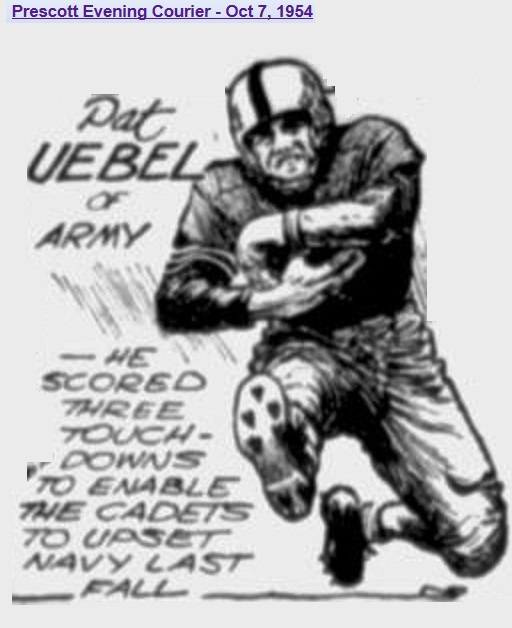
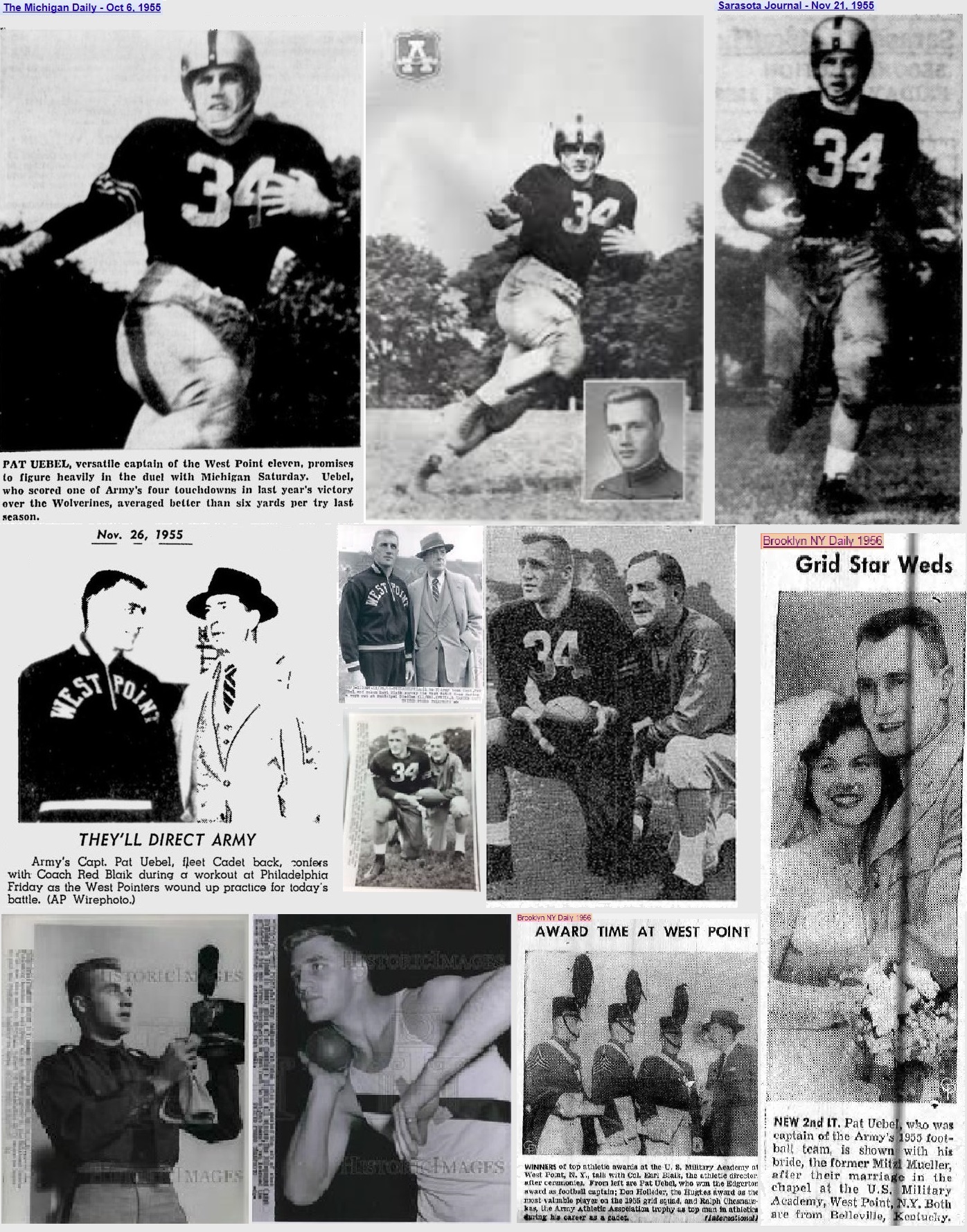
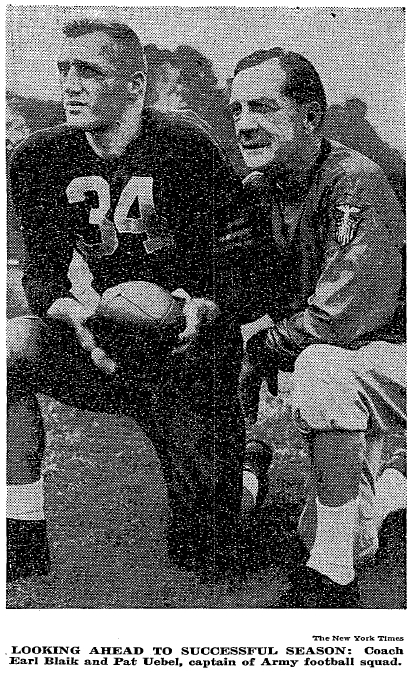
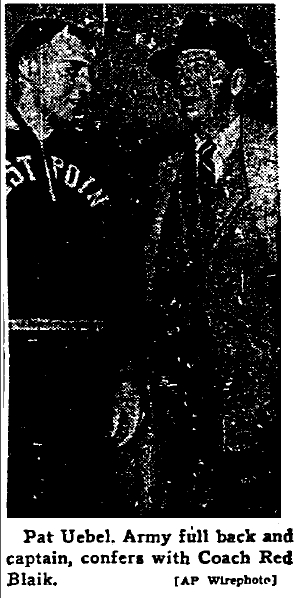
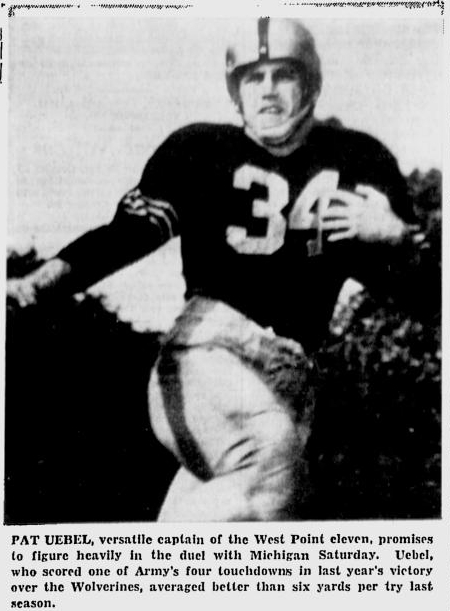
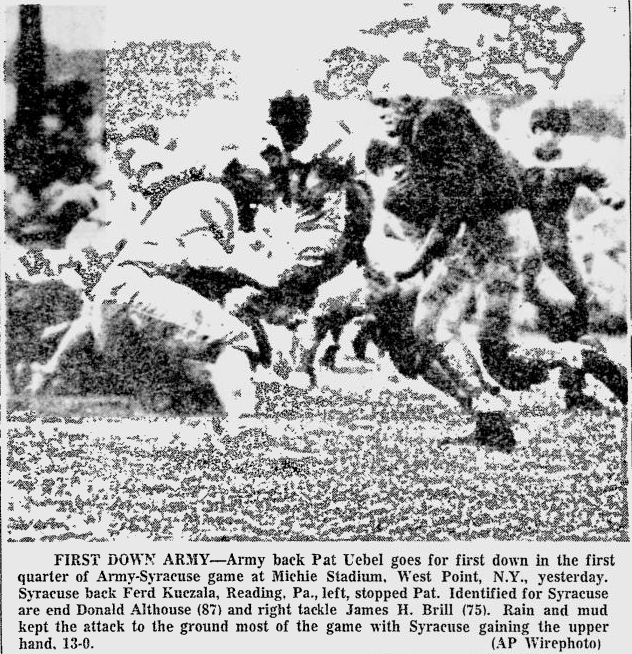
Pat Uebel

56

armyfb_1954_uebel_bypap_prescotteveningcourier_oct71954

–

3 Touchdowns as a Yearling!

–

armyfb_1955_patuebel_various

armyfb_1955_blaik-patuebelcaptain_nyt_sep201955
ArmyFB_1955_Blaik-PatUebelCaptain_NYT_Sep201955

armyfb_1955_blaik-patuebelcaptain_chicagodailytribune_nov261955
ArmyFB_1955_Blaik-PatUebelCaptain_ChicagoDailyTribune_Nov261955

armyfb_1955_patuebel_michigandaily_oct61955
ArmyFB_1955_PatUebel_MichiganDaily_Oct61955

armyfb_1955_patuebel_readingeagle_oct161955
ArmyFB_1955_PatUebel_ReadingEagle_Oct161955
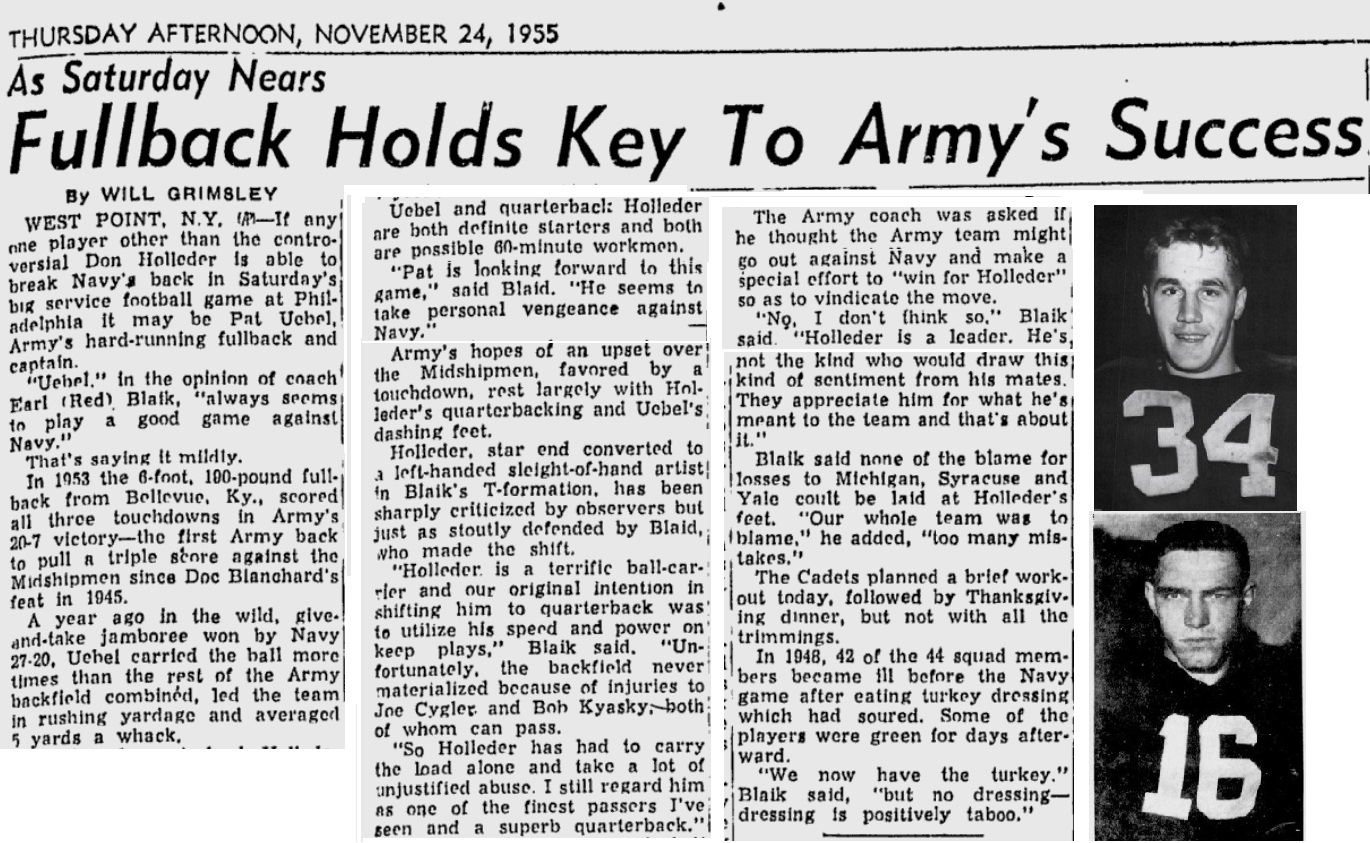
armyfb_1955_vsnavy-pre_uebel-holleder_timesdaily_nov241955
ArmyFB_1955_vsNavy-pre_Uebel-Holleder_TimesDaily_Nov241955


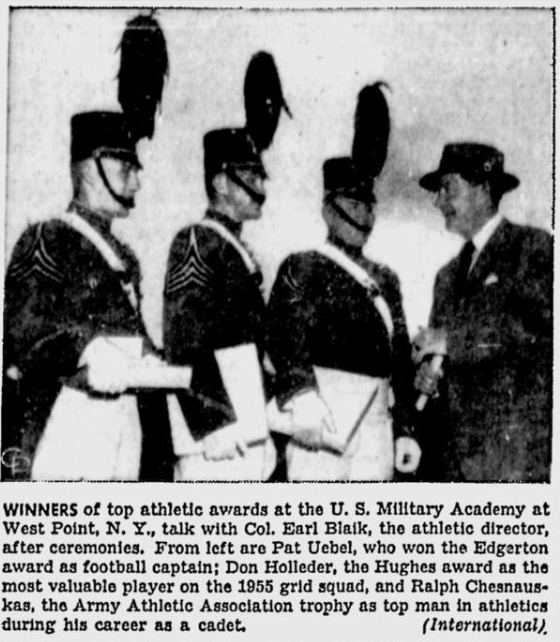
ArmyFB_1955_Uebel-Holleder-Chesnauskas-Blaik_WashingtonObserver_Jun81956

UebelPatrickN_USMA_1956

https://www.westpointaog.org/memorial-article?id=3abe14a9-e3e9-4c4c-8415-9bd1d2bd3553

articles provided by Russ “Skip” Grimm – Class of ’76

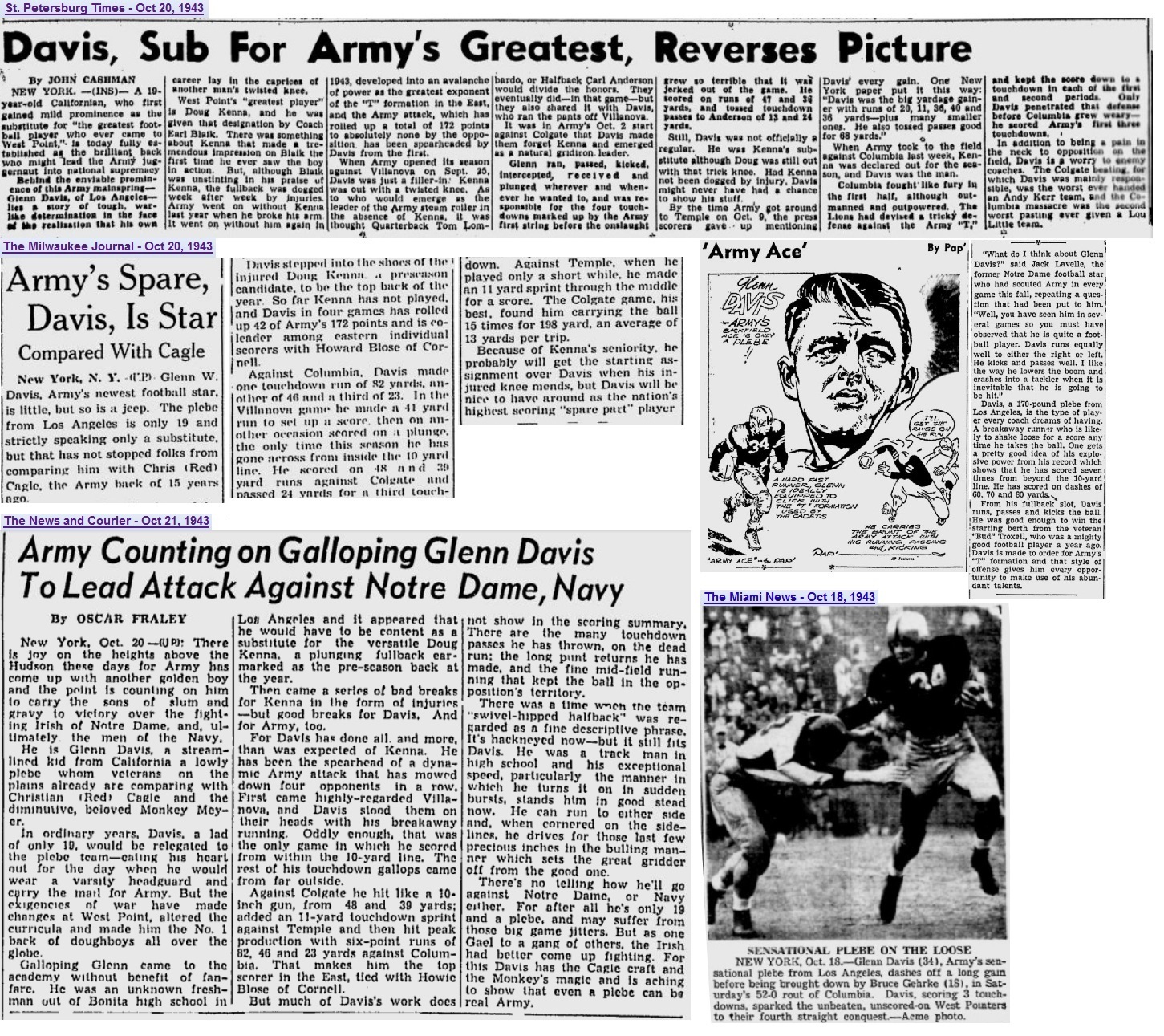
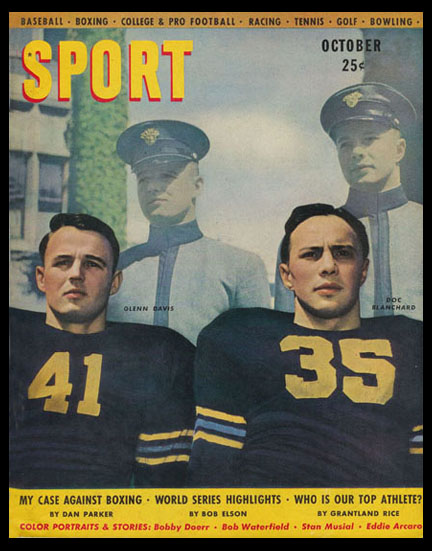
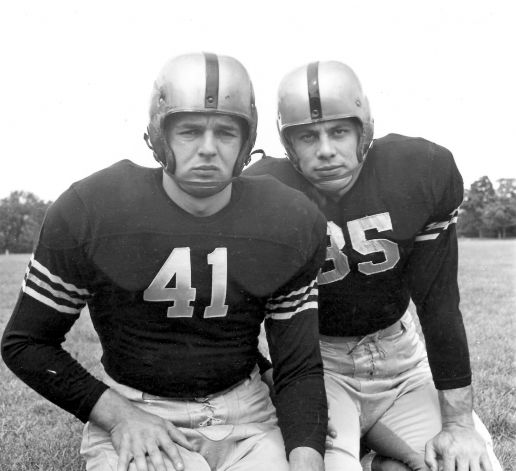
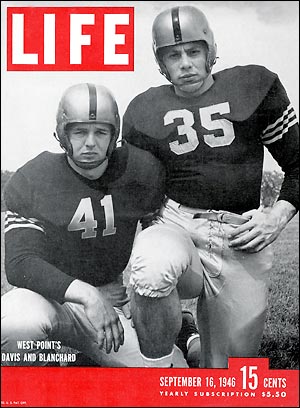
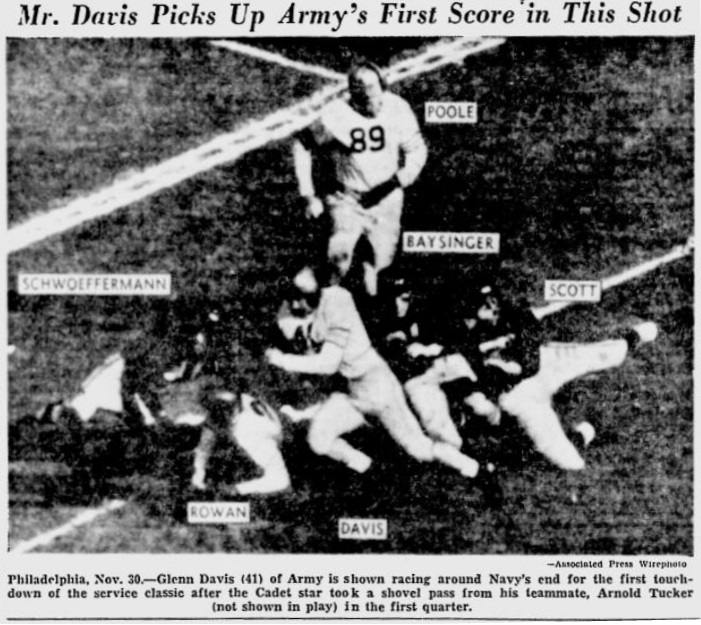
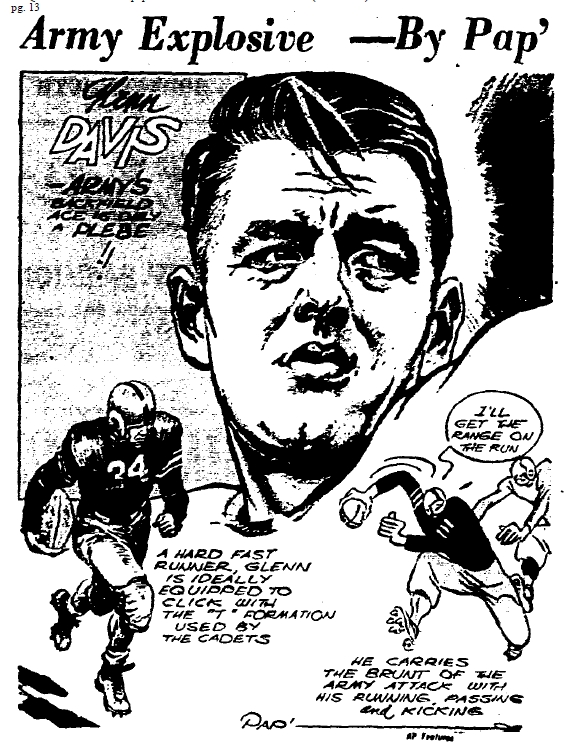
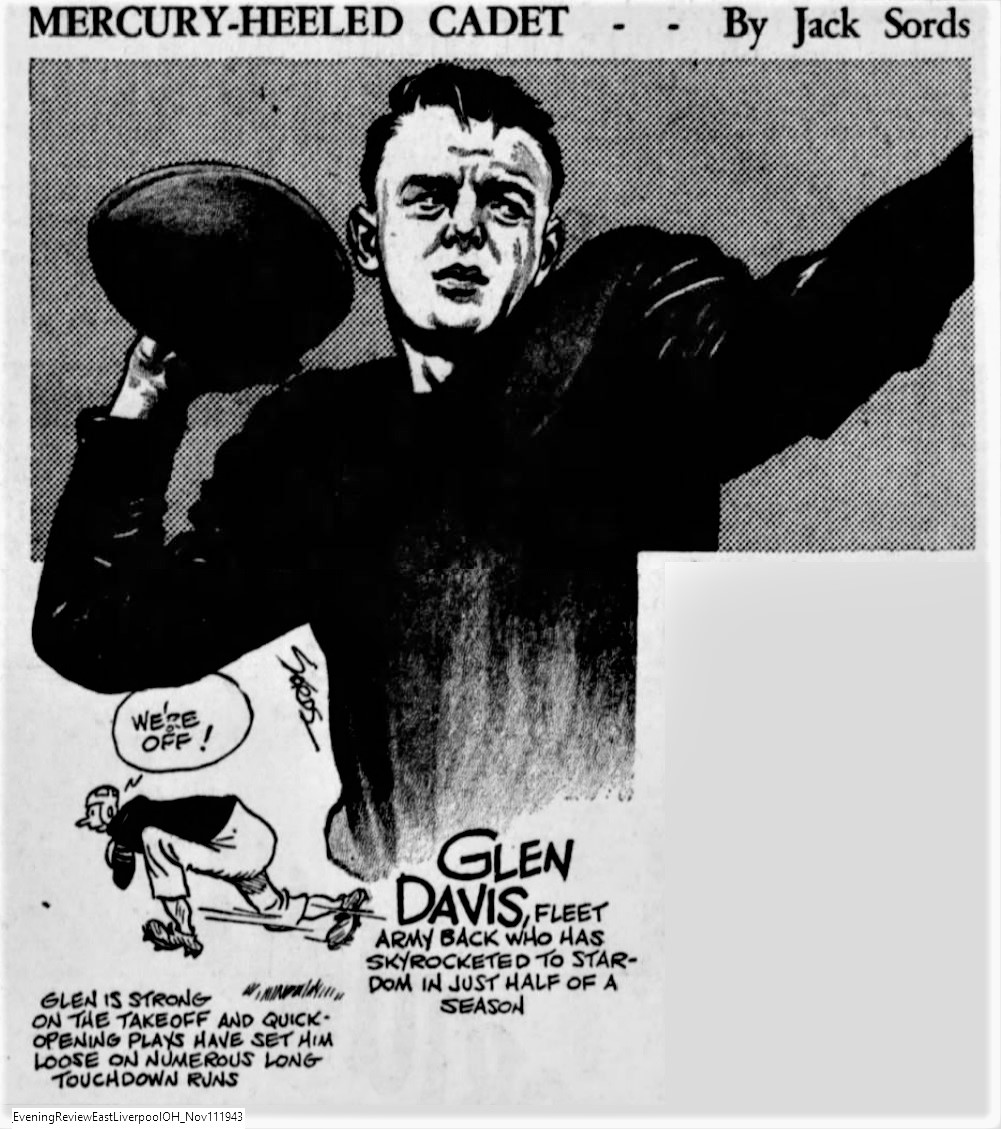
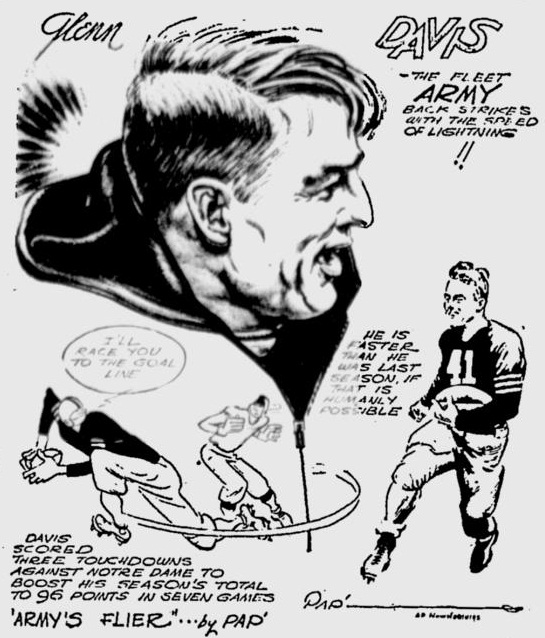
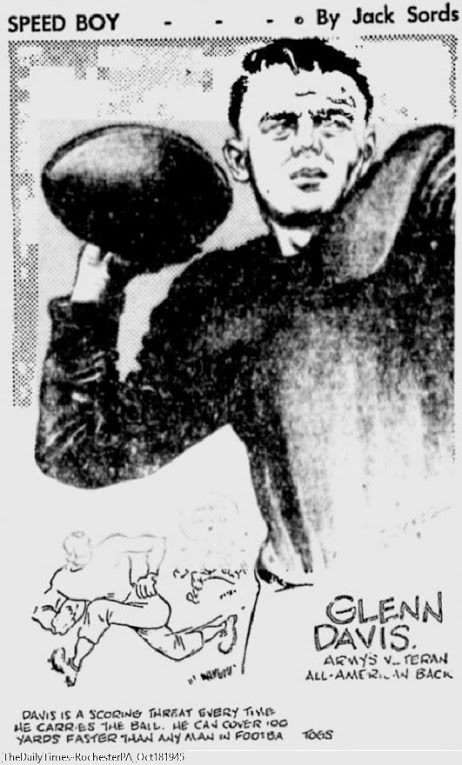
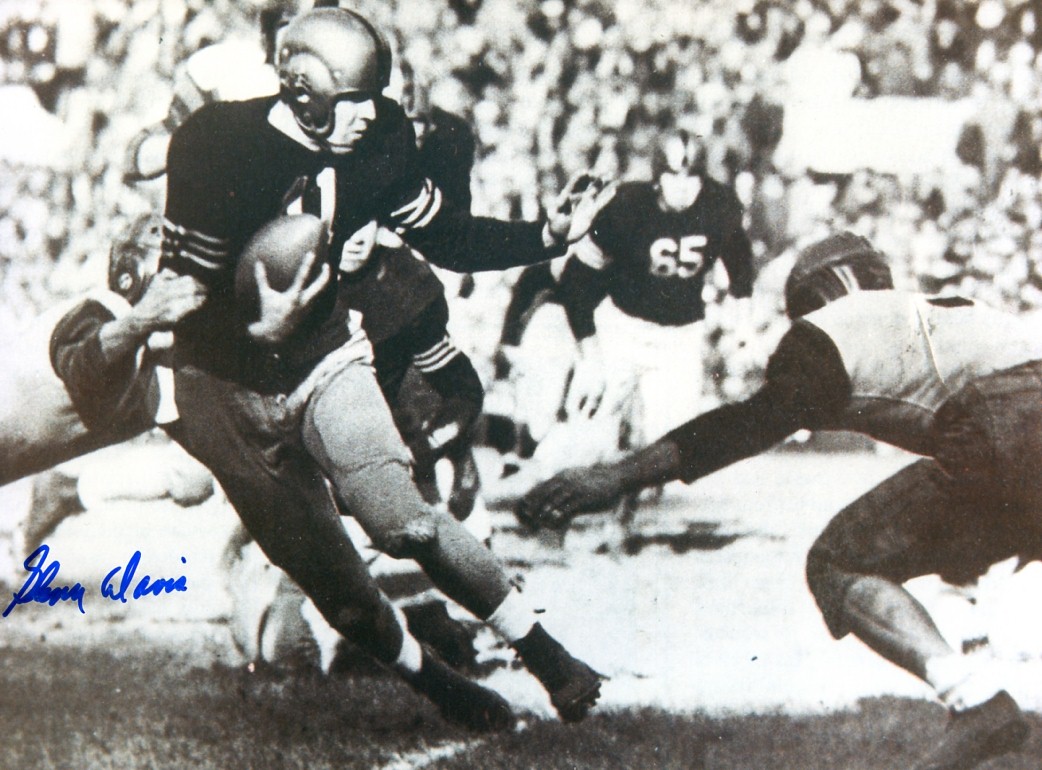
Glenn Davis

ArmyFB_1945_Davis_photo

http://www.collegefootball.org/famersearch.php?page=1&submitted=1&school=Army&sortby=school

http://www.davidpietrusza.com/Davis.html

http://www.heisman.com/winners/g-davis46.html

–

ArmyFB_1943_GlennDavis_various_Oct1943 ArmyFB_1944-46_Davis_and_Blanchard_SportMagazine_Oct ArmyFB_1945_Blanchard-Davis_photo1  ArmyFB_1946_Blanchard-Davis_LIFE-cover ArmyFB_1946_Davis_Heisman ArmyFB_1946_vsNavy-Davis_YoungstownVindicator_Dec11946

–
As depicted by sports’s cartoonists
ArmyFB_1943_GlennDavis_byPap_CSM_Nov51943

ArmyFB_1943_GlennDavis_byJackSords_EveningReviewEastLiverpoolOH_Nov111943

ArmyFB_1944_GlennDavis_byJackSords_PainesvilleTelegraph_Dec41944

ArmyFB_1944_GlennDavis_byPap_PrescottEveningCourier_Dec111944

ArmyFB_1945_GlennDavis_byJackSords_TheDailyTimes-RochesterPA_Oct181945

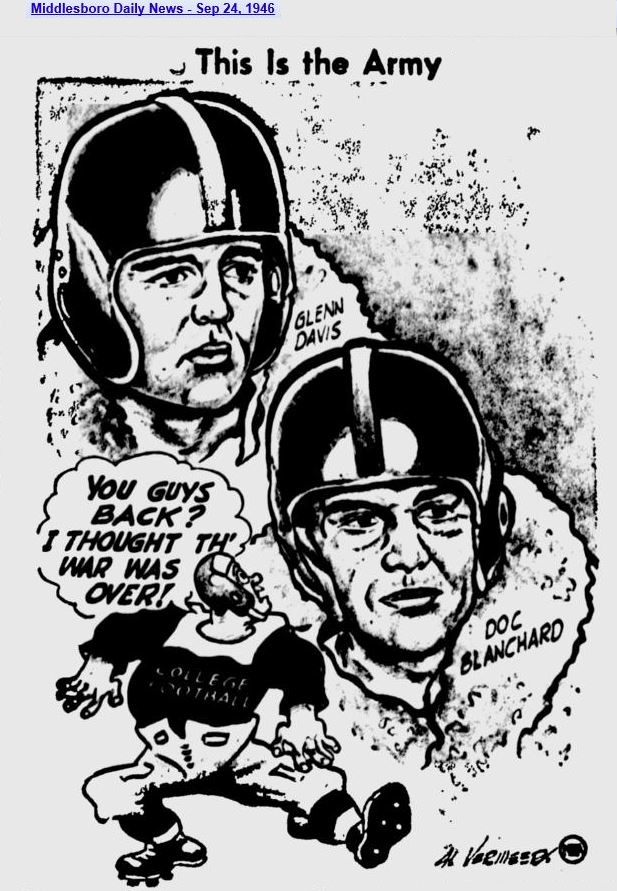
armyfb_1946_blanchard-davis_byalvermeer_middlesborodailynews_sep241946

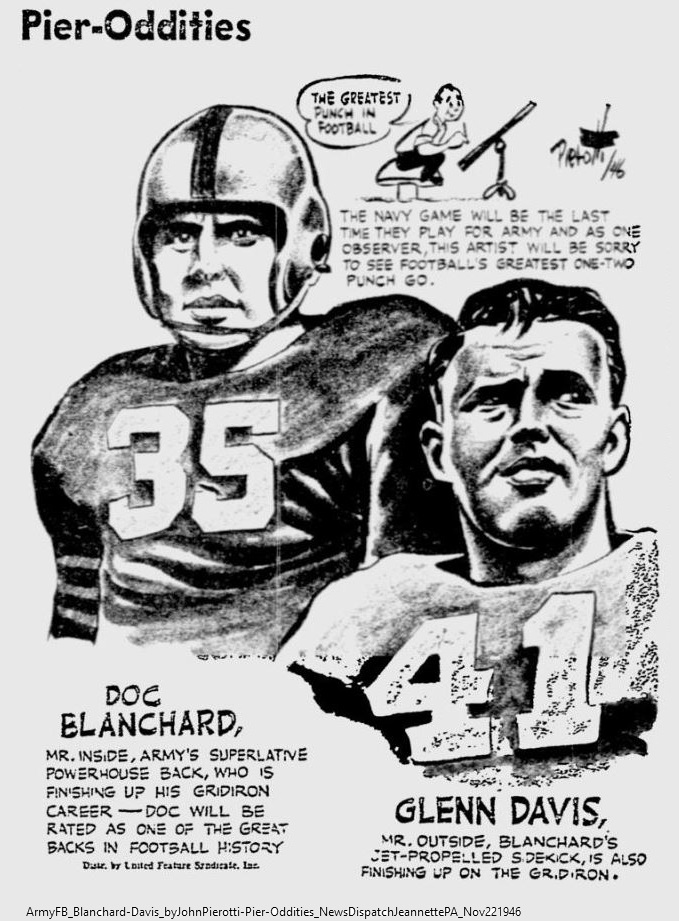
ArmyFB_1946_Blanchard-Davis_byJohnPierotti-Pier-Oddities_NewsDispatchJeannettePA_Nov221946 (1)

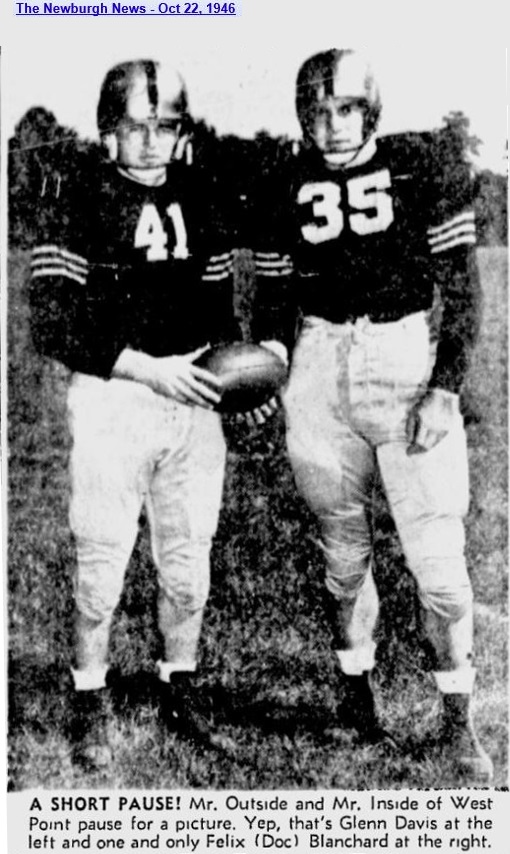
armyfb_1946_blanchard-davis_newburghnews_oct221946

armyfb_1946_blanchard-davis-tucker_oxnardpresscourier_dec51946


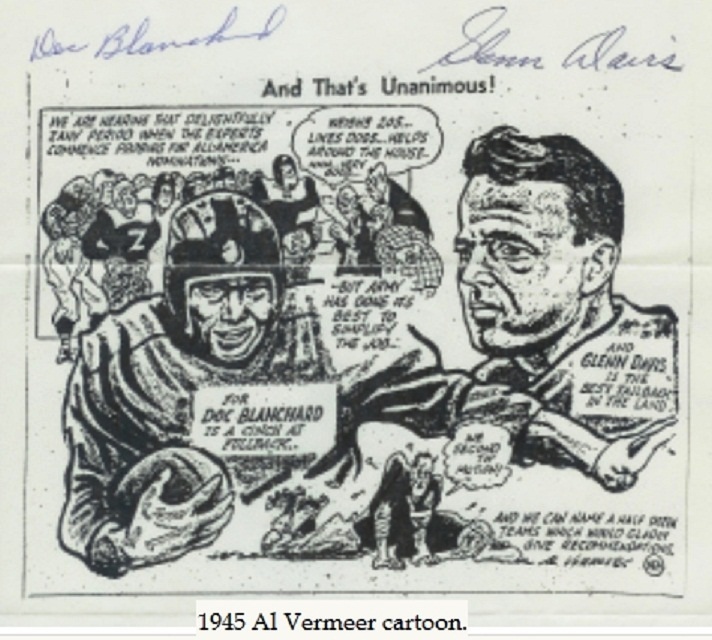
ArmyFB_1945_DocBlanchard-GlennDavis_byAlVermeer
–
–
–
–
–

Chris Stanat

Coach Stanat

He earned 2 Monograms in Football

Chris Stanat played only sparingly in his final year at fullback, but he did score a couple of touchdowns in games Army had in hand. He felt honored, he said, to be included in discussions of Army football these many years later.

He went on to point out that, as a young USMC officer, he was undefeated coaching teams on Okinawa that beat the best the regional Army teams could offer. The details are actually pretty impressive.

Bob Mischak’s tackle – 1953 Army Duke

Continue reading →

John Trent

1950

Led one of Army’s greatest teams. Killed in Korea and posthumously named Footballs Man of the Year by the Football Writers Association of America. – Joseph December 11, 2005

http://www.west-point.org/users/usma1950/17938/

Captain Football Team

Killed in Action Korea

USMA 1950

John Charles Trent
NO. 17938 11 October 1926 15 November 1950

Killed in Korea, November 15, 1950, near Wonsan. Aged 24 years.

“We are landing at the Port of Wonsan tomorrow; it has not yet been secured. Please don’t worry about me.” These were the last words heard from big, wide-smiling, gentle John Trent who met his death near Wonsan, November 15, 1950.

John, or Jack, as he was known to his family and friends in Memphis, was born on October 11, 1926 to Walter and Eleanor Trent. His parents still live in the house on Walker Avenue where he was born – a house filled with memories of his happy boyhood. The youngest of five children, John was born into a family, close-knit in love for one another, and one in which traditions, especially as to holidays and birthdays, are carried on from year to year – family gatherings at Thanksgiving and Christmas, trips to the country at Easter and on the Fourth of July, picnics in the summertime and circuses in the fall.

In his junior high school years, John became interested in sports, entering every one that was offered in the school. His capacity for leadership was shown by his being elected president of the senior class, captain of the football team, and most popular boy in his class. The newspapers selected him as one of the most promising football players entering high school that year.

His interest and skill in athletics continued to develop during his high school days. As a senior, he was a member of the Student Council, and received many honors in athletics. Immediately after graduation, John attended Louisiana State University, finishing one year’s work before he was called to the Air Force. After fifteen months In the Air Force, he entered West Point.

Whenever John was at home, there was a gathering of the boys from high school days, for a spaghetti supper. These friendships did not lessen with the years, and each time John returned, it became a standing joke to say, as the phone rang and rang, “Jack is home again!”

John’s years at West Point and the few months after graduation, are beautifully described in the following tribute written by “HIS ROOMMATES”:

“On that warm Summer day In 1946, a strapping young man came to us from a loving Tennessee family who had moulded him in the family traditions of love and honor. With those inbred ties of closeness and courage, he lived and died a true All-American. These words are most fitting to John C. Trent, our dearest friend, who left us on the Korean field of battle on 15 November 1950.

“Our initial acquaintance with John took place on a field similar to that from which he left us . . . a Beast Barracks tactics problem on the mock battle grounds that circumscribe our Alma Mater. Here for the first time we met the broad-shouldered, rugged individual who was to be our roommate for three years. John arrived at West Point and we immediately accepted the modest and unassuming typical “Rebel” for the friend that he was. Despite the many laurels and kudos that he earned for his prowess and accomplishments, he departed from us unchanged as the quiet fellow he had been from the start. We remember him for that cool steadiness and amiable personality that depicted a man who lived for the enjoyment of life itself.

“John never lost sight of his eternal goal to return home to his cherished family in Memphis and spend his days with Mom, Dad, his sisters, brother Bud, relatives and friends. The love and ties that are often absent within the American family of today were ever so present with the wonderful Trents. John’s return from every leave aIways found him bubbling over with the joys of having been HOME. Naturally, too, there was always “THE” girl in John’s life which meant that Memphis was the garden spot of the world for him.

“If John’s family and home were his first love, then we must call football his second. In the ALL-American game, John fulfilled his every ambition as he led our Black Knights of the Hudson through the difficult 1949 campaign . . . undefeated and untied. In each of his three years on the gridiron he held one moment to be more cherished than the others . . . 1947 . . . A pass interception against Navy that resulted in a touchdown and a 21-0 victory FOR THE TEAM . . . 1948 . . . His last-second grab of a Galiffa pass that proved the margin of victory FOR THE TEAM against Pennsylvania In a bitterly fought 26-20 battle . . . 1949 . . . Leading THE TEAM in the huge bowl at Philadelphia In defeating our great rivals, the Midshipmen of Annapolis, 38-0, the soundest trouncing in the history of that long series. The shy, reserved pride of this ALL-American John Trent was ever at its highest in receiving from friend and foe alike the simple accolade of recognition, ‘Hi, Big John.’ For this kind of man, it was more than enough. It was this kind of man they called ‘ALL-American,’ the best our beloved country had to offer.

“It was during his graduation leave that the desperate cry came to us from Korea. John came to us again to join the new Team which again was the best we had to offer. Big John was there with his brief words, with a pat on the back from those big fists to bolster spirits that sagged momentarily, just as he had done in every football game he’d fought . . . keeping an eye on the score and the yardage. He was there, his platoon sergeant tells us, on that black Korean night as he started to check his position and see his Team, to give the pat on the back and the brief words to those who were fighting fatigue and sleep In their foxholes as they waited for the enemy. The sergeant had wanted to make the rounds, but as was the way of this ALL-American, Big John insisted on personally visiting his weary Team himself. It was during this necessary check of the perimeter that John received those fatal wounds. He was reverently laid to rest among others from the Team at the Marine Cemetery in Wonsan, Korea.

“That Big John had not changed to the very end is related by his platoon sergeant. His conversation throughout those last days was filled with his true loves . . . his family, his home and friends, ‘the’ girl, and . . . Football.

“Thus it was that we came to know and love and lose our ALL-American friend . . . Big John Trent.”

In him seemed to dwell the promise of greatness the sort of personality that made people love, admire and respect him; he had within him a love of people, kindliness and a deep, abiding faith in God. He has left a heritage of which he, his family and his friends may be justly proud.

Why he was chosen to die is not understandable, but perhaps he and thousands of others have died so that the generations to come shall be able to walk without fear, to live and worship as they please, and to hold their heads high, as free men should.

His Junior High graduation Speech is a strangely prophetic one, entitled “I Am An American,” and ends fittingly:

“I become a link in an unending, unbroken chain, welded together by the Spirit of Freedom, and shining with an undying purpose that will keep forever the principles of Democracy supreme in a turmoiled world.”

– Louise Trent Ferguson

http://www.arkansasties.com/OtherStates/Tennessee/Korean.htm

Art Gerometta


1949

3 Army A’s in Football

Football’s Greatest Decade – – by Bernie Mcarty – http://www.la84foundation.org/SportsLibrary/CFHSN/CFHSNv01/CFHSNv01n1b – – see page 5

This writer believes West Point 1945 is the greatest team of all time. The 1944 Army team may actually deserve that title, but it was never tested. Army was also undefeated in 1946, 1948 and 1949.

Army’s top stars during 1945-1949 were the effulgent “Touchdown Twins”, Glenn Davis and Doc Blanchard, Arnold Tucker, Arnold Galiffa, Rip Rowan, Bobby Jack Stuart and Gil Stephenson in the back-field, and up front” Joe Steffy”, Art Gerometta, Jack Green, “Bill Yoemans”, Joe Henry “Tex” Coulter,Al Nemetz, and the sterling end duo of Hank Foldberg and Barney Poole.

In 1945 the Newspaper Enterprise Assoc. simply picked the entire Army team as its All-American team, stating no group of All-Americans could beat the Cadets. Only a world war could have brought together such a collection of players to one institution. But it took the coaching genius of Col. Earl Blaik to mold the players into a cohesive unit. In truth, Navy personnel was equal to Army’s on an individual basis. The Middies never jelled as a team, however.

The 1951 Army outfit might have been as good as the 1945 Cadets, but the infamous cribbing scandal wiped out the team.

Arnold Galiffa


Class of 1950

Army’s Quarterback

3 Army A’s in Football

Football’s Greatest Decade – – by Bernie Mcarty – http://www.la84foundation.org/SportsLibrary/CFHSN/CFHSNv01/CFHSNv01n1b – – see page 5

This writer believes West Point 1945 is the greatest team of all time. The 1944 Army team may actually deserve that title, but it was never tested. Army was also undefeated in 1946, 1948 and 1949.

Army’s top stars during 1945-1949 were the effulgent “Touchdown Twins”, Glenn Davis and Doc Blanchard, Arnold Tucker, Arnold Galiffa, Rip Rowan, Bobby Jack Stuart and Gil Stephenson in the back-field, and up front ” Joe Steffy”, Art Gerometta, Jack Green, “Bill Yoemans”, Joe Henry “Tex” Coulter,Al Nemetz, and the sterling end duo of Hank Foldberg and Barney Poole.

In 1945 the Newspaper Enterprise Assoc. simply picked the entire Army team as its All-American team, stating no group of All-Americans could beat the Cadets. Only a world war could have brought together such a collection of players to one institution. But it took the coaching genius of Col. Earl Blaik to mold the players into a cohesive unit. In truth, Navy personnel was equal to Army’s on an individual basis. The Middies never jelled as a team, however.

The 1951 Army outfit might have been as good as the 1945 Cadets, but the infamous cribbing scandal wiped out the team.

Arnold Tucker

From: Chuck Profilet <profilet@mediaone.net>
Date: Tuesday, June 15, 1999
Subject: Memorial Day – 1999
MEMORIAL DAY FT. LAUDERDALE, FLORIDA MAY 31, 1999 By Charles W. Profilet, E-1, 58

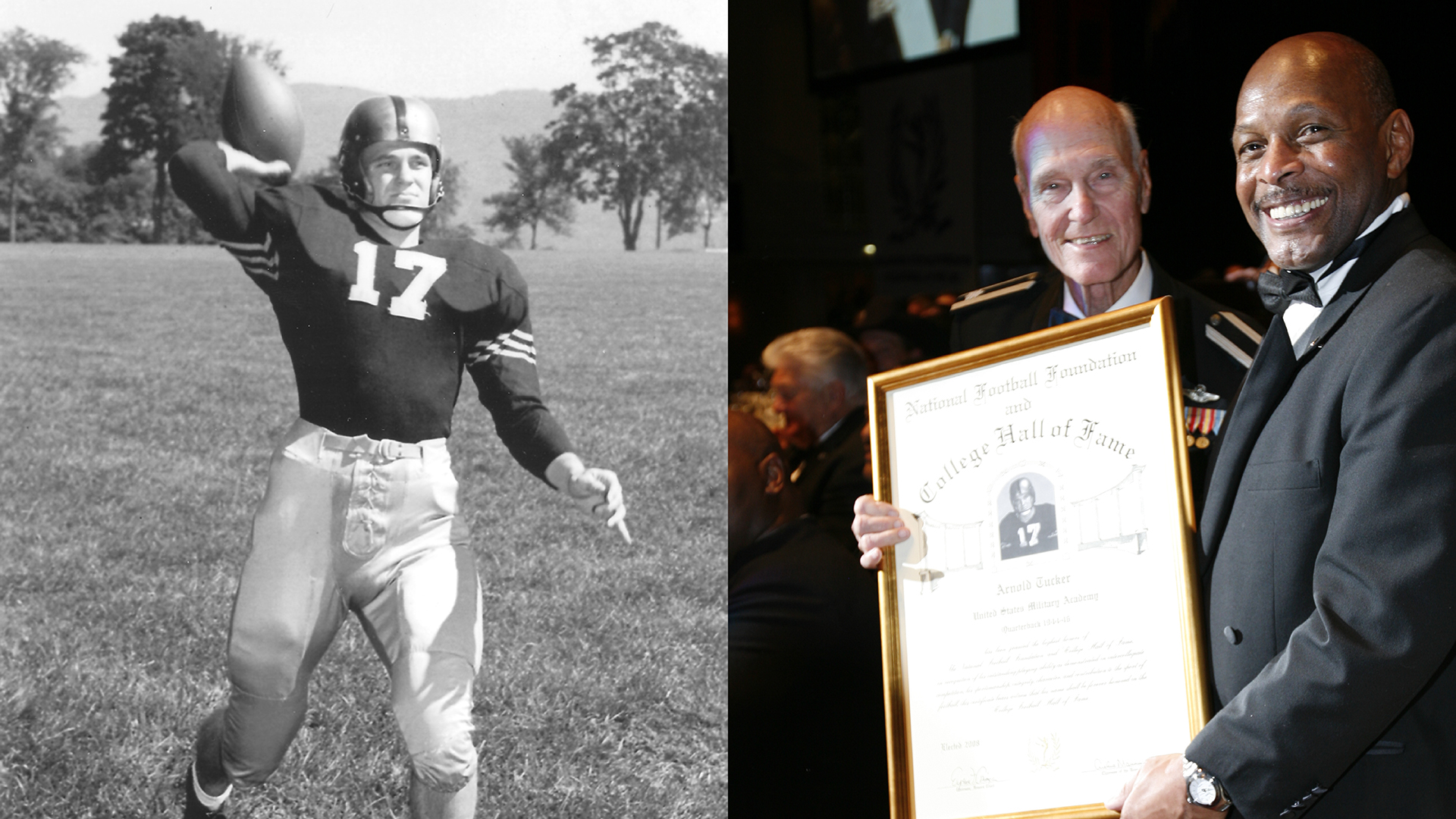
Of particular interest to 58 is the guest speaker at the luncheon. Lt. Col. Arnold Tucker, USAF Retired, USMA 47, was the speaker. Dedicated fans of Army football recognize the name of “Young Arnold Tucker” as the All-American quarterback of the 44, 45, and 46 undefeated Army football teams with Blanchard and Davis as running backs. Some of the class in 1st Regiment remembers him as Company Tactical Officer for Co. F-1 during our plebe and yearling years. Col. Tucker spoke from the heart with stories from his cadet days, his Air Force career, and duty at West Point. Four short stories among many are worthy of sharing with you.

Col. Tucker’s high school classmate went on to attend the Naval Academy and ended up as Captain of the Navy Team for the 1946 Army-Navy game. At some point in the game he and his friend, Bruce Smith, collided. Tucker helped his friend up, spoke to him and proceeded back to the huddle. During film review, Col. Blaik made note of Tucker assisting the Navy. They remain today life long friends.

Arnold Tucker

After graduation and flying training Tucker was assigned to a transport squadron in Japan. Soon selected as aide-de-camp for the commanding general, MG Edward H. White, USMA 24, he was notified that the Air Force had agreed with an Army request, unknown to Tucker, to return him to West Point for the football season as an assistant backfield coach. He objected and asked to stay in Japan with his wife and mother-in-law. Finally the Army Athletic Association informed him that the Association would pay all expenses for his family, if he would return to help the Army team. He finally accepted the assignment with the agreement of General White to return to Japan after the season. With a smile he noted that the assignment as assistant backfield coach was a “piece of cake”. Why? The backfield coach was Vince Lombardi.

Following two years as a Company Tactical Officer, he was assigned to the Commandant’s staff and given an assignment to oversee updating the Blue Book. One of many changes he made was to place Flirtation Walk on limits at night. He asked the cadets present if Flirty was still on limits. A weak “yes sir” suggested that today’s cadets might not see Flirtation Walk in the same light as those classes who were restricted to West Point most of the four years.

Col. Tucker ended on a sad but proud note. In 1967 he was stationed at Cape Kennedy, when a fire aboard the Apollo capsule killed three NASA Astronauts. LTC Edward H. White, II, USMA 52, son of COL Tucker’s commander in Japan, and the first man to walk in space perished in the fire. At the request of the family, Col. Tucker accompanied Ed White’s remains to West Point for burial.

2 Army A’s in Football

Football’s Greatest Decade – – by Bernie Mcarty – http://www.la84foundation.org/SportsLibrary/CFHSN/CFHSNv01/CFHSNv01n1b – – see page 5

This writer believes West Point 1945 is the greatest team of all time. The 1944 Army team may actually deserve that title, but it was never tested. Army was also undefeated in 1946, 1948 and 1949.

Army’s top stars during 1945-1949 were the effulgent “Touchdown Twins”, Glenn Davis and Doc Blanchard, Arnold Tucker, Arnold Galiffa, Rip Rowan, Bobby Jack Stuart and Gil Stephenson in the back-field, and up front” Joe Steffy”, Art Gerometta, Jack Green, “Bill Yoemans”, Joe Henry “Tex” Coulter,Al Nemetz, and the sterling end duo of Hank Foldberg and Barney Poole.

In 1945 the Newspaper Enterprise Assoc. simply picked the entire Army team as its All-American team, stating no group of All-Americans could beat the Cadets. Only a world war could have brought together such a collection of players to one institution. But it took the coaching genius of Col. Earl Blaik to mold the players into a cohesive unit. In truth, Navy personnel was equal to Army’s on an individual basis. The Middies never jelled as a team, however.

The 1951 Army outfit might have been as good as the 1945 Cadets, but the infamous cribbing scandal wiped out the team.

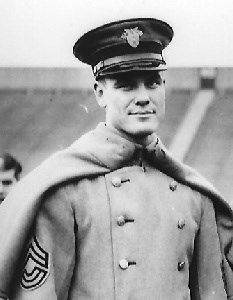
tucker as cadet

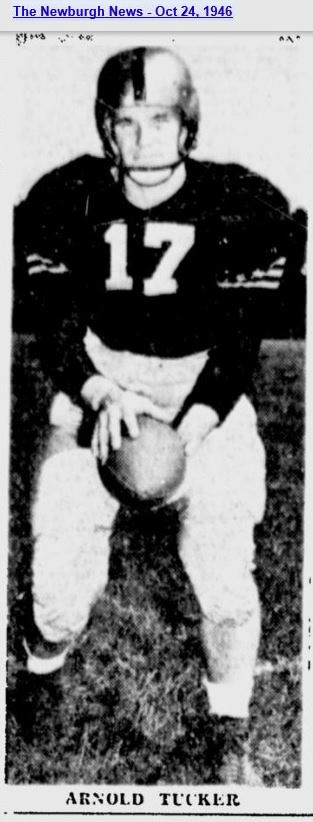
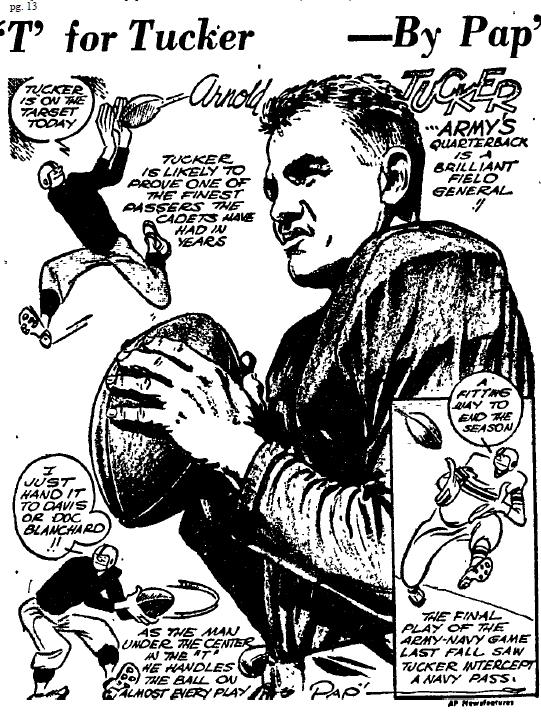
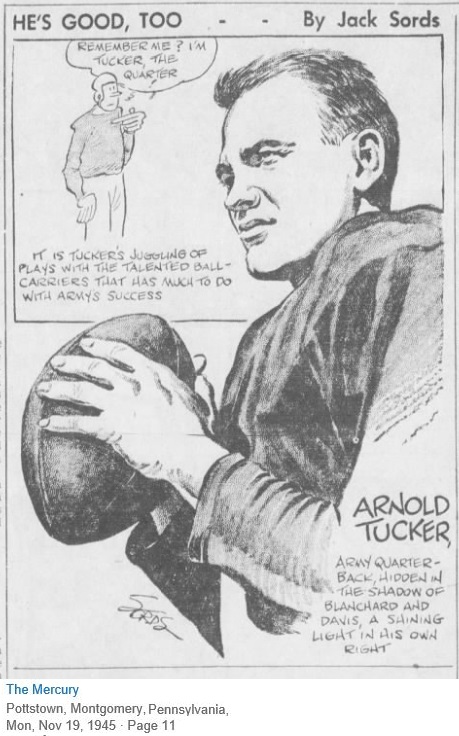
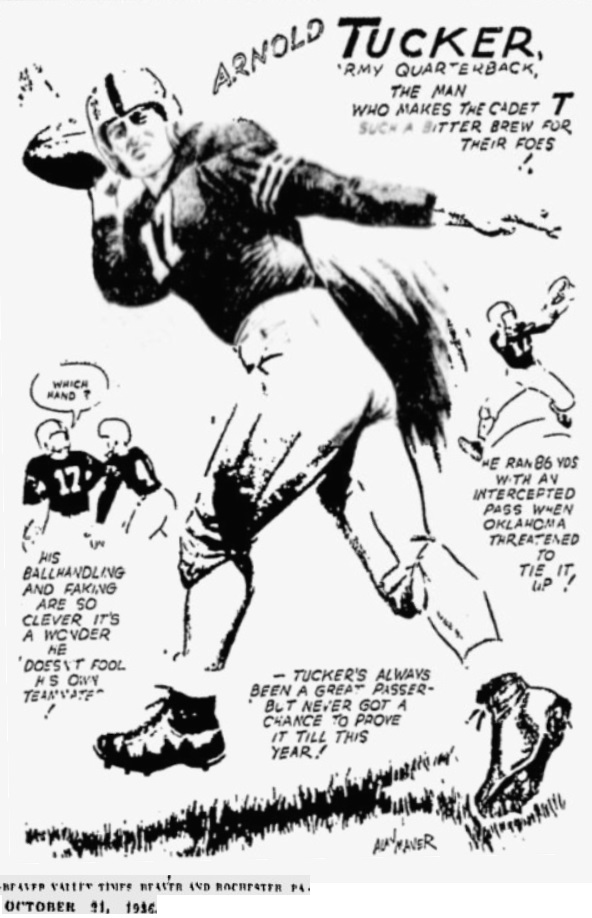
armyfb_1946_tucker_newburghnews_oct241946armyfb_1946_blanchard-davis-tucker_photoarmyfb_1945_arnoldtucker_bypap_csm_oct131945ArmyFB_1945_Tucker_byJackSords_PottstownMercury_19Nov1945armyfb_1946_tucker_byalanmaver_thedailytimes_oct161946

Blanchard-Davis-Tucker_circa1950s

—

Lt Colonel Retired Young Arnold Tucker of Palmetto Bay, Florida, passed away on January 10, 2019 in Miami, Florida. Born January 05, 1924 in Calhoun Falls, South Carolina, Arnold or “Tuck” as he was known, was a loving and dedicated husband to his wife of 51 years, Patricia (Small) Tucker, and father to his two children, Tom and Patty. He was well known in Miami in the 1940’s for his academic and athletic excellence. He attended Citrus Grove Junior High School where he was an Honour student and a recipient of the American Legion Award for athletic leadership and good citizenship.

At Miami Senior High School, he was a member of the National Honour Society and the Key Club, Captain of the basketball team, and selected “All State” basketball player for two years. In football he was the “Running Tailback” on the team which won the Southern High School Championship, was selected as a member of the “All State” and “All Southern” football teams and received the Miami High Sigma Nu Trophy as outstanding athlete for the years 42-43. He was later inducted into the Miami High School Hall of Fame.

Tuck enlisted in the US Navy V-12 Program in June of 1943. As a Naval Assignee he attended the University of Florida and transferred to the University of Miami. As a freshman, he was a member of the varsity basketball and football teams and was awarded the “Iron Man Trophy” for exceptional football participation.

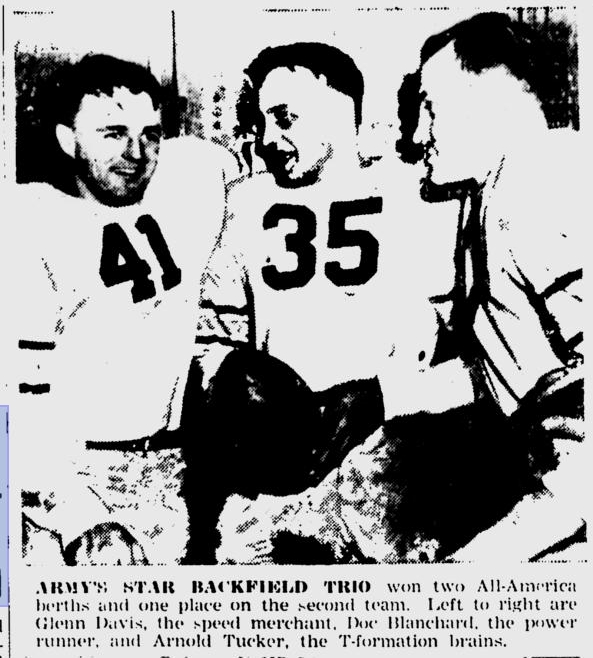
He was discharged from the Navy in July of 1944 in order to attend The United States Military Academy at West Point, New York. He graduated from the USMA and was commissioned a second lieutenant in June of 1947. While a Cadet at West Point, he was Captain of the basketball team and Quarterback on the undefeated National Championship football team for three years. He was designated an “All-American” football player in 1946. He was awarded the James E. Sullivan trophy by the National Amateur Athletic Union as the United States Amateur Athlete for 1946. He was known as “Mr. Topside” in the same backfield with “Mr. Inside” and “Mr. Outside,” Doc Blanchard and Glen Davis.

After graduating from Army Air Corps pilot training, he served as a Bomber Pilot of the B29 with the 307th Bomb Wing at Mac Dill AFB Tampa, Florida as well as a Line Pilot with Military Airlift Command Tokyo, Japan. He also had assignments as Aide De Camp to the Commanding General and was Commanding Officer of the Headquarters Squadron and served as an Operations Officer.

Tuck was assigned as an assistant football coach to Coach Vince Lombardi at West Point while also serving a 4-year tour from 1953-1957 as a tactical officer in the Commandant of Cadets Office.

He graduated from the Air Force Command and Staff College and served a four-year tour of duty at Headquarters US Air Forces, Pentagon Building, Washington D.C. He received an MBA degree from George Washington University in 1963 and then served a four-year tour of duty as Chief of the Telemetry Division of the Airforce Eastern Test Range, Cocoa Beach, Florida from 1963 to 1967. In 1967 he was stationed at Cape Kennedy, when a fire aboard the Apollo capsule killed three NASA Astronauts. LTC Edward H. White, II, USMA 52, son of COL Tucker’s commander in Japan, and the first man to walk in space perished in the fire. At the request of the family, Col. Tucker accompanied Ed White’s remains to West Point for burial.

Tuck served four years in direct support of the Vietnamese War as Director of Airlift, 5th Air Force Headquarters, Tokyo, Japan, as Commander of the C130 Gunship Squadron, Ubon, Thailand and as Chief Special Operations Division, 7th Air Force, Saigon Vietnam.

His last active duty military assignment was from 1971-1974 as the Professor of Aerospace Studies (AFROTC), University of Miami, Coral Gables, Florida. He retired after 31 years of continuous active duty at Homestead AFB, Florida in June 1974.

After Military Retirement he was employed by the University of Miami for two years as the Assistant Director of Athletics for Sales and Promotions.

He received many medals and accommodations, just to name a few: The Distinguished Flying Cross, The Bronze Star Medal, The Meritorious Service Medal, NCAAF College Football Hall of Fame, United States Military Academy Athletic Hall of Fame, and North Carolina Athletic Hall of Fame.

Tuck was predeceased by his wife Patricia (Small) Tucker, one brother Dick Allen Tucker (1920-1943) who was shot down in Europe while serving as a fighter pilot in WW2. 1st Lt. Dick Allen Tucker is buried at Cambridge American Cemetery and Memorial Coton, South Cambridgeshire District, Cambridgeshire, England.

Also preceded by his mother, Sara Victoria (Callahan) Tucker, his father, Floyd Allen Tucker (1893-1970), one sister, Sylvia Victoria Tucker, and his son, Thomas Tucker. He is survived by one daughter, Patricia Nugent, son-in-law, Patrick Nugent, two grandsons, Zachary Cooke and Patrick Nugent II, all of Miami, Florida, and one daughter-in-law, Tina Tucker of Holiday, Florida.

Arnold_Tucker_QB_CollegeFootballHallofFame

https://footballfoundation.org/news/2019/1/16/college-football-hall-of-famer-and-army-legend-arnold-tucker-passes-away.aspx


—-

1957 Football Season

awaiting data

Dale Hall

Football Coach 1959 – 1961

Dale S. Hall 1945 – by E. Douglas Kenna
http://apps.westpointaog.org/Memorials/Article/14644/

Dale Stanley Hall (June 21, 1924 – August 23, 1996) was an American football and basketball player and coach. He played football and basketball at the United States Military Academy, where he was a two-time All-American in basketball and was named the Sporting News Men’s College Basketball Player of the Year in 1945. Hall served as the head football coach at West Point from 1959 to 1961, compiling a record of 16-11-2. He was also the head basketball coach at the University of New Hampshire during the 1951-52 season, tallying a mark of 11-9. source: wiki

Kansas Sports Hall of Fame: Hall, Dale, Inducted 2004
http://www.kshof.org/inductees/2-kansas-sports-hall-of-fame/inductees/142-hall-dale.html
Overview
There have been many great all-around athletes in Kansas high school history, and Dale Hall was certainly one of them. He was first-team all-state in both football and basketball at Parsons High School – as a junior and a senior – and is the only person in Kansas to receive that honor.
Career Highlights
Hall led the Southeast Kansas League in scoring in both football and basketball for three seasons and held the Parsons High School records for career points in basketball (1,158) and career touchdowns in football (35) more than 60 years after leaving the school.
Hall at West Point
At the U.S. Military Academy at West Point, N.Y., Hall was a Helms Foundation All-American basketball first-team selection in 1944 and 1945 and led Army to a 29-1 record, averaging 23 points a game. He scored 23 touchdowns for the 1944 national champion football team and shared the backfield with a pair of Heisman Trophy winners, Doc Blanchard and Glenn Davis, who won the trophy the following two seasons. Hall graduated first in a West Point class of over 800 in athletic skills and had a vertical leap of 39 inches. He earned seven letters in three sports at Army and was a 4.0 student. Hall succeeded the legendary Earl “Red” Blaik as Army’s football coach in 1959 and led his team to a 17-11-2 record in three seasons.
Honors
He is the only Parsons H.S. football player to have his number retired.

Dale Hall: Forgotten Athlete: Parsons Product Sparkled At Army
Lawrence Journal World, Oct 13 1996
http://news.google.com/newspapers?id=XKlAAAAAIBAJ&sjid=bOcFAAAAIBAJ&pg=2976%2C7481352

Good summary of Dale Hall and his Army teams
http://www.helmethut.com/College/Army/NYUSMA5971.html


ArmyFB_1959_DaleHall-newcoach_ChicagoTribune_Feb11959_copy


ArmyFB_1961_DaleHall-MikeCasp_DetroitvsArmy-program_11Nov1961

Sport articles provided by Russ “Skip” Grimm – Class of ’76

Dale S. Hall 1945 – by E. Douglas Kenna

DALE HALL arrived at West Point in July 1942 with a big smile; a high school sweetheart in Parsons, KS; and a pocket of scoring records in football and basketball that still stand today. Entering the Academy straight from Parsons High School, he graduated three years later with the same big smile, ranked in the top 25% of his class, captained the basketball team, won the Army Athletic Association saber as the best athlete in his class, and married his sweetheart on 17 Jun 1945.

Dale’s varied and eminently successful career after graduation was shaped by his integrity, intelligence, good humor, loyalty, and extreme competitiveness. Those qualities carried him swiftiy to leadership positions in the Army, athletics, business, and religious life.

Dale was born in Pittsburg, KS. He later moved to Parsons where he attended high school. Considered the greatest all-around athlete ever in the state, he was elected to the Kansas State High School Hall of Fame in 1993. He received an appointment to West Point, entering in July 1942.

At West Point, Dale Hall excelled in three sports: football, basketball, and tennis. He was a first team halfback on the 1944 National Championship football team, was captain and a first team All-American basketball player in 1945, and played singles and doubles on the undefeated 1945 Army tennis team. He later was inducted into the College Basketball Hall of Fame. He also devoted sufficient time convincing his coaches and fellow cadets that it was possible to enjoy life at West Point.

After graduation and marriage to Laura Faye Stevenson in June 1945, he went to the Armor School at Ft. Knox, KY. V-J Day occurred while Dale was at Ft. Knox, and he was assigned to the 42d Cavalry Squadron, 4th Armored Division in Germany in September 1945. Combining military and athletic activity, he later coached the Second Constabulary Regiment to the European Football Championship in 1947. Dale and Faye spent four years in the beautiful Alpine region of Southern Bavaria. Fast friends made during those years earned friends of the Halls all of their lives.

Dale resigned his commission in 1949 and began his football coaching career at Purdue University. While an assistant there, he received a master’s degree in physical education in 1951.

He spent five years at New Hampshire and Florida as an assistant football coach and also was the head basketball coach at New Hampshire. He returned to West Point in 1956 as backfield coach for his mentor, Earl Blaik, whom he idolized.

Upon Blaik’s retirement following the 1958 season, Dale was selected as head coach. Earl Blaik remarked at the time that “Dale Hall and Vince Lombardi had the two best football minds” that he had encountered during his illustrious career.

While coaching at West Point, Dale developed a warm friendship with GEN Douglas MacArthur and spent many happy hours with him. Leaving an outstanding coaching record of 16-11-2 at West Point, Dale entered the business world with the Corning Glass Company. Within a year, he was promoted to general manager of one of Comingâ•˙s largest plants located in Rhode Island.

He later served as administrative director of The Butler Service Group; president of the Thunderbird Boat Company in Miami; president of Pool Boys, Inc., Sun Products Company; president of his own educational training company; president of James Ffyfe Export/Import Company; and as an associate of the Van Houten Real Estate Company. In business, he was an inspirational leader and specialized in reviving troubled companies.

Strong family ties were the hallmark of Dale’s life. After retirement to Sea Colony in Palm Coast, FL, the Halls devoted most of their time to their three daughters and eight grandchildren, visiting frequently and being totally involved in their lives.

One of Dale’s greatest joys was that his grandson, Daniel Grieve, was admitted to West Point in 1996.

After 49 years of marriage, Faye Hall died on 24 Aug 1994. They had been very active in the Trinity Presbyterian Church for several years, with Dale serving as an elder and Bethel Bible teacher. The church became an increasingly important part of their lives in retirement.

At church and at Sea Colony, they both had been close friends of Marcia Kelly, who later became Dale’s second wife. She is a gracious, warm, and loving person and they were beginning to enjoy a life of leisure, travel, and church work when Dale was stricken on 23 Aug 1996. She continues to live in their home in Sea Colony.

Dale is survived by his wife Marcia; sisters Helen and Lucille; daughters Laura Jean Grieve, Susan Wells, and Janet Uhal; and eight grandchildren.

Dale was blessed by many things in his life. We were all blessed to have been his friend, companion, admirer, and classmate.

E. Douglas Kenna

http://apps.westpointaog.org/Memorials/Article/14644/

Jim Young

Jim Young became a hero at West Point when he built Army back into a winner after more than a decade of despair. When Young arrived as head coach in 1983, Army had won more than four games only once in the previous 11 years. Young didn’t fare any better his first season (2-9). But after installing a ground-oriented attack in 1984, Army football took off.
Young had only one more losing season before retiring after a 30-20 victory over Navy in 1990, his 51st win at West Point, third-most in academy history.

http://www.collegefootball.org/famersearch.php?page=1&submitted=1&school=Army&sortby=school


ArmyFB_1984_ArmyWinning_PittsburghPostGazette_Nov101984


ArmyFB_1984_Resurgence_NewburghEveningNews_Nov281984


ArmyFB_1985_WinningunderYoung_Robesonian_Nov81985


ArmyFB_1988_BlaikonArmy_KentuckyNewEra_Nov151988-1


ArmyFB_1990_JimYoung_vsNavy_FreeLanceStar_Dec101990

Sports articles provided by Russ “Skip” Grimm – Class of ’76