John & Diane Schmidt

In scrutinizing the on-line baseball archives,I found no mention of any member of the USMA Class of 1962 or any of the three teams to which that Class contributed other than the list of lettermen:
Crane, LT DeJardin, AR Eccleston, TF Fox, RM Lilley, RJ McRae, WD Schmidt, JL
awaiting data
Cracked a loud bat on the Diamond. Basketball 4, 3, 2 & 1 (Army A 3, 2 & 1); Baseball 4, 3 & 2 (Army A 3)
The list of basketball lettermen includes Larry Crane (1960 and 1962 — we would like Larry to tell us about 1961), Al DeJardin (1960 and 1962 — same question), Bob Loupe (1962), and Stu Sherard (1960, 1961, and 1962).
The media guide includes a rather odd one of Larry Crane found in”’62 Can Do” in the basketball section on the 1962 Class page.
In scrutinizing the on-line baseball archives, I found no mention of any member of the USMA Class of 1962 or any of the three teams to which that Class contributed other than the list of lettermen:
Crane, LT
DeJardin, AR
Eccleston, TF
Fox, RM
Lilley, RJ
McRae, WD
Schmidt, JL
Larry Crane lives in Newagen, ME, with his wife, Jan. Both are playwrights and have published several works, some of which have won awards. by Dave Phillips – ’62


Chris Stanat played only sparingly in his final year at fullback, but he did score a couple of touchdowns in games Army had in hand. He felt honored, he said, to be included in discussions of Army football these many years later.

He went on to point out that, as a young USMC officer, he was undefeated coaching teams on Okinawa that beat the best the regional Army teams could offer. The details are actually pretty impressive.
 Jim & Carol Ellis

Cadet Brigade Commander, Star Man, Lacrosse, Responsible for the recording of General of the Army Douglas MacArthur‘s Duty Honor Country Farewell Address to the Cadet Corps – on 12 May 1962. Commanded 3d Army, “Patton’s Own” The team is more important than any individual. While individuals may perform outstandingly (we have awards); it is the success of the team that determines the outcome of the battle and the war. As General Patton said, “The Army moves as a team, eats as a team, and fights as a team.”
 Farrell UtterbackPosted November 1, 2017 at 10:06 am I served under, then capt. Ellis in 67. He was my Co.
1962
1st Captain
Star Man
Lacrosse

There were 4 Cadets specifically included in the Pictorial – Jim Kays (who was not there – he was on weekend with Jeane now his wife), Jim Ellis, — —
http://forwhattheygaveonsaturdayafternoon.com/wp-1962/macarthur-dhc
http://usma1962.westpointaog.com/WorthofaWPClass.htm


General Ellis was born in Birmingham, Alabama, on 29 January 1937. He enlisted in the Army in 1955, entered the United States Military Academy in July 1958, graduated from USMA in June 1962, and was commissioned in the Infantry.
Education
General Ellis has a Bachelor of Science Degree from West Point and a Masters Degree in Public and International Affairs from Princeton University. He is a graduate of the Infantry Officer Basic Course, the Army Officer Advanced Course, the Armed Forces Staff College, and the National War College.
Assignments
General Ellis’ past assignments include Company Commander in the 82d Airborne Division at Fort Bragg and in the Dominican Republic; Company Commander and Assistant G3 in the 1st Infantry Division in Vietnam; Advisor in the Delta Region of Vietnam; Assistant Professor of Economics and International Relations at West Point; Infantry Battalion Executive Officer and Deputy Chief of Staff of the 7th Infantry Division at Fort Ord; Commander of a Basic combat Training Battalion at Fort Leonard Wood; Staff Officer in the Office of the Army Chief of Staff and in the Office of the Assistant Secretary of Defense for International Security Affairs; Commander of the 29th Infantry Regiment at Fort Benning; Chief of Staff and Garrison Commander of Fort Benning; Assistant Division Commander of the 10th Mountain Division; Chief, Office of the Defense Representative to Pakistan; Commanding General, 10th Mountain Division and Fort Drum; Deputy Commander in Chief and Chief of Staff, United States Central Command. His last assignment was Commanding General, Third Army, July 18, 1992 to July 15, 1994
Overseas Tours
He served two tours in Vietnam, one in the Dominican Republic with the 82d, and one in Pakistan. General Ellis has had five joint assignments.
Awards & Decorations
General Ellis’ awards and decorations include the Defense Distinguished Service Medal, Distinguished Service Medal, Silver Star, Defense Superior Service Medal with Oak Leaf Cluster, Legion of Merit with Oak Leaf Cluster, Bronze Star with 2 Oak Leaf Clusters, Purple Heart, Meritorious Service Medal with 2 Oak Leaf Clusters, Combat Infantryman Badge, Ranger Tab, Master Parachutist’s Badge, Department of the Army General Staff Identification Badge, and the Office of the Secretary of Defense Identification Badge.
Association of Graduates, U.S.M.A. Register of Graduates and Former Cadets. Cullum no. 23829.
Commanded 3d Army, “Patton’s Own” The team is more important than any individual. While individuals may perform outstandingly (we have awards); it is the success of the team that determines the outcome of the battle and the war. As General Patton said, “The Army moves as a team, eats as a team, and fights as a team.”
Publications
Ellis, James R., Captain. “Hot Pursuit.” Cavalry Journal. 77:Sept.-Oct., 1968, 9-11.
Our Army is a team. As General Patton said, “The Army moves as a team, eats as a team, and fights as a team.” The team is more important than any individual. While individuals may perform outstandingly (and we have an awards and promotion system to recognize outstanding performance); it is the success of the team that determines the outcome of the battle and the war. We train cadets at West Point to be outstanding individuals and to work together to accomplish team goals. But mostly we train them to be leaders of teams – Platoon through Theater Army. Patton understood the importance of teams and their accomplishments. I think General Patton would support the efforts on behalf of the ’53 Football Team.
Jim went on to say —
In my last three years on active duty, I was twice President of the
promotion board selecting LTC to COL. This was a very tough selection
because it was the first time that less than half of those eligible
would be selected. The selection rate from Captain to Major was about
75 to 80 % and the rate from Major to LTC was close to 65 %. But the
rate from LTC to Colonel was 40 % or less.
It was made even tougher by the fact that all the candidates were dedicated officers who had put 18 to 21 years into their careers with the attendant disruptions, relocations and dangers associated with our chosen profession.
The Army treated this selection process with extreme care. The promotion board was made up of 20 General Officers from all over the Army, and it met for six weeks. The board make-up was carefully chosen – every major command and line branch was represented (Chaplain, Medical and JAG had their own boards). Also, there were female and minority members.
Fairness and impartiality had to be practiced and outwardly perceived. The guidance was very clear and in two distinct but supporting parts:
Select the best qualified who meet the needs of the Army. Read that carefully. We couldn’t select just combat arms officers; there were needs in all branches. And, an Army with large numbers of minority and female troops had a need for upward mobility of minority and female officers.
The Army Athletic Hall of Fame selection committee is facing a similar task. They must select the best qualified who meet the needs of the graduates and current (and future) cadets – all of them. Each sport must be considered – team and individual, male and female. And, they must look at “old timers” as well as more recent candidates. I’m sure the selection committee members are all working under tough pressures.
PURPOSE
The purpose of the Army Sports Hall of Fame, located within the Kenna Hall of Army Sports, is to honor the athletes, coaches, teams, administrators and others who have brought distinction to Army athletics over its many years of existence. Those team and individual achievements deemed worthy of admittance, based on the established criteria, will be formally recognized with displays in a designated Hall of Fame area of the Kenna Hall of Army Sports, located within the Kimsey Athletic Center.
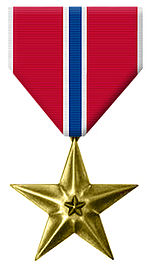
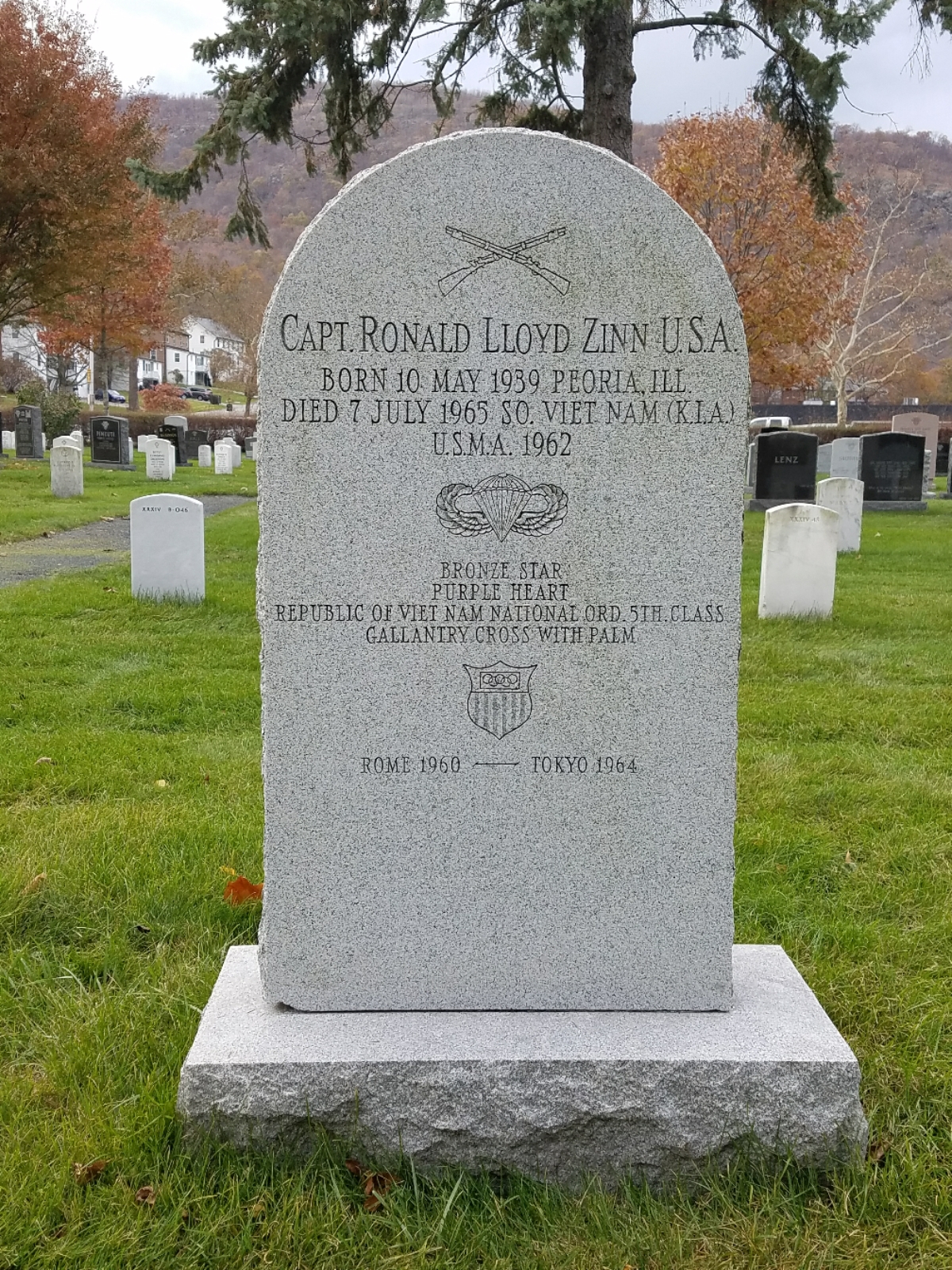
 7/7/1965 Ronald L. Zinn


Two Army As, 1 each in Track & Cross Country.
First Cadet to be selected to a USA Olympic team; competed in race-walking at the 1960 Olympics and was top American finisher in the 20K race. Also a key contributor on the Academy cross-country and track teams. Ron was Killed in Action Vietnam 7/7/65 – – John Easterbrook
Ron was honored with a Brigade Parade
RONALD L. ZINN 1962
Cullum No. 24143-1962 | July 7, 1965 | Died in Vietnam
Interred in West Point Cemetery, West Point, NY
Ronald Lloyd Zinn was a cadet who possessed several outstanding virtues, but it was his determination to succeed that allowed him to overcome any difficulty. Although marching, and even running, were sometimes difficult for Ron, he went on to become an Olympic class race walker. He represented the U.S.A. in Rome and again in Tokyo.
He was relentless in his efforts to succeed as a cadet and as an Olympian. His loving parents and family saw how his efforts bore fruit time and time again. They were extremely proud of Ron. The Zinns knew he was one of “America’s finest.” COL Richard “Dick” Kent remembers his former roommate: “Even after 41 years, I remember Ron as a truly modest, honest, and straightforward person with a dry sense of humor. He made lots of Corps Squad trips but usually managed to bring something back for his roommates. He spent more than a few weekends at our home in Manhattan Beach and was well liked by everyone there. I guess the thing that sticks with me the most after all this time is my recollection of Ron’s levelheadedness and his fundamental decency.”
That’s the way I remember Ron, too, as we shared the rigors of cadet life in Company C1. Ron and I also ended up in the same company Yearling year at Camp Buckner. This was fortunate for both of us, since our company won the Buckner Stakes training competition. As a result, Ron and I both celebrated Labor Day weekend with a three day pass in NYC. I still have a picture of us standing around the piano at Joe King’s Ratskeller, our glasses raised in unison to the beat of our favorite drinking song. Another fond memory of Ron occurred during our First Class year when I was on holiday leave. Sitting in the basement of my girlfriend’s house, I turned on the television and tuned in to a track meet being held at Madison Square Garden. Ron was clearly visible on the screen as he power walked his way to the front of the pack. My immediate reaction was to proudly exclaim, “That’s my classmate, Ron, and he’s on his way to another victory!”
Dick Kent also recalls memories from First Class year, after Ron had been in the Olympics: “Lots of other cadets, myself included, would challenge Ron to informal walking races. After all, how hard could it be? We all probably harbored secret hopes of beating the champ. At first, Ron would sort of humor us and let us win. If we became too obnoxious or insistent, he would reluctantly, and with a degree of resignation, show us the basic points of Olympic walking and how sorry we really were. It was done without malice and in genuinely good humor, but it left me in total awe of Ron’s capabilities and self discipline. If you pressed him for stories of what the Olympics were like, he would never talk about himself but would make an observation about his fellow athletes and his respect for them, even those from Warsaw Pact countries.”
Ron is not only remembered by family and classmates, but also by the comrades in arms with whom he served. On 21 Apr 2000, Ron’s company commander in Viet Nam, Infantry LTC Roy Lombardo, placed a wreath on Ron’s grave at the West Point cemetery and addressed the assembly of “Bravo Bulls.” He said: “We, veterans of Co. B, 2/503d Parachute Infantry Regiment, assemble today in memory of LT Ron Zinn, not to praise you, but to remember you. There are 64 veterans of Company B, in contact by letters and email, and all who served with you remember you with camaraderie and respect.”
In his eulogy, LTC Lombardo observed: “We remember a young officer, described by his Military Academy classmates as fun loving yet ascetic in his physical training regimen; a tough wrestler with a unique ability to absorb pain while outlasting his opponents; a world class track Olympian, participating in the 1960 Olympics while still a cadet, and in the 1964 Olympics after commissioning; as a lean, muscular lieutenant who joined us on Okinawa and led the company track team to the battalion championship. We remember a newly married officer, anxious to become proficient at his Infantry assignment but equally anxious to have his bride, Barbara, join him on Okinawa.
“We remember a dedicated soldier who worked night and day to master his trade in the jungles of War Zone D and to win the trust of his men, for whom he cared deeply. We remember a determined leader, who, on 7 July 1965, rushed to the aid of his wounded squad leader, only to succumb to enemy fire. In so doing, you became the first officer KIA in the 173rd Airborne Brigade and one of the first in Viet Nam.”
Inspired by Ron’s selfless example, Bravo’s battered heroes turned the tide of battle. In the process, they garnered a Medal of Honor, two Distinguished Service Crosses, four Silver Stars, 14 Commendation Medals, and more than 100 Purple Hearts. Ron’s valor was emulated over and over again.
In addition to the military, the athletic community also commemorates Ron. Each year in Asbury Park, NJ, an event is held for all wouldbe champion walkers, and I even participated in the CPT Ronald Zinn Memorial Races one year. I didn’t win any prizes, but I still treasure the Tshirt I received bearing his name.
There are many of us still left on this earth who never will forget Ron as a brave soldier, a worldclass athlete, and a real class guy. His name is not only engraved on the Viet Nam Memorial Wall in Washington, DC, and his tombstone in the West Point Cemetery, it is also etched in the hearts of all of us who were fortunate enough to have known him.
Sleep well, old friend, you are not forgotten. Pax vobiscum.
“At the 1964 Olympic Trials for 50 kilometers, Chris McCarthy was walking in a pack that included Army Lieutenant Ron Zinn (later killed in Vietnam) and Don DeNoon of the Southern California Striders, who holds the national indoor mile record. At one point McCarthy attempted a burst, and an official following on a bicycle shouted, “McCarthy, that’s one warning on you!” Zinn and the others complained to the official that according to the rules he couldn’t judge from a moving vehicle. The judge pedaled ahead, sulking, and descended from his bicycle. When the group passed him, McCarthy was back walking cautiously in the middle of the pack. “DeNoon,” shouted the judge, “that’s one warning on you!” DeNoon eventually received a second caution and had to leave the race. McCarthy went on to win…Many race walkers are former distance runners who started walking either out of curiosity or necessity. Ron Zinn switched from cross-country to walking following an arch injury….At the National AAU championships in St. Louis in 1963 no walking judges appeared. Ron Zinn covered two miles in 14:03.6, erasing Henry Laskau’s championship record by almost 20 seconds. Chris McCarthy, who was then putting out a magazine for race walkers, published a picture of Zinn finishing with both feet off the ground. “Ron Zinn soars to victory,” said the caption.”
Ronald Zinn of Orland Park, III., a West Point first classman, set course record of 1:4I:5 1 in winning National AAU 20-kilometer championship walk at Buffalo, finished 26 seconds ahead of Jack Mort-land of Ohio Track Club of Columbus.
September 21, 1964
A Roundup Of The Sports Information Of The Week
Chris McCarthy of Chicago, Bruce MacDonald of New York and Mike Brodie of Pleasant Hill, Calif. heeled-and-toed their way on to the U.S. Olympic Walking Team in the 50-kilometer trials in Seattle and joined Ron Zinn of West Point, N.Y.. Lieut. Ron Laird of Pomona. Calif. and Jack Mortland of Columbus. Ohio, who had earlier qualified for the squad in the 20-kilometer walk.
I have just learned of the death in action in Vietnam of a fine friend, Lieut. Ron Zinn. I am sure those who were with the U.S. Olympic team in Tokyo, where Ron finished sixth in the 20-kilo walk, must be saddened by this news.
In its way, Ron’s performance in this race was as important to American race walking as was Billy Mills’s brilliant 10,000-meter victory to distance running.
I roomed with Ron both in Tokyo and on a trip to Moscow in 1961. He was a fine athlete and sportsman, a gentleman and as fierce a competitor as I have ever met.
JACK MORTLAND
Located at Wall Municipal Complex, the 2010 Captain Ronald Zinn 5K Run and 10K Walk was directed by Shore AC’s 1956 Olympic Racewalker Elliott Denman.
The event is meant to celebrate the life of the late great Olympian Ronald Zinn, an Olympic racewalker, West Point Alum, and a Captain in Vietnam, Ronald Zinn was killed in war leaving behind a true legacy. Before the race began, Elliott spoke to the runners at the start of the race about the life of Captain Ronald Zinn.
by Dave Phillips 62 Sports Historian
How could the remarkable race walker Ron Zinn not be included in the Army track and field media guide? He was a member of two US Olympic teams and I remember well watching the beginning of one of his Olympic races on television (black and white). He was in the lead as the walkers left the stadium. I was so proud of him and West Point I practically levitated. Tom Feeley ’62
He earned Class Numerials in Track & Field, Cross Country and Wrestling, while earing Army A’s in Track & Field and Cross Country
He was a fine young officer, revered by his men, and was killed in RVN. Link to site dedicated to Ron —
http://www.virtualwall.org/dz/ZinnRL01a.htm
Web page for West Point Grave Site
http://www.findagrave.com/cgi-bin/fg.cgi?page=gr&GRid=6791979

BENNING 1962; ONE MILE RUN. “Gun goes off and everyone bolts from the starting line. Wait! Ron is WALKING! As the runners quickly leave him in the dust, the Cadre goes NUTS! SCREAMING, “RUN! RUN!” and a few other choice remarks. But NO; Ron keeps walking, pumping his elbows. At the 3/4 mile mark, Ron starts passing stragglers by the dozens. It’s now obvious Ron will be well under the “TIME TO BEAT” 6 MINUTE MILE and everyone on the sidelines [the next group of runners AND the Cadre] starts clapping and cheering for Ron as he walks across the finish line. Glad I was there – thanks, guys. Way to go, Ron. Tom Feeley ’62
May 2013 VFW Article provided by Steve Sperman 


–
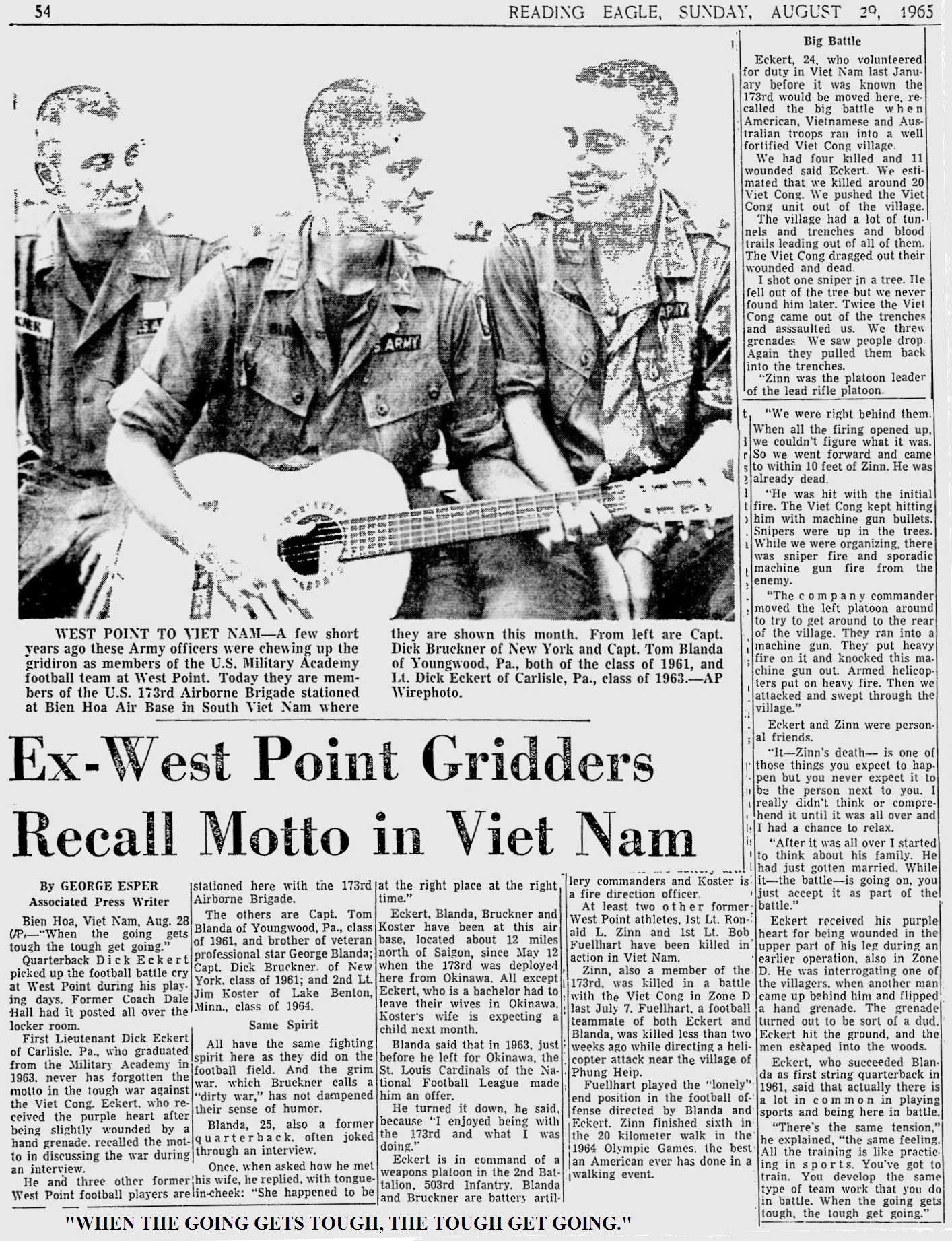
| BIRTH |
Peoria, Peoria County, Illinois, USA
|
|---|---|
| DEATH | 7 Jul 1965 (aged 26)
Ho Chi Minh (Saigon), Hồ Chí Minh Municipality, Vietnam
|
| BURIAL |
West Point, Orange County, New York, USA |
| PLOT | Section XXXIV, Row D, Grave 141 |

 |
 |

|
|||||||||||
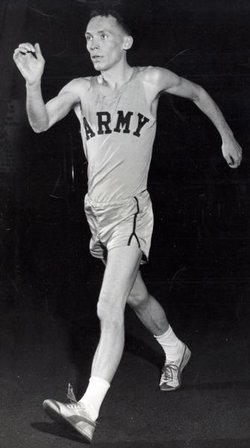
This Photo depicts what it takes to achieve the Impossible. I would have liked him to continue Wrestling. He earned a 62 for his Gray Jacket. A Teammate
“Ron was one of the most determined individuals you could ever meet,” Jerry Zinn said of his older brother. “If there was a challenge, he was up to it.”
15045 West Ave Orland Park Il 60462
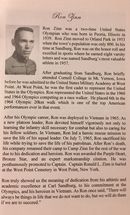
Biography prepared for the sign at the Ronald L. Zinn Memorial Garden and Captain Zinn’s induction into the Carl Sandburg High School Athletic Hall of Fame.
George & Karen Kirschenbauer
George was our Class President for a number of years. Ted Stroup replaced George.
“Kirschenbauer, Kirschenbauer, I saw George Kirschenbauer hit a home run over the roof of Cullum Hall” Comment by son of Mr. Link (PE Dept.) Spring of 2006, when George’s name was mentioned. The excitement in his voice was as if was May of 1962. What we did made a difference.
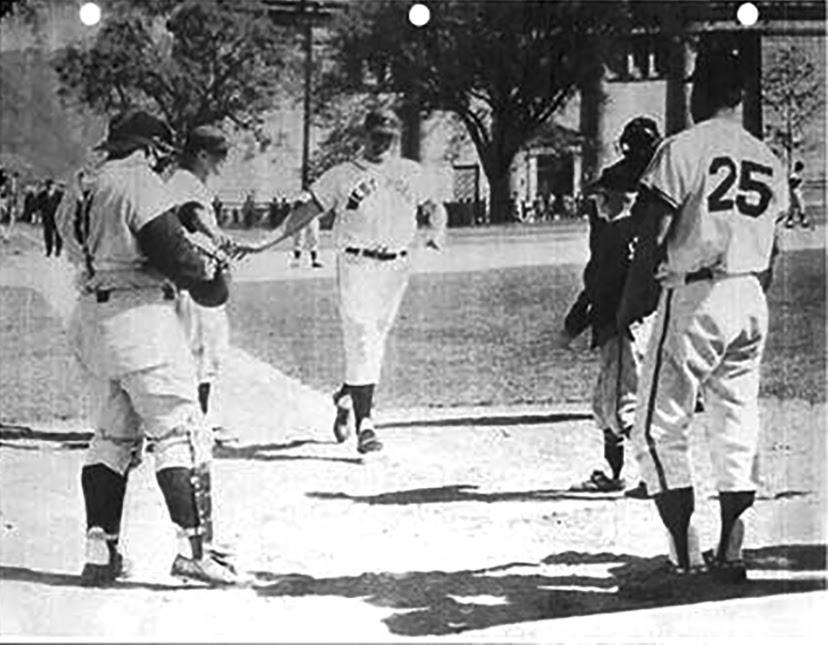
His home run off Yankee Cy Young winner, Bob Turley (Yogi Berra to George as he crossed home plate, “Well son, you’ve seen the last inside fast ball you’re going to see today, so hang on to your hat.”


Barry & Nancy Butzer
Barry & Nancy Butzer 

To get through the line I depended especially on three teammates and Classmates, Mike Casp (our team captain) – at Right Guard, Bill Whitehead – at Center, and Barry Butzer – at Left Guard. They were great Army football players. We lost Mike and Bill in Vietnam. Barry was Killed in a auto accident several years ago – – by Al Rushatz


Maggie Dixon contributed much to West Point athletics
By RUSTY WILKERSON — Class of 62 Can Do
Back on March 14, I wrote about my quandary when the Army women were about to meet the Lady Vols in the NCAA tournament and what I predicted would happen. As one of my readers wrote, my forecast was right on target. Army got clobbered, both teams played with heart, and Candice Parker got not one dunk but two – and I watched the whole game from start to finish.
What I didn’t foresee – and no one else did – was the sudden and unexpected death of Maggie Dixon, the Army coach, of a heart problem at 28.
I didn’t know Dixon, but like a lot of other West Point grads I followed the whole, sad saga of her death as best as I could on the West Point Web site, ESPN, etc.
In these days death is a fact of life for the cadets and faculty at West Point. That same week a young captain (and pilot of an Apache gunship) was killed in Iraq.
Somehow though, Maggie Dixon’s death was even more tragic, if that can be. After all, the military academy is in the business of training young men and women to lead our soldiers into harm’s way. But a basketball coach – and one who wasn’t much older than her players and in her first year as a head coach? It shows us how life can be totally unpredictable (and unfair).
The superintendent said she stood out as a leader in “a house of leaders” and that she left behind 20 more “Maggies.” One of her favorite comments to her players was “Adversity, ladies, learn to deal with it.” From their comments at her funeral and memorial services, she has made a lasting impression on all of them that they will carry for the rest of their lives – not a bad thing for someone starting a military career.
I would bet they’ll be the team to beat in the Patriot League next year. Instead of winning one “for the Gipper,” it’ll be “win this one for Maggie.”
But why, other than the obvious sadness of a life cut so short, the major impact on the West Point community and, more to the point, someone like me, who is so far removed? I’m a little slow, but I finally figured it out.
Army, in the last 30 or 40 years has not been much of a “player” in the collegiate sports world as compared to the “days of old” as my kids call it. The days of the lonesome end, and Heisman award winners Dawkins, Davis and Blanchard are long gone. Most of the major stars in the world of college athletics probably couldn’t make the grades to get in one of the service academies. Even if they could, they can’t compete for the “big bucks” as a professional for five years after they graduate.
Then, not from the football field where one would expect – and seemingly out of the blue – comes a young, first-year head coach who brings, of all things, through the Army’s women’s basketball program at a predominantly male institution, excitement back into Army athletics, something no coach has been able to do in decades. (I read in one of the columns eulogizing her that she was “a Pat Summit in training.” Her brother, Jamie Dixon, coach at Pitt, said after she was buried, “They’ll never look at women the same way here.” He may be right.
Maggie Dixon was buried in the West Point Cemetery with some familiar (and not too familiar) names: Gens. Winfield Scott, George Goethals (Panama Canal), Lucius Clay, George Custer, William Westmoreland, “Molly” Corbin (“Molly Pitcher” of Revolutionary War fame), Col. Ed White (astronaut), and a lot of others that most of us have never heard about (including one of my roommates).
Maggie Dixon’s grave is next to Glenn Davis (of Davis and Blanchard fame) and Earl “Red” Blaik. Not bad company for a coach to spend eternity with!
Rusty Wilkerson is a Kingsport resident. E-mail him at wilkersonbr@earthlink.net. Article reprinted with permission from the Kingsport Times News, Kingsport, TN.
John & Elleen Dilly
He practiced and practiced. After 4 years of practice he finally broke into the top ten, but with all the practice he had never qualified. He had never earned Class Numerals, nor a Monogram. Finally in the last match of Firstie Year he placed fifth — earning his Army A. He was an Army Rifleman.
Buzz & Jeannine Kriesel
Against Wisconsin he was head butted. The Ref asked if he was OK, Buzz told Coach to fix him. Coach Alitz stuffed his nose with tissue, waved his ever ready ammonia capsule, and Buzz stepped back on the mat. When Buzz grabbed his opponent, lifted him high in the air, the Ref said let him down gently. Buzz did and pinned him, providing 5 points of the 23 and 8 win. On Christmas leave, on an unheated Air Force transport, Frank Reasoner’s feet were frozen, Buzz unzipped his dress jacket, and had Frank push his feet against Buzzy’s chest. Oh lastly, Jeannine was in the stands at Wisconsin, Buzz might have executed as he did for her benefit. (Write up by a Team Mate)


 7/12/1965
 Frank Reasoner & Sally Nordstrom

3d Recon Bn, 3d Mar Div
Frank once told me that he wanted 3 things – 30 Years in the Marine Corps, own a bar outside the Main Gate of a Marine Base and Earn the Medal of Honor. Frank was Killed in Action 12 July 1965. He was Awarded the Medal of Honor for his actions – – by a Wrestling Teammate
Just a note about my Team Mate – I had a vicious cross face which I once practiced against Frank. He was meaner than I – Frank bite me.

Class of 1962
B Squad 150
123 Pound Wrestler – My Teammate
Brigade Boxing Champion 4 years running.
Reasoner Hall of Arvin Gym
USS Reasoner a Navy Destroyer
Camp Reasoner
Rank and organization: First Lieutenant, U.S. Marine Corps, Company A, 3d Reconnaissance Battalion, 3d Marine Division.
Place and date: near Da Nang, Republic of Vietnam, 12 July 1965.
Entered service at: Kellogg, Idaho.
Born: 16 September 1937, Spokane, Wash.
Citation: For conspicuous gallantry and intrepidity at the risk of his life above and beyond the call of duty. The reconnaissance patrol led by him had deeply penetrated heavily controlled enemy territory when it came under extremely heavy fire from an estimated 50 to 100 Viet Cong insurgents.
Accompanying the advance party and the point that consisted of 5 men, he immediately deployed his men for an assault after the Viet Cong had opened fire from numerous concealed positions. Boldly shouting encouragement, and virtually isolated from the main body, he organized a base of fire for an assault on the enemy positions. The slashing fury of the Viet Cong machinegun and automatic weapons fire made it impossible for the main body to move forward. Repeatedly exposing himself to the devastating attack he skillfully provided covering fire, killing at least 2 Viet Cong and effectively silencing an automatic weapons position in a valiant attempt to effect evacuation of a wounded man.

As casualties began to mount his radio operator was wounded and he immediately moved to his side and tended his wounds. When the radio operator was hit a second time while attempting to reach a covered position, he was courageously running to his aid through the grazing machinegun fire when he fell mortally wounded.
His indomitable fighting spirit, valiant leadership and unflinching devotion to duty provided the inspiration that was to enable the patrol to complete its mission without further casualties. In the face of almost certain death he gallantly gave his life in the service of his country. His actions upheld the highest traditions of the Marine Corps and the U.S. Naval Service. He was awarded the Medal of Honor.

Army charges to 45-27 Victory in the Army – Navy Prep School Football Game. Reasoner Trophy presented for first time.
Ft. Monmouth, NJ, Saturday, 15Nov08.
The gray skies and intermittent rain did nothing to dampen the spirits of the future cadets of the USMA Class of 2013, who charged to a 45-27 decisive victory over the future midshipmen of the USNA Class of 2013 at the Annual Prep School football game at Ft. Monmouth, NJ on Saturday.
Army scored first, early in the first quarter, and Navy came back, minutes later to tie the score at 7-7. Army scored again, and Navy was never able to catch up. Army took advantage of the speed and agility of its running backs and free safety to rack up the yards and put points on the scoreboard. The Army QB did well in the passing game, also.
Navy’s QB had a good arm, with good distance, but Army pass defense kept the Navy receivers from completing many of the long passes.
The final score reflects the excitement of the game. Army scored six touchdowns and a field goal, and Navy had four touchdowns, and a failed 2-point conversion.
The game also marked the first presentation of the 1LT Frank S. Reasoner Trophy to USMA Prep. 1LT (USMC) Reasoner (USNAPS ’58 / USMA ’62) was posthumously awarded the Medal of Honor for conspicuous gallantry near Da Nang, Vietnam. The trophy will be awarded each year to the winner of the Army – Navy Prep School Game, and is analogous to the Commander-in-Chief’s Trophy for the winner of the Army – Navy – USAFA football series for the Service Academies.
The Trophy was inspired by discussions between the Commanding Officer of USNAPS, Capt. L. Hart Sebring, and the Commandant of USMAPS, COL Tyge Rugenstein. The final impetus came from COL (USMC Ret) John “Rip” Ripley, USNAPS ’58 / USNA ’62, with members of USMA ’62; and was accomplished in the last weeks before Ripley’s unexpected death. Members of the USNAPS ’58 class matched a generous donation from an anonymous USMA ’62 graduate to create the trophy and deliver it to the game.
At the presentation ceremony, USNAPS ’58 / USNA ’62 were represented by LtCdr. Barry Ketner; and USMA ’62 by John Fee and COL (Ret) Bill Dieal.
FRANK S. REASONER 1962
Cullum No. 24302-1962 | July 12, 1965 | Died in Da Nang, Vietnam
Interred in Kellogg, ID
“Encourage us in our endeavor to live above the common level of life.” These words from the Cadet Prayer seemed to be the code by which Frank Reasoner lived—and died. Certainly on 12 July 1965, half a world away, in a nottoopopular conflict, Frank “lived above the common level of life,” as he laid down his own life in order that another might live. His supreme sacrifice was in every way consistent with his steadfast devotion to duty and his concern for his fellow man.
Born in Spokane, Washington, on 16 September 1937, Frank began his military career on 2 June 1955 when he enlisted in the U.S. Marine Corps. Subsequently he won a competitive appointment to the Military Academy and entered with the Class of 1962 in July 1958. His four years at the Academy were not easy ones. Unlike most of his classmates Frank had been separated from the academic environment for a few years, but his drive and determination carried him over hurdles where lesser men would have stumbled. Although the work at West Point was hard and demanding, Frank still found time for extracurricular activities, particularly sports. He was, above all, a superb boxer, winning four different weight classes, a record unmatched by any other cadet. So high were the standards that Frank set for himself in any competition that he managed to excel in any sport he tried. Nothing short of perfection satisfied him, a competitive spirit that carried over into his short, commissioned career. At graduation he chose to be commissioned in the Service he loved the most, the U.S. Marine Corps.
After a six month tour at Quantico, Virginia, during which time he married Sally Jo Dimico, Frank took his bride to Hawaii where they were stationed with the 1st Marine Brigade at Kaneohe Bay, Oahu. A year later, their son, Mickey, was born.
Meanwhile, several thousand miles away, political unrest and conflict in South Vietnam were beckoning Frank to his destiny. In March 1965, the 1st Marine Brigade set sail for Vietnam. During the four months preceding his death, Frank distinguished himself in combat, earning the respect and admiration of his subordinates, his contemporaries, and his superiors. On 12 July, Frank met his death while saving another Marine’s life. It was a tragic loss to his family and to his many friends. His final sacrifice earned for him his country’s highest award for valor, the Congressional Medal of Honor.
On 29 August 1965, Camp Reasoner was dedicated in Danang, South Vietnam, as a lasting tribute to Frank’s selfless devotion to duty. The hand lettered sign at the gate reads:
This camp is dedicated in honor of First Lieutenant Frank S. Reasoner, USMC, whose courage, honor, and devotion were displayed “above and beyond the call of duty” during his valiant action at An My in the Da Nang Sector of Vietnam on 12 July 1965, while serving as commanding officer of Company A. First Lieutenant Reasoner sacrificed his life to save one of his wounded Marines. “Greater love hath no man.”
On 31 January 1967, in the office of the Secretary of the Navy, the Medal of Honor was presented to Frank’s widow and son. The citation accompanying the medal reads:
“For conspicuous gallantry and intrepidity at the risk of his life above and beyond the call of duty while serving as commanding officer, Company A, 3d Reconnaissance Battalion, 3d Marine Division in action against hostile Viet Cong forces near Da Nang, Vietnam, on 12 July 1965. The reconnaissance patrol led by Lieutenant Reasoner had deeply penetrated heavily controlled enemy territory when it came under extremely heavy fire from an estimated 50 to 100 Viet Cong insurgents. Accompanying the advance party and the point that consisted of five men, he immediately deployed his men for an assault after the Viet Cong had opened fire from numerous concealed positions. Boldly shouting encouragement and virtually isolated from the main body, he organized a base of fire for an assault on the enemy positions. The slashing fury of the Viet Cong machinegun and automatic weapons fire made it impossible for the main body to move forward. Repeatedly exposing himself to the devastating attack, he skillfully provided covering fire, killing at least two Viet Cong and effectively silencing an automatic weapons position in a valiant attempt to effect evacuation of a wounded man. As casualties began to mount, his radio operator was wounded, and Lieutenant Reasoner immediately moved to his side and tended his wounds. When the radio operator was hit a second time while attempting to reach a covered position, Lieutenant Reasoner, courageously running to his aid through the grazing machinegun fire, fell mortally wounded. His indomitable fighting spirit, valiant leadership, and unflinching devotion to duty provided the inspiration that was to enable the patrol to complete its mission without further casualties. In the face of almost certain death he gallantly gave his life in the service of his country. His actions upheld the highest traditions of the Marine Corps and the United States Naval Service.”
Here, certainly, was a Marine who “lived above the common level of life.”
—A Marine classmate
Al & Lynda Rushatz 


6 Army A’s An All American in Football & Wrestling. Inspirational Guide in Creating the 62′ Room in Arvin Gym. 145th Avn Bn RVN, Def Rep India, 8th Cav RVN, Co 269 Avn Bn, G3 XVIII Abn Cps. DPE USMA. (Flew Mission after Mission attempting to contact Glen Blumhardt when the Vietnamese Regiment Glen was Advising was over run. Glen led his RTO out, the only survivors)
Doug Blubaugh – 1960 (160.5 Pounds) Olympic – told me “I would never have won the Gold Medal if it were not for Al Rushatz”. Day after day at the far end of our Wrestling Room Doug and Al would go at it.
He came to West Point from the Lehigh Valley of Pennsylvania and, during four years as a cadet, set the standard for athletic prowess and physical development. He was recognized as an All-American in two major Academy sports and earned both the Army Athletic Association Award for most valuable service to athletics during his career as a cadet and the 306th Infantry Award, presented in the name of the late Walter B. Tunick, for excellence in physical education. He put his stamp on cadet physical development during 10 years in the USMA Department of Physical Education, the last six as Deputy Head of the Department. This latter period was marked by unprecedented improvement in cooperation among the Dean, Commandant, and Director of Athletics and such initiatives as the Master Fitness Trainer program and realignment of responsibility for competitive cadet clubs. He conceived of and designed the ’62 Room in the Cadet Gymnasium, lauded by three Superintendents as the finest class gifts of their tenures. During this period, he received a President’s Council on Physical Fitness and Sports Award.

He was a three-year starter in football in an era of shorter careers and seasons, one-platoon football, and competition against the likes of Nebraska, Penn State, and Michigan. Running from the fullback position, he led the team in scoring and rushing two years and graduated seventh in career yards rushing. He was selected by the American Football Coaches Association as an All-American in 1961. He was inducted into the Lehigh Valley Chapter of the National Football Foundation and College Hall of Fame in 2002. He played on offense and defense in the 1962 East-West College All Star game in Buffalo, NY, on June 29, 1962.


Doug Blubaugh Army Assistant Wrestling Coach had this say about Al – – “If it were not for Al Rushatz I would never have won my Olypmic Gold Medal”. When Al was a Plebe & Yearling, Doug practiced against him daily. Doug also stated “Al would have been a National Champion if he had not torn up his knee”

Within days after the Navy football game, he would drop from his 195 pounds football weight to begin the wrestling season at 177 pounds. In three years, he lost but once in dual meets. He was the Eastern Intercollegiate Wrestling Association champion at 177 pounds in 1960. He became Army’s second wrestling All-American with his third place finish in the 1960 NCAA tournament. He was an inspirational team captain First Class Year, drawing fans to matches just to see him compete, while battling crippling injuries.
Unlike most athletic programs, Army’s is effective in supporting the purpose of the institution: the development of leaders of character for careers in the armed forces. This man embodies that concept. He was a hero to his classmates and a role model for all four cadet classes. Nearly every day during his 4 years he either practiced or competed. At graduation he had earned 6 Army A’s and 3 Gold Stars.

The last entry under Credits is the dedication of this site to Al.
http://forwhattheygaveonsaturdayafternoon.com/credits
Al’s contribution to the Football & Wrestling Teams are addressed at
http://forwhattheygaveonsaturdayafternoon.com/wp-1962/class


At his Induction into West Point’s Hall of Fame, he thanked his blockers Bill, Barry and Mike (Center, and 2 Guards – as most of his runs were right up the Gut); mentioning that we had lost all 3 – bill & Mike our Captain – Vietnam and Barry in a car accident.
Army 9 – Syracuse 6
Ernie Davis was to play along side Jim Brown with the Cleveland Browns in 1962. Al was with Ernie for a couple of days at the 1962 East-West College All Star game in Buffalo, NY, on June 29, 1962. Ernie never played in the Game and died shortly thereafter. Al played both offense and defense. He might not played as much if Ernie Davis had not been diagnosed with Leukemia.
Glen & Ann Blumhardt 


Football, 2 Army “A”s, Stars. 1st Regimental Comd, Vice President; 325th Airborne Inf, USMA, MACV, 101st Airborne, CO 1/30th Inf, ODCSO USAREUR, ODCSOPS, G3 XVIII Corps. When he and George closed on Mike Ditka, they stopped him in his tracts. As Mike jogged back to the Pittsburg huddle, George and Al helped him to his feet. Spitting out most of 5 teeth, all he could say was “Well at least we stopped him”. Defensive Back of the Week. Believed using a pencil with eraser to do Crosswords was cheating. Pen only. (Al Rushatz flew Mission after Mission attempting to contact Glen when the Vietnamese Regiment Glen was Advising was over run. Glen led his RTO out.)
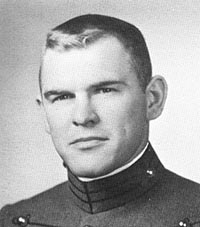


This snapshot of Glen Blumhardt’s life was captured by the 1940 U.S. Census.
When Glen Blumhardt was born about 1937, his father, Emil, was 36 and his mother, Olive, was 38. In 1940, he was 3 years old and lived in Stuntz, Minnesota, with his father, mother, brother, and sister.
GLEN ALGER BLUMHARDT E-1 Glen Mondovi, Wisconsin. As one of the “old men” of the Class of ’62, Glen arrived at USMA after two years of college and a two-year hitch in the Army. Dividing his time between the classroom and the football field there were ups and downs to be shared in both. A “Yankee” with a weakness for North Carolinian southern hospitality, he will be a credit to the Academy and his class. Captain 1; Stars 3; Football 4, 3, 2, Numerals 4, Major A 3, 2; Wrestling 4; Class Committee 3, 2, 1, Vice-President 1; Spanish Club 3; Parachute Club 4; Automobile Committee, Chairman.
BS-V, LM, DSMN CIB
GLEN A. BLUMHARDT 1962
Cullum No. 23889-1962 | February 24, 2019 | Died in Chapel Hill, NC
Interred in Arlington National Cemetery, VA
Glen Alger Blumhardt was born in Hibbing, MN on August 5, 1936, the youngest child of Emil and Olivia Blumhardt. In l943, the family moved to Mondovi, WI where Glen excelled in academics and sports at Mondovi High School, graduating in l954.
Recruited for football and basketball, Glen attended the University of Wisconsin – Eau Claire, where he played football. After two years, and in search of warmer climates, Glen enlisted in the Army as a paratrooper and arrived at Fort Bragg, NC as an infantryman in the 325th Airborne Battle Group in the 82nd Airborne Division. Serving in a rifle company, Glen quickly rose to the rank of corporal and was subsequently selected to attend the West Point Prep School.
Glen arrived at the Prep School at Fort Belvoir, VA in the fall of 1957. It is universally understood that all men, regardless of rank or position, pull charge of quarters (CQ). Without exception, Cadet Company Commander Blumhardt assumed the watch one April night in 1958 with the final task of playing ‘reveille’ at sunrise. According to Jim Ellis (then cadet company first sergeant), Blumhardt deviated from protocol and opted to sound First Call with the Everly Brothers’ recent hit “Wake Up Little Susie,” to the delight of his fellow cadet candidates. The senior TAC NCO, known to be somewhat humorless, was not nearly as entertained and summarily relieved Glen of his weekend liberty.
Glen entered USMA where he played football for three years and then assisted from the sidelines as an assistant/position coach his final year, due to eligibility constraints from having played ball at Wisconsin. He also excelled academically, earning stars during Third Class year.
Respected by his peers and superiors alike, he was elected as class vice president and served as a regimental commander, having the honor of escorting Mrs. Douglas MacArthur during the general’s “Duty, Honor, Country” address to the Corps in May 1962. Glen, along with classmates Jim Ellis, Mike Grebe, and George Kirschenbauer also attended General MacArthur’s birthday celebration at the general’s residence during that same time frame.
Glen developed many close friendships during the course of his cadet years that lasted the rest of his lifetime; he once remarked about a time when he broke both thumbs playing football and could not use either of his hands saying, “It’s predicaments like these when you truly find out who your friends are.”
Glen graduated as the “Old Man” of the class at the age of 24 and was commissioned Infantry.
Upon graduation, Glen married his sweetheart, Ann Elaine Barker of Hillsborough, NC at the West Point Cadet Chapel. They honeymooned with Al and Linda Rushatz and then reported to
Fort Benning, GA for Infantry training with many fellow grads. There, he welcomed the birth of his daughter and graduated as the distinguished honor graduate of Ranger School.
Following Benning, Glen returned to the 82nd Airborne Division. One evening, while watching the Army-Navy Game on television at home, Glen was telephoned by the XVIIIth Corps Commander (Lieutenant General Westmoreland), who was frustrated by the score and wanted Glen to explain what the Army Football Team was doing. Perhaps this call prepared Glen for his next assignment at USMA as the Commandant’s aide de camp. Next, he and Ann traveled across the country to Monterey, CA for language school in preparation for a tour as an advisor in Vietnam.
As a military advisor with the 7th ARVN Regiment, located at the Michelin Rubber Plantation (1965-66), Glen was supported by dear friend and teammate Al Rushatz, piloting aircraft from nearby Phu Loi. Their friendship proved invaluable immediately following the Battle of the Michelin Rubber Plantation, which witnessed the “death of the 7th Regiment” and the loss of many American advisors, as his old friend flew around the clock sorties relaying critical information and support.
While finishing graduate studies in mathematics at RPI in Troy, NY, Glen and Ann welcomed the arrival of their son. Shortly after, Glen returned to Vietnam (1970-71) with the 101st Airborne Division and then transitioned back to USMA where he taught in the Math Department. Glen retired from the Army in 1987 after serving as the XVIII Corps G-3 at Fort Bragg and in various other assignments, including Fort Campbell, KY; Fort Leavenworth, KS; Germany; Carlisle, PA; and Washington, DC.
Glen and Ann retired to Hillsborough, NC, where Ann grew up. Never idle, Glen strived to remain mentally sharp through his continued daily pursuit of mind teasers and crossword puzzles—dedicated until the very end to only writing in ink while jokingly disparaging others for using pencil. He remained physically active as a competitive tennis player and avid snow skier. He developed a successful construction business in the Raleigh area and then retired a second time years later. He continued to foster his friendships, and he and Ann regularly attended annual reunions along with countless mini reunions. They routinely traveled abroad with classmates and, in 2012, Glen explored the Caribbean by way of a small fleet of vessels crewed solely by classmates. Glen’s boat was captained by his old friend and roommate, Bob Krause, and fellow crewmate, Tom Simcox.
Glen remained a loving husband and a devoted father and grandfather. He was gifted with an exceptionally clever wit and a sense of humility; he would not have enjoyed reading this about himself. As he was known to say, “Don’t ever pat yourself on the back—if you are deserving, someone else will do it for you.”
—LTC (R) Glen Blumhardt Jr.
 Denny & Barbara Benchoff

Sunday School Teacher, Coach Alitz taught him how to earn 3 Wrestling Army A’s; 508th PIR, 101st Airborne RVN, USMA Math, ODCSO, CO 707 Mnt Bn, DISCOM, CO Red R Dep Tx, CG 509th Ord Bde, CG DESCOM, CG AMCCOM, DCG Log Ops

Al Rushatz was not the only outstanding wrestler in 61-62.Buzzy Krieselfinished fourth at the Easterns as a Cow at 167 lbs. andDale Kuhns was Eastern runner up at heavyweight as a First Classman. Howitzer lists Denny Benchoff, Phil Burns, and Al McElhoseas additional Army A winners. In 1961-62, Al Rushatz and Dale Kuhnswere both undefeated in dual matches.
This strong corps from the Can Do class led the Army wrestling team to records of 6-5 in 1959-60, 7-4 in 1960-61, and 6-4 in 1961-62, beating Navy all 3 Years. Apparently, Leroy Alitz did not believe is patsy schedules as we find Penn State, Syracuse, Springfield, Lehigh, Pittsburgh, and Illinois on the schedules, along with Navy.

Cadet will not Lie, Cheat, Steal, or Tolerate Those Who Do

USMA at West Point

We have changed the wording of our Alma Mater to reflect the fact that our Women Graduates have also given their lives serving this Nation.
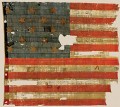
Our Flag in 1812

----- Class of 2012 Motto ------
"For More Than Ourselves"
Thank you Class of 2012 for the Honor of Marching with you The Class of 62 - Can Do

Remember - The Soldiers you will lead Always Come First

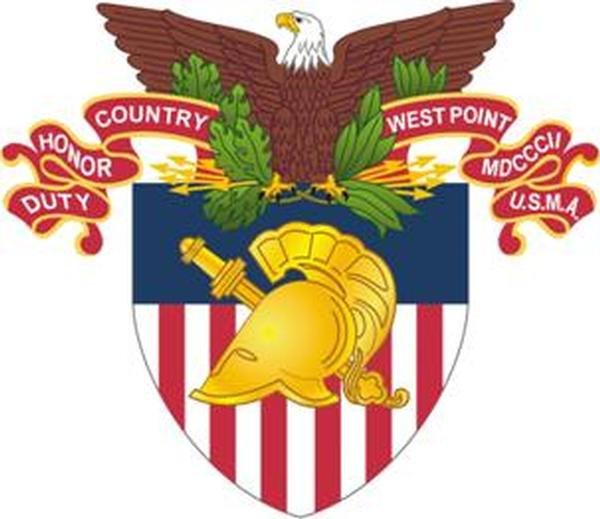
Motto -- Duty Honor Country

The Cadets of West Point

They played perhaps Army's Greatest Game. They were the Team that Gave The Most

Washington's Letter recommending the establishment of the Academy and the History of West Point

The Oaths We Take

West Point's Medal of Honor Recipients

Jefferson Hall - the Academy's new Library.

Douglas MacArthur

Vinegar Joe Stilwell cleaning his Thompson -The Walkout -Burma 1942

George Patton

The Monuments of West Point

Kosciuszko Monument - Guarding the Hudson ensuring there is no passage of British Man of War

Forts of the Hudson

So we'll sing our reminiscences of Benny Havens, Oh!

Academic Excellence

Colonel Thayer

West Point

Trophy Point

"L'Ecole Polytechnique Monument", or The French Monument by Cadets

Superintendent's Quarters viewed from Thayer Road

Superintendant was not Happy Black '57

Home of the Dean

Quarters 104

Cadet Chapel

Michie Stadium

Arvin Gym

Kimsey Athletic Center

Holleder Center

Washington Monument

United States Military Academy Band

Cadet Barracks

Rugby Complex

Great Chain

Plain looking toward Washington Hall

Battle Monument

Washington Hall with Cadet Chapel on rocks above

Hudson River

Captured Trophies

Battle Monument

West Point Cemetery

Plain

Cost to this Nation of Differing Views

Trophy Point -- Our Flag

Corps of Cadets Formed in Companies early 1960s

Sending the Army Team off to Beat Navy

Army Mule

Color Guard

Band Box Review Early 1950's in Central Area

Battalion Mass Early 50's

Flirtation Walk

Class of 2008 Class Crest & Motto "No Mission Too Great" Their Commencement "Here am I; Send me."
Thank you Class of 2008 and Please Thank the Men & Women --- the Soldiers you will lead --- The Class of 62.
Duty Honor Country
The '54 Crest

28th Infantry Regiment Black Lion Award is intended to go to the person on his team "who best exemplifies the character of Don Holleder: leadership, courage, devotion to duty, self-sacrifice, and - above all -
an unselfish concern for the team ahead of himself."
"The Army moves as a team, eats as a team, and fights as a team."

The '55 Crest

Don Holleder Remember - The Soldiers you will lead Always Come First

Vann and Holleder

9 Army A's

The '56 Crest

The '57 Crest

Can Do

Gen Van Fleet addressing the Corps prior to the Navy Game

Constructed under supervision of Jay Gould "54 and the Ord Dept from a German Rocket Gun captured at Kasserine Pass. First used in the Duke Game.

COL "Red" Reeder granted the Cheerleaders Corps Squad status to obtain financial support for their spirit-inducing initiatives.

Bob Mischak - - It should be pointed out that Bob was an All American selection, but is not recognized by the Academy as such because of the organization which selected him.

Ubel scores 3 Times against Navy - Vann's facking results in Peter getting tackled - #10 on the ground behind Ubel

Vann to Sisson

Army's B Squad

Vann to Mischak.

Uebel Intercepts

Cody to Don Holleder

Lasley

Frank Hicks

Burd

Bill Purdue

Cody

Meador Mgr

Ron Melnick

Ralph Chesnauskas

Pat Uebel

Tommy Bell

Sisson headed for another score

Peter Vann stuffs the ball in Jerry's gut

Leroy Lunn & Jerry Lodge

Uebel after taking the handoff from Hagan

Attaya - Army's Fullback

Sisson - one of 3 Great Ends
Bob Mischak

Ralph Chesnauskas

Bob Farris

Vann moving out of the pocket

Peter Vann 10, Billy Chance 38, Herdman 68

Ken Kramer

Joe Lapchick

Kirk Cockrell

Lodge going down tosses to Paul Schweikert for score.

Dick Zeigler

Bob FarrisPlayed the 2d half of the Navy Game blind in one eye.
Pat Uebel
Tommy Bell

Peter Vann

Freddie Attaya

Mike Zeigler

Jerry Lodge wearing #67, playing fullback.

Johnny Wing

Lowell Sisson

Norm Stephen

Jack Krause

Dick Ziegler

Jerry Lodge

Leroy Lunn

Norm Stephen

Jerry Lodge

Corps of Cadets for Navy Game
Can Do
"The Army moves as a team, eats as a team, and fights as a team."
The '54 Crest
The '55 Crest
28th Infantry Regiment Black Lion Award is intended to go to the person on his team "who best exemplifies the character of Don Holleder: leadership, courage, devotion to duty, self-sacrifice, and - above all - an unselfish concern for the team ahead of himself."





 Dale & Barbara Kuhns